Author Guest Post: “Every Child Needs Space to Play” by Mark Angelo, Author of Can We Play Baseball, Mr. DeMille?

Share

“Every Child Needs Space to Play”

A few years ago, I was visiting my brother Chris in Los Angeles, where we spent several days recalling memorable stories from our youth. We shared lots of laughs, but one story in particular that we fondly remembered took place in 1958 and centered around our search for a nearby place to play ball. As kids, my brother and I were passionate about the game of baseball. We loved the Dodgers, who had just moved to L.A. from Brooklyn, New York.

Chris suggested I write the story down and that eventually led to the publishing of my most recent illustrated children’s book, Can We Play Baseball, Mr. DeMille?

Writing the story brought back many great memories, not the least of which was an unforgettable encounter with perhaps the greatest and most legendary person in film. But going through the process of producing the book also made me even more cognizant of how my childhood search for a field to play ball influenced my later work as an environmental advocate and a proponent of outdoor spaces for all to enjoy.

The neighborhood I lived in as a boy was beautiful, but it was also located in the hills. There were very few appropriate and accessible places to play ball. In addition, public parks were too far away for young kids like us to get to on our own.

It was those circumstances that ultimately led us to Mr. DeMille’s backyard which, rightly or wrongly, became the “the field of our dreams.”

Fast forwarding to current day, I’ve long believed that from a city planning perspective, we should do everything possible to ensure that residents— especially kids— have nearby access to sports fields and places to play ball. In addition, ensuring that more natural parks are readily accessible to all is a key issue. Many youngsters don’t get exposed to nature and the outdoors as much as we’d like, particularly in cities. The alternative often becomes screen-time for children. If not used thoughtfully and moderately, we know from research this can have detrimental effects on both mental and physical health. After all, how can a kid get excited to play outside if they don’t have the space?

For those that read Can We Play Baseball Mr. DeMille, my hope is that the story of a young boy’s love for a game and his dogged determination to find a place where he and his friends can play, will make you smile and inspire young ones. To this day, while watching my own grandchildren play ball, I still find myself thinking back on occasion to those early days and the field of my youth that had such an impression.

The book has several elements to it, including a sense of nostalgia along with a slice of classic Hollywood history. But just as importantly, it has an environmental message that highlights the fact that accessible outdoor spaces are good for all of us, both young and old. From parks to sports fields, they provide active and passive recreational opportunities, contribute to our improved health and well-being, and make our communities better places to live!

Illustrated by Patricia & Robin DeWitt
Published January 30, 2023

About the Book: Set in 1958, a young boy and his friends want to be baseball players just like their Dodger idols. There’s just one problem: they don’t have a field to play in.

Luckily, the kids know a secret. There’s a mansion around the corner with a yard big enough for an entire ball field and the hedge surrounding it has a gap just big enough to crawl through. Apparently, the owner is a big-time Hollywood mogul. He won’t mind a few ball games, right?

This sensational true story of a young boy’s encounter with a Hollywood legend is rich with youthful determination and summer fun, highlighting how every child needs space to play.

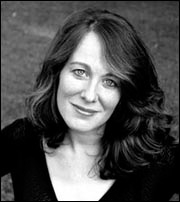
About the Author: Mark Angelo has been a baseball fan since he was a little boy! He is also a globally renowned river conservationist and the founder of World Rivers Day, now celebrated by millions of people in over one hundred countries. Among his many accolades, Mark is a recipient of the Order of Canada, the country’s highest honor. His acclaimed best-selling debut picture book, The Little Creek that Could, is the true story of a stream that came back to life. Through his work with groups such as the Outdoor Recreation Council of BC, Mark has been a long-time advocate for outdoor spaces for all to enjoy. Can We Play Baseball, Mr. DeMille?, about a young boy’s search for a place to play ball, recounts an actual experience from his childhood. Mark lives in Burnaby, British Columbia, Canada with his wife, Kathie.

For more information on Mark, please visit: https://www.canweplaybaseballmrdemille.com/

Thank you, Mark, for this focus on play and its importance!

Blog Tour, Giveaway, and Author Guest Post!: Let Nonfiction Sing by Margarita Engle, Author of Destiny Finds Her Way: How a Rescued Baby Sloth Learned to be Wild

Share

Welcome to the

Destiny Finds Her Way

Blog Tour & Giveaway!

To celebrate the release of Destiny Finds Her Way by Newbery Honor winner Margarita Engle, blogs across the web are hosting guest posts from Margarita as well as the book’s photographer, Sam Trull, who is also the co-founder and Executive Director of the Sloth Institute — a sloth rescue organization based in Costa Rica. Join us for a journey behind the scenes of how these two amazingly talented women teamed up to bring this inspiring, true story to readers everywhere and learn more about sloths and the work being done to protect them.


Let Nonfiction Sing!

by Margarita Engle

Destiny Finds Her Way is a book I feel honored to have written. When I saw Sam Trull’s beautiful photos of Destiny the sloth, I decided to visit the Sloth Institute in Costa Rica. There, I had the chance to witness Sam in action, rescuing baby sloths and teaching them how to live in the wild. The experience was inspiring.

I wanted to write Destiny’s story in a way that might inspire young readers to learn more about wildlife conservation. The tropical rain forest has its own rhythm, and poetry is musical language. However, nonfiction is usually presented in a more detailed prose style. I decided to combine poetic devices with facts. The first device I used is onomatopoeia, where words resemble their real-life sources. Examples are the eee, eee, eee of darting squirrel monkeys, and ah, ah of a frightened baby sloth. Instead of rhymes at the ends of lines, I included words with vowels that rhyme. In ‘macaws squawking,’ all the “a “sounds rhyme. I’m sure readers will be able to find many other parts of the story that sound musical.

Readers will also discover the other senses—sight, smell, touch, taste, as well as sound. In addition, movement is an important aspect of the story’s musical nature. I hope words like scratched, swayed, and climbed will help make Destiny’s journey come to life in a joyful, dancelike way. There is nothing more celebratory than knowing she is now healthy and free in the wild!

Buy | Buy on Bookshop.org | Add to GoodReads

About Destiny Finds Her Way

(ages 4-8, Hardcover Picture Book, National Geographic Kids Books)

Newbery Honor winner Margarita Engle and photographer and Sloth Institute Executive Director Sam Trull team up to bring the inspiring and true story to life of how Destiny, a motherless baby sloth, sightless in one eye and rescued by Sam in the Costa Rican rain forest, defies the odds, overcomes her obstacles of limited sight and learns the skills she will need to return to her wild, forest home.

Without her mother to protect her or teach her, Destiny is found and taken to a rescue center in Costa Rica. The little sloth soon befriends other orphaned sloths. Her poor eyesight, however, makes it hard for her to keep her balance. Eventually Destiny begins to use all of her senses to explore the world around her. But can she learn to climb? Can she master the other skills she needs to survive on her own? And will Destiny be brave enough to return to her wild, forest home?

In addition to learning about Destiny and her journey, readers are immersed in the world of sloths and sloth rescue in this uplifting story about overcoming obstacles and believing in yourself.

About the Author:

Margarita Engle is the Cuban-American author of many verse novels, memoirs, and picture books, including The Surrender Tree, Enchanted Air, Drum Dream Girl, and Dancing Hands. Awards include a Newbery Honor, Pura Belpré, Golden Kite, Walter, Jane Addams, PEN U.S.A., and NSK Neustadt, among others. Margarita served as the national 2017-2019 Young People’s Poet Laureate. She is a three-time U.S. nominee for the Astrid Lindgren Book Award. Her most recent books are Rima’s Rebellion, Singing With Elephants, and Destiny Finds Her Way. Her next young adult verse novel is Wings in the Wild, and her next picture book is Water Day.
Margarita was born in Los Angeles, but developed a deep attachment to her mother’s homeland during childhood summers with relatives on the island. She studied agronomy and botany along with creative writing, and now lives in central California with her husband.

Website | Instagram | Facebook | Twitter

About the Photographer:

Sam Trull has been a photographer and a wildlife biologist for decades. After many expeditions to Madagascar, West Africa, and Central America, in January 2013, she settled in Costa Rica, where she co-founded and is the executive director of the Sloth Institute. Her first photo book, Slothlove, was published in April 2016.

Website | Instagram

About the Sloth Institute:

The Sloth Institute (TSI) is a nonprofit organization located in Costa Rica with the mission to enhance and expand the welfare and conservation of sloths through rescue, rehabilitation, release, research, and education. In addition, TSI works on targeted conservation projects to improve the safety and quality of sloth habitats and teaches other rescue centers how to better care for and release their sloths. TSI believes that all sloths were born to be wild and deserve that second chance at freedom.


Website | Instagram | Facebook | Twitter

GIVEAWAY

  • One (1) winner will receive a copy of Destiny Finds Her Way
  • US/Can only
  • Ends 3/18 at 11:59 pm ET
  • Enter via the Rafflecopter below
  • Visit the other stops on the tour for more chances to win!

a Rafflecopter giveaway

Blog Tour Schedule:

March 6th Pragmatic Mom

March 7th Heise Reads and Recommends

March 8th Mom Read It

March 9th Unleashing Readers

March 10th Imagination Soup

Educators’ Guide for The Marvellers by Dhonielle Clayton

Share

The Marvellers (Marvellverse #1)
Author: Dhonielle Clayton
Published: May 3rd, 2022 by Henry Holt and Co.

Summary: Author Dhonielle Clayton makes her middle-grade debut with a fantasy adventure set in a global magic school in the sky.

Eleven-year-old Ella Durand is the first Conjuror to attend the Arcanum Training Institute, where Marvellers from all around the world come together to practice their cultural arts like brewing Indian spice elixirs, practicing Caribbean steel drum hypnosis, and bartering with fussy Irish faeries. Ella knows some people mistrust her Conjuror magic, often deemed “bad and unnatural,” but she’s eager to make a good impression—and, hopefully, some friends.

But Ella discovers that being the first isn’t easy, and not all of the Marvellers are welcoming. Still, she connects with fellow misfits Brigit, a girl who hates magic, and Jason, who is never found without a magical creature or two. Just as Ella begins to find her way at the A.T.I., a notorious criminal escapes from prison, supposedly with Conjurors’ help. Worse, her favorite teacher Masterji Thakur never returns from a research trip, and only Ella seems concerned about his disappearance.

As tensions grow in the Marvellian world, Ella finds herself the target of vicious rumors and growing suspicions. With the help of her new friends, Ella must find a way to clear her family’s name and track down her beloved mentor Masterji Thakur . . . before she loses her place at the A.T.I. forever.

Teachers’ Tools for Navigation and Discussion Questions: 

Please view and enjoy the teachers’ guide I created for The Marvellers:

You can also access the teaching guide here.

You can learn more about The Marvellers on The Marvellverse website.

P.S. Number Two comes out in September!!!!!

Recommended For: 

classroomlibrarybuttonsmall litcirclesbuttonsmall closereadinganalysisbuttonsmall

Kellee Signature

Author Guest Post: “Good Teachers” by Lynn Katz, Author of Chester and the Magic 8 Ball

Share

“Good Teachers”

There’s no shortage of children’s literature featuring horrible, cruel, nasty educators. Unfortunately, ineffective and sometimes down-right mean teachers are part of the educational landscape. Most people have their own personal stories about teachers who abused their power, meted out extreme punishments, or used more subtle strategies to belittle or marginalize their students. My 6th-grade teacher compared me unfavorably to my two older sisters. In front of my classmates.  Daily. She was relentless. Her behavior took its toll on my self-esteem and my love for school, but in the end, that teacher was the reason I decided to pursue a career in education. I vowed to be the most nurturing, patient, fun-loving, creative educator—everything my 6th-grade teacher was not. As educators and parents, we needn’t shy away from books that include mean-teacher-characters such as Miss Minchin from A Little Princess, by Frances Hodgson Burnett, Miss Trunchbull from Roald Dahl’s Mathilda, and the Juvenile Detention Warden from Holes by Louis Sacher. Those novels provide windows for middle-grade readers, reassuring them that they are not at fault or alone when adults abuse their power.

Fortunately, most teachers do not abuse their power; they care deeply about their students’ well-being and achievement. They work hard every day to build relationships, trust, and a love of learning. So, where are the novels that feature characters who are amazing teachers?  And not only those kooky picture book characters who drive magic school buses or turn into swampy substitutes when Miss Nelson goes missing. Middle-grade readers need to read about teacher characters who model respect, curiosity, nurture creativity and a deep love for learning.  I try to include both good and deeply flawed teachers in my contemporary novels. In Chester and the Magic 8 Ball, my main character’s math teacher, Mr. Burnett, injects self-deprecating humor, Dad jokes, and plenty of fun into his classes. He encourages student collaboration and conversation. He helps his young mathematicians understand the real-world applications of math.  He’s patient and kind, gives helpful feedback by using rubrics instead of grades, and has earned the respect of his students.

As part of my teacher-resource packet, I’ve included several questions and enrichment activities, designed to help readers analyze the characteristics of both effective and ineffective teachers. Here are some examples:

COMPARE/CONTRAST: Georgia’s math teacher, Mr. Burnett, is different from her 5th-grade teacher, Mrs. Robins. Compare/contrast those two teachers. What are some of Mr. Burnett’s traits and quirks that his students appreciate? Would you want a teacher like Mr. Burnett? Why or why not?

RUBRICS: Georgia’s unhappy with the pass/fail system for Chester’s pet therapy training program. Create a rubric to help your pet (your parent, sibling, or teacher) improve their behavior.

Here are some other titles, some old, some new, featuring teacher characters who make us proud to be educators and who exemplify the best of our profession.

Wonder by R.J. Palacio: Auggie’s English teacher, Mr. Browne, maintains an inclusive classroom and uses many effective teaching strategies. He will always be remembered for his monthly “precepts.” Starting the year off right in September, Mr. Browne teaches his students the most important life lesson and value: “When given the choice between being right or being kind choose kind.”

Mr. Terupt series by Rob Buyea: This young, new teacher is brimming with good intentions and energy. He focuses on teaching his students about personal responsibility, and he earns the love and respect of even the most challenging students. One of Mr. Terupt’s students put it this way: “This year, for the first time in my life, I started thinking school could be fun.” And who wouldn’t appreciate a fun teacher?

The Way I Say It by Nancy Tandon: Mr. Simms is Rory’s new 6th-grade speech and language teacher, helping him with his articulation challenges and supporting him as he navigates friendships, bullying, and middle-school life. The fact that Mr. Simms is also a cool guy who uses unorthodox strategies, plays the guitar, and relates to his student’s interest in boxing legend Muhammad Ali, makes this book and this memorable teacher extra-entertaining and inspirational.

Published February 9th, 2023 by Black Rose Writing

About the Book: Twelve-year-old Georgia is convinced her toothless, rescue dog can tell the future with a spin of her Magic 8 Ball. She wants to believe Chester when he reassures her that the “outlook is good” for her parents’ troubled marriage. But when it becomes a matter of life or death, Chester stops cooperating, and Georgia must learn the difference between probability and magic.  She’s determined to increase the odds of a happy ending by relying on her own powers. This contemporary novel with a hint of magical thinking, explores serious topics with sensitivity, humor, and heart.

About the Author: Lynn Katz is a former teacher, curriculum writer, and school principal. She is a member of SCWBI and her local Board of Education. Her first novel, The Surrogate, a domestic thriller for adult readers, explores the psychological profile of a young, would-be mass shooter, and the high school teacher who tries to help him. Chester and the Magic 8 Ball is her first middle-grade novel. www.lynnkatzauthor.com

Thank you, Lynn, for this wonderful look into great teachers in books!

Educators’ Guide for Tiny Pretty Things and Shiny Broken Pieces by Sona Charaipotra & Dhonielle Clayton

Share

Tiny Pretty Things (#1)
Shiny Broken Pieces (#2)
Authors: Sona Charaipotra & Dhonielle Clayton
Published: May 26th, 2015 & July 12th, 2016 by Harper Teen

Tiny Pretty Things Summary: Black Swan meets Pretty Little Liars in this soapy, drama-packed novel featuring diverse characters who will do anything to be the prima at their elite ballet school.

From the New York Times-bestselling author of The Belles, Dhonielle Clayton, and the author of the highly anticipated Symptoms of a Heartbreak, Sona Charaipotra.

Gigi, Bette, and June, three top students at an exclusive Manhattan ballet school, have seen their fair share of drama. Free-spirited new girl Gigi just wants to dance—but the very act might kill her. Privileged New Yorker Bette’s desire to escape the shadow of her ballet-star sister brings out a dangerous edge in her. And perfectionist June needs to land a lead role this year or her controlling mother will put an end to her dancing dreams forever.

When every dancer is both friend and foe, the girls will sacrifice, manipulate, and backstab to be the best of the best.

Don’t miss the gossip, lies, and scandal that continues in Tiny Pretty Things’ gripping sequel, Shiny Broken Pieces!

Teachers’ Tools for Navigation and Discussion Questions: 

Please view and enjoy the teachers’ guide I created for Cake Creative for Tiny Pretty Things & Shiny Broken Pieces:

You can also access the teaching guide here.

You can learn more about Tiny Pretty Things and Shiny Broken Pieces on Cake Creative’s OUR LIBRARY page.

Recommended For: 

classroomlibrarybuttonsmall litcirclesbuttonsmall closereadinganalysisbuttonsmall

Kellee Signature

Author Guest Post: “Fun Ways to Bring Animal Migration into the Classroom” by Amy Hevron, Author of The Longest Journey: An Artic Tern’s Migration

Share

“Fun Ways to Bring Animal Migration into the Classroom”

I love birdwatching and am fascinated by migrating birds. In The Longest Journey: An Arctic Tern’s Migration, I showcase an epic migrator on her first globe-spanning adventure. When I began writing this story, I wondered, what would it be like to travel across the globe? Across every climate zone from polar lands to temperate zones, to subtropics and tropics? What would the landscapes look like? What other animals would be along the way? Piecing together this little seabird’s journey was fascinating and combined my passions for wildlife, world geography, Earth sciences and art. Here are some fun ways kids can explore animal migration and mapmaking in the classroom.

Track birds in your area

Birds are all around us. And whether they are year-round residents or just here for the season, these wildlife neighbors of ours are fascinating to learn more about. Kids could pick a migrating bird from your area and find out where they migrate. They could plot their bird’s journey on a world map. What cities, states, countries, and continents does this local bird see? Kids could learn about their bird’s life cycle and draw how it looks at the different life stages from egg, to chick, to juvenile, to adult. Many birds migrate in their first year of life. At what age does their bird migrate? They could find out what kind of habitat their bird lives in, what kind of nest it makes, and what kind of food it eats. And in learning more about its migration, kids could think about what obstacles this bird might encounter or what amazing sites it might see on its journey. A helpful site to find out more about birds in your area is www.allaboutbirds.org. Also, the Audubon app for smart phones and tablets is a great birding resource as well.

Track other Arctic migrators

In addition to Arctic terns, other Arctic animals migrate, like narwhals and Pacific walruses. Kids could pick a different Arctic animal and explore the migration of this species. Why does it migrate? What might that journey look like on a map? By focusing on other animals that live in the Arctic region, this could provide an opportunity to discuss the impacts of climate change on wildlife as well. Animals that live in the Arctic are especially sensitive to global warming because the Arctic is warming at a faster rate than elsewhere in the world. How is their Arctic animal impacted by warming land and oceans? How is it adapting? Additionally, you could talk about the Earth’s seasons as they relate to the Arctic and how around Summer Soltice the sun never sets, and in Winter it is dark all day. How do the Arctic seasons affect their animal’s activities? The Active Wild website lists a range of interesting Arctic animals to learn more about (https://www.activewild.com/arctic-animals-list/).

Dive into mapmaking

A fun way to learn about world geography is through creating maps. Kids could create a map of their own migration adventure, either real or imaginary. They could start with a whole world map, a continent or a country. Kids could add traditional map details like labels for the land, bodies of water, and a compass with North, South, East, and West. On a world map, kids could add in the major latitudinal lines of the Equator, Tropic of Cancer, Tropic of Capricorn, the Arctic circle and Antarctic circle. They could learn about how the climate is different at these different latitudes. They could research and then illustrate different flora and fauna on the map within their appropriate climate zones. From here, kids could plot their migration path. Where would their journey take them? What sites would they see? What food would they eat along the way? A fun tool to use for research is Google Earth (earth.google.com). You can zoom in to see what the landscape looks like anywhere on Earth. Also, Google image searching “illustrated maps” can provide some inspiration for different ways to illustrate maps. Wikipedia’s site provides different world map images, including this simple world map that could be used as a starting point https://commons.wikimedia.org/wiki/File:A_large_blank_world_map_with_oceans_marked_in_blue.PNG.

Published July 12, 2022 by Neal Porter Books

About the Book: Follow the epic annual migration of an Arctic Tern on its sixty-thousand-mile journey to the South Pole and back again, the longest such migration in the animal kingdom.

In their thirty-year lifetimes, Arctic Terns travel nearly 1.5 million miles, that’s enough to fly to the Moon and back three times! Each year they brave blistering winds, storms, rough seas, and airborne predators as they travel between the Earth’s poles, chasing the summer. In The Longest Journey: An Arctic Tern’s Migration, we follow one such bird as it spreads its wings and sets out to make its first globe-spanning trip with its flock.

Amy Hevron is the illustrator of Trevor by Jim Averbeck, the recipient of multiple starred reviews. She also illustrated Candace Fleming’s The Tide Pool Waits which was the recipient of the Portfolio Honor Award from the Society of Children’s Book Writers and Illustrators. Her brilliant, naturalistic artwork mimicking maps and nautical charts is supported by extensive research and paired with material at the back of the book explaining the science behind the life cycle of Arctic Terns.

About the Author: Amy Hevron is an illustrator, designer, and children’s book author. She wrote and illustrated Dust Bunny Wants a Friend and illustrated Trevor by Jim Averbeck, which received multiple starred reviews. She also illustrated The Tide Pool Waits, by Candace Fleming. In both 2015 and 2016, she received the Portfolio Honor Award from the Society of Children’s Book Writers and Illustrators. She lives in Seattle with her family.

https://www.amyhevron.com/
@amyhevron on Instagram and Twitter

https://holidayhouse.com/book/the-longest-journey/
@holidayhousebks on all social platforms

Thank you, Amy, for these fun migration activities for the classroom!

Author Guest Post: “Little Red and the Big Bad Educator’s Guide” by Rebecca Kraft Rector, Author of Little Red and the Big Bad Editor

Share

“Little Red and the Big Bad Educator’s Guide”

When I learned Shanda McCloskey would be illustrating my story LITTLE RED AND THE BIG BAD EDITOR, I was ecstatic. I knew her art would bring to life my story of the Big Bad Wolf correcting Little Red’s thank you letter to Granny. And I was right. The vibrant colors! The actions! The humor! I was so lucky to be paired with Shanda.

Then I learned Shanda, like me, had an educational background and she wanted to collaborate on an educator’s guide for LITTLE RED AND THE BIG BAD EDITOR. What a great idea! Many publishers and editors provide educator’s guides for their picture books.

There are so many ways to use picture books in classrooms from kindergarten on up. They’re rich in vocabulary and can have a higher reading level than many novels. They’re short and appealing to lower-level readers, ESL, and special needs students. For a generation that enjoys graphic novels and sharing pictures and stories on social media, picture books can be a familiar format. In fact, picture books often introduce new concepts and facts in an accessible way. They are an excellent entry point for all ages about topics that are difficult to understand or discuss.

But what about LITTLE RED AND THE BIG BAD EDITOR? Could we put together a useful educator’s guide for a fun story about correcting a heartfelt but poorly written letter? No problem! I’d done a basic guide for my first picture book SQUISH SQUASH SQUISHED and even produced a short video for a school librarian presentation. My brain was stuffed with methods for meeting curriculum standards after writing lesson plans, test passages, questions and answers for educational publishers.

I told Shanda “Yes!” and got to work.

Like Little Red, I whipped out my crayons (computer) and started writing. And like the Big Bad Wolf, I crumpled up those pages and threw them away. The Big Bad Wolf couldn’t fault me on my capitalization and finger spacing, but there were just too many elements that I wanted to include.

For instance, I could ask students to look for examples of characterization, plot, setting, theme, and story structure. They could practice story prediction by guessing what would happen in the story based on the cover and title.

So many possibilities for discussions and story prompts, too! Students could write their own stories by thinking about what happens before or after the story, or within the pictures. What was Little Red doing before the present arrived? What happened after the last page of the story? What about that little turtle, what’s his story?

Maybe I should focus on figurative language—the assonance, alliteration, similes, idioms, onomatopoeia, etc. in LITTLE RED. Find the simile: “Little Red was pleased as punch. Granny had sent her a present! Red ripped off the wrappings and removed a cape as scarlet as a ripe tomato.”

What about sequencing and cause and effect? Oh, we could use Shanda’s art for that! Which picture shows what comes first, middle, and last? Which picture shows what caused Little Red to write a thank you note?

And I couldn’t forget about compare/contrast! Both SQUISH SQUASH SQUISHED and LITTLE RED are “fractured” versions of folktales. SQUISH SQUASH SQUISHED is considered a modern version of both TOO MUCH NOISE and IT COULD ALWAYS BE WORSE. After reading an original version and the new version, students could compare/contrast the stories for all of the elements listed above, plus author’s voice and even author’s purpose. Younger students could compare/contrast the illustrations for the stories.

Shanda created awesome activities within a week. She even included practice sheets for writing letters and cursive writing. But after a month I still struggled with narrowing down all the possibilities.

Finally, I realized (why did it take me so long?!) that I couldn’t include everything. Some things would have to be left out. But we’re both really happy with the final product and would be thrilled if you’d take a look. It’s on my website https://rebeccakraftrector.wordpress.com and Shanda’s https://www.shandamc.com and here’s a direct link http://ow.ly/IHPC50KffBh.

Published September 6th, 2022 by Aladdin/Simon & Schuster

About the Book: In this clever and playful fractured fairy tale picture book, the Big Bad Wolf is so distracted by Little Red’s poorly written thank you note to her grandmother that he keeps missing the chance to eat her!

Once upon a time, Little Red received a bold new cape from her Granny. She wrote her a thank you note, packed a basket of goodies, and walked through the meadow to Granny’s house. But swish swash SWOOP, the big bad wolf stops her in her tracks, opens his mouth wide, leans in close and…​

Sees the note.

Mr. Wolf can’t believe how sloppy the letter is—Red can’t give this to Granny! He corrects her grammar but misses out on his dinner while he’s distracted each time he encounters Red on the path. Can she keep outsmarting the Big Bad Editor and make it all the way to Granny’s house?

About the Author: Rebecca Kraft Rector is a retired librarian and the author of more than thirty fiction and nonfiction books for children. Her cats Ollie and Opal keep her company while she writes. When she isn’t writing and eating chocolate, she’s trying to keep deer out of her garden.

LITTLE RED AND THE BIG BAD EDITOR is Rebecca’s second picture book, coming from Aladdin/Simon & Schuster on September 6, 2022.

Visit Rebecca online at https://rebeccakraftrector.wordpress.com

Thank you, Rebecca, for introducing us to your book and how useful it will be in classrooms and libraries!