Guest Post: Classroom Uses for One Crazy Summer by Rita Williams-Garcia, A Place to Hang the Moon by Kate Albus, Planet Earth is Blue by Nicole Panteleakos, Shooting Kabul by N.H. Senzai, and The Dreamer by Pam Muñoz Ryan

Share

One of the assignments during my Spring Children’s Literature course at UCF was creating a mini-teaching guide for the books we read for book clubs. We started with picture books for practice then students created them in their book clubs each week.

Today, I am happy to share the classroom uses and discussion questions found by my UCF Elementary Education students when reading these historical fiction books.
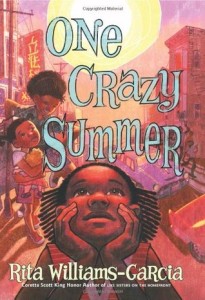
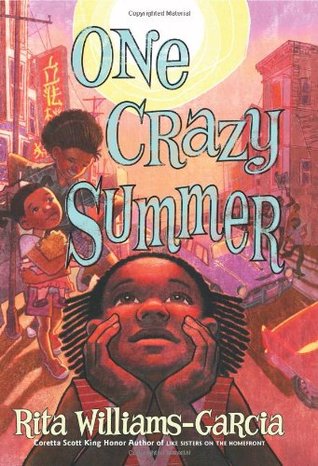
One Crazy Summer
Author: Rita Williams-Garcia
Published January 26th, 2010 by Quill Tree Books

Summary: In the summer of 1968, after travelling from Brooklyn to Oakland, California, to spend a month with the mother they barely know, eleven-year-old Delphine and her two younger sisters arrive to a cold welcome as they discover that their mother, a dedicated poet and printer, is resentful of the intrusion of their visit and wants them to attend a nearby Black Panther summer camp.

In a humorous and breakout book by Williams-Garcia, the Penderwicks meet the Black Panthers.

Discussion Questions: 

  • What do you think of Cecile and the way she treats her daughters? How does that make you feel?
  • What do you think Cecile does for the black panthers? Do you think it is good or bad?
  • Explain why you think the girls were sent to visit their mother?
  • Why did the black panthers call Fern’s doll, Ms. Pattycake, self hatred?
  • Who or what is a black panther? (For background knowledge on the history in story)
  • Why do you think Vonneta didn’t stick up for Fern when her friend was calling her a baby? Why did she then destroy Fern’s doll?
  • Family is an important theme of the novel, write about your relationship with your family.
  • Do you think Delphine agrees with the black panthers are fighting for? Why or why not?
  • Do you think Fern’s name is the real reason Cecile left? Why or why not?
  •  Do you think Delphine forgives her mom for abandoning her? Why or why not?

Recommended For: 

classroomlibrarybuttonsmall 


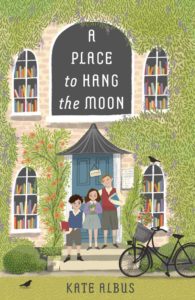
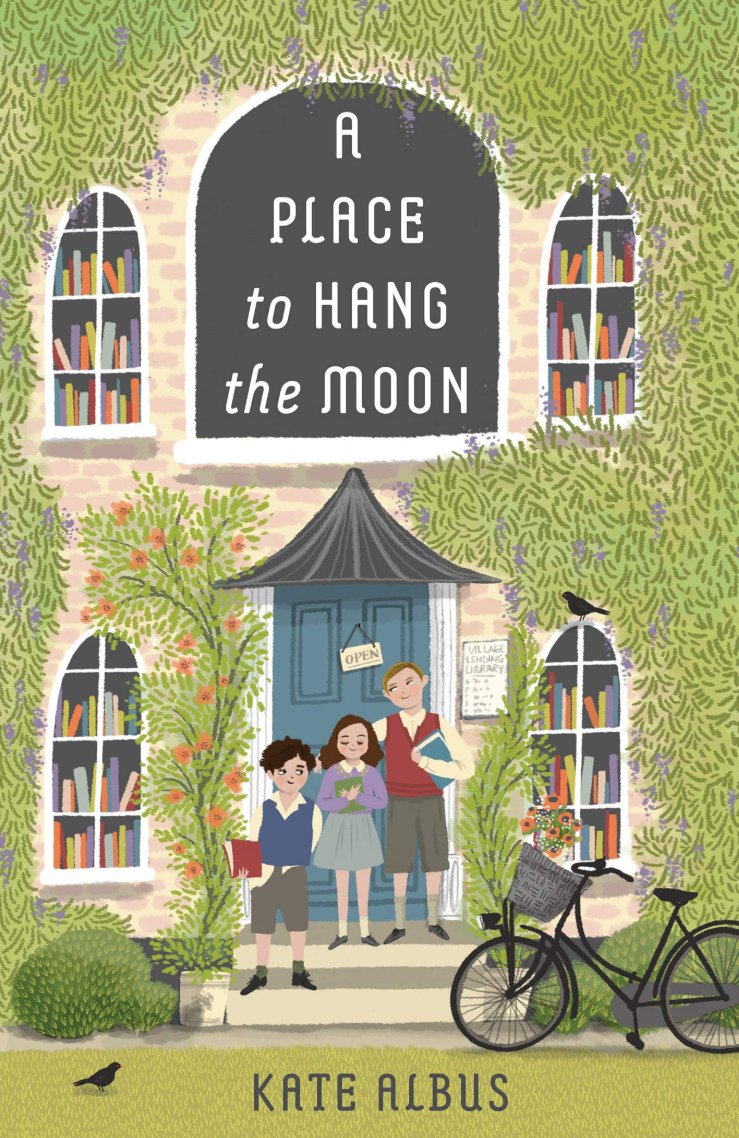
A Place to Hang the Moon
Author: Kate Albus
Published February 2nd, 2021 by Margaret Ferguson Books

Summary: Set against the backdrop of World War II, Anna, Edmund, and William are evacuated from London to live in the countryside, bouncing from home to home in search of a permanent family.

It is 1940 and Anna, 9, Edmund, 11, and William, 12, have just lost their grandmother. Unfortunately, she left no provision for their guardianship in her will. Her solicitor comes up with a preposterous plan: he will arrange for the children to join a group of schoolchildren who are being evacuated to a village in the country, where they will live with families for the duration of the war. He also hopes that whoever takes the children on might end up willing to adopt them and become their new family–providing, of course, that the children can agree on the choice.

Moving from one family to another, the children suffer the cruel trickery of foster brothers, the cold realities of outdoor toilets, and the hollowness of empty tummies. They seek comfort in the village lending library, whose kind librarian, Nora Muller, seems an excellent candidate–except that she has a German husband whose whereabouts are currently unknown. Nevertheless, Nora’s cottage is a place of bedtime stories and fireplaces, of vegetable gardens and hot, milky tea. Most important, it’s a place where someone thinks they all three hung the moon. Which is really all you need in a mom, if you think about it.

Teachers’ Tools for Navigation: This book could be used to teach children about the effects of World War II on England and specifically how it affected children. This book could also be used to have an open discussion about family. To help children understand how family changes and how your ideas and those you consider family can change over time.

This book should definitely be put in the classroom library. Close reading/analysis would be used especially when the children are learning about World War II, so they are able to better understand historical context and explore what else was going on in this time period and why the actions of the characters were necessary. And the book would be great in a book club could also be used to help students reflect upon what they were feeling and give them an opportunity to share their opinions of the story with their peers.

Interdisciplinary Aspects:

History- This book takes place during World War II students can take this as an opportunity to research the war and understand the setting of the novel and why the characters were forced to move away in more detail

Reading/Literature- Throughout the book the children are introduced to many different books and authors. Students can explore these books and read one of their choosing to understand these stories in more detail

Discussion Questions: 

  • Throughout the book the children mention that they know they will have found their new family when they find someone who believes that they had hung the moon. What do you believe that this phrase means?
  • During this book the children mention that they are frequently talking about rationing and the need for rationing coupons. What is rationing and why was it necessary during the war?
  • Why would Mrs.Mueller having a German husband make her unsuitable to house the children?
  • Which housing accommodation was the least suitable for the children? Why?
  • Throughout the book the children read different books to pass the time and feel better about their current situation? How can reading bring about comfort to these characters?
  • How is Edmunds understanding of the war and his actions to his billet hosts different from Williams?
  • Edmund tells William that he knows that the stories he tells about his parents are fake. Why does he still enjoy these stories even though he knows they aren’t real?
  • Each of the siblings is hoping to get something specific out of the new family. (Edmund wants someone to cook for him, William wants to not worry about taking care of his siblings and having so many burdens, and Anna wants someone to tuck her in and give her a hug) Why is their idea of parents so different? How does Mrs. Mueller meet each of their expectations?
  • Why do you think that none of the children were devastated at the death of their Grandmother? How do you think they acted at their parents’ funeral?
  • Why are the children sent to a village in the country?
  • What war did this story take place during?
  • Where did the children get sent off to?
  • What is one thing they encountered during their foster care?
  • What is the name of the librarian they fell in love with?
  • Who is the person that sent them into foster care and why?
  • What did it mean for them when they said they hung the moon?
  • Who sank the boat of refugee children?
  • Why did the English women who’s husband was German get a lot of prejudice from neighbors?

Recommended For: 

classroomlibrarybuttonsmall


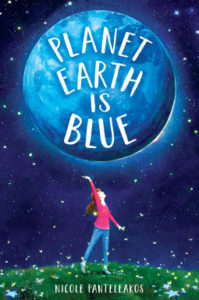
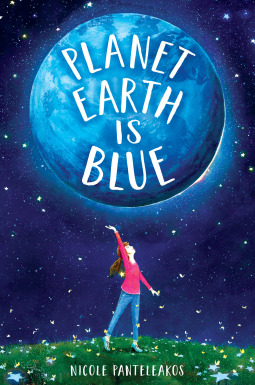
Planet Earth is Blue
Author: Nicole Panteleakos
Published May 14th, 2019 by Random House

Summary: Twelve-year-old Nova is eagerly awaiting the launch of the space shuttle Challenger–it’s the first time a teacher is going into space, and kids across America will watch the event on live TV in their classrooms. Nova and her big sister, Bridget, share a love of astronomy and the space program. They planned to watch the launch together. But Bridget has disappeared, and Nova is in a new foster home.

While foster families and teachers dismiss Nova as severely autistic and nonverbal, Bridget understands how intelligent and special Nova is, and all that she can’t express. As the liftoff draws closer, Nova’s new foster family and teachers begin to see her potential, and for the first time, she is making friends without Bridget. But every day, she’s counting down to the launch, and to the moment when she’ll see Bridget again. Because Bridget said, “No matter what, I’ll be there. I promise.

Teachers’ Tools for Navigation: This book would be useful for students who aren’t nonverbal and autistic, it would teach the perspective from these students who are  to better understand them and find ways to relate to them.

It can also be an introduction to space and the solar system focusing on science.

This would be a great book to have in the classroom library as it is easy to build a personal connection to the characters that students may not want to speak about to a larger group. This would give them the chance to dive into subjects that may be relatable to them but not others and provide a safe space for it.

Using this book for a close reading or analysis can be beneficial as it can be used as an introduction to the space unit. It can be used as a way to introduce the topic of differences in students’ lives and how it can be accepted rather than seen as a negative.

Discussion Questions: 

  • Describe the relationship between Nova and Bridget that was given by the narrator.
  • Why do you think Nova and Bridget were unable to live with their mother any longer?
  • Why do you think Nova took a special interest in space?
  • How does it make you feel that people are mean to Nova? Use describing words.
  • Nova often talks about being tested multiple times. How does Nova feel about this testing? Can you relate to this? Explain.
  • Why do you believe the book was written from the point of view of a narrator rather than Nova herself?
  • When Francine looks up the word Nova, how does this relate to her?
  • Why were the chapters counting down instead of up?
  • Describe the alternative ending you would have liked to read for Nova and Bridget.

Recommended For: 
classroomlibrarybuttonsmall


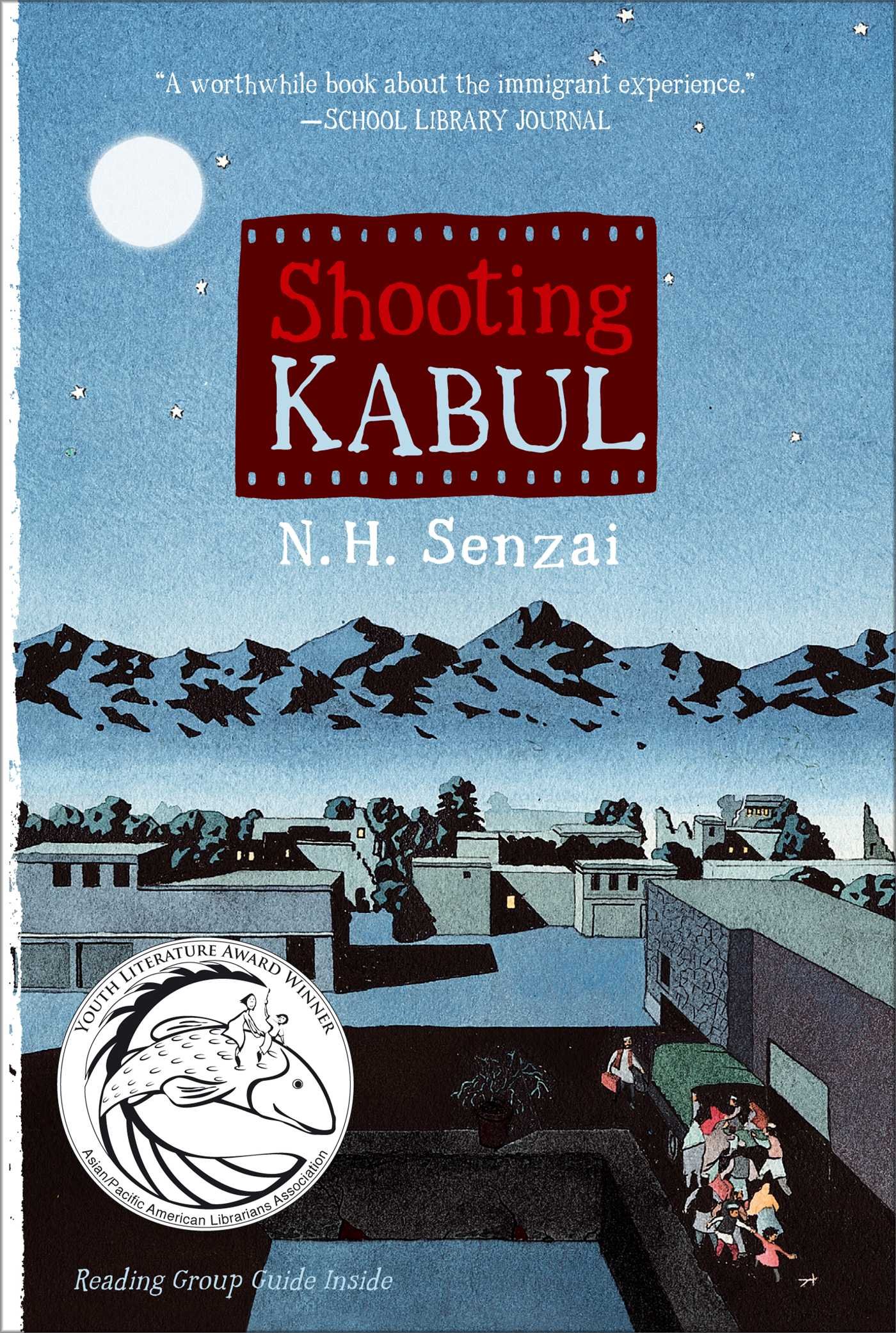
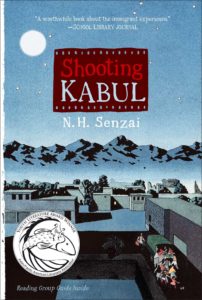
Shooting Kabul
Author: N.H. Senzai
Published June 22nd, 2010 by Simon & Schuster

Summary: In the summer of 2001, twelve-year-old Fadi’s parents make the difficult decision to illegally leave Afghanistan and move the family to the United States. When their underground transport arrives at the rendezvous point, chaos ensues, and Fadi is left dragging his younger sister Mariam through the crush of people. But Mariam accidentally lets go of his hand and becomes lost in the crowd, just as Fadi is snatched up into the truck. With Taliban soldiers closing in, the truck speeds away, leaving Mariam behind.

Adjusting to life in the United States isn’t easy for Fadi’s family, and as the events of September 11th unfold the prospects of locating Mariam in a war torn Afghanistan seem slim. When a photography competition with a grand prize trip to India is announced, Fadi sees his chance to return to Afghanistan and find his sister. But can one photo really bring Mariam home?

Based in part on Ms. Senzai’s husband’s own experience fleeing his home in Soviet-controlled Afghanistan in the 1970’s, Shooting Kabul is a powerful story of hope, love, and perseverance.

Teachers’ Tools for Navigation:This book would be useful in the classroom when talking about history. Events like 9/11 and especially the history of the Middle East and how refugees adapt to American culture. It speaks on culture and religion. It also creates a discussion for kids to speak on transitioning, which most can relate to.

Discussion Questions: 

  • How do the events of September 11, 2001, affect Fadi’s school and home life?
  • How would you handle accidentally leaving your sibling behind in another country?
  • Would you go to another country if things are going bad in yours or would you stay to help? How would you help if you stay? Where did you leave and why did you choose there?
  • If you were put in charge of a country would you put your beliefs and needs first or would you worry more for your people’s wants and desires? How would you handle either situation?
  • Would you move on if the bullies had destroyed your camera? What would you do if the principal asked you who was there during the fight?
  • What kind of observations tell you on how Fadi has adapted to his new school and life in America?
  • If you were a member of Fadi’s family, how would you have felt about Habib, your dad, wanting to return to Afghanistan?
  • In the book, what types of misunderstandings about the Muslim faith and Middle Easterns are shown?
  • How do you think Fadi felt when in school? Was it difficult for him to cope with American culture ?

Recommended For: 
classroomlibrarybuttonsmall


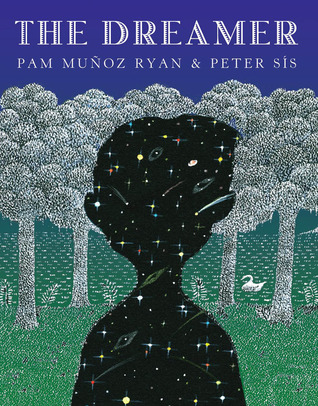
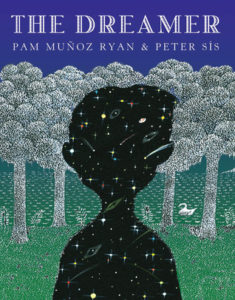
The Dreamer
Author: Pam Muñoz Ryan & Peter Sis
Published April 1st, 2010 by Scholastic Press

Summary: Neftali finds beauty and wonder everywhere: in the oily colors of mud puddles; a lost glove, sailing on the wind; the music of birds and language. He loves to collect treasures, daydream, and write–pastimes his authoritarian father thinks are for fools. Against all odds, Neftali prevails against his father’s cruelty and his own crippling shyness to become one of the most widely read poets in the world, Pablo Neruda. This moving story about the birth of an artist is also a celebration of childhood, imagination, & the strength of the creative spirit. Sure to inspire young writers & artists.

Teachers’ Tools for Navigation: This book is more about beating the odds that someone has set in place for you. Neftali is told he should be a poet by his father but when Neftali decides to be who he is meant to be, a poet/ artist, he finds success and happiness there.

The Dreamer would be an excellent book for independent reading within the classroom. This book would be great to have in your classroom library so that there are an array of diverse books to choose from. There will be a student at some point that will be able to relate to Neftali’s story with his father. This book could definitely make an impact on a student.

This book would be an excellent shared reading pick or book club choice. The story takes place in Chile, so can be used when teaching about other countries, specifically focusing on the norms, culture, and government. This story is also based on the childhood of poet Pablo Neruda. The book serves as an excellent introduction to poetry. The book is also a great aid for social emotional learning.

Discussion Questions: 

  • Why do you think Neftali enjoys daydreaming?
  • How would you describe Neftali’s relationship with his father?
  • What does Neftali’s father think of Rodolfo’s singing?
  • Why does he want Rodolfo to focus on business or medicine, instead of singing?
  • Compare Neftali’s father to Neftali’s uncle, Orlando. How are they similar or different?
  • Who did you think Neftali relates more to, his father or his uncle? Why?
  • How did Neftali’s relationship with his father change after his trip to the forest?
  • Why does Neftali love and hate the ocean?
  • Has anyone ever told you what you should be when you grow up? If so, how did it make you feel? What do you want to be when you grow up?
  • Why does Neftali’s have a hard time making it to school on time?
  • What does Neftalis’ collections represent? How do they make him feel?
  • Has someone ever told you that you should do something- as your father did with Neftali? How did that make you feel?
  • What does Neftali dream of becoming? Does his father agree? Why or why not?
  • Neftali’s father called him by really harsh names, such as “idiot”- Do you think that Neftali was truly any of those things?
  • In the beginning, Neftali was shy, frail, didn’t say much, and spent a lot of time alone. How did Neftali begin to change throughout the book?
  • In what ways did Neftali’s relationship begin to change with his father?
  • What do you think it feels like to be Neftali?
  • Draw a specific scene from the book, why did you choose this scene to draw?

Recommended For: 

classroomlibrarybuttonsmall


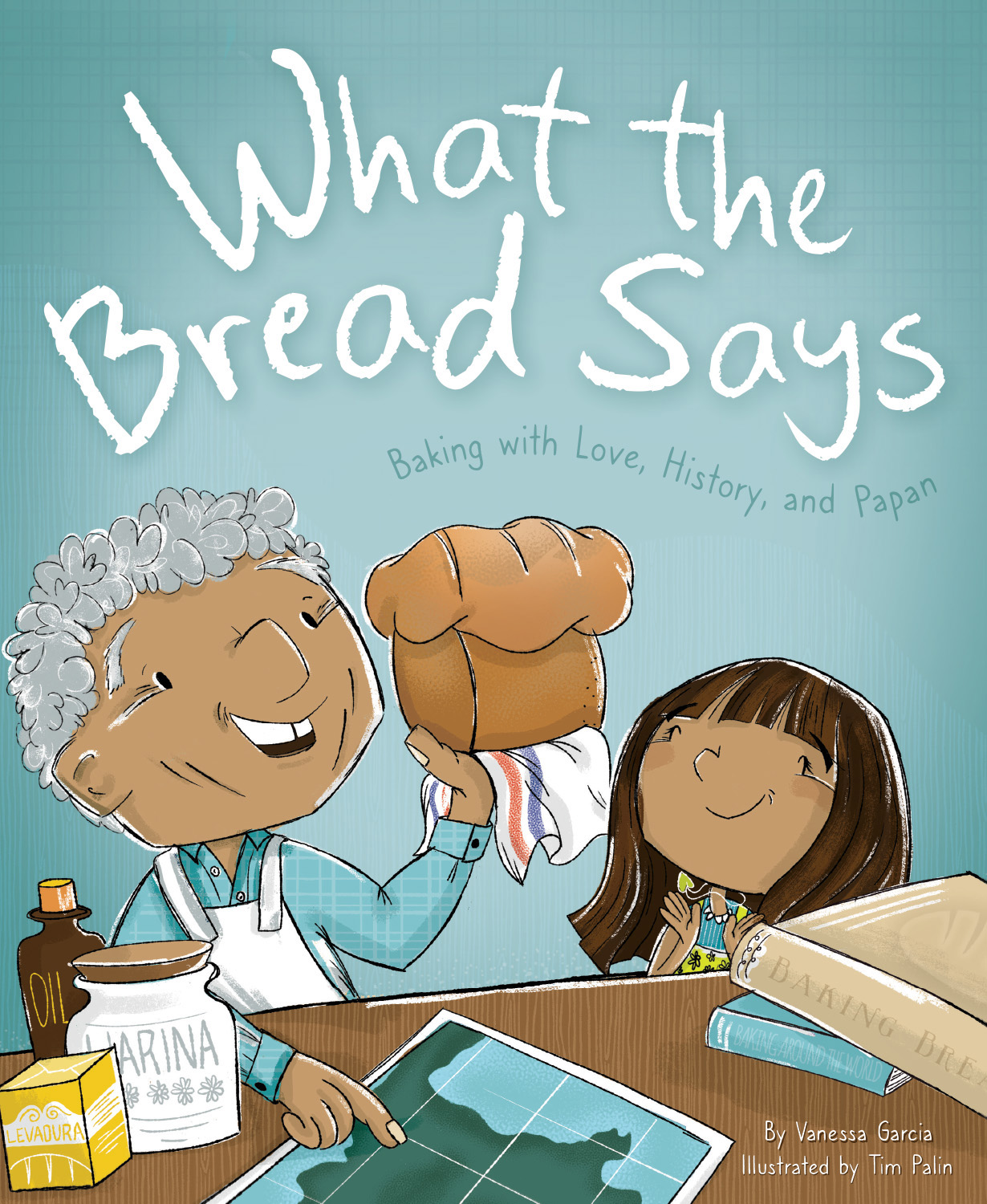
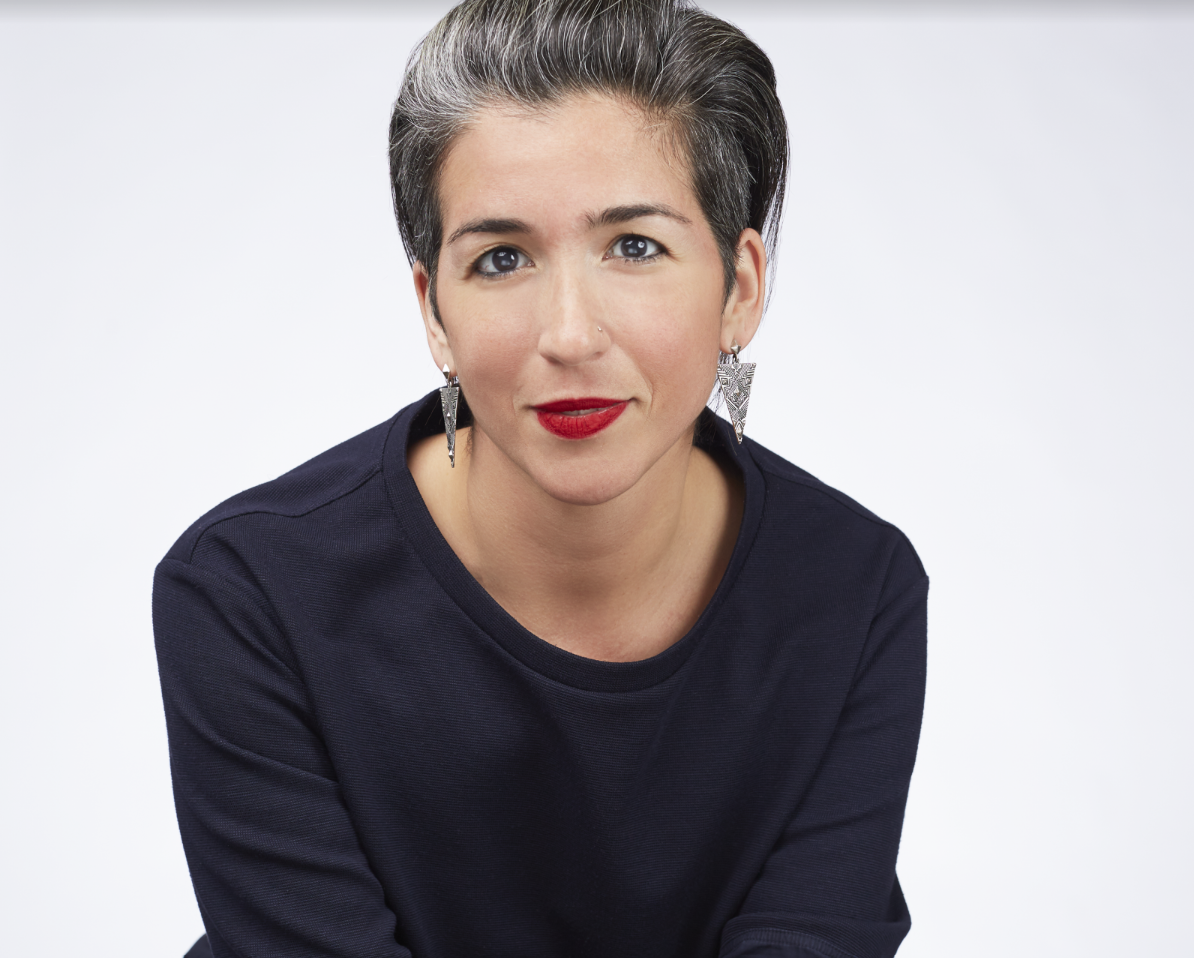
Author Guest Post: “How to Honor Your Roots” by Vanessa Garcia, Author of What The Bread Says: Baking with Love, History, and Papan

Share

“How to Honor Your Roots”

I come from a family whose roots are thick and wild. A family which was uprooted repeatedly; displaced over and over again. But the root itself – to homeland and history — never died. Instead, it flourished with mysteries and new blooms alike.

Somehow, my grandparents managed to salvage and plant our family’s displaced Cuban roots on American soil. My mother nourished them, and they grew. It’s my job, as the daughter of refugees, to water them, watch them grow deeper and higher still. Writing is the way I till and water.

A little bit of background.

My grandfather was born in Spain and escaped three tyrannies. He escaped Franco during the Spanish Civil War, by crossing the Pyrenes Mountains on foot with his brother, Pedro. He was 13-years-old. Once in France, he and Pedro became foster kids. Then, WWII hit, and he and Pedro had to escape Hitler. They escaped on a ship with Jewish kids, fleeing for their life, the same ship Vladimir Nabokov would take just a month or so later.

The ship was headed to Ellis Island.

After stepping foot on Ellis Island, however, Pedro and Papan, which is what I call my grandfather, did not stay in the U.S. Papan and his brother told Ellis Island officials that they were from Cuba, because they were afraid to be sent back to war-torn Spain. So, instead, the brothers were shipped off to Cuba, where they built a new life. It was a spectacular life. Pedro and my grandfather made families, my grandfather married my Cuban grandmother; they had my mother and aunt. And then…Fidel Castro.

Fidel Castro came to power, and it was time to escape again, from yet another tyranny – this time to Miami. My grandfather fled with my mom, aunt, and grandmother, almost losing his life in the process. Pedro was not so lucky — he was caught and imprisoned, politically, for almost a decade. After Pedro was released from prison, he didn’t speak to anyone for about a year because of the torture he’d suffered under the Castro regime.

These are the kinds of stories so many people I know live with as part of who they are, and the legacies they carry; stories we cannot forget. This is why I write about my grandfather.

What the Bread Says is my first book-form homage to him. It’s a picture book that carries a lot, but is also simple at the same time. It’s the story of how, when I was a kid, my grandfather taught me to bake bread while telling me the family story.

I hope it inspires many other kids and families to collect their own family stories. I hope it inspires parents to tell oral histories and kids to ask questions. I hope it inspires families to record and archive these stories. These are the stories that make us up, not just as individuals, but as a collective. A forest.

History is within us. And sometimes it feels so big, we don’t know where to start. My advice? Grab your phone and place it next to your grandmother, mother, great grandfather. Whoever is around – the people that carried and watered the roots of your family until now. Because now it’s YOU! It’s your turn.

Press record and ask them to tell you the story of their life. Tell them to start from the beginning. Give them an example: “I was born in _____ on ______ day in the year _______….” And let them take it from there.

That’s what I did.

I let them take it, and my elders took me on a journey. I did this to both my grandparents. The first time, I went home and listened to the recordings. Then, I transcribed them. After this, questions arose. I went back. I asked these and other questions, asked them to fill in the blanks. They couldn’t remember all of it – my grandfather was 98 when he died, that’s almost a century of knowledge and experience. When he couldn’t remember, I asked those around him. I did research. Apart from all the bread-making sessions, which were unrecorded, of course, I began to record them when I was a teenager and later as an adult. I am still gathering their story, even beyond my grandfather’s death.

Our humanity is a puzzle – a map that’s partially uncharted, partially hidden, partially in sight. Our old people carry the key, and our young have the energy to use it. Together, we unlock the map and make the future.

What The Bread Says: Baking with Love, History, and Papan
Published October 1st, 2022 by Cardinal Rule Press

About the Book: Join Papan and Vanessa on a baking adventure from the bumpy Pyrenees Mountains into fancy Paris and to the tropical island of Cuba, kneading and dancing, singing, and telling stories all the way.

In every piece of bread, there’s a story, here is ours. What’s yours? Put on your apron and get ready to bake some delicious bread while you travel from Spain to France to Cuba and back again — all before the kitchen timer dings. Let Papan be your guide!

Book Trailer:

About the Author: Vanessa Garcia is a multidisciplinary writer and creator working as a screenwriter, novelist, playwright, and journalist. She has written for Sesame Street, Caillou, and is a consultant on Dora the Explorer. Her debut novel, White Light, was published in 2015, to critical acclaim. Named one of the Best Books of 2015 by NPR, it also won an International Latino Book Award. She holds a PhD from the University of California Irvine in English (with a focus in Creative Nonfiction), an MFA from the University of Miami (in fiction), and a BA from Barnard College, Columbia University (English and Art History). Her autobiographical radio play, Ich Bin Ein Berliner about the fall of the Berlin Wall and her relationship to Cuba, premiered in April of 2021. You can learn more at http://www.vanessagarcia.org/.

Thank you, Vanessa, for sharing your inspiration and history!

Warrior Princess: The Story of Khutulun by Sally Deng

Share


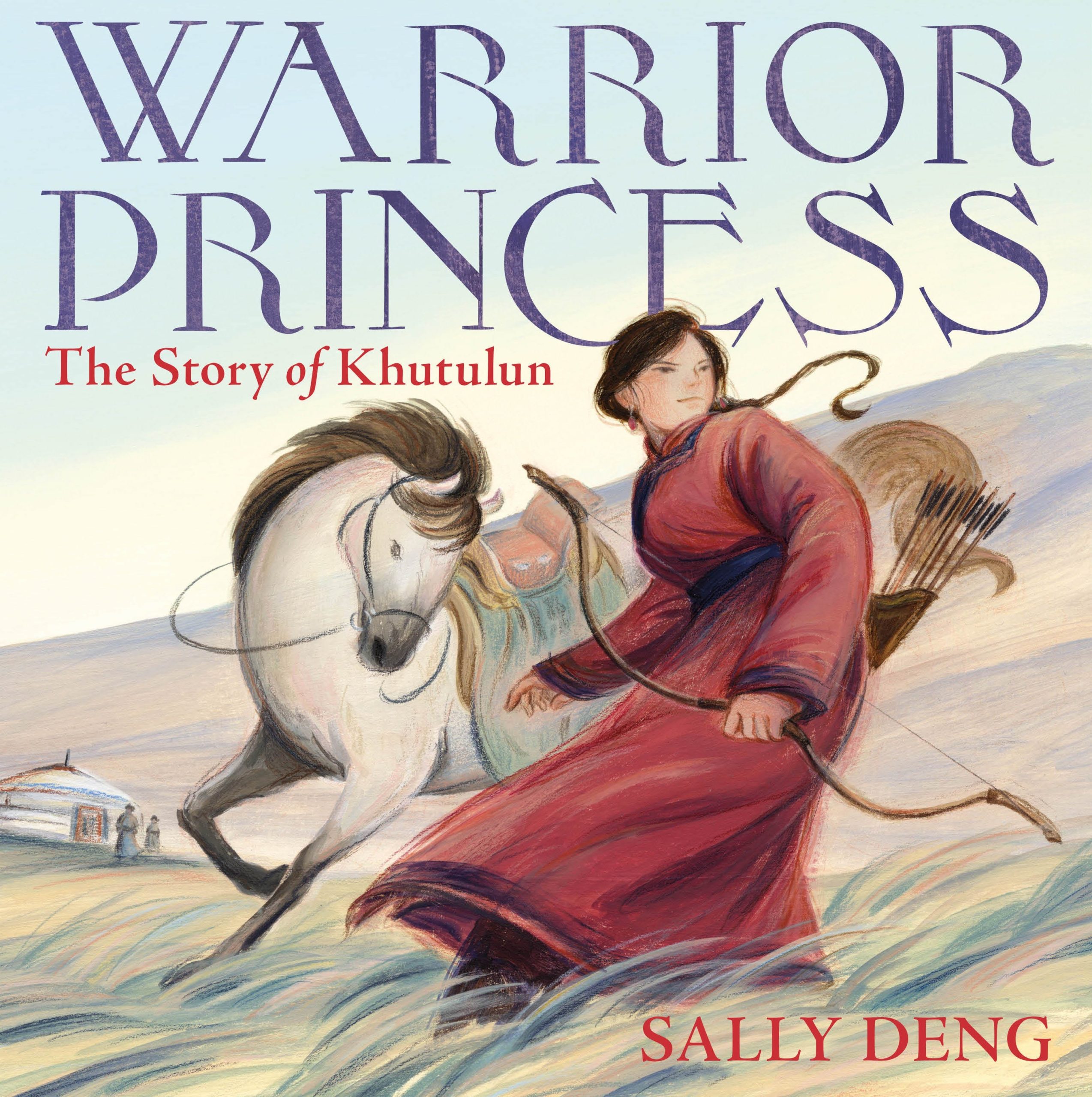
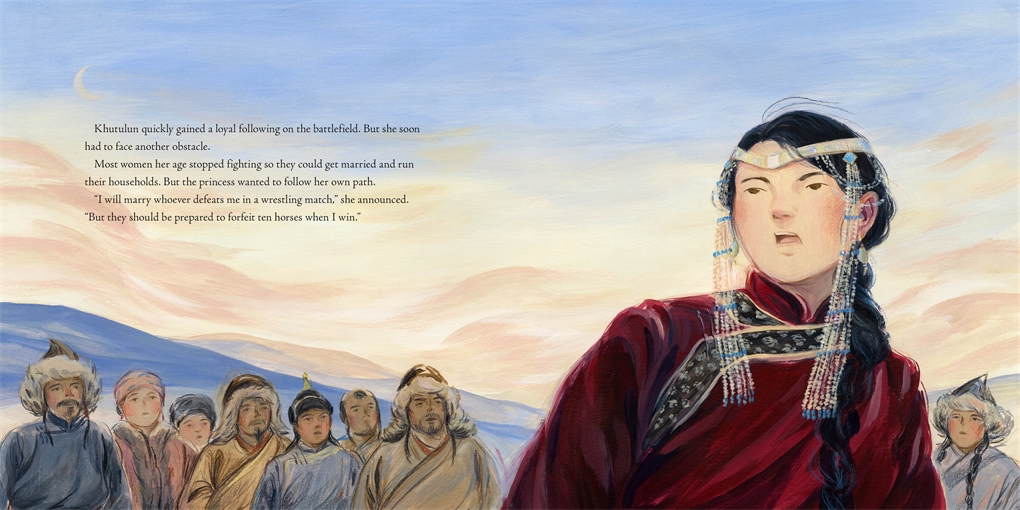
Warrior Princess: The Story of Khutulun
Author and Illustrator: Sally Deng
Published: August 23, 2022 by Farrar, Straus, and Giroux

Summary: This picture book follows the life of the great-great granddaughter of Genghis Khan, a princess who could rule on the battlefield as well as—or better—than any soldier, and when faced with a potential marriage, learns that sometimes the best way to serve one’s community is to stay true to oneself.

Ricki’s Review: This creative nonfiction text shares what we know about the life of Khutulun, great-great granddaughter of Genghis Khan. She was a princess who had never been defeated in a wrestling match and was a force on the battlefield. When she is forced to marry, she agrees that she will only do so if a man can defeat her in a wrestling match. If they lose, they owe her family ten horses. I really, really enjoyed reading this story. I started reading it to two of my sons, and my third son creeped on over because he was listening and was hooked. It is captivating! The characters are well drawn and the pacing is perfect. 

Teachers’ Tools for Navigation: This book would inspire students to research and learn more about Khutulun and Genghis Khan. Teachers might include other books that creatively imagine people of the past to talk about writers craft and agency in reimagining people of our past.

Discussion Questions: 

  • In what ways does Khutulun show strength?
  • What important decisions does she make in the text? Why does she make it?
  • What themes does this text teach you?

Flagged Spread:

Read This If You Love: Creative nonfiction, historical fiction, autobiographies, reading about historical figures


**Thank you, Macmillan for sending an advanced reading copy for an honest review!**

Guest Review: The Bad Seed by Jory John, Illustrated by Pete Oswald

Share

Guest Reviewer: Katie, UCF Elementary Education Student

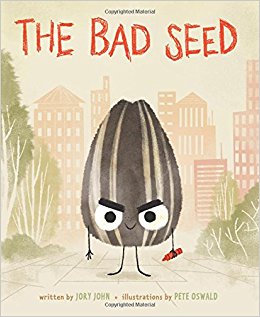
The Bad Seed
Author: Jory John
Illustrator: Pete Oswald
Published August 29th, 2017 by HarperCollins Publishers

Summary: This is a book about a bad seed. A baaaaaaaaaad seed. How bad? Do you really want to know?

He has a bad temper, bad manners, and a bad attitude. He’s been bad since he can remember! This seed cuts in line every time, stares at everybody and never listens. But what happens when one mischievous little seed changes his mind about himself, and decides that he wants to be—happy?

About the Creators:

Jory John is a New York Times bestselling author and two-time E. B. White Read Aloud Honor recipient. Jory’s work includes the award-winning Goodnight Already! series; the bestselling Terrible Two series; the popular picture books The Bad Seed, Penguin Problems, and Quit Calling Me a Monster!; and the national bestseller All My Friends Are Dead, among other books. He lives in Oregon.

Pete Oswald is an LA-based artist, kid lit author/illustrator, and production designer. He is the co-creator of Mingo the Flamingo, published in 2017 by HarperCollins. Pete is also the illustrator of The Bad Seed, by Jory John. When Pete is not working on books he is helping to uplift many of the most successful animated franchises as a character designer, concept artist, and production designer. Pete lives in Santa Monica, California, with his wife and two sons.

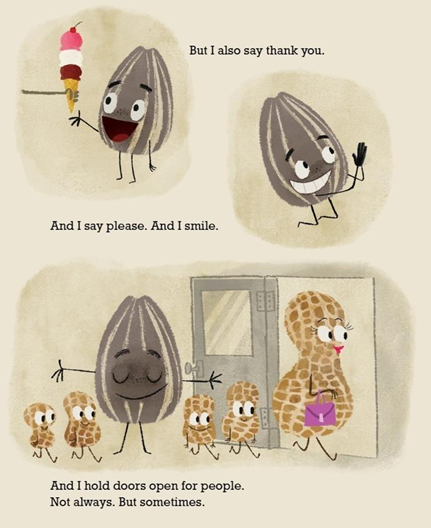
Review: I personally love this book and the character development it possesses throughout. There is a background on how the seed became to be “The Bad Seed”, which helps readers understand that there is always a reason behind their peers’ behaviors. The seed shared the things he does and the reasons he believes himself to be so bad but also a chance in his mindset, he no longer wants to be a bad seed. He starts changing his behavior and wants to be happy. This shows kids that it’s okay to want to make positive changes in themselves and it is possible for their peers to do so too. The seed also shares that he may not continue these positive behaviors at all times but does so from time to time. This shows that you can not be the perfect person at all times but it’s all about you trying to do so. With this, I think this would be a great book to start the year out with to show students that it is okay to start out being “bad” and changing for the better. It also gives students a chance to understand behaviors without telling them.

Teachers’ Tools for Navigation: I think this book would be best for a classroom read aloud. This is because it would be a great introduction book or even if you notice there are a lot of negative behaviors happening in the classroom. It shows character development and how you can turn your behavior around. It also shows that there is a reason behind all negative behaviors and that these reasons are justifiable as well showing that you can get past it.

Some activities you could also do with it are:

Mapping: Mapping could be used for this book as you can map the journey the character takes to change his behavior from being bad to being good. You can have points that begin with the seed being happy, what happened that made him change his behavior, what he did while he was being bad, and what he started doing to become good.

Literature Logs: This could be used for older age groups, they can stop at the beginning to make connections or write down their initial thoughts after a picture walk. They can stop at different points to make inferences about what’s going to happen next or things they believe the character can do to turn around his behavior.

Graffiti Boards: This could be used just like the literature logs but may be more fun for the students as it is less structured. Here they have a chance to write, draw and interpret ideas on their own with little guidance other then the initial instructions and it can be done at any point without having to stop as a whole class to complete.

Discussion Questions: 

  • Describe in your own words the reasoning behind the bad seed becoming bad?
  • Why do you think the seed is considered to be the bad seed just from looking at the cover?
  • Do you think the seed will be able to overcome his “bad” behavior? Why or why not?
  • Describe a time in your life where you interacted with someone who acted like the bad seed? How did it make you feel?
  • Why do you think the seed wanted to turn his behavior around and become good again?
  • What do you think we can learn from the bad seed and his journey to become good?

Flagged Passages: 

Read This If You Love: Understanding behavior, colorful illustrations

Recommended For: 
classroomlibrarybuttonsmall

Thank you, Katie, for your review!

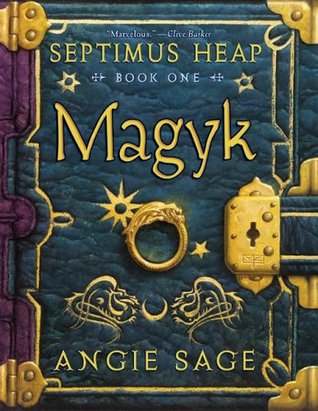
Guest Review: Magyk by Angie Sage

Share

Guest Reviewer: Grace, UCF Elementary Education Student

Magyk (Septimus Heap Book One)
Author: Angie Sage
Published March 2nd, 2005 by Bloomsbury Publishing

Summary: The first part of this enthralling new series leads readers on a fantastic journey filled with quirky characters, clever charms, potions and spells, and a yearning to uncover the mystery at the heart of this story…who is Septimus Heap?

The 7th son of the 7th son, aptly named Septimus Heap, is stolen the night he is born by a midwife who pronounces him dead. That same night, the baby’s father, Silas Heap, comes across a bundle in the snow containing a newborn girl with violet eyes. The Heaps take this helpless newborn into their home, name her Jenna, and raise her as their own. But who is this mysterious baby girl, and what really happened to their beloved son, Septimus?

Angie Sage writes in the tradition of great British storytellers. Her inventive fantasy is filled with humor and heart: Magyk will have readers laughing and begging for more.

About the Author: Angie Sage began her career illustrating books, and then started writing – first toddler books, later chapter books and then the masterful Septimus Heap. She lives in a fifteenth-century house in Somerset. She has two grown-up daughters.

Review: Magyk is an interesting fantasy adventure that provides children an alternative to the increasingly controversial Harry Potter series. It has themes of wizardry/magic and adventure and focuses on a small group of young characters that age throughout the series.

Magyk and the rest of the Septimus Heap series promotes gender equality as it has several strong female characters and shows women in positions of power without questioning from other characters. In addition, this book and its series promote friendships between characters not only of different genders but of different backgrounds and races.

This book also has strong themes of found-family as well as other complicated family relationships that can be comforting to children without a more traditional nuclear family structure. One of the main characters, Jenna, has been adopted and struggles with her relationships with her non-adopted siblings. This is explored further in later books in the series when she meets her biological father and learns the identity of her birth mother.

The series associated with Magyk grows with its reader as Septimus, the main character, ages throughout the series. The books introduce increasingly mature themes over time, introducing readers to new ideas as they are ready for them.

Teachers’ Tools for Navigation: This book touches upon the idea of found family. This theme could be implemented in the classroom to help students better understand the importance of relationships between themselves and those around them. Highlighting the importance of the people we surround ourselves with and the aid they can provide is an important lesson to learn as it gives us strength to go about our day.

This book also teaches students to trust themselves and bare more responsibility as time goes by. Throughout the book, the characters discover that true power comes from themselves. It is only by trusting themselves and working hard that can they achieve their goals. This teaches students the importance of a good work ethic and how you have to work in order to achieve your goals. By adding additional responsibilities to characters throughout the book you can see how their wants and needs change over time however, this does not take away from the goals and aspirations they want to achieve.

Discussion Questions: 

  • Although Jenna is not related to the Heaps by blood she is raised as their daughter. How does Jenna’s relationship with her parents differ from that of her “siblings”?
  • Boy 412 and Jenna both have complicated pasts. How does their relationship change throughout the book as they learn more about themselves and each other?
  • How does Boy 412 relationships with others vary compared to how other children in the book make relationships?
  • How do the circumstances in which Jenna and Boy 412 discover their identities vary? How does this affect how they react to the news?
  • Boy 412 was raised in a militaristic environment, how does this shape the person he has become? If he was raised in a different environment do you think his personality would be different?
  • How do Marcia, Sarah, Zelda, and Silas treat the children differently? Why do you believe they have such different approaches?

Flagged Passages: 

“Oh it’s a pebble… But it’s a really nice pebble Dad thanks.”

Read This If You Love: Books about witches/wizards, Books that age with you

Recommended For: 
classroomlibrarybuttonsmall

Thank you, Grace, for your review!!


Guest Review: Thank You, Omu! by Oge Mora

Share

Guest Reviewer: Briana, UCF Elementary Education Student

Thank You, Omu!
Author & Illustrator: Oge Mora
Published October 2, 2018 by Little, Brown Books for Young Readers

Summary: A generous woman is rewarded by her community in this remarkable author-illustrator debut that’s perfect for the Thanksgiving season, perfect for fans of Last Stop on Market Street.

Everyone in the neighborhood dreams of a taste of Omu’s delicious stew! One by one, they follow their noses toward the scrumptious scent. And one by one, Omu offers a portion of her meal. Soon the pot is empty. Has she been so generous that she has nothing left for herself?

About the Author: Oge Mora is a collage artist and storyteller. Her picture book, Thank You, Omu!, was a Caldecott Honor, Coretta Scott King/John Steptoe New Talent Award winner, and Ezra Jack Keats Book Award recipient.  Her second book, Saturday, won the 2020 Boston Globe—Horn Book Picture Book Award. Oge’s artwork has been applauded by The Washington Post, The New York Times, The Wall Street Journal, and The Boston Globe. She also recently made the Forbes 30 Under 30 2021 list in Arts & Style.

Oge grew up in Columbus, Ohio but resides in Providence, RI. She is a fan of all things colorful, patterned, or collaged, and enjoys creating warm stories that celebrate people coming together.

Review: This is a beautiful and joyous book celebrating community, generosity, and reciprocity. What I like about this book is that everything is freely given: Omu shares her stew out of the kindness of her heart and all of the neighbors return that kindness without being asked or cajoled. I also like this book because it demonstrates how we can and should rely on each other in times of need. Everyone in the book receives and gives help at different points. And this shows how connected, strong communities make everyone’s life better. I think this book is important because there isn’t really any conflict or character growth in the story, instead everyone acts as they should, and this serves as a model for students about how to act and how the world should be.

The cut-paper illustrations, also done by Oge Mora, are colorful and vibrant. This makes the book and the town it depicts feel warm, inviting, and idyllic which draws the reader in and supports the text’s message about the value of community. This book is set within an urban setting, which is a refreshing change of place from the suburbs, and idealized rural and wilderness settings of so many children’s books. And it is important for children to see urban communities as beautiful and valuable.

Teachers’ Tools for Navigation: I think this book is a valuable addition to your classroom library and it is an excellent book for whole class read aloud. This book can be used with the guided questions to prompt discussions about sharing and about the students’ own communities. It is also useful to build a healthy classroom community. Students are going to be asked to share and work together throughout the year. Students can also explore the illustration style while exploring the central theme. For example, students could be tasked to depict a scene of a time when they shared or someone shared with them using cut construction paper. After reading the story students should be able to understand and reflect on their own communities, the members that make it up  and how everyone works towards a happy community. You can also discuss the elements of Nigerian American culture that are prevalent in this book, such as the one pot stew and Omu’s name herself.

Discussion Questions: 

  • What does Omu make that has everyone starving?
  • Why do you think Omu shares with everyone?
  • How do you think all the characters know each other?
  • How did the community thank Omu for sharing?
  • Omu helped her community by sharing! What are things you could share that would help your community? Remember that you can share things that are not physical.
  •  What makes a good neighbor?
  • Why is sharing important? Can sharing be hard? Why or why not?

Flagged Passages: 

Book Trailer: 

Read This If You Love: Last Stop on Market Street by Matt de la Peña, Bear Came Along by Richard T. Morris, Wolf in the Snow by Matthew Cordell

Recommended For: 
classroomlibrarybuttonsmall

Thank you, Briana, for your review!

Hope Wins: A Collection of Inspiring Stories for Young Readers edited by Rose Brock

Share

Hope Wins: A Collection of Inspiring Stories for Young Readers
Editor: Rose Brock
Published: May 10, 2022 by Philomel

Summary: In a collection of personal stories and essays, award-winning and bestselling artists from Matt de la Peña and Veera Hiranandani to Max Brallier and R.L. Stine write about how hope always wins, even in the darkest of times.

Where does hope live?
In your family?
In your community?
In your school?
In your heart?


From a family restaurant to a hot-dog shaped car, from an empty road on a moonlight night to a classroom holiday celebration, this anthology of personal stories from award-winning and bestselling authors, shows that hope can live everywhere, even–or especially–during the darkest of times.

No matter what happens: Hope wins.

Contributors include: Tom Angleberger, James Bird, Max Brallier, Julie Buxbaum, Pablo Cartaya, J.C. Cervantes, Soman Chainani, Matt de la Peña, Stuart Gibbs, Adam Gidwitz, Karina Yan Glaser, Veera Hiranandani, Hena Khan, Gordon Korman, Janae Marks, Sarah Mlynowski, Rex Ogle, James Ponti, Pam Muñoz Ryan, Ronald L.Smith, Christina Soontornvat, and R.L. Stine.

Ricki’s and Kellee’s Review: We love that Rose Brock decided to take the idea of Hope Nation and create a version for younger readers because all ages need to hear stories from those they look up. This is especially true about stories that are filled with adversity and hope. Usually with anthologies from various authors, we find ourselves liking only some of the stories and finding that others are dragging; however, with this text, we found that each story fit purposefully in the book. And because of the purposeful choices, every reader will find something in the book to connect with and will learn a little bit of something from each story.

Although we liked all the stories, we did have some favorites:
-Pablo Cartaya speaks from the heart and definitely made us cry (and clap for the young lady who we know inspired one of Kellee’s favorite books, Each Tiny Spark);
-James Bird shows that there is hope even in the darkest of times and the power of a strong support system;
-J.C. Cervantes shared how a teacher changed everything even if the teacher nor the student realize it at the time;
-Adam Gidwitz writes about what so many of us have felt at one time or another, and we felt it deep in the gut;
-Christina Soontornvat shows what life can teach that school cannot;
-Stuart Gibbs tells the truth about adversity and absolute grief;
-Janae Marks speaks to how hopes and dreams can lead to different hopes and dreams, you just need patience;
-Gordon Korman speaks about that feeling of revision and the emotional roller coaster that come with it;
-Hena Khan speaks about what it means to feel different and to want to share a piece of ourselves with others;
-Sarah Mlynowski writes about the powerful bond of sisterhood and the feeling of being far from those we love; and
-James Ponti showed how even in middle school you can stand up for who you want to be, and the power of names and naming.

Although the diversity of stories and authors is vast and all readers will find something to connect with, we did wish there were a few more queer stories in the collection. With the “Don’t Say Gay” bill, we are particularly thinking about this topic. This could be supplemented by teachers with other essays beyond the collection.

Teacher’s Tool For Navigation: This book easily lends itself to a personal narrative unit or a college essay unit. Both of these are very prevalent in curricula, which makes this book a phenomenal fit. Ricki showed the first chapter to her neighbor who is writing her college essay, and it inspired a great discussion.

Discussion Questions:  

  • What is hope?
  • Where and how do we seek hope?
  • When have you found hope in your life?
  • Which stories resonated with you? Why?

Flagged: “The daily reminder of how our own lives can be turned upside down made me realize why it’s so important to hang on to hope. It’s not always an easy thing to do—sometimes, it feels downright impossible—but the thing I know is that difficult times in life come and go; with those experiences, we grow as people. The key is to find ways to motivate and inspire our spirits—stories of hope can do that” (n.p.)

Read This If You Love: Hope Nation edited by Rose Brock; The Chicken Soup for the Teenage Soul series; Essay Collections; Anthologies; Middle Grade Authors

Recommended For: 

classroomlibrarybuttonsmall

RickiSigand