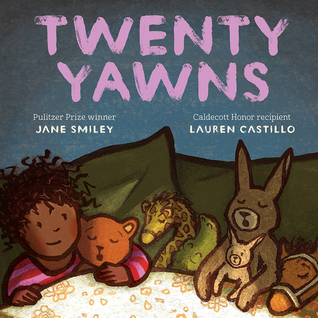
Twenty Yawns Author: Jane Smiley; Illustrator: Lauren Castillo
Published April 1, 2016 by Two Lions
Goodreads Summary: Featuring lyrical text and beautiful illustrations, this bedtime tale from Pulitzer Prize winner Jane Smiley and Caldecott Honor recipient Lauren Castillo evokes the splashy fun of the beach and the quietude of a moonlit night, with twenty yawns sprinkled in for children to discover and count.
As her mom reads a bedtime story, Lucy drifts off. But later, she awakens in a dark, still room, and everything looks mysterious. How will she ever get back to sleep?
Ricki’s Review: My son asks me to read this book every single night. (I’m not kidding. Imagine his sweet voice asking, “Twenty Yawns, please, Mama?”) My favorite part about this book is that there are many interactive sections that we can read together. He can’t read yet, but he is slowly learning sight words and loves reading the “Flap! Flap! Flap! Flap!” of the umbrella and each of the twenty “yawns.” He also tells me what Lucy is doing on each page. There are a lot of bedtime books out there, but this book truly makes me sleepy. I’m getting sleepy as I think about it right now! My son and I both yawn as we see each character yawn. Parents, READ: This book will make your child(ren) tired! I’d be remiss if I didn’t mention that the illustrations are breathtaking. The drawings of Lucy’s stuffed animals capture my attention every time I read this book. I feel lucky to have this book in my bedtime arsenal. My son is falling asleep more quickly. Could it be the twenty yawns?
Kellee’s Review:I love Ricki’s story of how Henry has imprinted on this book! Trent and I read it, and he said “Night, night!” on each of the pages where someone was going to sleep. And like Ricki said, in addition to having beautiful illustrations and a sweet story, this book will definitely make your child sleepy! I cannot help but yawn when I am reading it.
One other thing Trent loves is a promotional piece we received with the book (and you could win below!): a door hanger. One side says, “Shhh…we’re yawning.” And the other side says, “Come in. We’re ready to play.” It is hanging on his door, and we have to flip it back and forth depending on if he is getting up or going to bed. And on the “Shhh” side, he says goodnight to the little girl.
Teachers’ Tools for Navigation: Teachers might use this book to teach figurative language. Kids will enjoy the bold print of onomatopoeias. The illustrations feature aspects of the story that aren’t always present in the text. I love with authors and illustrators don’t match the illustrations and text perfectly because it provides such great opportunities for students to compare and contrast the story and pictures. They might talk about why the text doesn’t include all of the information from the illustrations and how this enhances the narrative. Also, kindergarten teachers and daycare providers can use this book right before nap time! I would have loved to have listened to this book as a child. Check out the Activity Kit!
Discussion Questions: Why doesn’t the author number the twenty yawns? How does this make the story more interesting to read?; What does Lucy do when she is frightened? How might you learn to soothe yourself when you are scared?; What activities do Lucy and her parents do together? What activities do you enjoy doing with family?
We Flagged: “Lucy started to carry Molasses back to her bed. But the other toys were looking at her, even Leonard, the baby Kangaroo. They seemed lonely.”
Jane Smiley is the author of numerous novels, including A Thousand Acres, which was awarded the Pulitzer Prize, as well as five works of nonfiction and a series of books for young adults. In 2001 she was inducted into the American Academy of Arts and Letters, and in 2006 she received the PEN USA Lifetime Achievement Award for Literature. This is her first picture book. She lives in Northern California.
Lauren Castillo is the illustrator of many books, including The Reader by Amy Hest. She has also written and illustrated several books, including Caldecott Honor book Nana in the City and The Troublemaker. She lives in Harrisburg, Pennsylvania. To learn more, visit www.laurencastillo.com.
Twitter: @studiocastillo.
and
**Thank you to Barbara Fisch for sending us this book and for allowing us to host the giveaway!**
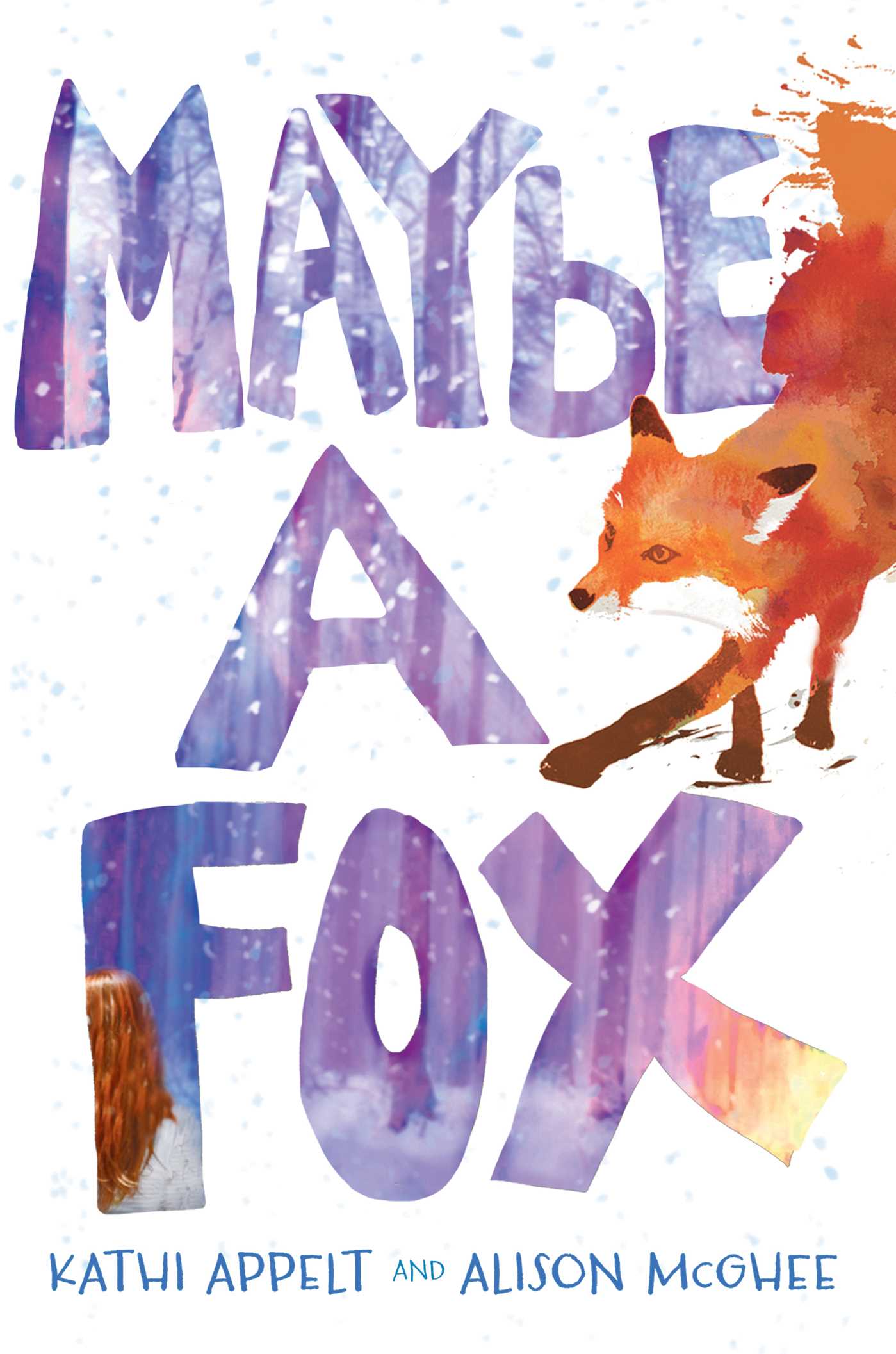
Maybe a Fox Author: Kathi Appelt and Alison McGhee
Published: March 8, 2016 by Atheneum/Caitlyn Dlouhy Books
Goodreads Summary: A tale about two sisters, a fox cub, and what happens when one of the sisters disappears forever.
Sylvie and Jules, Jules and Sylvie. Better than just sisters, better than best friends, they’d be identical twins if only they’d been born in the same year. And if only Sylvie wasn’t such a fast—faster than fast—runner. But Sylvie is too fast, and when she runs to the river they’re not supposed to go anywhere near to throw a wish rock just before the school bus comes on a snowy morning, she runs so fast that no one sees what happens…and no one ever sees her again. Jules is devastated, but she refuses to believe what all the others believe, that—like their mother—her sister is gone forever.
At the very same time, in the shadow world, a shadow fox is born—half of the spirit world, half of the animal world. She too is fast—faster than fast—and she senses danger. She’s too young to know exactly what she senses, but she knows something is very wrong. And when Jules believes one last wish rock for Sylvie needs to be thrown into the river, the human and shadow worlds collide.
Writing in alternate voices—one Jules’s, the other the fox’s—Kathi Appelt and Alison McGhee tell the tale of one small family’s moment of heartbreak.
Ricki’s Review: I read this entire book in one sitting because, quite simply, I could not put it down. I sobbed through the entire book because I connected so strongly with these characters. As a mom, I couldn’t imagine my son experiencing the pain that these sisters felt from the loss of their mother. As a sister, I can’t imagine my own sister disappearing. These two connections, along with the stunning portrayal of character and story, made this book feel deeply personal for me. While younger students won’t be moms, and thus, won’t have this personal connection I had with the text, they will be sons and daughters. Regardless of a reader’s point of view, they will connect with this book because it is written so beautifully. I won’t forget this book, and I don’t think other readers will forget it, either.
Kellee’s Review:This book is one I’ll be talking about for a while. I will say it is probably the saddest book that I’ve ever read; however, it is beautiful. It is very hard to explain unless you’ve experienced because it gives hope while also being so terribly sad. The characters, animal and humans, are so thought out and detailed that as you read you feel with them and for them. I was also in awe of the way Kathi and Alison were able to tell such a unique story without the reader ever feeling like it was an odd scenario. Whenever I try to describe this book to someone, they give me quite a weird look, so I just stop trying and tell them they should read it because it is a heart print book. There is no other way to describe it. Like Ricki said, every reader will feel for someone in the book. And every reader won’t be able to deny how beautifully written the prose is.
Teachers’ Tools for Navigation: As you will read in Kathi and Alison’s guest post below, point-of-view makes this story quite powerful. Teachers might ask students to consider the varying perspectives of this story and how they work together to form a cohesive whole. The teacher might provide other examples of texts that feature different points-of-view to compare and contrast authors’ styles. Students might then try their hand at writing in various, connected points-of-view and subsequently analyze how this enhances a narrative.
Discussion Questions: How do the authors unfold the plot in the narrative?; What predictions did you make while reading this story? How might the story have turned out quite differently?; How does Senna’s point-of-view enhance the story for you?; Were there any allusions within the text?; What theme do you take away from Maybe a Fox?
We Flagged: “The baby girl fox, Senna, came into the world in darkness, thirty feet below ground in the end dug out of cool brown earth. She was the middle child, born between her older and younger brothers, the three of them separated by minutes.
The first thing she knew was the feel of her mother’s tongue. Shhh shhh shhh, cleaning her off, licking her into life and warmth and love and safety.
The second thing she knew was the feel and smell of her brothers’ bodies pressed against hers as their mother nursed them, their front paws kneading her belly.
The third thing she knew was that there was someone waiting for her, someone she needed to find.” (p. 75-76)
A Guest Post from Kathi and Alison about Point-of-View
Finding the best possible point of view for a story is one of the most important choices that a writer can make. The point of view, more than any other aspect of literature, dictates the distance created between the character and the reader. When we embarked upon this story, Alison chose to write from the fox’s story and she decided early on that she wanted to write from an omniscient point of view. This allowed her to place Senna deeply within the pocket of her fox family, and to give our readers an intimate sense of their world. It gave her a way to present the fox-world via the senses of all five members of their family, and put the readers squarely inside of the natural landscape.
When we were first drafting, Kathi chose to write Jules from a first person point of view. However, it didn’t take long before she realized that the first person was too limiting. Yes, first person is quite intimate and there are good reasons to use it, but in this case it felt as though it created too many blind spots. Jules needed a bigger canvas and so Kathi switched to third person. That allowed her to broaden the scope of Jules’ experience, and to let Jules, as well as the omniscient narrator, experience the events as they unfolded.
We always knew that Sam’s point of view would be from the third person too, and he stepped into the story in a way that let the reader get a more objective perspective. We also hoped to show that even though Sylvie’s death primarily impacted Jules and her dad, her loss was felt strongly by the entire community. As well, Sam’s earnest desire for the return of the catamount helped to create a sense of possibility that the other characters couldn’t, simply because of their closeness to Sylvie.
The landscape also gave us a perspective. The woods and rocks, and of course the Slip itself with its local legends, provided not only a backdrop, but its own wild voice, a voice that spoke to each of our characters—fox, Jules, Sam, Elk, Sylvie, Zeke, Dad, and the catamount—in a way that only a wild place can speak.
All this to say that the multiple points of view hopefully helped to create stories within stories that, when woven together, made a single story that was enriched by the viewpoints of each character.
Kathi and Alison.
About the Authors:
Kathi Appelt is the New York Times best-selling author of more than forty books for children and young adults. Her picture books include Oh My Baby, Little One, illustrated by Jane Dyer, and the Bubba and Beau series, illustrated by Arthur Howard. Her novels for older readers include two National Book Award finalists: The True Blue Scouts of Sugar Man Swamp and The Underneath, which was also a Newbery Honor Book. In addition to writing, Ms. Appelt is on the faculty in the Masters of Creative Writing for Children and Young Adults at Vermont College of Fine Arts. She lives in College Station, Texas. To learn more, visit Kathi’s website at kathiappelt.com.
Alison McGhee is the New York Times bestselling author of Someday, as well as Firefly Hollow, Little Boy, So Many Days, Bye-Bye Crib, Always, A Very Brave Witch, and the Bink and Gollie books. Her other children’s books include All Rivers Flow to the Sea, Countdown to Kindergarten, and Snap. Alison is also the author of the Pulitzer Prize–nominated adult novel Shadowbaby, which was also a Today show book club selection. She lives in Minneapolis, Minnesota, and you can visit her at AlisonMcGhee.com.
**Thank you to Barbara at Blue Slip Media for providing copies for review and the giveaway. Also, thank you to Kathi and Alison for the wonderfully insightful guest post!**
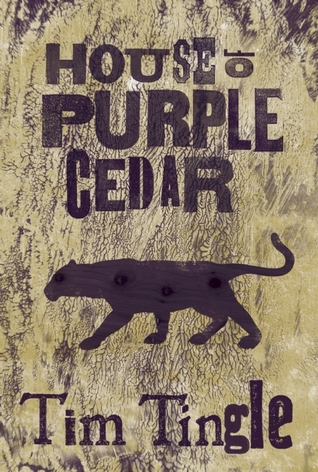
House of Purple Cedar
Author: Tim Tingle
Published: February 18, 2014 by Cinco Puntos Press
GoodReads Summary:“The hour has come to speak of troubled times. It is time we spoke of Skullyville.”
Thus begins Rose Goode’s story of her growing up in Indian Territory in pre-statehood Oklahoma. Skullyville, a once-thriving Choctaw community, was destroyed by land-grabbers, culminating in the arson on New Year’s Eve, 1896, of New Hope Academy for Girls. Twenty Choctaw girls died, but Rose escaped. She is blessed by the presence of her grandmother Pokoni and her grandfather Amafo, both respected elders who understand the old ways. Soon after the fire, the white sheriff beats Amafo in front of the town’s people, humiliating him. Instead of asking the Choctaw community to avenge the beating, her grandfather decides to follow the path of forgiveness. And so unwinds this tale of mystery, Indian-style magical realism, and deep wisdom. It’s a world where backwoods spiritualism and Bible-thumping Christianity mix with bad guys; a one-legged woman shop-keeper, her oaf of a husband, herbal potions, and shape-shifting panthers rendering justice. Tim Tingle—a scholar of his nation’s language, culture, and spirituality—tells Rose’s story of good and evil with understanding and even laugh-out-loud Choctaw humor.
My Review: It took Tingle fifteen years (and many experiences with a Choctaw storyteller) to write this story, and the thoughtfulness of the story makes this feel very true. While this book is marketed for adults, it most certainly has a young adult crossover audience. I was swept away by the lyrical beauty of the words. The book is quite magical. As I think back on the book, vivid scenes replay in my head. I had difficulty putting the book down because the characters were so real. I was wrapped in all of the subplots and did not want to leave the characters. It reminded me much of a John Steinbeck book—East of Eden, in particular.The evilness of Hardwicke in this book reminded me much of Cathy in East of Eden. When I came to the end of The House of Purple Cedar, I felt as if I’d read an epic—or something enormously important.The themes are left to the reader, they are varied, and they pour from the text. This complex story will remain with me for a long time.
Teachers’ Tools for Navigation: Most obviously, teachers could teach this book along with cultural stories from the Choctaw. They might look at reincarnation and its evolution in history and culture, too. Alternatively, teachers could ask students to examine age. What role does age play in this story, and how does it impact character? Teachers might have students read more about the Indian Boarding Schools and their impact on the Native American community.
Discussion Questions: What does Amafo teach us? Would you do the same in his position? How do his lessons impact the rest of the story?; How does Tingle vividly depict characters in ways that make this story come alive? What makes these characters feel so real?; What is Maggie’s purpose in the story? What does she teach us?; What role does family play in this text?
We Flagged: I am choosing a quote that shows just how beautiful Tingle’s language is: “His hand gripped her shoulder and strong fingers seized her upper arm. He flung her on her back and a hot river of strength surged through her. He was massive and his figure blocked the sky.”
Read This If You Loved: Books by Sherman Alexie, House Made of Dawn by M. Scott Momaday, Books by Louise Erdrich, East of Eden by John Steinbeck,
Alistair Grim’s Odditorium Author: Gregory Funaro
Illustrator: Vivienne To
Published January 6th, 2015 by Disney-Hyperion
Summary: Grubb, age twelve (or thereabouts), has never known anything beyond his miserable existence as a chimney sweep, paid only in insults and abuse by his cruel master.
All of that changes the day he stows away in the coach belonging to a mysterious guest at the inn that he is tasked with cleaning. Grubb emerges from Alistair Grim’s trunk and into the wondrous world of the Odditorium. Fueled by a glowing blue energy that Grubb can only begin to understand, the Odditorium is home to countless enchanted objects and an eccentric crew that embraces Grubb as one of their own.
There’s no time for Grubb to settle into his new role as apprentice to the strange, secretive Mr. Grim. When the Odditorium comes under attack, Grubb is whisked off on a perilous adventure. Only he can prevent the Odditorium’s magic from falling into evil hands-and his new family from suffering a terrible fate.
Grubb knows he’s no hero. He’s just a chimney sweep. But armed with only his courage and wits, Grubb will confront the life-or-death battle he alone is destined to fight.
About the Author: Gregory Funaro is the NY Times Best Selling author of the Odditorium series from Disney-Hyperion. He grew up in Cranston, Rhode Island, and wrote his first story, “The Ghost in the Window”, in the fourth grade. He considers this to be his finest work, but unfortunately it has been lost to time. Following high school Greg majored in theatre at the University of New Hampshire, and after various acting gigs, received his AM in Theatre Arts from Brown University and an MFA in Acting from the FSU/Asolo Conservatory. Greg teaches drama at East Carolina University, and spends far too much time on the internet looking for vintage lunchboxes.
Review: Take a bit of Oliver Twist add in some Harry Potter and Charlie and the Chocolate Factory mix it with the snark of Lemony Snicket and Frankenstein’s monster then top it off with some Emerald Atlas and (more) Harry Potter adventure with mythology and fairy tale sprinkles and voila! You have yourself Alistair Grim’s Odditorium. But do not let me fool you into thinking that Gregory Funaro’s story is like anything you’ve read before because even though it alludes to many fantastical adventures, it is its own story through and through.
What makes Odditorium soar is not just the amazing adventure that Grubb and Mr. Grim go on (because it is amazing!), but the cast of characters that accompany them. Without Mrs. Pinch, Nigel, Mack, Lord Dreary, the samurai, and others, the book just wouldn’t be the same. Gregory Funaro did an amazing job creating a fully-developed supporting cast of characters that help push this adventure to the next level.
Author Interview: Thank you so much to Gregory for being willing to answer some questions for us!
Kellee: Alistair Grim’s Odditorium seems to allude to many traditional stories such as mythology and Grimm fairy tales. What other pieces of literature inspired your story?
Gregory Funaro: The works of Charles Dickens, especially Great Expectations and Oliver Twist. The setting is Dickensian London, and you’ll find a lot of common themes from Victorian literature running throughout the series, such as hidden identities, unrequited love, upper-class destiny, etc. There are echoes of Charlie and the Chocolate Factory, of course, and the fantasy works of Lloyd Alexander (The Chronicles of Prydain), but like so many Dickens novels, underneath all the magic and adventure, Odditorium is just a simple story of one boy’s journey toward acceptance and self-discovery.
K: Grubb has quite an odd name–how did that come about?
GF: His original name was Twip–a mash-up of Twist (Oliver) and Pip from Great Expectations. However, one day when I was writing in my office (the building is very old) I spied what looked like a maggot in the cracks between the floor tiles. It ended up being just a rogue grain of rice from some sushi I’d had a few days earlier, but the “maggot” sparked the idea for grub. The extra “b” was just something I threw in there for fun.
K: The illustrations in the novel really help bring it to life and seem to perfectly embody your words. What was your process with working with the illustrator?
GF: Along with the editors, at the beginning of the publication process I was very involved in the initial shape explorations of the Odditorium itself, but after that, as far as I know Vivienne To was pretty much on her own. I was also involved in some tweaking of illustrations along the way to make sure they jived with the story–especially in Aquaticum–but in terms of conceptualizing characters and whatnot, all that came from Vivienne. Fine by me. She is amazing.
K: Although the story is primarily adventure and fantasy, you threw in some humor throughout (I particularly love Mack!). How important do you think it was to add that to your story?
GF: Indispensable. You must have humor even in the most tragic of stories. You need a break once in a while from all the tension(Shakespeare was the master at this) and having a humorous character like Mack (who can also be serious if needed), provides a much richer experience for the reader. I think having a “comedian” in children’s books is especially important because kids can relate. However, you have to be careful, because too much (i.e., just throwing in a bunch of random jokes or snarky comments) can get annoying very quickly.
K: You majored in and teach theater–how did you find yourself writing for young adults?
GF: I actually started writing thrillers during my spare time about eight years ago. I had a couple published (they weren’t very good) and then moved over to children’s literature after the birth of my daughter. Oddly, though, I didn’t see Odditorium as a children’s book at first. In the original premise, Nigel (Mr. Grim’s right hand man) was going to be the focus of a story about Frankenstein’s monster being reunited with his long lost daughter. That idea rolled around in my head until the following summer, and by the time I started Odditorium, it was a children’s book, the monster’s daughter had somehow become Grubb, and the focus was on his journey with Alistair Grim. Nigel and his daughter’s story still exists in the book, but it’s one of the subplots.
K: Book 2 is out now! Can you give us a non-spoilery peak into what Alistair and Grubb are up to next?
GF: Book 2, Alistair Grim’s Odd Aquaticum, centers around an underwater quest for the legendary sword Excalibur–the only weapon powerful enough to penetrate Prince Nightshade’s armor. That’s right, the evil prince and his gang of baddies are back, along with some new characters, including a banshee assassin and a witch named Mad Malmuirie, who wants revenge on Grim for stealing her magical objects. The rest of the Odditorium’s crew is back, too, and they all journey to the mythical realm of Avalon, where the story takes a magical turn that not even Alistair Grim could have predicted.
Teachers’ Tools for Navigation: First and foremost, I think this book is going to find some major love in libraries. If we can get this into students’ hands, they are going to talk about it and pass it around. It is that kind of book. Students will want to talk about it.
In addition, aspects of the book can definitely be used to discuss allusion. Teachers can pull out excerpts of the text and excerpts of the alluded text to compare and contrast and look at how the author made parts of or ideas from the classic text come alive in this new story.
Discussion Questions: Do you believe what Mr. Grim did to help Nigel was right?; What part does Mrs. Pinch play in the story?; What stories/books does Alistair Grim’s Odditorium remind you of? Which parts of the story remind you of what story/book?; Did the author give you any clues (foreshadowing) about Grubb’s true identity?; What do you think happened to Kiyoko?
Book Trailer:
Read This If You Loved: Harry Potter (series) by J.K. Rowling, Charlie and the Chocolate Factory by Roald Dahl, Emerald Atlas by John Stephens, Series of Unfortunate Events (series) by Lemony Snicket, The Magician’s Elephant by Kate DiCamillo, Circus Mirandus by Cassie Beasley, The Vanishing Islands by Barry Wolverton, The Dungeoneers by John David Anderson
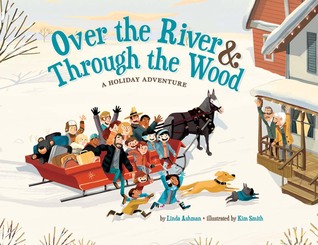
Over the River & Through the Wood: A Holiday Adventure Author: Linda Ashman
Illustrator: Kim Smith
Published October 6th, 2015 by Sterling Children’s Books
Summary:
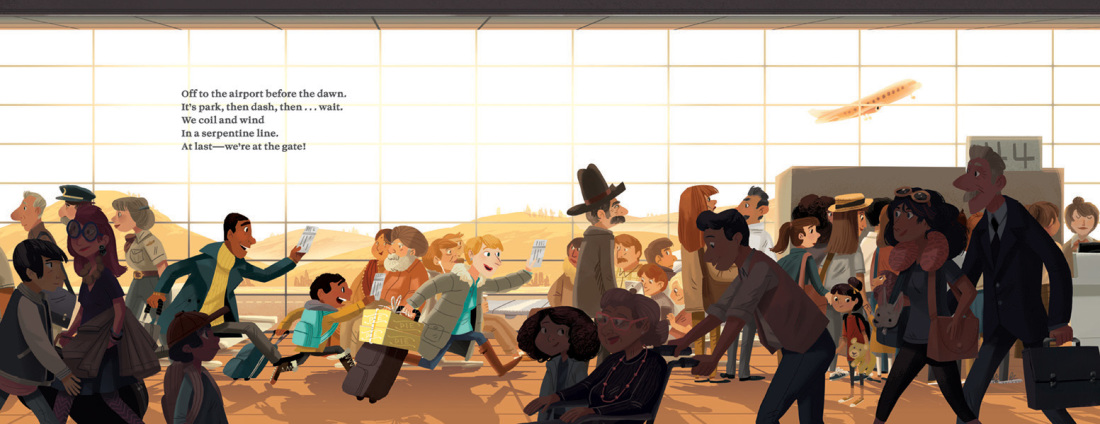
Pack up the pooches and load the van. We need to leave by eight! There’s so much to bring. Do we have everything? Come on, we can’t be late!
The classic song gets a fresh new twist! The fun begins when Grandma and Grandpa send invitations to their far-flung, modern, and multiracial family: Come to our house for the holidays—and bring your favorite pie!Off everyone goes, driving down snowy roads, riding the train, boarding a plane . . . even sailing along in a hot-air balloon. As each family faces an obstacle that delays their trip, they learn that sometimes the most old-fashioned form of transportation works best . . . NEIGH!
About the Author: Linda Ashman has written more than 20 children’s books, including Creaky Old House; Stella, Unleashed; No Dogs Allowed!, and TheTwelve Days of Christmas in Colorado (all Sterling). She lives in Chapel Hill, NC. Visit Linda online at lindaashman.com.
About the Illustrator: Kim Smith has a fun and vibrant extended family, perfect as inspiration for this book. This is the fourth children’s book she has illustrated, along with A Ticket Around the World (Owlkids Books), The Raven and the Loon (Inhabit Media), and The Twelve Days of Christmas in Canada (Sterling, NYP). Kim lives in Calgary, Alberta, with her husband, Eric, and their one-eyed goldfish named Goulash.
Kellee’s Review:Holidays are a great time to celebrate spending time with families, and Over the River & Through the Wood highlights the highs and lows of traveling to see family for the holidays. Told in the same rhythm as the original song, the book has been modernized to include families coming from all different places to go visit family. I also loved the different types of families that were represented in the book. It shows real families and how they are all so different.
Ricki’s Review:This text emanates warmth. I pulled my little guy onto my lap, and we cuddled as we read it together. I enjoyed the sense of adventure, and I might read this book before we go on a big family trip. While my son is only two, I had a nice time discussing what the family was doing and how our family holidays are similar and different. As a teacher I might include this with other holiday books to give a rich sense of different customs and practices of holidays.
Teachers’ Tools for Navigation: Since the book is written to match the original song, it’d be fun to have students write their own version of the song that fits their experiences at the holidays. Or, they might take another song (holiday or not) and adjust the words to fit their culture/customs/experiences.
Discussion Questions: How do different families’ experiences differ during the holidays in the book? In real life?; What different types of families are in the book? In real life?; What differences are there between the original song and the book?
We Flagged:
Read This If You Loved: Other versions of Over the River and Through the Wood including those by Lydia Maria Francis Child or John Steven Gurney
Recommended For:
and
**Thank you to Sterling for providing copies for review!**
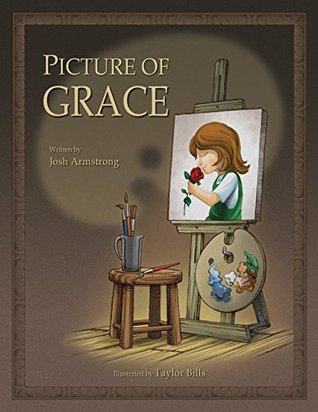
A Picture of Grace Author: Josh Armstrong; Illustrator: Taylor Bills
Published February 17, 2015 by Josh Armstrong
Goodreads Summary: Six-year-old Grace aspires to be an artist like her beloved grandfather Walt. Every week, she goes to his house and watches with great joy as he paints.
Of course, not everyone appreciates Grandpa Walt’s artwork. But as Walt tells Grace, “Some people appreciate the hard work while others just want the painting to be finished. But you can’t be distracted by either group.”
When tragedy strikes, Grace takes it upon herself to honor Grandpa Walt in a special way. Through her act of love and kindness, Grace’s family discovers an amazing secret about Walt’s final, unfinished masterpiece.
My Review: Grandpa Walt’s warmth emanated from the pages. Everyone should have a person like this in his or her life. His impact on Grace is evident both during his life and after his death in the ways she honors him. I loved the ways art connects both Grandpa Walt, Grace, and the others in this text. The book inspired me to want to seek art as an outlet, and I think it will inspire kids, as well.
Teachers’ Tools for Navigation: This would be a great book to use to discuss our heroes and role models. Children might discuss the ways in which Grandpa Walt serves as a role model for Grace and how he impacts her life. Then, they could explore how these qualities exist in other people (both famous and not).
Discussion Questions: How do the author and illustrator show readers that Grandpa Walt has passed away? Why do you think they chose to do it this way?; How is art used to enhance the story? How might you consider it to be symbolic?
We Flagged: “When I grow up, I want to be just like you,” said Grace
“That’s very kind of you,” said Grandpa Walt, “but I can think of nothing better than you simply being yourself.”
Read This If You Loved: The Invisible String by Patrice Karst, Circus Mirandus by Cassie Beasley, Grandpa Loved by Josephine Nobisso, The Noisy Paint Box by Barb Rosenstock
Recommended For:
**Thank you to Josh Armstrong for providing a copy for review!**
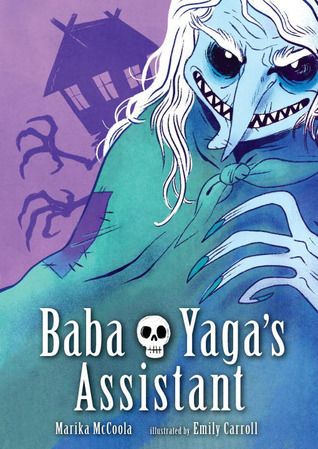
Baba Yaga’s Assistant Author: Marika McCoola
Illustrator: Emily Carroll
Published August 4th, 2015 by Candlewick Press
Goodreads Summary:
ASSISTANT WANTED ASAP
Must have skills in hauling, obeying orders, cooking, and cleaning. Magical talent a bonus. Must be good with heights. Enter Baba Yaga’s house to apply.
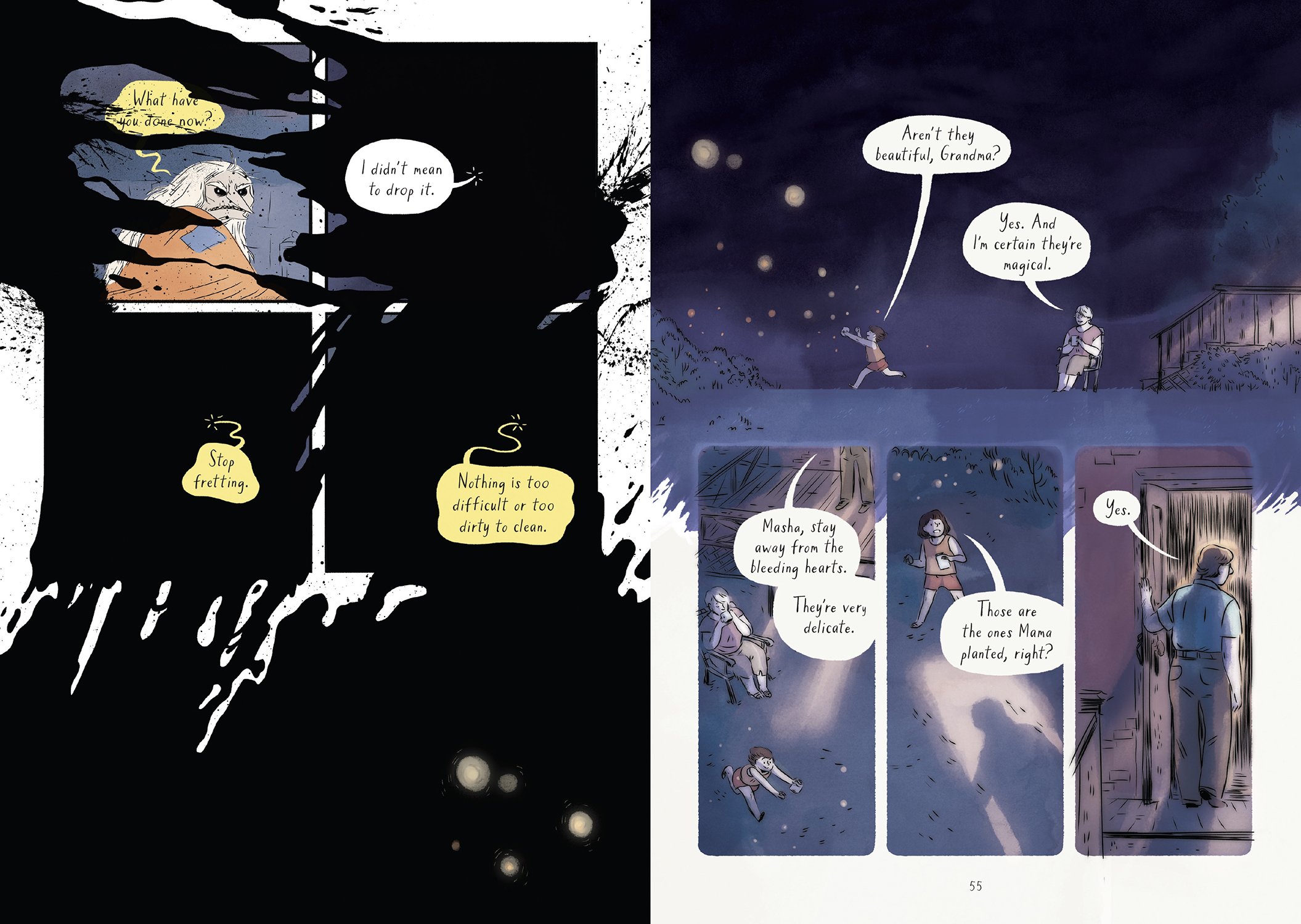
Most children think twice before braving a haunted wood filled with terrifying beasties to match wits with a witch, but not Masha. Her beloved grandma taught her many things: that stories are useful, that magic is fickle, and that nothing is too difficult or too dirty to clean. The fearsome witch of folklore needs an assistant, and Masha needs an adventure. She may be clever enough to enter Baba Yaga’s house on chicken legs, but within its walls, deceit is the rule. To earn her place, Masha must pass a series of tests, outfox a territorial bear, and make dinner for her host. No easy task, with children on the menu!
Wry, spooky and poignant, Marika McCoola’s debut–with richly layered art by acclaimed graphic artist Emily Carroll–is a storytelling feat and a visual fest.
Kellee’s Review: I first learned about Baba Yaga when I was in middle school, and I learned about Mussorgsky’s Pictures at an Exhibition suites based on paintings by Viktor Hartmann. Suite 9, “The Hut on Fowl’s Legs” was based off of his painting of a clock in the form of Baba Yaga’s hut. Because I liked the music so much when I first heard it, I wanted to learn more about it, and one of the things I distinctly remember researching was Baba Yaga who I found fascinating! I then was reintroduced to Baba Yaga when I was reading the Fables series by Bill Willingham, and once again I went and read all about her folklore. Which meant when I saw that there was an upcoming graphic novel, my favorite!, about her, I had to get it.
Marika McCoola’s retelling of the Baba Yaga folktales does them justice. With a mix of classic stories of Baba Yaga and McCoola’s story of Masha, the book does a wonderful job of introducing the readers to who Baba Yaga is at the core, a conflicted witch, and also puts a twist on it all. Masha’s story is more than just an addition to Baba Yaga’s story though. She is the star. Her story is a sad one, and Baba Yaga may just be what she needs. This text will really start some discussions around Masha’s family status and why Baba Yaga and her may just be perfect for each other.
Teachers’ Tools for Navigation: Although it isn’t necessary, knowing the history of Baba Yaga would definitely make the reading of this text even more meaningful. I would love to have Baba Yaga’s Assistant during a traditional literature unit looking at diverse folktales and retellings of those tales.
Discussion Questions: Why was Masha prone to working well with Baba Yaga?; How did Masha’s grandmother influence who she is today?; How did the author intertwine traditional literature with a new story of Baba Yaga?; What do you think is going to happen next?




 and
and