The Perfect Percival Priggs by Julie-Anne Graham

Share

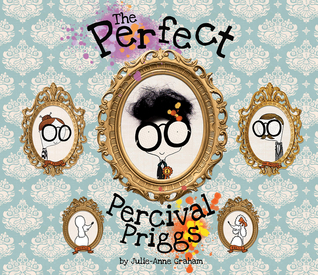
Perfect Percival Priggs

The Perfect Percival Priggs
Author: Julie-Anne Graham
Published: May 26, 2015 by Running Press

Goodreads Summary: Percival Priggs seems to be the perfect child. His parents are perfect, his grandparents are perfect, and even his pets are perfect. Percy’s shelf is packed with gleaming trophies. But with all the practice and preparation needed for his competitions, Percy never has a free moment.

Percy worries that his parents will not love him if he does not smile his prize-winning smile and perform perfectly in every competition. But after his rocket experiment turns into an imperfect mess, Mr. and Mrs. Priggs reveal their own funny imperfections and show Percy they are proud of him exactly as he is.

The message of reassurance and acceptance in The Perfect Percival Priggs is timely in our age of helicopter parenting, overscheduling, and increased testing standards for young children. But it is debut author Julie-Anne Graham’s fresh art style that truly sets the book apart. A former fashion designer with a love of textiles, Graham has built on each page a collage of textured patterns and drawn characters, adding humor and a world of detail to the Priggs’ home and story.

Ricki’s Review: I loved the layered textures of this book. The wide-eyed illustrations will draw readers in and allow them to pay close attention to the important lessons of this story. Many kids battle with inner desires for perfection, and Percival Priggs is no exception. He struggles to be just as perfect as his perfect family, and it weighs on him. He comes to learn that perhaps perfection isn’t all that important.

Kellee’s Review: I loved the unique illustrations of this one. They are eye-catching and are just quirky enough. I also think this is a perfect read aloud for all levels because of its theme. It is definitely going in my read aloud pile for home and school. It has a fun story, but has a much deeper message. I think so many of us face the pressure of being perfect and having a discussion with kids about this pressure and the unrealistic aspect of it would really help with anxiety they may be feeling. I also love the message of family.

Teachers’ Tools for Navigation: This text would offer meaningful classroom discussions about the fallacies of perfection. Students might share times they made mistakes, and this would allow them to understand that we are all human. They might analyze perfection as it is portrayed in society and the media. Additionally, teachers might use this book as a mentor text to teach alliteration in writing.

Discussion Questions: How does Percival’s family react to his worries about perfection?; Can a person be truly perfect?; Why do people have the desire to be perfect?; Share with a partner some of the ways you are an imperfect person and why this might just be okay.

We Flagged: 

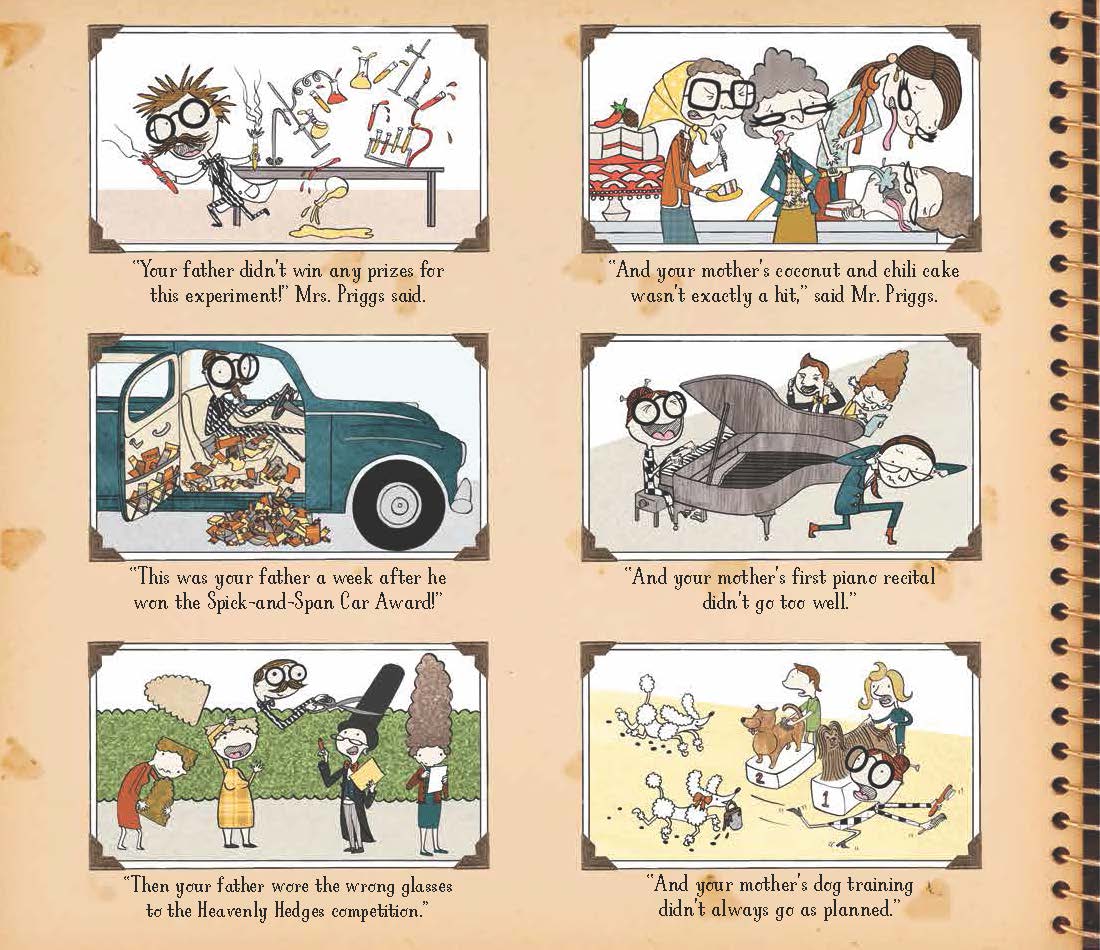
Percival Spread

Read This If You Loved: The Most Magnificent Thing by Ashley Spires; You Are (Not) Small by Anna Kang; Unicorn Thinks He’s Pretty Great by Bob Shea; Giraffes Can’t Dance by Giles Andreae; The Invisible Boy by Tracy Ludwig; The Dot by Peter H. Reynolds

Recommended For: 

readaloudbuttonsmall classroomlibrarybuttonsmall

RickiSigandKellee Signature

**Thank you to Running Press for providing copies for review!**

Review and Giveaway!: Your Alien by Tammi Sauer

Share

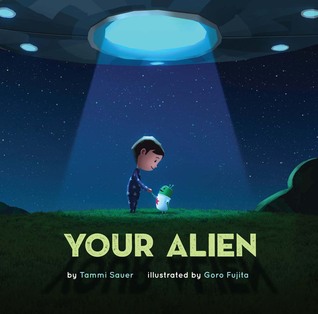
Your Alien

Your Alien
Author: Tammi Sauer
Illustrator: Gorō Fujita
Published: August 4, 2015 by Sterling Children’s Books

Summary: When a little boy meets a stranded alien child, the two instantly strike up a fabulous friendship. They go to school, explore the neighborhood, and have lots of fun. But at bedtime, the alien suddenly grows very, very sad. Can the boy figure out what his new buddy needs most of all? This funny, heartwarming story proves that friends and family are the most important things in the universe . . . no matter who or where you are.

Ricki’s Review and Teachers’ Tools for Navigation: This charming story hooked me from the very first page. Books are rarely written in second person point-of-view, and I am always intrigued by this stylistic choice. I’d love to have students write their own stories in the second person point-of-view. This would offer valuable discussions about the power of POV and why authors might intentionally use this in their writing. Beyond considering the point-of-view, I also enjoyed thinking about the several, implicit themes. This is a story about friendship and about family. However, it is also a story about homesickness. I can imagine that this would be a great story for kids to read when they go off to camp. Teachers might also read this book to a class if students are considering keeping a wild animal, which may be missing its natural home and a habitat. While the main character wants to keep the alien, it has a different home. I suspect that teachers and parents can find a variety of clever ways to integrate this book into their units. The illustrations are captivating, and I suspect that students will fall in love with the story.  

Kellee’s Review and Teachers’ Tools for Navigation: I love the little boy and the alien in this book! They are both so cute and sweet. I was impressed with the story which is much deeper than it looks, and the illustrations are so full and colorful. Like Ricki, I am completely intrigued by the point-of-view of the book. The second person point-of-view really makes the reader become invested in the story.  I’ve only read novels in second person, so this is a wonderful addition to the picture book world. In addition to the themes Ricki discussed, I think it is also a discussion about sometimes not being able to keep/get everything you want and sometimes you have to say good bye to those you love. The book also has a perfect plot arc with an easy to discuss conflict and resolution. Would be a good introduction to this element of narratives as well as characterization and point of view.  This book is going to be a read aloud favorite and is going to start a lot of important discussions.

Discussion Questions: Why was the alien sad? Have you ever been sad for a similar reason?; Do you think the main character made the right choice? Would you have made the same choice?; Why is the book written in second person point-of-view? How does this enhance your reading of the story?

We Flagged: “One day, you’ll be looking out your window when something wonderful comes your way… and you will want to keep him.”

Read This If You Love: Boy + Bot by Ame Dyckman, Space Boy and His Dog by Dian Curtis ReganFaraway Friends by Russ CoxEven Aliens Need Snacks by Matthew McElligott

Giveaway

a Rafflecopter giveaway

Recommended For: 

classroomlibrarybuttonsmall readaloudbuttonsmall closereadinganalysisbuttonsmall

RickiSigandSignature

**Thank you to Lauren at Sterling Publishing Co., Inc. for providing copies for review and for the giveaway!**

Review and Author Interview!: Cold War on Maplewood Street by Gayle Rosengren

Share

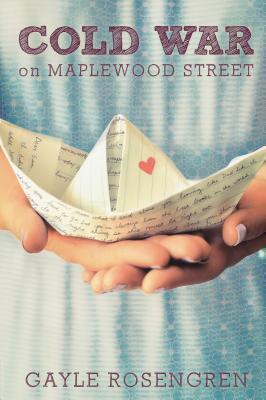
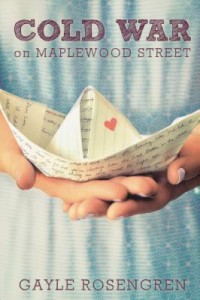
cold war maplewood

Cold War on Maplewood Street
Author: Gayle Rosengren
Published August 4, 2015 (Today!) by Putnam

Goodreads Summary: Cold War anxieties play out in a sensitively told story set during the Cuban missile crisis in the 1960s, perfect for fans of Gary Schmidt and Kristin Levine.

Joanna can’t get over how her brother broke his promise to never leave like their dad did. Sam is thousands of miles away on a navy ship, and no matter how often he sends letters, Joanna refuses to write back. When she makes a promise, she keeps it.

But then President Kennedy comes on TV with frightening news about Soviet missiles in Cuba—and that’s where Sam’s heading. Suddenly Joanna’s worries about being home alone, building up the courage to talk to a cute boy, and not being allowed to go to the first boy-girl party in her grade don’t seem so important. Maybe sometimes there are good reasons to break a promise.

The tense timeline of the Cuban missile crisis unfolds alongside a powerful, and ultimately hopeful, story about what it means to grow up in a world full of uncertainty.

Ricki’s Review: Cold War on Maplewood Street highlights a time period that isn’t common in the genre of historical fiction. I was intrigued from the very beginning because I have read few books focused on the Cuban missile crisis. The author excellently balances narrative and history in this engaging, thought-provoking text. Joanna is a strong girl who is ashamed of the way she treated her brother when he left for war. She makes a realistic mistake and tries to work through her emotions regarding her treatment of her brother and also the frightening events of war. There are many concepts for teachers to draw upon in this text—family, friendship, war, and fear, to name a few—and teachers will find this text offers rich opportunities for classroom discussion.

Kellee’s Review: What I think Ms. Rosengren does so well in this book is tell a real story with a piece of history as the backdrop. This is a Cold War/Cuban Missile Crisis story, but that isn’t what the book is all about. This book is about Joanna, her family, and her best friend. Her characters are very real and show the real emotions that must have been running through so many peoples’ veins during this tense time.  Because of how well this book is crafted as a narrative within a historical time period, I believe it would be a great introduction to this time period for middle grade readers. Many will have never heard of the Cold War or Cuban Missile Crisis, so learning about it through Joanna’s story is perfect. 

Teachers’ Tools for Navigation: Teachers might consider using this text to ask students to examine their regrets. Students could begin by closely examine characters that have regrets. Who are they? Do their regrets impact others? Then, the students could consider world leaders or pop culture to consider regrets that famous people might have and how these regrets impacted their lives. Finally, the students might journal to make connections with the text by examining mistakes they have made or regrets they hold in their personal lives.

Another interesting aspect of this book is the theme of communication. Students could compare the lack of communication of some of the characters in the book (which led to a major issue) and the lack of communication which led to the Cuban Missile Crisis. How could communication have helped either of these situations?

Discussion Questions: How would you react if your sibling went to war? Is Joanna’s reaction realistic? Is it fair?; How does war impact the lives of those who stay home? How do the characters of this text react differently from each other? Do you think the war impacted the choices Pamela’s family members make?; What is Mrs. Strenge’s role in the novel? How does she enhance our reading of the story?

Author Interview!: 

Unleashing Readers: What interested you in the Cold War, specifically?

Gayle Rosengren: When I wrote the first draft of Cold War on Maplewood Street–twenty years ago(!)–itwas to share a singular experience from my childhood, the Cuban Missile Crisis. But for several reasons, the manuscript never made it to an editor and I had to set it aside.

Years later I decided to revisit it with a different objective in mind. Now, I wanted to tell a story in which the crisis was the backdrop for a story about how poor communication can destroy relationships. The Cold War itself was an example of a break-down in communication on such a major scale that it very nearly led to destruction on a global level. In my novel, poor communication is demonstrated by main character Joanna’s failure to write to her brother and apologize for the terrible things she said to him when he left for the Navy. It’s also shown in her avoidance of a new tenant in their building, an old woman Joanna finds frightening for several reasons; and it’s demonstrated in her best friend Pamela Waterman’s family, when Mrs. Waterman runs away instead of confronting her husband about how desperate she is to see Paris.

UR: What does your research process look like?

GR: My research began with plumbing my own very vivid memories of the week of the crisis. I was twelve, and I was scared, especially since–although they tried to conceal it–I could see that adults were scared too.

But the major source of the historical details in Cold War on Maplewood Street came from the Chicago Tribune’s archives and actual headlines, photos, and articles that appeared in what was then The Chicago Daily Tribune. Remember, I wrote the first draft of the manuscript over twenty years ago. Pre-computer. And given that newspapers and television newscasts were the primary news sources of the day, I felt it was a solid source for my facts. I have a fat file full of copied newspaper pages that provided everything from the news to the weather and the television schedule. (All 4 channels!)

Today we know more about what was going on during that infamous week (in particular the note that Kennedy sent to Khrushchev agreeing to remove our nuclear weapons from Turkey) but I wanted Joanna to know only what anyone else living in the U.S, and specifically Chicago, would have known at the time.

UR: Did you decide on your time period or your protagonist/narrative first?

GR: This was an instance where the time period was clearly the inspiration for the story, and the protagonist and voice followed. I originally wrote this manuscript in the third person, rewrote it in first person, and then went back to third as I struggled to discover the character and voice that would best serve the story.

UR: Did anyone in your life inspire your characters?

GR: I modeled Joanna’s and Sam’s relationship on my close relationship with my brother Dennis. He was in the Air Force at the time of the missile crisis and based relatively safely in Okinawa, Japan, but I imagined that he was in the Navy, on a ship off the east coast of the U.S., and likely to be swept into action as part of the Cuba quarantine and blockade. I imagined how terrified I would have been for him. And then, to up the stakes, I imagined that when he’d left, Joanna in her hurt and anger accused him of deserting them just like their father had years before. The guilt she would feel knowing she might never get to apologize would be overwhelming.

Joanna’s mother was modeled after my single mother who always worked hard and scrimped to take care of us. Pamela was every good friend I ever had with a normal (which at the time meant two-parent) family.

As for Joanna, she was a lot like me at 12–childish and thoughtless one moment, grown-up and sensitive the next, taking awkward steps toward adulthood and all the while longing for the protective cocoon of childhood that was forever left behind in that unforgettable week. Like Joanna, I too loved horses and dogs and hated being alone in the house at night.

We Flagged: “[S]taying positive and hopeful—even pretending to—was much better than giving in to fear.” (p. 142)

Read This If You Loved: Countdown by Deborah Wiles; Paper Cowboy by Kristin Levine; What the Moon Said by Gayle Rosengren; Purple Heart by Patricia McCormick; Spy Catchers of Maple Hill by Megan Frazer Blakemore

Recommended For: 
  litcirclesbuttonsmall classroomlibrarybuttonsmall

 RickiSigandSignature

**Thank you to Penguin for providing copies for review and Ms. Rosengren for the author interview!**

Circus Mirandus by Cassie Beasley

Share


circus mirandus

Circus Mirandus
Author: Cassie Beasley
Published January 1, 2015 by Dial

Goodreads Summary:
Do you believe in magic?
Micah Tuttle does.

Even though his awful Great-Aunt Gertrudis doesn’t approve, Micah believes in the stories his dying Grandpa Ephraim tells him of the magical Circus Mirandus: the invisible tiger guarding the gates, the beautiful flying birdwoman, and the magician more powerful than any other—the Man Who Bends Light. Finally, Grandpa Ephraim offers proof. The Circus is real. And the Lightbender owes Ephraim a miracle. With his friend Jenny Mendoza in tow, Micah sets out to find the Circus and the man he believes will save his grandfather.

The only problem is, the Lightbender doesn’t want to keep his promise. And now it’s up to Micah to get the miracle he came for.

Ricki’s Review: I was only a few pages in when I knew this book would be special. I was captivated by the beautifully described setting and the words that seemed to dance off the pages. This book is about magic, but the writing is quite magical in itself. I usually give my ARCs away, but I am hanging on to this copy because I plan to read it to my son when he is a bit older. I’ll likely buy another copy because I am eager to see the illustrations! I suspect that this text will create lifelong readers. It belongs in every classroom in America. Circus Mirandus is the kind of book that takes you to another world—one that will stay in your heart forever.

Kellee’s Review: I liked Circus Mirandus  from the very beginning, but as soon as the circus officially enters he story, the magic just engulfs you. I think it is the Lightbender that makes the story. He is a mystery, but also the person that I feel like I connected with the most. I truly feel that he is what makes this book as magical as it is. I also really liked Jenny. Jenny represents the main stream (which is odd to say because Jenny is a little bit odd), but Jenny has already moved past magic and is so straight forward. Convincing her to believe in anything past what she sees and knows was such a challenge for Micah. (But she is such a great friend!)

One of the things I really liked about the text is the theme of helping kids stay kids for as long as possible. Circus Mirandus is around to help keep the magic of childhood alive. That is something I can believe in!

Circus Mirandus was my informal Twitter book club’s choice for July, and I loved chatting with them about the book (and Ricki joined us this time!). To see the archive of our chat, you can view it here. (Warning: There are spoilers for the book in the chat.)
Some of my favorite quotes from the chat were:

“I loved that Jenny was willing to go along on the journey even if she had trouble believing.” -Alyson Beecher

–“Yes! That is what made me love her. She was willing to support her friend.” -Kellee Moye

–“And Jenny needed a friend, found something in herself that “might” want to believe, too?” -Linda Baie

–“I love how great Jenny and Micah are for each other…helping each other find courage and comfort.” -Beth Sanderson

“It was interesting that the light bender just dismissed G., rather as we all should dismiss evil people.” -Linda Baie

“I loved the relationship between Micah and Gpa. He had so many words of wisdom to prepare Micah.” -Leigh Anne Eck

–“The wonderful relationship between Micah and his Grandpa is what I will remember the most about this book.” -Cynthia Alaniz

“I don’t think we should hide kids from life truths like death. Kids need to be taught healthy ways to grieve.” -Ricki Ginsberg

“The artwork is special! It is interesting to read the Ch then look at the art & find the reasoning behind the art.” -Kellee Moye

–“Yes! There is something special when physical aesthetic of book matches aesthetic of the language.” -Christy Rush-Levine

Favorite quotes shared from the book:

“Because when you try too hard to hold on to something, you break it.”

“Who you are is more than good enough.”

Teachers’ Tools for Navigation: This book naturally lends itself to a creative project. I would love to have students work together to design their own circus. Perhaps each student could be in charge of designing a different section of the circus and writing about it. For example, one student might be in charge of writing the opening speech for a circus act; another student could be in charge of writing a newspaper article about the events; another student might be in charge of writing to the mayor to ask permission to use a field for the circus. I’d allow students to generate their own ideas, so they can take ownership of their work.

However, the best place that this book could end up is in as many kids’ hands as possible! It deserves to be read and read widely.

Discussion Questions: What is Jenny’s role in the novel? How does she add to the story?; Do you think you would believe in the circus? Why or why not?; Which characters showed bravery? Why or why not?; What role does fantasy play in this text? How would it be different if it was a work of realistic fiction?

We Flagged: “You never need an invitation to go home.”

Read This If You Loved: Books by Roald Dahl, A Snicker of Magic by Natalie Lloyd, Wonder Show by Hannah Barnaby, Miss Peregrine’s Home for Peculiar Children by Ransom Riggs, Big Fish by Daniel Wallace, Night Circus by Erin Morgenstern, Peter Pan by J.M. Barrie

Recommended For: 

 readaloudbuttonsmall litcirclesbuttonsmall closereadinganalysisbuttonsmall classroomlibrarybuttonsmall

 RickiSigandSignature

**Thank you to Penguin for providing copies for review!**

Henry’s Freedom Box by Ellen Levine

Share

NFPB2015

Nonfiction Picture Book Wednesday

Nonfiction Picture Book Wednesday is hosted by Kid Lit Frenzy and was started to help promote the reading of nonfiction texts. Most Wednesdays, we will be participating and will review a nonfiction text (though it may not always be a picture book).
Be sure to visit Kid Lit Frenzy and see what other nonfiction books are shared this week!

Henry's Freedom Box

Henry’s Freedom Box
Author: Ellen Levine; Illustrator: Kadir Nelson
Published: January 1, 2007 by Scholastic

GoodReads Summary: A stirring, dramatic story of a slave who mails himself to freedom by a Jane Addams Peace Award-winning author and a Coretta Scott King Award-winning artist.

Henry Brown doesn’t know how old he is. Nobody keeps records of slaves’ birthdays. All the time he dreams about freedom, but that dream seems farther away than ever when he is torn from his family and put to work in a warehouse. Henry grows up and marries, but he is again devastated when his family is sold at the slave market. Then one day, as he lifts a crate at the warehouse, he knows exactly what he must do: He will mail himself to the North. After an arduous journey in the crate, Henry finally has a birthday—his first day of freedom.

Review: The story of Harriet Tubman is perhaps the most commonly taught story about the Underground Railroad. Henry “Box” Brown’s story is quite different, and I learned a lot by reading this book. I think it would be an excellent text to teach in the classroom. This book made me very emotional, and I am still thinking about it, weeks after I finished it. The illustrations are gorgeous, and the story is inspirational. The author’s note at the end of the text provide more factual information that will send students scouring for more information about the time period.

Teachers’ Tools for Navigation: Most obviously, this would be an excellent text for a unit about slavery or the Civil Rights Movement. I am a big proponent of using texts outside of traditional units (or Black History Month) because these texts are valuable beyond the time period they represent. I would love to do a unit on Endurance or Bravery or Freedom. I would find and group similar texts that promote discussion and inquiry about the theme and ask students and essential questions like, What does it mean to be brave?

Discussion Questions: How does Henry endure many challenges in life? In what ways is he brave?; What does Henry teach us about life?; Describe another famous person in history or modern times who reminds you of Henry.

One of the Many, Beautiful Illustrations:

Kadir Nelson Henry 

Read This If You Loved: Dave the Potter: Artist, Poet, Slave by Laban Carrick Hill; The Listeners by Gloria Whelan; Freedom Summer by Deborah Wiles; The Other Side by Jacqueline Woodson; The Diary of Anne Frank by Anne Frank

Recommended For:

  readaloudbuttonsmall  classroomlibrarybuttonsmall

RickiSig

Space Boy and His Dog by Dian Curtis Regan

Share

Space Boy

Space Boy and His Sister Dog
Author: Dian Curtis Regan
Illustrator: Robert Neubecker
Published April 7th, 2015 by Boyds Mills Press

Goodreads Summary: Niko may live on boring old Earth with his family, but he’s always finding a new adventure. Using the spaceship that he built from a box in his backyard and a little imagination, he flies off into space with his robot, Radar, and his dog, Tag. The only one NOT invited is his sister Posh who keeps trying to insert herself into Niko’s story. In this first mission, Niko and crew (and maybe also pesky Posh) fly to the moon in search of a lost cat. Illustrated in comic–book style and featuring easy–to–read text packed with humor, Space Boy and His Dog is Niko’s first adventure, with two more books planned in the series.

About the Author: Dian Curtis Regan is the author of more than 60 books for young readers, including The Snow Blew Inn, Rocky Cave Kids, Monster of the Month Club, Barnyard Slam, and the bestselling Princess Nevermore. Her books have received many honors, including Best Books for Young Adults, Los Angeles Times Recommended Book, and Children’s Choice Awards. For more information on her books, visitdiancurtisregan.com and spaceboybooks.com.

Kellee’s Review: Regan and Neubecker do a great job in this picture book making Niko’s story come to life. It is a fun story with elaborate, bright full-page illustrations. I also like that it is a chapter picture book. It sequences Niko’s adventure into different “chapters” which would make it a nice introduction to the idea of chapter books. This is a story that will trigger interest in space! It would spur some really wonderful conversations about the moon, but there are so many exciting elements to discuss. I love that the book promotes imagination (reminds me of Faraway Friends by Russ Cox in that aspect). It shows that playing in the backyard and pretending can be so much fun! It would offer excellent opportunities to analyze the interactions between Posh and Niko, Niko’s voice, as well as the character traits of the two characters.

Ricki’s Review: After reading this book, I showed it to a middle school science teacher who loves everything related to space. She told me she is excited to use it in her classroom to introduce her unit on space. The book reads like a fantasy, so she plans to do a lesson at the end of her unit (after they study the different planets), and her students will imagine themselves on a planet. As an educator, I very much value interdisciplinary connections, and I think teachers would enjoy using this book to kick off or conclude a unit about space. Students can consistently refer to the book and ask, “What was real, and what was fantasy?” The books is quite clever and very funny, and I was smiling as I read it to my toddler. I recommend this book particularly for early elementary school classrooms, but I think it can be used at all levels.

Teachers’ Tools for Navigation: Monday, July 20th, is the anniversary of the first moon landing, so this is perfect timing to celebrate this book. It would be a fun way to start a lesson about the moon and would definitely be a jumping off point to discussing the atmosphere of the moon, how long it would take to get to the moon, and space ships.

A curriculum guide for Space Boy and His Dog is available here. The curriculum guide not only focuses on the space elements of the story, but also asks the reader to think about characterization, the interactions between Niko and Posh, author’s purpose, and how illustrations affect a story.

Discussion Questions: What would Niko and Post need to survive a visit to the moon?; How long does it take to get to the moon?; Looking at Niko’s spaceship, how does it compare to NASA spaceships?

We Flagged: 

SpaceBoySpread2
from http://www.neubeckerbooks.com/

Read This If You Loved: Faraway Friends by Russ CoxSpace Encyclopedia by National Geographic

Recommended For: 

readaloudbuttonsmall classroomlibrarybuttonsmall

Signature andRickiSig

**Thank you to Barbara at Blue Slip Media for providing copies for review!**

Heather Has Two Mommies by Lesléa Newman

Share

Heather Has Two Mommies

Heather Has Two Mommies
Author: Lesléa Newman
Illustrator: Laura Cornell
Published March 11, 2015 by Candlewick Press (First Published October 28, 1989)

Goodreads Summary: Candlewick relaunches a modern classic for this generation with an all-new, beautifully illustrated edition.

Heather’s favorite number is two. She has two arms, two legs, and two pets. And she also has two mommies. When Heather goes to school for the first time, someone asks her about her daddy, but Heather doesn’t have a daddy. Then something interesting happens. When Heather and her classmates all draw pictures of their families, not one drawing is the same. It doesn’t matter who makes up a family, the teacher says, because “the most important thing about a family is that all the people in it love one another.” This delightful edition for a new generation of young readers features fresh illustrations by Laura Cornell and an updated story by Lesléa Newman.

Ricki’s Review: This is a timeless classic, and I am so glad that Candlewick decided to republish it with new illustrations. I’ve always known what this book is about, but I’d never read it in its entirety. Heather’s story is one of many children growing up in the United States. She comes from a nontraditional family. I am sure that many parents have anxiety about sending their children to school because kids can be cruel. However, with some understanding and with books like these, children can understand that many of their peers come from different families, and this provides enrichment in the classroom. This book should be a staple in early elementary school classrooms. It teaches empathy.

Kellee’s Review: I love that this isn’t a book about LBGT families as much as it is a book about how there are so many different kinds of families. Although it seems a bit syrupy sweet at times, I think that tone was needed to be an introduction to a subject that may be new or different for readers. I think this book is an important one. I know that critics will say that the book is preachy, but if it is preachy about anything, it is about how everyone’s family is unique yet full of love. 

Teachers’ Tools for Navigation: The activity that the teacher uses in this book is one that should begin every kindergarten curriculum. Children should understand that loving families come in so many different forms. We’d love to pair this book with books like And Tango Makes Three by Justin Richardson and Peter Parnell. Students could read various books that deliver this message and talk about their similarities and differences. Kids might also write about a time that they felt different and how it made them feel. From an artistic side, teachers might show students the original 1989 publication of this book and ask them to compare the two versions of the text.

Discussion Questions: What kinds of nontraditional families can you think of? What do these families have in common?; What role does Heather’s favorite number play in this book? Did it enhance your reading of the story?; When have you felt different from other kids? How does this compare to Heather’s experience?

We Flagged: “‘What does your daddy do?’ David asks Heather.

‘I don’t have a daddy,’ Heather says. She looks around the circle and wonders, Am I the only one here who doesn’t have a daddy?

Read This If You Loved: And Tango Makes Three by Justin Richardson and Peter Parnell; ABC A Family Alphabet Book by Bobbie Combs; Donovan’s Big Day by Lesléa Newman; Daddy, Papa, and Me by Lesléa Newman; The Family Book by Todd Parr; King and King by Linda de Haan; A Tale of Two Daddies and A Tale of Two Mommies by Vanita Oelschlager; October Mourning by Lesléa Newman

Recommended For: 

classroomlibrarybuttonsmall readaloudbuttonsmall

 RickiSigandSignature

**Thank you to Candlewick Press for providing copies for review!**