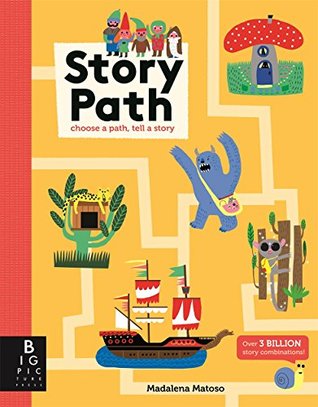
Story Path: Choose a Path, Tell a Story by Madalena Matoso

Share

Story Path: Choose a Path, Tell a Story
Author/Illustrator: Madalena Matoso
Published March, 2017 by Kane Miller EDC Publishing

Summary: Where you go, whom you meet, what you do next — it’s all up to you…

Travel along the story path and discover an enchanted world where princess battle with hairy monsters and vampire cats zoom through the galaxy on silver unicorns!

This innovative picture book allows you to choose your own characters, settings, and plots at every turn. With quirky illustrations by the award-winning Madalena Matoso, this is an imaginative storytelling experience for children of all ages.

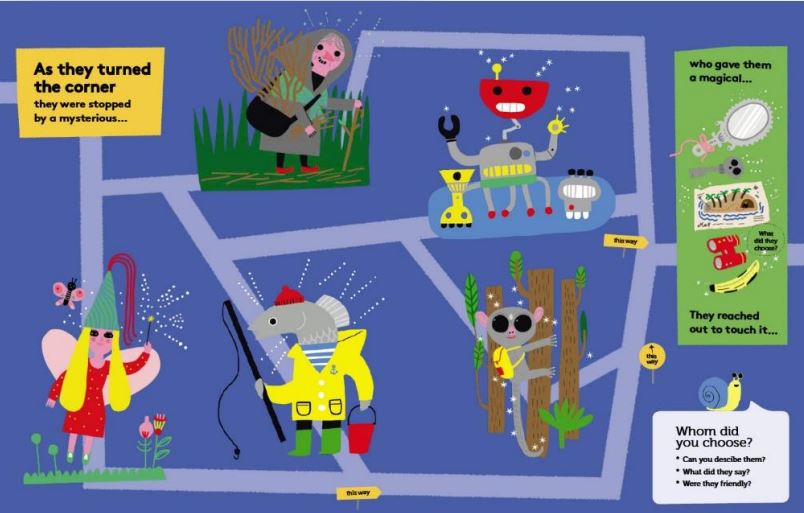
Review: I loved Choose Your Own Adventure books when I was younger because it made you part of the story to an extent that other books didn’t because you get to be the actual creator of the plot. Story Path does just this but for a younger audience! The author set up the book in a very friendly way that gives lots of options but also is easy to follow. On each page, the story continues with a beginning of a sentence like “One day, they were riding along on their…” and the reader then gets to pick from a set of illustrations. This spread includes options like a two-headed dragon, rocket ship, horse, boat, or an elephant. Then after the choice is made, the author included guiding questions to ask the reader like “What did you choose? What noise did it make? How fast was it? Where were they going?” This helps add even more to the story that the reader is creating. 

Teachers’ Tools for Navigation: This book could take narrative writing to a new level in the early elementary classroom! As students are first learning how to write stories, Story Path can help guide the writers through characters, setting, and plot yet each writer would have a different story.

Discussion Questions: What story did you create? Why did you pick what you did? What can you add to your story?

Flagged Passages: 

Read This If You Loved: Choose Your Own Adventure books, Journey trilogy by Aaron BeckerHenri Mouse by George Mendoza

Recommended For:

classroomlibrarybuttonsmall 

**Thank you to Lynn at Kane Miller for providing a copy for review!!**

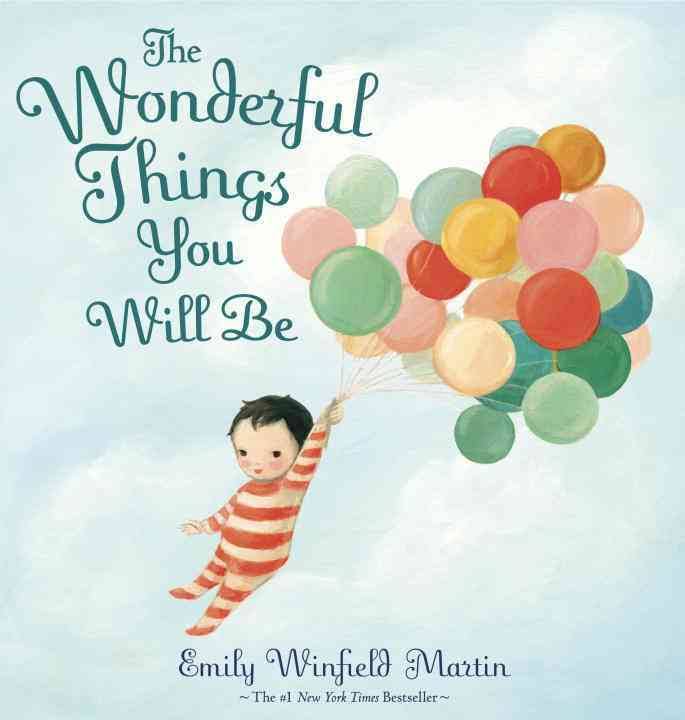
The Wonderful Things You Will Be by Emily Winfield Martin

Share

The Wonderful Things You Will Be
Author: Emily Winfield Martin
Published: August 25, 2015 by Random House

A Guest Review by Jennifer Zafetti

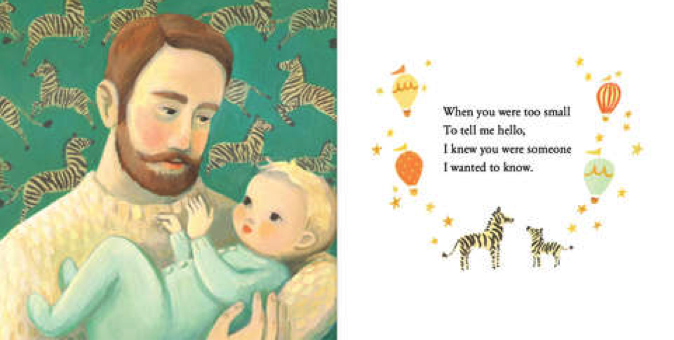
Summary: This heartwarming picture book is from the point of view of a parent who is eager to see the development of their child. The parent questions who their child will become and what interests they will possess. In the end, there are endless possibilities that the future has to offer to the child.

Review: This is a great book to give to a parent with a small child! The Wonderful Things You Will Be would make for a soothing bedtime story. The sweet message of the story is that a child can be anybody that they want to be. There are no expectations set for a child to adhere to so their future is an empty canvas waiting to be painted! The book, using second person, discusses the uniqueness of you and the wonderful attributes you have to offer to the world. There are many “what if” questions that will get the reader thinking about all the wonderful things that they can do with their life.

Teachers’ Tools for Navigation: The Wonderful Things You Will Be is an engaging children’s book that encourages the reader to embrace the future. There are beautiful illustrations to accompany the text. The teacher can use this book to discuss rhyming words, as well as point of view.

Discussion Questions: What are some rhyming words that you noticed in the story? How do the illustrations enhance the text? What do you want to be when you grow up?

Flagged Passage: 

Read This If You Loved: Giraffes Can’t Dance by Giles Andreae, and If Animals Kissed Good Night by Ann Whitford Paul

Recommended For:
 classroomlibrarybuttonsmall

Thank you, Jennifer!

RickiSig

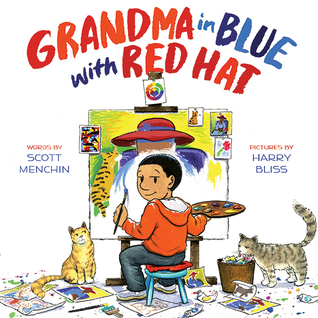
Grandma in Blue with Red Hat by Scott Menchin

Share

Grandma in Blue with Red Hat
Author: Scott Menchin
Illustrator: Henry Bliss
Published April 14, 2015 by Abrams

Guest Post by: Sarah Mangiafico

Summary: When a young boy learns about what makes art special—sometimes it’s beautiful, sometimes it’s funny, sometimes it tells a story—he realizes that these same characteristics are what make his grandmother special, too. As a result, he finds the inspiration to create his own masterpiece that’s one of a kind.

Christopher Award–winning author Scott Menchin and New York Times bestselling illustrator Harry Bliss have teamed up for a celebration of the power of art and expression, and the extraordinary love between grandparent and child.

Review: I love how this book expresses the different feelings that art can evoke in someone, along with the meaningful moments that it can capture. Sometimes something can be art simply for being funny or for making you feel nice; art does not have to be complicated to be art. This is a powerful message to share with readers, since many people often think that art needs to have many different meanings and lots of creativity in order to be art. The art that the boy makes about his grandma clearly shows the feelings and thoughts that can inspire someone to make art. The art that he makes about her is also very touching, and is a great ending to the book that leaves readers (including myself) ready to go out and create their own meaningful art pieces.

Teachers’ Tools for Navigation: Grandma in Blue with Red Hat is a wonderful book that can show students how “Anything can be in an art exhibition,” and can teach them how anything that they create can be considered art (Menchin 3). This is a great book to introduce students to what art is, and can motivate kids to want to create their own art pieces for a “class art museum.” After creating their pieces, students can walk around the “class art museum” and write down why they think each piece is art. Grandma in Blue with Red Hat is a sure way to get students interested in art, and to create art that is meaningful to them in some way.

This book is also a wonderful book to share with students because the art pieces shown in the book are real and famous pieces of art. Reading this book as a read aloud can introduce students to these pieces and can lead to a more in-depth class study of them and the artists that made them. A variety of cultures are represented in the art pieces shown in the book as well, which makes this book culturally relevant.

Discussion Questions: What is art? Why did the boy in the story decide to use his grandma as an inspiration for his art? What are some things that you could make an art piece about? What makes you choose those things?

Flagged Passages: “Grandma is beautiful. Grandma is different. Grandma is funny. Grandma tells me stories. Grandma comes from far away. Grandma makes me feel good” (p. 17).

Read This If You Loved: Draw! by Raúl Colón, Maybe Something Beautiful by F. Isabel Campoy and Theresa Howell, My Pen by Christopher Myers

Recommended For:

   classroomlibrarybuttonsmall

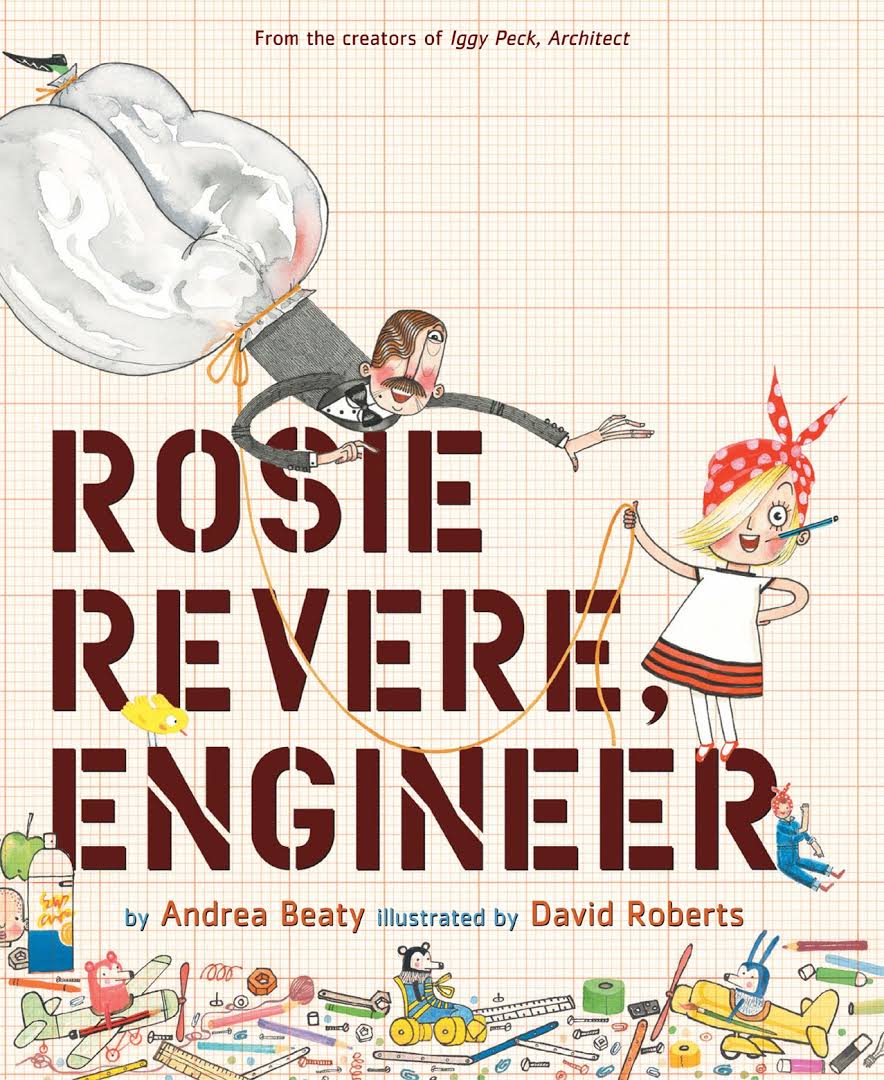
Rosie Revere, Engineer by Andrea Beaty

Share

Rosie Revere, Engineer
Author: Andrea Beaty; Illustrated by: David Roberts
Published: September 3, 2013 by Abrams

A Guest Review by Jennifer Zafetti

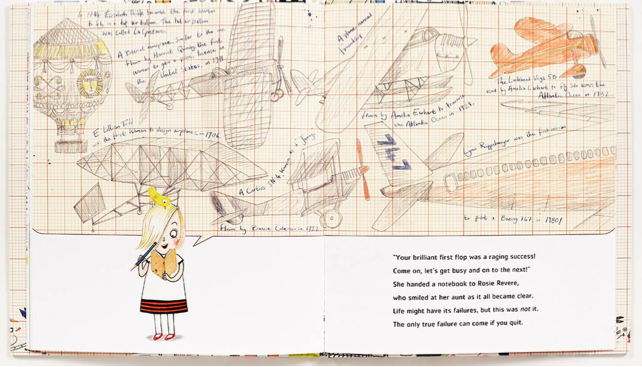
Summary: Rosie is an ambitious young girl who aspires to be an engineer. She creates an invention for her uncle, but becomes embarrassed when he laughs at her. She does not feel supported , until she meets her Great-Great-Aunt Rose who is both an adventurer and an explorer. Her great-great-aunt yearns to fly so Rosie builds her a contraption made out of cheese. When her great-great-aunt laughs at her failure, Rosie becomes disheartened and swears to never invent again. Rose provides her with comfort and explains that, “Your brilliant first flop was a raging success.” This provides Rosie with the encouragement she needs to try again!

Review: I really enjoyed reading this book! I think that it is so important for kids to embrace failures! If Rosie had admitted defeat after her first failure, she would have never been able to be successful. Rosie’s perserverance allowed her to create a flying contraption for her aunt. Furthermore, the rhyming sentences created an engaging tone that kept me wondering what would happen next. This is a great story to read-aloud to a classroom! Additionally, the illustrations on each page really add to the story and provide detailed visuals to accompany Rosie’s different inventions. Overall, I think that this book can be inspirational for all ages—the simple message: never give up!

Teachers’ Tools for Navigation: Rosie Revere, Engineer is an uplifting story in which failure turns into success. Teachers should use this children’s book to teach students about the importance of perseverance. When faced with challenges, students should use them as an opportunity to grow. If you believe in yourself, you can achieve anything!

Also, the teacher can pause the reading to ask for predictions.

Discussion Questions: How did Rosie’s mood change throughout the story?; When is a time that you persevered when facing a challenge?; When is a time that you have learned from a failure? How do Rosie’s family members impact her actions?

Flagged Passage: 

Read This If You Loved: Ada Twist, Scientist by Andrea Beaty, and The Most Magnificent Thing by Ashley Spires

Recommended For:
 classroomlibrarybuttonsmall

Thank you, Jennifer!

RickiSig

Because of Mr. Terupt by Rob Buyea

Share

Because of Mr. Terupt
Author: Rob Buyea
Published October 12, 2010 by Delacorte

A Guest Review by Julia Kipphut

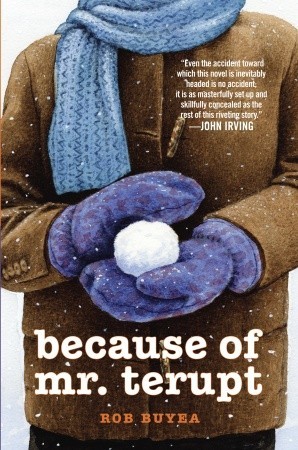
Summary: Mr. Terupt’s fifth grade class at Snow Hill School is comprised of various types of students, some including: a new student, a popular girl, a bully, and a troublemaker. Their teacher, Mr. Terupt who is passionate and energetic, strives to engage his students and instill a sense of community amongst his class. Unfortunately, one day, a snowball fight goes awry and leaves Mr. Terupt in a coma. His class is rattled and must learn to work together, be kind, and hope for Mr. Terupt’s recovery.

Review: This book includes a variety of characters, each owning their own identity and personality. Each chapter is written from a different character’s perspective, making for a fluid and interesting read. They are relatable for children and allow them to recognize themselves in each character. Each character evolves in the story and shows tremendous growth, proving the rich development of the people in this book. The message of community and forgiveness is nicely intertwined in the story and proves that it is always better to choose kindness. The theme of this book is positive and motivational. 

Teachers’ Tools for Navigation: Because of Mr. Terupt serves as a great reader aloud for upper elementary school students. 4th and 5th graders who are struggling with their identity and place in a classroom community can learn the importance of compassion. Students can learn to embrace individual differences for a common goal or outcome, mirroring the characters in this book. Additionally, this book allows students to study character development throughout the story; each character evolves- allowing for effective classroom discussion.

Because of each character of this book is written from a different character’s perspective, students are able to study point of view and consider the influence each chapter has on the story as a whole. Students are able to learn about each character in depth and can even use literature circles to each study a character for analysis.

Discussion Questions: How might the story be different if the snowball accident did not happen?; What do you think the author’s purpose or message was for this story?; Why do you think the author chose to write this story from different characters points of views? Do you think this was effective?

Book Trailer: 

Read This If You Loved: Out of My Mind by Sharon Draper; Wonder by R. J. Palacio

Recommended For:

  litcirclesbuttonsmall  classroomlibrarybuttonsmall

Thank you, Julia!

RickiSig

A Child of Books by Oliver Jeffers and Sam Winston

Share

A Child of Books

A Child of Books
Authors: Oliver Jeffers and Sam Winston
Published by September 6th, 2016

Summary: New York Times best-selling author-illustrator Oliver Jeffers and fine artist Sam Winston deliver a lyrical picture book inspiring readers of all ages to create, to question, to explore, and to imagine.

A little girl sails her raft across a sea of words, arriving at the house of a small boy and calling him away on an adventure. Through forests of fairy tales and across mountains of make-believe, the two travel together on a fantastical journey that unlocks the boy’s imagination. Now a lifetime of magic and adventure lies ahead of him . . . but who will be next?

Combining elegant images by Oliver Jeffers and Sam Winston’s typographical landscapes shaped from excerpts of children’s classics and lullabies, A Child of Books is a stunning prose poem on the rewards of reading and sharing stories—an immersive and unforgettable reading experience that readers will want to pass on to others.

Review: Oliver Jeffers has a way of writing such thought-provoking books with beautiful artwork  that are just a bit weird yet so brilliant that you can’t help but reading it over and over. I know that sounds like such a fan girl review, but if you’ve read any of his books, you know exactly what I am talking about. Jeffers’s newest book is no exception. This book is about how stories can carry you wherever your imagination can imagine. The brilliance of actually using words from classic books to carry the main character on her journey shows how all of these books have carried so many readers on adventures that only an author’s imagination mixed with the reader’s imagination could take them on. 

Teachers’ Tools for Navigation: Allusion and theme are where my mind automatically goes to when reading this book. First, you can look at the words that are used as the setting to look at why the authors chose these specific allusions. For example, during the sea scenes, they use Gulliver’s Travels, The Adventure of Pinocchio, The Swiss Family Robinson, 20,000 Leagues Under the Sea, Robinson Crusoe, The Voyages of Dr. Dolittle, and more. Why would these books specifically be chosen for those scenes? What other pieces of literature are used throughout the book and why? I also think the theme is very clear, but it will spark a really great conversation.

Discussion Questions: What is theme of the book?; Why did the author chose specific texts for different settings?

Flagged Passages: 

child of books spread

“I have sailed across a sea of words to ask if you will come away with me.”

Read This If You Loved: Anything by Oliver Jeffers, The Marvels by Brian SelznickNibbles: The Book Monster by Emma Yarlett, Sophie Quire and the Last Storyguard by Jonathan Auxier, The Whisper by Pamela Zagarenski

Recommended For:

  classroomlibrarybuttonsmall readaloudbuttonsmall closereadinganalysisbuttonsmall

Kellee Signature

National Geographic’s 100 Things to Know Before You Grow Up

Share

NFPB2016

Nonfiction Wednesday

Nonfiction Picture Book Wednesday is hosted by Kid Lit Frenzy and was started to help promote the reading of nonfiction texts. Most Wednesdays, we will be participating and will review a nonfiction text (though it may not always be a picture book).
Be sure to visit Kid Lit Frenzy and see what other nonfiction books are shared this week!

100 things

100 Things to Know Before You Grow Up
Author: Lisa M. Gerry
Published March 8th 2016 by National Geographic Children’s Books

Goodreads Summary: It’s fun to be a kid, but are you ready for what comes next? Challenge yourself with these 100 things and you will be! Jam-packed with tips, tricks, and skills that every kid should master before turning 18, this is the ultimate guide to becoming a fun-loving, well-rounded, totally competent and confident young person. Complete with expert advice from real life explorers, adventurers, and masters of their craft, it’s perfect for jump-starting an amazing life!

Kellee’s Review: I love books that push students to be more than what they already are. This book is one of those. It has such a crazy variety of things that kids can learn to do and overcome and try throughout their childhood: from making a bed to learning to say no to trying yoga. There were things in the book that I am not even good at, but I wish someone had helped me learn how to do as a kid like how to remember names or how to deal with change. I am always impressed with National Geographic books because they are all so unique and well done, and this one is no different!

Ricki’s Review: Typically, I review books and then donate them. I am hanging on to this book because I think it is a great one to share with my children. I loved that some of the “things to know” were abstract like being brave and some were much more concrete like trying another country’s cuisine. I think it would be really neat to use this book as a bucket list. All of the things in this book are experiences and ideas that I want my children to have.

Teachers’ Tools for Navigation: 100 Things to Know Before You Grow Up is a great inquiry project jumping off point. Students could definitely take these 100 things and choose a favorite to research then share with the family. The book would also be a good read aloud for the beginning of each day to have a class discussion. It would be interesting to see what students already know how to do, if they think that everything listed is important, and work on learning new things.

Discussion Questions: Which of the things listed do you already know how to do?; Is there anything you would add to the list that you think you need to know before you grow up?; Which of the things do you want to learn how to do first?; Do you think all of the items listed are important to learn?

We Flagged: “#31. How to Be Brave

Everyone feels afraid from time to time, but it’s how you respond to that fear that shows who you are. Being scared is an uncomfortable feeling, so it makes sense that you’d want to avoid it. But the only way to conquer a fear is to do the thing that scares you. As Mark Twain said, ‘Courage is resistance to fear, mastery of fear, not absence of fear.’

People Profile: Malala Yousafzai

Malala is the youngest person to have ever won a Nobel Peace Prize. She won it in 2014, when she was just 17 years old. Malala was born in Pakistan in 1997. She attended a school founded by her father and quickly became an advocate for a girl’s right to get an education. However, the Taliban, a violent political group in her country, believed that girls should not go to school…” (p. 80-82)

*Disclosure: This quote cannot share the entire feeling of the book without the photos. See the published book to see the amazing photographs.

Read This If You Loved: 31 Ways to Change the World by Candlewick Press, Mastermind by National Geographic, Weird but True series by National Geographic, Be Changemaker by Laurie Ann Thompson, Almanacs, World Record books

Recommended For: 

classroomlibrarybuttonsmall readaloudbuttonsmall

Signatureand RickiSig

**Thank you to Karen at Media Masters Publicity for providing copies for review!**