Unleashing Readers and Kid Lit Frenzy 2014 Mock Sibert Award Picks

Share

Mock Sibert Button

Over the past two years, Alyson has hosted, and Kellee has participated in, a book challenge pushing ourselves to read more nonfiction picture books. This year, after reading many of the best nonfiction picture books published in 2013, we decided that it would be fun to do a Mock Sibert Award post together.

The Sibert Award is given annually to the most distinguished informational book published during the preceding year. Although the Sibert Award is not just for picture books, we are going to focus on the nonfiction picture books we feel would be honored or win this year. To be honored/win the Sibert Award, the book must include these important elements and qualities:

Excellent, engaging, and distinctive use of language.
Excellent, engaging, and distinctive visual presentation.
Appropriate organization and documentation.
Clear, accurate, and stimulating presentation of facts, concepts, and ideas.
Appropriate style of presentation for subject and for intended audience.
Supportive features (index, table of contents, maps, timelines, etc).
Respectful and of interest to children.

After reviewing the qualities and elements needed to win the Sibert Award, I chose the following six titles from 2013 that I hope will win or be honored on January 27th. Check out Kid Lit Frenzy, as well, to see what Alyson chose as her picks.
klfbks_sml (1)

We would also love your input!
Which of our ten titles do you think will win the Sibert?
Check out the results to find out what book you thought should win.

All of my choices are respectful and of interest to children, have clear and accurate presentation of facts and ideas, and use excellent, engaging, and distinctive language; however, they are all distinct in their own way.
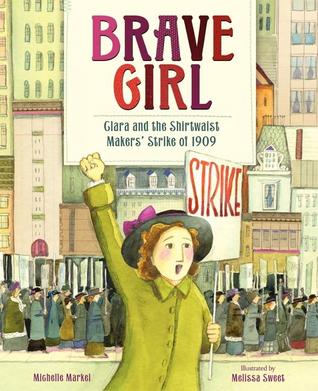
brave
I am sucker for this biographical picture book for two reasons: 1) I had not known about the Shirtwaist Makers’ Strike of 1909 before and I love learning about new historical moments. I know that it interested me (as I know it would for kids), because after I read the additional information about the garment industry I was on the internet searching for more information. 2) Clara is such a great example of girl power! AND she is a historical figure that shows girls (and boys) that girls can stand up for themselves when they are not being treated well (in real life). I love that she overcame so much to not only stand up for her rights, but also to get an education and take care of her family. What an amazing person to learn about.

When it comes to the Sibert Award, Brave Girl not only is written beautifully and engages the reader through text and illustrations, it also documents Clara’s life in a unique way that makes it different than other narrative biographies.
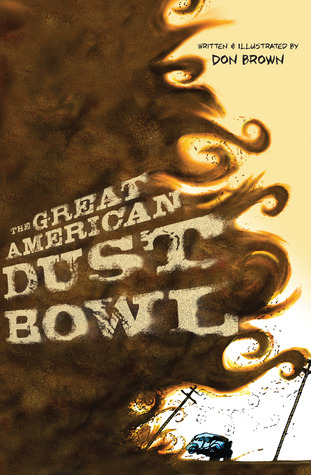
dust bowl

Ever since I read Out of the Dust by Karen Hesse, I’ve loved learning about this scary time in American history (also, the danger hasn’t ceased just because it happens less often). This book does a beautiful job of taking this time in history and laying it out for the reader so that it is very easy to understand. It includes background about the geographical area, information about the Depression, and then takes you through the Dust Bowl all the way to modern days. So interesting!

Graphic novels have not been honored before from the Sibert committee, but I feel this one stands out. It is so well done! It engages readers about an important time in American history by including narratives, information, and supportive features (maps, timelines).
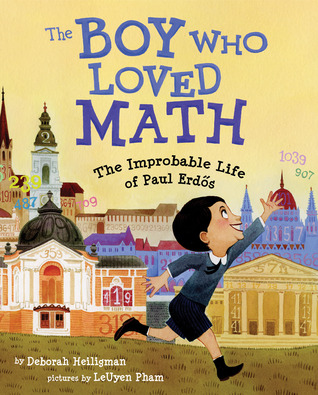
lovedmath

I love how the author so cleverly combined Erdos’s story and mathematics without ever overloading the story with numbers. This book is so much fun (and the colorful illustrations add even more playfulness to it) yet teaches so much within its story.  What impresses me the most is just how much the book makes you think about math, want to learn more math, and want to play with numbers. Even in book form, Erdos is making math understandable.

The author’s distinctive use of language by using math throughout really makes it stand above and beyond other nonfiction books from 2013.
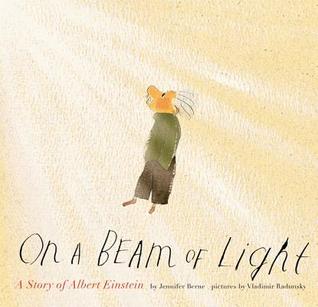
on a beam

I love how this book focuses on how Albert’s creativity is one of the keys to what made him the amazing scientist that he is. Also, as a teacher of struggling and gifted students, I love the focus on how he didn’t do well in school. It shows how just because a student is different or a disturbance or thinks differently doesn’t mean that they aren’t intelligent. The book definitely promotes wonderings, thinking, and imagination!  I also loved learning about the fun side of Einstein and how he likes to not wear socks, he liked to eat ice cream cones, and overall he just did what he want to have time to think. Finally, the Author’s Note puts all of Einstein’s theories together so that the reader also gets this information.

I think this one is especially respectful and of interest to children who read it and will make them more interested in Einstein.
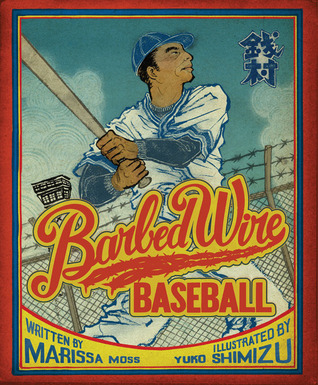
barbed

World War II is the most infamous war and it is taught to all students at some point in their career. They learn about Pearl Harbor and the Atomic Bomb and the Holocause and Hitler, but way too often what happened here in the US is not discussed. All of the Japanese Americans living on the West Coast of the US (62% were US citizens) were interned because our fear overwhelmed us so much that it was the only solution that seemed plausible. I felt that the fear that was felt after the Pearl Harbor bombings is very similar to what was felt 12 years ago today. Barbed Wire Baseball does discuss the internment camps, but I think that the theme of this book is not about the camps but about how a love of something can turn a poor situation into something else if you are determined. The story is just one part of the book. What moves it to a higher level is the author and illustrator. Marissa Moss has someone captured the tone of the story. It begins with hopefulness then to hopelessness and finally back to joyousness. Her ability to manipulate the tone throughout makes the story touch the reader even more.

Yuko Shimizu’s illustrations are done with a Japenese calligraphy brush and ink adding to the connection the reader will feel with the story. His visual presentation is distinctive and engaging. Just beautiful.
lifetime

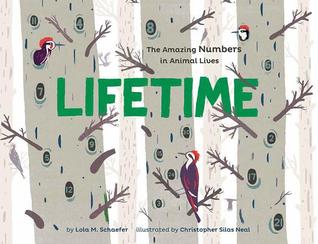
I learned so much reading this book. My friend Amanda actually read it first and kept yelling out the facts because they are just so interesting; obviously students would find them interesting as well. On top of it just being interesting, this book is a little book of gold! It is a perfect combination of reading, math, and science! Also, the illustrations are just so well done! Throughout the book, scientific facts about animals are shared with the reader (all with numbers) and then in the end of the book Lola Schaefer also shares with the reader even more information about the animals, how to find an average, and other math facts.  And not once does the book even feel a bit boring.

Lifetime is informational nonfiction completely while the other books are narratives (or include narrative elements). However, it is still has distinctive, excellent language and the illustrations add an amazing extra element to the text.

Now which of mine, or Alyson’s, books do you think should win or be honored by the Sibert committee? Check out the results to find out which book was chosen as our Mock Sibert Winner.

Signature

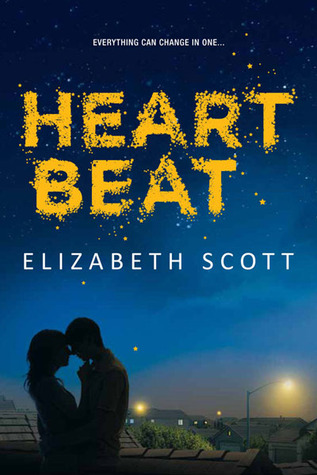
Heartbeat by Elizabeth Scott

Share

17258743

Heartbeat
Author: Elizabeth Scott
Published: January 28th, 2013 by Harlequin Teen

GoodReads Summary: Life. Death. And…Love?

Emma would give anything to talk to her mother one last time. Tell her about her slipping grades, her anger with her stepfather, and the boy with the bad reputation who might be the only one Emma can be herself with.

But Emma can’t tell her mother anything. Because her mother is brain-dead and being kept alive by machines for the baby growing inside her.

Meeting bad-boy Caleb Harrison wouldn’t have interested Old Emma. But New Emma-the one who exists in a fog of grief, who no longer cares about school, whose only social outlet is her best friend Olivia-New Emma is startled by the connection she and Caleb forge.

Feeling her own heart beat again wakes Emma from the grief that has grayed her existence. Is there hope for life after death-and maybe, for love?

My Review: I should start by mentioning that I will read anything by Elizabeth Scott. She does a great job developing characters in unique situations, and I always get lost in the plots of her stories. This book was different from the other titles I have read by Scott because it is quite a sad story. Emma’s situation is heart-wrenching, and I felt the pain of her grief. What I liked most about this story was Emma’s growth as an individual. She shows an incredible amount of strength and isn’t afraid to examine her beliefs as she tries to determine what is right and true.

Teacher’s Tools for Navigation: Teachers might use this book to help readers learn about the stages of grief. It would be interesting to hold a debate about who is more justified in his or her position: Emma or her stepfather. Students might research the laws and practices of life support to help them think more deeply about the novel.

Discussion Questions: Is Emma’s position justified? Do you think she is being fair?; How does Emma’s relationship with Caleb help her grow as an individual?; Where is the turning point of the story? Why?; Do you think Emma’s mother should be kept on life support?

We Flagged: “When someone you love…when they die, you want it undone. You’d do anything to have them back, and it’s easy to believe that if only this had happened or that had happened, everything would be fine. And that’s what makes you angry. What makes you hate. You don’t want to believe that sometimes bad things happen just because they do.”

Read This If You Loved: If I Stay by Gayle Forman, The Truth about Forever by Sarah Dessen, The Last Summer of the Death Warriors by Francisco X. Stork, Boy21 by Matthew Quick, Aristotle and Dante Discover the Secrets of the Universe by Benjamin Alire Saenz, Hold Still by Nina LaCour, Personal Effects by E.M. Kokie, The Sky is Everywhere by Jandy Nelson

Recommended For:

   classroomlibrarybuttonsmall

026F3FBCC8C3913BD3A4D3F6920340D5

**Thank you to NetGalley and Harlequin Teen for providing the Advanced Reader Copy for review!**

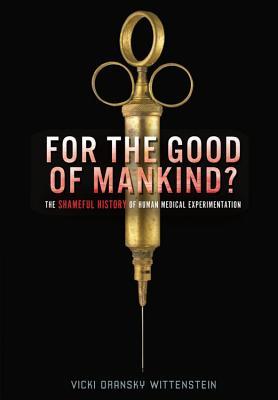
For the Good of Mankind?: The Shameful History of Human Medical Experimentation by Vicki O. Wittenstein

Share

NF PB 2013

Nonfiction Picture Book Wednesday

Nonfiction Picture Book Wednesday is hosted by Kid Lit Frenzy and was started to help promote the reading of nonfiction texts. Most Wednesdays, we will be participating and will review a nonfiction text (though it may not always be a picture book). Be sure to visit Kid Lit Frenzy and see what other nonfiction books are shared this week!

for the good of mankind

For the Good of Mankind?: The Shameful History of Human Medical Experimentation
Author: Vicki O. Wittenstein
Published: August 1st, 2013 by Lerner Publishing Group

Summary: 

Experiment: A child is deliberately infected with the deadly smallpox disease without his parents’ informed consent.
Result: The world’s first vaccine.
Experiment: A slave woman is forced to undergo more than thirty operations without anesthesia.
Result: The beginnings of modern gynecology.
Experiment: From 1946 to 1953, seventy-four boys are fed oatmeal laced with radioactive iron and calcium.
Result: A better understanding of the effects of radioactivity on the human body.

Experimental incidents such as these paved the way for crucial medical discoveries and lifesaving cures and procedures. But they also violated the rights of their subjects, many of whom did not give their consent to the experiments. The subjects suffered excruciating pain and humiliation. Some even died as a result of the procedures. Even in the twenty-first century—despite laws, regulations, and ethical conventions—the tension between medical experimentation and patient rights continues.

How do doctors balance the need to test new medicines and procedures with their ethical and moral duty to protect the rights of human subjects? What price has been paid for medical knowledge? Can we learn from the broken oaths of the past?

Take a harrowing journey through some of history’s greatest medical advances—and its most horrifying medical atrocities. You’ll read about orphans injected with lethal tuberculosis and concentration camp inmates tortured by Nazi doctors. You’ll also learn about radiation experimentation and present-day clinical trials that prove fatal. Through these stories, explore the human suffering that has gone hand in hand with medical advancement.

Review: Human experimentation is a very difficult subject matter, one that both horrifies and fascinates teens. I always try to believe in the good of mankind, but books like this always seem to challenge that assumption. It was difficult for me to read this book because I cannot fathom how any person could justify using individuals (including CHILDREN!) for experimentation. This book is incredibly well-researched and documents a variety of cases of experimentation. I couldn’t put it down because I was so astonished by the details of the cases. It is colorful and eye-appealing, and this will captivate reluctant readers. I think teenagers would see nonfiction in a very positive light if they were given books like this one. I absolutely recommend it to teachers.

Teacher’s Tools for Navigation: Teachers might assign different chapters to groups of students. Students will enjoy reading about and presenting the material covered in this book. Persuasive essays are always a chore, but there are many controversial issues within this book, and I think students would really enjoy writing essays about this subject matter. This book also includes discussion questions for readers.

Discussion Questions: Can we justify the experimentation on a human being if it will better the lives of millions of people?; Why do you think human experimentation was allowed for such a long time? Can we judge the doctors who experimented on people centuries ago?; Applying the stories to animals, do you think animal experimentation is justifiable? Why or why not?

Read This If You Loved: The Immortal Life of Henrietta Lacks by Rebecca Skloot, books in the Real Justice series, Brave New World by Aldous Huxley


Recommended For:

closereadinganalysisbuttonsmall classroomlibrarybuttonsmall

RickiSig

Top Ten Tuesday: Top Ten Debut Novels (EVER!)

Share

top ten tuesday

Top Ten Tuesday is an original feature/weekly meme created at The Broke and the Bookish. The feature was created because The Broke and Bookish are particularly fond of lists (as are we!). Each week a new Top Ten list topic is given and bloggers can participate.

 Today’s Topic: Top Ten Debut Novels (EVER!)

We strayed from the assigned topic a bit today, but we really wanted to share our favorite debut novels ever.

Ricki

1. Between Shades of Gray by Ruta Sepetys

This is one of my favorite young adult novels, and I can’t believe it is Ruta’s first! I will admit that I stole it from Kellee’s list (see below). It is hard to believe that Ruta worked in the music industry before she started writing because this novel seems to be authored by a seasoned  writer. Amazing (as I shake my head in disbelief).

2. Looking for Alaska by John Green

Who wins the Printz Award on his/her debut novel? This guy. Looking for Alaska is an incredible book that offers invaluable lessons to teens. Years after reading this book, I still find myself comparing other books and characters to it. I imagine that many of the readers of this blog have read this book, but if you haven’t—read it. I promise you won’t be disappointed.

3. Ball Don’t Lie by Matt de la Peña

I received this book in my first ALAN Workshop box. When I got home from the conference, I picked it up to read it and fell in love. I immediately searched for his other books and was disappointed to find that this was the only one that existed! Since then, I have read every book by this man. He is an incredible author. (I should add that he sent me ten personalized books to my students who were most at-risk of dropping out. Isn’t he wonderful?)

4. Graceling by Kristin Cashore

I have been trying very hard to keep this book off of my TTT lists to show variety. I can’t help myself this time. Even if you don’t love fantasy, you will fall in love with this book. It is accessible to people of all ages (and both genders, I might add). I see that Kellee includes it on her list below. We are both addicted to Kristin Cashore.

5. Divergent by Veronica Roth

I still can’t believe Veronica Roth wrote this book when she was a senior in college. It shows her innate talent at writing. After The Hunger Games came out, I had difficulty getting students to find other books they would enjoy. When this came out, it was a perfect choice. I found it to be intellectually more complex and a great next book on the ladder after The Hunger Games. (By the way, if you don’t know the term “ladder,” you should check out Teri Lesesne’s Reading Ladders—an excellent book for teachers of reading.)

Kellee

This was a tough one to determine as I wasn’t always sure when a book was a debut novel. These 5 are ones I know are debut novels and are just wonderful–you would never know they are debuts!

1. Wonder Show by Hannah Barnaby

Portia is looking for her family, but ends up finding a place in the least likely places- a “freak show” touring around the midwest during Depression-era America. The author seamlessly intertwines Portia’s story with the story of the traveling show even mixing up points of views and narrators during the story. Although it sounds like it should definitely not work, it does. And it does beautifully. This book is mostly about heart, family, and home. Portia’s story is so enthralling and her transformation is amazing to be part of.

2. Between Shades of Gray by Ruta Sepetys

This is such a powerful story with characters that you grow to love as they are put through hell. What makes the hell even more grotesque is that it is based off of stories that really happened during a time of history that does not get spoken of too often. Like Holocaust books, this book is one that will rip you apart as you read it. And all of it is based off of Ruta Sepetys’s family history!

3. Under the Mesquite by Guadalupe Garcia McCall

This book is a beautiful book in verse that not only has a touching narrative, but has exquisite verse. The narrative deals with a topic that many readers will have some sort of connection with, cancer, as well has coming of age in a household where the disease has struck. But what makes this book different than other stories about the effects of cancer is that it also tells the story of growing up as a Mexican-American here in America.

4. Graceling by Kristin Cashore

High fantasy can be intimidating because of having to completely immerse yourself in an invented world and sometimes I find it hard to imagine somewhere that doesn’t exist; however, with Graceling, the characters are so strong that the original confusion with the setting didn’t even bother me and then by the time I thought about it, I’d lost all confusion and was in Katsa’s world.

5. Harry Potter and the Sorcerer’s Stone by J.K. Rowling

What can you say about this one?! Harry Potter was J.K. Rowling’s first try at a novel. Wow.

Which are your favorite debut novels?

RickiSigand Signature


It’s Monday! What Are You Reading? 1/13/14

Share

IMWAYR

It’s Monday! What Are You Reading? From Picture Books to YA!

It’s Monday! What are you Reading? is a meme hosted by Sheila at Book Journeys. It is a great way to recap what you read and/or reviewed the previous week and to plan out your reading and reviews for the upcoming week. It’s also a great chance to see what others are reading right now…you just might discover the next “must-read” book!

Jen Vincent, of Teach Mentor Texts, and Kellee decided to give It’s Monday! What Are You Reading? a kidlit focus. If you read and review books in children’s literature – picture books, chapter books, middle grade novels, young adult novels, anything in the world of kidlit – join us! We love this meme and think you will, too.

We encourage everyone who participates to support the blogging community by visiting at least three of the other book bloggers that link up and leave comments for them.

Last Week’s Posts

top ten tuesday strange killing woods frog bigguy

**Click on any picture to view the post**

 Last Week’s Journeys

Kellee: I finished Sometimes Never, Sometimes Always by Elissa Janine Hoole which, unfortunately, took me all week to finish it.  It was overall a good book, but I just had trouble connecting to the protagonist until about half way through… then it was smooth sailing. I did finish it Saturday, but because of going to be early and waking up early to see my husband finish his first marathon (actually he did the Dopey Challenge this weekend! 48.6 miles in 4 days!), I haven’t started another book yet.

Ricki: Last week, I read seven books. This week, I read zero. Yes, ZERO! I am so embarrassed. My excuse: Henry’s colic has gotten increasingly worse. We have been dealing with a child who screams from 8pm to midnight. The hours before and after that, he fusses. My life balance is all a mess! To be fair, my husband and I reread The Little Engine that Could to him last night, but I included that book in a past week’s post. We also read a book about cars, but it wasn’t memorable enough for me to remember the title. I have also read about fifty more pages in Winger by Andrew Smith. But books completed? None. 

This Week’s Expeditions

Kellee: I am still listening to Ocean at the End of the Lane. I am carpooling again (3 days this week), but I am listening whenever I am alone. I am almost finished with disc 4 (out of 5), so I should finish it soon. I plan to start Life in Outer Space by Melissa Keil tonight and finish it this week. I then plan on reading Two Boys Kissing by David Levithan. 

Ricki: This week, I would love to finish Winger by Andrew Smith. I read a few pages to Henry (and even read the swears–I figure it is safe, as he is only 6 weeks old). I also plan to read some of Pedagogy of the Oppressed by Paulo Freire for school. I’d love to finish two or three picture books too, if Henry is willing to listen. 🙂

Upcoming Week’s Posts

top ten tuesday for the good of mankind heartbeat Mock Sibert Button

 So, what are you reading?

Link up below and go check out what everyone else is reading. Please support other bloggers by viewing and commenting on at least 3 other blogs. If you tweet about your Monday post, tag the tweet with #IMWAYR!

 Signature andRickiSig

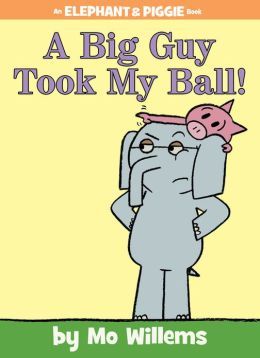
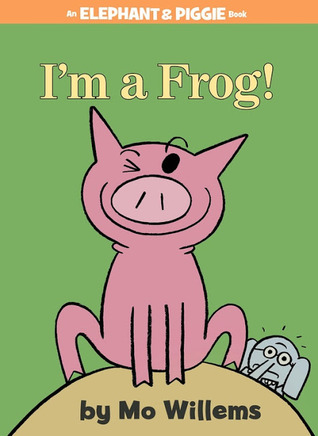
A Big Guy Took My Ball! & I’m a Frog! by Mo Willems

Share

bigguy

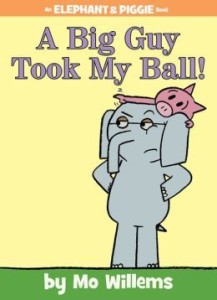
A Big Guy Took My Ball!
Author and Illustrator: Mo Willems
Published May 21st, 2013 by Disney-Hyperion

frog

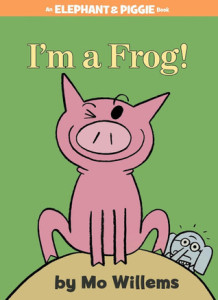
I’m a Frog!
Author and Illustrator: Mo Willems
Published October 15th, 2013 by Disney-Hyperion

A Big Guy Took My Ball! Goodreads Summary: Gerald is careful. Piggie is not.
Piggie cannot help smiling. Gerald can.
Gerald worries so that Piggie does not have to.

Gerald and Piggie are best friends.

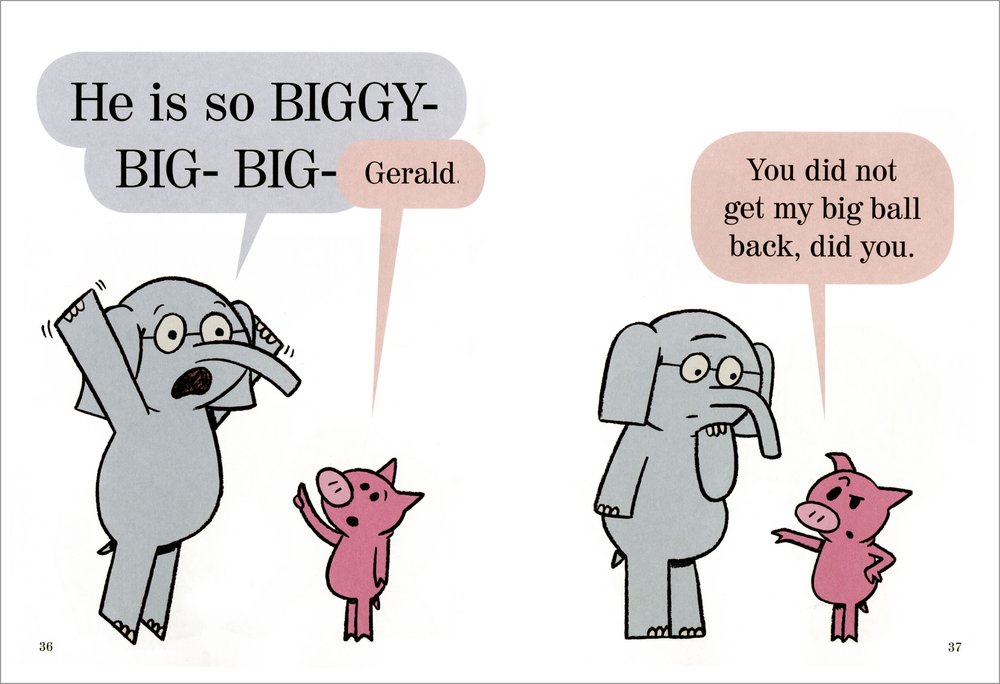
In A Big Guy Took My Ball! Piggie is devastated when a big guy takes her ball! Gerald is big, too…but is he big enough to help his best friend?

I’m a Frog! Goodreads Summary: In I’m a Frog! Piggie has some ribbiting news! Can Gerald make the leap required to accept Piggie’s new identity?

Review: I love Elephant and Piggie. They are such amazing friends through all sorts of scenarios. Elephant keeps Piggie grounded and Piggie helps Elephant think/move outside of his box. Just a wonderful combination of character traits and they make for such funny books. And you know that they are good, they both won 2013 Early Reader Nerdy Awards!!!

Teacher’s Tools For Navigation: Elephant and Piggie books are, of course, amazing for read alouds and will be loved by everyone who reads them. However, the books also have very few words and it is up to the reader to use inference (using the illustrations) to read even deeper into the story.

Discussion Questions: In A Big Guy Took My Ball! what did Elephant assume about the guy Piggie was talking about?; In I’m a Frog! how does Piggie help Elephant?

We Flagged: 

Read This If You Loved: Any of the Elephant and Piggie books, Frog and Toad series by Arnold Lobel

Recommended For: 

readaloudbuttonsmall litcirclesbuttonsmall classroomlibrarybuttonsmall

Signature

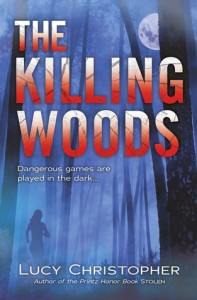
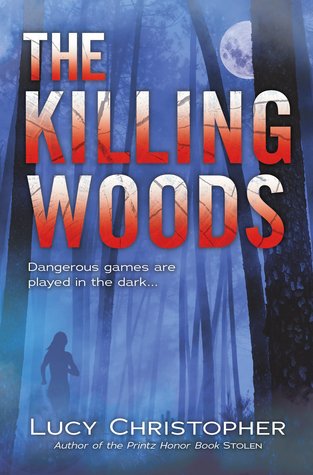
The Killing Woods by Lucy Christopher

Share

killing woods

The Killing Woods
Author: Lucy Christopher
Published: January 7th, 2014 by Chicken House (Scholastic)

GoodReads Summary: Fatal attraction, primal fear, survival in the forest: From the author of the Printz Honor Book Stolen, the highly anticipated thriller about deadly games played in the dark.

Ashlee Parker is dead, and Emily Shepherd’s dad is accused of the crime. A former soldier suffering from PTSD, he emerges from the woods carrying the girl’s broken body. “Gone,” he says, then retreats into silence.

What really happened that wild night? Emily knows in her bones that her father is innocent — isn’t he? Before he’s convicted, she’s got to find out the truth. Does Damon Hilary, Ashlee’s charismatic boyfriend, have the answers? Or is he only playing games with her — the kinds of games that can kill?

Review: I absolutely loved Stolen, so I was thrilled to read another book by Lucy Christopher. This book reads more like a thriller. I was sucked into the mystery and very curious about how the plot would unravel. I think this book is most notable for the intricate descriptive details about the setting. I felt the dark coldness of the killing woods. The setting was spooky, which set the tone for the dark story. There are richly realized themes of friendship, family, and loyalty.

Teacher’s Tools for Navigation: Emily’s father suffers from PTSD. I think Lucy Christopher is delivering a message about PTSD, and it would be important for readers to think more about this. Students might find value in learning more about PTSD before, during, and after reading this book.

Discussion Questions: Why is everyone quick to blame Emily’s father? Do you think he is guilty?; What is The Game? What are the different roles that everyone plays in The Game? What does it teach us about this group of kids? Is it realistic and does it reflect people in general?

We Flagged: “I guess whoever built and buried that IED out there in the desert will never know how far that blast traveled. But all things ripple out, cause shrapnel.”

Read This If You Loved: Stolen by Lucy Christopher, The Body of Christopher Creed by Carol Plum-Ucci, Fight Club by Chuck Palahniuk, What Happened to Cass McBride by Gail Giles, The Things a Brother Knows by Dana Reinhardt, The Lovely Bones by Alice Sebold

Recommended For:

classroomlibrarybuttonsmall

RickiSig

**Thank you to NetGalley and Scholastic Chicken House for providing the Advanced Reader Copy for review!**