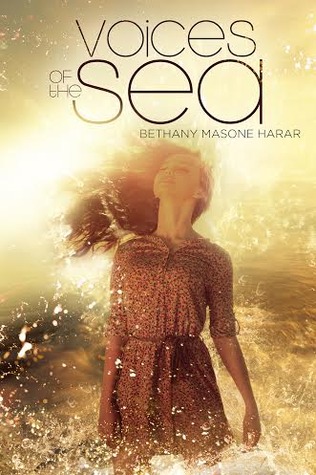
Voices of the Sea by Bethany Masone Harar

Share

21845621

Voices of the Sea
Author: Bethany Masone Harar
Expected Publication: July 22, 2014 by WiDo Publishing

Summary: Seventeen-year-old Loralei is the future Guardian of her Siren clan. To outsiders, she appears to live the average life of a teenager, but like her ancestors, her voice has the power to entrance men. But the Sons of Orpheus are determined to destroy all Sirens, and when members from her clan are savagely murdered, Loralei feels a responsibility to protect her people. When Lora meets Ryan, a new student in her school, she can’t help but be drawn to him in a way that feels both exhilarating and unsettling. The sea’s dark whispers urge Lora to find the Sons of Orpheus, and she quickly learns that no one can be trusted.

Review: I was drawn to the mystery of this novel. I found myself turning the pages quickly, eager to uncover the mystery of Half-Moon Bay. This is a book that would be very appealing to my students as it is very engaging. The romance is passionate and fiery, and it is a text that would be easily passed amongst peers. Loralei is a strong, independent woman who works fearlessly to lead her clan. She faces danger with her eyes wide open, and teens can learn much from her strength. The book is cleverly crafted with the perfect amount of detail to leave readers guessing.

Teacher’s Tools for Navigation: My heart swelled at the many references to mythology. This text is unlike others that may be defined as paranormal romance in that the author includes a rich history of Sirens. Teachers can capitalize on this by asking students to explore Sirens further or research other mythological creatures.

Discussion Questions: How does the author develop the plot to keep readers engaged? Which details does she withhold? Which does she provide? Can you see any foreshadowing?; Can Loralei trust the people in her life? Which characters feel nefarious to you? Which can be trusted?

We Flagged: “She could no more ignore the ocean than she could her own soul” (Chapter Two).

Please note: This quotation was taken from an advanced reader copy. It may change in the final publication.

Read This If You Loved:  Of Poseidon by Anna Banks, Nightshade by Andrea Cremer, Hush Hush by Becca Fitzpatrick

Recommended For:

  classroomlibrarybuttonsmall

RickiSig

A Tribute to Walter Dean Myers

Share

myers

Kellee

When I heard of Walter Dean Myers’s passing, tears immediately began flowing. As a reader, many of us feel close to authors when we read their books, but with Myers, it was more for me. He meant something to me, my students (past, present, and future), my fellow teachers, their students, and everyone else who ever touched one of his books.

I read my first Walter Dean Myers, Shooter, in May of 2007 during my Master’s year. I was blown away by the truth within his books and the way in which he could weave a story. Then I read Monster and was once again awed by the unique ways that he told his stories (interview, police report, etc.). I followed these two YA books with read 5 more of his YA (Handbook for Boys, Dope Sick, It Ain’t All For Nothing, Kick, and Fallen Angels), 1 middle grade (Autobiography of my Dead Brother), and 2 picture books (Harlem and Muhammad Ali). All brilliant. But what made these books even more special for me? They were books that my students wanted to read. They were easy sells. They grabbed their attention. They sucked them in. They were a reflection of people in their lives and themselves. And they were written so well. Even when I moved to teaching the most struggling readers in my school, I found that they gravitated towards Myers’s books even when the “reading level” was higher than theirs. Because of this, I began using an excerpt from Slam as a mentor text during a lesson. This brought even more of my students to his books. I also used Love that Dog by Sharon Creech during my poetry unit which has Walter Dean Myers as a character and uses one of his poems.  Because of Jack’s love of Myers, even more kids were interested in his work.  The demand for his books never stopped, so I kept buying his books. And lending his books. He was a constant presence in my room, and a presence that is irreplaceable.

20131123_075715 20131123_075705

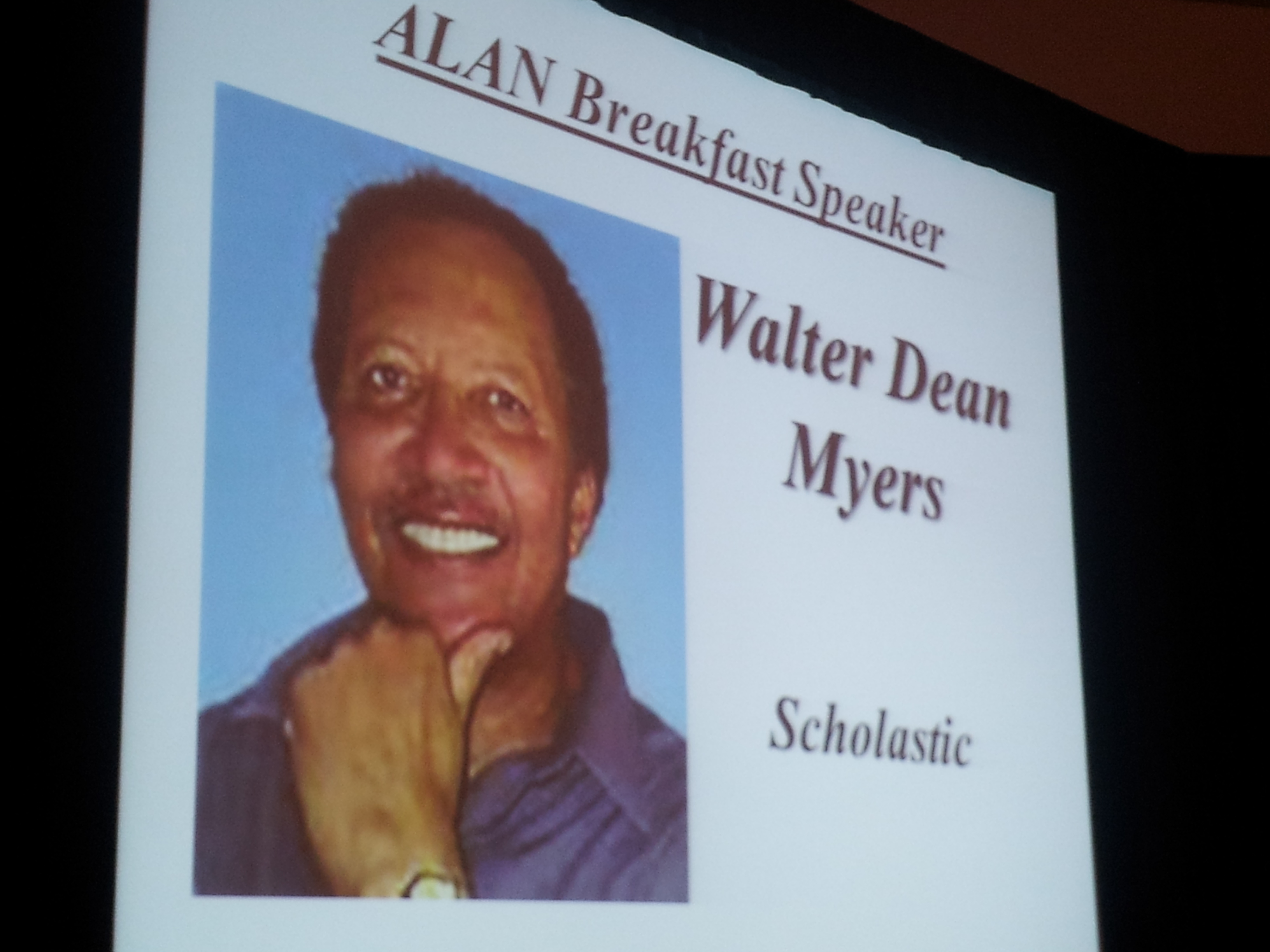
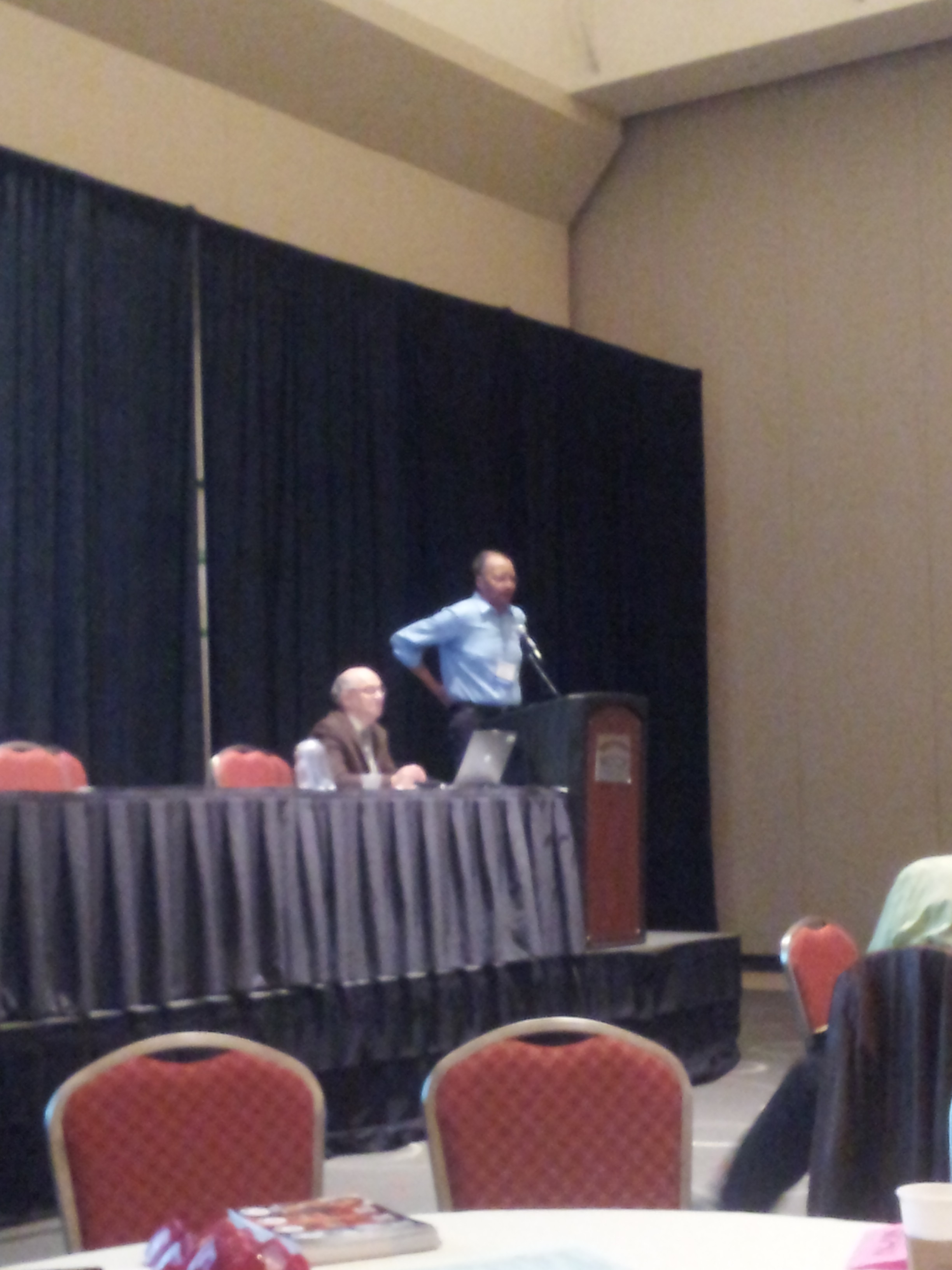
I’ve also been lucky enough to see him speak twice and meet him once. He was a true gentleman, advocate for literacy, and just had a way with words. In 2011, Myers spoke at ALAN and shared how writing was his passion, and he was lucky enough to have publishers that would let him do whatever he could pull off. MAN could he pull off some amazing things. In 2013, Myers was the ALAN breakfast speaker. His speech was about diversity (economic and race) and reading. He shared how he’d been going to prisons for over 20 years to speak to the youth there to promote literacy.  He reminded us that there are all types of children, and that “we need to acknowledge that these [diverse] kids exist,” and “you will save some lives by the choices of the books that you get into kids’ hands.” It was a speech that would make any person want to go out and change the world because we were listening to a person who had.

Ricki

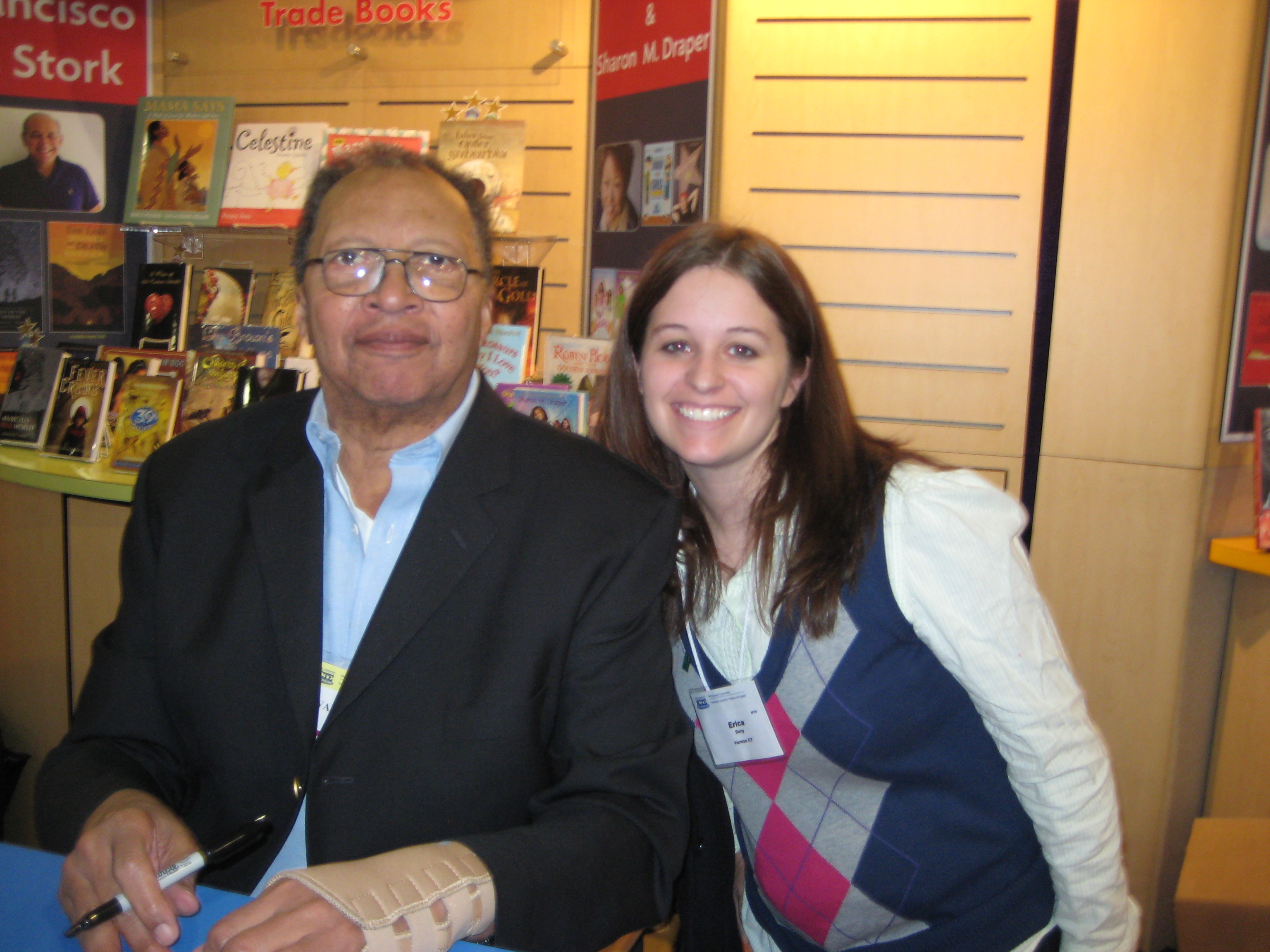
Walter Dean Myers was a gentle, kind man with a fiery spirit. He was committed to change and a strong advocate for young people. When I first met him, I was surprised by how soft-spoken he was. It became immediately clear that his words had power, and I listened very closely when he spoke. Even when the lines for his book signings were out of the door, he treated all of the people in the line as if they were the only ones who mattered.

Walter Dean Myers

A few weeks ago, I was fortunate enough to receive his newest book, On a Clear Day in the mail. When a brown envelope comes, it is often a mystery about which book will be inside. When I pulled out the book and saw his name, I felt a rush of excitement.  I will read anything by this man. In this particular text, Myers strays from his norm and dapples in the dystopian genre. This does not surprise me because he has never been afraid to be innovative and break barriers.  

I’ve been fortunate enough to teach Walter Dean Myers’ books, and any teacher who has used them in the classroom knows how powerful they can be for kids. My students have used Monster to debate the inequities of society, and they have learned about the devastation of war from Sunrise Over Fallujah. When I wrote a tribute to Myers on my Facebook page, a student posted about how much he treasures Fallen Angels because Myers’ military experience was very clear. His books are gripping, honest and gritty. These are the kind of books that help kids realize that they are readers.

Walter Dean Myers leaves behind a legacy of powerful books that will reach children for decades. He is truly a giant among men, and I’ve been honored to learn from him.

Walter Dean Myers’s will always be alive in his books,

Signature andRickiSig

Top Ten Tuesday: Blogging Confessions

Share

top ten tuesday

Top Ten Tuesday is an original feature/weekly meme created at The Broke and the Bookish. The feature was created because The Broke and Bookish are particularly fond of lists (as are we!). Each week a new Top Ten list topic is given and bloggers can participate.

 Today’s Topic: Top Ten Blogging Confessions

Ricki

1. On our #IMWAYR posts, I have said I’ve finished a book when I have a good chunk left to read. I race to finish it that night to avoid being a liar when the post goes live the next day.

2. I binge blog…writing five or six weeks at a time. When I get on a roll, I just can’t stop!

3. I spend hours trying to fix the spacing of blog posts because I am so obsessive. When I can’t get it right, I lose sleep over it. 

4. I reread my blog posts five to ten times to make sure I avoided grammar mistakes. I am meticulous to a fault.

5. Our Monday blog posts go live at midnight, and more than once, I have leaped out of bed at 11:45pm to race to beat the clock because I forgot.

Kellee

1. I always put a positive spin on my Monday posts no matter how bad a week I had. It is hard for me to admit when reading just wasn’t a priority during my week. 

2. I have written postive-ish reviews on books that I really didn’t like because I liked the author that asked me to review it for him/her. 

3. I am not a grammarian. I do my best, but Ricki is just better at grammar than me. (And I type pretty quickly and have been known to make typos and not see them.)

4. I have to put reminders in my phone to blog each weekend because when I didn’t in the past, I’d forget to do the Monday post or some other post for the week. 

5.  I’ve had trouble writing teacher posts this year as I was not in the classroom and struggled in my new position, and I feel really guilty about it.

It’s your turn! Time to confess!

RickiSig and Signature

It’s Monday! What Are You Reading? 7/7/14

Share

IMWAYR

It’s Monday! What Are You Reading? From Picture Books to YA!

It’s Monday! What are you Reading? is a meme hosted by Sheila at Book Journeys. It is a great way to recap what you read and/or reviewed the previous week and to plan out your reading and reviews for the upcoming week. It’s also a great chance to see what others are reading right now…you just might discover the next “must-read” book!

Jen Vincent, of Teach Mentor Texts, and Kellee decided to give It’s Monday! What Are You Reading? a kidlit focus. If you read and review books in children’s literature – picture books, chapter books, middle grade novels, young adult novels, anything in the world of kidlit – join us! We love this meme and think you will, too.

We encourage everyone who participates to support the blogging community by visiting at least three of the other book bloggers that link up and leave comments for them.

Last Week’s Posts

top ten tuesday openly dr bird's advice for sad poets spangled

Tuesday: Top Ten Favorite Classics AND Top Ten Classics We Want To Read

**Click on any picture/link to view the post**

 Last Week’s Journeys

Kellee: This week I received some nonfiction picture books from the library, and was so happy to jump in. So far I have truly enjoyed the ones I’ve read, and plan on featuring them on future Nonfiction Picture Book Wednesdays: Mrs. Moore Thought Otherwise: How Anne Carroll Moore Created Libraries for Children by Jan Pinborough, What To Do About Alice: How Alice Roosevelt Broke the Rules, Charmed the World, and Drover Her Father Teddy Crazy! by Barbara Kerley, and And Tango Makes Three by Justin Richardson. Additionally, I read a fun picture book called Dog vs. Cat by Chris Gall which is a quirky look at having a baby.

I also read three YA books. My favorite was probably Brother, Brother by Clay Carmichael which is a story of a young man who, after his grandmother’s death, finds out he has a twin, and goes on a road trip to confront the family. I also read Wise Young Fool by Sean Beaudoin which helped reassure my awe for Beaudoin’s craft. He is so unique. Finally, I read Midwinterblood by Marcus Sedgwick, the Printz winner, and I don’t even know what to think. I am going to have to reread this one at some point.

Trent read some amazing books this week!

  • Number One Sam by Greg Pizzoli (Sam likes to win, but sometimes there are other things that are more important. The cartoon style illustrations made this book even more fun.)
  • Camp Rex by Molly Idle (What amazed me about this book is that the narrative itself is full and funny, but the pictures add a whole new element to the story. I love when authors do that.)
  • Yes Day! by Amy Krouse Rosenthal (Amy Krouse Rosenthal never disappoints. A yes day is a kids biggest dream!)
  • Nighty Night, Little Green Monster by Ed Emberley (Really liked how the author used cutouts and made this book interactive.)
  • Cat the Cat: What’s Your Sound, Hound the Hound?, Elephant and Piggie: I Love My New Toy, and Elephant and Piggie: A Big Guy Took My Ball by Mo Willems (I love everything that Mo Willems writes, and I love being able to share these amazing picture books with my son.)

Ricki: I was floored by the nonfiction YA book, Hidden Like Anne Frank: 14 True Stories of Survival by Marcel Prins and Peter Henk Steenhuis. Based on my multiple readings of The Diary of Anne Frank, I thought I knew a lot about the people who hid during the Holocaust. I learned that Anne’s story is not typical at all. Many of those who were hidden were beaten, and they often switched locations very frequently. This book is a phenomenal resource. Teachers might read a few (or all) of the stories with their students to show different perspectives. I will be writing a full review, but I needed to share this text with you!

I also reread the professional development text We Can’t Teach What We Don’t Know: White Teachers, Multiracial Schools by Gary Howard. This is a well-researched book that I enjoyed, but I think there are others about this topic that are much better. Henry and I read and loved Jane Yolen’s Owl Moon. We also read Marge Blaine’s The Terrible Thing that Happened at Our House. This was a cute book that would be a great resource to families who have a parent who is returning to work.

This Week’s Expeditions

Kellee: For the first time in a while, I am not sure what I am going to read next. I need to dive into my TBR pile and just pick something! I know I have the rest of my nonfiction picture books to read, but that’s it. Not sure what else, so we’ll see!

Ricki: Upon Kellee’s recommendation, I started Yaqui Delgado Wants to Kick Your Ass by Meg Medina. So far, I love it. I am also beginning the professional development text, Critical Encounters in High School English: Teaching Literary Theory to Adolescents by Deborah Appleman.


Upcoming Week’s Posts

top ten tuesday myers

voices 140603_minion-1

Tuesday: Top Ten Blogging Confessions

 So, what are you reading?

Link up below and go check out what everyone else is reading. Please support other bloggers by viewing and commenting on at least 3 other blogs. If you tweet about your Monday post, tag the tweet with #IMWAYR!

 Signature andRickiSig

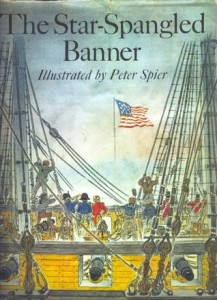
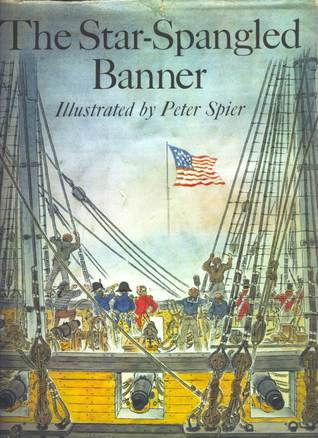
The Star-Spangled Banner illustrated by Peter Spier

Share

spangled

The Star-Spangled Banner
Author: Francis Scott Key
Illustrator: Peter Spier
Published September 19, 1973 by Doubleday Books for Young Readers

Goodreads Summary: Due to careful research, Spier’s artwork depicts “the dawn’s early light” and “the rocket’s red glare” with remarkable authenticity and detail in this celebratory book. Among the highlights: a brief history of the anthem, a reproduction of Francis Scott Key’s original manuscript, music for guitar and piano chords and many photographs.

My Review and Teachers’ Tools for Navigation: Peter Spier’s illustrations bring our national anthem to life. Spier carefully researched all lines of them poem as well as other facts about the War of 1812 when the anthem was written and used all of this knowledge to help show the meaning behind Key’s words. In the afterword, Spier shares much of the research to help tie it all together. 

In the past, as a school, we actually had students do something very similar. They each received a line from the first verse, and they had to research what it meant and then draw an illustration to share with their classmates the meaning. These were then put together as a book, so that the entire national anthem could be read with illustrations showing the meaning. Students loved the activity, and I really think it helped make history mean more to them than just dates.

Discussion Questions: What is Key trying to say in The Star-Spangled Banner?; What caused Key to write this poem?; Had you ever heard the second or third verse before? What did you think of it?; For some of the lines, Spier chose to draw a modern setting–why do you think he chose these specific places? 

We Flagged: 

Recommended For: 

readaloudbuttonsmall classroomlibrarybuttonsmall closereadinganalysisbuttonsmall

Happy Fourth of July!

Signature

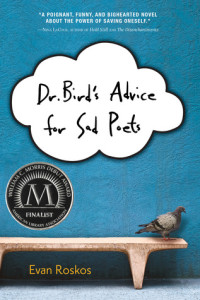
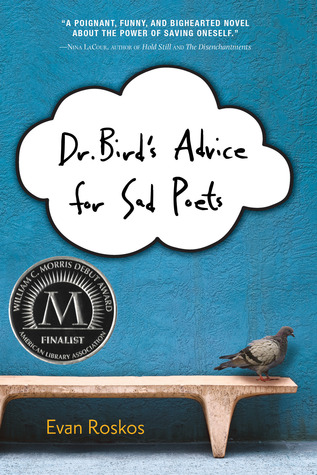
Dr. Bird’s Advice for Sad Poets by Evan Roskos

Share

dr bird's advice for sad poets

Dr. Bird’s Advice for Sad Poets
Author: Evan Roskos
Published: March 5, 2013 by Houghton Mifflin Harcourt

Summary: “I hate myself but I love Walt Whitman, the kook. Always positive. I need to be more positive, so I wake myself up every morning with a song of myself.” 

Sixteen-year-old James Whitman has been yawping (à la Whitman) at his abusive father ever since he kicked his beloved older sister, Jorie, out of the house. James’s painful struggle with anxiety and depression—along with his ongoing quest to understand what led to his self-destructive sister’s exile—make for a heart-rending read, but his wild, exuberant Whitmanization of the world and keen sense of humor keep this emotionally charged debut novel buoyant.

Ricki’s Review: Dr. Bird’s Advice for Sad Poets is such an important book. It captures depression and anxiety in a way that is both authentic and heart-wrenching at the same time. I wanted to reach into the pages of the book to give James a big hug. Similarly to It’s Kind of a Funny Story by Ned Vizzini, this book employs humor without detracting from the very realness of James’ struggles with loneliness and isolation. Teens (and adults) will find themselves in James because he is depicted in a sympathetic way that is very human. This novel is brilliant and should be in every classroom library.

Kellee’s Review: I concur with everything that Ricki said. Dr. Bird’s is a very special book. On a Top Ten Tuesday list, I wrote that I wished there were more books about kids with chemical imbalances, and Dr. Bird’s is the closest I’ve read yetEvan Roskos captures the feeling of a manic depressive state. The energy of the writing actually changes as James’s state of mind changes: anxious, manic, depressed. However, what makes it truly special is that even in the end, there is optimism. Although James is fighting his own chemical imbalance, he keeps doing just that—fighting.

Another thing I adored about this book is the idea of art and writing as therapy. James finds solace in photography and poetry, which is a positive lesson for teens because it shows the power of art, writing, and poetry.

Teacher’s Tools for Navigation: It would be interesting for teachers to do literature circles with texts that concern mental health. Students might read this book along with titles like: Forgive Me, Leonard Peacock by Matthew Quick, It’s Kind of a Funny Story by Ned Vizzini, The Perks of Being a Wallflower by Stephen Chbosky, Twisted by Laurie Halse Anderson, Everybody Sees the Ants by A.S. King, and 13 Reasons Why by Jay Asher. I imagine that reading these titles would foster incredibly rich discussions about depression, anxiety, and suicide. In my opinion, we must have these conversations with our students.

Also, Walt Whitman is a huge part of James’s life, and Whitman is mentioned throughout the book. The Whitman references (and James’s poetry emulating Whitman) would great to be examined in a classroom.

Discussion Questions: If James didn’t have abusive parents, do you think his life would be the same? Do you think depression is genetic in his family?; How does James show bravery?; What role does Walt Whitman play in James’ life?

We Flagged: “People in the world suffer from greater calamities than I do. I eat, I have clothes, I have a house. I read about people around the world who survive on less than a dollar a day. I read about how there are hundreds of millions of widows living in poverty. I see ads for kids who are born with ragged lips and jagged teeth. I don’t have anything like that. I just wake up with a deep hatred of myself. How selfish is that?” (p. 115)

“Later, as my father drives me to the pizzeria, his gassy, grumpy body reeking of judgment and anger and disappointment, I can’t help but wonder how little he knows about the depth of my sadness. The depth of my very being. Will he be upset to find me dead, or relieved?” (p. 214)

Read This If You Loved: (Many of these are listed above.) Forgive Me, Leonard Peacock by Matthew Quick, It’s Kind of a Funny Story by Ned Vizzini, The Perks of Being a Wallflower by Stephen Chbosky, Twisted by Laurie Halse Anderson, Everybody Sees the Ants by A.S. King, Reality Boy by A.S. King, Dear Life, You Suck by Scott Blagden, 13 Reasons Why by Jay Asher, Leaves of Grass by Walt Whitman

Recommended For:

 closereadinganalysisbuttonsmall litcirclesbuttonsmall classroomlibrarybuttonsmall

RickiSig andSignature

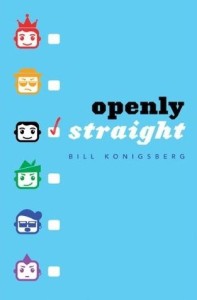
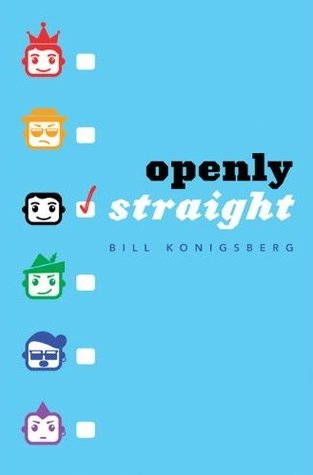
Openly Straight by Bill Konigsberg

Share

openly

Openly Straight
Author: Bill Konigsberg
Published May 28th, 2013 by Arthur A. Levine Books

Goodreads Summary: A funny, honest novel about being out, being proud . . . and being ready for something else.

Rafe is a normal teenager from Boulder, Colorado. He plays soccer. He’s won skiing prizes. He likes to write.

And, oh yeah, he’s gay. He’s been out since 8th grade, and he isn’t teased, and he goes to other high schools and talks about tolerance and stuff. And while that’s important, all Rafe really wants is to just be a regular guy. Not that GAY guy. To have it be a part of who he is, but not the headline, every single time.

So when he transfers to an all-boys’ boarding school in New England, he decides to keep his sexuality a secret — not so much going back in the closet as starting over with a clean slate. But then he sees a classmate breaking down. He meets a teacher who challenges him to write his story. And most of all, he falls in love with Ben . . . who doesn’t even know that love is possible.

This witty, smart, coming-out-again story will appeal to gay and straight kids alike as they watch Rafe navigate being different, fitting in, and what it means to be himself

Review and Teachers’ Guide to Navigation: This is such a great book! It is written well, very funny, smart, and has an important theme. What blew me away the most is how it was so humorous when dealing with a tough subject, but never lost its maturity and importance. Sometimes if you add humor to a novel, it becomes slap stick or more of a novelty, but Bill Konigsberg does it perfectly in Openly Straight.

As a teacher, what I immediately find myself connecting to was the journal entries from Rafe followed by Mr. Scarborough responses. Mr. Scarbourgh becomes quite an important person in Rafe’s life, and I feel that only through these journals, reflections, and responses that Rafe was able to make it at the new school. I think much of what Mr. Scarborough does with Rafe could be transferred directly into most classrooms.

Discussion Questions: Why did Rafe feel like he needed to hide who he was?; Have you ever felt like you couldn’t be who you really are?; How does Mr. Scarborough play a role in Rafe’s life?; How would you react if you were Ben?

We Flagged: “‘It’s hard to be different,’ Scarborough said. ‘And perhaps the best answer is not to tolerate differences, not even to accept them. But to celebrate them. Maybe then those who are different would feel more loved, and less, well, tolerated.'”

Read This If You Loved: Paper Towns by John Green, The Beginning of Everything by Robyn Schneider, Two Boys Kissing by David Leviathan, Will Grayson, Will Grayson by John Green and David Leviathan, Life in Outer Space by Melissa Kiel

Recommended For: 

readaloudbuttonsmall closereadinganalysisbuttonsmall classroomlibrarybuttonsmall

Signature