Author Guest Post: “Helping Kids Understand the Immigration Debate” by Judy Dodge Cummings, Author of Immigration Nation: The American Identity in the Twenty-First Century

Share

“Helping Kids Understand the Immigration Debate”

The United States is a nation of immigrants. With the exception of Native Americans, everyone living here has immigrant ancestors hanging from their family tree. Many of you live or work or attend school with immigrants. Some of you see an immigrant when you look in the mirror.

For more than a century, the Statute of Liberty has stood in New York Harbor and held her torch aloft, beckoning the world’s “tired…poor…huddled masses” to enter America’s Golden Door. However, even though the United States celebrates its immigrant past in story and song, we still struggle with each successive wave of immigration. History shows us that when foreigners come by the millions to America’s shores, even when the United States needs their labor, there is inevitably a backlash from citizens who want to close the Golden Door.

Today, we are witnessing that struggle play out on the news and in our neighborhoods.

Images bombard us—caravans, checkpoints, and children in cages.

Our lexicon expands—catch and release, national emergency, amnesty, and illegals.

Leaders stake claim to the truth as they debate whether to build a wall to keep immigrants out or to build a path that helps immigrants stay. Meanwhile, citizens want to know whose “truth” is the truth?


In an age when we can select media outlets from a menu that matches our political leanings, we often hear only information that corroborates our world view. We learn about immigration through a one-sided filter, our views become hardened, and the nation remains divided.

Today’s teenagers are tomorrow’s decision makers. They will shape future immigration policy. They will have to determine if America’s Golden Door remains open or is closed.

I wrote Immigration Nation: The American Identity in the Twenty-First Century to help youth explore immigration through unbiased, factual sources. The book examines the nation’s long history of immigration and the role the law has played as gatekeeper. Statistics and anecdotes tell the story of who immigrates, why they come, and how these newcomers are treated. The book explores the political, economic, and social impacts of current and future immigration. My goal was to equip teens with the knowledge they need to reach their own conclusions about what future U.S. immigration policy should be so they can use evidence and logic when participating in our national conversation about this important issue.

Here are three activities I developed to help young people explore different aspects of United States immigration.

Activity: Graph the Numbers

Sometimes graphs are helpful when thinking about complicated information. Design a series of graphs to communicate the history of U.S. immigration. Locate data at the Digital Scholarship Lab’s interactive website.

What changes in immigration do you want to show? Consider the following factors.

  • The rise and fall in the total number of immigrants from 1850 to 2010.
  • The most common countries of origin of immigrants in 1850, 1950, and 2010.
  • The percentage of the U.S. population that was foreign-born at different times in history.

What types of graphs most effectively illustrate these changes—a pie chart, bar graph, or line graph? Create a series of graphs and have a classmate try to read them. Are they successful?

To investigate more, choose one 50-year period between 1820 and 2010 and research the major world events that occurred then. What is the connection between these events and the trends in immigration at that time? How could you display these findings on a graph?

Activity: Graffiti as Protest

Throughout history, politicians have constructed walls to protect or divide, and people have created art on these walls to rebel and resist. In this activity, you will design art of a segment of the U.S. Mexican border wall that reflects your opinion of the state of immigration in the twenty-first century.

  • Research different views of President Trump’s proposed border wall. Read the opinions of both Republican and Democratic lawmakers, economic analysts, environmental experts, immigration officials, and immigrant advocates.
  • Decide what you think about the border wall. Is it needed? How much will it cost? How effective will it be? What does an extended border wall say about the United States? What are the psychological impacts of living behind a wall?
  • Write a thesis statement to communicate your main opinion of the border wall. A thesis statement is usually a single sentence that summarizes your specific position on a subject.
  • Brainstorm different ways you can artistically represent your thesis. How will you execute your ideas?
  • Draw, paint, or sketch your ideas on a large piece of butcher paper. Display on a fence or wall so people can view your artistic expression.

To investigate more, research examples of border wall graffiti on walls around the world. What common themes or images are reflected by artists in different countries?

Activity: What’s on Your Plate?

Few Americans grow their own vegetables, milk their own cows, or butcher their own meat. We go to the grocery store, where almost any food is available any season of the year. Have you ever considered the lives of the people whose labor brings that food to your plate?

A 2014 report by the American Farm Bureau Federation found the agricultural industry needs between 1.5 and 2 million workers. Because not enough legal immigrants or American citizens will do backbreaking farm labor, 50 to 70 percent of agricultural workers are undocumented immigrants.

Explore the relationship between immigrant labor and the foods you eat. How much do you rely on farm workers?

  • Keep a food diary for one week. What fresh fruit, fresh vegetables, milk, and meat do you regularly consume?
  • Select one of these foods and research the role undocumented immigrants play in getting that item from the farm or field to the grocery store. What do immigrants say about their work experiences in places such as chicken processing plants or California fruit orchards? What makes the work difficult? What do they get paid for their work and how do their wages impact the price you pay at the grocery store?
  • In a creative way, communicate the journey this food took. Consider a short story, comic strip, or storyboard. Share the story with you peers and discuss how Americans benefit from the labor of undocumented immigrants.

To investigate more, change your story so all the workers who produced your food were paid minimum wage. What impact would this have on you as a consumer?

More classroom resources can be found at https://nomadpress.net/wordpress/wp-content/uploads/2018/07/Immigration-Nation-Classroom-Guide.pdf.
Immigration Nation: The American Identity in the Twenty-First Century
Author: Judy Dodge Cummings
Illustrator: Richard Chapman
Published April 9th, 2019 by Nomad Press

About the Book: What does it mean to be an immigrant today? Has the immigrant experience changed since the last century?

Immigration Nation: The American Identity in the Twenty-First Century invites middle and high schoolers to explore the history of immigration in the United States, along with immigration law and statistics through the perspectives of immigrants, citizens, policy makers, and border agents.

For more than a century, an immigrant from France has stood vigil in the New York Harbor. At 350 feet tall, with a majestic spiked crown upon her head, a tablet of laws clutched in one hand and a torch held aloft in the other, the lady is hard to miss. She cries out to the world, “Give me your tired, your poor…I lift my lamp beside the golden door!” Millions of immigrants have answered the Statue of Liberty’s call, passing over, under, or through the Golden Door to become Americans.

However, on the eve of its 250th birthday, the United States is in the middle of an identity crisis. Should this land of immigrants open the door open to outsiders, people hungry for opportunity and desperate for freedom? Or should the country shut the golden door, barring entry to all but a select few? And what does it mean to be an American? How citizens answer these questions in the early twenty-first century will determine the future of America’s identity.

About the Author: Judy Dodge Cummings is a writer and former high school social studies teacher. She has written many books for children and teens, including Migration: Investigate the Global Journey of Humankind for Nomad Press. Lots of Judy’s books are related to history because that is her favorite topic to research, read, and write. Judy lives and writes in south central Wisconsin.

Website: judydodgecummings.com/books

Facebook: facebook.com/JDodgecummings

Thank you so much for this guest post!

Teachers’ Guide for Merci Suárez Changes Gears by Meg Medina

Share

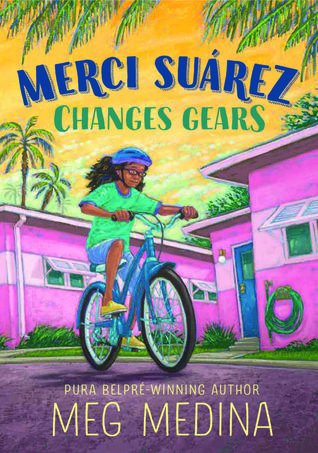
Merci Suárez Changes Gears
Author: Meg Medina
Published: September 11th, 2018 by Candlewick Press

Summary: Thoughtful, strong-willed sixth-grader Merci Suárez navigates difficult changes with friends, family, and everyone in between in a resonant new novel from Meg Medina.

Merci Suárez knew that sixth grade would be different, but she had no idea just how different. For starters, Merci has never been like the other kids at her private school in Florida, because she and her older brother, Roli, are scholarship students. They don’t have a big house or a fancy boat, and they have to do extra community service to make up for their free tuition. So when bossy Edna Santos sets her sights on the new boy who happens to be Merci’s school-assigned Sunshine Buddy, Merci becomes the target of Edna’s jealousy. Things aren’t going well at home, either: Merci’s grandfather and most trusted ally, Lolo, has been acting strangely lately — forgetting important things, falling from his bike, and getting angry over nothing. No one in her family will tell Merci what’s going on, so she’s left to her own worries, while also feeling all on her own at school. In a coming-of-age tale full of humor and wisdom, award-winning author Meg Medina gets to the heart of the confusion and constant change that defines middle school — and the steadfast connection that defines family.

Teachers’ Tools for Navigation and Discussion Questions: 

Please view and enjoy the teachers’ guide I created for Merci Suárez Changes Gears:

You can also access the teaching guide here.

You can learn more about Merci on Candlewick Press’s Merci Suárez Changes Gears page.

Recommended For: 

readaloudbuttonsmall classroomlibrarybuttonsmall litcirclesbuttonsmall closereadinganalysisbuttonsmall

Kellee Signature

Thunderhead by Neal Shusterman

Share

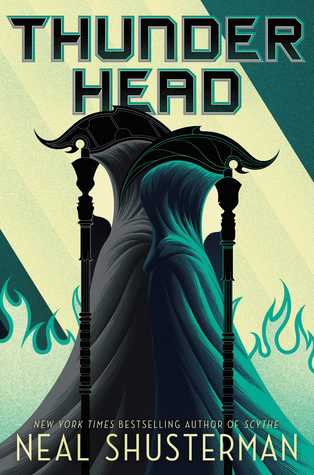
Thunderhead
Author: Neal Shusterman
Published: January 9, 2018 by Simon & Schuster

Guest Review by Natalia Sperry

Summary: Rowan and Citra take opposite stances on the morality of the Scythedom, putting them at odds, in the second novel of the chilling New York Times bestselling series from Neal Shusterman.

Rowan has gone rogue, and has taken it upon himself to put the Scythedom through a trial by fire. Literally. In the year since Winter Conclave, he has gone off-grid, and has been striking out against corrupt scythes—not only in MidMerica, but across the entire continent. He is a dark folk hero now—“Scythe Lucifer”—a vigilante taking down corrupt scythes in flames.

Citra, now a junior scythe under Scythe Curie, sees the corruption and wants to help change it from the inside out, but is thwarted at every turn, and threatened by the “new order” scythes. Realizing she cannot do this alone—or even with the help of Scythe Curie and Faraday, she does the unthinkable, and risks being “deadish” so she can communicate with the Thunderhead—the only being on earth wise enough to solve the dire problems of a perfect world. But will it help solve those problems, or simply watch as perfection goes into decline?

Review: Thunderhead packs a punch as a conceptually compelling and action-packed follow up to award-winning Scythe. While at times it moves slowly and teeters on the precarious edge of “middle book syndrome.” Its expansion of the world of the Scythdome helps the book feel more well-rounded. Despite the action, Thunderhead shines most in its explorations of democracy and the implications of AI technology.

Citra’s questioning of identity, though immediately rooted in her struggle between her civilian past and scythedom, provides a good example of identity searching for teen readers. For Citra and Rowan, the stakes are high– despite the novel’s focus on the guiding AI of the Thunderhead, the fate of the world rests not on the shoulders of the political technology or the Scythe’s government, but on the teenage protagonist’s shoulders. Though Thunderhead didn’t invent the trope of teens saving the world, in 2018 it feels all the more prevalent.

Teacher’s Tool For Navigation: As a sequel, Thunderhead will primarily be useful in addition to classroom libraries. However, in discussing the Arc of a Scythe series as a whole, Thunderhead raises interesting questions of power dynamics in politics, democracy, and the role of AI technology. If Scythe is already a text you’ve considered using in literature circles, a discussion about the themes raised in the sequel could provide an interesting supplement to the unit.

Discussion Questions:  Is the Thunderhead justified? Is the Scythedom?  In what ways is the world of the Scythes in MidMerica and beyond a dystopia or utopia?

Flagged: “You may laugh when I tell you this, but I resent my own perfection. Humans learn from their mistakes. I cannot. I make no mistakes. When it comes to making decisions, I deal only in various shades of correct.” (Chapter 4).

Read This If You Loved: Scythe by Neal Shusterman, Illuminae by Amie Kaufman, Jay Kristoff, This Savage Song by Victoria Schwab

Recommended For: 

classroomlibrarybuttonsmall 

RickiSig

It’s Monday! What Are You Reading? #IMWAYR 5/27/19

Share

IMWAYR 2015 logo

It’s Monday! What Are You Reading? From Picture Books to YA!

It’s Monday! What are you Reading? is a meme started by Sheila at Book Journeys and now hosted by Kathryn at The Book Date. It is a great way to recap what you read and/or reviewed the previous week and to plan out your reading and reviews for the upcoming week. It’s also a great chance to see what others are reading right now…you just might discover the next “must-read” book!

Kellee and Jen, of Teach Mentor Texts, decided to give It’s Monday! What Are You Reading? a kidlit focus. If you read and review books in children’s literature – picture books, chapter books, middle grade novels, young adult novels, anything in the world of kidlit – join us! We love this meme and think you will, too.

We encourage everyone who participates to support the blogging community by visiting at least three of the other book bloggers that link up and leave comments for them.

Bold_line

Thursday: Guest Review: Nice Try, Jane Sinner by Lianne Oelke

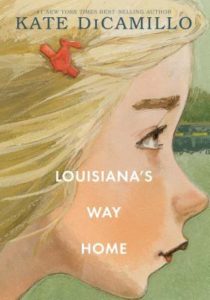
Friday: Teachers’ Guide for Louisiana’s Way Home by Kate DiCamillo

Sunday: Author Guest Post: “Igniting Your Students’ Passion Using the ‘FIRE’ Method” by Scott Wilson, Author of METL: The Angel Weapon

**Click on any picture/link to view the post**

Bold_line

Kellee

I will update what I’ve read/am reading next week–this long weekend, family who I haven’t seen in 4-10 years are in town, so I just didn’t set enough time aside to write everything up to share! I’m sorry! But YAY FAMILY! This weekend has showed me that I really wish they live closer–it has been amazing watching our kids hang out and also get to know each other even more. <3

Ricki

Ricki is away on maternity leave and will return mid-June. Happy reading!

Bold_line

Tuesday: Guest Review: Thunderhead by Neal Shusterman

Friday: Teachers’ Guide for Merci Suárez Changes Gears by Meg Medina

Sunday: Author Guest Post: “Helping Teens Understand the Immigration Debate” by Judy Dodge Cummings, Author of Immigration Nation

Bold_line

Link up below and go check out what everyone else is reading. Please support other bloggers by viewing and commenting on at least 3 other blogs. If you tweet about your Monday post, tag the tweet with #IMWAYR!

 Signature andRickiSig

Author Guest Post: “Igniting Your Students’ Passions by Using the FIRE Method” by Scott Wilson, Author of METL: The Angel Weapon

Share

“Igniting Your Students’ Passions by Using the FIRE Method”

Recently I was asked by my middle school alma mater to give a talk to sixth graders as part of their curriculum on pursuing passions. The teacher specifically asked that I be as honest as possible, since a lot of the students were not being very realistic and assumed that life was going to be handed to them.

To explain it in as fun and clear a way as possible, I used the “fire” method: comparing a burning passion to a burning fire. Passions and fires can both be dangerous if you’re not careful, and both require the same three elements to stay burning: a spark, oxygen, and fuel.

#1. Spark: The thing that sparked the student’s interest

Just like how a fire can’t exist without an initial spark, a passion can’t exist without one either.

For me, my passion is writing, and the biggest spark came when I was 13 years old and waiting for the fifth Harry Potter book to come out. Instead of waiting another two years, I decided to just write my own fanfiction version. That was the first time I realized that I could write a book, since up until then I’d always thought writers had to have a special office with some sort of writer magic in it. But as it turned out, all anyone needs is an idea and something to write it on.

Sparks can come in all sorts of varieties. If the student’s passion is basketball, maybe it was the first time they played with their friends. If their passion is baking, maybe it was the first time they tasted a slice of cake. If their passion is video games, maybe it was beating their first game by themselves.

Having students think about their spark can help remind them why their passion is their passion in the first place, and prepare them for the next two steps.

#2. Oxygen: The perseverance that prevents the student’s fire from going out.

It’s important for students to be aware that while pursuing their passion, obstacles are going to get in their way. It’s during those times that they have to take a deep breath full of oxygen and tell themselves it’s going to be okay.

For me, that happened when I wrote my first original book. I sent it out to publishers and got nothing but rejections or silence. So I wrote another, and the same thing happened. Again and again for a total of five books and nothing to show for it except tumbleweeds in my inbox.

My fiery passion for writing was dying, and I needed oxygen. Just like you can pump air into a dying fire with a bellows, I had to do the same: take deep breaths, get that oxygen, and persevere. I wrote another book, and the sixth time was the charm. That was when my first book was finally picked up by a publisher.

There are many different types of oxygen. If the student’s passion is being an athlete, maybe no team wants to have them play for them. If their passion is being a doctor, maybe they discover that they can’t stand the sight of blood. If their passion is being as actor, maybe they can’t find any acting jobs.

Thinking about what kind of obstacles can get in the way of their passion is a good way for students to prepare for them down the road. It can hurt to be very passionate about something and have it not work out right away, but as long as they remember to breathe in that oxygen, learn from their mistakes, and keep going, their flame won’t go out.

#3. Fuel: The job that pays the bills.

Just like a fire needs some kind of fuel to keep burning (wood, charcoal, etc.), passions need fuel too. Students should know that a lot of creative passions don’t pay well, and if they don’t have money for a roof over their head, then it’ll be hard to write, create music, make art, or whatever they want to do.

But the good news is that their “fuel job” can be related to their passion. For me, I work as a writer/editor at the news-entertainment website SoraNews24. Not only do I get to put my writing experience into practice, but I also get to pay the bills and have food in the fridge too. Meanwhile, after work, I still get to pursue my passion of writing books.

There are a ton of different “fuel jobs” out there. If the student’s passion is sports, maybe they could be a personal trainer, or a coach for a school team. If their passion is music, maybe they could be a music teacher/tutor, or edit music for movies/videos. If their passion is gaming, maybe they could playtest games, or help market them.

Being realistic with students can help broaden their view of what they can do with their passion. It also can help show them that they’re not a failure if they don’t achieve their dream job, they’re just fueling their passion in a different way.

Students can come up with their own list of the three elements, and then see for themselves how they link together: the spark that made them interested in the first place and reminds them why they love it, the oxygen to help them overcome obstacles, and the fuel to feed their passion. It’s a lot of fun to have them share their sparks, oxygen, and fuel with each other, and give suggestions as well.

Just like a real fire, as long as they have all three elements, their passion will burn bright for a long time.

About the Author: Scott Wilson works as a translator and editor for the Japanese news-entertainment website SoraNews24. He runs ScottWritesStuff, a creative writing livestream on Twitch, and in his free time can be found playing video games and Magic: The Gathering with friends. Metl: The ANGEL Weapon is his first novel. He lives in the Japanese countryside with his wife.

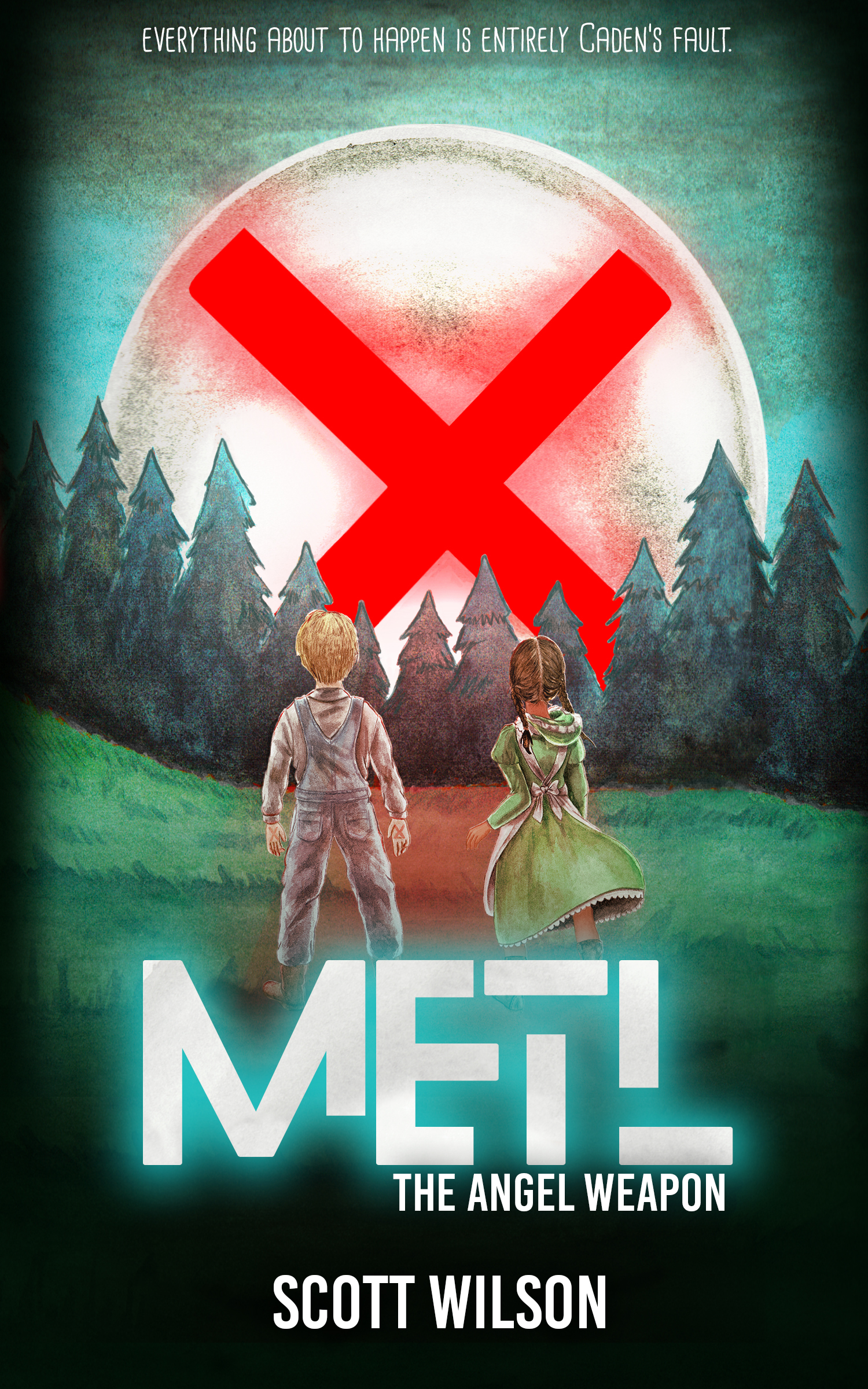
METL: The Angel Weapon
Author: Scott Wilson
Published March 5th, 2019 by Month9Books

About the Book: When technology is outlawed, the future looks a lot like the past.

Thirteen-year-old Caden Aire spends his days working in the fields and his nights sleeping in a horse stable, all under the watch of Metl—Earth’s mysterious and artificial second moon, a looming relic of humanity’s lost era.

But Caden’s simple life changes when one night, a fiery red X suddenly appears on Metl’s surface, and the same red Xs start glowing on his palms.

Now Caden must find the only person who knows what’s happening to him, but he doesn’t have much time. Metl has started on an impact course with Earth, and to stop it, Caden will have to face both the unsettling truth about his world … and about himself.

Thank you, Scott, for the advice on how to keep our students’ writing passion burning bright!

Teachers’ Guide for Louisiana’s Way Home by Kate DiCamillo

Share

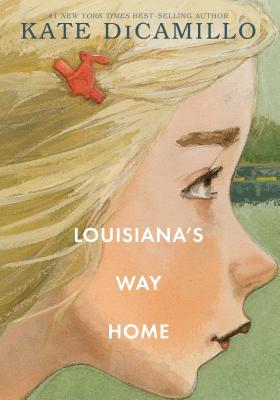
Louisiana’s Way Home
Author: Kate DiCamillo
Published: October 2nd, 2018 by Candlewick Press

Summary: From two-time Newbery Medalist Kate DiCamillo comes a story of discovering who you are — and deciding who you want to be.

When Louisiana Elefante’s granny wakes her up in the middle of the night to tell her that the day of reckoning has arrived and they have to leave home immediately, Louisiana isn’t overly worried. After all, Granny has many middle-of-the-night ideas. But this time, things are different. This time, Granny intends for them never to return. Separated from her best friends, Raymie and Beverly, Louisiana struggles to oppose the winds of fate (and Granny) and find a way home. But as Louisiana’s life becomes entwined with the lives of the people of a small Georgia town — including a surly motel owner, a walrus-like minister, and a mysterious boy with a crow on his shoulder — she starts to worry that she is destined only for good-byes. (Which could be due to the curse on Louisiana’s and Granny’s heads. But that is a story for another time.)

Called “one of DiCamillo’s most singular and arresting creations” by The New York Times Book Review, the heartbreakingly irresistible Louisiana Elefante was introduced to readers in Raymie Nightingale — and now, with humor and tenderness, Kate DiCamillo returns to tell her story.

Teachers’ Tools for Navigation and Discussion Questions: 

Please view and enjoy the teachers’ guide I created for Louisiana’s Way Home: 

You can also access the teaching guide here.

You can learn more about Louisianaon Candlewick Press’s Louisiana’s Way Home page.

Recommended For: 

readaloudbuttonsmall classroomlibrarybuttonsmall litcirclesbuttonsmall closereadinganalysisbuttonsmall

Kellee Signature

Nice Try, Jane Sinner by Lianne Oelke

Share

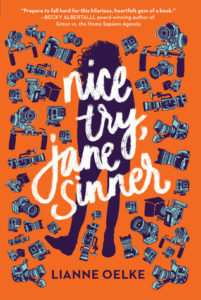
Nice Try, Jane Sinner
Author: Lianne Oelke
Published: January 9, 2018 by Clarion

Guest Review by Natalia Sperry

Summary: The only thing 17-year-old Jane Sinner hates more than failure is pity. After a personal crisis and her subsequent expulsion from high school, she’s going nowhere fast. Jane’s well-meaning parents push her to attend a high school completion program at the nearby Elbow River Community College, and she agrees, on one condition: she gets to move out.

Jane tackles her housing problem by signing up for House of Orange, a student-run reality show that is basically Big Brother, but for Elbow River Students. Living away from home, the chance to win a car (used, but whatever), and a campus full of people who don’t know what she did in high school… what more could she want? Okay, maybe a family that understands why she’d rather turn to Freud than Jesus to make sense of her life, but she’ll settle for fifteen minutes in the proverbial spotlight.

As House of Orange grows from a low-budget web series to a local TV show with fans and shoddy T-shirts, Jane finally has the chance to let her cynical, competitive nature thrive. She’ll use her growing fan base, and whatever Intro to Psychology can teach her, to prove to the world—or at least viewers of substandard TV—that she has what it takes to win.

Review: I’ll admit, I’m always a sucker for a strong, sarcastic, and somewhat troubled YA protagonist, and Jane Sinner did not disappoint. Nice Try, Jane Sinner is psychological and philosophical, a little crass and silly, sometimes downright strange, and always full of tremendous heart—but then, isn’t that college? It was refreshing to read an older YA: Jane is right on that cusp of “not really a teenager anymore, but definitely not a full a full-fledged adult.” As she navigates her senior year in high school, taking classes at the local community college, I felt that, even beyond its obvious and intentional quirks, Jane’s story is startlingly unique in how it captures the whirlwind of  emotions felt during that transitional time. It also offered a healthy balance of relationships, featuring Jane’s loving yet tense parents, adoring but annoying little sister, and a cast of friends too diverse to affix any one guiding set of adjectives to.

Written in diary-format, the book is told exactly as Jane wants it to be, which adds an interesting dimension of questionability to her narration. Dialogue is captured in script format, which prompts readers to question at times what’s reality and what’s for show, on House of Orange and beyond. What Jane does and doesn’t tell the narrator about her past, her genuine feelings, and her motivation leads to some interesting twists.  In particular, Jane’s “Doctor/Self” internal dialogues were really compelling. Like the eponymous Jane Sinner herself, however, the book at times deflects the greater thematic issues at hand through its sarcasm and humor. Jane’s story revolves around a personal crisis—one that I wish the book would have delved in deeper to by the end. I did enjoy Jane’s exploration of religion and the expectations young people are sometimes held to, which is a topic I’ve yet to see be fully explored in YA.

For all its quirks and flaws, Jane Sinner has a heart of gold. It conjures up all the emotions of a teen on the brink of “adulthood,” while still maintaining a sarcastic yet thoughtful spark throughout. It’s refreshing to remember that being a young adult doesn’t end at high school, and life doesn’t have to either.

Teacher’s Tool For Navigation: I’ll admit, I’m always a sucker for a strong, sarcastic, and somewhat troubled YA protagonist, and Jane Sinner did not disappoint. Nice Try, Jane Sinner is psychological and philosophical, a little crass and silly, sometimes downright strange, and always full of tremendous heart — but then, isn’t that college? It was refreshing to read an older YA: Jane is right on that cusp of “not really a teenager anymore, but definitely not a full a full-fledged adult.” As she navigates her senior year in high school, taking classes at the local community college, I felt that, even beyond its obvious and intentional quirks, Jane’s story is startlingly unique in how it captures the whirlwind of  emotions felt during that transitional time. It also offered a healthy balance of relationships, featuring Jane’s loving yet tense parents, adoring but annoying little sister, and a cast of friends too diverse to affix any one guiding set of adjectives to.

Written in diary-format, the book is told exactly as Jane wants it to be, which adds an interesting dimension of questionability to her narration. Dialogue is captured in script format, which prompts readers to question at times what’s reality and what’s for show, on House of Orange and beyond. What Jane does and doesn’t tell the narrator about her past, her genuine feelings, and her motivation leads to some interesting twists.  In particular, Jane’s “Doctor/Self” internal dialogues were really compelling. Like the eponymous Jane Sinner herself, however, the book at times deflects the greater thematic issues at hand through its sarcasm and humor. Jane’s story revolves around a personal crisis–one that I wish the book would have delved in deeper to by the end. I did enjoy Jane’s exploration of religion and the expectations young people are sometimes held to, which is a topic I’ve yet to see be fully explored in YA.

For all its quirks and flaws, Jane Sinner has a heart of gold. It conjures up all the emotions of a teen on the brink of “adulthood,” while still maintaining a sarcastic yet thoughtful spark throughout. It’s refreshing to remember that being a young adult doesn’t end at high school, and life doesn’t have to either.

Discussion Questions:  Even in the context of the book, Jane is quite the controversial character to those around her — did you “like” Jane? How might this shape your perception of the book as a reader? Does “likability” matter in protagonists? Think about if Jane was gender-swapped: would this change how we view some of her more questionable decisions or characteristics?

Flagged: “I need to psychoanalyze myself for Intro Psych. I’m not sure how that’s possible; the prof was rather vague on the specifics in class today. I was also caught up in a doodle of my hand. I outlined my hand on my notes because the notes were ugly and otherwise useless. I layered the inside with different-colored gel pens until the outline was fairly thick. In the middle of the hand I drew toasters and toast. The whole thing came together really well. One of my better efforts. But I’m not sure how to psychoanalyze myself. I suppose I’ll have to be both the doctor and patient. Maybe the two of me can come up with some profoundly insightful insight.

A middle-aged man with thinning brown hair and a cozy sweater vest motions for Jane to lie down on the sofa. He takes a seat on the overstuffed leather armchair and crosses his legs like a girl.

THE DOCTOR

Hello, Ms. Sinner.

JS

                          Hi.” (Page 46-47).

Read This If You Loved: Anything by John Green (Turtles All the Way Down in particular),  Highly Illogical Behavior by John Corey Whaley, Fangirl by Rainbow Rowell, The Hunger Games by Suzanne Collins

Recommended For: 

classroomlibrarybuttonsmall 

RickiSig