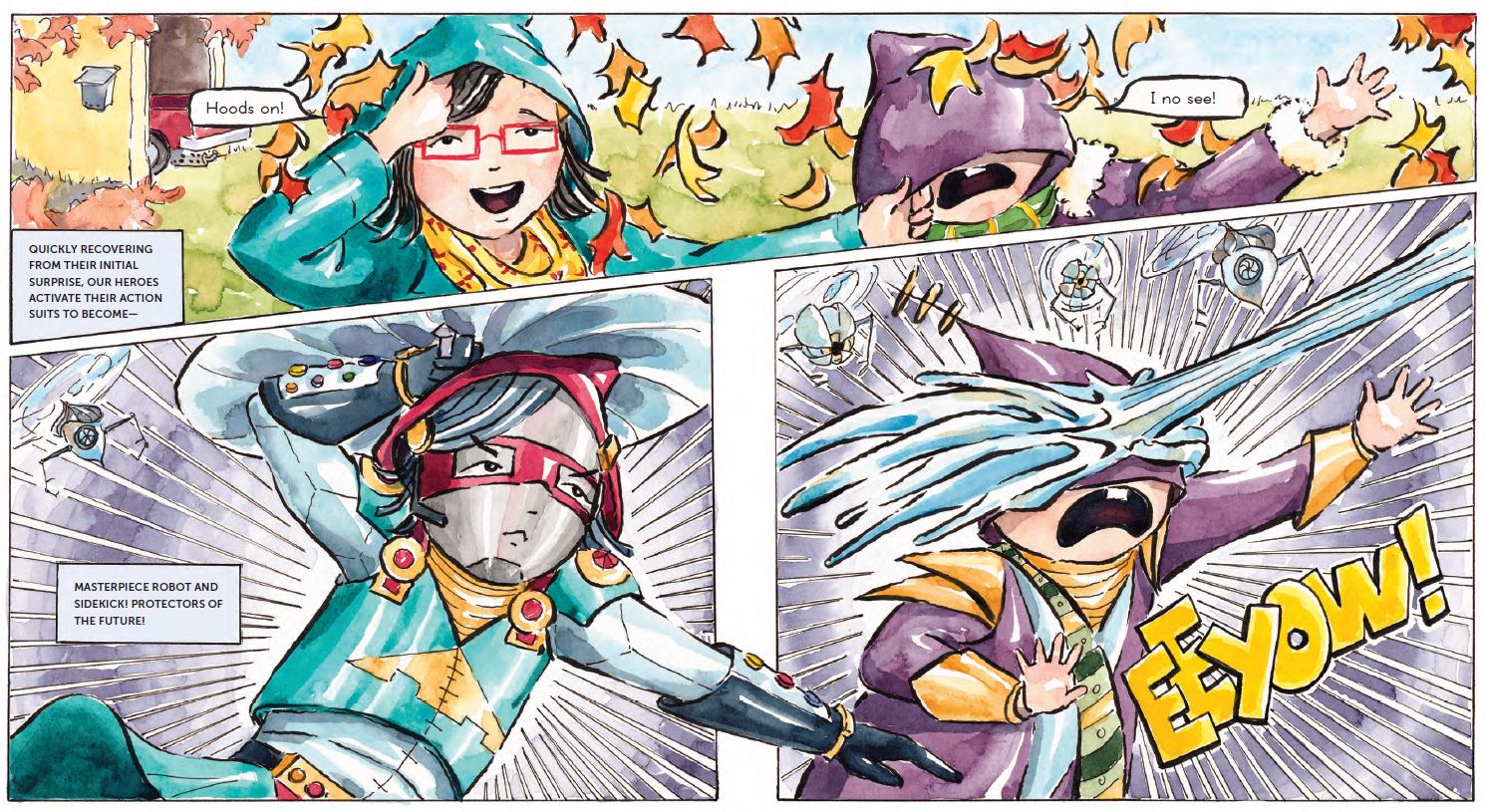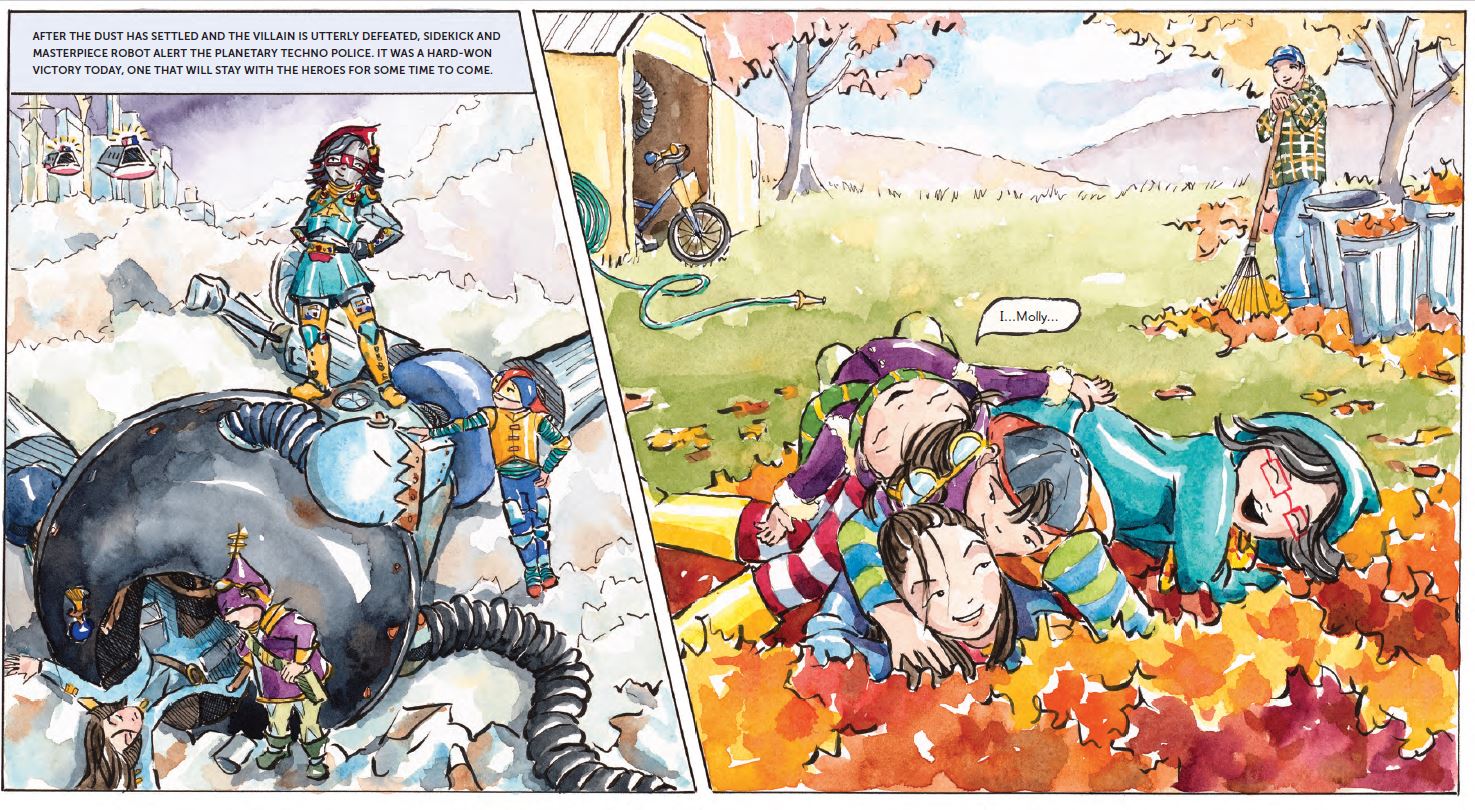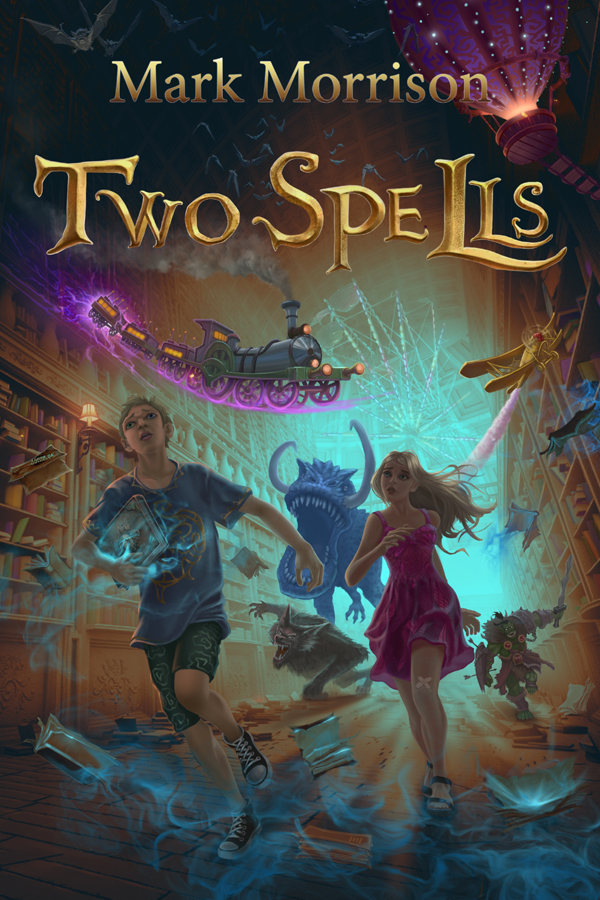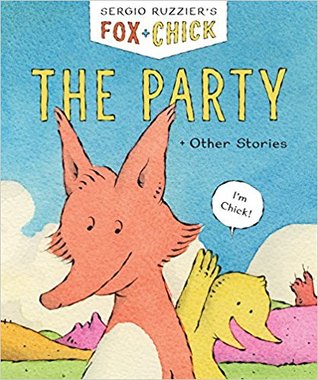
Teaching Guide with Activities and Discussion Questions for Fox + Chick: The Party and Other Stories by Sergio Ruzzier

Share

Fox + Chick: The Party and Other Stories
Author and Illustrator: Sergio Ruzzier
Published April 17th, 2018 by Chronicle Books

Summary: Fox and Chick don’t always agree. But Fox and Chick are always friends. With sly humor and companionable warmth, Sergio Ruzzier deftly captures the adventures of these two seemingly opposite friends. The luminous watercolor images showcased in comic-book panel form will entice emerging readers, while the spare text and airiness of the images make this early chapter book accessible to a picture book audience as well.

Teachers’ Tools for Navigation: Activities for The Party and Other Stories include:

How to Read a Graphic Novel

Reading a graphic novel differs from reading prose text because readers must infer everything outside of the dialogue they are given and what is presented in the illustrations.

First, using Fox + Chick discuss the differences with your class between a picture book, a chapter book, and a graphic novel. Make sure to point out the parts of a graphic novel like speech bubbles show what the characters are saying, panels (each square), and the gutter (the space between panels). Then discuss how to read a graphic novel (typically read left to right, top to bottom).

Extension activity: Discuss with students why an author would choose to write their story as a graphic novel versus a chapter book or picture book.

Then, to show how inferences have to be made between panels, use pages 2/3 to page 4. As a reader you can infer that Chick continued walking to the house shown on page 2/3 even though the illustrations don’t show each little step. Also, between the first two panels on page 4, the reader can infer that Chick had to wait a bit even though the panels don’t show it.

After reading the story, have students show how they use inferring to comprehend the story by:

K-1st: Retell the story including inferences made between panels and what the illustrations show.

2nd-3rd: Rewrite the story as a narrative including inferences made between panels and what the illustrations show.

Conflict and Resolution

Conflict is the problem with a story or part of a story while the resolution is how that problem is solved. In each of the chapters in Fox + Chick, there is a conflict and a resolution. Each chapter gives an opportunity to learn these narrative elements.

For chapter 1, “The Party,” as a class, determine the conflict and the resolution.

For chapter 2, “Good Soup,” have students determine the conflict and resolution in pairs.

For chapter 3, “Sit Still,” have students determine the conflict and resolution independently.

Character Traits

Character traits are all the aspects of a character’s behavior from how they act to what they think.

Before reading: As a class, list the character traits the students assume a fox and a chick are going to have. How will they act? What type of personality will they have? How are they going to interact with each other?

After reading: Independently or as a class, have students complete a character trait activity on each character. Have students answer the following questions then place their answers into a graphic organizer:

How did the character act in the story?

What feelings did the character portray in the story?

What words would you use to describe the character’s personality?

See the Teaching Guide Created by me (Kellee) for even more activities and discussion questions! 
You can also access the teaching guide through Chronicle’s website here.

Recommended For: 

readaloudbuttonsmall classroomlibrarybuttonsmall closereadinganalysisbuttonsmall

Kellee Signature

Student Voices: (Mostly) Fifteen Word Book Reviews by Five of Kellee’s 2017-18 Middle School Students

Share

Samia R.’s Fifteen Word Book Reviews (6th grade)

House Arrest by K.A. Holt
This book is really easy to read and has a strong message about sibling devotion.

Breakout by Kate Messner
This book is written in multiple formats which was different and also fun to read.

Masterminds by Gordon Korman
This book has the perfect mix of action, mystery, and action, and it’s really good.

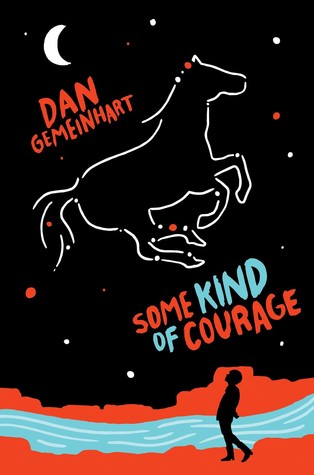
Some Kind of Courage by Dan Gemeinhart
It’s emotionally attaching and makes you want to finish it the day you started it.

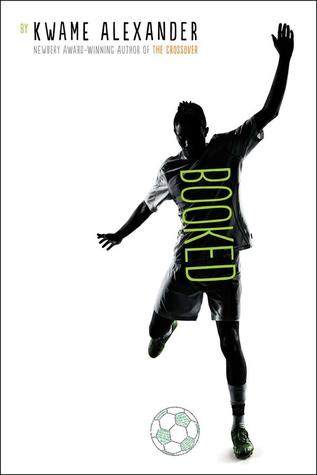
Booked by Kwame Alexander
This is a novel in verse and also deals with real important real life issues.

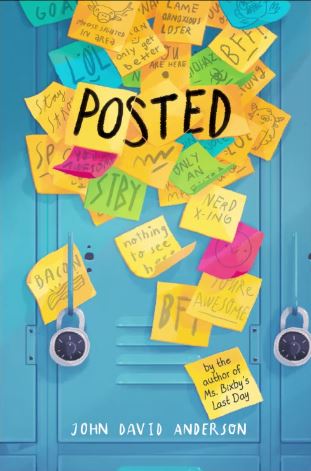
Posted by John David Anderson
This book is about five friends struggling to fit in at school and finding themselves.

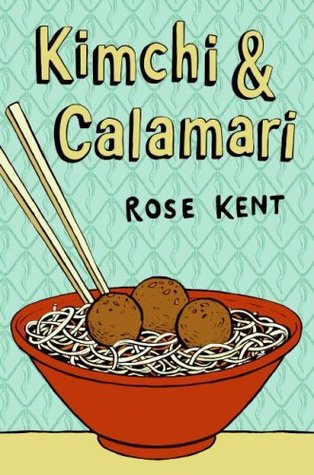
Kimchi and Calamari by Rose Kent
This book is about a boy who feels he’s between two cultures because he’s adopted.

Skink No Surrender by Carl Hiassen
This fun book mixes action and mystery perfectly and will definitely keep the reader hooked.

The Summer of May by Cecilia Galante
This book is touching and funny and also so emotionally, so it is really good.

The Wig in the Window by Kristen Kittscher
This book is about two friends who find a mystery and try to solve it.

Vasudev M.’s Fifteen Word Book Reviews (6th grade)

Legend by Marie Lu
This is a dystopic, suspenseful book that has a mix of action, romance, and mystery.

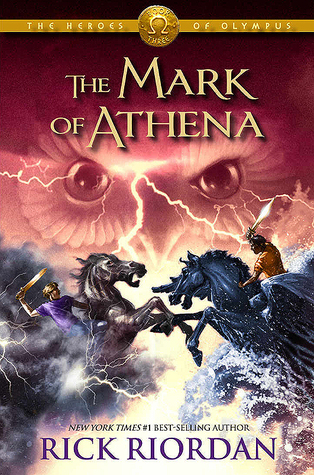
Mark of Athena by Rick Riordan
A book with twists and turns that keep you on the edge of your seat.

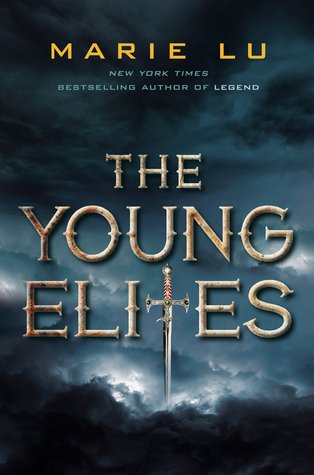
The Young Elites by Marie Lu
Has a mix of romance, action, and science fiction. This book is centered around loyalty.

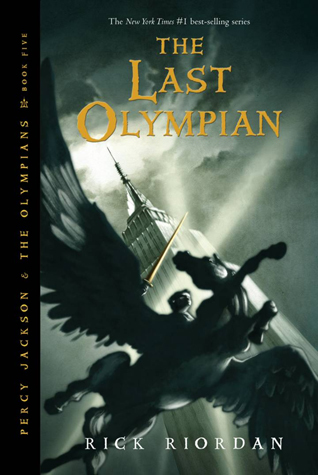
The Last Olympian by Rick Riordan
A book that shows that a group together during the most desperate times can prevail.

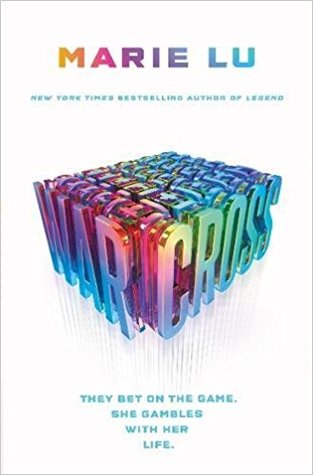
Warcross by Marie Lu
A book with a mix of action and romance that demonstrates loyalty, friendship, and determination.

The Red Pyramid by Rick Riordan
A mix of action, romance, and humor, and has many twists that keep you interested.

The Hammer of Thor by Rick Riordan
A fast-paced action-packed book with a pinch of humor and romance. It is well composed.

Rescued by Eliot Schrefer
An adventurous book that shows friendship and determination teaches you to do the right thing.

Champion by Marie Lu
An action-packed book that has suspense and romance. This book has many unsuspected twists.

Hidden Oracle by Rick Riordan
A clever book based off of Greek Mythology that has action, suspense, and humor.

Ariana M.’s and Mariana S.’s Fifteen Word Book Reviews (7th grade)

Rescued by Eliot Schrefer
We love this book for a myriad of reasons. First, it opens your eyes to a lot of things that kids are in the dark about like palm oil and how to treat orangutans. When you read Rescued, you fall in love with it because you feel like you’re in the story, too, and fall in love with the characters.
(Kellee’s note: This book review was written before they decided to do fifteen word book reviews, so this is just a regular review.)

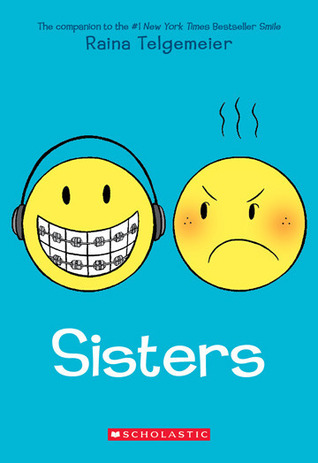
Sisters by Raina Telgemeier
This book teaches you about the struggles of family and how sometimes sisterhood can be tough.

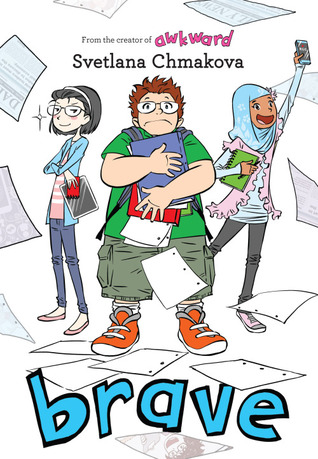
Brave by Svetlana Chmakova
Teaches you that you aren’t alone even when life gets hard, you’ll have a friend.

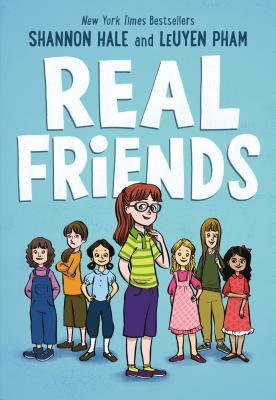
Real Friends by Shannon Hale
This book shows the importance of having true friends and to have confidence in yourself.

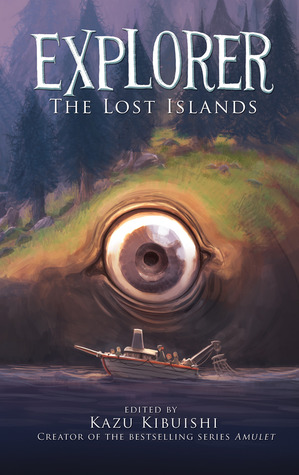
Explorer: The Lost Islands edited by Kazu Kibuishi
This collection of stories show you that not everything is as it seems and that teamwork is very important.

Emily P.’s Not-Fifteen Word Reviews of her favorite SSYRA books 2015-2018 (8th grade)

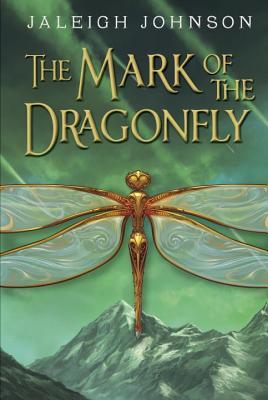
The Mark of the Dragonfly by Jaleigh Johnson
This book is amazing! It is so action-packed and so interesting. I must admit, it was a slow start, but it took off. Piper and Gee make my heart melt and the sisterly love is so sweet!

The Testing by Joelle Charbonneau
This dystopian novel had me on the edge of my seat the whole time. Cia is so clever and sweet, and Tomas and her are such a power couple. The whole series is absolutely amazing.

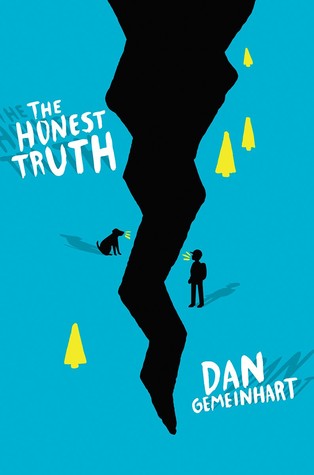
The Honest Truth by Dan Gemeinhart
This sad, sad book is so heart-wrenching and so good. Mark’s story may be sad, but I wanted to keep on reading to make sure he and Beau were okay.

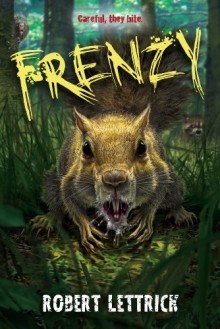
Frenzy by Robert Lettrick
This book is definitely my type of book: thrilling, funny, and fast-paced. I couldn’t stop reading, and the twists and turns throughout the book were really confusing to my emotions.

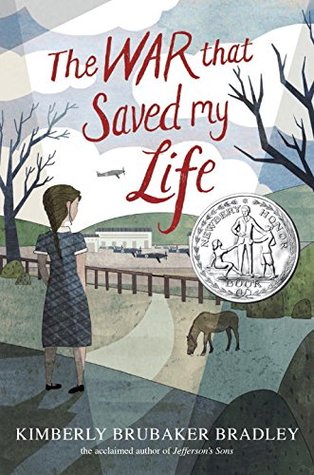
The War That Saved My Life by Kimberly Brubaker Bradley
Ada’s story gives me hope, but reminds me of the terrible people in this world. So many turning points will make you never want to stop reading. You’ll fall in love with so many characters, especially Ms. Susan.

Thank you to my wonderful students, Samia, Vasudev, Ariana, Mariana, and Emily, for your reviews!


Author Guest Post!: “Defeating Your Fear of Writing” by Jan Eldredge, Author of Evangeline of the Bayou

Share

“Defeating Your Fear of Writing”

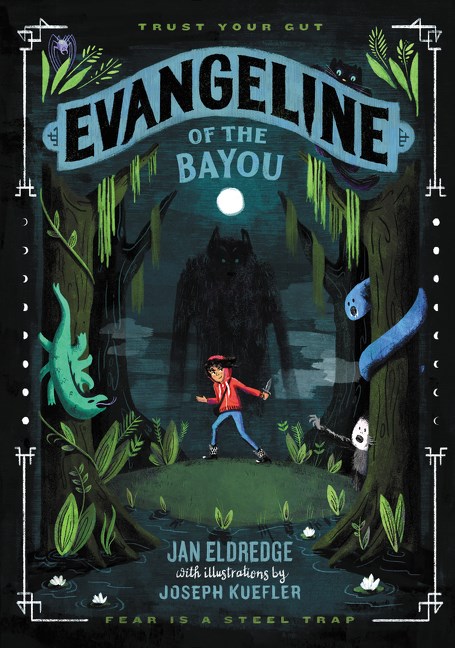
“Fear is a steal trap,” Gran advises Evangeline, the heroine of my debut middle grade novel. EVANGELINE OF THE BAYOU is the story of twelve-year-old Evangeline Clement, a haunt huntress apprentice studying the ways of folk magic and honing her monster-hunting skills. As soon as her animal familiar makes itself known, the only thing left to do is prove to the council she has heart. Then she will finally be declared a true haunt huntress. Of course, things do not go as planned for Evangeline. And when she and her grandmother are called to New Orleans to resolve an unusual case, she must summon her courage to defeat a powerful evil that’s been after her family for generations.

Gran goes on to warn Evangeline, “Fear keeps you from moving forward. It binds up your courage as well as your smarts.” These wise words of Gran’s hold true for nearly any situation we encounter, whether it be hunting monsters or writing essays.

As the leader of a local writers group for the past dozen years, and having been a member of numerous critique groups, I’ve learned that one thing we creatives all have in common is fear. And we have a lot of them, like: showing our writing to family and friends, getting our work critiqued by other writers, not knowing how to begin our stories, not knowing how to end our stories, or not being able to come up with any new ideas. But one of the most common fears I’ve seen is that of simply getting started, rallying the courage to just jump in and begin the writing of that novel, memoir, or short story. I call it “freezing on the high-dive”.  Taking that initial leap can be scary, but it doesn’t have to be.

After discussing this topic with numerous fellow writers over numerous coffees and teas, I’ve come to suspect this particular fear stems from the mistaken belief that we have to get our words right the first time, that somehow a perfect stream of brilliance must flow straight from our head and onto the blank sheet of paper. This unrealistic expectation can lead to a lot of frustration and writing resistance. Fortunately, there are a few easy techniques writers of any age and any writing level can incorporate to defeat their fear of writing and get their words moving forward. These simple tips can be applied to everything from the writing of novels and essays, to the writing of thank you notes.

The first step is to think of the writing process as one that uses two distinct parts of your brain: the creative side and the editorial side. Going into a project while trying to use them simultaneously is when many of us run into trouble. The two parts do not play, or work, well together.

Once you’ve accepted the fact that you’ve essentially just carved your brain into two halves, the next step is to hush that editorial side. Reassure it that it will have its turn to make corrections and clean things up later, but for now it’s Creative’s turn to play. Allow your imagination to run wild and free. Let go of rules and logic. There are no right or wrong ideas in this phase of your project. Don’t worry about choosing the perfect word, and don’t worry about things like spelling and punctuation. That’s Editor’s job for later on.

If you’re still having trouble coming up with ideas, here’s another helpful tip: just start writing. Write anything, even if it’s simply the words, “I don’t know what to write.” There’s something almost magical about the act of putting pen to paper, or fingers to keyboard, that gets the creative tap flowing. Taking away all those expectations of perfection will conquer that fear of not being able to think of anything to write.

Now that you’ve got some great ideas and images, and maybe even some really cool lines of dialogue, let your creative side take a rest. This is the time to set your internal editor free. Allow it to get to work picking and choosing what elements to use, what order to put them in, and making sure the grammar, spelling, and punctuation are all up to snuff.

This is the technique I used while writing EVANGELINE OF THE BAYOU, and I’m using it now as I work on the sequel. Keeping the creative half of my mind separated from the editorial half has helped me defeat my fear of just diving into the writing. It’s helped me overcome my worry that my writing is too sloppy, nonsensical, and filled with mistakes. I know that by setting my creative side free to do what it does best, it’ll provide me with fun, fresh, and unexpected ideas. Sometimes it delivers more ideas than I can use, or ideas that are in need of further research and tweaking, but that’s okay, because I know I’ll soon be unleashing my editorial side to make my words all shiny and clean.

About the Author: Jan Eldredge was born and raised in Louisiana. She now lives in Celebration, Florida with her husband, their children, and a house full of cats. When she’s not writing, she spends her time reading, going to theme parks, and exploring old cemeteries. She is particularly fascinated with monsters, magic, and all such eldritch things.

Evangeline of the Bayou
Author: Jan Eldredge
Illustrator: Joseph Kuefler
Published May 1st, 2018 by Balzer + Bay

About Evangeline of the BayouEvangeline Clement is not just your everyday twelve-year-old. Upon her thirteenth birthday, she will officially become a haunt huntress just as talented as her mama and Gran, descended from a long, proud line of haunt huntresses in Louisiana. That is, if her animal familiar shows up, her powers emerge, and she can prove to the Council that she has heart (whatever that means). Because she couldn’t possibly be a middling, born without any magical abilities, right? She can’t be the end of Gran’s line.

Fear is a steel trap. It keeps you from moving forward. It binds up your courage, as well as your smarts.
— Gran Holyfield, haunt huntress

Citizens have been calling for Gran’s help to send troublesome creatures like Bayou Banshees and Johnny Revenants back where they belong. As her apprentice, Evangeline has learned not just the cures to any local supernatural afflictions but also how to navigate the bayou, how to climb trees, and how to fight – all while wearing her signature silver-tipped gator-skinned boots! Now in an unusual request, Gran has been called from the swamp to New Orleans to undertake an emergency case. But after a string of undeniable signs indicating that death is near, can Evangeline protect her aging grandmother and save the city of New Orleans – whether she’s a haunt huntress or not?

EVANGELINE OF THE BAYOU will inspire young readers to trust their gut no matter how terrifying that might be.

Thank you so much to Jan for your honest and inspiring post!

Teaching Guide with Activities and Discussion Questions for Polly Diamond and the Magic Book by Alice Kuipers

Share

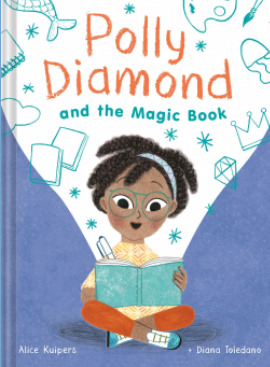
Polly Diamond and the Magic Book
Author: Alice Kuipers
Illustrator: Diana Toledano
Expected Publication May 1st, 2018 by Chronicle

Summary: Polly loves words. And she loves writing stories. So when a magic book appears on her doorstep that can make everything she writes happen in real life, Polly is certain all of her dreams are about to come true. But she soon learns that what you write and what you mean are not always the same thing! Funny and touching, this new chapter book series will entertain readers and inspire budding writers.

Teachers’ Tools for Navigation: Activities for Polly Diamond include:

Color Poem

On page one, Polly says that her teacher said her color poem was fantastic.

Have your students use the Read. Write. Think. template to create their own color poem.

Template

Finish her perfect house story

On page 3, Polly is interrupted while writing her perfect house story.

Finish her story with what your perfect house would include.

Wishes

When Polly realizes her book is magical, she thinks of many things she can wish for such as a cell phone, not frizzy hair, more books, a flat screen TV, and world peace.

Using a brainstorming graphic organizer, have your students think of all the things they wish for.

After brainstorming all of their wishes, have them circle your top three.

Using the five-paragraph format for informative essays, have students write explaining their three wishes.

Measuring

For Polly’s grandmother’s recipe for pancakes called for a cup of flour and a cup of milk. Many times, when baking, you do not have what you need to make the recipe, and not just ingredients—you may not have the right measuring cup.

Bring in one cup measuring cups along with 1/4, 1/3, 1/2, 3/4, tablespoon, and teaspoon measuring cups/spoons. Break students into groups and give each group one of each measuring cup/spoon as well as something to measure (water, rice, flour), and have them answering the following questions:

  • If you only had 1/4 cup, how could you get one cup of flour?
  • If you only had 1/3 cup, how could you get one cup of flour?
  • If you only had 1/2 cup, how could you get one cup of flour?
  • If you only had 3/4 cup, how could you get one cup of flour?
  • If you only had a tablespoon, how could you get one cup of flour?
  • If you only had a teaspoon, how could you get one cup of flour?

Favorite words

Polly has a lot of favorite words: words with double letters like doozy and mutli-meaning words like basil.

Have students make a list of three words that they really like.

For each word, they should define it and also explain why they like the word.

When finished, students should do a word meet and greet. Using clock buddies or some other buddy system, have students meet with other students in the classroom and learn about their favorite words. They should add the favorite words they learn about to their list.

Paint names

On page 29, Polly makes up names for paint that describes the color such as muddy pond, lunch bag, and baboon butt.

First, have students look at the colors Polly described on page 29 and find the corresponding color in either a crayon box or a color exploration site online.

Then, have students create color names using imagery. Either have them use the color exploration site online or the colors from Microsoft Word.

Affixes

Show students how there are different word parts (affixes) that can be put together to make new words. They are like puzzle pieces! Share with them the different types of word parts (prefix, suffix, root, and base) and how they fit together.

On page 56, Polly explains how adding un- to the beginning of a word gives it an opposite meaning. The word she uses as an example is unobservant. Share with your students that un- is a prefix that means NOT which does make a word the opposite. Have student brainstorm a list of words with un- at the beginning and define them using NOT as the definition for un.

Extension: dis-, il-, im-, in-, and ir- also mean NOT. Students can also explore words with these
prefixes.

Extension: On page 57, Polly also talks about adding –fully to the end a word to make it bigger,
but it does more than that. Share with your students that –fully is actually a combination of ful, a root word that means full of, and –ly, a suffix that turns an adjective to an adverb, so her example of sorrowfully means full of sorrow (adv).

After showing students how words break apart and how affixes help with word meanings, give students words with un- and –ful (or any other affix you taught) and have them mark the different word parts and define the word.

Coloring Sheets

Coloring sheets can also be downloaded from Chonricle’s website here.

See the Teaching Guide Created by Me (Kellee) for even more activities! 

You can also access the teaching guide through Chronicle’s website here.

Recommended For: 

readaloudbuttonsmall classroomlibrarybuttonsmall closereadinganalysisbuttonsmall

Kellee Signature

I Love You, Michael Collins by Lauren Baratz-Logsted

Share

I Love You, Michael Collins
Author: Lauren Baratz-Logsted
Published June 20th, 2017 by Farrar, Straus and Giroux (BYR)

Summary: It’s 1969 and the country is gearing up for what looks to be the most exciting moment in U.S. history: men landing on the moon. Ten-year-old Mamie’s class is given an assignment to write letters to the astronauts. All the girls write to Neil Armstrong (“So cute!”) and all the boys write to Buzz Aldrin (“So cool!”). Only Mamie writes to Michael Collins, the astronaut who will come so close but never achieve everyone else’s dream of walking on the moon, because he is the one who must stay with the ship.

After school ends, Mamie keeps writing to Michael Collins, taking comfort in telling someone about what’s going on with her family as, one by one, they leave the house thinking that someone else is taking care of her—until she is all alone except for her cat and her best friend, Buster. And as the date of the launch nears, Mamie can’t help but wonder: Does no one stay with the ship anymore?

I Love You, Michael Collins was a Best Book of June 2017 on Amazon; a semifinalist for the Goodreads Readers’ Choice Awards; and a pick by the Planetary Society for Best Science Children’s Books of 2017.

ReviewThere is so much I really enjoyed about this book!

First, I adored looking into the experience of the moon landing. I cannot even imagine witnessing it happening! What an amazing feat it was and completely unimaginable. (And I hope to at some point see it happen again.) And I thought Baratz-Logsted did a good job showing all the different types of feelings towards the moon landing and space program. But I’m glad that she focused on its amazingness and the excitement.

Second, I think the author did a fantastic job with the character’s voice. With a book of letters it is essential that the writing sounds like the character because it is actually the character writing all the words. I loved seeing all the techniques she used to write like Mamie while still keeping her writing to a literary level.

Third, I loved that the book was not just a reenactment of the moon landing and a family’s celebration of it. The story has so many layers within it: Mamie’s introverted personality and the look into what makes a kid like this happy; her family’s conflicts and issues; and the power of one best friend.

Overall, I Love You, Michael Collins is a fun historical fiction middle grade book that is perfect for so many readers!

Teachers’ Tools for Navigation: The first thing I went to when I thought about this book from a teachers point of view was the idea of letter writing. Mamie writes Michael Collins originally because it is a school project. Mamies letters could be used as a starting point on how to write letters, parts of a letter, etc. And students could even write a letter to someone in the news that is doing something amazing.

Next summer is the 50th anniversary of the moon landing, and at the end of next school year, I am definitely going to do a cross-curricular unit about NASA and the Apollo missions along with a read aloud of excerpts from this novel. It is so engaging as a story and will also be a great way for students in the 21st century to have a window into the 1960s.

But even without this amazing anniversary, Baratz-Logsted’s title is one that middle grade students will find enjoyment in and should definitely be in classrooms and libraries!

Discussion Questions: 

  • How did the author help make her writing seem like a ten-year-old was writing the letters?
  • Michael Collins is not a household name like Buzz Aldrin and Neil Armstrong. Why is that? Do you think we should all know his name in the same context as the other two astronauts?
  • Which character do you think changed the most throughout the book?
  • What do you think is going to happen next with Mamie’s family?
  • How did Buster’s friendship help Mamie keep her positivity and sanity during this tough time in her family?
  • If you were going to have a moon landing party, what would you make?
  • How would the story of Mamie’s parents’ separation have been different in the 21st century?

Flagged Passages: 

“Dear Michael Collins,

I finally figured out why you never write back. Can you figure out how I figured this out? If not, I will tell you. I did the math.

Okay, I didn’t really do the math, since I don’t have all the information. But it struck me that I might not be the only person writing to you. I though, if every school in the country has just one class that is writing letters to the astronauts and if in each class there is just one kid like me writing to you, then that is still a lot of mail.

It’s no wonder you can’t write back to everyone. And of course you do have other things to do right now.

I’m not sure how I feel about the idea of you getting more mail than I originally thought you did. On the one hand, I’m really happy for you. I’m glad you’ve got more than just me. On the other hand, it was kind of nice when I thought I was the only one. It felt special. Like I was the the only one who knew about you. Which of course isn’t true. The whole world knows about you. It’s just that most of them don’t seem to appreciate you very much.

Does it ever bother you that Neil Armstrong and Buzz Aldrin get so much more mail than you do? I hope not. It certainly wouldn’t bother me. There was a time I thought it might be nice to be popular–you know, to have a lot of friends. But then Buster came along, and then Campbell, and I realized that that is quite enough for me…” (p. 30-31)

Read This If You Love: Space! I recommend Space Encyclopedia by David A. Aguilar and Moon Base Crisis by Rebecca Moesta & Kevin J. Anderson. Also check out Planetary.org’s list of recommended books from 2017: http://www.planetary.org/blogs/emily-lakdawalla/2017/1115-space-books-kids.html and 2016: http://www.planetary.org/blogs/emily-lakdawalla/2016/emily-lakdawalla-space-book-recommendations.html

Recommended For: 

classroomlibrarybuttonsmall closereadinganalysisbuttonsmall

Signature

On Gull Beach by Jane Yolen

Share

On Gull Beach
Author: Jane Yolen
Illustrator: Bob Marstall
Published March 27th, 2018 by Cornell Lab Publishing Group

Summary: Together again! On Gull Beach reunites bestselling children’s author Jane Yolen and award-winning illustrator Bob Marstall for the third installment of the acclaimed On Bird Hill and Beyondseries of children’s books written for the renowned Cornell Lab of Ornithology.

In On Bird Hill, Yolen and Marstall took readers on a surreal journey with a boy and his dog as they see the natural world, ultimately witnessing the miracle of a chick emerging from an egg.

On Duck Pond continued their journey, this time at a serene pond filled with birds, frogs, and turtles who are suddenly disrupted by their intrusion, but soon settle back into a quiet equilibrium.

On Gull Beach brings us to an idyllic shoreline in Cape Cod, where gulls hover, dive, and chase with pitched acrobatics in pursuit of a seastar. This enchanting sequel in a brand new habitat will delight readers young and old.

As with all Cornell Lab Publishing Group books, 35% of net proceeds from the sale of this title goes directly to the Cornell Lab to support projects such as children’s educational and community programs.

Our review of On Duck Pond from May 4, 2017.

Kellee’s Review: What I love about this series of books by Yolen and Marstall are the way they have combined the beauty of Yolen’s lyrical words with information about the birds and other animals and their habitats that the books focus on. In this one we follow a young boy as he takes a walk on the beach and tried to say a starfish from the birds on the beach. Yolen’s rhythmic writing takes you on the journey while Marstall’s illustrations make them come to life. 

Ricki’s Review: I am still waiting for the day that I read a Jane Yolen book that I don’t love. Today isn’t that day. As Kellee said, Yolen’s words are lyrical. She rhymes, but it isn’t a cheesy sort of rhyme. Instead, it’s quite beautiful and urges readers to keep turning the pages. Marstall’s illustrations are realistic, and they pull the reader into the story. The back matter provides clarifying information about gulls (see the page spread that we feature below). As a New Englander, I smiled at the variety of gulls that the authors feature. The book features photographs along with informational text to teach readers all about the “So many gulls!” This made me long for the summer, and I am looking forward to identifying these gulls on our next beach trip! 

Teachers’ Tools for Navigation: Each of the books Yolen and Marstall have done focus on a different bird in a different habitat. What a great way to combine reading, writing, and science! In an elementary classroom, have students jigsaw to each of the books and come together in a home group so share what they learned about each habitat and the animals that live there. Then students can research a bird of their choice and its habitat to write their own poem about a visit to see the bird.

Discussion Questions: 

  • The habitat Yolen and Marstall were focusing on is a New England Beach. If you have been to a beach in another area, how is the New England beach in the book different and similar to the beach you have gone to?
  • What other birds other than gulls live on beaches all over the world?
  • What parts of the beach habitat did Yolen and Marstall highlight in their book?
  • How does the structure of poetry change this nonfiction book to make it different than other books about birds and habitats?
  • What are the differences and similarities between the three habitats and three birds that Yolen and Marstall have focused on?

Flagged Passages: 

Read This If You Love: Yolen & Marstall’s other ornithology books, Books about birds like Hello, Hippo! Goodbye, Bird! by Kristyn Crow, The Sky Painter by Margarita Engle, Elwood Bigfood: Wanted Birdie Friends by Jill Esbaum, Birds by Kevin Henkes, Look Up! by Annette LeBlanc Cate, Seabird in the Forest by Joan Dunning

Recommended For: 

classroomlibrarybuttonsmall closereadinganalysisbuttonsmall 

Signature

George the Hero Hound by Jeffrey Ebbeler

Share

George the Hero Hound
Author: Jeffrey Ebbeler
Published March 20th, 2018 by Two Lions

Summary: George is a good ol’ hound dog. He helps Farmer Fritz with the chores and—most important of all—he keeps those sneaky cows out of the cornfield.

Then Farmer Fritz moves away, and a new family from the city moves in. The Gladstones have a lot to learn. George tries to help, but they don’t understand his job on the farm…until the day little Olive goes missing, and George shows everyone what it means to be a hero hound!

ReviewFirst, I have to talk about how much I just love George, his expressions, and his story. Just look at that cover! Don’t you want to just follow him around?! But you want to know what made the story for me? The extra story that was told through the illustrations. George’s story that is told through the text is a look at figuring out home when things change and dealing with a new situation, and George is definitely the hero in all of it; however, it is the hilarious stories told in the background that add just the extra HAs! to the story. Watch for the cows to make some Mission Impossible-esque moves and for the Gladstones to make some silly mistakes.

Teachers’ Tools for Navigation: What a great way to introduce storytelling through words and illustrations. When I did my Caldecott unit with my middle schoolers, so many of them didn’t know how to read a story without being told it in words. Use the illustrations in the background for a creative writing prompt to have students write an alternate text for each page using what is going on in the background of the told story.

George’s tale would also be a good text to use to introduce theme and the idea that a text can have more than one theme, depending on which character you are learning from.

Discussion Questions: 

  • How is George a hero?
  • What do you think the cows’ master plans include?
  • How are the Gladstones different from Farmer Fritz?
  • What are clues that the Gladstones are from the city?
  • How does the author indicate dialogue versus narration?
  • What is a clue that would have told the Gladstones George’s name?

Flagged Passages: “George was a good old hound dog. Every day George was up, even before the chickens, to help old Farmer Fritz with the cores. That rust-bucket tractor was always falling apart. . . and those wily cows were always plotting to get out and feast on the cornfield.”

And some passages from after the Gladstone family moves in:

Read This If You Love: Officer Buckle and Gloria by Peggy Rathman; My Dog is the Best by Laurie Ann Thompson; Click, Clack, Moo by Doreen Cronin; Farmer Duck by Martin Waddell; Chicken Dance by Tammi Sauer

Recommended For: 


Signature

**Thank you to Two Lions for providing a copy for review!**