Summer Brain Quest and Star Wars Workbooks

Share

Star Wars Workbooks (Writing, ABCs, Reading, and Math)

and

Summer Brain Quest Workbooks

Published by Workman

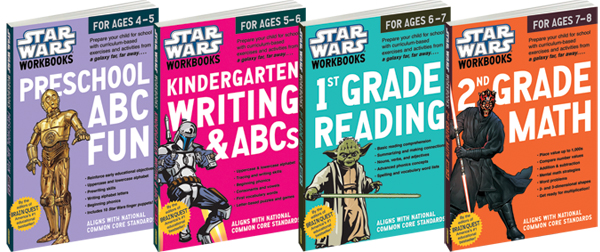
Star Wars Workbooks Summary: The Force is strong with this series! Introducing a line of workbooks that marries the iconic popularity of Star Wars with the unique mix of editorial quality, fun presentation, and rigorous educational standards that Workman applied to the BRAIN QUEST Workbooks.

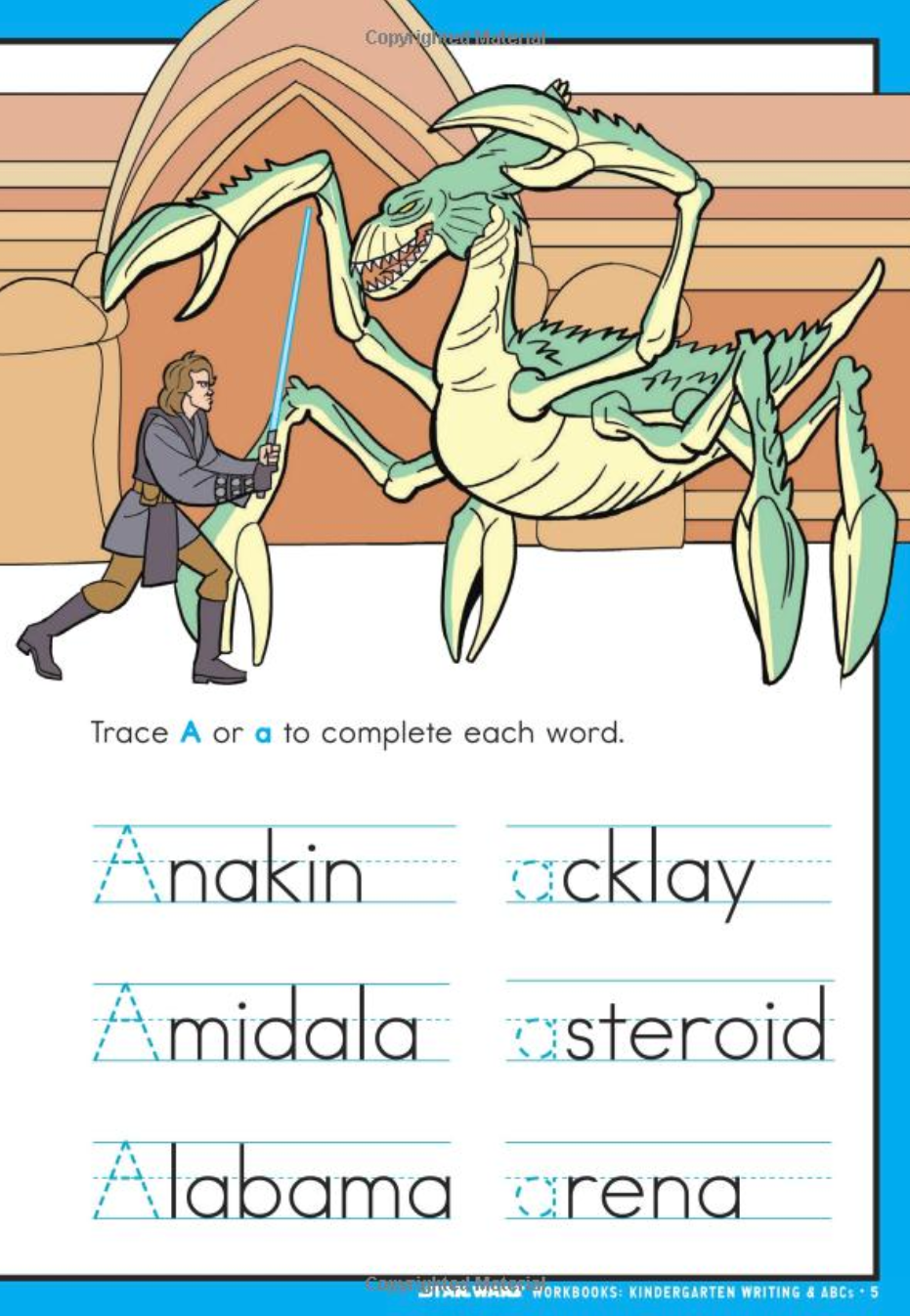
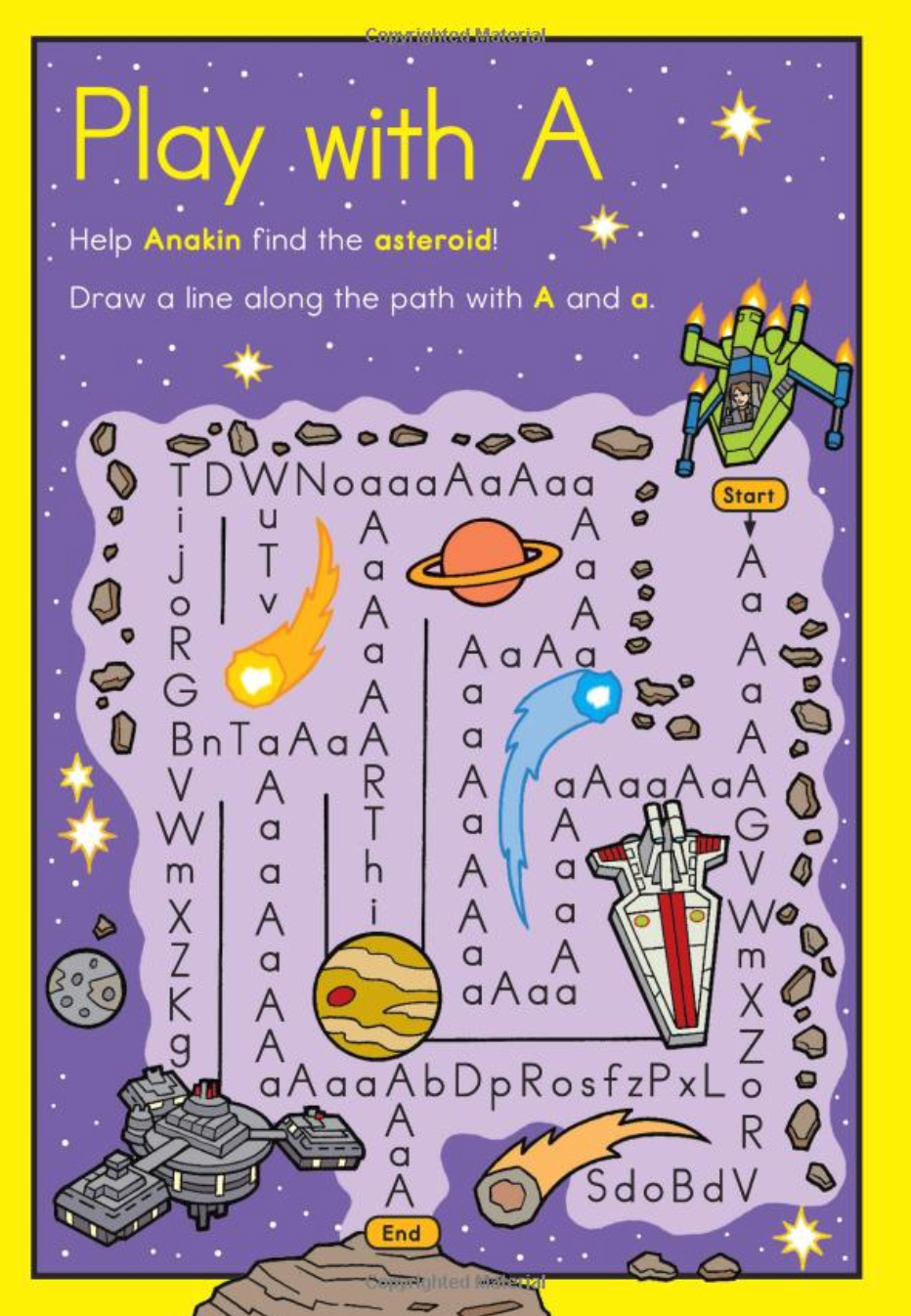
Twelve titles launch the series―three each for Pre-K through 2nd Grade―and dig deep into core subjects, including numbers, ABCs, phonics, and reading readiness for younger grades, and math, reading, and writing for the older ones. The material, which aligns with national Common Core State Standards, is designed to reinforce essential concepts and lessons taught in schools. Any child, not just fans of Star Wars―but yes, those fans will be especially delighted (as will reluctant learners)―will love the “A” is for Anakin approach to phonics. Kids will practice learning numbers by counting and circling X-wing starfighters and clone troopers. Master place values by sorting groups of Wookiees. There are math problems―Yoda is holding 7 lightsabers. 5 of the lightsabers are blue. The rest are green. How many green lightsabers is he holding? And Language Arts―Circle the correct homophone in this sentence: Luke is a Jedi knight/night.

Featuring favorite characters like Luke Skywalker, Queen Amidala, Yoda, and Obi-Wan Kenobi, and other creatures, monsters, Jedi, and Sith, the workbooks are filled with thousands of original illustrations drawing from all six Star Wars movies and the expanded Star Wars universe.

Learn well, you will.

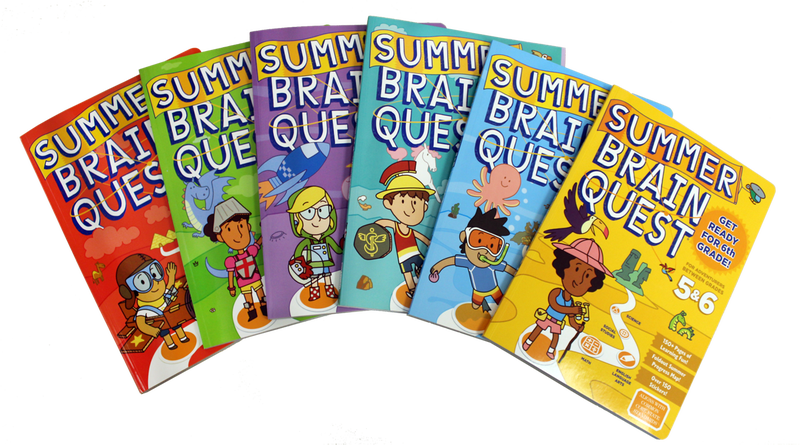
Summer Brain Quest Workbooks Summary (Pre-K to K Summary): It’s time to get ready for school! Now, the series that keeps K–6th graders sharp, active, and curious in between grades is expanding to meet popular demand: Introducing Summer Brain Quest: Between Grades Pre-K & K, covering the summer between Preschool and Kindergarten so 4- and 5-year-olds can get ready for school—and have fun doing it.

Part workbook, part game, part adventure, it’s the interactive book that combines educational activities with indoor and outdoor play—with entertaining and effective results. The pullout map guides kids on a learning quest; to cross the finish line, they fulfill the curriculum-based exercises and customize their path by pursuing the bonus challenges and outdoor activities that excite them most. How about extra counting or reading calendars? A hunt for three-dimensional shapes? Identifying landforms? Or finding words that rhyme? Along the way, they earn stickers for completing pages, tick off an adventure list, and get fresh air with outdoor learning challenges, like writing the alphabet with sidewalk chalk.

Teacher-approved, parent-trusted, and designed to appeal to kids’ natural love of learning and playful curiosity, Brain Questmakes it fun to be smart all summer long!

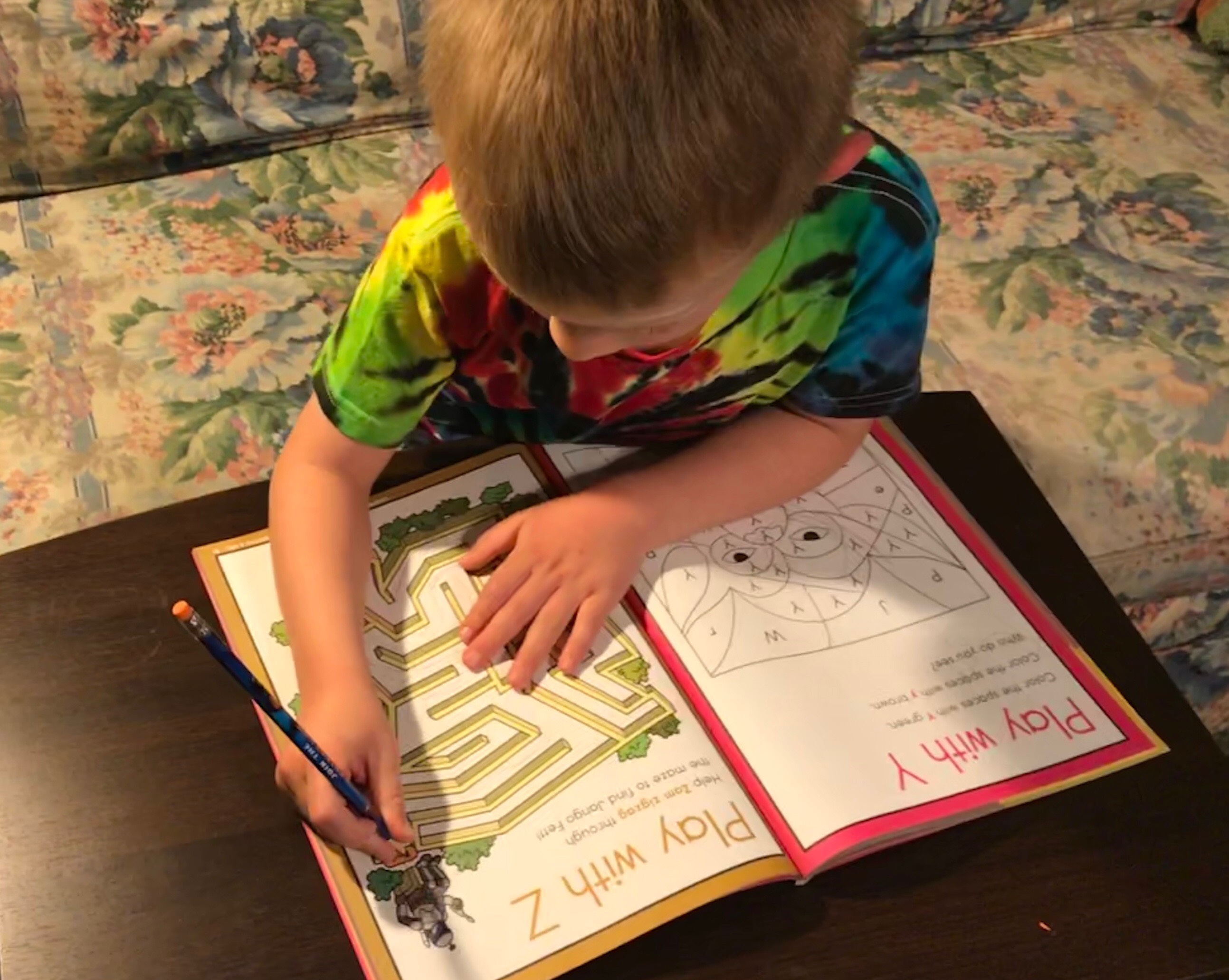
Ricki’s ReviewMy son LOVES these books. They have made him so excited about reading, writing, and math. I am not a workbook kind of teacher, but these books defy all notions of worksheet and workbook teaching. The Summer Brain Quest books feature a map at the end. As kids finish each page, they earn stickers to go along the map. The books ask them about themselves in the “my world” pages. They make learning very fun. He particularly loves the Star Wars reading book. He enjoys matching the letters to words and circling answers. My son is an outdoors-y kind of kid. He doesn’t enjoy sitting at the table and practicing his reading. Therefore, we do these at night. After we read together, he picks one of these workbooks to do together. We sit on the floor, and he loves it. It extends his awake time, and he loves thinking he is doing something fun to stay up later than his brother. We found the workbooks in the bookstore yesterday, and he was thrilled to see his books on the shelves. We ended up buying other books in the Brain Quest series because he enjoyed them so much. He chose this rather than a new toy! I’ll be purchasing these books for my younger son when he gets a bit older. They are absolutely wonderful and make learning fun! 

Kellee’s ReviewLike Ricki, I am skeptical whenever I see a workbook, but as soon as these arrived, my son became a bit obsessed with “doing his Star Wars letters,” and I just cannot argue with that as Trent is not a sit-and-do-something type of kid. But since the workbook is a mix of writing and activities, it doesn’t seem like work to him but instead is seen as a game. Because of this, I view them more as an activity book than just a workbook. We’ve currently been focusing primarily on the Star Wars activity book because I don’t want to overwhelm him, and it also leaves the Brain Quest for us to do when he is done. (Though, I do LOVE Brain Quest cards. My sister, Natalie, gives them to Trent for his birthday, and we do his “cards” in the car.) Lastly, I want to give a shout out to these helping parents who want to include educational activities at home. I know that even I, as a teacher mom, struggle with figuring out what to do to help my child learn to read and keep learning, and these activity books are perfect!

We Flagged: 

Star Wars “A”
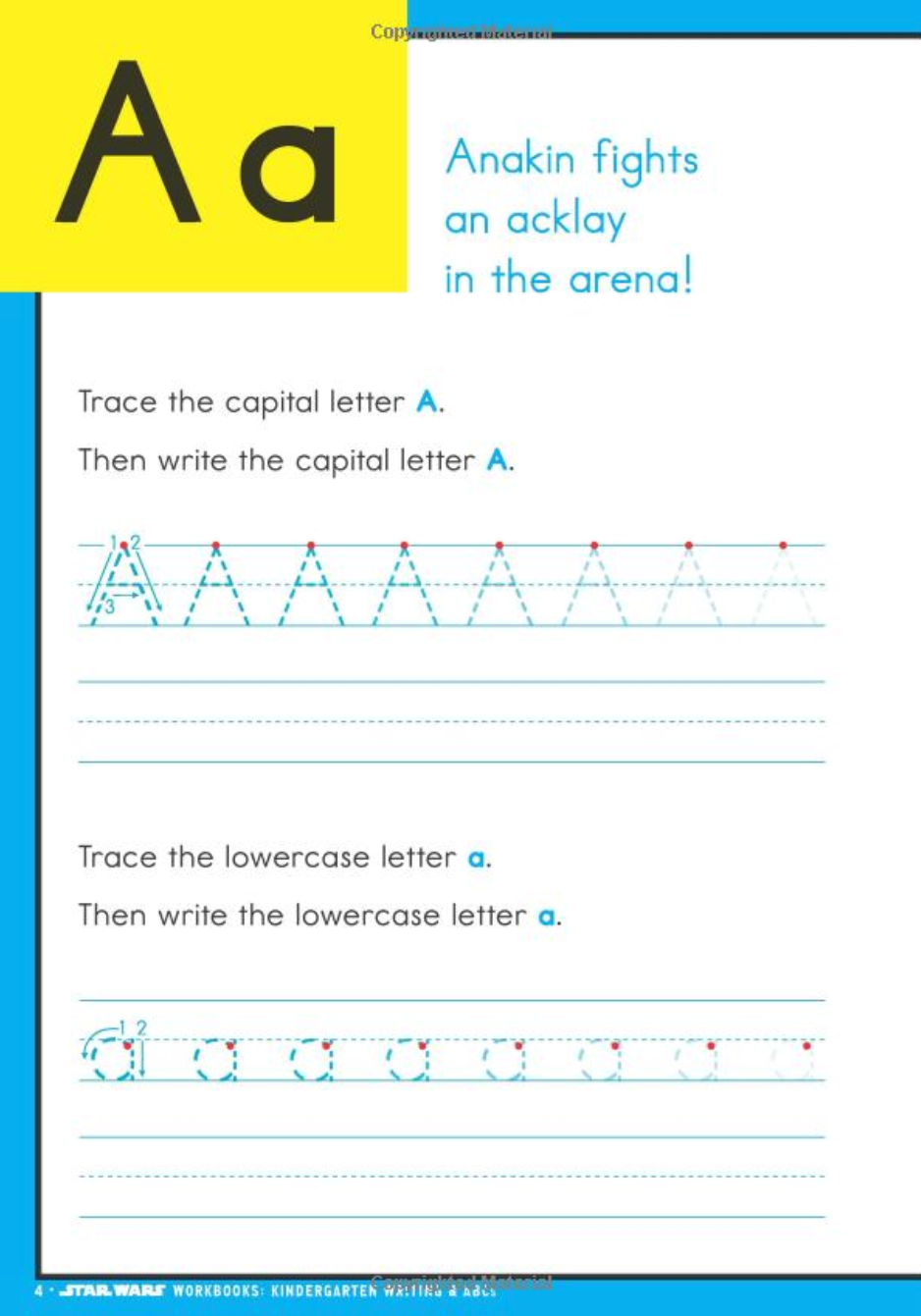
to “Z”
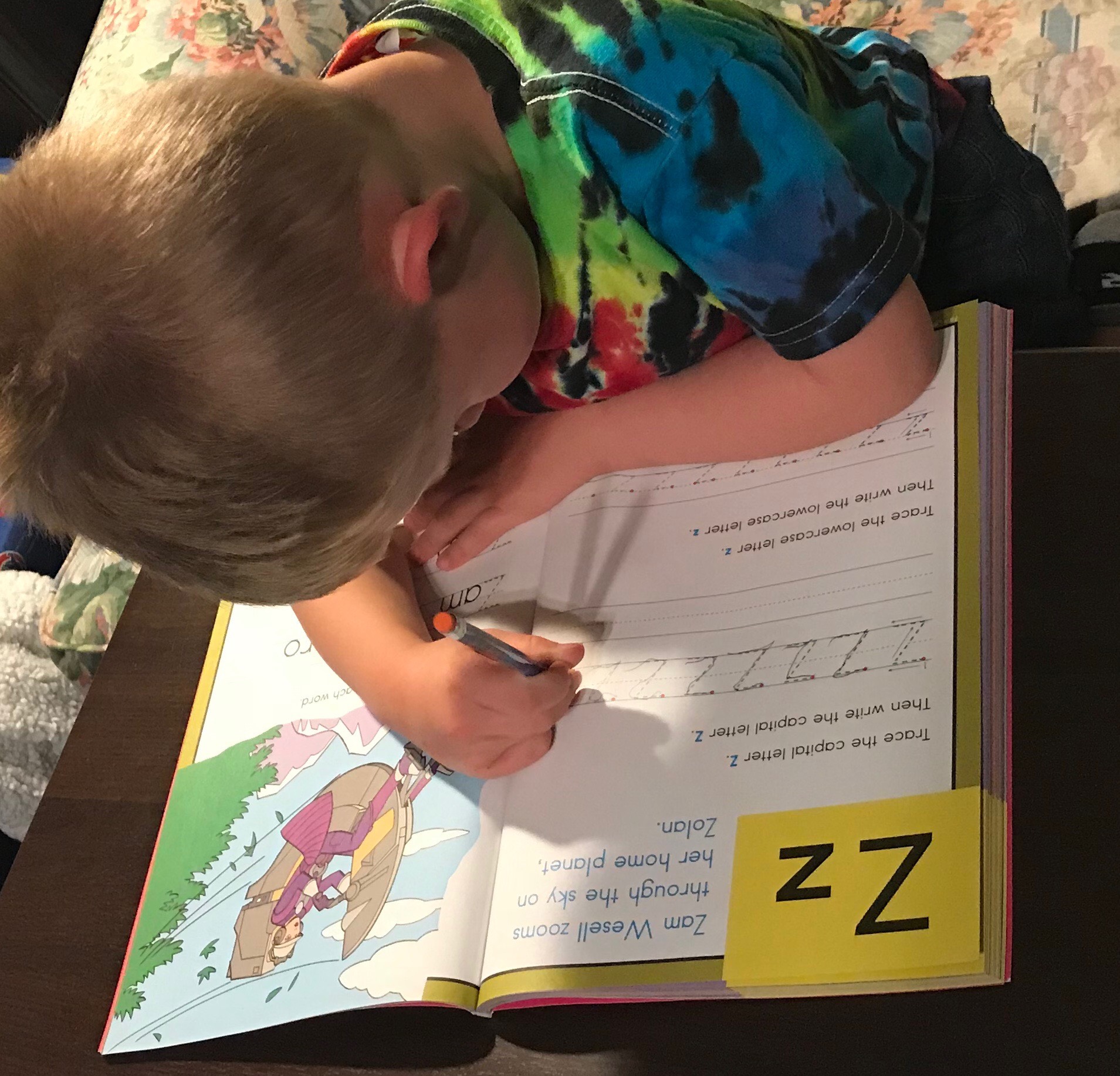
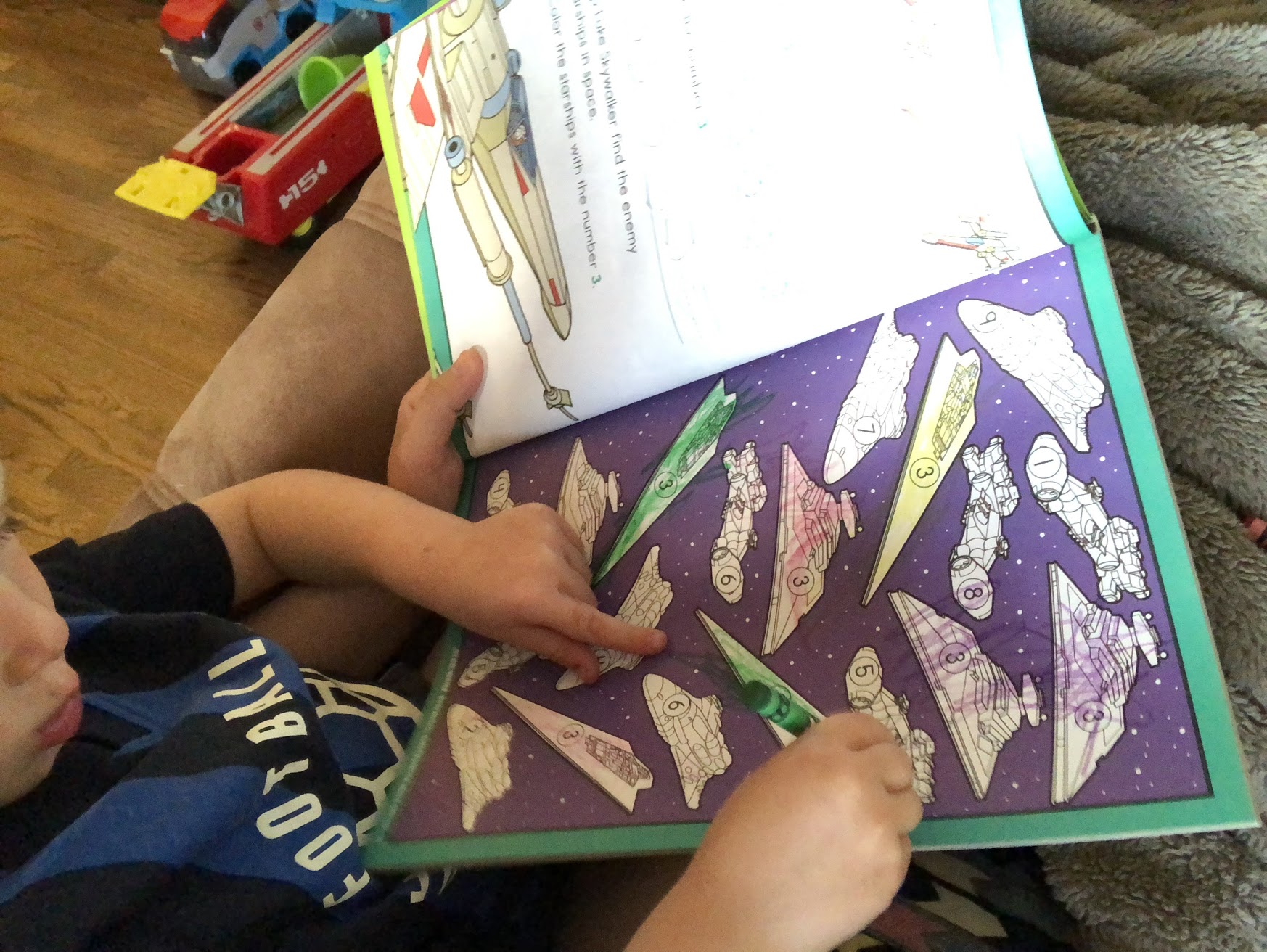
Tracing and Coloring the Number 3
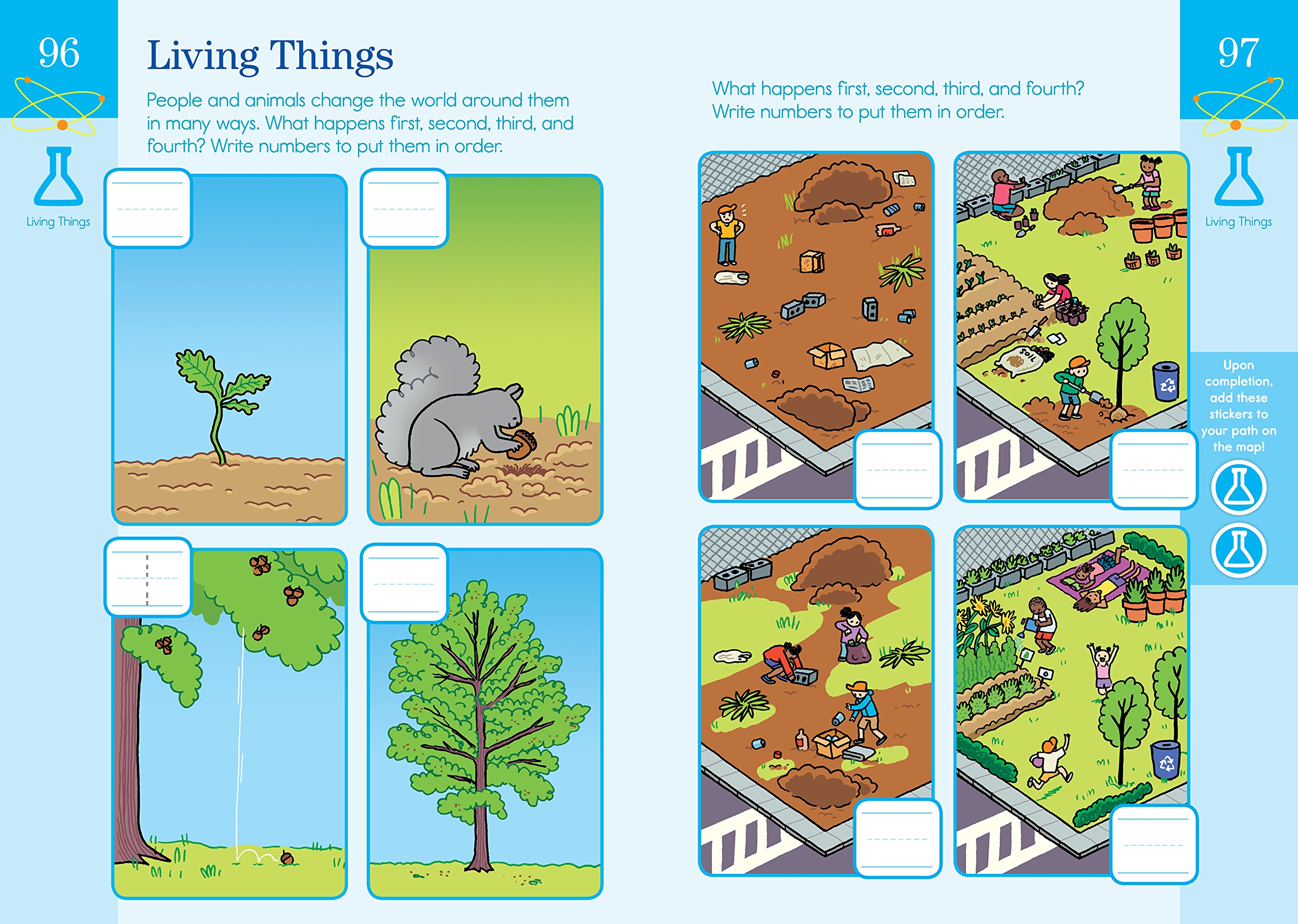
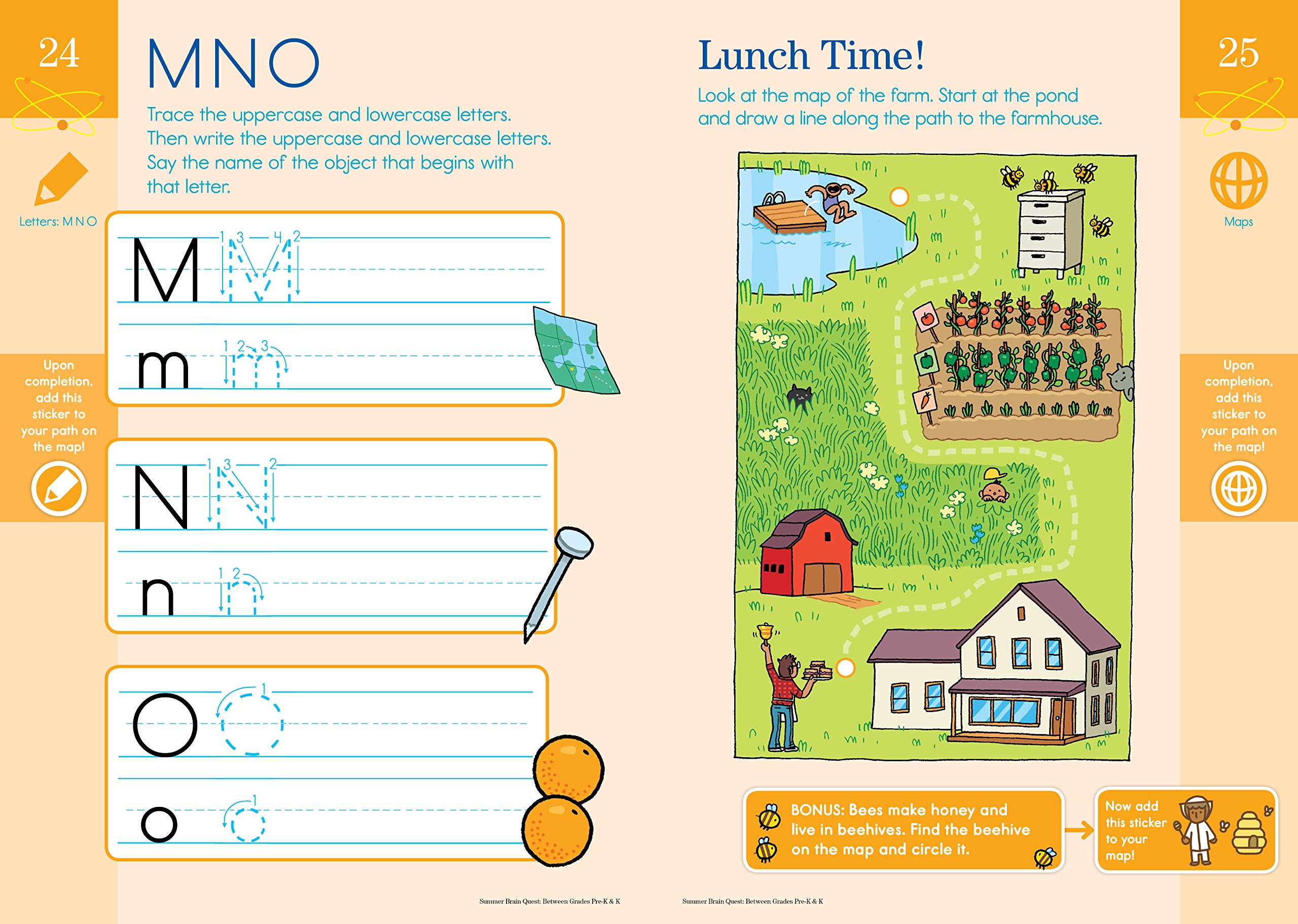
Brainquest “MNO” and “Living Things”
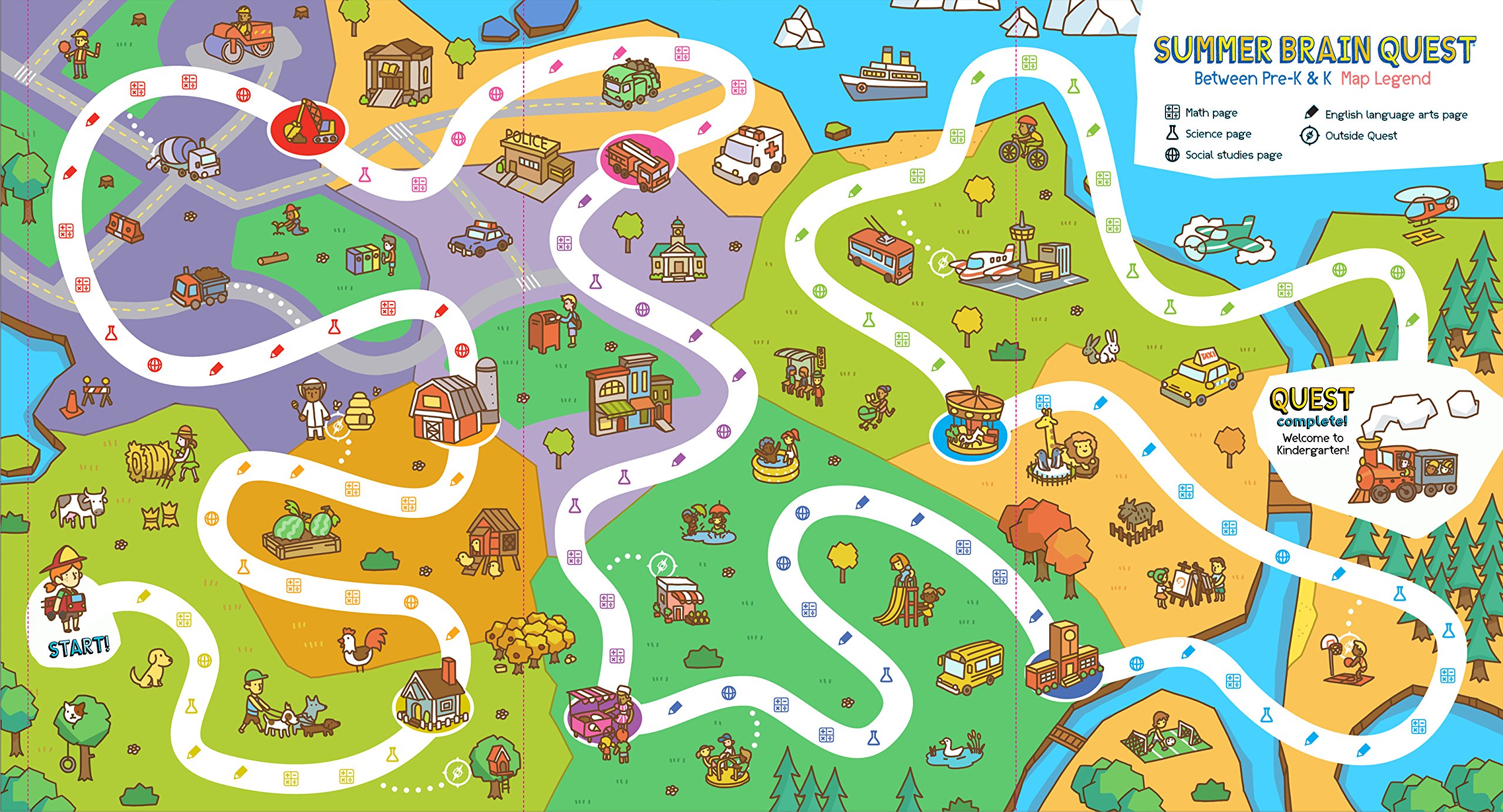
“Summer Brain Quest” map
Recommended For: 

classroomlibrarybuttonsmall

 and

**Thank you to Diana and Christi at Workman for providing a copy for review**
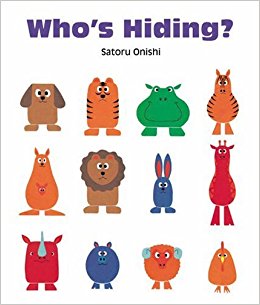
Who’s Hiding? by Satoru Onishi

Share

Who’s Hiding?
Author: Satoru Onishi
Published: January 1, 2018 by Gecko Press

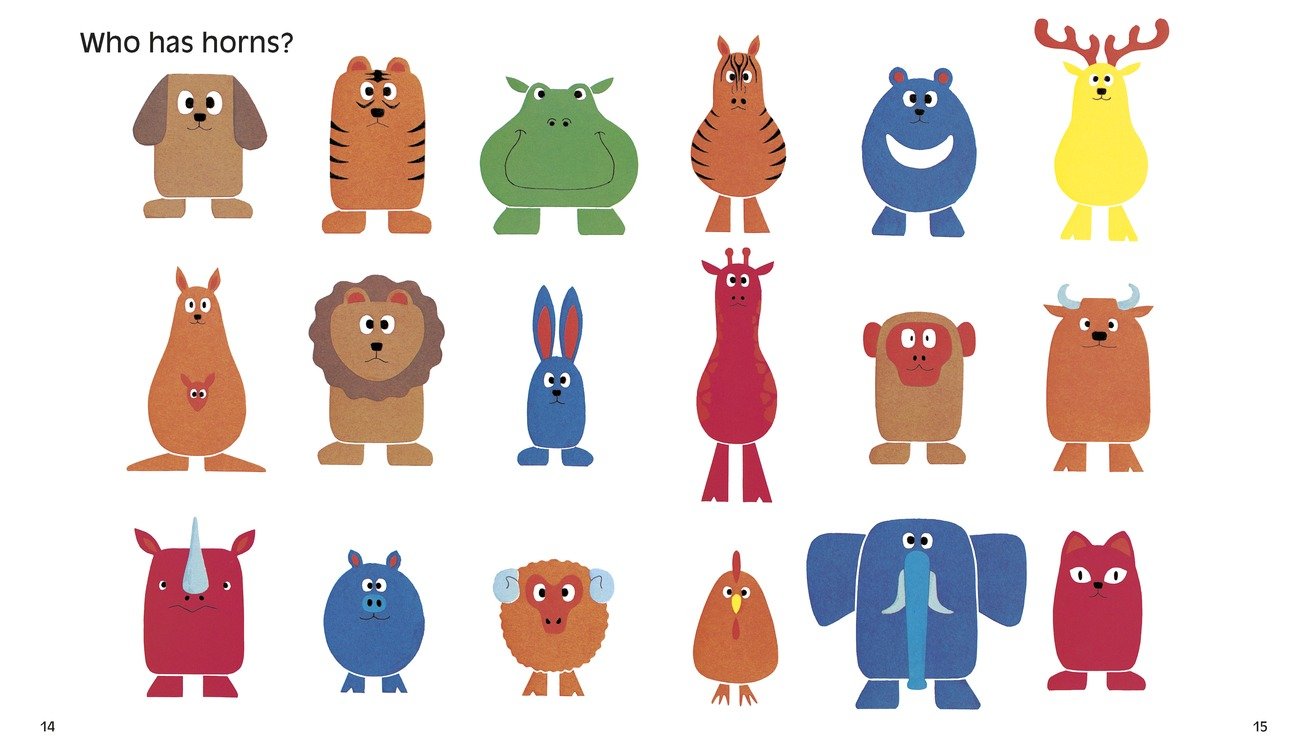
Summary: Who’s hiding? Who’s crying? Who’s backwards? Look carefully! Is it dog, tiger, hippo, zebra, bear, reindeer, kangaroo, lion, rabbit, giraffe, monkey, bull, rhino, pig, sheep, hen, elephant, or cat? Can you tell? Look again…18 fun-loving animals can be found on each question-posing page, sending readers into an up-close, attention-to-detail discovery.

ReviewThis is a book that is fun for people of all ages! Each spread asks questions like, “Who’s hiding?” or “Who’s angry?” or “Who has horns?” Readers  have to look from animal to animal to figure out the answer. My son and I had a lot of fun reading it because we raced to see who could find the animal first. It offers a unique twist to search-and-find books, and quite frankly, we found it to be much more fun than the classic search-and-find books. I could see this book working well with students who have been identified as having ASD. Because some pages ask about emotions, it would be a good way to reinforce facial expressions. Other pages would be easier (like “Who has horns?” and might relieve some frustration.

Teachers’ Tools for Navigation: As stated above, this books would be a great test for students who have been identified as having ASD. Also, it is a generally fun book and could be used to teach skills in compare and contrast (across the pages and within the pages). Lastly, it would be a great book to give to fast finishers.

Discussion Questions: How do the animals change across the pages? Which animal is your favorite? Which page is your favorite, and why?

We Flagged: 

Read This If You Loved: Search-and-Find Books

Recommended For: 

classroomlibrarybuttonsmall

**Thank you to Veronica at Myrick for providing a copy for review**

10th Anniversary Celebration of The Underneath by Kathi Appelt with an Interview with the Author, Book Trailer, and Giveaway!

Share

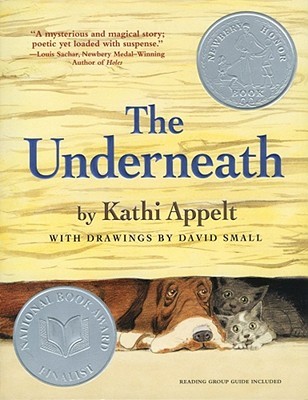
The Underneath
Author: Kathi Appelt
Illustrator: David Small
Published May 6th, 2008 by Atheneum Books for Young Readers
Newbery Honor (2009), National Book Award Finalist (2009)

Summary: There is nothing lonelier than a cat who has been loved, at least for a while, and then abandoned on the side of the road.

A calico cat, about to have kittens, hears the lonely howl of a chained-up hound deep in the backwaters of the bayou. She dares to find him in the forest, and the hound dares to befriend this cat, this feline, this creature he is supposed to hate. They are an unlikely pair, about to become an unlikely family. Ranger urges the cat to hide underneath the porch, to raise her kittens there because Gar-Face, the man living inside the house, will surely use them as alligator bait should he find them. But they are safe in the Underneath…as long as they stay in the Underneath.

Kittens, however, are notoriously curious creatures. And one kitten’s one moment of curiosity sets off a chain of events that is astonishing, remarkable, and enormous in its meaning. For everyone who loves Sounder, Shiloh, and The Yearling, for everyone who loves the haunting beauty of writers such as Marjorie Kinnan Rawlings, Flannery O’Connor, and Carson McCullers, Kathi Appelt spins a harrowing yet keenly sweet tale about the power of love, and its opposite, hate; the fragility of happiness; and the importance of making good on your promises.

Author: Kathi Appelt is the New York Times best-selling author of more than forty books for children and young adults. Her first novel, The Underneath, was a National Book Award Finalist and a Newbery Honor Book. It also received the PEN USA Award. Her other novels include The True Blue Scouts of Sugar Man Swamp, a National Book Award finalist, and Maybe a Fox, one of the Bank Street Books Best Children’s Books of the Year. In addition to writing, Ms. Appelt is on the faculty in the Masters of Creative Writing for Children and Young Adults at Vermont College of Fine Arts. She lives in College Station, Texas. To learn more, and to find curriculum materials and activity pages, visit her website at kathiappelt.com.

Review: Anyone who has read a Kathi Appelt book knows that she is amazing at two things: weaving a story together in a way that only she can & pulling at heart strings causing definite mood swings while reading. The Underneath is the epitome of her excellence, and I am sad it took me so long to get to this book. Once done, I was very excited to ask Kathi about this masterpiece, and my questions and her answers show more about what makes this book the award winner that it is.

Interview: 

Kellee: How do you work to weave different elements into your story such as mythology, the natural world, and contemporary stories? 

Kathi: It’s always interesting to me to learn what sets a story off. Some authors swear that they start with characters. And I would say that characters are definitely a good place to start. But when I reflect over my many years of writing, I feel like I mostly start with place. I ask, what is it about this place that lends itself to story? What is the history of it? The social and cultural importance of it? Who has lived here? Who was here a thousand years ago? What were they doing? How did they survive? What impact did natural forces play on this place? What is the flora and fauna? Are there ghosts? Are there particular features of it? So, it seems to me that place creates the basis for most of my stories.

In The Underneath, one of my story lines occurs a thousand years ago, which means that my mythological characters (who were interlopers), would have encountered members of the Caddo/Hasinai nation. Theirs was a sophisticated, highly organized society. But a couple of things happened. One was a massive earthquake that caused a devastating flood which wiped out an entire city, thousands of people. Another was the encroachment of European settlers who brought in disease and ultimately drove the Caddo/Hasinai out of their ancestral lands.

The Caddo were—and still are—known for their pottery, so it made sense to feature a significant jar in my story. That way, I could more clearly link the characters to each other across time periods. One thing leads to another. But in the end, it goes back to place.

Kellee: The Underneath has multiple stories that are interwoven and meet at the end. How do you plan writing a novel like this? 

Kathi: Extended narrative has always been difficult for me. I started my professional writing life as a poet and picture book author. As a result, it seemed like everything I wrote tended to finish at the bottom of page three. It was why writing a novel eluded me for such a long time. I always thought that a novel meant writing long chapters, strung together chronologically, and moving from point A to a final point Z. But it wasn’t in my nature to write like that. Long chapters weren’t the way I rolled. Finally, after many failed attempts, I figured out that if I was ever going to write a novel, I would have to go with my grain as opposed to going against my grain. So, I adapted to “writing by snapshot.” In other words, I write in small, significant scenes—I call them SSS’s. I can get a lot done that way without worrying about word counts or chapter lengths, or even transitions. Plus, they’re easy to manipulate. A small scene can be moved hither and yon until it finds the right place in the story.

I think that one of the reasons that writers fail is because they haven’t found their own natural way of working. Long narrative passages aren’t my strength. I’m not saying that I can’t write them, only that they’re not where my strengths lie.

So, finding the form that fits both our natural strengths and that suits the story, is one of the keys to unlocking a book . . . and a writer. Not all of us are meant to be poets. Not all of us are meant to be soaring prose practitioners. It could be that I’m a little ADD, and the short scenes suit me.

At any rate, making this discovery was how I finally finished a novel.

I also want to say in regard to planning, I do make very loose outlines when I embark upon a new project. Those outlines tend to flex as I move through the draft. But I always try to at least have a vague idea of how the story will end. Otherwise, I’ll just write myself right off the cliff. If I can see the destination, I can get there eventually.

Kellee: Personification allows the setting to become its own character in the story. How do you plan this and implement it well when you are writing? 

Kathi: I spend tons of time researching the plants and animals that populate the setting. And to me, a living organism, such as a tree, is just that—living. If you spend enough time around trees, it seems like they each have their own personalities, their own needs, and their own ideas. I’m just saying. So, unless something is inanimate—like a rock, say—I can usually find the heart of that living organism. That is always my goal.

Kellee: What about The Underneath do you think resonated with readers 10 years ago and still remains today? 

My true hope with The Underneath is that my young readers can see the value of making a good choice. In my story, both the hero Ranger and the antagonist Gar Face have similar experiences, similar fates if you will. They’ve both been badly treated, both been isolated, and yet only one of them turns towards love. Grandmother too, finally, at long last—after the longest time out in history—chooses love. I think that young readers are tuned in to this. I think they’re built for love. What I hope my story does is to give them the courage to make that choice.

Kellee: What feedback have you gotten from readers over the years about The Underneath? What stands out about what the book means to them? 

Gosh, it’s hard to say just one thing, but it seems to me that mostly what I hear over and over from them is how much they love the relationship between Ranger and the kittens. That small sweetness seems to be the key that opens the story up. To me, it’s proof that we don’t all have to be the same or look the same or smell the same or whatever to become best friends. And no matter how small we are, we can make a difference for those we love.

Book Trailer: 

GIVEAWAY!

Fifteen lucky winners will receive an autographed paperback copy of The Underneath. In addition, one Grand Prize winner will win a classroom set of 20 copies of the book PLUS a 30-40 minute Skype visit for her/his school, classroom, or library with award-winning author Kathi Appelt. Enter here!

Recommended For: 

Thank you, Kathi, for your thorough and beautiful answers to my interview questions, and thank you to Blue Slip Media for the giveaway and trailer!


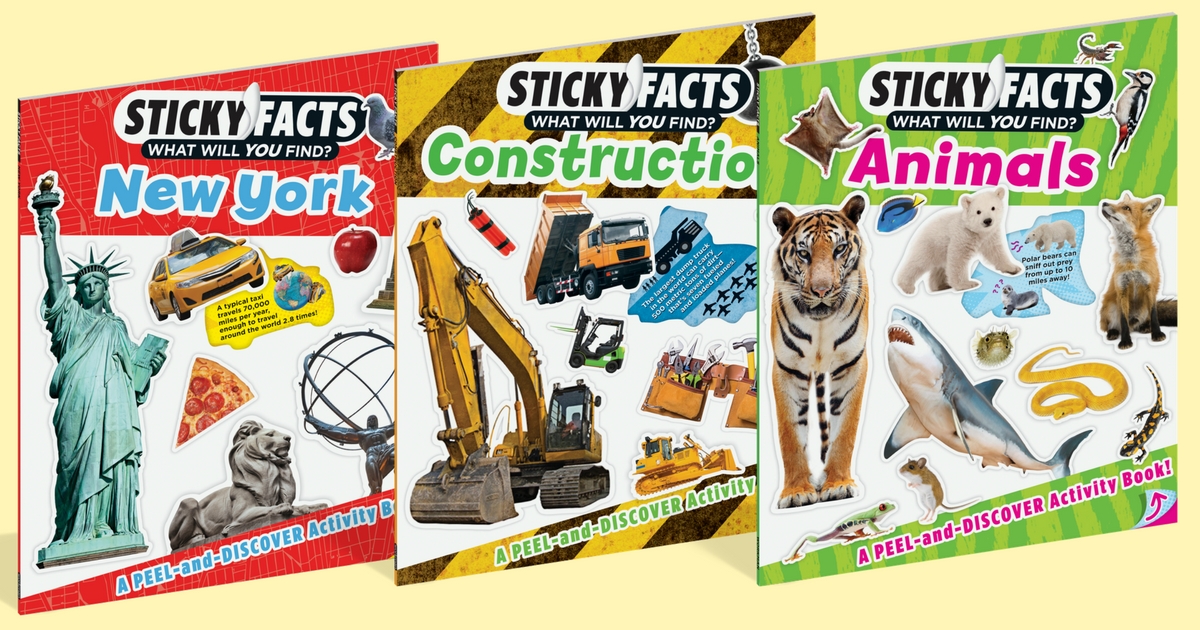
Sticky Facts: What Will You Find?: A Peel-and-Discover Activity Book

Share

Sticky Facts: What Will You Find?
New York, Construction, Animals
Published: December 12, 2017 by Workman

Summary: Sticky Facts is an innovative, kid-friendly approach to beloved topics for ages 6 and up, featuring a cutting-edge sticker sheet design that allows for text and color images to appear underneath the sticker.

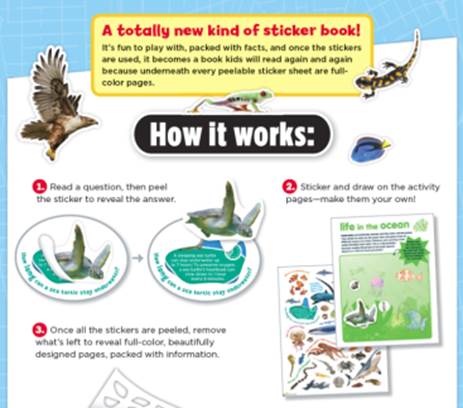
Unlike average sticker books, each sticker page features questions with facts hidden underneath the relevant sticker. Once the sticker is peeled o­ff, the fascinating factis revealed. Activity pages with corresponding prompts are featured next to the sticker pages for readers to use as fuel for sticker landscapes, adding hours of fun to the whole experience!

ReviewWhile the book is marketed for ages 6 and up, my 4-year-old had a blast with these books. I had to read the facts beneath the stickers to him, but he loved peeling them off of the pages and finding their matching places within the book. As a parent, sometimes it gets to the point that I am looking for something new and different, and this clever idea was very impressive to me. The books are well-made and fun. I overheard my son sharing one of the construction facts with a friend at preschool, so it really works! These books make great gifts and add a new twist to kids’ love of stickers.

Teachers’ Tools for Navigation: Teachers might group students by interest to allow them to learn and work together on a book of their choosing. This allows students to learn nonfiction facts on a topic that they are interested about!

Discussion Questions: Which was your favorite sticky fact?; What are some new facts that you learned? What kinds of facts are featured below the stickers?

We Flagged: 

Read This If You Loved: Nonfiction; Sticker Books

Recommended For: 

classroomlibrarybuttonsmall

**Thank you to Christy at Workman for providing a copy for review**
I Love You, Michael Collins by Lauren Baratz-Logsted

Share

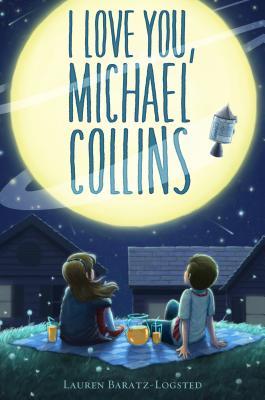
I Love You, Michael Collins
Author: Lauren Baratz-Logsted
Published June 20th, 2017 by Farrar, Straus and Giroux (BYR)

Summary: It’s 1969 and the country is gearing up for what looks to be the most exciting moment in U.S. history: men landing on the moon. Ten-year-old Mamie’s class is given an assignment to write letters to the astronauts. All the girls write to Neil Armstrong (“So cute!”) and all the boys write to Buzz Aldrin (“So cool!”). Only Mamie writes to Michael Collins, the astronaut who will come so close but never achieve everyone else’s dream of walking on the moon, because he is the one who must stay with the ship.

After school ends, Mamie keeps writing to Michael Collins, taking comfort in telling someone about what’s going on with her family as, one by one, they leave the house thinking that someone else is taking care of her—until she is all alone except for her cat and her best friend, Buster. And as the date of the launch nears, Mamie can’t help but wonder: Does no one stay with the ship anymore?

I Love You, Michael Collins was a Best Book of June 2017 on Amazon; a semifinalist for the Goodreads Readers’ Choice Awards; and a pick by the Planetary Society for Best Science Children’s Books of 2017.

ReviewThere is so much I really enjoyed about this book!

First, I adored looking into the experience of the moon landing. I cannot even imagine witnessing it happening! What an amazing feat it was and completely unimaginable. (And I hope to at some point see it happen again.) And I thought Baratz-Logsted did a good job showing all the different types of feelings towards the moon landing and space program. But I’m glad that she focused on its amazingness and the excitement.

Second, I think the author did a fantastic job with the character’s voice. With a book of letters it is essential that the writing sounds like the character because it is actually the character writing all the words. I loved seeing all the techniques she used to write like Mamie while still keeping her writing to a literary level.

Third, I loved that the book was not just a reenactment of the moon landing and a family’s celebration of it. The story has so many layers within it: Mamie’s introverted personality and the look into what makes a kid like this happy; her family’s conflicts and issues; and the power of one best friend.

Overall, I Love You, Michael Collins is a fun historical fiction middle grade book that is perfect for so many readers!

Teachers’ Tools for Navigation: The first thing I went to when I thought about this book from a teachers point of view was the idea of letter writing. Mamie writes Michael Collins originally because it is a school project. Mamies letters could be used as a starting point on how to write letters, parts of a letter, etc. And students could even write a letter to someone in the news that is doing something amazing.

Next summer is the 50th anniversary of the moon landing, and at the end of next school year, I am definitely going to do a cross-curricular unit about NASA and the Apollo missions along with a read aloud of excerpts from this novel. It is so engaging as a story and will also be a great way for students in the 21st century to have a window into the 1960s.

But even without this amazing anniversary, Baratz-Logsted’s title is one that middle grade students will find enjoyment in and should definitely be in classrooms and libraries!

Discussion Questions: 

  • How did the author help make her writing seem like a ten-year-old was writing the letters?
  • Michael Collins is not a household name like Buzz Aldrin and Neil Armstrong. Why is that? Do you think we should all know his name in the same context as the other two astronauts?
  • Which character do you think changed the most throughout the book?
  • What do you think is going to happen next with Mamie’s family?
  • How did Buster’s friendship help Mamie keep her positivity and sanity during this tough time in her family?
  • If you were going to have a moon landing party, what would you make?
  • How would the story of Mamie’s parents’ separation have been different in the 21st century?

Flagged Passages: 

“Dear Michael Collins,

I finally figured out why you never write back. Can you figure out how I figured this out? If not, I will tell you. I did the math.

Okay, I didn’t really do the math, since I don’t have all the information. But it struck me that I might not be the only person writing to you. I though, if every school in the country has just one class that is writing letters to the astronauts and if in each class there is just one kid like me writing to you, then that is still a lot of mail.

It’s no wonder you can’t write back to everyone. And of course you do have other things to do right now.

I’m not sure how I feel about the idea of you getting more mail than I originally thought you did. On the one hand, I’m really happy for you. I’m glad you’ve got more than just me. On the other hand, it was kind of nice when I thought I was the only one. It felt special. Like I was the the only one who knew about you. Which of course isn’t true. The whole world knows about you. It’s just that most of them don’t seem to appreciate you very much.

Does it ever bother you that Neil Armstrong and Buzz Aldrin get so much more mail than you do? I hope not. It certainly wouldn’t bother me. There was a time I thought it might be nice to be popular–you know, to have a lot of friends. But then Buster came along, and then Campbell, and I realized that that is quite enough for me…” (p. 30-31)

Read This If You Love: Space! I recommend Space Encyclopedia by David A. Aguilar and Moon Base Crisis by Rebecca Moesta & Kevin J. Anderson. Also check out Planetary.org’s list of recommended books from 2017: http://www.planetary.org/blogs/emily-lakdawalla/2017/1115-space-books-kids.html and 2016: http://www.planetary.org/blogs/emily-lakdawalla/2016/emily-lakdawalla-space-book-recommendations.html

Recommended For: 

classroomlibrarybuttonsmall closereadinganalysisbuttonsmall

Signature

On Gull Beach by Jane Yolen

Share

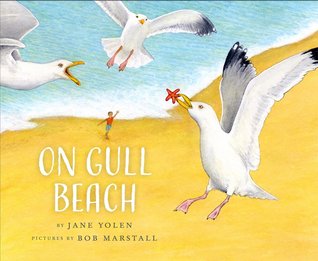
On Gull Beach
Author: Jane Yolen
Illustrator: Bob Marstall
Published March 27th, 2018 by Cornell Lab Publishing Group

Summary: Together again! On Gull Beach reunites bestselling children’s author Jane Yolen and award-winning illustrator Bob Marstall for the third installment of the acclaimed On Bird Hill and Beyondseries of children’s books written for the renowned Cornell Lab of Ornithology.

In On Bird Hill, Yolen and Marstall took readers on a surreal journey with a boy and his dog as they see the natural world, ultimately witnessing the miracle of a chick emerging from an egg.

On Duck Pond continued their journey, this time at a serene pond filled with birds, frogs, and turtles who are suddenly disrupted by their intrusion, but soon settle back into a quiet equilibrium.

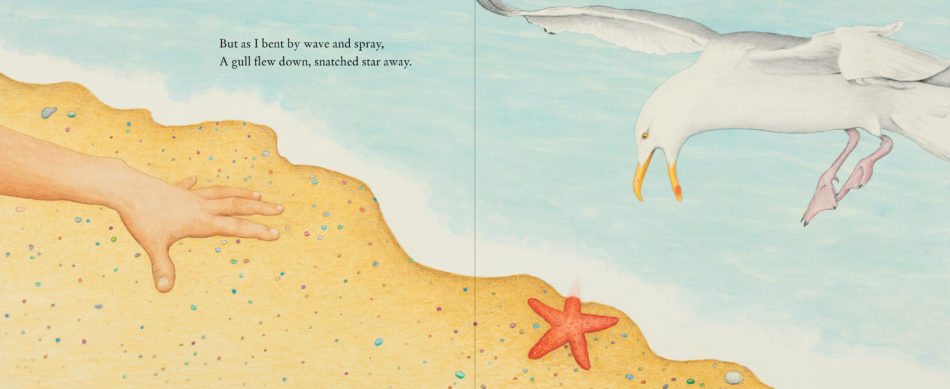
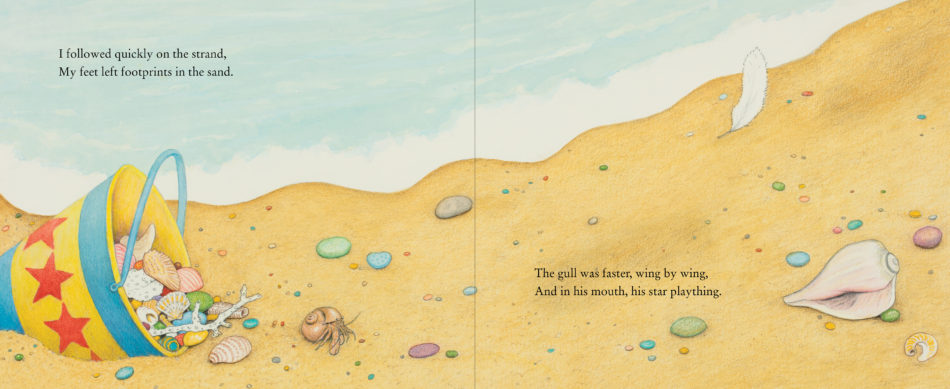
On Gull Beach brings us to an idyllic shoreline in Cape Cod, where gulls hover, dive, and chase with pitched acrobatics in pursuit of a seastar. This enchanting sequel in a brand new habitat will delight readers young and old.

As with all Cornell Lab Publishing Group books, 35% of net proceeds from the sale of this title goes directly to the Cornell Lab to support projects such as children’s educational and community programs.

Our review of On Duck Pond from May 4, 2017.

Kellee’s Review: What I love about this series of books by Yolen and Marstall are the way they have combined the beauty of Yolen’s lyrical words with information about the birds and other animals and their habitats that the books focus on. In this one we follow a young boy as he takes a walk on the beach and tried to say a starfish from the birds on the beach. Yolen’s rhythmic writing takes you on the journey while Marstall’s illustrations make them come to life. 

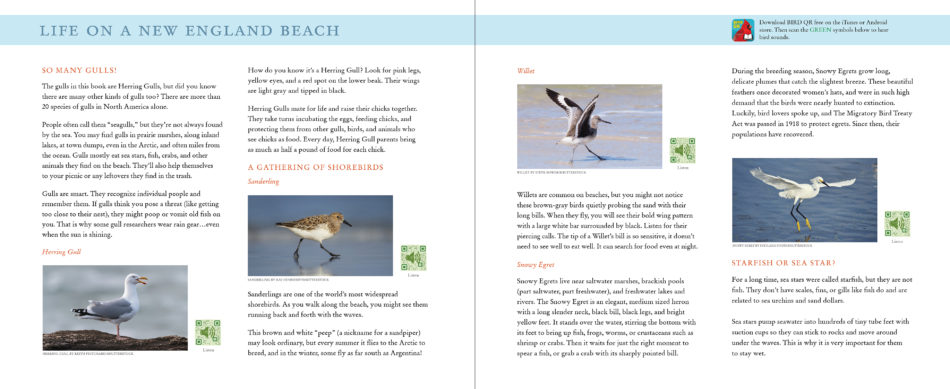
Ricki’s Review: I am still waiting for the day that I read a Jane Yolen book that I don’t love. Today isn’t that day. As Kellee said, Yolen’s words are lyrical. She rhymes, but it isn’t a cheesy sort of rhyme. Instead, it’s quite beautiful and urges readers to keep turning the pages. Marstall’s illustrations are realistic, and they pull the reader into the story. The back matter provides clarifying information about gulls (see the page spread that we feature below). As a New Englander, I smiled at the variety of gulls that the authors feature. The book features photographs along with informational text to teach readers all about the “So many gulls!” This made me long for the summer, and I am looking forward to identifying these gulls on our next beach trip! 

Teachers’ Tools for Navigation: Each of the books Yolen and Marstall have done focus on a different bird in a different habitat. What a great way to combine reading, writing, and science! In an elementary classroom, have students jigsaw to each of the books and come together in a home group so share what they learned about each habitat and the animals that live there. Then students can research a bird of their choice and its habitat to write their own poem about a visit to see the bird.

Discussion Questions: 

  • The habitat Yolen and Marstall were focusing on is a New England Beach. If you have been to a beach in another area, how is the New England beach in the book different and similar to the beach you have gone to?
  • What other birds other than gulls live on beaches all over the world?
  • What parts of the beach habitat did Yolen and Marstall highlight in their book?
  • How does the structure of poetry change this nonfiction book to make it different than other books about birds and habitats?
  • What are the differences and similarities between the three habitats and three birds that Yolen and Marstall have focused on?

Flagged Passages: 

Read This If You Love: Yolen & Marstall’s other ornithology books, Books about birds like Hello, Hippo! Goodbye, Bird! by Kristyn Crow, The Sky Painter by Margarita Engle, Elwood Bigfood: Wanted Birdie Friends by Jill Esbaum, Birds by Kevin Henkes, Look Up! by Annette LeBlanc Cate, Seabird in the Forest by Joan Dunning

Recommended For: 

classroomlibrarybuttonsmall closereadinganalysisbuttonsmall 

Signature

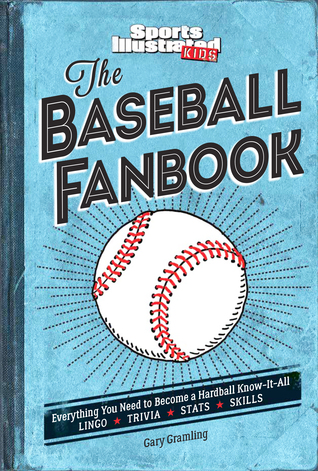
Sports Illustrated Kids: The Baseball Fanbook by Gary Gramling

Share

Sports Illustrated Kids: The Baseball Fanbook
Everything You Need to Become a Hardball Know-It-All: Lingo, Trivia, Stats, Skills
Author: Gary Gramling
Published April 3rd, 2018 by Sport Illustrated

Summary: Everything You Need to Become a Hardball Know-It-All!

The next book in the Fanbook series from Sports Illustrated KidsThe Baseball Fanbook has all the nerdy-cool insider knowledge that fans ready for next-level, in-depth stats need to know to impress their friends, family, coaches, and any season ticket holders they may meet. Tailor-made for baseball fanatics ages 8 and up who know the basics of the sport they love, may play it, and are looking to become super fans, this new fanbook is filled with fun trivia, unique lingo, and illustrated behind-the-skills how-to’s. Chapters include Team Tidbits (salient baseball facts about every MLB team), Think Like a Manager (essential strategies to understand), He Reminds Me Of (compares current players to legendary greats of America’s favorite pastime), and much more!

ReviewAs the 2018 baseball season begins, I knew I had to share this book with you all because I love this resource! I saw the The Football Fanbook, and I was impressed by it, but I LOVE BASEBALL! So I am so happy that there is a baseball version now.

Now, please don’t stop here just because I say I love baseball, so you assume you have to love it also to like this book. One of the things I like about this series is that they are written for all levels of fans. Maybe you don’t get why people like baseball? Check out this book to learn why! Maybe you are a player but really want to learn more specifics about the MLB? Check out this book to find out more! Maybe you are a baseball fanatic that lives and breaths the sport? Check out this book to maybe learn some fun facts you don’t know or as just a fun and entertaining read. It really is written in ways that all types of readers will find something in it.

Although this book is aimed for kids in grade 3 and up, don’t let that make you think it doesn’t include detailed information–it does! Each chapter is focused and full of information and photographs. But at the same time, I will say that it isn’t so overwhelming that younger kids will be turned off either. I’ve used parts of it with Trent this year as the season begins, and as we get ready for him beginning t-ball.

I am also impressed by its text structure. It is set up to be a book that could be read in order or jumped around, which is what I think is the best structure for informational nonfiction books because it makes it so any type of reader can grab it and read it how they’d like. The chapter titles are: 1) Know These Numbers, 2) Obscure Facts, 3) Skills to Master, 4) Run a Team, 5) He Reminds Me Of…, 6) Team Tidbits, & 7) Talk to Talk, and they are pretty self explanatory about their content.

Teachers’ Tools for Navigation: Like other topic focused books, the best place for it will be in libraries and classrooms for students to read if they want to. Parts of it could be used for math statistics activities or for sports history lessons or for a research resource; however, primarily it is going to be in kids’ hands being read.

Discussion Questions: 

  • Who is your favorite player? Create your own “Reminds me of…” document.
  • How are statistics such as ERA, WHIP, and batting average determined in baseball?
  • How has the sport of baseball changed over time?
  • Using the “Run a Team” chapter, create your own team. First, create it with known players then work on making a team of players you create.
  • Who is your favorite team? What did they leave out of the team tidbits that you would have included?

Flagged Passages: 

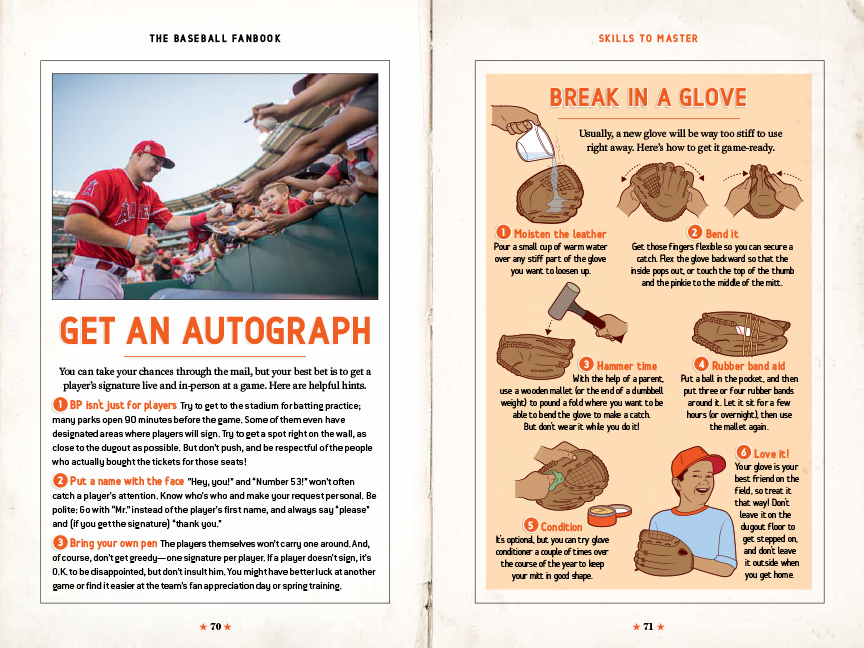
“Chapter 3: Skills to Master

Whether you’re eager to snag an autograph or ready to perfect your slide into second, you need to know how to do things the right way — even eat sunflower seeds!”

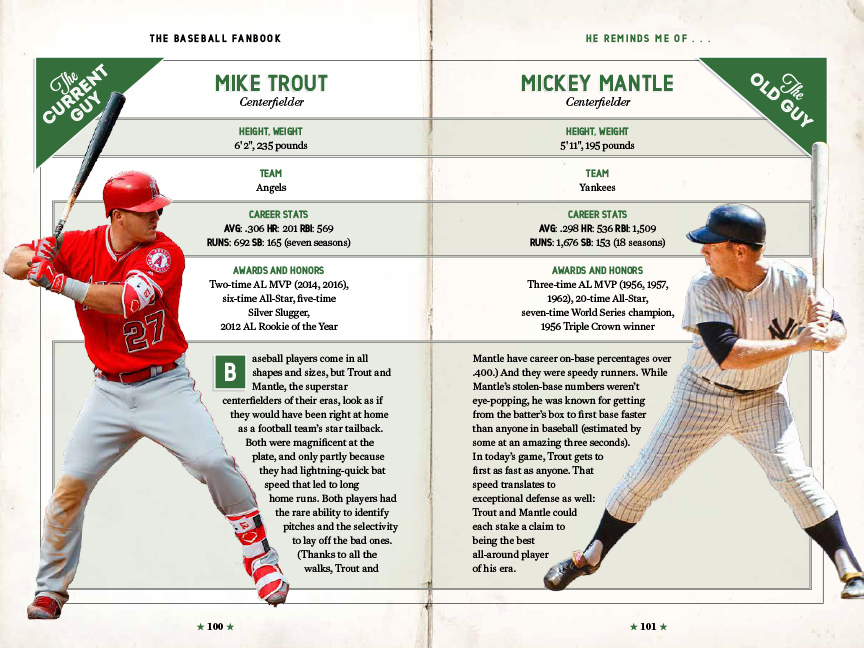
“Chapter 5: He Reminds me of…

Your grandparents have déjà vu all over again when they see these modern players on the diamond. Which stars of today play like the stars of yesteryear?”

Read This If You Love: Baseball!, Sports history, Fun with numbers

Recommended For: 

classroomlibrarybuttonsmall

Signature