Blog Tour, Author Guest Post, Giveaway, and Review!: Maybe a Fox by Kathi Appelt and Alison McGhee

Share

maybe a fox

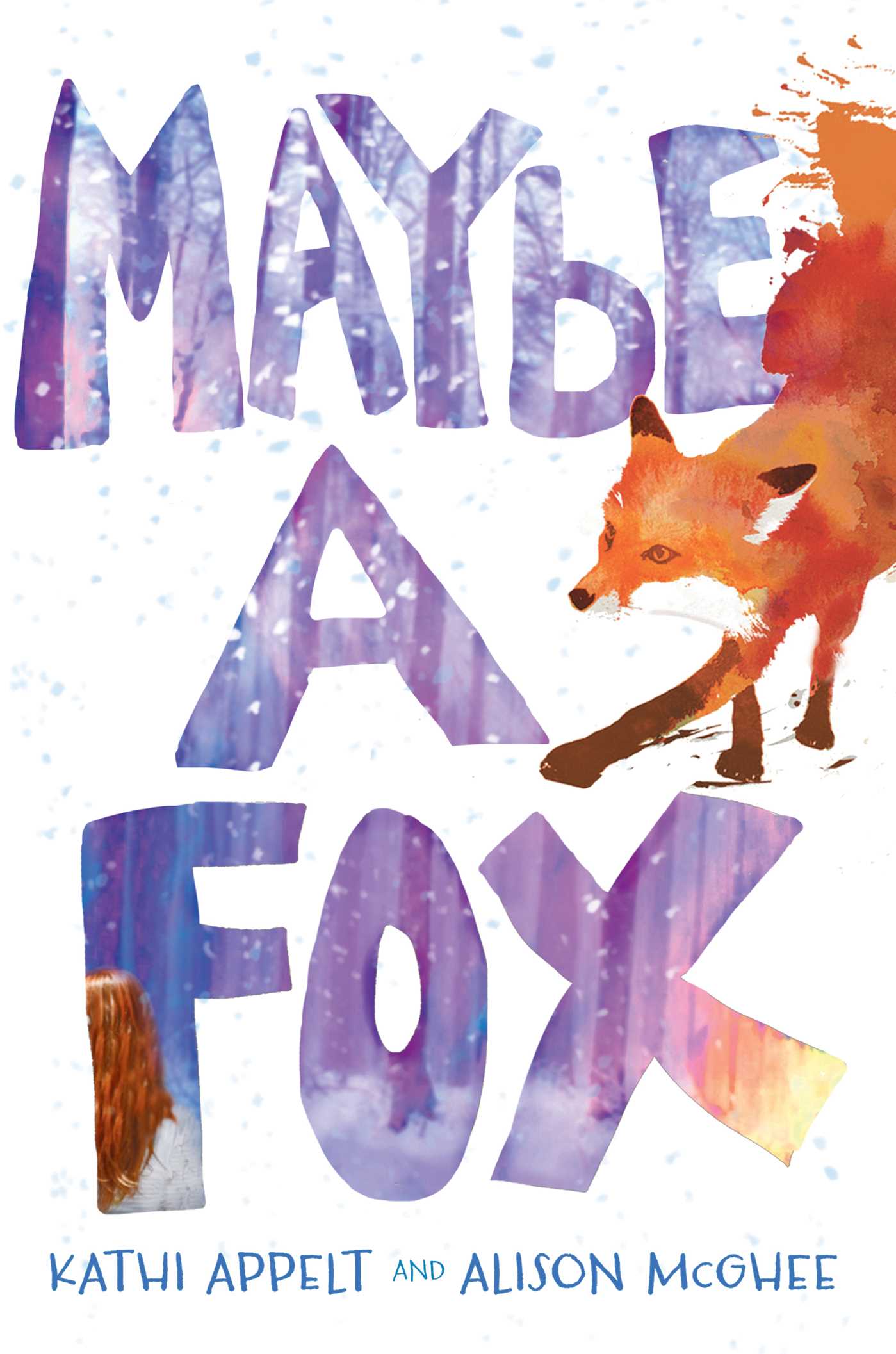
Maybe a Fox
Author: Kathi Appelt and Alison McGhee
Published: March 8, 2016 by Atheneum/Caitlyn Dlouhy Books

Goodreads Summary: A tale about two sisters, a fox cub, and what happens when one of the sisters disappears forever.

Sylvie and Jules, Jules and Sylvie. Better than just sisters, better than best friends, they’d be identical twins if only they’d been born in the same year. And if only Sylvie wasn’t such a fast—faster than fast—runner. But Sylvie is too fast, and when she runs to the river they’re not supposed to go anywhere near to throw a wish rock just before the school bus comes on a snowy morning, she runs so fast that no one sees what happens…and no one ever sees her again. Jules is devastated, but she refuses to believe what all the others believe, that—like their mother—her sister is gone forever.

At the very same time, in the shadow world, a shadow fox is born—half of the spirit world, half of the animal world. She too is fast—faster than fast—and she senses danger. She’s too young to know exactly what she senses, but she knows something is very wrong. And when Jules believes one last wish rock for Sylvie needs to be thrown into the river, the human and shadow worlds collide.

Writing in alternate voices—one Jules’s, the other the fox’s—Kathi Appelt and Alison McGhee tell the tale of one small family’s moment of heartbreak.

Ricki’s Review: I read this entire book in one sitting because, quite simply, I could not put it down. I sobbed through the entire book because I connected so strongly with these characters. As a mom, I couldn’t imagine my son experiencing the pain that these sisters felt from the loss of their mother. As a sister, I can’t imagine my own sister disappearing. These two connections, along with the stunning portrayal of character and story, made this book feel deeply personal for me. While younger students won’t be moms, and thus, won’t have this personal connection I had with the text, they will be sons and daughters. Regardless of a reader’s point of view, they will connect with this book because it is written so beautifully. I won’t forget this book, and I don’t think other readers will forget it, either.

Kellee’s Review: This book is one I’ll be talking about for a while. I will say it is probably the saddest book that I’ve ever read; however, it is beautiful. It is very hard to explain unless you’ve experienced because it gives hope while also being so terribly sad. The characters, animal and humans, are so thought out and detailed that as you read you feel with them and for them. I was also in awe of the way Kathi and Alison were able to tell such a unique story without the reader ever feeling like it was an odd scenario. Whenever I try to describe this book to someone, they give me quite a weird look, so I just stop trying and tell them they should read it because it is a heart print book. There is no other way to describe it. Like Ricki said, every reader will feel for someone in the book. And every reader won’t be able to deny how beautifully written the prose is. 

Teachers’ Tools for Navigation: As you will read in Kathi and Alison’s guest post below, point-of-view makes this story quite powerful. Teachers might ask students to consider the varying perspectives of this story and how they work together to form a cohesive whole. The teacher might provide other examples of texts that feature different points-of-view to compare and contrast authors’ styles. Students might then try their hand at writing in various, connected points-of-view and subsequently analyze how this enhances a narrative.

Discussion Questions: How do the authors unfold the plot in the narrative?; What predictions did you make while reading this story? How might the story have turned out quite differently?; How does Senna’s point-of-view enhance the story for you?; Were there any allusions within the text?; What theme do you take away from Maybe a Fox?

We Flagged: “The baby girl fox, Senna, came into the world in darkness, thirty feet below ground in the end dug out of cool brown earth. She was the middle child, born between her older and younger brothers, the three of them separated by minutes.

The first thing she knew was the feel of her mother’s tongue. Shhh shhh shhh, cleaning her off, licking her into life and warmth and love and safety.

The second thing she knew was the feel and smell of her brothers’ bodies pressed against hers as their mother nursed them, their front paws kneading her belly.

The third thing she knew was that there was someone waiting for her, someone she needed to find.” (p. 75-76)

Read This if You Loved: The House of Purple Cedar by Tim TinglePax by Sara PennyPacker, Counting Crows by Kathi Appelt

Recommended For: 

litcirclesbuttonsmall closereadinganalysisbuttonsmall readaloudbuttonsmall classroomlibrarybuttonsmall

Giveaway!
A Guest Post from Kathi and Alison about Point-of-View

Finding the best possible point of view for a story is one of the most important choices that a writer can make. The point of view, more than any other aspect of literature, dictates the distance created between the character and the reader. When we embarked upon this story, Alison chose to write from the fox’s story and she decided early on that she wanted to write from an omniscient point of view. This allowed her to place Senna deeply within the pocket of her fox family, and to give our readers an intimate sense of their world. It gave her a way to present the fox-world via the senses of all five members of their family, and put the readers squarely inside of the natural landscape.

When we were first drafting, Kathi chose to write Jules from a first person point of view. However, it didn’t take long before she realized that the first person was too limiting. Yes, first person is quite intimate and there are good reasons to use it, but in this case it felt as though it created too many blind spots. Jules needed a bigger canvas and so Kathi switched to third person. That allowed her to broaden the scope of Jules’ experience, and to let Jules, as well as the omniscient narrator, experience the events as they unfolded.

We always knew that Sam’s point of view would be from the third person too, and he stepped into the story in a way that let the reader get a more objective perspective. We also hoped to show that even though Sylvie’s death primarily impacted Jules and her dad, her loss was felt strongly by the entire community. As well, Sam’s earnest desire for the return of the catamount helped to create a sense of possibility that the other characters couldn’t, simply because of their closeness to Sylvie.

The landscape also gave us a perspective. The woods and rocks, and of course the Slip itself with its local legends, provided not only a backdrop, but its own wild voice, a voice that spoke to each of our characters—fox, Jules, Sam, Elk, Sylvie, Zeke, Dad, and the catamount—in a way that only a wild place can speak.

All this to say that the multiple points of view hopefully helped to create stories within stories that, when woven together, made a single story that was enriched by the viewpoints of each character.

Kathi and Alison.

About the Authors:

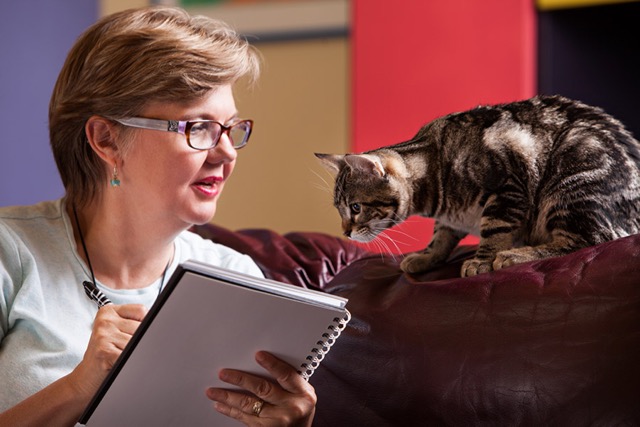
Kathi Appelt photo 2015_credit Igor Kraguljak

Kathi Appelt is the New York Times best-selling author of more than forty books for children and young adults. Her picture books include Oh My Baby, Little One, illustrated by Jane Dyer, and the Bubba and Beau series, illustrated by Arthur Howard. Her novels for older readers include two National Book Award finalists: The True Blue Scouts of Sugar Man Swamp and The Underneath, which was also a Newbery Honor Book. In addition to writing, Ms. Appelt is on the faculty in the Masters of Creative Writing for Children and Young Adults at Vermont College of Fine Arts. She lives in College Station, Texas. To learn  more, visit Kathi’s website at kathiappelt.com.
Alison McGhee photo 2015 credit Dani Werner
Alison McGhee is the New York Times bestselling author of Someday, as well as Firefly Hollow, Little Boy, So Many Days, Bye-Bye Crib, Always, A Very Brave Witch, and the Bink and Gollie books. Her other children’s books include All Rivers Flow to the Sea, Countdown to Kindergarten, and Snap. Alison is also the author of the Pulitzer Prize–nominated adult novel Shadowbaby, which was also a Today show book club selection. She lives in Minneapolis, Minnesota, and you can visit her at AlisonMcGhee.com.

MaybeAFox_banner

Follow the blog and book tour!

See Another Guest Post by Kathi Appelt Here!

RickiSigandSignature

**Thank you to Barbara at Blue Slip Media for providing copies for review and the giveaway. Also, thank you to Kathi and Alison for the wonderfully insightful guest post!**

In The Middle School Classroom: Talking About Last Stop on Market Street by Matt de la Pena

Share

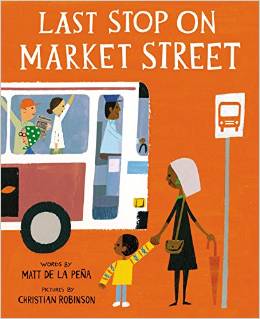
last stop on market street

So many of us were so happy to hear that Matt de la Peña won the Newbery Medal with Last Stop on Market Street though so many of us were quite surprised as well. Not surprised because the book didn’t deserve it, it did; surprised because it is a picture book winning the award for most distinguished piece of children’s literature. This means that the illustrations, which are phenomenal and also won a Caldecott Honors, could not be taken into consideration during the Newbery process. This left many people wondering how a picture book could beat out novels such as Echo by Pam Muñoz Ryan and The War That Saved My Life by Kimberly Brubaker Bradley, two of the three honors books.

I was fascinated by all the conversations, and then I read a post on Facebook by my friend, Beth Shaum, sharing an activity she did in her classroom. She decided to let her student be the judge of the book and read Last Stop on Market Street aloud to her students without showing them the illustrations. She then asked them how it met the criteria of the Newbery. I loved it and decided to do it in mine as well. I didn’t plan on blogging about it, but the conversations that came with the activity and reading of Last Stop on Market Street with my middle school students was something that needed to be shared.

In my class, I read the whole picture book twice. The first time straight through. Then the second time I allowed for questions and we discussed it a bit. It was so wonderful to see how much inference needed to be done when the illustrations were excluded from the reading. When CJ says he wanted something a pair of teens had, students couldn’t see the photos to determine what it was. They also noticed the diversity of the book without seeing the photos because they pointed out that there was a blind man on the bus.

Finally, I asked my students to answer two questions. First, I asked them to tell me what made Last Stop on Market Street distinguished, and why do you think it won the Newbery. Then, after reading the book for a third time and showing the illustrations as well they had to tell me what the theme of the book was. (We are actually in a theme unit, so the text fit in perfectly.) Here are some answers I received:

What made Last Stop on Market Street distinguished? Why do you think it won the Newbery?

“This book won the Newbery award because it had so many positive things to teach kids. It shows many different things to think about.”

“Because of the author’s ability to use imagery, teach a valuable life lesson in a way where a child can understand, and it’s way of including racially diverse characters like the world we live in today. This book creates a story for children that let’s them think.”

“I think it won because the book teach you many lessons about homeless people and the different types of diversity that is in the world, also the book teach you that some people don’t have a lot of things and it is important to be thankful, the kid in the book was complaining about doesn’t have a car but some people don’t even have food.”

“This book is different from all the other winners for this award, but it still won maybe because the amount of detail in the story even without looking at the illustration.”

“I think this book won the Newbery prize because this shows us that deep down inside that little town it shines bright like the sun,so i think that this book won because it teaches life lessons for kids.”

“I think this won because the story was very well written. The setting and people in the setting were described very well. Even without the pictures I could imagine what the scene looked like. The one scene that really stood out was when CJ, his grandma, and the blind man, all closed their eyes and enjoyed the sound of the music the man with the guitar was playing. The author described this scene very well.”

“It won the Newberry medal because there was so much description in the characters and how the character talked about the setting how there was a arch of a rainbow, about the streetlamps, the graffiti, and even about the description of the characters were so much in detail, like this person was blind, and that the dog guided him around.”

“I think the Last Stop On Market Street won the Newbery Medal because of the way of the wording showed freedom, power, and beauty. It showed clever wording and hints that implied little things that made the world better and beautiful. It talked about how the world was ruined to some and looked wrong, but when you understood it, the world was beautiful. What made the book distinguished was how so little words meant so much and made you think about how the world was breathtaking, and what made it so special.”

“This book is distinguished because the characters are described well because it showed what they were doing and saying. The book also described freedom well and it showed the theme better because it said that his Nana found beautiful everywhere and he looks around after wondering that and it seems that he is appreciating the beauty of all the things around him. I think that this book won the Newbery because it (1) shows diversity, (2) it has an amazing message, and (3) the book doesn’t take place in a fancy school or luxurious house but on an old bus yet it still makes CJ’s time there seem great because he is enjoying the world around him and the people around him.”

“I think that the book won the Newberry because the characters are diverse, for example, the blind man with his dog on the bus. C.J and his Nana are also interesting characters, because Nana sees the beauty in a lot of things that C.J doesn’t see yet.”

“This book won the Newbery prize because it is very true and it gives people hope.”

What is the theme of Last Stop on Market Street?

“The theme is that whenever you are sad you have to keep positive and look at the good side.”

” Broken things still have their uses.”

“Don’t be jealous and want everything be happy that you are living the life you have. You don’t have to be like all the other people and be jealous. Who cares where you live and what you do or what you have. Like when the boy said he wanted a car instead of riding the bus. He wanted to go straight home instead of going to the homeless shelter. All those things he wanted but he should have been happy for what he has.”

“I think the theme of the Last Stop On Market Street was to appreciate the little things in the world that make it special, rather than looking on the outside and wanting what you think makes the world better for you, not including others who may have less, but respect more than what you think the world is made of.”

“I think that the theme of the story is that people should appreciate what they have in life because beauty is everywhere no matter where you are or what you are doing.”

“I think that the theme of this book is that there is beauty in everything. I say this because C.J’s Nana said that the bus breathes fire, that a tree’s trunk is a straw, she also said that some people see the world with their ears.”

Thank you to my students for their beautiful and thoughtful responses.

Kellee Signature

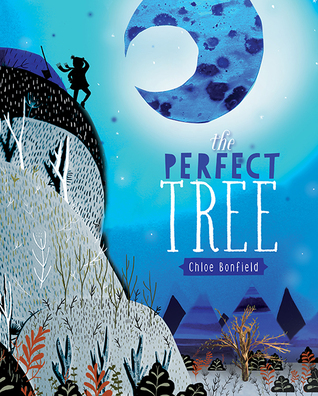
The Perfect Tree by Chloe Bonfield

Share

perfect tree

The Perfect Tree
Author and Illustrator: Chloe Bonfield
Published January 5th, 2016 by Running Press Kids

Summary: Jack is searching for the perfect tree—one that he can chop, hack, and stack! But when it becomes too hard to find, Jack stumbles across three unlikely friends who want to show him their perfect trees.

In this lively, enchanting story, The Perfect Tree is a reminder to notice the wonders we often overlook, and to value our friendship with the natural world.

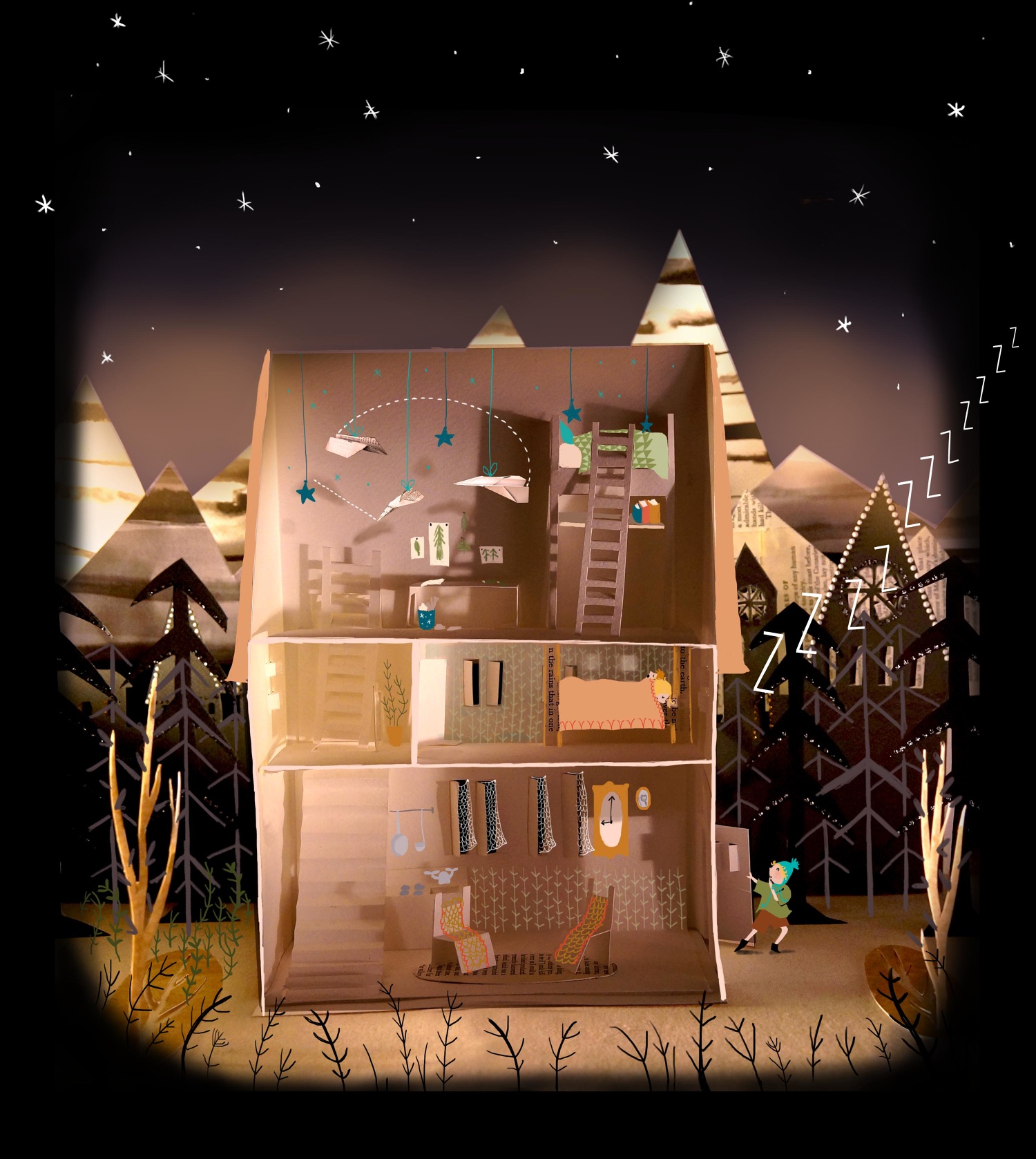
Kellee’s Review: The Perfect Tree is a book that I hope doesn’t go beneath the radar because it is a wonderful book with a positive theme and beautiful illustrations. Jack’s story makes the reader think about all the harm we do when we destroy the forest, but it does so without listing or preaching. It just shows. It mentions in her biography that Chloe Bonfield is fond of printmaking, and you can see this in her artwork that accompanies Jack’s story. It is mixed media, 3D, collage, and illustrated and just really takes the book to the next level.

Ricki’s Review: Whew. This book is quite beautiful. I felt like I went through a journey as I turned the pages. When I got to the end, I flipped to the front of the book and read it once more. My 2-year-old son kept saying, “Ooooo,” as I turned the pages. The words flow naturally in a way that is both quiet in its delivery and loud in its message. And the artwork—oh the artwork! I love the way the images are layered to grab readers’ attention. I spent much time on each page wondering, “But how did she do this?!” The mixed media will captivate readers and inspire them to want to create their own works of art/literature. I am excited to have this book in my library because I know it will be inspirational to my son.

Teachers’ Tools for Navigation: This book is a great one to discuss theme with. It is one that you have to infer, but it isn’t too difficult to interpret which would make it a good scaffolding tool to longer narratives. Additionally, it would be a great book to read around Earth Day because of the environmental lesson and love of nature.

Discussion Questions: Why does Jack change his mind?; Why is it important to take care of nature?; What are some ways that the author helps you see Jack’s story (through illustrations and text)?

We Flagged: “Once a boy named Jack went on a journey to find the perfect tree. Not to climb, not to draw, and definitely not to hug. No, Jack wanted a perfect tree to chop. A perfect tree to hack! A perfect tree to stack.”

perfect tree illustration

Read This If You Loved: The Lorax by Dr. Seuss, The Giving Tree by Shel Silverstein, The Tree Lady by H. Joseph Hopkins, Can We Save the Tiger? by Martin Jenkins, Mama Miti by Donna Jo Napoli

Recommended For: 

readaloudbuttonsmall classroomlibrarybuttonsmall

Kellee Signature andRickiSig

**Thank you to Cassie from Running Press for providing copies for review!!**

The House of Purple Cedar by Tim Tingle

Share

house of purple cedar

House of Purple Cedar
Author: Tim Tingle
Published: February 18, 2014 by Cinco Puntos Press

GoodReads Summary: “The hour has come to speak of troubled times. It is time we spoke of Skullyville.”

Thus begins Rose Goode’s story of her growing up in Indian Territory in pre-statehood Oklahoma. Skullyville, a once-thriving Choctaw community, was destroyed by land-grabbers, culminating in the arson on New Year’s Eve, 1896, of New Hope Academy for Girls. Twenty Choctaw girls died, but Rose escaped. She is blessed by the presence of her grandmother Pokoni and her grandfather Amafo, both respected elders who understand the old ways. Soon after the fire, the white sheriff beats Amafo in front of the town’s people, humiliating him. Instead of asking the Choctaw community to avenge the beating, her grandfather decides to follow the path of forgiveness. And so unwinds this tale of mystery, Indian-style magical realism, and deep wisdom. It’s a world where backwoods spiritualism and Bible-thumping Christianity mix with bad guys; a one-legged woman shop-keeper, her oaf of a husband, herbal potions, and shape-shifting panthers rendering justice. Tim Tingle—a scholar of his nation’s language, culture, and spirituality—tells Rose’s story of good and evil with understanding and even laugh-out-loud Choctaw humor.

My Review: It took Tingle fifteen years (and many experiences with a Choctaw storyteller) to write this story, and the thoughtfulness of the story makes this feel very true. While this book is marketed for adults, it most certainly has a young adult crossover audience. I was swept away by the lyrical beauty of the words. The book is quite magical. As I think back on the book, vivid scenes replay in my head. I had difficulty putting the book down because the characters were so real. I was wrapped in all of the subplots and did not want to leave the characters. It reminded me much of a John Steinbeck book—East of Eden, in particular. The evilness of Hardwicke in this book reminded me much of Cathy in East of Eden. When I came to the end of The House of Purple Cedar, I felt as if I’d read an epic—or something enormously important. The themes are left to the reader, they are varied, and they pour from the text. This complex story will remain with me for a long time.

Teachers’ Tools for Navigation: Most obviously, teachers could teach this book along with cultural stories from the Choctaw. They might look at reincarnation and its evolution in history and culture, too. Alternatively, teachers could ask students to examine age. What role does age play in this story, and how does it impact character? Teachers might have students read more about the Indian Boarding Schools and their impact on the Native American community.

Discussion Questions: What does Amafo teach us? Would you do the same in his position? How do his lessons impact the rest of the story?; How does Tingle vividly depict characters in ways that make this story come alive? What makes these characters feel so real?; What is Maggie’s purpose in the story? What does she teach us?; What role does family play in this text?

We Flagged: I am choosing a quote that shows just how beautiful Tingle’s language is: “His hand gripped her shoulder and strong fingers seized her upper arm. He flung her on her back and a hot river of strength surged through her. He was massive and his figure blocked the sky.”

Read This If You Loved: Books by Sherman Alexie, House Made of Dawn by M. Scott Momaday, Books by Louise Erdrich, East of Eden by John Steinbeck,

Recommended For:

 closereadinganalysisbuttonsmall litcirclesbuttonsmall classroomlibrarybuttonsmall

RickiSig

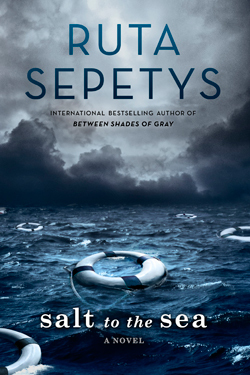
Salt to the Sea by Ruta Sepetys

Share

salt to the sea

Salt to the Sea
Author: Ruta Sepetys
Published: February 2nd, 2016 by Philomel Books

GoodReads Summary: The author of Between Shades of Gray returns to WWII in this epic novel that shines a light on one of the war’s most devastating—yet unknown—tragedies.

In 1945, World War II is drawing to a close in East Prussia, and thousands of refugees are on a desperate trek toward freedom, almost all of them with something to hide. Among them are Joana, Emilia, and Florian, whose paths converge en route to the ship that promises salvation, the Wilhelm Gustloff. Forced by circumstance to unite, the three find their strength, courage, and trust in each other tested with each step closer toward safety.

Just when it seems freedom is within their grasp, tragedy strikes. Not country, nor culture, nor status matter as all ten thousand people aboard must fight for the same thing: survival.

My Review: This is a book about humanity. Each voice serves a unique purpose to foster a complete picture of this great tragedy in history. The characters feel real, and their stories and perspectives are so different that readers are able to fully understand a diversity of experiences toward the war. Wow, wow, wow. I don’t feel that summarizing or reviewing this book will even do it justice. I felt like I couldn’t eat or sleep until I finished it. Salt to the Sea takes readers on an epic adventure and throws them for an emotional tailspin. After I closed the cover, I was reeling.  The language is powerful and the story is captivating.

Ruta Sepetys holds a special place in my heart. She is a powerful force in historical fiction, and this book is no exception. Several years ago, I was fortunate to be sharing a drink with Ruta at the ALAN cocktail party. When I asked her what she was working on, her eyes glinted as she talked about the concept of this book. She felt a connection to this tragedy, and while nothing had been written at the time, I knew it would be a remarkable novel. For the next several years, I thought about the way Ruta described the historical event, and I consistently checked her pages to see if I would see any further information about its progress. Several years later, I would (fortunately) receive this book in the mail. Boy was it worth the wait.

Teachers’ Tools for Navigation: The teaching opportunities for this book are endless. I would love to use this book to teach the theme: What does it mean to be human? or What does it mean to be a good person? Then, I might pair other texts (e.g. Kite Runner by Khaled Hosseini) and create a text set to consider these themes. The perspective and voice of these characters are strong, and I imagine rich classroom discussions about the ways these four characters show us a slice of humanity. (One of the four main characters is debatably evil, and this would offer excellent, critical conversations). Beyond these four characters, readers might consider the minor characters of this text (or tangential war figures, such as Hitler or Stalin). Are humans innately selfish? Are the innately good? Are we all flawed? Are there any universal characteristics amongst these characters, or are they too different?

Discussion Questions: How does the author balance historical information and story? What tools does she use to do this?; Why do you think the author chose to feature four points-of-view rather than one? Does it add or detract from the story? What similarities do you see across these voices? What differences?

We Flagged: “Survival had its price: guilt.”

*Quote taken from an advanced reader copy. It may change after publication.*

Read This If You Loved: Between Shades of Gray by Ruta Sepetys; The Watch that Ends the Night by Allan Wolf; The Book Thief by Markus Zusak; A Night to Remember by Walter Lord; The Guernsey Literary and Potato Peel Pie Society by Mary Ann Shaffer; Schindler’s List by Thomas Keneally; Code Name Verity by Elizabeth Wein

Recommended For:

 closereadinganalysisbuttonsmall litcirclesbuttonsmall classroomlibrarybuttonsmall

RickiSig

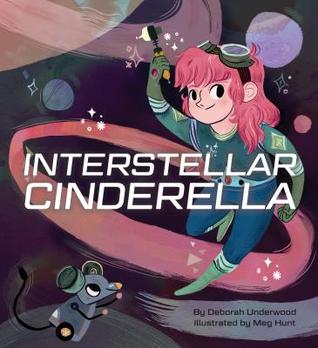
Interstellar Cinderella by Deborah Underwood

Share

interstellar cinderella

Interstellar Cinderella
Author: Deborah Underwood
Illustrator: Meg Hunt
Published May 5th, 2015 by Chronicle Books

Goodreads Summary: 

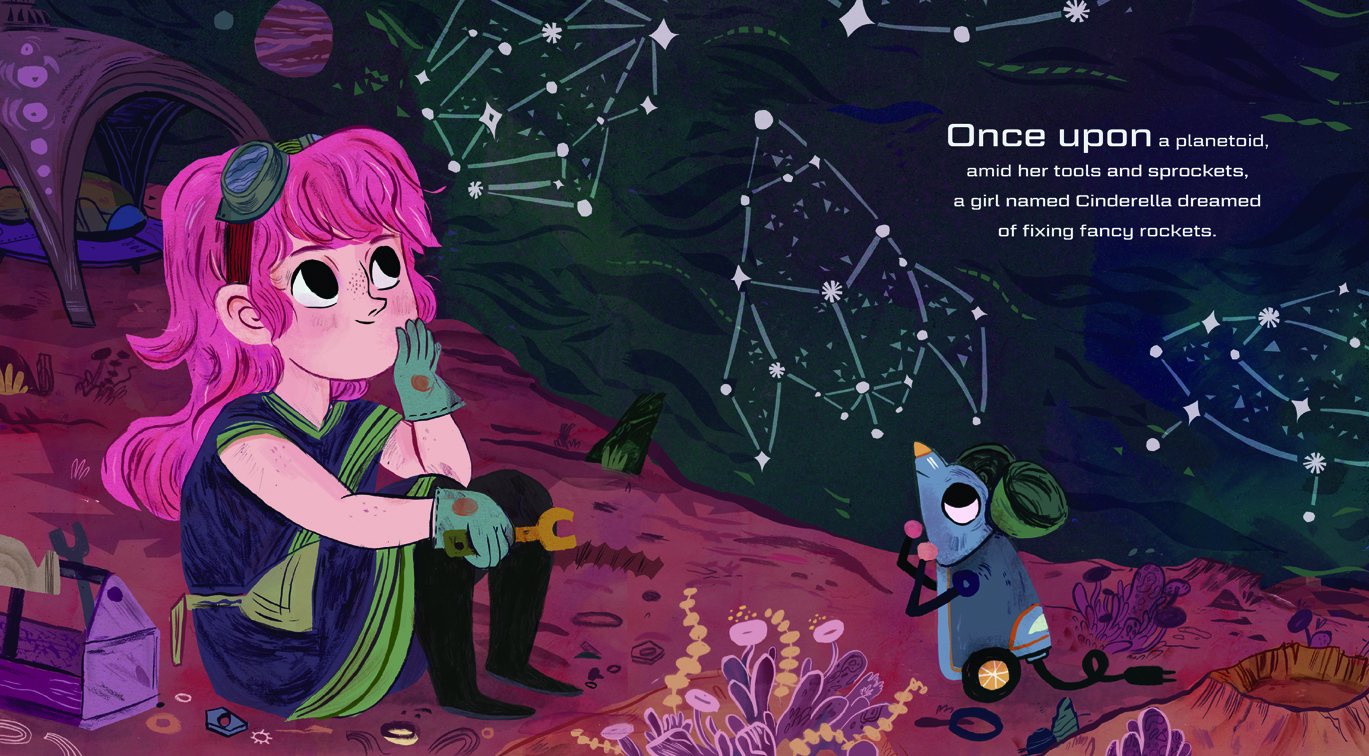
Once upon a planetoid,
amid her tools and sprockets,
a girl named Cinderella dreamed
of fixing fancy rockets.

With a little help from her fairy godrobot, Cinderella is going to the ball–but when the prince’s ship has mechanical trouble, someone will have to zoom to the rescue! Readers will thank their lucky stars for this irrepressible fairy tale retelling, its independent heroine, and its stellar happy ending.

My Review:  I am a huge fan of fairy tale retellings, and I am an even bigger fan of fairy tale retellings that take away the “whoa is me” aspect of the female protagonist. Interstellar Cinderella does just that. Deborah Underwood has given us a Cinderella that we all would aspire to be. She can fix rockets, has robots, and even is quite sensible when it comes to the prince. I am also very impressed with the rhyming of the text. It does not seemed forced and is actually quite humorous at times.

Teachers’ Tools for Navigation: Interstellar Cinderella would be a great addition to a fairy tale unit. I can picture a jigsaw/lit circle of sorts where each group reads an original fairy tale and a picture book retelling the fairy tale then the group discusses how the story was changed, the themes of both stories, compare/contrast the characters and other narrative elements, and then share with the class their analysis. Interstellar Cinderella is also a great example of a science fiction picture book for a genre lesson.

Discussion Questions: How is this Cinderella different than other Cinderellas?; Do you think the book ended with a “happily ever after”?; How does Cinderella save herself?

We Flagged: 

interstellar cinderella spread

Read This If You Loved: Rapunzel’s Revenge by Shannon Hale, Ninja Red Riding Hood by Corey Rosen Schwartz, Fairy Tale Comics edited by Chris Duffy, Princeless by Jeremy Whitely

Recommended For: 

classroomlibrarybuttonsmall readaloudbuttonsmall closereadinganalysisbuttonsmall litcirclesbuttonsmall

Signature

Happy Birthday, Mercy Watson! Review and Giveaway!: Mercy Watson and Deckadoo Drive Books by Kate DiCamillo

Share

Mercy Birthday

One of the most popular chapter book series for newly independent readers turns ten

And beloved creators Kate DiCamillo and Chris Van Dusen give fans even more reason to celebrate with a new spin-off series Tales from Deckawoo Drive

Mercy Watson, the best-selling early chapter-book series written by the two-time Newbery Medal winner and National Ambassador for Young People’s Literature Kate DiCamillo celebrates its tenth anniversary this year. Launched in 2005 the fun-filled stories aimed at readers age five to eight star Mercy Watson, Deckawoo Drive resident, lover of hot buttered toast and the most single-minded of pigs when it comes to the pursuit of adventure – and treats. Illustrated in full color by award-winning artist Chris Van Dusen in his signature retro style, the Mercy Watson books are a popular choice with younger readers making the transition from picture books to chapter books.

Although the sixth and final Mercy Watson installment was published in 2009, the series continues to attract new fans and is published in ten languages with sales of over two million copies worldwide. Last year Kate DiCamillo reunited children with Mercy and her neighbours in the first book in her spin-off series, Tales from Deckawoo Drive. Once more illustrated by Chris Van Dusen, and with all the rip-roaring adventure of Mercy Watson, the series is aimed at older readers of six to nine. The longer chapters and fewer illustrations allow Kate DiCamillo to introduce another level of pathos and sentiment to this series of funny, touching stories starring some unforgettable, heart-warming characters.

The first title in the new series, Leroy Ninker Saddles Up, became a New York Times bestseller and Amazon Best Book of the Year. Leroy and his rusty rather than trusty steed Maybelline star in this love story bursting with impassioned declarations and plenty of hilarious horsing around. This summer saw the release of book two, Francine Poulet meets the Ghost Raccoon, which also joined the New York Times Best Seller list earlier this month. Francine Poulet is the greatest animal control officer in Gizzford County – but it looks like she may finally have met her match. Funny, fast-paced and with an empowering message at its heart, readers are reunited with some familiar characters amid some riotous raccoon wrangling!

Tales from Deckawoo Drive is the perfect follow-on for original  fans who grew up with Mercy Watson and are ready to move on to a longer read. And for those readers new to Deckawoo Drive, this series is a wonderful introduction to a warm and witty world where readers are left feeling all buttery-toasty inside.

Mercy Watson

My Review: The characters in this story are so endearing. Even Eugenia! The antics of Mercy within these pages mixed with DiCamillo’s way of writing really push the Mercy Watson books past all the other early chapter books into its own league. No wonder Mercy is considered a porcine wonder!

Discussion Questions: What makes the Watsons love Mercy so much? What makes Eugenia dislike Mercy so much?; Did Mercy actually save the day or do you think it was all a coincidence?

We Flagged: 

Mercy Illustration

“Mr. Watson and Mrs. Watson have a pig named Mercy.

Each night they sing Mercy to sleep.

‘Bright, bright is the morning sun,” sing Mr. and Mrs. Watson,
but brighter still is our darling one
Dark, dark is the coming night,
but oh, our Mercy shines so bright.

leroy ninker

Goodreads Summary: Yippie-i-oh! Saddle up for the first in a spin-off series starring favorite characters from Kate DiCamillo’s New York Timesbest-selling Mercy Watson books.

Leroy Ninker has a hat, a lasso, and boots. What he doesn’t have is a horse — until he meets Maybelline, that is, and then it’s love at first sight. Maybelline loves spaghetti and sweet nothings, and she loves Leroy, too. But when Leroy forgets the third and final rule of caring for Maybelline, disaster ensues. Can Leroy wrestle fate to the ground, rescue the horse of his heart, and lasso loneliness for good? Join Leroy, Maybelline, and a cast of familiar characters — Stella, Frank, Mrs. Watson, and everyone’s favorite porcine wonder, Mercy — for some hilarious and heartfelt horsing around on Deckawoo Drive.

My Review: Leroy is just so darn loveable. His personality shines through the pages and you just are so happy that Leroy and Maybelline found each other. Also, Kate DiCamillo has a way with voice! I can always hear her characters talking in my head, and they each are so very distinct. I also love her use of vocabulary and humor–perfect! This one is going to be loved by many!

Discussion Questions: Why do you think that Maybelline is the perfect horse for Leroy?; Was Leroy truly prepared to have a horse? How do you know?; Why does Leroy want to be a cowboy?

We Flagged:

leroy ninker

“Leroy Ninker said ‘Yippie-i-oh’ because Leroy Ninker had a dream. He wanted to be a cowboy.

On Wednesday nights, the Bijou Drive-In Theater ran a Western double feature, and Leroy Ninker Stood and watched in wonder as the great white expanse of the Bijou screen filled with purple mountains, wide-open plains, and cowboys.

The cowboys wore ten-gallon hats. The wore boots. They carried lassos. The cowboys were men who cast long shadows and knew how to fight injustice. They were men who where never, ever afraid.

‘Yippie-i-oh,’ Leroy Ninker whispered to the screen. ‘That is the life for me. A cowboy is who I was meant to be.’”

francine poulet

Goodreads Summary: Deckawoo Drive’s intrepid Animal Control Officer meets her match—or does she? A funny, heartfelt, and fast-paced romp from the National Ambassador for Young People’s Literature.

Francine Poulet is the greatest Animal Control Officer in Gizzford County. She hails from a long line of Animal Control Officers. She’s battled snakes, outwitted squirrels, and stared down a bear. “The genuine article,” Francine’s dad always called her. She is never scared—until, that is, she’s faced with a screaming raccoon that may or may not be a ghost. Maybe Francine isn’t cut out to be an Animal Control Officer after all! But the raccoon is still on the loose, and the folks on Deckawoo Drive need Francine back. Can she face her fears, round up the raccoon, and return to the ranks of Animal Control? Join a cast of familiar characters—Frank, Stella, Mrs. Watson, and Mercy the porcine wonder—for some riotous raccoon wrangling on Deckawoo Drive

My Review: Kate DiCamillo has a special way of writing stories. Her characterization is amazing which leads to truly full characters. Her vocabulary always pushes the reader yet never leaves the reader out of the story either. Her voice rings throughout the pages to where you can hear the narrator in your head. In this book, Francine Poulet is a character that all readers will love. She is determined, good at her job, and loves what she is doing. But then she faces her adversary. What happens after is what truly shows what type of person Francine Poulet can be.

Discussion Questions: Do you think Francine does her job because she loves it or because she felt pressured to do it because of her father and grandfather?; What vocabulary words do Kate DiCamillo use throughout the book to add more descriptive language and imagery to the book?; How would you describe Francine? Frank? The raccoon?

We Flagged: 

Francine Poulet Image

“Francine put the net on the ground. She took the binoculars. She held them up and looked through them. She saw the raccoon sitting on the roof, staring at her.

The moon was bright, and it was shining on the raccoon’s fur. The raccoon shimmered.”


Teachers’ Tools for Navigation: Teachers’ Guides for Mercy Watson, Leroy Ninker, and Francine Poulet can be found on Candlewick’s website:

Mercy Watson:
http://www.candlewick.com/book_files/0763636444.btg.1.pdf

Leroy Ninker:
http://www.candlewick.com/book_files/0763663395.btg.2.pdf

Francine Poulet:
http://www.candlewick.com/book_files/0763668869.btg.1.pdf

Read These If You Loved: Lulu series by Judish Viorst, Frankie Pickle series by Eric Wight, Bramble and Maggie (series) by Jessie Haas, The Princess in Black (and #2!) by Shannon Hale

Recommended For: 

readaloudbuttonsmall classroomlibrarybuttonsmall litcirclesbuttonsmall closereadinganalysisbuttonsmall

Giveaway!

a Rafflecopter giveaway

Kellee Signature

**Thank you to Alice at Candlewick for providing copies for review and for giveaway!**