Exclusion and the Chinese American Story by Sarah-Soonling Blackburn

Share

Exclusion and the Chinese American Story
Author: Sarah-Soonling Blackburn
Published: March 26, 2024 by Crown Books for Young Readers

Summary: Until now, you’ve only heard one side of the story, but Chinese American history extends far beyond the railroads. Here’s the true story of America, from the Chinese American perspective.

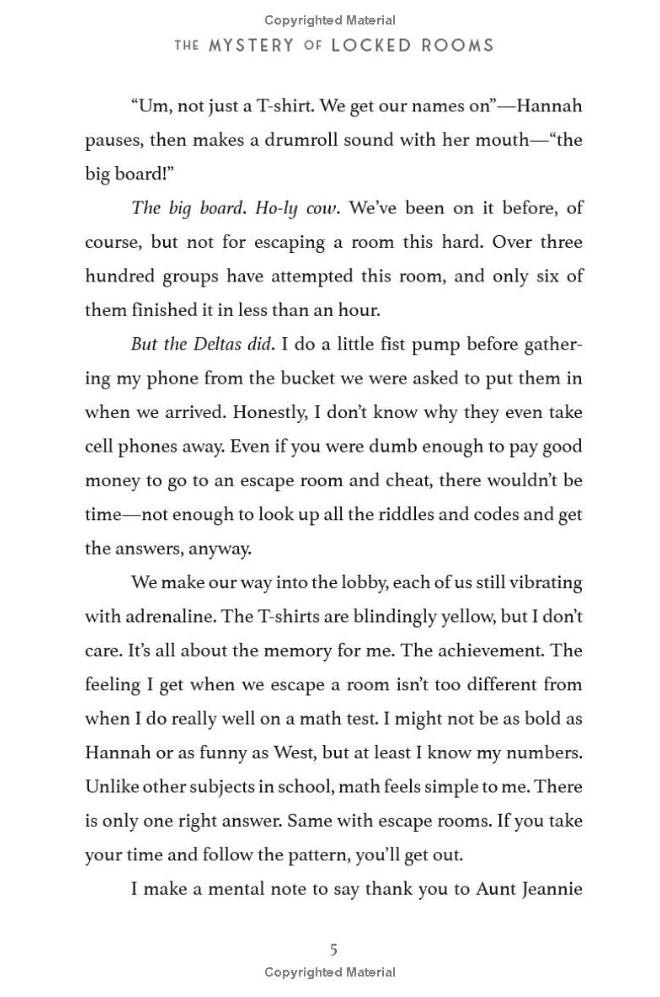
If you’ve learned about the history of Chinese people in America, it was probably about their work on the railroads in the 1800s. But more likely, you may not have learned about it at all. This may make it feel like Chinese immigration is a newer part of this country, but some scholars believe the first immigrant arrived from China 499 CE–one thousand years before Columbus did!

When immigration picked up in the mid-1800s, efforts to ban immigrants from China began swiftly. But hope, strength, and community allowed the Chinese population in America to flourish. From the gold rush and railroads to entrepreneurs, animators, and movie stars, this is the true story of the Chinese American experience.

Review: I am so glad that this book exists, and I especially recommend the audiobook. It tells the Chinese American experience from the very beginning—more specifically, from the first moment that a Chinese person came to America and the racism that Chinese Americans have experienced for centuries. The chapters are dense and filled with incredibly important information. I read a chapter each night to help me digest and think about each one of the topics and time periods covered. I especially appreciated the questions at the end of the chapters. This book is important for readers of all ages. 

Tools for Navigation: I wish more books like this one were taught in history classrooms. It’s imperative that young people don’t get a white-washed, sanitized version of US history. The Race to the Truth series (and this book, in particular) allow young people to read from many different perspectives to understand the truth about our country.

Discussion Questions: 

  • Which information did you find most surprising? Most interesting?
  • How has racism evolved across the centuries for Chinese Americans?
  • How can you use what you learned to share truths with others?

Read This If You Love: History books, conversations about equity, nonfiction

Recommended For: 

 classroomlibrarybuttonsmall closereadinganalysisbuttonsmall

RickiSig

**Thank you to Barbara at Blue Slip Media for sending me a copy of this book for an honest review**

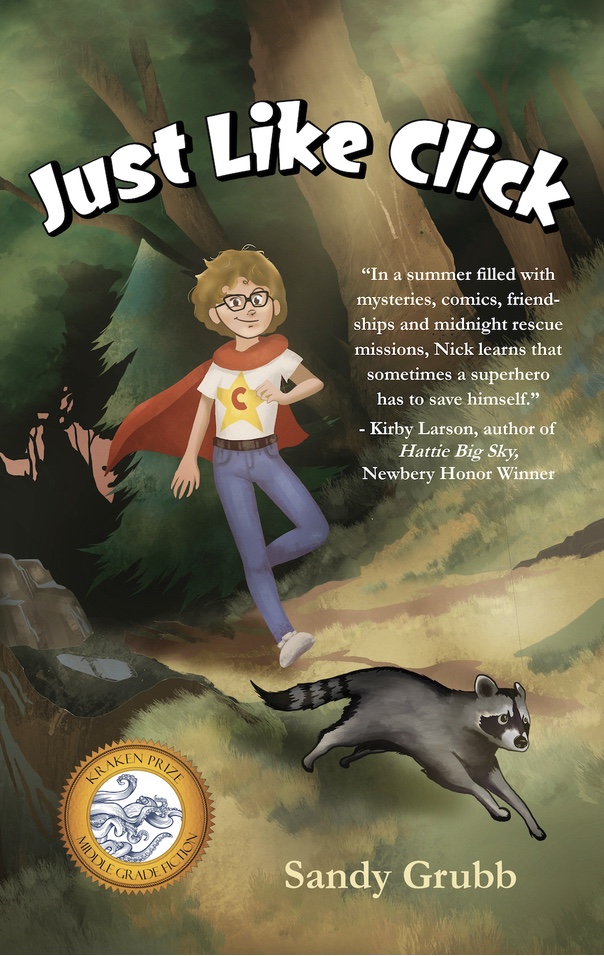
Author Guest Post: “Location, Location, Location” by Sandy Grubb, Author of Just Like Click

Share

“Location, Location, Location”

Let’s face it—location matters and not just in real estate. If the hero of your story is battling pirates, it’s a much different story if the hero’s ship is sailing on rough seas off the coast of Somalia versus floating in a wading pool in the backyard. Imagine how different the books on this list would be if the settings were changed up:

  • Charlotte’s Web in a spaceship to Mars instead of the Zuckermans’ farm
  • The Girl Who Drank the Moon in an Arizona desert instead of a forest filled with dangers
  • Maizy Chen’s Last Chance in Switzerland instead of well…Last Chance
  • Freewater in the Rocky Mountains instead of the Great Dismal Swamp

The setting for the stories I write have always come to me before I choose my characters and figure out my plots. I’m not saying it must be that way, it’s just the way it’s worked out for me so far. Someday, I may take on the challenge of building a magical world, but for now, I find great satisfaction in writing contemporary stories.

Setting sets the stage. It conveys the time and place for the events of your story, where characters must face their challenges and come out on the other side changed for the better. Your setting needs to fit the kind of story you’re writing.

Setting defines limits and possibilities. If your character must confront magical swamp characters, it’s most likely not going to happen in a New York City highrise, though that could possibly be interesting. One challenge in writing is to avoid overly-used tropes. “It was a dark and stormy night” is perhaps the most famous setting cliché of all time. This was the opening line in a 19th century novel by the English author Edward Bulwer-Lytton. Edgar Allan Poe used it the following year as the opening line of a short story. It may have been left buried in time if it weren’t more recently used by Madeleine L’Engle as the opening line of A Wrinkle in Time and then over and over again by Snoopy of the Peanuts comic strip. Poe, Charles Schultz, and L’Engle knew full well they were taking a cliché from the past for a new double entendre effect.

When done well to full advantage, the setting becomes like another character in the story. By changing the season, time of day, lighting, weather, sounds, and smells an author can communicate emotions and tension in their story. In an early chapter of Just Like Click, Nick heads out at midnight to meet Celia for the first time. We read, “A gnarly pine snag sneers at me. I turn toward the stream. The inky black waters rush by chanting, Die, die, die.” With this setting description, it’s easy to know how Nick is feeling about being outside alone in the middle of the night without just typing “Nick was scared.” In addition, readers experience the setting with Nick.

Do you want to try some brainstorming?

What are some settings you may want to use for a story? Can you list five?

What kind of story might take place in each setting? In each case, think of events that could happen only in that setting.

Have fun with your writing. Use your imagination. Try new things. Writing takes courage—be brave!

Published April 16th, 2024 by Fitzroy Books/Regal House Publishing

About the Book: Nick Townley has lived his entire life—all eleven years—at Black Butte Ranch, nestled in the foothills of the snow-capped Cascade Mountains. While his parents push him to study, practice sports, and make friends, Nick prefers to retreat into his superhero universe and create exciting Adventures of Click comics. When a string of robberies threatens Dad’s job, forcing them to move across the country, Nick’s world implodes. He loves his home, and what will he do about the $237,000 in cash under his bed that Great Gramp gave him before he died?

Desperate to stop the move, Nick steps off his comic book pages and ventures into the night as Click, an undercover superhero. Catching thieves would be a lot easier if he had actual superpowers. When three new kids discover his identity and want to join him, Nick vows to stay undercover…until he realizes even a superhero needs friends. But can he ask them to put their lives in danger to save his home? What would Click do?

About the Author: Sandy Grubb has been writing children’s stories since she was a child herself. Her debut novel, Just Like Click, won the esteemed Kraken Book Prize, recognizing finely crafted middle grade fiction. When not at home in Lake Oswego, Oregon, Sandy and her family can often be found exploring nature trails and playing badminton at Black Butte Ranch, just like Click…and Nick!

sandygrubb.com
X: @sandygrubb
IG: sandygrubb
Facebook: sandygrubb

Thank you, Sandy, for this reflection on setting!

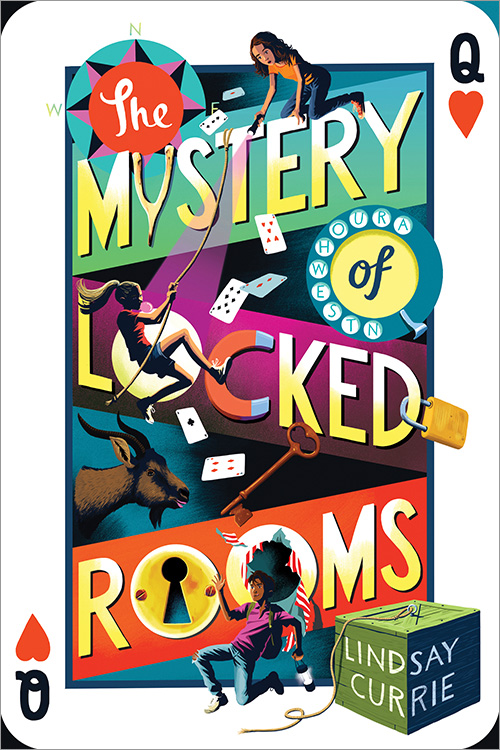
The Mystery of Locked Rooms by Lindsay Currie

Share

The Mystery of Locked Rooms
Author: Lindsay Currie
Published April 2nd, 2024 by Sourcebooks Young Readers

Summary: Crack the codes. Find the treasure. Escape the house.

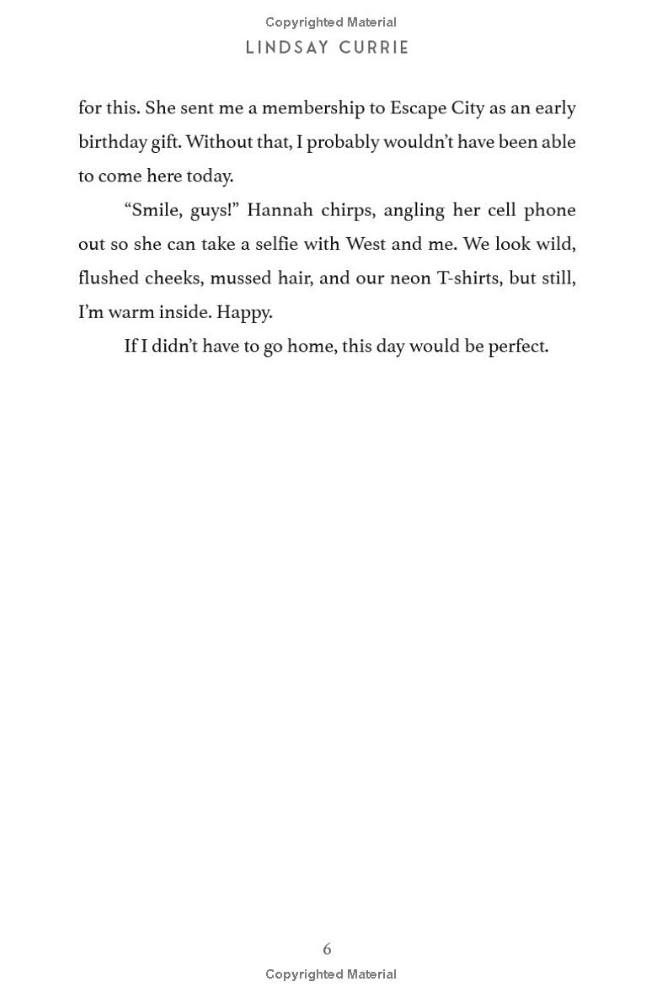
From the acclaimed author of Scritch Scratch and What Lives in the Woods comes a action-packed adventure novel about three friends who team up to find a hidden treasure in an abandoned 1950’s funhouse. Twelve-year-old Sarah Greene wants nothing more from her seventh-grade year than to beat the hardest escape room left in her town with her best friends, West, and Hannah. But when a foreclosure notice shows up on Sarah’s front door, everything changes. Since her father became ill two years ago, things have been bad, but not lose your house bad…until now.  Sarah feels helpless until the day Hannah mentions a treasure rumored to be hidden in the walls of an abandoned funhouse.

According to legend, Hans, Stefan, and Karl Stein were orphaned at eight years old and lived with different families until they were able to reunite as adults. Their dream was to build the most epic funhouse in existence. They wanted their experience to be more than mirror mazes and optical illusions, so they not only created elaborate riddles and secret passages, but they also claimed to have hidden a treasure inside the funhouse.

Once in, Sarah, West, and Hannah realize the house is unlike any escape room they’ve attempted. There are challenges, yes, but they feel personal. Like the triplets knew who would get in. It seems impossible, but so does everything about the house. As soon as they’re in she immediately worries that attempting the funhouse is a bad idea but Sarah has no choice but to continue, since her future is at stake.

It’s not all action-adventure—the story also has a lot of heart. Foreclosure is looming for Sarah’s family home, due to the chronic health challenges faced by her father and the strain that has placed on family finances. This is the catalyst for Sarah’s quest to find the rumored Triplet Treasure. Kirkus praised this as a “moving metaphor… Sarah’s enthusiasm for escape rooms becomes a means of tackling the unsolvable puzzle that has left her parent confined to his own escapable room” and goes on to say, “this topic is treated with a gentle touch.”

Praise: 

“A riddling, sporting adventure and a story of true friendship.” — Kirkus Reviews

“In this page-turning thriller, Currie (It Found Us) builds suspense via high-stakes brain teasers in dark rooms and periods of isolation as the Deltas endeavor to solve the biggest, most dangerous series of escape rooms they’ve ever faced.” – Publishers Weekly

“This page-turner with touching character moments makes a fun read for anyone who enjoys puzzle solving, escape rooms, and books centered around the power of friendship.” – Booklist

“With highly likable characters, authentic dialogue, and tension-building action, this exciting and engaging story will grab the attention of many readers who will not put it down until the end. Highly recommended” — School Library Journal

About the Author: LINDSAY CURRIE lives in Chicago, Illinois with her husband and three kids. She loves coffee, Halloween, Disney World and things that go bump in the night! She is the author of Scritch Scratch, What Lives in the Woods, The Girl in White, and The Peculiar Incident on Shady Street. Visit her online at lindsaycurrie.com

Review: Do you like escape rooms? Or reading about people escaping escape rooms? Or puzzle books (think Lemencello or Vermeer or Liar’s Society)? Then this is the perfect book for you!

The suspense was palpable throughout the book. Each room the trio encountered was so tricky and because of a choice they make, it could truly be a life or death decision, which makes it hard to put the books down.

I am so impressed with Lindsay Currie’s creation of the puzzles and tricks throughout. They are all so unique and hard to figure out which makes the character’s journey the reader’s journey also.

Tools for Navigation: This book is going to be loved by middle graders who want to read The Inheritance Game or other books in that vein but aren’t ready yet. A perfect ladder before entering the YA realm of mysteries.

Oh! And Lindsay has made such a fun addition to her website all about The Deltas: https://www.lindsaycurrie.com/who-deltas (I’m also sure there will be an educators’ guide on there eventually).

Extension: This would be a great opportunity for students to make their own escape room!

Flagged Passages: 

Read This If You Love: Mysteries, Escape rooms

Recommended For: 

classroomlibrarybuttonsmall

Signature

**Thank you to Sourcebooks for providing a copy for review!**
Author Guest Post: “Home is Where the Heart is: Lessons for Writing About Place” by Margaret Finnegan, Author of Sunny Parker is Here to Stay

Share

“Home is Where the Heart is: Lessons for Writing About Place”

If you’re going to tell a story, you’re going to need characters, and to understand those characters, you’ll need to understand the world where they exist. That world is often called the setting. But I don’t like that word. It seems passive—like the backdrop of a play. I like the word place, as in the place where you live. The place where you live is anything but passive. Houses settle. Schools hum. Mountains fall and rise, and then do it all over again. The fact is, the world is its own character. And in our favorite stories, the place—the setting, if you must—is a character. It grounds reality, propels action, and enlivens conflict and drama. Sometimes, it’s an impediment to the protagonist. Sometimes, it’s a savior.

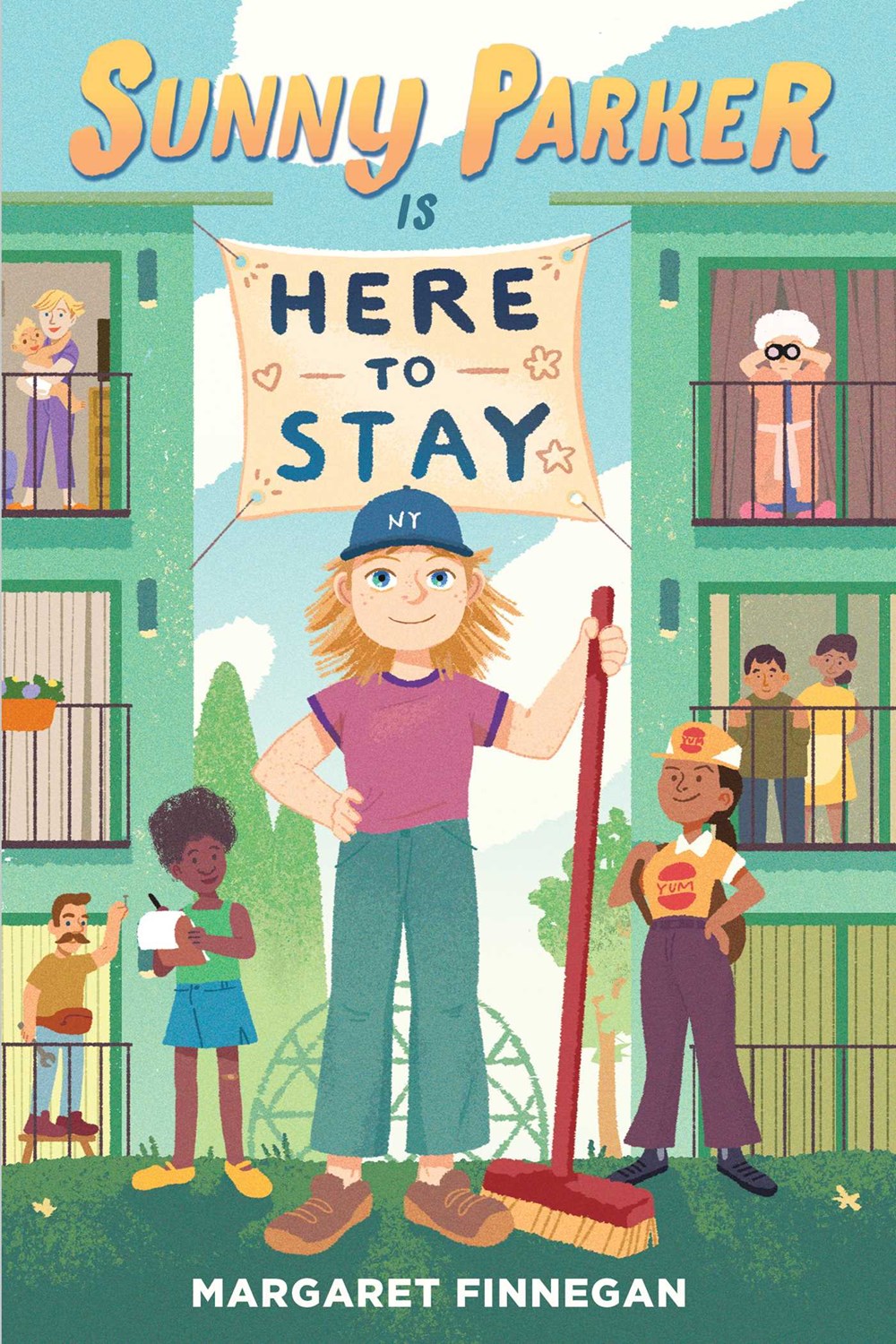
For example, my new book Sunny Parker is Here to Stay takes place in an unnamed but affluent community. There is a country club up in the hills, and most people live in large houses. In fact, a lot of the smaller homes have recently been replaced by McMansions.

Can you picture it? Are you getting a sense of its character? Are you getting a sense of how place affects lives?

Okay. Smack in the middle of town there’s a wide boulevard, three lanes in each direction. Just off the boulevard stands The Del Mar Garden Apartments. It’s an affordable housing complex, a pretty decent one, with balconies and a grass-filled courtyard, but it’s a little neglected too. Sunny Parker, our protagonist, lives here.

This new detail complicates things, doesn’t it? Suddenly, this world seems a little less predictable and a little more fractured. But maybe it also seems more interesting, because like any good character it is multi-faceted, and that makes it fun. After all, you never really know how a multi-faceted character is going to act or what it’s going to do.

Helping writers and readers understand that world building is character building can not only help them grow as writers, but, with the right scaffolding, it can prompt them to think about their own world as more than a place for them to exist, but as an active presence in their own lives, one that they help shape, and one that shapes them in return.

With that in mind, here are two lessons about place—one for writers and one for readers.

Writing About Place

  1. Start with a blank piece of paper. Draw the world you know, in this case, the room/place where you sleep (although other spaces could be fun to play around with too). Be sure to label the furniture, windows, etc.
  2. Add sensory details (as words or pictures) so that you can better visualize what things look, sound, feel, smell, and maybe even taste like.
  3. Look at your picture. What contradictions might exist here? Maybe your side of your room is perfectly clean, for example, but your sister’s side looks (and smells) gross. Or maybe the contradiction is outside. Maybe inside the room/place it’s warm and dry, but outside it’s cold and wet.
  4. Now write about what you’ve drawn, especially the contradiction. Be sure to use those sensory details and other words that give a sense of life and action.
  5. Share your writing with a peer. Have them answer this question: What do you think this writing tells you about the person/people who live here?
  6. Reflect in writing for one minute more by answering this question: Did your peer say what you thought they might? If so, what? If not, did their response surprise you? Why?

Reading about place

  1. Start with a book. Identify passages that describe an important place in the book.
  2. Draw it out on a piece of paper. No need to be fancy, but do try to get those sensory words in there.
  3. Reflect in writing on your drawing. What is your picture trying to tell you about the personality of the place. For example, is it warm, cozy, scary? What clues does the personality of the place tell you about the people or animals in the story?

Published April 23rd, 2024 by Atheneum Books for Young Readers

About the Book: A determined girl spends the summer before middle school learning to stand up for her low-income community in this funny, fast-paced read just right for fans of Kelly Yang’s Front Desk.

Sunny Parker loves the Del Mar Garden Apartments, the affordable housing complex where she lives. And she especially loves her neighbors. From her best friend, Haley Michaels, to Mrs. Garcia and her two kids—developmentally disabled son AJ and bitter but big-hearted daughter Izzy—every resident has a story and a special place in Sunny’s heart.

Sunny never thought living at the Del Mar Garden Apartments made her different—until the city proposes turning an old, abandoned school into a new affordable housing complex and the backlash of her affluent neighborhood teaches Sunny the hard way that not everyone appreciates the community she calls home. Her dad, the Del Mar’s manager-slash-handyman, wants Sunny to lay low. But as hurtful rhetoric spreads and the city’s public hearing approaches, Sunny realizes that sometimes there’s too much at stake to stay silent.

With her friends behind her, Sunny Parker is determined to change the narrative—because she and her community are here to stay!

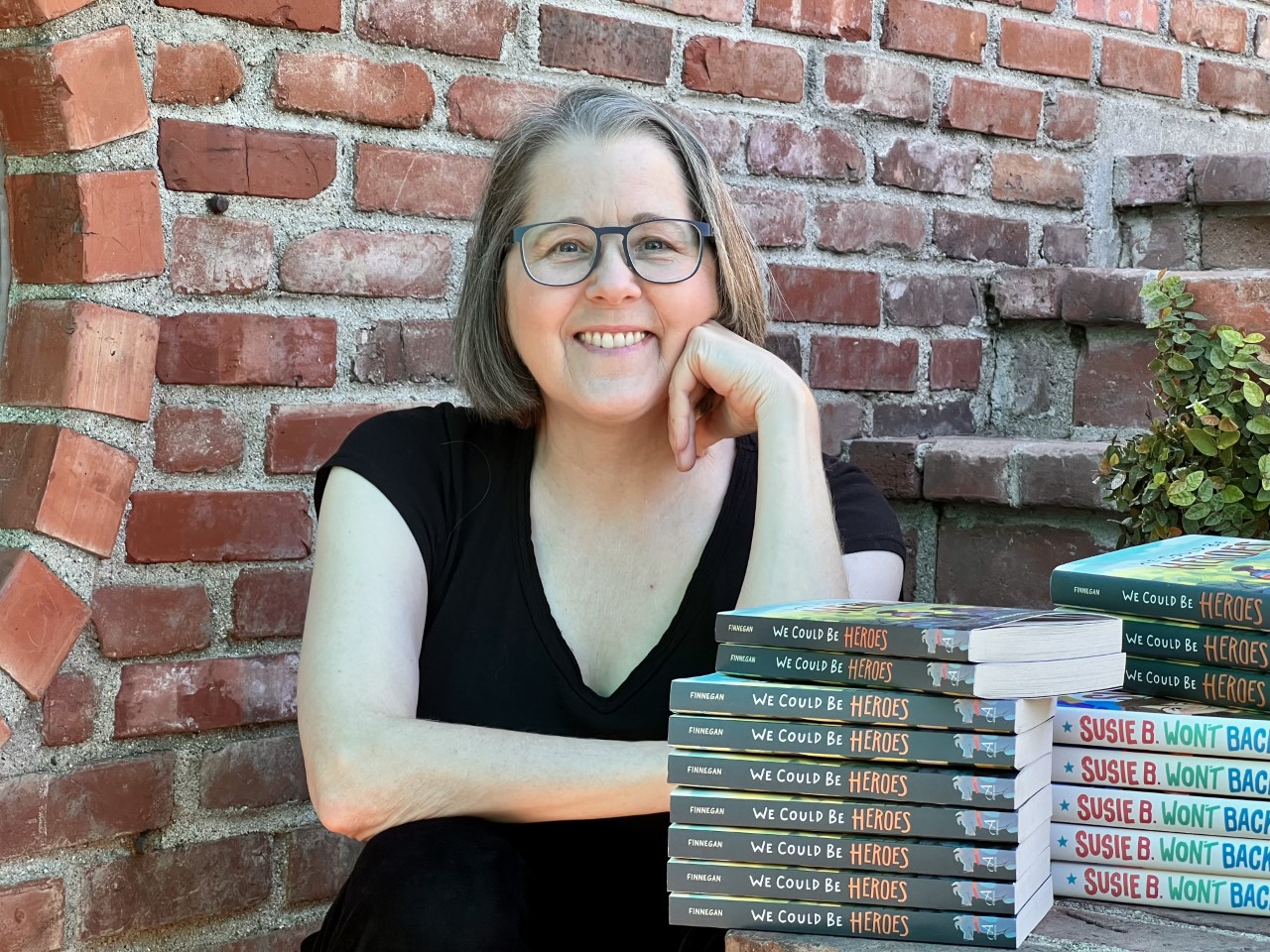
About the Author: Margaret Finnegan is the author of the Junior Library Guild Selections New Kids and UnderdogsWe Could Be Heroes, and Susie B. Won’t Back Down. Her other work has appeared in FamilyFun, the Los Angeles TimesSalon, and other publications. She lives in South Pasadena, California, where she enjoys spending time with her family, walking her dog, and baking really good chocolate cakes. Visit her online at MargaretFinnegan.com or on Instagram at FinneganBegin.

Thank you, Margaret, for sharing these setting reading and writing tips!

Speck: An Itty-Bitty Epic by Margaux Meganck

Share

Speck: An Itty-Bitty Epic
Author & Illustrator: Margaux Meganck
Published

Summary: Everything and everyone has a place in the universe, but for a little speck, lost at sea, it will take an extraordinary journey to find it.

Deep in a tide pool, too small to see,
Thousands of tiny specks go forth.
Each one searching
for a place to stay, and grow, and thrive…

The little speck does not know what it is, only that it wishes to find out. And so it embarks on a journey across the sea. From sun-flecked surf to darkest depths, past schools of fish, storm-tossed ships and hungry eels…. Until, at last, it finds exactly what it was looking a place to belong.

In vivid watercolor paintings, Margaux Meganck brings this tale to life, seamlessly shifting perspective to show how even the tiniest creatures—every barnacle, every child, every star in the sky—contributes to something greater than itself.

 “A poignant, reflective story that’s every bit as relevant to children as it is to adults. . . . Deeply moving.” – Kirkus Reviews (starred)

About the Author: Margaux Meganck spends her days dodging raindrops and drawing from her imagination in beautiful Portland, Oregon. Her author-illustrator debut, People are Wild, received two starred reviews and was named a Kirkus Reviews Best Book of the Year. Her illustration work has earned multiple accolades. Speck is the second book she has both written and illustrated. To learn more, visit margauxmeganck.com.

Instagram:
Margaux Meganck: @margauxmeganck
Knopf/Random House Children’s Books: @randomhousekids
Blue Slip Media: @blue_slip_media

Facebook:
Margaux Meganck: N/A
Random House Children’s Books: Random House Children’s Books
Blue Slip Media: @blue-slip-media

Twitter/X:
Margaux Meganck: @Margaux Meganck
Random House Children’s Books: @randomhousekids
Blue Slip Media: @blueslipper & @barbfisch

Review: This beautiful book is two fold. First, it is a fantastic ocean journey of a speck as it carried along the current and through the ocean, past so many creatures, and to its forever home. The journey is told in poetic verse that will be a great read aloud. Second, it is a story about being lost and figuring out where you fit in the best. Meganck brilliantly combined these two purposes. And the illustrations are another level of the book. They complement the lyrical tale of the speck’s journey, showing the reader all of the sea creatures and ecosystems within the ocean. This is a wonderful book.

Tools for Navigation: Because this book has a science and an social emotional learning aspect, it would be a wonderful inclusion into a classroom or library program because it can lead to all sorts of conversations including journeying into the ocean (pair with other ocean books, listed below) and then move to the theme and how the speck’s journey is an extended metaphor for our life.

Discussion Questions: 

  • What creatures did the speck encounter along its journey?
  • Why do you think the author titled the book an “epic?”
  • What lesson can you take from the speck into your life?
  • Based on where the speck ended up, what sea creature was it?
  • What other specks are there in the sea?
  • How is the speck’s journey similar to life?

Flagged Spreads: 

Read This If You Love: Puff: All About Air by Emily Kate Moon, Whale Fall: Exploring Ocean-Floor Ecosystem by Melissa Stewart, Kind by Jess McGeachin, In the Night Garden by Carin Berger, The Universe in You: A Microscopic Journey by Jason Chin, Over and Under the Waves by Kate Messner

Recommended For: 

classroomlibrarybuttonsmall

Signature

**Thank you to Blue Slip Media for providing a copy for review!**

Remember Us by Jacqueline Woodson

Share

Remember Us
Author: Jacqueline Woodson
Published October 10th, 2023 by Nancy Paulsen Books

Summary: National Book Award winner Jacqueline Woodson brings readers a powerful story that delves deeply into life’s burning questions about time and memory and what we take with us into the future.

It seems like Sage’s whole world is on fire the summer before she starts seventh grade. As house after house burns down, her Bushwick neighborhood gets referred to as “The Matchbox” in the local newspaper. And while Sage prefers to spend her time shooting hoops with the guys, she’s also still trying to figure out her place inside the circle of girls she’s known since childhood. A group that each day, feels further and further away from her. But it’s also the summer of Freddy, a new kid who truly gets Sage. Together, they reckon with the pain of missing the things that get left behind as time moves on, savor what’s good in the present, and buoy each other up in the face of destruction. And when the future comes, it is Sage’s memories of the past that show her the way forward. Remember Us speaks to the power of both letting go . . . and holding on.

About the Author: Jacqueline Woodson (www.jacquelinewoodson.com) received a 2023 Guggenheim Foundation Fellowship, a 2020 MacArthur Fellowship, the 2020 Hans Christian Andersen Award, the 2018 Astrid Lindgren Memorial Award, and the 2018 Children’s Literature Legacy Award. She was the 2018–2019 National Ambassador for Young People’s Literature, and in 2015, she was named the Young People’s Poet Laureate by the Poetry Foundation. She received the 2014 National Book Award for her New York Times bestselling memoir Brown Girl Dreaming, which was also a recipient of the Coretta Scott King Award, a Newbery Honor, the NAACP Image Award, and a Sibert Honor. She wrote the adult books Red at the Bone, a New York Times bestseller, and Another Brooklyn, a 2016 National Book Award finalist. Born in Columbus, Ohio, Jacqueline grew up in Greenville, South Carolina, and Brooklyn, New York, and graduated from college with a B.A. in English. She is the author of dozens of award-winning books for young adults, middle graders, and children; among her many accolades, she is a four-time Newbery Honor winner, a four-time National Book Award finalist, and a three-time Coretta Scott King Award winner. Her books include Coretta Scott King Award and NAACP Image Award winner Before the Ever After; New York Times bestsellers The Day You Begin and Harbor MeThe Other Side, Caldecott Honor book Coming On Home Soon; Newbery Honor winners FeathersShow Way, and After Tupac and D FosterMiracle’s Boys, which received the LA Times Book Prize and the Coretta Scott King Award; and Each Kindness, which won the Jane Addams Children’s Book Award. Jacqueline is also a recipient of the Margaret A. Edwards Award for lifetime achievement for her contributions to young adult literature. She lives with her family in Brooklyn, New York.

Review: Remember Us may be a historical fiction book, taking place in the 1970s, but Sage’s story is timeless. In the book, you have so many layers to look at. First, Woodson’s vignettes are beautifully crafted which makes the book such a wonderful read. Then you have the layer of the fires in Sage’s neighborhood and fire in her own life. There is also her love of basketball, and her amazing talent, as well as the questioning about her identity this leads to. Finally, it is a story of family and friends with Sage’s mom and Freddy playing star roles. All of this leads to a multi-layered novel that is a truthful look at growing up and remembering the past.

Teachers’ Tools for Navigation and Discussion Questions: Check out this Educator’s Guide from Penguin Random House!

Flagged Passage: 

After the year of fire
vines rise up
through the rest of our lives
of smoke
of flame
of memory.
As if to say
We’re still here.
As if to say
Remember us.

1

The moon is bright tonight. And full. Hanging low above the house across the street where an orange curtain blows in and out of my neighbors’ window. Out and in. And past the curtain there’s the golden light of their living room lamps. Beyond that, there is the pulsing blue of their tele­vision screen. I see this all now. I see a world continuing.

And in the orange and gold and blue I’m reminded again of the year when sirens screamed through my old neighborhood and smoke always seemed to be billowing. Somewhere.

That year, from the moment we stepped out of our houses in the morning till late into the night, we heard the sirens. Down Knickerbocker. Up Madison. Across Cornelia. Both ways on Gates Avenue. Down Ridgewood Place. Rounding the corners of Putnam, Wilson, Evergreen . . .

Evergreen. Sometimes a word comes to you after time has passed. And it catches you off guard. Evergreen. The name of a family of trees. And the name of a block in Brooklyn. Evergreen. Another way of saying forever.

That year, nothing felt evergreen.

Palmetto. A word that has never left me. A word that in my mind is evergreen. Palmetto. The name for both a stunning tree and an oversize cockroach. Palmetto was also the name of a street in my old neighborhood. And that year, Palmetto Street was burning.

2

That was the year when, one by one, the buildings on Palmetto melted into a mass of rock and ash and crumbled plaster until just a few walls were left standing. Walls that we threw our balls against and chased each other around. And at the end of the day, when we were too tired to play anymore, they were the walls we simply sat down by and pressed our backs into, staring out over a block that was already, even as we stared at it with our lips slightly parted and our hands shielding the last of the sun from our eyes, almost gone.

We said Well, nothing lasts for always, right?

We said One day even the whole earth will disappear.

We were just some kids making believe we understood.

But we didn’t. Not yet.

We didn’t understand the fires. Or life. Or the world.

But we knew that neighborhood was our world.

And we knew . . . our world was burning.

Read This If You Love: Jacqueline Woodson’s books such as brown girl dreaming and Harbor MeTroublemaker by John Cho, The Red Umbrella by Christina Diaz Gonzalez, The Unsung Hero of Birdsong USA by Brenda Woods

Recommended For: 

classroomlibrarybuttonsmall

Signature

**Thank you to Penguin Young Readers for providing a copy for review!**
Discussion Guide for How to Heal a Gryphon by Meg Cannistra

Share

How to Heal a Gryphon
Author: Meg Cannistra
Published: October 4th, 2022 by Inkyard Press

Summary: To save her family, she’ll have to make a dangerous bargain and tip the scales off balance.

With her thirteenth birthday just around the corner, Giada Bellantuono has to make a big decision: Will she join the family business and become a healer or follow her dreams? But even though she knows her calling is to heal vulnerable animals, using her powers to treat magical creatures is decidedly not allowed.

When a group of witches kidnaps her beloved older brother, Rocco, and her parents are away, Giada is the only person left who can rescue him. Swept into the magical underground city of Malavita, Giada will need the help of her new companions to save her brother—or risk losing him forever.

Review: In the first book of the Giada the Healer series by Meg Cannistra, we enter a world where magic is real and mythical creatures exist and we get to meet Giada, a thirteen year old girl from a family of healers. She has magic, just like the rest of her family, but unlike them, her magic works best with animals. She knows she is going to have to tell her family that she wants to work with animals, not humans, but she has been putting it off trying to figure out how to break it to them without them being too upset. But before she can get a chance, she finds herself in the most important fight of her life–one against the witches underground to save her brother. Through this journey, will Giada be able to show that her passion is just as important as tradition?

Readers will love Giada and her story. It is paced so well, with a balance of plot-driven and character-driven elements, a body-positive message throughout, and the magical system & world building is intertwined with aspects of Roman mythology and Italian folklore. I also particularly love the lesson found within the book about passions: Giada’s internal struggle of passion versus expectation is one that so many readers will connect with, and Giada will be a great guide for those in similar situations. 

I was lucky enough to be able to create a discussion guide for Cake Creative Kitchen and Inkyard Press for this book and educators will find that Cannistra’s novel includes imagery and descriptive language, complex characters, an opportunity to look at cause and effect, thought-provoking reflection opportunities, a quest-focused plot that follows the hero’s journey, and more elements that allow the reader to deeply delve into the text. 

This book will definitely leave any reader wanting more, but they’re in luck! The second book in the series, How to Save a Unicorn, is waiting for them! Happy reading everyone!

Teachers’ Tools for Navigation and Discussion Questions: 

Please view and enjoy the educators’ guide I created for Cake Creative Kitchen:

You can also access the educators’ guide here.

Recommended For: 

readaloudbuttonsmall classroomlibrarybuttonsmall litcirclesbuttonsmall closereadinganalysisbuttonsmall

Kellee Signature