Review, Giveaway, and Author Interview!: How To Cheer Up Dad by Fred Koehler

Share

dad

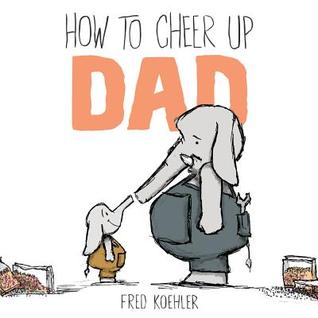
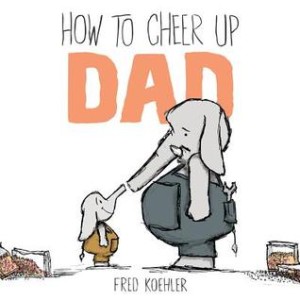
How To Cheer Up Dad
Author and Illustrator: Fred Koehler
Published March 20th, 2014 by Dial

Goodreads Summary: A hilarious book about parent and child relationships for fans of Ian Falconer and Jon Agee–a perfect gift idea for Father’s Day and beyond!

Little Jumbo just can’t understand why his dad is having such a bad day. It couldn’t be the raisins Little Jumbo spit out at the ceiling or the bath he refused to take–after all, Little Jumbo’s dad knew he hated raisins and had already taken a bath that week! Luckily, Little Jumbo is such a thoughtful elephant that he decides to turn his dad’s bad day around with some of his–ahem, his dad’s –favorite things.

How to Cheer up Dad is a standout debut featuring a charmingly oblivious little elephant with serious pluck and staying power. It turns the parent-child roles upside down is a great book for dads and the kids who make them laugh.

Review: This book was a gift for my husband and son to read together, and it is a perfect father-son book. It shows the connection that a child and parent has, and also how a child’s choices can affect a parent and vice versa. It is a wonderful conversation starter and is a wonderful way to teach this lesson. And it is funny!

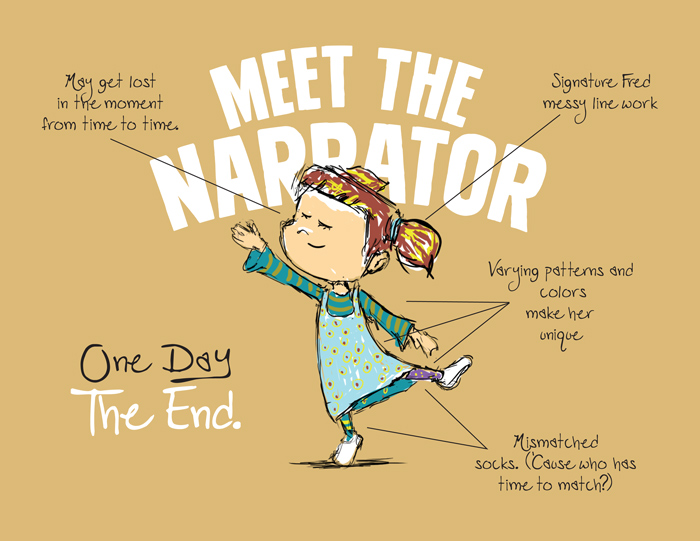
Additionally, I LOVE the illustrations. Fred Koehler’s style adds an extra layer of joy to the book (with Fred’s “signature messy line work”).  The illustrations also add extra information to the story. It takes both the illustrations and the text to tell the whole story.

Author Interview: I’m so happy to be able to share with you all an exclusive author Q&A with Fred Koehler, the author and illustrator of How to Cheer Up Dad. 

Kellee @ Unleashing Readers: How did you transition from being a graphic artist to being an author/illustrator?

Fred Koehler: Awesome question! I’ve always been a writer and a doodler–in sketchbooks, my church bulletin, or the margins of my homework assignments. I studied graphic design in college and sadly, there was very little doodling to be done on a computer screen. Several years into my career as a designer I discovered drawing tablets, which allow the artist to use a digital pen that translates directly into the design software. So then I could doodle directly onto the screen and it suddenly clicked. I could use everything I’d learned as a designer and translate that into digital drawings.

The writing had always been a creative outlet for me, and I’d written at least one finished novel (which will never get published because it was awful). But… when I started to combine the writing with the drawing and the design all together, it took my artistry to a completely new level.

UR: What is the inspiration behind How to Cheer Up Dad?

FK: How to Cheer Up Dad is really a reminder to myself and parents everywhere that our kids are capable of being incredibly awesome and terribly frustrating with barely a breath in between. Kids live life without any filters, and it’s up to us as parents to decide how we’re going to react to that reality. The main character, Little Jumbo, is loosely based on both my son, Jack, and myself when I was a kid. Little Jumbo is charmingly oblivious to the massive amounts of trouble he causes, but genuinely dedicated to making things right in the end.

UR: Why elephants?

FK: The elephants came from a random doodle at Mitchell’s Coffee House in Lakeland, FL. I was there with my son, trying to work on some sketches, and my son was trying to get me to do anything but work on my sketches. I just remember being frustrated by the whole ordeal, coming home, and later seeing this doodle of two elephants in my sketchbook. Lucy Cummins, an art director at Simon & Schuster, eventually saw that sketch, and suggested how I might start to turn it into a picture book. I followed her advice and had several publishers fall in love with the characters. Eventually Kate Harrison at Dial Books for Young Readers acquired the manuscript. Plus, elephants are funny. And awesome.

UR: What illustrators and authors inspire you?

FK: One of the coolest things about this industry is the people you get to meet. Growing up I watched all the Chuck Jones cartoons, loved Jim Hensen’s work, and had every Disney animated movie memorized. When I started pursuing the path of becoming an author/illustrator, I got to meet lots and lots of other up-and-coming artists and storytellers who have inspired me. LeUyen Pham (Bedtime for Mommy, Freckleface Strawberry) recently accepted my FB friend request, so she’s at the top of my mind. I love her line work and the expressions that she gets from her characters. I got to watch Molly Idle (Tea Rex, Flora and the Flamingo) go from working for small indie publishers to winning a Caldecott honor last year. Dan Santat (Beekle, Sidekicks) has awesome writing/illustrating chops, and he gave me great advice early on. And the prolific Paul Zelinsky (Z is For Moose, The Wheels on the Bus, many others) has been kind enough to let me ask him lots of rookie questions along the way. 

UR: Are you working on anything else?

FK: Yes! Right now I’ve got two more books under contract. Little Jumbo is getting a sequel, and I’m still working with my incredible editor Kate Harrison and my awesome art director Lily Malcom on how exactly we’re going to one-up the work we did with How to Cheer Up Dad. It’s got such universal relevance and Little Jumbo is such a likable character, we’ve got to make sure and give him a sequel worthy of his potential.

Also great news is that I’m working with Rebecca Davis at Boyds Mills Press to illustrate One Day, The End, which was written by Rebecca Kai Dotlich. And, since I think your readers might like to get the first sneak peek ever, I’m going to let slip a screen shot of the unnamed little girl who will star in this extremely creative book. This image is from my art direction concept that was just recently approved by the publisher. 🙂
FK Narrator

UR: Thank you so much Fred for the amazing interview and exclusive sneak peek! I, personally, am so excited for all of your upcoming projects! And because of how much I loved How to Cheer Up Dad and because of your kindness, I am happy to be able to offer a giveaway of a signed copy of  How to Cheer Up Dad with a custom illustration on the inside cover! Thank you Fred for that as well!

Teachers’ Tools for Navigation: This book is great to teach cause and effect. Readers can learn about why the dad is in a foul mood and what Jumbo does to fix it. It would be a perfect way to discuss the difficult concept of cause and effect using a situation that is very accessible.

Discussion Questions: What has caused Little Jumbo’s dad to be in a bad mood? What are the effects of his bad mood? What does Little Jumbo do to help cheer his dad up?

We Flagged: 

Dad’s mood was clearly getting worse, so Little Jumbo suggested that Dad needed a time out.

Read This If You Loved: Hug Time by Patrick McDonell, Elephant and Piggie series by Mo Willems, My Dad Thinks He’s Funny by Katrina Germein

Recommended For: 

readaloudbuttonsmall classroomlibrarybuttonsmall

GIVEAWAY

a Rafflecopter giveaway

And to all of our dad readers: Happy Father’s Day!

Signature

The Noisy Paint Box: The Colors and Sounds of Kandinsky’s Abstract Art by Barb Rosenstock

Share

NF PB 2014

Nonfiction Picture Book Wednesday

Nonfiction Picture Book Wednesday is hosted by Kid Lit Frenzy and was started to help promote the reading of nonfiction texts. Most Wednesdays, we will be participating and will review a nonfiction text (though it may not always be a picture book).
Be sure to visit Kid Lit Frenzy and see what other nonfiction books are shared this week!

noisy

The Noisy Paint Box: The Colors and Sounds of Kandinsky’s Abstract Art
Author: Barb Rosenstock
Illustrator: Mary Grandpré
Published February 11th, 2014 by Alfred A. Knopf

Goodreads Summary: In this exuberant celebration of creativity, Barb Rosenstock and Mary Grandpre tell the fascinating story of Vasily Kandinsky, one of the very first painters of abstract art. Throughout his life, Kandinsky experienced colors as sounds, and sounds and colors–and bold, groundbreaking works burst forth from his noisy paint box.

Review: I love the visual arts. Growing up with a father that ran an art museum, going to visit museums and learning about art was part of my life. Throughout all of this exploration, I found that I loved modern art more than any other: Seurat, Rauschenberg, Picasso, etc. Kandinsky is one of the artists whose art I really enjoyed. This book let me see into Kandinsky’s mind, and see how abstract art came to be through his synesthesia. Fascinating!

Teachers’ Tools for Navigation: This is a perfect introduction to Kandinsky and abstract art. Abstraction is a hard concept to understand (though kids seem to get it more than kids), and this book helps explain how abstract art came to be. I can see this book being used in a lit circle/jig saw type fashion where kids learn about different creative people through narrative nonfiction biographies and research, write an evidence-based biography, and then share them with the other groups.

Discussion Questions: How did Kandinsky change art?; Have you ever had teachers/parents who didn’t understand you? What happened?; What is synesthesia? How did it affect the art Kandinsky made?

Book Trailer: 

We Flagged: “His artist friends understood. They too were tired of painting pretty landscapes and pretty ladies. They thought art needed to change.
‘Art should make you feel,’ Vasya told them. ‘Like music.’
‘Exactly!’ said his friends. But none of them knew how to paint feelings…
until the day Vasya grew brave enough…
and invited the world to see the paintings roaring from his noisy paint box.”

Read This If You Loved: Linnea in Monet’s Garden by Christina Björk, Sky Color by Peter H. Reynolds, Sandy’s Circus: A Story About Alexander Calder by Tanya Lee Stone, Art by Patrick McDonnell, Art & Max by David Wiesner, Concerning the Spirituality in Art by Wassily Kandinsky

Recommended For: 

readaloudbuttonsmall classroomlibrarybuttonsmall litcirclesbuttonsmall

Signature

Review and Giveaway!: Like Bug Juice on a Burger and Like Carrot Juice on a Cupcake by Julie Sternberg

Share

bug juice

Like Bug Juice on a Burger (Eleanor #2)
Author: Julie Sternberg
Illsutrator: Matthew Cordell
Published April 2nd, 2013 by Amulet Books

Goodreads Summary: I hate camp. I just hate it. I wish I didn’t. But I do. Being here is worse than bug juice on a burger. Or homework on Thanksgiving. Or water seeping into my shoes. In this sequel to the critically acclaimed Like Pickle Juice on a Cookie, Eleanor is off to summer camp. At first she’s excited to carry on the family tradition at Camp Wallumwahpuck, but when she gets there she finds icky bugs, terrible food, and worst of all: swim class, where she just can’t seem to keep up with everyone else. But as the days go on, Eleanor realizes that even the most miserable situations can be full of special surprises and that growing up is full of belly flops. 

Review and Teachers’ Tools for Navigation: This book definitely brought back memories! I loved the idea of summer camp and many of the activities, but I hated the bugs and the food and the changing in front of other people. There are many times when I was away that I just wanted to go home; however, there were things that saved me- specifically, like Eleanor, the animals. I loved working in the barn with the horses and it is what saved me and then got me going back year after year. I remember walking into the barn and being able to be part of these horses’ lives and the scene where Eleanor meets Cornelius the goat brought me right back to that moment. 

This book would be a wonderful read aloud for right before summer because even if students are not going to summer camp, there is probably something new and scary that they will try this summer and this book will definitely cause discussion about how something new may be scary, but that doesn’t mean you won’t like it eventually. Julie Sternberg’s writing also lends itself to some amazing discussions about free verse poetry and, in this one, letter writing. Maybe use the letter writing part of the book to segue into writing a letter to next year’s class. 

Finally, I love the idea of the Wall of Feelings! The Wall of Feelings is where the campers put up how they feel about camp; however, Eleanor is given the job of writing about how she used to feel about camp and then how she feels about camp now. What a great way for students to express themselves! This would be a great formative assessment for looking at how students feel about reading or school or some other topic at the beginning of the year vs. the end. 

Discussion Questions: Think about a time in your life when you did something you were scared to do. How did you overcome your fear/nervousness? How did it turn out in the end?  

We Flagged: “The bus was bumping
down a gravel road
with bushes and trees and weeds all around. 
This isn’t beautiful
I thought. 
This is creepy
I missed sidewalks full of people
checking their phones
and walking their cute dogs. 
I missed paved roads, too, 
filled with taxis and bik riders.” (Chapter 5) 

Like Carrot Juice on a Cupcake_cover (1)

Like Carrot Juice on a Cupcake
Author: Julie Sternberg
Illustrator: Matthew Cordell
Published March 18th, 2014 by Amulet Books

Goodreads Summary: I did a mean thing.
A very mean thing.
I HATE that I did it.
But I did.
This is worse than
carrot juice on a cupcake
or a wasp on my pillow
or a dress that’s too tight at the neck.
In the third installment from the team who created Like Pickle Juice on a Cookie and Like Bug Juice on a Burger, Eleanor’s relationship with her best friend, Pearl, experiences its first growing pains. When a glamorous new student transfers to school, at first Eleanor’s excited about the possibility of a new friend. But when Pearl is assigned to be the new girl’s buddy, Eleanor fears she can’t compete. To make matters worse, Eleanor’s been chosen for the lead role in the springtime musical, which means she has to sing a solo in front of the entire school!
From overcoming stage fright to having a secret crush, young readers will relate to Eleanor as she navigates the bittersweet waters of growing up.

Review and Teachers’ Tools for Navigation: This book has multiple levels going on at the same time. There is the story of Eleanor and Pearl’s friendship and their first speed bump. Then there is Eleanor getting the lead in the play, and dealing with the fear of singing a solo. Eleanor dealing with her puppy having trouble getting house trained. And finally, the Eleanor and Nicholas story. But Sternberg balances it all because it is just all part of Eleanor’s life. Julie Sternberg is so great at writing in an elementary student’s voice. It is so authentic and well done!

What I love so much about all of the “Eleanor” books are that they are written in verse, and Eleanor is an amazing poet. I love that it is free verse and includes such beautiful language, but it never comes off as anything but authentic. Teachers could definitely take Eleanor’s writing and use it as a mentor text for students to write about their own experiences.

Discussion Questions: Have you ever hurt a friend’s feelings? What did you do to make it better?; How was Eleanor able to overcome her stage fright?; Why was Eleanor so scare and jealous of Ainsley?; Do you think Eleanor likes Nicholas?


Read These If You Loved: Like Pickle Juice on a Cookie by Julie Sternberg, Marty McGuire and Marty McGuire Digs Worms by Kate Messner, Where I Live by Eileen Spinelli, Go Out and Play! by KaBoom!, Lunch Lady and the Summer Camp Shakedown by Jarrett Kroscozka, Camp Babymouse by Jenni and Matt Holm, Bink and Gollie by Kate DiCamillo, Ramona books by Beverly Cleary

Curriculum Guide for All of the “Eleanor” Books Can be Found Here.

Both Books Recommended For: 

classroomlibrarybuttonsmall closereadinganalysisbuttonsmall readaloudbuttonsmall

GIVEAWAY

a Rafflecopter giveaway

Signature

**Thank you to Barbara at Blue Slip Media for providing copies for review**

A Long Walk to Water by Linda Sue Park

Share

longwalk

A Long Walk to Water
Author: Linda Sue Park
Published November, 2010 by Houghton Mifflin Harcourt

Goodreads Summary: A Long Walk to Water begins as two stories, told in alternating sections, about a girl in Sudan in 2008 and a boy in Sudan in 1985. The girl, Nya, is fetching water from a pond that is two hours’ walk from her home: she makes two trips to the pond every day. The boy, Salva, becomes one of the “lost boys” of Sudan, refugees who cover the African continent on foot as they search for their families and for a safe place to stay. Enduring every hardship from loneliness to attack by armed rebels to contact with killer lions and crocodiles, Salva is a survivor, and his story goes on to intersect with Nya’s in an astonishing and moving way.

My Review and Teachers’ Tools for Navigation: The wars in Sudan and Darfur are the most violent and long lasting wars in the world; however, most Americans are unaware that they are even occurring. Linda Sue Park took a true story of a lost boy’s survival (watch a video about the true story here) after being chased from his village because of war and transformed it into a novel that will leave the reader with a feeling of awe. Awe of the bravery and pure fearlessness of Salva and the other Lost boys of Sudan and awe of the world of riches and blindness we live in while a horrendous war wages on the other side of the world. I love this book because it is very accessible to children, it won’t bog them down with too much history; however, it will definitely make them aware of the situation in Sudan.

Discussion Questions: What is a way that you could share what you learned about the Lost Boys of Sudan? How can you help? 

We Flagged: “Salva took a few steps towards the men.
‘Hey!’
A soldier approached Salva and raised his gun.
Salva froze. All he could see was the gun’s huge barrel, black and gleaming, as it moved toward his face.
The end of the barrel touched his chin.
Salva felt his knees turn to water. He closed his eyes.
If I die now, I will never see my family again.
Somehow, this thought strengthened him enough to keep him from collapsing in terror.
He took a deep breath and opened his eyes.” (p. 11)

“Going was easy.
Going, the big plastic container held only air… There was little weight, going. There was only heat, the sun already baking the air, even though it was long before noon. It would take her half the morning if she didn’t stop on the way.
Heat. Time. And thorns…
Nya filled the container all the way to the top. Then she tied the gourd in back in place and took the padded cloth doughnut from her pocked. The doughnut went on her head first, followed by the heavy container of water, which she would hold in place with one hand.
With the water balanced on her head, and her foot still sore from the thorn, Nya knew that going home would take longer than coming had. But she might reach home by noon, if all went well.” (p. 1, 14-15)

Read This If You Loved: The Queen of Water by Laura Resau, Now is the Time for Running by Michael Williams, Sold by Patricia McCormick, Diamonds in the Shadows by Caroline B. Cooney, Shabanu by Suzanne Fisher Staples, So Long a Letter by Mariama Ba

Recommended For: 
readaloudbuttonsmall closereadinganalysisbuttonsmall
classroomlibrarybuttonsmall litcirclesbuttonsmall
Signature

Herman and Rosie by Gus Gordon

Share

herman

Herman and Rosie
Author and Illustrator: Gus Gordon
Published October 15th, 2013 by Roaring Brook Press

Goodreads Summary: Once upon a time in a very busy city, on a very busy street, in two very small apartments, lived…
 Herman and Rosie. Herman liked playing the oboe, the smell of hot dogs in the winter, and watching films about the ocean. Rosie liked pancakes, listening to old jazz records, and watching films about the ocean. They both loved the groovy rhythm of the city, but sometimes the bustling crowds and constant motion left them lonely, until one night …

My Review: This book is a love note to music and for finding a friend to share your love. This wonderful story is told in a way that makes you fall in love with the characters immediately and feel every up and down with them. Also, the illustrations in this picture book are probably some of my favorite ever. I love the cartoony style mixed with some mixed media. Beautiful.

Teachers’ Tools for Navigation: I think this book will find its most love as a read aloud and as a wait to promote music and other passions; however, the book could definitely be used in other ways in the classroom. The tone and mood of the book takes a drastic turn about halfway through and would be a good introduction to these two narrative elements. It is interesting to look at how the illustrations helped drive the change. Also, there are onomatopoeias throughout that add to the imagery of the book.

Discussion Questions: How does music bring Herman and Rosie together?; Would Herman and Rosie every had become friends without the bad event happening to them?; How are Herman and Rosie similar? Different?

We Flagged: 

“Herman lived on the seventh floor. He liked potted plants, playing the oboe, wild boysenberry yogurt, the smell of hot dogs in the winter, and watching films about the ocean.”

Read This If You Loved: Marvin Makes Music by Marvin Hamlisch, Jazz ABZ by Wynton Marsalis, Ella Fitzgerald and Duke Ellington by Andrea Davis Pinkney, The Fantastic Undersea Life of Jacque Cousteau by Dan Yaccarino

Recommended For: 

readaloudbuttonsmall classroomlibrarybuttonsmall

Signature

Hairy, Scary, Ordinary; To Root, to Toot, to Parachute; & A Mink, a Fink, a Skating Rink by Brian P. Cleary

Share

NF PB 2014

Nonfiction Picture Book Wednesday

Nonfiction Picture Book Wednesday is hosted by Kid Lit Frenzy and was started to help promote the reading of nonfiction texts. Most Wednesdays, we will be participating and will review a nonfiction text (though it may not always be a picture book).
Be sure to visit Kid Lit Frenzy and see what other nonfiction books are shared this week!

adjective verb noun

Hairy, Scary, Ordinary: What Is an Adjective? 
Published September 1st, 2001 by Carolrhoda Books

To Root, to Toot, to Parachute: What Is a Verb? 
Published April 1st, 2001 by Carolrhoda Books

A Mink, a Rink, a Skating Rink: What Is a Noun?
Published September 1st, 1999 by Lerner Publishing Group

Author: Brian P. Cleary
Illustrator: Jenya Prosmitsky

Hairy, Scary, Ordinary Goodreads Summary: Simple, rhyming text and colorful cartoon cats help children expand their vocabularies and gain an appreciation for the rhythm of language in this lighthearted book of rhyming verse. Adjectives like frilly, silly, polka-dotted, fizzy, and spunky are printed in color, and all the words will tickle you pink!

To Root, to Toot, to Parachute Goodreads Summary: What is a verb? It’s easier to show than explain! In this fun and animated introduction to grammer, rhyming verse is used to creatively clarify the concept of verbs. Chock-full of colorful, lively examples, the playful rhymes and illustrations of comical cartoon cats combine to hightlight key words in the sentences. Verbs like toss and tumble, jump and jam, jog and juggle, jig and leap are printed in color for easy identification.

A Mink, a Fink, a Skating Rink Goodreads Summary: “Words are Categorical” is a series which explores some of the basic principles of English grammar in a fun way. The books each deal with a different part of language, using playful and ingenious rhymes to make them easy to remember. In “What is a Noun?” children are introduced to one of the essential building blocks of the English language. It includes sections on both common and proper nouns. The nouns are highlighted in color to make them easy to identify.

My Review and Teachers’ Tools for Navigation: Teaching parts of speech is one of the hardest things to teach students, and it is even harder to teach them in a fun and interesting way. These books make it so that both of these things are possible. I like that each of the books focuses on only one part of speech instead of trying to teach multiple grammatical concepts thus making the chance of mastery much more likely. I also found the rhyming and silliness of the books just so endearing, and it would definitely help with the knowledge sticking.

Discussion Questions: What is a noun/adjective/verb? What are some examples? What are some nouns/adjectives/verbs that rhyme with each other?

We Flagged: 
Hairy, Scary, Ordinary: “Adjectives are words like hair, scary, cool, and ordinary. They describe like tan and tall, funny, frisky, smooth and small.”

To Root, to Toot, to Parachute: “Whether you scale a wall or a fish, make a design on a cup or a dish, take out the garbage, or sharpen your knife—verbs are a part of your everyday life.”

A Mink, a Fink, a Skating Rink: “Hill is a noun. Mill is a noun. Even Uncle Phil is a noun.”

Read This If You Loved: Eat, Shoots, and Leaves, Twenty-Odd Ducks, & The Girl’s Like Spaghetti by Lynne Truss, Other Words are CATegorical books by Brian Leary, Basher Basics: Grammar by Simon Basher, and other grammar books

Recommended For: 

readaloudbuttonsmall closereadinganalysisbuttonsmall

Signature

Baseball Is… by Louise Borden

Share

NF PB 2014

Nonfiction Picture Book Wednesday

Nonfiction Picture Book Wednesday is hosted by Kid Lit Frenzy and was started to help promote the reading of nonfiction texts. Most Wednesdays, we will be participating and will review a nonfiction text (though it may not always be a picture book).
Be sure to visit Kid Lit Frenzy and see what other nonfiction books are shared this week!

baseball

Baseball Is…
Author: Louise Borden
Illustrator: Raul Colon
Published February 18th, 2014 by Margaret K. McElderry Books

Goodreads Summary: The ultimate celebration of an all-American sport, this picture book captures the joy and the history of baseball;and knocks it out of the park!

Don’t wait for Opening Day to start your baseball season! Crack open Baseball Is…; and revel in the fun of this all-American game! Perfect for the stats-counting superfan and the brand-new little leaguer,Baseball Is…; captures the spirit of this cherished pastime, honoring its legendary past, and eagerly anticipating the future of the sport that is stitched into our history.

My Review: I am a huge baseball fan, have been for over 24 years now, so I am a sucker for baseball books. This one is special though. It captures the beauty of the baseball stadiums around the country, the intricacies of the sport, and the amazing history that baseball holds. I also love the choice of telling baseball’s story in verse. It made it rhythmic like the sport.

Teachers’ Tools for Navigation: This book is a wonderful mentor text for free verse. The poetry is very rhythmic, but has  no rhyme. The book also has some amazing vocabulary: craftsman, poise, spectators, finesse, etc. It captures the sport through imagery: “the crack of the bat,” “slow stride of the manager,” “groans or boos,” etc.

On top of the poetic aspects of the book, you can learn so much about baseball and history from the book. It discusses greats like Babe Ruth and Jackie Robinson. Also talks about the Negro and Women’s Leagues. All parts of history in general, not just baseball.

Discussion Questions: How did Jackie Robinson change the game?; Why was their a Women’s League?; What sounds would you hear at a baseball game?

We Flagged: 
“Baseball is our game…
the sport of America.
Its stories are stitched
through our nation’s history.
Its teams and its heroes
we carry in our heart.” (p. 1-2)

Read This If You LovedBarbed Wire Baseball by Marissa Moss, Chin Music by Lee Edelstein, Something to Prove: The Great Satchel Paige vs. Rookie Joe DiMaggio by Robert Skead, Brothers at Bat: The True Story of an Amazing All-Brother Baseball Team by Audrey Vernick, Silent Star: The Story of Deaf Major Leaguer William Hoy by Bill Wise, The Legend of the Curse of the Bambino by Dan Shaughnessy

Recommended For: 

closereadinganalysisbuttonsmall classroomlibrarybuttonsmall readaloudbuttonsmall

Signature