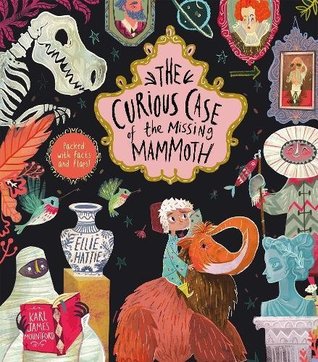
The Curious Case of the Missing Mammoth by Ellie Hattie

Share

The Curious Case of the Missing Mammoth
Author: Ellie Hattie
Illustrator: Karl James Mountford
Published 2017 by Kane Miller EDC Publishing

Summary: Look out! There’s a mammoth on the loose, and Oscar has to get him home before the clock strikes one! This riotous adventure is packed with facts and lift-the-flap fun.

Review: I don’t think the summary of this book does it justice.  It is such a fun book that kids of so many different ages are going to love reading. It is about a boy who wakes up to find a mammoth wandering around his town looking for his baby brother. They follow the clues to The Curious Museum which has come to life like The Night at the Museum, and they chase Teddy, the baby mammoth, through different rooms in the museum: Underwater World, the Library, The Flight Floor, The Time of the Dinosaurs, and The Extinct and Endangered Creatures rooms. Trent and I loved the detailed and silly illustrations and trying to find Teddy on each page!

Teachers’ Tools for Navigation: In each room, there is the narrative of Oscar and Timothy, the big mammoth, but there are also flaps that include nonfiction information about the room that the story is currently taking place in. For example, in the ocean scene there are flaps that include flaps about octopus, blue whales, corral, and more! In the library there’s information about books & art, pilots in The Flight Floor, dinos in The Time of the Dinosaurs, and creatures in the Extinct and Endangered room.

This mix of adventure and facts makes this a perfect cross-curricular text to use or as an intro before a trip to a natural history museum.

Discussion Questions: What did you learn in each room?; Why does Oscar have to get Teddy back before 1:00?; What type of museum do you think The Curious Museum is?; What else did you see in the exhibits that you would like to learn about?; Why do you think the author included the flaps with nonfiction information?

Book Trailer: 

Read This If You Love: Nibbles: The Dinosaur Guide by Emma Yarlett, Natural History Museums, Night at the Museum movies

Recommended For: 

classroomlibrarybuttonsmall 

Signature

**Thank you to Lynn at Kane Miller for providing a copy for review!**

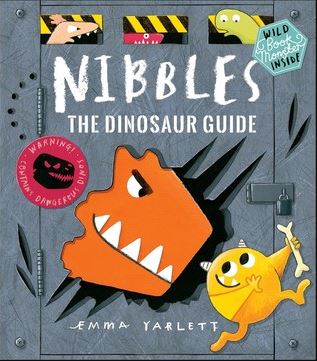
Nibbles: The Dinosaur Guide by Emma Yarlett

Share

Nibbles: The Dinosaur Guide
Author and Illustrator: Emma Yarlett
Published 2017 by Kane Miller Publishing

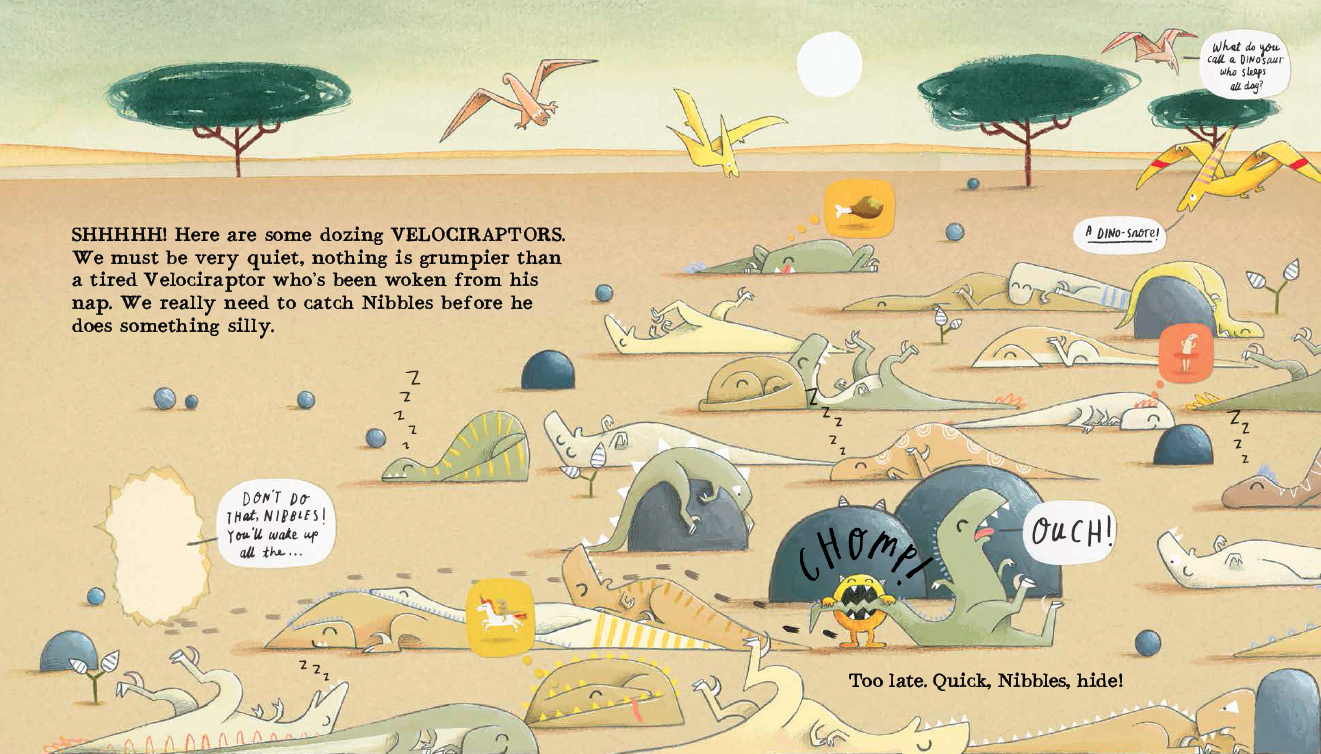
Summary: NIBBLES, the book-eating MONSTER, has chomped his way into this book of DINOSAURS! Has he bitten off more than he can chew?!

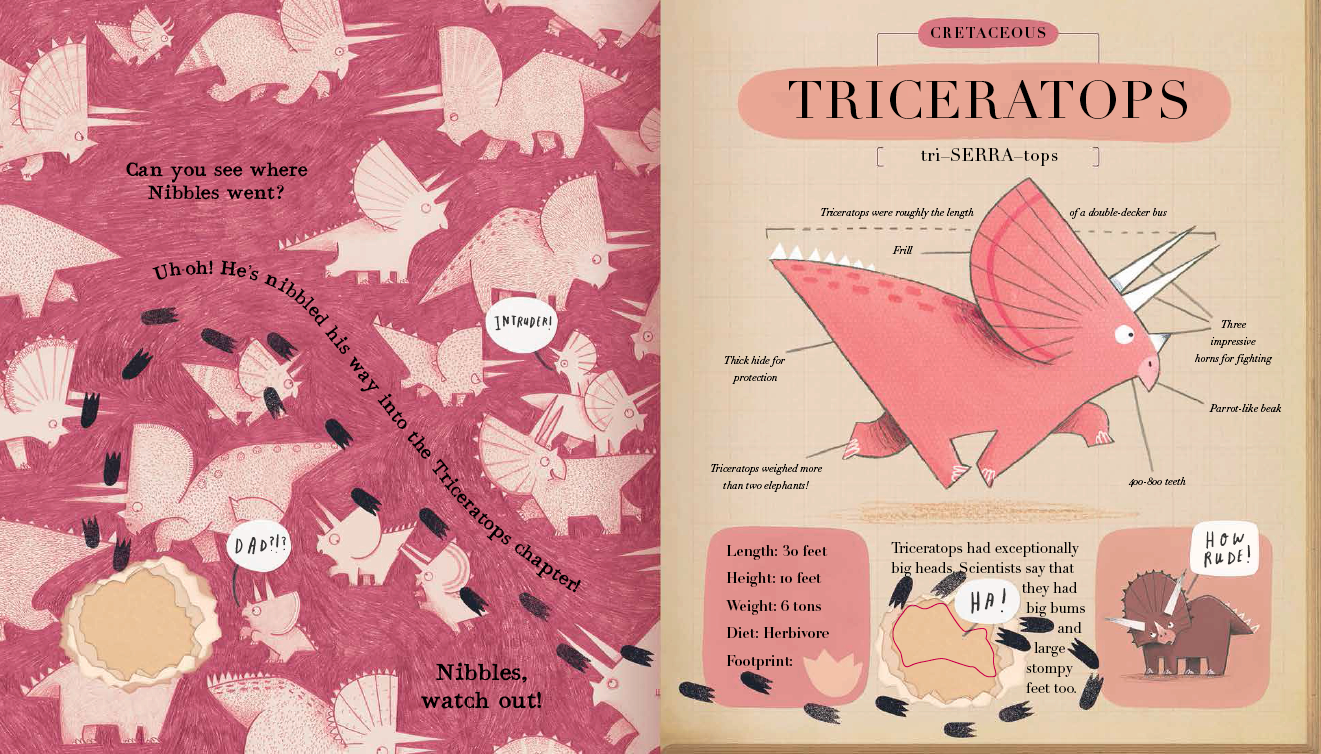
What was a very serious book about very serious dinosaurs is suddenly interrupted by a hole – a nibbled hole – in the book. Who would do something like that?

Little ones will love trying to find the culprit – Nibbles – hiding among their favorite, easily recognizable dinosaurs. Is he an herbivore? A carnivore? Or … a bookivore?

Emma Yarlett’s Nibbles: The Dinosaur Guide is packed with flaps, folds, facts and die cuts, plus one very naughty monster and an ending to make Houdini proud. But has Nibbles bitten off more than he can chew?

Themes include humor and science.

Review: We love Nibbles. We have a stuffed Nibbles and have read the first one so many times (and it is one of my husband’s favorite picture books–he says it is so unique.) I am probably majorly biased when it comes to this review because OF COURSE we loved this one also. I mean, listen to this: 

What is so interesting about this new book is that it takes the concept of Nibbles (a book eating monster) and takes him on a time-traveling adventure to the age of the dinosaurs using his eating/transporting powers. It is funny and educational. Just as the first one combined Nibbles’s antics with fairy tales, this one combined Nibbles with dinosaurs education!

Teachers’ Tools for Navigation: What I love more about this one than the first one is that it has a cross-curricular component to it with the inclusion of dinosaurs and specific information about the dinosaurs. This allows the book to be used in reading, writing, and science lessons. I also think it’d be so much fun to have students write their own Nibbles story with him eating into a different topic than dinosaurs.

Discussion Questions: Which dinosaur was the scariest that Nibbles faced? The least scary?; What new information did you learn about dinosaurs?; What were the similarities and differences between the different dinosaurs Nibbles encountered?; What were the consequences of Nibbles jumping back in time?; If you were Nibbles, what book would you Nibble into? Where in time would you jump to?

Flagged Passages: 

Book Trailer: 

Message from the Author about Creativity: 

Read This If You Love: Dinosaurs, Humor, Battle Bunny by Jon Scieszka and Mac Barnett, Nibbles: The Book Monster by Emma Yarlett

Recommended For:

  classroomlibrarybuttonsmall 

**Thank you to Lynn at Kane Miller for providing a copy for review!!**

Star Stuff: Carl Sagan and the Mysteries of the Cosmos by Stephanie Roth Sisson

Share

Star Stuff: Carl Sagan and the Mysteries of the Cosmos
Author: Stephanie Roth Sisson
Published: October 14, 2014 by Roaring Brook Press

A Guest Review by Brittany Brown

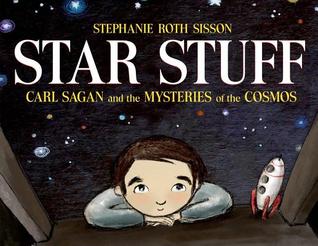
Summary: A curious boy living in a small city apartment finds the world astonishing. He wants to know about light bulbs, inch worms, and rocket ships. Carl sets out on a journey to find answers, but finds bigger, even more powerful questions. Through his research and studies, Carl eventually earns the title of Dr. Carl Sagan and spends his life seeking knowledge and understanding about the universe. This young

boy’s contributions to science and education have inspired many children everywhere to question the world around them. His story will resonate every child who has ever wondered “how” or “why” or spent an evening looking up at the night sky.

Review: I am constantly looking for books which will inspire my students and get them excited about learning. This book, which is brought to life with beautiful illustrations and the great mysteries of the universe, did that for myself as an adult, too. After reading it, everyday life is once again imbued with the magic and novelty it had in childhood. In Sagan’s eyes, there is no phenomenon too mundane to investigate. The curiosity which most adults leave behind drove Sagan to be the lifelong learner that all teachers hope to foster in their students. Reading this book shows that science is all around us, that we all belong here in the universe, and that in everyone there is a scientist. I absolutely loved reading this book, and as a new teacher building my classroom library, this is the first one which I will be purchasing multiple copies of to share with my students.

Teachers’ Tools for Navigation: This story would pair well with any science or biography unit. It would also serve as a great example of narrative nonfiction.

The most obvious use for this story is in a science unit. I would love to use this book to open up a discussion at the beginning of a unit on the solar system. Not only would it generate excitement, it would also begin to build some vocabulary and background knowledge. It would make the information in the unit more personal and relevant to kids, and would be a great launching point to encourage students to come up with their own questions about how the world works.

This book is also a wonderful book to use for mini lessons in writing. Using this book as an example, a teacher could lead a discussion on how to choose which life events to include in a biography, how to sequence and organize it, and how to incorporate quotes from a historical figure into a writing piece. It also shows how to include facts and achievements in an engaging way, and how to demonstrate a person’s impact on history.

Finally, this book would also be a superb example of narrative nonfiction. Despite containing lots of scientific facts, it reads like a storybook and the illustrations do much of the talking. Students will be captivated with the descriptive narration, and discussions could explore their experiences as readers or how they may be able to attempt this style in their writing.

Discussion Questions: What are your big mystery questions? Where would you go to try to find answers to them? What character traits helped Carl on his journey? What impact did he have on the world? Who does he remind you of?

Book Trailer: 

Read This If You Loved: What Do You Do with an Idea? By Kobi Yamada, I Wonder by Annaka Harris, You Are Stardust by Elin Kelsey, On a Beam of Light: A Story of Albert Einstein by Jennifer Berne, The Boy Who Loved Math: The Improbable Life of Paul Edros by Deborah Heiligman, Look Up!: Henrietta Leavitt, a Pioneering Woman Astronomer by Robert Burleigh

Recommended For:
 classroomlibrarybuttonsmall

Thank you, Brittany!

RickiSig

A Bike Like Sergio’s by Maribeth Boelts

Share

A Bike Like Sergio’s
Author: Maribeth Boelts
Illustrator: Noah Z. Jones
Published October 4th, 2016 by Candlewick Press

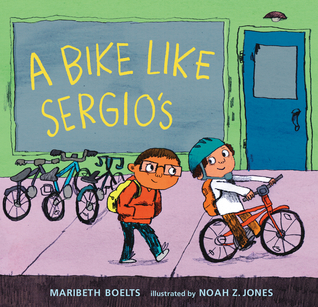
Summary: Finders keepers, right? When Ruben picks up someone’s lost money, he finds out how hard it can be to do the right thing.

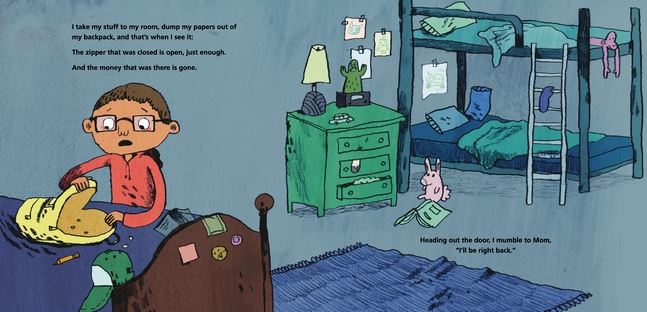
Ruben feels like he is the only kid without a bike. His friend Sergio reminds him that his birthday is coming, but Ruben knows that the kinds of birthday gifts he and Sergio receive are not the same. After all, when Ruben’s mom sends him to Sonny’s corner store for groceries, sometimes she doesn’t have enough money for everything on the list. So when Ruben sees a dollar bill fall out of someone’s purse, he picks it up and puts it in his pocket. But when he gets home, he discovers it’s not one dollar or even five or ten—it’s a hundred-dollar bill, more than enough for a new bike just like Sergio’s! But what about the crossed-off groceries? And what about the woman who lost her money? Presenting a relatable story told with subtlety and heart, the creative team behind Those Shoes pairs up again for a satisfying new picture book.

Review: The summary and many of the reviews I’ve seen focus on the aspect that Ruben must learn to make a tough decision in the book: Should he keep the money or give it back? But something else really hit home for me: Ruben is going to be important to many readers because he is going to reflect the socioeconomic status in which they live. Not often is a topic like money issues hit on in a picture book, but Boelts wasn’t afraid to tackle that. 

One thing I talk to my students a lot about is using phrases to make themselves feel like they are doing the right thing like “finders keepers” or “snitches get stitches,” and A Bike Like Sergio’s tackles how using a phrase to justify a wrong-doing affects others.

Teachers’ Tools for Navigation: One way I picture A Bike Like Sergio’s being used in schools are with counselors in one of their lessons with kids when talking about how to treat others. Many of us get mad when kids act a certain way, but empathy really is something that needs to be taught (research proves it!), so books like Sergio’s will help teach students how actions can affect others and hopefully build empathy within our young students/kids.

Discussion Questions: Why did Ruben consider keeping the money? How would it have affected his family’s life? His life?; Based on the illustrations, how had the losing of $100 affected the woman who lost the money?; Did Ruben do the right thing?

Teachers’ Guide from Candlewick Press

Flagged Passages: 

Read This If You Love: Talking ethics with kids and books such as Farmer Duck by Martin Waddell, We Are Growing! by Laurie Keller, The Thank You Book by Mo Willems

Recommended For:

  classroomlibrarybuttonsmall 

How to Read a Story by Kate Messner

Share

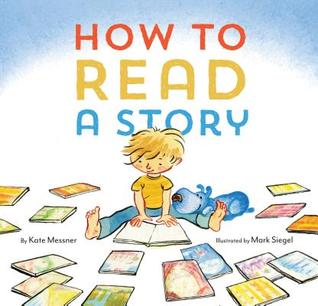
How To Read a Story
Author: Kate Messner; Illustrator: Mark Siegel
Published: May 5, 2015 by Chronicle

A Guest Review by Marisela Valencia

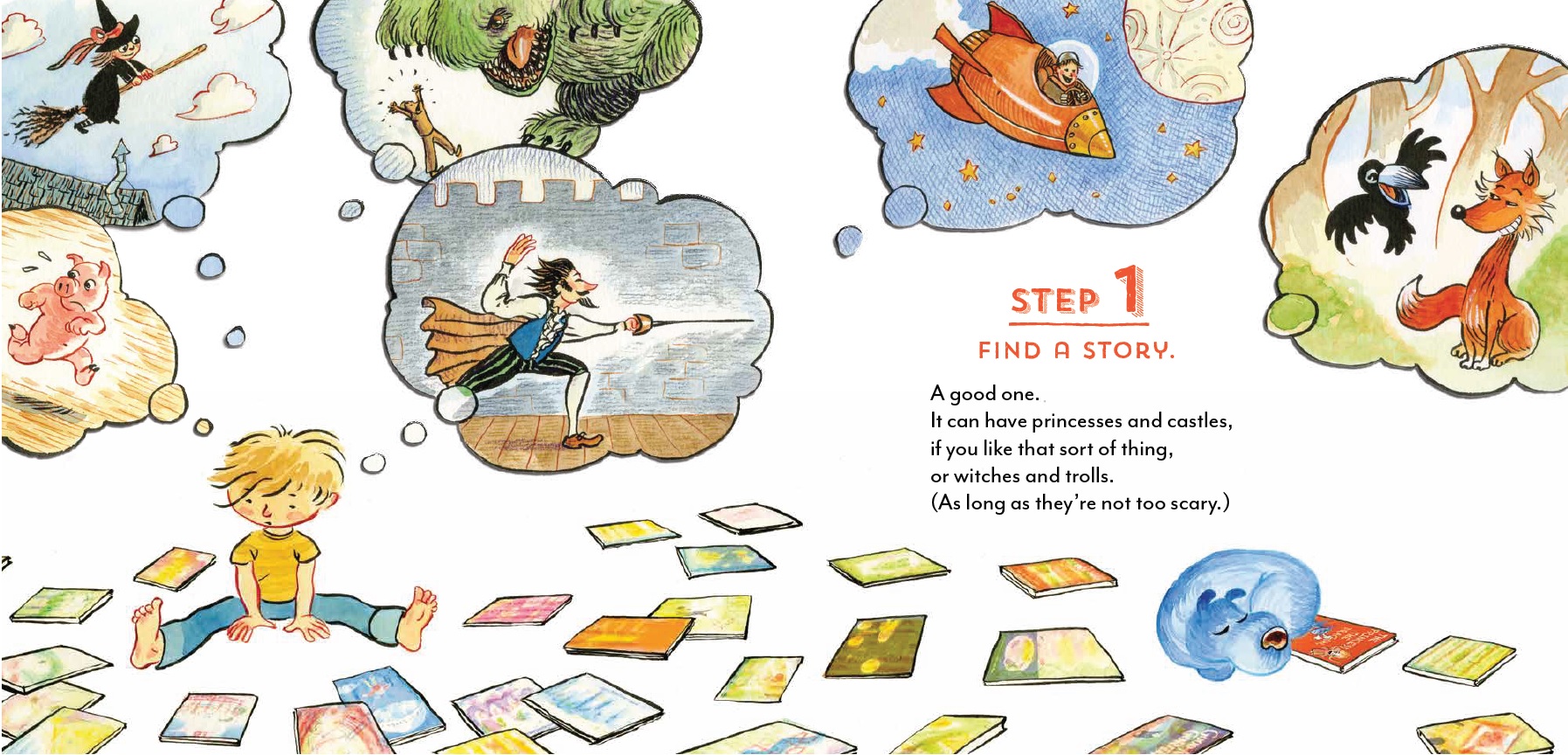
GoodReads Summary: Kate Messner and Mark Siegel’s How to Read a Story is a great picture book for young students to learn how to become excellent readers. In just ten easy steps, students learn about the reading process, and the necessary steps to reading a book. The book starts off with Step 1: “Find a Story” and shows us an illustration of a young boy with blond hair, blue jeans, and bare feet surrounded by books. The young boy continues to go through the steps, picking a book off the shelf, finding a good reading buddy, a cozy place to read, and more. Within these steps we see creative insight into teaching readers and students how to read aloud, make predictions, and even read with expression. This “how to” book is great way to deepen any readers’ love for reading.

Review: Not all reading processes look the same, but this book provides steps to becoming a reader in such a fun and interesting way! Following along with the young boy and the book he chooses in the story, our young readers learn the steps that they can take when reading their own books. The bright and colorful fonts and illustrations in How to Read a Story also draw in readers and provide more detail about the steps. Any student would be motivated to keep reading with these illustrations. Another amazing thing about this book is that the author demonstrates to readers that it is okay to go back and pick a new book if you and your reading buddy do not agree. She also mentions that it is okay to go back and read the book again if you really enjoyed it! I think it is so important for readers to know that they are not stuck with the first book they choose and also that they are more than welcome to read the book again if they enjoyed it!

Teachers’ Tools for Navigation: Great mentor text for students learning to create their own “how to” books and learning about sequencing. Also a great way to initiate discussion about choosing the right book, reading with expression, making predictions, and decoding.

Discussion Questions: What kind of reading buddy would you choose? Would they like the same things as you?; What are some good places to read? What are some not so good places to read (and why?); Did you learn any new things about being a reader from this book? Do you follow any of these steps already?; If you were writing your own “how to”, what would be some important things to include?

Flagged Passage: 

Read This If You Loved: Ralph Tells a Story by Abby Hanlon; A Squiggly Story by Andrew Larsen and Mike Lowery; This is Not a Picture Book by Sergio Ruzzier; Where Are My Books? by Debbie Ridpath Ohi

Recommended For:
 classroomlibrarybuttonsmall

Thank you, Marisela!

RickiSig

2017 Nonfiction Picture Book Biographies: The Youngest Marcher by Cynthia Levinson, Balderdash! by Michelle Markel, and Shark Lady by Jess Keating

Share

nfpb2017

Nonfiction Wednesday

Nonfiction Picture Book Wednesday is hosted by Kid Lit Frenzy and was started to help promote the reading of nonfiction texts. Most Wednesdays, we will be participating and will review a nonfiction text (though it may not always be a picture book).
Be sure to visit Kid Lit Frenzy and see what other nonfiction books are shared this week!
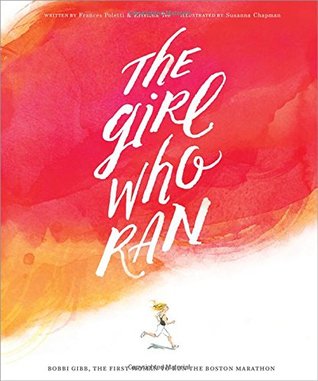
A couple of weeks ago at ALA, my friend Michele Knott of Mrs. Knott’s Book Nook, was kind enough to show me some of her favorite nonfiction picture book biographies published in 2017, and I am so happy to share them with you all.

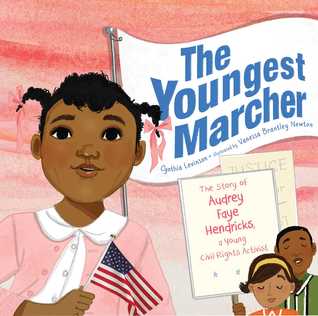
The Youngest Marcher: The Story of Audrey Faye Hendricks, a Young Civil Rights Activist
Author and Illustrator: Cynthia Levinson
Published January 17th, 2017 by Atheneum Books for Young Readers

Summary: Meet the youngest known child to be arrested for a civil rights protest in Birmingham, Alabama, 1963, in this moving picture book that proves you’re never too little to make a difference.

Nine-year-old Audrey Faye Hendricks intended to go places and do things like anybody else.

So when she heard grown-ups talk about wiping out Birmingham’s segregation laws, she spoke up. As she listened to the preacher’s words, smooth as glass, she sat up tall. And when she heard the plan—picket those white stores! March to protest those unfair laws! Fill the jails!—she stepped right up and said, I’ll do it! She was going to j-a-a-il!

Audrey Faye Hendricks was confident and bold and brave as can be, and hers is the remarkable and inspiring story of one child’s role in the Civil Rights Movement.

My Thoughts: This book was a perfect picture book companion while I was reading the March trilogy by John Lewis, and reading it and the trilogy made me realize I need to update my Civil Rights text set with all of the amazing titles I’ve read recently, including this one. Audrey Faye Hendricks’s story is a story of a young girl that was so gutsy and stood up for what she believed in– equality because she wanted to be able to do whatever she put her mind to when she grew up. This story also gave another angle to the Civil Rights Movement showing the inclusiveness of all aspects of the Black community in the fight for equal rights.

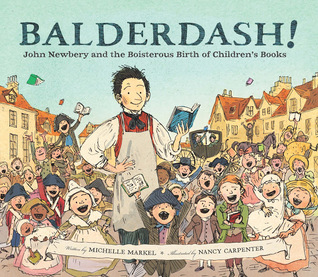
Balderdash!: John Newbery and the Boisterous Birth of Children’s Books
Author and Illustrator: Michelle Markel
Published April 4th, 2017 by Chronicle Books

Summary: A picture book biography about John Newbery pioneering author and publisher for whom the prestigious Newbery medal is named and the revolution in children s books that he led This rollicking and fascinating picture book biography chronicles the life of the first pioneer of children s books John Newbery himself While most children s books in the 18th century contained lessons and rules John Newbery imagined them overflowing with entertaining stories science and games. He believed that every book should be made for the reader’s enjoyment Newbery for whom the prestigious Newbery Medal is named became a celebrated author and publisher changing the world of children’s books forever This book about his life and legacy is as full of energy and delight as any young reader could wish.

My Thoughts: This was the perfect book for me to read after attending ALA and the Newbery-Caldecott-Wilder banquet because, although I knew Newbery was a children’s book publisher, I didn’t know much at all about him or his life. Markel’s biography of him is a perfect introduction! Newbery knew that children needed books that were made specifically for them, a philosophy that we all know is correct and true! I loved how Newbery fought the norms of society and put his money where his mouth is and opened a children’s bookstore which led to the world of children’s books we have today! No wonder the Newbery was named after him!

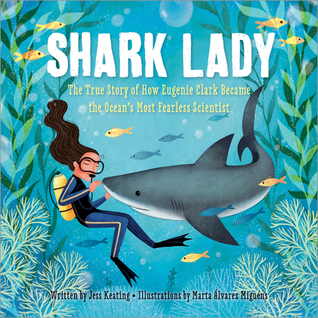
Shark Lady: The True Story of How Eugenie Clark Became the Ocean’s Most Fearless Scientist
Author: Jess Keating
Illustrator: Marta Álvarez Miguéns
Published June 6th, 2017 by Sourcebooks Jabberwocky

Summary: At 9 years old, Eugenie Clark developed an unexpected passion for sharks after a visit to the Battery Park Aquarium in New York City. At the time, sharks were seen as mindless killing machines, but Eugenie knew better and set out to prove it. Despite many obstacles in her path, Eugenie was able to study the creatures she loved so much. From her many discoveries to the shark-related myths she dispelled, Eugenie’s wide scientific contributions led to the well-earned nickname “Shark Lady.”

My Thoughts: I had not heard of Eugenia Clark until I read Heather Lang’s Swimming with Sharks and now with Shark Lady we have a second amazing biography about her! I am so glad that she is getting the attention that her amazing story and career deserves! I love that her story shows that inquiry from a young age can lead to a successful and fulfilling career. It also teaches us that nature is something we need to keep questioning and learning from because assumptions are how beautiful things in nature get misunderstood.


All Books Recommended For: 

classroomlibrarybuttonsmall closereadinganalysisbuttonsmall 

Signature

Review and Giveaway!: Splatypus by Sudipta Bardhan-Quallen

Share

SPLATypus
Author: Sudipta bardhan-Quallen
Illustrator: Jacki Urbanovic
Published April 4th, 2017 by Two Lions

Summary: Lonely Platypus wants to play, but where should he go? Should he jump with the kangaroos? Leap with the possums? Fly with the bats? Every time he tries to find out—skipping, hopping, dipping, dropping—he winds up going splat instead. Can a SPLATypus find a place where he belongs? This rhyming, rollicking story is perfect for reading aloud.

Review: Everyone is searching for their place in the world. Starting at a very young age, we want to be accepted and know that we belong. Kids will love the platypus story because it is about him figuring it out; however, even though the message is quite serious and will lead to important talks, it leads to this topic in a very fun and humorous way. The platypus’s adventure is just so silly that readers will be mesmerized by it and the colorful illustrations! This story is a win-win for teachers, parents, and kids!

Teachers’ Tools for Navigation: The most important way this book will fit into most classrooms is through read aloud and the classroom library. Like I shared above, it really does lead to conversations about identity and fitting in but does so in a non-preachy way. Additionally, the text could be used as a mentor text for writing a narrative animal story in a similar style. Maybe OOPSephant or KangaNO or GOrilla filled with onomatopoeias and rhyming.

Discussion Questions: When is a time you haven’t felt like you fit in? What did you do to make your situation better?: What words in the story rhymed?; What onomatopoeias did the author use in the text? Why do you think they were included?

Flagged Passages: 

Read This If You Loved: Leaping Lemmings by John BriggsHoot and Honk Just Can’t Sleep by Leslie HelakoskiThe Knowing Book by Rebecca Kai DotlichA Big Surprise for Little Card by Charise Mericle HarperThunder Boy Jr. by Sherman AlexieAfter the Fall by Dan Santat, Little Excavator by Anna Dewdney, Not Quite Narwhal by Jessie Sima

Recommended For:

  classroomlibrarybuttonsmall 

Giveaway!

a Rafflecopter giveaway

**Thank you to Al at Two Lions for providing a copy for review and giveaway!**