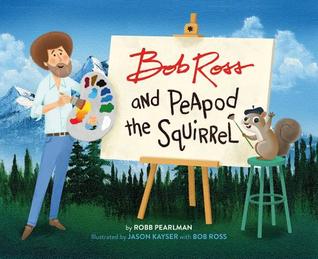
Bob Ross and Peapod the Squirrel by Robb Pearlman

Share

Bob Ross and Peapod the Squirrel
Author: Robb Pearlman
Illustrator: Bob Ross with Jason Kayser
Published October 8th, 2019 by Running Press Kids

Summary: Bob Ross paints a stunning home for his squirrel friend, Peapod, in this delightful nod to a painter icon.

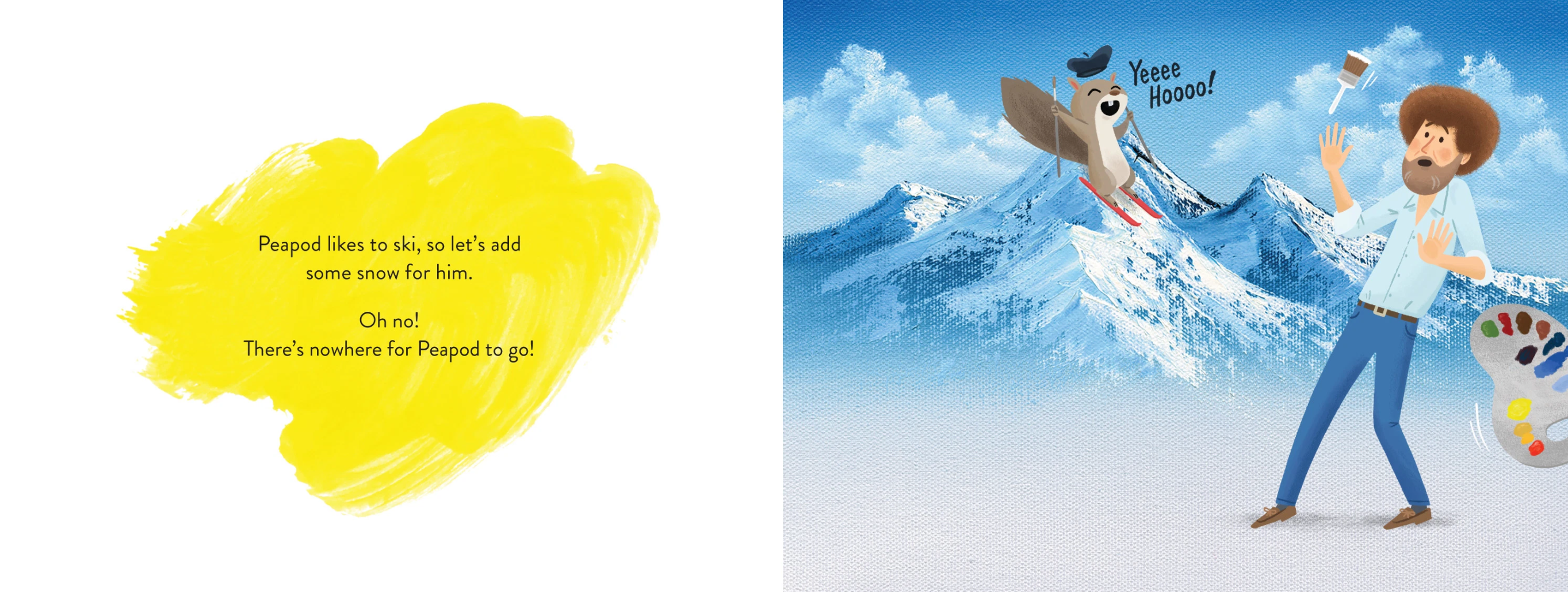
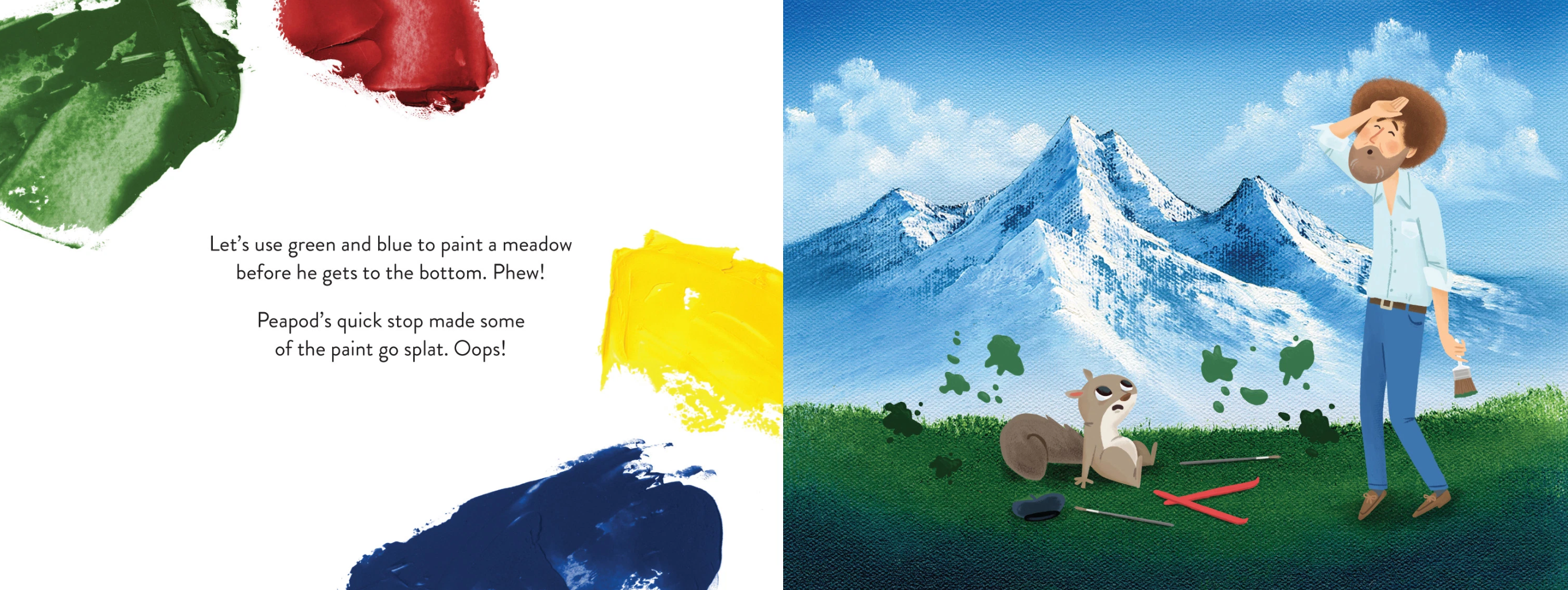
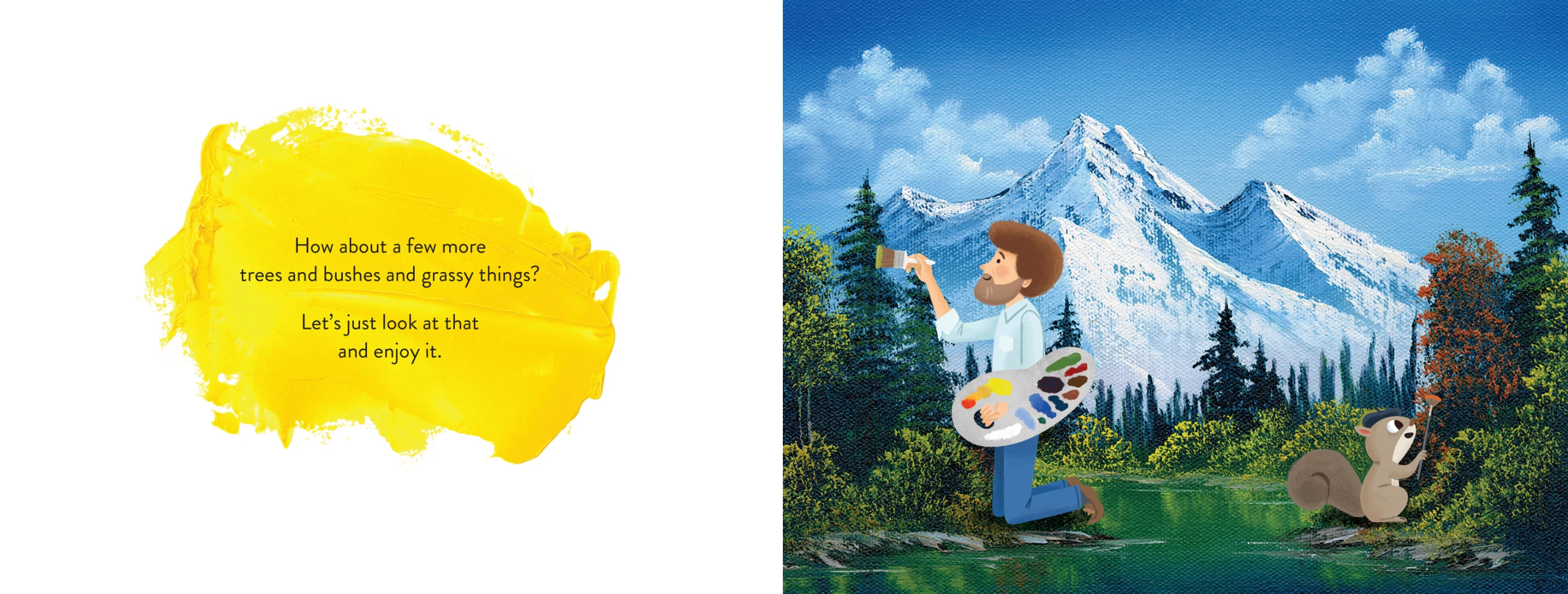
This is the sweet story of a painter (Bob Ross) who helps his squirrel friend, Peapod, find the perfect home to live in. Bob paints an actual Ross painting, “Meadow Lake,” in this charming tale about helping friends and embracing the serenity of life. Bob, along with Peapod, go through the various steps and processes to painting, including praising those “happy little accidents” that happen along the way.

About the Creators: Robb Pearlman is the author of many books, including Groundhog’s Day Off, Raggedy Ann and Andy: Leaf Dance, and Passover is Here! Today, his favorite color is blue, but it may be purple tomorrow! He grew up in New York City and now lives in a white and green house in New Jersey with his husband and Oscar, the butterscotch-colored best puppy in the world.

Bob Ross — artist, painting instructor, and television personality — has for decades charmed and inspired the world with his matchless look, signature style, and words of wisdom and encouragement.

Review: This picture book definitely captures the whimsy and gentleness of Bob Ross. Anyone who has ever watched his show knows that Bob just loves creating things and making something beautiful. He always continues even through (happy little) mistakes and other obstacles, and his work is always something that takes the viewers’ breath away. I think it was very smart of the publishers to use an actual Bob Ross painting in the text because it is like the cherry on top. That, with the addition of his fun pet Peapod, really brings Bob’s personality to the book.

Teachers’ Tools for Navigation: This text would be a wonderful book to use to compare a written work with a televised work. Students could look at what ways the book captures Bob Ross’s personality, style, speech, etc.

Additionally, the book ends with instructions on paint and supplies for readers to recreate the painting made in the book.

Discussion Questions: 

  • What Bob Ross phrases did the author include?
  • How did the inclusion of Peapod change what the story would have been without him?
  • What type of person do you think Bob Ross is based on how he instructs?
  • What do you think Bob Ross would tell you about accidents or mistakes?
  • How did Bob Ross create the image with only white, brown, green, blue, yellow, and crimson?
  • What words would you use to describe Peapod’s personality? Bob Ross’s?

Flagged Passages: 

But don’t worry–Bob Ross always embraces happy little accidents! And it turns out beautifully:

Read This If You Love: Bob Ross, Art, The Masterpiece by Jay Miletsky, Henri’s Scissors by Jeanette Winter, Paint Me a Picture by Emily Bannister

Recommended For: 

classroomlibrarybuttonsmall 

Signature

**Thank you to the publisher for providing a copy for review**

Teacher Guide for AstroNuts Mission One: The Plant Planet by Jon Scieszka

Share

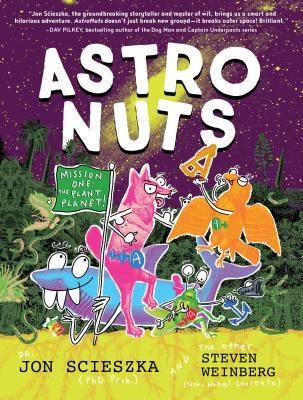
AstroNuts Mission One: The Plant Planet
Author: Jon Scieszka
Illustrator: Steven Weinberg
Published: September 10th, 2019 by Chronicle Books

Summary: AstroWolf, LaserShark, SmartHawk, and StinkBug are animals that have been hybridized to find other planets for humans to live on once we’ve ruined Earth. So off they rocket to the Plant Planet! Will that planet support human life? Or do Plant Planet’s inhabitants have a more sinister plan?

Teachers’ Tools for Navigation and Discussion Questions: 

Please view and enjoy the teachers’ guide I created for AstroNuts Mission One:

You can also access the teaching guide here.

You can learn more about AstroNuts on its webpage.

Recommended For: 

readaloudbuttonsmall classroomlibrarybuttonsmall litcirclesbuttonsmall closereadinganalysisbuttonsmall

Kellee Signature

Educators’ Guide for The Trouble with Shooting Stars by Meg Cannistra

Share

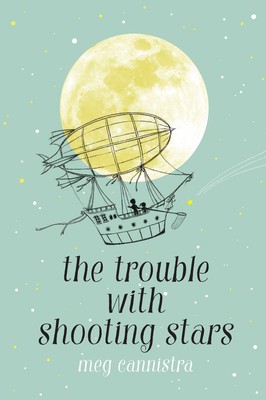
The Trouble with Shooting Stars
Author: Meg Cannistra
Published: August 20th, 2019 by Simon & Schuster for Young Readers

Summary: Twelve-year-old Luna loves the nighttime more than anything else. It’s when no one gives her “that look” about the half mask she has to wear while healing from a disfiguring car accident. It’s also the perfect time to sit outside and draw what she sees. Like the boy and girl from the new family next door…zipping out of the window in a zeppelin and up to the stars.

At first she thinks she’s dreaming. But one night the siblings catch her watching. Now Luna spends her nights on adventures with them, as they clean full moons, arrange constellations, and catch jars of stardust. She even gets to make a wish on a shooting star they catch.

But Luna learns that no wish is strong enough to erase the past — as much as she may hope to.

Teachers’ Tools for Navigation and Discussion Questions: 

Please view and enjoy the teachers’ guide I created for The Trouble with Shooting Stars:

You can also access the teaching guide here.

You can learn more about The Trouble with Shooting Stars on Meg Cannistra’s Cake Literary page.

Recommended For: 

readaloudbuttonsmall classroomlibrarybuttonsmall litcirclesbuttonsmall closereadinganalysisbuttonsmall

Kellee Signature

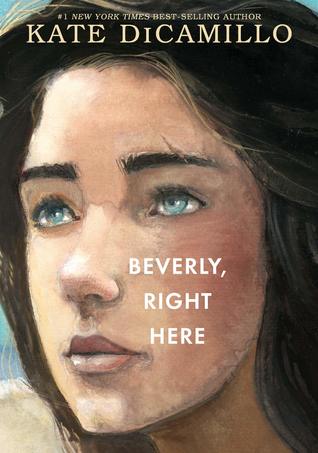
Teachers’ Guide for Beverly, Right Here by Kate DiCamillo

Share

Beverly, Right Here
Author: Kate DiCamillo
Published: September, 2019 by Candlewick Press

Summary: Beverly put her foot down on the gas. They went faster still.
This was what Beverly wanted — what she always wanted. To get away. To get away as fast as she could. To stay away.

Beverly Tapinski has run away from home plenty of times, but that was when she was just a kid. By now, she figures, it’s not running away. It’s leaving. Determined to make it on her own, Beverly finds a job and a place to live and tries to forget about her dog, Buddy, now buried underneath the orange trees back home; her friend Raymie, whom she left without a word; and her mom, Rhonda, who has never cared about anyone but herself. Beverly doesn’t want to depend on anyone, and she definitely doesn’t want anyone to depend on her. But despite her best efforts, she can’t help forming connections with the people around her — and gradually, she learns to see herself through their eyes. In a touching, funny, and fearless conclusion to her sequence of novels about the beloved Three Rancheros, #1 New York Times best-selling author Kate DiCamillo tells the story of a character who will break your heart and put it back together again.

Revisiting once again the world of Raymie Nightingale, two-time Newbery Medalist Kate DiCamillo turns her focus to the tough-talking, inescapably tenderhearted Beverly.

View my post about Raymie Nightingale and Louisiana’s Way Home to learn about the two companion books to Beverly.

Teachers’ Tools for Navigation and Discussion Questions: 

Please view and enjoy the teachers’ guide I created for Beverly, Right Here:

You can also access the teaching guide here.

You can learn more about Beverly, Right Here on Candlewick’s page.

Recommended For: 

readaloudbuttonsmall classroomlibrarybuttonsmall litcirclesbuttonsmall closereadinganalysisbuttonsmall

Kellee Signature

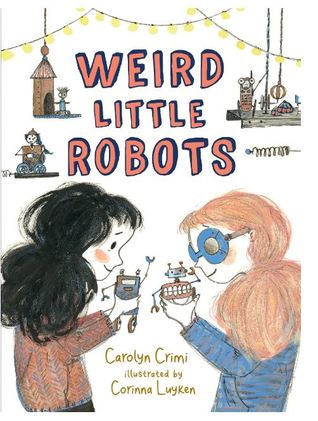
Weird Little Robots by Carolyn Crimi

Share

Weird Little Robots
Author: Carolyn Crimi
Illustrator: Corinna Luyken
Published October 1st, 2019 by Candlewick

Summary: When two science-savvy girls create an entire robot world, they don’t expect the robots to come alive. But life may be a bit more magical than they thought.

Nine-year-old Penny Rose has just moved to a new town, and so far the robots she builds herself are her only company. But with just a bit of magic, everything changes: she becomes best friends with Lark, has the chance to join a secret science club, and discovers that her robots are alive. Penny Rose hardly remembers how lonely she used to feel. But then a fateful misstep forces her to choose between the best friend she’s always hoped for and the club she’s always dreamed of, and in the end it may be her beloved little robots that pay the price.

Praise: [A]uthor Crimi infuses this unassuming transitional novel with compassion, humor, and a refreshing storyline in which girls organically weave a love for science into their everyday lives. Illustrations by Luyken add to the guileless sensibility. A contemplation on the magic of friendship told with sweetness, simplicity, and science.—Kirkus Reviews

**BEA Middle Grade Book Buzz Book

About the Author: Carolyn Crimi enjoys snacking, pugs, Halloween, and writing, although not necessarily in that order. Over the years she has published 15 funny books for children, including Don’t Need Friends, Henry and the Buccaneer Bunnies, Where’s My Mummy?, There Might Be Lobsters, and I Am The Boss of This Chair. Weird Little Robots is her first novel.

For more information, and to download a free classroom guide for Weird Little Robots, visit her website. and Twitter @crims10.

Review: Thank goodness books like this exist out in the world. I cannot wait to see what this new generation of kids are like as adults now that they all have these amazing stories of smart girls to read. Even the characters who fit a certain stereotype for Penny Rose ended up proving her wrong. This book shows that there is more to everything than anyone can imagine: more to science, more to friendship, more to imagination… What a fantastic world that Penny and Lark’s story can be told!

And the story itself is one that is fun to read. Not only do you get to read about robots, engineering, ornithology, and even decorating, but the book includes a story that many kids will connect with: do you abandon one to join the others even if the one is your best friend and the others is giving an opportunity that is hard to refuse. That is something that everyone faces more than once in their life. And told in a lyrical and a bit quirky narrative, the story is just fun to read.

Teachers’ Tools for Navigation: A Classroom Guide for Weird Little Robots can be found on Carolyn Crimi’s website!

Discussion Questions: 

  • What do Penny Rose and Lark have in common?
  • Why do you think Penny Rose made the decision she did about the secret society? Did she regret it in the end? How could she have dealt with it differently?
  • If you were going to build a little robot RIGHT NOW, what items are in your backpack that you could use? Use these items and sketch out a plan.
  • How could Penny Rose have helped her other robots communicate with her?
  • Why do you think the robots waited to communicate?
  • What did the different members of the secret society show Penny Rose, and the reader, about judging others?
  • Create your own conversation starters. Then, in class, group with 2 other people and use the conversation starters to chat. Rotate.
  • What did Penny Rose’s one decision the turned her back on Lark cause?
  • Penny Rose finds her way through the woods just by listening. As a class create an obstacle course that has different sounds throughout it and see if students can navigate through using only their hearing.

Flagged Passages: “First though, Penny Rose would need a detailed plan. She went up to her bedroom, sat on her bed, and turned on the lamp she had made last year from an olive oil can. A stack of notebooks sat on her nightstand: her New Inventions notebook, her Robot Drawings and Descriptions notebook, and her To-Do List notebook. Her most secret notebook, Conversation Starters, was at the bottom of the pile.

She picked it up, found a clean page, and wrote a quick list of Possible Conversation Starters:

  1. “I think binoculars are fun.” (Lark seems to like binoculars.)
  2. “The sun seems strong today.” (Lark often wears sun goop. First determine if the sun does, indeed, seem strong.)
  3. “Sunglasses are very wise.” (Lark wears sunglasses.)
  4. “Do you like robots?” (It is unknown whether or not Lark likes robots, but it is probable that she does since most people do.)
  5. “Yesterday was my birthday. Would you like some leftover cake?” (This seems like a good bet, unless she has allergies or is gluten-free or vegan or something.)
  6. “What is in that metal box?” (This might be too nosy, although if you’re going to carry something so mysterious, you should be prepared for questions.)

Penny Rose looked over her list. She considered what her father said about Lark not hearing before. She decided she would speak loudly.

Penny Rose tore out the page and tucked it into the tool belt she wore in case she happened upon interesting items for her robots.” (Chapter One)

Read This If You Love: Ellie Engineer by Jackson Pearce, Ada Twist by Andrea Beaty, Marty McGuire by Kate Messner, The Evolution of Calpurnia Tate by Jacqueline Kelly, The Last Panther by Todd Mitchell, Frank Einstein by Jon Scieszka

Recommended For: 

classroomlibrarybuttonsmall

Signature

**Thank you to Blue Slip Media for providing a copy for review!**

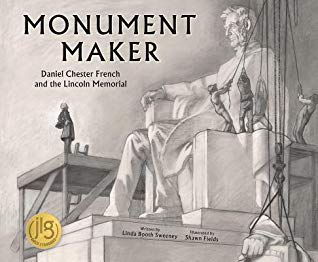
Monument Maker: Daniel Chester French and the Lincoln Memorial by Linda Booth Sweeney

Share

Monument Maker: Daniel Chester French and the Lincoln Memorial
Author: Linda Booth Sweeney
Illustrator: Shawn Fields
Published September 3rd, 2019 by Tilbury House Publishers

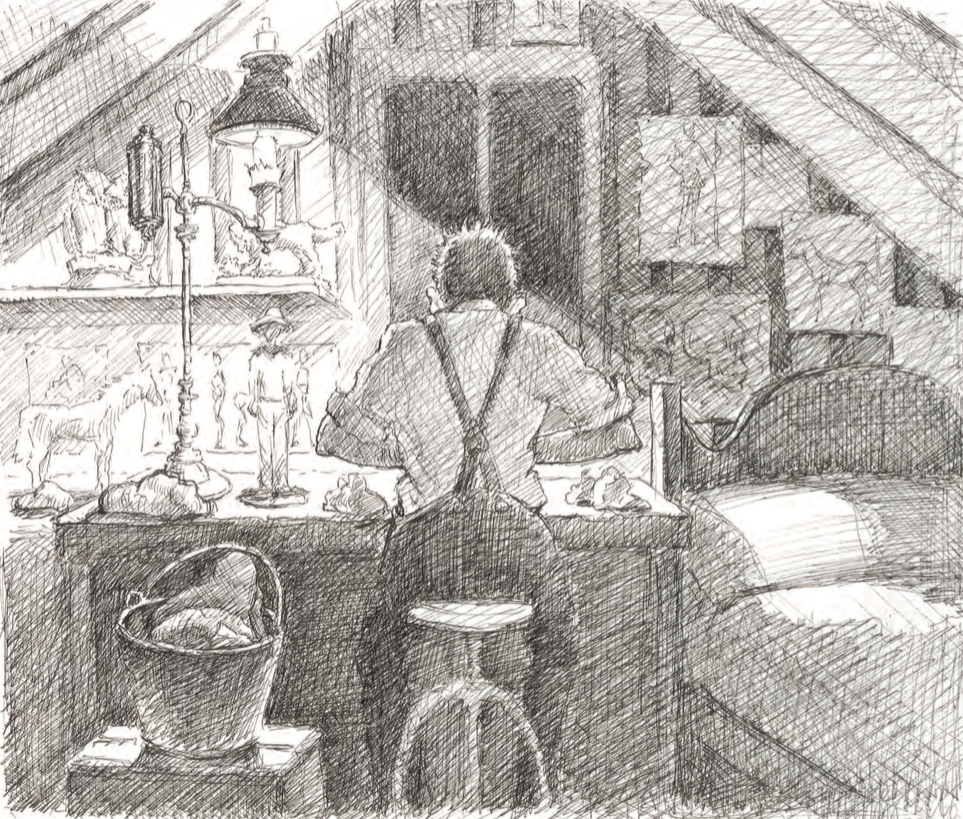
Summary: This is the story of how a farmboy became America’s foremost sculptor. After failing at academics, Dan was working the family farm when he idly carved a turnip into a frog and discovered what he was meant to do. Sweeney’s swift prose and Fields’s evocative illustrations capture the single-minded determination with which Dan taught himself to sculpt and launched his career with the famous Minuteman Statue in his hometown of Concord, Massachusetts.

This is also the story of the Lincoln Memorial, French’s culminating masterpiece. Thanks to this lovingly created tribute to the towering leader of Dan’s youth, Abraham Lincoln lives on as the man of marble, his craggy face and careworn gaze reminding millions of seekers what America can be. Dan’s statue is no lifeless figure, but a powerful, vital touchstone of a nation’s ideals. Now Dan French has his tribute too, in this exquisite biography that brings history to life for young readers.

Praise: 

“The environment that nurtured Daniel Chester French is given loving treatment by Sweeney and Fields. . .  As Sweeney traces French’s way in the world, French goes on to create numerous statues of Civil War heroes, including the epic sculpture of Abraham Lincoln enshrined in his memorial. A timeline and author’s note fill in various gaps in the text, and Fields’ drawings are both powerful and graceful, just as French would have wanted, depicting a largely white cast but including some figures of color, including one of the two modern children who observe the story. . . Both bracing and winning, a fine tribute to the sculptor and his world. (Picture book biography. 8-12) ” – Kirkus Reviews

*Junior Library Guild Gold Standard

Note from the Creators:

When Abraham Lincoln was shot in 1865, fifteen-year-old Dan French had no way to know that one day his tribute to the great president would transform a Washington, DC marsh into a national gathering place. He only knew that he liked making things with his hands.

As a boy, Dan plowed the straightest lines on his family’s farm, but as a teen, he failed (quite spectacularly) out of MIT.  And yet, almost 50 years after Lincoln’s assassination, Daniel Chester French drew on his memories of Lincoln and his artistic talent to create a lovingly sculpted touchstone for a nation’s ideals, reminding millions of seekers what America strives for and still can be.

This is the story of how one young boy became very, very good at what he loves, and for that talent to inspire people across a country and around the world.

We hope this book both delights and unites!

About the Author: Linda Booth Sweeney is an accomplished writer and an educator specializing in the exploration of living systems. www.lindaboothsweeney.com

About the Illustrator: Shawn Fields studied art at the School of Visual Arts, the Arts Student’s League, and the New York Academy of Art. His work has been exhibited at ArtBasel Miami, Forbes Gallery NYC, Arcadia NYC, and is collected worldwide.

Review: If you have ever been to the Lincoln Memorial, you know that a very talented artist sculpted the statue you find within. Monument Maker tells us how a young farm boy takes something he is good at and makes it not only his job but his passion. And I think that is what I loved the most–it showed that there is so much more to life than what others want you to be good at and what society expects you to do well at. We all have talents and passions, look at what Daniel Chester French did with his!

Sweeney and Fields did a fantastic job telling his story while also tying in the theme mentioned above, celebrating history, and setting goals for the future. Overall, a truly deep and well done middle grade picture book!

Teachers’ Tools for Navigation: With ties to art and history as well as social-emotional learning, Monument Maker can find its home in may different classrooms.

Discussion Questions: 

  • What did Dan’s family do to help support him in his endeavors?
  • What are the different steps in creating a large monument like the Lincoln Memorial?
  • How did Daniel Chester French become one of the best in his field?
  • What is something you love that you want to do when you grow up? How can you become an expert?
  • Why was it important for Daniel to learn how to draw even though he wanted to be a sculptor?
  • What does Daniel Chester French failing out of some classes yet becoming a master sculpture tell you?
  • How does the author tie together Lincoln, French’s sculpture, other history, and the future?

Flagged Passages: 

“History shapes our lives. And what we do with our lives can shape history. That’s how it was with Daniel Chester French.”

“Soon afterward, Dan’s father returned from Boston carrying a cardboard box. In it was ten pounds of cold, wet clay for a family sculpting night.

One by one the family gave up, but not Dan. He kept at it until the shape of a dog’s head appeared in his hands. From then on, Dan worked on the farm during the day and sculpted birds and animals at night.”

Read This If You Love: Art, Abraham Lincoln, Architecture, Sculpture

Recommended For: 

classroomlibrarybuttonsmall 

Don’t miss out on other nonfiction picture books! Check out Kid Lit Frenzy’s Nonfiction Picture Book Challenge: 

Signature

Educators’ Guide for Prairie Boy: Frank Lloyd Wright Turns the Heartland Into a Home by Barb Rosenstock

Share

Prairie Boy: Frank Lloyd Wright Turns the Heartland Into a Home
Author: Barb Rosenstock
Illustrator: Christopher Silas Neal
Published: September 10th, 2019 by Calkins Creek

Summary: The early life and creative genius of architect Frank Lloyd Wright, as a maker of American buildings—highlighting his passion, imagination and creativity.

Frank Lloyd Wright loved the Wisconsin prairie where he was born, with its wide-open sky and waves of tall grass. As his family moved across the United States, young Frank found his own home in shapes: rectangles, triangles, half-moons, and circles. So, Frank pursued a career in architecture. Unlike everyone else, he didn’t think the Victorian homes fit the beauty of the land. Using his love of shapes, Frank redesigned the American home inside and out, developing a unique architecture, the Prairie House.

Author Barb Rosenstock and artist Christopher Silas Neal explore the early life and creative genius of architect Frank Lloyd Wright, highlighting his passion, imagination, and ingenuity.

Backmatter includes historical photos, author’s note, quotations, sources, source notes, architectural plans and a photo gallery of Frank Lloyd Wright buildings across America.

About the Creators: 

Author Barb Rosenstock is the author of many picture book biographies, including Otis and Will Discover the Deep, Secret Kingdom, Dorothea’s Eyes, Ben Franklin’s Big Splash, and The Streak: How Joe DiMaggio Became America’s Hero. Her picture book about Kandinsky, The Noisy Paint Box, won the 2015 Caldecott Medal.

Illustrator Christopher Silas Neal is the author and illustrator of multiple picture books, including I Won’t Eat That and Everyone. He is also the illustrator of Kate Messner’s Over and Under the Pond, Over and Under the Snow, and Up in the Garden and Down in the Dirt.

Book Trailer: 

Teachers’ Tools for Navigation and Discussion Questions: 

Please view and enjoy the teachers’ and discussion guide I created for Prairie Boy: 

You can also access the teaching guide here.

You can learn more about the book on Barb Rosenstock’s Prairie Boy page.

Recommended For: 

readaloudbuttonsmall classroomlibrarybuttonsmall litcirclesbuttonsmall closereadinganalysisbuttonsmall

Kellee Signature