Messy Roots: A Graphic Memoir of a Wuhanese American by Laura Gao

Share

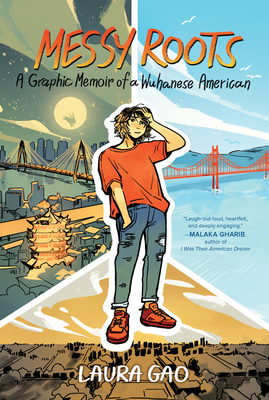
Messy Roots: A Graphic Memoir of a Wuhanese-American
Author: Laura Gao
Published: March 8, 2022 by Balzer + Bray

Goodreads Summary: After spending her early years in Wuhan, China, riding water buffalos and devouring stinky tofu, Laura immigrates to Texas, where her hometown is as foreign as Mars–at least until 2020, when COVID-19 makes Wuhan a household name.

In Messy Roots, Laura illustrates her coming-of-age as the girl who simply wants to make the basketball team, escape Chinese school, and figure out why girls make her heart flutter.

Insightful, original, and hilarious, toggling seamlessly between past and present, China and America, Gao’s debut is a tour de force of graphic storytelling.

Ricki’s Review: I read this book last year and immediately knew I wanted to use it in my class. It fit into so many topics that we discuss in class, and it is a powerful memoir. Gao offers a nuanced look at discrimination, specifically against Wuhanese Americans related to COVID-19, and she also offers insight into issues that many immigrants face in the US. I love the book description that she is trying to figure out “why girls make her heart flutter.” Gao’s sexuality is a part of the book, but it isn’t the plot driver. This normalization is important in literature, and I think readers expect that when a character is LGBTQ, it will be the main focus of the text. Instead, Gao’s life—told with a great level of humor, even when topics are tough—is depicted through images and words in a way that will connect with readers.

Teachers’ Tools for Navigation: It would be interesting to have students depict the themes of this book visually.

Discussion Questions: 

  • What are some of the themes of this text?
  • How does Gao integrate images and words to tell her story?
  • What aspects of this book connected with you?
  • What did you learn about discrimination related to Wuhanese Americans?

Flagged Spreads: 

Recommended For: 

readaloudbuttonsmall classroomlibrarybuttonsmall closereadinganalysisbuttonsmall

RickiSig

Blog Tour, Giveaway, and Author Guest Post!: Let Nonfiction Sing by Margarita Engle, Author of Destiny Finds Her Way: How a Rescued Baby Sloth Learned to be Wild

Share

Welcome to the

Destiny Finds Her Way

Blog Tour & Giveaway!

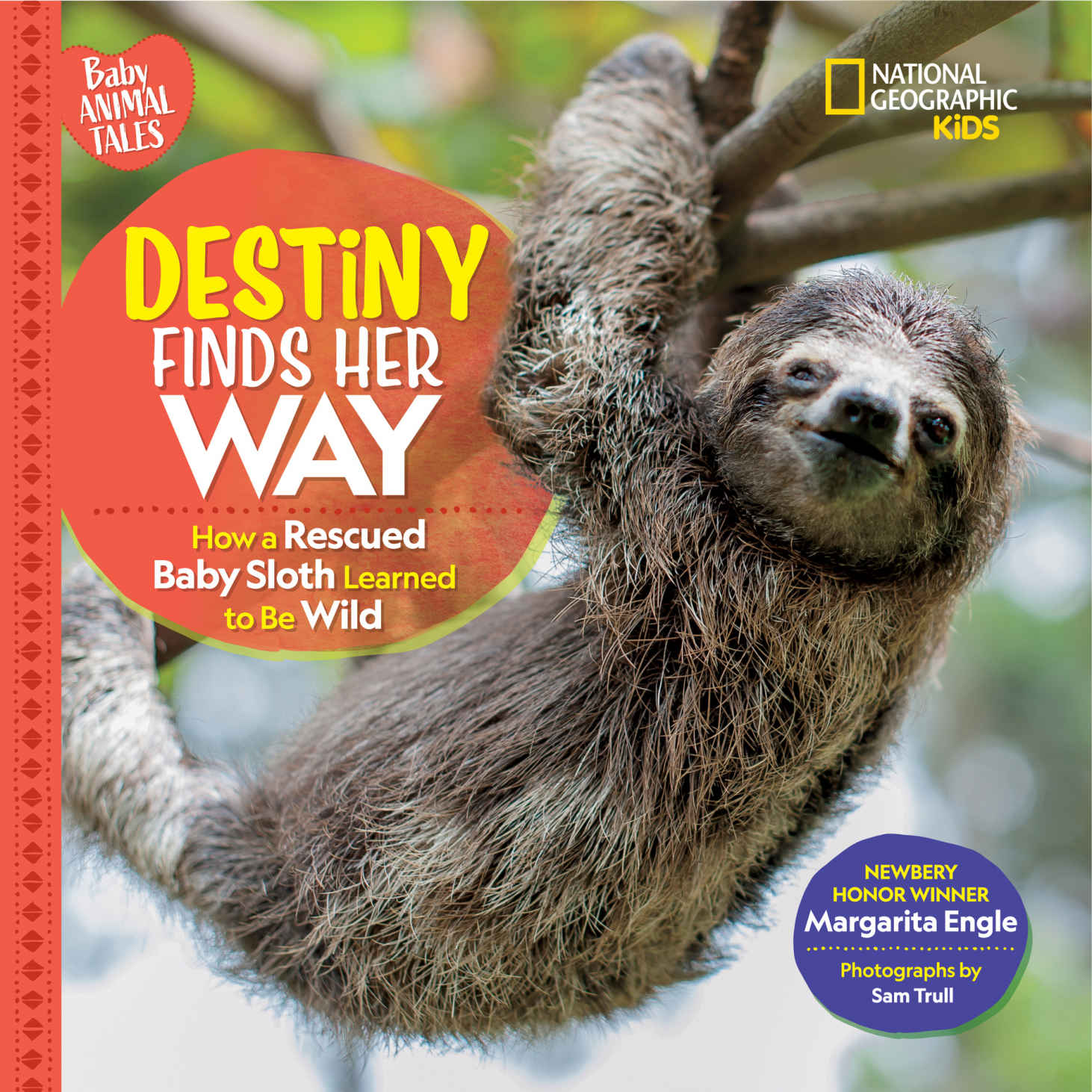
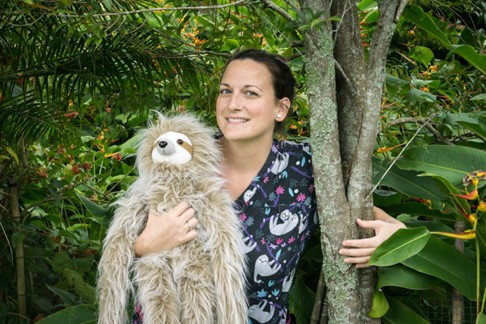
To celebrate the release of Destiny Finds Her Way by Newbery Honor winner Margarita Engle, blogs across the web are hosting guest posts from Margarita as well as the book’s photographer, Sam Trull, who is also the co-founder and Executive Director of the Sloth Institute — a sloth rescue organization based in Costa Rica. Join us for a journey behind the scenes of how these two amazingly talented women teamed up to bring this inspiring, true story to readers everywhere and learn more about sloths and the work being done to protect them.


Let Nonfiction Sing!

by Margarita Engle

Destiny Finds Her Way is a book I feel honored to have written. When I saw Sam Trull’s beautiful photos of Destiny the sloth, I decided to visit the Sloth Institute in Costa Rica. There, I had the chance to witness Sam in action, rescuing baby sloths and teaching them how to live in the wild. The experience was inspiring.

I wanted to write Destiny’s story in a way that might inspire young readers to learn more about wildlife conservation. The tropical rain forest has its own rhythm, and poetry is musical language. However, nonfiction is usually presented in a more detailed prose style. I decided to combine poetic devices with facts. The first device I used is onomatopoeia, where words resemble their real-life sources. Examples are the eee, eee, eee of darting squirrel monkeys, and ah, ah of a frightened baby sloth. Instead of rhymes at the ends of lines, I included words with vowels that rhyme. In ‘macaws squawking,’ all the “a “sounds rhyme. I’m sure readers will be able to find many other parts of the story that sound musical.

Readers will also discover the other senses—sight, smell, touch, taste, as well as sound. In addition, movement is an important aspect of the story’s musical nature. I hope words like scratched, swayed, and climbed will help make Destiny’s journey come to life in a joyful, dancelike way. There is nothing more celebratory than knowing she is now healthy and free in the wild!

Buy | Buy on Bookshop.org | Add to GoodReads

About Destiny Finds Her Way

(ages 4-8, Hardcover Picture Book, National Geographic Kids Books)

Newbery Honor winner Margarita Engle and photographer and Sloth Institute Executive Director Sam Trull team up to bring the inspiring and true story to life of how Destiny, a motherless baby sloth, sightless in one eye and rescued by Sam in the Costa Rican rain forest, defies the odds, overcomes her obstacles of limited sight and learns the skills she will need to return to her wild, forest home.

Without her mother to protect her or teach her, Destiny is found and taken to a rescue center in Costa Rica. The little sloth soon befriends other orphaned sloths. Her poor eyesight, however, makes it hard for her to keep her balance. Eventually Destiny begins to use all of her senses to explore the world around her. But can she learn to climb? Can she master the other skills she needs to survive on her own? And will Destiny be brave enough to return to her wild, forest home?

In addition to learning about Destiny and her journey, readers are immersed in the world of sloths and sloth rescue in this uplifting story about overcoming obstacles and believing in yourself.

About the Author:

Margarita Engle is the Cuban-American author of many verse novels, memoirs, and picture books, including The Surrender Tree, Enchanted Air, Drum Dream Girl, and Dancing Hands. Awards include a Newbery Honor, Pura Belpré, Golden Kite, Walter, Jane Addams, PEN U.S.A., and NSK Neustadt, among others. Margarita served as the national 2017-2019 Young People’s Poet Laureate. She is a three-time U.S. nominee for the Astrid Lindgren Book Award. Her most recent books are Rima’s Rebellion, Singing With Elephants, and Destiny Finds Her Way. Her next young adult verse novel is Wings in the Wild, and her next picture book is Water Day.
Margarita was born in Los Angeles, but developed a deep attachment to her mother’s homeland during childhood summers with relatives on the island. She studied agronomy and botany along with creative writing, and now lives in central California with her husband.

Website | Instagram | Facebook | Twitter

About the Photographer:

Sam Trull has been a photographer and a wildlife biologist for decades. After many expeditions to Madagascar, West Africa, and Central America, in January 2013, she settled in Costa Rica, where she co-founded and is the executive director of the Sloth Institute. Her first photo book, Slothlove, was published in April 2016.

Website | Instagram

About the Sloth Institute:

The Sloth Institute (TSI) is a nonprofit organization located in Costa Rica with the mission to enhance and expand the welfare and conservation of sloths through rescue, rehabilitation, release, research, and education. In addition, TSI works on targeted conservation projects to improve the safety and quality of sloth habitats and teaches other rescue centers how to better care for and release their sloths. TSI believes that all sloths were born to be wild and deserve that second chance at freedom.


Website | Instagram | Facebook | Twitter

GIVEAWAY

  • One (1) winner will receive a copy of Destiny Finds Her Way
  • US/Can only
  • Ends 3/18 at 11:59 pm ET
  • Enter via the Rafflecopter below
  • Visit the other stops on the tour for more chances to win!

a Rafflecopter giveaway

Blog Tour Schedule:

March 6th Pragmatic Mom

March 7th Heise Reads and Recommends

March 8th Mom Read It

March 9th Unleashing Readers

March 10th Imagination Soup

Play Like a Girl by Misty Wilson, Illustrated by David Wilson

Share

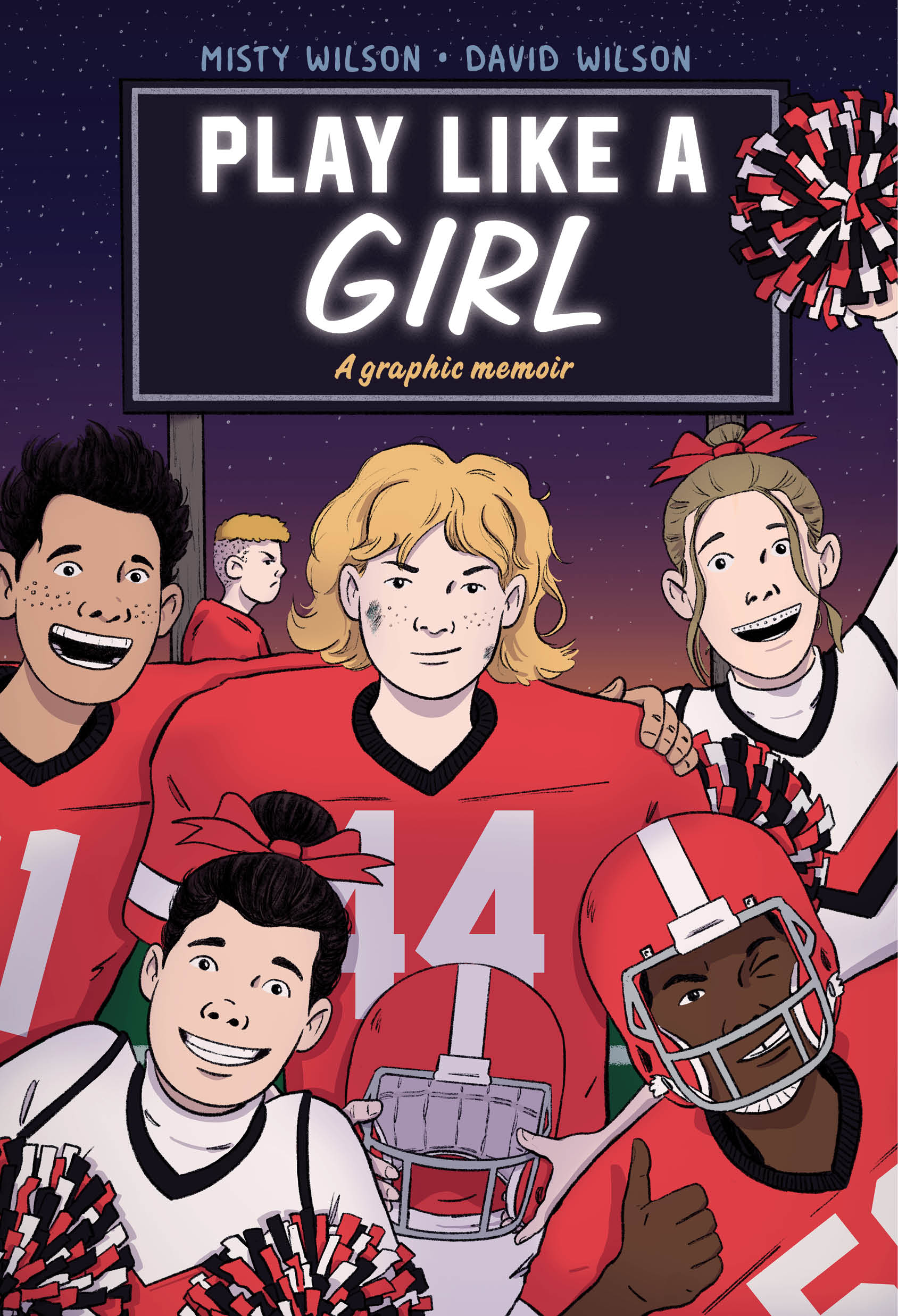
Play Like a Girl: A Graphic Memoir
Author: Misty Wilson
Illustrator: David Wilson
Published: September 22, 2022 by Balzer + Bray

Goodreads Summary: Debut author Misty Wilson chronicles her seventh-grade experience as the only girl on her town’s football team in this empowering graphic memoir about teamwork, friendship, crushes, and touchdowns.

Misty never shies away from a challenge, on or off the field. So when the boys tell her she can’t play football, there’s only one thing to do: join their team and show them what she’s got.

But the training is rougher than she thought—and so are the other guys, who aren’t thrilled about having a girl on their team.

Middle school isn’t so easy, either. Misty wants to fit in with the popular kids, but they think a girl playing football is “weird.” Even her best friend doesn’t get it.

Can Misty find a way to score points with her teammates, make new friends, and show everyone—including herself—what it means to play like a girl?

“I am a huge fan of Misty and her courageous journey of staying true to herself. Readers will love her!” —Terri Libenson, New York Times bestselling author of the Emmie & Friends series

“This is the book I wish I’d had as a kid. Misty’s passion for football and her fight to play in a male-dominated sport while balancing friendship and crushes makes for a winning read!” —Dr. Jen Welter, first female NFL coach, first female running back in men’s pro football, and founder of Grrridiron Girls.

Ricki’s Review: I loved this graphic memoir. It felt very real to me, and the scenes really packed a punch. I especially loved the football scenes, which were full of great plays and amazing strategies. I wish I’d had this book when I was a middle school girl. In the scenes where the boys were rude, I remembered a similar comment when I was in 8th grade taking tech ed.

The book does a particularly good job depicting middle school. It’s a tough time and a struggle for a lot of kids, and I think middle schoolers will find solace in this book. There are great themes of identity and friendship.

I’ve already recommended this book to several young people, and I am so glad it exists!

Kellee’s Review: Misty Wilson’s memoir starts with “I wish someone had told me middle school would be so hard.” As a middle school educator, I felt this and knew that this books as going to hold some middle school truths. And it did: growing up, figuring out who you are, finding and keeping friends, navigating crushes, and more. All of this is so tough in middle school, so having a book to read about it really helps middle schoolers navigate it all.

I really loved reading Misty’s story. I, too, was a tomboy who didn’t do make up, would love to play a sport more than anything, and just couldn’t figure out how to be a good friend with the people who I thought I should be friends with. So much of middle school is fighting who you really are versus who everyone else and society wants you to be (and ignoring the mean comments along the way). This story was refreshing and will definitely find readers in middle school.

Play Like a Girl will add to the books I can recommend to Telgemeier fans, and it has the extra topic of football which will lend itself to finding even more readers!

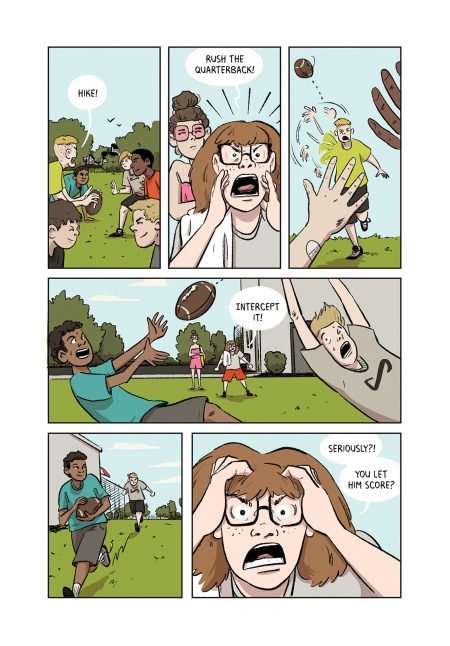
Teachers’ Tools for Navigation: This book is a great tool for teachers who are teaching memoir. It demonstrates how illustrations can depict a story richly and realistically. 

Discussion Questions: 

  • What struggles does Misty experience?
  • What words would you use to describe Misty, and why?
  • What did you learn from this book?
  • Is this a book that is just for girls? Why might all kids learn from this book?

Flagged Page: 

Recommended For: 

 classroomlibrarybuttonsmall closereadinganalysisbuttonsmall

RickiSigand

**Thank you to Katie at HarperCollins for providing us with copies of this text for honest reviews!**

Speak Up, Speak Out! The Extraordinary Life of “Fighting Shirley Chisholm” by Tonya Bolden, Forward by Stacey Abrams

Share

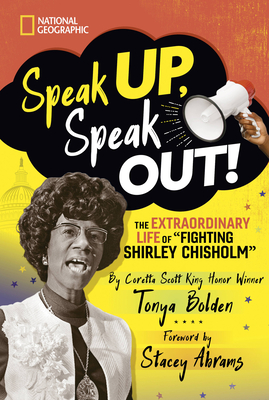
Speak Up, Speak Out! The Extraordinary Life of “Fighting Shirley Chisholm”
Author: Tonya Bolden
Forward by: Stacey Abrams
Published January 4th, 2022 by National Geographic Kids

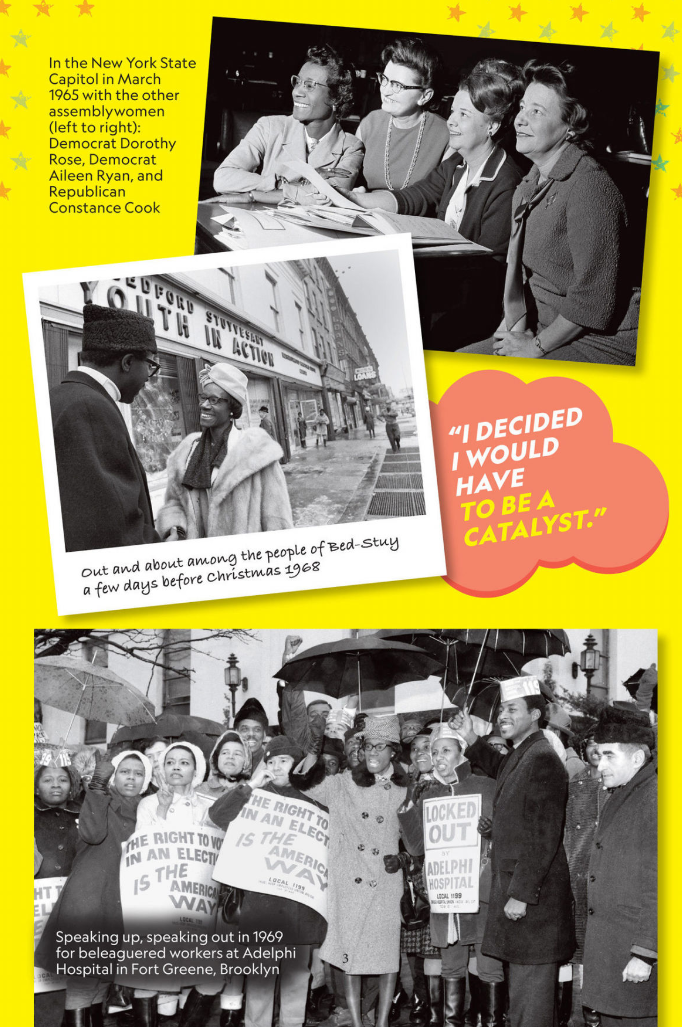
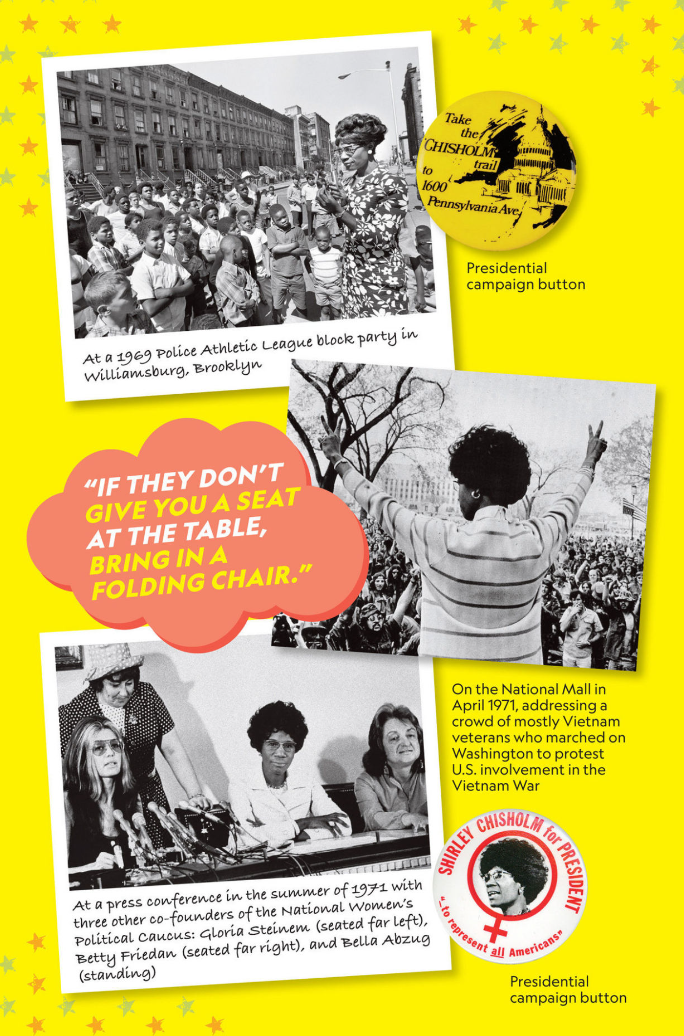
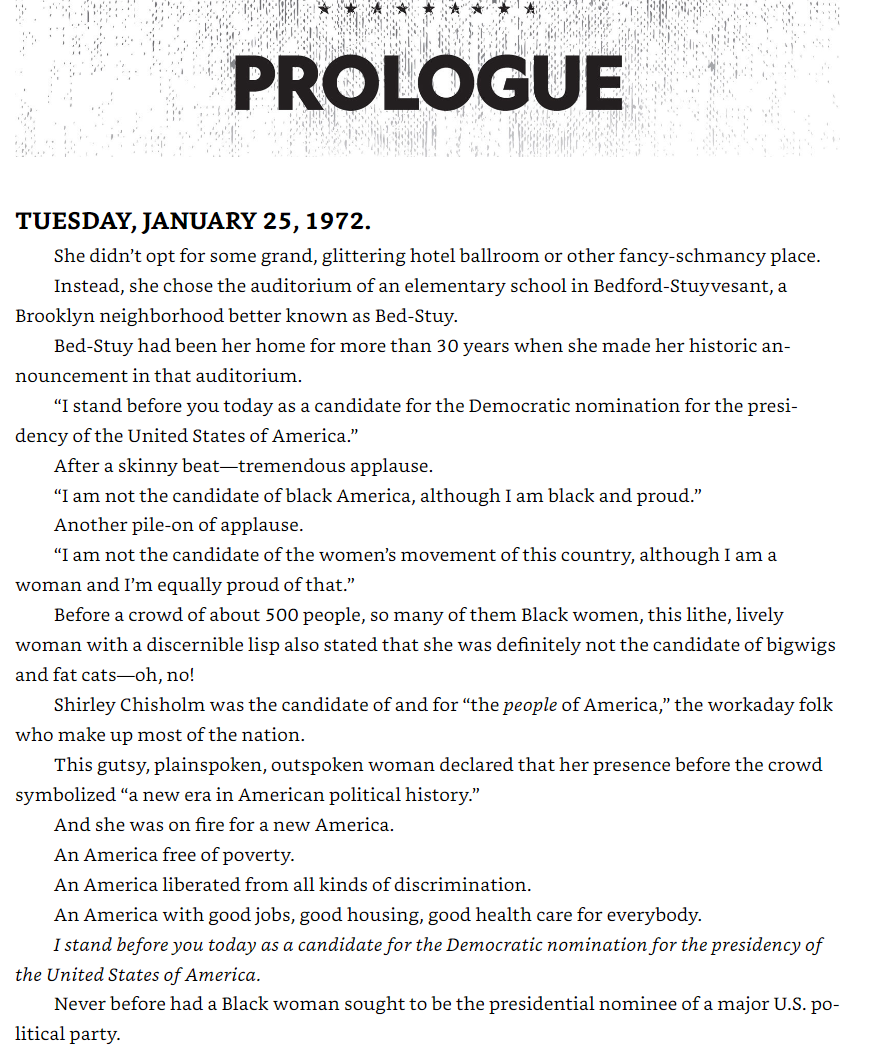
Summary: From award-winning author Tonya Bolden comes a biography of the first Black woman elected to the U.S. House of Representatives and the first Black woman to run for president with a major political party: Shirley Chisholm.

Before there was Barack Obama, before there was Kamala Harris, there was Fighting Shirley Chisholm. A daughter of Barbadian immigrants, Chisholm developed her political chops in Brooklyn in the 1950s and went on to become the first Black woman elected to the U.S. House of Representatives. This “pepper pot,” as she was known, was not afraid to speak up for what she thought was right. While fighting for a better life for her constituents in New York’s 12th Congressional District, Chisholm routinely fought against sexism and racism in her own life and defied the norms of the time. As the first Black woman in the House and the first Black woman to seek the presidential nomination from a major political party, Shirley Chisholm laid the groundwork for those who would come after her.

Extensively researched and reviewed by experts, this inspiring biography traces Chisholm’s journey from her childhood in a small flat in Brooklyn where she read books with her sisters to Brooklyn College where she got her first taste of politics. Readers will cheer Chisholm on to victory from the campaign trail to the hallowed halls of the U.S. Capitol, where she fought for fair wages, equal rights, and an end to the Vietnam War. And while the presidential campaign trail in 1972 did not end in victory, Shirley Chisholm shows us how you can change a country when you speak up and speak out.

Praise: “The strength of Bolden’s skill as a researcher is evident; chapter by chapter, she provides succinct but critical context around the motivations and movements of Chisholm’s political career. A foreword by Stacey Abrams helps establish that Chisholm’s legacy is one of political innovation as someone who forged a path for others to follow. This informative book has an engaging narrative structure. The use of repetition and inclusion of memorable pearls of wisdom attributed to Chisholm add a poetic tone. An insightful and focused profile of a political trailblazer.” —Kirkus Reviews

“This lively, detailed look at Chisholm’s personal and political life shines in its portrayal of a strong woman who never backed down; Bolden’s accessible text is great for report writers covering the groundbreaking Chisholm and the momentous time she lived in.” —Booklist

About the Author: Tonya Bolden has authored, edited and co-authored more than 40 books. Her work has garnered numerous awards, including the Coretta Scott King Honor, the James Madison Book Award, the NCSS Carter G. Woodson Honor, the Children’s Book Guild of Washington, D.C.’s Nonfiction Award, the NCTE Orbis Pictus Award for Outstanding Nonfiction for Children, the Virginia Library Association Jefferson Cup Award and the Cleveland Public Library Sugarman Award.  Lauded for her skilled storytelling, impeccable research and lively text, Tonya lives New York City. 

Review: Tonya Bolden’s biography of Shirley Chisholm is a perfect mix of historical remembrance as well as narrative structure to pull the reader in. You follow Shirley’s life as she goes against all odds and fights her way through politics, all while never losing her morals or remembrance of where she came from. As someone who knew of Chisholm but not specifics and boy, is she phenomenal! I highly recommend reading this book to learn more about this pioneer of civil and feminist rights.

Also, I read this book at the right time for me. As a Floridian going through an election, a reminder of hope is always needed. And Shirley Chisholm, her fight and success, and resilience shows that there have always been times to fight and there are always others that need to fight more.

Teachers’ Tools for Navigation: This biography will be perfect for updating nonfiction sections of libraries. Additionally, it would be a wonderful book club choice or lit circle choice when focusing on HERstory or true history.

Extra resources:

School Library Journal, January 25, 2022: Speaking Up and Speaking Out with Tonya Bolden on Shirley Chisholm (Q&A) by Betsy Bird

YA Books Central, February 15, 2022: YABC Interview with Tonya Bolden about Speak Up, Speak Out! (Feb. 2022) (Author Interview) by Beth Edwards

Discussion Questions: 

  • How did Shirley Chisholm deal with the racism and sexism she faced during her career?
  • What does Chisholm’s visit to Wallace tell us about her? Why did it make other Black politicians furious?
  • In what ways did she never let down Bed-Stuy? Why did some people feel she did?
  • How did Chisholm’s bid for the presidential nomination break barriers?
  • Why was Chisholm unhappy by the committee she was put on in Congress?
  • What major causes did Chisholm support? How did she do so throughout her career?
  • Great lesson plan on Shirley Chisholm found:

Flagged Passages: 

Read This If You Love: Narrative biographies

Recommended For: 

classroomlibrarybuttonsmall

Signature

**Thank you to Media Masters Publicity for providing a copy for review!**

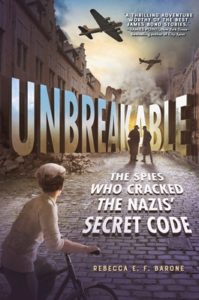
Unbreakable: The Spies Who Cracked the Nazis’ Secret Code by Rebecca E.F. Barone

Share

Unbreakable: The Spies Who Cracked the Nazis’ Secret Code
Author: Rebecca E.F. Barone
Publishing October 25th, 2022 by Henry Holt and Co.

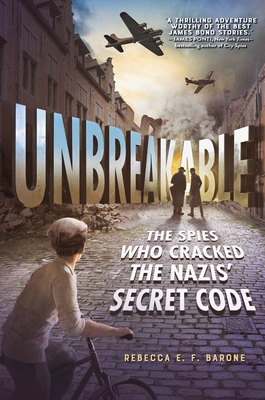
Summary: Unbreakable is the true story of the codebreakers, spies, and navy men who cracked the Nazis’ infamous Enigma encryption machine and turned the tide of World War II.

As the Germans waged a brutal war across Europe, details of every Nazi plan, every attack, every troop movement were sent over radio. But to the Allied troops listening in—and they were always listening—the crucial messages sounded like gibberish. The communications were encoded with a powerful cipher, making all information utterly inaccessible . . . unless you could unlock the key to the secret code behind the German’s powerful Enigma machine.

Complete with more than sixty historical photos, Unbreakable tells the true story of one of the most dangerous war-time codebreaking efforts ever. While Hitler marched his troops across newly conquered lands and deadly “wolfpacks” of German U-Boats prowled the open seas, a team of codebreakers, spies, and navy men raced against the clock to uncover the secrets that hid German messages in plain sight. Victory—or defeat—in World War II would hinge on their desperate attempts to crack the code.

Praise: 

*”A riveting tribute to epic tests of men against the elements.” —Kirkus, starred review

*”A compelling narrative focused on science and technology, embedded in a cluster of thrilling adventure stories . . . Highly ­recommended.” —School Library Journal, starred review

*”Readers will be caught up in the real-time action sequences.” —Booklist, starred review

*”Exemplary.” —BCCB, starred review

About the Author: Rebecca E. F. Barone holds a Bachelor of Arts in English and a Bachelor of Science in Mechanical Engineering from Bucknell University along with multiple graduate degrees in mechanical engineering. Her technical projects include injury analysis for the National Football League, and her short-form STEM writing has been published in the award-winning Muse magazine. She is passionate about serving and mentoring underrepresented populations in STEM. She is also the author of Race to the Bottom of the Earth: Surviving Antarctica (which received four starred reviews).

Review: This book read like a page-turning, action-packed thriller and adventure story. But it is all real! Which makes it even better because it is truly unbelievable. Barone writes the different scenes, shared in vignette-type short stories that come together to show a whole picture, in a way that just grabs the reader’s attention and keeps you reading to figure out how everyone comes together to crack the secret code.

Teachers’ Tools for Navigation: This book will find its most success as an independent reading book and will definitely be a book to share with middle school readers who think they do not like nonfiction.

Also, check out the cover reveal on MGBookVillage for some background information from the author.

Discussion Questions: 

  • How did all of the countries work together (or not work together) to crack the code?
  • Who do you think was the greatest asset in the journey?
  • Why do you think the author chose to write the book in vignette-type short stories?
  • How does the inclusion of photographs add to the book?
  • The author states that the mathematicians were the hero of the story–do you agree? Why or why not?

Flagged Passages: 

ONE: TRAITOR
1929—Warsaw, Poland

THE BOX ARRIVED on the last Saturday in January.

Business in the Polish customs office went on as usual, the rhythm of sorting and inspecting undisturbed by the heavy package with a German postmark. In fact, the officer in charge had nearly finished when the urgent request came in.

Return it immediately, the German embassy demanded. There had been a mistake. It was a German package, intended for a German recipient. It should never have been sent to Poland. Cease operations and give it back.

Now, that made the customs officer pause.

He did not return the box. He opened it.

A polished surface gleamed in the light. Along a hinge in the back, a wood cover opened to reveal something almost like a typewriter. Elevated keys were arranged in three rows along the bottom, each labeled with a letter of the German alphabet.

But that was where the similarity to a typewriter ended.

There was no inked ribbon, no carriage in which to hold paper to type a letter. Instead, the top of the box was filled with small circular windows arranged in three rows identical to the keyboard below; each window contained a single letter printed on translucent material.

If the customs officer pressed a key, instantly, in the top rows, one letter began to glow. As soon as he released the key, the light went out. If he pressed the same letter key again, an entirely different light and letter shone back.

Quickly, the Polish customs officer made a call. Across town, two men secretly working for the Polish cipher agency understood immediately and rushed to the customs office.

Over the next two days and through the next two nights, the men disassembled, examined, and reassembled the machine.

By Monday morning, they had meticulously put every part back into place. They repackaged the machine in the same box and wrapped it in the same brown paper in which it had arrived.

Poland would return German property to Germany, as requested. The delay, inevitable, due simply to the weekend.

No one in Germany suspected a thing.

Enigma in use.

[Bundesarchiv, Bild 183–2007–0705–502 / Walther / CC-BY-SA 3.0]

Two years later, Sunday, November 1, 1931—the German-Belgian border

Hans-Thilo Schmidt rushed through the doors of the Grand Hotel in Verviers, Belgium, two hours late. He never saw the man sitting in the lobby waiting for him.

To this man, Schmidt was an ordinary German of average build, wearing a dark hat and dark coat. Schmidt was red in the face and puffy around the eyes, both traits the man watching him had been expecting. He knew that Schmidt’s train was late, and Schmidt sweated and grew flushed as he hurried to make up lost time. Schmidt’s puffy eyes had been expected as well. The people this man watched often suffered from sleepless nights. Treason was never an easy decision.

Not that Schmidt would have noticed the man even if he’d been relaxed and alert. Hans-Thilo Schmidt was far from experienced in spy craft. Last June, when he had first decided to trade secrets for money, he simply walked into the French embassy in Berlin. Incredibly, he plainly announced his intent to sell information to the French government. Without cover and without any personal security, he asked whom he should contact in Paris to do so. Somehow, he had neither been arrested by the Germans nor ignored by the French.

Now, five months later, the German Schmidt was about to meet face-to-face with a French intelligence officer. Hans-Thilo was nervous, and he was late.

At the front desk, the receptionist checked Schmidt into a room already reserved for him and handed him an envelope along with his key. He entered the elevator, and as the doors closed in front of him, the man watching him from the lobby saw him rip into the letter, which read “You are expected in suite 31, first floor, at 12 noon.”

At precisely noon, as the letter instructed, Schmidt knocked at suite 31.

The door opened into another world where time seemed to slow as an older woman with elegantly styled white hair greeted him and asked him to wait in the comfortable, richly furnished room. Soft music played gently over the radio. An inviting arrangement of liquor and crystal glasses was set out next to a display of fine cigars. Gratefully, Schmidt eased himself into a plush chair.

“Guten Morgen, Herr Schmidt! Hatten sie eine gute Reise?”

Schmidt jumped as an unfamiliar voice boomed at him in German. An immense man with a shaved head came through a doorway, entering the living area through another room in the suite. Round, dark spectacles framed icy blue eyes that pierced Schmidt with an unwavering stare.

“Sit down, please,” the man continued. “How are Madame Schmidt and your two children?”

Schmidt, already on edge, tensed more. He was currently living alone, and his wife, son, and daughter were living with his wife’s parents.

“I know,” the man said, cutting Schmidt off before he had a chance to answer. “You will want to bring your family back together soon and resume a pleasant life. That, of course, depends on you. We will assist you if your cooperation proves fruitful to us.”

Taking an offered glass of whiskey, Schmidt sat back down.

The man confronting him became even more serious. “Your resourcefulness last June in Berlin was quite exceptional and effective, Mr. Schmidt. Quite fortunately you happened upon an official of the French embassy who … was inconspicuous. What would you have done if he had thought you were an agent provocateur and called the police?”

This pushed Hans-Thilo Schmidt to his limit. “I thought you would understand!” he snapped, defiant. “If you feel this way, my only option is to withdraw. Others will know how to interpret my motivations and the rationale of my propositions.”

“Easy now, Mr. Schmidt,” the man responded. “We appreciate your initiative and the benefit we can gain from it.

“Let me be frank,” the man continued, “my name is Lemoine, and I represent the French Intelligence Bureau.”

Read This If You Love: World War II (and other war) nonfiction books

Recommended For: 

classroomlibrarybuttonsmall 

Signature

**Thank you, Kelsey from Macmillan Publishing, for providing a copy for review!**

A River’s Gifts: The Mighty Elwha River Reborn by Patricia Newman, Illustrated by Natasha Donovan

Share

A River’s Gifts: The Mighty Elwha River Reborn
Author: Patricia Newman
Illustrator: Natasha Donovan
Published September 6th, 2022 by Millbrook Press

Summary: A mighty river. A long history.

For thousands of years, the Elwha river flowed north to the sea. The river churned with salmon, which helped feed bears, otters, and eagles. The Lower Elwha Klallam Tribe, known as the Strong People located in the Pacific Northwest, were grateful for the river’s abundance. All that changed in the 1790s when strangers came who did not understand the river’s gifts. The strangers built dams, and the environmental consequences were disastrous.

Sibert honoree Patricia Newman and award-winning illustrator Natasha Donovan join forces to tell the story of the Elwha, chronicling how the Strong People successfully fought to restore the river and their way of life.

About the Creators: 

Patricia Newman’s books inspire young readers to seek connections to the real world. Her titles encourage readers to use their imaginations to solve real world problems and act on behalf of their communities. These books include Sibert Honor title Sea Otter Heroes: The Predators That Saved an Ecosystem; Orbis Pictus Recommended Book Planet Ocean: Why We All Need a Healthy Ocean; Bank Street College Best Book Zoo Scientists to the Rescue; Booklist Editor’s Choice Ebola: Fears and Facts; and Green Earth Book Award winner Plastic, Ahoy! Investigating the Great Pacific Garbage Patch. Patricia frequently speaks at schools and conferences to share how children of any age can affect change. Visit her at www.patriciamnewman.com.

Natasha Donovan is the illustrator of the award-winning Mothers of Xsan series (written by Brett Huson). She illustrated the graphic novel Surviving the City (written by Tasha Spillett), which won a Manitoba Book Award and received an American Indian Youth Literature Award (AIYLA) honor. She also illustrated Classified: The Secret Career of Mary Golda Ross, Cherokee Aerospace Engineer which won an Orbis Pictus Honor Book and an American Indian Youth Literature Award (AIYLA). Natasha is Métis, and spent her early life in Vancouver, British Columbia. Although she moved to the United States to marry a mathematician, she prefers to keep her own calculations to the world of color and line. She lives in Washington. www.natashadonovan.com

Review: This book is different than Newman’s other books as it is illustrated and more lyrical than her books of the past; however, there is no need to worry — the book is beautiful! Newman does a fantastic job balancing the narrative of the river and the Lower Elwha Klallam Tribe with informative information about water, salmon, dams, and other wildlife. Newman’s prose also does amazing justice when it comes to the river’s legacy and the indigenous tribes that relied on, and lost, the river.

To add to Newman’s work, Donovan’s illustrations bring everything to life that Newman shares. Her work is filled with color and life and brings the whole book together.

A spectacular nonfiction picture book that takes the reader on a journey of a river’s legacy filled with lyrical prose and important information.

Teachers’ Tools for Navigation: The publisher has provided a Teaching Guide for The River’s Gifts:

There is also an interview with Patricia Newman that digs deeper into her book:

Flagged Passages: 

Book Trailer: 

Read This If You Love: Environmental nonfiction picture books

Recommended For: 

classroomlibrarybuttonsmall 

Signature

**Thank you to Patricia Newman and Lerner for providing a copy for review!**
Guest Review: A Butterfly is Patient by Dianna Hutts Aston, Illustrated by Sylvia Long

Share

Guest Reviewer: Natalia, UCF Elementary Education Student

A Butterfly is Patient
Author: Dianna Hutts Aston
Illustrator: Sylvia Long
Published May 18th, 2011 by Chronicle Books

Summary: The creators of the award-winning An Egg Is Quiet and A Seed Is Sleepy have teamed up again to create this gorgeous and informative introduction to the world of butterflies. From iridescent blue swallowtails and brilliant orange monarchs to the worlds tiniest butterfly (Western Pygmy Blue) and the largest (Queen Alexandra’s Birdwing), an incredible variety of butterflies are celebrated here in all of their beauty and wonder. Perfect for a child’s bedroom bookshelf or for a classroom reading circle!  (Summary from Goodreads)

About the Creators: 

Dianna Hutts Aston is the author of many books for children and is the founder of the nonprofit foundation for disadvantaged children, The Oz Project. She lives in San Miguel de Allende, Mexico.

Sylvia Long is the illustrator of many best-selling books for children, including Sylvia Long’s Mother Goose and Hush Little Baby. She lives in Scottsdale, Arizona, with her husband and their dogs.

Review: I loved this beautifully illustrated book by Dianna Hutts Aston and Sylvia Long!  There is a wide variety of butterflies depicted in this nonfiction picture book about the life cycle and anatomy of butterflies.  Not only can it be enjoyed for its visual aspects, but the descriptive vocabulary shares basic facts about butterflies as well as more unusual information.  Did you know butterflies taste with their feet?  Some butterflies eat plants that are poisonous to their predators when they are caterpillars, so they will be poisonous as adults.  For such a seemingly delicate creature, A Butterfly is Patient shares that butterflies are so much more than they seem.

Teachers’ Tools for Navigation:

In addition to providing beautiful, life-like illustrations of a variety of butterflies, this nonfiction picture book follows the life cycle of a butterfly.  There are many opportunities to infuse reading, ELA, math, art, and science and more using this book.  There is a rich descriptive vocabulary and uses key terms like anatomy, metamorphosis, migration, coloration/camouflage, and more.  I can see using these words cross-curricular lessons, from an ELA-based writing exercise to science-based compare/contrast activity with other animals and insects.  Math and geography activities can be used to calculate and track the migratory paths that different species of butterflies travel in their lifetimes.  Take it a step further, compare/contrast how many hours/days/weeks that would take a person using different modes of transportation.  Students can use what they have learned about butterfly camouflage and anatomy, to create their own butterfly.  They can describe why they chose the colors and features, then use art supplies to create a painting, drawing, or model of their “newly discovered” species.

Something I love to do with my children and students, is purchase milkweed plants.  They attract Monarch Butterflies.  Sometimes the plants already have tiny eggs or caterpillars living on them.  Other times, if I wait long enough, Monarchs will lay eggs on my plants.  We love to watch the caterpillars grow from teeny tiny slivers, to thick, fat caterpillars, which in turn, change into gorgeous jade chrysalis.  If we are lucky enough, we get to see the butterfly when it hatches.  There are butterfly net cages you can use in the classroom or just keep the plants outdoors if there is a safe place.  Students can track the growth and changes throughout the process with drawings and/or written descriptions.

Discussion Questions: 

  • Why does a butterfly lay its egg under a leaf?
  • What does it mean to “molt?”
  • What is “metamorphosis?”
  • How does a caterpillar protect itself during metamorphosis?
  • How do butterflies help pollinate flowers?
  • What are some ways that butterflies use their wings to protect themselves?
  • How does a butterfly use its probiscis?
  • Are butterflies all the same size?
  • What would happen if a butterfly didn’t have scales?
  • How are butterflies’ scales helpful to them?
  • Where do Monarch butterflies migrate to and from?

Flagged Passages: 

Read This If You Love: The Very Hungry Caterpillar by Eric Carle

Recommended For: 

classroomlibrarybuttonsmall

Thank you, Natalia, for your review!