Ivan: The Remarkable True Story of the Shopping Mall Gorilla by Katherine Applegate

Share

NF PB 2014

Nonfiction Picture Book Wednesday

Nonfiction Picture Book Wednesday is hosted by Kid Lit Frenzy and was started to help promote the reading of nonfiction texts. Most Wednesdays, we will be participating and will review a nonfiction text (though it may not always be a picture book).
Be sure to visit Kid Lit Frenzy and see what other nonfiction books are shared this week!
ivanpb

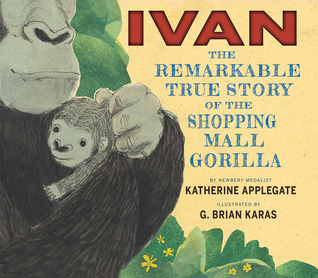
Ivan: The Remarkable True Story of the Shopping Mall Gorilla
Author: Katherine Applegate
Illustrator: G. Brian Karas
Published October 7th, 2014 by Clarion Books

Goodreads Summary: In a spare, powerful text and evocative illustrations, the Newbery medalist Katherine Applegate and the artist G. Brian Karas present the extraordinary real story of a special gorilla.

Captured as a baby, Ivan was brought to a Tacoma, Washington, mall to attract shoppers. Gradually, public pressure built until a better way of life for Ivan was found at Zoo Atlanta. From the Congo to America, and from a local business attraction to a national symbol of animal welfare, Ivan the Shopping Mall Gorilla traveled an astonishing distance in miles and in impact.

This is his true story and includes photographs of Ivan in the back matter

My Review and Teachers’ Tools for Navigation: Anyone who knows me knows that I adore apes (see my Nerdy Book Club Top Ten Ape books and my Hurt Go Happy interview with Ginny Rorby as well as my Hurt Go Happy Primatesand Endangered reviews). They are such fascinating creatures. I enjoy reading about them and am a true advocate for their care here on Earth. This book is just another supporting document in the beauty, intelligence, and awesomeness of these creatures. Katherine Applegate has written a perfect companion to her Newbery winning One and Only Ivan which takes the reader into Ivan’s life and once again makes our heart break for him. It is written in verse with words that transport you into Ivan’s life. This book made me cry because of the power of the words, but more importantly, the power of Ivan’s story. Please read this. You will thank me (and curse Katherine Applegate for the tears).

Teachers’ Tools for Navigation: The best way for this book to be used in the classroom is in conjunction with The One and Only Ivan or other books about animals in captivity or apes. It will start lots of conversation and is a wonderful introduction into empathy for all living things.

Discussion Questions: Why was it wrong for the poachers to take Ivan?; Do you think wild animals should be allowed to be pets?; How do you think Ivan felt when he went to Atlanta?

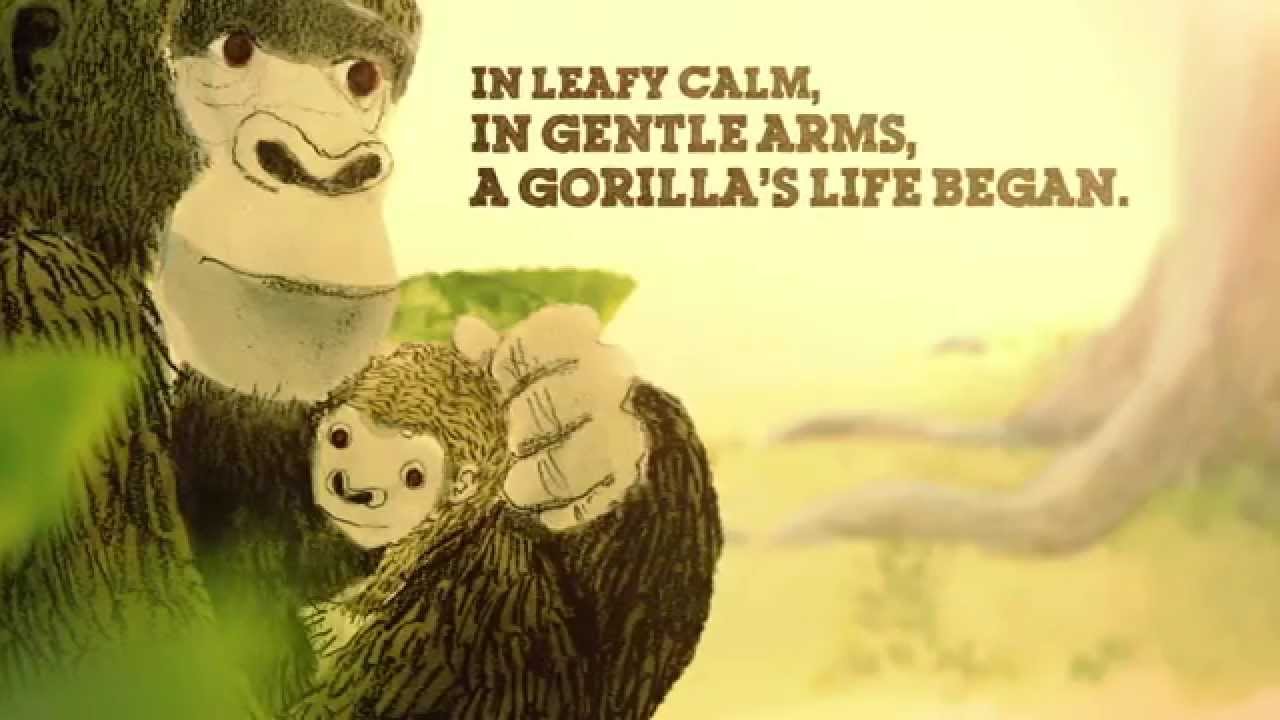
We Flagged: 
Read This If You Loved: The One and Only Ivan by Katherine Applegate, Hurt Go Happy by Ginny Rorby, Endangered and Threatened by Eliot Shrefer, Faithful Elephants by Yukio Tsuchiya, Me…Jane by Patrick McDonnell, Primates by Jim Ottaviani, Little Beauty by Anthony Browne, Half Brother by Kenneth Oppel

Recommended For: 
classroomlibrarybuttonsmall readaloudbuttonsmall closereadinganalysisbuttonsmall

Signature

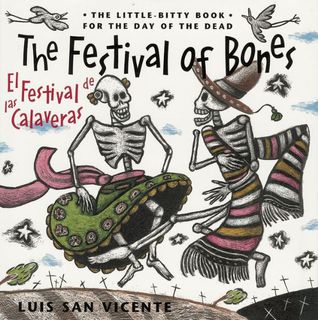
Festival of the Bones / El Festival de las Calaveras: The Book for the Day of the Dead by Luis San Vicente

Share

festival

Festival of the Bones / El Festival de las Calaveras: The Book for the Day of the Dead
Author: Luis San Vincente
Translator: John William Byrd, Bobby Byrd
Published September 1st, 2002 by Cinco Puntos Press

Goodreads Summary: On Mexico’s Day of the Dead, the skeletons jump for sheer joy. And no wonder: they’ve been cooped up the whole year and now they’re ready to party. Watch the calaveras shake, rattle, and roll as they celebrate the biggest event of the graveyard’s social calendar!

About the Author: The works of Mexico City artist Luis San Vicente have been exhibited in Mexico, Venezuela, Europe, and the United States. He has won UNESCO’s prestigious NOMA Encouragement Concours Prize for Illustration, and UNESCO honored his work (1997, 1998, and 1999) in their prestigious Youth and Children’s Catalog of Illustrations.

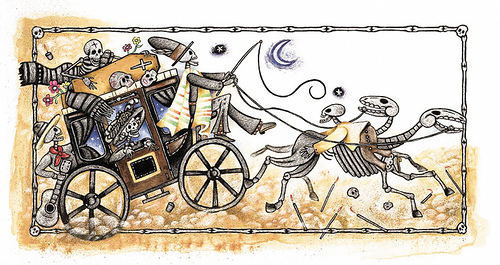
My Review and Teachers’ Tools for Navigation: I first learned about the Day of the Dead when I lived in Texas. My father was the director Laguna Gloria, the art museum in Austin, and I saw some artwork from local Mexican-American artists that depicted the traditional skeleton seen in Day of the Dead art. My father then told me about the holiday and since then I have been quite intrigued with it. San Vicente’s story is a great introduction to the (kind of creepy) holiday, its history, and traditions. The text is in verse with a catchy rhythm and the illustrations are so lively AND it is bilingual. I loved seeing the text in Spanish and English. Then, the afterword further informs the readers about the holiday filling in any gaps left by the story.

Discussion Questions: What did you learn about Mexico’s Day of the Dead? How is it celebrated? What is its history? What food is eaten at the celebrations?

We Flagged: 

“Giddyup! Giddyup!
Oh, they want to catch me.
To that ugly skeleton…
They want to marry me.

¡Arre! ¡Arre!
Oh, me quieren atrapar.
Para esa fea esqueleto …
Ellos quieren que se case conmigo.”

Recommended For: 

readaloudbuttonsmall

Happy Halloween, All Hallows’ Eve, All Saints’ Eve, All Hallows’ Day and Day of the Dead!

Signature

**Thank you to Cinco Puntos Press for providing a copy for review**

Review and Teaching Guide!: El Deafo by Cece Bell

Share

NF PB 2014

Nonfiction Picture Book Wednesday

Nonfiction Picture Book Wednesday is hosted by Kid Lit Frenzy and was started to help promote the reading of nonfiction texts. Most Wednesdays, we will be participating and will review a nonfiction text (though it may not always be a picture book).
Be sure to visit Kid Lit Frenzy and see what other nonfiction books are shared this week!

deafo

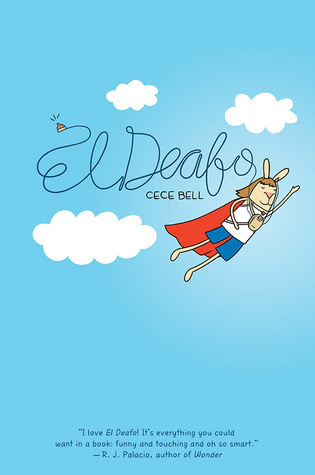
El Deafo
Author: Cece Bell
Published September 2nd, 2014 by Abrams

Publisher Summary: Going to school and making new friends can be tough. But going to school and making
new friends while wearing a bulky hearing aid strapped to your chest? That requires superpowers! In this funny, poignant graphic-novel memoir, author/illustrator Cece Bell chronicles her hearing loss at a young age and her subsequent experiences with the Phonic Ear, a very powerful—and very awkward—hearing aid. The Phonic Ear gives Cece the ability to hear—sometimes
things she shouldn’t—but also isolates her from her classmates. She really just wants to fit in and find a true friend, someone who appreciates her as she is. After some trouble, she is finally able to harness the power of the Phonic Ear and become “El Deafo, Listener for All.” And more importantly, declare a place for herself in the world and fi nd the friend she’s longed for.

Author: Cece Bell has written and illustrated several books for children, including the Geisel Honor book Rabbit & Robot: The Sleepover. She lives in Virginia with her husband, author Tom Angleberger.

My Review: There are times that you read a book and when you are done, you just know that it is a special book. El Deafo is one of those books. As you all know, I am a huge fan of Hurt Go Happy by Ginny Rorby, and one of the reasons I am is because it looks at disabilities in a positive light and shows that a disability is not an end, but just a change. El Deafo is another novel that does this. Although Cece, like Joey in Hurt Go Happy, finds herself deaf at a young age, we see her overcome this blow and turn it into a superpower. But this book is about more than deafness; it is about being a kid, about growing up, about friendship, about ackwardness, about school, about crushes, about family, about life. This book is truth.

Teachers’ Tools For Navigation: There is so much you can do with this graphic novel. Many activities can be found in the teaching guide that I wrote for Abrams. This book is perfect for independent reading, for lit circles  with other graphic novel memoirs, for jigsawing, for read alouds, and for looking deeply into the text.

(Also, and I didn’t want to harp on this because they are both such unique books, but this book will be loved by the readers of Smile. They both look at such an important part of life.)

Discussion Questions: Language Arts:  Cece uses many different kinds of clues to help her lip-read. (pages 30–31) What are the 4 types of clues? How do they help with lip-reading? In what other ways can these clues be helpful?; On page 60, Cece shares an analogy of her friendship with Laura. She feels like a baited fish that is caught on Laura’s hook. What analogies could we make to
describe Cece’s friendship with Ginny? Martha? Emma?; Science: What is meningitis? How can it cause deafness?;  What is an audiologist? What would you have to study to become one?; History/Social Studies: Many deaf and hard of hearing individuals have made history, including Helen Keller, William Ellsworth Hoy, and Juliette Gordon Low. Research these or other deaf or hard of
hearing individuals throughout history and today. How did being deaf affect their lives? What were their accomplishments?

We Flagged: 

01ORIGINSPanelsREVISED
**From Cece Bell’s blog**

Read This If You Loved: Smile and Sister by Raina Telgemeier, The Dumbest Idea Ever! by Jimmy Grownley, I Remember Beirut by Zeina Abirached, Odd Duck by Cecil Castellucci

Recommended For: 

classroomlibrarybuttonsmall readaloudbuttonsmall closereadinganalysisbuttonsmall litcirclesbuttonsmall

Signature

The Man with the Violin by Kathy Stinson (Kellee’s Review)

Share

NF PB 2014

Nonfiction Picture Book Wednesday

Nonfiction Picture Book Wednesday is hosted by Kid Lit Frenzy and was started to help promote the reading of nonfiction texts. Most Wednesdays, we will be participating and will review a nonfiction text (though it may not always be a picture book).
Be sure to visit Kid Lit Frenzy and see what other nonfiction books are shared this week!

violin

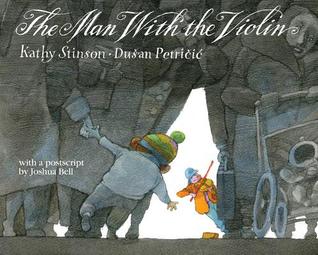
The Man with the Violin
Author: Kathy Stinson
Illustrated: Dušan Petričić
Published August 8, 2013 by Annick Press

Goodreads Summary: “Who is playing that beautiful music in the subway? And why is nobody listening?”

This gorgeous picture book is based on the true story of Joshua Bell, the renowned American violinist who famously took his instrument down into the Washington D.C. subway for a free concert. More than a thousand commuters rushed by him, but only seven stopped to listen for more than a minute. In “The Man With the Violin,” bestselling author Kathy Stinson has woven a heart-warming story that reminds us all to stop and appreciate the beauty that surrounds us.

Dylan is someone who notices things. His mom is someone who doesn’t. So try as he might, Dylan can’t get his mom to listen to the man playing the violin in the subway station. But Dylan is swept away by the soaring and swooping notes that fill the air as crowds of oblivious people rush by. With the beautiful music in his head all day long, Dylan can’t forget the violinist, and finally succeeds in making his mother stop and listen, too.

Vividly imagined text combined with illustrations that pulse with energy and movement expertly demonstrate the transformative power of music. With an afterword explaining Joshua Bell’s story, and a postscript by Joshua Bell himself.

My Review and Teachers’ Tools for Navigation: I must preface by saying that this book is not technically nonfiction. It is based on nonfiction, but the story is actually made up.

Too often our days go by without us slowing down and taking anything in. It may be that we are busy or stressed or late , but it has become too common to see people always rushing wherever they are going. This book shows how much we may be missing out on. It also shows the innocence of childhood, and how we need to allow children to explore and slow down even if we are moving fast. It is wonderful how the illustrations capture this for the reader. Combined with the story, this one definitely hits close to home.

Ricki also had some great thoughts and ideas in her review.

Discussion Questions: This book is an important discussion starter. What have you seen recently that was beautiful that others didn’t notice?; Sit ____ and listen to the sounds around you. What do you hear that is beautiful?; Why do you think people didn’t stop to hear Joshua Bell play?; Why did the author feel this was an important story to turn into a picture book?

Book Trailer: 

Read This If You Loved: The Noisy Paint Box by Barb Rosenstock, Herman and Rosie by Gus Gordon, Marvin Makes Music by Marvin Hamlisch

Recommended For: 

readaloudbuttonsmall classroomlibrarybuttonsmall

Signature

**Thank you to Annick Press and Netgalley for providing a copy for review**

Coyote Summer by J.S. Kapchinske

Share

coyote

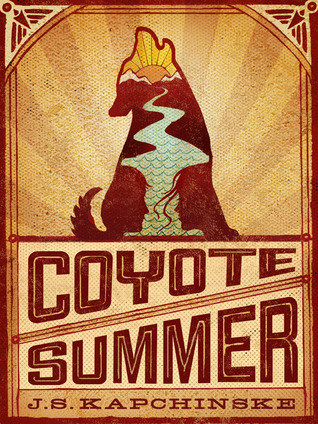
Coyote Summer
Author: J.S. Kapchinske
Published March 17, 2013 by Moon Halo Books

Goodreads Summary: Heath always looked forward to summer visits at Grandpa’s—long days in the wild Rocky Mountains, fishing with Dad on the Piedra River, and nights sleeping on the screened-in porch. Plus this summer, Dad promised to finally tell him the secret about old Mrs. Baylis—a mysterious Native American woman living down the dusty dirt road… But now, after Dad’s accident, it can never happen that way. Heath and his mother go to Grandpa’s, but only to spread Dad’s ashes in the river. 

In the beginning, Heath feels like he’s been swallowed by the raging Piedra, held upside down in some dark and unforgiving eddy. But one day, wandering along the riverbank, he meets Annie, a wild-eyed tomboy who shows him a hidden cave with a litter of orphaned coyote pups. Together they discover the cave holds another secret—one that might help them figure out the mystery of old Mrs. Baylis. During that summer in the mountains, Heath comes to realize there is both beauty and ugliness in the world, sometimes all tangled together. By opening himself up to Annie and the coyotes, he rediscovers hope and joy in this big, beautiful, mixed-up world.

My Review: You have never heard of this book have you? That makes me so sad. How do such wonderful books fly under so many people’s radars? This is a special book that should be in the hands of middle schoolers everywhere! Heath is a character that so many kids will connect with, and his journey would definitely touch them like it did me.

Heath recently lost his father senselessly when he was hit by a drunk driver. The sudden loss of a man that Heath looked up to affects him tremendously, and he is struggling to find himself. Everything he does at his Grandpa’s house reminds him of his dad, and his mom and Grandpa are dealing with the death in a way that makes Heath feel alone.  But during this summer, his coyote summer, he finds his own identity, makes an everlasting friend, and begins to figure out how to deal without his dad. And there are other subplots that run throughout he book that just add to the depth of the narrative such as Annie’s story and the story of Mrs. Baylis.

Teachers’ Tools for Navigation: This book just needs to be shared. It could definitely be read as a read aloud, but it will probably find its home the best in the right students’ hands either through the classroom library or lit circles. Students who love nature, have suffered a loss, or enjoy identity books will find this one is perfect for them.

Discussion Questions: How does finding Annie and the coyotes change Heath’s summer?; Why is Grandpa acting the way he is?; Why was it important for Heath to spend the summer with the coyotes? How did it affect him?

We Flagged: “As we sat there, a heron swooped down on the far bank and began stalking the shallows for fish. He moved slowly and hardly made a ripple when he walked. Then he stretched his long neck over the water, cocked his head, and froze.

“He’s pretty,” the girl said under her breath, as if talking to herself.

Somehow, her saying that made me feel better. “Herons were my dad’s favorite. He told me we should all learn to be patient like one of them.”

“Your dad sounds nice.”

I looked down at my hands and felt that horrible lump in my throat.” (Location 196, Kindle book)

Read This If You Loved: Hoot, Flush, Chomp, or Scat by Carl Hiassen, Lost in the River of Grass by Ginny Rorby, My Side of the Mountain by Jean Craighead George, Hatchet by Gary Paulsen

Recommended For:

classroomlibrarybuttonsmall litcirclesbuttonsmall

Signature

**Thank you to the author for providing a copy for review**

Openly Straight by Bill Konigsberg

Share

openly

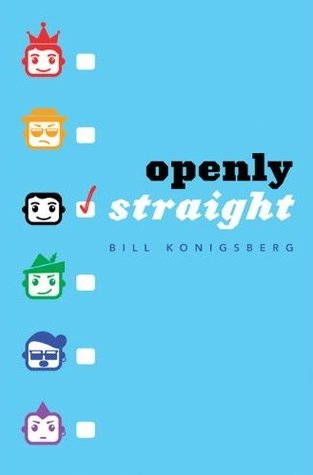
Openly Straight
Author: Bill Konigsberg
Published May 28th, 2013 by Arthur A. Levine Books

Goodreads Summary: A funny, honest novel about being out, being proud . . . and being ready for something else.

Rafe is a normal teenager from Boulder, Colorado. He plays soccer. He’s won skiing prizes. He likes to write.

And, oh yeah, he’s gay. He’s been out since 8th grade, and he isn’t teased, and he goes to other high schools and talks about tolerance and stuff. And while that’s important, all Rafe really wants is to just be a regular guy. Not that GAY guy. To have it be a part of who he is, but not the headline, every single time.

So when he transfers to an all-boys’ boarding school in New England, he decides to keep his sexuality a secret — not so much going back in the closet as starting over with a clean slate. But then he sees a classmate breaking down. He meets a teacher who challenges him to write his story. And most of all, he falls in love with Ben . . . who doesn’t even know that love is possible.

This witty, smart, coming-out-again story will appeal to gay and straight kids alike as they watch Rafe navigate being different, fitting in, and what it means to be himself

Review and Teachers’ Guide to Navigation: This is such a great book! It is written well, very funny, smart, and has an important theme. What blew me away the most is how it was so humorous when dealing with a tough subject, but never lost its maturity and importance. Sometimes if you add humor to a novel, it becomes slap stick or more of a novelty, but Bill Konigsberg does it perfectly in Openly Straight.

As a teacher, what I immediately find myself connecting to was the journal entries from Rafe followed by Mr. Scarborough responses. Mr. Scarbourgh becomes quite an important person in Rafe’s life, and I feel that only through these journals, reflections, and responses that Rafe was able to make it at the new school. I think much of what Mr. Scarborough does with Rafe could be transferred directly into most classrooms.

Discussion Questions: Why did Rafe feel like he needed to hide who he was?; Have you ever felt like you couldn’t be who you really are?; How does Mr. Scarborough play a role in Rafe’s life?; How would you react if you were Ben?

We Flagged: “‘It’s hard to be different,’ Scarborough said. ‘And perhaps the best answer is not to tolerate differences, not even to accept them. But to celebrate them. Maybe then those who are different would feel more loved, and less, well, tolerated.'”

Read This If You Loved: Paper Towns by John Green, The Beginning of Everything by Robyn Schneider, Two Boys Kissing by David Leviathan, Will Grayson, Will Grayson by John Green and David Leviathan, Life in Outer Space by Melissa Kiel

Recommended For: 

readaloudbuttonsmall closereadinganalysisbuttonsmall classroomlibrarybuttonsmall

Signature

The Invisible Boy by Trudy Ludwig

Share

invisible

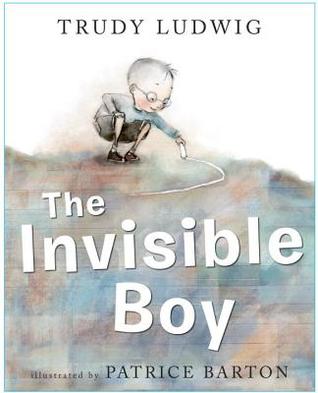
The Invisible Boy
Author: Trudy Ludwig
Illustrator: Patrice Barton
Published October 8th, 2013 by Alfred A. Knopf

Goodreads Summary: Meet Brian, the invisible boy. Nobody ever seems to notice him or think to include him in their group, game, or birthday party . . . until, that is, a new kid comes to class.

When Justin, the new boy, arrives, Brian is the first to make him feel welcome. And when Brian and Justin team up to work on a class project together, Brian finds a way to shine.

From esteemed author and speaker Trudy Ludwig and acclaimed illustrator Patrice Barton, this gentle story shows how small acts of kindness can help children feel included and allow them to flourish. Any parent, teacher, or counselor looking for material that sensitively addresses the needs of quieter children will find The Invisible Boy a valuable and important resource. 

Includes backmatter with discussion questions and resources for further reading. 

Review: Wow. This book affected me, so I know it would affect students. Although this is a book aimed at helping students think about how they affect others, there was one scene, early on, that shows Brian being ignored by everyone including his teacher which made me even sadder. It is so important for everyone, adults included, to think about how they treat or ignore others.

The other thing that I thought was brilliant was the way the illustrations were done. Brian comes to life actually right in front of our eyes. Such a smart way to visually show the moral of the story.

If you have not read this book yet, get it from your library or just go ahead and purchase it. You will not regret it.

Teachers’ Tools for Navigation: This book needs to be added to any kindness or empathy units out there right now. When I go back into the classroom, I will include it when I read Each Kindness, Because Amelia Smiled, and Stand Tall, Molly Lou Melon (check out my post on how I use Each Kindness in my middle school classroomInvisible Boy will fit perfectly.)

The author also includes recommended reading for adults and kids as well as wonderful Questions for Discussion in the back of the book.

Discussion Questions: (Found in the backmatter of the book) How many kids did it take in this story to help Brian begin to feel less invisible?; What specifically did Justin do to make Brian feel less invisible?; Are there kids in your class, grade, or school who you see being treated as if they are invisible? If yes, what could you do to make them feel more valued and appreciated?

We Flagged: 

Read This If You Loved: Each Kindness by Jacqueline Woodson, Stand Tall, Molly Lou Melon by Patty Lovell, Because Amelia Smiled by David Ezra Stein, Unicorn Thinks He’s Pretty Great by Bob Shea

Recommended For: 

readaloudbuttonsmall litcirclesbuttonsmall classroomlibrarybuttonsmall

Signature