How It Went Down by Kekla Magoon

Share

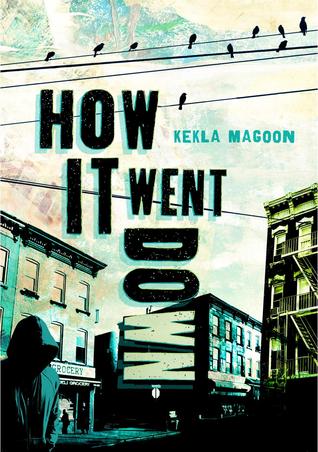
how it went down

How It Went Down
Author: Kekla Magoon
Published: October 21, 2014 by Henry Holt and Co.

Goodreads Summary: When sixteen-year-old Tariq Johnson dies from two gunshot wounds, his community is thrown into an uproar. Tariq was black. The shooter, Jack Franklin, is white.

In the aftermath of Tariq’s death, everyone has something to say, but no two accounts of the events line up. Day by day, new twists further obscure the truth.

Tariq’s friends, family, and community struggle to make sense of the tragedy, and to cope with the hole left behind when a life is cut short. In their own words, they grapple for a way to say with certainty: This is how it went down.

Ricki’s Review: In light of the recent protests, this is an incredibly insightful book that is very important. The point-of-view shifts every 2-3 pages, which was very thought-provoking. Too often, books depict stereotypical portrayals of members of cultures, and the gamut of characters within this text felt very realistic. For some, this book may be too gritty and too uncomfortable. There is nothing comfortable about discussions regarding inequities and privilege in society. But if you walk down the halls of my high school, there is nothing in the book that is not a concern in schools. This is not a feel-good read, but it made me think. And thinking…is a very good thing.

Teacher’s Tools for Navigation: There is much to discuss in this book. Teachers could use it to start conversations about power and privilege. There are a lot of discrepancies between the characters’ perceptions of the shootings, and I imagine students would disagree about what happened. Teachers might elect to hold a verbal or silent debate. Also, I would love to discuss the structure of the text. The creativity in the form is purposeful, and it would be interesting for students to investigate why Magoon structured it in the way she did.

Discussion Questions: Why does Magoon structure the novel with alternating voices? How is the novel structured as a whole?; Does this story serve as a counter-narrative? If so, how? If not, why not?; Did Tariq have a gun in his hand? Why do/don’t you think so?; How does the story evolve as time passes?

We Flagged: “As a black man, you have to keep your head down. You have to keep yourself steady. You have to follow every rule that’s ever been written, plus a few that have always remained unspoken.”

Read This If You Loved: The Outsiders by S.E. Hinton, On the Run by Alice Goffman, The New Jim Crow: Mass Incarceration in the Age of Colorblindness by Michelle Alexander, Monster by Walter Dean Myers, The Brothers Torres by Coert Voorhees, Autobiography of my Dead Brother by Walter Dean Myers

Recommended For:

 litcirclesbuttonsmall classroomlibrarybuttonsmall

RickiSig

Blog Tour with Review, Giveaway, and Author’s Guest Post!: Emmanuel’s Dream: The True Story of Emmanuel Ofosu Yeboah by Laurie Ann Thompson

Share

NFPB2015

Nonfiction Picture Book Wednesday is hosted by Kid Lit Frenzy and was started to help promote the reading of nonfiction texts. Most Wednesdays, we will be participating and will review a nonfiction text (though it may not always be a picture book).
Be sure to visit Kid Lit Frenzy and see what other nonfiction books are shared this week!

emmanuel

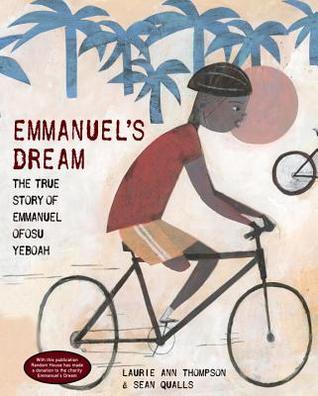
Emmanuel’s Dream: The True Story of Emmanuel Ofosu Yeboah
Author: Laurie Ann Thompson
Illustrator: Sean Qualls
Published January 6th, 2015 by Schwartz & Wade

Goodreads Summary: Emmanuel Ofosu Yeboah’s inspiring true story—which was turned into a film, Emmanuel’s Gift, narrated by Oprah Winfrey—is nothing short of remarkable.

Born in Ghana, West Africa, with one deformed leg, he was dismissed by most people—but not by his mother, who taught him to reach for his dreams. As a boy, Emmanuel hopped to school more than two miles each way, learned to play soccer, left home at age thirteen to provide for his family, and, eventually, became a cyclist. He rode an astonishing four hundred miles across Ghana in 2001, spreading his powerful message: disability is not inability. Today, Emmanuel continues to work on behalf of the disabled.

Thompson’s lyrical prose and Qualls’s bold collage illustrations offer a powerful celebration of triumphing over adversity.

Includes an author’s note with more information about Emmanuel’s charity.

Emmanuel Ofosu Yeboah quote_Unleashing Readers

Author’s Bio: Laurie Ann Thompson is the author of Be a Changemaker: How to Start Something That Matters, a how-to guide for teens who want to change the world. An advocate for social justice, Laurie is dedicated to inspiring and empowering young readers. Emmanuel’s Dream is her picture-book debut. Visit her at lauriethompson.com.

lauriethompson_PhotoByMaryBalmaceda (2)

Kellee’s Review and Teachers’ Tools for Navigation: Emmanuel is inspiring. It is no wonder that Laurie Ann Thompson wrote this story: Emmanuel is truly a changemaker. What gets me about Emmanuel’s story is that he never gives up even when faced with challenges that most of us would crumble under. He proves that kids can make a tremendous difference and that we should be strong in the face of hardships.

Laurie Ann Thompson and Sean Qualls did an amazing job on this text. The story is perfectly paced and truly takes readers on Emmanuel’s journey with him. Additionally, the illustrations are pieces of artwork. I think mixed media was the perfect form for the story.

Please read this story to your students. Talk about Emmanuel, talk about the theme of his story, talk about how he changed the world, and talk about how anyone can do the same.

Ricki’s Review and Teachers’ Tools for Navigation: As Kellee said, this is an inspirational story about a boy who refuses to be overcome by his disability. Others tell him he should just become a beggar, but he is determined to be the best he can be. The illustrations are absolutely beautiful, and the story flows well. Students will find hope and strength in Emmanuel’s strong, resilient spirit.

There aren’t enough books about disabilities in classrooms, and this frustrates me as a teacher. Frankly, there aren’t enough books being published about disabilities–both physical and mental. After reading this book, students could be encouraged to research about different individuals who have been strong in the face of disability. Then, as students share these stories with the class, students will learn lessons of bravery and resilience.

A CCSS-aligned curriculum guide is available at http://www.scribd.com/doc/251881365/Emmanuel-s-Dream-Curriculum-Guide#scribd

Discussion Questions: What adjectives would describe Emmanuel?; How has Emmanuel changed life for himself and other people with disabilities in Ghana or worldwide?; How does Emmanuel show strength—both physically and emotionally? Can you relate him to anyone in your life?

We Flagged: “…He would honor them by showing everyone that being disabled does not mean being unable. It was a big dream, but Emmanuel had a plan.”

Read This If You Loved: Be a Changemaker by Laurie Ann Thompson, A Long Walk to Water by Linda Sue Park, So Long a Letter by Mariama Ba, The Queen of Water by Laura Resau, Now is the Time for Running by Michael Williams, Soccer Star by Mina Javaherbin, Mama Miti by Donna Jo Napoli

Recommended For: 

readaloudbuttonsmall classroomlibrarybuttonsmall litcirclesbuttonsmall

Author Guest Post

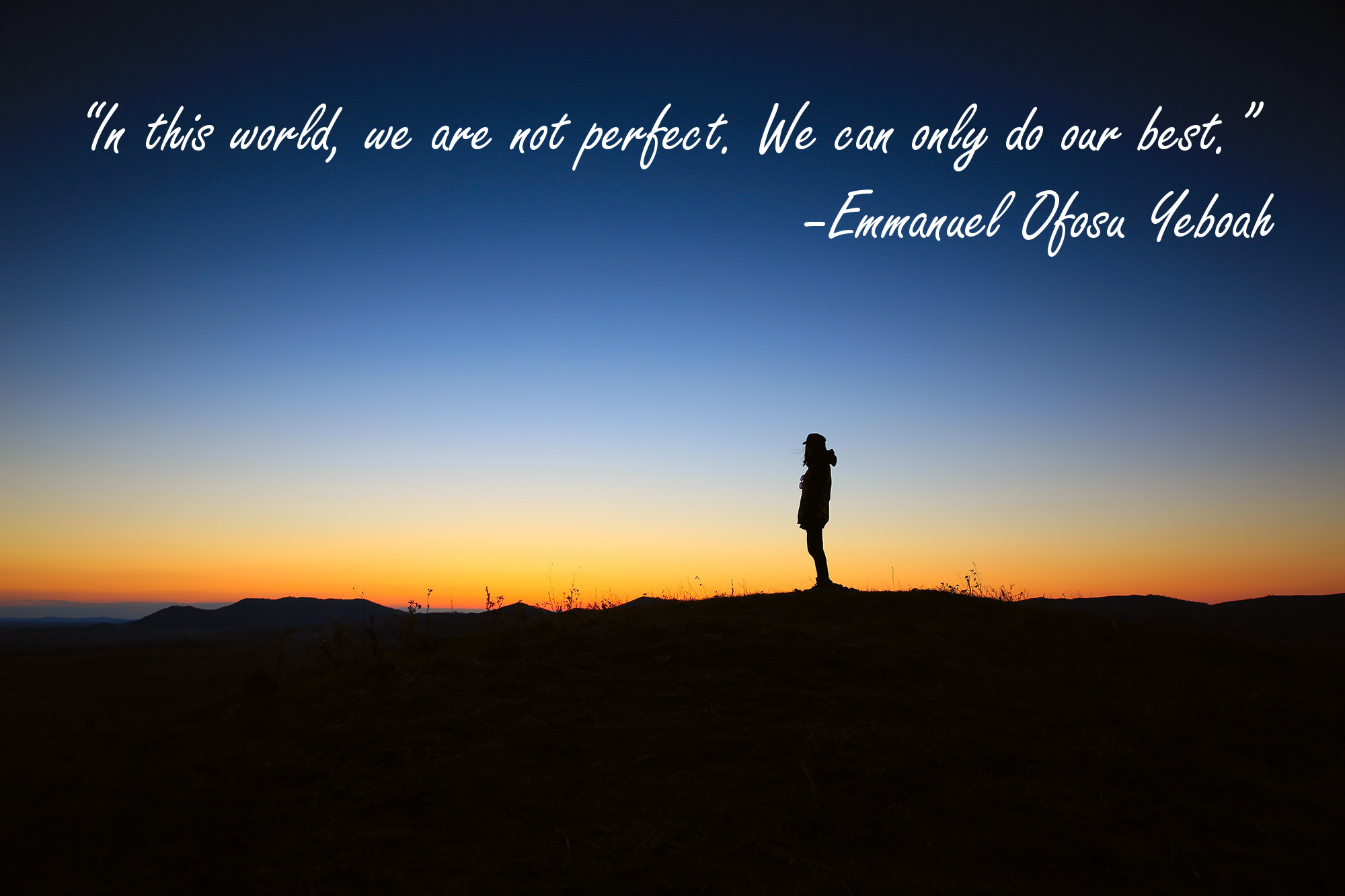
At the very end of Emmanuel’s Dream, you’ll find this quote:

“In this world, we are not perfect. We can only do our best.” –Emmanuel Ofosu Yeboah

I chose to include that quote from Emmanuel because I think it exemplifies Emmanuel’s attitude toward life, but also because it was an important lesson for me to learn in my life… and it’s one I still need to be reminded of sometimes.

When I was a child, I was a perfectionist. I would never raise my hand in class. I always chose comfortable options over more challenging ones. I lived in constant fear of making a mistake—any mistake, in any area of my life. Of course, I still made them, and each one haunted me.

After college I got a job as a software engineer. In programming, I soon discovered, there’s no such thing as perfect. Every decision comes with a trade-off: better performance vs. flashy bells-and-whistles, a sooner delivery date vs. adding more features, a clean and simple design vs. a complex and robust one, cross-platform portability vs. the benefits of customization. You learn to do the best you can for the user in the time you have available. And, always, you know there will be bugs.

When I got involved in entrepreneurship, imperfection still ruled. Most startups fail, and successful entrepreneurs accept that, preparing themselves mentally (and financially) to try and try again until they find something that sticks. Even then, they’re often forced to make decisions quickly without having all the relevant information but knowing that to wait would also risk failure.

And now, with writing, perfection is just as hard to come by. Deadlines can cause us to put things out before we’re ready. Even without the pressure of a deadline, knowing when something is good enough to take to the next level is a guessing game. And what’s “good,” anyway? Despite years of working on them and dozens—if not hundreds—of revisions, copyedits, and proofs, there are still things I wish I could go back and change about each of my published books. I love them, but they can never be perfect.

What all of this has taught me is that it’s far better to do something and fail than to do nothing at all just because you were too worried about making a mistake. Worrying never does anyone any good, and the stress from it can actually harm you. But when you DO something, you learn, whether you succeed or not. You move forward, and you help everyone else following along behind. It’s not about perfection: it’s about progress.

I hope readers of Emmanuel’s Dream (and readers of this blog post!) will be inspired to follow their own dreams,  that they’ll accept that they’re not perfect but resolve to do their best anyway. Maybe just doing our best is—in its own way—the very perfection we are seeking.

Follow all the stops on Laurie’s blog tour!
 
Mon, Jan 12
Great Kid Books
Tues, Jan 13
5 Minutes for Books
Wed, Jan 14
Unleashing Readers
Thurs, Jan 15
Sharpread
Fri, Jan 16
Cracking the Cover
Sat, Jan 17
Booking Mama
Mon, Jan 19 (MLK Jr bday)
Once Upon a Story
Tues, Jan 20
Proseandkahn
Wed, Jan 21
Geo Librarian
Thurs, Jan 22
Nonfiction Detectives
Fri, Jan 23
The Fourth Musketeer
Mon, Jan 26
NC Teacher Stuff
Tues, Jan 27
Teach Mentor Texts

GIVEAWAY

a Rafflecopter giveaway

Signature andRickiSig

**Thank you to Barbara at Blue Slip Media for providing copies for review and to Laurie Ann Thompson for her guest post!**

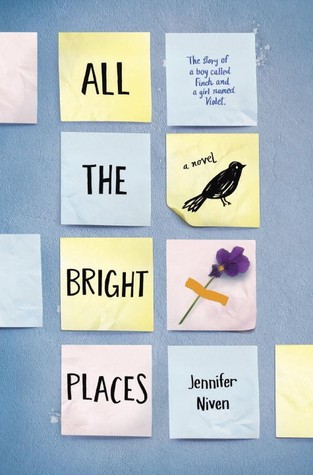
All the Bright Places by Jennifer Niven

Share

all the bright places

All the Bright Places
Author: Jennifer Niven
Published: January 6, 2015 by Knopf

Goodreads Summary: The Fault in Our Stars meets Eleanor and Park in this compelling, exhilarating, and beautiful story about a girl who learns to live from a boy who intends to die.

Theodore Finch is fascinated by death, and he constantly thinks of ways he might kill himself. But each time, something good, no matter how small, stops him.

Violet Markey lives for the future, counting the days until graduation, when she can escape her Indiana town and her aching grief in the wake of her sister’s recent death.

When Finch and Violet meet on the ledge of the bell tower at school, it’s unclear who saves whom. And when they pair up on a project to discover the “natural wonders” of their state, both Finch and Violet make more important discoveries: It’s only with Violet that Finch can be himself—a weird, funny, live-out-loud guy who’s not such a freak after all. And it’s only with Finch that Violet can forget to count away the days and start living them. But as Violet’s world grows, Finch’s begins to shrink.

This is an intense, gripping novel perfect for fans of Jay Asher, Rainbow Rowell, John Green, Gayle Forman, and Jenny Downham from a talented new voice in YA, Jennifer Niven.

Ricki’s Review: A publishing representative who I deem to be a friend pressed this book into my hand. “Read it,” she insisted. She told me I would want to curl up into a ball in my bed and fall into this book. I fell hard. The writing is incredible. I hate to compare books with others because it creates a sense of expectation that often goes unfulfilled for future readers, but I couldn’t help but consider comparisons with my all-time favorite YA texts. The quirky nature of the characters reminded me of Pudge, Alaska, Charlie, Eleanor, and Park. The direction of the plot reminded me of other titles (which will remain unnamed to prevent spoilers). But I cannot compare this book to others because while it allowed to me reminisce about my favorite titles, it was quite different. The deep, honest, hard-hitting depiction of mental illness was enough to take my breath away. I felt rage that made me want to punch my mattress; I felt sadness that made me feel a hopeless sense of emptiness; but above all, I felt the power of love, loyalty, and friendship that made my heart both ache and swell. This is an unforgettable book. I suspect it will be the book that everyone will be talking about this year and for years to come.

Teacher’s Tools for Navigation: Mental illness and bullying are pervasive in our schools. We can’t teach enough books about these themes because they are incredibly relevant for young people. As a former teacher, I was jealous of the teacher who created the assignment for Violet and Finch, and I wanted to do it with my former students. It would be so neat to duplicate this project while students read the book. Additionally, I think students would benefit from creating their own version of the post-it collages that Violet and Finch make. As an alternative, I would consider having students research the warning signs of suicide and finding these instances in the text. There are so many themes for the students to consider, the teaching categories at the top and tags at the bottom of this post show a variety of different directions a teacher might take with the instruction of this text.

Access the book’s website to share your bright place or read Germ MagazineThe educator guide also has CCSS tie-ins.

Discussion Questions: What is the end message of this book? What is the author’s purpose?; What foreshadowing does Niven provide?; How do Violet’s family members show their grief in different ways?; Do you agree with the ending? Would you change it? Why do you think Niven ended the book in the way she did?

We Flagged: “It’s my experience that people are a lot more sympathetic if they can see you hurting, and for the millionth time in my life I wish for measles or smallpox or some other easily understood disease just to make it easier on me and also on them.”

**Please note: The above quotation is from an advanced reader copy. The quotation may change in the final published form of the text.**

Read This If You Loved: Looking for Alaska by John Green, Eleanor and Park by Rainbow Rowell, Dr. Bird’s Advice for Sad Poets by Evan Roskos, The Fault in Our Stars by John Green, Forgive Me, Leonard Peacock by Matthew Quick, It’s Kind of a Funny Story by Ned Vizzini, The Perks of Being a Wallflower by Stephen Chbosky, Twisted by Laurie Halse Anderson, Everybody Sees the Ants by A.S. King, Burn by Suzanne Phillips

Recommended For:

 closereadinganalysisbuttonsmall litcirclesbuttonsmall classroomlibrarybuttonsmall

RickiSig

Rain Reign by Ann M. Martin (Kellee’s Review)

Share

rain

Rain Reign
Author: Ann M. Martin
Published October 7th, 2014 by Feiwel & Friends

Goodreads Summary: In her most powerful novel yet, Newbery Honor author Ann M. Martin tells the story of girl with mental/emotional challenges and the dog she loves.

Rose Howard has OCD, Asperger’s syndrome, and an obsession with homonyms (even her name is a homonym). She gave her dog Rain a name with two homonyms (Reign, Rein), which, according to Rose’s rules of homonyms, is very special. Rain was a lost dog Rose’s father brought home. Rose and Rain are practically inseparable. And they are often home alone, as Rose’s father spends most evenings at a bar, and doesn’t have much patience for his special-needs daughter.

Just as a storm hits town, Rain goes missing. Rose’s father shouldn’t have let Rain out. Now Rose has to find her dog, even if it means leaving her routines and safe places to search. Rose will find Rain, but so will Rain’s original owners.

Hearts will break and spirits will soar for this powerful story, brilliantly told from Rose’s point of view.

My Review and Teachers’ Tools for Navigation: If you have read A Corner of the Universe,  you know what an emotionally-charged author Ann M. Martin can be, and she once again tells a heart-wrenching story with a voice that will not leave your head. In Rain Reign, Martin tackles Rose’s story. Rose is such a true character. A brilliant young girl with OCD and Asperger’s syndrome who is obsessed by homonyms. She is a girl that is so unique and intriguing. As a teacher, I very much connected with her and how I would nurture her gifts within my classroom; however, I also saw the challenges that Rose faces as well.

What makes this book truly stand out is the first person point of view. You, as the reader, are in Rose’s mind and living her life. You experience the neglect of her father, the love of Reign, the obsessiveness, the homonyms, the outbursts, and the support of her uncle. Because I was IN her life, I just couldn’t put down the book. I had to know that Rose and Rain were going to be okay.

As a teacher, I want kids to read this book because they will fall in love with Rose and Rain. Through this love, they will build empathy in their hearts because they will just want to know that Rose and Rain will be okay.

Ricki’s Review: Check out Ricki’s Review here!

Discussion Questions: How do you feel about Rose’s dad?; Can you think of homonyms that weren’t mentioned in the book?; Do you think it was right of Rose’s dad to take Rain?; How would you feel if your dog disappeared?

We Flagged: “I’m going to tell you a story. It’s a true story, which makes it a piece of nonfiction.

This is how you tell a story: First you introduce the main character. I’m writing this story about me, so I am the main character.

My first name has a homonym, and I gave my dog a homonym name too. Her name is Rain, which is special because it has two homonyms–rein and reign. I will write more about Rain in Chapter Two. Chapter Two will be called “My Dog, Rain (Rein, Reign).”

Something important about the word write is that is has three homonyms–right, rite, and wright. That’s the only group of four homonyms I’ve thought of. If I ever thing of another four-homonym group, it will be a red-letter day.” (Chapter One)

Read This If You Loved: Rules by Cynthia Lord, Wonder by R.J. Palacio, Mockingbird by Kathryn Erskine, Out of my Mind by Sharon Draper, Each Kindness by Jaqueline Woodson

Recommended For: 

classroomlibrarybuttonsmall readaloudbuttonsmall litcirclesbuttonsmall

Signature

Blog Tour, Review, and Author Q&A!: Bramble and Maggie Series by Jessie Haas

Share

bramble1 bramble2 bramble3

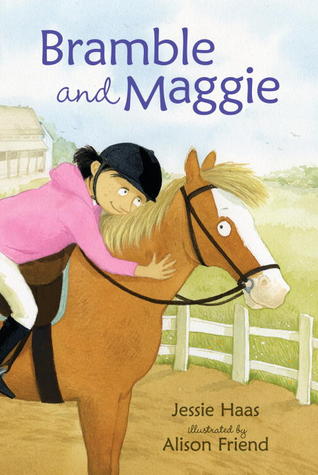
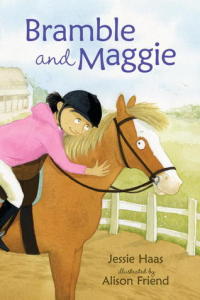
Bramble and Maggie: Horse Meets Girl
Published March 27th, 2012 by Candlewick Press
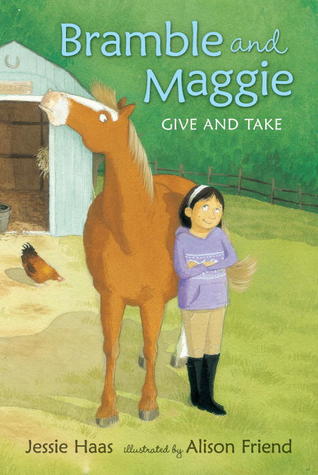
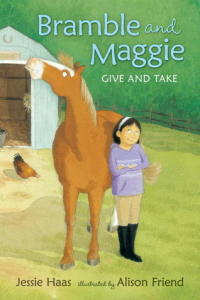
Bramble and Maggie: Give and Take
Published April 23, 2013 by Candlewick Press
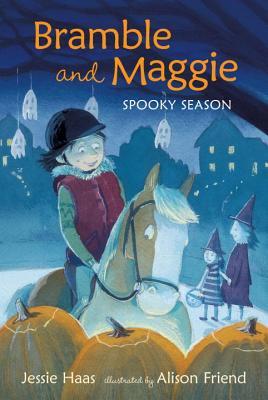
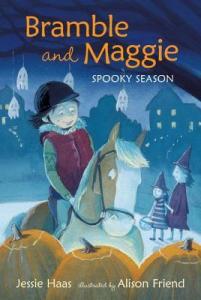
Bramble and Maggie: Spooky Season
Published August 12th, 2014 by Candlewick Press
Author: Jessie Haas
Illustrator: Alison Friend

Bramble and Maggie: Horse Meets Girl Goodreads Summary: Come along for a spirited ride as Bramble – a horse with interesting “little ways”- and her devoted girl, Maggie, make their debut in this inviting early reader.

Maggie wants a pony to ride and take care of, and to prepare she’s been reading a big book on horse care. Meanwhile, Bramble is bored with giving riding lessons and walking in circles. She’s looking for just the right person to take her away from her routine. Is it a perfect match? Maggie loves Bramble as soon as she sees her, but there are some things Bramble has to be sure of. Will Maggie let Bramble venture into new places? Will she protect Bramble from strange objects in the yard? Will she, most importantly, know when Bramble needs her undivided attention? This charming and funny early reader is an ideal match for young animal lovers and anyone who has ever longed for a friend who truly understands.

Bramble and Maggie: Give and Take Goodreads Summary: Maggie and her mischievous horse, Bramble, are back for another spirited romp through the ins and outs of friendship.

Maggie loves introducing her new horse, Bramble, to the neighborhood, the beach, and the backyard. Bramble has fun too, once she is cajoled into participating by a well-timed carrot or two. But when Maggie has to go to school, Bramble is bored and lonely and gets into some trouble with Mr. Dingle next door. A misbehaving hen and a midnight visitor finally help to turn Bramble into a good neighbor. This charming and funny early reader flows at just the right pace for kids who are learning that others don’t always do exactly what you want, but that friends find a way to give and take.

Bramble and Maggie: Spooky Season Goodreads Summary: Bramble, a persnickety but lovable horse, and Maggie, her patient owner, build an even stronger friendship as they brave the surprises of autumn.

In their third adventure, Bramble and Maggie explore a new season together — fall! Leaves crunch underfoot. Acorns ping off rooftops. It all makes Bramble feel wonderfully spooky. But Bramble’s frisky-pretend-scary gait makes Maggie jumpy, and soon Bramble really is nervous. There are alarming new sights and sounds everywhere, like Mr. Dingle’s scarecrow. When Maggie takes a fall, will she want to get back in the saddle? And when Halloween comes, can Maggie trust Bramble to brave the tricks and lead them both safely to the treats?

Kellee’s Review: There is a very specific time in a kid’s life where they are ready to begin reading longer books, but not ready to tackle chapter books yet. This is where Bramble and Maggie fits. These early chapter books will are perfect texts to help lead kids to longer chapter books. The work well for their targeted age level in that they never speak down to readers and have excellently paced stories that hold readers’ attention and will help them feel successful.  On top of all this, the Bramble and Maggie stories are just so sweet! I love all the different adventures they go on and the lessons they learn like overcoming fear, conquering loneliness, and gaining responsibility. Readers will adore these books. 

Ricki’s Review: Kellee hit the nail on the head. As I was reading, I thought to myself, “Why didn’t I have these books available to me when I was transitioning to chapter books?” I remember being devastated that my books no longer had pictures in them, and I resisted the longer texts for this reason. This series is engaging, educative, and fun! The words repeat in ways that will help students learn the vocabulary, particularly the more difficult words that relate to horses. Each book delivers a strong message, and the bond between Bramble and Maggie is one which will connect with readers. When I think about these books, I will always remember Maggie dragging her sleeping bag to the stable to sleep beside Bramble. I can’t wait to share these books with my pre-service elementary school teachers. They will have a special place in classrooms.

Teachers’ Tools for Navigation: Readers would be wise to explore how Haas develops theme in these texts. Each individual book has a different theme, and the content beautifully incorporates the messages. These books would be great models for students to learn about implicit versus explicit themes.

Discussion Questions: What lessons has Maggie learned since she has gotten Bramble? What lessons has Bramble learned since he’s met Maggie?; How has Bramble changed since he went to live with Maggie?; In what ways does the author show the bond of friendship throughout the books?

We Flagged: “Bramble lowered her head. Maggie gave her a carrot, and Bramble took it. She let Maggie put on the bridle. This was better. Give and take” (p. 9 of Bramble and Maggie: Give and Take)

Read This If You Loved: The Franklin School Friends series by Claudia Mills, The Pony Mysteries series by Jeanne Betancourt, and The Pony Scout series by Catherine Hapka

Recommended For:

  litcirclesbuttonsmall classroomlibrarybuttonsmall

Q & A with Jessie Haas

What inspired you to write this series? What inspired you to write about a horse?

I was inspired by two things in writing the Bramble and Maggie books. First, I had a story rejected by Candlewick, but with a request attached. The editor had girls who loved horses and horse books and had read some of mine and they noticed that they were always checked out of the public library. So Candlewick asked if I would like to write a couple of books for beginning readers.

At the time I had just gotten a new horse, Robin. She has a somewhat prickly personality, which I think inspired Bramble’s name, and the way horses and people mesh with each other was on my mind. Of course, I knew my version of events, but I’m always aware that horses have their own points of view, so the story would need to be told from both Bramble’s and Maggie’s perspectives.

What was it like to work with an illustrator? What does the process look like?

Like most authors, I don’t actually “work with” the illustrator. The editor and I work until we have a solid draft. Then the text is sent to the illustrator and she sends sketches. When the editor and I see them, it becomes obvious where we need to add or drop words (usually drop) to make space on the page. A lot of times, the art is telling the story already, and that makes some of the words unnecessary.

Alison Friend lives in England, so we did have one big change she needed to make in the first book. The wonderful picture at the beginning of Chapter Two, with Maggie and her family in the car, had the steering wheel on the right, as in British cars. I must admit, it took me a few times looking at the pictures to spot that. The pencil sketches are always funny and energetic, but the magic happens when Alison begins to paint, and it is always tremendously exciting to see the finished pages. And I got to see the original art for Spooky Season, which was thrilling. I think Spooky Season is one of the most beautiful books I have ever had published.

How do you envision your texts being taught in classrooms? Do you have any suggestions for our viewers who are teachers?

I’m usually stumped by that question. Now, though, I have a great new curriculum guide (it’s a free download on my website) I love some of the ideas there. Spooky Season, the newest book, explores the theme of fear—how we pretend to be afraid (for fun), how we scare ourselves (for fun), and how we sometimes get really scared—and that’s not fun! Bramble is truly afraid of some Halloween decorations like Mr. Dingle’s scarecrow—until she finds out it’s good to eat

Maggie runs into the situation every horseman faces sooner or later. You fall off, and you know you’re supposed to get right back on, or the fear will grow and you might not be able to. That’s easier said than done, of course. But Bramble takes care of Maggie the way good horses do, and Maggie has the experience that I remember from my own life as my very first time confronting and overcoming fear. These are great discussions to have around Halloween.

For Give and Take, the discussion is more about a truly basic issue in children’s—indeed, everyone’s—lives: power. Bramble feels that no one should be the boss all of the time. There should be some give and take. As well as story sequencing discussions, this is a chance for children to talk about—and draw—a time in their own lives when they learned to share, and give a little.

And Horse Meets Girl has a wonderful activity where children are encouraged to imagine, describe and draw their ideal pet. I also love the idea of Maggie needing a babysitter for Bramble, which could be a springboard for kids writing their own stories. The curriculum guide was created for me by Blue Slip Media, working with an educational consultant who’s also an elementary school teacher, and it’s keyed to Common Core curriculum standards—so it’s educationally sound as well as fun.
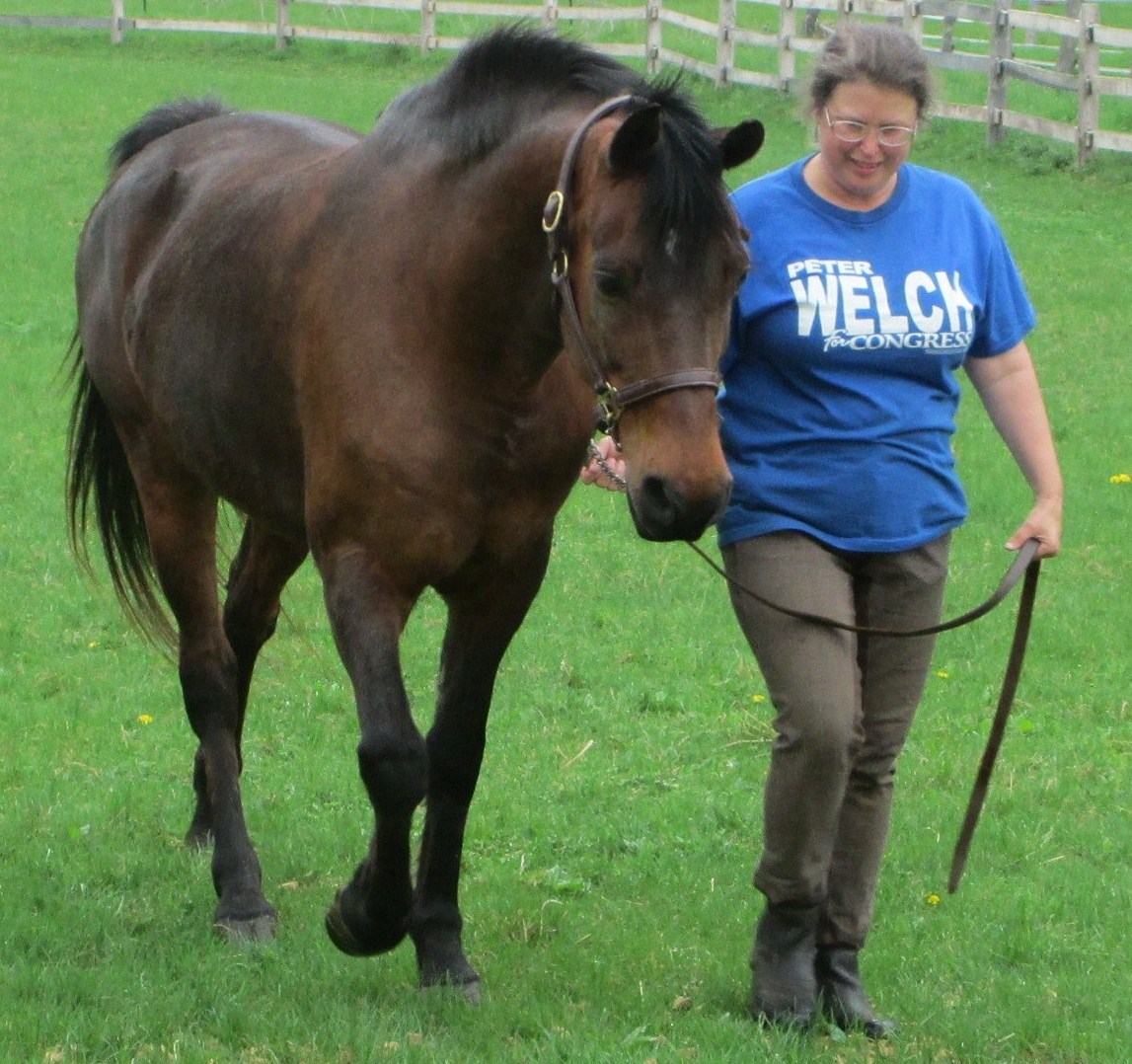
Jessie Haas 2 Jessie Haas w horse

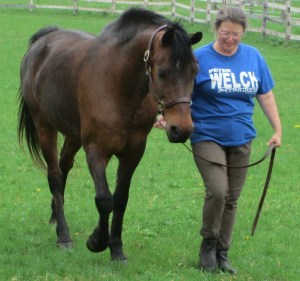
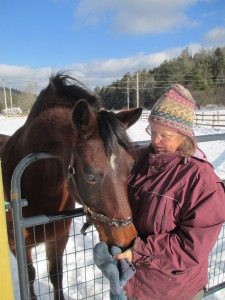
Jessie Haas has always loved horses and has written more than thirty books, most of them about horses, including the first two books ab out Bramble and Maggie. She says, “Horses love pretending to be scared, just like us, and fall is the perfect season for that. Why do they call it fall?” Jessie Haas lives in Vermont with her husband, writer Michael J. Daley; her horse; two cats; a dog; and a hen. For more information, and to download a free curriculum guide, visit her website: http://www.jessiehaas.com/.

RickiSigand Signature

**Thank you to Barbara at Blue Slip Media and Jessie Haas for having us as part of the blog tour!**

Review and Teaching Guide!: El Deafo by Cece Bell

Share

NF PB 2014

Nonfiction Picture Book Wednesday

Nonfiction Picture Book Wednesday is hosted by Kid Lit Frenzy and was started to help promote the reading of nonfiction texts. Most Wednesdays, we will be participating and will review a nonfiction text (though it may not always be a picture book).
Be sure to visit Kid Lit Frenzy and see what other nonfiction books are shared this week!

deafo

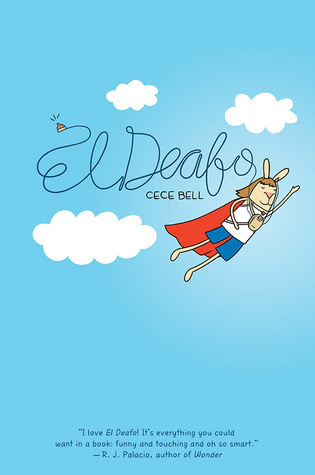
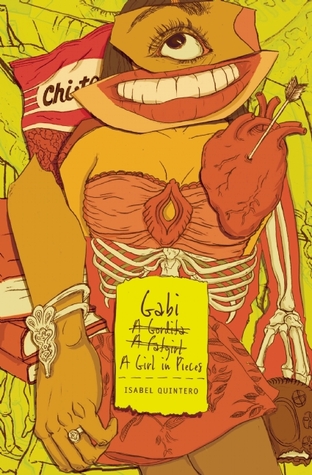
El Deafo
Author: Cece Bell
Published September 2nd, 2014 by Abrams

Publisher Summary: Going to school and making new friends can be tough. But going to school and making
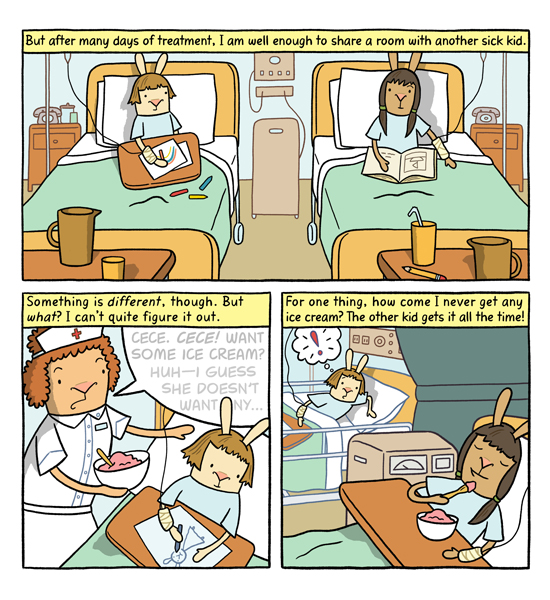
new friends while wearing a bulky hearing aid strapped to your chest? That requires superpowers! In this funny, poignant graphic-novel memoir, author/illustrator Cece Bell chronicles her hearing loss at a young age and her subsequent experiences with the Phonic Ear, a very powerful—and very awkward—hearing aid. The Phonic Ear gives Cece the ability to hear—sometimes
things she shouldn’t—but also isolates her from her classmates. She really just wants to fit in and find a true friend, someone who appreciates her as she is. After some trouble, she is finally able to harness the power of the Phonic Ear and become “El Deafo, Listener for All.” And more importantly, declare a place for herself in the world and fi nd the friend she’s longed for.

Author: Cece Bell has written and illustrated several books for children, including the Geisel Honor book Rabbit & Robot: The Sleepover. She lives in Virginia with her husband, author Tom Angleberger.

My Review: There are times that you read a book and when you are done, you just know that it is a special book. El Deafo is one of those books. As you all know, I am a huge fan of Hurt Go Happy by Ginny Rorby, and one of the reasons I am is because it looks at disabilities in a positive light and shows that a disability is not an end, but just a change. El Deafo is another novel that does this. Although Cece, like Joey in Hurt Go Happy, finds herself deaf at a young age, we see her overcome this blow and turn it into a superpower. But this book is about more than deafness; it is about being a kid, about growing up, about friendship, about ackwardness, about school, about crushes, about family, about life. This book is truth.

Teachers’ Tools For Navigation: There is so much you can do with this graphic novel. Many activities can be found in the teaching guide that I wrote for Abrams. This book is perfect for independent reading, for lit circles  with other graphic novel memoirs, for jigsawing, for read alouds, and for looking deeply into the text.

(Also, and I didn’t want to harp on this because they are both such unique books, but this book will be loved by the readers of Smile. They both look at such an important part of life.)

Discussion Questions: Language Arts:  Cece uses many different kinds of clues to help her lip-read. (pages 30–31) What are the 4 types of clues? How do they help with lip-reading? In what other ways can these clues be helpful?; On page 60, Cece shares an analogy of her friendship with Laura. She feels like a baited fish that is caught on Laura’s hook. What analogies could we make to
describe Cece’s friendship with Ginny? Martha? Emma?; Science: What is meningitis? How can it cause deafness?;  What is an audiologist? What would you have to study to become one?; History/Social Studies: Many deaf and hard of hearing individuals have made history, including Helen Keller, William Ellsworth Hoy, and Juliette Gordon Low. Research these or other deaf or hard of
hearing individuals throughout history and today. How did being deaf affect their lives? What were their accomplishments?

We Flagged: 

01ORIGINSPanelsREVISED
**From Cece Bell’s blog**

Read This If You Loved: Smile and Sister by Raina Telgemeier, The Dumbest Idea Ever! by Jimmy Grownley, I Remember Beirut by Zeina Abirached, Odd Duck by Cecil Castellucci

Recommended For: 

classroomlibrarybuttonsmall readaloudbuttonsmall closereadinganalysisbuttonsmall litcirclesbuttonsmall

Signature

Coyote Summer by J.S. Kapchinske

Share

coyote

Coyote Summer
Author: J.S. Kapchinske
Published March 17, 2013 by Moon Halo Books

Goodreads Summary: Heath always looked forward to summer visits at Grandpa’s—long days in the wild Rocky Mountains, fishing with Dad on the Piedra River, and nights sleeping on the screened-in porch. Plus this summer, Dad promised to finally tell him the secret about old Mrs. Baylis—a mysterious Native American woman living down the dusty dirt road… But now, after Dad’s accident, it can never happen that way. Heath and his mother go to Grandpa’s, but only to spread Dad’s ashes in the river. 

In the beginning, Heath feels like he’s been swallowed by the raging Piedra, held upside down in some dark and unforgiving eddy. But one day, wandering along the riverbank, he meets Annie, a wild-eyed tomboy who shows him a hidden cave with a litter of orphaned coyote pups. Together they discover the cave holds another secret—one that might help them figure out the mystery of old Mrs. Baylis. During that summer in the mountains, Heath comes to realize there is both beauty and ugliness in the world, sometimes all tangled together. By opening himself up to Annie and the coyotes, he rediscovers hope and joy in this big, beautiful, mixed-up world.

My Review: You have never heard of this book have you? That makes me so sad. How do such wonderful books fly under so many people’s radars? This is a special book that should be in the hands of middle schoolers everywhere! Heath is a character that so many kids will connect with, and his journey would definitely touch them like it did me.

Heath recently lost his father senselessly when he was hit by a drunk driver. The sudden loss of a man that Heath looked up to affects him tremendously, and he is struggling to find himself. Everything he does at his Grandpa’s house reminds him of his dad, and his mom and Grandpa are dealing with the death in a way that makes Heath feel alone.  But during this summer, his coyote summer, he finds his own identity, makes an everlasting friend, and begins to figure out how to deal without his dad. And there are other subplots that run throughout he book that just add to the depth of the narrative such as Annie’s story and the story of Mrs. Baylis.

Teachers’ Tools for Navigation: This book just needs to be shared. It could definitely be read as a read aloud, but it will probably find its home the best in the right students’ hands either through the classroom library or lit circles. Students who love nature, have suffered a loss, or enjoy identity books will find this one is perfect for them.

Discussion Questions: How does finding Annie and the coyotes change Heath’s summer?; Why is Grandpa acting the way he is?; Why was it important for Heath to spend the summer with the coyotes? How did it affect him?

We Flagged: “As we sat there, a heron swooped down on the far bank and began stalking the shallows for fish. He moved slowly and hardly made a ripple when he walked. Then he stretched his long neck over the water, cocked his head, and froze.

“He’s pretty,” the girl said under her breath, as if talking to herself.

Somehow, her saying that made me feel better. “Herons were my dad’s favorite. He told me we should all learn to be patient like one of them.”

“Your dad sounds nice.”

I looked down at my hands and felt that horrible lump in my throat.” (Location 196, Kindle book)

Read This If You Loved: Hoot, Flush, Chomp, or Scat by Carl Hiassen, Lost in the River of Grass by Ginny Rorby, My Side of the Mountain by Jean Craighead George, Hatchet by Gary Paulsen

Recommended For:

classroomlibrarybuttonsmall litcirclesbuttonsmall

Signature

**Thank you to the author for providing a copy for review**