Please Be Nice to Sharks: Fascinating Facts about the Ocean’s Most Misunderstood Creatures by Matt Weiss

Share

NFPB2016

Nonfiction Wednesday

Nonfiction Picture Book Wednesday is hosted by Kid Lit Frenzy and was started to help promote the reading of nonfiction texts. Most Wednesdays, we will be participating and will review a nonfiction text (though it may not always be a picture book).
Be sure to visit Kid Lit Frenzy and see what other nonfiction books are shared this week!
9781454917489_plc.indd

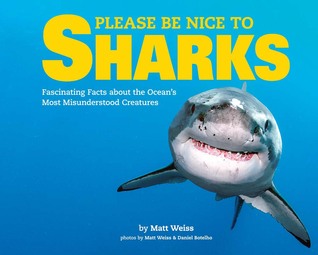
Please Be Nice to Sharks: Fascinateing Facts about the Ocean’s Most Misunderstood Creatures
Author: Matt Weiss
Photographers: Matt Weiss & Daniel Botelho
Published June 7th, 2016 by Sterling Children’s Books

Goodreads Summary: Meet 14 cool sharks (and one manta ray) and see why it’s important to BE NICE TO SHARKS! Though they’re often portrayed as vicious man-eaters, sharks actually kill fewer than 10 people per year. Yet those myths cause real harm: many species are being hunted to extinction, with as many as 100-200 million sharks being killed each year. This humorous book humanizes the incredible shark through breathtaking, original, underwater photography along with incredible facts about these amazing creatures in the wild—sending kids a crucial message about conservation in an irresistible format.

Kellee’s Review: I found this book to be quite timely because of the release of “Finding Dory” and all the issues that have come to light because of the over fishing and capturing of blue tangs and clown fish. In Be Nice to Sharks! the overall theme is to take care of our ocean friends even if they are ones we are scared of. One thing that was a bit fun and unique about this shark book versus others is that the shark facts are told in first person in a quite casual voice. This gives each shark its own personality.

Ricki’s Review: I’ve never been one of those folks who is completely fascinated with sharks and Shark Week, but this book was really fun to read! I think readers of all ages and interests will find the content interesting. I particularly liked how the sharks spoke to the reader. It made it very fun to read to my son. (He really thought the sharks were talking to him.) The photography is really neat, and I was drawn in–wanting to read more. We’ll be hanging onto this book because it will be fun to refer to it as we learn more about sharks as my son grows up. This is a classroom library must-have!

Teachers’ Tools for Navigation: Any fan of sharks will find this book to be a nice addition to their independent reading rotation. This book is also a good introduction to these 14 different sharks, but it is just an introduction. This text would be a way to help students choose a shark to further research or do a jigsaw activity with.

Discussion Questions: Why is a manta ray included in a shark book?; Why is it important to be nice to sharks?; What was the most interesting shark fact that you learned?; Which shark would you like to learn more about?

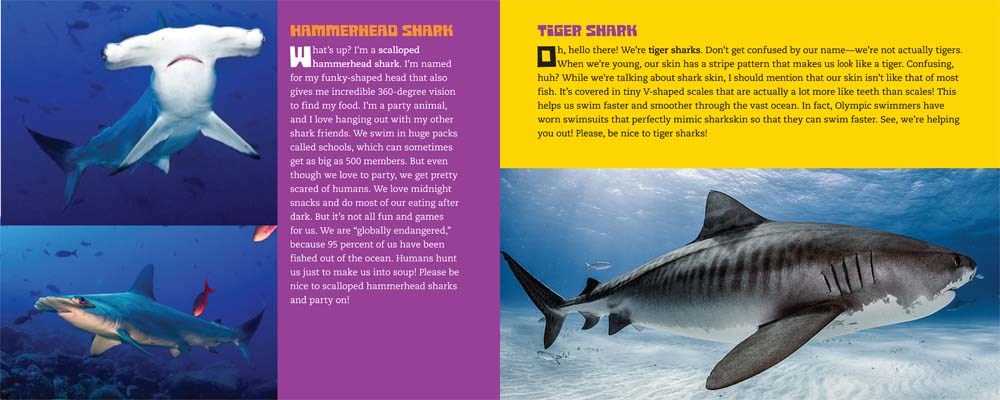
Flagged Passages: 
please be nice to sharks spread

Read This If You Loved: Nonfiction books about sharks, Extreme Oceans by Seymour Simon, Ocean Animals by Animal Planet

Recommended For: 

classroomlibrarybuttonsmall

Signatureand RickiSig

**Thank you to Dakota at Sterling Publishing for providing copies for review!**
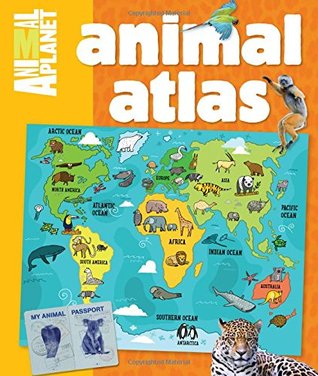
Animal Planet’s Animal Atlas

Share

NFPB2016

Nonfiction Wednesday

Nonfiction Picture Book Wednesday is hosted by Kid Lit Frenzy and was started to help promote the reading of nonfiction texts. Most Wednesdays, we will be participating and will review a nonfiction text (though it may not always be a picture book).
Be sure to visit Kid Lit Frenzy and see what other nonfiction books are shared this week!

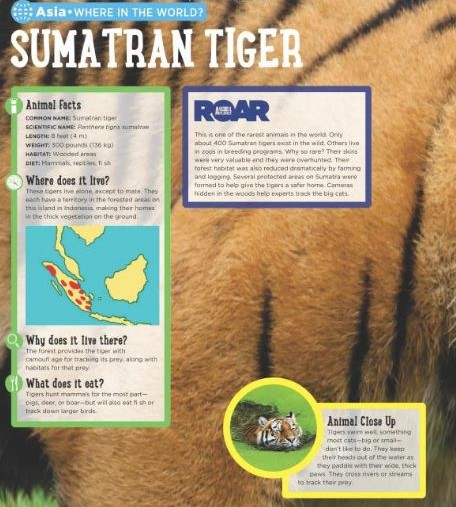
animal atlas

Animal Atlas
Published May 24th, 2016 by Animal Planet

Goodreads Summary: Animal Planet’s definitive atlas of animal life takes readers on a continent-by-continent and habitat-by-habitat passport to adventure!

What is a habitat? How is the North Pole’s animal life different from the South Pole’s? How and why do animals adapt to their environment? Is a food web different from a food chain? Animal Planet Animal Atlas answers all of these questions and many more. Through detailed maps, fun infographics, simple charts, and Find It! Fact boxes readers can track their favorite animals across the globe, learning about how animal habitats are affected by climate, food and water availability, migration, and human environmental impact.

Kellee’s Review: Nonfiction informational texts are really stepping up their game! Over the last few months, we’ve been sharing a lot of Animal Planet and National Geographic texts, but it is because they are worth sharing! This text is filled with such a wealth of information. First and foremost, I see it as a beautiful atlas. It focuses on not only the different continents and oceans, but it teaches about the biomes within the world also. Within each biome in each continent, animals who lie and thrive are shared along with interesting information about the animals. Some of my favorite parts though are the “Animal Close Up” sections which focus on one animal, where it lives, why it lives there, and what it eats and the animal travel guides who pop up within each continent and give out tidbits of information. This plethora of information combined with breathtaking photographs allows this book to take you on a journey all around the world!

Ricki’s Review: I loved this book. My toddler and I probably spent 45 minutes reading it, and we didn’t even read all of the facts! There is so much information in this book, and it is all incredibly fascinating. I think we are going to enjoy this text for a long time yet! My favorite part about it was the way the book was divided up by continent and then further by biomes. My son and I were able to talk about the similarities between the animals and insects within biomes and why that might be. When we reached each new continent, we flipped back to the big atlas to talk about where that continent was in comparison to our home. I also loved the sections that compared the animals to humans. It was neat to talk about our similarities and differences. I’d highly recommend this text for any child of any age. I think it would appeal to all ages and interest levels!

Teachers’ Tools for Navigation: This is such a beautiful text that begs to be used cross curricularly. In Florida, 6th grade learns about life science and one of the unites focuses on habitats and biomes. This book would be an asset either in the science classroom or in an ELA classroom supporting the science standards. Also, in late elementary school this text would be a perfect way to combine science, social studies, reading, and writing.

Discussion Questions: Which biome is the hardest for animals to live in?; Which continent has the least amount of animals?; What are the differences between the different biomes?; Which animal/habitat/continent would you like to learn more about?

We Flagged: 

animal atlas spread
(c) 2016, Animal Planet

Read This If You Loved: National Geographic titles such as Awesome 8 or National Parks USA Guide, Animal Planets Animal Bites series, Seymour Simon’s animal books or Extreme Oceans

Recommended For: 

classroomlibrarybuttonsmall closereadinganalysisbuttonsmall

Signatureand RickiSig

Awesome 8 by National Geographic Kids

Share

NFPB2016

Nonfiction Wednesday

Nonfiction Picture Book Wednesday is hosted by Kid Lit Frenzy and was started to help promote the reading of nonfiction texts. Most Wednesdays, we will be participating and will review a nonfiction text (though it may not always be a picture book).
Be sure to visit Kid Lit Frenzy and see what other nonfiction books are shared this week!

awesome 8

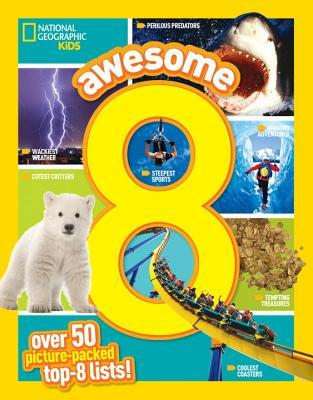
Awesome 8: Over 50 Picture-Packed Top-8 Lists!
Published May 3rd, 2016 by National Geographic Children’s Books

Goodreads Summary: Curious kids who want to know the who/what/where of the coolest things on the planet will welcome this first book in an awesome new National Geographic Kids series. Every turn of the page presents a different theme and counts down the greatest of the great top 8 of its kind. For example: The Awesome 8 Coolest Coasters, Haughtiest Hotels, Wicked Water Slides, Perilous Predators, Remarkable Ruins, Weirdest Wonders, Swankiest Subways, and anything else you can imagine. It’s truly something you have to see to believe–which is why the entire list appears in photographs, layered with fun facts and insightful stories.

Kellee’s Review: I think this may be one of my favorite National Geographic books I’ve read yet. You know we love lists here at Unleashing Readers (Top Ten Tuesday, anyone?!), so this book already was set up in a favorite way. This large-sized book packs so much information into its pages. Each 2 page spread includes an top 8 list with crazy, interesting topics and beautiful photographs. Each Awesome 8 is just a normal list, each item includes fascinating information that ties it to the topic.

Ricki’s Review: Ahh! This National Geographic book was so much fun! My son and I loved flipping through the stunning photographs and talking about each of the categories. This is a great learning book for kids. My son is very young, so it was great to use as a counting book, too. The repetition was very helpful. This is the kind of book that inspires kids to want to do more research and explore more within each category. There isn’t a kid (or adult) in the world that won’t be able to find something of interest in this book.

Teachers’ Tools for Navigation: In addition to being an instant favorite in classrooms, Awesome 8 will definitely make anyone who reads it want to make their own top 8 list. This activity could revolve around any unit that you are teaching. You could also give your students choice of topic or you can assign topics to fit your lessons/unit.

There’s an Awesome 8 section on the National Geographic Kids website as well which allows for extended inquiry: http://kids.nationalgeographic.com/explore/awesome-8-hub/ 

Discussion Questions: What was your favorite Awesome 8 list?; Which list did you wish had more than 8 items on it?; Which list made you want to learn more?

We Flagged: “Eight Cutest Critters:  These animals may be small in size, but they’re pretty big on awesome. Here are eight of the tiniest (and more adorable!) creatures on Earth. Say awww!

4. Eye Spy: What are you looking at? A baby tarsier shows off its huge peepers, which are about the same size and weight as its brain. Found exclusively in the islands of Southeast Asia, the nocturnal primate has the biggest eyes in the animal kingdom compared to its body size.” (p. 27)

*Disclosure: This quote cannot share the entire feeling of the book without the photos. See the published book to see the amazing photographs.

Read This If You Loved: National Geographic’s 100 Things to Know Before You Grow UpMastermind by National Geographic, Weird but True series by National Geographic, Almanacs, World Record books

Recommended For: 

classroomlibrarybuttonsmall readaloudbuttonsmall

Signatureand RickiSig

**Thank you to Karen at Media Masters Publicity for providing copies for review!**

Future Problem Solving International Conference Update

Share

fpspi motto

In April, I shared with you about the Future Problem Solving program and the journey and successes my team has had.

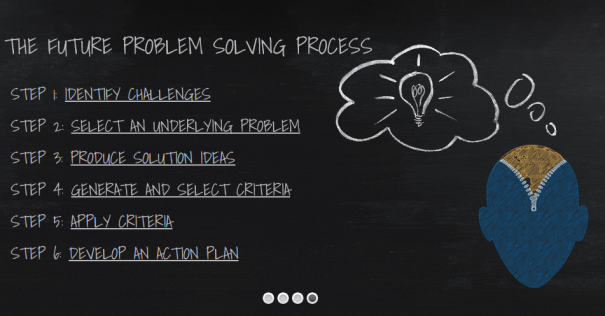
Just to recap, the Future Problem Solving Program focuses on the 6-step problem solving process:

fpsp steps

First, students read a Future Scene which is a scenario that takes place in the future and revolves around a topic the students knew and researched about before the competition.

Step 1. In groups of four, the team has to pull out 16 potential problems they see that could happen in the Future Scene.

Step 2. They then have to decide which of the problems is the most impactful to the scene and also deals with the charge given to them at the end of the scenario that directs them to focus on a certain aspect of the scene usually based on the topic.

Step 3. As a team, they then have to determine 16 solutions to the underlying problem they identified in step 2.

Step 4. Criteria is laid out to help determine which solution is the best.

Step 5. The solutions are ranked based on the criteria they created.

Step 6. They write an extensive action plan about the highest ranking solution explaining in detail how the solution would work, who would do the jobs, what obstacles they may encounter, how much it would cost, etc.

This finishes the Global Issues Problem Solving portion which is the primary competition, but while the booklets are being scored, the students then prepare and put on a presentation of their action plan for their fellow competitors.

13320856_1616227128694556_1928424870826155314_o

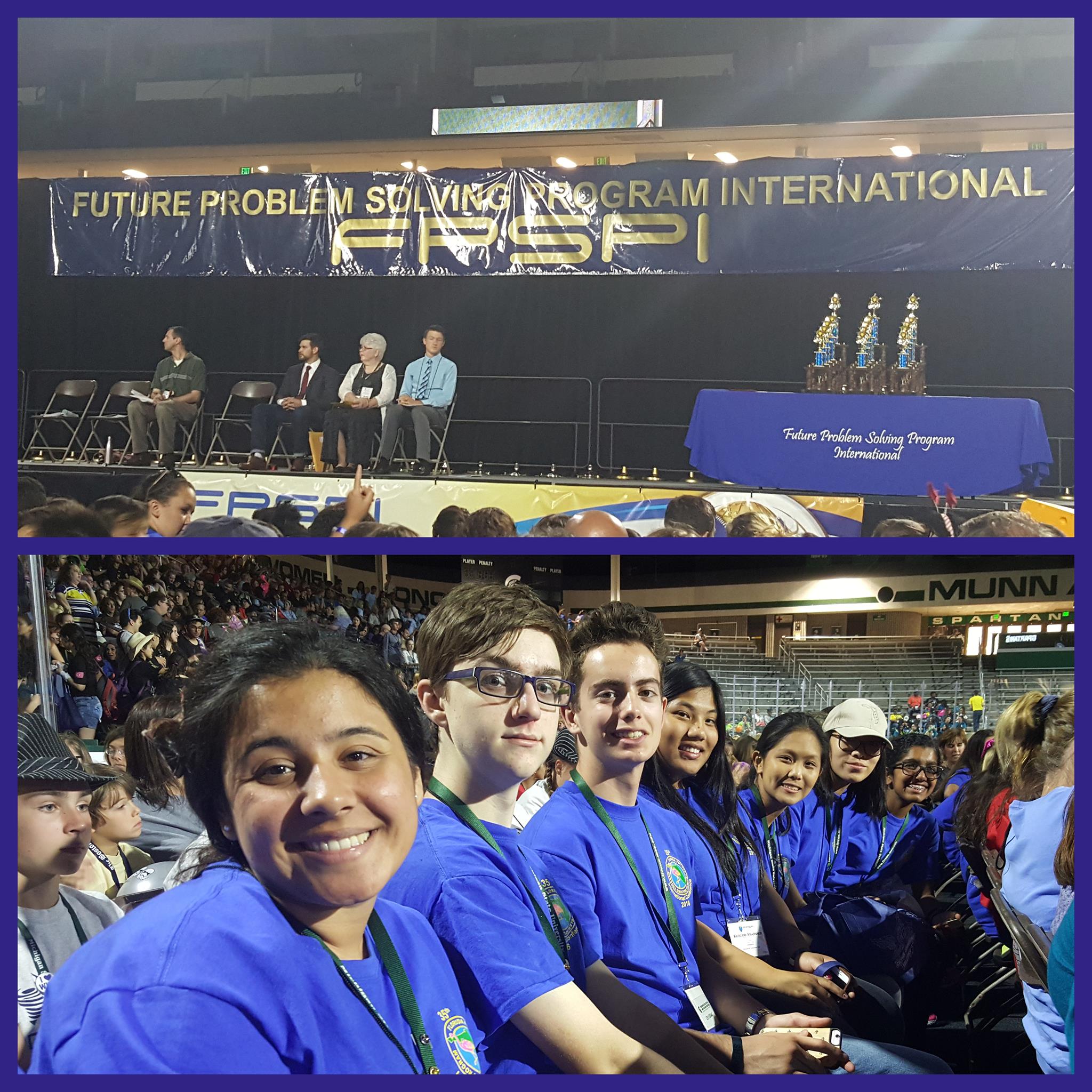
Because of my amazing students’ successes at the state competition, we qualified to travel to Michigan State University from June 2nd to June 5th to compete at the International Conference. This was a once-in-a-lifetime experience (though I hope we get to go again in the future!).

First, we took part in the Memento Exchange which is such a brilliant way to open up an event with attendees from around the world. During the Memento Exchange, each attendee brings items from their home town/state and exchange them with others so each person ends up with a ton of mementos from all around the world!

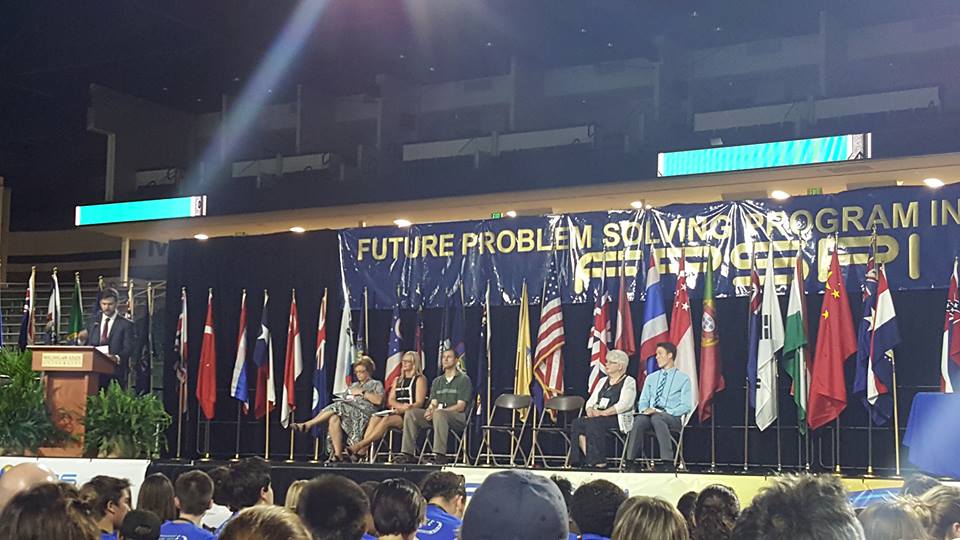
Then, we attended the Opening Ceremonies. There were two stand out moments during the Opening Ceremonies. First, there is a presentation of all the flags for each state, province, and country that is taking part in the conference. It is amazing to see everyone that was represented. The keynote speaker was also phenomenal! His name was Alec Manfre. Alec is from Florida and is currently a CEO of company and a Forbes 30 under 30. He is also a FPS alum. He shared some amazing advice:

Things to remember in life: Use the problem solving framework; Be a life long learner; Find your passion!

Don’t be afraid to think big! Challenge the status quo! Solve the biggest challenges!

Challenge yourself! Challenge the norm! Challenge society!

13339499_1616469092003693_5491897103508853037_n

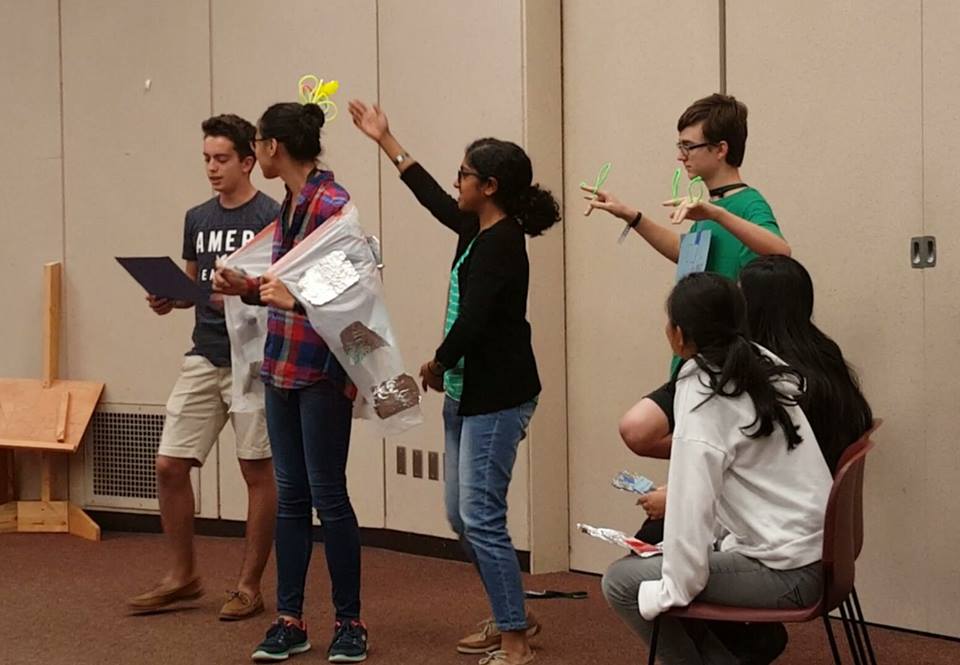
The second day was the competition portion though we wouldn’t find out the results until the final day there. However, it was also the Presentation of Action Plan which my students ROCKED! Their solution had to do with a mechanical, 3-D printed bird that stores energy from the sun, wind, and its movement then transfers it to those in need. If you want to see their skit, stop by our Facebook page and you can view it. They ended up being in the finals for the presentations which means they were in the top 14 of 70 middle division teams!

Three of my students also chose to take part in the FPS IC Choir which performed at the Variety Show. The choir, along with the variety show which featured talents from participants from all over the world, was another amazing way to showcase the variety of people taking part in IC. It is so beautiful to see people from around the world sing together. I shared a video of one of their songs on our Facebook page as well.

113319813_1616662441984358_886774706627068555_n

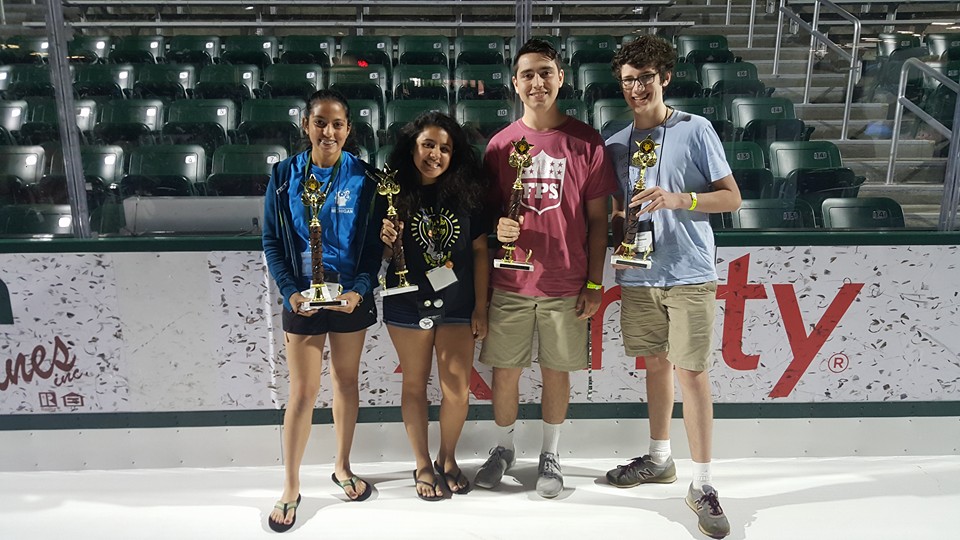
The last day in Michigan, we attended the award ceremony. Although this isn’t all about winning, it is about thinking and growing, award ceremonies are always so nerve-racking! I am already so proud of how far we’d gotten, and I already had a top 14 team! But we had one more surprise coming! Victoria, my 11th grade participant who has been with me from the very beginning, won first place in the Senior Division Multi-Affiliate Global Issues Competition! FIRST PLACE IN THE WORLD! I am still in awe of this! I already knew she was brilliant, but now it is recognized!

1113325462_1617406608576608_6467941719384888109_n

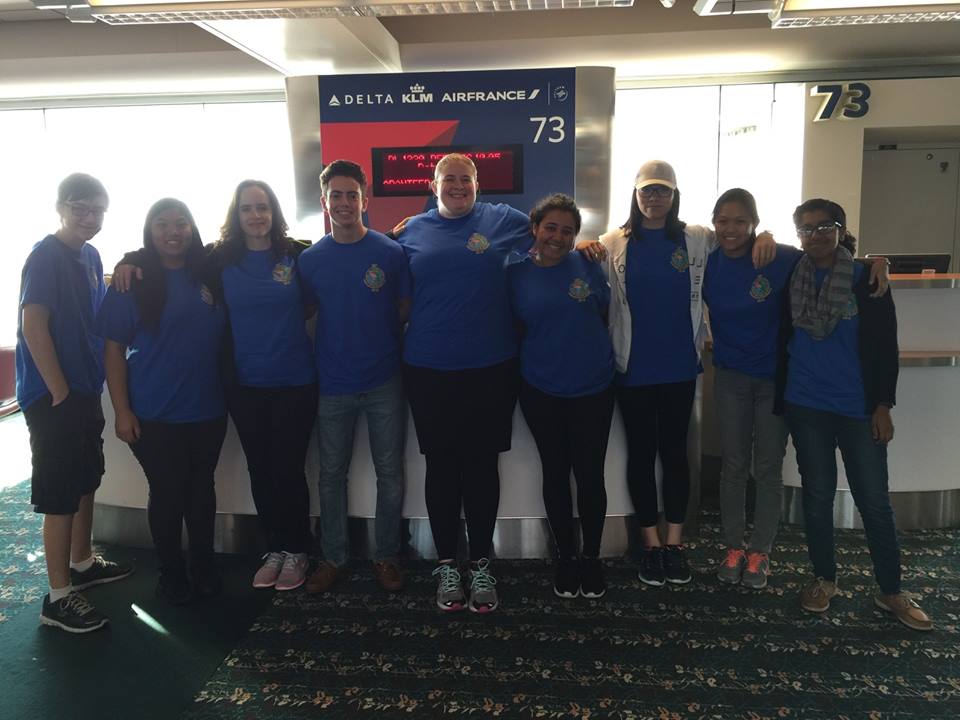
Then it was time to leave. My poor team beat them up so much for not placing, but they were competing against the best in the world, and we are going to learn so much from their booklet, Victoria’s first place booklet, and my other multi-affiliate participants booklets.

I hope that this was a trip and adventure that these students never forget because I know I won’t!

11113344735_1615990412051561_8607971353781822836_n

Kellee Signature

National Geographic’s 100 Things to Know Before You Grow Up

Share

NFPB2016

Nonfiction Wednesday

Nonfiction Picture Book Wednesday is hosted by Kid Lit Frenzy and was started to help promote the reading of nonfiction texts. Most Wednesdays, we will be participating and will review a nonfiction text (though it may not always be a picture book).
Be sure to visit Kid Lit Frenzy and see what other nonfiction books are shared this week!

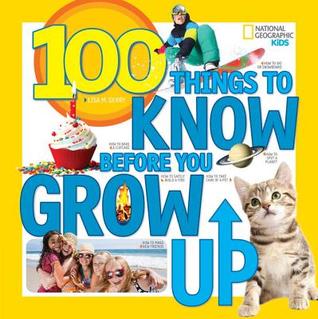
100 things

100 Things to Know Before You Grow Up
Author: Lisa M. Gerry
Published March 8th 2016 by National Geographic Children’s Books

Goodreads Summary: It’s fun to be a kid, but are you ready for what comes next? Challenge yourself with these 100 things and you will be! Jam-packed with tips, tricks, and skills that every kid should master before turning 18, this is the ultimate guide to becoming a fun-loving, well-rounded, totally competent and confident young person. Complete with expert advice from real life explorers, adventurers, and masters of their craft, it’s perfect for jump-starting an amazing life!

Kellee’s Review: I love books that push students to be more than what they already are. This book is one of those. It has such a crazy variety of things that kids can learn to do and overcome and try throughout their childhood: from making a bed to learning to say no to trying yoga. There were things in the book that I am not even good at, but I wish someone had helped me learn how to do as a kid like how to remember names or how to deal with change. I am always impressed with National Geographic books because they are all so unique and well done, and this one is no different!

Ricki’s Review: Typically, I review books and then donate them. I am hanging on to this book because I think it is a great one to share with my children. I loved that some of the “things to know” were abstract like being brave and some were much more concrete like trying another country’s cuisine. I think it would be really neat to use this book as a bucket list. All of the things in this book are experiences and ideas that I want my children to have.

Teachers’ Tools for Navigation: 100 Things to Know Before You Grow Up is a great inquiry project jumping off point. Students could definitely take these 100 things and choose a favorite to research then share with the family. The book would also be a good read aloud for the beginning of each day to have a class discussion. It would be interesting to see what students already know how to do, if they think that everything listed is important, and work on learning new things.

Discussion Questions: Which of the things listed do you already know how to do?; Is there anything you would add to the list that you think you need to know before you grow up?; Which of the things do you want to learn how to do first?; Do you think all of the items listed are important to learn?

We Flagged: “#31. How to Be Brave

Everyone feels afraid from time to time, but it’s how you respond to that fear that shows who you are. Being scared is an uncomfortable feeling, so it makes sense that you’d want to avoid it. But the only way to conquer a fear is to do the thing that scares you. As Mark Twain said, ‘Courage is resistance to fear, mastery of fear, not absence of fear.’

People Profile: Malala Yousafzai

Malala is the youngest person to have ever won a Nobel Peace Prize. She won it in 2014, when she was just 17 years old. Malala was born in Pakistan in 1997. She attended a school founded by her father and quickly became an advocate for a girl’s right to get an education. However, the Taliban, a violent political group in her country, believed that girls should not go to school…” (p. 80-82)

*Disclosure: This quote cannot share the entire feeling of the book without the photos. See the published book to see the amazing photographs.

Read This If You Loved: 31 Ways to Change the World by Candlewick Press, Mastermind by National Geographic, Weird but True series by National Geographic, Be Changemaker by Laurie Ann Thompson, Almanacs, World Record books

Recommended For: 

classroomlibrarybuttonsmall readaloudbuttonsmall

Signatureand RickiSig

**Thank you to Karen at Media Masters Publicity for providing copies for review!**
The First Step: How One Girl Put Segregation on Trial by Susan E. Goodman

Share

NFPB2016

Nonfiction Wednesday

Nonfiction Picture Book Wednesday is hosted by Kid Lit Frenzy and was started to help promote the reading of nonfiction texts. Most Wednesdays, we will be participating and will review a nonfiction text (though it may not always be a picture book).
Be sure to visit Kid Lit Frenzy and see what other nonfiction books are shared this week!

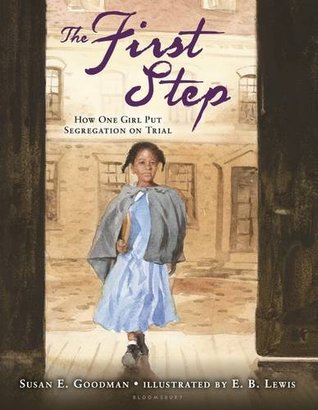
first step

The First Step: How One Girl Put Segregation on Trial
Author: Susan E. Goodman
Illustrator: E.B. Lewis
Published January 5th, 2016 by Bloomsbury Children’s Books

Goodreads Summary: In 1847, a young African American girl named Sarah Roberts was attending a school in Boston. Then one day she was told she could never come back. She didn’t belong. The Otis School was for white children only.

Sarah deserved an equal education, and the Roberts family fought for change. They made history. Roberts v. City of Boston was the first case challenging our legal system to outlaw segregated schools. It was the first time an African American lawyer argued in a supreme court.

These first steps set in motion changes that ultimately led to equality under the law in the United States. Sarah’s cause was won when people–black and white–stood together and said, No more. Now, right now, it is time for change!

With gorgeous art from award-winning illustrator E. B. Lewis,The First Step is an inspiring look at the first lawsuit to demand desegregation–long before the American Civil Rights movement, even before the Civil War.

Backmatter includes: integration timeline, bios on key people in the book, list of resources, and author’s note.

My Review: I really appreciate the abundance of quality nonfiction books about the early civil rights in our country because I fear that so much of the prejudice still remains, so it is important to learn about history so hopefully it will not repeat itself. The First Step is a story that shows how even if you do not win your fight, that doesn’t mean that the effort you put forth was for naught. Sarah Roberts and her family were so brave in standing up for her education and rights, and their fight helped pave the way for the bumpy road of integration in schools. Goodman does a wonderful job starting with Sarah’s story but tying it to the Brown v. Board of Education trial while not taking away any credit from the Roberts’ part of history.  

Teachers’ Tools for Navigation: My first thought is to do a jigsaw type activity with The First Step and other civil rights nonfiction picture books (such as the ones listed below in recommended reading). Students can learn about different parts of the history of civil rights by reading the picture books and maybe even researching extra. They would then either present as a group to the class or you can jigsaw the kids back together (pull one person from picture book and put them together as a group), and they can each teach each other about what they learned. This is one of my favorite activities to do with picture books because it allows students to learn in depth about one subject then teach the rest of their class thus everyone learns about all subjects.

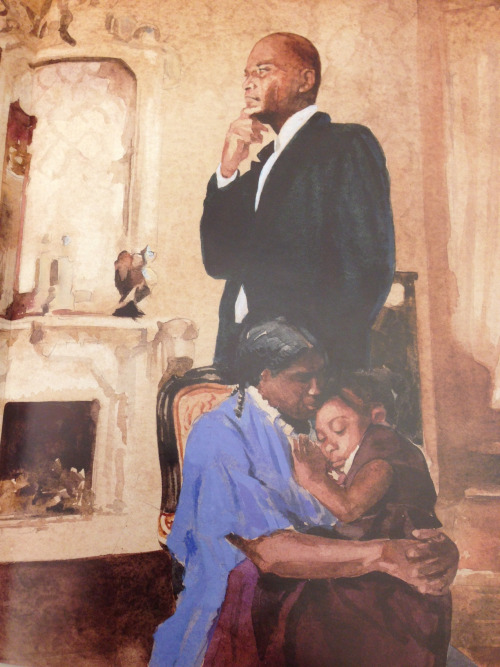
Discussion Questions: How did Sarah Roberts’s family’s fight lead to the integration of schools even though she did not win her case?; How did the author structure the book to go through the history of segregation?; How do the illustrations by Lewis help bring Goodman’s story to life?

We Flagged: 

first step spread

“Adeline and Benjamin Roberts tried to imagine Sarah’s walk to the Smith School, which was for African American children. She would have to zigzag through many streets, crossing one neighborhood after another.

Sarah would have to go all that way for a school that never taught subjects like history or drawing. All that way for Boston’s only school without a play yard. A school that owned only one book.”

Read This If You Loved: Separate is Never Equal by Duncan TonatiuhFreedom Summer (Kellee’s Review, Ricki’s Review) by Deborah Wiles, Seeds of Freedom by Hester Bass

Recommended For: 

classroomlibrarybuttonsmall readaloudbuttonsmall litcirclesbuttonsmall

Signature

What Do You Do with a Problem? by Kobi Yamada

Share

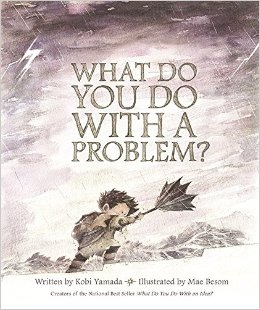
what do you do with a problem

What Do You Do with a Problem?
Author: Kobi Yamada; Illustrator: Mae Besom
Published: July 1, 2016 by Compendium Inc.

GoodReads Summary: From the same author and illustrator as our #1 nationally best-selling What Do You Do With an Idea? comes a new book to encourage you to look closely at problems and discover the possibilities they can hold.

What do you do with a problem? Especially one that follows you around and doesn’t seem to be going away? Do you worry about it? Ignore it? Do you run and hide from it?

This is the story of a persistent problem and the child who isn’t so sure what to make of it. The longer the problem is avoided, the bigger it seems to get. But when the child finally musters up the courage to face it, the problem turns out to be something quite different than it appeared.

This is a story for anyone, at any age, who has ever had a problem that they wished would go away. It’s a story to inspire you to look closely at that problem and to find out why it’s here. Because you might discover something amazing about your problem… and yourself.

What are problems for? They challenge us, shape us, push us, and help us to discover just how strong and brave and capable we really are. Even though we don’t always want them, problems have a way of bringing unexpected gifts.

So, what will you do with your problem? Now that’s up to you.

Review: There is something so magical about the combination of writer Kobi Yamada and illustrator Mae Besom. When I saw that these creators of What Do You Do with an Idea? had another book, I jumped at the chance to read it. It’s no secret that I am in love with this first book. I have gifted it to many friends and children, and I include it on many of my favorites and Top Ten Tuesday lists. I was pleased that What Do You Do with a Problem? is just as stunning. These two books are a teacher’s dream. They utilize many literary elements and are perfect for close analysis. I would use them at all grade levels. What Do You Do with a Problem? is a great text to teach readers how to reconsider a problem (or problems) that they might have. They can compare the problem with illustrations and consider how that problem may, for example, be all-encompassing. I like how the book balances both the weight of the problem and the proverbial light at the end of the tunnel. By looking at this problem in a new light, readers will be able to take more of an outside perspective of the conflict—and hopefully/potentially work toward a resolution.

Teacher’s Tools for Navigation: To start, teachers might ask students to consider the symbolism within the text. They might even grapple with the definition of an allegory and discuss ways the definition might be connected with the text and illustrations. Then, students could think of an abstract idea and try to associate an object with that idea. They might even consider writing their own picture book that connects the object and abstract idea. I also think it would be great for teachers to read both this text and What Do You Do with an Idea? to students. Then, they might compare and contrast the stories and their messages.

Discussion Questions: What do you do with a problem? How do we deal with problems in different ways? How do others in our lives deal with problems in ways that differ from us?; How do the author and illustrator work together to create a compelling story? What symbols do they use to convey their message?

Flagged Passage: 

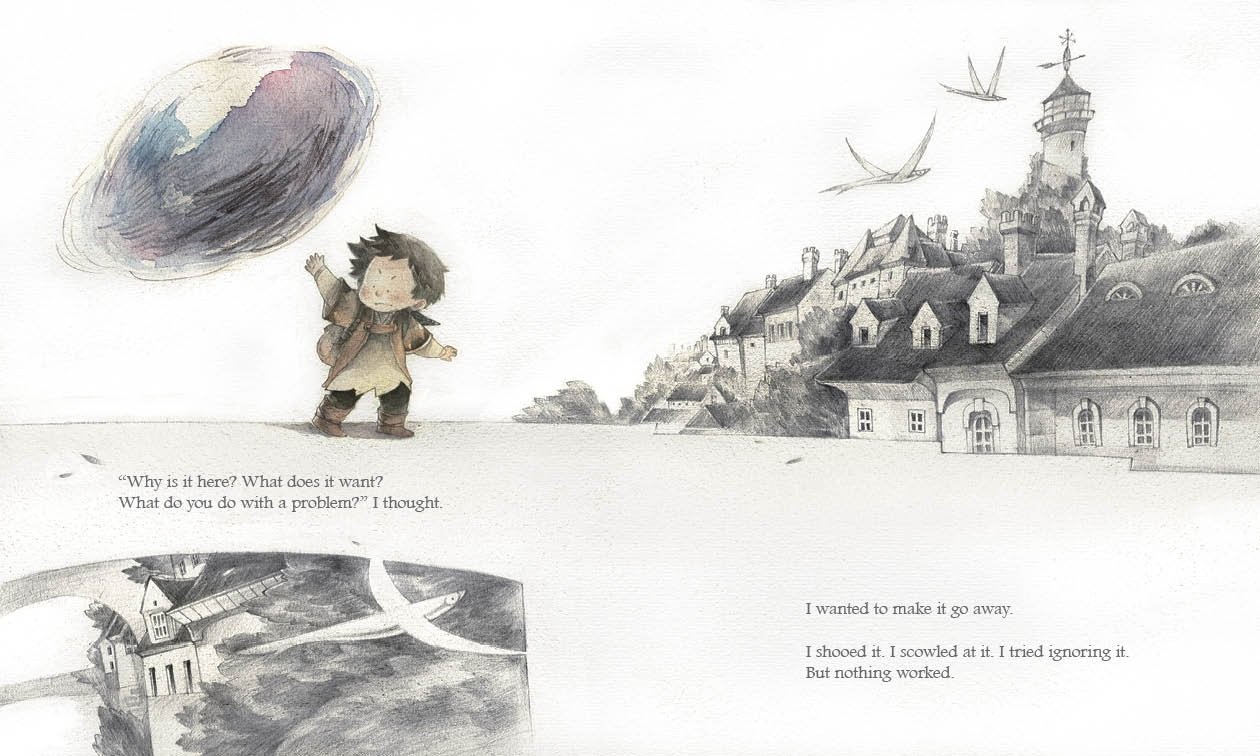
what do you do with a problem spread

Image from: www.amazon.com

Read This If You Loved: What Do You Do with an Idea? by Kobi Yamada; The Most Magnificent Thing by Ashley Spires; The Dot by Peter H. Reynolds, The Noisy Paint Box by Barb Rosenstock, Lost and Found by Oliver Jeffers, Journey by Aaron Becker

Recommended For:

  readaloudbuttonsmall closereadinganalysisbuttonsmall classroomlibrarybuttonsmall

RickiSig