Blog Tour, Review, and Author Guest Post!: Be a Changemaker: How to Start Something That Matters by Laurie Ann Thompson

Share

NF PB 2014

Nonfiction Picture Book Wednesday and BE A CHANGEMAKER Blog Tour!

Nonfiction Picture Book Wednesday is hosted by Kid Lit Frenzy and was started to help promote the reading of nonfiction texts. Most Wednesdays, we will be participating and will review a nonfiction text (though it may not always be a picture book).
Be sure to visit Kid Lit Frenzy and see what other nonfiction books are shared this week!
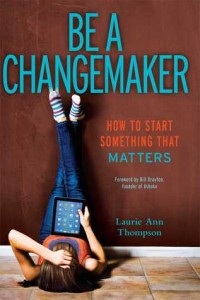
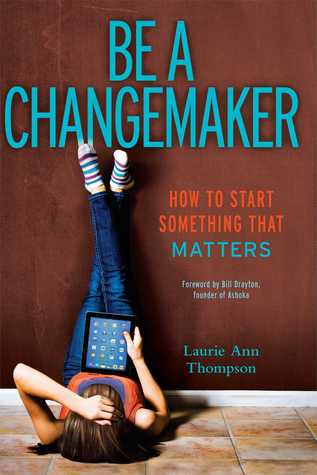
Be a Changemaker

Be a Changemaker: How to Start Something That Matters
Author: Laurie Ann Thompson
Expected Publication: September 16, 2014 by Simon Pulse/Beyond Words

Goodreads Summary: We’ve had the civil rights movement and the women’s movement—now it’s time for the youth movement.

When Divine Bradley was seventeen, he just wanted a safe place to hang out away from gangs and violence, and Team Revolution was born. At age eleven, Jessica Markowitz learned that girls in Rwanda are often not allowed to attend school, and Richard’s Rwanda took shape. During his sophomore year of high school, Zach Steinfeld put his love of baking to good use and started the Baking for Breast Cancer Club.

Gone are the days when kids were supposed to be “seen and not heard.” Today, youth everywhere are rising up, building new organizations, and creating the changes they want to see in their communities and around the world. Be a Changemaker gives readers the tools and confidence they need to affect real change. Readers will learn how to:

– Research ideas
– Build a strong and passionate team
– Create a business plan
– Enlist a savvy adult
– Plan events
– Work with the media
– And more!

Plus, profiles of youth-led social organizations show readers that it’s never too early to become a changemaker.

Ricki’s Review: My favorite aspect of this book is the way it is organized. The chapters and headings are very clear, and it moves in a fluent, understandable manner. Thompson provides very informative, necessary lessons about honing and fine-tuning leadership skills. Some of the sections I liked most were the tips about leading meetings (from standard operating procedures to icebreaker activities), the sample business plan with budgetary advice, the ways to make money (with grants and marketing tips), and the speaking skills (particularly the section about elevator pitches). Across the country, more and more states are requiring the development of advisory groups for high school students to learn life skills. This text would be perfect for this setting. I can also see the text working well in a business or entrepreneurship class. The best part about the way this book is set up is the fact that teachers can assign chapters to groups or teach the portions of the text that matter most to their syllabi or curricula.

Kellee’s Review: I was blown away by how much this book impacted me as I read it. I want to do something right now, so I know that this book will impact young readers. Like Ricki, I was fond of how it was organized. It is ultimately a step-by-step book for leadership, planning, and making a difference in the world.

What I liked the most about the book, though, was the “Profile” sections where actual groups started by kids were highlighted. This really connected it to real life and showed the reader that being a changemaker is definitely something that anyone can do.

Teachers’ Tools for Navigation: We recommend using this book for jigsaw discussions. This would maximize instruction and allow students to access all parts of the text. If you are unfamiliar with jigsawing, learn how to use this discussion technique here: http://www.jigsaw.org/steps.htm.

Throughout the book, there are steps to brainstorming, reflecting, and journaling in a “venture journal” to help plan the steps to becoming a changemaker. The activities Thompson lay out would be a really deep activity to do in a classroom.

Discussion Questions: What is a problem that you see in our society? In your life? What steps could you take to help solve or alleviate this problem?; Which of the highlighted organizations started by fellow kids did you find the most intriguing? How could you help this organization?

We Flagged: “How many times have you complained about something but done nothing to fix it? Or noticed something and thought, Someone should do something about that? We all have those thoughts sometimes. And it’s okay, because none of us can solve every problem we encounter. But guess what…you’re someone. And when you set your mind to it, you absolutely can do something that matters.” (p.1)

Read This If You Loved: The 7 Habits of Highly Effective Teens by Sean Covey; Don’t Sweat the Small Stuff for Teens by Richard Carlson

Author’s Guest Post: 

Recommended For: 

 classroomlibrarybuttonsmall closereadinganalysisbuttonsmall readaloudbuttonsmall

Guest Post by Laurie Ann Thompson

10 Ways Young People Can Make a Difference 

There are many ways for people of all ages to make a difference in their communities and around the world. Here are some ideas that can be adapted to a variety of different age groups and interests.

  1. Collect money. Gather funds to support a cause by placing collection cans in stores, having a penny drive at school, participating in a fundraising walk, etc. Kids (or their parents) can also create a page on a crowdfunding website like com. Either way, friends and family can be great sources of support.
  2. Collect goods. Organize ways for people to donate goods like food drives, donation bins in retail outlets, school supply collections, etc. Most nonprofits maintain a wish list of needed items. Or, kids can go the other direction by finding a cause that can use their excess goods. Last Halloween, for example, a student at my children’s school had the kids bring in their extra candy, which he then sent to U.S. troops stationed overseas.
  3. Donate gifts. Ask for donations to be made to a favorite charity in lieu of presents. Kids can quickly and easily collect a significant amount of money or goods, while also spreading awareness for the chosen cause. It’s a win-win!
  4. Make something. Many young people enjoy making things they can then donate or sell. Can they knit? Hats or scarves for the homeless are much appreciated. Do they make jewelry? Maybe they could sell it at a farmer’s market or on com to raise money. Almost anyone can make no-sew fringe-tie fleece blankets, which are great for animal shelters and child services organizations. And don’t forget the tried-and-true lemonade stand—or a new twist on the same idea!
  5. Form a club. If there’s something one kid is passionate about, chances are others will be, too. A club can help someone find other like-minded individuals as well as recruit others to the cause. Many of the most successful organizations I profiled in Be a Changemaker started when one kid joined with a few classmates to form a simple club at school.
  6. Start a petition, or sign one. These can be done on paper and delivered in physical form, or they can be rolled out online via websites like org or whitehouse.gov. For inspiration, check out how a high-school student got Gatorade to remove flame retardants from its sports drinks, or how grade-school kids are trying to get Dunkin’ Donuts to stop using Styrofoam cups. Kids can also check out existing petitions and sign the ones they support (or ask their parents to).
  7. Write letters. Even young kids can make their opinions known by writing letters to their government officials, local newspapers, magazines they read, companies whose products they use, etc. Against how chickens are treated in factory farms? Write to KFC and McDonald’s and let them know! Kids can multiply their impact by recruiting others to write letters, too.
  8. Get involved. Many governments and companies have a youth advisory board to help them understand the issues affecting their teen constituents or consumers. Most schools have a student council and/or appoint student representatives to the school board. Youth may not always get voting rights, but at least they’ll have a chance to voice their opinions about the issues that affect them. The adults in charge might not otherwise know the full impacts of their decisions.
  9. Check with local organizations and/or the nearest United Way to find appropriate organized opportunities to volunteer, or make your own. You may have to get creative, but the potential is boundless. Anyone can pick up trash at their local park or beach, many retirement homes welcome young performers, some animal shelters will allow the public to come in and socialize the animals, or perhaps an elderly neighbor would probably appreciate help with the yard work. Everyone has skills: they just need to find a place to put them to good use.
  10. Read! Obviously, reading can provide kids with facts and practical knowledge. But studies have also shown that reading builds empathy, an essential element for making a positive difference. Whatever kids (or adults!) choose to read, they’re sure to be expanding their world views, analyzing new ideas, and growing as human beings. So, when they’re not out there changing the world, make sure they have time to enjoy a good book. 

Be a Changemaker: How to Start Something that Matters, is loaded with advice, hands-on exercises, and examples for middle-school or high-school kids who want to take these ideas further, plus profiles of young people who already did.

laurieannthompson

Laurie Ann Thompson comes from a family of entrepreneurs and small business owners. She has worked at IBM, Intel, and Microsoft, and she co-founded a successful internet startup. In addition, she has led a regional nonprofit professional organization and volunteered with Ashoka’s Youth Venture, which supports teens with big ideas. This is her first book. She lives with her family in the Pacific Northwest. Visit her at LaurieThompson.com.

Follow all of the stops on the blog tour!:

Mon, Sept 8
Sally’s Bookshelf
Tues, Sept 9
Girl Scout Leader 101
Wed, Sept 10
Unleashing Readers
Thurs, Sept 11
Teen Librarian Toolbox
Fri, Sept 12
The Nonfiction Detectives AND Kirby’s Lane
Sat, Sept 13
The Styling Librarian
Mon, Sept 15
NC Teacher Stuff
Tues, Sept 16
The Hiding Spot
Wed, Sept 17
Kid Lit Frenzy
Thurs, Sept 18
GreenBeanTeenQueen
Fri, Sept 19
A Foodie Bibliophile in Wanderlust
Sat. Sept 20
Elizabeth O. Dulemba
Teen Librarian’s Toolbox is creating a free downloadable workshop guide for libraries and classrooms for the book that will be available on Laurie Thompson’s website in late October.

Signatureand RickiSig

**Thank you to Barbara at Blue Slip Media for providing copies for review**

Baseball Is… by Louise Borden

Share

NF PB 2014

Nonfiction Picture Book Wednesday

Nonfiction Picture Book Wednesday is hosted by Kid Lit Frenzy and was started to help promote the reading of nonfiction texts. Most Wednesdays, we will be participating and will review a nonfiction text (though it may not always be a picture book).
Be sure to visit Kid Lit Frenzy and see what other nonfiction books are shared this week!

baseball

Baseball Is…
Author: Louise Borden
Illustrator: Raul Colon
Published February 18th, 2014 by Margaret K. McElderry Books

Goodreads Summary: The ultimate celebration of an all-American sport, this picture book captures the joy and the history of baseball;and knocks it out of the park!

Don’t wait for Opening Day to start your baseball season! Crack open Baseball Is…; and revel in the fun of this all-American game! Perfect for the stats-counting superfan and the brand-new little leaguer,Baseball Is…; captures the spirit of this cherished pastime, honoring its legendary past, and eagerly anticipating the future of the sport that is stitched into our history.

My Review: I am a huge baseball fan, have been for over 24 years now, so I am a sucker for baseball books. This one is special though. It captures the beauty of the baseball stadiums around the country, the intricacies of the sport, and the amazing history that baseball holds. I also love the choice of telling baseball’s story in verse. It made it rhythmic like the sport.

Teachers’ Tools for Navigation: This book is a wonderful mentor text for free verse. The poetry is very rhythmic, but has  no rhyme. The book also has some amazing vocabulary: craftsman, poise, spectators, finesse, etc. It captures the sport through imagery: “the crack of the bat,” “slow stride of the manager,” “groans or boos,” etc.

On top of the poetic aspects of the book, you can learn so much about baseball and history from the book. It discusses greats like Babe Ruth and Jackie Robinson. Also talks about the Negro and Women’s Leagues. All parts of history in general, not just baseball.

Discussion Questions: How did Jackie Robinson change the game?; Why was their a Women’s League?; What sounds would you hear at a baseball game?

We Flagged: 
“Baseball is our game…
the sport of America.
Its stories are stitched
through our nation’s history.
Its teams and its heroes
we carry in our heart.” (p. 1-2)

Read This If You LovedBarbed Wire Baseball by Marissa Moss, Chin Music by Lee Edelstein, Something to Prove: The Great Satchel Paige vs. Rookie Joe DiMaggio by Robert Skead, Brothers at Bat: The True Story of an Amazing All-Brother Baseball Team by Audrey Vernick, Silent Star: The Story of Deaf Major Leaguer William Hoy by Bill Wise, The Legend of the Curse of the Bambino by Dan Shaughnessy

Recommended For: 

closereadinganalysisbuttonsmall classroomlibrarybuttonsmall readaloudbuttonsmall

Signature

What Do You Do When Something Wants To Eat You? by Steve Jenkins

Share

NF PB 2014

Nonfiction Picture Book Wednesday

Nonfiction Picture Book Wednesday is hosted by Kid Lit Frenzy and was started to help promote the reading of nonfiction texts. Most Wednesdays, we will be participating and will review a nonfiction text (though it may not always be a picture book).
Be sure to visit Kid Lit Frenzy and see what other nonfiction books are shared this week!

eatyou

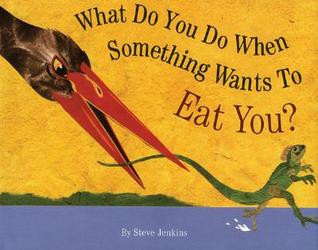
What Do You Do When Something Wants To Eat You?
Author and Illustrator: Steve Jenkins
Published October 27th, 1997 by HMH Books for Young Readers

Goodreads Summary: What would you do if something wanted to eat you? Walk on water? Stick out your tongue? Play dead? Animals in the wild use all kinds of methods to protect themselves from their enemies. Using dynamic and intricate cut-paper collages, Steve Jenkins explores the many fascinating and unique defense mechanisms creatures use to escape from danger.

My Review: Steve Jenkins just has a way of making nonfiction more interesting than other authors, and this book is no different than his others. This book takes different animals and shows the different ways they protect themselves: from squirting ink to camouflage.  The illustrations are done in Steve Jenkins’s paper-cut style and are done as well as his other books. The text, though simple, is full of information and definitely makes the reader want to learn more.

Teachers’ Tools for Navigation: This book can definitely be used in reading and science class. It is a good introduction to animal defenses and animal adaptations. It can lead to inquiry and research of each of these animals. It would be a great first research project for students to choose one of the animals and learn more about them. It is also a good introduction to cause and effect. What causes _____ to need to defend themselves? What is the effect of ____ being attacked?

Discussion Questions: What type of defenses do animals use to keep themselves from being harmed?; How does camouflage work?; What causes animals to need to defend themselves? What are the effects of them being attacked?

We Flagged: “A flying fish escapes danger by leaping from the water, spreading its winglike fins, and gliding as far as a thousand feet.”

Read This If You Loved: Any Steve Jenkins book, Any Seymour Simon animal book, Lifetime by Lola M. Schaefer, Frog Song by Brenda Z. Guiberson

Recommended For: 

readaloudbuttonsmall closereadinganalysisbuttonsmall
classroomlibrarybuttonsmall litcirclesbuttonsmall

Signature

Amulet Books Graphic Novel Teaching Guide

Share

abrams

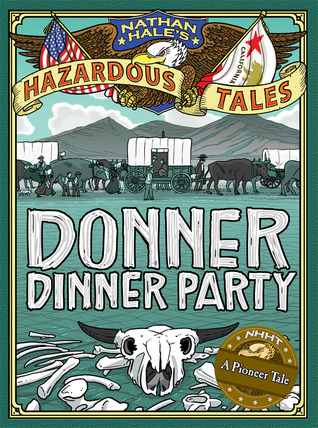
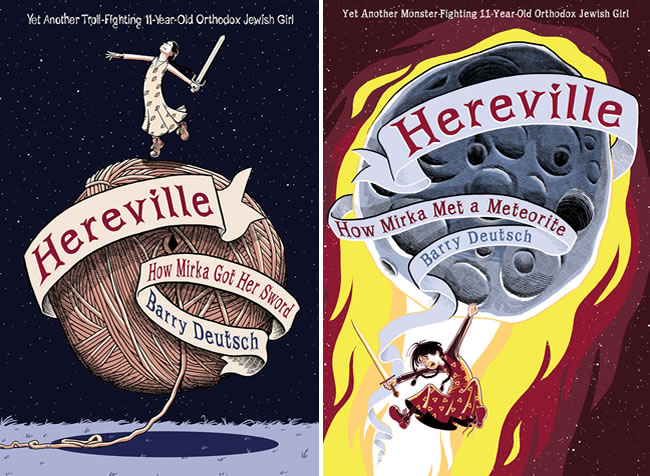
In January, I was contacted by a publicity and marketing associate from Abrams Books/Amulet Books out of the blue. In this email, I was asked to work on a teaching guide about their graphic novels: The Misadventures of Salem Hyde, Nathan Hale’s Hazardous Tales, Hereville, and the Explorer series.

1729025518405488 

13591161135911621729026018405492

1283377017290285

I was beyond honored! And, of course, I said that I would definitely love to do it as I had read all of the graphic novels, and I am a huge fan of them.

First, they asked me to write an introduction about graphic novels and their importance in the classroom. I am a huge advocate for using graphic novels in schools, so I immediately began researching and writing. Here is the introduction:

What are graphic novels? The easiest way to describe graphic novels is to say that they are book-length comic books. However, a more complex definition that educators and librarians use is “book-length narratives told using a combination of words and sequential art, often presented in comic book style” (Fletcher-Spear, 37). Graphic novels are not written in just one genre; they can be in any genre, since graphic novels are a format/medium. Graphic novels are much like novels, but they’re told through words and visuals. They have all narrative elements, including characters, a complete plot, a conflict, etc.

Middle grade and young adult graphic novels cover a wide spectrum of themes and topics. Some common themes found in graphic novels for this age include the hero’s journey; overcoming hardship; and finding one’s identity. For example, in Hereville, we meet Mirka, an everyday girl who learns to use her brains and brawn to overcome her foes. In The Misadventures of Salem Hyde, Salem is working on finding out just who she is (both as a witch and as a person) with the help of her friend Whammy. Graphic novels can cross curricular lines. One example is the Nathan Hale’s Hazardous Tales series—comical nonfiction that takes historical events and presents them in interesting ways, using graphics and humor that will make students want to learn even more about the historical time periods. In the Explorer series, stories include topics such as animal adaptation, volcanic eruptions, and the fate of humanity. Like novels, graphic novels offer opportunities in all subject areas to extend students’ thinking.

Over the past few years, graphic novels have become a hot topic, growing in popularity with both children and educators. While many teachers are beginning to include them in the classroom, there are still teachers, administrators, and librarians who struggle with including this format in their schools. So, why should you use them in your classroom and have them available for students?

  • Graphic novels can make a difficult subject interesting and relatable. (Cohen)
  • Students are visual learners, and today’s students have a much wider visual vocabulary than students in the past. (Karp)
  • Graphic novels can help foster complex reading skills by building a bridge from what students know to what they still have to learn. (NCTE)
  • Graphic novels can help with scaffolding when trying to teach higher-order thinking skills or other complex ideas.
  • For students who struggle to visualize while they read, graphic novels provide visuals that shows what good readers do. (NCTE)
  • Many graphic novels rely on symbol, allusion, satire, parody, irony, and characters/plot and can be used to teach these, and other, literary devices. (Miller; NCTE)
  • Often, in between panels (called the gutter), the reader must make inferences to understand how the events in one panel lead to the events in the next. (McCloud)
  • Graphic novels can make differentiating easier. (Miller)
  • Graphic novels can help ELL (English Language Learners) and reluctant and struggling readers since they divide the text into manageable chunks, use images (which help students understand unknown vocabulary), and are far less daunting than prose. (Haines)
  • Graphic novels do not reduce the vocabulary demand; instead, they provide picture support, quick and appealing story lines, and less text, which allow the reader to understand the vocabulary more easily. (Haines)
  • Research shows that comic books are linguistically appropriate reading material, bearing no negative impact on school achievement or language acquisition. (Krashen)
  • Students love them.

Although you can find graphic novel readers at all reading levels, graphic novels can truly be a gateway to the joys of reading for reluctant and struggling readers. Reluctant readers often find reading to be less fun than video games, movies, and other media, but many will gravitate toward graphic novels because of the visuals and the fast pace. Struggling readers will pick up graphic novels for these reasons as well but also because the graphic novel includes accommodations directly in the book: images, less text, etc.

All in all, graphic novels can interest your most reluctant and struggling readers and also extend all of your readers, including your most gifted.  

Resources

  • Cohen, Lisa S. “But This Book Has Pictures! The Case for Graphic Novels in an AP Classroom.” AP Central. CollegeBoard.
  • Fletcher-Spear, Kristin, Merideth Jenson-Benjamin, and Teresa Copeland. “The Truth About Graphic Novels: A Format, Not a Genre.” The ALAN Review Winter (2005): 37­–44.
  • Haines, Jennifer. “Why Use Comics in The Classroom?” Comic Book Daily. N.p., 20 Mar. 2012.
  • Karp, Jesse. “The Case for Graphic Novels in Education.” American Libraries. N.p., 1 Aug. 2011.
  • Krashen, Stephen. The Power of Reading. Englewood, CO: Libraries Unlimited, Inc. 1993.
  • McCloud, Scott. Understanding Comics. Northampton, Mass.: Kitchen Sink, 1993. 
  • Miller, Andrew. “Using Graphic Novels and Comics in the Classroom.” Edutopia. N.p., 11 Jan. 2012.
  • NCTE, comp. “Using Comics and Graphic Novels in the Classroom.” The Council Chronicle September (2005) http://www.ncte.org/magazine/archives/122031.

 I then began reading and rereading the graphic novels and planning activities and discussion questions that could go along with each book. I was asked to come up with activities for all subjects, so this pushed me out of my comfort zone a bit; however, I loved trying to figure out how these amazing books could be used throughout all classes.  Some examples:

  • Salem Hyde [Science]: At the end of Spelling Trouble, Salem and Whammy have to rescue a whale, but it is done in a very unconventional way. How would real scientists rescue a whale in distress?
  • Hazardous Tales [Language Arts/History]: The Provost (a British soldier) and Nathan Hale disagree about the cause of the Revolutionary War. Based on One Dead Spy, what events caused the Americans to revolt? Do you agree with the Provost or with Nathan Hale about the causes of the war? (This could also be used as a debate question in class.)
  • Hereville [Math]: On pages 31–32 [of Hereville 1], Mirka is given a math problem: Three people are splitting a cake, so they cut it into thirds. But then a fourth person shows up. How can they cut the cake so that each person gets an equalamount of cake? (Mirka comes up with a solution, but are there others?) What if two more people had shown up? Three more? Four more? 
  • Explorer [History]: On page 84 [of The Mystery Boxes], in The Soldier’s Daughter, the man says, “War is a dark power.” Where in history have we seen war consume someone? Have there been wars that did not need to be fought? Research past wars and determine if a war was started because of the need for power or if there was a legitimate reason for it. 

These are just some examples.

I am happy to share the entire teaching guide with you. It can be found at http://www.abramsbooks.com/academic-resources/teaching-guides/ along with other teaching guides. The direct link to the PDF is http://www.abramsbooks.com/pdfs/academic/GraphicNovels_TeachingGuide.pdf.

I hope you find it useful as I am very proud of it,

Signature

Locomotive by Brian Floca (Kellee’s Review)

Share

NF PB 2014

Nonfiction Picture Book Wednesday

Nonfiction Picture Book Wednesday is hosted by Kid Lit Frenzy and was started to help promote the reading of nonfiction texts. Most Wednesdays, we will be participating and will review a nonfiction text (though it may not always be a picture book).
Be sure to visit Kid Lit Frenzy and see what other nonfiction books are shared this week!

locomotive

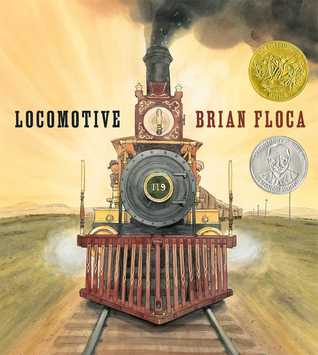
Locomotive
Author and Illustrator: Brian Floca
Published September 3rd, 2013 by Atheneum Books for Young Readers

Goodreads Summary: The Caldecott Medal Winner, Sibert Honor Book, and New York Timesbestseller Locomotive is a rich and detailed sensory exploration of America’s early railroads, from the creator of the “stunning” (Booklist)Moonshot.

It is the summer of 1869, and trains, crews, and family are traveling together, riding America’s brand-new transcontinental railroad. These pages come alive with the details of the trip and the sounds, speed, and strength of the mighty locomotives; the work that keeps them moving; and the thrill of travel from plains to mountain to ocean.

Come hear the hiss of the steam, feel the heat of the engine, watch the landscape race by. Come ride the rails, come cross the young country!

My Review: Rhythm. Onomatopoeias. (Well-researched) History. Gorgeous (and historically accurate) illustrations. Lyrical narrative. Unique point of view. This book has everything.

YOU (second person POV!) are a passenger on a train cross America with your family in 1869. Throughout the book, you will encounter many different landmarks, experience things on a train very few had at this time in history, and learn about the intricacies of the train. So fascinating! And all told in rich, beautiful language. It is hard to even share much more about the book because it is such an experience.

Check out Ricki’s review of Locomotive as well HERE.

Teachers’ Tools for Navigation: I would LOVE to read this to kids. There are so many places to stop and discuss and research and learn, but never without an enthralling story accompanying.  It would be a great book to use across subjects. There are definitely opportunities for all subjects: social studies (trans-continental travel, history, trains); science (the science of steam engines); math (travel); reading/writing (onomatopoeia, point of view, rhythm).

Also, and this is fresh on my mind because I just read it, but I would love to read this and The Donner Dinner Party and then look at the two journeys. How long did each take? Dangers? It would be an interesting look at how trains truly changed transportation.

Discussion Questions: How does having the book in 2nd point of view make it more enthralling?; What onomatopoeias were used in the book? How did these words help suck you into the story?; How did the author’s rhythm make you feel like you are actually on the train?; What are the landmarks that were passed on the trans-continental railroad? Why are these landmarks significant?; How does a steam engine work? What are the jobs of all of the different people on board?

We Flagged:
“Here is how this road was built,
with a grunt and a heave and a swing,
with the ring of shovels on stone,
the ring of hammers on spikes:

CLANK CLANK CLANK!

Men came from far away
to build from the East,
to build from the West,
to meet in the middle.

They cleared the rocks
and dug the tunnels.
They raised the hammers
and brought them down—

“Three strokes to the spike,
ten spikes to the rail!”

CLANK CLANK CLANK!”

Read This If You Loved: The Donner Dinner Party by Nathan Hale, Train by Elisha Cooper

Recommended For: 

readaloudbuttonsmall closereadinganalysisbuttonsmall classroomlibrarybuttonsmall

Signature

Locomotive by Brian Floca (Ricki’s Review)

Share

locomotive

Locomotive
Author and Illustrator: Brian Floca
Published September 3rd, 2013 by Atheneum Books for Young Readers

Goodreads Summary: The Caldecott Medal Winner, Sibert Honor Book, and New York Timesbestseller Locomotive is a rich and detailed sensory exploration of America’s early railroads, from the creator of the “stunning” (BooklistMoonshot.

It is the summer of 1869, and trains, crews, and family are traveling together, riding America’s brand-new transcontinental railroad. These pages come alive with the details of the trip and the sounds, speed, and strength of the mighty locomotives; the work that keeps them moving; and the thrill of travel from plains to mountain to ocean.

Come hear the hiss of the steam, feel the heat of the engine, watch the landscape race by. Come ride the rails, come cross the young country!

My Review: Filled with a beautiful array images (watercolor, ink, acrylic, etc.), this incredibly well-researched book takes readers on a journey through the summer of 1869. It took my husband and me three nights to read this title to our son because we needed to pause and take in its magic. After I closed the last page of the book, a library copy, my husband looked at me and mouthed (because our son was asleep), “Let’s buy this one.” There is a wonderful balance of factual information about the train and lyrical language that brims with gorgeous figurative language. This book is a standout and well-deserving of the accolades it has received.

**A special thanks to Kellee, who texted me that I had to read this one. You can read her review here.**

Teachers’ Tools for Navigation: I would use this text in any grade level. I envision the eager eyes of elementary school students as their curiosity is piqued… middle schoolers, suddenly interested in trains and this time in our history…or high schoolers, researching the different parts of the train and learning how effective figurative language can be in writing. This book would be a great mentor text to teach creativity. The layout of the pages is so very purposeful, which pave the way for great classroom discussions.

Discussion Questions: How does Brian Floca grab the readers’ attention? How is his writing purposeful?; In what ways does Floca manipulate language?; How does the second person point-of-view add to the story?; What does this book teach us? Go beyond the obvious.; How do the pages differ in their visual appeal? Why do you think this is?

We Flagged:

Rather than including a quote here, I wanted to show you a few of the gorgeous spreads with this book. These pages are pulled from images posted on Amazon.

locomotive1 locomotive2 locomotive4 locomotive3

Read This If You Loved: The Polar Express by Chris Van Allsburg

Recommended For: 

readaloudbuttonsmall closereadinganalysisbuttonsmall classroomlibrarybuttonsmall

RickiSig

The Beatles Were Fab (and They Were Funny) by Kathleen Krull & Paul Brewer

Share

NF PB 2014

Nonfiction Picture Book Wednesday

Nonfiction Picture Book Wednesday is hosted by Kid Lit Frenzy and was started to help promote the reading of nonfiction texts. Most Wednesdays, we will be participating and will review a nonfiction text (though it may not always be a picture book).
Be sure to visit Kid Lit Frenzy and see what other nonfiction books are shared this week!

beatles

The Beatles Were Fab (and They Were Funny)
Authors: Kathleen Krull & Paul Brewer
Illustrator: Stacy Innerst
Published March 19th, 2013 by HMH Books for Young Readers

Goodreads Summary: Q: How do you find all this business of having screaming girls following you all over the place?
George: Well, we feel flattered . . .
John: . . . and flattened.
When the Beatles burst onto the music scene in the early 1960s, they were just four unknown lads from Liverpool. But soon their off-the-charts talent and offbeat humor made them the most famous band on both sides of the Atlantic. Lively, informative text and expressive, quirky paintings chronicle the phenomenal rise of Beatlemania, showing how the Fab Four’s sense of humor helped the lads weather everything that was thrown their way—including jelly beans.

My Review and Teachers’ Tools for Navigation: I love The Beatles. There has never been anyone like them and that is what this book is about. It is about their popularity, their brilliance, and their humor. I liked how although the book is nonfiction and a biography of the Fab Four, it was about more than that. It was about how they changed over time and how they changed us over time.  It was also quite funny to read some of their interviews and see how they dealt with the fame that enveloped them so quickly. All with illustrations that were a bit zany and like caricatures, but were so well done. This picture book is definitely an excellent introduction to The Beatles for our 21st century kids.

Discussion Questions: How did The Beatles deal with all of the fame when they first became famous? How did their reaction to the fame change over time?; How did their favorite candy cause them trouble in the end?; Which Beatle do you think was the funniest?

We Flagged: “From the time they got together as lads until they became superstars, the Fab Four made music, made history, and made people laugh.”

Read This If You Loved: When Bob Met Woody by Gary Colio, John’s Secret Dreams by Doreen Rappaport, The Beatles by Jeremy Roberts

Recommended For: 

classroomlibrarybuttonsmall

Signature