Blog Tour and Review!: Weeds Find a Way by Cindy Jenson-Elliot

Share

NF PB 2014

Nonfiction Picture Book Wednesday

Nonfiction Picture Book Wednesday is hosted by Kid Lit Frenzy and was started to help promote the reading of nonfiction texts. Most Wednesdays, we will be participating and will review a nonfiction text (though it may not always be a picture book).
Be sure to visit Kid Lit Frenzy and see what other nonfiction books are shared this week!

weeds find a way

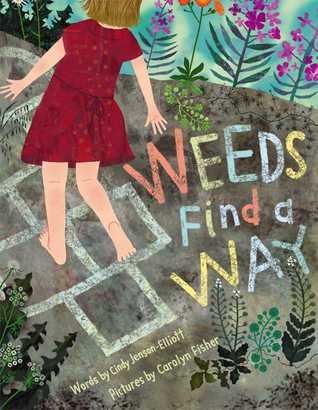
Weeds Find a Way
Author: Cindy Jenson-Elliot
Illustrator: Carolyn Fisher
Published: February 4, 2014 by Beach Lane Books

Goodreads Summary: Weeds are wonderful! Persistent, exuberant…these plants have personalities, and this nonfiction picture book puts them on colorful display!

From bright yellow dandelions popping through cracks in sidewalks to purple loosestrife growing rampant along roadways, weeds offer unexpected splashes of color and life to the least likely of places. With lovely language and a sly sense of humor, this beautiful picture book celebrates the tenacious temperaments of these pesky plants and is sure to have little ones chanting, “Way to go, weeds!”

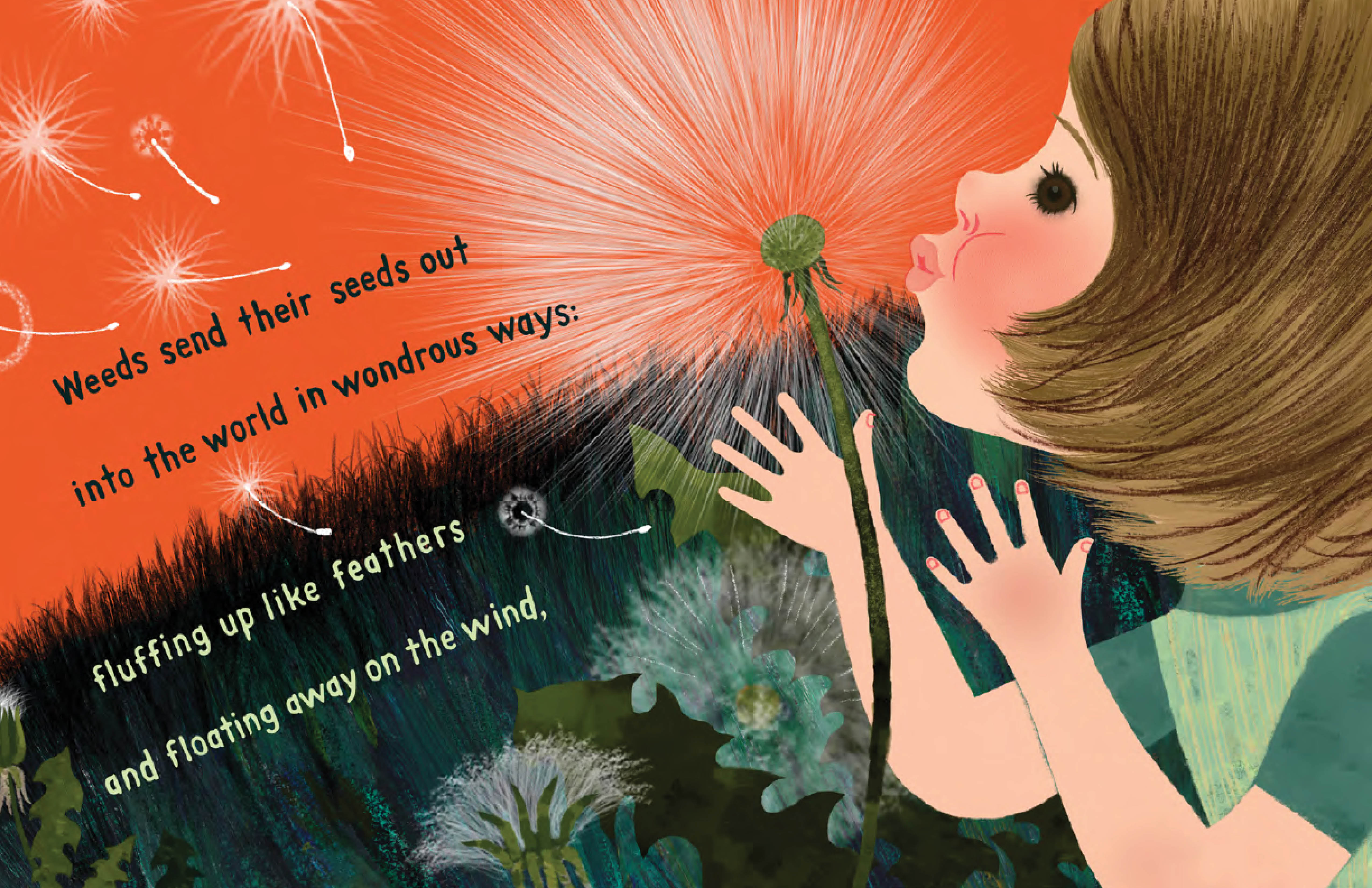
Ricki’s Review: The illustrations! The illustrations! I was mesmerized by the gorgeous artwork in this text. As I read it aloud to my son and husband, I was oohing and aahing at the bright, luscious colors. It made me want to go outdoors and lay among the weeds. If it wasn’t the dead of the winter, I would pull my son outside and read the book to him in our garden. There are beautiful passages of figurative language–alliteration that reads like a song, and readers will be sucked into the sprawling passages that evoke lovely images. The book turns readers’ assumptions on their heads. The words and images show that we can find beauty in, of all things, weeds. While I learned much about weeds and found the informational passages at the end (about different types of weeds) to be quite informative, I found the idea of weeds to be symbolic, too.

Kellee’s Review: I was blown away with how fascinating the author made something that we walk by every day and ignore. The text itself is quite lyrical and has the amazing illustrations with it; however, I found the goodies in the research in the afterword.  It was very interesting for me to learn that these plants, which we treat like pests, are actually so very useful. I second much of what Ricki says about the figurative language. I love seeing these elements being used in a nonfiction book! Overall, this is a nonfiction book that should be shared with kids and will definitely start some major discussions.

Teachers’ Tool for Navigation: Teachers will find multiple opportunities with this text. They can use it to teach different types of figurative language, or they might ask students to explore weeds in a more symbolic way. We love the idea of using nonfiction at such a young age, and we wonder if teachers might try literature circles with this text. While it is marketed for ages 4-8, it could be used for different purposes with a variety of age groups. The informational passages at the end might allow teachers to help students research about different types of plants. We also love the illustrations so much that we would love to have kids take the pictures and write their own stories to match the images. It would show that nonfiction can be accessible and fun.

Interior illus from WEEDS FIND A WAY_Copyright � 2014 by Carolyn Fisher

Discussion Questions: Why do weeds get a bad reputation? What else might we compare weeds to? Are there other things in the world that are unfairly loathed?; How does the author use figurative language to draw the reader in?; What makes a plant a weed?; Some of the plants shared at the end of the book are useful (for foods, medication, etc.); however, we still treat them as weeds. Why do we have this perspective of these plants?

We Flagged: “Weeds find  way to stay, reaching deep with a  grip so strong, the stem always breaks first, leaving the living roots behind to sprout again; or pinching into pieces the minute you try to tug them out, spreading into a spray of plant parts that find new spots to take root” (p. 21-22).

Read This If You Loved: The Lorax by Dr. Seuss, Evolution of Calpurnia Tate by Jacqueline Kelly, The Tree Lady by H. Joseph Hopkins

Cindy Jenson-Elliott photo

About the Author: Cindy Jenson-Elliott is the author of fourteen books of nonfiction and hundreds of articles for newspapers, magazines and educational publishers. She is a teacher and environmental educator with an MA in education and a passion for connecting children with nature. In her free time, she enjoys swimming in the ocean and spending time outdoors in San Diego, where she lives and gardens with her family of four humans and three Buff Orpington chickens. Visit her at CindyJensonElliott.com.

Recommended For: 

readaloudbuttonsmall classroomlibrarybuttonsmall closereadinganalysisbuttonsmall

 Check out all the stops on the WEEDS FIND A WAY blog tour!

Mon, Feb 24
Growing with Science
Tues, Feb 25
As They Grow Up
Wed, Feb 26
Kid Lit Frenzy
Thurs, Feb 27
Sharpread
Fri, Feb 28
Children’s Book Review
Mon, Mar 3
Let’s Go Chipper!
Tues, Mar 4
Just a Little Creativity
Wed, Mar 5
Unleashing Readers
Thurs, Mar 6
5 Minutes for Books
Fri, Mar 7
Archimedes Notebook


Signature andRickiSig

**Thank you to Barbara Fisch at Blue Slip Media for providing us with copies for review**

Space Encyclopedia by David A. Aguilar

Share

NF PB 2014

Nonfiction Picture Book Wednesday

Nonfiction Picture Book Wednesday is hosted by Kid Lit Frenzy and was started to help promote the reading of nonfiction texts. Most Wednesdays, we will be participating and will review a nonfiction text (though it may not always be a picture book).
Be sure to visit Kid Lit Frenzy and see what other nonfiction books are shared this week!

space

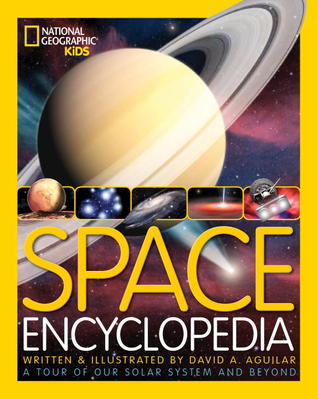
Space Encyclopedia: A Tour of our Solar System and Beyond
Author: David A. Aguilar
Published August 17th, 2013 by National Geographic Children’s Books

Goodreads Summary: Presenting the latest exciting findings on space exploration and research and cutting-edge, spectacular views of the universe that technology is bringing back to Earth, all in one ultimate reference book. Authored by David A. Aguilar of the Harvard-Smithsonian Center for Astrophysics, the National Geographic Space Encyclopedia is ideal for the family bookshelf, providing both accessible information for school reports and compelling reading on the mysteries beyond our world.

My Review and Teachers’ Tools for Navigation: This book is so full of information! It is almost more of a browsing or researching book because it is just so much. I will say the information is easy to understand (Aguilar constructed the book almost like a journey which makes it easier to follow) the the photographs and scientifically accurate illustrations are some of the best I’ve ever seen. In my time of reading this book, I learned so much and can definitely see how it would be a huge asset to a classroom (science or language arts).

Discussion Questions: After reading about _____, what did you learn?

We Flagged: “Neptune: We’re nearing the pale blue icy world of Neptune. It has the wildest weather of any planet in the solar system, with winds that blow at speeds over 1,200 miles per hour. Like the other Jovian planets, Neptune doesn’t have a surface to walk on. Although the clouds surrounding it are very cold, -350 degrees Fahrenheit, its rocky iron core is about the same temperature as the sun’s surface.” (p. 62)

Read This If You Loved: Any nonfiction book about space, for background knowledge when reading science fiction that takes place in space

Recommended For: 

classroomlibrarybuttonsmall closereadinganalysisbuttonsmall

Signature

**Thank you to Tracey Daniels at Media Masters Publicity for providing a copy for review**

The Great American Dust Bowl by Don Brown

Share

NF PB 2014

Nonfiction Picture Book Wednesday

Nonfiction Picture Book Wednesday is hosted by Kid Lit Frenzy and was started to help promote the reading of nonfiction texts. Most Wednesdays, we will be participating and will review a nonfiction text (though it may not always be a picture book).
Be sure to visit Kid Lit Frenzy and see what other nonfiction books are shared this week!

dust

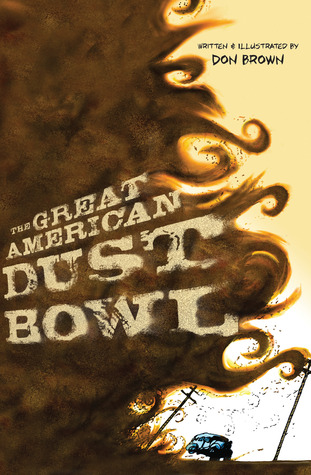
The Great American Dust Bowl
Author and Illustrator: Don Brown
Published October 8th, 2013 by HMH Books for Young Readers

Goodreads Summary: A speck of dust is a tiny thing. In fact, five of them could fit into the period at the end of this sentence.

On a clear, warm Sunday, April 14, 1935, a wild wind whipped up millions upon millions of these specks of dust to form a duster—a savage storm—on America’s high southern plains.

The sky turned black, sand-filled winds scoured the paint off houses and cars, trains derailed, and electricity coursed through the air. Sand and dirt fell like snow—people got lost in the gloom and suffocated . . . and that was just the beginning.

Don Brown brings the Dirty Thirties to life with kinetic, highly saturated, and lively artwork in this graphic novel of one of America’s most catastrophic natural events: the Dust Bowl.

Review: Ever since I read Out of the Dust by Karen Hesse, I’ve loved learning about this scary time in American history (also, the danger hasn’t ceased just because it happens less often). This book does a beautiful job of taking this time in history and laying it out for the reader so that it is very easy to understand. It includes background about the geographical area, information about the Depression, and then takes you through the Dust Bowl all the way to modern days. So interesting!

Teacher’s Tools For Navigation: First, this book will make a great companion to Out of the Dust. I think many readers struggle with Hesse’s book because they don’t have the background knowledge needed to understand the book and Don Brown’s book gives all the background needed.  The Great America Dust Bowl can also be used as a resource when teaching the Dust Bowl, the depression, or agriculture.

Discussion Questions: How did the Depression impact farmers thus help cause the Dust Bowl to happen?; How is the problems of the Dust Bowl still impacting us today?

We Flagged: 

Read This If You Loved: Out of the Dust by Karen Hesse, Grapes of Wrath by John Steinbeck, The Storm in the Barn by Matt Phelan, Survival in the Storm: The Dust Bowl Diary of Grace Edwards, Dalhart, TX 1935 by Katelan Janke

Recommended For: 

classroomlibrarybuttonsmall closereadinganalysisbuttonsmall

Signature

Frog Song by Brenda Z. Guiberson

Share

NF PB 2014

Nonfiction Picture Book Wednesday

Nonfiction Picture Book Wednesday is hosted by Kid Lit Frenzy and was started to help promote the reading of nonfiction texts. Most Wednesdays, we will be participating and will review a nonfiction text (though it may not always be a picture book).
Be sure to visit Kid Lit Frenzy and see what other nonfiction books are shared this week!

frogsong

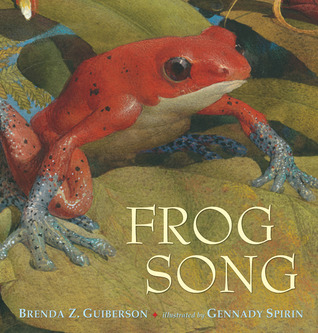
Frog Song
Author: Brenda Z. Guiberson
Illustrator: Gennady Spirin
Published February 5th, 2013 by Henry Holt and Co.

Goodreads Summary: Since the time of the dinosaurs, frogs have added their birrups and bellows to the music of the earth. Frogs are astonishing in their variety and crucial to ecosystems. Onomatopoeic text and stunning illustrations introduce young readers to these fascinating and important creatures, from Chile to Nepal to Australia.

Review and Teacher’s Tools for Navigation: I must admit–I am not a fan of frogs. They actually scare me quite a bit. They are so sporadic and unpredictable–one even jumped on my head at a party once! However, animals of all kind fascinate me and this is a book full of amazing facts about these slimy, jumpy creatures.  The book is set up so that it is easy to navigate with quick interesting facts about 11 different frogs (& toads) with extra information in the back.  I also liked the information given in the back about the trouble that frogs are in because of human activity. I think this book would be a great asset in any science classroom studying biology or ecology (would also be wonderful in a reading class or even a geography lesson because of the different places the frogs came from). Another wonderful way this book could be used in a reading class is because of all of the onomatopoeias within the book. I would love to hear the actual sounds of the frogs and then see the onomatopoeia that the author chose.

Discussion Questions: Which frog fact fascinates you the most? Do extra research about this frog and find other interesting facts about the animal.; Compare and contrast two of the frogs.; Write a fact book about animals like Frog Songs and include the sounds the animals make.

We Flagged: “In Chile, the Darwin’s frog sings in the beech forest. CHIRP-CHWEEET! The male guards 30 eggs in the damp leaves for three weeks. when the tadpoles wiggle, he scoops them into his mouth. SLURP! They slither into his vocal sacs, where he keeps them safe and moist for seven weeks. Then he gives a big yawn, and the little froglets pop out.” (p. 16)

Read This If You Loved: Lifetime by Lola Schaefer, Actual Size by Steve Jenkins, Island by Jason Chin, Seabird in the Forest by Joan Dunning, Slap, Squeak, and Scatter by Steve Jenkins

Recommended For: 

classroomlibrarybuttonsmall readaloudbuttonsmall closereadinganalysisbuttonsmall

Signature

Lifetime: The Amazing Numbers in Animal Lives by Lola M. Schaefer

Share

NF PB 2014

Nonfiction Picture Book Wednesday

Nonfiction Picture Book Wednesday is hosted by Kid Lit Frenzy and was started to help promote the reading of nonfiction texts. Most Wednesdays, we will be participating and will review a nonfiction text (though it may not always be a picture book).
Be sure to visit Kid Lit Frenzy and see what other nonfiction books are shared this week!

lifetime

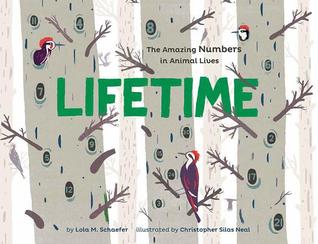
Lifetime: The Amazing Numbers in Animal Lives
Author: Lola Schaefer
Illustrator: Christopher Silas Neal
Published September 20th, 2013 by Chronicle Books

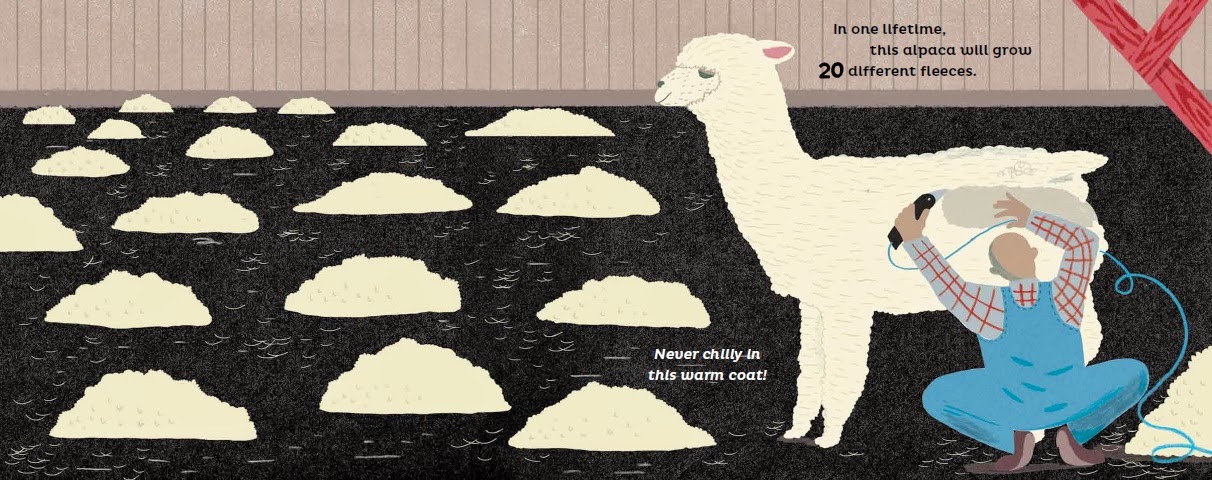
Goodreads Summary: In one lifetime, a caribou will shed 10 sets of antlers, a woodpecker will drill 30 roosting holes, a giraffe will wear 200 spots, a seahorse will birth 1,000 babies.

Count each one and many more while learning about the wondrous things that can happen in just one lifetime. This extraordinary book collects animal information not available anywhere else—and shows all 30 roosting holes, all 200 spots, and, yes!, all 1,000 baby seahorses in eye-catching illustrations. A book about picturing numbers and considering the endlessly fascinating lives all around us, Lifetime is sure to delight young nature lovers.

Review and Teacher’s Tools for Navigation: I learned so much reading this book. My friend Amanda actually read it first and kept yelling out the facts because they are just so interesting; obviously students would find them interesting as well. On top of it just being interesting, this book is a little book of gold! It is a perfect combination of reading, math, and science! Also, the illustrations are just so well done! Throughout the book, scientific facts about animals are shared with the reader (all with numbers) and then in the end of the book Lola Schaefer also shares with the reader even more information about the animals, how to find an average, and other math facts.  And not once does the book even feel a bit boring–it is a perfect read aloud and cross-curricular text.

Discussion Questions: Which of the animals interests you the most?; Using how the author teaches you to find an average, pick an animal and determine the average number of offspring they will have in a lifetime.

We Flagged: 

Read This If You Loved: Frog Song by Brenda Z. Guiberson, Weird but True! by National Geographic, Island by Jason Chin, Can We Save the Tiger? by Martin Jenkins, Actual Size by Steve Jenkins

Recommended For: 

closereadinganalysisbuttonsmall classroomlibrarybuttonsmall readaloudbuttonsmall

Signature

Unleashing Readers and Kid Lit Frenzy 2014 Mock Sibert Award Picks

Share

Mock Sibert Button

Over the past two years, Alyson has hosted, and Kellee has participated in, a book challenge pushing ourselves to read more nonfiction picture books. This year, after reading many of the best nonfiction picture books published in 2013, we decided that it would be fun to do a Mock Sibert Award post together.

The Sibert Award is given annually to the most distinguished informational book published during the preceding year. Although the Sibert Award is not just for picture books, we are going to focus on the nonfiction picture books we feel would be honored or win this year. To be honored/win the Sibert Award, the book must include these important elements and qualities:

Excellent, engaging, and distinctive use of language.
Excellent, engaging, and distinctive visual presentation.
Appropriate organization and documentation.
Clear, accurate, and stimulating presentation of facts, concepts, and ideas.
Appropriate style of presentation for subject and for intended audience.
Supportive features (index, table of contents, maps, timelines, etc).
Respectful and of interest to children.

After reviewing the qualities and elements needed to win the Sibert Award, I chose the following six titles from 2013 that I hope will win or be honored on January 27th. Check out Kid Lit Frenzy, as well, to see what Alyson chose as her picks.

klfbks_sml (1)

We would also love your input!
Which of our ten titles do you think will win the Sibert?
Check out the results to find out what book you thought should win.

All of my choices are respectful and of interest to children, have clear and accurate presentation of facts and ideas, and use excellent, engaging, and distinctive language; however, they are all distinct in their own way.

brave
I am sucker for this biographical picture book for two reasons: 1) I had not known about the Shirtwaist Makers’ Strike of 1909 before and I love learning about new historical moments. I know that it interested me (as I know it would for kids), because after I read the additional information about the garment industry I was on the internet searching for more information. 2) Clara is such a great example of girl power! AND she is a historical figure that shows girls (and boys) that girls can stand up for themselves when they are not being treated well (in real life). I love that she overcame so much to not only stand up for her rights, but also to get an education and take care of her family. What an amazing person to learn about.

When it comes to the Sibert Award, Brave Girl not only is written beautifully and engages the reader through text and illustrations, it also documents Clara’s life in a unique way that makes it different than other narrative biographies.

dust bowl

Ever since I read Out of the Dust by Karen Hesse, I’ve loved learning about this scary time in American history (also, the danger hasn’t ceased just because it happens less often). This book does a beautiful job of taking this time in history and laying it out for the reader so that it is very easy to understand. It includes background about the geographical area, information about the Depression, and then takes you through the Dust Bowl all the way to modern days. So interesting!

Graphic novels have not been honored before from the Sibert committee, but I feel this one stands out. It is so well done! It engages readers about an important time in American history by including narratives, information, and supportive features (maps, timelines).

lovedmath

I love how the author so cleverly combined Erdos’s story and mathematics without ever overloading the story with numbers. This book is so much fun (and the colorful illustrations add even more playfulness to it) yet teaches so much within its story.  What impresses me the most is just how much the book makes you think about math, want to learn more math, and want to play with numbers. Even in book form, Erdos is making math understandable.

The author’s distinctive use of language by using math throughout really makes it stand above and beyond other nonfiction books from 2013.

on a beam

I love how this book focuses on how Albert’s creativity is one of the keys to what made him the amazing scientist that he is. Also, as a teacher of struggling and gifted students, I love the focus on how he didn’t do well in school. It shows how just because a student is different or a disturbance or thinks differently doesn’t mean that they aren’t intelligent. The book definitely promotes wonderings, thinking, and imagination!  I also loved learning about the fun side of Einstein and how he likes to not wear socks, he liked to eat ice cream cones, and overall he just did what he want to have time to think. Finally, the Author’s Note puts all of Einstein’s theories together so that the reader also gets this information.

I think this one is especially respectful and of interest to children who read it and will make them more interested in Einstein.

barbed

World War II is the most infamous war and it is taught to all students at some point in their career. They learn about Pearl Harbor and the Atomic Bomb and the Holocause and Hitler, but way too often what happened here in the US is not discussed. All of the Japanese Americans living on the West Coast of the US (62% were US citizens) were interned because our fear overwhelmed us so much that it was the only solution that seemed plausible. I felt that the fear that was felt after the Pearl Harbor bombings is very similar to what was felt 12 years ago today. Barbed Wire Baseball does discuss the internment camps, but I think that the theme of this book is not about the camps but about how a love of something can turn a poor situation into something else if you are determined. The story is just one part of the book. What moves it to a higher level is the author and illustrator. Marissa Moss has someone captured the tone of the story. It begins with hopefulness then to hopelessness and finally back to joyousness. Her ability to manipulate the tone throughout makes the story touch the reader even more.

Yuko Shimizu’s illustrations are done with a Japenese calligraphy brush and ink adding to the connection the reader will feel with the story. His visual presentation is distinctive and engaging. Just beautiful.

lifetime

I learned so much reading this book. My friend Amanda actually read it first and kept yelling out the facts because they are just so interesting; obviously students would find them interesting as well. On top of it just being interesting, this book is a little book of gold! It is a perfect combination of reading, math, and science! Also, the illustrations are just so well done! Throughout the book, scientific facts about animals are shared with the reader (all with numbers) and then in the end of the book Lola Schaefer also shares with the reader even more information about the animals, how to find an average, and other math facts.  And not once does the book even feel a bit boring.

Lifetime is informational nonfiction completely while the other books are narratives (or include narrative elements). However, it is still has distinctive, excellent language and the illustrations add an amazing extra element to the text.

Now which of mine, or Alyson’s, books do you think should win or be honored by the Sibert committee? Check out the results to find out which book was chosen as our Mock Sibert Winner.

Signature

For the Good of Mankind?: The Shameful History of Human Medical Experimentation by Vicki O. Wittenstein

Share

NF PB 2013

Nonfiction Picture Book Wednesday

Nonfiction Picture Book Wednesday is hosted by Kid Lit Frenzy and was started to help promote the reading of nonfiction texts. Most Wednesdays, we will be participating and will review a nonfiction text (though it may not always be a picture book). Be sure to visit Kid Lit Frenzy and see what other nonfiction books are shared this week!

for the good of mankind

For the Good of Mankind?: The Shameful History of Human Medical Experimentation
Author: Vicki O. Wittenstein
Published: August 1st, 2013 by Lerner Publishing Group

Summary: 

Experiment: A child is deliberately infected with the deadly smallpox disease without his parents’ informed consent.
Result: The world’s first vaccine.
Experiment: A slave woman is forced to undergo more than thirty operations without anesthesia.
Result: The beginnings of modern gynecology.
Experiment: From 1946 to 1953, seventy-four boys are fed oatmeal laced with radioactive iron and calcium.
Result: A better understanding of the effects of radioactivity on the human body.

Experimental incidents such as these paved the way for crucial medical discoveries and lifesaving cures and procedures. But they also violated the rights of their subjects, many of whom did not give their consent to the experiments. The subjects suffered excruciating pain and humiliation. Some even died as a result of the procedures. Even in the twenty-first century—despite laws, regulations, and ethical conventions—the tension between medical experimentation and patient rights continues.

How do doctors balance the need to test new medicines and procedures with their ethical and moral duty to protect the rights of human subjects? What price has been paid for medical knowledge? Can we learn from the broken oaths of the past?

Take a harrowing journey through some of history’s greatest medical advances—and its most horrifying medical atrocities. You’ll read about orphans injected with lethal tuberculosis and concentration camp inmates tortured by Nazi doctors. You’ll also learn about radiation experimentation and present-day clinical trials that prove fatal. Through these stories, explore the human suffering that has gone hand in hand with medical advancement.

Review: Human experimentation is a very difficult subject matter, one that both horrifies and fascinates teens. I always try to believe in the good of mankind, but books like this always seem to challenge that assumption. It was difficult for me to read this book because I cannot fathom how any person could justify using individuals (including CHILDREN!) for experimentation. This book is incredibly well-researched and documents a variety of cases of experimentation. I couldn’t put it down because I was so astonished by the details of the cases. It is colorful and eye-appealing, and this will captivate reluctant readers. I think teenagers would see nonfiction in a very positive light if they were given books like this one. I absolutely recommend it to teachers.

Teacher’s Tools for Navigation: Teachers might assign different chapters to groups of students. Students will enjoy reading about and presenting the material covered in this book. Persuasive essays are always a chore, but there are many controversial issues within this book, and I think students would really enjoy writing essays about this subject matter. This book also includes discussion questions for readers.

Discussion Questions: Can we justify the experimentation on a human being if it will better the lives of millions of people?; Why do you think human experimentation was allowed for such a long time? Can we judge the doctors who experimented on people centuries ago?; Applying the stories to animals, do you think animal experimentation is justifiable? Why or why not?

Read This If You Loved: The Immortal Life of Henrietta Lacks by Rebecca Skloot, books in the Real Justice series, Brave New World by Aldous Huxley


Recommended For:

closereadinganalysisbuttonsmall classroomlibrarybuttonsmall

RickiSig