Blog Tour with Review, Giveaway, and Author Interview!: The Sky Painter: Louis Fuertes, Bird Artist by Margarita Engle

Share

NFPB2015

Nonfiction Picture Book Wednesday

Nonfiction Picture Book Wednesday is hosted by Kid Lit Frenzy and was started to help promote the reading of nonfiction texts. Most Wednesdays, we will be participating and will review a nonfiction text (though it may not always be a picture book).
Be sure to visit Kid Lit Frenzy and see what other nonfiction books are shared this week!
sky painter

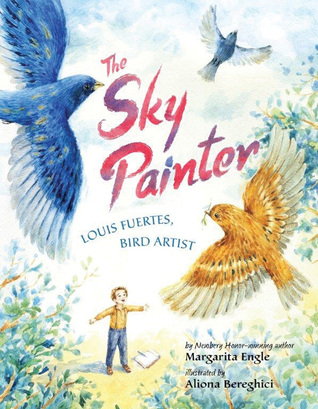
The Sky Painter: Louis Fuertes, Bird Artist
Author: Margarita Engle
Illustrator: Aliona Bereghici
Published April 28th, 2015 by Two Lions

Goodreads Summary: Louis loves to watch birds. He takes care of injured birds and studies how they look and how they move. His father wants him to become an engineer, but Louis dreams of being a bird artist. To achieve this dream, he must practice, practice, practice. He learns from the art of John James Audubon. But as Louis grows up, he begins to draw and paint living, flying birds in their natural habitats.

Louis Agassiz Fuertes (1874–1927) is now known as the father of modern bird art. He traveled with many scientific expeditions all over the world. His best-known works—paintings for habitat exhibits at the American Museum of Natural History in New York—are still beloved by visitors today. His art helped to encourage wildlife conservation, inspiring people to celebrate and protect the world of wings.

Poems by Newbery Honor–winning author Margarita Engle and illustrations by Aliona Bereghici capture the life of Louis Fuertes and the deep sense of wonder that he felt when he painted the sky.

About the Author: Margarita Engle is a Cuban American poet and novelist whose work has been published in many countries. Her books include The Poet Slave of Cuba, winner of the Pura Belpré Award for narrative and the Américas Award; The Surrender Tree, a Newbery Honor book; Summer Birds: The Butterflies of Maria Merian, a Kirkus Best Book for Children; and The Lightning Dreamer, Cuba’s Greatest Abolitionist, winner of the 2014 PEN Center USA Literary Award for Young Adult/Children’s Literature. Margarita lives in California, where she enjoys bird-watching and helping her husband with his volunteer work for wilderness search-and-rescue dog training programs. To learn more, and to download a free activity kit for The Sky Painter, visit: www.margaritaengle.com

Margarita Engle_credit Marshall W. Johnson

Kellee’s Review: Louis Fuertes is an inspirational man, and Engle’s biography of him is perfect. I think what I enjoyed most was how Fuertes was not only an artist, but an animal activist, family man, and educator. He is a role model for any kid that wants to grow up to be happy. Like Ricki shares below, this book shares an important lesson about how there are so many different special things out there to be observed. Nature is phenomenal.

I loved learning not only of Fuertes and his journey to live his passion, I loved the beautiful poetry and watercolor that were used to craft his story.  Both the poetry and the artwork do Fuertes’s story justice like no other format would have.  The format also gives the reader a chance to look at each poem as a stand alone and also part of the whole biography which gives each poem two different purposes and two different ways they can be analyzed.

Ricki’s Review: Louis Fuertes is a remarkable man, and this book not only pays homage to his extraordinary life, but it teaches young people important lessons. He nurtures and cares for birds in ways that children can emulate in many aspects of their lives. The book shows he devoted his life to birds and wanted others to see their beauty. I’ve seen Fuertes’ artwork in a variety of places, but I never considered him as an artist. This book reminded me that sometimes I go about life, not considering something very important and special. I am so glad I learned about Fuertes’ story and will think about him whenever I read or learn about birds. This book would be an excellent gift to give to a child. The poetry is gorgeous, and the illustrations are breath-taking.

Teachers’ Tools for Navigation: As a teacher, we can think of a plethora of ways to use this text in the classroom. We love to offer our students options, so we might provide them opportunities to  read different biographies of different people who are following their passion. Students the could get in lit circles to discuss the biography then come back together to share what they learned. They could also choose any artist or person in history and write poems reflecting this individual’s biography. It would be fun to illustrate and bind these books to share them with others. We can imagine a class sitting in a circle, reading their poetry and learning about lesser-known individuals in history.

Discussion Questions: How did Fuertes change animal painting/drawing forever?; How do you feel that some artists kill animals to draw or paint them?; How did following his passions help make Fueres’s life happier?

Book Trailer: 

Interview with Margarita Engle

Unleashing Readers: What inspired you to write about Fuertes?

Margarita Engle: I became fascinated by Fuertes while I was researching rain forest ecology and visiting wildlife preserves, during the process of writing a historical verse novel called Silver People: Voices From the Panama Canal. In many references, Fuertes was mentioned as the bird artist for all the great geographic expeditions of the early twentieth century. When I learned that he was a conservationist who pioneered the painting of living birds in flight—instead of killing and posing them like Audubon—I was astonished. Why wasn’t he a household name, like Audubon? Instantly, Fuertes became the most important link in my ongoing quest for biographical picture books about great Latino naturalists who have been forgotten by history. I hope The Sky Painter helps teachers, librarians, and parents introduce children from all backgrounds to this amazing Puerto Rican/American scientist. Fuertes is a fantastic role model because he was a creative thinker who decided to learn how to paint faster, to save the lives of birds.

UR: What did your research process look like?  Do you have any recommendations for students who are doing research?

ME: I try to read every book I can find, in addition to online sources. Many historical studies simply have not yet been digitized, so interlibrary loan is really helpful. I rely on bibliographies to help me move farther and farther back in time, until I discover first person narratives. Diaries, letters, field notes, etc. are incredibly helpful. Fortunately, Fuertes and the scientists he worked with on expeditions recorded fascinating details!

UR: Was there any information that you found interesting that you decided not to include in the book?

ME: Yes, because this book is for young children, I decided not to include the tragic way he died. Soon after he returned from his expedition to Africa, he was driving to show new paintings to another ornithologist. His car was hit by a train. The paintings survived, but he did not.

UR: Because we are a blog devoted to teachers, do you have any ideas about how you envision your book in classrooms?

ME: The Sky Painter can fit into science, art, poetry, or multicultural programs. One of the really clever cartoon exercises Fuertes taught children who visited his studio was simply sketching three circles, then deciding how to connect them. Two circles could become arms or wings, depending on how they’re connected. One circle is always the head. Children decide whether to create a person, a bird, or some sort of funny hybrid.

For older children, I think The Sky Painter can also be used to teach history, if a teacher discusses the way important accomplishments are sometimes omitted from textbooks. Because there’s a tendency for each generation of textbooks to include material from past editions, incredibly important topics may be gradually forgotten.

Fuertes was not only a great artist and scientist, he was also a groundbreaking conservationist. It would make me very happy to see The Sky Painter featured during Hispanic Heritage Month in September–October, as well as on Earth Day, which happens to fall during National Poetry Month in April. It would be especially thrilling to see The Sky Painter used by a teacher preparing students for a field trip, whether it’s a video or a virtual trip on a nature website, an outdoor nature walk on the school-grounds, a walk in a nearby park, or a visit to the Natural History Museum in New York to see the murals Fuertes painted as backgrounds for habitat displays. The possibilities are incredible!

Perhaps most important, The Sky Painter can be used to teach about creative thinking. Are there old attitudes we might try changing—just as Fuertes did—to promote conservation of wildlife and natural habitats?

Read This If You Loved: Feathers: Not Just For Flying by Melissa Stewart, A Boy and a Jaguar by Alan Rabinowitz, Manfish by Jennifer Berne, Look Up!: Bird-Watching In Your Own Backyard by Annette LeBlanc Cate

Recommended For: 

classroomlibrarybuttonsmall readaloudbuttonsmall

closereadinganalysisbuttonsmall litcirclesbuttonsmall

Follow along on THE SKY PAINTER blog tour!
 
Mon, Apr 20
Library Fanatic
Tues, Apr 21
Kid Lit Frenzy
Wed, Apr 22
Unleashing Readers
Thurs, Apr 23
5 Minutes for Books
Fri, Apr 24
Teach Mentor Texts
Sat, Apr 25
Booking Mama
Mon, Apr 27
Sharpread
Tues, Apr 28
The Children’s Book Review
Wed, Apr 29
Cracking the Cover
Thurs, Apr 30
A Foodie Bibliophile in Wanderlust
Fri, May 1
Archimedes Notebook

GIVEAWAY

a Rafflecopter giveaway

Signature andRickiSig


**Thank you to Blue Slip Media and Margarita Engle for the interview and providing a copy for review!**
Cody and the Fountain of Happiness by Tricia Springstubb

Share

cody

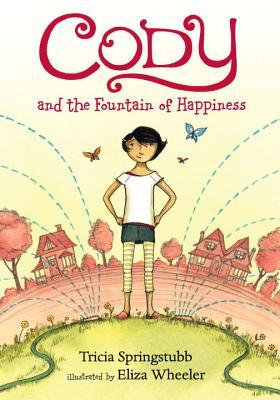
Cody and the Fountain of Happiness
Author: Tricia Springstubb
Illustrator: Eliza Wheeler
Published April 14th, 2015 by Candlewick Press

Goodreads Summary: For whimsical Cody, many things are beautiful, especially ants who say hello by rubbing feelers. But nothing is as beautiful as the first day of summer vacation, and Cody doesn’t want to waste one minute of it. Meanwhile, teenage brother Wyatt is moping over a girl, Mom is stressed about her new job as Head of Shoes, Dad is off hauling chairs in his long-distance truck, and even camp has been closed for the summer. What to do? Just when all seems lost, Cody bumps into a neighborhood boy named Spencer who is looking for a runaway cat. With a new friend and a soon-to-be-found cat, Cody is on her way to the fountain of happiness.

Kellee’s Review: Cody is one of those spunky, smart, caring, sweet young ladies who anyone would want as a friend. I loved being part of Cody’s summer which was full of a quirky set of characters and an unexpected misadventure. I have been talking to Carrie Gelson about my book gap when it comes to early chapter books, so I am so glad that I found Cody because I think she is going to be loved as much as Marty McGuire, Lulu, Ivy & Bean, and many other loved early chapter book characters.

Ricki’s Review: Kellee’s review made me laugh. I agree that my knowledge of early chapter books is my biggest weakness, so I loved reading this odd-in-a-good-way tale! The illustrations are great–as a young reader, I hated when my chapter books didn’t have pictures, so this will be very appealing to kids. I loved how the author incorporated Spanish words for beginning readers. Also, the quirky bond between Cody and her brother, Wyatt, made me giggle at several points. Wyatt reminded me of my older brother, and I think readers will find similar qualities in their siblings. I will absolutely be recommending this book to younger readers.

Teachers’ Tools of Navigation: Lots of things go into Cody’s fountain of happiness: her family, Mew Mew, Spencer, GG, and her ants; however, each of us have our own fountain of happiness. Have students make their own fountain of happiness list, and then assemble the things they included into a list poem.
(Idea from Tricia Springstubb)

Additionally, Tricia Springstubb’s writing is exceptional and would definitely serve as a mentor text for voice and descriptive writing. The lyrical way that Tricia Springstubb describes Cody’s feelings and surroundings is beautiful and is a wonderful example for student writers and readers.

Discussion Questions: What makes up your fountain of happiness?; Cody uses onomatopoeias to describe things such as her mother’s walking “click-click-click” and her coffee drinking “gulp-gulp-gulp.” What onomatopoeias do you hear around you on a daily basis?

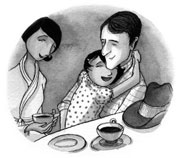
We Flagged: “Late that night, Cody woke up. Her Dad radar was beeping. She raced to the kitchen. Dad sat at the table with Mom. Jumping into his arms, Cody breathed in great gulps of dad smell, a mix of diesel oil, coffee, and eggs over easy.”

cody2

Book Trailer: 

Cody & The Fountain of Happiness-Trailer from Tim Kaegi on Vimeo.

Read This If You Loved: Marty McGuire by Kate Messner, Eleanor books by Julie Sternberg, Lulu books by Judith Viorst, Babymouse by Jenni L. Holm; Annika Riz, Math Whiz by Claudia Mills

Recommended For: 

classroomlibrarybuttonsmall readaloudbuttonsmall

Signatureand RickiSig

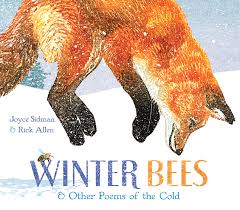
Winter Bees & Other Poems of the Cold by Joyce Sidman and Rick Allen

Share

NFPB2015

Nonfiction Picture Book Wednesday

Nonfiction Picture Book Wednesday is hosted by Kid Lit Frenzy and was started to help promote the reading of nonfiction texts. Most Wednesdays, we will be participating and will review a nonfiction text (though it may not always be a picture book).
Be sure to visit Kid Lit Frenzy and see what other nonfiction books are shared this week!

winter bees

Winter Bees & Other Poems of the Cold
Author: Joyce Sidman
Illustrator: Rick Allen
Published November 4th, 2014 by HMH Books for Young Readers

Goodreads Summary: In this outstanding picture book collection of poems by Newbery Honor-winning poet, Joyce Sidman (Song of the Water Boatman, Dark Emperor and Other Poems of the Night), discover how animals stay alive in the wintertime and learn about their secret lives happening under the snow. Paired with stunning linoleum print illustrations by Rick Allen, that celebrate nature’s beauty and power.

My Review: Alyson and Carrie both nominated this book for our Mock Sibert Award, so I knew it was a book I had to read. After requesting that my library purchase it, I was so happy to finally receive the book. This book is beautiful. Each aspect of the book can stand alone: the poetry is full of imagery and figurative language, the informational aspects are interesting and fact-based, and the illustrations are exceptional and bring the animals to life.

Teachers’ Tools for Navigation: First, this book can be used as a mentor text for poetry. Many different types of poetry are represented and each poem is different. Second, I think this book can be a great jumping off point for an inquiry-based project where students research an animal, write a poem about it, and also write an informational piece of text to accompany the poem. This book is also a great companion to Kate Messner’s Over and Under Snow and other animal survival books which would cause for a great unit as well.

Discussion Questions: Which of the winter animals has the best plan for survival?; What fact in Winter Bees surprised you the most about how an animal survives during the winter?

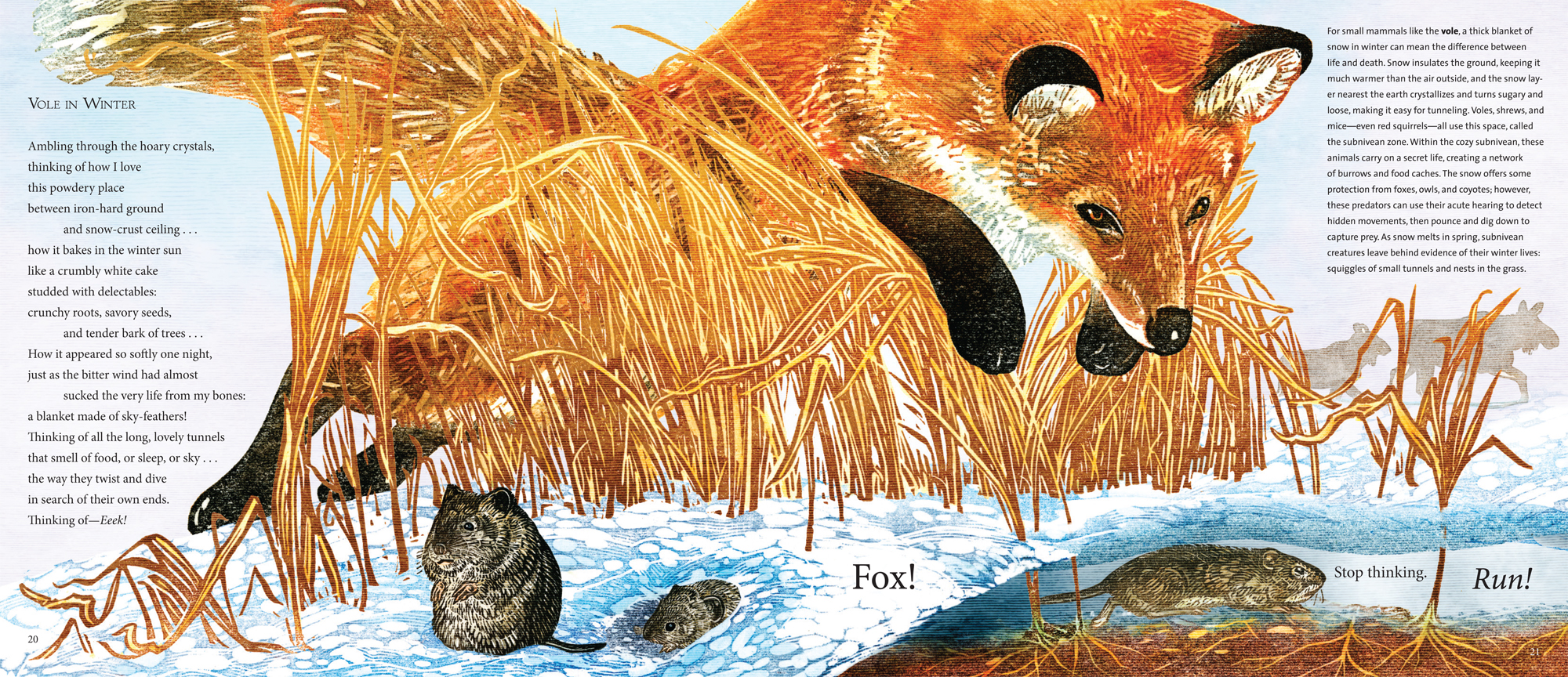
We Flagged: 

vole

Read This If You Loved: Firefly July by Paul Janeczko, Feathers by Melissa Stewart, Born in the Wild by Lita Judge, Forest Has a Song by Amy Ludwig VanDerwater, Over and Under Snow by Kate Messner

Recommended For: 

classroomlibrarybuttonsmall readaloudbuttonsmall

litcirclesbuttonsmall closereadinganalysisbuttonsmall

Signature

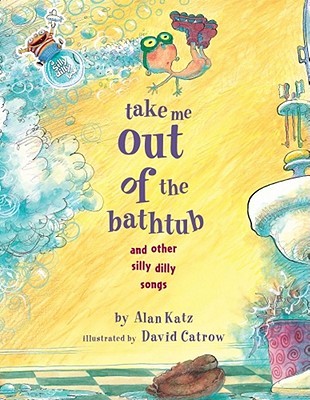
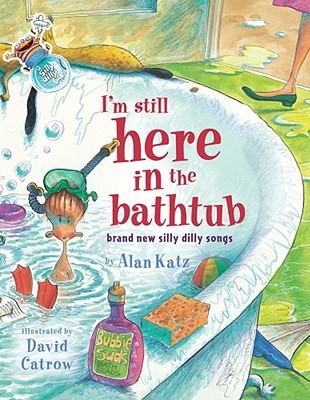
Take Me Out of the Bathtub & I’m Still Here in the Bathtub by Alan Katz

Share

NFPB2015

Nonfiction Picture Book Wednesday

Nonfiction Picture Book Wednesday is hosted by Kid Lit Frenzy and was started to help promote the reading of nonfiction texts. Most Wednesdays, we will be participating and will review a nonfiction text (though it may not always be a picture book).
Be sure to visit Kid Lit Frenzy and see what other nonfiction books are shared this week!
***Yes, poetry counts as nonfiction! Ask Dewey :)**

bathtub stillbathtub
Take Me Out of the Bathtub
Author: Alan Katz
Illustrator: David Catrow
Published May 1st, 2001 by Margaret K. McElderry Books

I’m Still Here in the Bathtub
Author: Alan Katz
Illustrator: David Catrow
Published April 1st, 2003 by Margaret K. McElderry Books

Take Me Out of the Bathtub Goodreads Summary: Remember… “Take Me Out to the Ballgame” and “I’ve Been Working on the Railroad”?  Well, forget ’em!

Songwriter and comedy writer extraordinaire Alan Katz has turned those and other old favorites on their ears and created new nonsense songs kids will love. With zany, spirited pictures by illustrator and cartoonist David Catrow, this kooky collection guarantees laughs and plenty of silly dillyness for kids everywhere!

I’m Still Here in the Bathtub Goodreads Summary: If you like… “Wheels on the Bus” and “Itsy Bitsy Spider,” you’ll go NUTS for “The Meals at My Camp” and “Tiny Baby Brother”!

Songwriter and comedy writer par excellence Alan Katz has done it again! He’s turned fourteen favorite songs upside down and created new nonsense songs kids will love. With hilariously funny pictures by illustrator and cartoonist David Catrow, this new collection promises giggles, guffaws, and hours of silly dillyness for kids everywhere!

My Review and Teachers’ Tools for Navigation: I really enjoyed these books. I found myself singing out loud just so I can figure out how to make Katz’s lyrics fit with the original songs. I love the idea of singing these silly songs with students to the tune of classics. I think it gives a great opportunity to talk about the classic songs, where they came from, and their meaning. Then, the silly songs give you a chance to look at rhyming, rhythm, other poetic elements, and humor. I think it would be a fun activity to have students then emulate Alan Katz’s songs by writing their own fun songs.

Discussion QuestionsWhat other nursery rhymes or songs could you “silly-fy”?; Can you just choose any words to fit into the songs or do you have to be careful? How can you decide what words to choose?

We Flagged: “Take Me Out of the Bathtub” (To the tune of “Take Me Out to the Ballgame)

Take me out of the bathtub
Take me out of the suds
I’ve been here soaking since half past two
I feel so sudsy and wrinkle-y, too
Oh, I washed all over my body
My head, my toes, in between
I used one, two, three bars of soap
Take me out….I’m clean.

Read This If You Loved: Crankee Doodle by Tom Angleberger, Bananas in my Ears by Michael Rosen

Recommended For: 

readaloudbuttonsmall classroomlibrarybuttonsmall

Signature

The Crossover by Kwame Alexander

Share

the crossover

The Crossover
Author: Kwame Alexander
Published March 18th, 2014 by Harcourt Brace and Company

Goodreads Summary: “With a bolt of lightning on my kicks . . .The court is SIZZLING. My sweat is DRIZZLING. Stop all that quivering. Cuz tonight I’m delivering,” announces dread-locked, 12-year old Josh Bell. He and his twin brother Jordan are awesome on the court. But Josh has more than basketball in his blood, he’s got mad beats, too, that tell his family’s story in verse, in this fast and furious middle grade novel of family and brotherhood.

Josh and Jordan must come to grips with growing up on and off the court to realize breaking the rules comes at a terrible price, as their story’s heart-stopping climax proves a game-changer for the entire family.

My Review: Wow. What a powerful piece of narrative and poetry. Any poem from Josh’s story could easily be taken out of context and used as a piece of exemplar poetry writing. In addition to the amazing writing, Josh is a kid that is so easy to connect with. He is so real. You love him (even if he is a little cocky). By the end of the book, you feel like you are part of Josh’s family, and you don’t want to leave.

And to top it all off: one of my reluctant readers grabbed this book and zoomed right through it. It quickly became one of his favorite books! I love when the Newbery Medal winner is accessible to students. Now to just get more students to read it and experience the awesomeness.

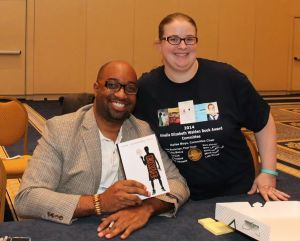
(Also, Kwame was one of my favorite presenters at ALAN, and he was such a pleasure to meet!)

kwame

Teachers’ Tools for Navigation: I cannot wait to have my students make vocabulary poems like Josh does. Such a fun way to play with words. Additionally, like I stated above, any poem in this novel could be used in a poetry unit. I’d also love to have students come up with rules like Josh’s dad did for basketball and have them write them in verse.

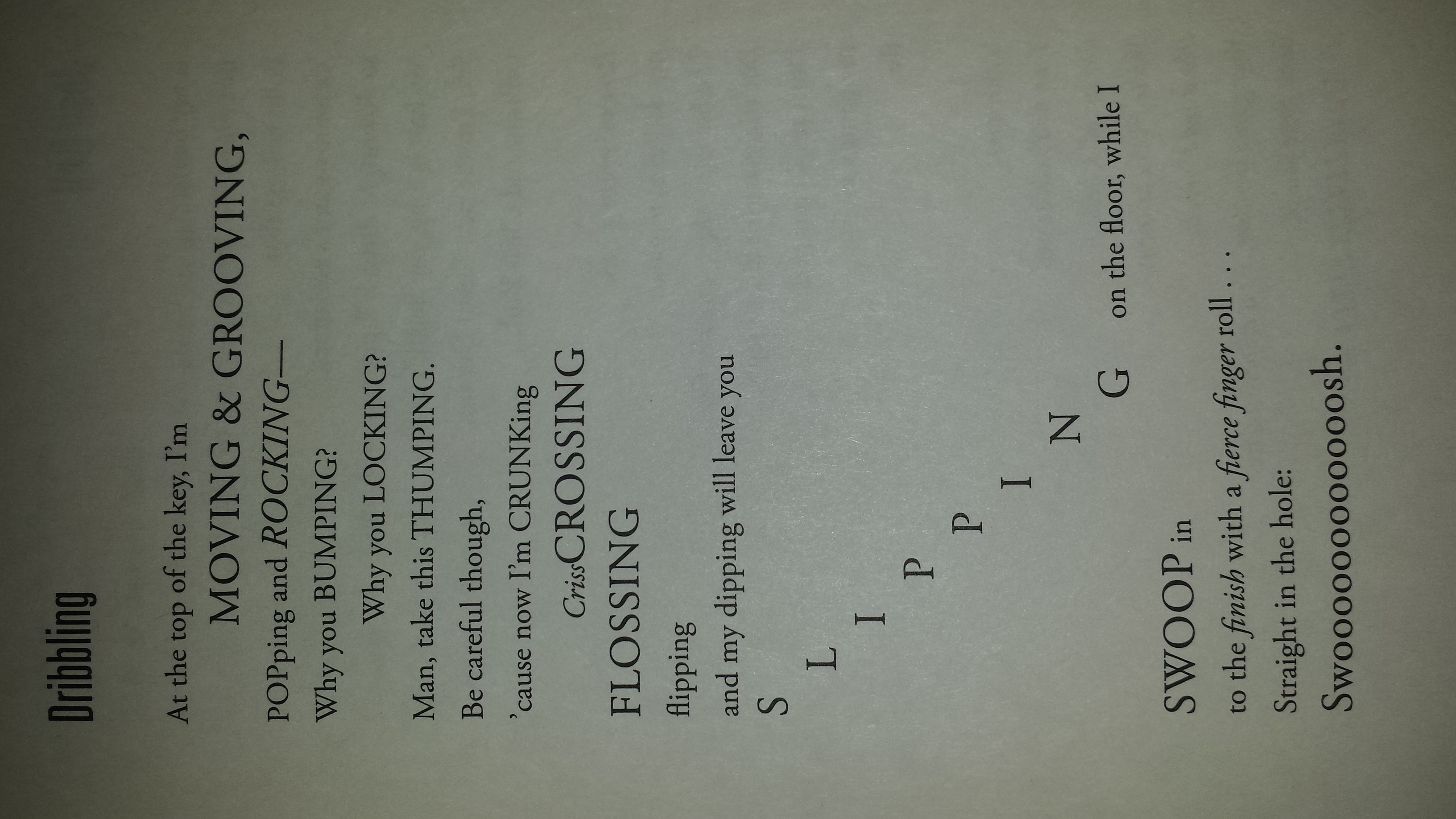
Discussion Questions: Why is Josh so impacted by Jordan getting a girlfriend?; Who do you think influences Josh more: his dad or his mom? Explain.; Within his poems, Josh uses formatting, bolding, and different fonts to put emphasis on certain words. Why does he do this?; Josh uses figurative language throughout his poems. Find an example and share why you think Josh used it.; How are Josh and Jordan similar? Different?

We Flagged: 

20150216_141647

Read This If You Loved: Jumped In by Patrick Flores-Scott (YA), The Sports Pages edited by Jon Sciezska, The Moves Make the Man by Bruce Brooks, Summer Ball by Mike Lupica

Recommended For: 

classroomlibrarybuttonsmall readaloudbuttonsmall closereadinganalysisbuttonsmall

Signature

Never Fall Down by Patricia McCormick

Share

NFPB2015

Nonfiction Picture Book Wednesday

Nonfiction Picture Book Wednesday is hosted by Kid Lit Frenzy and was started to help promote the reading of nonfiction texts. Most Wednesdays, we will be participating and will review a nonfiction text (though it may not always be a picture book).
Be sure to visit Kid Lit Frenzy and see what other nonfiction books are shared this week!
**This book is technically historical fiction, but I felt it was pretty darn close to nonfiction**

never fall down

Never Fall Down
Author: Patricia McCormick
Published May 8th, 2012 by Balzer + Bray

Goodreads Summary: This National Book Award nominee from two-time finalist Patricia McCormick is the unforgettable story of Arn Chorn-Pond, who defied the odds to survive the Cambodian genocide of 1975-1979 and the labor camps of the Khmer Rouge.

Based on the true story of Cambodian advocate Arn Chorn-Pond, and authentically told from his point of view as a young boy, this is an achingly raw and powerful historical novel about a child of war who becomes a man of peace. It includes an author’s note and acknowledgments from Arn Chorn-Pond himself.

When soldiers arrive in his hometown, Arn is just a normal little boy. But after the soldiers march the entire population into the countryside, his life is changed forever.

Arn is separated from his family and assigned to a labor camp: working in the rice paddies under a blazing sun, he sees the other children dying before his eyes. One day, the soldiers ask if any of the kids can play an instrument. Arn’s never played a note in his life, but he volunteers.

This decision will save his life, but it will pull him into the very center of what we know today as the Killing Fields. And just as the country is about to be liberated, Arn is handed a gun and forced to become a soldier.

My Review: When I started Never Fall Down, I had no idea what I was getting myself into. I began it because Ricki recommended it to me, but I didn’t read the back or have any prior knowledge about the book. So, when I began, I had no idea how tough this book was going to be.

I also have to preface with my ignorance of the Cambodian Genocide. I blame my lack of world history education because this is a time of history that should be taught. It, along with the Holocaust and Armenian Genocide, was based in racism and the attempt to purify a country. Reading Arn’s story throws you right in the middle of the genocide, and Patricia McCormick doesn’t hold anything back. Every time you think nothing can get worse for Arn and the Cambodians, something does, but you also have such hope for Arn’s survival as you seen him overcome every obstacle he faces. Even though death actually stares him in the face throughout the book, this young boy somehow continues. He continues through starvation, excessive work, lack of sleep, and murder surrounding him.  Arn stated in interviews with McCormick that music saved his life, but I think it was more about his willingness to do whatever was needed to survive and especially anything to help those he cared for to survive.

Patricia McCormick tells our story in a broken English dialect that was influenced by “Arn’s own beautiful, improvised English” that McCormick heard in her head after interviewing him and traveling with him to Cambodia over a couple of years.  The extent that Ms. McCormick went to ensure that Arn’s story was a true representation of his trials and heroism is honorable.

Teachers’ Tools For Navigation: This would be a perfect cross-curricular text! It could be read in a world history class in full or in parts. Although it is McCormick’s writing, it is definitely Arn’s story, and Arn’s story is one that needs to be shared. This book could also be used in lit circles where each group has a different book about a piece of history or an individual who/that is not usually learned about (maybe with Between Shades of Gray by Ruta Sepetys, Sold, Caminar by Skila Brown, The Glass Collector by Anna Perera, Son of a Gun by Anne de Graaf, Inside Out & Back Again by Thanhha Lai, Guantanamo Boy by Anna Perera, A Long Walk to Water by Linda Sue Park, The Queen of Water by Laura Resau, or Now is the Time for Running by Michael Williams).

One of my amazing 8th grade students read this book recently, and she was as enthralled with it as I was. Immediately after finishing, she got online and started learning more about Arn and Cambodia. She came across an amazing video with both Patricia McCormick and Arn in it. It is 27 minutes long, but it is so worth watching:

Discussion Questions: What do you think ultimately helped Arn survive?; How did Sombo save Arn’s life at the orphan camp? When the war with the Vietnamese started? At the killing fields?; Do you think music is what saved Arn?; How were the Khmer Rouge able to make their prisoners do whatever they wanted them to?; Why did the Khmer Rouge kill all the educated Cambodians?; Why was Sombo so unsure about the Coca Cola?

We Flagged: “All the time now we hear girl screaming, girl running, girl crying. At night but also sometime in the daytime. All the tie, the Khmer Rouge they chase the girl, cut the hair. Sometime with scissor, sometime with knife. Chop short, to the chin, like boy. The girl, they cry and sometime they run. They run, it’s no good. The Khmer Rouge may shoot them, maybe take them to the bushes, do whatever they want. A lot of the girl afterward, they pull on their hair, pull like maybe they can stretch it, make it long, make it beautiful again.

My number two big sister, Maly, her hair like silk. Most proud thing about her, her hair. Shiny black, like blue, like a crow has. Every night she brush her hair, every morning. Sometime even she brush her hair not thinking, just dreaming maybe about the boy she love. One morning I wake up before everyone and see her making rice. Her neck, it’s bare now, her skin there is pale, never saw the sun, her long hair gone. Last night while I was asleep, the soldier, they cut her beauty. So now when she give me a bowl of rice soup, her eyes stay on the ground.” (p. 29-30)

Read This If You Loved: Titles listed above in Teachers’ Tools for Navigation

Recommended For: 

classroomlibrarybuttonsmall litcirclesbuttonsmall closereadinganalysisbuttonsmall

Signature

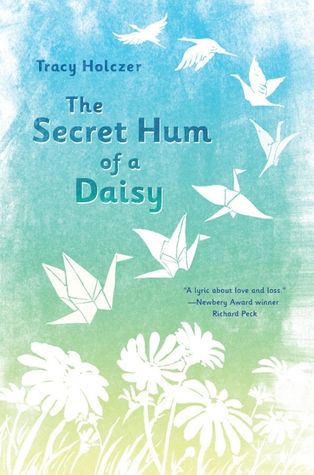
The Secret Hum of a Daisy by Tracy Holczer

Share

secret hum of daisy

The Secret Hum of a Daisy
Author: Tracy Holczer
Published: July 24, 2014 by Annick Press

Summary: Twelve-year-old Grace and her mother have always been their own family, traveling from place to place like gypsies. But Grace wants to finally have a home all their own. Just when she thinks she’s found it her mother says it’s time to move again. Grace summons the courage to tell her mother how she really feels and will always regret that her last words to her were angry ones.

After her mother’s sudden death, Grace is forced to live with a grandmother she’s never met. She can’t imagine her mother would want her to stay with this stranger. Then Grace finds clues in a mysterious treasure hunt, just like the ones her mother used to send her on. Maybe itis her mother, showing her the way to her true home.

Lyrical, poignant and fresh, The Secret Hum of a Daisy is a beautifully told middle grade tale with a great deal of heart.

Ricki’s Review: The Secret Hum of a Daisy truly pulled my heartstrings. Readers of this blog know that I am a slightly critical reader of middle grade texts, and I often prefer high school texts, but my oh my, this one is beautiful. Having lost loved ones and friends, I know that grief hits you at random times. Holczer captured this reality beautifully. This book feels melancholy at the same time as it feels hopeful and lyrical. Young people will learn strength and resilience in Grace. Holczer’s thoughtful pacing makes this poignant coming of age story quite beautiful.

Kellee’s Review: This is one of those books that grabs you and sucks you in. I mostly love our main character. She has had to grow up too quickly thus making her a bit rough around the edges, but the way that friendship, family, history, poetry, and stories smooth her out is just so well done. Although at times I felt Grace came off older than she is, I realized, after talking to Carrie G., that it is because of the hardships she has endured. And the cast of characters, family and friends, who play a role in Grace’s transformation all are so well crafted. The Secret Hum of Daisy is a beautiful book because of Holczer’s word choice, Grace’s story, and the look at grief, family, and friendship.

Teacher’s Tools for Navigation: The Robert Frost references in this book easily lend themselves to instructional supplements for teachers. The sadness of this novel is important to discuss with students. They might consider poetry or journaling as an outlet for their emotions. Additionally, teachers my show students the stages of grief to help them better understand Grace’s emotions. Grace says that she gathers “every bit” she can of her Mama. Teachers might consider asking students to gather bits of people they love and sharing these with the class. Curriculum Guide from Penguin.

Check out our Guest Post from Tracy Holczer here!

Discussion Questions: Does Grace’s mom make mistakes in her parenting? What might she have done differently?; Do you agree with Grace’s decision to live in the shed? Do you consider this to be immature or strong of her? Why?

We Flagged: “Mama pulled me into her lap and her yellow chair creaked under our weight. ‘You have to trust me, Grace. We don’t need anyone else.'” (p. 8)

“Trying to ignore the blasts of rain against the tin roof, I dug a flashlight out of one of the boxes and laid my sleeping bag and pillow on our flower-garden sofa. I took my latest notebook out of my duffel and climbed into the sleeping bag.

I hadn’t written anything in the six days since Mama died, and the words were scratching at me in the way they always did. I hoped to find the end of that string inside of myself–the string that tended to work into knots–and pull it straight. That was how the words felt sometimes as I wrote them down. Like I was taking something scrambled and unscrambling it.” (p. 24)

We also loved page 57, 97, and 134.

Read This If You Loved: In This Moment by Wendy Glenn, A Tree Grows in Brooklyn by Betty Smith, Bridge to Terabithia by Katherine Paterson, A Monster Calls by Patrick Ness, The Impossible Knife of Memory by Laurie Halse Anderson, Love Letters to the Dead by Ava Dellaira, The Carnival at Bray by Jessie Ann Foley, All the Bright Places by Jennifer Niven, Fish in a Tree by Lynda Mullaly Hunt, Rain Reign by Ann M. Martin, Torn Away by Jennifer Brown


Recommended For:

closereadinganalysisbuttonsmall litcirclesbuttonsmall classroomlibrarybuttonsmall

RickiSig andSignature

**Thank you to Tracy Holczer for providing copies for review**