The Uncorker of Ocean Bottles by Michelle Cuevas

Share

uncorker of bottles

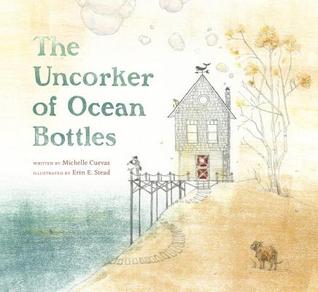
The Uncorker of Ocean Bottles
Author: Michelle Cuevas
Illustrator: Erin E. Stead
Published August 23rd, 2016 by Dial Books

Summary: The Uncorker of Ocean Bottles, who lives alone atop a hill, has a job of the utmost importance. It is his task to open any bottles found at sea and make sure that the messages are delivered. He loves his job, though he has always wished that, someday, one of the letters would be addressed to him. One day he opens a party invitation—but there’s no name attached. As he devotes himself to the mystery of the intended recipient, he ends up finding something even more special: the possibility of new friends.

Kellee’s Review: I love the premise of an Uncorker of Ocean Bottles even existing! There are so many notes (notes in a bottle, notes to Santa, etc.) that are out there floating around, so it is so much fun to imagine what happens to them. But the story is really about the Uncorker himself. What is it like to have a very important job yet be alone all the time? No matter how much you love what you do, is being alone ever going to be easy?  

Erin Stead’s art always makes me want to pick up a book! Her use of woodblock prints, oil pastels, and pencil give a perfect feel for this story of a man who didn’t even know he was lonely. The illustrations give a wistful feel that fits Cuevas’s hopeful story. 

Ricki’s Review: This is a book that readers will never forget. Years from now, I will sit in the sand on a beach and think of the Uncorker and all of his gentleness as a human being. His loneliness emanated from the pages, and I longed to go to him, to stay with him, and to become his friend. This would be a great book to discuss relationships and friendships with kids, and it also would be an excellent way to talk about loneliness. All people—kids included—feel loneliness, so a book like this will open up wonderful conversations about this emotion that is not discussed often. 

The illustrations make this book stand out. I felt as if they were freshly drawn for my eyes only. I have a print hanging up in my son’s nursery, and I love looking at it every morning.

Teachers’ Tools for Navigation: As a read aloud in a classroom, The Uncorker of Ocean Bottles would be a perfect discussion starter on many levels. At the beginning of the book, students can guess what they think some of the bottle say when all they are told is that they are “dipped in sadness” or “very old” or “made people quite happy.” The conversation can continue about how they would feel living alone, even if they were doing something important and something they loved. Then they can make predictions about the message that is revealed then analyze how it changes the Uncorkers life.

Discussion Questions: What do you think the messages say?; What would you write as a message in a bottle if you were going to write one?; What do you think the Uncorker is going to do with the unaddressed message?; Would you like living alone?

Flagged Passages: “While the Uncorker of Ocean Bottles loved his job, he couldn’t help but wonder if he would ever receive a letter. Truth be told, each time he opened a bottle, a part of him hoped to see his own name winking from the top of the page.

But then he remembered that this was about as likely as finding a mermaid’s toenail on the beach. For he had no name. He had no friends. He stank of seaweed and salt and fishermen’s feet. No one would ever write him a letter.”

Read This If You Loved: Little Tree by Loren LongLenny & Lucy by Philip C. Stead, The Giving Tree by Shel Silverstein

Recommended For:

  classroomlibrarybuttonsmall readaloudbuttonsmall

Kellee Signatureand RickiSig

The Memory of Things by Gae Polisner

Share

the memory of things

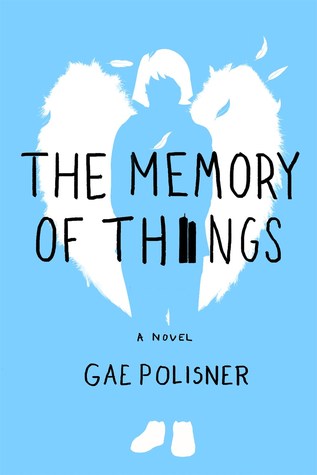
The Memory of Things
Author: Gae Polisner
Published: September 6, 2016 by St. Martin’s Griffin

GoodReads Summary: The powerful story of two teenagers finding friendship, comfort, and first love in the days following 9/11 as their fractured city tries to put itself back together.

On the morning of September 11, 2001, sixteen-year-old Kyle Donohue watches the first twin tower come down from the window of Stuyvesant High School. Moments later, terrified and fleeing home to safety across the Brooklyn Bridge, he stumbles across a girl perched in the shadows. She is covered in ash and wearing a pair of costume wings. With his mother and sister in California and unable to reach his father, a New York City detective likely on his way to the disaster, Kyle makes the split-second decision to bring the girl home. What follows is their story, told in alternating points of view, as Kyle tries to unravel the mystery of the girl so he can return her to her family. But what if the girl has forgotten everything, even her own name? And what if the more Kyle gets to know her, the less he wants her to go home? The Memory of Things tells a stunning story of friendship and first love and of carrying on with our day-to-day living in the midst of world-changing tragedy and unforgettable pain—it tells a story of hope.

Review: I read this book several weeks ago, and I still can’t thinking about it. As a few other bloggers have said, this is a book about 9/11—but it isn’t a book about 9/11. It is more a book about friendship, about growing up, and about being human. There are so many topics in this book that are worthy of discussion, and I think teachers will really appreciate its beauty. The writing is quiet yet powerful, and the book has a sort of shattering impact on readers. I loved the connections that Kyle makes in this book, and I particularly enjoyed the ways each of the individuals he interacts with tells the reader more about him. He grows from everyone in this book, and I’d love to discuss this growth with students.

Teacher’s Tools for Navigation: Teachers might ask students to research the many themes of this book to provide background information. They might look at disability/caregivers, PTSD, suicide, and 9/11—just to name a few. They could also look at the different stages of trauma to learn more about how each of the characters reacts differently to the tragic events that occurred on 9/11.

Discussion Questions: Is Kyle helping the girl, or is she helping him?; What do we learn from Kyle’s uncle? What does he teach us about disability and humanity?; In what ways does Kyle show strength, and in what ways does he show weakness? How does he grow from each experience of the text?

We Flagged: “So now I get it. Now I fully understand. Tuesday, and those planes, they’ve broken something. Permanently. And in the process, they’ve changed everything. And everyone.”

This is a quote from an advanced reader’s copy. Some quotes may change before publication.

Read This If You Loved: Extremely Loud and Incredibly Close by Jonathan Safran Foer; The Impossible Knife of Memory by Laurie Halse Anderson; Personal Effects by E.M. Kokie, The Things a Brother Knows by Dana Reinhardt, If I Lie by Corrine Jackson, Purple Heart by Patricia McCormick

Recommended For:

 litcirclesbuttonsmall classroomlibrarybuttonsmall

RickiSig

Review and Giveaway!: Can You Canoe? and Other Adventure Songs by The Okee Dokee Brothers

Share

can you canoe

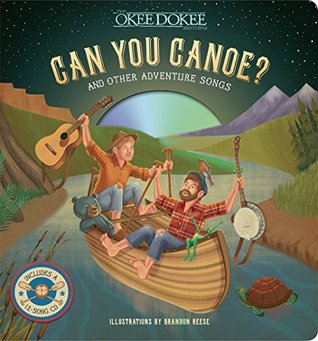
Can You Canoe? And Other Adventure Songs
Author: The Okee Dokee Brothers
Illustrator: Brandon Reese
Published April 19th, 2016 by Sterling Children’s Books

Summary: Can You Canoe? invites you to journey cross-country with The Okee Dokee Brothers through twelve of their irresistible, boot-stompin’ tunes. You’ll encounter hungry black bears and tall-tale spinners; quiet canoes and cozy camping tents; a jumpin’ jamboree and a bullfrog opera. As you listen to the songs and follow along with the illustrated lyrics in this collection, you might even be inspired to head out on some outdoor adventure of your own!

Kellee’s Review: We love music in my house, so anytime a book and music can be connected really makes me happy. I think the Okee Dokee Brothers’ music is catchy, knee-slapping, sometimes funny, and have great messages. I love how they all promote the out doors and adventure. And just when you think it cannot get any better, you see the illustrations. Brandon Reese’s illustrations are perfect! They are so colorful and loud and cartoon-ish. Just the type of fun you think would be in a book by the Okee Dokee Brothers. 

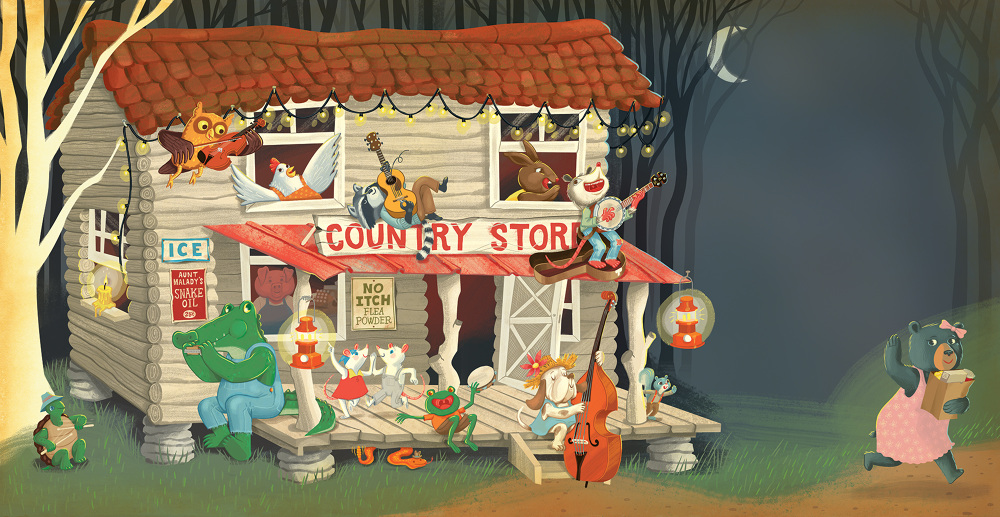
Ricki’s Review: This book is pure fun. My toddler was bouncing around the room as I played the CD. My husband is an outdoorsy guy, so he particularly liked the messages within the songs. The rhymes are great, and they will help my son learn the lyrics as we listen/read. I’ve never been to an Okee Dokee concert, and now I want to go to one! We’ll be bringing this CD along for long car rides. Below, we include an illustration, and you can see the pure beauty of this text. I will be buying it as a gift for my music-loving friends.

Teachers’ Tools for Navigation: We love using music during my poetry lessons because it helps students hear poetry and not be as afraid of it like they are with classics. Starting with music and lyrics allows you to help them understand how to read poetry differently than prose while using something they can easily understand. Can You Canoewould be a perfect text to use this for because you can analyze for poetic elements and meaning, but the Okee Dokee Brothers also have a field journal in the back which help give background information about each song making analyzing them less of a guessing game.

Can You Canoe? would also be a wonderful poetry mentor texts. The authors talk about how they find ideas for their songs and many of their songs have a format that could be emulated (like Jack in Love that Dog) if you wanted to go that route in class.

Discussion Questions: How do the authors use rhythm and rhyme in their lyrics?; What is a time that the authors used descriptive language to help the reader imagine the scene they are describing?; What is a time the authors used figurative language to add imagery to their songs?

Flagged Passages:

“There’s a country store
In a country town.
Every Friday night
The people dance around.
It don’t look like much
And it ain’t no chore,
But while they’re dancin’
They polish that floor.

They play this song
Right on key.
They play this song –
It’s called JAMBOREE.”

Okee_Jamboree_1000
(c) http://www.brandonreese.com/

Check out their You Tube channel to hear some of their music:
https://www.youtube.com/user/OkeeDokeeBros

Read This If You Loved: Goodnight Songs by Margaret Wise BrownFresh Delicious by Irene Latham

Recommended For:

  readaloudbuttonsmall closereadinganalysisbuttonsmall

Enter to win your own copy!

a Rafflecopter giveaway

Kellee Signatureand RickiSig

**Thank you to Lauren at Sterling Publishing for providing a copy for review!**

Blog Tour, Character Interview, Giveaway, and Review!: The Mechanical Mind of John Coggin by Elinor Teele

Share

Mechanical Mind Blog Tour Banner

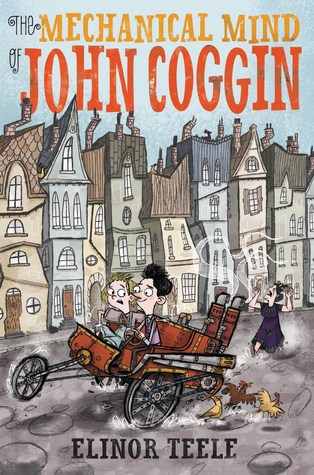
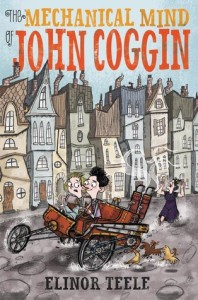
mechanical mind

The Mechanical Mind of John Coggin
Author: Elinor Teele
Illustrator: Ben Whithouse
Published April 12th, 2016 Walden Pond Press

Goodreads Summary: A quirky, humorous, whimsical, and heartwarming middle grade debut about a young boy who runs away from home with his sister to escape working in the family coffin business—and discovers even more adventure than he bargained for.

John Coggin is no ordinary boy. He is devising an invention that nobody has ever seen before, something that just might change the world, or at least make life a little bit better for him and his litter sister, Page. But that’s only when he can sneak a break from his loathsome job: building coffins for the family business under the beady gaze of his cruel great-aunt Beauregard. Having lost their parents when Page was a baby, how else are they supposed to survive?

Perhaps by taking an enormous risk—a risk that arrives in the form of a red-haired scamp named Boz. When Great-Aunt Beauregard informs John that she’s going to make him a permanent partner in Coggin Family Coffins—and train Page to be an undertaker—John and Page sign on with Boz and hit the road. Before long, they’ve fallen in with a host of colorful characters, all of whom, like John and Page, are in search of a place they can call home. But home, they realize, isn’t something you find so much as something you fight for, and John soon realizes that he and Page are in for the fight of their lives.

Elinor Teele’s picaresque debut is a rollicking tale filled with wild adventures, daring escapes, and—thanks to Boz—more than a little catastrophe.

My Review: One thing I’ve noticed is that so many orphans in stories seem to always get into some sort of trouble and then go on amazing adventures. Like Annie, Grubb from Alistair Grim, and Peter Nimble before him, John Coggin, a recent orphan, finds himself in quite a predicament of a situation when he is forced to work for his great aunt’s funeral home. It is the last straw when Great Aunt Beauregard tries to force Page, John’s sister, to go to work with them, and that begins the adventure! Elinor Teele takes us on quite a journey! With Boz, the comic relief with an amazing vocabulary, our three main characters meet some unique characters along the way.

Teele’s ability to weave such an odd story together and make it seem seamless is remarkable. John, Page, and Boz have about 5 stops along their journey all with a wide-variety of characters who all are a bit quirky but also relatable and you end up loving all of them. Although everything that happens is quite farfetched, you end up believing it all because you just want John and Page to be successful!

Teachers’ Tools for Navigation: In the classroom, I think this book would be a perfect opportunity to discuss ways to determine unknown vocabulary within a text. Boz has QUITE a vocabulary and uses words that will be unknown to many of the middle grade readers the book is aimed for; however, the author does a fabulous job of having context clues or restatements of what the words mean. I would love to use passages of this book for vocabulary instruction.

It could also be used as a mentor text for imagery, specifically character description. Like I said, throughout the book we meet some very odd characters, but they are all described so well you can picture them. Same with John’s contraptions and the setting. Elinor Teele’s specific word choice really brings the story to life.

Lastly, I think it would be fun to compare/contrast the orphans within middle grade novels and discuss why orphans are chosen for so many adventurous books. Peter Nimble and Alistair Grim along with John Coggin would definitely be a great place to start, and you could even tie it in with “Annie.”

Also check out the Educational Activity Kit based on the book for more ways to use the book in the classroom or library.

We Flagged: “”Up and at ‘em, troops! The back of a new day is already broken, and time marches on!’

Boz blew into the barn like a category five hurricane and came to rest at John’s feet. ‘Where are the foundations of your perambulation?’ His baffled face collapsed even further into itself.

‘Where are the what?’ John asked blearily. The bright summer sun was making fireflies of the dust around Page’s hair.

‘Your shoes, young man, your shoes.’

‘I threw them outside.’

‘Well, find them! We go, we see, we conquer!’” (p. 58)

Special Guest! Q&A with Boz (by Elinor Teele): Boz may, in fact, be the worst interviewee on the planet. It was barely possible to get him into a hotel lounge and almost impossible to keep him there. And his hair! It seemed to have a life of its own. After this experience, I am firmly convinced his only future is a career as a human firework.  
mechanical illustration

Q. So, first I’d like to ask… Boz? Boz! Could you please stop swinging from the chandelier?
A. Of course, profuse apologies my Fallonesque friend. I was merely trying to pump some blood to my knee joints. I ingested a box of sugar-coated hookoo grubs yesterday and I fear they have inflamed my rheumatics.

Q. Where did you get a box of hookoo grubs?
A. A gift from the Queen of Samarrand. She says she misses my winsome ways.

Q. How did you become friends with a Queen?
A. Oh, I have roamed the bureaus and boards of many a parliament. From the sweat-soaked slums to the blasted heaths, I have crisscrossed this great globe itself in eighty days and under. “A wandering minstrel, I…”

At this point in the interview, Boz yanked open the door to the lobby and vaulted onto the hotel’s front desk. From there, he sang operettas to incoming guests until security guards brought him back into the lounge. 

Q. I don’t think the concierge enjoyed your singing.
A. It’s a waste of vitriol trying to please critics. Besides, it gave me an opportunity to relieve him of his time commitments.

Q. You stole his watch?!
A. You may say that, but I couldn’t possibly clarify.

Q. Well, what can you comment on?
A. Anything that tickles your pearly whites.

Q. Okay, how about this? Some people have said that your way of speaking is far too complicated to understand. They point out many kids have enough trouble with basics, so why make it harder?
A. I grant you that my vocabulary may be a little bewildering, but why not be wild? There are so many beautiful words in this world that go a’begging. As my dear friend Dodo Dodgson often opines, “Look after the senses and the sounds will look after themselves.”

Q. Yes, I noticed you tend to appropriate phrases from famous writers.
A. Who was it that said that bad artists copy and great men steal? Or was it that the immature youth imitates and the mature matron plagiarizes? I can’t remember. 

At this point in the interview, Boz once again made a grab at the chandelier. This time – thanks to the force of his liftoff – he was hurled round and round the room like a demented tornado.

Q. Are you insane? Should I call the fire brigade?
A. Wouldn’t do that, my dear boy. They’re still irked about the incident with the propane and the propellers.

Q. What did that involve?!
A. A gaggle of insurance investigators, apparently.  

Q. I give up. I don’t know how John Coggin put up with you.
A. But John and I are friends! Buddies of the bosom. Compadres of the cabana. Say what you will about my ethical standards, but I always believe in my friends!

This was a revealing comment, and I would have liked to ask Boz more about it. Unfortunately, he had let go of the chandelier and was already rocketing skyward through one of the open windows. I last saw him passing a goshawk.

Walden TV Features John Cogginhttp://waldentv.com/video/rtwt-john-coggin/

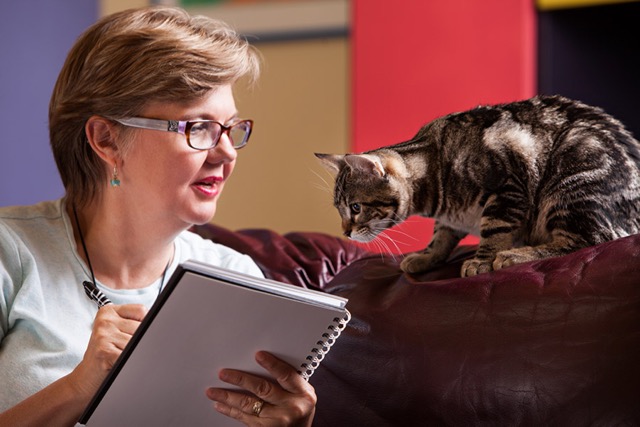
elinor-teele

Find Elinor Teele at her website.

Recommended For: 

classroomlibrarybuttonsmall closereadinganalysisbuttonsmall litcirclesbuttonsmall

Giveaway!
Enter to win!

a Rafflecopter giveaway

Don’t miss out on the other blog tour stops!

April 11 – Bluestocking Thinking
April 12 – Novel Novice
April 13 – This Kid Reviews Books
April 14 – Maria’s Melange
April 15Unleashing Reader
April 18Next Best Book
April 19Foodie Bibliophile
April 20For Those About to Mock
April 21 – Walden Media Tumblr
April 22Charlotte’s Library
April 25Flashlight Reader
April 26Teach Mentor Texts
April 27Librarian’s Quest
April 28Kid Lit Frenzy
April 29Novel Novice

Kellee Signature

**Thank you to Walden Pond Press for providing a copy for review and giveaway!!**

Blog Tour, Author Guest Post, Giveaway, and Review!: Maybe a Fox by Kathi Appelt and Alison McGhee

Share

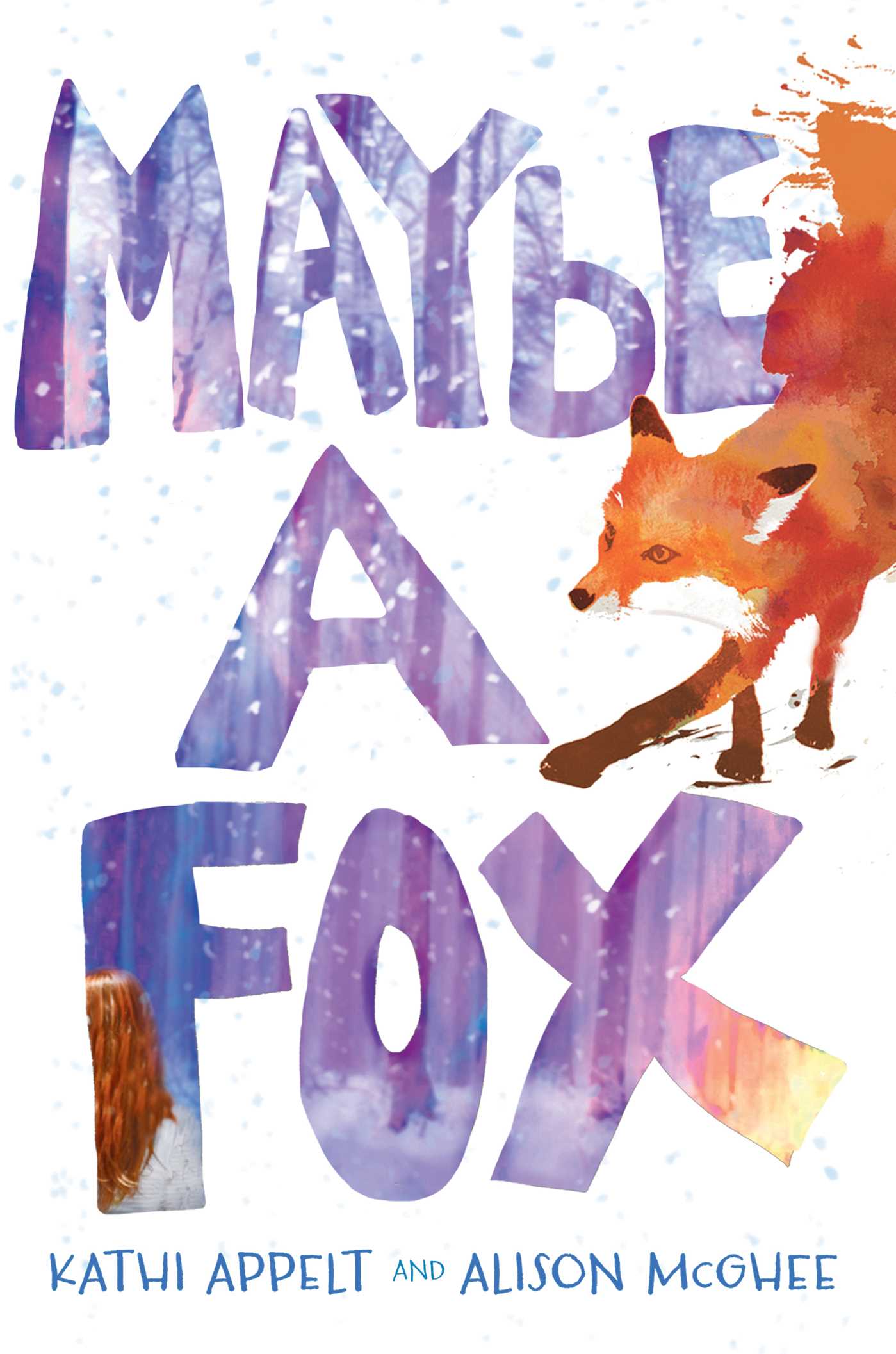
maybe a fox

Maybe a Fox
Author: Kathi Appelt and Alison McGhee
Published: March 8, 2016 by Atheneum/Caitlyn Dlouhy Books

Goodreads Summary: A tale about two sisters, a fox cub, and what happens when one of the sisters disappears forever.

Sylvie and Jules, Jules and Sylvie. Better than just sisters, better than best friends, they’d be identical twins if only they’d been born in the same year. And if only Sylvie wasn’t such a fast—faster than fast—runner. But Sylvie is too fast, and when she runs to the river they’re not supposed to go anywhere near to throw a wish rock just before the school bus comes on a snowy morning, she runs so fast that no one sees what happens…and no one ever sees her again. Jules is devastated, but she refuses to believe what all the others believe, that—like their mother—her sister is gone forever.

At the very same time, in the shadow world, a shadow fox is born—half of the spirit world, half of the animal world. She too is fast—faster than fast—and she senses danger. She’s too young to know exactly what she senses, but she knows something is very wrong. And when Jules believes one last wish rock for Sylvie needs to be thrown into the river, the human and shadow worlds collide.

Writing in alternate voices—one Jules’s, the other the fox’s—Kathi Appelt and Alison McGhee tell the tale of one small family’s moment of heartbreak.

Ricki’s Review: I read this entire book in one sitting because, quite simply, I could not put it down. I sobbed through the entire book because I connected so strongly with these characters. As a mom, I couldn’t imagine my son experiencing the pain that these sisters felt from the loss of their mother. As a sister, I can’t imagine my own sister disappearing. These two connections, along with the stunning portrayal of character and story, made this book feel deeply personal for me. While younger students won’t be moms, and thus, won’t have this personal connection I had with the text, they will be sons and daughters. Regardless of a reader’s point of view, they will connect with this book because it is written so beautifully. I won’t forget this book, and I don’t think other readers will forget it, either.

Kellee’s Review: This book is one I’ll be talking about for a while. I will say it is probably the saddest book that I’ve ever read; however, it is beautiful. It is very hard to explain unless you’ve experienced because it gives hope while also being so terribly sad. The characters, animal and humans, are so thought out and detailed that as you read you feel with them and for them. I was also in awe of the way Kathi and Alison were able to tell such a unique story without the reader ever feeling like it was an odd scenario. Whenever I try to describe this book to someone, they give me quite a weird look, so I just stop trying and tell them they should read it because it is a heart print book. There is no other way to describe it. Like Ricki said, every reader will feel for someone in the book. And every reader won’t be able to deny how beautifully written the prose is. 

Teachers’ Tools for Navigation: As you will read in Kathi and Alison’s guest post below, point-of-view makes this story quite powerful. Teachers might ask students to consider the varying perspectives of this story and how they work together to form a cohesive whole. The teacher might provide other examples of texts that feature different points-of-view to compare and contrast authors’ styles. Students might then try their hand at writing in various, connected points-of-view and subsequently analyze how this enhances a narrative.

Discussion Questions: How do the authors unfold the plot in the narrative?; What predictions did you make while reading this story? How might the story have turned out quite differently?; How does Senna’s point-of-view enhance the story for you?; Were there any allusions within the text?; What theme do you take away from Maybe a Fox?

We Flagged: “The baby girl fox, Senna, came into the world in darkness, thirty feet below ground in the end dug out of cool brown earth. She was the middle child, born between her older and younger brothers, the three of them separated by minutes.

The first thing she knew was the feel of her mother’s tongue. Shhh shhh shhh, cleaning her off, licking her into life and warmth and love and safety.

The second thing she knew was the feel and smell of her brothers’ bodies pressed against hers as their mother nursed them, their front paws kneading her belly.

The third thing she knew was that there was someone waiting for her, someone she needed to find.” (p. 75-76)

Read This if You Loved: The House of Purple Cedar by Tim TinglePax by Sara PennyPacker, Counting Crows by Kathi Appelt

Recommended For: 

litcirclesbuttonsmall closereadinganalysisbuttonsmall readaloudbuttonsmall classroomlibrarybuttonsmall

Giveaway!
A Guest Post from Kathi and Alison about Point-of-View

Finding the best possible point of view for a story is one of the most important choices that a writer can make. The point of view, more than any other aspect of literature, dictates the distance created between the character and the reader. When we embarked upon this story, Alison chose to write from the fox’s story and she decided early on that she wanted to write from an omniscient point of view. This allowed her to place Senna deeply within the pocket of her fox family, and to give our readers an intimate sense of their world. It gave her a way to present the fox-world via the senses of all five members of their family, and put the readers squarely inside of the natural landscape.

When we were first drafting, Kathi chose to write Jules from a first person point of view. However, it didn’t take long before she realized that the first person was too limiting. Yes, first person is quite intimate and there are good reasons to use it, but in this case it felt as though it created too many blind spots. Jules needed a bigger canvas and so Kathi switched to third person. That allowed her to broaden the scope of Jules’ experience, and to let Jules, as well as the omniscient narrator, experience the events as they unfolded.

We always knew that Sam’s point of view would be from the third person too, and he stepped into the story in a way that let the reader get a more objective perspective. We also hoped to show that even though Sylvie’s death primarily impacted Jules and her dad, her loss was felt strongly by the entire community. As well, Sam’s earnest desire for the return of the catamount helped to create a sense of possibility that the other characters couldn’t, simply because of their closeness to Sylvie.

The landscape also gave us a perspective. The woods and rocks, and of course the Slip itself with its local legends, provided not only a backdrop, but its own wild voice, a voice that spoke to each of our characters—fox, Jules, Sam, Elk, Sylvie, Zeke, Dad, and the catamount—in a way that only a wild place can speak.

All this to say that the multiple points of view hopefully helped to create stories within stories that, when woven together, made a single story that was enriched by the viewpoints of each character.

Kathi and Alison.

About the Authors:

Kathi Appelt photo 2015_credit Igor Kraguljak

Kathi Appelt is the New York Times best-selling author of more than forty books for children and young adults. Her picture books include Oh My Baby, Little One, illustrated by Jane Dyer, and the Bubba and Beau series, illustrated by Arthur Howard. Her novels for older readers include two National Book Award finalists: The True Blue Scouts of Sugar Man Swamp and The Underneath, which was also a Newbery Honor Book. In addition to writing, Ms. Appelt is on the faculty in the Masters of Creative Writing for Children and Young Adults at Vermont College of Fine Arts. She lives in College Station, Texas. To learn  more, visit Kathi’s website at kathiappelt.com.
Alison McGhee photo 2015 credit Dani Werner
Alison McGhee is the New York Times bestselling author of Someday, as well as Firefly Hollow, Little Boy, So Many Days, Bye-Bye Crib, Always, A Very Brave Witch, and the Bink and Gollie books. Her other children’s books include All Rivers Flow to the Sea, Countdown to Kindergarten, and Snap. Alison is also the author of the Pulitzer Prize–nominated adult novel Shadowbaby, which was also a Today show book club selection. She lives in Minneapolis, Minnesota, and you can visit her at AlisonMcGhee.com.

MaybeAFox_banner

Follow the blog and book tour!

See Another Guest Post by Kathi Appelt Here!

RickiSigandSignature

**Thank you to Barbara at Blue Slip Media for providing copies for review and the giveaway. Also, thank you to Kathi and Alison for the wonderfully insightful guest post!**

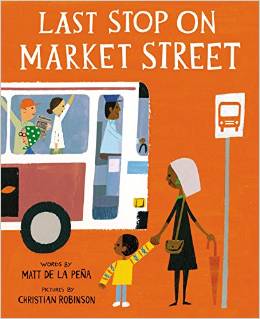
In The Middle School Classroom: Talking About Last Stop on Market Street by Matt de la Pena

Share

last stop on market street

So many of us were so happy to hear that Matt de la Peña won the Newbery Medal with Last Stop on Market Street though so many of us were quite surprised as well. Not surprised because the book didn’t deserve it, it did; surprised because it is a picture book winning the award for most distinguished piece of children’s literature. This means that the illustrations, which are phenomenal and also won a Caldecott Honors, could not be taken into consideration during the Newbery process. This left many people wondering how a picture book could beat out novels such as Echo by Pam Muñoz Ryan and The War That Saved My Life by Kimberly Brubaker Bradley, two of the three honors books.

I was fascinated by all the conversations, and then I read a post on Facebook by my friend, Beth Shaum, sharing an activity she did in her classroom. She decided to let her student be the judge of the book and read Last Stop on Market Street aloud to her students without showing them the illustrations. She then asked them how it met the criteria of the Newbery. I loved it and decided to do it in mine as well. I didn’t plan on blogging about it, but the conversations that came with the activity and reading of Last Stop on Market Street with my middle school students was something that needed to be shared.

In my class, I read the whole picture book twice. The first time straight through. Then the second time I allowed for questions and we discussed it a bit. It was so wonderful to see how much inference needed to be done when the illustrations were excluded from the reading. When CJ says he wanted something a pair of teens had, students couldn’t see the photos to determine what it was. They also noticed the diversity of the book without seeing the photos because they pointed out that there was a blind man on the bus.

Finally, I asked my students to answer two questions. First, I asked them to tell me what made Last Stop on Market Street distinguished, and why do you think it won the Newbery. Then, after reading the book for a third time and showing the illustrations as well they had to tell me what the theme of the book was. (We are actually in a theme unit, so the text fit in perfectly.) Here are some answers I received:

What made Last Stop on Market Street distinguished? Why do you think it won the Newbery?

“This book won the Newbery award because it had so many positive things to teach kids. It shows many different things to think about.”

“Because of the author’s ability to use imagery, teach a valuable life lesson in a way where a child can understand, and it’s way of including racially diverse characters like the world we live in today. This book creates a story for children that let’s them think.”

“I think it won because the book teach you many lessons about homeless people and the different types of diversity that is in the world, also the book teach you that some people don’t have a lot of things and it is important to be thankful, the kid in the book was complaining about doesn’t have a car but some people don’t even have food.”

“This book is different from all the other winners for this award, but it still won maybe because the amount of detail in the story even without looking at the illustration.”

“I think this book won the Newbery prize because this shows us that deep down inside that little town it shines bright like the sun,so i think that this book won because it teaches life lessons for kids.”

“I think this won because the story was very well written. The setting and people in the setting were described very well. Even without the pictures I could imagine what the scene looked like. The one scene that really stood out was when CJ, his grandma, and the blind man, all closed their eyes and enjoyed the sound of the music the man with the guitar was playing. The author described this scene very well.”

“It won the Newberry medal because there was so much description in the characters and how the character talked about the setting how there was a arch of a rainbow, about the streetlamps, the graffiti, and even about the description of the characters were so much in detail, like this person was blind, and that the dog guided him around.”

“I think the Last Stop On Market Street won the Newbery Medal because of the way of the wording showed freedom, power, and beauty. It showed clever wording and hints that implied little things that made the world better and beautiful. It talked about how the world was ruined to some and looked wrong, but when you understood it, the world was beautiful. What made the book distinguished was how so little words meant so much and made you think about how the world was breathtaking, and what made it so special.”

“This book is distinguished because the characters are described well because it showed what they were doing and saying. The book also described freedom well and it showed the theme better because it said that his Nana found beautiful everywhere and he looks around after wondering that and it seems that he is appreciating the beauty of all the things around him. I think that this book won the Newbery because it (1) shows diversity, (2) it has an amazing message, and (3) the book doesn’t take place in a fancy school or luxurious house but on an old bus yet it still makes CJ’s time there seem great because he is enjoying the world around him and the people around him.”

“I think that the book won the Newberry because the characters are diverse, for example, the blind man with his dog on the bus. C.J and his Nana are also interesting characters, because Nana sees the beauty in a lot of things that C.J doesn’t see yet.”

“This book won the Newbery prize because it is very true and it gives people hope.”

What is the theme of Last Stop on Market Street?

“The theme is that whenever you are sad you have to keep positive and look at the good side.”

” Broken things still have their uses.”

“Don’t be jealous and want everything be happy that you are living the life you have. You don’t have to be like all the other people and be jealous. Who cares where you live and what you do or what you have. Like when the boy said he wanted a car instead of riding the bus. He wanted to go straight home instead of going to the homeless shelter. All those things he wanted but he should have been happy for what he has.”

“I think the theme of the Last Stop On Market Street was to appreciate the little things in the world that make it special, rather than looking on the outside and wanting what you think makes the world better for you, not including others who may have less, but respect more than what you think the world is made of.”

“I think that the theme of the story is that people should appreciate what they have in life because beauty is everywhere no matter where you are or what you are doing.”

“I think that the theme of this book is that there is beauty in everything. I say this because C.J’s Nana said that the bus breathes fire, that a tree’s trunk is a straw, she also said that some people see the world with their ears.”

Thank you to my students for their beautiful and thoughtful responses.

Kellee Signature

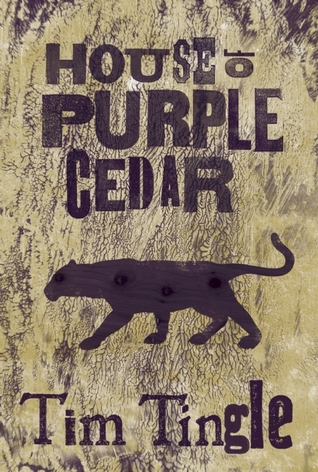
The House of Purple Cedar by Tim Tingle

Share

house of purple cedar

House of Purple Cedar
Author: Tim Tingle
Published: February 18, 2014 by Cinco Puntos Press

GoodReads Summary: “The hour has come to speak of troubled times. It is time we spoke of Skullyville.”

Thus begins Rose Goode’s story of her growing up in Indian Territory in pre-statehood Oklahoma. Skullyville, a once-thriving Choctaw community, was destroyed by land-grabbers, culminating in the arson on New Year’s Eve, 1896, of New Hope Academy for Girls. Twenty Choctaw girls died, but Rose escaped. She is blessed by the presence of her grandmother Pokoni and her grandfather Amafo, both respected elders who understand the old ways. Soon after the fire, the white sheriff beats Amafo in front of the town’s people, humiliating him. Instead of asking the Choctaw community to avenge the beating, her grandfather decides to follow the path of forgiveness. And so unwinds this tale of mystery, Indian-style magical realism, and deep wisdom. It’s a world where backwoods spiritualism and Bible-thumping Christianity mix with bad guys; a one-legged woman shop-keeper, her oaf of a husband, herbal potions, and shape-shifting panthers rendering justice. Tim Tingle—a scholar of his nation’s language, culture, and spirituality—tells Rose’s story of good and evil with understanding and even laugh-out-loud Choctaw humor.

My Review: It took Tingle fifteen years (and many experiences with a Choctaw storyteller) to write this story, and the thoughtfulness of the story makes this feel very true. While this book is marketed for adults, it most certainly has a young adult crossover audience. I was swept away by the lyrical beauty of the words. The book is quite magical. As I think back on the book, vivid scenes replay in my head. I had difficulty putting the book down because the characters were so real. I was wrapped in all of the subplots and did not want to leave the characters. It reminded me much of a John Steinbeck book—East of Eden, in particular. The evilness of Hardwicke in this book reminded me much of Cathy in East of Eden. When I came to the end of The House of Purple Cedar, I felt as if I’d read an epic—or something enormously important. The themes are left to the reader, they are varied, and they pour from the text. This complex story will remain with me for a long time.

Teachers’ Tools for Navigation: Most obviously, teachers could teach this book along with cultural stories from the Choctaw. They might look at reincarnation and its evolution in history and culture, too. Alternatively, teachers could ask students to examine age. What role does age play in this story, and how does it impact character? Teachers might have students read more about the Indian Boarding Schools and their impact on the Native American community.

Discussion Questions: What does Amafo teach us? Would you do the same in his position? How do his lessons impact the rest of the story?; How does Tingle vividly depict characters in ways that make this story come alive? What makes these characters feel so real?; What is Maggie’s purpose in the story? What does she teach us?; What role does family play in this text?

We Flagged: I am choosing a quote that shows just how beautiful Tingle’s language is: “His hand gripped her shoulder and strong fingers seized her upper arm. He flung her on her back and a hot river of strength surged through her. He was massive and his figure blocked the sky.”

Read This If You Loved: Books by Sherman Alexie, House Made of Dawn by M. Scott Momaday, Books by Louise Erdrich, East of Eden by John Steinbeck,

Recommended For:

 closereadinganalysisbuttonsmall litcirclesbuttonsmall classroomlibrarybuttonsmall

RickiSig