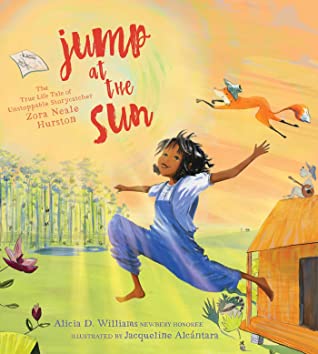
Jump at the Sun: The True Life Tale of Unstoppable Storycatcher Zora Neale Hurston by Alicia D. Williams, Illustrated by Jacqueline Alcántara

Share

Jump at the Sun: The True Life Tale of Unstoppable Storycatcher Zora Neale Hurston
Author: Alicia D. Williams
Illustrator: Jacqueline Alcántara
Published January 12th, 2021 by Atheneum/Caitlyn Dlouhy Books

Summary: A picture book that shines the light on Zora Neale Hurston, the writer and storycatcher extraordinaire who changed the face of American literature.

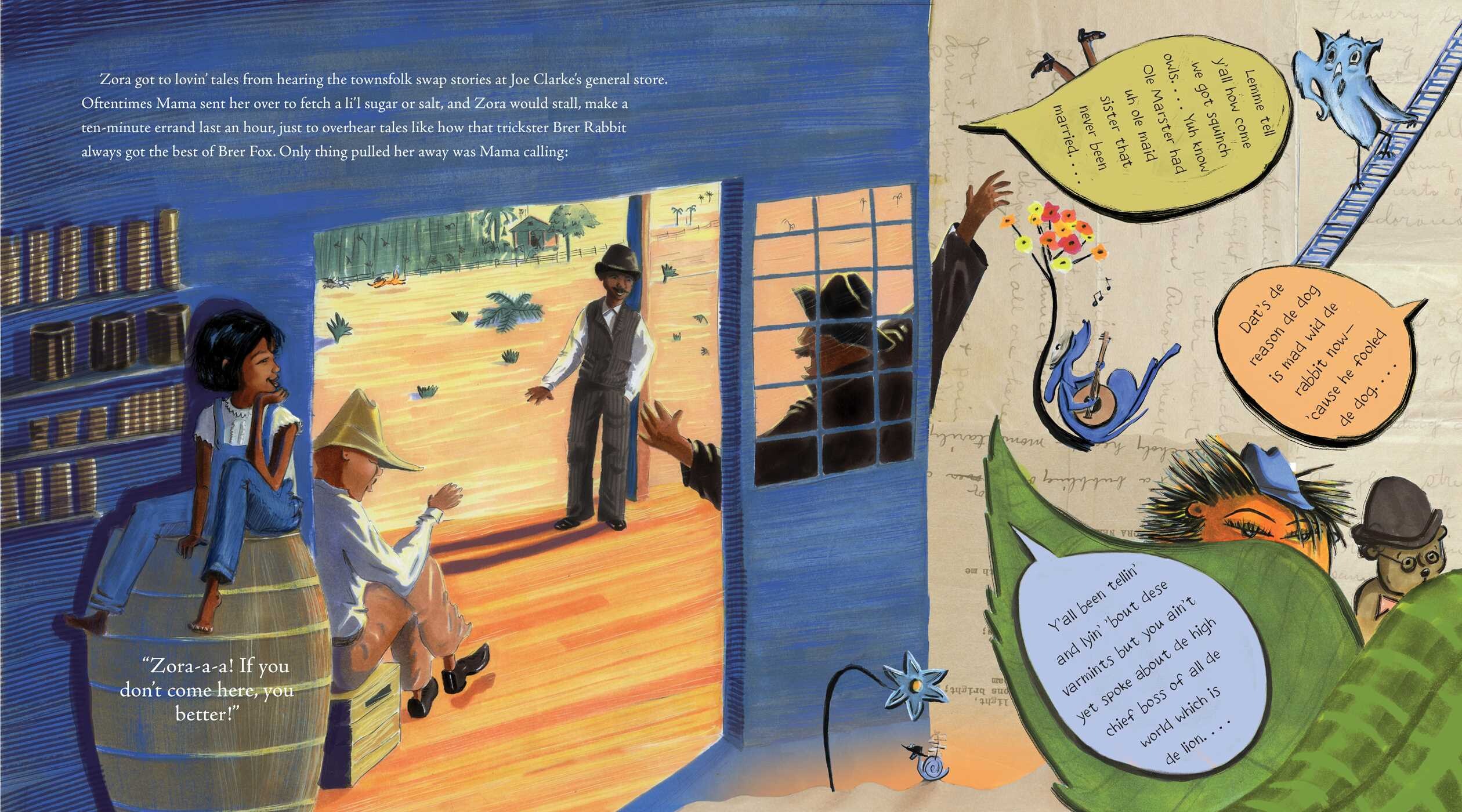
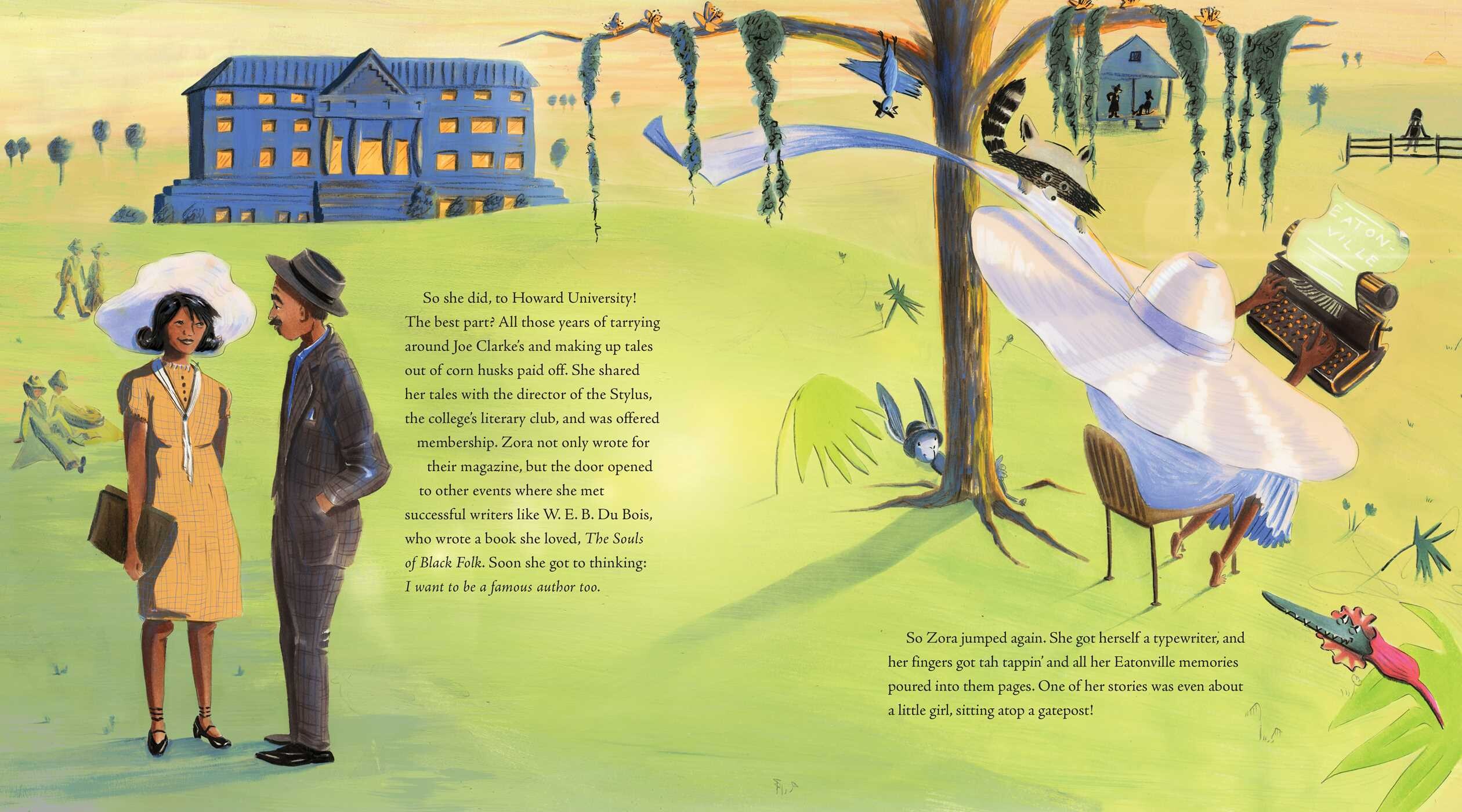
Zora was a girl who hankered for tales like bees for honey. Now, her mama always told her that if she wanted something, “to jump at de sun”, because even though you might not land quite that high, at least you’d get off the ground. So Zora jumped from place to place, from the porch of the general store where she listened to folktales, to Howard University, to Harlem. And everywhere she jumped, she shined sunlight on the tales most people hadn’t been bothered to listen to until Zora. The tales no one had written down until Zora. Tales on a whole culture of literature overlooked…until Zora. Until Zora jumped.

About the Creators:

Alicia D. Williams is the author of Genesis Begins Again, which received a Newbery and Kirkus Prize honors, was a William C. Morris Award finalist, and for which she won the Coretta Scott King – John Steptoe Award for New Talent. A graduate of the MFA program at Hamline University, and an oral storyteller in the African American tradition, she is also a teacher in Charlotte, North Carolina.

Jacqueline Alcántara is the illustrator of the critically acclaimed The Field and Freedom Soup. Her favorite days are spent drawing, painting, writing, and walking her dog. In 2016, she was awarded the inaugural We Need Diverse Books Illustrator mentorship. Find out more at JacquelineAlcantara.com.

Praise: 

*”A lively, joyfully rendered portrait of a literary legend.” – Publisher Weekly, starred review

* “Williams’ narration is a readaloud dream….it will be a joyful guide for folklore enthusiasts” – BCCB, starred review

* “This introduction to an American icon feels just right.” – Kirkus Reviews, starred review

* “A welcome addition to any picture book biography collection.” – School Library Journal, starred review

Review: Zora Neale Hurston has a special place in my heart as Eatonville is right around the corner, and I love the opportunity to be so close to Zora’s home, be inspired by her story, and learn from her. If you are ever here, stop by the Zora Neale Hurston National Museum of Fine Arts!

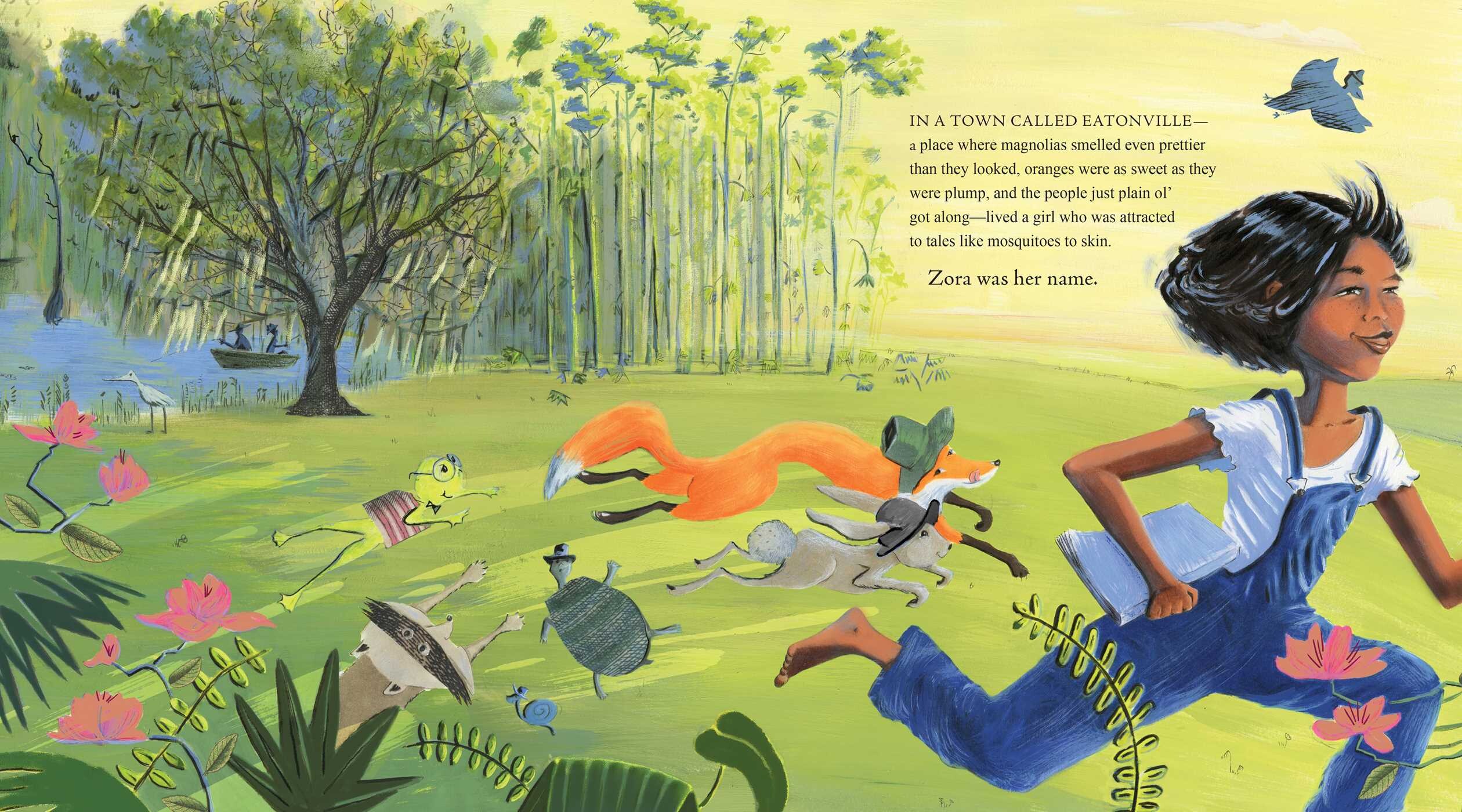
Alicia D. Williams does a beautiful job capturing the spirit of Zora and showing how truly special she was as a person and story teller. And I loved learning new things about her that I hadn’t known before (like that she graduated from high school at 28 and that she may have been lost to white-washed history if not for Alice Walker). And Alicia’s words mixed with the colorful and active illustrations of Alcántara, Zora is brought to life through the pages of this book.

Teachers’ Tools for Navigation: The publisher provided Curriculum Guide is the best resource for using this book in your classroom:

Discussion Questions: 

  • How are the end pages representative of Zora?
  • How were Zora’s stories important to American literature?
  • Why did the author call Zora a “storycatcher?”
  • How did the author integrate fictional characters and stories within her nonfiction biography of Zora Neale Hurston?
  • Why was some of Zora’s storytelling looked down upon?
  • What does the figurative phrase “reach/jump to the sun” mean?

Flagged Passages: 
Read This If You Love: Zora Neale Hurston, Picture book biographies

Recommended For: 

classroomlibrarybuttonsmall 

Signature

**Thank you to Simon & Schuster for a copy of the book to review!**
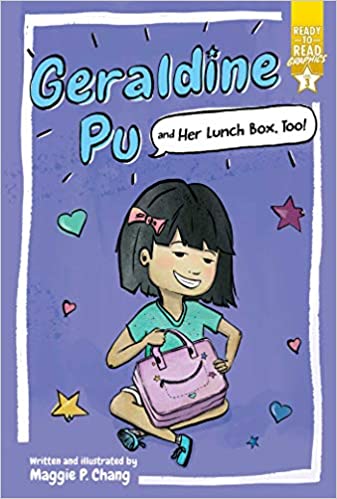
Geraldine Pu and Her Lunch Box, Too! by Maggie P. Chang

Share

Geraldine Pu and Her Lunch Box, Too!
Author: Maggie P. Chang
Published: June 29, 2021 by Simon Spotlight

Summary: Meet spunky, funny, and friendly Geraldine Pu as she takes on a bully and makes a new friend in this first book in a new Level 3 Ready-to-Read Graphics series!

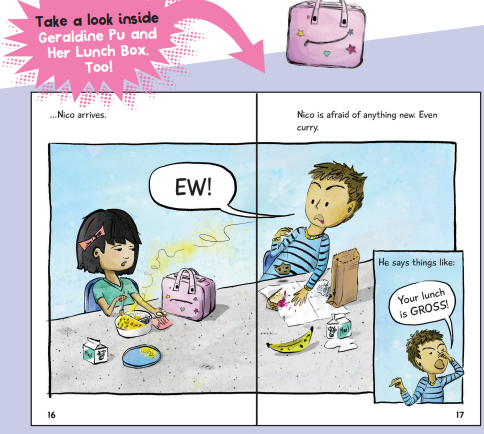
Geraldine Pu’s favorite part of school is lunch. She loves her lunch box, which she calls Biandang. She can’t wait to see what her grandmother, Amah, has packed inside it each day. Then one day, Geraldine gets stinky tofu…and an unexpected surprise. What will she do?

Ready-to-Read Graphics books give readers the perfect introduction to the graphic novel format with easy-to-follow panels, speech bubbles with accessible vocabulary, and sequential storytelling that is spot-on for beginning readers. There’s even a how-to guide for reading graphic novels at the beginning of each book.

Review: The highest form of praise: My 4-year-old son wanted to read this book again two nights in a row. We went camping on the third night, and he was allowed to pick one book to bring, and he picked this one. He really liked learning about all of the different foods, and he liked discussing bullying. The book is structured like a graphic novel, which is a really clever way to structure an early reader. All of the pictures really appealed to him, and he loved reading the progression of the story. The book is divided into chapters, but we read it from start to finish each night. 

Teachers’ Tools for Navigation: Reading this entire book in one sitting will be difficult for an early reader, so my son and I structured it that he read all of the left pages and I read all of the right pages. The next night, he wanted to switch. The third night, he read the entire thing by himself. Readers could also take it chapter by chapter (a chapter or two each night). This book offers great discussions about our practices that seem “different” than those of our peers and how these make us uniquely wonderful. It is also a great book to teach about bullying. I love how the lunch box is personified! It made the book even more fun to read! Those who know me know that I don’t like reading levels. In our house, we read books at all levels, and I just support as needed. That said, this book would be great in the early elementary school grades. Don’t limit it just there, though. My 4-year-old really enjoyed it!

Discussion Questions: 

  • How does Geraldine feel about the different foods she eats at lunch? How does this change?
  • How does Biandang feel? How does he act as a support?
  • What changes Geraldine’s mind at the end of the story?
  • How can you celebrate your own friends’ lunches, no matter how different they may seem?

Flagged Spread:

Read This If You Love: Graphic novels, books about feeling different, books about family

 classroomlibrarybuttonsmall

**Thank you, Cassie, from Simon and Schuster, for sending a copy for review!**

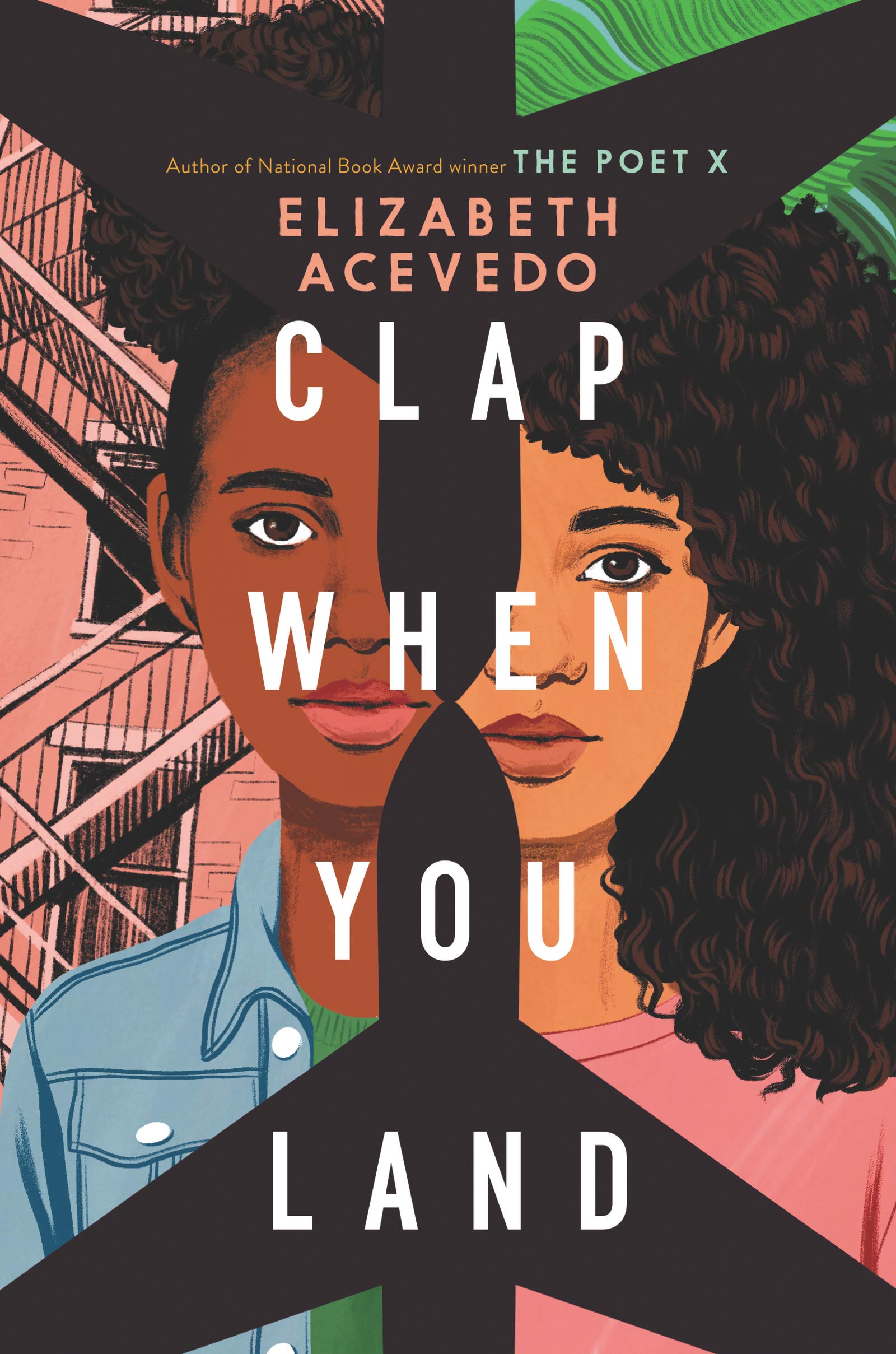
Clap When You Land by Elizabeth Acevedo

Share

Clap When You Land
Author: Elizabeth Acevedo
Published March 5, 2020 by HarperTeen

Summary: In a novel-in-verse that brims with grief and love, National Book Award-winning and New York Times bestselling author Elizabeth Acevedo writes about the devastation of loss, the difficulty of forgiveness, and the bittersweet bonds that shape our lives.

Camino Rios lives for the summers when her father visits her in the Dominican Republic. But this time, on the day when his plane is supposed to land, Camino arrives at the airport to see crowds of crying people…

In New York City, Yahaira Rios is called to the principal’s office, where her mother is waiting to tell her that her father, her hero, has died in a plane crash.

Separated by distance—and Papi’s secrets—the two girls are forced to face a new reality in which their father is dead and their lives are forever altered.

And then, when it seems like they’ve lost everything of their father, they learn of each other.

Ricki’s Review: I was so happy to see that this book won the Amelia Elizabeth Walden Award. It is one of the most beautifully written books that I have ever read. It made me laugh, it made me weep, and it filled me with so many emotions and so many wonderings. The book is beautifully lyrical, and the voices are so strong. There’s a scene in the book that simply took my breath away. If you haven’t read this book yet, I recommend you head out and purchase it now. It’s absolutely magnificent.

Discussion Questions: 

  • How do the two perspectives of the story work together? How did it enhance your reading of the story?
  • How does place function in the story?
  • Where is home for the characters?
  • How do the characters in the story grieve? What understandings did it offer about grief and loss?
  • How do the characters in this book show strength in many different ways?

Flagged Passage: 

“Can you be from a place
you have never been?

You can find the island stamped all over me,
but what would the island find if I was there?

Can you claim a home that does not know you,
much less claim you as its own?”

Read This If You Love: Books. Seriously, it would be very difficult not to see the beauty of this book. Elizabeth Acevedo is one of the greatest writers of our time.

Recommended For: 

classroomlibrarybuttonsmall   

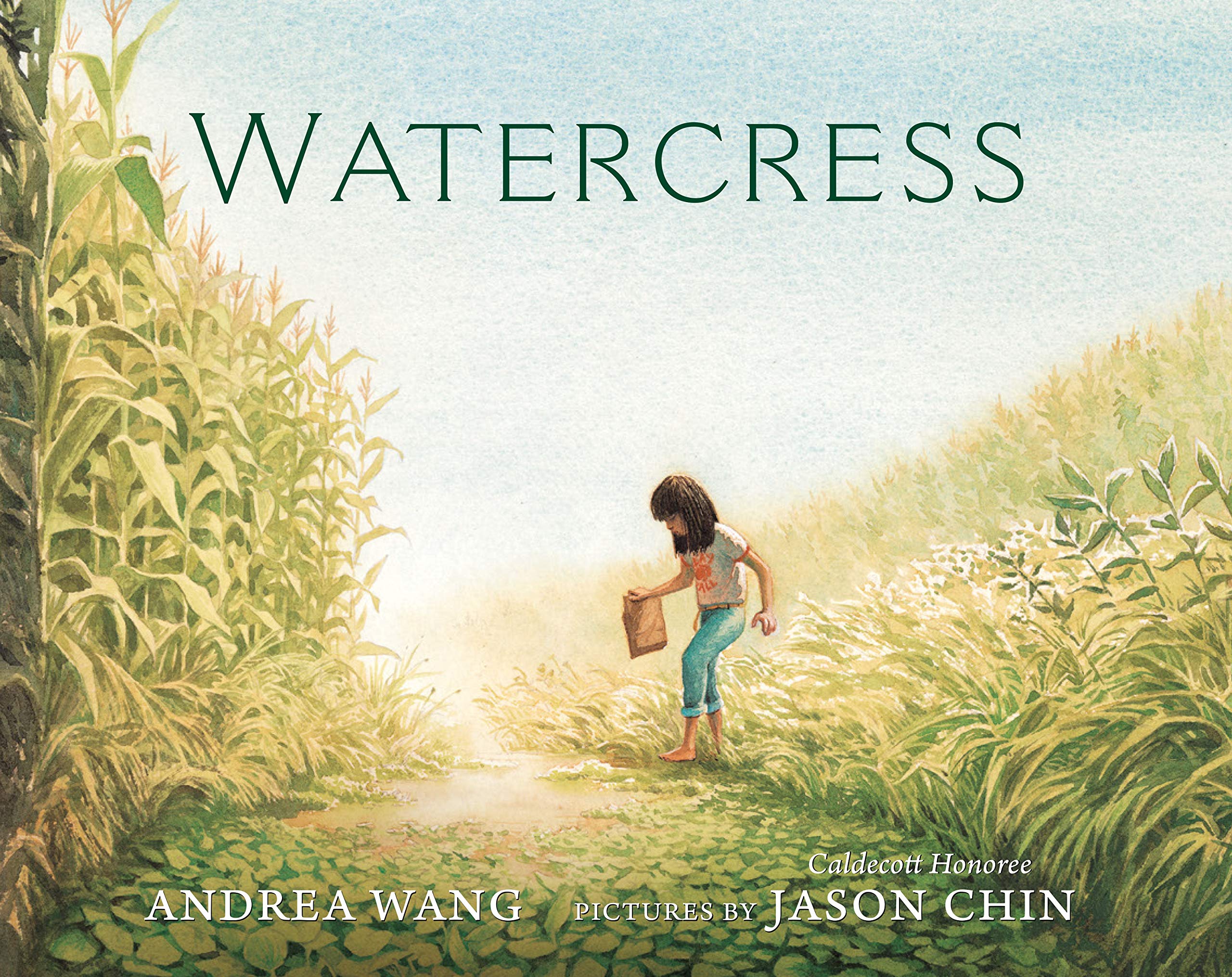
Watercress by Andrea Wang, Illustrated by Jason Chin

Share

Watercress
Author: Andrea Wang
Illustrator: Jason Chin
Published: March 30, 2021 by Neal Porter Books

Summary: Gathering watercress by the side of the road brings a girl closer to her family’s Chinese Heritage.

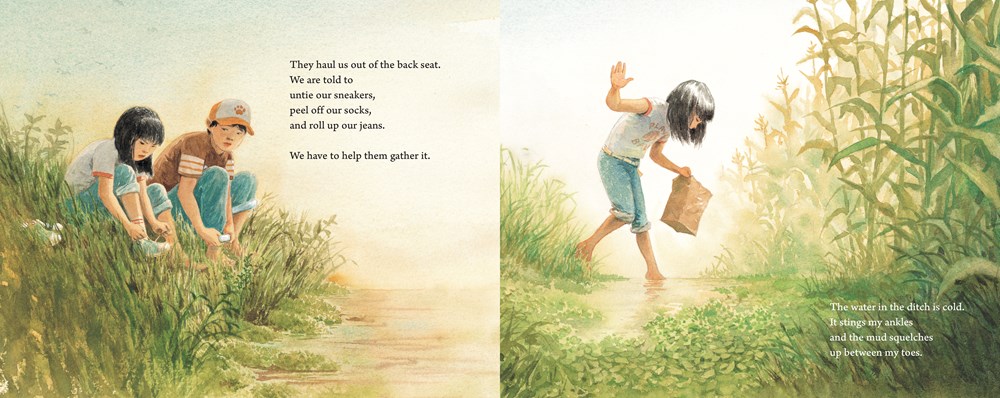
Driving through Ohio in an old Pontiac, a young girl’s parents stop suddenly when they spot watercress growing wild in a ditch by the side of the road. Grabbing an old paper bag and some rusty scissors, the whole family wades into the muck to collect as much of the muddy, snail covered watercress as they can.

At first, she’s embarrassed. Why can’t her family get food from the grocery store? But when her mother shares a story of her family’s time in China, the girl learns to appreciate the fresh food they foraged. Together, they make a new memory of watercress.

Andrea Wang tells a moving autobiographical story of a child of immigrants discovering and connecting with her heritage, illustrated by award winning author and artist Jason Chin, working in an entirely new style, inspired by Chinese painting techniques. An author’s note in the back shares Andrea’s childhood experience with her parents.

A Junior Library Guild Gold Standard Selection!

Ricki’s Review: This book took my breath away. A girl’s family stops by the side of the road, and she is embarrassed as they fill paper bags with muddy watercress and eat it for dinner. Her mother shares a story of her childhood and talks about a brother who has passed on. I will be recommending this book over and over again. The story is stunningly written and captures painful memories that are passed intergenerationally. The author writes that it is “both an apology and a love letter” to her parents. I imagine the story would make her parents very proud. There is a bond between the family that reaches off the pages and pulls readers into the story. I highly recommend this book.

Teachers’ Tools for Navigation: Teachers might use this book to ask students to share moments that they were embarrassed about a family or friend situation. They might then add layers to that story–what do these stories tell? How do these stories reveal layers of their lives?

Discussion Questions: 

  • How does the author write about emotion? What feelings does the narrator have, and how do these feelings change?
  • How are stories passed intergenerationally?
  • What does the narrator learn, and how does this knowledge change her?

Flagged Spread:


Read This If You Love: Fry Bread: A Native American Family Story by Kevin Noble Maillard; A Big Mooncake for Little Star by Grace Lin; Eyes that Kiss in the Corners by Joanna Ho

  classroomlibrarybuttonsmall

**Thank you, Sara, from Holiday House and Pixel+Ink for sending a copy for review!**

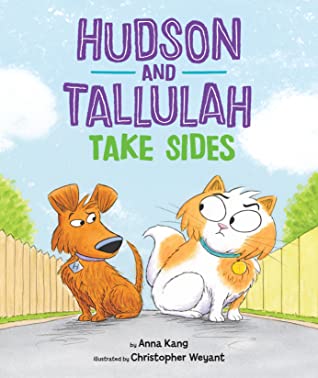
Review and Giveaway!: Hudson and Tallulah Take Sides by Anna Kang, Illustrated by Christopher Weyant

Share

Hudson and Tallulah Take Sides
Author: Anna Kang; Illustrator: Christopher Weyant
Published: May 1, 2021 by Two Lions

Goodreads Summary: A tale about a cat and a dog who discover that even though they don’t look at things the same way, they can still be friends.

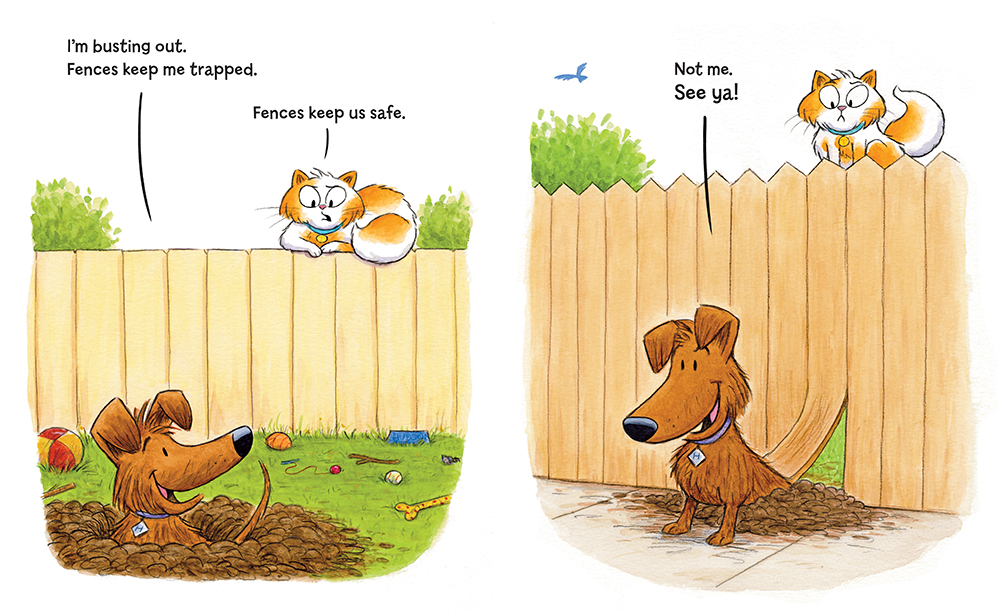
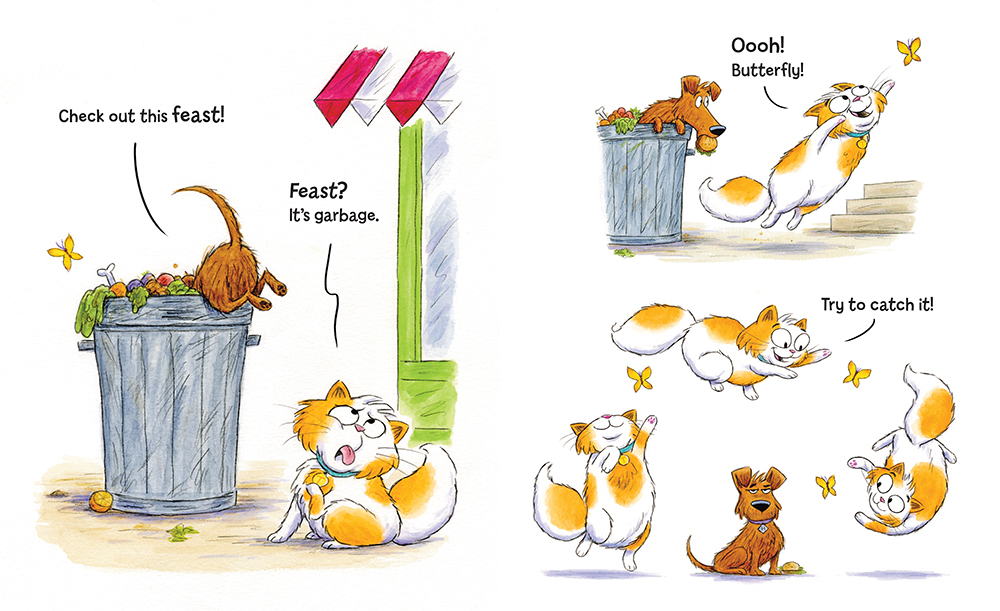
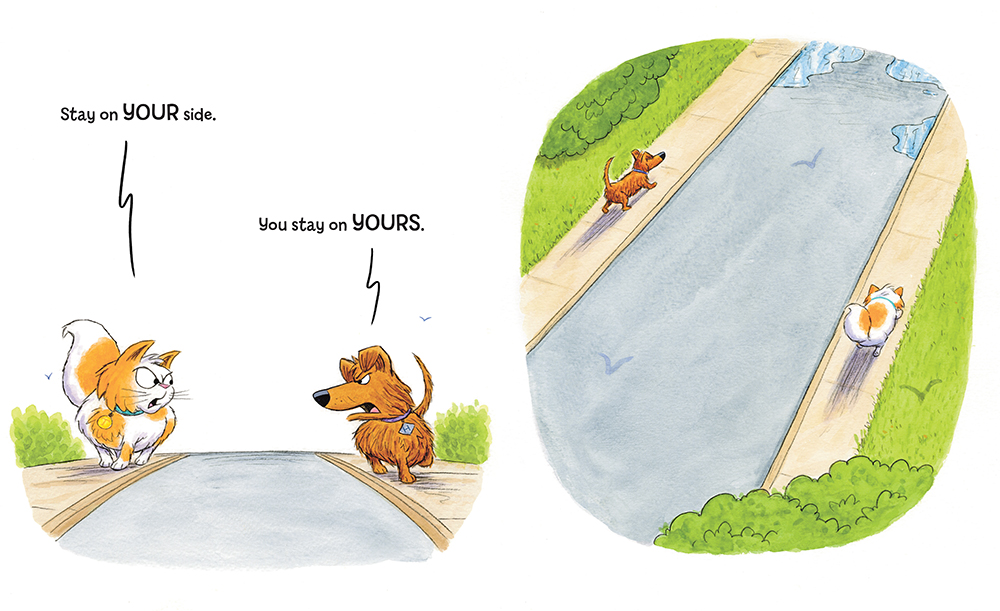
Hudson and Tallulah may be neighbors, but the fence between their yards isn’t the only thing that divides them. They can’t see eye to eye on anything. One day they venture out, and after nonstop disagreement, they realize something surprising: they don’t always have to agree to be on each other’s side.

About the Author and Illustrator: Anna Kang and Christopher Weyant are the creators of Theodor Seuss Geisel Award winner You Are (Not) Small as well as series titles That’s (Not) Mine, I Am (Not) Scared, and We Are (Not) Friends. They also wrote and illustrated Eraser, Can I Tell You a Secret?, and Will You Help Me Fall Asleep? Christopher’s work can also be seen in The New Yorker, and his cartoons are syndicated worldwide. This husband-and-wife team lives in New Jersey with their two daughters and their rescue dog, Hudson, the inspiration behind the character in this book. Visit them at www.annakang.com and www.christopherweyant.com.

Twitter: @annakang27 @ChristophWeyant

Instagram: annakangbookschristopherweyant 

Facebook: Anna Kang – AuthorChristopher Weyant

★“New Yorker cartoonist Weyant’s illustrations, which use gouache, graphite, and lots of white space, carry the day, filling the dog’s and cat’s reactions to what they encounter with plenty of comic details (like the bold lettering conveying the dog-park dogs’ frantic barking at the cat). Madcap fun.” —Booklist (starred review)

“Charming cartoons convey the nearly wordless story augmented with dialogue between the two rivals…An amusing exploration of how opposite personalities can learn to appreciate their unique relationship.” —Kirkus Reviews

“Aptly captured by married team Kang and Weyant (You Are (Not) Small), the unlikely friends’ comic path to camaraderie unfolds nearly wordlessly, with expressive gouache and graphite scenes that burst with physical humor, showing that even those who fight like cats and dogs can be friends.” —Publishers Weekly

Review: I was really excited to received this book because I love Kang and Weyant’s work. But there was a 4-year-old thief in my house. He stole the book from right under me and loved it so much that he hid it in his room. I still had a week until the review, so I was casually looking for it from time to time. One night, I heard uproarious giggles. Curious what was making my son laugh so hard, I peeked in his room. There it was! Hudson and Tallulah Take Sides!

Me: Buddy, I need to review that book!

4yo: But I love it so much. Look! The dog slides under the fence and says “SEE YA!” [Lots of giggling.]

Me: Okay, well can you leave it outside your door tonight when you are done with it?

4yo: Only if you put it back in my room after YOU are done.

Needless to say, this book is very well loved in my house. I will admit that I can’t read it from start to finish without giggling myself. The facial expressions of Hudson and Tallulah are so funny. The words are spread across the page in a way that they invite my 4yo to read them. Kang and Weyant are masterful in their ability to capture character, and their characters are so accessible to early readers. This book is simply fantastic, and I recommend it highly.

Teachers’ Tools for Navigation:  This belongs in every Pre-K, K, and 1st grade classroom (at a minimum!). Readers of all ages will love it, but specifically, it is a book that encourages kids to read. The personification of the animals is magnificent, and it would offer a good case study on figurative language and humor.

Discussion Questions: 

  • How are Hudson and Tallulah different? How are they similar?
  • How do the author and illustrator each use personification to enhance the story?
  • Why do you take sides? When might it be valuable to avoid taking sides?
  • What makes a good friend? Are Hudson and Tallulah good friends? Are you a good friend?

Flagged Passages: 

Read This If You Loved: You Are (Not) Small by Anna Kang and Christopher Weyant; That’s (Not) Mine by Anna Kang and Christopher Weyant; It’s (Not) Perfect by Anna Kang and Christopher Weyant; We Are (Not) Friends by Anna Kang and Christopher Weyant; Dog vs. Cat by Chris Gall

Recommended For: 

readaloudbuttonsmall classroomlibrarybuttonsmall

Book Giveaway!

a Rafflecopter giveaway

RickiSig

**Thank you to Barbara at Blue Slip Media for providing a copy for review!**

Encounter by Brittany Luby, Illustrated by Michaela Goade

Share

Encounter
Author: Brittany Luby
Illustrator: Michaela Goade
Published: October 1, 2019 by Little, Brown

GoodReads Summary: A powerful imagining by two Native creators of a first encounter between two very different people that celebrates our ability to acknowledge difference and find common ground.

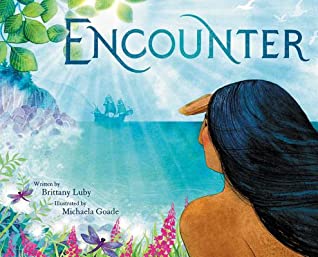
Based on the real journal kept by French explorer Jacques Cartier in 1534, Encounter imagines a first meeting between a French sailor and a Stadaconan fisher. As they navigate their differences, the wise animals around them note their similarities, illuminating common ground.

This extraordinary imagining by Brittany Luby, Professor of Indigenous History, is paired with stunning art by Michaela Goade, winner of 2018 American Indian Youth Literature Best Picture Book Award. Encounter is a luminous telling from two Indigenous creators that invites readers to reckon with the past, and to welcome, together, a future that is yet unchartered.

Ricki’s Review: This powerful book belongs in every classroom. It offers a counterstory that does not fit the typical narrative. The backmatter offers even greater depth and begs for the text to be taught in classrooms. I would use this book with students of all ages (including adults), and it is such an important book to the field. This story is grounded in a primary historical source from the timer period and is beautifully done.

Teachers’ Tools for Navigation: I would love to use this text to discuss the multiple ways in which fiction humanizes experiences and teaches us about history and the world. One theme, for instance, is that of communication. Students might select a topic or theme and read the text through the lens of that theme to offer a better understanding of history, narrative, and the world.

Discussion Questions: 

  • How does the story reach readers?
  • How does the story offer an account of history, and how does it expand our understandings of history?
  • How do the words and pictures work together to create meaning?

Read This If You Loved: We Are Water Protectors by Carole Lindstrom; The People Shall Continue by Simon J. Ortiz; At the Mountain’s Base by Traci Sorell; We Are Grateful/Otsaliheliga by Traci Sorell; Fry Bread: A Native American Family Tradition by Kevin Noble Maillard

Recommended For:

classroomlibrarybuttonsmall 

RickiSig

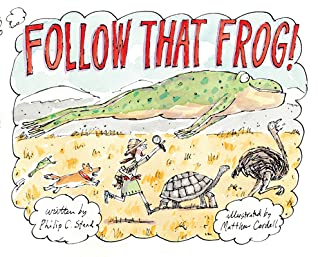
Review and Author/Illustrator Interview: Follow That Frog! by Philip C. Stead, Illustrated by Matthew Cordell

Share

Follow That Frog!
Author: Philip C. Stead
Illustrator: Matthew Cordell
Published: February 2, 2021 by Holiday House

GoodReads Summary: When a curiously croaking stranger comes knocking at the door, Aunt Josephine launches into a rambling tale about her lifelong pursuit of a rare giant frog.

Eccentric Aunt Josephine poignantly ignores a stranger knocking at her door as she tells her niece Sadie the story of her time in the jungles of Peru, cataloguing amphibians for the scientific team of Admiral Rodriguez. When the admiral’s son was suddenly swallowed by a giant frog, Aunt Josephine gave chase in a journey which took her around the world.

In the tradition of Philip Stead and Caldecott Medalist Matthew Cordell’s previous collaborations Special Delivery and The Only Fish in the Sea, this is a story full of rambunctious fun and sensationally appealing artwork.

Ricki’s Review: I could not stop laughing as I read this book. This, in turn, made my kids laugh. It was a joyous affair–ha ha! I have not read the first two books in the series, and this book stood alone very nicely. Aunt Josephine’s story is simply fantastic, and this feels like it will be a classic. It’s a bizarre, quirky telling, but this makes it stand out from other books that I’ve read. 

The illustrations are absolutely marvelous–not surprising, given the illustrator–and the story is very engaging. The story winds in a way that keeps readers on their toes and feels different and exciting. This book demands to be read aloud to a crowd of children! Adults and children alike will want to read this one again and again.

Kellee’s Review: Philip C. Stead and Matthew Cordell sure have a vivid imagination and silly sense of humor, and this book definitely show that it is true–once again Aunt Josephine takes the reader on a wild adventure! This book strays away a bit from the structure of the first two books in the series because instead of Sadie going on an adventure, Aunt Josephine shares an adventure SHE had from her younger days. 

I loved this story because it gave us a bit more insight into Aunt Josephine as we got glimpses not only into her past but also into her home, and it all gives us a bit of an understanding of some of Sadie’s characteristics! I think the easiest way to describe it all is quirky, equally balanced between Stead’s sensational story telling and Cordell’s intricate illustrations.

Teachers’ Tools for Navigation: This book is an obvious choice for read alouds and creative writing classes. I’d also use it with high school and adult readers, too. It teaches excellent examples of craft that could be analyzed richly by all ages and would inspire writing of all kinds.

Discussion Questions: 

  • How does the story maintain reader interest?
  • How do the illustrations pair with the story to make the story more effective?
  • Was the ending what you predicted? How does the ending enhance the story?

Read This If You Loved: Special Delivery and The Only Fish in the Sea by Philip Stead; Elephant and Piggie series by Mo Willems; The Frog and Toad series by Arnold Lobel; Pug Meets Pig by Sue Lowell Gallion

Author and Illustrator Interview

What keeps bringing you back to Sadie and Josephine?
MATTHEW: Phil’s had such great ideas and adventures for them, so I was always thrilled to be on board. I love the strange world these characters inhabit and the madcap stories they tell. So much fun to draw!
PHILIP: Sadie and Josephine are two of my favorite characters I’ve ever created. Matt and I talked a lot at the outset about wanting strong female leads that were confident and capable in the face of increasingly ridiculous circumstances. It’s just been so much fun coming up with those ridiculous circumstances and watching how Sadie and Josephine power right through.

Was the original story a collaboration? If not, how did it come to be? And is it more of a collaboration now that you’re on book 3?
MATTHEW: Unlike most author and illustrator picture book team scenarios, Phil and I and our editor Neal have collaborated through and through. Typically, authors and illustrators do not work together to make a picture book come to life. It’s a bit more of a relay race. The author does the first bit with the editor. Then the editor passes the baton to an illustrator to finish up the book. But since Phil and I were friends before Special Delivery (book 1), we always wanted to work together with Neal, so that’s how it’s always been. It’s always been a very natural and organic way of working for us. Can’t imagine it any other way, really!
PHILIP: Ditto that! Really, collaboration is the only way of working I’ve ever known. The only other illustrator I’ve worked with (other than myself) is my wife Erin. Writing work and illustration work are constantly overlapping in our studio and I think that overlap leads to better, more cohesive books. I definitely think many of the weird quirks of the three Sadie books wouldn’t have survived the more normal book making process where author and illustrator work separately on their own little islands.

Each Sadie story has an animal focus–how do you choose which animal(s) will be in the story?
PHILIP: Well, obviously I have a thing for elephants that goes back to my first book with Erin, A Sick Day for Amos McGee. My first book with Matt, Special Delivery, centers around an elephant as well. I love how expressive an elephant face can be. Erin and Matt are both very expressive illustrators, albeit with very different results. That’s probably why elephants came to mind for both of them. Plus, an elephant can really fill up a book page nicely. All the other animal choices are somewhat opportunistic. Like, who wouldn’t want to see Matt illustrate a giant frog riding on the back of a rhea?! A rhea is basically a South American ostrich, for those of you reading that aren’t current on your ornithological studies.

Any plans for more Sadie stories?
MATTHEW: Nothing else is in the works for Sadie, Aunt Josephine, Sherman, and those monkeys. But Phil, Neal, and I (different kind of monkeys?) are already working up a whole different picture book idea now. I’m currently in sketches for this one. And hopefully there will be more books on down the road too. I sent Phil some drawings from my sketchbook a while ago to see if he could pry a story out of them. We shall see!
PHILIP: In Follow That Frog! there’s talk of getting to Paris. I’d love to send Sadie and Josephine to Paris someday. But for now Matt and I are onto something new.

Recommended For:

classroomlibrarybuttonsmall 

RickiSig andKellee Signature

**Thank you to Sara at Holiday House for providing copies for review!**