Bucky and Stu vs. the Mikanikal Man
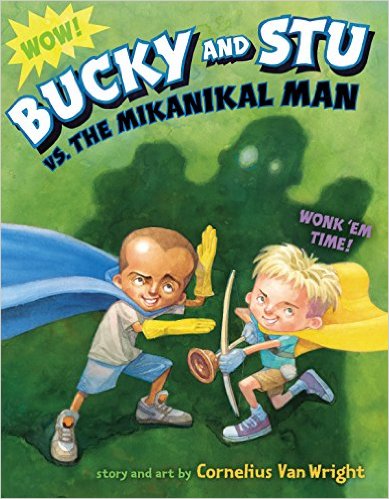
Author and Illustrator: Cornelius Van Wright
Published: July 28, 2015 by Nancy Paulsen Books
Goodreads Summary: It’s the adventure of a lifetime when best friends—and self-proclaimed superheroes—defeat bad guys of their own invention.
It’s wonk ’em time when Bucky and Stu have to stand up to Phat Tyre, TrashMan and Hose-Nose. No matter that the bad guys are all made out of household items that Bucky and Stu have assembled themselves—these bad guys don’t stand a chance against the boys’ power moves. Still, it’s quite a surprise when their latest villain, the giant Mikanikal Man, gets zapped during a lightning storm and comes to life! The battle—and thrill—of a lifetime ensue. Full of surprises and laughs, this upbeat, action-packed story celebrates imagination, creativity, and friendship in even the most unexpected forms. Cornelius Van Wright’s hilarious illustrations are full of surprises and are perfect for portraying the high-speed antics of two enthusiastic boys.
About the Author:
Cornelius Van Wright (www.corneliusvanwright.com) wrote and illustrated When an Alien Meets a Swamp Monster, and has also illustrated several other picture books, including Princess Grace (by Mary Hoffman) and Jingle Dancer (by Cynthia Leitich Smith). His work has appeared on Reading Rainbow and Storytime and has been exhibited with the Society of Illustrators. He lives in New York City.
Ricki’s Review:For me, this book celebrates the imagination. These two boys build their own villains out of household items, and the end results are hilarious. My son enjoys reading this book, and after our first reading we created our own villain out of couch cushions, a colander, and other cooking tools. While many readers will automatically attribute this book to boys, I think girls would love it, too! Who doesn’t love creating a monster out of every day items? Next winter, I plan to read this book with my son and take him outside to create an imaginative snowman. It will be the hit of the block!
Kellee’s Review: What a perfect book to review to coincide with the release of Captain America: Civil War! It highlights how anyone can be a superhero if they use their imagination and whatever they can find! I know that this is going to be a favorite of parents who like comic books and will be a reading ladder to super hero comic books because the next step after fighting Phat Tyre is Green Goblin! I also think that the story will really get kids’ minds reeling and get them playing! Too often I hear that kids aren’t playing enough anymore, but I believe that is because video games and TV are so stimulating. Bucky and Stu is imaginative enough that it will stimulate the minds of its readers and get them playing.
Teachers’ Tools for Navigation: This book would be a great choice to kick off a unit on imagination. Some elementary schools do invention fairs, and this would be a great book to initiate excitement in the fair. Further, with the highlight on STEM in education, teachers might consider pairing with a robotics teacher to show students how robots were made. It would be really neat if they could try their own hand at creating their very own robot! Now THAT is authentic learning!
Discussion Questions: How does using our imagination help us in life? When have you had to use your imagination creatively? What famous people (current or in history) are known for their imaginations?; How might this book inspire you to make your own invention?
Book Trailer:
This made us giggle and highlights the good fun of this book!
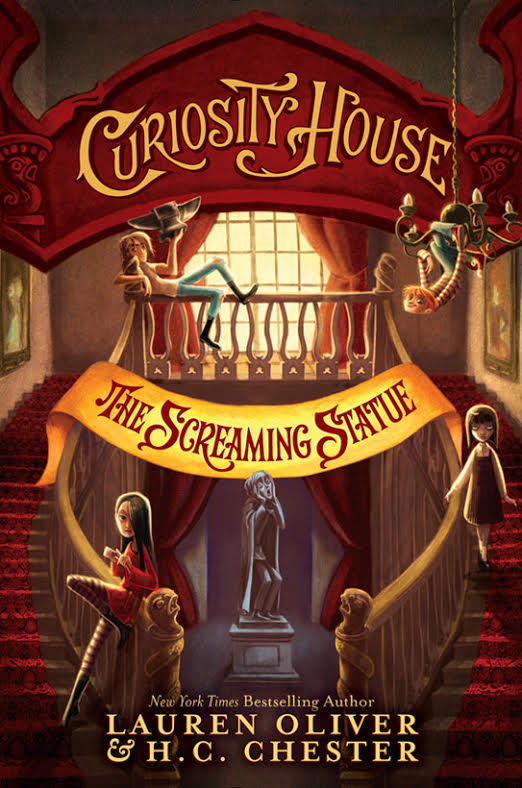
Curiosity House: The Screaming Statue Authors: Lauren Oliver and H. C. Chester
Anticipated Publication: May 3, 2016! by HarperCollins
Summary: Four orphans with extraordinary abilities and questionable pasts—Pippa, Sam, Thomas, and Max—are happy to be out of harm’s way now that the notorious villain Nicholas Rattigan is halfway across the country in Chicago. But unfortunately their home, Dumfreys’s Dime Museum of Freaks, Oddities, and Wonders, is in danger of closing its doors forever.
But their troubles only get worse. The four friends are shocked when their beloved friend, famous sculptor Siegfried Eckleberger, is murdered. As they investigate, they find clues that his death may be tied to the murder of a rich and powerful New York heiress, as well as to their own pasts.
In this second book in the exceptional Curiosity House series by bestselling author Lauren Oliver and shadowy recluse H. C. Chester, the four extraordinary children must avenge their friend’s death, try to save their home, and unravel the secrets of their past . . . before their past unravels them.
My Review: I actually read the second book in the series before the first, and I had so much fun reading both! The murder mystery kept me guessing throughout the series, and I imagine both middle grade readers and readers of all ages will have great fun with this book! The world of this book feels like it is set about one hundred years ago, so I enjoyed reading sections aloud to my son. We talked with him about “freak shows” and their purpose and existence. He is very young, so the conversation did not get very critical, but I imagine that classroom teachers would have excellent discussions with students about these topics. Each of the characters is very different from the others, which made reading this book so enjoyable. What I enjoyed most about the book (and series) is its accessibility. While the freak show aspect is an element of our past, the book feels like it is set right in this moment, and this is what makes it such an engaging book for readers!
Teachers’ Tools for Navigation: This series is a creative lesson gold mine for teachers. How neat would it be to print pictures from the museum and post them around the room? Students could walk around the room and be inspired to write their own fiction. Then, they might share stories and see how different their perspectives might be. This could lead to conversations about author’s craft and outside inspiration as a writing source.
Discussion Questions: Which character was your favorite? What characteristics made the character most interesting to you? How do others respond to this character?; How do you imagine Lauren and H. C. worked together on this project? (Hint: After guessing, take a peek at the interview questions below.); Why might author collaborations be so valuable?
Flagged Passage: “It was only eleven o’clock in the morning and already topping ninety degrees in New York City. The street outside of Dumfrey’s Dime Museum of Freaks, Oddities, and Wonders was as still as a painting.”
**Please note that this passage is from an advanced reader copy and will potentially change with publication.**
Read This Series If You Loved: Wonder Show by Hannah Barnaby, Miss Peregrine’s Home for Peculiar Children by Ransom Riggs, Circus Mirandus by Cassie Beasley, A Snicker of Magic by Natalie Lloyd, Mechanical Mind of John Coggin by Elinor Teele, Big Fish by Daniel Wallace, Night Circus by Erin Morgenstern, Peter Pan by J.M. Barrie
What does your writing process look like? Is it mainly collaborative in nature, or do you work alone?
HCC: My working relationship with Ms. Oliver represents what I regard as the ideal collaborative arrangement. I permit her access to my unique collection of rare and extraordinary artifacts–as well as giving her the invaluable benefit of my encyclopedic knowledge of all things related to the strange and arcane–and she does all the work.
What have you learned from each other while writing these books?
HCC: I have learned that MS. Oliver possesses what can only be termed bananaphobia. My discovery of this strange phenomenon occurred when I invited her to join Trudy and myself for lunch during one of her–Ms. Oliver’s–research trips to my private museum and made the error of ending the meal with what I believed would be a delicious dessert of canned fruit cocktail adorned with hand-cut banana slices. I will spare you a description of the scene that ensued. Let me only say that Trudy was so traumatized that it took her an unusually long span of nearly fifteen minutes to finish off her dish of fruit cocktail.
Lauren, how has writing this series been different from writing your other texts, which explore a much different genre? Has the intended audience affected your writing process in any way?
LO: I actually have two other middle grade books, Liesl and Po, and The Spindlers, so writing for a younger audience wasn’t unfamiliar to me. I really love it, because it gives me a chance to explore my humorous side. And I love how sheerly inventive and, for lack of a better word, kooky you can be with a younger audience.
H.C., what have you learned from this writing process? Has it affected the ways you look at the museum?
HCC: I have learned that the most satisfactory writing process is one in which someone else does all the work. As for your second question, my answer is: not really.
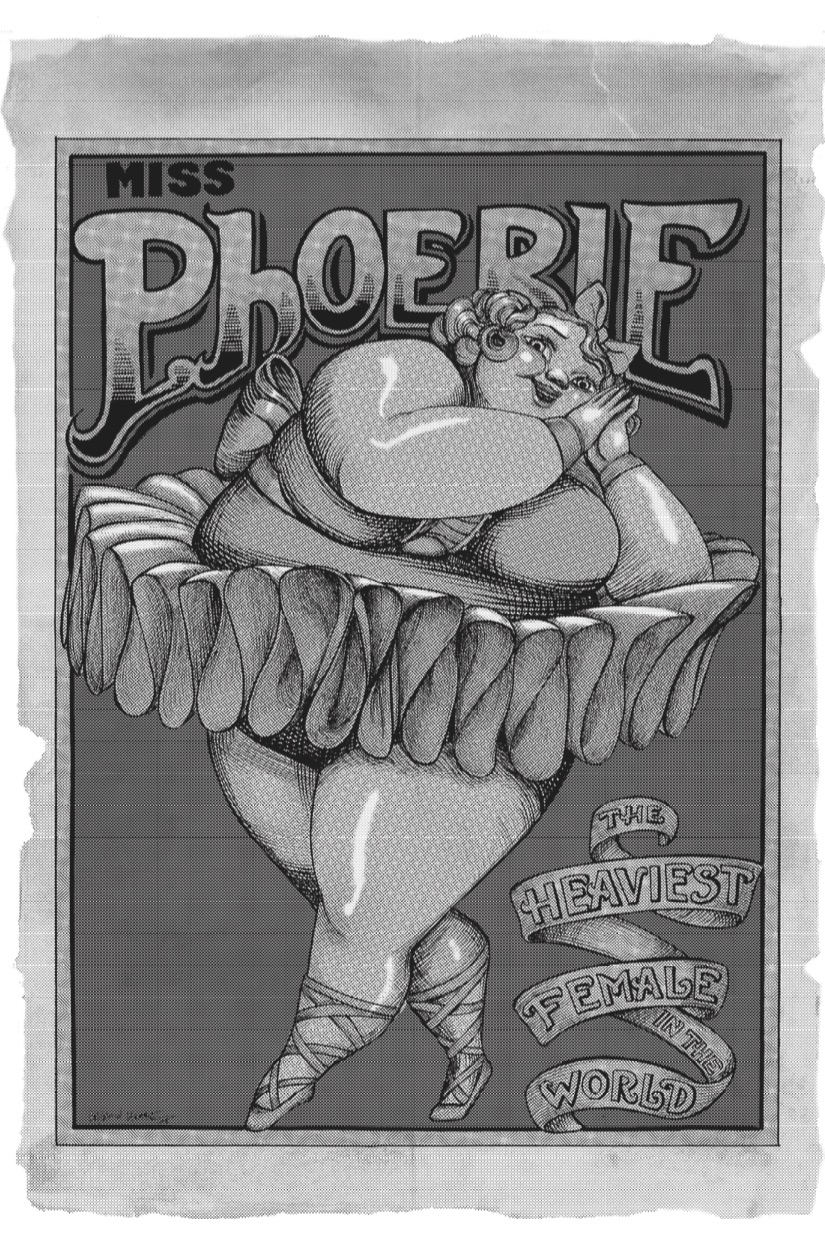
Interview with the character, Phoebe the Fat Lady:
Weighing in at half a ton, Phoebe is tremendously proud of her size and keeps up a rigorous diet regimen that includes toast soaked in bacon fat and whole sticks of butter. The scariest day of her life was when she discovered, that due to the flu, she had lost ten pounds.
Since you’ve left, what adventures have you embarked on? Who do you miss most?
Phoebe: Hugo and I have traveled all over Europe, where we’ve seen things that are truly freakish! Do you know that in France, snails are a delicacy?
Have you maintained the same weight? How has life been for you, in general?
Phoebe: Oh, certainly not! That is one of the strongest misconceptions people have about my weight–that I do not have to work, every day, to maintain my fantastic enormity. But in fact as a child I could barely be considered plump! In order to maintain my beautiful physique, I follow a strict diet of twenty-six meals a day and restrict my exercise to less than one hundred meters.
Will we see you again?
Phoebe: Never say never!
**Thank you to Natasha Ochshorn and Lauren Oliver for providing an advanced copy for review!**
I know, I know… it’s been said a hundred times before… One really great way to get kids in schools interested in reading is to invite some authors to come in and talk to them. But at the risk of beating a dead horse by raising this topic again for the hundred-and-first time, let me just say that one of my absolute favourite things in the world is visiting schools and talking about my books and how I ended up writing them.
When I visit schools I have a checklist of things that I always bring with me:
– Many copies of my books to give away. Check.
– Dragon of the Month Club membership cards to give away. Check.
– Trading cards for each of my books to give away. Check.
– Wristbands for my books to give away. Check.
– Pendants from designs from my books to give away. Check.
(As you can see, I always bring lots of stuff for giveaways. Kids love it.)
But even with all the free stuff the kids get I think the most memorable thing for them (although they never really show it – you know how kids are) is when the story in the books I’ve written actually take place right there in their own hometowns and neighbourhoods. One of my own most memorable visits was to a small school in rural Ireland where the kids were amazed to hear that one of the books in my Kitty Hawk Flying Detective Agency had several scenes that took place just a few miles away. And they couldn’t believe that the boring tiny little village where they lived was actually one of the most favourite places in all the world of some writer they never heard of from Canada.
On visits like these I always have a great time and so do the kids and teachers too. There are writers everywhere in the world. And writers tend to write what they know, so they’ve probably written something about every corner of the world where there’s a school. And I bet they’d love to come out and talk to students about their books.
And if not…. well, give me a call… maybe I’ll be in your corner of the world sometime and I can drop in and give away a bunch of stuff.
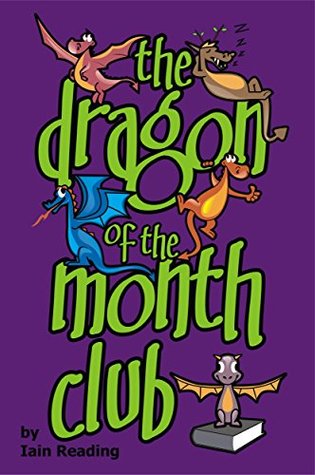
The Dragon Of The Month Club, by Iain Reading, was published in February 2015 and is available for sale.
Synopsis:
The Dragon Of The Month Club is the exciting first installment in a new book series that tells the story of Ayana Fall and Tyler Travers, two best friends who stumble across an extraordinarily magical book and soon find themselves enrolled as members of a very special and exclusive club – The Dragon of the Month Club.
On the thirteenth of every month a new dragon conjuring spell is revealed and the two friends attempt to summon the latest Dragon of the Month. The varieties are almost endless: Air Dragons, Paper Dragons, Fog Dragons, Waterfall Dragons, Rock Dragons, Tree Dragons – not to mention special bonus dragons for all the major holidays, including a particularly prickly Holly Dragon for Christmas.
But one day when a conjuring spell somehow goes wrong Ayana and Tyler find themselves unexpectedly drawn into a fantastical world of adventure based on the various books scattered all across Tyler’s messy bedroom. Travelling from one book-inspired world to the next with nothing to rely on but their wits and a cast of strange and exotic dragons at their disposal they must try to somehow find their way home again.
Drawing inspiration from some of literature’s most memorable stories – from 19th century German folktales to the streets of Sherlock Holmes’s London – the adventures of Ayana and Tyler bring these classic stories to life in delightfully strange and unexpected ways. Filled with fascinating detail and non-stop action these books will spark the imaginations of readers of all ages to inspire a life-long love of reading and seeking out books that are just a little bit off the beaten track.
Praise for The Dragon of the Month Club:
“No other book bonds together so many stories in such a fashion that is actually readable and enjoyable at the same time. With the title being The Dragon of the Month Club, many might think this is a book strictly about magic and dragons, yet you will find that what’s inside this book will leave you awe struck.” – Red City Reviews
“Iain Reading has quickly become one of my favorite authors. I started reading his Kitty Hawk books and now I’m introduced to a fantastical world. This is the type of book I would have spent hours in my room, wishing I could slip into the pages and have an adventure.” – Sandra Stiles
“The Dragon of the Month Club is a very enjoyable read. I’m a grown adult and I enjoyed it. It reminded me of a Harry Potter meets Goosebumps (the part where the books come alive) meets Sherlock Holmes. I found the book to be engaging and kept me wanting to read on. This is a wonderful series for any young reader.” – sgebhard
Contest:
There is an ongoing contest for readers to win a one-of-a-kind hardcover version of The Dragon of the Month Club with their artwork as the cover.
“Draw a picture! Write a story! Take a photograph! Bake some cookies! Mold a dragon out of clay! Knit one out of yarn! Make one out of LEGO! Whatever you want! Just let your imagination run wild because anything goes – the more creative the better! Send your dragon in and then on the 13th day of every month one entry will be chosen at random and featured on the official Dragon Of The Month Club website. Each month’s lucky winner will also receive a free one-of-a-kind personalized hard-cover edition of The Dragon Of The Month Club book featuring their winning artwork (or other creative content) on the cover or inside the book itself,” says Iain.
Iain Reading is passionate about Root Beer, music, and writing. He is Canadian, but currently resides in the Netherlands working for the United Nations.
Iain writes middle grade and young adult books. His published works include the Kitty Hawk Flying Detective Agency Series, The Wizards of Waterfire Series, and the dragon of the month club. To learn more, go to http://www.amazon.com/Iain-Reading/e/B00B0NGI6Q/
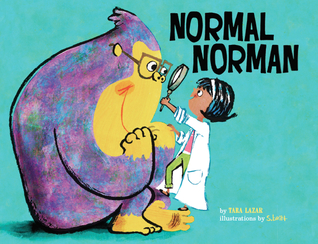
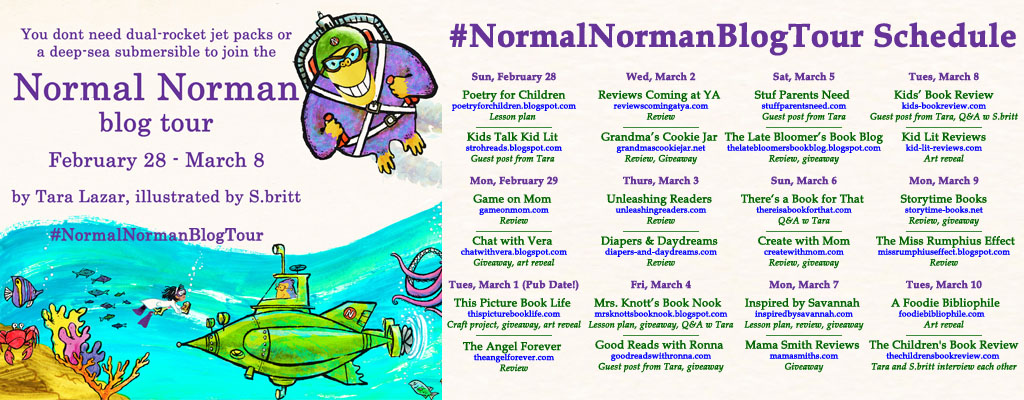
Normal Norman Author: Tara Lazar; Illustrator: S. britt
Published March 1, 2016 by Sterling Children’s Books
GoodReads Summary: What is “normal?” That’s the question an eager young scientist, narrating her very first book, hopes to answer. Unfortunately, her exceedingly “normal” subject—an orangutan named Norman—turns out to be exceptionally strange. He speaks English, sleeps in a bed, loves his stuffed toy, goes bananas over pizza, and even deep-sea dives! Oh, no: what’s a “normal” scientist to do?
Ricki’s Review:Norman is one of those great literary characters that will stick with readers for a long time. The book is quite humorous, and my son was giggling as we read it together. Norman is anything but normal, yet the young scientist makes strong efforts to prove that he is normal. She becomes very frustrated, and then Norman teaches her an important lesson. I enjoyed this book because it was a fresh take on the idea of: What does it mean to be normal? I also enjoyed the layout of each page. The quote bubbles from the characters added another layer to the text that would be great to discuss in the classroom with a close reading. This will be a favorite in classrooms, and I recommend it highly.
Kellee’s Review: I love everything that this book stands for. It shows that normal is whatever you make it, that everyone should be accepted for what they are, and normal isn’t always what it seems. Norman helps mold the young scientist’s mind which will hopefully lead readers to also rethink what they think normal is. I am definitely going to use this book as one of our “precepts” in the future because I really think it’ll make students think.
Teachers’ Tools for Navigation: Teachers might consider using this text to teach broad conceptions of normalcy. Often, young students conceive of normalcy as anything similar to them. A teacher might introduce different groups, customs, and cultures to allow students to understand that normal is a socially constructed concept, and people can be different yet still normal. Or perhaps, students might determine that there is no such thing as being “normal.”
Discussion Questions: What does it mean to be normal? Is anyone normal? How might we conceive of normalcy more broadly?; What lessons does the scientist learn? How does she learn them?
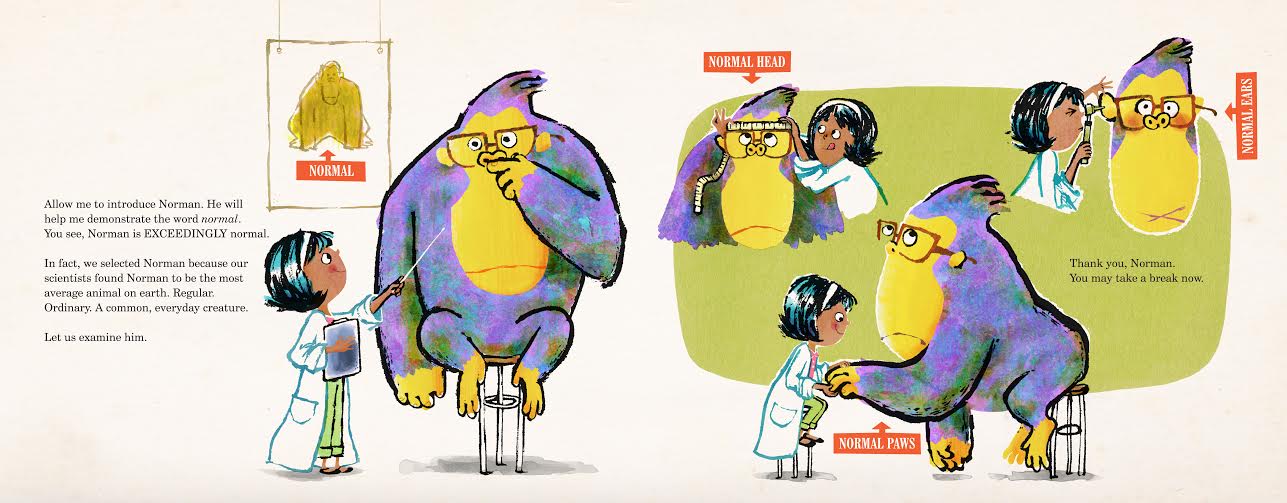
We Flagged: “Allow me to introduce Norman. He will help me demonstrate the word normal. You see, Norman is EXCEEDINGLY normal.”
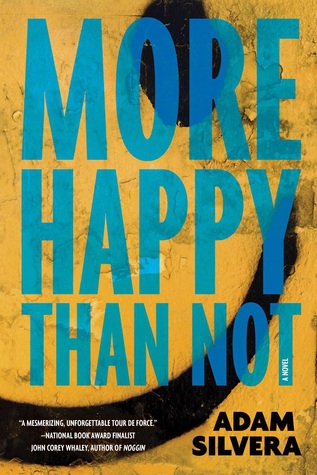
More Happy Than Not Authors: Adam Silvera
Published: June 2, 2015 by Soho Teen
GoodReads Summary: In his twisty, gritty, profoundly moving debut—called “mandatory reading” by the New York Times—Adam Silvera brings to life a charged, dangerous near-future summer in the Bronx.
In the months after his father’s suicide, it’s been tough for 16-year-old Aaron Soto to find happiness again–but he’s still gunning for it. With the support of his girlfriend Genevieve and his overworked mom, he’s slowly remembering what that might feel like. But grief and the smile-shaped scar on his wrist prevent him from forgetting completely.
When Genevieve leaves for a couple of weeks, Aaron spends all his time hanging out with this new guy, Thomas. Aaron’s crew notices, and they’re not exactly thrilled. But Aaron can’t deny the happiness Thomas brings or how Thomas makes him feel safe from himself, despite the tensions their friendship is stirring with his girlfriend and friends. Since Aaron can’t stay away from Thomas or turn off his newfound feelings for him, he considers turning to the Leteo Institute’s revolutionary memory-alteration procedure to straighten himself out, even if it means forgetting who he truly is.
Why does happiness have to be so hard?
Review: After Aaron’s father commits suicide, he finds it difficult to find his place in the world, and the smile-shaped scar on his wrist is just one reminder of this struggle. Aaron considers turning to an institute that has the capability to alter his memory—because he wants to forget that he is gay. The text is heart-wrenching, emotionally profound, and deeply moving. Weeks after I read it, I found that I was still referencing it in daily conversations with teacher friends. I also designed a conference proposal based on a concept from this book. This is an important book that belongs in classrooms.
Teachers’ Tools for Navigation: Students will enjoy debating the ethics of the Leteo Institute’s procedure. My book club had a heated debate, and at the end, I still didn’t know where I stood! Teachers might bring in other examples from the media of people who have experienced trauma and ask students—would it be okay for this person to have the procedure done? When is it ethically okay (if ever)?
Discussion Questions: How does the author unfold the plot for the reader? How does this impact the telling of the story?; Which of Aaron’s friends are loyal? Why?; What does this procedure say about humanity? Do you think people would undergo the procedure? Who might be most likely to undergo the procedure?; How does the author end the novel? What does this teach us?
We Flagged: “Memories: some can be sucker punching, others carry you forward; some stay with you forever, others you forget on your own. You can’t really know which ones you’ll survive if you don’t stay on the battlefield, bad times shooting at you like bullets. But if you’re lucky, you’ll have plenty of good times to shield you.”
Read This If You Loved: Simon vs. the Homo Sapiens Agenda by Becky Albertalli, None of the Above by I. W. Gregorio, Aristotle and Dante Discover the Secrets of the Universe by Benjamin Alire Sáenz
Alistair Grim’s Odditorium Author: Gregory Funaro
Illustrator: Vivienne To
Published January 6th, 2015 by Disney-Hyperion
Summary: Grubb, age twelve (or thereabouts), has never known anything beyond his miserable existence as a chimney sweep, paid only in insults and abuse by his cruel master.
All of that changes the day he stows away in the coach belonging to a mysterious guest at the inn that he is tasked with cleaning. Grubb emerges from Alistair Grim’s trunk and into the wondrous world of the Odditorium. Fueled by a glowing blue energy that Grubb can only begin to understand, the Odditorium is home to countless enchanted objects and an eccentric crew that embraces Grubb as one of their own.
There’s no time for Grubb to settle into his new role as apprentice to the strange, secretive Mr. Grim. When the Odditorium comes under attack, Grubb is whisked off on a perilous adventure. Only he can prevent the Odditorium’s magic from falling into evil hands-and his new family from suffering a terrible fate.
Grubb knows he’s no hero. He’s just a chimney sweep. But armed with only his courage and wits, Grubb will confront the life-or-death battle he alone is destined to fight.
About the Author: Gregory Funaro is the NY Times Best Selling author of the Odditorium series from Disney-Hyperion. He grew up in Cranston, Rhode Island, and wrote his first story, “The Ghost in the Window”, in the fourth grade. He considers this to be his finest work, but unfortunately it has been lost to time. Following high school Greg majored in theatre at the University of New Hampshire, and after various acting gigs, received his AM in Theatre Arts from Brown University and an MFA in Acting from the FSU/Asolo Conservatory. Greg teaches drama at East Carolina University, and spends far too much time on the internet looking for vintage lunchboxes.
Review: Take a bit of Oliver Twist add in some Harry Potter and Charlie and the Chocolate Factory mix it with the snark of Lemony Snicket and Frankenstein’s monster then top it off with some Emerald Atlas and (more) Harry Potter adventure with mythology and fairy tale sprinkles and voila! You have yourself Alistair Grim’s Odditorium. But do not let me fool you into thinking that Gregory Funaro’s story is like anything you’ve read before because even though it alludes to many fantastical adventures, it is its own story through and through.
What makes Odditorium soar is not just the amazing adventure that Grubb and Mr. Grim go on (because it is amazing!), but the cast of characters that accompany them. Without Mrs. Pinch, Nigel, Mack, Lord Dreary, the samurai, and others, the book just wouldn’t be the same. Gregory Funaro did an amazing job creating a fully-developed supporting cast of characters that help push this adventure to the next level.
Author Interview: Thank you so much to Gregory for being willing to answer some questions for us!
Kellee: Alistair Grim’s Odditorium seems to allude to many traditional stories such as mythology and Grimm fairy tales. What other pieces of literature inspired your story?
Gregory Funaro: The works of Charles Dickens, especially Great Expectations and Oliver Twist. The setting is Dickensian London, and you’ll find a lot of common themes from Victorian literature running throughout the series, such as hidden identities, unrequited love, upper-class destiny, etc. There are echoes of Charlie and the Chocolate Factory, of course, and the fantasy works of Lloyd Alexander (The Chronicles of Prydain), but like so many Dickens novels, underneath all the magic and adventure, Odditorium is just a simple story of one boy’s journey toward acceptance and self-discovery.
K: Grubb has quite an odd name–how did that come about?
GF: His original name was Twip–a mash-up of Twist (Oliver) and Pip from Great Expectations. However, one day when I was writing in my office (the building is very old) I spied what looked like a maggot in the cracks between the floor tiles. It ended up being just a rogue grain of rice from some sushi I’d had a few days earlier, but the “maggot” sparked the idea for grub. The extra “b” was just something I threw in there for fun.
K: The illustrations in the novel really help bring it to life and seem to perfectly embody your words. What was your process with working with the illustrator?
GF: Along with the editors, at the beginning of the publication process I was very involved in the initial shape explorations of the Odditorium itself, but after that, as far as I know Vivienne To was pretty much on her own. I was also involved in some tweaking of illustrations along the way to make sure they jived with the story–especially in Aquaticum–but in terms of conceptualizing characters and whatnot, all that came from Vivienne. Fine by me. She is amazing.
K: Although the story is primarily adventure and fantasy, you threw in some humor throughout (I particularly love Mack!). How important do you think it was to add that to your story?
GF: Indispensable. You must have humor even in the most tragic of stories. You need a break once in a while from all the tension(Shakespeare was the master at this) and having a humorous character like Mack (who can also be serious if needed), provides a much richer experience for the reader. I think having a “comedian” in children’s books is especially important because kids can relate. However, you have to be careful, because too much (i.e., just throwing in a bunch of random jokes or snarky comments) can get annoying very quickly.
K: You majored in and teach theater–how did you find yourself writing for young adults?
GF: I actually started writing thrillers during my spare time about eight years ago. I had a couple published (they weren’t very good) and then moved over to children’s literature after the birth of my daughter. Oddly, though, I didn’t see Odditorium as a children’s book at first. In the original premise, Nigel (Mr. Grim’s right hand man) was going to be the focus of a story about Frankenstein’s monster being reunited with his long lost daughter. That idea rolled around in my head until the following summer, and by the time I started Odditorium, it was a children’s book, the monster’s daughter had somehow become Grubb, and the focus was on his journey with Alistair Grim. Nigel and his daughter’s story still exists in the book, but it’s one of the subplots.
K: Book 2 is out now! Can you give us a non-spoilery peak into what Alistair and Grubb are up to next?
GF: Book 2, Alistair Grim’s Odd Aquaticum, centers around an underwater quest for the legendary sword Excalibur–the only weapon powerful enough to penetrate Prince Nightshade’s armor. That’s right, the evil prince and his gang of baddies are back, along with some new characters, including a banshee assassin and a witch named Mad Malmuirie, who wants revenge on Grim for stealing her magical objects. The rest of the Odditorium’s crew is back, too, and they all journey to the mythical realm of Avalon, where the story takes a magical turn that not even Alistair Grim could have predicted.
Teachers’ Tools for Navigation: First and foremost, I think this book is going to find some major love in libraries. If we can get this into students’ hands, they are going to talk about it and pass it around. It is that kind of book. Students will want to talk about it.
In addition, aspects of the book can definitely be used to discuss allusion. Teachers can pull out excerpts of the text and excerpts of the alluded text to compare and contrast and look at how the author made parts of or ideas from the classic text come alive in this new story.
Discussion Questions: Do you believe what Mr. Grim did to help Nigel was right?; What part does Mrs. Pinch play in the story?; What stories/books does Alistair Grim’s Odditorium remind you of? Which parts of the story remind you of what story/book?; Did the author give you any clues (foreshadowing) about Grubb’s true identity?; What do you think happened to Kiyoko?
Book Trailer:
Read This If You Loved: Harry Potter (series) by J.K. Rowling, Charlie and the Chocolate Factory by Roald Dahl, Emerald Atlas by John Stephens, Series of Unfortunate Events (series) by Lemony Snicket, The Magician’s Elephant by Kate DiCamillo, Circus Mirandus by Cassie Beasley, The Vanishing Islands by Barry Wolverton, The Dungeoneers by John David Anderson
The Princess Games Author: Danai Kadzere
Published July 27th, 2015 by Lands Atlantic Publishing
Summary: King Winkle and Queen Periwinkle have a problem. They need a princess, and they need her fast. With the upcoming peace-keeping marriage between Prince Linus of Branninia and the princess of the fair Kingdom of Hoggenbottom, it’s a bit risky to admit they don’t have a princess.
Instead, they decide to host The Princess Games. Soon enough, the fairest maidens of the land are gathered in front of the castle, fairy-godmothers in tow! With a goofy king, an obsessive compulsive advisor, and a fairy godmother whose spells do whatever they want, these games are about to get interesting.
Even if Emma and her clumsy Fairy Louise can manage to do well in the competition, she’ll have to get past the expert spells of Fairy Faye and the beauty of Laralyn, who is intent on pleasing her ambitious mother at any cost.
My Review: What a fun fractured fairy tale! I love the humor! It really does include some laugh-out-loud moments. The book actually reminds me a bit of Princess Academy by Shannon Hale, but The Princess Games is more light-hearted.
I think what makes this book work the best is the different voices throughout. Each chapter changes point of view which gives a different insight to the games as they are going on. This helps with characterization especially because each character has such a distinctive voice.
One of my only criticisms is that I actually wish it was a bit longer! I would have loved to have some of the scenes be longer than they were and to have really gotten to know some of the secondary characters.
Teachers’ Tools for Navigation: I think this book is a wonderful example of voice. I would have students look at chapters written from different character’s points of view and have them look for how the author crafted their sections to build the character’s voice. When you look, you can find different vocabulary choices, different sentence patterns, different focuses, and different sense of humor.
Discussion Questions: Which princess do you think the royal couple will choose?; Why does Faye and Laralyn not like Emma and Louise?; How would the tone and voice have been different if the book had been written in first person?; What is the theme of the novel?
We Flagged: “Emma rued that last scone, stuffed with clotted cream and spiced rosehip jam, as the carriage bumped aong the uneven country road. ‘Ohhhhh,’ she groaned, clutching her stomach.
Fairy Faye looked at Laralyn, deigning to acknowledge Emma only to say, ‘And that, Laralyn, is why princesses eat daintily. Particularly on long journeys.'” (p. 45)
Book Trailer:
Read This If You Loved: Princess Academy by Shannon Hale, The League of Princes series by Christopher Healy, Upon a Marigold series by Jean Ferris
Recommended For:
**Thank you to Danai for providing a copy for review!!**