Whose Story Is This, Anyway? by Mike Flaherty

Share

whose story is this anyway

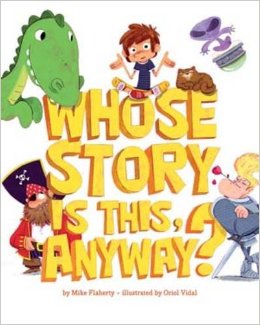
Whose Story Is This, Anyway?
Author: Mike Flaherty
Illustrator: Oriol Vidal
Published May 3rd, 2016 by Sterling Children’s Books

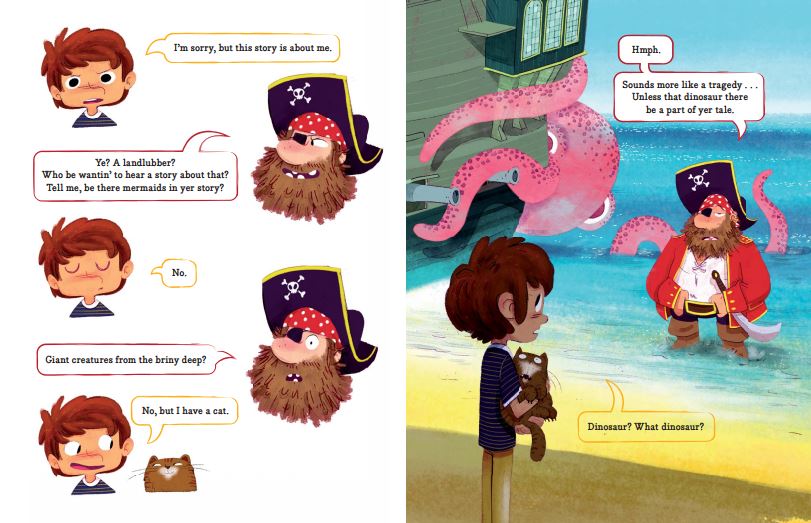
Summary: What’s this book about? That depends on who you ask. Our humble narrator thinks he’s got a great story for you, but he barely begins before he’s interrupted . . . by a scallywag pirate with a thrilling legend of mermaids and sea monsters! Soon an entire cast of colorful characters—including a hungry dinosaur, an alien bent on world domination, and a heroic knight—derails the boy’s saga. Everyone has a tale to tell—but if they can all get on the same page, this might turn out to be the best story ever!

About the Author: Mike Flaherty is an author and occasional hockey coach trying to keep up with his two kids and rather voracious cats. His secret lair is hidden somewhere in New Albany, OH, and he would be the world’s greatest super-villain if he could figure out how to get his Doomsday Device working. Until then, he’ll just keep writing stories.

About the Illustrator: Oriol Vidal is an illustrator and storyboard artist based in Barcelona, Spain. He graduated from UB Barcelona with a degree in Fine Arts. Including illustrating books and magazines, Oriol has worked in animation where he developed character designs and storyboards for clients in the US, France, UK, South Korea, and Spain. He happily works and lives with his little daughter, his wife, his cat, and his rowdy budgie.

Kellee’s Review: This book made me laugh out loud. The characters are zany, the premise is fun, and the outcome is perfect. I also loved the comic-esque layout of the book with dialogue bubbles and colorful illustrations. Trent and I were enthralled with the cast of characters–the author really made sure to include all kids’ favorites.

Ricki’s Review: This is a book that somehow manages to cram in almost all of my son’s favorite things—and in an interesting, humorous way! With each page, my son says, “Ooooh!” because he is so excited by the characters. I particularly like how the narrator has a cat. Too often, male narrators always hold dogs and female narrators always hold cats. My son, who loves cats, is catching on to this, and it frustrates me. The creativity in this book is admirable, and kids will love it.

Teachers’ Tools for Navigation: This book will be such a fun addition to the classroom. It can be used for writing activities and for discussions (or as a mentor text) for point of view, voice, dialogue, humor, or narration. First, it would be really fun to rewrite this story from different points of view. Since each character thinks it is their story, their view of how things went down would be very different than the boys. It is also so great how the author gives each character their own voice and personality which would lend it to be a good mentor text for distinguishing voice and using dialogue. Also, students would have so much fun writing their own story about how each character ended up on this particular beach with this boy.

Discussion Questions: Why does the boy change is mind at the end of the book?; Which character would you want a whole story about?; How do you think each character ended up at this beach?; How would you have reacted if you were the boy?

Flagged Passages: 

Whose Story Spread

Read This If You Loved: Faraway Friends by Russ Cox, By Mouse & Frog by Deborah Freedman, Little Red Writing by Joan Holub, Nibbles by Emma Yarlett, Journey by Aaron Becker

Recommended For:

  classroomlibrarybuttonsmall readaloudbuttonsmall closereadinganalysisbuttonsmall

Kellee Signatureand RickiSig

**Thank you to Sterling Publishing for providing copies for review!**

Grimm’s Fairy Tales by the Brothers Grimm, Audio Book Collection by Listening Library

Share

Grimm's Fairy Tales

Grimm’s Fairy Tales
Author: The Brothers Grimm;
Narrators: Award Winning Cast (Various)
Published: May 10, 2016 by Listening Library

Goodreads Summary: Read by a cast of award-winning narrators, this collection contains some of the most timeless and enchanting folk and fairy tales collected by the Brothers Grimm.

The Brothers Grimm collected the original fairy tales that Americans are most familiar with today. Lyrically translated and beautifully narrated by an all-star cast, these 21 tales are selected from The Complete Grimm’s Fairy Tales and presented just as Jacob and Wilhelm Grimm originally set them down: bold, primal, just frightening enough, and endlessly engaging.

Stories include:
Rapunzel, read by Katherine Kellgren
Cinderella, read by January LaVoy
Little Red-Cap, read by Simon Vance
Little Briar-Rose, read by Grover Gardner
Little Snow-White, read by Kate Rudd
Rumpelstiltskin, read by Jim Dale
The Shoes That Were Danced to Pieces, read by Alfred Molina
A Riddling Tale, read by Janis Ian
The Twelve Brothers, read by Graeme Malcolm
The White Snake, read by Scott Brick
The Elves, read by Bahni Turpin
The Six Swans, read by Davina Porter
The Twelve Huntsmen, read by Dion Graham
The Goose-Girl, read by Edoardo Ballerini
Sweet Porridge, read by Jayne Entwistle
The Golden Goose, read by Luke Daniels
Eve’s Various Children, read by Roy Dotrice
Snow-White and Rose-Red, read by Julia Whelan
The Frog-King, or Iron Henry, read by Kirby Heyborne
The Sea-Hare, read by Mark Bramhall
Hansel and Gretel, read by Robin Miles

Ricki’s Review: I particularly loved the variety in this collection. The narrators provide their own personal touches to each fairy tale, and I found every story to be captivating. The audio format enhances the ways the stories are told. The collection contains the more popular fairy tales along with the more lesser known, and I loved listening to the stories that I had never read before. Grimm’s Fairy Tales are a staple of my childhood, and I feel lucky to share these stories with my son. I think he will really enjoy the audio form, and I hope to play them in long car rides. It will be great to stop after each fairy tale to discuss the characters and themes. I will wait until he is a bit older because the fairy tales are a bit more gruesome than the popular renditions. I appreciate the fact that Listening Library didn’t go with the typical, clean, popularized versions of the stories. It gives readers a stronger sense of the true, original works.

Kellee’s Review: I really enjoy fairy tales of all kinds and have read Grimms collections of various types over the years, but this collection is the first time that I found myself completely enthralled in the stories even though I already knew them like they were new to me. The narrators that Listening Library chose are the best in the business. I can’t even pick a favorite because they all make each story shine.  

While listening, I found so many opportunities to have discussions. From theme to similarities/differences to changes in popular versions to repetition within and through tales. I think these stories will make wonderful read alouds within my house or in my classroom.

Teachers’ Tools for Navigation: This collection provides excellent opportunities for teachers to ask students to compare and contrast elements across the fairy tales. The could listen to a different story each day (they are brief enough that this would be a great listen-aloud). Alternatively, it might be neat to have students work in groups, select stories of their choice, and share out what they learned. Then the entire class could discuss what they are hearing across stories. It would also be fun to discuss the lesser known fairy tales and why these tales may not have become as popular as the others. Lastly, students might discuss the cleansing of the works of The Brothers Grimm. Robin Kirk’s article “Painted on the Surface: The Marbury Lens and Gore in Young Adult Fiction” in the Fall 2015 issue of The ALAN Review is a great resources for teachers to consider gore in fiction, and it discusses the cleansing of The Brothers Grimm’s Fairy Tales.

Discussion Questions: Which fairy tales did you find most captivating? Why?; Which common themes across any of the fairy tales? Which themes seem to be unique to specific fairy tales?; Some of these fairy tales are more popular than others. Why do you think that is? Do you wish any of the lesser known fairy tales were more popular?

Book Trailer:

Read This If You Loved: Grimm’s Fairy Tales by The Brothers Grimm, Fairy Tale Comics by Chris Duffy, Any Fairy Tales

Recommended For: 

readaloudbuttonsmall classroomlibrarybuttonsmall litcirclesbuttonsmall

RickiSigand Kellee Signature

**Thank you to Katie at Penguin Random House for providing copies for review!**

Nibbles: The Book Monster by Emma Yarlett

Share

nibbles

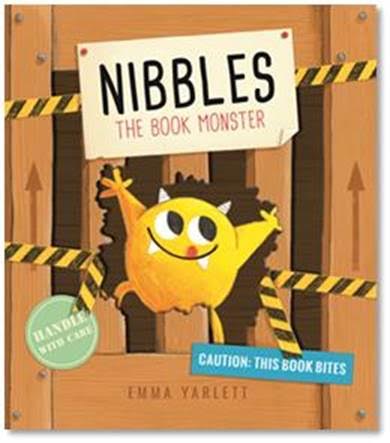
Nibbles: The Book Monster
Author and Illustrator: Emma Yarlett
Published: March 1, 2016 by Kane Miller Books

Goodreads Summary: Nibbles is a very naughty book monster—he’s chomping, munching and nibbling his way through fairytales that don’t belong to him! Can you help catch him and put him back in his own story? Children will love to lift the flaps, peek through the peep holes, and chase Nibbles through a fantastical world of books, in this quirky story, exquisitely illustrated by Emma Yarlett (My Daddy’s Going Away and Bear’s Big Bottom). Jam-packed full of your kids’ favorite fairy tales including Little Red Riding Hood, Jack and the Beanstalk and Goldilocks and the Three Bears.

Ricki’s Review: This is a very clever book! Nibbles loves to nibble on things, but most of all, he loves to nibble on books. He eats his way into stories and changes their outcomes! My son had so much fun reading this book. He loved the cutouts, lift the flaps, and books within books! I can imagine this is a huge hit with any kids who read it. It is very funny and creatively crafted—from the story to the illustrations to the way the book is presented. Two thumbs up to Emma Yarlett and Kane Miller books for thinking outside of the box with this one. It shows readers that books don’t have to be traditional!

Kellee’s Review: Trent is a big fan of monsters. He loves Monsters, Inc. and Don’t Push the Button!, so it is no surprise that he loves Nibbles. He fascinated with following Nibbles’ trail throughout all of the books and it became like a game of hide and seek for him. Not only is Trent a fan of Nibbles, I am as well. I loved the creativity of this book. The interactive and 3D aspects of it really bring the book to life, and I love that the author incorporates actual fairy tales in the books that Nibbles enjoys. Such a clever book that will keep readers come back over and over.

Teachers’ Tools for Navigation: This book could be used to start any fairy tale retelling unit! Readers of all ages will fall in love with Nibbles and want to participate in this adventure. I’d love to have my class create their own fairy tale retelling with Nibbles’ influence! I imagine there would be a lot of laughs and a lot of joy in this assignment. It teaches kids that reading can be very fun!

Discussion Questions: How do the author/publisher allow us to rethink our conceptions of traditional books? Which text features were your favorites, and why?; What other stories could Nibbles nibble his way through? How would he change the plot/outcome?

Book Trailer: 

Read This If You Loved: Battle Bunny by Jon Scieszka and Mac Barnett; Little Red Writing by Joan Holub, Fairy Tale Comics by Chris Duffy, Crankee Doodle by Tom Angleberger

Recommended For: 

readaloudbuttonsmall classroomlibrarybuttonsmall

RickiSigand Kellee Signature

**Thank you to Lynn at Kane Miller Books for providing copies for review!**

What Do You Do with a Problem? by Kobi Yamada

Share

what do you do with a problem

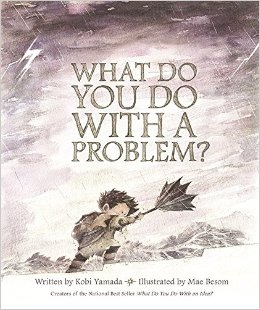
What Do You Do with a Problem?
Author: Kobi Yamada; Illustrator: Mae Besom
Published: July 1, 2016 by Compendium Inc.

GoodReads Summary: From the same author and illustrator as our #1 nationally best-selling What Do You Do With an Idea? comes a new book to encourage you to look closely at problems and discover the possibilities they can hold.

What do you do with a problem? Especially one that follows you around and doesn’t seem to be going away? Do you worry about it? Ignore it? Do you run and hide from it?

This is the story of a persistent problem and the child who isn’t so sure what to make of it. The longer the problem is avoided, the bigger it seems to get. But when the child finally musters up the courage to face it, the problem turns out to be something quite different than it appeared.

This is a story for anyone, at any age, who has ever had a problem that they wished would go away. It’s a story to inspire you to look closely at that problem and to find out why it’s here. Because you might discover something amazing about your problem… and yourself.

What are problems for? They challenge us, shape us, push us, and help us to discover just how strong and brave and capable we really are. Even though we don’t always want them, problems have a way of bringing unexpected gifts.

So, what will you do with your problem? Now that’s up to you.

Review: There is something so magical about the combination of writer Kobi Yamada and illustrator Mae Besom. When I saw that these creators of What Do You Do with an Idea? had another book, I jumped at the chance to read it. It’s no secret that I am in love with this first book. I have gifted it to many friends and children, and I include it on many of my favorites and Top Ten Tuesday lists. I was pleased that What Do You Do with a Problem? is just as stunning. These two books are a teacher’s dream. They utilize many literary elements and are perfect for close analysis. I would use them at all grade levels. What Do You Do with a Problem? is a great text to teach readers how to reconsider a problem (or problems) that they might have. They can compare the problem with illustrations and consider how that problem may, for example, be all-encompassing. I like how the book balances both the weight of the problem and the proverbial light at the end of the tunnel. By looking at this problem in a new light, readers will be able to take more of an outside perspective of the conflict—and hopefully/potentially work toward a resolution.

Teacher’s Tools for Navigation: To start, teachers might ask students to consider the symbolism within the text. They might even grapple with the definition of an allegory and discuss ways the definition might be connected with the text and illustrations. Then, students could think of an abstract idea and try to associate an object with that idea. They might even consider writing their own picture book that connects the object and abstract idea. I also think it would be great for teachers to read both this text and What Do You Do with an Idea? to students. Then, they might compare and contrast the stories and their messages.

Discussion Questions: What do you do with a problem? How do we deal with problems in different ways? How do others in our lives deal with problems in ways that differ from us?; How do the author and illustrator work together to create a compelling story? What symbols do they use to convey their message?

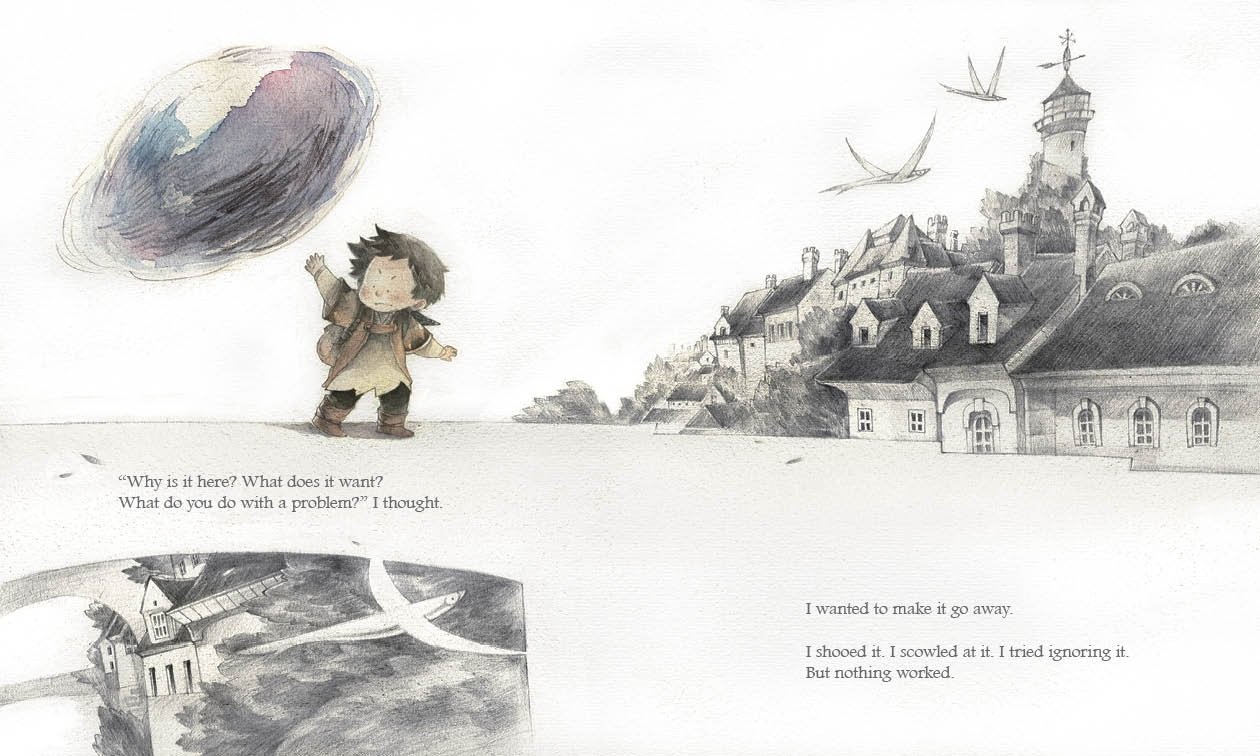
Flagged Passage: 

what do you do with a problem spread

Image from: www.amazon.com

Read This If You Loved: What Do You Do with an Idea? by Kobi Yamada; The Most Magnificent Thing by Ashley Spires; The Dot by Peter H. Reynolds, The Noisy Paint Box by Barb Rosenstock, Lost and Found by Oliver Jeffers, Journey by Aaron Becker

Recommended For:

  readaloudbuttonsmall closereadinganalysisbuttonsmall classroomlibrarybuttonsmall

RickiSig

Doodle Adventures: The Search for the Slimy Space Slubs by Mike Lowery

Share

Doodle Adventures

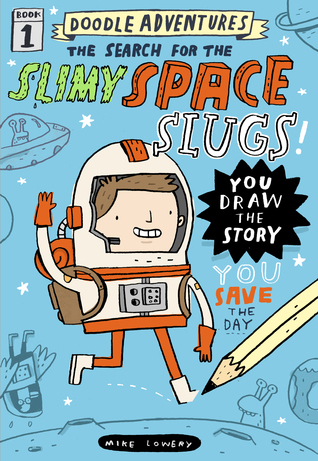
Doodle Adventures: The Search for the Slimy Space Slugs
Author: Mike Lowery
Illustrator: Mike Lowery and YOU!
Published May 17th, 2016 by Workman Publishing Company

Summary: Draw your way through the story!

Doodle Adventures: The Search for the Slimy Space Slugs! is a lighthearted fantasy where the reader first draws him- or herself into the story, and then continues by following prompts and adding more illustrations and doodles. Set in space, the book invites the reader to join Carl, a duck and member of a super-secret international group of explorers, on a journey in search of a very important grail-like object. The book is sturdy paper over board with beautiful cream paper—perfect for defacing! And by the end, the reader will have co-written a tale to return to again and again, and show off to family and friends.

Kellee’s Review: I cannot wait to see this book completed by students. I think so many kids of all sorts of ages will enjoy this book. It is silly enough for young elementary students, and its plot is interesting enough for middle school students. I love the narrator, Carl, who is a puny and out spoken duck who takes the reader on a journey to the Slug Planet (in 2nd person point of view!). The  illustrations are also so well done for what the book is trying to do. They are comic-esque and funny. I truly enjoyed my journey with Carl, but I am really looking forward to watching a kid complete this book in the interactive way that it is made for. 

Ricki’s Review: After I review books, I almost always give them away to schools. I couldn’t help but think it would be such a great book for the boys who live next door. They are always adventuring in their backyard, and they will surely be captivated by this book. The narrator Carl (a duck) is highly entertaining, and I couldn’t help but laugh as I read the book. He talks to the reader, and the second-person narrative makes the book particularly funny. The reader will be catapulted into the story because of its interactive nature. Even kids who don’t enjoy drawing will want to put their pens to the pages.

Teachers’ Tools for Navigation: This book promotes creativity, plot development, and humor. There are so many different ways that a teacher could utilize this book, one for each of our recommendations below. First, it could be a class read aloud where the teacher does the drawing based on the class’s votes or students can take turn drawing. It could also be a lit circle/book club book where students complete the book in groups then they can jigsaw into new groups to share their newly created book. Lastly, the book could definitely be an independent read or class read where students draw in their own books and each student will have their own unique book.

Discussion Questions: How does drawing help you interact with the story? Which drawings were particularly fun to draw?; How does the second person narration make this story engaging? What other stories are written in this point of view?; Why might the book be narrated by a duck? What does this do for you, the reader?

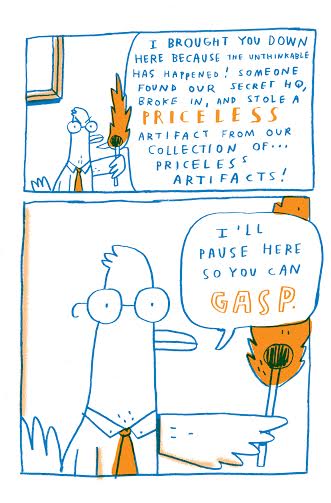
Flagged Passages: “I brought you down here because the unthinkable has happened! Someone found our secret HQ, broke in, and stole a PRICELESS artifact from our collection of…priceless artifacts!

I’ll pause here so you can GASP!” (p. 26)

Doodle Adventures spread

See more at www.mikelowery.com or the author’s Instagram @mikelowerystudio

Read This If You Loved: Captain Underpants series by Dav Pilkey, Diaper Baby series by Dav Pilkey, Choose Your Own Adventure books, Drawing/Illustrating books

Recommended For:

  readaloudbuttonsmall litcirclesbuttonsmall

Kellee Signatureand RickiSig

**Thank you to Estelle at Workman Publishing for providing copies for review!**

Agent Darcy and Ninja Steve in Tiger Trouble! by Grant Goodman

Share

agent darcy

Agent Darcy and Ninja Steve in Tiger Trouble!
Author: Grant Goodman
Published May 4th, 2015 by CreateSpace/Smashwords

Goodreads Summary: SECRET MISSIONS. SPIN KICKS. SINISTER GHOSTS.

Thirteen year-old Agent Darcy is one of the top students at the Bureau of Sneakery, where there are three rules every agent must follow: never make friends with an outsider, never speak of the Bureau, and never reveal your real name. Lately, Darcy has hit a rough patch: her rival, Agent Serena, keeps outdoing her. If things keep going this way, Darcy is convinced that no one will ever assign her a real mission.

Ninja Steve’s city, Ninjastoria, is the home of sword fights, throwing stars, and Tae Kwon Donuts. Unlike his genius older sister, twelve year-old Steve isn’t the best ninja student. He’d rather be swinging a sword instead of taking notes in class. Steve, however, is about to learn that being a true ninja means far more than being able to use a sword.

When Darcy is sent to Ninjastoria as an exchange student, it will turn both of their lives upside-down and raise all kinds of questions: What do the mecha-moles want? Who is the man in the gray mask? What do ninjas eat for lunch? And why is there a menacing tiger on the cover of this book?

Time to read and find out!

My Review: This book was such a fun read! Goodman had a very easy flow of writing that made the story so smooth and fast-moving. I ended up really liking the story for a few different reasons. First, it was action-packed and kept me reading. Although it was the exposition of what I assume will be a series, it never was slow or boring. Goodman introduced aspects of the plot in clever ways. Second, I love that there is a boy and girl narrator. It is not gender-oriented at all. The book and the cover both are perfect for all types of readers. Aspects of both characters will be easy to relate for all readers. Darcy is competitive and a hard worker. Steve is living in the shadow of a sibling. All gender neutral feelings. Finally, I love the humor in it. Goodman did a great job throwing in zingers and laughs throughout the book to make it just that more entertaining.

Teachers’ Tools for Navigation: This is a book like Alex Rider and Percy Jackson that kids are going to love to read. It will be great for a middle school read aloud and should be accessible to kids.

Discussion Questions: What are the differences between Ninjastoria and the Bureau of Sneakery?; How are the expectations different for the kids who live in each place?; How did Agent Darcy being sent to Ninjastoria propel the action of the story?; Even though Steve wasn’t as genius as his older sister, he has talents that helped them on their journey. How did each character effect the outcome?; How did Darcy and Steve cause the mayhem that ensues in the book?; How is Darcy and Steve’s confrontation with Toran like redemption for their parents?

Flagged Passage: “Steve held his position. Sensei Raheem nodded.

‘On three,’ Sensei Raheem started. ‘One. Two.’

The ground lurched. Steve wobbled. The ground split open. Steve fell. His instinct took over.

On the way down, he sheathed his sword and made sure he was right side-up, ready to deal with the impact. There was a red light coming from below, and Steve braced for landing. He hit the gravel-covered bottom and broke into a roll to the side.

Steve got up and brushed some gravel off his arms. He wished now that he hadn’t worn his short sleeve black ninja shirt. Some rocks had dug deep into his skin.

The air he breathed was thick and smoky. The soft red light came form everywhere and nowhere at once. No matter which direction he moved in, he couldn’t track the source of it.” (Location 753-765 on the Kindle Version)

Read This If You Loved: Alex Rider series by Anthony Horowitz, Percy Jackson series by Rick Riordan, Moonshadow series by Simon Higgins

Recommended For: 

classroomlibrarybuttonsmall readaloudbuttonsmall

Signature

**Thank you to Shannon Thompson and Grant Goodman for providing a copy for review!**

Review and Teaching Guide!: Poptropica: Mystery of the Map by Jack Chabert

Share

Poptropica 1

Poptrpica: Mystery of the Map
Author: Jack Chabert
Illustrator: Kory Merritt
Idea: Jeff Kinney
Published March 1st, 2016 by Amulet Books

Goodreads Summary: Based on a concept by Wimpy Kid author Jeff Kinney comes Poptropica, a brand-new graphic novel adventure series by Jack Chabert and Kory Merritt. In “Mystery of the Map,” Oliver, Mya, and Jorge take a ride in a hot-air balloon, only to crash-land on an unknown island filled with extinct animals and a horde of angry Vikings. Welcome to Poptropica, an uncharted group of islands whose existence is hidden from the rest of the world. As the three friends embark on a perilous search for a way home, they quickly discover the shocking reason they were brought there something that threatens the very existence of Poptropica and their ability to ever make it off the island!

My Review: I love learning about new graphic novels because they are so popular in my classroom, and I think this one will be another one that will be loved by students. Although the Poptropica idea was made by Jeff Kinney, I see it more as a ladder rung for late elementary school/early middle school before students jump to Amulet or Doug TenNapel books. I also know that there are millions of Poptropica users who will love to explore Poptropica through Oliver, Mya, and Jorge’s journey.

Although, I hadn’t played Poptropica when I first heard about the book, as soon as I knew I was getting it, I went onto the website to play, and I loved it! I can see why so many kids/teens like it–it is a role-playing game with adventure, puzzles, and a great story.  However, I will say that when I read the book, it would not have mattered if I’d played the game or not. I think that is the beauty of it. It can be an extension of the game, an intro to the game, or an adventure-filled graphic novel separate from the game.

The graphic novel itself is very well done. The graphics are fun and easy to read, the story is a page turner filled with adventure and humor, and it has fun history facts. I look forward to the rest of the series.

Teachers’ Tools for Navigation, Discussion Questions, and Flagged Passages: 

The teaching guide below that I wrote for Abrams Books includes vocabulary, cross-curricular activities, and cross-curricular discussion questions as well as example passages.

You can also access the teaching guide here.

Read This If You Loved: Bird & Squirrel series by James Burk, Rutabaga series by Eric Colossal, The Great Pet Escape by Victoria Jamieson, Little Robot by Ben Hatke, Salem Hyde series by Frank Cammuso

Recommended For: 

readaloudbuttonsmall classroomlibrarybuttonsmall

Kellee Signature