Author Guest Post!: “How can Fiction Help us Cope with our World?” by Katelyn Detweiler, Author of Transcendent

Share

How can fiction help us cope with our world?”

It hurts to read the news these days.

It hurts my brain, it hurts my heart. I can only read so much before I have to tune out, move on with my day. It’s not that I don’t want to know and understand what’s going on in our country and in our world—I do, of course I do. Awareness is the first step at enabling any kind of change. But still, I have a mental and emotional limit. There is only so much suffering my brain can absorb.

The speed of the news is part of it—every day a revolving flow of red letter, all cap headlines. We expect that in 2016; the Internet and social media have buoyed our expectations for fresh, compelling content. We mindlessly pick up our phones all day, refreshing our feeds: Instagram, Twitter, Facebook, repeat. Our phones are with us as soon as we wake up in the morning, right before we close our eyes at night. Even without directly checking news sites, the news reaches us, always. Our friends are talking about the latest shooting, the latest bombing, gun laws and foreign policies. Everyone has an opinion—and that’s great. It’s how it should be. Conversations are necessary, and the best way for each and every one of us to keep on learning, to keep on pushing and evolving our perspectives.

But what is our emotional limit? Week after week, day after day, it’s something new, something equally or more shocking than we’ve seen before, more graphic and uncensored. More real.

I worry that I’m becoming numb.

The names and faces fade so quickly. Too quickly. When the violence in Orlando happened, I felt sick, heartbroken that my own book, TRANSCENDENT, targets that same city. In my book, Disney World is the target—fiction that blurs scarily close to reality.

But already, just a few months later, Orlando and Pulse feel so long ago. We’ve had so much tragedy to face since then. We read the names, we stare at the faces. We try to imagine their families. We wonder about the life they’ll now never get to live. And then the next day, or the next week, there are new faces. The old faces, unintentionally, unconsciously, are hazier. Less vivid.

No place is immune. Orlando could be any city, every city. This is our reality now. We need some outlet for our fear—we need to find a way to still have hope.

So what can we do when we see too much, feel too much? How can teens in particular cope, begin to process and understand what is happening in their world—their present and their future?

For me at least, I turn to books. Fiction, stories, people and places who are only real in my imagination. Because sometimes it takes stepping out of reality, the day to day, to understand what is actually happening around me, and my place in it.

Books… they slow us down. They show us new perspectives, challenge our beliefs. In reading we can intimately identify with characters, individuals—like people we know, and more importantly, like people we don’t yet know. People we’ve never met in our small towns, or even in our big cities. But even in the differences, we (at least in a good book) can see things in them that speak to our own lives, our own fears and dreams.

Through books we question, we learn, we grow.

And, hopefully, we leave each story with a new understanding of our real world—a new appreciation of all the beautiful people in it—and a renewed sense of hope. Because more hate will not solve our problems. More hate will never solve anything. There is common ground that connects all of us, the deepest core of what makes us human. Books can help us—enable us to appreciate our similarities, and to celebrate what makes us all unique.

We can all be pieces of the solution. We can take the negative and react in positive ways—turn the bad news to good. We don’t have to give up, give in. It’s a message that’s important for our young people especially: Reach out to others. Help your community. Talk to someone new. Start small.

Because small things become big things, and big things can change our world.
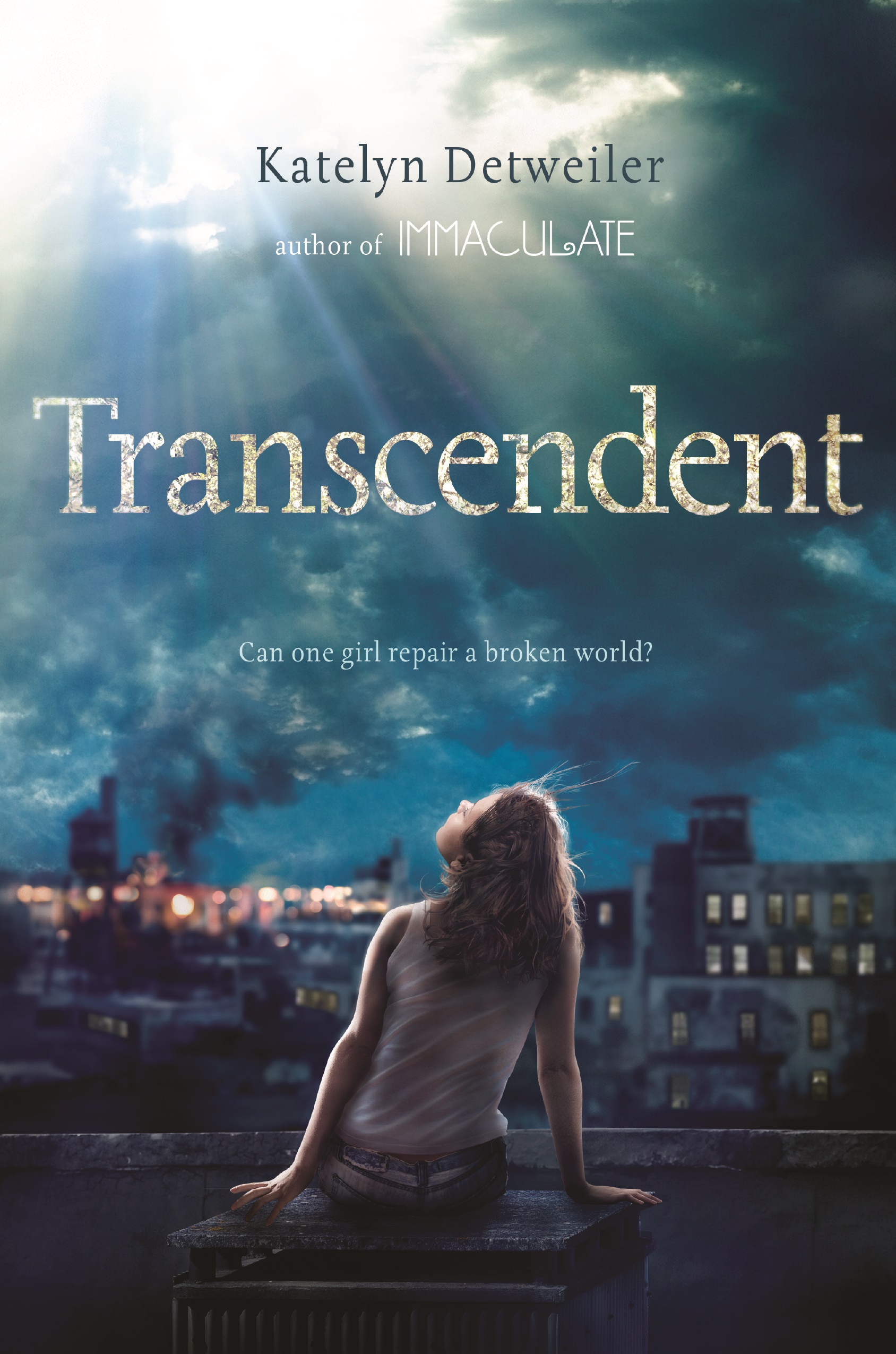
transcendent-cover-image-high-res

Transcendent
Author: Katelyn Detweiler
Published October 4th, 2016 by Viking Books for Young Readers

About the Book:  A beautiful work of magical realism, a story about a girl in the real world who is called upon to be a hero.

When terrorists bomb Disney World, seventeen-year-old Iris Spero is as horrified as anyone else. Then a stranger shows up on her stoop in Brooklyn, revealing a secret about the mysterious circumstances surrounding Iris’s birth, and throwing her entire identity into question. Everything she thought she knew about her parents, and about herself, is a lie.

Suddenly, the press is confronting Iris with the wild notion that she might be “special.” More than just special: she could be the miracle the world now so desperately needs. Families all across the grieving nation are pinning their hopes on Iris like she is some kind of saint or savior. She’s no longer sure whom she can trust—except for Zane, a homeless boy who long ago abandoned any kind of hope. She knows she can’t possibly be the glorified person everyone wants her to be… but she also can’t go back to being safe and anonymous. When nobody knows her but they all want a piece of her, who is Iris Spero now? And how can she—one teenage girl—possibly heal a broken world?

About the Author: Katelyn Detweiler was born and raised in a small town in eastern Pennsylvania, living in a centuries-old farmhouse surrounded by fields and woods. She spent the vast majority of childhood with her nose in a book or creating make-believe worlds with friends, daydreaming about how she could turn those interests into an actual paying career. After graduating from Penn State University with a B.A. in English Literature, emphasis in Creative Writing and Women’s Studies, she packed her bags and made the move to New York City, determined to break into the world of publishing. She worked for two years in the marketing department of Macmillan Children’s Group before moving in 2010 to the agency side of the business at Jill Grinberg Literary, where she is currently a literary agent representing books for all ages and across all genres.

Katelyn lives, works, and writes in Brooklyn, playing with words all day, every day, her dream come true. When she’s not reading or writing, Katelyn enjoys yoga, fancy cocktails, and road trips. She frequently treks back to her hometown in Pennsylvania, a lovely green escape from life in the city, and her favorite place to write.

Q&A WITH KATELYN DETWEILER

How did you come to write TRANSCENDENT?

My earliest, vague conception of the book was that it would start with an unprecedented tragedy, a state of international heartbreak and desperation so raw that the world would be at a total loss for what next—looking to anything, anyone, to bring stability or clarity or hope. I knew, too, that whatever the tragedy would be, it had to center on children. We can all recall how we felt when we heard about Sandy Hook. A mass shooting is horrifying no matter who the victims are—but targeting children? I couldn’t stop watching the news updates, staring at the faces of the students who’d been killed, thinking about the futures they would never have, the families left behind.  It was this memory that guided me here—the question of what could be so completely awful that people might actually stand still. Might remember, might keep remembering. For TRANSCENDENT, I chose a bombing. Disney World. I knew that my mind would have to go to dark places, that things had to get worse before they could get better. But it felt necessary to me, starting these conversations—and it feels more necessary, more relevant today than ever.

Did you write it with the 15th anniversary of 9/11 in mind?

It was completely unintentional, though the timing seems hugely important to me now. I was in high school when the towers were hit. It felt like such a terrible, extraordinary, surreal event at the time. It was the beginning—to my mind, at least—of a new era of terrorism, of that terrible state of wondering what awful tragedy would hit next. Teens today don’t know another reality outside of our current world; they’ve grown up in a place where acts of terrorism and mass shootings have become the norm. I was especially horrified when the Pulse shooting happened, to think that I’d targeted Orlando, too, in this book. But really, by the time it publishes, who knows how many other cities could be on the list of victims? No place is immune. Orlando could be any city, every city. This is our reality now. We need some outlet for our fear—we need to find a way to still have hope.

One of the big themes in the book is hope and forgiveness overcoming hate and despair. Can you talk more about that and why it’s so relevant for young people today?

It’s hard sometimes to not react to hate with more hate. To blindly lash out, hurt whoever hurt you, ensure justice is served. We see this in our personal lives. And we see it so often on an international scale—the fear that terrorism causes, the desperation. The feeling of weakness that can morph into something quite ugly, spawn intolerance for people who look a certain way, talk a certain way, pray a certain way. People desperately seek a target, someone to point a finger at—even if that blame is unjust, irrational. But we cannot sink to that level. More hate will not solve the problem. More hate won’t make terrorism go away. Young people are still just formulating their opinions about the world, about others—struggling with who they are, who they want to be. They are still figuring out the role they’ll play in the world, their responsibilities—“Can I make a difference?” How they learn to find answers to these questions helps to shape and strengthen their identity, their (our) future.

Is it important for people to believe in miracles and to have faith in difficult times?

I believe that in difficult times more than ever, people look for something bigger—they want to believe that the world is not as black and white as it seems, that there is hope to be found beyond our everyday existence. Faith isn’t necessarily about believing in God, or any god, some supreme being up in the clouds. It can be, sure, for some. But it can also be about trusting in yourself, in your family and/or your friends, in the love you choose to surround yourself with, the connections you make with the world around you. There’s a quote that opens IMMACULATE, attributed to Albert Einstein:  “There are only two ways to live your life. One is as though nothing is a miracle. The other is as though everything is.” I love this idea—this thought that we’re just too jaded to realize how many tiny miracles are around us every day, even in the ugliest, darkest times. Life is a miracle. We’re miracles. We’re more than just our cells and our DNA.

This story, like your previous book IMMACULATE, is centered on a virgin birth. Why did you choose to explore that topic? Is TRANSCENDENT a religious book?

I’ve been fascinated by the idea of a pregnant virgin in contemporary times for years now, ever since I was a teenager and asked my own mom: would you believe me if I said I was a pregnant virgin? She said yes. She would believe me. It stuck with me, the idea that faith—whether it be in a supreme being, or in a person you love and trust dearly—can be so all encompassing. That we can still believe in something that defies all science and reason. I would say that, at this point in life, I am spiritual more so than religious, and I think the book reflects this perspective. Spirituality—to me—is believing in more than the orderly scientific rules of our world, even if we can’t explain it, even if there’s no doctrine to help us better understand. My goal for both books was to explore and question with respect for all sides; I wanted there to be something for everyone, to find the commonalities that unite people of different faiths (or no faiths) rather than the differences.

Why was it important for this story to take place in Brooklyn?

I knew from the outset that I wanted the backdrop of Brooklyn—that a more sheltered, traditional small town wouldn’t do. Iris didn’t just grow up reading about the wider world in books or hearing about it on TV. She’s experienced it firsthand. She’s been exposed to all different kinds of people, seen lives and cultures that are so different than hers. This felt necessary to me in building a protagonist who was comfortable enough—empathetic enough, compassionate enough, bold enough—to step up to the plate, to be a voice of change. I grew up in a small town (surrounded by fields and woods rather than people and skyscrapers) and moved to NYC eight years ago, Brooklyn specifically for the last few. Living here has heightened my awareness of the world. A lot of things were so much more theoretical to me before—poverty and homelessness, for example. Different religions, different races, different cultures. I wanted a true microcosm for this story, a more accurate, complex representation of our world.

What role do race and privilege play in the book?

Privilege is key in all threads of the novel. To start: Disney is attacked because of the vast privilege it represents. This is not a park, a destination, for everyone. This is for a select, elite group. A fairytale that is unobtainable to so many—a tangible way of separating out the haves and the have-nots.

Iris herself is an upper middle class white teenager in Brooklyn. Though she’s open minded and aware of the disparity around her—volunteering at a soup kitchen, engaging with the homeless—she’s still very much in her own bubble. Iris’s Brooklyn is the version we see across the media: farmers markets and organic everything, beautiful old brownstones, hip, industrial-looking bars and restaurants, pretty white people with beards and buns and bicycles. Iris has accepted this privilege as normal, more or less, until for the first time the guarantees of her life come into question. Iris ends up at a homeless shelter; she’s confronted by a side of Brooklyn that she’d only glimpsed at surface-level before. Iris must question basic assumptions about herself—and others—as she struggles with how to reorient her life.

Do you think there’s value in exploring these ideas fictionally, vs. conversations that start from live news, internet articles, social media, etc. around current events?

Our perception of current events today is so heavily influenced by the speed of news, the internet and social media generally, the constant demand for fresh, compelling content; we’re blasted with horrific tragedies every week—becoming increasingly graphic and uncensored, as evidenced by the streaming video we saw of Philando Castile, dying after being shot by a cop. Week after week, day after day, it’s something new, something equally or more shocking than we’ve seen before. We’re becoming so numb—the names and faces fade so quickly. Already, Orlando and Pulse feel so long ago. We’ve had so much tragedy to face since then. Our brains can only absorb so much pain and suffering. I think it sometimes takes stepping *out* of our reality—our day to day—into literature (or movies, TV, etc.) to fully process our thoughts, to make sense of how we feel, what role we could possibly have in change. Books slow us down, show us new perspectives, challenge our beliefs. In reading we can intimately identify with characters, individuals—see something in them that speaks to our own lives, our own fears and dreams. And, hopefully, we leave books with a new understanding of our real world—and a new resilience.

Thank you Katelyn for this hope-filled and truthful post!

Kellee Signature andRickiSig

Teaching Guide for Sophie Quire and the Last Storyguard by Jonathan Auxier

Share

sophie quire

Sophie Quire and the Last Storyguard
A Peter Nimble Adventure
Author: Jonathan Auxier
Published April 5th, 2016 by Abrams Books

Summary: It’s been two years since Peter Nimble and Sir Tode rescued the kingdom of HazelPort. In that time, they have traveled far and wide in search of adventure. Now Peter and Sir Tode have been summoned by Professor Cake for a new mission: find a 12-year-old girl named Sophie Quire.

Sophie knows little beyond the four walls of her father’s bookshop, where she works as a bookmender and dreams of leaving the confines of her city walls. But when a strange boy and his talking cat/horse companion show up searching for a rare and mysterious book, she finds herself pulled into an adventure beyond anything she has ever read.

Teaching Guide: 

Sophie Quire is a special young lady, and you and your students are going to adore her adventure! Here is a teaching guide to help guide you or your students through your reading. This guide can be used as a tool for classrooms or book clubs.

You can also access the guide here.

You can learn more about Sophie at ABRAMS’ website.

Recommended For: 

classroomlibrarybuttonsmall readaloudbuttonsmall closereadinganalysisbuttonsmall litcirclesbuttonsmall

Kellee Signature

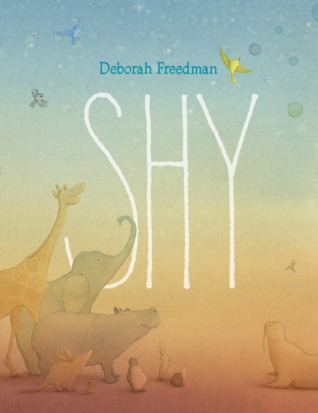
Shy by Deborah Freedman

Share

shy

Shy
Author and Illustrator: Deborah Freedman
Published: September 27, 2016 by Viking

Summary: Shy loves birds. He’d love to watch them fly and hear them sing, but he’s only ever read about them in books. . .until a real bird comes along. He’s dying to meet her, but there’s just one problem: Shy is, well, shy–so shy, in fact, that he’s afraid to leave the gutter of the book. Can Shy overcome his fears and venture out onto the page?

This sweetly relatable picture book from the acclaimed Deborah Freedman speaks to every child who’s ever felt like hiding instead of facing the daunting world.

Ricki’s Review: I have read this book dozens and dozens of times with my son. He absolutely loves the story. When my husband walked him upstairs to bed the night after we got the book, he didn’t even make it to the top of the stairs before he requested his reading choices for the night, “Race car books and Shy, please.” The book features a character who is Shy and who is unable to say hello to a yellow bird. I won’t give anything away, but this is a book that will teach many lessons to readers (and not just the shy ones!). It’s a daunting, scary world out there, and all kids will be fearful in situations. This book teaches lessons of courage and friendship. This stunningly beautiful book captured my attention from the start, and I immediately shared it with colleagues.

Kellee’s Review: Deborah Freedman can do no wrong. Her ability to illustrate differently depending on the story and her ability to tell such a wide variety of stories just moves her to an all-star level. In Shy, Freedman tells us a story of Shy who could represent any kid who fears doing something. His story helps kids who may feel like him go through his journey of facing his fears. I also love that books are such a large part of Shy’s life and really help him with the real world.

Teachers’ Tools for Navigation: Teachers might have students analyze the way shyness is portrayed in this book. They can examine the wording, mood, etc. Then, as a class or in small groups, they might pick a different emotion to portray. They could create and publish their own creations. Then, they might compare and contrast the way the emotion shapes the text as a whole.

Discussion Questions: When is a time that you felt shy? Did you gain the courage to be brave? What happened to the bird when Shy wasn’t brave?; It isn’t until later in the book that we know what kind of animal Shy is. Why do you think the author structured the story this way? What does it add to your reading?

Flagged Passage: “But Shy didn’t know how to talk to a bird. What if he stuttered? What if he blushed? What if–“

Read This If You Loved: Blue Chicken by Deborah Freedman, Little Tree by Loren Long, Giraffes Can’t Dance by Giles Andreae, Say Hello by Jack Foreman, The Cloud by Hannah Cumming, Each Kindness by Jacqueline Woodson, By Mouse & Frog by Deborah Freedman

Recommended For:

  readaloudbuttonsmall classroomlibrarybuttonsmall

RickiSig andKellee Signature

Blog Tour with Review and Author Guest Post!: The Curse of the Were-Hyena by Bruce Hale

Share

werehyena banner

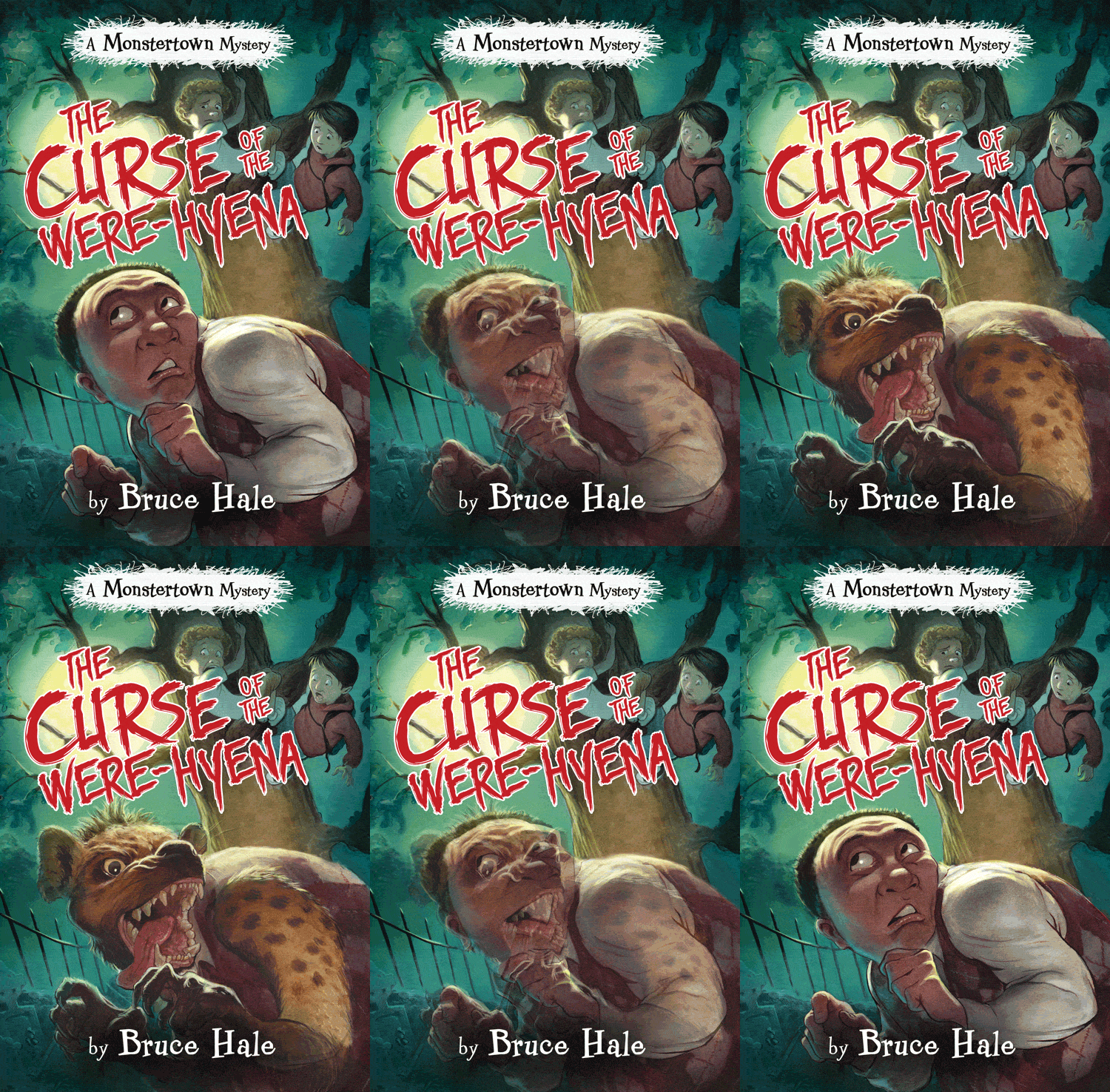
Were-Hyena_MORPH

The Curse of the Were-Hyena
Author: Bruce Hale
Published July 5th, 2016 by Disney-Hyperion

Summary: What do you do when your favorite teacher starts turning into a were-hyena?

a) Flee in terror?
b) Try to cure him?
c) Bring him carrion snacks?

Mr. Chu, the coolest teacher ever, has developed some very unusual habits, like laughing hysterically for no reason, sniffing people’s homework, and chasing chickens. When best friends Carlos and Benny decide to find out what’s happening to him, they get caught up in some moonlight madness. And it looks like just the beginning of the weirdness that has arrived in the town of Monterrosa. . . . This first entry in a silly, sassy, and suspenseful new series will leave readers howling with laughter.

About the Author: Edgar-nominated author Bruce Hale is passionate about inspiring reluctant readers to read. He has written or illustrated more than 35 seriously funny books for children, including the popular School for S.P.I.E.S. and Chet Gecko Mysteries series; as well as picture books such as Clark the Shark, Snoring Beauty, and Big Bad Baby. An actor and a Fulbright Scholar in Storytelling, Bruce is in demand as a speaker, having presented at conferences, universities, and schools around the world. Bruce’s book The Malted Falcon was an Edgar Award Finalist and Murder, My Tweet won the Little D Award for Humor Writing. He lives in Santa Barbara, California with his wife and dog.

Connect with him on Twitter and Facebook

bruce hale

Review: There are so many kids who are going to love this new series!  It immediately reminded me a bit of the Bailey School Kids series because it does such a good job being funny and scary (but not TOO scary; just enough), so this series is going to be a wonderful ladder between Bailey School and Goosebumps. I also really liked the easy inclusion of a diverse cast of characters. This will help a wide variety of readers to see themselves in one of the characters. 

Teachers’ Tools for Navigation: In addition to a good Halloween or full moon read aloud and definitely a classroom library addition, The Curse of the Were-Hyena would be a good cross-curricular read because of the projects Mr. Chu has his students do as well as the interesting look into African art. First, Mr. Chu assigns an oral report on “Something that Makes me Crazy.” This would be a fun tie in to the book, and it would be a good public speaking opportunity. There is also mention of a social studies project which seems to be about traditions of cultures from around the world. These two things in addition to the African art (and even the moon cycle and comics) help the book tie into different subjects. Lasly, Hale’s use of imagery throughout the book makes for a perfect reading or writing mentor text.

Discussion Questions: What clues were there that Mr. Chu was a were-hyena and not a werewolf?; Predict as you read about who you think the alpha were-hyena is. Were you right? What clues did you miss?; Benny and Carlos went about solving the mystery in a quite dangerous way. How would you have done it?

Free discussion guide and activities can also be found on Bruce’s website!

Flagged Passages: “As I reached for my final item, the mauled tennis show, Mr. Chu surprised me. He peeled back his lips and growled–a serious growl, like a Doberman giving one last warning before taking off your arm. His eyes rolled upward, showing only the whites, which totally creeped me out.

All the little hairs on my body stood straight up. It felt like someone had dumped a six-gallon Slushie down my back.” (p. 6)

Author’s Guest Post!: I asked Bruce his formula for writing creepy books for kids, and he shared these secrets with us!

“Scaring kids for fun and profit”

When my wife and I were sharing the movies from childhood that really creeped us out, I couldn’t wait to show her The Omega Man, a movie that gave me nightmares when I was young. “This’ll knock your socks off,” I told her. When we watched it, however, we both burst out laughing at the cheesy special effects and stilted dialog. (To be honest, her movie, Monkey Shines, was no 28 Days Later either.)

That got me thinking. Tastes change. What scares kids can be quite different from what scares adults. And when it comes to writing creepy tales for the younger set, it’s good to bear three things in mind.

It’s the antici…pation

Master of suspense Alfred Hitchcock famously said, “There’s no terror in the bang, only in the anticipation of it.” Writing scary stuff for kids isn’t just about piling on the startling scares; it’s largely about setting up expectations. That’s where true suspense lies. For example, if a kid is walking down a dark street and suddenly a monster pops out, that’s a surprise. Suspenseful? Not so much.

However, if everyone tells your young hero that something has been making neighborhood pets disappear, and that they’ve heard strange growls outside at night, that sets up an expectation. Then, when she’s forced to take a nighttime walk, it will be fraught with the terrors of her imagination. Every twig that snaps, every shadow that looms becomes a threat. And after all that anticipation, when the monster finally shows, the suspense goes off the charts.

Hold the murder

A dash of violence is fine, if it stays on the cartoony side. But when writing for middle-graders, it’s best to stay away from explicit murder and bloodshed. Kids that age can’t handle it. Or if you must get gory, see if you can keep most of the bloodletting offstage. Even the Goosebumps books, which were spooky to the max, didn’t feature any onstage murder.

Of course, just because nobody’s getting killed doesn’t mean you can’t make things scary. Close calls, chases, betrayals and so forth will keep the fear factor going just fine. And your readers won’t miss the murder.

Find the safety in scariness

When I was a kid, I reveled in scary movies—heck, I even had a shelf-full of hand painted classic monsters like Wolf-Man and The Mummy. But I liked the movies best when they weren’t too scary. It’s the same thing for young readers today. There’s a limit to how much actual, pulse-pounding terror is appropriate for 8-12 year-olds.

That’s why, when I wrote The Curse of the Were-Hyena, I deliberately sought a balance between humor and chills. By leavening the scariness with jokes, I made it less threatening. Of course, the trick is to find that happy balance. Make it too jokey, and the creepiness is lost. Make it too scary, and your readers hide under the covers.

If you manage to pull off all three of these things, you just might have crafted a scary tale that keeps young readers glued to your pages. Whether they roll their eyes when they re-read it as adults is another matter entirely.

Read This If You Loved: Goosebumps (series) by RL Stine, Bailey School Kids (series) by Marcia T. Jones and Debbie Dadey

Recommended For:

  classroomlibrarybuttonsmall readaloudbuttonsmall

The Full Moon of the Were-Hyena Howling Good Giveaway!

Ten winners will receive a copy of Bruce Hale’s The Curse of the Were-Hyena. Four Grand Prize winners will receive The Curse of the Were-Hyena plus an advance reading copy of the second book in the series, Mutant Mantis Lunch Ladies! And as a bonus, Grand Prize winners will also get a signed photo of Bruce Hale disguised as a were-wolf! Click here to enter.

Kellee Signature

**Thank you to Barbara at Blue Slip Media for hosting the tour and providing a copy for review!!**

Dear Dragon by Josh Funk

Share

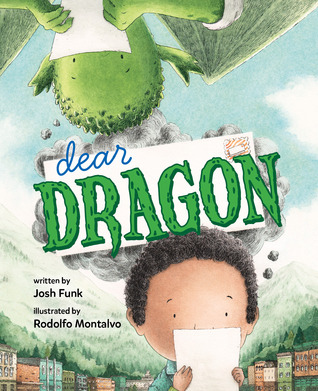
dear dragon

Dear Dragon
Author: Josh Funk
Illustrator: Rodolfo Montalvo
Anticipated Publication: September 6, 2016 by Viking Books for Young Readers

Goodreads Summary: A sweet and clever friendship story in rhyme, about looking past physical differences to appreciate the person (or dragon) underneath.

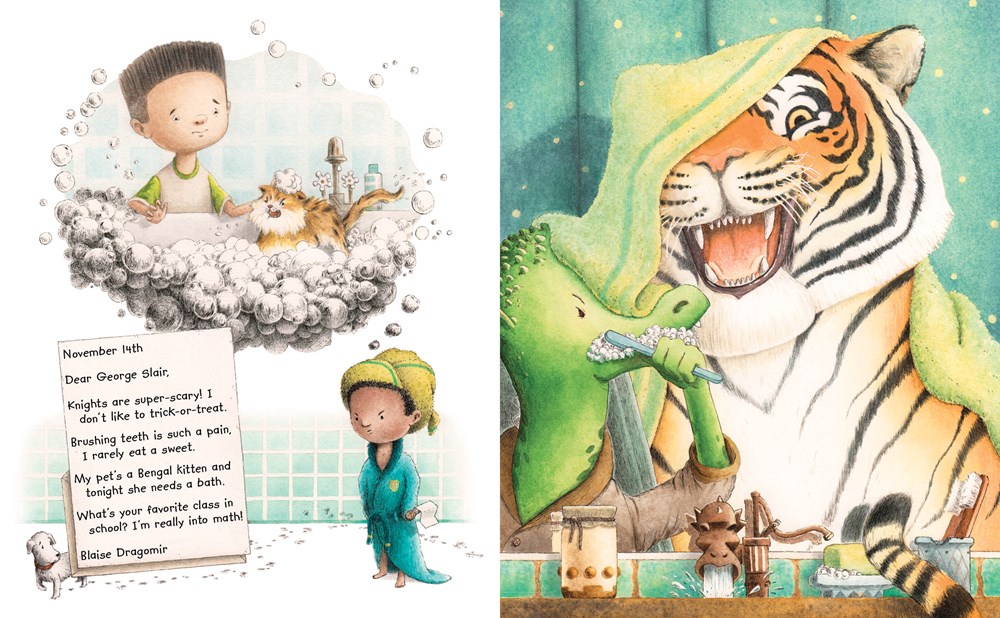
George and Blaise are pen pals, and they write letters to each other about everything: their pets, birthdays, favorite sports, and science fair projects. There’s just one thing that the two friends don’t know: George is a human, while Blaise is a dragon! What will happen when these pen pals finally meet face-to-face?

Ricki’s Review: I simply adored this book. It was quite clever and imaginative! I imagine it took a lot of thought to try to show how different George and Blaise’s lives might be and how they might misinterpret the descriptions of simple daily life events. I am a huge fan of Josh Funk’s writing and recommend all of his books. They all are witty and humorous, and my son and I always giggle while we read them. Each of his books teaches a life lesson that has been very useful for me as a mom, and I know they are equally useful for elementary school teachers. For Lady Pancake & Sir French Toast, I have been able to constantly refer to the variety of foods in the text in order to help my son with his picky eating habits. With this book, Dear Dragon, I have been able to talk with my son about differences and how we might work to understand how others might lead different daily lives than ours. I am really looking forward to Josh’s next book, Pirasaurs!. Based on his other books, I know it will be a good one!

Kellee’s Review: The books I find myself gravitating towards and recommending the most are the books that I not only love as a mother but can also definitely see the application of the book in all levels of classrooms. Dear Dragon fits into this category because it is such an amusing and fun book that is just a blast to read and discuss; however, it also has so many ways that I can see myself and other teachers using it in the classroom: for a mentor text, for a pen pal unit, for a read aloud. Dear Dragon also is an amazing set up to discuss first impressions and differences between people in safe place (since, you know, Blaise is a dragon). I also loved the quirky, colorful, detailed illustrations that accompany George and Blaise’s letters. The silly conversations just from these will make for a wonderful conversation.

Teachers’ Tools for Navigation: Ricki fondly remembers her elementary school experiences with pen pals. Her fourth class wrote to a class in Germany. It was so interesting to learn about all of the differences between our lives. This book would make for a great jumpstart to a pen pal project. It would be neat to connect to a class in another country or even across our own country. Students would learn a lot about how we are both similar and different from others—and how this is a good thing, indeed!

In addition to being a ton of fun, Dear Dragon will also be a perfect mentor text for a variety of reading skills and standards. The letters are a perfect opportunity to discuss point of view, voice, letter writing, and rhyming. The book also has a wonderful theme, the illustrations and letters could be compared/contrasted, and the entire text structure could be analyzed.

Discussion Questions: What are the similarities and differences between George and Blaise? How do they build their friendship across letters?; How do they each misinterpret the other’s letters in ways that are funny and enlightening? How do the illustrations reflect these misinterpretations?; This book is a fantasy, but how might you compare this book to real life?

Flagged Spread: 

9780451472304_IL_3_05101

Read This If You Loved: Lady Pancake & Sir French Toast by Josh Funk; Same, Same but Different by Jenny Sue Kostecki-Shaw; Whose Story is This, Anyway? by Mike Flaherty; Dragons Love Tacos by Adam Rubin; Have You Seen my Dragon? by Steve Light; Tony Baloney: Pen Pal by Pam Muñoz Ryan; Dear Mrs. Larue series by Mark Teague

Recommended For: 

readaloudbuttonsmall classroomlibrarybuttonsmall closereadinganalysisbuttonsmall

RickiSigandSignature

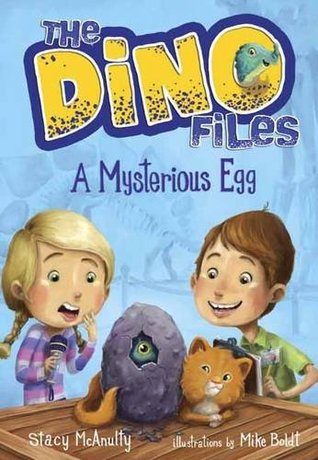
The Dino Files: A Mysterious Egg by Stacy McAnulty

Share

Dino Files 1

The Dino Files #1: A Mysterious Egg
Author: Stacy McAnulty
Illustrator: Mike Boldt
Published: January 19, 2016 by Random House Kids

Summary: What if a fossil in your backyard . . . came to life?!

Frank’s grandma is a famous paleontologist (that’s a dinosaur scientist). But she’s also an adult who makes up rules. Rules like: no digging for dinosaur bones when you have a sunburn. That means Frank is stuck playing inside with his annoying cousin, Samantha. But then Grandma finds a fossil of an egg! And when Frank and Sam sneak into the dino lab late at night, they find something even more amazing. . . .

The hilarious Dino Files chapter book series follows a nine-year-old dinosaur expert, his paleontologist grandparents, a cat named Saurus, and fossils that might not be so extinct!

About the Author: Stacy McAnulty is the author of several children’s books including Excellent Ed, illustrated by Julia Sarcone-Roach; The Dino Files series, illustrated by Mike Boldt;  and 101 Reasons Why I’m Not Taking a Bath, illustrated by Joy Ang. Stacy grew up outside of Albany, New York and received my B.S. in Mechanical Engineering from the University at Buffalo. A career opportunity brought her to central North Carolina in 1998. She currently lives in Kernersville, NC with her husband, their three children and two dogs.

Also, Stacy offers FREE Skype interviews and signed bookmarks to any class reading The Dino Files!

Ricki’s Review: This is a hilariously fun series that is sure to be a hit in classrooms. I see it working best in grades 1-4. As a child, I was disappointed when my chapter books no longer had pictures, and this book is a great transitional book because it has the best of both worlds—a great story and pictures to go along with it! Frank reminds me of many kids. He is frustrated by all of the rules set out for him, and he just wants to have fun. He manages to sneak around a bit and something awesome happens with that dinosaur egg (I’ll let you guess)! I also want to put in a plug for the fact that Frank is a cat lover. My son loves cats, and I hate how books/shows always feature males as dog lovers and females as cat lovers. I loved Saurus the cat!

Kellee’s Review: I plowed through this and the sequel because I loved the premise and the characters so much! I love that Frank and Sam represent such different types of kids within each of them and between each of them; I think so many readers will relate to their personalities. I also really liked how dinosaurs are introduced throughout the book without making the book didactical in any way. Instead it is educational and funny! This series is a wonderful introduction to early chapter books also because it is very engaging and will appeal to all kinds of readers. 

Teacher’s Tools for Navigation: This book is a great jump start to researching about dinosaurs! I know a lot of early elementary schools have a big dinosaur unit, and I think this book would appeal to readers of all ages. The book might also work well for a fossil unit, too! It would be interesting to investigate whether it would be possible to hatch a fossilized dino egg. Then, the class could have a discussion about whether this book might be considered realistic fiction or fantasy. Further activities and information is available at: www.thedinofiles.com.

Discussion Questions: What good choices does Frank make? What bad choices does he make? What are the outcomes of his choices?; What words would you use to describe Frank? How is he different or similar to you?; What rules is Frank forced to follow? Do you think these rules are fair?; How do the illustrations enhance your reading experience?

Flagged Passage: “I need to be at that dig site! Instead, I’m stuck inside the museum with PopPop. The good thing is I got my own name tag. Finally.”

Read This If You Loved: Dinosaur Cove by Rex Stone; Dinosaur Trouble by Dick King Smith; Dinosaur Pox by Jeremy Strong

Recommended For:

litcirclesbuttonsmall classroomlibrarybuttonsmall readaloudbuttonsmall

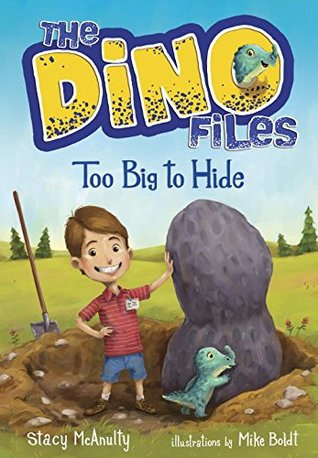
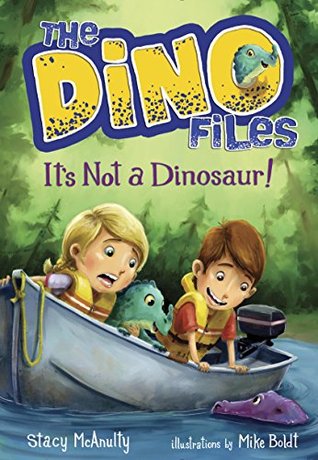
Check Out the Other Books in the Series!:
dino files 2 dino files 3

RickiSigand Kellee Signature

**Thank you to Stacy for providing copies for review!!**

Review and Giveaway!: Journey Trilogy by Aaron Becker

Share

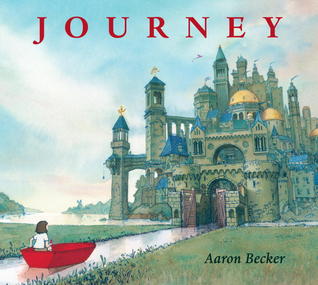
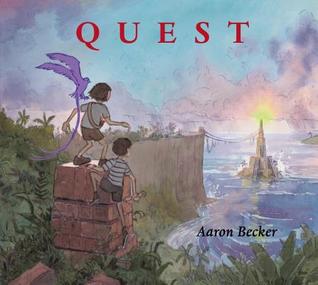
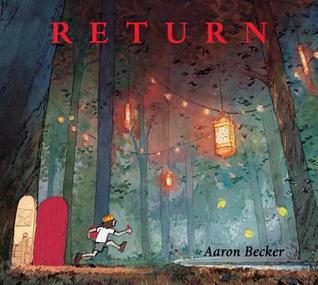
journey quest return

Journey Trilogy
Author and Illustrator: Aaron Becker
Journey Published August 6th, 2013
Quest Published August 26th, 2014
Return Published August 2nd, 2016
By Candlewick Press

Journey Summary: Follow a girl on an elaborate flight of fancy in a wondrously illustrated, wordless picture book about self-determination — and unexpected friendship.

A lonely girl draws a magic door on her bedroom wall and through it escapes into a world where wonder, adventure, and danger abound. Red marker in hand, she creates a boat, a balloon, and a flying carpet that carry her on a spectacular journey toward an uncertain destiny. When she is captured by a sinister emperor, only an act of tremendous courage and kindness can set her free. Can it also lead her home and to her heart’s desire? With supple line, luminous color, and nimble flights of fancy, author-illustrator Aaron Becker launches an ordinary child on an extraordinary journey toward her greatest and most exciting adventure of all.

Journey Review: This book is very hard to explain the magic of it. Lorna (@notforlunch) described it the best, I think: “a wonderful mashup of a David Wiesner book and Harold and the Purple Crayon.” I think this is perfect. It has the illustration beauty and magic of a wordless David Wiesner picture book and it is about creativity (and a crayon) like Harold. The beauty of the castle she visited also reminded me of Cathedral by David Macaulay. This book is just full of amazing!

Originally published at: https://www.unleashingreaders.com/?p=1765 (10/5/2013)

Quest Summary: A king emerges from a hidden door in a city park, startling two children sheltering from the rain. No sooner does he push a map and some strange objects into their hands than he is captured by hostile forces that whisk him back through the enchanted door. Just like that, the children are caught up in a quest to rescue the king and his kingdom from darkness, while illuminating the farthest reaches of their imagination. Colored markers in hand, they make their own way through the portal, under the sea, through a tropical paradise, over a perilous bridge, and high in the air with the help of a winged friend. Journey lovers will be thrilled to follow its characters on a new adventure threaded with familiar elements, while new fans will be swept into a visually captivating story that is even richer and more exhilarating than the first.

Quest Review: Quest is a beautiful continuation of Journey. Aaron Becker starts where the first book left off, but Quest is as unique as Journey was. The kids we met in the first book are swept into an adventure to save a king who has armed them with the tools to save the kingdom. I read this book over and over again because there are so many different little nuances in this adventure that promotes creativity, imagination, and teamwork. To be honest, I almost like Quest better than journey because the kids work together.

First published at: https://www.unleashingreaders.com/?p=4666 (11/12/2014)

Return Summary: Welcome the much-anticipated finale of Caldecott Honoree Aaron Becker’s wordless trilogy—a spectacular, emotionally satisfying story that brings its adventurer home.

Failing to get the attention of her busy father, a lonely girl turns back to a fantastic world for friendship and adventure. It’s her third journey into the enticing realm of kings and emperors, castles and canals, exotic creatures and enchanting landscapes. This time, it will take something truly powerful to persuade her to return home, as a gripping backstory is revealed that will hold readers in its thrall. Caldecott Honor winner Aaron Becker delivers a suspenseful and moving climax to his wordless trilogy, an epic that began with the award-winning Journey and continued with the celebrated follow-up Quest.

Return Review: You will adore the conclusion to the trilogy. Becker does an amazing job of tying the beginning of Journey to the end of Return. To think that all the books happened in a day! The girl had quite an amazing journey, quest, and return in only one day! It is amazing what can go on when magic is involved. I don’t want to give away much else about the finale, but I will say it is as much a must read as the first two. 

Teachers’ Tools for Navigation: In my classroom, the first thing I would do is project the book and just have the students read it with me. No talking; just looking. Then we’d go back and discuss what is going on in the book, talk about some of the smaller parts of the illustrations, relive the journey. If I wanted to include a writing activity, we could add words to the book (although, I think this book’s illustrations stand alone). We could also discuss what we’d do if we had a magic crayon. I think this book would be a great addition to Dot Day and discussing creativity. Finally, I think a discussion of observing your surroundings would be appropriate as what the girl wanted the most was right in front of her at the beginning of the book. (From 10/5/13 post)

Additionally, this trilogy would be a wonderful mentor text to discuss narrative elements because Becker has given us a perfect plot arc filled with conflict, suspense, and resolution. It would also be interesting to talk to students about characterization in a wordless picture book because the characters still have very evident traits though it is through illustration and actions that we have to determine them. Although, I would be careful in taking the magic away from these books. I don’t want to analyze and dig into them too much because they are beautiful pieces of art that should be enjoyed first and foremost.

Journey Trilogy Activity Kit: https://www.scribd.com/document/312916399/Aaron-Becker-s-The-Journey-Trilogy-Activity-Kit

 Q&A with Aaron Becker: https://www.scribd.com/document/132634414/Journey-by-Aaron-Becker-Q-A-with-the-Creator

Discussion Questions: What would you do with a magic crayon?; Why did the girl have to turn to a magical land instead of remaining at home?; Were you surprised about who finally saved the day?; What is happening on the final page of Return? How do you feel about this resolution to the story?; How did the story progress through each book?

Return Book Trailer:

Journey Book Trailer: https://www.youtube.com/watch?v=SxUs41jB4Ts

Quest Book Trailer: https://www.youtube.com/watch?v=BO774UmBjQc

Read This If You Loved: Shy by Deborah Freedman, The Uncorker of Ocean Bottles by Michelle Cuevas, The Typewriter by Bill Thomson The Whisper by Pamela ZagarenskiFloat by Daniel Miyares, Sidewalk Flowers by JonArno Lawson, Sam and Dave Dig a Hole by Mac BarnettHarold and the Purple Crayon by Crockett Johnson, Blackout by John Rocco, David Weisner wordless picture books, Cathedral by David Macaulay, Where the Wild Things Are by Maurice Sendak, Henri Mouse by George Mendoza, Chalk by Bill Thomson, Art & Max by David Weisner, Weslandia by Paul Fleishman, Narnia (series) by C.S. Lewis

Recommended For:

  classroomlibrarybuttonsmall readaloudbuttonsmall closereadinganalysisbuttonsmall

Giveaway!

a Rafflecopter giveaway

Kellee Signature

**Thank you to Raquel at Candlewick for providing copies for review and giveaway!!**