Will & Whit by Laura Lee Gulledge

Share

will

Will & Whit
Author and Illustrator: Laura Lee Gulledge
Published May 17th, 2013 by Abrams

Goodreads Summary: Wilhelmina “Will” Huxstep is a creative soul struggling to come to terms with a family tragedy. She crafts whimsical lamps, in part to deal with her fear of the dark. As she wraps up another summer in her mountain town, she longs for unplugged adventures with her fellow creative friends, Autumn, Noel, and Reese. Little does she know that she will get her wish in the form of an arts carnival and a blackout, courtesy of a hurricane named Whitney, which forces Will to face her fear of darkness.
Laura Lee Gulledge’s signature visual metaphors will be on full display in this all-new graphic novel, a moving look at shedding light on the dark corners of life.

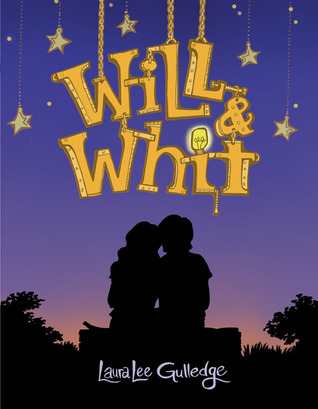
My Review: This book was NOT what I thought it was going to be! I had read Gulledge’s last graphic novel, Page by Paige, so I knew that it was going to be unique, but if you look at the cover you assume Will & Whit are the main characters and there is going to be some sort of romance. That is so off track of what the book is actually about. Will is actually Wilhelmina, our main character, who is dealing with some darkness in her life and fights it by making lamps (some of them are really beautiful and I wish I could buy them). Whit, on the other hand, is not her love interest. Whit is Hurricane Whitney who hits Will’s town and causes Will to really face some of the darkness. So, where does the romance come in? There  is a little bit, but you will be so surprised as to what the cover means! I was.

There are also a wonderful set of supporting characters who make the book even more special. I also love the inclusion of art (visual and performing) and antiques within the novel.

Teacher’s Tools for Navigation: The themes in this graphic novel are definitely worth talking about in the classroom. I also loved the nuances throughout that Gulledge uses to set the mood (the novel’s mood and Will’s mood). Gulledge is a skilled artist and Will’s darkness holding her back is so beautifully put into the story (like the summary says–visual metaphors).

Discussion Questions: How does Gulledge use images throughout the novel to show Will’s emotional state?; How does Whit help Will overcome her darkness?

Read This If You Loved: Page by Paige by Laura Lee Gulledge, Friends with Boy by Faith Erin Hicks, Anya’s Ghost by Vera Brosgol, Smile by Raina Telgemeier

Recommended For: 

classroomlibrarybuttonsmall readaloudbuttonsmall closereadinganalysisbuttonsmall

Signature

Fangirl by Rainbow Rowell (Ricki’s Review)

Share

16068905

Fangirl
Author: Rainbow Rowell
Published: September 10th, 2013 by St. Martin’s Griffin

GoodReads Summary: A coming-of-age tale of fan fiction, family and first love.

Cath is a Simon Snow fan.

Okay, the whole world is a Simon Snow fan . . .

But for Cath, being a fan is her life — and she’s really good at it. She and her twin sister, Wren, ensconced themselves in the Simon Snow series when they were just kids; it’s what got them through their mother leaving.

Reading. Rereading. Hanging out in Simon Snow forums, writing Simon Snow fan fiction, dressing up like the characters for every movie premiere.

Cath’s sister has mostly grown away from fandom, but Cath can’t let go. She doesn’t want to.

Now that they’re going to college, Wren has told Cath she doesn’t want to be roommates. Cath is on her own, completely outside of her comfort zone. She’s got a surly roommate with a charming, always-around boyfriend, a fiction-writing professor who thinks fan fiction is the end of the civilized world, a handsome classmate who only wants to talk about words . . . And she can’t stop worrying about her dad, who’s loving and fragile and has never really been alone.

For Cath, the question is: Can she do this?

Can she make it without Wren holding her hand? Is she ready to start living her own life? Writing her own stories?

And does she even want to move on if it means leaving Simon Snow behind?

Review: I can’t remember reading a book that felt so authentic to and aligned with my own experiences. I have this urge to buy hundreds of copies of this book and pass them out to college freshmen. Freshman year of college is an incredibly difficult time, and this book helped me remember it vividly. From Rowell’s descriptions of the domesticated squirrels to the awkwardness of roommate interactions to the feeling of entering the dining hall for the first time and not knowing where to go or where to sit (and feeling sure everyone is watching you), this book perfectly captures the minute details of college life–and all of the insecurities that come with it. I loved the parallels cast between Simon Snow’s story and Cather’s, and it inspired me to want to be a writer. This is a beautifully compelling story that will resonate with readers.

View Kellee’s review of Fangirl HERE.

Teacher’s Tools for Navigation: This would be a great book to teach along with a creative writing unit. It would inspire students to want to become stronger writers. Students could write their own fanfictions or alternate storytelling (like Nick and Cather did). Cather’s struggles as a writer are inspirational, and I am betting that most people, like me, close this book and want to get out their computers and start writing.

Very few authors are able to hone in on the minute details of humanity. I noticed Rowell’s incredible ability to do this in Eleanor & Park, and she certainly did not stop there. I would love to copy passages of this book for close readings. This would really help students understand good, powerful writing.

Discussion Questions: Cather finds it difficult to write about any world other than that of Simon Snow. Why do you think that might be?; How are Cather and Wren different? Do you think there are any underlying reasons for their differences?; What is Nick’s purpose in the novel? What does he show about Cather?

We Flagged:

“I feel sorry for you, and I’m going to be your friend.”
“I don’t want to be your friend,” Cath said as sternly as she could. “I like that we’re not friends.”
“Me, too. I’m sorry you ruined it by being so pathetic.”

“In new situations, all the trickiest rules are the ones nobody bothers to explain to you. (And the ones you can’t Google.)”

Read This If You Loved: Eleanor & Park by Rainbow Rowell, Looking for Alaska by John Green, The Perks of Being a Wallflower by Stephen Chbosky, Same Difference by Siobhan Vivian

Recommended For:

closereadinganalysisbuttonsmall litcirclesbuttonsmall classroomlibrarybuttonsmall

RickiSig

Ye Olde Weird but True! by National Geographic Kids

Share

NF PB 2013

Nonfiction Picture Book Wednesday

Nonfiction Picture Book Wednesday is hosted by Kid Lit Frenzy and was started to help promote the reading of nonfiction texts. Most Wednesdays, we will be participating and will review a nonfiction text (though it may not always be a picture book).
Be sure to visit Kid Lit Frenzy and see what other nonfiction books are shared this week!
yeolde

Ye Olde Weird but True!
Author: National Geographic Kids
Published October 8th, 2013 by National Geographic Children’s Books

Goodreads Summary: Nothing attracts young readers like the weird but true…especially when the weird truth is hundreds of years old. Ye Olde Weird But True, the newest addition to the blockbuster Weird But True series, is packed with 300 wacky facts for history lovers ages 6 and up.

In this latest addition to this phenomenal series, readers will have more zany fun, this time from the pages of history! Ye Olde Weird But True delivers 100 percent new content, with 500 more of the amazing facts and photos that kids just can’t get enough of.

My Review and Teacher’s Tools for Navigation: Students love these books (as do I)! They are fascinated with all of the facts and it causes such conversation in the classroom. What I would love to see done with them is take them beyond the just fun books that students read parts of and put aside. I can picture bringing out all of my Weird but True books and allowing students to choose a fact from them and researching the fact. They would then share their fact with the class—a little mini research project. I did this years ago with Sharks where I let them choose any facts or question about sharks, research, and share and it was a very successful project because everyone was so engaged. I could see the same thing happening with the Weird but True books because the students would be able to pick a topic that interests them. I can just picture one student researching using maggots to clean wounds in the 19th century while the student next to him researches Roy Chapman Andrews, the real Indiana Jones.

Discussion Questions: Find a Weird but True fact and research more information about it. After doing so, share with the class what you learned.

We Flagged: “The oldest known musical instrument is a 42,000-year-old flute made out of vulture bone.” (p. 38)
“One of the oldest maps in the world was drawn on a mammoth tusk.” (p. 110)
“French King Francis I once won a wrestling match against English King Henry VIII.” (p. 191)

Read This If You Loved: Any fact books, The Gruesome Truth About…. books

Recommended For: 

closereadinganalysisbuttonsmall classroomlibrarybuttonsmall

Signature

Hurt Go Happy by Ginny Rorby

Share

This week I am celebrating with my friend and author Ginny Rorby as she receives her award from the Florida Association for Media in Education (FAME) for winning the Sunshine State Young Readers Award (as voted by 6-8 grade students in Florida) for Lost in the River of Grass. To celebrate, I will be reviewing all of her books this week:

hurt

Hurt Go Happy
Author: Ginny Rorby
Published August 8th, 2006 by Starscape

Goodreads Summary: Thirteen-year-old Joey Willis is used to being left out of conversations. Though she’s been deaf since the age of six, Joey’s mother has never allowed her to learn sign language. She strains to read the lips of those around her, but often fails.

Everything changes when Joey meets Dr. Charles Mansell and his baby chimpanzee, Sukari. Her new friends use sign language to communicate, and Joey secretly begins to learn to sign. Spending time with Charlie and Sukari, Joey has never been happier. She even starts making friends at school for the first time. But as Joey’s world blooms with possibilities, Charlie’s and Sukari’s choices begin to narrow–until Sukari’s very survival is in doubt.

My Review and Teacher’s Tools for Navigation: This book is so important to me it is even hard to write this review. I have never written one because the book has become so personal to me that I didn’t know how to share my feelings. When I read Hurt Go Happy for the first time, I knew that it was the book that I wanted to share with every student I ever had.  Hurt Go Happy shows the importance of empathy for animals, for children and for people with disabilities.

Hurt Go Happy has become the number one community builder in my classroom.  After our state test and our Earth day activity with The Lorax we begin our read aloud of  Hurt Go Happy. (One of the saddest things about not being in the classroom this year is that I will not be able to have this moment with students.) Not only does the book give me opportunities to work with setting, characterization, cause/effect, prediction, compare/contrast, sequence, and analogies, throughout the book my class participates in conversations about deafness, sign language, chimpanzees, abuse, research facilities, animal abuse, wild animals as pets, survival, parents, school, death, fear, and their future. The conversations are so deep and wonderful.  But this is just the beginning.  Following the reading of the novel, my students are lucky enough to be able to take part in an interview with the author of  Hurt Go Happy, Ginny Rorby. The students generate the questions, vote on which ones to ask and even ask her the questions. Ginny even allows us to send her extra questions and answers them for my students.

The part that really makes students connect to the novel is the field trip that we go on.  At the end of the book, the setting changes to a rehab facility called The Center for Great Apes (@CFGA) which, while in the book was in Miami, has moved to Wauchula, FL which is 90 minutes from my school.  In the book, you even meet Noelle, a chimp who knows sign language, Kenya, another chimpanzee, and Christopher, an orangutan, who are actually at the center. It is an amazing experience to take the story and turn it into reality.

Hurt Go Happy is a book that I feel not only bring our class together but teaches my students some of the most important lessons for life: to care about every living thing.

Discussion Questions: I have many that would give spoilers, but here are my essential questions for the book: Do you think animal testing is necessary? Defend your answer.; How would being deaf affect your life? How does it affect Joey’s?

We Flagged: “Before she’d lost her hearing, she loved the whisper of wind through pines, and since she had no way of knowing how different it sounded in a redwood forest, the sight of branches swaying re-created the sound in her mind. Even after six and a half years of deafness, she sometimes awoke expecting her hearing to have returned, like her sight, with the dawn.” (p. 11)

Read This If You Loved: Endangered by Eliot Schrefer, The One and Only Ivan by Katherine Applegate, Me…Jane by Patrick McDonnell, Wonderstruck by Brian Selznick, El Deafo by Cece Bell, Half Brother by Kenneth Oppel, Ivan: The Remarkable True Story of the Shopping Mall Gorilla by Katherine Applegate

Recommended For: 

classroomlibrarybuttonsmall readaloudbuttonsmall closereadinganalysisbuttonsmall litcirclesbuttonsmall

Signature

See my extended review of Hurt Go Happy when celebrating the Schneider Award’s 10th birthday include an interview with Ginny Rorby!

Forgive Me, Leonard Peacock by Matthew Quick

Share

 13477676

Forgive Me, Leonard Peacock
Author: Matthew Quick
Published: August 13th, 2013 by Little, Brown Books for Young Readers

GoodReads Summary: In addition to the P-38, there are four gifts, one for each of my friends. I want to say good-bye to them properly. I want to give them each something to remember me by. To let them know I really cared about them and I’m sorry I couldn’t be more than I was—that I couldn’t stick around—and that what’s going to happen today isn’t their fault.

Today is Leonard Peacock’s birthday. It is also the day he hides a gun in his backpack. Because today is the day he will kill his former best friend, and then himself, with his grandfather’s P-38 pistol.

But first he must say good-bye to the four people who matter most to him: his Humphrey Bogart-obsessed next-door neighbor, Walt; his classmate Baback, a violin virtuoso; Lauren, the Christian homeschooler he has a crush on; and Herr Silverman, who teaches the high school’s class on the Holocaust. Speaking to each in turn, Leonard slowly reveals his secrets as the hours tick by and the moment of truth approaches.

In this riveting book, acclaimed author Matthew Quick unflinchingly examines the impossible choices that must be made—and the light in us all that never goes out.

Review: I have read every one of Matthew Quick’s books. He is a teacher, and I feel as if he understands teenagers in ways that many people don’t. Quick’s characters feel like real people, and while I read this one, I kept forgetting that I was even reading a book. To be cliché, I was lost in the story.

Leonard Peacock is a complex character. Even with his evil intention to murder a fellow classmate, the reader comes to understand that he is deeply troubled and not at all evil on the inside. His plan is to give three gifts to three individuals who have positively impacted his life, then kill his classmate, and then kill himself. I read this book with an uncomfortable stomach. I couldn’t put it down because I needed to know how the plot unraveled. Kids will be hooked. It teaches incredible messages of bullying and loneliness. Leonard’s mother is such a terrible parent that I think it will make many teens appreciate their own parents. I had the urge to scream at her at several points in the book. I have read many books that are somewhat similar to the themes of this text, yet it felt very different. I would urge teachers to read it because it sheds light on issues that are often difficult (or maybe even taboo) to discuss.

Teacher’s Tools for Navigation: My initial thought was that this would make an incredible read-aloud. I think all types of kids would appreciate it. My only hesitance are there are several references to awkward scenes (like masturbation), and even the most liberal teachers might feel a bit uncomfortable reading these aloud. That said, I think this would make an excellent whole-class text or literature circle book. Teachers would also find value in close readings of portions of this text to jumpstart difficult (but important) conversations with students about bullying, depression, and suicide. The book has over sixty footnotes, and it would be interesting to discuss this text feature and/or the experiments that Quick takes with the text structure. The book ends a bit abruptly, and I think students would love to write and discuss extended endings to the text. I would love to see this book bridged with classic texts like The Awakening by Kate Chopin or Hamlet by William Shakespeare. There are a plethora of Shakespeare references that will make teachers drool!

Discussion Questions: What leads a person to make rash, violent decisions? Can s/he be stopped?; How does our past influence our psyche?; Is revenge sweet? Can it ever be justified?; How do our parents shape our mental behavior?; What happens after the conclusion of this text?

We Flagged:

“I admire [Humphrey] Bogart because he does what’s right regardless of consequences—even when the consequences are stacked high against him—unlike just about everyone else in my life” (p. 23).

“How do you measure suffering?

I mean, the fact that I live in a democratic country doesn’t guarantee my life will be problem-free.

Far from it.

I understand that I am relatively privileged from a socio-economical viewpoint, but so was Hamlet—so are a lot of miserable people” (p. 94).

Read This If You Loved: Endgame by Nancy Garden, Thirteen Reasons Why by Jay Asher, Hamlet by William Shakespeare, The Silver Linings Playbook by Matthew Quick, Burn by Suzanne Phillips, The Perks of Being a Wallflower by Stephen Chbosky, Twisted by Laurie Halse Anderson, Everybody Sees the Ants by A.S. King, The Spectacular Now by Tim Tharp, Inexcusable by Chris Lynch

Recommended For:

litcirclesbuttonsmall closereadinganalysisbuttonsmall classroomlibrarybuttonsmall

026F3FBCC8C3913BD3A4D3F6920340D5

Harlem: A Poem by Walter Dean Myers

Share

0-590-54340-7

Harlem: A Poem
Author: Walter Dean Myers
Illustrator: Christopher Myers
Published 1997 by Scholastic Press

Goodreads Summary: Walter Dean Myers calls to life the deep, rich, and hope-filled history of Harlem, this crucible of American culture.

Christopher Myers’ boldly assembled collage art resonates with feeling, and tells a tale all its own. Words and pictures together connect readers -of all ages – to the spirit of Harlem in its music, art, literature, and everyday life, and to how it has helped shape us as a people.

My Review & Teacher’s Tools For Navigation: After reading this book the first time, I knew I was going to have to tackle it differently than just reading a picture book. I wanted to make sense of it and I knew that I didn’t have the background knowledge so I knew that the power of all of the words had not sunk in yet. So, I typed up the poem in Google Drive and began doing my very own close reading of the poem.  I started with research of terms and names that I didn’t know, building my knowledge of the culture and history of Harlem. Through this build up of knowledge, I began to understand the beauty behind Myers’s poem. The voice of this poem is one of heartbreak, but strength; proud of not only what he has become, but where he came from. This poem is a celebration of the history of Harlem and its citizens—a celebration of its religion, music, poets, authors, and everything that made/makes it a hub for the civil rights movement and African American culture.

This book would be a great one to use across many different subject areas- history, literature, and art.

Discussion Questions: What references to Harlem’s history did Myers intertwine into his poem?; How did Christopher Myers’s illustrations take the poem to another level?; (Writing) Do research about your ancestors and your heritage. Through this research, find people, places, literature, art, musicians, etc. that helped shape who you or your family are. Use this research to construct a poem about your heritage. Find a piece of artwork to accompany your poem. 

We Flagged: 

The uptown A
Rattles past 110th street
Unreal to real
Relaxing the soul

Shango and Jesus
Asante and Mende
One people, a hundred different
People
Huddled masses
And crowded dreams

Read This If You Loved: Duke Ellington: The Piano Prince and His Orchestra and Ella Fitzgerald: The Tale of a Vocal Virtuosa by Andrea Davis Pinkney, The Complete Poems including Harlem by Langston Hughes, Harlem Summer by Walter Dean Myers, Nonfiction books about Harlem

Recommended For: 

classroomlibrarybuttonsmall closereadinganalysisbuttonsmall readaloudbuttonsmall

Signature

In This Moment by Wendy Glenn

Share

page-0jpg-1
In This Moment

Author: Wendy Glenn
Manuscript Available at Macmillan’s Swoon Reads (www.swoonreads.com)

SwoonReads Summary: Sometimes, going through the motions feels like all we can manage, but it takes love to truly live.

Sixteen-year-old Laney Pritzkau lives with her hippie father in Connecticut. The unexpected death of her mother two years prior maintains a hold on her. She keeps her relationship circle small, lessening the likelihood of any future loss. It’s summer, and Laney babysits the energetic twin boys across the street, hangs out at the mall and beach with her two best girlfriends, and volunteers at Harmony House, the foster care home where her father works as a counselor. She wills the days to go by so she can flip her calendar to the next week, the next month, the next year, to keep moving forward and avoid the residual sadness and anger that bubble up when she pauses to consider life without a mother. Then she meets Evan–and leans that what’s most important is what’s in this moment.

Review: This is a beautifully written novel that allows readers to grapple with complex issues. My heart ached for Laney as she longed for her mother in difficult situations, and as a future parent, I couldn’t help but appreciate the connection she had with her father. Too often, parents are put in stereotypical, negative roles in books that feature young adult characters, and I appreciated the warmth and love Laney’s father emanated. Their relationship is comparable with that of Atticus and Scout in To Kill a Mockingbird, and teachers might find it valuable to pair passages between both texts.

The language of this novel was very poetic. Often, one or two passages impact me strongly within a novel. But with this text, I was continually scribbling down lines that forced me to stop and consider aspects of friendship, love, loss, and life.

Consider the beautiful language here:

“‘When I was growing up, I lived next door to the oldest, wisest woman on earth.   Her name was Sadie, and she had all the answers I could ever hope to discover.  Why is the sky blue?  Because God likes to paint in pastels.  Why does Jason keep teasing me in front of his friends?  Because Jason thinks you’re something special.  Why do Mom and Dad fight?  Because real love is worth the battle’” (p. 54).

Holy cow. Did that hit you straight in the heart? And on the flip side, sections of the novel made me laugh out loud, like this one:

“’Edgar Allan Poe.  My ferret.  He’s a tormented soul, obsessed with me, really.  Won’t stay home alone.  I’m his Annabel Lee’” (p. 112).

This is a book with strong literary merit that will greatly appeal to readers. I hope Macmillan considers publishing it because I’d love to have a hard copy in my hands. As a teacher, there would be many passages that I could draw upon, and more importantly, it would be well-loved by students. I would be remiss if I didn’t mention that the ending is stunning.

Teacher’s Tools for Navigation: Laney has great difficulty processing her grief over the loss of her mother. Loss is an incredibly difficult, intangible reality of life. Laney’s coping mechanism is that she doesn’t allow people to get close to her. She believes this will prevent her from having to experiencing these feelings again in her lifetime. It would be valuable for teachers to help students understand and learn about different coping mechanisms that humans use when they are grieving. Alternatively, teachers might have students consider where Laney is in the steps of the grieving process. I also imagine that many students would be interested in exploring and understanding Laney’s friendships. What do each of her friends offer her? Students always find their own meaning with texts, and this is certainly one that offers many ideas for students to explore.

Discussion Questions: How do Laney’s friendships differ from her relationship with Evan? Is the love that exists in a friendship different from the love that exists in an intimate relationship with a significant other?; By the end of the novel, do you feel a sense of hope for Laney? Has she completely overcome her inability to form close relationships, or do you think she still has work to do?; How does Laney’s father provide support for her? Do they cope with her mother’s death in the same way?

We Flagged: 

“Why is it that people get so excited by an opportunity to escape from reality, to cross that line from reality to fantasy?  Why do they crave a temporary fix?  They can hop on a cruise ship, pitch a tent, take that flight to somewhere, anywhere, in the quest to abandon reality for a short time, but to what end?  Eventually, they all have to come home to their mundane existence and, in the return, find themselves feeling as though they’re missing more than before they left in the first place.  And that doesn’t even take into consideration the lasting scars brought on by lost luggage, sunburn, and having to navigate airport security” (p. 10).

“‘Prove to me that your mom was right about love, that it’s possible, that it has the potential to make us better, stronger.  When you find the right guy, make him believe, too'” (p. 43).

Please note: The above quotes are from the manuscript posted on www.swoonreads.com. The quotes and page numbers may change when the book is published.

Read This If You Loved: Twenty Boy Summer by Sarah Ockler,  Someone Like You by Sarah Dessen,The Summer I Turned Pretty by Jenny Han, The Sky is Everywhere by Jandy Nelson, Amy and Roger’s Epic Detour by Morgan MatsonThe Moon and More by Sarah Dessen

Recommended For:

 closereadinganalysisbuttonsmall  litcirclesbuttonsmall  classroomlibrarybuttonsmall

026F3FBCC8C3913BD3A4D3F6920340D5