Faithful Elephants by Yukio Tsuchiya

Share

NF PB 2013

Nonfiction Picture Book Wednesday

Nonfiction Picture Book Wednesday is hosted by Kid Lit Frenzy and was started to help promote the reading of nonfiction texts. Most Wednesdays, we will be participating and will review a nonfiction text (though it may not always be a picture book).
Be sure to visit Kid Lit Frenzy and see what other nonfiction books are shared this week!

faithful

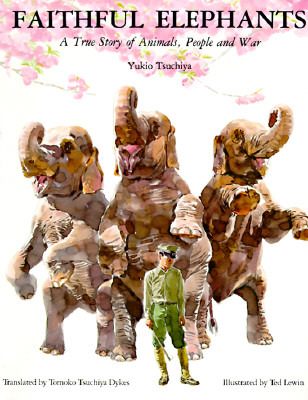
Faithful Elephants: A True Story of Animals, People, and War
Author: Yukio Tsuchiya
Translator: Tomoko Tsuchiya Dykes
Illustrator: Ted Lewin
Published October 30th, 1997 by HMH Books for Young Readers

Goodreads Summary: A zookeeper recounts the story of John, Tonky, and Wanly, three performing elephants at the Ueno Zoo in Tokyo, whose turn it is to die, and of their keepers, who weep and pray that World War II will end so their beloved elephants might be saved.

My Review: I picked up this book as soon as I read that  Jillian Heise thought that it’d be a good companion to Endangered. I read aloud Endangered with my 8th graders last year, and I trusted that Jillian knew what she was talking about. The subtitle warned me that this picture book would definitely not be a cheery one, but I could not have prepared myself for how emotional the book actually was. The lyrical writing and soft, watercolor illustrations add to the intensity of the story. Be warned: tears will happen.

Teacher’s Tools For Navigation: This book not only would be a perfect companion to Endangered, it is definitely a wonderful picture book to lead to deep discussions in the classroom. Children are always very emotional about books pertaining to animals, so I know they will have an intense opinion about what happens in this book. As the zookeepers kill the animals to protect the city in case of a bombing, students will definitely disagree with this decision and this will lead to a great debate. The story also lends itself towards discussions about animal emotions and abuse as well as cause and effect discussions.

Discussion Questions: In what ways is the story of the elephants in Faithful Elephants similar to the story of the bonobos in Eliot Schrefer’s Endangered?; Was there an alternate solution that the zookeepers could have considered for the elephants?

We Flagged: “Not far from the cheerful square, there stands a tombstone. Not many notice this monument for the animals that have died at the Ueno Zoo. It is quiet and peaceful here, and the sun warms every corner.” (p. 8)

Read This If You Loved: Endangered by Eliot Schrefer, The One and Only Ivan by Katherine Applegate, The Outside of a Horse by Ginny Rorby

Recommended For: 

readaloudbuttonsmall closereadinganalysisbuttonsmall classroomlibrarybuttonsmall

Signature

Hilda and the Midnight Giants by Luke Pearson

Share

hilda

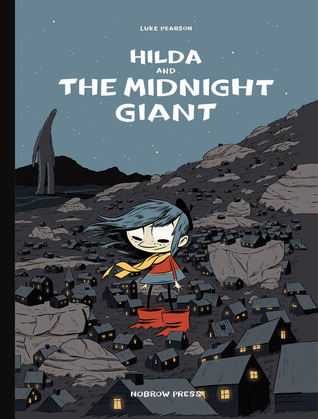
Hilda and the Midnight Giant
Author: Luke Pearson
Published April 17th, 2012 by Nobrow Press

Goodreads Summary: In Hilda and the Midnight Giant, our protagonist finds her world turned upside down as she faces the prospect of leaving her snow-capped birthplace for the hum of the megalopolis, where her mother (an architect) has been offered a prestigious job. During Hilda’s daily one-and-a-half hour trek to school she looks for ways to stall her mother’s decision. She conspires with the beings of the mystical Blue Forest to delay the inevitable. Will they help or hinder her? More importantly, who is this mysterious Midnight Giant?

This is the first part of the Hildafolk series, a series that follows Hilda on her many adventures and travels through the magical fjords and enchanted mountains of her birthplace as she unravels the mysteries of the supernatural world that surrounds her.

My Review: When Hilda and the Midnight Giant was in Mr. Schu and Scope’s Top 20 of 2012 and I hadn’t heard of it, I knew I had to get my hands on it. Graphic novels are the most loved format in my classroom and I try to keep as up to date about them as I can. I went straight to my bookstore, ordered it, and waited patiently. When it arrived, I delved right in. On my first read, I just found the story odd and didn’t find myself connecting to the story at all. I knew then and there that I needed to reread at a later date to see if my perspective changed. Like Penny Kittle says in Book Love, “Rereading is an opportunity to see more. On the first time through a novel I am trying to figure out who is who and what is happening. I’m too engaged in understanding to analyze the book well. ON a second time through, I see the whole and then the parts differently.” And this was no exception with my reread of Hilda.

Hilda reminds me a bit of Coraline- she is independent, a bit quirky and loves rainwear. And just like Coraline, she has a fantastical world surrounding her and she doesn’t even know it.  It took this second time for me to realize the magic within this story: the connection between Hilda’s and the Giant’s story, the love of the Giants, the magical world of Elves, and the fascinating Woffs.

I read one review that said Hilda’s fantastical world reminded them of Miyazaki’s work and though I didn’t see it the first time (I think I was just caught up in the oddness), I definitely saw it the second time. The Woffs reminded me most of him- silent creatures that play a small yet important role in the story.

In the end, I am so glad that I reread Hilda so I could get the full magical experience and I definitely recommend it.

Teachers Tools for Navigation: There are many special things about this book and although I think it will find its best home in classroom libraries, it can definitely be used for a mentor text as well. It is a great text to share about world building and also to learn about graphic novels and paneling. It can also be used to practice predicting as Hilda is filled with unexpectedness throughout.

Discussion Questions: Is there something that you viewed differently after reading/seeing it for the second time like I did with Hilda? If not, try rereading a story that you didn’t like; see if your perspective changes.

We Flagged: 

Read This If You Loved: Coraline by Neil Gaiman, Explorer edited by Kazu Kibuishi, The Arrival by Shaun Tan, Castle Waiting by Linda Medley

Recommended For: 

closereadinganalysisbuttonsmall classroomlibrarybuttonsmall

Signature

Halloween Hustle by Charlotte Gunnufson

Share

Halloween

halloween

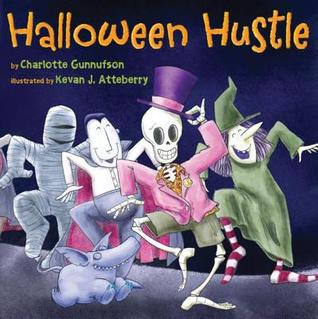
Halloween Hustle
Author: Charlotte Gunnufson
Illustrator: Kevan J. Atteberry
Published September 3rd, 2013 by Two Lions

Goodreads Summary: In the dark, a funky beat. / Something white with bony feet. / Skeleton dancing up the street, / Doing the Halloween Hustle. Skeleton is dancing his way to a Halloween party but as he grooves across town, he keeps stumbling, tumbling, and falling apart! Can Skeleton stay in one piece long enough to make it to the party?

Kellee’s Review: This is a perfect Halloween book for young readers who want to get into the spirit yet do not want to be scared. The colorful illustrations add an extra element of fun to the book which will suck the readers even more into the book. My favorite part, though, is the rhyming and rhythm. It adds something special to the book that makes it different than other Halloween books.

Ricki’s Review: This is the first book I read to my pregnant belly. My future son was kicking the entire time! It was such an entertaining story, and my husband even listened in. My favorite aspect of this book would easily be the great examples of figurative language. For example, this alliteration: “Gets up and grooves with ghoulish grace” (p. 7), or this consonance: “Bones scatter / What a clatter / Spine is like a broken ladder!” (p. 4). You may also notice the simile in that last passage! Like Kellee, the colorful illustrations also drew me in, and I also loved all of the famous scary characters in the book, like Frankenstein’s Monster and Dracula.

Teacher’s Tools for Navigation: This book is made for reading aloud! It rhymes, has a great rhythm, and has repetitive text for students to read aloud with the teachers. It also has a great message to students and has opportunities for discussion about cause and effect, imagery, and rhyming. Teachers of any level would it beneficial to use this book to teach alliteration, assonance, consonance, similes, and other types of figurative language.

Discussion Questions: What characteristics does the Skeleton have that makes it so he is able to get to the party? What characteristics does the Skeleton have that would make him a new friend?; How does the author use rhymes to convey her message effectively?; Is this book a poem? Use textual evidence to defend your answer.

We Flagged:

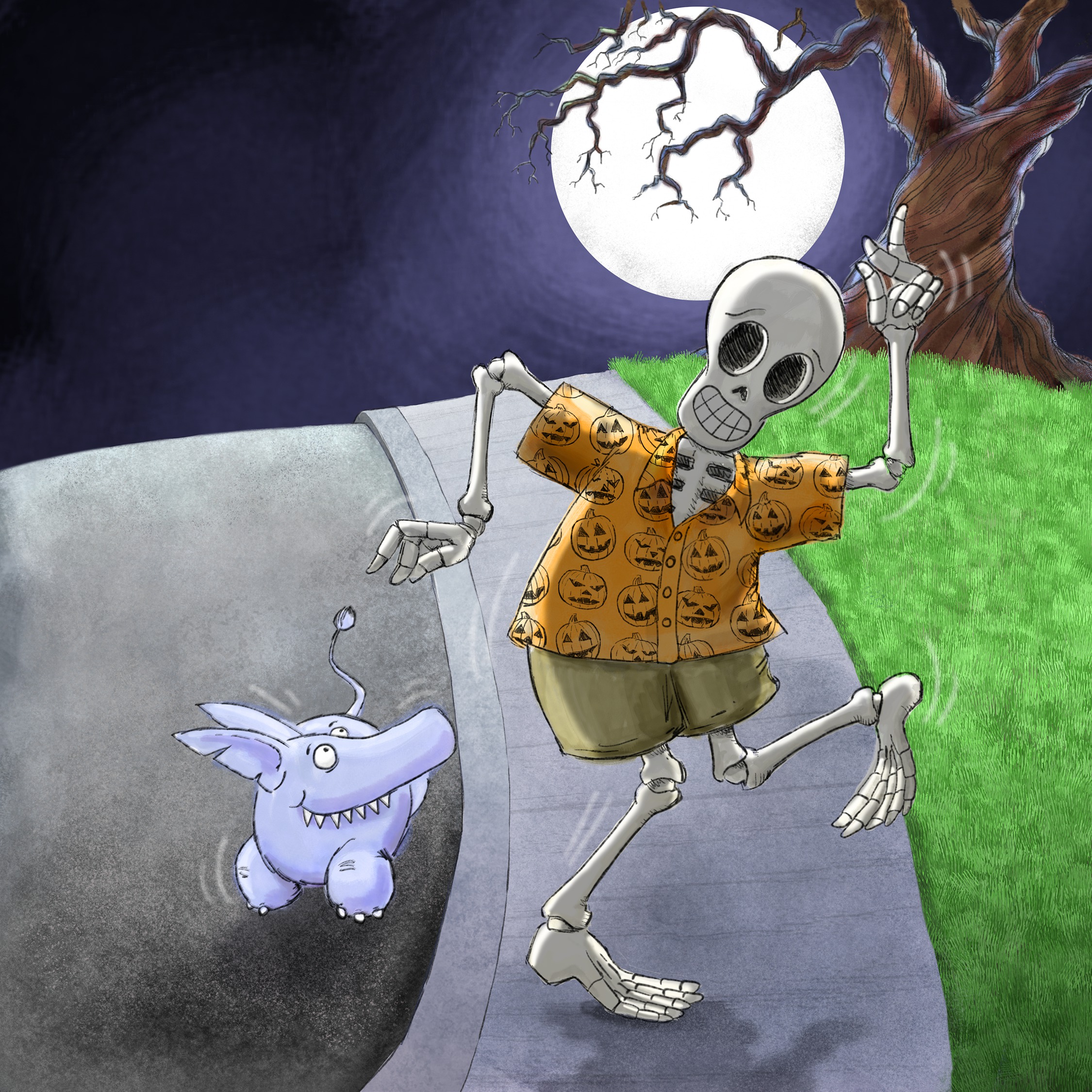
“In the dark, a funky beat,
Something white with bony feet.
Skeleton dancing up the street,
Doing the Halloween Hustle.

Bony thumbs and fingers snap.
Bony heels and toes tip-tap.
Knees knock-knock and elbows flap,
Doing the Halloween Hustle.” (p. 2-3)

Skeleton and his Sidekick

Read This If You Loved: Spider and the Fly by Mary Howitt, Dragon’s Halloween by Dav Pilkey, Goodnight Goon by Michael Rex, Monster Mash (Babymouse #9) by Jennifer L. Holm, Scaredy Squirrel Prepares for Halloween by Melanie Watt; Man Made Boy by Jon Skovron

Recommended For: 

readaloudbuttonsmall closereadinganalysisbuttonsmall

Signature andRickiSig

**Thank you to Charlotte Gunnufson for providing us copies for review!**

Reality Boy by A.S. King

Share

17332968
Reality Boy

Author: A. S. King
Published: October 22nd, 2013 by Little, Brown

GoodReads Summary: Gerald Faust knows exactly when he started feeling angry: the day his mother invited a reality television crew into his five-year-old life. Twelve years later, he’s still haunted by his rage-filled youth—which the entire world got to watch from every imaginable angle—and his anger issues have resulted in violent outbursts, zero friends, and clueless adults dumping him in the special education room at school.

Nothing is ever going to change. No one cares that he’s tried to learn to control himself, and the girl he likes has no idea who he really is. Everyone’s just waiting for him to snap…and he’s starting to feel dangerously close to doing just that.

In this fearless portrayal of a boy on the edge, highly acclaimed Printz Honor author A.S. King explores the desperate reality of a former child “star” who finally breaks free of his anger by creating possibilities he never knew he deserved.

Review: Gerald’s incredibly dysfunctional family allows us to truly appreciate our own families. His mother wants him to be “retarded” so she doesn’t have to recognize the errors she committed while raising him, his oldest sister is allowed to both harm him and have loud sexual intercourse in the basement (while the whole family listens), his dad ignores the issues Gerald is facing, and his one good sister moved away and doesn’t call.

Rightfully, Gerald has a lot of anger, and he has great difficulty controlling it. I loved how raw this book was—it will help teenagers understand the ways that anger manifests itself. Gerald doesn’t have any friends (until he meets Hannah), and he feels very alone, which is a feeling that many teens (and adults, for that matter) can identify with. The book shows how our pasts can haunt us, as Gerald is unable to trust anyone and can’t escape from the decisions he made when he was a young child. This book will have widespread appeal, as different kinds of people will be able to identify with Gerald, and I highly recommend it.

Teacher’s Tools for Navigation: This would be a great book to introduce to the entire classroom. It has strong literary merit, and teachers will find a wealth of teachable information with this text. It would be interesting to have students research the levels of anger and pair passages with emotions associated with anger. Gerald tries a variety of methods to cope with his anger: fighting, yelling, ignoring people, escaping into his own world (which he calls Gerday), running away, etc. It would also be interesting to investigate the techniques associated with anger management, as Gerald’s anger management guidance doesn’t seem to work for him.

Discussion Questions: How does Gerald’s past influence his decisions?; Is reality television always negative? Do we have a right to film children?; Do you agree with the way Gerald’s father handles the difficulties in the family unit?; Do you find Gerald and Hannah’s relationship to be dysfunctional? Do they help each other more than they harm each other?

We Flagged: 

“‘I’m, well, I’m,’ I try. ‘I’m not very popular.’

She smiles. ‘Welcome to the club, Gerald. I’m also not popular. I’d go one step further and say I am rather unpopular. I’m okay with that. Aren’t you?'” (Chapter 30).

“When I look around the caf, I can’t see anyone else who is remotely as messed up as I am. Not even Hannah. But maybe I’m wrong. Maybe most other people are messed up, too. It just wasn’t aired on TV or, you know, aired on Tom What’s-His Name’s face” (Chapter 31).

“It’s like we just witnessed a butterfly emerge from its chrysalis. Except that the butterfly isn’t quite what we expected it to be because the whole world is full of shit” (Chapter 38).

Please note: The above quotes are from the Advanced Reader Copy. The e-book (a galley) did not provide page or chapter numbers. The quotes may change when the book is published.

Read This If You Loved: Ask the Passengers by A.S. King, Everybody Sees the Ants by A.S. King, Breathing Underwater by Alex Flinn, The Spectacular Now by Tim Tharp, The Silver Linings Playbook by Matthew Quick, The Perks of Being a Wallflower by Stephen Chbosky, Twisted by Laurie Halse Anderson

Recommended For:

 litcirclesbuttonsmall closereadinganalysisbuttonsmall classroomlibrarybuttonsmall

026F3FBCC8C3913BD3A4D3F6920340D5

Thank you to Little, Brown Books for Young Readers for sending me the Advanced Reader Copy!

Anubis Speaks! by Vicky Alvear Shecter

Share

Halloween

NF PB 2013

Nonfiction Picture Book Wednesday

Nonfiction Picture Book Wednesday is hosted by Kid Lit Frenzy and was started to help promote the reading of nonfiction texts. Most Wednesdays, we will be participating and will review a nonfiction text (though it may not always be a picture book).
Be sure to visit Kid Lit Frenzy and see what other nonfiction books are shared this week!

anubis

Anubis Speaks! A Guide to the Afterlife by the Egyptian God of the Dead
Author: Vicky Alvear Shecter
Illustrator: Antoine Revoy
Published October 1st, 2013 by Boyd Mills Press

Goodreads Summary: Anubis, the ancient Egyptian god of death and mummification, takes the reader on a personal tour of the “Dark Lands”–the Egyptian afterworld. While touring, Anubis explains ancient Egyptian death practices and escorts the reader onto Ra’s “Night Boat,” where they must battle the evil demon of destruction, Apophis, so that Ra can be reborn in the morning as the sun disk.

Based on Egyptology research–particularly the Book of the Dead, The Book of Apophis, the Book of Caverns and others–Anubis Speaks gives middle-grade readers a fun yet factual look at ancient Egyptian beliefs, rituals and practices.

My Review: I was introduced to Vicky Alvear Shecter when I read Cleopatra’s Moon and was struck by her way to intertwine fact, mythology, and fiction into a fascinating story. I’ve recently (once I started teaching it) become a very hug fan of mythology though mostly Greek and Roman; however, with my reading of Cleopatra’s Moon (then the Kane Chronicles by Rick Riordan), I jumped into Egyptian mythology head first and began learning more and more thus realizing how fascinating all mythology is.

Now to Anubis Speaks! What I enjoyed most about this book was how it was put together. It isn’t just another nonfiction book that lists facts and myths and hope that students find it interesting. Instead Shecter made sure to make the book entertaining and different and intertwined myths with a fun narrative from the Egyptian god of the dead. (YES! The whole book is told from the point of view of Anubis making it quite hilarious at points and making it more interesting than just an informational nonfiction book.)

Teacher’s Tools for Navigation: This book fits perfectly into a mythology unit. It can be used as a whole or parts taken out. It is a great resource for any teacher teaching Egypt or Egyptian mythology. Also, because it is written so entertainingly, it can definitely be used as a read aloud.

Discussion Questions: Which other Egyptian god/dess’s point of view would you like to read a book by?; Which myth that Anubis shared was your favorite?; What part of Egyptian history that Anubis shared did you find to be the most interesting?

We Flagged: “Allow me to introduce myself. I am Anubis—the Egyptian god of the “Mysteries of Embalming,” the “Guardian of the Veil of Death,” “Opener of the Ways of the Dead,” and if you are “bad” . . . Your. Worst. Nightmare.

But do not fear. I will not snatch your beating heart from your chest and toss it to my good friend, crocodile-headed Amut the Destroyer for a squishy snack . . . not today anyway. Instead, I will guide you through my world of deep magic, strange gods, and gruesome monsters. I will show you how my people, the ancient Egyptians, prepared the dead for eternal and evil—every night—to keep you safe.” (p. 8)

Read This If You Loved: The Kane Chronicles (series) by Rick Riordan, Percy Jackson and the Olympians (series) by Rick Riordan, Cleopatra’s Moon by Vicky Alvear Shecter, Aphrodite the Diva by Joan Holub, Who Was King Tut? by Roberta Edwards and other nonfiction King Tut books, Athena’s Son by Jeryl Schoenbeck, The Gruesome Truth about the Egyptians by Jillian Powell and other nonfiction Egyptian books

Recommended For: 

classroomlibrarybuttonsmall readaloudbuttonsmall closereadinganalysisbuttonsmall

Signature

**Thank you to Vicky Alvear Shecter and Teresa Rolfe Kravtin for sending me a copy!**

The Scary Places Map Book by B.G. Hennessy

Share

Over the next 2 weeks, many of my reviews are going to be in honor of Halloween.
Halloween

I am so happy to begin my two weeks of scary with: 

scaryplaces

The Scary Places Map Book: Seven Terrifying Tours
Author: B.G. Hennessy
Illustrator: Erwin Madrid
Published July 10th, 2012 by Candlewick

Goodreads Summary: Grab a flashlight for an after-dark exploration of seven very scary places. Giggles and goose bumps are in store!

Take a tour of seven spooky places, among them the Wicked Woods, a Ghostly Galleon, and the Western Terror-tories. Along the way, avoid booby traps, search for hidden objects, and learn basic map reading skills! A map key, items to look for, and points of interest, such as Dracula’s Castle and Dr. Frankenstein’s laboratory, are included for each eerie region. Tips for touring (never take the Transylvania tour during a full moon) add to the fun. Kids who love to mix the ghoulish with the humorous will pore over the atmospheric pictures time and again, transported to strange, mysterious, very scary places.

My Review: This book tells you seven stories through an interactive tour of a map. Each map has a different theme and starts with an introductory story. I loved  thinking of all of the fun ways this could be used in the classroom!

Teacher’s Tools For Navigation: While reading, I thought of so many different ways that this book could be utilized in a classroom:

First, the book teaches map skills because it has a key and directs the reader to different sections of the map by using the grid system and the scale.

Second, the setting of each map would be a great jumping off point to writing a story.

Third, many of the settings are based off of books or history and would be easy to connect to novels. For example, the first map is “The Ghostly Galleon Cruise of the Seven Seas” which could be connected with the Young Jack Sparrow books. “Land of Mythical Monsters” is set in Greece so could connect to mythology and any book like The Lightning Thief. “Roundup of the Western Terror-tories” to The Case of the Deadly Desperados, “Tour of the Wicked Woods and Witchfield Village” to Tales of Dark and Grimm, “Trip Through Transylvania” to Dracula Doesn’t Drink Lemonade, “Sleepwalking Tour of Nightmare House” to All the Lovely Bad Ones, and “Museum of Haunted Objects” to The Strange Case of Dr. Jekyl and Mr. Hyde.

I have been very lucky that over the last year or so to be in touch with B.G. Hennessy about this book. I’m honored that based on my original review, B.G. has begun to make a comprehensive list of books to go with each book. This list is so awesome! She includes picture books, beginning readers, chapter books, nonfiction books, and activity books for EACH MAP.

I am sure there are even more ways I am going to keep thinking about it. I, personally, cannot wait to use this in my classroom. (I also found out there is a facebook page for the book where teachers and the author can share their ideas- https://www.facebook.com/ScaryPlacesMapBook) B.G. Hennessy has also put together a teacher’s guide for the book which includes standards, vocabulary, activities, and more (which is written for elementary, but it can definitely by used for middle school as well!). Check it out on her website: http://bghennessy.com/ What a wonderful resource for teachers!

Discussion Questions: For each map, what are some books that you can connect the map to? How do the map and book connect?; [Writing Prompt] Using one of the maps in the Scary Places Map Book to be the setting of a narrative that you write. Challenge yourself and try to include at least 5 of the events or characters mentioned in the map.

We Flagged: “Land of Mythical Monsters: Who better to lead a tour through the birthplace of the foulest, ugliest, and fiercest monsters of all time than Hercules, a legend himself. This tour is for experts only. Pack your best hiking shoes and sunscreen. Mighty Hercules will meet you at Athena’s Temple. You will trek through snowcapped mountains, sail to the sunny island of Crete, and hike back to the dark door to the Underworld. Test your skills and see if you can make it through the Minotaur’s famous labyrinth.” (p. 7)

Read This If You Loved: Lightning Thief (series) by Rick Riordan, Dracula Doesn’t Drink Lemonade by Debbie Dadey, All the Lovely Bad Ones (and others) by Marry Downing Hahn, The Case of the Deadly Desperados by Caroline Lawrence, A Tale Dark & Grimm by Adam Gidwitz, The Coming Storm (series) by Rob Kidd, The Strange Case of Dr. Jeckyl and Mr. Hyde by Robert Louis Stevenson

Recommended For: 

closereadinganalysisbuttonsmall readaloudbuttonsmall classroomlibrarybuttonsmall

Signature

History News: Greek News by Anton Powell and Philip Steele

Share

NF PB 2013

Nonfiction Picture Book Wednesday

Nonfiction Picture Book Wednesday is hosted by Kid Lit Frenzy and was started to help promote the reading of nonfiction texts. Most Wednesdays, we will be participating and will review a nonfiction text (though it may not always be a picture book).
Be sure to visit Kid Lit Frenzy and see what other nonfiction books are shared this week!

greeknews

History News: The Greek News
Author: Anton Powell and Philip Steele
Illustrator: Various
Published March 10th, 2009 by Candlewick Press

Goodreads Summary: At home or at school, these innovative titles make history come alive

Read all About it Now, with The Greek News and The Roman News, life in ancient Greece and Rome is presented in the form of a daily newspaper written at the time. As accessible as your morning paper, The Greek News and The Roman News will give young readers the unforgettable sense of actually being a citizen of an ancient nation.

Stop the presses! What if ancient civilizations had daily newspapers? And they were amusing and compellingly informative? They might just look like this innovative series of historical nonfiction, presented in a unique, kid-friendly format.

Presents a “special edition” of a Greek newspaper which spans the years 1500 to 146 B.C. and contains articles about history, politics, feasts, fashions, theater, gods, and wars.

My Review: Set up like a Greek newspaper, The Greek News takes important events from the history of Greece and transcribes them as articles. The articles range in topics including Sparta, Alexander the Great, politics, army/navy life, trades, sports, woman, mythology, arts, education, philosophy, and traditions.

Teacher’s Tools For Navigation: The book is so well done with each page including a main article as well as other features including sidebars, maps, advertisements, diagrams, illustrations and political cartoons. I think students will like reading/learning about Greece more from this text than other because the unique format shares the information as if it was happening in the present and puts the reader in the middle of Greece. It also throws in some humor which students will love. This text can lead to such great discussions about not only Greece, but war, philosophy, mythology, propaganda, and so many other things.

Discussion Questions: [Writing prompt] Use The Greek News as a guide to create your own newspaper-esque piece sharing the history of a historical fiction book which you have read.

We Flagged: “In 415 B.C., Athens tried to add to its territory by conquering the island of Sicily. The results were disastrous – thousands of Athenian soldiers and hundreds of warships were lost. The Spartans leaped on Athens’s weakness and cut off the city’s supply of wealth from its silver mines…” (“Sparta Attacks!” p. 6)

“You know what it’s like. One minute your life is going smoothly, then, just when you least expect it, the gods turn their back on you and disaster strikes! Don’t panic – The Greek News will tell you everything you need to know about keeping the gods on your side.” (Lead paragraph for “Pleasing the Gods” p. 20-21)

“Socrates is to die! The jury of 501 men has made its decision – Socrates is guilty of not believing in the state-approved gods and of leading young people astray with his teaching.” (“Death by Poison, pg. 27)

Read This If You Loved: Any non-fiction or fiction text about Greece

Recommended For: 

classroomlibrarybuttonsmall closereadinganalysisbuttonsmall

Signature