The Misadventures of Max Crumbly: Locket Hero by Rachel Renee Russell

Share

The Misadventures of Max Crumbly: Locket Hero
Author: Rachel Renee Russell
Published: June 7, 2016 by Aladdin

A Guest Review by Emily Baseler

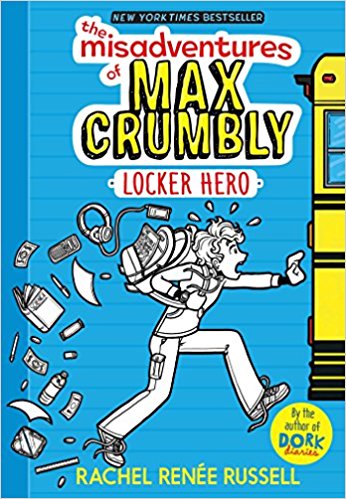
GoodReads Summary: Max Crumbly is about to face the scariest place he’s ever been: South Ridge Middle School. There’s a lot that’s great about his new school, but there’s also one big problem—Doug, the school bully whose hobby is stuffing Max in his locker. If only Max could be like the hero in his favorite comics. Unfortunately, Max’s uncanny, almost superhuman ability to smell pizza from a block away won’t exactly save any lives or foil bad guys. But that doesn’t mean Max won’t do his best to be the hero his school needs!

Review: This book is the beginning of a soon to be very popular series. I suggest you purchase a copy of this book for your classroom library while you still can. In June, the 2nd book will be released and I have a feeling it will not be available on the shelf for long. This book has a very similar style to the “Dairy of a Wimpy Kid” series which children across grade levels love. This book introduces relevant themes to a middle grade reader such as peer conflict, coping with bullying, pop culture, relationships, friendship, surviving middle school, and learning to laugh at yourself. This book was an easy ready and would be ideal for a more reluctant reader or to read for pleasure.

Teachers’ Tools for Navigation: This book is one of the rare few written in second person. Max Crumbly, the narrator, is writing journal entries addressing the reader as “you.” “The Adventures of Max Crumbly” would be an interesting text to explore point of view with your students. You could also use the text to highlight the use of exclamation and variation of font. Additionally, the text could be a resource when reviewing the writing process. There are entire sentences scratched out, arrows redirecting the narrative, edits, revisions, and inclusions in the final text.

Discussion Questions: Is this style of writing something you think you would be able to create?; How does the point of view of the narrator impact your perceptions as a reader?; What value did the illustrations add to the text—if any?; Are there any themes or topics in which you can identify/connect with?

Book Trailer: 

Online Resource: http://maxcrumbly.com/

Read This If You Loved: Dork Diaries series by Rachel Renee Russell, Dairy of a Wimpy Kid series by Jeff Kinney
Recommended For:
 classroomlibrarybuttonsmall

Thank you, Emily!
RickiSig

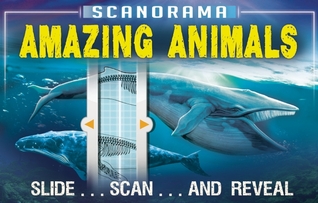
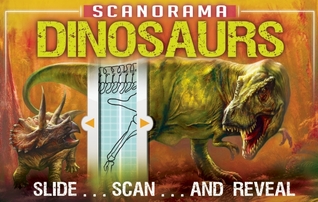
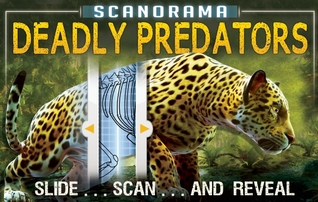
Scanorama Series (Amazing Animals, Dinosaurs, & Deadly Predators) by Anna Claybourne

Share

nfpb2017

Nonfiction Wednesday

Nonfiction Picture Book Wednesday is hosted by Kid Lit Frenzy and was started to help promote the reading of nonfiction texts. Most Wednesdays, we will be participating and will review a nonfiction text (though it may not always be a picture book).
Be sure to visit Kid Lit Frenzy and see what other nonfiction books are shared this week!

Scanorama Series
Amazing Animals
Dinosaurs
Deadly Predators
Author: Anna Claybourne
Published September 13th, 2016 by Silver Dolphin Books

Summary: Slide the scanner across the page to discover what lies under the skin of the world’s most fascinating creatures! In Scanorama: Amazing Animals, readers will meet a variety of species from across the animal kingdom and learn about their astounding feats of strength, speed, and endurance. The five movable sliders transform the illustrated animals—including an anaconda, a thorny devil, and a blue whale—to reveal their skeletons, creating a virtual X-ray on the page. Captivating facts, photographs, and illustrations provide even more details on each animal, and interactive flaps to lift enhance the scan-tastic educational experience.

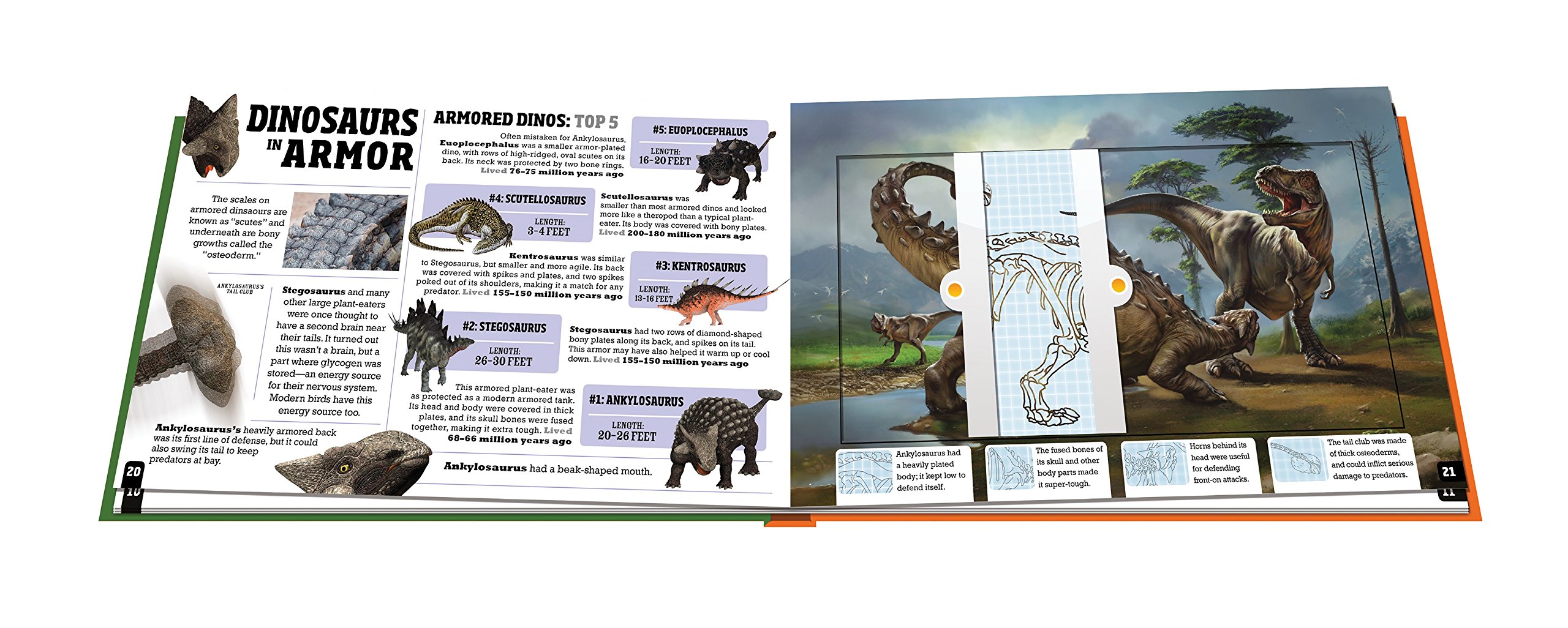
Scanorama: Dinosaurs and Other Prehistoric Creatures gives young readers the feel of working as a lab technician as they study dinosaurs and other amazing prehistoric animals. Five movable sliders transform illustrated creatures—such as the deadly T. rex, the armored Ankylosaurus, and the massive Argentinosaurus—into virtual X-ray scans, revealing their fossilized skeletons. Detailed text, photographs, and illustrations provide insights into how each animal survived in the prehistoric world, and even more facts can be found under the interactive flaps throughout the book.

On the pages of Scanorama: Deadly Predators, kids are treated to a virtual X-ray tour featuring some of the world’s most dangerous animals. Five movable sliders transform illustrated animals into full-body scans that reveal their skeletons and show how they have come to rule their habitats. Featured animals include a tiger, a scorpion, and a great white shark; each animal is covered in detail through informative text, photographs, and illustrations. To learn about even more deadly creatures, readers can lift the flaps and discover what is hiding in wait, ready to pounce on its next victim!

ReviewThese books are so cool! The author has moved nonfiction texts to another level by actual letting the reader see another level of the animals: their bones! The interactive aspect of the scanning makes the book fun, but it is also clever how it reveals the bones of the animal that is being highlighted. In addition to the scanning aspect, there is tons of information about the book’s topic!

Teachers’ Tools for Navigation: These books are made for the classroom. The immense amount of information, and their ability to keep the information fun and the reader entertained makes them perfect for independent activities as well as whole group.

Discussion Questions: What does the scanorama show you that other books don’t?; What other scanorama books would you be interested in seeing?; What careers would the scanorama books prepare you to be successful in?; What topic in the books would you be interested in learning more about?; What animals/dinosaurs had similar bone structures? Different bone structures?; What do predators have in common?

Flagged Passages: 

Read This If You Love: Science, Animals, Dinosaurs

Recommended For: 

classroomlibrarybuttonsmall closereadinganalysisbuttonsmall

Signature

**Thank you to Casey at Media Masters Publicity for providing copies for review!!**

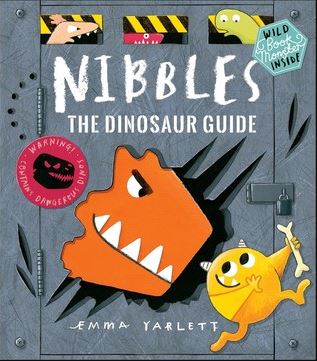
Nibbles: The Dinosaur Guide by Emma Yarlett

Share

Nibbles: The Dinosaur Guide
Author and Illustrator: Emma Yarlett
Published 2017 by Kane Miller Publishing

Summary: NIBBLES, the book-eating MONSTER, has chomped his way into this book of DINOSAURS! Has he bitten off more than he can chew?!

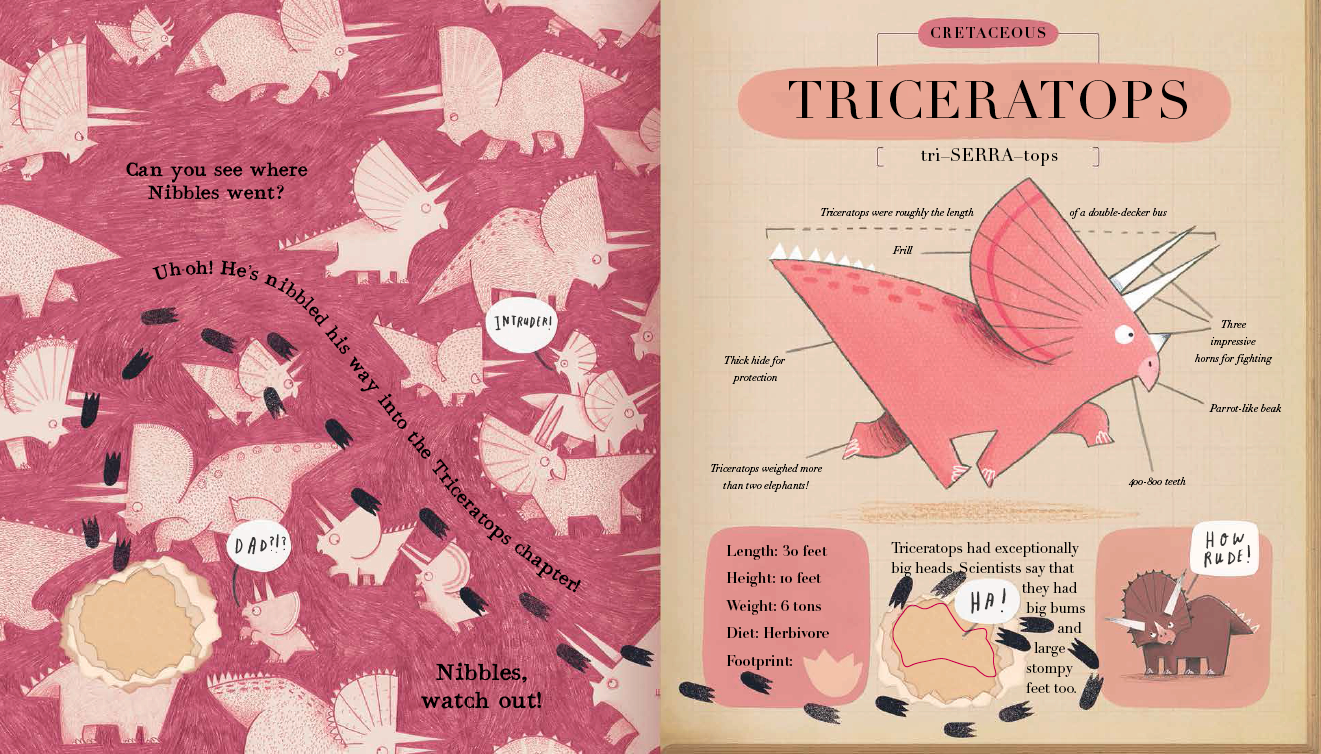
What was a very serious book about very serious dinosaurs is suddenly interrupted by a hole – a nibbled hole – in the book. Who would do something like that?

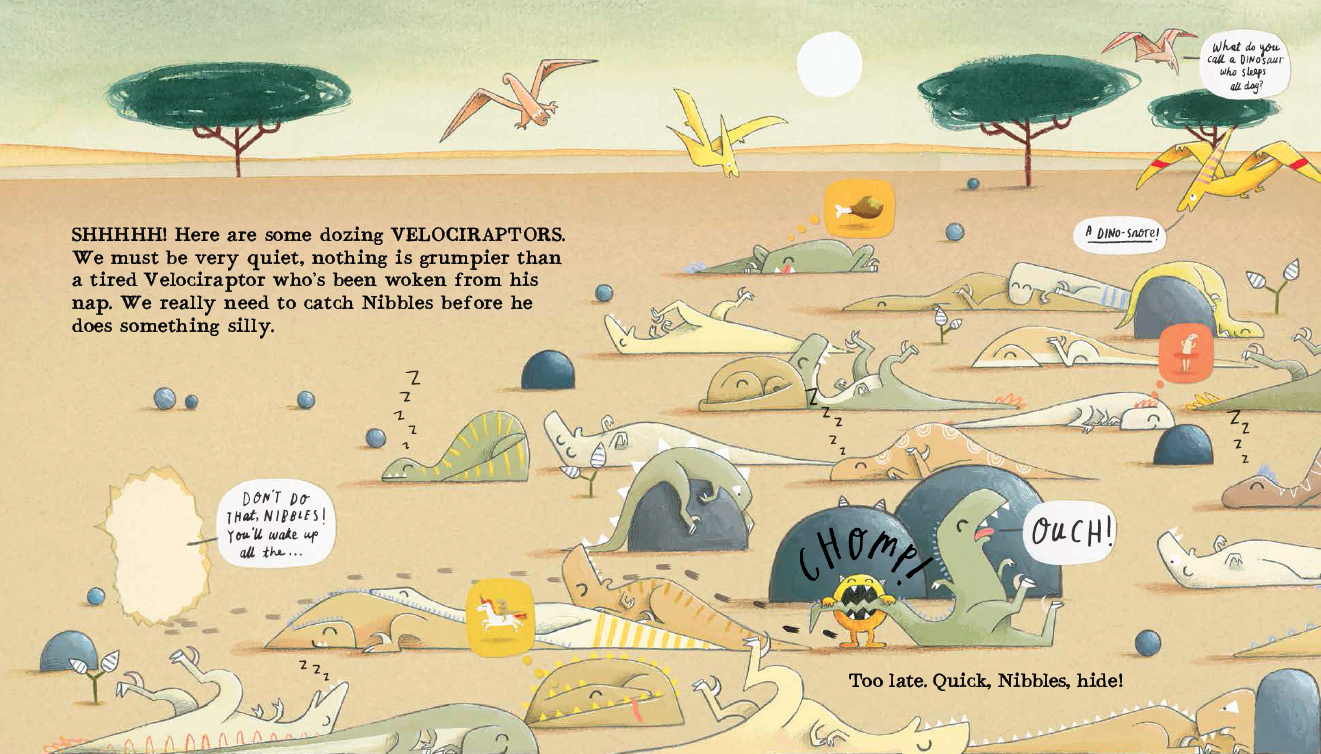
Little ones will love trying to find the culprit – Nibbles – hiding among their favorite, easily recognizable dinosaurs. Is he an herbivore? A carnivore? Or … a bookivore?

Emma Yarlett’s Nibbles: The Dinosaur Guide is packed with flaps, folds, facts and die cuts, plus one very naughty monster and an ending to make Houdini proud. But has Nibbles bitten off more than he can chew?

Themes include humor and science.

Review: We love Nibbles. We have a stuffed Nibbles and have read the first one so many times (and it is one of my husband’s favorite picture books–he says it is so unique.) I am probably majorly biased when it comes to this review because OF COURSE we loved this one also. I mean, listen to this: 

What is so interesting about this new book is that it takes the concept of Nibbles (a book eating monster) and takes him on a time-traveling adventure to the age of the dinosaurs using his eating/transporting powers. It is funny and educational. Just as the first one combined Nibbles’s antics with fairy tales, this one combined Nibbles with dinosaurs education!

Teachers’ Tools for Navigation: What I love more about this one than the first one is that it has a cross-curricular component to it with the inclusion of dinosaurs and specific information about the dinosaurs. This allows the book to be used in reading, writing, and science lessons. I also think it’d be so much fun to have students write their own Nibbles story with him eating into a different topic than dinosaurs.

Discussion Questions: Which dinosaur was the scariest that Nibbles faced? The least scary?; What new information did you learn about dinosaurs?; What were the similarities and differences between the different dinosaurs Nibbles encountered?; What were the consequences of Nibbles jumping back in time?; If you were Nibbles, what book would you Nibble into? Where in time would you jump to?

Flagged Passages: 

Book Trailer: 

Message from the Author about Creativity: 

Read This If You Love: Dinosaurs, Humor, Battle Bunny by Jon Scieszka and Mac Barnett, Nibbles: The Book Monster by Emma Yarlett

Recommended For:

  classroomlibrarybuttonsmall 

**Thank you to Lynn at Kane Miller for providing a copy for review!!**

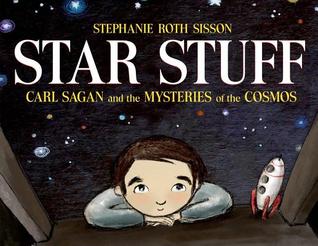
Star Stuff: Carl Sagan and the Mysteries of the Cosmos by Stephanie Roth Sisson

Share

Star Stuff: Carl Sagan and the Mysteries of the Cosmos
Author: Stephanie Roth Sisson
Published: October 14, 2014 by Roaring Brook Press

A Guest Review by Brittany Brown

Summary: A curious boy living in a small city apartment finds the world astonishing. He wants to know about light bulbs, inch worms, and rocket ships. Carl sets out on a journey to find answers, but finds bigger, even more powerful questions. Through his research and studies, Carl eventually earns the title of Dr. Carl Sagan and spends his life seeking knowledge and understanding about the universe. This young

boy’s contributions to science and education have inspired many children everywhere to question the world around them. His story will resonate every child who has ever wondered “how” or “why” or spent an evening looking up at the night sky.

Review: I am constantly looking for books which will inspire my students and get them excited about learning. This book, which is brought to life with beautiful illustrations and the great mysteries of the universe, did that for myself as an adult, too. After reading it, everyday life is once again imbued with the magic and novelty it had in childhood. In Sagan’s eyes, there is no phenomenon too mundane to investigate. The curiosity which most adults leave behind drove Sagan to be the lifelong learner that all teachers hope to foster in their students. Reading this book shows that science is all around us, that we all belong here in the universe, and that in everyone there is a scientist. I absolutely loved reading this book, and as a new teacher building my classroom library, this is the first one which I will be purchasing multiple copies of to share with my students.

Teachers’ Tools for Navigation: This story would pair well with any science or biography unit. It would also serve as a great example of narrative nonfiction.

The most obvious use for this story is in a science unit. I would love to use this book to open up a discussion at the beginning of a unit on the solar system. Not only would it generate excitement, it would also begin to build some vocabulary and background knowledge. It would make the information in the unit more personal and relevant to kids, and would be a great launching point to encourage students to come up with their own questions about how the world works.

This book is also a wonderful book to use for mini lessons in writing. Using this book as an example, a teacher could lead a discussion on how to choose which life events to include in a biography, how to sequence and organize it, and how to incorporate quotes from a historical figure into a writing piece. It also shows how to include facts and achievements in an engaging way, and how to demonstrate a person’s impact on history.

Finally, this book would also be a superb example of narrative nonfiction. Despite containing lots of scientific facts, it reads like a storybook and the illustrations do much of the talking. Students will be captivated with the descriptive narration, and discussions could explore their experiences as readers or how they may be able to attempt this style in their writing.

Discussion Questions: What are your big mystery questions? Where would you go to try to find answers to them? What character traits helped Carl on his journey? What impact did he have on the world? Who does he remind you of?

Book Trailer: 

Read This If You Loved: What Do You Do with an Idea? By Kobi Yamada, I Wonder by Annaka Harris, You Are Stardust by Elin Kelsey, On a Beam of Light: A Story of Albert Einstein by Jennifer Berne, The Boy Who Loved Math: The Improbable Life of Paul Edros by Deborah Heiligman, Look Up!: Henrietta Leavitt, a Pioneering Woman Astronomer by Robert Burleigh

Recommended For:
 classroomlibrarybuttonsmall

Thank you, Brittany!

RickiSig

New Nonfiction Texts and Nonfiction & Fiction Chapter Books from Animal Planet

Share

nfpb2017

Nonfiction Wednesday

Nonfiction Picture Book Wednesday is hosted by Kid Lit Frenzy and was started to help promote the reading of nonfiction texts. Most Wednesdays, we will be participating and will review a nonfiction text (though it may not always be a picture book).
Be sure to visit Kid Lit Frenzy and see what other nonfiction books are shared this week!

If you haven’t noticed, nonfiction texts have really been stepping up their game recently! Some of my favorites from from Animal Planet and Time, Inc., so I wanted to share some new series that are coming from them. 

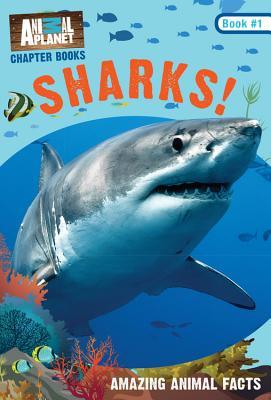
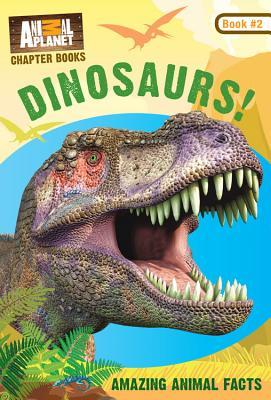
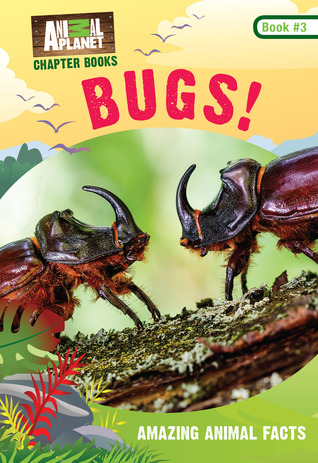
Animal Planet Chapter Books

Book #1: Sharks
Book #2: Dinosaurs
Book #3: Bugs
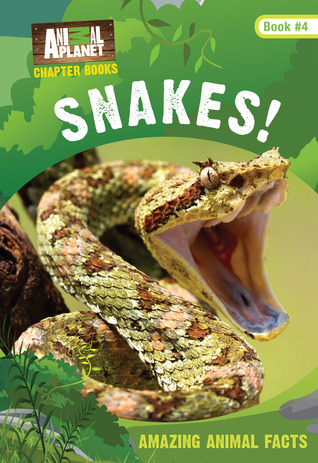
Book #4: Snakes

Summary: Engaging narrative nonfiction is paired with tried-and-true kid-friendly subjects in a popular chapter book series from Animal Planet and Time Inc. Books. All books in the series feature plentiful full-color photographs, illustrations, and a kid-friendly design. Sidebars such as “Meet the Scientists,” “In Your News Feed,” and “Fact File” pages highlight interesting aspects of each creature profiled and keep readers up to date on the most current research. Packed with information for thrill seekers and animal lovers alike, these are the perfect books for new readers who are ready to take a deeper dive into their favorite subject.

A companion fiction series, Animal Planet Adventures, is also available.

Animal Planet Adventures

Book #1: Dolphin Rescue by Catherine Nichols
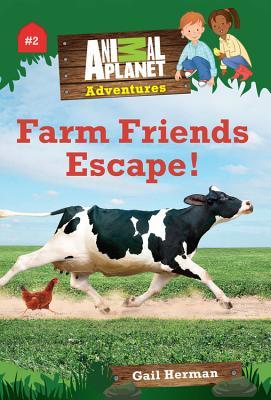
Book #2: Farm Friends Escape! by Gail Herman

Summary: Animal Planet Adventure chapter books present fiction and nonfiction within a familiar narrative format to bring the best of the animal world to young readers. Perfect for reluctant, challenged, and newly fluent readers, the new series combines fun animal mysteries with cool nonfiction sidebars that relate directly to the stories. Each book contains 100 full-color illustrations and photographs.

Animal Planet Adventures Curriculum Guide

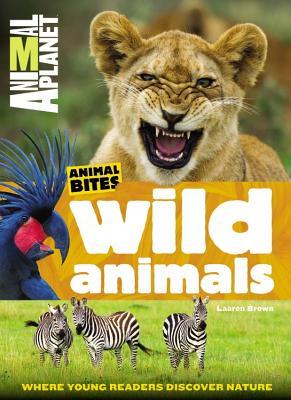
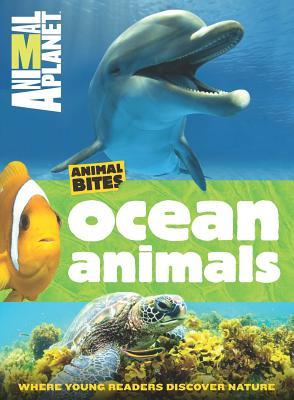
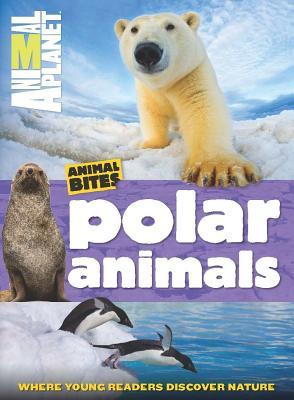
Animal Planet Animal Bites

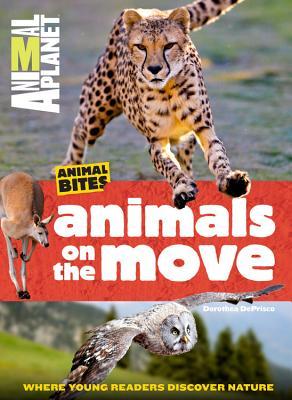
Animals on the Move
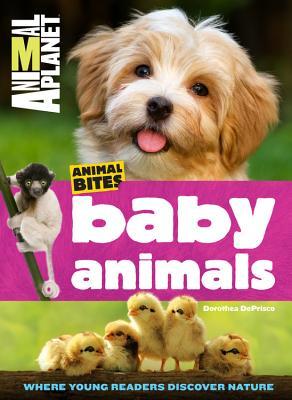
Baby Animals
*Newest titles!*

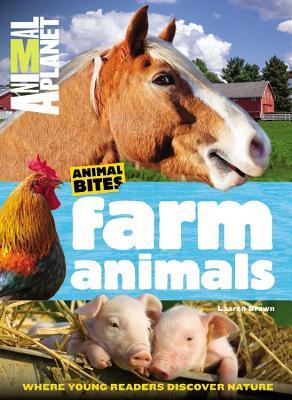
Farm Animals
Wild Animals
*Reviewed October 5th, 2016*

Ocean Animals
Polar Animals
*Reviewed April 27th, 2016*

Summary: The Animal Bites series provides emerging readers with the perfect bite-sized guide to the animal world. Each book contains more than 200 striking photographs, easy-to-understand graphics, and maps. Fun “Just Like Me” call-outs show the ways in which animals are similar to young readers–sharks rely on their senses of sight and scent to learn about their world, for example, just like kids do. “Info bits” boxes highlight quick facts about a species’ home, size, and classification. Each book contains a glossary, a page of resource where kids can go to learn more about animals, and a great list of activities to try, from making a bird feeder to moving like a baby rabbit or tern chick.

A portion of proceeds from the sale of books in the Animal Bites series benefits the principal partners of Reach Out. Act. Respond. (R.O.A.R.), Animals Planet’s initiative dedicated to improving the lives of animals in our communities and in the wild.

All Recommended For:

  litcirclesbuttonsmall classroomlibrarybuttonsmall

A Bike Like Sergio’s by Maribeth Boelts

Share

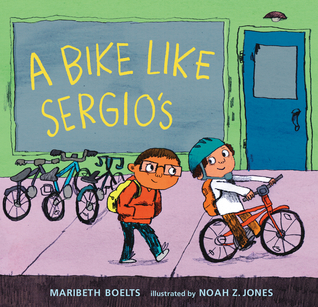
A Bike Like Sergio’s
Author: Maribeth Boelts
Illustrator: Noah Z. Jones
Published October 4th, 2016 by Candlewick Press

Summary: Finders keepers, right? When Ruben picks up someone’s lost money, he finds out how hard it can be to do the right thing.

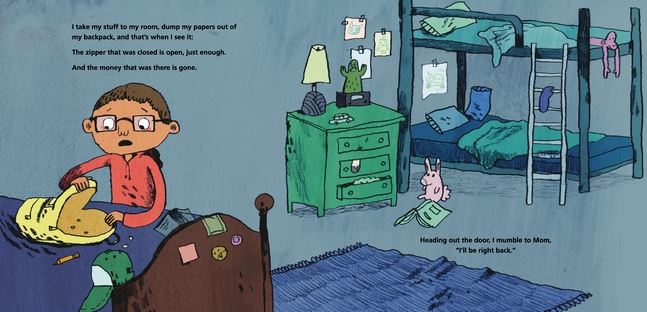
Ruben feels like he is the only kid without a bike. His friend Sergio reminds him that his birthday is coming, but Ruben knows that the kinds of birthday gifts he and Sergio receive are not the same. After all, when Ruben’s mom sends him to Sonny’s corner store for groceries, sometimes she doesn’t have enough money for everything on the list. So when Ruben sees a dollar bill fall out of someone’s purse, he picks it up and puts it in his pocket. But when he gets home, he discovers it’s not one dollar or even five or ten—it’s a hundred-dollar bill, more than enough for a new bike just like Sergio’s! But what about the crossed-off groceries? And what about the woman who lost her money? Presenting a relatable story told with subtlety and heart, the creative team behind Those Shoes pairs up again for a satisfying new picture book.

Review: The summary and many of the reviews I’ve seen focus on the aspect that Ruben must learn to make a tough decision in the book: Should he keep the money or give it back? But something else really hit home for me: Ruben is going to be important to many readers because he is going to reflect the socioeconomic status in which they live. Not often is a topic like money issues hit on in a picture book, but Boelts wasn’t afraid to tackle that. 

One thing I talk to my students a lot about is using phrases to make themselves feel like they are doing the right thing like “finders keepers” or “snitches get stitches,” and A Bike Like Sergio’s tackles how using a phrase to justify a wrong-doing affects others.

Teachers’ Tools for Navigation: One way I picture A Bike Like Sergio’s being used in schools are with counselors in one of their lessons with kids when talking about how to treat others. Many of us get mad when kids act a certain way, but empathy really is something that needs to be taught (research proves it!), so books like Sergio’s will help teach students how actions can affect others and hopefully build empathy within our young students/kids.

Discussion Questions: Why did Ruben consider keeping the money? How would it have affected his family’s life? His life?; Based on the illustrations, how had the losing of $100 affected the woman who lost the money?; Did Ruben do the right thing?

Teachers’ Guide from Candlewick Press

Flagged Passages: 

Read This If You Love: Talking ethics with kids and books such as Farmer Duck by Martin Waddell, We Are Growing! by Laurie Keller, The Thank You Book by Mo Willems

Recommended For:

  classroomlibrarybuttonsmall 

How to Read a Story by Kate Messner

Share

How To Read a Story
Author: Kate Messner; Illustrator: Mark Siegel
Published: May 5, 2015 by Chronicle

A Guest Review by Marisela Valencia

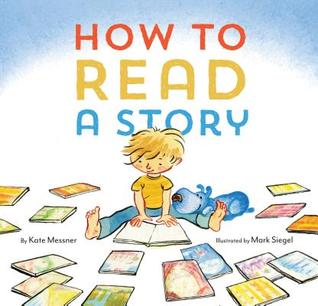
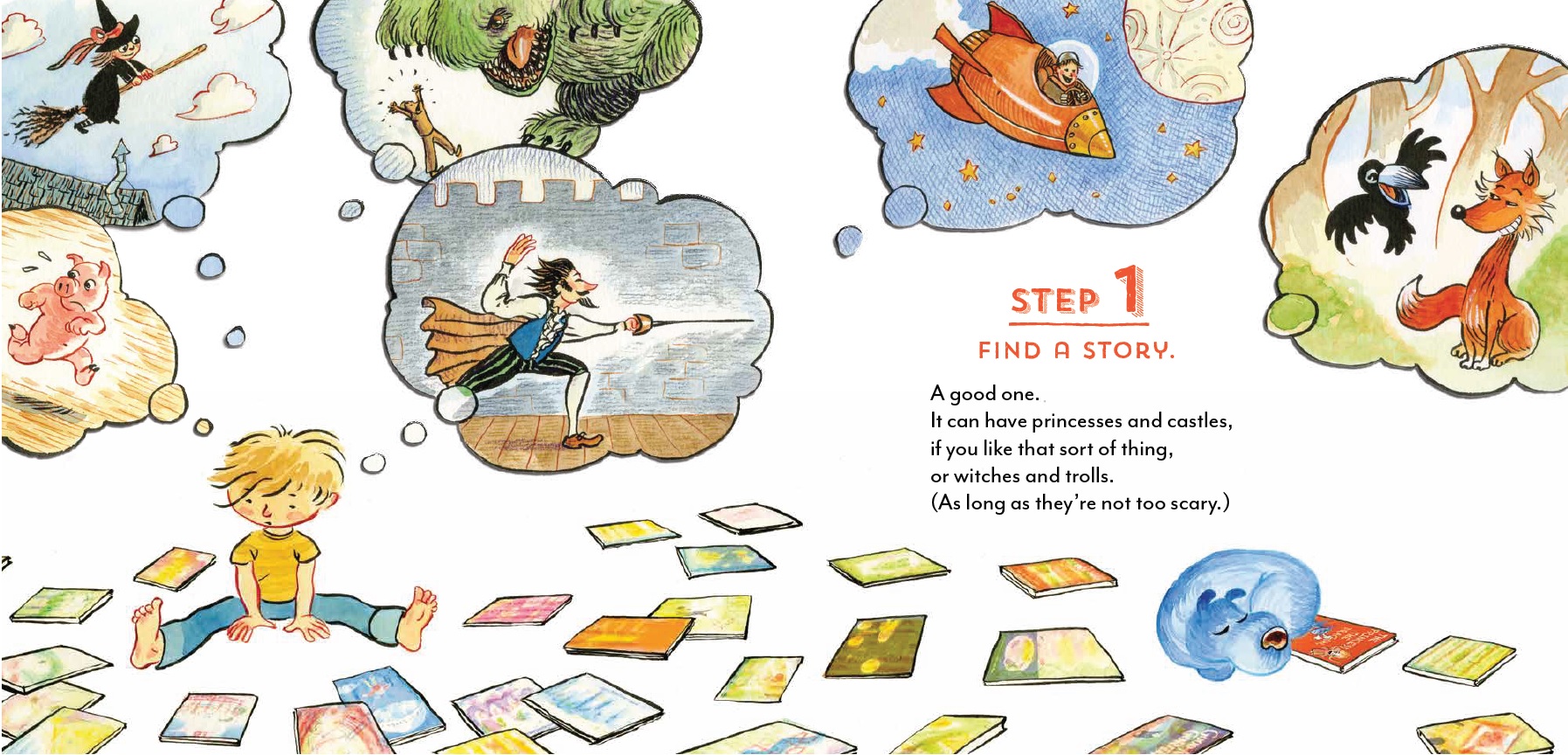
GoodReads Summary: Kate Messner and Mark Siegel’s How to Read a Story is a great picture book for young students to learn how to become excellent readers. In just ten easy steps, students learn about the reading process, and the necessary steps to reading a book. The book starts off with Step 1: “Find a Story” and shows us an illustration of a young boy with blond hair, blue jeans, and bare feet surrounded by books. The young boy continues to go through the steps, picking a book off the shelf, finding a good reading buddy, a cozy place to read, and more. Within these steps we see creative insight into teaching readers and students how to read aloud, make predictions, and even read with expression. This “how to” book is great way to deepen any readers’ love for reading.

Review: Not all reading processes look the same, but this book provides steps to becoming a reader in such a fun and interesting way! Following along with the young boy and the book he chooses in the story, our young readers learn the steps that they can take when reading their own books. The bright and colorful fonts and illustrations in How to Read a Story also draw in readers and provide more detail about the steps. Any student would be motivated to keep reading with these illustrations. Another amazing thing about this book is that the author demonstrates to readers that it is okay to go back and pick a new book if you and your reading buddy do not agree. She also mentions that it is okay to go back and read the book again if you really enjoyed it! I think it is so important for readers to know that they are not stuck with the first book they choose and also that they are more than welcome to read the book again if they enjoyed it!

Teachers’ Tools for Navigation: Great mentor text for students learning to create their own “how to” books and learning about sequencing. Also a great way to initiate discussion about choosing the right book, reading with expression, making predictions, and decoding.

Discussion Questions: What kind of reading buddy would you choose? Would they like the same things as you?; What are some good places to read? What are some not so good places to read (and why?); Did you learn any new things about being a reader from this book? Do you follow any of these steps already?; If you were writing your own “how to”, what would be some important things to include?

Flagged Passage: 

Read This If You Loved: Ralph Tells a Story by Abby Hanlon; A Squiggly Story by Andrew Larsen and Mike Lowery; This is Not a Picture Book by Sergio Ruzzier; Where Are My Books? by Debbie Ridpath Ohi

Recommended For:
 classroomlibrarybuttonsmall

Thank you, Marisela!

RickiSig