Ellie Engineer by Jackson Pearce

Share

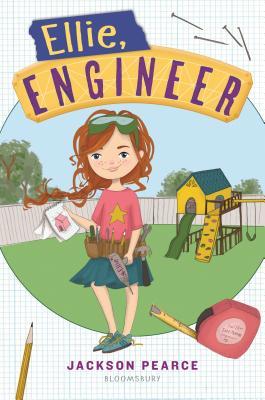
Ellie Engineer
Author: Jackson Pearce
Published January 16th, 2018 by Bloomsbury USA

Summary: Ellie loves to build. She’s always engineering new creations with the help of her imagination and her best friend Kit. Unfortunately, with Kit’s birthday just around the corner, the French-braiding machine Ellie built turns out to be more of a hair-knotting machine. What’s Ellie going to do? Luckily, the girls overhear Kit’s mom talking about Kit’s surprise – it must be the dog she’s always wanted! Ellie is struck with inspiration: she’ll build Kit the best doghouse ever! The project quickly becomes more than just a present for Kit – it builds a bridge between Ellie and those bothersome neighbor boys, as well as the other handy girls in her class.

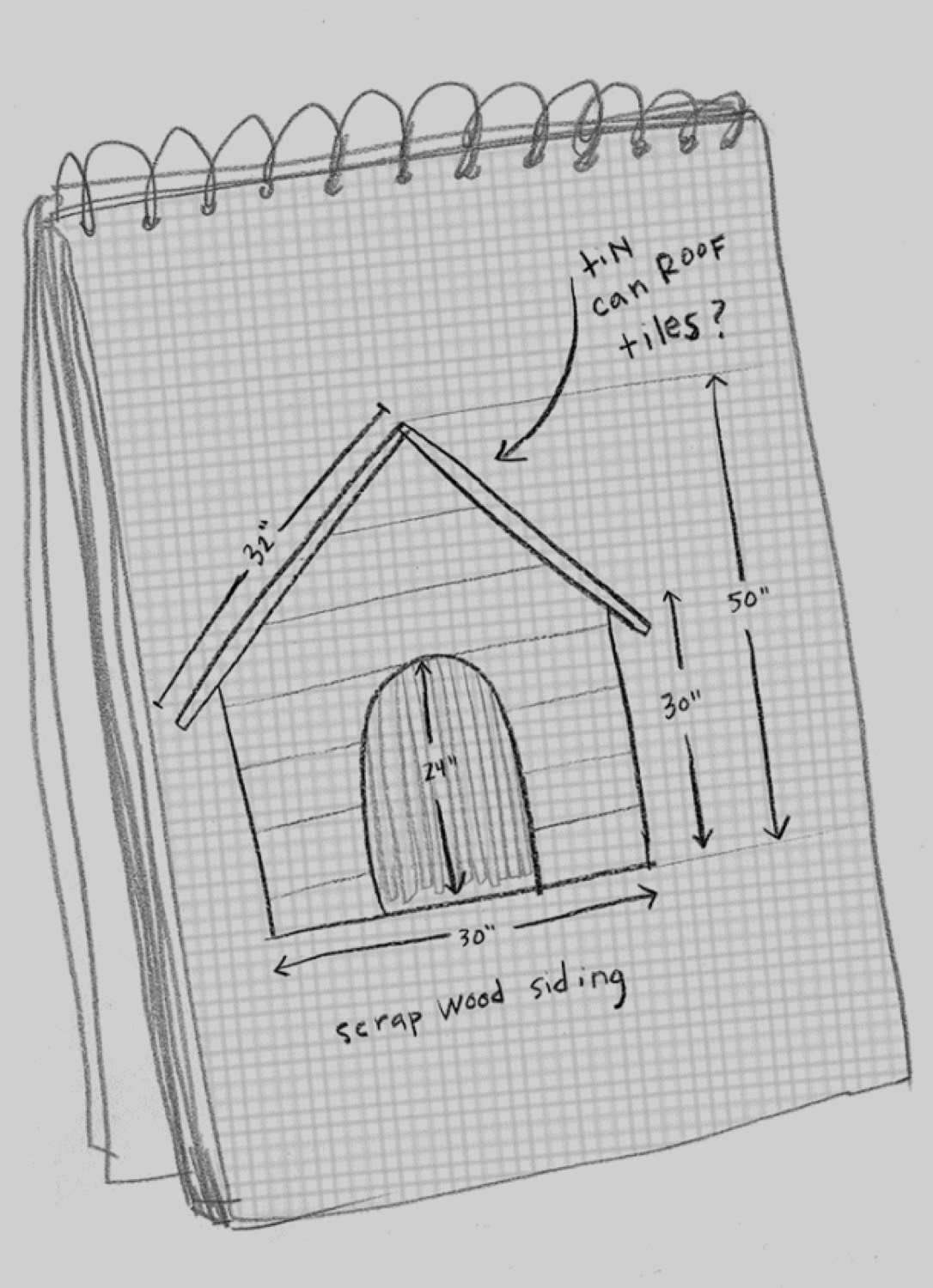
Designed to look like Ellie’s notepad, with pencil-on-graph-paper illustrations of her projects interspersed throughout the book, Ellie, Engineer inspires creative and crafty girls to get hands-on with their imagination. Ellie’s projects range from the simple (using a glass against a wall to amplify sounds), to the practical (the doghouse), to the fantastical (a bedroom security system featuring spikes) – encouraging readers to start small but think big. Ellie’s parents support her engineering experiments, with important safety tips sprinkled throughout, and her relationship with Kit is a glowing example of positive female friendship. They share their hobbies – Ellie likes to get her hands dirty, while Kit prefers ballet – reminding readers that there’s no wrong way to be a girl. Ellie’s hand-drawn tool guide at the end explains basic tools in accessible terms, rounding out this fun and funny adventure, and giving girls everything they need to be their own Ellie!

About the Author: Jackson Pearce lives in Atlanta, Georgia. She is the author of a series of teen retold fairy-tales, including Sisters RedSweetlyFathomless, and Cold Spell, as well as two stand-alones, As You Wish and Purity. As J. Nelle Patrick, she is the author of Tsarina. In addition to The Doublecross and The Inside Job, her middle grade novels include Pip Bartlett’s Guide to Magical Creatures, co-written with Maggie Stiefvater. Visit her at www.jacksonpearce.com and @JacksonPearce (Twitter and Instagram).

ReviewI so often hear stories from women my age that share that they loved science or nature or math when they were younger but that they were steered away from that those interests in little ways that they don’t even remember, but they do remember just not loving science anymore. This is exactly the scenario that has raised awareness in the need for STEM or STEAM books, programs, and role models for young girls. Ellie Bell is a perfect girl for this mission! Ellie wants to be an engineer when she grows up and even has her own workshop where her parents give her free reign to work on projects (with the safer tools–power tools require supervision). Pearce has even set up Ellie Engineer to include drawings and plans for Ellie’s projects to show readers how Ellie goes from an idea to a project. And Ellie’s story is one that all readers will connect with as well, so it is a win-win in narrative and STEM!

Teachers’ Tools for Navigation: Books like Ellie need to first be found more in classrooms and libraries. That is step one! After that, I think that using Ellie’s process for keeping track of her projects and how she brainstorms and plans could be an amazing exemplar for a classroom of students who are embarking on project-based learning.

Discussion Questions: 

  • Which of Ellie’s projects would you build?
  • How has the way Ellie’s parents parented helped Ellie become the engineer she is?
  • How did Ellie’s assumptions about the boys in her neighborhood stop her from seeing their real personalities?
  • What does Toby teach us in the story? The Presidents? Kit?
  • Compare and contrast Kit’s mom and Ellie’s mom.

Flagged Passages: 

Ellie’s plan for building her friend a dog house:
Read This If You Love: Ellie Ultra by Gina Bellisario; Juana and Lucas by Juana Medina; Bea Garcia by Deborah Zemke; Cody and the Fountain of Happiness and Cody and the Mysteries of the Universe by Tricia Springstubb; Upside-Down Magic by Sarah Mlynowski, Lauren Myracle, and Emily Jenkins; The Trouble With Ants by Claudia Mills;Lola series by Christine Pakkala; Salem Hyde series by Frank Cammuso; Here’s Hank series by Henry Winkler and Lin Oliver; Bramble and Maggie series by Jessie HaasFlora & Ulysses by Kate DiCamillo; Eleanor series by Julie Sternberg

Recommended For: 

Signature

**Thank you to Casey at Media Masters and to Bloomsbury for providing a copy for review!**
What Do You Do with a Chance? by Kobi Yamada

Share

What Do You Do with a Chance?
Author: Kobi Yamada
Illustrator: Mae Besom
Published: July 1, 2016 by Compendium Inc.

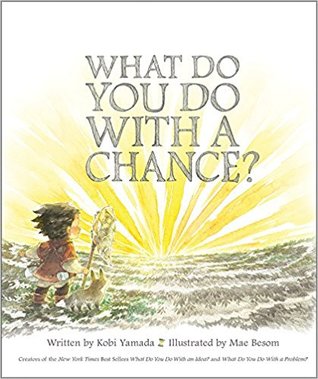
Summary: The award–winning creators of The New York Times best sellers What Do You Do With an Idea?and What Do You Do With a Problem? return with a captivating story about a child who isn’t sure what to make of a chance encounter and then discovers that when you have courage, take chances, and say yes to new experiences, amazing things can happen.

In this story, a child is visited by his first chance and unsure what to do with it, he lets it go. Later on, when a new chance arrives he reaches for it, but this time he misses and falls. Embarrassed and afraid, he begins ignoring each new chance that comes by, even though he still wants to take them. Then one day he realizes that he doesn’t need to be brave all the time, just at the right time, to find out what amazing things can happen when he takes a chance.

The final addition to the award-winning What Do You Do With…? picture book series created by New York Times best selling author Kobi Yamada and illustrator by Mae Besom, What Do You Do With a Chance? inspires kids of all ages and parents alike to find the courage to go for the opportunities that come their way. Because you never know when a chance, once taken, might be the one to change everything.

Ricki’s Review: There is something absolutely magical about these books. This author/illustrator team is simply remarkable in their ability to make the abstract come alive. Each semester, I read one of the books from this series aloud to my preservice teachers. They will be teaching in secondary schools, but this book series makes it obvious about how they can powerfully use picture books in their classrooms. After I read the book aloud, I don’t need to go through a long justification of why picture books work well in middle and high schools. What I like about this series is that each book is different from the other two. They overlap in their conceptualization and they all are remarkable choices for the instruction of symbolism and creating writing–but they all teach very different, big ideas. I can see each book pairing well with a different canonical or YA text. 

Kellee’s Review: I hope each and every one my students leave my class with is that life is about trying and working hard and being creative and kindness and so much more than just passing tests, and Yamada’s series teaches all of these things in such a beautiful, fun, and inspiring way! The newest book in the series looks at the fear that comes with new things, and I think this is something that is so important to talk to kids about, doing anything different or new can be scary for a bunch of different reasons. And this ranges from toddlers (Trent is afraid of fast rides) to teenagers (who may be afraid of doing something that may look uncool or are too busy to grab a chance when it comes by). I am so sad that this is the final installation of the series, but I am so glad that we have the three we do. 

Teacher’s Tools for Navigation: In previous posts for this series, we have discussed how teachers might use this book to teach word choice, symbolism, and creative writing. Teachers might also consider reading all three books aloud to students and talking about the ways they are conceptually similar and different. Students might discuss the paratext of the novels and the marketing of the books. They might also compare and contrast how the books offer completely different, powerful illustrations of abstract ideas.

Discussion Questions: What do you do with a chance?; How do the author and illustrator work together to make the abstract concept of a “chance” more concrete?; What does the book teach about courage?; When have you taken a chance? Did it work out? What did it teach you? What famous people in history have taken chances? What do you think they learned?

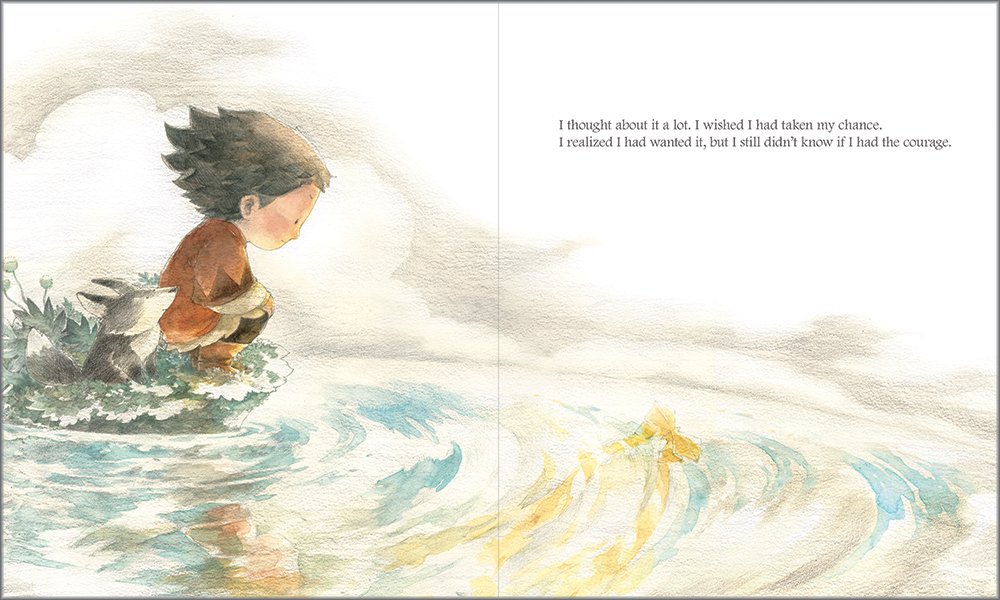
Flagged Passage: 

Read This If You Loved: What Do You Do with an Idea? by Kobi Yamada; What Do You Do With a Problem? by Kobi Yamada; The Most Magnificent Thing by Ashley Spires; The Dot by Peter H. Reynolds, The Noisy Paint Box by Barb Rosenstock, Lost and Found by Oliver Jeffers, Journey by Aaron Becker

Recommended For:

  readaloudbuttonsmall closereadinganalysisbuttonsmall classroomlibrarybuttonsmall

 and

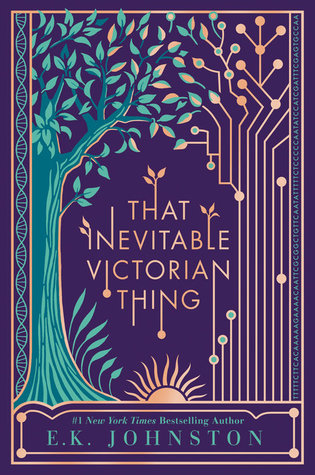
That Inevitable Victorian Thing by E. K. Johnston

Share

That Inevitable Victorian Thing
Author: E. K. Johnston
Published: October 3, 2017 by Dutton

Guest Review by Kaari von Bernuth

Goodreads Summary: Set in a near-future world where the British Empire was preserved, not by the cost of blood and theft but by effort of repatriation and promises kept, That Inevitable Victorian Thing is a novel of love, duty, and the small moments that can change people and the world.

Victoria-Margaret is the crown princess of the empire, a direct descendent of Victoria I, the queen who changed the course of history two centuries earlier. The imperial practice of genetically arranged matchmaking will soon guide Margaret into a politically advantageous marriage like her mother before her, but before she does her duty, she’ll have one summer incognito in a far corner of empire. In Toronto, she meets Helena Marcus, daughter of one of the empire’s greatest placement geneticists, and August Callaghan, the heir apparent to a powerful shipping firm currently besieged by American pirates. In a summer of high-society debutante balls, politically charged tea parties, and romantic country dances, Margaret, Helena, and August discover they share an unusual bond and maybe a one in a million chance to have what they want and to change the world in the process —just like the first Queen Victoria.

My Review: The futuristic setting of this novel that wasn’t a dystopia was very intriguing to me. Most of the futuristic novels that I’ve read have featured dystopian societies, so it was refreshing to have something that worked. I really enjoyed the multiple perspectives from the different characters, and became personally invested in their lives and experiences. I’d find myself hurting for Helena as she struggled to reconcile her identity, and rooting for August to do the right thing. In some way, all of the characters have to struggle to come of age and develop their identity based on who they want to be. 

However, I wish that this novel had placed a little more effort on the ending. While the rest of the novel had dealt with realistic challenges that an adolescent might face, the ending seemed rather contrived, and less realistic like the rest of the novel. The solution proposed at the end of the novel is not a solution that an adolescent in current society could replicate and learn from, which was disappointing.

Teachers’ Tools for Navigation: This book poses great questions about racism (or rather the eradication of racism), as well as questions of morality. It also would be great for discussions about the influence that society can have on your life verses the influence that you decide for your life. I think that this book would be a great addition to a classroom library for kids to enjoy, or a book to be used in a reading circle. It’s engaging and could lead to interesting discussions, especially about the futuristic government and setting of the novel, and the aforementioned topics of racism, morality, and societal influence vs self. However, I do think that other novels cover these topics in a better way, which is why I wouldn’t recommend it for large classroom discussions.  

Discussion Questions: Is this novel a utopia? Dystopia? Does it fit either criteria?; How is race approached in this novel? Is there racism in the society?; What is the role of colonialism in this novel?; What is the role of the Computer? Do you think this is a good advancement?; What does the computer lack?; What morality questions does this novel pose?

We Flagged: “The Computer is sufficient if you want to know your future without taking into account your soul. I don’t mean in the eternal sense, but in the worldly. The Computer can tell you if your genes are prone to carcinoma or if you might be six feet tall, but it cannot tell you if you will enjoy dancing or if you will prefer cake to pie. I would argue that the latter is more important in terms of a long and healthy relationship” (p. 254).

Read This If You Loved: Matched by Allie Condie; Delirium by Lauren Oliver; The Luxe by Anna Godbersen; The Selection by Kiera Cass

Recommended For:

classroomlibrarybuttonsmall  

  RickiSig

**Thank you to Kaari for reviewing this book!**

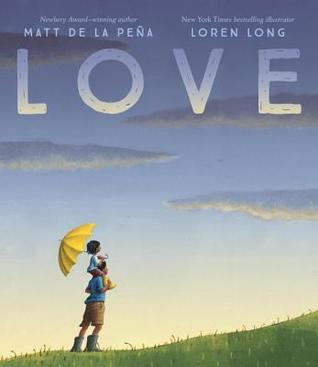
Love by Matt de la Peña

Share

Love
Author: Matt de la Peña
Illustrator: Loren Long
Published January 9th, 2018 by Putnam

Summary: From Newbery Medal-winning author Matt de la Peña and bestselling illustrator Loren Long comes a story about the strongest bond there is and the diverse and powerful ways it connects us all.

“In the beginning there is light
and two wide-eyed figures standing near the foot of your bed
and the sound of their voices is love.

A cab driver plays love softly on his radio
while you bounce in back with the bumps of the city
and everything smells new, and it smells like life.”

In this heartfelt celebration of love, Matt de la Peña and  illustrator Loren Long depict the many ways we experience this universal bond, which carries us from the day we are born throughout the years of our childhood and beyond. With a lyrical text that’s soothing and inspiring, this tender tale is a needed comfort and a new classic that will resonate with readers of every age.

Kellee’s Review: I sat here for a long time trying to figure out how to put into words how I feel about this book. I just can’t, but I will try. 

Let me give you some history. At ALAN in 2016, I believe, Matt was a speaker, and he shared how he’d written a poem about love to share with his daughter when the world didn’t seem so loving. Matt’s daughter is approximately Trent’s age and she’s his first just like Trent is, so I completely understood his feelings–the reality that we’ve brought children into this hard world. When Matt read his beautiful words, I cried. It was beautiful. At the end of the poem, he let us know it was going to be a book, and I had very high expectations.

Then at NCTE 2017, I heard that Penguin had a finished copy. I thought that there was no way that the book could live up to what I expected. But then I read it. And I cried again. I, probably rudely, found Matt right away, maybe interrupting a conversation he was having with someone else, to tell him what a beautiful book he and Loren had created. Matt’s poem had been about love, but the book is about LOVE. Love in the sense that every one needs to start thinking about–love between every person. Empathy. Understanding. Tolerance. Unity. Love for all humans.

And as I read it over and over (after I was lucky enough to receive a copy), I couldn’t think of a kid I didn’t want to share it with. I wanted to share it with my son to talk about how much I love him and how he should love all of human kind; I wanted to share it with my friend who is a 2nd grade teacher, so she could share it with all of her students; I wanted to share it with my students, so we can discuss about the love and acceptance found in each spread and each word; and I am so happy to be sharing it here with all of you so that it can be in every person’s life.

Also, please read this amazing article by Matt de la Peña: “Why We Shouldn’t Shield Children from Darkness” from Time and Kate DiCamillo’s follow-up “Why Children’s Books Should Be a Little Bit Sad” where she answers a question de la Peña posed in his article as well as this Twitter thread from Sayantani DasGupta where she explores the need for joy in the darkeness! It truly embodies my parenting and teaching philosophy: that although kids are kids, they are also humans and future adults; life should be about being real and about happiness.

In the end, I want to just thank these two amazing men for writing this phenomenal book that I so feel is needed so badly right now, and thank you for including nothing but truth within it including inclusion of all types of people and children and situations and cultures and races and ethnicities, etc.

Ricki’s Review: I am really looking forward to seeing Matt de la Peña next month during his tour! This book is absolutely stunning, and we will certainly be purchasing many copies to give as baby shower gifts. The entire text simply emanates love. It is honest, poetically, and it treats children as the intelligent people that they are. The illustrations are simply marvelous and the words dance across the page. I simply don’t have the words to share how absolutely beautiful this book is. When I think of this book, I think about a warm, cozy house and two little boys on my lap. And these little boys make me feel love, love, love.

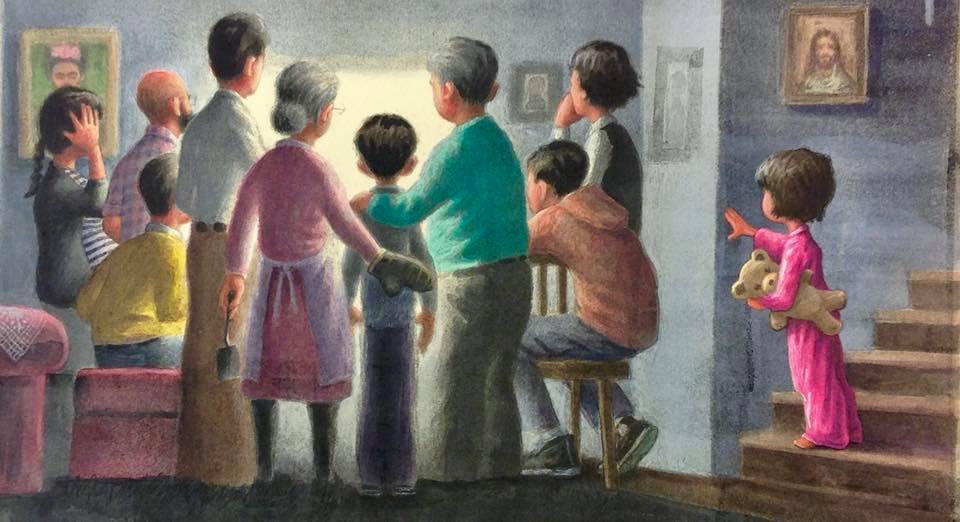
Teachers’ Tools for Navigation: I’ll talk about one scene specifically, which happens to be my favorite.

As soon as I saw this scene, I wanted to show it to students and have discussions with them. How does this scene make them feel? Who is the family? What are they watching? What clues did they use to answer these questions?

Then I would add in the word that accompany the scene:

“One day you find your family
nervously huddled around the TV,
but when you asked what happened,
they answer with silence
and shift between you and the screen.”

And I would ask them how these words change the inferences they made about the spread.

Lastly, I would ask them why this stanza would be in a poem about love, how it fits with the theme, and what it represents.

Another idea that I brainstormed with my friend Jennie Smith are:

  • Recreate my experience by sharing the poem first with the circumstances I shared above. Then reread the poem to them but with the illustrations.
    • After the first read, you can also have them make their own illustrations analyzing the words then compare/contrast the choices that Loren Long made with what they did.

Discussion Questions: 

  • Why did the author and illustrator include tough scenes in their picture book about love?
  • Which scene represents love the most for you?
  • Which scene are you glad they included?
  • How does the poem differ with and without the illustrations?
  • What different purposes could this poem of love be perfect for?

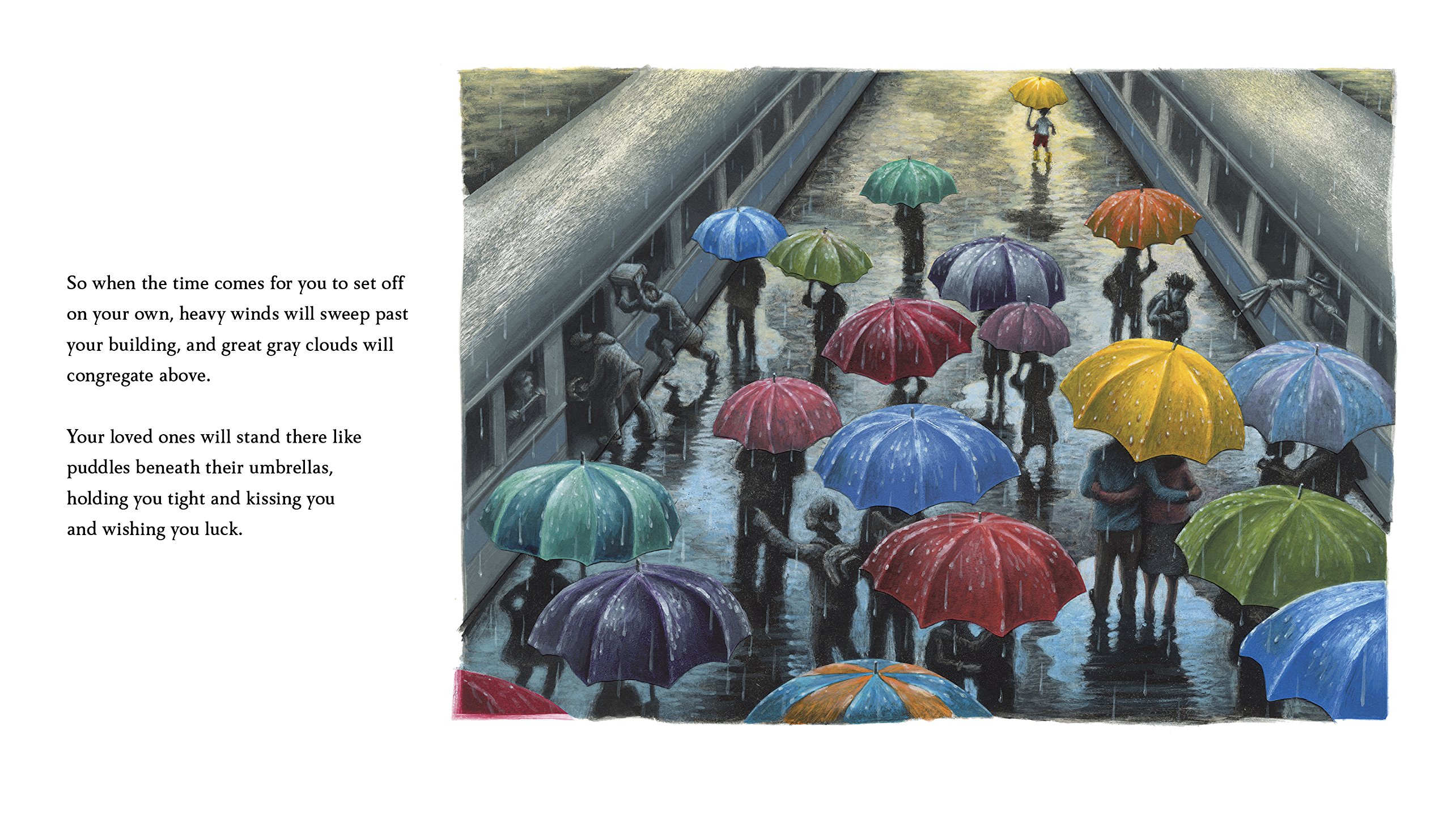
Flagged Passages: *psst!* Matt may have told me this is (one of) his favorite spreads:

Read This If You Love: Love. (But seriously, read this. Period.)

Recommended For: 

Signatureand 

Review and Giveaway!: Don’t Forget Dexter by Lindsay Ward

Share

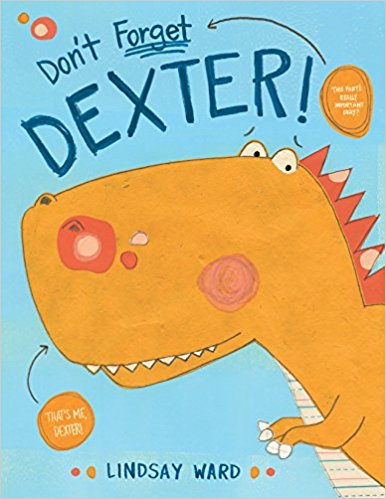
Don’t Forget Dexter
Author and Illustrator: Lindsay Ward
Published January 1, 2018 by Two Lions

Summary: Introducing Dexter T. Rexter, the toughest, coolest dinosaur ever. At least he likes to think so.

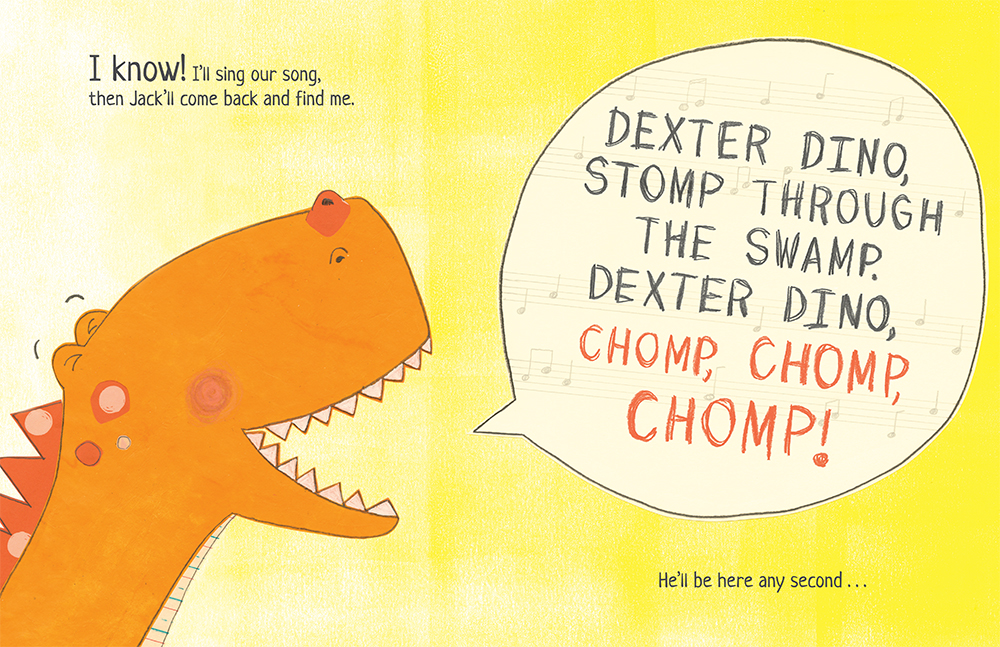
When his best friend, Jack, leaves him behind at the doctor’s office, Dexter T. Rexter panics. First he tries to find Jack. Then he sings their special song. Then he sings their special song even louder. But when Jack still doesn’t appear, Dexter starts to wonder. What if he’s being replaced by another toy? It can’t be—after all, he can STOMP, RAWR, and CHOMP! Right? Right?!

This hilariously neurotic dinosaur will do whatever it takes to get his friend back—even asking the reader’s advice—in this first book of a brand-new series.

Praise for  DON’T FORGET DEXTER!:

★ “Ward’s ink, colored-pencil, and cut-paper illustrations give readers a toy’s view of the world and allow children to stomp in Dexter’s feet for a while, his facial expressions giving them lots of clues to his feelings. Lost and found was never so riotously funny or emotionally draining.” —Kirkus Reviews (starred review)

“Ward (Brobarians) is as funny as ever as she chronicles her orange hero’s nervous, no-filter state of mind, and her cut-paper, pencil, and ink drawings—with their visual asides, annotations, and shifts in scale—are irrepressible. It’s high anxiety made highly adorable.” —Publishers Weekly

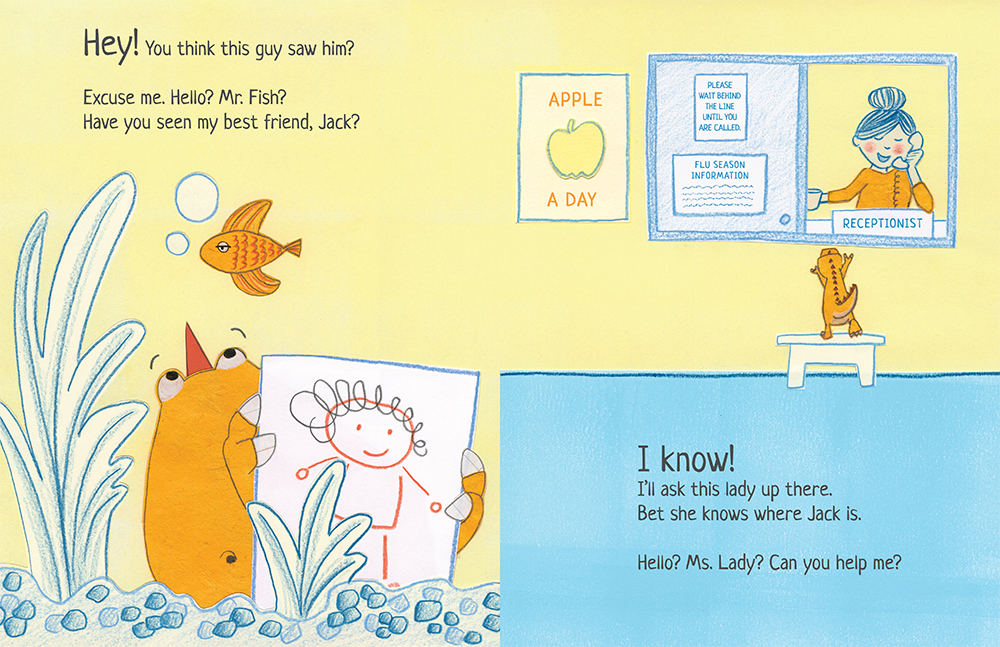
Ricki’s Review: I simply adored this charming story about a toy that is mistakenly left behind by his best friend, Jack. It reminded me a bit of The Velveteen Rabbit and Toy Story (but different!), and it is very accessible for kids. This book  teaches some great lessons, and my son and I had a long conversation about how being separated from his things doesn’t always have to be forever. We recently moved across the country, and he doesn’t have all of his favorite toys around, so this book was really helpful to me as a parent, and I imagine that other parents will find it to be a great resource. We received this book a few weeks ago and have read it several times. My son calls it his “dinosaur book.” We have several dinosaur books, so it is a big compliment that this book is the dinosaur book.

Kellee’s Review: I love the voice of Dexter in this book! And the breaking of the fourth wall really adds such humor to the story line. And although the story sounds a bit like Toy Story and other toy books, it is so different than what you’d expect because Dexter is all alone, doesn’t know why he’s still at the doctor’s office, and is having a bit of an identity crisis. However, the way that Dexter feels will be easily a feeling that readers will relate to because anyone who has ever felt left out from something will feel like Dexter does. 

Teachers’ Tools for Navigation: Teachers might ask kids to write about a time that they were separated from something that they value. They might consider how this separation may or may not have been permanent. Alternatively, teachers might ask kids to write a story in which one of of their toys comes to life.

Check out some fun activities here!

Discussion Questions: How do you learn about the feelings of the characters? What do the author and illustrator do to make these come to life?; When is a time that you were separated from something that you love? Was it permanent?; How do the author and illustrator make the text interactive? How do they engage readers?

Flagged Passage: 

Read This If You Love: Nibbles: The Book Monster by Emma Yarlett, Caring for Your Lion by Tammi Sauer, The Velveteen Rabbit by Margery Williams

About the Author: Lindsay Ward was inspired to write this book after her husband texted her a photo of a toy dinosaur abandoned at a doctor’s office. The caption read: “Well, they left me here.” Lindsay thought it was so funny that she sat down to write Dexter’s story immediately. She is also the author and illustrator of Brobarians, Henry Finds His Word, and When Blue Met Egg. Her book Please Bring Balloons was also made into a play.

Most days you can find Lindsay writing and sketching at her home in Peninsula, Ohio, where she lives with her family. Learn more about her online at www.LindsayMWard.com  or on Twitter: @lindsaymward.

Recommended For:

  classroomlibrarybuttonsmall 

Giveaway!

a Rafflecopter giveaway

 and

**Thank you to Barbara at Blue Slip Media for providing copies for review!!**

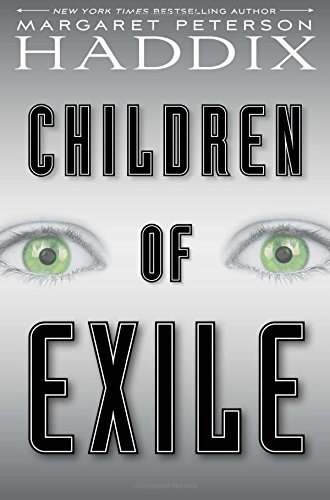
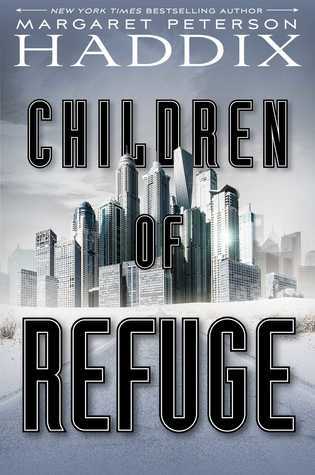
Children of Exile (#1) & Children of Refuge (#2) by Margaret Peterson Haddix

Share

Children of Exile
Published September 13th, 2016 by Simon & Schuster for Young Readers

Children of Refuge
Published September 12th, 2017 by Simon & Schuster for Young Readers

Author: Margaret Peterson Haddix

Children of Exile Summary: For the past twelve years, adults called “Freds” have raised Rosi, her younger brother Bobo, and the other children of their town, saying it is too dangerous for them to stay with their parents, but now they are all being sent back. Since Rosi is the oldest, all the younger kids are looking to her with questions she doesn’t have the answers to. She’d always trusted the Freds completely, but now she’s not so sure.

And their home is nothing like she’d expected, like nothing the Freds had prepared them for. Will Rosi and the other kids be able to adjust to their new reality?

Children of Refuge Summary: After Edwy is smuggled off to Refuge City to stay with his brother and sister, Rosi, Bobo, and Cana are stuck alone—and in danger—in Cursed Town in the thrilling follow-up to Children of Exile from New York Times bestselling author, Margaret Peterson Haddix.

It’s been barely a day since Edwy left Fredtown to be with his parents and, already, he is being sent away. He’s smuggled off to boarding school in Refuge City, where he will be with his brother and sister, who don’t even like him very much. The boarding school is nothing like the school that he knew, there’s no one around looking up to him now, and he’s still not allowed to ask questions!

Alone and confused, Edwy seeks out other children brought back from Fredtown and soon discovers that Rosi and the others—still stuck in the Cursed Town—might be in danger. Can Edwy find his way back to his friends before it’s too late?

ReviewOne thing you can always guarantee when you read a Haddix book is that it will suck you in and will be super unique! The Children of Exile series did not disappoint. I will admit, it is really hard to review either of the books without spoiling. The summaries above both did a really great job, but everything that happens after that suspense-building summary happens would spoil something for you. But I will promise you these things:

  • You will be on the edge of your seat and not be able to figure out what is going on for 90% of the first book.
  • You will be disgusted by the treatment of the children once they are returned to their parents.
  • You will want to help Edwy and his friends so badly throughout the entire second book.
  • You will have to stop reading when the reveal happens in the first book just to process it. Then you’ll reread. Then you’ll text someone who has read it.
  • You will want to know more than book 2 tells you, so we’ll all be waiting impatiently for #3.
  • You will realize that these books are actually a bit older and darker than they first seem.

Teachers’ Tools for Navigation: Like other Haddix books, you will find the best home for these books in the hands of kids. They are going to be talking about these books after they read them!

Discussion Questions: Discussion questions are available on Haddix’s website.

Flagged Passages: “‘Remember to be good little children!’

Good little children, good little children, good little children…

I saw children crying and clinging to their Fred-parents’ legs. I saw men yanking babies from their Fred-parents’ arms. I turned my back to my own Fred-mama and Fred-daddy — maybe to grab them as hard as I could — but the crowd surged just then, pushing Bobo and me up the stairs. I couldn’t see my Fred-parents anymore. I hadn’t even had a chance to tell them a proper good-bye.” (Children of Exile, Chapter 3)

“I’d been counting on being able to run fast enough no one caught up.

‘Good,’ an oily voice whispered in my ear. ‘Now you understand that screaming is useless.’

‘No, I was just–‘ Before I could add deciding what to scream next, a thick hand slid over my mouth. It smelled of onions and sweat and mud and, I don’t know, maybe puke as well.” (Children of Exile, Prologue)

Read This If You Love: Knife of Never Letting Go by Patrick Ness, Tesla’s Attic by Neal Shusterman, Masterminds by Gordon Korman, Spillzone by Scott Westerfeld

Recommended For: 

Signature

**Thank you to Casey at Media Masters for providing copies for review!**

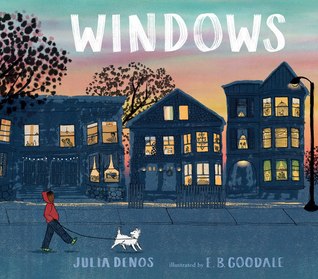
Windows by Julia Denos

Share

Windows
Author: Julia Denos; Illustrator: E. B. Goodale
Published: October 17, 2017 by Candlewick

Goodreads Summary: Walking his dog at dusk, one boy catches glimpses of the lives around him in this lovely ode to autumn evenings, exploring your neighborhood, and coming home.

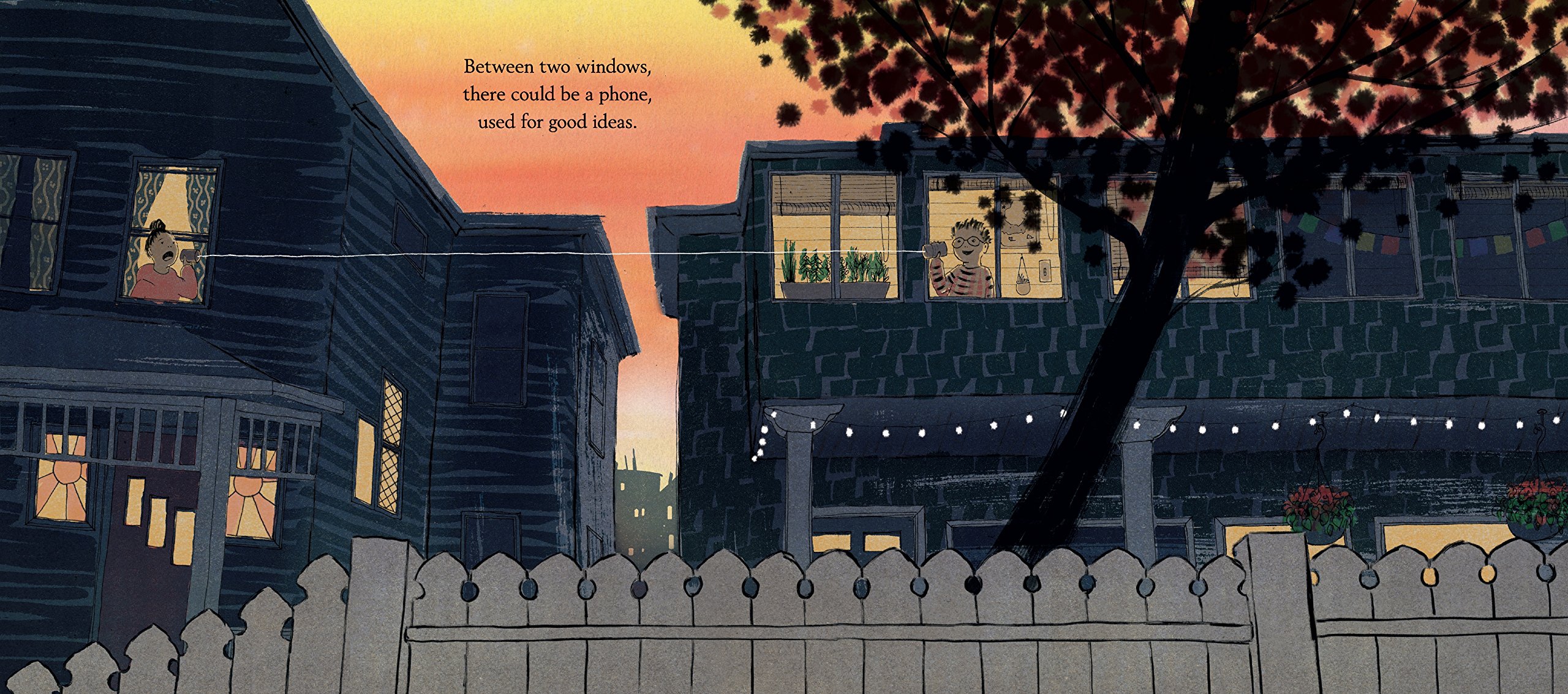
Before your city goes to sleep, you might head out for a walk, your dog at your side as you go out the door and into the almost-night. Anything can happen on such a walk: you might pass a cat, or a friend, or even an early raccoon. And as you go down your street and around the corner, the windows around you light up one by one until you are walking through a maze of paper lanterns, each one granting you a brief, glowing snapshot of your neighbors as families come together and folks settle in for the night. With a setting that feels both specific and universal and a story full of homages to The Snowy Day, Julia Denos and E. B. Goodale have created a singular book — at once about the idea of home and the magic of curiosity, but also about how a sense of safety and belonging is something to which every child is entitled.

My Review: This quiet book captured my heart. My husband used to live in Somerville, and this text beautifully captures the beauty of the city—and the beauty of many cities. I love the way that the author and illustrator reveal that peaking into windows allows us to view a slice of someone else’s world. We don’t see their entire world, but we see the sliver that they allow us to see. This book reminds us to pause and look around us. I am saving this book to give to my son for his birthday because I know he will love it. It’s a book that any person of any age will appreciate.

Teachers’ Tools for Navigation: Teachers might start by asking students to draw a window and the people inside of it. Then, students could move to writing about that family. Perhaps, the window reflects the beauty of those individuals’ world, or perhaps, it doesn’t show the truth. I love the possibilities that this book allows for teachers.

Discussion Questions: What would a window to your house look like? How might each room appear a bit different?; What do we see through the windows of others? What might we miss?

We Flagged:

Read This If You Loved: Last Stop on Market Street by Matt de la Peña; Each Kindness by Jacqueline Woodson, A Bus Called Heaven by Bob Graham, Harlem by Walter Dean Myers

Recommended For:

classroomlibrarybuttonsmall readaloudbuttonsmall 

  RickiSig

**Thank you to Candlewick for providing a copy for review!**