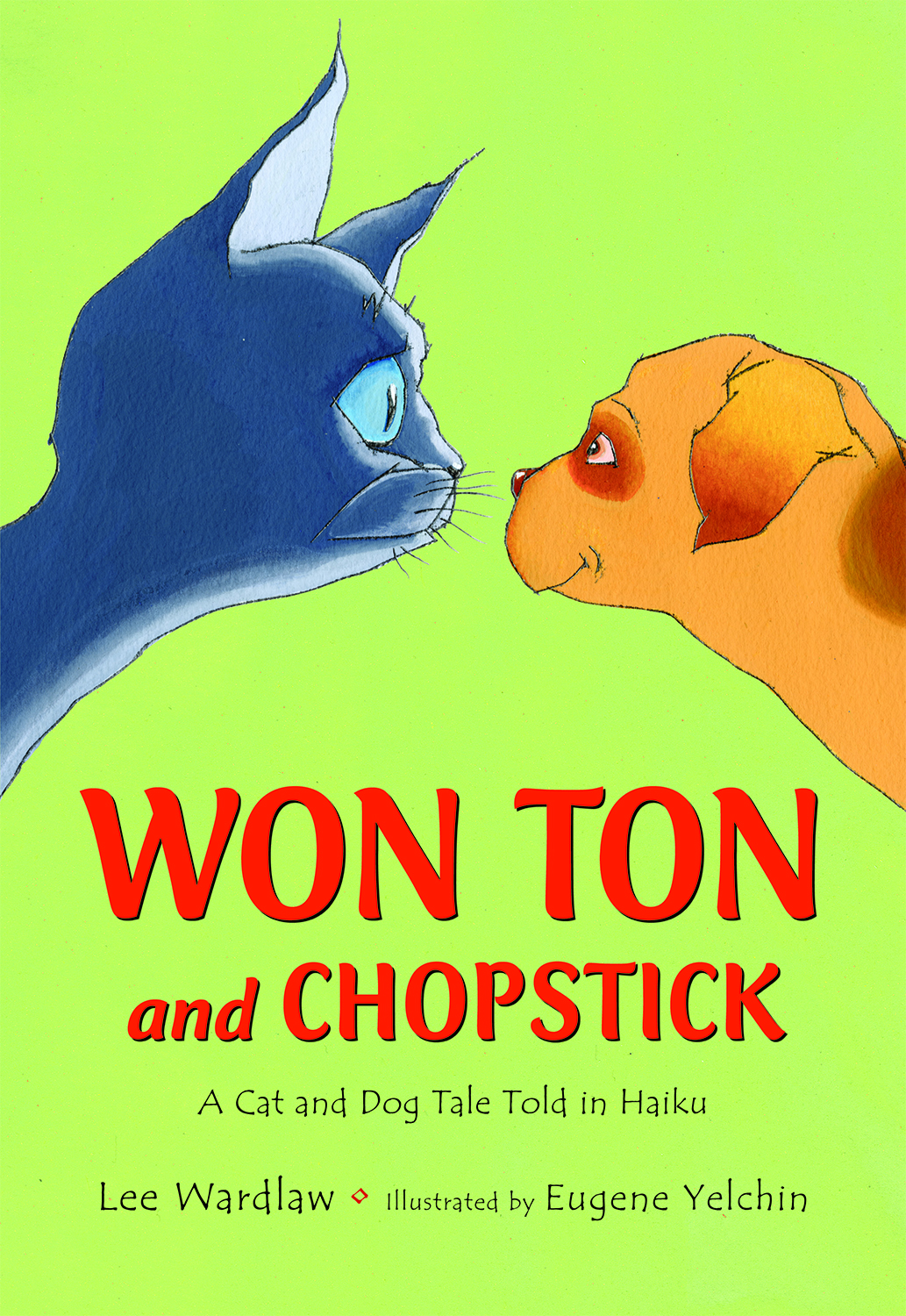
Blog Tour with Review and Author Guest Post!: Won Ton and Chopstick: A Cat and Dog Tale Told in Haiku by Lee Wardlaw

Share

WON TON AND CHOPSTICK cover

Won Ton and Chopstick: A Cat and Dog’s Tale Told in Haiku
Author: Lee Wardlaw
Illustrator: Eugene Yelchin
Published: March 17, 2015 by Henry Holt and Co. (BYR)

Goodreads Summary: Won Ton has a happy life with his Boy, until…
Ears perk. Fur prickles.
Belly low, I creep…peek…FREEZE!
My eyes full of Doom.

A new puppy arrives, and nothing will be the same.Told entirely in haiku and with plenty of catitude, the story of how Won Ton faces down the enemy is a fresh and funny twist on a familiar rivalry.

Ricki’s Review and Teachers’ Tools for Navigation: A Review in Haikus:

Quite Adorable
Fun for All, Especially
Middle Grade and Teen

Vocabulary
Will Teach the Crowds to Love Words
Fantastic Must-Read

Recommended for
Use as a Mentor Text for
Creative Writing

The Illustrations
Capture the Fun of this Tale
Or Should I Say Tail?

Kellee’s Review and Teachers’ Tools for Navigation: Well, Ricki sure one-upped me on this one! But I think she showed a really great example of what you can do with this book. I think it is a perfect introduction to haiku. It makes poetry accessible and fun which is the opposite of what students think when they think of poetry. I actually shared the first Won Ton book with my class at the time, and we wrote our own haiku about our favorite animal. Lee Wardlaw also includes very descriptive and specific vocabulary which would lead to a wonderful conversation about word choice and imagery.

I loved the first Won Ton book (see my review here), and I was happy to see that Lee Wardlaw had written a second so I could see what Won Ton was up to now. I am completely a cat person, so I love how Lee captures the nuances and thoughts of Won Ton.

Bonus Features: Activity Kit for Won Ton and Chopstick and Teacher’s Guide for Won Ton and Chopstick

Discussion Questions: How do the author’s haikus add to the complexity of this tale?; How does the vocabulary enhance the story?; What did you learn about friendship?; How do the illustrations enhance the themes of this book?; How does Won Ton’s feelings for Chopstick change throughout the book?

We Flagged: 

“Master of escape!
High-flying, dog-defying
acrobatic cat!”

Read This if You Loved: Won Ton by Lee Wardlaw; One Leaf Rides the Wind by Celeste Davidson Mannis; If Not for the Cat by Jack Prelutsky; I Haiku You by Betsy E. Snyder; Dogku by Andrew Clements

Check out Won Ton and Chopstick at the Other Stops the Blog Tour:
Mon, Mar 30
Library Fanatic
Tues, Mar 31
Kid Lit Frenzy
Wed, Apr 1
Teach Mentor Texts
Thurs, Apr 2
Sharpread
Fri, Apr 3
A Foodie Bibliophile in Wanderlust
Sat, Apr 4
Booking Mama
Mon, Apr 6
The Children’s Book Review
Tues, Apr 7
5 Minutes for Books
Wed, Apr 8
Cracking the Cover
Thurs, Apr 9
Unleashing Readers
Fri, Apr 10
Word Spelunker
Sat, Apr 11
Bermuda Onion
 Recommended For: 

readaloudbuttonsmall  classroomlibrarybuttonsmall

Author Guest Post:

“Eight Things I Learned from My Cats about Writing Haiku”

by Lee Wardlaw

1. There is no yesterday; there is no tomorrow. There is only you, scratching me under my chin right now.

Haiku poems focus on a right-this-instant experience—or from a memory of that experience. So remind your students to write in the present tense.

2. When poised at a hole, remain still—and use your ears, eyes, nose, whiskers and mouth to detect a lurking gopher.

Observation is crucial to haiku. It’s hard for children today to quiet their minds, especially when they’re constantly bombarded with TV, internet, iPhones, video games, etc. So take them outside, away from all of that! Encourage them to sit alone on the playground, under a tree, on a sunny bench, whatever, and use all five senses to absorb, appreciate, and anchor the moment.

3. Be patient. Then, when least expected—pounce!

Haiku captures ONE moment in time, revealing a surprise . . . or evoking a response of a-ha! or ahhh. This pounce helps the reader awaken and experience an ordinary moment or thing in an extraordinary way.

4. Most cats have 18 toes—unless we’re polydactyl; then we might have 20, 22, even 28 toes!

Japanese haiku feature a total of seventeen beats or sound units: five in the first line, seven in the second, five again in the third. But this 5-7-5 form doesn’t apply to American haiku because of differences in English phonics, vocabulary, grammar, and syntax. Too many teachers focus only on the 5-7-5 because they use haiku as lesson about syllables. Please don’t! When children force an unnecessary adjective or adverb (or a bunch of adverbs) into a haiku simply to meet the 17-beats rule, it ruins the flow, brevity, meaning, and beauty of a poem. It’s not a poem at all, just a laundry list. You end up with poems like this:

My cat is so cute.

He’s really, really, really

cute and so fluffy.

Encourage your students to experiment with any pattern they prefer (e.g. 2-3-2, 5-6-4, 4-7-3)—provided the structure remains three short lines. Remember: what’s most important here is not syllables but the essence of a chosen moment.

5. When I’m out, I want in; when I’m in, I want out. Mostly, I want out. That’s where the rats, gophers, lizards, snakes, bugs and birds are.

Traditional haiku focus on themes of nature, and always include a kigo or “season” word. This doesn’t mean you must be explicit about the weather or time of year. A sensorial hint (e.g. a green leaf indicates spring; a russet leaf indicates fall) is all that’s needed.

6. What part of meow don’t you understand?

Tease a cat and it won’t bother to holler—it will bite and scratch. It shows its annoyance rather than tells. Good haiku follows suit. Instead of explaining, haiku should paint a picture in the reader’s mind of the feeling it evokes. So encourage children to show the reader how cute and fluffy their cat is instead of just telling us.

7. If you refuse to play with me, I will snooze on your keyboard, flick pens off your desk, and gleefully shed into your printer.

Yes, haiku has “rules,” but remember to play! Encourage students to use words like toys, to frolic with them in new ways to portray images, emotions, themes, conflicts and character.

8. When in doubt, nap.

Good writing comes from revising. But before working on a second (or third . . . or fourth!) draft, both the students and their haiku need a “nap.” Set aside the poems for a few days (a few weeks is even better!). What needs revising will be much more obvious if the poems are read again with rested eyes, alert ears, and a fresh mind.

 About Lee Wadlaw:

Lee Wardlaw swears that her first spoken word was “kitty.” Since then, she’s shared her life with 30 cats (not all at the same time) and published 30 books for young readers, including Won Ton: A Cat Tale Told in Haiku, recipient of the Lee Bennett Hopkins Poetry Award and many other honors. Lee has a B.A. in Education, an AMI-Primary Diploma from the Montessori Institute of San Diego, and is finishing her M.Ed. in Education/Child Development. She lives in Santa Barbara with her family. http://www.leewardlaw.com

RickiSigandSignature

**Thank you to Barbara at Blue Slip Media for providing copies for review and giveaway!**
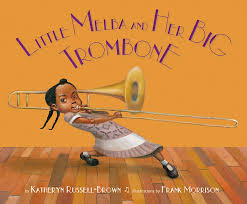
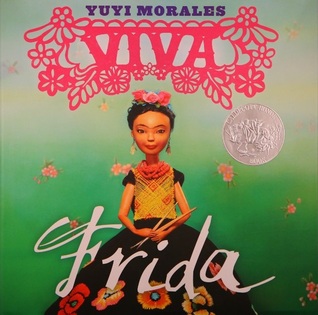
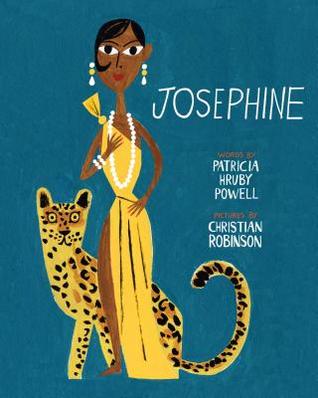
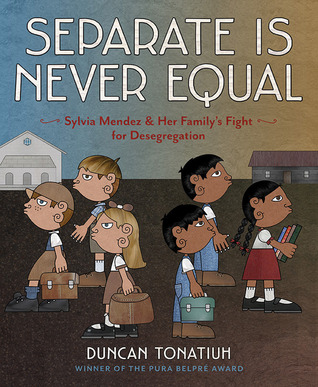
From Kellee’s (Huge) Library Pile Part Five: We Need Diverse Books (Nonfiction) | Little Melba and her Big Trombone by Katheryn Russell-Brown, Viva Frida by Yuyi Morales, Josephine by Patricia Hruby Powell, & Separate is Never Equal by Duncan Tonatiuh

Share

NFPB2015

Nonfiction Picture Book Wednesday

Nonfiction Picture Book Wednesday is hosted by Kid Lit Frenzy and was started to help promote the reading of nonfiction texts. Most Wednesdays, we will be participating and will review a nonfiction text (though it may not always be a picture book).
Be sure to visit Kid Lit Frenzy and see what other nonfiction books are shared this week!

From My (Huge) Library Pile

Because of It’s Monday! What Are You Reading? posts, I find myself often with huge piles of picture books from the library that were highly recommended by fellow bloggers. I celebrate many of the nonfiction pictures books on Wednesdays, but I want to share some of the fiction picture books I have enjoyed. So, I decided to start series here on UR where I can pass on the love for these books sporadically as I read them. Here is a list of some great pictures books that I’ve read recently from my huge library pile (part 5!).

When I was watching the ALA Book Award announcements, I realized that there were many that I had not read, so I immediately ordered them from my library. While reading, I was so happy to see so many diverse picture books (fiction and nonfiction) winning awards. This week I wanted to highlight the picture books I read that were full of diversity. Today I will share the nonfiction titles, and on Friday I will share the fiction titles. 

littlemelba

Little Melba on her Big Trombone
Author: Katheryn Russell-Brown
Illustrator: Frank Morrison
Published September 1st, 2014 by Lee & Low Books
2015 Coretta Scott King for Illustrator Honor

I know I have said this before, but I love the trend of writing picture books about strong woman who should be well known because of their brilliance. Melba Liston is an inspiration. What I loved most about this book is that I think it captured Melba’s spirit as well as the rhythm of the music. The lively oil paintings mixed with Melba’s amazing story make you feel like you know her by the end of the book. I was excited to read the back matter to learn more, and immediately went to You Tube to hear some of her music. I am so glad I was introduced to her.

vivafrida

Viva Frida
Author: Yuyi Morales
Photographer: Tim O’Meara
Published September 2nd, 2014 by Roaring Brook Press
2015 Caldecott Honor, Pura Belpré (Illutrator) Honor

Frida Kahlo is such a mysterious woman. Usually through an artist’s work, you feel like you get to know them, but through Frida’s work, I always felt like she became even more of a mystery to me. This book just adds to that mystery. Told in small phrases in Spanish and English, the books explores creativity and imagination more than it explores Frida’s life. But oh, what an exploration into imagination and creativity it is. We go on a journey with Frida to create a piece of art which is what she lives for, and it makes you, the reader, want to go create so you can live. The beautiful photographs bring Frida, Diego, and many of Frida’s animal friends to life. They are superb!

Josephine

Josephine: The Dazzling Life of Josephine Baker
Author: Patricia Hruby Powell
Illustrator: Christian Robinson
Published January 14th, 2014 by Chronicle Books
2015 Sibert Honor, Coretta Scott King Award for Illustrator Honor

This is quite the book! When I ordered it, I hadn’t realized that it was illustrated chapter book biography, but after learning about Josephine, I can see why she couldn’t be confined to less pages. Her life is an explosion of adventure from running away at 13 to standing up for her civil rights to spying for France during WWII to adopting her “rainbow tribe.” Like Melba, Josephine was a new name for me, but I cannot believe I hadn’t heard of her before. She is the epitome of strength and was a large part of the civil rights movement. I am so glad that I read this picture book that truly captures her spirit through the rhythmic prose and colorful, lively illustrations.

SeparateisNever

Separate is Never Equal: Sylvia Mendez and Her Family’s Fight for Desegregation
Author and Illustrator: Duncan Tonatiuh
Published May 6th, 2014 by Abrams Books for Young Readers
2015 Sibert Honor, Pura Belpré (Illutrator) Honor

Everyone has heard of Brown v. Board of Education, but Sylvia’s case is the predecessor of desegregation in the United States. After Sylvia and her siblings are denied entry into the school they are zoned for, even though they are American, and are sent to the “Mexican school,” Syvlia’s father goes on a mission which leads him all the way to the California Court of Appeals to ensure that his children get the best education possible. I loved that through all of the trials of the Mendez family, they never lost their dignity and grace. They are truly an inspiration This is a book that every teacher and child should read because the Mendez family should be a household name, and it looks at equal accessibility to education which is still relevant today.

What picture books should I add to my pile next?

Signature

Want to see Part One? You can view it HERE.
Want to see Part Two? You can view it HERE.
Want to see Part Three? You can view it HERE.
Want to see Part Four? You can view it HERE.

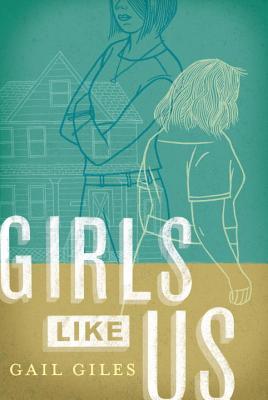
Girls Like Us by Gail Giles

Share

girls like us

Girls Like Us
Author: Gail Giles
Published May 27th, 2014 by Candlewick Press

Goodreads Summary: With gentle humor and unflinching realism, Gail Giles tells the gritty, ultimately hopeful story of two special ed teenagers entering the adult world.

We understand stuff. We just learn it slow. And most of what we understand is that people what ain’t Speddies think we too stupid to get out our own way. And that makes me mad.

Quincy and Biddy are both graduates of their high school’s special ed program, but they couldn’t be more different: suspicious Quincy faces the world with her fists up, while gentle Biddy is frightened to step outside her front door. When they’re thrown together as roommates in their first “real world” apartment, it initially seems to be an uneasy fit. But as Biddy’s past resurfaces and Quincy faces a harrowing experience that no one should have to go through alone, the two of them realize that they might have more in common than they thought — and more important, that they might be able to help each other move forward.

Hard-hitting and compassionate, Girls Like Us is a story about growing up in a world that can be cruel, and finding the strength — and the support — to carry on.

My Review: While reading this book, I had no question that it deserved the Schneider Teen Award. The Schneider Family Book Award honors a “book that embodies an artistic expression of the disability experience for adolescent audiences,” and Girls Like Us take us into Quincy and Biddy’s worlds as they learn to transition from a special-ed classroom in high school to real life in such a true matter, it definitely meets the criteria for the award. In many ways, the book is like any book about girls who just graduated from high school: learning to live with a roommate you don’t understand, learning to be responsible, etc. However, the challenges that these young ladies face because of their disabilities  puts the book on a whole different level. Although the book is primarily about Quincy and Biddy’s life, it does illuminate some serious issues towards the treatment of differently abled individuals. (P.S. I love the ending very much!)

There is so much to talk about with this book! Because it impacted myself and a few of my friends, we decided to have a Twitter chat focused around it (#GLUChat). If you have read the book (because there are spoilers) check out our conversation: https://storify.com/trkravtin/girls-like-us-twitter-chat. Thank you to Teresa for archiving and Michele, Carrie, Alyson, and Leigh for taking part in it with me!

Teachers’ Tools for Navigation: The characters in this book are so complex! Even the secondary characters are fleshed out and have a presence. Girls Like Us is a wonderful example of character building and voice and how that can make (or break) a novel. It is especially fascinating to compare the voice and tone of the two girls’ sections. Extremely well crafted.

Discussion Questions: How do Quincy and Biddy complement each other?; How does Miss Lizzy help Quincy and Biddy overcome the challenges they face leaving school?; How did you (and Miss Lizzy) underestimate Quincy and Biddy? Why did you/she do so?; If you were going to record your feelings like Biddy and Quincy do, what would your recording say?; Did you predict why Biddy didn’t like males correctly? Did you predict the ending?

We Flagged: “My name is Biddy. Some call me other names. Granny calls me Retard. Quincy call me White Trash sometimes and Fool most of the time. Most kids call me Speddie. That’s short for Special Education.

I can’t write or read. A little bit, but not good enough to matter. There’s a lot of stuff I don’t know. If I could write I could make a long list. List might reach lal the way through Texas to someplace like Chicago. I don’t know where Chicago is. That’s another thing for the list.

But there’s some things I do know. And once I know a thing, I hold it tight and don’t let it stray off. Granny shouldn’t call me Retard. I know that. It ain’t nice. It hurts my feelings. I know it’s a wrong thing to hurt somebody’s feelings. I know that I ain’t White Trash. Trash is something you throw away. You don’t throw nobody away. That’s wrong. Even if my mama done it to me.” (p. 1)

Recommended For: 

classroomlibrarybuttonsmall

Signature

Reviews and Educators’ Guide: Matt Tavares’s Baseball Biographies

Share

henry aaronted williams

 babe ruthpedro

Henry Aaron’s Dream
Author: Matt Tavares
Published January 12th, 2010 by Candlewick Press

Goodreads Summary: Matt Tavares hits one out of the park with this powerful tale of a kid from the segregated south who would become baseball’s home-run king.

Before he was Hammerin’ Hank, Henry Aaron was a young boy grow ing up in Mobile, Alabama, with what seemed like a foolhardy dream: to be a big-league baseball player. He didn’t have a bat. He didn’t have a ball. And there wasn’t a single black ball player in the major leagues. B ut none of this could stop Henry Aaron. In a captivating biography of Henr y Aaron’s young life – from his sandlot days through his time in the Negro Leagues to the day he played his first spring training game for the Braves – Matt Tavares offers an inspiring homage to one of baseball’s all-time greats.

There Goes Ted Williams: The Greatest Hitter Who Ever Lived
Author: Matt Tavares
Published February 14th, 2012 by Candlewick Press

Goodreads Summary: A lively picture book biography of Ted Williams from a master of the genre — just in time for Fenway Park’s centennial.

Ted Williams lived a life of dedication and passion. He was an ordinary kid who wanted one thing: to hit a baseball better than anyone else. So he practiced his swing every chance he got. He did fingertip push-ups. He ate a lot of food. He practiced his swing again. And then practiced it some more. From his days playing ball in North Park as a kid to his unmatched .406 season in 1941 to his heroic tours of duty as a fighter pilot in World War II and Korea, the story of Teddy Ballgame is the story of an American hero. In this engrossing biography, a companion to Henry Aaron’s Dream, Matt Tavares makes Ted Williams’s life story accessible to a whole new generation of fans who are sure to admire the hard work, sacrifice, and triumph of the greatest hitter who ever lived.


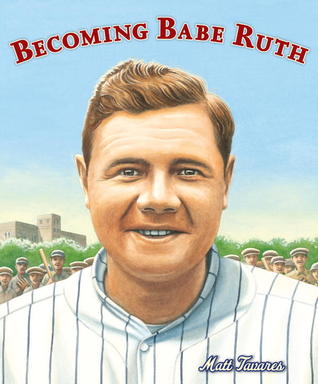
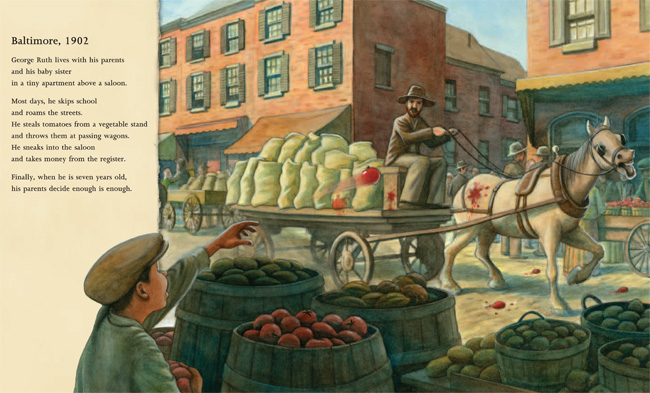
Becoming Babe Ruth
Author: Matt Tavares
Published February 12th, 2013 by Candlewick Press

Goodreads Summary: Matt Tavares’s striking homage to one of baseball’s legends offers a rare view into Babe Ruth’s formative years in “the House that built Ruth.”

Before he is known as the Babe, George Herman Ruth is just a boy who lives in Baltimore and gets into a lot of trouble. But when he turns seven, his father brings him to the gates of Saint Mary’s Industrial School for Boys, and his life is changed forever. At Saint Mary’s, he’s expected to study hard and follow a lot of rules. But there is one good thing about Saint Mary’s: almost every day, George gets to play baseball. Here, under the watchful eye of Brother Matthias, George evolves as a player and as a man, and when he sets off into the wild world of big-league baseball, the school, the boys, and Brother Matthias are never far from his heart. With vivid illustrations and clear affection for his subject, Matt Tavares sheds light on an icon who learned early that life is what you make of it — and sends home a message about honoring the place from which you came.

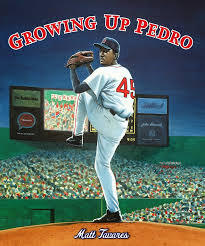
Growing Up Pedro: How the Martinez Brothers Made it From the Dominican Republic All Way to the Major Leagues
Author: Matt Tavares
Published February 10th, 2015

Goodreads Summary: The love between brothers is key to Matt Tavares’s tale of Dominican pitcher Pedro Martinez, from his days of throwing rocks at mangoes to his years as a major-league star.

Before Pedro Martinez pitched the Red Sox to a World Series championship, before he was named to the All-Star team eight times, before he won the Cy Young three times, he was a kid from a place called Manoguayabo in the Dominican Republic. Pedro loved baseball more than anything, and his older brother Ramon was the best pitcher he’d ever seen. He’d dream of the day he and his brother could play together in the major leagues—and here, Matt Tavares tells the story of how that dream came true. In a fitting homage to a modern day baseball star, the acclaimed author-illustrator examines both Pedro Martinez’s improbable rise to the top of his game and the power that comes from the deep bond between brothers.

My Review: These four superbly crafted biographies take a look at the life of each man, but as more than a baseball player. We learn about their childhoods, where they came from, and their dreams and hopes. Each book includes aspects of the history surrounding them including the Depression, wars, and racism. Additionally, these books are crafted beautiful with lyrically written prose. These books are must reads for lovers of baseball, history, and biographies in general.

Teachers’ Tools for Navigation: I was lucky enough to be asked to write a teachers’ guide for each of these books. For each book, I created discussion questions and activities (including cross-curricular activities). I plan on using this guide in my own classroom with the books in a lit circle type of setting. Each group will be given one of the biographies, will complete the discussion questions and activities, and then become experts on their player before presenting. These biographies are asking to be in classrooms, and I hope the guide helps show how they can fit into a language arts/reading class.

Please check out the complete guide at http://www.candlewick.com/book_files/0763668249.btg.1.pdf 

Examples from the guide: 

Becoming Babe Ruth
News spread differently in the early twentieth century. Discuss with your students the way news about Babe Ruth was spread during his lifetime and have students find examples in the text. Then have them discuss the way news is spread digitally nowadays. Invite the class to debate the pros and cons of digital news.; How did Babe Ruth’s life change when he left Saint Mary’s to play for the Orioles?

There Goes Ted Williams
Have students write down Ted Williams’s batting average and home run stats as well as those of two other Hall of Famers. After comparing the players’ stats, have students write a paragraph discussing whether or not they believe that Ted Williams is the best hitter ever.; How did Ted Williams’s childhood perseverance help him become a professional baseball player?

Henry Aaron’s Dream
Baseball began integrating before all cities in the United States had ended segregation. As a class, discuss how this reality affected black players on major-league baseball teams and how black players’ trips to segregated cities differed from those of their white teammates. Then, with your students, complete a graphic organizer comparing and contrasting the life of white and black baseball players during Hank Aaron’s lifetime. Invite students to write an essay about how life has changed for players of color over time.; How did Jackie Robinson influence Henry Aaron? What did Jackie Robinson’s accomplishments mean for other black baseball players? 

Growing Up Pedro
Pull up a map of North America. Have students mark all the different places that Pedro played: the Dominican Republic, Montana, Montreal, and so on. Ask students to determine the miles between each location. Which place was the farthest from Pedro’s home? Which place was the closest?; Have students write a journal entry as Pedro Martínez. Invite them to write, from Pedro’s point of view, what it feels like to move so far away from home when he is so young. Does he miss his family? Is he sad, happy, or excited to be in Montana.

Discussion Questions: Examples of discussion questions and activities for each of the biographies can be found in my teachers’ guide; however, after reading all four of the books, two discussion questions could be: Most of the baseball players had a mentor or idol that he looked up to and learned from. How did these mentors or idols help guide the players into becoming the greats they are?; Each of the baseball players helped a charity that was close to his heart. Who did each player help? Why did players choose the charity they did?

We Flagged: 

Becoming Babe Ruth, byMatt Tavares
http://www.matttavares.com/becomingbaberuth.html from Becoming Babe Ruth

Check out Matt Tavares’s You Tube channel to see sneak peeks into Growing Up Pedro and  There Goes Ted Williams.

Recommended For: 

readaloudbuttonsmall closereadinganalysisbuttonsmall

classroomlibrarybuttonsmall litcirclesbuttonsmall

Signature

Review and Author’s Guest Post!: “Josh, Harrison & Dad’s Excellent Adventure” by Henry L. Herz, Author of Monster Goose Nursery Rhymes

Share

monster goose

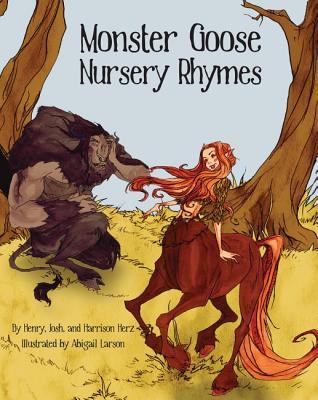
Monster Goose Nursery Rhymes
Authors: Henry, Josh, and Harrison Herz
Illustrator: Abigail Larson
Published February 7th, 2015 by Pelican Publishing Company

Goodreads Summary: Enter an enchanted land of mythical creatures where manticores reign and ogres roar-a land of mystery and fright. A unique twist on traditional rhymes of everyone’s youth, “Monster Goose Nursery Rhymes” presents a more sinister approach to these childhood classics, and yet the sing-song nature of the poems renders them playful and jovial at the same time. Little Witch Muffet is not frightened by a silly, little spider; she simply adds him to her stew!

Rotten zombies, giants, dwarves, and goblins mingle with werewolves, centaurs, and fauns. Follow along the skeleton stepping stones, scale up a palisade, claw at the window of a tasty child and bake him into a pumpkin shell. Monsters cook up delicious elvish pie, too! Every kid who has an eensy weensy bit of sense wants a pet with feathers white as snow, who flies like an eagle and bleats like a goat-a hippogriff, of course!

Six forest sprites with four times as many pixies escape from a loaf of bread atop the elaborate table of the fey queen; her feast has flown away! If you enjoy mischief and have a penchant for the morbidly hilarious, the Herzs’ rhymes will satisfy your mythological curiosities.

Larson’s illustrations give new life to these ancient figures, and her artistic style employs the bold lines and colorful movement of an action-packed comic book. The author also includes a “bestiary” with information about the book’s legendary creatures, which hail from Scotland, Germany, Italy, Persia, Haiti, and Scandinavia.

Kellee’s Review and Teachers’ Tools for Navigation: Really like the creativity of mashing monster/mythology and nursery rhymes. A great intro to all things traditional lit and fantasy in a rhyming, fun way. I especially liked that the creatures hail from a variety of places and that the author included an appendix that includes information about each of them. I think this book would be a great way to introduce mythology as well as give students an opportunity to make their own parody of a nursery rhyme using a creature.

One thing that makes this book special is that Henry Herz wrote this book with his two sons. I am happy to share with you a post about their collaboration:

Josh, Harrison, and Dad’s Excellent Adventure

Henry, Josh & Harrison Herz

The astute observer will notice that there are three author credits for Monster Goose Nursery Rhymes. That’s because my young sons were involved in its creation. This is the tale of how two boys became traditionally published authors.

A few years ago (in a galaxy far away), I wanted to share my love of fantasy with my young sons.  They were too little for watching most of the fantasy and sci-fi movie classics, and there are only so many good fantasy books available for that age range.  Struck by inspiration one day, I came up with a way to share the joy of entering the magical realms of fantasy. I would write a fantasy book for them.

What I did not anticipate was that my boys would give me feedback on the story.  They devised some of the character (Nimpentoad) and creature (Neebel) names and made plot line suggestions.  And who better to help make the story appealing to kids than other kids?  So, the goal of interesting my sons in fantasy transformed into also encouraging them to write.

Originally, I only shared the story of Nimpentoad with family, for their own enjoyment.  I had no thoughts of having the book published.  But one day, my sister-in-law suggested that I consider publication because she felt the story was much better than many of the books she was seeing for her similarly-aged kids.  I thought about it for a while, and decided to give it a try.

The first step was to find the right artist. Once again, my sons were involved, this time in providing art direction.  We would explain in words what each illustration should contain.  Collaborating remotely via email and DropBox, our artist would give us a rough sketch, and we would provide feedback on details and color palette.  Nimpentoad came to life, while my boys added another dimension to their experience.

Given the amount of time that had passed, as well as the anticipated challenges with finding an agent or publisher willing to take a chance on an unproven writer, we decided to indie-publish.  The response to Nimpentoad was encouraging, and we subsequently indie-published Twignibble (an easy reader about a mechanically-inclined sloth, who travels the world helping his endangered animal friends), and How the Rhino Got His Skin (an updated picture book version of Rudyard Kipling’s classic).

We’ve done book readings and signings at schools, libraries, museums, farmer’s markets, book fairs, and bookstores. My boys are now experienced sales professionals! They know how to handle themselves with new people, and easily sell more books than I do.

Like any good author, I am committed to honing my craft. I belong to critique groups, participate in Tara Lazar’s annual Picture Book Idea Month (PiBoIdMo) event, and took a picture book writing class at UCSD. Part of the class curriculum was to draft some picture book manuscripts. Kids love monsters and I love monsters (being a big kid myself), and so the idea for Monster Goose Nursery Rhymes was born.

As with our other collaborations, I drafted the book, and then had my sons review it. Then it went through my critique group and more revisions. I subsequently attended the Orange County Editor’s Day event hosted by the Society of Children’s Book Writers and Illustrators (SCBWI). Monster Goose Nursery Rhymes won best picture book. After that, it was time to query agents and editors. Happily, several editors expressed interest. We chose Pelican Publishing, and the rest is history.

Writing rhyming picture books is very challenging (see why at http://wp.me/p31Xf4-K0). I jokingly encourage newbie writers to visit www.DontDoRhyme.com (not a real website). The irony is not lost on me that my debut traditionally published picture book is in rhyme. My only excuse is that I didn’t have to invent the meter, I just had to twist the words to fit the existing meter.

If you want to interest your kids in mythological creatures, or fantasy literature in general, give Monster Goose Nursery Rhymes a look. Just take care – Monster Goose Nursery Rhymes is a gateway book to The Lightning Thief and, eventually, to The Lord of the Rings.

Learn more about Monster Goose Nursery Rhymes at http://www.birchtreepub.com/mgnr.htm.

Recommended For: 

readaloudbuttonsmall closereadinganalysisbuttonsmall classroomlibrarybuttonsmall

Signature

**Thank you to Henry L. Herz for providing a copy for review and for the guest post!**

Life in Outer Space by Melissa Keil (Ricki’s Review)

Share

outerspace

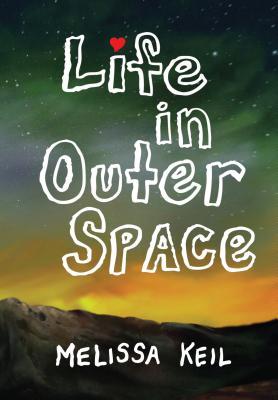
Life in Outer Space
Author: Melissa Keil
Published August 1st, 2013 by Peachtree Publishers

Goodreads Summary: Sam is a geek movie-buff with a ragtag group of loser friends who have been taking abuse from the popular kids for years. But when the super-cool Camilla moves to town, she surprises everyone by choosing to spend time with Sam’s group. Suddenly they go from geek to chic, and find that not everything boils down to us and them. With their social lives in flux, Sam and Camilla spend more and more time together. They become the best of friends, and Sam finds that he’s happier and more comfortable in his own skin than ever before. But eventually Sam must admit to himself that he’s fallen in love. If he confesses his true feelings to Camilla, will everything change again?

My Review: Kellee wrote her review almost a year ago, and after reading her review, I laughed because my notes about this book are so similar to her thoughts.

While reading this book, I thought about its connections to Stargirl by Jerry Spinelli and Paper Towns by John Green, and the narrator reminded me of Charlie from The Perks of Being a Wallflower by Stephen Chbosky. But while this book is similar to others, it is very different.

Sam makes being geeky feel cool. I am geeky, so I appreciated this. He experiences tough life issues that many teenagers face, and he doesn’t lie about his lack of knowledge about dealing with these issues or understanding girls. The book contains scenes with World of Warcraft and there is a lot of information about horror movies (both of which aren’t interesting to me), yet I remained very engaged in the story and the characters. Keil writes the male narrator very well, and I think all types of adolescents will identify with the themes of this book. This is one of Kellee’s favorite books, and I see why. Thank you for nagging me to read it, Kel. It is one that will stick with me forever.

Teachers’ Tools for Navigation: Why hasn’t this book received more press? It belongs in classrooms. As a teacher, I would use it as a mentor text for characterization. The scenes with Camilla are written breathtakingly well. If students read these scenes, they would want to read the entire book.

Discussion Questions: Did you find Camilla to be realistic? Could a student walk in and change the entire dynamic at the school in such a powerful way?; Why does Camilla like Sam? Is this realistic?; In what ways are media used by Keil to engage readers?; What does this book teach us about friendship?; How does Sam’s family life add to the complexity of this book?

We Flagged: “I guess some people enter your orbit and get stuck, and there’s nothing either of you can do about it” (p. 70).

And I loved the quote Kellee picked out. It is the scene I remember the most in the book:

“She is wearing a yellow dress that looks like it belongs to a 1950s housewife, and a pair of flat red boots. Her hair is longer than I’d imagine would be practical; it’s parted in the middle and hangs in brown waves almost to her waist. She peers around the room impassively. She doesn’t look terrified. She doesn’t look insanely overconfident, like Adrian that time in year seven when he performed a song as his book report for The Outsiders. Mike and I mark that event as ground zero for the downward social spiral of our group.” (p. 11)

Read This If You Loved: The Perks of Being a Wallflower by Stephen Chbosky, Stargirl by Jerry Spinelli, Paper Towns by John Green, Eleanor and Park by Rainbow Rowell

Recommended For: 

closereadinganalysisbuttonsmall classroomlibrarybuttonsmall litcirclesbuttonsmall

RickiSig

Fish in a Tree by Lynda Mullaly Hunt

Share

fish

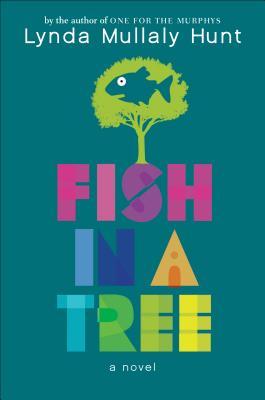
Fish in a Tree
Author: Lynda Mullaly Hunt
Published February 5th, 2015 by Nancy Paulsen Books

Goodreads Summary: The author of the beloved One for the Murphys gives readers an emotionally-charged, uplifting novel that will speak to anyone who’s ever thought there was something wrong with them because they didn’t fit in.

“Everybody is smart in different ways. But if you judge a fish by its ability to climb a tree, it will live its life believing it is stupid.”

Ally has been smart enough to fool a lot of smart people. Every time she lands in a new school, she is able to hide her inability to read by creating clever yet disruptive distractions.  She is afraid to ask for help; after all, how can you cure dumb? However, her newest teacher Mr. Daniels sees the bright, creative kid underneath the trouble maker. With his help, Ally learns not to be so hard on herself and that dyslexia is nothing to be ashamed of. As her confidence grows, Ally feels free to be herself and the world starts opening up with possibilities. She discovers that there’s a lot more to her—and to everyone—than a label, and that great minds don’t always think alike.

My Review: I adore so much about this book.
Ally is so many students that I have had over the years that just needed a teacher to take the time.
Mr. Daniels is the teacher that I hope I am, that I wish I could be, that I want all teachers to be, and that I want to be friends with.
Ally’s journey is one that I hope I inspire my students to have.
Keisha is the friend I wish I’d had.
Albert is so many student in our schools that are just a bit different thus leading to a life of sorrows.
Shay shows that meanness often is because of meanness.
Travis shows that it is never too late to change a kid’s life.
So many special characters, and such a special story.
Once again, Lynda Mullaly Hunt made me cry. Well done!

Teachers’ Tools for Navigation: This book is written to be read by teachers and kids. Its home is in classrooms and libraries. Buy it, read it, and share it with some kids.

Discussion Questions: Why does Ally get in trouble so much at the beginning of the book?; What clues are given that Travis struggles with reading as well?; How does Keisha’s friendship help Ally?; Have you had a teacher like Mr. Daniels who changed your life? Tell us about him/her.

We Flagged: “Seven schools in seen years, and they’re all the same. Whenever I do my best, they tell me I don’t try hard enough. Too messy. Careless spelling. Annoyed that the same word is spelled different ways on the same page. And the headaches. I always get headaches from looking at the brightness of dark letters on white pages for too long.

Mrs. Hall clears her throat.

The rest of the class is getting tired of me again. Chairs slide. Loud sighs. Maybe they think I can’t hear their words: Freak. Dumb. Loser.” (p. 2-3)

Read This If You Loved: Bluefish by Pat Schmatz, The Secret Hum of Daisy by Tracy Holczer, Rain Reign by Ann M. Martin, Wonder by RJ Palacio

Recommended For: 

classroomlibrarybuttonsmall readaloudbuttonsmall

Signature

**Thank you to Penguin and Susan Dee for providing copies for review**