A Bike Like Sergio’s by Maribeth Boelts

Share

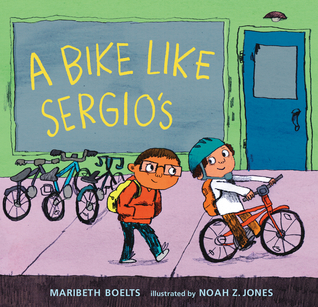
A Bike Like Sergio’s
Author: Maribeth Boelts
Illustrator: Noah Z. Jones
Published October 4th, 2016 by Candlewick Press

Summary: Finders keepers, right? When Ruben picks up someone’s lost money, he finds out how hard it can be to do the right thing.

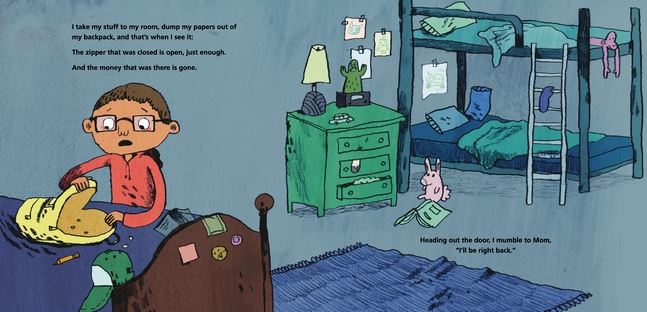
Ruben feels like he is the only kid without a bike. His friend Sergio reminds him that his birthday is coming, but Ruben knows that the kinds of birthday gifts he and Sergio receive are not the same. After all, when Ruben’s mom sends him to Sonny’s corner store for groceries, sometimes she doesn’t have enough money for everything on the list. So when Ruben sees a dollar bill fall out of someone’s purse, he picks it up and puts it in his pocket. But when he gets home, he discovers it’s not one dollar or even five or ten—it’s a hundred-dollar bill, more than enough for a new bike just like Sergio’s! But what about the crossed-off groceries? And what about the woman who lost her money? Presenting a relatable story told with subtlety and heart, the creative team behind Those Shoes pairs up again for a satisfying new picture book.

Review: The summary and many of the reviews I’ve seen focus on the aspect that Ruben must learn to make a tough decision in the book: Should he keep the money or give it back? But something else really hit home for me: Ruben is going to be important to many readers because he is going to reflect the socioeconomic status in which they live. Not often is a topic like money issues hit on in a picture book, but Boelts wasn’t afraid to tackle that. 

One thing I talk to my students a lot about is using phrases to make themselves feel like they are doing the right thing like “finders keepers” or “snitches get stitches,” and A Bike Like Sergio’s tackles how using a phrase to justify a wrong-doing affects others.

Teachers’ Tools for Navigation: One way I picture A Bike Like Sergio’s being used in schools are with counselors in one of their lessons with kids when talking about how to treat others. Many of us get mad when kids act a certain way, but empathy really is something that needs to be taught (research proves it!), so books like Sergio’s will help teach students how actions can affect others and hopefully build empathy within our young students/kids.

Discussion Questions: Why did Ruben consider keeping the money? How would it have affected his family’s life? His life?; Based on the illustrations, how had the losing of $100 affected the woman who lost the money?; Did Ruben do the right thing?

Teachers’ Guide from Candlewick Press

Flagged Passages: 

Read This If You Love: Talking ethics with kids and books such as Farmer Duck by Martin Waddell, We Are Growing! by Laurie Keller, The Thank You Book by Mo Willems

Recommended For:

  classroomlibrarybuttonsmall 

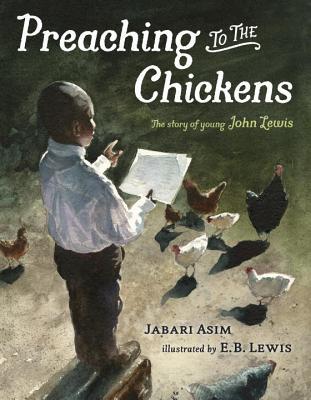
Preaching to the Chickens: The Story of Young John Lewis by Jabari Asim

Share

nfpb2017

Nonfiction Wednesday

Nonfiction Picture Book Wednesday is hosted by Kid Lit Frenzy and was started to help promote the reading of nonfiction texts. Most Wednesdays, we will be participating and will review a nonfiction text (though it may not always be a picture book).
Be sure to visit Kid Lit Frenzy and see what other nonfiction books are shared this week!

Preaching to the Chickens: The Story of Young John Lewis
Author: Jabari Asim
Illustrator: E.B. Lewis
Published October 11th, 2016 by Nancy Paulsen Books

Summary: A glimpse into the boyhood of Civil Rights leader John Lewis.

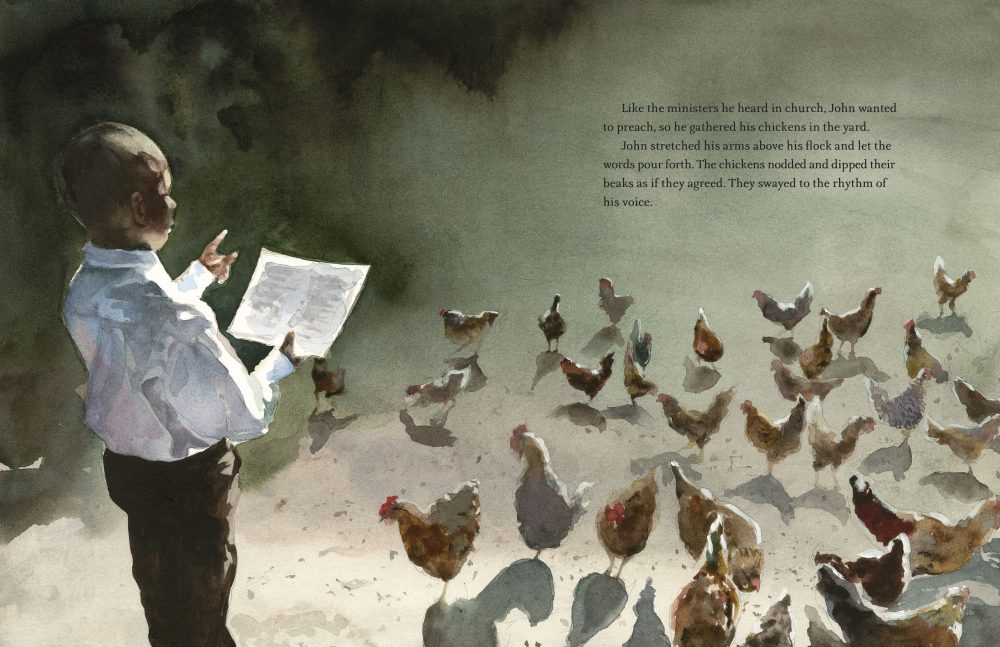
John wants to be a preacher when he grows up—a leader whose words stir hearts to change, minds to think, and bodies to take action. But why wait? When John is put in charge of the family farm’s flock of chickens, he discovers that they make a wonderful congregation! So he preaches to his flock, and they listen, content under his watchful care, riveted by the rhythm of his voice.

Review: John Lewis is an American hero and often what we hear about is his history as a Freedom Rider, Civil Rights Movement, and a politician, but Preaching to the Chickens shows us about John Lewis’s childhood and his faith and hard work as well as his passion and empathy for animals that helped build the foundation of who we see in the public eye. The truly inspiring story that Asim shares with us combined with Lewis’s illustrations really makes for a beautiful book.

Teachers’ Tools for Navigation: The Civil Rights Movement and the individuals that fought (and continue to fight) for equal rights is something that we need to make sure the current generation of kids are knowledgeable about as equality (or even equity) are not  here yet. There are so many amazing texts out there from nonfiction to fiction and picture books to novels that share this time within our history. These texts make up a text set (or reading ladder) that can be utilized in the classroom in so many ways including lit circles, book clubs, jigsaw, or inquiry projects.  Preaching to the Chickens is not itself a story of Civil Rights but it is the story of how a Civil Rights leader and Freedom Rider became. It is the story of hard work, empathy, and faith that have led to a man who is unlike any other.

Discussion Questions: How did John Lewis’s childhood impact his outlook on life?; How did John Lewis’s practice sermons help him become the public speaker and politician he is today?; What character traits did you see in young John Lewis that show you what kind of man he is today?

Flagged Passages: 

Read This If You Love: Picture books and nonfiction texts focusing on the Civil Rights Movement including Martin’s Big Words by Doreen Rappaport, The March Against Hate by Ann BausumThe First Step by Susan E. GoodmanBlood Brother by Rich Wallace and Sandra Neil Wallace, and other texts listed on my Civil Rights Text Set

Recommended For: 

classroomlibrarybuttonsmall 

Signature

Animal Identity Picture Books: Leaping Lemmings! by John Briggs & Hoot and Honk Just Can’t Sleep by Leslie Helakoski

Share

`

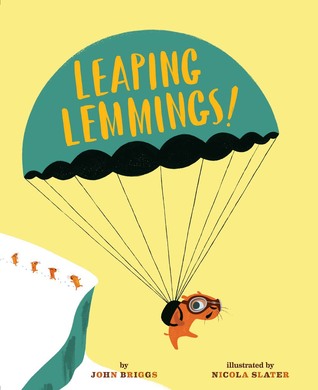
Leaping Lemmings!
Author: John Briggs
Illustrator: Nicola Slater
Published September 6th, 2016 by Sterling Children’s Books

Summary: Think before you leap! Lemmings look alike, they sound alike, and they act alike. So if one jumps off a cliff, the others will jump right after him . . . except Larry. Larry’s very independent-minded and he won’t follow his fellow lemmings blindly to their doom. But can he teach them to use their brains and stop making terrible group decisions? John Briggs has created a wonderfully funny, quirky tale about staying true to yourself, while Nicola Slater’s witty illustrations capture all the humor and pathos of Larry’s situation.

My Thoughts: Leaping Lemmings looks at human identity but the message is symbolized by lemmings. The book personifies the saying, “If your friend jumped off a cliff, would you?!” and has the reader examine the dangers of trying to follow a crowd as well as the excitement of being yourself. Told in a silly way but with a very important message, this story is a perfect one to share with kids as they struggle with being themselves versus being accepted by their peers. 


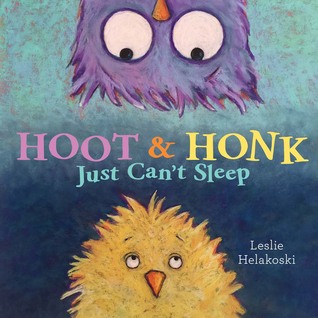
Hoot & Honk Just Can’t Sleep
Author and Illustrator: Leslie Helakoski
Published March 14th, 2017 by Sterling Children’s Books

Summary: Dark sky. Wake or doze?
Some eyes open. Some eyes close.

Some chicks like day, others like night. Some sleep in the dark, and some in the light. Hoot, an adorable owlet, and Honk, a fuzzy gosling, have just hatched—but their eggs got switched and now they’re in the wrong nests. Will they find their way home? Leslie Helakoski’s gentle, lilting verse and irresistible illustrations make the perfect bedtime story as they capture two adorable babies exploring the world for the first time.

My Thoughts: Hoot & Honk’s story is literally an animal identity story. It looks at nature and different types of birds, and tells the story of two birds trying to find their correct home and sleep schedule. The text is a perfect time to discuss nocturnal versus diurnal animals and how they work within nature. The story is also a perfect bedtime story because the writing is so rhythmic and the story is all about finding the right time to sleep. Kids are going to love this story whenever it is used–before bed or in the classroom. 


Both Recommended For:

  classroomlibrarybuttonsmall 

Review and Giveaway: Caring for Your Lion by Tammi Sauer

Share

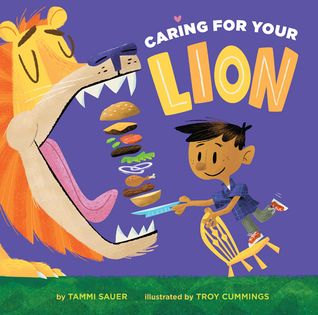
Caring for Your Lion
Author: Tammi Sauer
Illustrator: Troy Cummings
Anticipated Published: May 2, 2017 by Sterling

Goodreads Summary: What happens when you expect an itty-bitty kitty . . . but get a lion instead?
It’s kitten delivery day, but—SURPRISE. Congratulations on your new LION! We know you ordered a kitten, but we ran out of those. Fortunately, the big cat comes with instructions—like, try very hard NOT to look like a zebra. Or a gazelle. And give your lion PLENTY of space to play. But soon the feathers and fur start flying and everything’s in chaos. Is there any way a lion could actually be a child’s purr-fect pet?

Ricki’s Review: This text will be a fantastic read-aloud for elementary school classrooms. It is a how-to book that will make kids roll with laughter. There is much to be taught from this text, so teachers will love teaching it as much as students will love listening to it. I enjoyed how straight-forward the text was. The pages include step-by-step instructions that are very clear and direct. The pictures show the consequences (e.g. the lion will eat you!). This is a perfect mentor text for a variety of teaching tools (see below) and a great addition to classrooms.

Kellee’s Review: Kids are going to love this step-by-step introduction into how to care for a pet lion. (Though I predict there are going to be some “No, you cannot have a lion as a pet.” conversations because of this book! The lion is just that adorable!) I loved how the book was a combination of a how-to guide and a narrative of the boy’s experience with his lion–what a unique concept! It is going to be such a fun book to read aloud with time to examine each page. And like Sauer’s Alien books, it really makes you think about expectations, prejudice, and first impressions vs. reality.

Teachers’ Tools for Navigation: Teachers might use this book to teach sequence and how-to directions. They could also use it with students to discuss how caring for a lion would compare and contrast to caring for a more typical animal like a cat, dog, or fish. Students could then write their own how-to guides about caring for an exotic animal. 

Discussion Questions: What is difficult about caring for a lion? What is important to remember?; When should you use a feather? What does the feather do?

Flagged Passage: “Step 3: Try very hard NOT to look like a zebra. Or a gazelle. Or a bunny. (See Diagram A).”

Read This If You Love: Share, Big Bear, Share by Maureen WrightMr. Fuzzbuster Knows He’s the Favorite by Stacy McAnultyDear Dragon by Josh Funk; How to Track a Truck by Jason Carter Eaton; How This Book Was Made by Mac Barnett

Recommended For: 

classroomlibrarybuttonsmall readaloudbuttonsmall

Giveaway!

a Rafflecopter giveaway

RickiSigandSignature

**Thank you to Lauren at Sterling for providing copies for review!**

Lady Pancake and Sir French Toast in The Case of the Stinky Stench by Josh Funk

Share

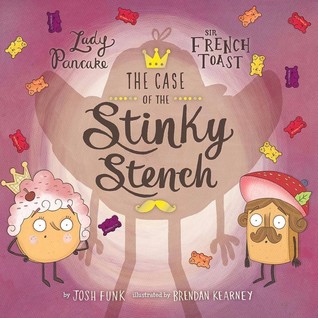
The Case of the Stinky Stench
Author: Josh Funk
Illustrator: Brendan Kearney
Published May 2nd, 2017 by Sterling Kids

Summary: “Uncle,” Crossaint said, “the fridge is in trouble!
A mystery stench turned a whole shelf to rubble!
I’m the last hope or the fridge will be lost!
Help me or else we’ll be cooked, served, and sauced.”

There’s a stinky stench in the fridge—and our favorite foodie friends must solve a smelly mystery! Sir French Toast’s nephew, Inspector Croissant, begs him and Lady Pancake for help in finding the source of the foul odor. Could it be the devious Baron Von Waffle? A fetid fish lurking in the bottom of Corn Chowder Lake? Featuring the same delectable wordplay and delicious art that won critical raves for Lady Pancake & Sir French Toast—there’s even an actual red herring—his fun follow-up is an absolutely tasty treat for kids!

About the Author: Josh Funk is from MA where he spends his days writing computer language and his free time writing picture book rhymes. His first published picture book was Lady Pancake & Sir French Toast (Sterling) and he is the author of Pirasaurs (Scholastic), Dear Dragon (Viking), and the upcoming Albie Newton (Sterling, 2018).

About the Illustrator: Brendan Kearney is an illustrator from the UK. While studying architecture at university, he realized he didn’t like rulers. He then discovered that it wasn’t essential to use a ruler when illustrating children’s books. Now he specializes in illustrating children’s books, bringing his own chaotic style and ideas to any project. He is also the illustrator of the first Lady Pancake & Sir French Toast and Bertie Wings It (both Sterling).

Kellee’s Review: I love that Lady Pancake and Sir French Toast are friends again and working together with Inspector Croissant to solve the mystery of the stinky stench. Their story promotes prediction, friendship, and problem solving in a fun refrigerator adventure! In a way that only Josh Funk can, he rhymes his way through the story without even one rhythm hiccup. The story, filled with humor, throwbacks to the first book, and a sweet ending, is just as funny as the first one with jokes for kids and adults alike (watch for the Red Herring and Spuddy Holly). 

Ricki’s Review: If you follow this blog, you know that we absolutely love Josh Funk’s work. His books are smart, cleverly crafted, and engaging. They have a special quality to them in that they appeal to both adults and kids. My son is allowed to pick his bedtime books, and my inner voice squeals whenever he picks one of Josh’s books because I know that the story will be fun to read aloud. We got this book a week ago, and we’ve read it over a dozen times (by my son’s choice!). Who doesn’t love a book about a stinky stench?! There is so much to talk about, and so many great foods and vocabulary words to discuss. The words dance across the pages—and this makes for a beautiful read-aloud. I am always wary of sequels and companion books, but Josh nailed it. This is a great adventure that can work well with the first book and also stand alone. Teachers, if you don’t have this book or Lady Pancake and Sir French Toast, I recommend them highly for your classrooms. Parents, this one is a no-brainer. I will cross my fingers that a third Lady Pancake and Sir French Toast book is in the works!

Teachers’ Tools for Navigation: Because of Josh Funk’s amazing ability to have perfect rhyming throughout the book, The Case of the Stinky Stench and the first Lady Pancake & Sir French Toast book are perfect at looking at rhyming and rhythm. Students can find all the rhyming words and discuss how they know the words rhyme and think of other words that rhyme with the words they found. Also, while reading, to discuss rhythm, students can clap along with the words to hear the rhythm that Josh Funk has created. Alternatively, students might design their own Lady Pancake and Sir French Toast pages to display around the classroom.

Activity Kit:

Can also be found on Sterling Publishing’s Stinky Stench website: https://www.sterlingpublishing.com/9781454919605

Book Trailer: 

Read This If You Loved: Lady Pancake and Sir French Toast by Josh Funk, The Cookie Fiasco by Dan Santat, Max the Brave by Ed Vere, Giraffes Ruin Everything by Heidi Schulz

Recommended For:

  classroomlibrarybuttonsmall 

and 

**Thank you to Sterling Kids for providing a copy for review!!**

The Fourteenth Goldfish by Jennifer L. Holm

Share

The Fourteenth Goldfish
Author: Jennifer L. Holm
Published: April 5, 2016 by Yearling

A Guest Review by Kelsey Iwanicki

Summary: The Fourteenth Goldfish follows the story of Ellie, an 11-year-old girl, who is currently struggling to find her passion, especially following the gradual drop off with her one and only friend, Brianna. However, everything changes when her mother brings home a quirky and crabby 13-year-old boy, Melvin. Ellie notices striking similarities between Melvin and her seventy-something year-old grandfather until he comes clean and tells her that they are in fact the same person. Melvin has worked on developing a drug to reverse the signs of aging, which has successfully worked on himself.

As Ellie and Melvin get closer, they also form an unlikely friendship with a goth student, Raj. Together they give Melvin advice about being a teenager, such as giving him acne medicine and hair elastics. They also help Melvin eventually, after a few failed attempts, steal the same compound that reversed his age. Melvin’s original plan was to steal the gene so he could share it with the world and receive the Nobel Peace Prize. However, Ellie persuaded him not to on the grounds of moral ethics and how scientific impacts can be both positive and negative. Due to this, Melvin flushes the compound down the drain and starts to tour the country. Thanks to her time with her grandfather, Ellie is able to discover his passion in science and also gain a few friends along the way, Raj and Momo.

Review: What I liked most about this book was its quirkiness, mostly exemplified through Melvin. Although the relationship between Ellie and Melvin is untraditional, you can also get glimpses of a typical relationship between a grandfather and granddaughter is like, one that isn’t usually written about. The majority of characters are nontraditional, such as Raj, who is explicitly written as goth; Ellie, a girl scientist (although this is becoming more popular, usually boys are the ones in the STEM fields); and Melvin, as a grumpy 13-year-old.

What I didn’t like about the book was the build-up. Although they failed multiple times at stealing the compound, there was no suspense for when Melvin actually succeeded. Rather, he just came home one day with it. The climax actually was when Ellie had a self-realization that science has both positives and negatives, which honestly was kind of a let down because the plot had focused around getting the compound from the lab. Ultimately, it was a good theme because Ellie realizes there are good and bad things with any passion.

All in all, I did like the book, I think it could appeal to students who are interested in science and realistic fiction books.

Teachers’ Tools for Navigation: This book should definitely be included in a classroom library for independent reading because I think it would appeal for students because it is a little quirky and has some interesting characters. It could also prompt some interesting discussions for literature circles because students could discuss the ethics behind using a compound to reverse aging.

A teacher could also use it as a read aloud for a few reasons. It would be interesting to consider the other perspectives of characters such as Melvin or Melissa, Ellie’s mother. Additionally, they could talk about the character traits and what makes Melvin and Ellie such strong characters. Or, they could talk about science and ethics behind what scientists release.

Discussion Questions: If you had a compound that could reverse aging, would you take it? Why or why not?; If you discovered a compound that could reverse aging, would you deliver it to the public? Why or why not?; What do you think will happen to Ellie and Brianna’s friendship? Ellie and Momo’s?; What do you think the side affects are from taking the compound? / What do you think happened to Melvin?; Put yourself in Ellie’s shoes, how would you feel if your grandfather attended the same school as you?; What is the importance of the fourteenth goldfish?

Flagged Passage: “Average people just give up at the obstacles we face every day. Scientists fail again and again and again. Sometimes for our whole lives. But we don’t give up, because we want to solve the puzzle” (p. 47).

Read This If You Loved: El Deafo by Cece Bell; Fish in a Tree by Lynda Mullaly Hunt; Out of My Mind by Sharon Draper; Rain Reign by Ann M. Martin; Unusual Chickens for the Exceptional Poultry Farmer by Kelly Jones

Recommended For:
 classroomlibrarybuttonsmall

Thank you, Kelsey!

RickiSig

Teaching Guide for Hazardous Tales: Alamo All-Stars by Nathan Hale

Share

nfpb2017

Nonfiction Wednesday

Nonfiction Picture Book Wednesday is hosted by Kid Lit Frenzy and was started to help promote the reading of nonfiction texts. Most Wednesdays, we will be participating and will review a nonfiction text (though it may not always be a picture book).
Be sure to visit Kid Lit Frenzy and see what other nonfiction books are shared this week!

Hazardous Tales: Alamo All-Stars
Author and Illustrator: Nathan Hale
Published March 29th, 2016 by Abrams Books

Summary: “Remember the Alamo!” That rallying cry has been a part of Texas lore for generations. But who were the ragtag group of adventurers behind the famous slogan, and how did they end up barricaded in a fort against a Mexican army? Who survived, who died, and how? This sixth book in the bestselling Hazardous Tales series tracks the Lone Star State’s bloody fight for independence from the Mexican government. It features the exploits of the notorious Jim Bowie, as well as Stephen Austin, Davy Crockett, and other settlers and soldiers who made the wild frontier of Texas their home—all told with the inimitable style and humor for which Nathan Hale is known.

Teaching Guide with Discussion Questions and Activities from Abrams by ME!, Kellee Moye: 

How to use this guide

  • For Alamo All-Stars, opportunities to have discussions and complete activities across different content areas are shared. In the “Fun Across the Curriculum” section, these activities and discussion questions are split into subject areas and are written as if they are being asked of a student.
  • At the end of the guide, Common Core State Standards and Next Generation Science Standards are listed that can be met when the books are extended using the activities and discussion questions.

Fun Across the Curriculum

  • Language Arts
    • The title page and the cover show two different illustrations of the Alamo. Compare and contrast the illustrations. Using information from the text, when is the cover illustration from, and when is the title page illustration from?
    • Why would Alamo All-Star need two narrators, Nathan Hale and Vincente Guerrero, while all of the other Hazardous Tales books only needed Hale? How would the story have differed if only Hale had narrated the book? What about only Guerrero?
    • On page 10-11, Guerrero uses the metaphor of a set table to describe Texas in the 1820s. Why does he use this metaphor to describe the state of Texas at this time?
    • On page 18, Hale uses another metaphor of an explosive barrel to illustrate the situation Austin and his settlers were in. How does an explosive barrel and Austin’s situation relate to each other?
    • After researching cholera (science section), look at Hale’s personification of the disease on page 37. Why did he choose this creature to embody cholera?
    • Many different events and problems caused Santa Anna’s army to be able to easily defeat the Texans at the Battle of the Alamo. Create a cause/effect graphic organizer showing the correlation between different events leading up to the Battle of the Alamo and the fall of the Alamo.
      • For example:
    • Much of what happened at the Alamo during the infamous battle as well as stories about Davy Crockett and Jim Bowie have become an American legend. What is a legend? Why has some parts of the story of the Alamo become a legend and not a complete factual part of history?
    • Throughout the book, Hale includes direct quotes from primary sources. How do these quotes enhance the story? How are primary sources more reliable when sharing historical events than secondary sources?
  • History/Social Studies
    • The page of Texas on the end sheets shares the different battles during the Texas revolution. Using Alamo All-Stars, convert the map into a timeline by graphing each battle on the date/year they were fought.
    • Using the text feature on pages 10-11 that shared the 1820s Texas settlers, answer the following: how did each settler threaten each other? Why was Texas such a treacherous place at this time? Who was the rightful settler of Texas?
      • Then, split the class up into 8 groups and assign a group of settlers to each group of students. They then should research the group, and determine how they ended up in Texas, why they felt they deserved to stay in Texas, etc.
    • Page 12 defines a filibuster and gives an example of one. What other famous filibusters have happened in history? Use the Wikipedia article “Filibuster (military)” and its resources to learn about other filibuster expeditions. Unlike the James Long Expedition, were any successful?
    • Throughout the book, Mexico goes through different types of governments: a monarch (inferred from p. 16), a republic (mentioned on p. 17), and a despotic (mentioned on p. 40). Compare and contrast the similarities and differences of the different types of governments.
    • Page 88 shows one of the many flags that have flown over Texas. Using the Texas State Historical Information article “Flags of Texas” and the Flags of the World website, learn about all of the different flags that Texas has flown. Why have so many flown over Texas? Where does the phrase “six flags of Texas” come from?
    • On page 104, Santa Anna compares himself to Napoleon. How are the two men similar? How do they differ?
    • On page 113, Hale jokes, “Don’t feel bad. Everyone forgets about Goliad.” Why do you think the Battle of the Alamo is remembered by so many while the massacre at Goliad is not?
    • Why are Travis, Seguin, Bowie, and Crockett pictured on the front of Alamo All-Stars? Is this who you would consider the all-stars of the Alamo? If not, why not? If so, what did they do to deserve that title? Is there anyone else you would consider an Alamo all-star?
  • Science
    • Cholera killed tens of thousands in the summer of 1833 including Bowie’s wife and her family. What is cholera? How does it spread? Why did Bowie’s family try to travel north to escape it?
    • On page 47, Noah Smithwick was quotes sharing that one member of the Gonzales army had a nose bleed; however, he used scientific terms such as nasal appendage and sanguinary fluid. What do these terms mean?
  • Math
    • On page 31, Rezin Bowie mentions that they were outnumbered 14 to 1 during the battle. Using the illustrations and clues in the “Jim Bowie and the Lost Mine” section to determine how many men were on Bowie’s side and how many men they fought and defeated.
    • Santa Anna’s army outnumbered the Texans by a large amount. Using the information shared about the number of men in each side of the battle, determine an approximate ratio of the battle.
      • After you estimate using Alamo All-Stars, research the actual number of men at the battle and determine the ratio. How close was your estimate?
  • Foreign Language (Spanish and French)
    • Throughout the text, different Spanish words are used, many of which can be defined using context clues or connecting to the English language because they are cognates with a word you already know. Look through the book, and try to define all foreign language vocabulary. Some words throughout the book:
      • El Gran Libro Enorme de la Historia Mexicana (p. 6)
      • ejercito de las tres garantias (p. 9)
      • empresario (p. 12)
      • mucho (p. 16)
      • viva la revolución (p. 21)
      • fantástico (p. 31)
      • Dios y libertad (p. 36)
      • alcalde (p. 45)
      • fandangos (p. 72-84)
      • voy a firmarlo (p. 98)
      • mes amis (p. 103 | French)
        • Which words were easier to define? Why were they easier?
  • Music
    • At the Battle of the Alamo, both Santa Anna’s army and the Texas army played music (p. 91). Research to determine what music was played at the battle. Why would they play music while preparing for a battle?

The teaching guide, along with the other books in the series, can also be viewed at: https://www.scribd.com/document/326377929/NathanHale6-TeachingGuide or http://www.abramsbooks.com/academic-resources/teaching-guides/

Recommended For: 

classroomlibrarybuttonsmall closereadinganalysisbuttonsmall 

Signature