Blog Tour, Giveaway, and Author Guest Post!: Cast Off by Eve Yohalem

Share

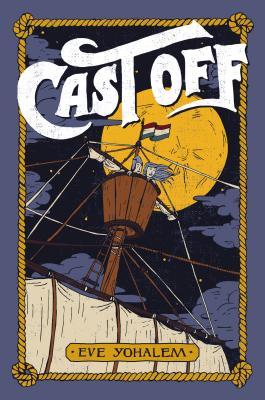
Cast Off

Cast Off: The Strange Adventures of Petra de Winter and Bram Broen
Author: Eve Yohalem
Published: March 10, 2015 by Calkins Creek

GoodReads Summary: It’s 1663 and there is an extra passenger on board a Dutch merchant ship setting sail for the East Indies. Twelve-year-old Petra has stowed away to escape her abusive father. But she quickly realizes that surviving for months at sea will be impossible without help. So when Bram, the half-Dutch / Half-Javanese son of the ship’s carpenter, finds her hiding spot, Petra convinces him to help her stay hidden . . .and help disguise her as a boy.

If Petra is discovered and exposed as a girl, she could be tossed overboard, or worse . . . returned to her father. And if Bram is exposed for helping her, he could lose the only home—and family—he has. As tensions rise on the ship, with pirates attacking, deadly illness, and even mutiny, Petra and Bram face impossible decisions that test their friendship and threaten their dreams of freedom.

Told in alternating voices and filled with secrets and intrigue, this richly researched novel is historical fiction at its best.

Review: Take me away! This book whisked me off on a marvelous adventure filled with grave dangers, stow aways, tall ships, and mutiny. I couldn’t help but be reminded of one of my childhood favorites, The True Confessions of Charlotte Doyle by Avi. Petra escapes from a horribly abusive relationship with her father, and her bravery is an excellent model for young readers. She is discovered by Bram, the illegitimate son of the ship’s carpenter, and they form a very special friendship. This book delivers richly realized themes—particularly those of loyalty, heroism, sexism, and racism—that are very relevant to readers across time. I imagine a wide variety of audiences would appreciate this text because it touches on so many fascinating topics. It is clear that the author did her homework, and the result is magnificently entertaining.

Teachers’ Tools for Navigation: This book is an excellent example of a text that could be analyzed with a critical theorist lens. (See Appleman’s book about teaching critical theory to students of all levels.) I imagine rich classroom discussions would evolve from the application of gender theory or race theory, for instance, to this text. This is a compliment to the author and the depth of this book.

Discussion Questions: In what ways do gender and race play a role in this text?; How does the author weave history into the story?; What does Petra and Bram’s friendship teach us about humans in general?; How do the main characters display qualities of bravery?

Read This If You Loved: The True Confessions of Charlotte Doyle by Avi; Leviathan by Scott Westerfeld; Secrets of the Realm by Bev Stout; Peter Pan by J.M. Barrie

Recommended For:

 classroomlibrarybuttonsmall

RickiSig

Giveaway!

One lucky winner will receive a copy of CAST OFF: The Strange Adventures of Petra De Winter and Bram Broen (U.S. addresses; allow 4-6 weeks for delivery; offer ends 7/10/15).

a Rafflecopter giveaway

Guest Post from Eve Yohalem, Author of Cast Off!

Eve Yohalem photo

In 2009 I got this great idea for a seafaring adventure about two kids who sail from Amsterdam to the East Indies in the seventeenth century. There was just one problem: I knew next to nothing about the seventeenth century. Or the Netherlands. Or the East Indies. Or sailing.

No matter. I like a challenge. I researched for a full year before I started writing, and after I started writing, I kept researching. I’m still researching. (I like researching.)

Today my Cast Off file has more than four hundred different source notes. I read lots of books: scholarly academic stuff, journalistic stuff, fiction, memoirs, journals, every first person account I could find. I spoke to people who knew much more than me—VOC scholars, maritime scholars, curators, my husband (he sails), surgeons, and dentists. I hung out in oddball museums. I traveled to Indonesia, where I slept in the jungle and held baby orangutans, and to the Netherlands, where I retraced every step of my characters that I could and explored the dark nooks of two different full-scale East Indiamen replicas.

I have no research training. It would have helped if I’d majored in history in college, but I didn’t. Mostly, I followed my nose. I knew that my story would begin in Amsterdam and take place mostly at sea on an East Indiaman bound for Batavia. I knew two of my characters: a Dutch girl and an East Indian boy, both twelve years old. That’s a lot to get started with.

What’s surgery like by candlelight below deck on a rocking ship before the invention of anesthesia? How do you fire a 4,000 pound canon without getting crushed by the recoil? These were the kinds of questions I tried to answer.

I tried to convey what it felt like to cram three hundred men onto a 150-foot long vessel for six months (damp, dark, and airless below, smelled bad, no privacy). The layout of the ship is based on actual ships of the period, as are the various jobs, daily schedule, terrible food.

For my characters’ medical knowledge, I have to thank John Woodall’s The Surgeon’s Mate, a seventeenth century medical guide no ship’s surgeon would have been without.

And in case anyone’s wondering, I got most of my slang from the always entertaining A New Dictionary of the Terms Ancient and Modern of the Canting Crew: In Its Several Tribes of Gypsies, Beggars, Thieves, Cheats, &c., with an Addition of Some Proverbs, Phrases, Figurative Speeches, &c. by B. E. Gent, c 1698. In my opinion, some of these terms should be brought back into everyday use. Please help make “Kiss my blind cheeks!” go viral!

Follow Cast Off on the blog tour:
 
Mon, June 1
Book Monsters
Tues, June 2
The Hiding Spot
Wed, June 3
Books Unbound
Thurs, June 4
Unleashing Readers
Fri, June 5
Read Now, Sleep Later
Mon, June 8
Mother Daughter Book Club
Tues, June 9
Cracking the Cover
Wed, June 10
The Compulsive Reader
Thurs, June 11
The Children’s Book Review
Fri, June 12
I Read Banned Books

*Thank you to Barbara at BlueSlip Media for sending this book for review!*
Fatal Fever: Tracking Down Typhoid Mary by Gail Jarrow

Share

fatal fever

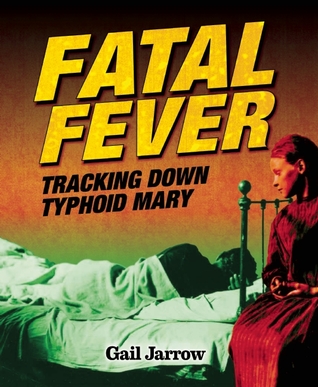
Fatal Fever: Tracking Down Typhoid Mary
Author: Gail Jarrow
Published: March 10, 2015 by Calkins Creek

GoodReads Summary: In March 1907, the lives of three remarkable people collided at a New York City brownstone where Mary Mallon worked as a cook. They were brought together by typhoid fever, a dreaded scourge that killed tens of thousands of Americans each year. Fatal Fever: Tracking Down Typhoid Mary is the first middle-grade trade book that tells the true story of the woman who unwittingly spread deadly bacteria, the epidemiologist who discovered her trail of infection, and the health department that decided her fate. This gripping story follows this tragic disease as it shatters lives from the early twentieth century to today. It will keep readers on the edges of the seats wondering what happened to Mary and the innocent typhoid victims. With glossary, timeline, list of well-known typhoid sufferers and victims, further resource section, author’s note, and source notes.

Review: This narrative nonfiction essentially begins with in media res—Typhoid Mary is running from people who want to catch her and take her blood. By chapter two, the text shifts back to the history of typhoid fever and gives readers a no-nonsense look at the gory realities of this horrid disease. My father and brother are doctors and my mom was a nurse, and I was finally able to take part in medical conversations at a family gathering! It would have been easy for the author to slip into the extreme technical details of this disease, but she does an excellent job balancing science, history, and story. I was engaged in the book from beginning to end. I never thought I would find the sanitation systems in the early 1900s to be so fascinating!

Teachers’ Tools for Navigation: Students will read this book and want to learn more about other deadly epidemics in history. They would likely be interested in the ways this disease still impacts countries today. I found Typhoid Mary’s story to be very interesting, and I wanted to learn more about medical scapegoats in history. All in all, this book inspires readers to want to learn more about medical topics. I imagine this book would be a good choice for students interested in medical professions, but it will also captivate students who are interested in science and history. This makes it a true interdisciplinary text.

Discussion Questions: How was Typhoid Mary treated by the community? Why? Do you think she deserved her treatment at the end of her life?; What other diseases have impacted history? How do they compare to typhoid fever?

We Flagged: “She didn’t know it, but she wasn’t alone in that cramped, cold closet. Deep insider her body, billions of deadly microorganisms were hiding, too.”

Read This If You Loved: Red Madness: How a Medical Mystery Changed What We Eat by Gail Jarrow; Invincible Microbe: Tuberculosis and the Never-Ending Search for a Cure by Jim Murphy and Alison Blank

Recommended For:

 classroomlibrarybuttonsmall

RickiSig


*Thank you to Kerry at Boyds Mills Press for sending this book for review!*
Review and Teaching Guide!: Harzadous Tales: The Underground Abductor by Nathan Hale

Share

NFPB2015

Nonfiction Picture Book Wednesday

Nonfiction Picture Book Wednesday is hosted by Kid Lit Frenzy and was started to help promote the reading of nonfiction texts. Most Wednesdays, we will be participating and will review a nonfiction text (though it may not always be a picture book).
Be sure to visit Kid Lit Frenzy and see what other nonfiction books are shared this week!

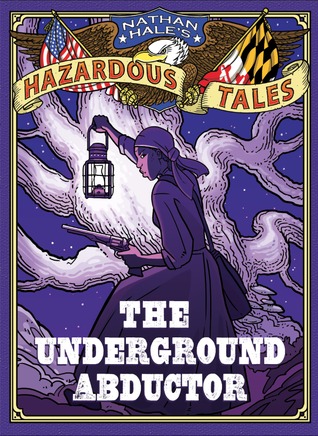
undergroundabductor

The Underground Abductor
Author and Illustrator: Nathan Hale
Published April 21st, 2015 by Amulet Books

Goodreads Summary: Araminta Ross was born a slave in Delaware in the early 19th century. Slavery meant that her family could be ripped apart at any time, and that she could be put to work in dangerous places and for abusive people. But north of the Mason-Dixon line, slavery was illegal. If she could run away and make it north without being caught or killed, she’d be free. Facing enormous danger, Araminta made it, and once free, she changed her name to Harriet Tubman. Tubman spent the rest of her life helping slaves run away like she did, every time taking her life in her hands. Nathan Hale tells her incredible true-life story with the humor and sensitivity he’s shown in every one of the Hazardous Tales—perfect for reluctant readers and classroom discussions.

My Review: I love this entire series! Nathan Hale has taken history and made it accessible (with a dash of humor!). If you don’t the concept of the series, it revolves around Nathan Hale the Revolutionary War spy who, in the first book, was eaten by a history book so now knows all that has happened in history and is sharing it with the hangman and British officer who are guarding him before he is executed. The first book is Hale’s own story and then each of the following are his telling of different times in history.

This installment of Hale’s graphic novel series may be my favorite so far. I found it to be the most intense of his stories even though it is up against stories of wars, but Harriet Tubman’s story is one of one person’s resilience in the face of pure doom. Although it is evident through any story you hear of Harriet how truly brave she was, Nathan Hale’s story immerses you into Harriet’s life and shows you how much she truly did and faced.

Teachers’ Tools for Navigation: This book is written to start discussions (in reading/language arts OR social studies)! I was lucky enough to write the teaching guide for The Underground Abductor (as well as the rest of the series!), and I have included some of my discussion questions below.

I could also see Hale’s Hazardous Tales being used in lit circles with each group reading a different one of the tales. This could lead to wonderful discussions about each time in history. Students could then present their history to the rest of the class.

Discussion Questions: 

  • When Araminta heard the story of Moses and the pharaoh, she envisioned Moses as a slave and the pharaoh as an owner (page 15). How does Moses’s story compare to a traditional story of a slave? Harriet is later called “Moses” or “Black Moses.” How does Harriet’s story compare to Moses’s?
  • How did Nat Turner’s rebellion affect slave laws (page 21)? He meant to make a positive change, but it actually turned negative. How? Why?
  • On page 44, Nathan Hale personifies debt as the ghosts and men Minty had been dreaming about. Why is debt shown as a terrifying thing? How did Mr. Brodess’s debt affect Mindy and her family?
  • Complete a character web with adjectives describing Harriet Tubman. What type of person was she that allowed her to overcome a debilitating injury and slavery?

Book Trailer: 

Read This If You Loved: Hazardous Tales series by Nathan Hale, March by John Robert Lewis, Stolen Into Slavery by Judith Bloom Fradin, Elijah Buxton by Christopher Paul Curtis

Recommended For: 

classroomlibrarybuttonsmall litcirclesbuttonsmall closereadinganalysisbuttonsmall

Signature

**Thank you to Morgan at Abrams Books for providing a copy of the book!**

Young Jane Austen: Becoming a Writer by Lisa Pliscou

Share

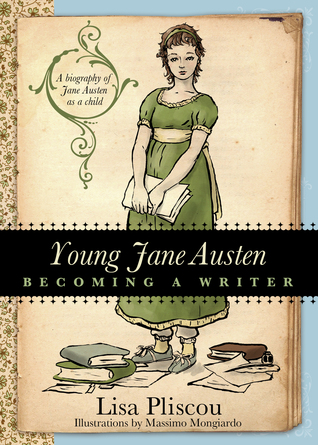
YoungJane

Young Jane Austen: Becoming a Writer
Author: Lisa Pliscou
Illustrator: Massimo Mongiardo
Published: April 20, 2015 by Wyatt-MacKenzie Publishing

GoodReads Summary: What was Jane Austen like as a child? What were her formative influences and experiences, her challenges and obstacles, that together set her on the path toward becoming a writer?

Drawing upon a wide array of sources, including Austen’s own books and correspondence, Lisa Pliscou has created a “speculative biography” that, along with 20 charming black-and-white illustrations, offers a fascinating glimpse into the world of young Jane Austen. Also included is a richly detailed, annotated version of the narrative and an overview of Austen’s life, legacy, and the era in which she lived, as well as a timeline of her key childhood events.

Young Jane Austen is sure to intrigue anyone interested in Jane Austen, in writing and the creative process, and in the triumph of the artistic spirit.

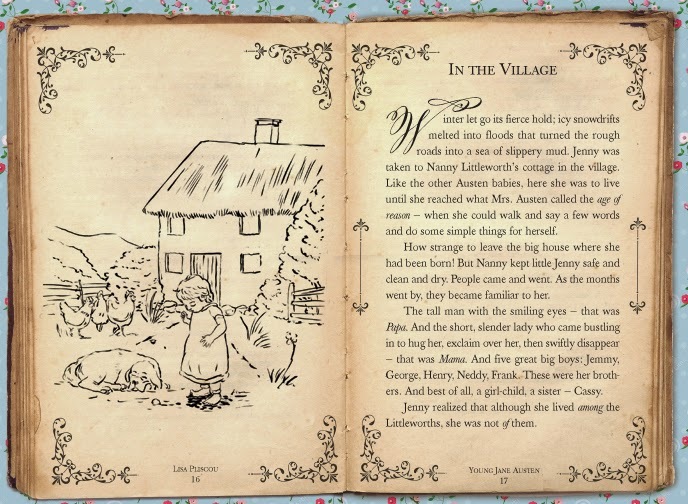
Review: I enjoy the way this book is formatted. The first half (or so) tells the story of Jane Austen as she grows up—before she became a writer. It gives a strong historical background of the expectations (or lack of expectations) for women at the time. While much isn’t known about Jane’s early life, the author does an excellent job creatively interpreting events with what we do know. The next section is an annotated version that reveals the author’s decisions for the text, and the last portion discusses Jane Austen’s later life as a writer. Readers will be inspired to take on some of Austen’s novels after reading this book. The beautiful paper and illustrations of this book made me wish that more books were creatively printed. I felt as if I was reading a text from the time period of Austen’s life, which made me feel warm and fuzzy.

Please note: I tagged this book as historical nonfiction and narrative nonfiction because it bridges both genres. It is a creative nonfiction, and the later portions of the book are more informational. These kinds of books make genre-sorting seem a bit silly.

Teachers’ Tools for Navigation: This text begs for readers to conduct research. They could delve into Jane’s novels to connect her life details with her works. They might also research more about the time period or another favorite author’s early life. The annotated section is particularly interesting to me. I would love to have my students annotate a text looking for the author’s purpose.

Discussion Questions: How was your life different from Jane Austen’s life? How do the expectations for females impact Jane?; What adjectives would you use to describe Jane? Why?; How does the format of the book enhance your reading? Do you know any other books like this?

We Flagged: 

young jane austen 1

I couldn’t help but share how beautiful the inside of this book is. Image taken from: www.goodreads.com.

Recommended For:

 classroomlibrarybuttonsmall

RickiSig

Photos Framed: A Fresh Look at the World’s Most Memorable Photographs by Ruth Thomson

Share

NFPB2015

Nonfiction Picture Book Wednesday

Nonfiction Picture Book Wednesday is hosted by Kid Lit Frenzy and was started to help promote the reading of nonfiction texts. Most Wednesdays, we will be participating and will review a nonfiction text (though it may not always be a picture book).
Be sure to visit Kid Lit Frenzy and see what other nonfiction books are shared this week!

photosframed

Photos Framed: A Fresh Look at the World’s Most Memorable Photographs
Author: Ruth Thomson
Photographers: Various
Published August 5th, 2014 by Candlewick Press

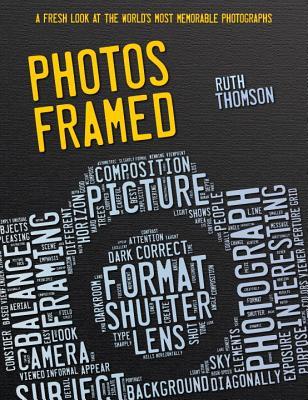
Goodreads Summary: Portrait. Nature. Art. Documentary. A look at some of the world’s most iconic photographs invites viewers to focus on the medium’s place in art and history.

Photographs can be beautiful or harrowing, honest or manipulative, dramatic or comforting. Photos Framed explores twenty-seven of the most important and vivid photos taken over the medium’s history, from a formal portrait of Louis Daguerre taken in 1844 to a candid shot of a Cuban girl and her doll in 2011. Readers are invited to use their powers of observation to zoom in on photographic elements, blow up details of the subject matter, think about the big picture, and pan out on the photographer. Photos Framed will open viewers’ eyes to the art of photography and its power to tell a story.

Kellee’s Review and Teachers’ Tools for Navigation: This book is phenomenal. It takes art and history and combines them into an epic look at the history of photography and the world. I am definitely going to use this book in my classroom next year. Each photograph includes information about the photo, information about the photographer, three photo thoughts questions, a “blow up” section that looks at a certain part of the photograph, a “zoom in” which looks at elements of the photograph, and a quote from the photographer. This information is fascinating, but it is just an introduction to the time period of the photo, what makes the photo a true piece of art and who the photographer is. I would love to see students delve deeper into each of these photos using this book as an amazing jumping off point. The book also gives a nice lesson at the beginning about the different types of photographs. I can definitely see myself using that in my journalism class when we look at photography. 

Ricki’s Review and Teachers’ Tools for Navigation: Kellee’s review is spot-on. This book forces readers to zoom in on elements of photography and then zoom out on each photograph to provide context and history. I spent a long time on each page and appreciated the way the author took in the beauty and complexity of each photograph. Teachers often do a lot of close reading in the classroom. I’d love to use this text used as a parallel for close reading. The teacher and students would spend time zooming in and zooming out on the photograph. Then, we could look at a class text and do the same with the words on the page. It teaches students how important it is to look carefully at the minutia of the world but also consider the bigger picture. This book inspired me to want to pair up with the school’s photography teacher to analyze the text in an interdisciplinary way. Perhaps, photography students would be inspired by the book and students could select a photograph for a creative writing assignment. 

Discussion Questions: Each photograph has discussion questions that help the reader analyze the photograph.

We Flagged: 

New York Construction Workers Lunching on a Crossbeam

The photograph: …Ebbets’s breathtaking photograph celebrates these tough men, taking their lunch break on a crossbeam on the unfinished sixty-ninth floor of the RCA Building, part of Rockefeller Center…

The photographer: Ebbets was a fearless photographer who even risked taking aerial shots lying on the tail of a plane…

Photo thoughts: Where do you think the photographer was positioned to take this shot?…” (p. 38-39)

Read This If You Loved: Humans of New York by Brandon Stanton, Miss Peregrine’s Home for Peculiar Children by Ransom Riggs, Books about Photography

Recommended For: 

classroomlibrarybuttonsmall closereadinganalysisbuttonsmall

Signature and RickiSig

Seeds of Freedom: The Peaceful Integration of Huntsville, Alabama by Hester Bass

Share

NFPB2015

Nonfiction Picture Book Wednesday

Nonfiction Picture Book Wednesday is hosted by Kid Lit Frenzy and was started to help promote the reading of nonfiction texts. Most Wednesdays, we will be participating and will review a nonfiction text (though it may not always be a picture book).
Be sure to visit Kid Lit Frenzy and see what other nonfiction books are shared this week!

seeds of freedom

Seeds of Freedom: The Peaceful Integration of Huntsville, Alabama
Author: Hester Bass
Illustrator: E.B. Lewis
Published January 27th, 2015 by Candlewick Press

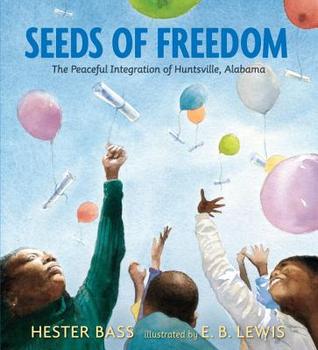
Goodreads Summary: Explore a little-known story of the Civil Rights movement, in which black and white citizens in one Alabama city worked together nonviolently to end segregation.

Mention the Civil Rights era in Alabama, and most people recall images of terrible violence. But something different was happening in Huntsville. For the citizens of that city, creativity, courage, and cooperation were the keys to working together to integrate their city and schools in peace. In an engaging celebration of this lesser-known chapter in American and African-American history, author Hester Bass and illustrator E. B. Lewis show children how racial discrimination, bullying, and unfairness can be faced successfully with perseverance and ingenuity.

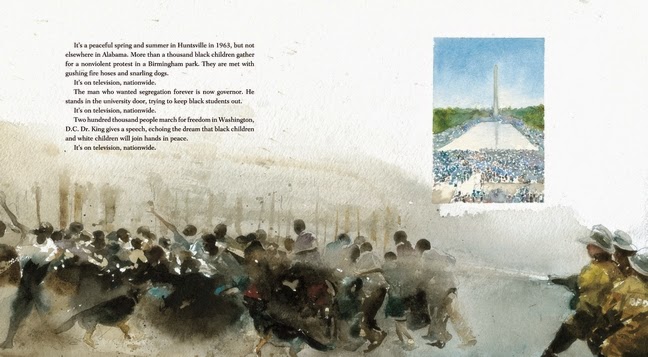
Kellee’s Review:  I loved learning about Huntsville! It is amazing that in the middle of the violence and ignorance that ran rampant during the Civil Rights Movement, there was a Southern town that was peaceful and worked together to integrate. The story is so inspiring and gives me faith in humanity! I love how Bass ties together history and the movement throughout the nation to what was going on in Huntsville. It really shows the comparison between the rest of the nation and Huntsville. The illustrations are also extremely beautiful. I fell in love with his art in Each Kindness, and I am so happy to experience it again. 

Ricki’s Review: The metaphor of the seeds of freedom dances across the pages of this book. E. B. Lewis’ illustrations are masterful. I spent a long time on each spread, soaking in the way the artwork connected with the words. This is a book about civil rights, and it is also a book about the goodness of people and the quiet persistence of the people of Huntsville, Alabama as they saw injustice, and they pressed on to fight against it. Students will learn a bit about history, but they will learn a lot about themselves. I plan to use this book in my methods classes to show how history can come alive in picture books. This book shines brightly. 

Teachers’ Tools for Navigation: This book is a wonderful introduction to the civil rights movement. It gives a peaceful account and also shares information about the dark times. We think it would be fascinating to take the events mentioned in Seeds of Freedom and put them on a timeline, so students can visually see when each event was happening. It was also be interesting to compare and contrast Birmingham and Huntsville during this time period. Additionally, Seeds would be a perfect companion to Lions of Little Rock. Teachers might consider using this book in a text set to give students a rich understanding of the civil rights movement, or they might create a text set around themes such as persistence or protest in history. 

Discussion Questions: How was Huntsville’s civil rights movement different than other cities around the nation?; How did the author use a seed as a metaphor for the civil rights movement?; What is reverse integration?; Who are some of the main people who helped integration within the United States?

We Flagged: 

seedsspread

Read This If You Loved: Lions of Little Rock by Kristin Levine, Separate is Never Equal by Duncan TonatiuhSit In by Andrea Davis Pinkney; The Other Side by Jacqueline Woodson, Freedom Summer by Deborah Wiles

Recommended For: 

classroomlibrarybuttonsmall readaloudbuttonsmall

Signatureand RickiSig

Blog Tour with Review, Giveaway, and Author Interview!: The Sky Painter: Louis Fuertes, Bird Artist by Margarita Engle

Share

NFPB2015

Nonfiction Picture Book Wednesday

Nonfiction Picture Book Wednesday is hosted by Kid Lit Frenzy and was started to help promote the reading of nonfiction texts. Most Wednesdays, we will be participating and will review a nonfiction text (though it may not always be a picture book).
Be sure to visit Kid Lit Frenzy and see what other nonfiction books are shared this week!

sky painter

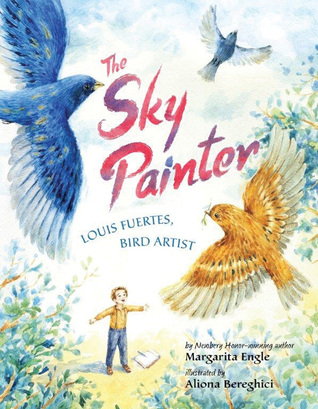
The Sky Painter: Louis Fuertes, Bird Artist
Author: Margarita Engle
Illustrator: Aliona Bereghici
Published April 28th, 2015 by Two Lions

Goodreads Summary: Louis loves to watch birds. He takes care of injured birds and studies how they look and how they move. His father wants him to become an engineer, but Louis dreams of being a bird artist. To achieve this dream, he must practice, practice, practice. He learns from the art of John James Audubon. But as Louis grows up, he begins to draw and paint living, flying birds in their natural habitats.

Louis Agassiz Fuertes (1874–1927) is now known as the father of modern bird art. He traveled with many scientific expeditions all over the world. His best-known works—paintings for habitat exhibits at the American Museum of Natural History in New York—are still beloved by visitors today. His art helped to encourage wildlife conservation, inspiring people to celebrate and protect the world of wings.

Poems by Newbery Honor–winning author Margarita Engle and illustrations by Aliona Bereghici capture the life of Louis Fuertes and the deep sense of wonder that he felt when he painted the sky.

About the Author: Margarita Engle is a Cuban American poet and novelist whose work has been published in many countries. Her books include The Poet Slave of Cuba, winner of the Pura Belpré Award for narrative and the Américas Award; The Surrender Tree, a Newbery Honor book; Summer Birds: The Butterflies of Maria Merian, a Kirkus Best Book for Children; and The Lightning Dreamer, Cuba’s Greatest Abolitionist, winner of the 2014 PEN Center USA Literary Award for Young Adult/Children’s Literature. Margarita lives in California, where she enjoys bird-watching and helping her husband with his volunteer work for wilderness search-and-rescue dog training programs. To learn more, and to download a free activity kit for The Sky Painter, visit: www.margaritaengle.com

Margarita Engle_credit Marshall W. Johnson

Kellee’s Review: Louis Fuertes is an inspirational man, and Engle’s biography of him is perfect. I think what I enjoyed most was how Fuertes was not only an artist, but an animal activist, family man, and educator. He is a role model for any kid that wants to grow up to be happy. Like Ricki shares below, this book shares an important lesson about how there are so many different special things out there to be observed. Nature is phenomenal.

I loved learning not only of Fuertes and his journey to live his passion, I loved the beautiful poetry and watercolor that were used to craft his story.  Both the poetry and the artwork do Fuertes’s story justice like no other format would have.  The format also gives the reader a chance to look at each poem as a stand alone and also part of the whole biography which gives each poem two different purposes and two different ways they can be analyzed.

Ricki’s Review: Louis Fuertes is a remarkable man, and this book not only pays homage to his extraordinary life, but it teaches young people important lessons. He nurtures and cares for birds in ways that children can emulate in many aspects of their lives. The book shows he devoted his life to birds and wanted others to see their beauty. I’ve seen Fuertes’ artwork in a variety of places, but I never considered him as an artist. This book reminded me that sometimes I go about life, not considering something very important and special. I am so glad I learned about Fuertes’ story and will think about him whenever I read or learn about birds. This book would be an excellent gift to give to a child. The poetry is gorgeous, and the illustrations are breath-taking.

Teachers’ Tools for Navigation: As a teacher, we can think of a plethora of ways to use this text in the classroom. We love to offer our students options, so we might provide them opportunities to  read different biographies of different people who are following their passion. Students the could get in lit circles to discuss the biography then come back together to share what they learned. They could also choose any artist or person in history and write poems reflecting this individual’s biography. It would be fun to illustrate and bind these books to share them with others. We can imagine a class sitting in a circle, reading their poetry and learning about lesser-known individuals in history.

Discussion Questions: How did Fuertes change animal painting/drawing forever?; How do you feel that some artists kill animals to draw or paint them?; How did following his passions help make Fueres’s life happier?

Book Trailer: 

Interview with Margarita Engle

Unleashing Readers: What inspired you to write about Fuertes?

Margarita Engle: I became fascinated by Fuertes while I was researching rain forest ecology and visiting wildlife preserves, during the process of writing a historical verse novel called Silver People: Voices From the Panama Canal. In many references, Fuertes was mentioned as the bird artist for all the great geographic expeditions of the early twentieth century. When I learned that he was a conservationist who pioneered the painting of living birds in flight—instead of killing and posing them like Audubon—I was astonished. Why wasn’t he a household name, like Audubon? Instantly, Fuertes became the most important link in my ongoing quest for biographical picture books about great Latino naturalists who have been forgotten by history. I hope The Sky Painter helps teachers, librarians, and parents introduce children from all backgrounds to this amazing Puerto Rican/American scientist. Fuertes is a fantastic role model because he was a creative thinker who decided to learn how to paint faster, to save the lives of birds.

UR: What did your research process look like?  Do you have any recommendations for students who are doing research?

ME: I try to read every book I can find, in addition to online sources. Many historical studies simply have not yet been digitized, so interlibrary loan is really helpful. I rely on bibliographies to help me move farther and farther back in time, until I discover first person narratives. Diaries, letters, field notes, etc. are incredibly helpful. Fortunately, Fuertes and the scientists he worked with on expeditions recorded fascinating details!

UR: Was there any information that you found interesting that you decided not to include in the book?

ME: Yes, because this book is for young children, I decided not to include the tragic way he died. Soon after he returned from his expedition to Africa, he was driving to show new paintings to another ornithologist. His car was hit by a train. The paintings survived, but he did not.

UR: Because we are a blog devoted to teachers, do you have any ideas about how you envision your book in classrooms?

ME: The Sky Painter can fit into science, art, poetry, or multicultural programs. One of the really clever cartoon exercises Fuertes taught children who visited his studio was simply sketching three circles, then deciding how to connect them. Two circles could become arms or wings, depending on how they’re connected. One circle is always the head. Children decide whether to create a person, a bird, or some sort of funny hybrid.

For older children, I think The Sky Painter can also be used to teach history, if a teacher discusses the way important accomplishments are sometimes omitted from textbooks. Because there’s a tendency for each generation of textbooks to include material from past editions, incredibly important topics may be gradually forgotten.

Fuertes was not only a great artist and scientist, he was also a groundbreaking conservationist. It would make me very happy to see The Sky Painter featured during Hispanic Heritage Month in September–October, as well as on Earth Day, which happens to fall during National Poetry Month in April. It would be especially thrilling to see The Sky Painter used by a teacher preparing students for a field trip, whether it’s a video or a virtual trip on a nature website, an outdoor nature walk on the school-grounds, a walk in a nearby park, or a visit to the Natural History Museum in New York to see the murals Fuertes painted as backgrounds for habitat displays. The possibilities are incredible!

Perhaps most important, The Sky Painter can be used to teach about creative thinking. Are there old attitudes we might try changing—just as Fuertes did—to promote conservation of wildlife and natural habitats?

Read This If You Loved: Feathers: Not Just For Flying by Melissa Stewart, A Boy and a Jaguar by Alan Rabinowitz, Manfish by Jennifer Berne, Look Up!: Bird-Watching In Your Own Backyard by Annette LeBlanc Cate

Recommended For: 

classroomlibrarybuttonsmall readaloudbuttonsmall

closereadinganalysisbuttonsmall litcirclesbuttonsmall

Follow along on THE SKY PAINTER blog tour!
 
Mon, Apr 20
Library Fanatic
Tues, Apr 21
Kid Lit Frenzy
Wed, Apr 22
Unleashing Readers
Thurs, Apr 23
5 Minutes for Books
Fri, Apr 24
Teach Mentor Texts
Sat, Apr 25
Booking Mama
Mon, Apr 27
Sharpread
Tues, Apr 28
The Children’s Book Review
Wed, Apr 29
Cracking the Cover
Thurs, Apr 30
A Foodie Bibliophile in Wanderlust
Fri, May 1
Archimedes Notebook

GIVEAWAY

a Rafflecopter giveaway

Signature andRickiSig


**Thank you to Blue Slip Media and Margarita Engle for the interview and providing a copy for review!**