Children Growing Up with War by Jenny Matthews

Share

NFPB2015

Nonfiction Picture Book Wednesday

Nonfiction Picture Book Wednesday is hosted by Kid Lit Frenzy and was started to help promote the reading of nonfiction texts. Most Wednesdays, we will be participating and will review a nonfiction text (though it may not always be a picture book).
Be sure to visit Kid Lit Frenzy and see what other nonfiction books are shared this week!
children growing

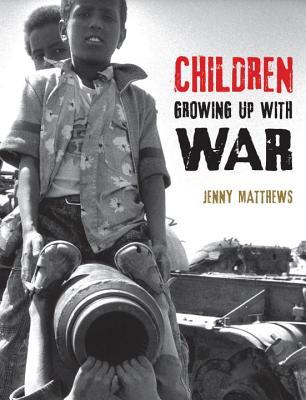
Children Growing Up with War
Author and Photographer: Jenny Matthews
Published October 14th, 2014 by Candlewick Press

Goodreads Summary: Through personal narrative and candid photographs, a photojournalist chronicles young lives upended by violence and strife.

The right to adequate nutrition and medical care.
The right to free education.
The right to a name and nationality.
The right to affection, love, and understanding.

In conflict zones around the world, children are denied these and other basic rights. Follow photographer Jenny Matthews into refugee camps, overcrowded cities, damaged villages, clinics, and support centers where children and their families live, work, play, learn, heal, and try to survive the devastating impact of war. This moving book depicts the resilience and resourcefulness of young people who, though heavily impacted by the ravages of war, search for a better future for themselves, their families, and their cultures.

Kellee’s Review:  This was a very tough book to read. I thought I’d be able to sit and read it all in one sitting, but I couldn’t. As a mother and a teacher, I love children, and it truly saddened me to see the situations that these children are in.

Fortunately, as an American, very few wars touch our lives. Unfortunately, our news doesn’t focus on many of the tumultuous conflicts that are active throughout the world, so we have become detached from reality. Our students are even more detached. That is why this book is important. It puts it all into perspective and really makes me feel and think. We rarely look at the humans that are being affected by the wars, we always focus on getting the bad guy. This book puts faces to the people, specifically the children, being affected every day.  I found it very interesting how the author set up the book. You can tell she is a photojournalist because it is set up to give information in the most impactful way.

Ricki’s Review: When I was teaching high school, one of my main goals was to provide my students with a more global perspective. I wish I had had this incredible text available at the time because it evoked powerful emotions in me. I know it would do the same for my students. The balance of photography and words is very well done, and I will admit that I took many breaks because these images and words hit me to my core. This is an important book that belongs in classrooms. It is a good length that teachers will easily be able to use it as a pairing with other texts about war and genocide. It is important to learn about our past, but it is just as important to understand the wars that persist today—which is foundational to this book. I wish I could meet this author to thank her for writing a text that moved me so deeply.

Teachers’ Tools for Navigation: This book presents many different discussion opportunities (e.g., the affects of war on children throughout the world, different active wars,Rights of the Child, importance of journalism). It would be fascinating to read with students and hear their perspective on the very tough topics and perspectives shared in the book.

Also, the book sets up nicely for a jigsaw discussion. The author set up the book to look at the different ways lives are affected: home & displacement, family, health, work, and school & play. Within each of these sections, she also looks at different places in the world such as Tunisia, Jordan, Afghanistan, Uganda, Rwanda, Gaza, and Kurdistan. She also includes different Rights of the Child throughout the book. The teacher could jigsaw either with the topic, the places, or the Rights and have students dig deeper.

Another way to look at this book is from a journalistic/photography point of view. I [Kellee] teach journalism, and I already plan on using Photos Framed as part of my photography unit, and I think this book will add an even deeper look into the importance of photography/journalism and with a topic (children’s lives) that my students can connect with.

Discussion Questions: How does Jenny Matthews’s photos, books, and stories help children who are growing up with war?; Why would Jenny Matthews choose to go into such dangerous situations?; If you had to choose one single photo to sum up Children Growing Up with War, which of these would you choose? (p. 42); Which of the UN’s Rights of the Child are affected when war is involved?; In what different way does war affect the children growing up in the conflict area?

We Flagged: “How would you feel if you lost your home and had to flee from your own country? Imagine losing some or all of your family, either as a direct result of fighting or indirectly through illness or disease. You might have to work to support your family or fight and kill other people just to survive. And how can you go to school if it’s being used as an army command outpost and all the books have been destroyed?

This is the reality for too many children and their families in the world. Today, children are still growing up with war—the consequences of which they’ll live with for the rest of their lives” (p. 3).

Read This If You Loved: Photos Framed: A Fresh Look at the World’s Most Memorable Photographs by Ruth Thomson
This would be an excellent nonfiction companion to: Never Fall Down by Patricia McCormick, Endangered by Eliot Schrefer, Caminar by Skila Brown, The Other Side of the Wall by Simon Schwartz, The Milk of Birds by Sylvia Whitman, or Son of a Gun by Anne de Graaf.

Recommended For: 

readaloudbuttonsmall closereadinganalysisbuttonsmall

Signatureand RickiSig

Review and Author Interview!: Cold War on Maplewood Street by Gayle Rosengren

Share

cold war maplewood

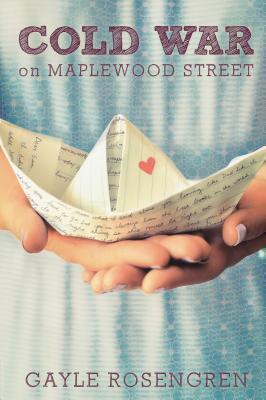
Cold War on Maplewood Street
Author: Gayle Rosengren
Published August 4, 2015 (Today!) by Putnam

Goodreads Summary: Cold War anxieties play out in a sensitively told story set during the Cuban missile crisis in the 1960s, perfect for fans of Gary Schmidt and Kristin Levine.

Joanna can’t get over how her brother broke his promise to never leave like their dad did. Sam is thousands of miles away on a navy ship, and no matter how often he sends letters, Joanna refuses to write back. When she makes a promise, she keeps it.

But then President Kennedy comes on TV with frightening news about Soviet missiles in Cuba—and that’s where Sam’s heading. Suddenly Joanna’s worries about being home alone, building up the courage to talk to a cute boy, and not being allowed to go to the first boy-girl party in her grade don’t seem so important. Maybe sometimes there are good reasons to break a promise.

The tense timeline of the Cuban missile crisis unfolds alongside a powerful, and ultimately hopeful, story about what it means to grow up in a world full of uncertainty.

Ricki’s Review: Cold War on Maplewood Street highlights a time period that isn’t common in the genre of historical fiction. I was intrigued from the very beginning because I have read few books focused on the Cuban missile crisis. The author excellently balances narrative and history in this engaging, thought-provoking text. Joanna is a strong girl who is ashamed of the way she treated her brother when he left for war. She makes a realistic mistake and tries to work through her emotions regarding her treatment of her brother and also the frightening events of war. There are many concepts for teachers to draw upon in this text—family, friendship, war, and fear, to name a few—and teachers will find this text offers rich opportunities for classroom discussion.

Kellee’s Review: What I think Ms. Rosengren does so well in this book is tell a real story with a piece of history as the backdrop. This is a Cold War/Cuban Missile Crisis story, but that isn’t what the book is all about. This book is about Joanna, her family, and her best friend. Her characters are very real and show the real emotions that must have been running through so many peoples’ veins during this tense time.  Because of how well this book is crafted as a narrative within a historical time period, I believe it would be a great introduction to this time period for middle grade readers. Many will have never heard of the Cold War or Cuban Missile Crisis, so learning about it through Joanna’s story is perfect. 

Teachers’ Tools for Navigation: Teachers might consider using this text to ask students to examine their regrets. Students could begin by closely examine characters that have regrets. Who are they? Do their regrets impact others? Then, the students could consider world leaders or pop culture to consider regrets that famous people might have and how these regrets impacted their lives. Finally, the students might journal to make connections with the text by examining mistakes they have made or regrets they hold in their personal lives.

Another interesting aspect of this book is the theme of communication. Students could compare the lack of communication of some of the characters in the book (which led to a major issue) and the lack of communication which led to the Cuban Missile Crisis. How could communication have helped either of these situations?

Discussion Questions: How would you react if your sibling went to war? Is Joanna’s reaction realistic? Is it fair?; How does war impact the lives of those who stay home? How do the characters of this text react differently from each other? Do you think the war impacted the choices Pamela’s family members make?; What is Mrs. Strenge’s role in the novel? How does she enhance our reading of the story?

Author Interview!: 

Unleashing Readers: What interested you in the Cold War, specifically?

Gayle Rosengren: When I wrote the first draft of Cold War on Maplewood Street–twenty years ago(!)–itwas to share a singular experience from my childhood, the Cuban Missile Crisis. But for several reasons, the manuscript never made it to an editor and I had to set it aside.

Years later I decided to revisit it with a different objective in mind. Now, I wanted to tell a story in which the crisis was the backdrop for a story about how poor communication can destroy relationships. The Cold War itself was an example of a break-down in communication on such a major scale that it very nearly led to destruction on a global level. In my novel, poor communication is demonstrated by main character Joanna’s failure to write to her brother and apologize for the terrible things she said to him when he left for the Navy. It’s also shown in her avoidance of a new tenant in their building, an old woman Joanna finds frightening for several reasons; and it’s demonstrated in her best friend Pamela Waterman’s family, when Mrs. Waterman runs away instead of confronting her husband about how desperate she is to see Paris.

UR: What does your research process look like?

GR: My research began with plumbing my own very vivid memories of the week of the crisis. I was twelve, and I was scared, especially since–although they tried to conceal it–I could see that adults were scared too.

But the major source of the historical details in Cold War on Maplewood Street came from the Chicago Tribune’s archives and actual headlines, photos, and articles that appeared in what was then The Chicago Daily Tribune. Remember, I wrote the first draft of the manuscript over twenty years ago. Pre-computer. And given that newspapers and television newscasts were the primary news sources of the day, I felt it was a solid source for my facts. I have a fat file full of copied newspaper pages that provided everything from the news to the weather and the television schedule. (All 4 channels!)

Today we know more about what was going on during that infamous week (in particular the note that Kennedy sent to Khrushchev agreeing to remove our nuclear weapons from Turkey) but I wanted Joanna to know only what anyone else living in the U.S, and specifically Chicago, would have known at the time.

UR: Did you decide on your time period or your protagonist/narrative first?

GR: This was an instance where the time period was clearly the inspiration for the story, and the protagonist and voice followed. I originally wrote this manuscript in the third person, rewrote it in first person, and then went back to third as I struggled to discover the character and voice that would best serve the story.

UR: Did anyone in your life inspire your characters?

GR: I modeled Joanna’s and Sam’s relationship on my close relationship with my brother Dennis. He was in the Air Force at the time of the missile crisis and based relatively safely in Okinawa, Japan, but I imagined that he was in the Navy, on a ship off the east coast of the U.S., and likely to be swept into action as part of the Cuba quarantine and blockade. I imagined how terrified I would have been for him. And then, to up the stakes, I imagined that when he’d left, Joanna in her hurt and anger accused him of deserting them just like their father had years before. The guilt she would feel knowing she might never get to apologize would be overwhelming.

Joanna’s mother was modeled after my single mother who always worked hard and scrimped to take care of us. Pamela was every good friend I ever had with a normal (which at the time meant two-parent) family.

As for Joanna, she was a lot like me at 12–childish and thoughtless one moment, grown-up and sensitive the next, taking awkward steps toward adulthood and all the while longing for the protective cocoon of childhood that was forever left behind in that unforgettable week. Like Joanna, I too loved horses and dogs and hated being alone in the house at night.

We Flagged: “[S]taying positive and hopeful—even pretending to—was much better than giving in to fear.” (p. 142)

Read This If You Loved: Countdown by Deborah Wiles; Paper Cowboy by Kristin Levine; What the Moon Said by Gayle Rosengren; Purple Heart by Patricia McCormick; Spy Catchers of Maple Hill by Megan Frazer Blakemore

Recommended For: 

  litcirclesbuttonsmall classroomlibrarybuttonsmall

 RickiSigandSignature

**Thank you to Penguin for providing copies for review and Ms. Rosengren for the author interview!**

I Am Lucille Ball by Brad Meltzer

Share

NFPB2015

Nonfiction Picture Book Wednesday

Nonfiction Picture Book Wednesday is hosted by Kid Lit Frenzy and was started to help promote the reading of nonfiction texts. Most Wednesdays, we will be participating and will review a nonfiction text (though it may not always be a picture book).
Be sure to visit Kid Lit Frenzy and see what other nonfiction books are shared this week!

lucille ball

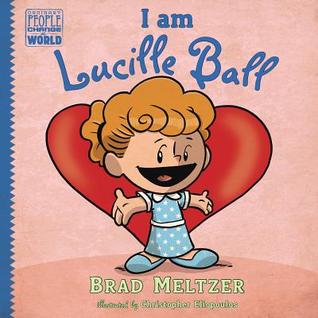
I Am Lucille Ball
Author: Brad Meltzer
Illustrator: Christopher Eliopoulos
Published July 14th, 2015

Goodreads Summary: “Kids always search for heroes, so we might as well have a say in it,” Brad Meltzer realized, and so he envisioned this friendly, fun approach to biography—for his own kids, and for yours. Each book tells the story of one of America’s icons in a vivacious, conversational way that works well for the youngest nonfiction readers, those who aren’t quite ready for the Who Was biography series. Each book focuses on a particular character trait that made that role model heroic. For example, Lucille Ball could make any situation funny. By making people around the world laugh, she proved that humor can take on anything.

This engaging series is the perfect way to bring American history to life for young children, providing them with the right role models, supplementing Common Core learning in the classroom, and best of all, inspiring them to strive and dream.

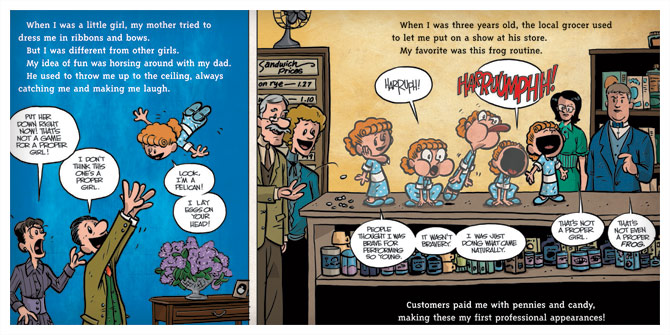
My Review:  The first “Ordinary People Change the World” book I read was I am Jackie Robinson, and I immediately loved the way the book was set up. I am Lucille Ball is the same way. Like I stated in my review of Jackie Robinson, I love that it is in first person which sucks the reader into Lucy’s life. The series is also a picture book/graphic novel mix which not only adds to the engagement aspect of the book, I think it really makes you feel like you know the subject more. It also is where Meltzer puts some of his funniest parts of the story.

The reason why I knew I had to review this book, though, was because of the subject matter. All of the other subjects of the books in the series (Lincoln, Parks, Einstein, Earhart, and Robinson) are pretty well-known amazing people although they did all start out with quite ordinary lives. Lucille Ball deserves to be talked about along with them though many do not know that she does. I love that Meltzer decided to tackle a story about someone that not everyone may understand why he chose her. Brad Meltzer addressed this on his Facebook page:

“To my surprise, some have asked: Why Lucy? So let me explain: I wrote this book because I wanted my daughter to finally have a female entertainment hero who wasn’t famous just because she was thin and known only for her looks. Lucy is different than everyone else. She’s funny, driven, and the first woman to run a major movie studio (producing Star Trek and Mission: Impossible). Her success came from her drive — and because she so perfectly wasn’t like everyone else. Plus she taught me, throughout my own childhood, that humor can take on anything. I wanted my daughter to learn that. 

But in terms of Lucy and Ethel crazy ideas, here’s my most Lucy and Ethel-ish. Share this book with someone who’s different. Share it with little girls and boys, as well as big girls and boys. Show them that it’s not just okay to be different…it’s SPECTACULAR to be different.”

Teachers’ Tools for Navigation: The “Ordinary People” books definitely need to be in classrooms. They are going to be loved by students. However, I think Meltzer’s subjects are definitely worth looking at. I see them being used in a lit circle where each group gets a different one of Meltzer’s books then after reading and discussing the books, they share what they learned about their Ordinary Person.

It would also be so much fun to use Meltzer’s books as a mentor text to writing their own Ordinary People picture book. A fun twist on a research project!

More information on I am Lucille Ball can be found here.

Discussion Questions: What made Lucille Ball a standout in the entertainment industry?; How did Lucille Ball pave the way for comediennes like Melissa McCarthy and others? How does Meltzer’s mix of picture book/graphic novel help make the book more enjoyable to read yet still informative?

We Flagged: 

look_ball1
From http://ordinarypeoplechangetheworld.com/lucille_ball.php

Interview with Brad Meltzer about I am Lucille Ball: https://youtu.be/OHK5uOiRBto 

Read This If You Loved: “Ordinary People Change the World” (series) by Brad Meltzer, “Who Was…” (biography series) by various

Recommended For: 

classroomlibrarybuttonsmall litcirclesbuttonsmall readaloudbuttonsmall

Signature

**Thank you to Penguin for providing a copy for review!!**

Henry’s Freedom Box by Ellen Levine

Share

NFPB2015

Nonfiction Picture Book Wednesday

Nonfiction Picture Book Wednesday is hosted by Kid Lit Frenzy and was started to help promote the reading of nonfiction texts. Most Wednesdays, we will be participating and will review a nonfiction text (though it may not always be a picture book).
Be sure to visit Kid Lit Frenzy and see what other nonfiction books are shared this week!

Henry's Freedom Box

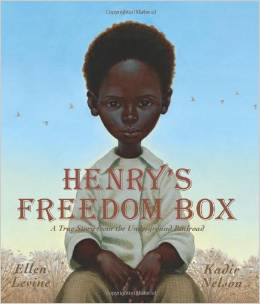
Henry’s Freedom Box
Author: Ellen Levine; Illustrator: Kadir Nelson
Published: January 1, 2007 by Scholastic

GoodReads Summary: A stirring, dramatic story of a slave who mails himself to freedom by a Jane Addams Peace Award-winning author and a Coretta Scott King Award-winning artist.

Henry Brown doesn’t know how old he is. Nobody keeps records of slaves’ birthdays. All the time he dreams about freedom, but that dream seems farther away than ever when he is torn from his family and put to work in a warehouse. Henry grows up and marries, but he is again devastated when his family is sold at the slave market. Then one day, as he lifts a crate at the warehouse, he knows exactly what he must do: He will mail himself to the North. After an arduous journey in the crate, Henry finally has a birthday—his first day of freedom.

Review: The story of Harriet Tubman is perhaps the most commonly taught story about the Underground Railroad. Henry “Box” Brown’s story is quite different, and I learned a lot by reading this book. I think it would be an excellent text to teach in the classroom. This book made me very emotional, and I am still thinking about it, weeks after I finished it. The illustrations are gorgeous, and the story is inspirational. The author’s note at the end of the text provide more factual information that will send students scouring for more information about the time period.

Teachers’ Tools for Navigation: Most obviously, this would be an excellent text for a unit about slavery or the Civil Rights Movement. I am a big proponent of using texts outside of traditional units (or Black History Month) because these texts are valuable beyond the time period they represent. I would love to do a unit on Endurance or Bravery or Freedom. I would find and group similar texts that promote discussion and inquiry about the theme and ask students and essential questions like, What does it mean to be brave?

Discussion Questions: How does Henry endure many challenges in life? In what ways is he brave?; What does Henry teach us about life?; Describe another famous person in history or modern times who reminds you of Henry.

One of the Many, Beautiful Illustrations:

Kadir Nelson Henry 

Read This If You Loved: Dave the Potter: Artist, Poet, Slave by Laban Carrick Hill; The Listeners by Gloria Whelan; Freedom Summer by Deborah Wiles; The Other Side by Jacqueline Woodson; The Diary of Anne Frank by Anne Frank

Recommended For:

  readaloudbuttonsmall  classroomlibrarybuttonsmall

RickiSig

Freedom Summer by Deborah Wiles (Kellee’s Review)

Share

NFPB2015

Nonfiction Picture Book Wednesday

Nonfiction Picture Book Wednesday is hosted by Kid Lit Frenzy and was started to help promote the reading of nonfiction texts. Most Wednesdays, we will be participating and will review a nonfiction text (though it may not always be a picture book).
Be sure to visit Kid Lit Frenzy and see what other nonfiction books are shared this week!

Disclaimer: This book is technically historical fiction, but I felt it belonged on a Wednesday because of its base in fact (see “A Note About The Text”).

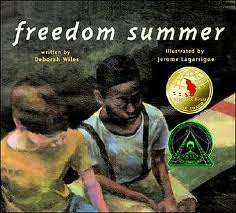
freedom summer

Freedom Summer
Author: Deborah Wiles
Illustrator: Jerome Lagarrigue
Published January 1st, 2005 by Aladdin

Goodreads Summary: 

John Henry swims better than anyone I know.
He crawls like a catfish,
blows bubbles like a swamp monster,
but he doesn’t swim in the town pool with me.
He’s not allowed.

Joe and John Henry are a lot alike. They both like shooting marbles, they both want to be firemen, and they both love to swim. But there’s one important way they’re different: Joe is white and John Henry is black, and in the South in 1964, that means John Henry isn’t allowed to do everything his best friend is. Then a law is passed that forbids segregation and opens the town pool to everyone. Joe and John Henry are so excited they race each other there…only to discover that it takes more than a new law to change people’s hearts.

My Review:  Deborah Wiles amazes me every time I read something by her. I think I need to get everything she has written and devour it. Her books make me a better person. This one is no exception to these statements. Freedom Summer starts with a personal story of Wiles’s and sets the stage for the book: What would it be like to have a best friend who is black in the South in 1964? Do you know what it is like? Any other friendship! Except many people felt that it was wrong and you cannot go places together. Freedom Summer is about Joe and John Henry. They are both young boys. They both like to swim. They both love ice cream. However, only one can go to the pool and only one can buy ice cream from the store. I think what makes this story so impactful is that Wiles sets the stage of the friendship as something so normal (because it is!!) then shows how different their lives are. So powerful. Made me cry. It’s lyrical writing, soft and beautiful illustrations, and powerful message are so moving. Go read it if you haven’t.

You can view Ricki’s review of Freedom Summer here.

Teachers’ Tools for Navigation: This book belongs in classrooms. It will start discussions and make students think. Luckily, Deborah Wiles helps us out a ton by sharing so many resources with us on her Pinterest board https://www.pinterest.com/debbiewiles/ and her website http://deborahwiles.com/site/resources-for-educators/.

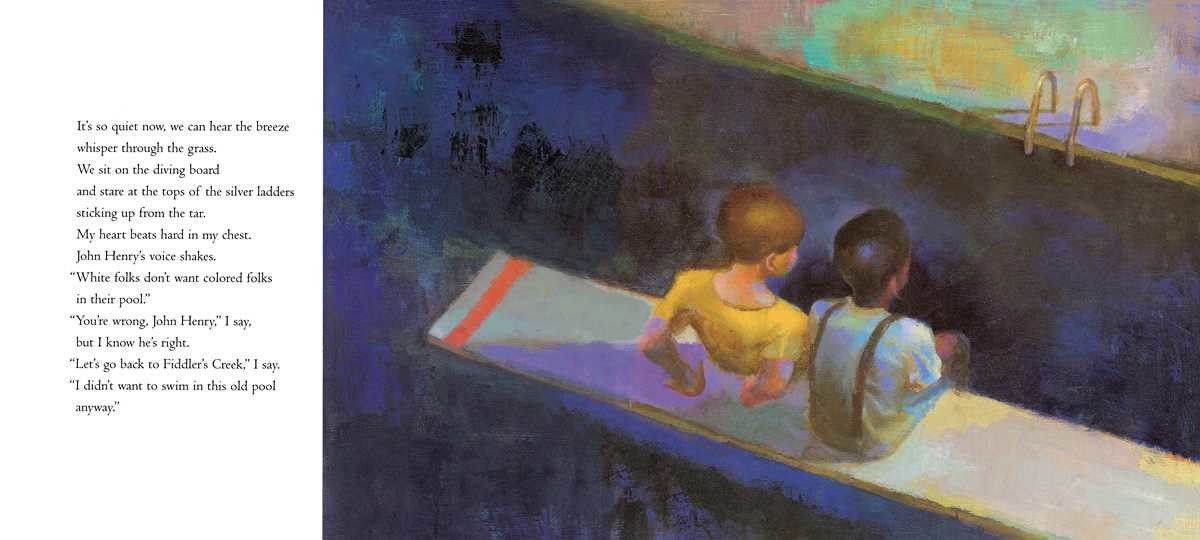
Discussion Questions: Why was the pool being filled with tar?; What do you think will happen after the end of the book?; Based on Joe’s parents letting him be friends with John Henry, what can you infer their viewpoint of integration is?

We Flagged: 

freedom summer spread
from http://books.simonandschuster.ca/Freedom-Summer/Deborah-Wiles/9781481422987

Read This If You Loved: Revolution by Deborah WilesSeeds of Freedom by Hester BassSeparate is Never Equal by Duncan TonatiuhThe Lions of Little Rock by Kristin Levine, Sin-In by Andrea Pinkney

Recommended For: 

classroomlibrarybuttonsmall readaloudbuttonsmall litcirclesbuttonsmall

Signature

2015 Big Book Summer Challenge: Revolution by Deborah Wiles & East of Eden by John Steinbeck

Share

bigbooksummer

Big Book Summer Challenge is a challenge hosted by Sue at Book by Book. The inspiration behind the challenge is to push the bigger books to the top of the TBR pile during summer time.

The Details:

  • Anything over 400 pages qualifies as a big book.
  • The challenge will run from Memorial Day weekend (starting May 22 this year) through Labor Day weekend (Labor Day is September 7 this year).
  • Choose one or two or however many big books you want as your goal.  Wait, did you get that?  You only need to read 1 book with over 400 pages this summer to participate! (Though you are welcome to read more, if you want.)
  • Choose from what’s on your shelves already or a big book you’ve been meaning to read for ages or anything that catches your eye in the library – whatever peaks your interest!
  • Sign up on Book by Book.
  • Write a post to kick things off – you can list the exact big books you plan to read or just publish your intent to participate, but be sure to include the Big Book Summer Challenge pic above, with a link back to Book by Book.
  • Write a post to wrap up at the end, listing the big books you read during the summer.
  • You can write progress posts if you want to and/or reviews of the big books you’ve read…but you don’t have to!  There is a separate links list below for big book review posts.

Today, we are combining the last three bullet points–we both have finished our big books!

Kellee

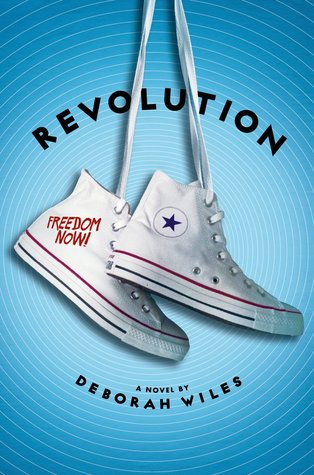
revolution

Revolution
Author: Deborah Wiles
Published May 27th, 2014 by Scholastic Press
538 pages

Goodreads Summary: It’s 1964, and Sunny’s town is being invaded.  Or at least that’s what the adults of Greenwood, Mississippi, are saying. All Sunny knows is that people from up north are coming to help people register to vote.  They’re calling it Freedom Summer.

Meanwhile, Sunny can’t help but feel like her house is being invaded, too.  She has a new stepmother, a new brother, and a new sister crowding her life, giving her little room to breathe.  And things get even trickier when Sunny and her brother are caught sneaking into the local swimming pool — where they bump into a mystery boy whose life is going to become tangled up in theirs.

As she did in her groundbreaking documentary novel Countdown, award-winning author Deborah Wiles uses stories and images to tell the riveting story of a certain time and place — and of kids who, in a world where everyone is choosing sides, must figure out how to stand up for themselves and fight for what’s right.

*A 2014 National Book Award Finalist

Kellee’s Thoughts: What is so amazing about this book is that it doesn’t feel like a big book. Well, it FEELS like a big book because it is heavy and thick, but when you are done reading, it doesn’t feel like you had to trudge through anything. Not once did I feel like there were too many pages. Wiles does an amazing job filling each and every page with important information for the historical context, characterization, or plot development.

Revolution is a perfectly-crafted look at one of the toughest times in American history. What Wiles does is truly delve into the emotions felt during the Freedom Summer and some of the smaller actions that may not have made the history books. One of my favorite things about Wiles’s Sixties Trilogy books is that she includes historical resources throughout the book that truly puts the story in context. The primary sources/stories and other embedded pieces of history really show that the narrative she has created is not truly a work of fiction. It may include fictional characters, but the setting, the feelings, the conflict, the time period, the history–those are all fact.

Revolution couldn’t work without the Sunny and her cast of characters though. This book could have gone terribly wrong if the voice, thoughts, and feelings of our protagonist were not so believable since Wiles was having us learn about such a tumultuous time through the eyes of a child. However, no need to worry about that because Sunny is perfect. She is easy to connect to and seems true. My favorite characters are those around her that push her and help change her: Annabelle, Jo Ellen, and Ray. Annabelle is so patient, truly loves Sunny, and has some of the best lines in the book; Jo Ellen is so head-strong, forward-thinking, and intelligent; and Ray is just crazy but also overwhelmingly brave.

I am part of an informal Twitter book club, and our June read was Revolution. Deborah Wiles even stopped by to chat with us! If you are interested in reading it, I archived it here. Warning: There may be spoilers if you haven’t read the book. Some of my favorite quotes from the chat that truly show the impact of the book are:

“What a brilliant idea Deborah Wiles had with these books–to embed all of the history.” -Carrie Gelson

“Sunny’s story hit my heart.” -Michele Knott

Countdown and Revolution are like…seeing beyond the headlines.” -Cheriee Weichel

“So hard to read how something you think people could do (register) but couldn’t because of effects (lose job, name in paper, etc.)” -Michele Knott

“It took Sunny witnessing the civil unrest to grow up and realize how to accept her own life.” -Kellee Moye

“There is so much about the Civil Rights Movement that seems like it should be easy, but ignorance stops it.” Kellee Moye

“Immerse as much as possible.” -Deborah Wiles, referencing part of her research process

Favorite quote from the book: “Everything is connected. Every choice matters.Every person is vital, valuable, and worthy of respect.” pg. 361

Recommended For: 

classroomlibrarybuttonsmall readaloudbuttonsmall closereadinganalysisbuttonsmall litcirclesbuttonsmall

Ricki

I also plan to tackle Wonderstruck by Brian Selznick, as well, but I am not sure if I will make it by the end of the summer. East of Eden was quite an epic read!

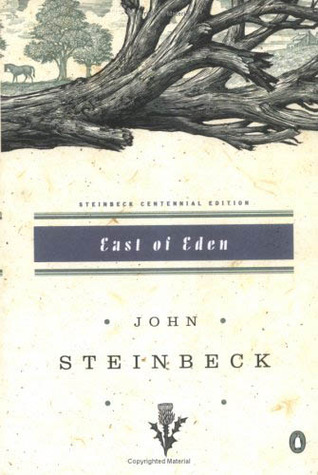
east of eden

East of Eden
Author: John Steinbeck
Published in 1952
601 pages

Goodreads Summary: Set in the rich farmland of California’s Salinas Valley, this sprawling and often brutal novel follows the intertwined destinies of two families—the Trasks and the Hamiltons—whose generations helplessly reenact the fall of Adam and Eve and the poisonous rivalry of Cain and Abel. Here Steinbeck created some of his most memorable characters and explored his most enduring themes: the mystery of identity; the inexplicability of love; and the murderous consequences of love’s absence.

Ricki’s Thoughts: I’ve had this book on my to-be-read list for several years. In fact, I realized I own three identical copies of it, so I have considered reading it for quite some time. I love Of Mice and Men and Grapes of Wrath. In fact, I love the six or so Steinbeck books I’ve read. I’d heard this book was related to the Cain/Abel story, so I never got around to reading it because I thought I knew the ending. As an aside, I didn’t, but even if all of my predictions were accurate, it still would have been well worth the read.

The book consists of several interwoven stories and families. Two good friends (who aren’t avid readers) listened to this book in the car, and they continually urged me to read it. When I finally started, they kept saying, “We know which character you will love.” Sam Hamilton is a good man–a salt of the Earth kind of man. He reminds me of Slim for Of Mice and Men. Essentially, he teaches us what it means to be good to the very hollows of our souls. Another character who will stick with me forever is Cathy. Phew. She is quite a complex character—a sociopath, I would say—and her evilness makes my skin crawl. She is unlike any other character I’ve ever read. I could continue forward and describe more characters, but it feels as if I won’t do them justice.

The story does meander at times, but anyone who appreciates Steinbeck’s work knows that this is, in fact, a positive quality. His stories feel very true to life. We don’t follow plot diagrams. I will never forget reading this book. The story and its characters will stay with me forever. I highly recommend it.

A few great quotes that depict the beauty of Steinbeck’s words:

“I believe a strong woman may be stronger than a man, particularly if she happens to have love in her heart. I guess a loving woman is indestructible.”

“All great and precious things are lonely.”

“I believe that there is one story in the world, and only one. . . . Humans are caught—in their lives, in their thoughts, in their hungers and ambitions, in their avarice and cruelty, and in their kindness and generosity too—in a net of good and evil. . . . There is no other story. A man, after he has brushed off the dust and chips of his life, will have left only the hard, clean questions: Was it good or was it evil? Have I done well—or ill?”

“There’s more beauty in truth, even if it is dreadful beauty.”

Recommended For: 

classroomlibrarybuttonsmall closereadinganalysisbuttonsmall

Thank you to Sue for hosting the challenge and pushing us! 

What big books do you have planned for the summer? You should join in the challenge too!

Signature andRickiSig

X by Ilyasah Shabazz and Kekla Magoon

Share

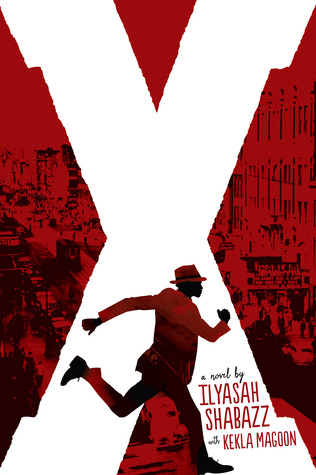
x

X
Authors: Ilyasah Shabazz and Kekla Magoon
Published: January 6, 2015 by Candlewick Press

GoodReads Summary: Cowritten by Malcolm X’s daughter, this riveting and revealing novel follows the formative years of the man whose words and actions shook the world.

I am Malcolm.
I am my father’s son. But to be my father’s son means that they will always come for me.

They will always come for me, and I will always succumb.

Malcolm Little’s parents have always told him that he can achieve anything, but from what he can tell, that’s nothing but a pack of lies—after all, his father’s been murdered, his mother’s been taken away, and his dreams of becoming a lawyer have gotten him laughed out of school. There’s no point in trying, he figures, and lured by the nightlife of Boston and New York, he escapes into a world of fancy suits, jazz, girls, and reefer.

But Malcolm’s efforts to leave the past behind lead him into increasingly dangerous territory when what starts as some small-time hustling quickly spins out of control. Deep down, he knows that the freedom he’s found is only an illusion—and that he can’t run forever.

X follows Malcolm from his childhood to his imprisonment for theft at age twenty, when he found the faith that would lead him to forge a new path and command a voice that still resonates today.

Review: If you’ve been reading the blog the past few weeks, my love for this book may feel repetitive (and I am not sorry!). Some books just stick to our bones and by Ilyasah Shabazz and Kekla Magoon will remain with me forever. It kept me awake late at night, and I was floored by the captivating writing. This is a very special book and well worth the hype it has received. I plan to use it in my future Methods classes because there are so many themes and topics for discussion. Most texts are written about Malcolm Little’s later life, but this book encapsulates his early years—this restless young man is dissatisfied with his circumstances and attempts to make a name for himself. He does not always make the best choices, but he learns from his many mistakes, and his spirit will inspire readers. I highly recommend this book for all readers. Malcolm has a lot to teach us.

Teachers’ Tools for Navigation: This book made me want to sign out Malcolm X’s autobiography from the library. I wondered what else I could learn about him. Teachers might ask students to research Malcolm X’s life. They might explore the ways Malcolm inspired troubled youth and why he made connections with them. Based on this text and others, it seems that many of Malcolm X’s actions may be misrepresented, so it might be wise for teachers to discuss his life, mission, and actions with students. This would allow students to form their own understandings of his later life.

Discussion Questions: If you could change one decision Malcolm made, what would it be? What do you think he should have done differently?; Malcolm may inspire us, but who inspired Malcolm?; How is Malcolm different from his family members? How does this impact him?

We Flagged: “I did what I had to. Didn’t see anything wrong with it. Not a thing” (p. 36).

Read This If You Loved: The Rock and the River by Kekla Magoon; How it Went Down by Kekla Magoon; Freedom Summer by Deborah Wiles; Audacity by Melanie Crowder; The Boy in the Black Suit by Jason Reynolds

Recommended For:

readaloudbuttonsmall litcirclesbuttonsmall closereadinganalysisbuttonsmall classroomlibrarybuttonsmall

RickiSig