Review, Giveaway, and Author Q&A!: Frozen Wild: How Animals Survive in the Coldest Places on Earth

Share

NFPB2015

Nonfiction Picture Book Wednesday

Nonfiction Picture Book Wednesday is hosted by Kid Lit Frenzy and was started to help promote the reading of nonfiction texts. Most Wednesdays, we will be participating and will review a nonfiction text (though it may not always be a picture book).
Be sure to visit Kid Lit Frenzy and see what other nonfiction books are shared this week!
Frozen Wild

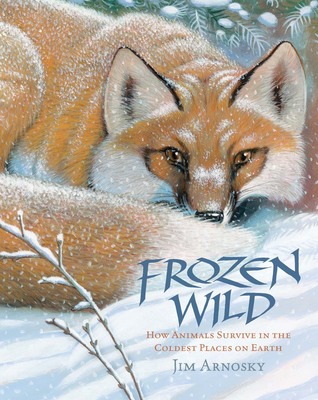
Frozen Wild: How Animals Survive in the Coldest Places on Earth
Author and Illustrator: Jim Arnosky
Published September 1st, 2015 by Sterling Children’s Books

Goodreads Summary: Quietly it comes—the dark and chill of winter. And in the snow-covered fields and forests, the great northern plains, vast stretches of frozen tundra, and icy polar regions, wild animals have to survive day after day, night after night, out in the cold. How do they do it? Kids can bundle up and join award-winning author, illustrator, and naturalist Jim Arnosky as he follows the tracks of otters, beavers, moose, polar bears, killer whales, penguins, fur seals, and other creatures to discover more about their lives during this frigid season. Arnosky’s stunning art includes five magnificent foldouts that reveal worlds under the ice and at the farthest, frostiest reaches of the globe.

Kellee’s Review: This was my first exposure to Arnosky’s work, and I truly enjoyed my first book by him (and I will definitely be finding more by him). What stood out to me first is that the book was organized very thoughtful and in a way that students will definitely find user friendly. I was then automatically blown away by the artwork. Jim Arnosky is truly an artist. All the illustrations were created using pencil and paint, and they are so realistic and beautiful. Then within each section, the facts that Arnosky choose to share are interesting, well researched, and support the illustrations perfectly. I also really liked the fold outs that expanded the illustrations to sometimes double the size possible without the fold out. Overall, the text is fact-checked and interesting and the illustrations were pieces of artwork.

Ricki’s Review: I knew this book was going to be a great read before I opened the first page. Kellee messaged me to tell me how much she liked it. We review a lot of books together each year, and we only message each other when we really, really like a book. I waited until I had a quiet time to fully immerse myself in the book. The beautiful artwork quickly enveloped me in the winter wildlife. I imagined Arnosky sitting beside his own photographs (which he used as references) to recreate the beauty of the wild. There is so much fantastic information in this text, and Aronsky presents the facts in an accessible way. I can’t wait until my son is a bit older because I know he will really enjoy reading it. It would make a great gift for a child who loves wildlife or wants to learn more about the coldest places on Earth.

Teachers’ Tools for Navigation: Frozen Wild, and the other books in his animal series, are made for classrooms. They can be used in may different ways. My first thought, beside having the book in classroom and school libraries, is using Arnosky’s books as a basis for lit circles where each group would have one of his books. They can use his book, his resources, and other resources to research the topic of each of his books. They then can do an inquiry project using all of their research.

Discussion Questions: What are some of the ways that animals stay warm during the winter?; What is the difference between the Artic and the Antarctic?; What are some ways that animals find food when it is cold?; Which animal do you think is made the best for surviving in the cold?

Author Q&A: 

Unleashing Readers: Frozen Wild is the newest book in your animal series. How do you choose the topics for each of your texts?

Jim Arnosky: Frozen Wild is my 137th book about wild animals and wild places. It is the newest book in my series of gatefold books for Sterling. The topics of these books came from either my own curiosity about certain groups of animals or from a suggestion on the part of my editor, Meredith Mundy, to have a book featuring a particular animal. When I work on a suggested topic (which has been rare) my job is to make that book reflect my own personality, viewpoint, experience, and research. That is the crux of being an author. Not just to pass along information, but to share any and all of your understanding gained in thinking about and studying the subject.

UR: How do you choose which animals to include in your books, and what is your research process for your books? 

JA: For Frozen Wild my process began with the animals around our farm in Northern Vermont whose tracks I follow all through our snow season. From there the book’s content expanded to my curiosity about the animals who live in places where cold weather can last most of the year. While portions of Frozen Wild were researched in books and conversations I’ve had with friends who have studied animals in these cold regions, and some of the book’s paintings were done from captive species in zoos, most of the time I research my books in the field with Deanna my wife. She photographs the animals while I videotape them.

The video allows me to study animal sounds, anatomy, movement, and behavior long after we have returned home. And Deanna’s still photos provide yet another viewpoint of the subjects I write about and paint.

UR: What is your art process? 

JA: For the painting, I sketch the scenes in pencil on my paper. Then I over- paint the sketch with a layer of acrylic colors, using colors that blend with portions of the scene. On this underpainting of various color area, I re-sketch the scene in white chalk, and then paint the next layer, blocking out the figures and the background. Layer after layer, I build a deeply colored picture that, if you look at the originals with a magnifying lens as I do while I detail the art, you can actually see the multiple layers of color one on top of the other, the first to the top layer. It always thrills me to see that physical dimensional quality of what I have done.

UR: Are there any nonfiction authors or illustrators that influence you? 

JA: My favorite authors are the singer-songwriters such as Bob Dylan, John Denver, James Taylor, Jimmy Buffett, and Joni Mitchell. We did not have books in our home while I was growing up. And our little school had no library to speak of. Later, I found favorite authors in the great books – Thor Heyerdahl’s Kon Tiki, Ernest Hemingway’s The Old Man and the Sea, Mark Twain, John Burrough (the great naturalist) Henry Benston, Aldo Leopold, and Hal Borland.

My favorite illustrators (and painters) are Bruno Liljefors, Bob Kuhn, N.C. Wyeth, Roger Tory Peterson, Audubon, Charles Tunniclyfe, Ernest Thompson Seton, and Winslow Homer.

I am self taught in both art and nature and have learned much about art from studying these great masters. Also, I have met and learned from many great naturalists and scientists who have been generous in sharing their knowledge with me.

UR: Any plans for the next book in the series? 

JA: Presently I am working with Starwalk Kids Media in bringing my popular Crinkleroot series of nature guides into the digital realm. I am also working on another picture book. I have a novel making the rounds and have just finished a picture book about the invasive species problem threatening our wildlands. It is called Wild Invaders. For the Sterling series, our next book will be about animal camouflage.

Thank you for your interest in my work! I am happy to Skype a conversation with you if you wish. Deanna (jarnosky@fairpoint.net) can set that up. Also for further info please go to my website (www.jimarnosky.com) There is a piece in there describing Deanna and my early days in the can where, living basically, I was able to find my way into nature and writing and illustrating books. It is called “Born In A Tree – A Natural History”.

We are seeing color change now. And the air is getting cooler. Soon winter will be upon us again.

Your friend in books, Jim Arnosky

We Flagged: 

Frozen-Wild-image

Read This If You Loved: Winter Bees & Other Poems of the Cold by Joyce Sideman and Rick AllenFirefly July by Paul JaneczkoFeathers by Melissa StewartBorn in the Wild by Lita JudgeForest Has a Song by Amy Ludwig VanDerwaterOver and Under Snow by Kate Messner, Seymour Simon animal books and extreme series

Recommended For: 

classroomlibrarybuttonsmall closereadinganalysisbuttonsmall

Giveaway!

a Rafflecopter giveaway

What to know more about the book? Check out Mrs. Knott’s Book Nook!

Signatureand RickiSig

**Thank you to Joshua at Sterling Publishing for providing copies for review and the giveaway!**
Jump Back, Paul: The Life and Poems of Paul Laurence Dunbar by Sally Derby

Share

NFPB2015

Nonfiction Picture Book Wednesday

Nonfiction Picture Book Wednesday is hosted by Kid Lit Frenzy and was started to help promote the reading of nonfiction texts. Most Wednesdays, we will be participating and will review a nonfiction text (though it may not always be a picture book).
Be sure to visit Kid Lit Frenzy and see what other nonfiction books are shared this week!

jump back paul

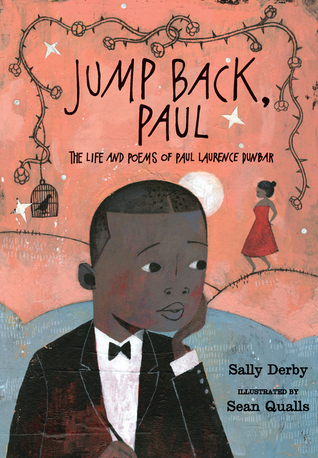
Jump Back, Paul: The Life and Poems of Paul Laurence Dunbar
Author: Sally Derby
Illustrator: Sean Qualls
Published September 22nd, 2015 by Candlewick Pres

Goodreads Summary: Discover the breadth and depth of Paul Laurence Dunbar’s poetry—and learn how it reflects his singular life as a late-nineteenth-century black man.

Did you know that Paul Laurence Dunbar originated such famous lines as “I know why the caged bird sings” and “We wear the mask that grins and lies”? From his childhood in poverty and his early promise as a poet to his immense fame and his untimely death, Dunbar’s story is one of triumph and tragedy. But his legacy remains in his much-beloved poetry—told in both Standard English and in dialect—which continues to delight and inspire readers today. More than two dozen of Dunbar’s poems are woven throughout this volume, illuminating the phases of his life and serving as examples of dialect, imagery, and tone. Narrating in a voice full of admiration and respect, Sally Derby introduces Paul Laurence Dunbar’s life and poetry to readers young and old, aided by Sean Qualls’s striking black-and-white illustrations.

My Review: I came into this book not knowing much about Paul Laurence Dunbar aside from knowing that the line “I know why the caged bird sings” was written by him which inspired Maya Angelou’s autobiography’s title; however, I didn’t know much else about his life or his poetry. Derby’s book does a fantastic job remedying that. Not only are you exposed to more than 20 of Dunbar’s poems, you are exposed to them in very specific ways as Derby tells Dunbar’s life story. Each poem’s inclusion is purposeful and perfectly timed. When finished, I wanted to read more of Dunbar’s poems and actually hear some of them being performed (his dialect poems are screaming to be read aloud). Qualls also does a brilliant job, as always, illustrating the tone of the text in beautiful black-and-white drawings.

Teachers’ Tools for Navigation: This book not only can be used to share information about Paul Laurence Dunbar’s life and his poetry, but it also includes fascinating information about what it was like to live after the Emancipation Proclamation then after Plessy v. Ferguson.

First, in an English classroom, this text truly puts Dunbar’s poems in a perspective which will allow more depth when analyzing. The way Derby set up the narrative of Dunbar’s life around his poems helps the reader understand the underlying meaning of his poetry even better than they would with a cold read.

Also, cross-curricularly while studying Dunbar’s poems, during history, a tie-in to this tumultuous time period would be easy and effective.  The time period that Dunbar lived in is not often discussed as it is a time after slavery but before segregation that many students may not know about.

Discussion Questions: Who do you think had the biggest influence on Dunbar becoming a poet?; Do you think Dunbar’s father’s absence affected how he was as a husband to Alice?; How do you think Frederick Douglass influence Dunbar?; How was the voice that told the story chosen by Derby? Do you think the way she structured and told the story was helpful in understanding Dunbar’s life and poetry?

We Flagged: “You never heard of the poet Paul Laurence Dunbar? Child, where’ve you been? I got to have a word with you. Why, back in the day, you’d have whole families sitting around listening while one of them performed “When Malindy Sings” or “Little Brown Baby” or “A Negro Love Song” (which folks most always call “Jump Back, Honey”).”

Read This If You Loved: Paul Laurence Dunbar’s poetry, I Know Why the Caged Bird Sings by Maya Angelou, Henry Aaron’s Dream by Matt Tavares, The Underground Abductor by Nathan Hale

Recommended For: 

classroomlibrarybuttonsmall readaloudbuttonsmall closereadinganalysisbuttonsmall

Signature

**Thank you to Candlewick for providing a copy for review!!**

Review and Author Interview!: Ebola: Fears and Facts by Patricia Newman

Share

NFPB2015

Nonfiction Picture Book Wednesday

Nonfiction Picture Book Wednesday is hosted by Kid Lit Frenzy and was started to help promote the reading of nonfiction texts. Most Wednesdays, we will be participating and will review a nonfiction text (though it may not always be a picture book).
Be sure to visit Kid Lit Frenzy and see what other nonfiction books are shared this week!

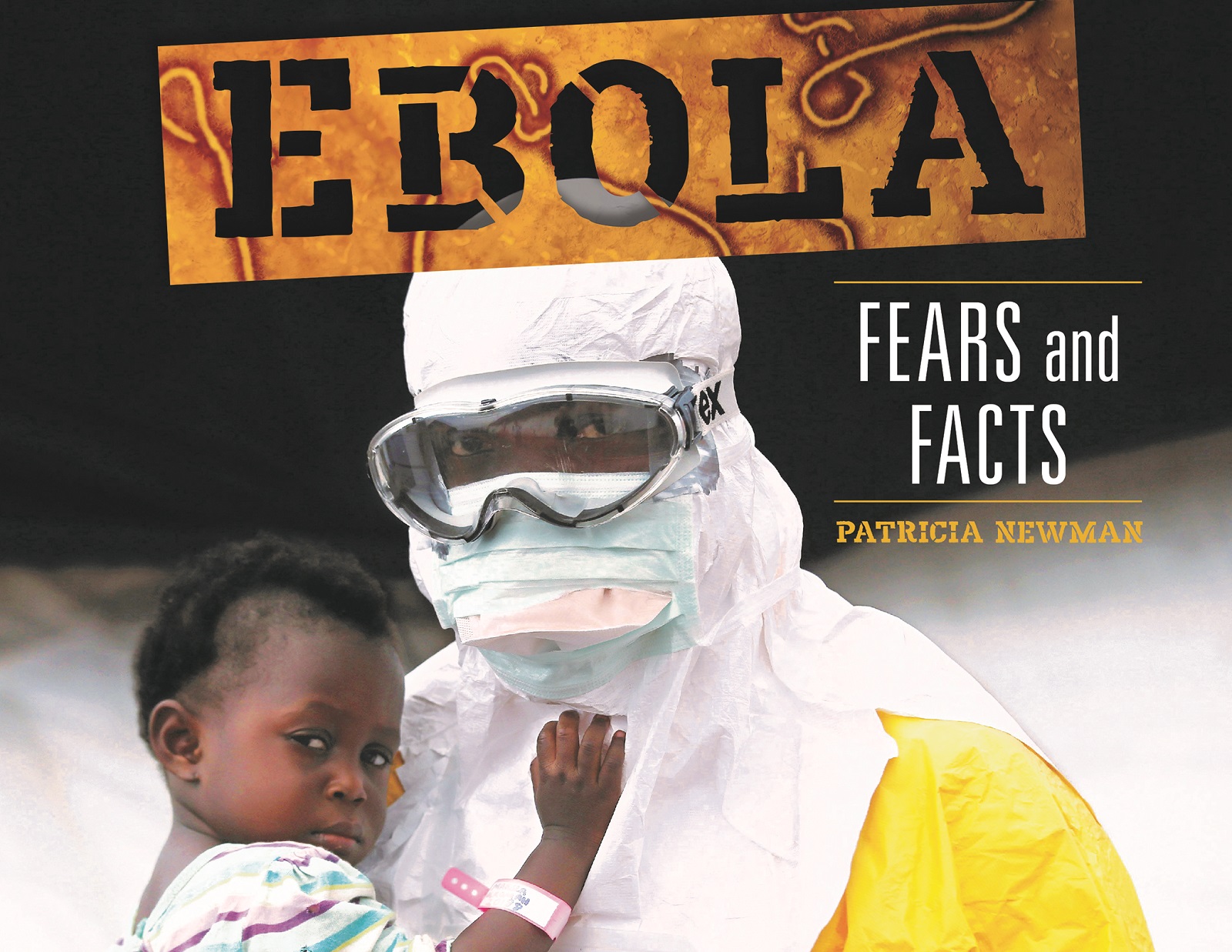
ebola

Ebola: Fears and Facts
Author: Patricia Newman
Expected Published October 28th, 2015 by Lerner Publishing Group

Goodreads Summary: Ebola is a deadly contagious disease. From 1975 to 2013, it killed about 1,500 people. But a 2014 epidemic killed more than six times that number. At first the outbreak was contained to one country. But soon it spread to two others―the virus was on the move, and people were scared. When two American healthcare workers became infected and were sent to the United States for treatment, many people feared a pandemic―an outbreak that would spread all over the world. Could it happen?

Ebola: Fears and Facts takes you behind the sensational headlines to address questions and concerns about the virus. Learn about the history of the disease, its symptoms, and how it spreads. Find out how the 2014 epidemic compares to past Ebola outbreaks, as well as to outbreaks of other infectious diseases. With a question-and-answer section and reference maps, Ebola: Fears and Facts will help you to better understand this most-feared disease.

My Review: The Ebola epidemic of 2014 caused pure panic around the world. Because of the 24-hour news coverage of the disease as it entered the U.S, Ebola became a hot topic; however, there was so much misconception about the disease. As a teacher during the epidemic, I saw how scared students were of the disease and how little they knew about it. The text is a wonderful resource to help kids learn about the disease.

Teachers’ Tools for Navigation: Patricia Newman’s middle grade nonfiction texts are a necessity for middle school classrooms. They teach the reader so much about the topic though do so in an interesting way to keep the readers’ attention. They are also about important topics that kids can make a difference by learning about. Her books, including Ebola, need to be available to students.

I really like how the book is set up. It begins with the history then goes into the way Ebola works and finally looks at the 2014 outbreak and how Ebola could possibly be conquered. It allows readers to navigate to the section they want or build up their knowledge from beginning to end.

Discussion Questions: What did you learn about Ebola that you didn’t know before reading?; What is the difference between Ebola and diseases like the measles?; How did the Ebola virus begin?; How is the Ebola virus a threat to apes in Africa?

“Truth or Hype?…The next time you come across a story about Ebola–or any topic–ask yourself the following questions. 1. What does the storyteller want us to remember? 2. How might different people understand the story? 3. Does the storyteller present facts or opinions? How do we know? What words are used? Does the storyteller quote scientific or eyewitness sources? 4. What action does the storyteller want us to take? 5. Do our emotions influence the way we evaluate the story?” (p. 35)

Author Interview: Thank you to Patricia for answering some of my questions!

What research did you do when writing Ebola? 

I visited East Africa several years ago, so I had a general sense of the landscape, the bush, the people, the cadence of their speech. But the crowded cities and steamy jungles of West Africa are different than the wide open savannas of the east. Of course, I needed to learn about the physiology of the disease, but I also wanted to know where in the jungle it came from and how it affected all aspects of peoples’ lives.

I interviewed a CDC epidemiologist who’d just returned from Liberia; read books by David Quammen and Peter Piot; deciphered scientific studies in journals such as the New England Journal of Medicine and Vector Borne and Zoonotic Diseases; scoured the CDC, WHO and MSF websites for case counts and anecdotal information; and read every news story (or watched every video) I could get my hands on. I also interviewed a nurse at a Sacramento hospital near my home who specializes in speaking to children about serious illnesses. Her compassion and common sense were tremendously helpful. A small fraction of my sources are listed in the back of the book.

My nurse-source also gave me a full set of Ebola protective gear. I share it with students at school visits and talk to them about how health-care professionals put it on and take it off.

Why did you decide to research and write about Ebola?

My editor, Carol Hinz, came to me in November 2014 with the idea. Millbrook Press wanted to publish a book about the 2014 epidemic, and thought I was the person to do it. I was flattered by their faith in me and overjoyed with the way they handled Plastic, Ahoy! Investigating the Great Pacific Garbage Patch, so I said yes. Carol and I learned a lot from this book. Because the deadline was so tight (my final manuscript was due February 1, 2015) we developed the outline together. Before we went to press, we revised or otherwise massaged every line in the book, always working to stay abreast of current reports. At one point I added several hundred words because of planned vaccine trials and Ebola survivors. Thank goodness Millbrook paid for a fact checker because the editing process became more and more chaotic. For example at one point in April, I gave an all-day writing workshop to a group of conservation scientists interested in writing their research for children. During my lunch break I had to edit Ebola one final time before it went to press!

What is the biggest misconception you have found about Ebola? 

I think there are two frequent misconceptions. The first is that Ebola is airborne like measles or the common cold. It is not, nor is it every likely to be. Ebola is spread by contact with bodily fluids (saliva, vomit, stool, sweat, blood, semen). Generally one person infected with an airborne disease spreads the disease to more people than one person infected with Ebola. For instance, one Ebola patient infects between 1.5 and 2 people. In comparison, one measles patient infects 18 others (assuming those people have not been vaccinated). NPR wrote an interesting article about this concept.

The second misconception is that Ebola is deadly no matter what we do. Based on our success treating Ebola patients in the U.S., and the successes in some of the vaccine trials, Ebola need not be a death sentence. Two factors that contributed to the high death rate in West Africa were the lack of education about communicable diseases and the lack of high-quality medical care.

As information about the disease changes rapidly, what would be the best resources for people who want to continue learning about the disease? 

News from the front lines altered the manuscript even as my editor and I were preparing it for printing, and I worried about how my readers will stay informed as our understanding of Ebola develops. I decided to include a sidebar in the last chapter of the book, Conquering Ebola, to help readers stay informed by sharing the Ebola pages for WHO, CDC, USAid, and Doctors Without Borders. For students writing Ebola reports, many of these sites have RSS feeds that will deliver information straight to their inbox.

What is the topic of your next book? 

I have a book proposal under consideration at Millbrook—hopefully the editorial team will decide to take it—so for now the topic is a secret. But I can tell you to expect more science.

We Flagged: “Ebola. The word calls up images of sick people in Africa and doctors wearing space-suit-like protective gear. Before 1976, however, Ebola was simply the name of a winding river in central Africa.” (p. 5)

Read This If You Loved: Plastics Ahoy! by Patricia Newman

Recommended For: 

classroomlibrarybuttonsmall readaloudbuttonsmall closereadinganalysisbuttonsmall

Signature

**Thank you to Patricia and Lerner for providing a copy for review and specifically to Patricia for the Q&A!!**

Liberty’s Voice: The Story of Emma Lazarus by Erica Silverman

Share

NFPB2015

Nonfiction Picture Book Wednesday

Nonfiction Picture Book Wednesday is hosted by Kid Lit Frenzy and was started to help promote the reading of nonfiction texts. Most Wednesdays, we will be participating and will review a nonfiction text (though it may not always be a picture book).
Be sure to visit Kid Lit Frenzy and see what other nonfiction books are shared this week!

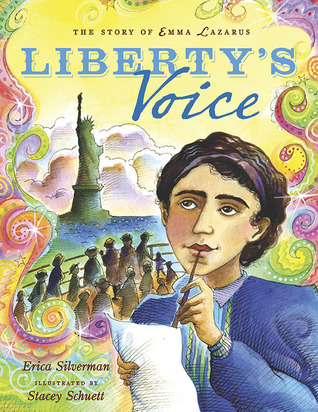
Liberty's Voice

Liberty’s Voice: The Story of Emma Lazarus
Author: Erica Silverman
Illustrator: Stacey Schuett
Published February 3rd, 2011 by Dutton Books for Young Readers

Goodreads Summary: Emma Lazarus overcame the barriers of her day to become one of the leading poets of the nineteenth century. She used her celebrity to help the poor and impoverished immigrants of Eastern Europe. When the statue Liberty Enlightening the World came to the United States as a gift from France, it was Emma’s poem “The New Colossus” that became forever connected with this American icon. Emma’s words have served as a rallying call to generations of immigrants. In breathtaking color, veteran artist Stacey Schuett brings life to Erica Silverman’s story of one of the great women of America.

My Review:  I am always looking for biographies of strong women, and this is one I’d definitely add to my list. Emma Lazarus is a poet who everyone knows, but may not know her name, and that should change. She did so much not only with poetry, but with her editorials and articles speaking out against the oppressed, specifically the Russian Jewish immigrants. Emma Lazarus was lucky enough to have a dad that supported women getting education and helped her become a published poet and meet her mentor, Ralph Waldo Emerson. Without her dad supporting her in a time where society would not have, we wouldn’t have her beautiful poetry and much of the oppression being faced on Ward’s Island would not have been known by the public.

Teachers’ Tools for Navigation: This text is a wonderful introduction to Lazarus, but also to the plight that Jews faced in Russia because of pogroms in the late 1800s. It would be a great cross curricular read aloud to start discussions about poetry in reading/English as well as the history of Russia during this time.

Discussion Questions: How could Emma’s life have been different if she’d been poor or had a father who didn’t support her poetry?; Why were so many Russian Jews immigrating to America in the 1880s?; What is the meaning behind “The New Colossus,” and what does imply about America’s acceptance of immigrants?

We Flagged: “Emma thought about the immigrants she had met on Ward’s Island. They had known so much fear and suffering. They needed to be held, welcomed, comforted. If this statue was to have a name, it should be . . .

Mother of Exiles. From her beacon-hand
Glows world-wide welcome; her mild eyes command
The air-bridged harbor that twin cities frame.

Read This If You Loved: A River of Words: The Story of William Carlos Williams by Jennifer Fisher Bryant, The Dreamer by Pam Muñoz Ryan, The Right Word: Roget and his Thesaurus by Jennifer Fisher Bryant

Recommended For: 

classroomlibrarybuttonsmall readaloudbuttonsmall closereadinganalysisbuttonsmall

Signature

Flying Cars: The True Story by Andrew Glass

Share

NFPB2015

Nonfiction Picture Book Wednesday

Nonfiction Picture Book Wednesday is hosted by Kid Lit Frenzy and was started to help promote the reading of nonfiction texts. Most Wednesdays, we will be participating and will review a nonfiction text (though it may not always be a picture book).
Be sure to visit Kid Lit Frenzy and see what other nonfiction books are shared this week!

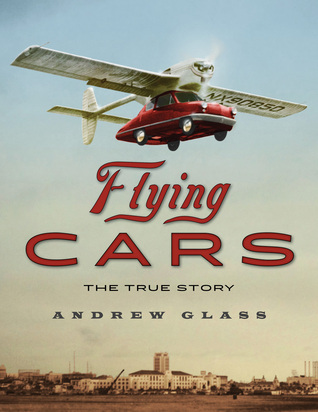
flying cars

Flying Cars: The True Story
Author: Andrew Glass
Various Photographers
Published August 25th, 2015 by Clarion Books

Goodreads Summary: Humans have always wanted to fly. As soon as there were planes and cars, many people saw a combination as the next step for personal transportation, and visionary engineers and inventors did their best to make the flying car (or the roadable plane) a reality. This book is a breezy account of hybrid vehicles and their creators, and of the intense drive that kept bringing inventors back to the drawing board despite repeated failures and the dictates of common sense. Illustrated with archival photos, this entertaining survey takes readers back as far as Icarus and forward into the present day, with a look toward the future. Includes author’s note, source notes, bibliography, index.

Kellee’s Review:  What an odd, interesting part of history! I had no idea I even wanted to learn about this, but I am glad that I was exposed to it. I think Andrew Glass did a good job mixing history of aviation in general and the idea of a flying car. It was a good combination of informational and literary nonfiction, so it will hold readers’ attention throughout. It was also fascinating to see all of the photographs of the prototypes made over time. What innovation! I think the photos will draw the reader in then the history and stories will keep them there. 

Ricki’s Review: The minute I pulled this book out of the mailer, my son had his hands all over it. He is much younger than the intended audience (middle or high school), but it made me chuckle. This shows how excited students will be about this concept! Like Kellee, I had no idea that flying cars existed. I asked my husband, “Did this really exist?” He launched into a full history lesson about the development about flying cars and said they were very interesting to him as a teenager. This is yet more proof that this book would be a great resource for classrooms. I liked learning about all of the different attempts of flying cars and think this book would inspire students to be innovative in their thinking, particularly in the context of design and engineering. The prototypes made me feel a bit wistful that I had more of an engineering brain!

Teachers’ Tools for Navigation: The trend of readable and interesting middle grade nonfiction that students will find accessible is really increasing the likelihood of students reading nonfiction text, and this text fits that bill. We think students will find the topic interesting and, thus, pick up the book. Teachers could use it to talk about text features and the importance of captions, photographs, and chapter titles as well as look at how the book is structured and discuss why the author decided to set it up the way it is. The book could also be a resource for an inquiry mini-project (see Discussion Questions below).

Discussion Questions: How would flying cars make our lives easier?; Why aren’t flying cars a reality?; What do you think the benefits of flying cars are and what are the struggles?; After watching some of the archival videos, which of the flying cars interests you the most? Use Flying Cars and other resources to learn more about it.

We Flagged: “Cars fly every day–in fantasy. They soar by pure magic, like the Wesley family car in the Harry Potter series, or by sprouting wings, like Chitty Chitty Ban Bang. Some use high-tech gadgetry, allowing well-equipped heroes like James Bond and Batman to make incredible cliffhanger escapes.

But visionary engineers and inventors haven’t just imagine flying cars. Some actually built them. . . and then drove them up into the sky” (p. 1).

Read This If You Loved: Nonfiction books about aviation or automobiles including Amelia Lost: The Life and Disappearance of Amelia Earhart by Candace Fleming

Recommended For: 

classroomlibrarybuttonsmall

Signatureand RickiSig

**Thank you to Barbara for providing copies for review!**

Blog Tour and Review!: Monster Needs Your Vote by Paul Czajak

Share

monster-banner-4

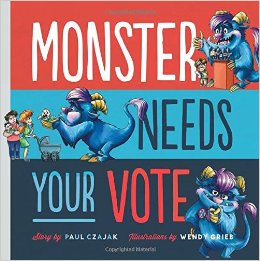
monster needs vote

Monster Needs Your Vote
Author: Paul Czajak
Illustrator: Wendy Grieb
Expected Publication September 4th, 2015  by Mighty Media Kids

Goodreads Summary: Election season is here and Monster is ready to vote! But why cast your ballot when you can run for president instead? With speeches, debates, and a soapbox or two, Monster’s newest tale is a campaign encouraging kids to take a stand and fight for what they believe in.

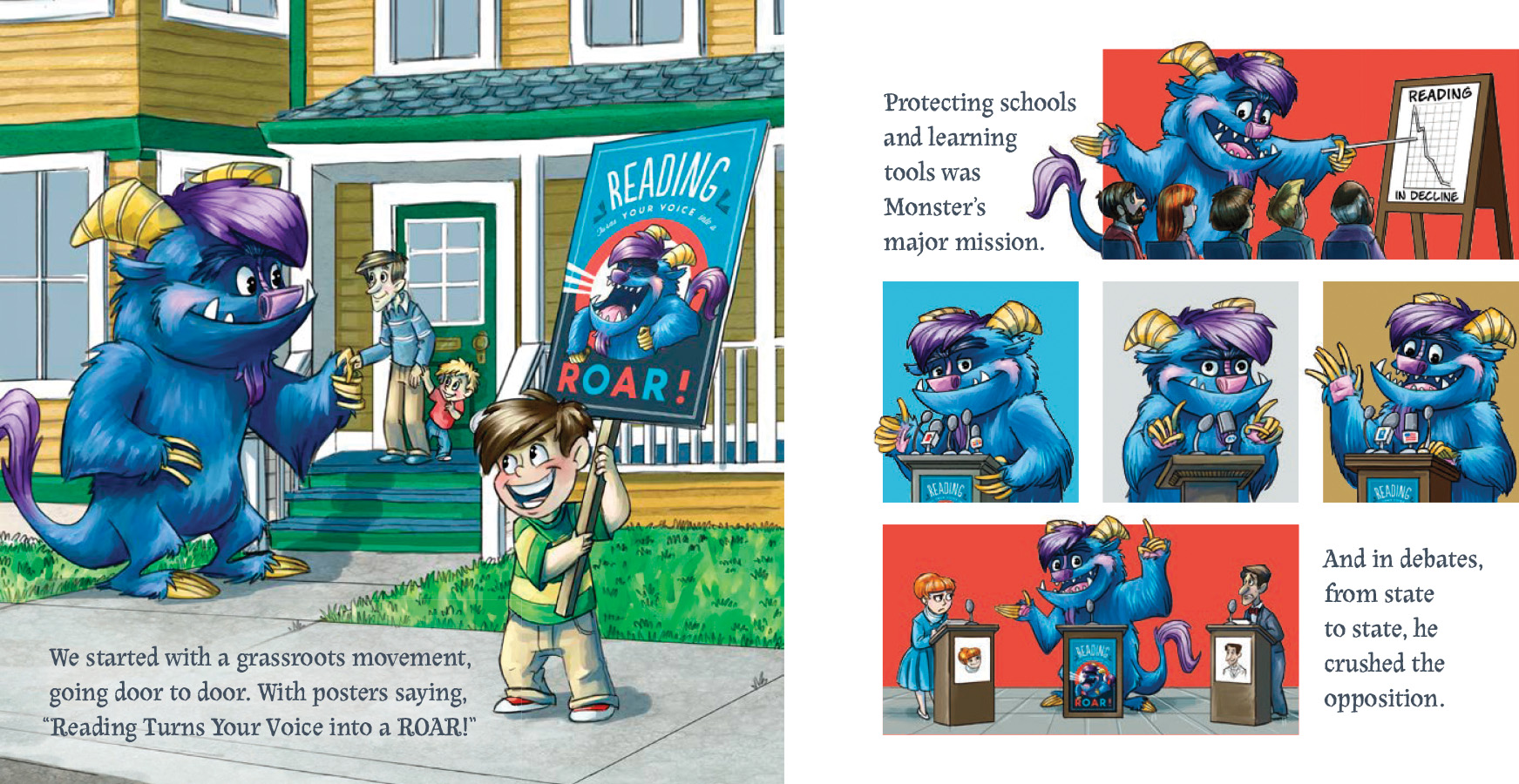
Kellee’s Review and Teachers’ Tools for Navigation: Monster wants to make a difference, but he has to go about it a little bit differently than he had planned. Monster Needs Your Vote is a great look at politics and making a difference in your community within a fun story with enjoyable characters. Monster is a little bit like Elephant in the Elephant and Piggie books. He gets so excited and wants to just go, go, go. The Boy is a bit more like Piggie. He reins Monster in. It is a great relationship! Then you add the fun story and the movie-like, colorful illustrations, and you have a book that kids, parents, and teachers are going to enjoy. Since there is such an underlying political charge to the book (who can be president, voting, education advocacy, etc.) teachers can use it in conjunction with introduction voting and democracy to students.

Ricki’s Review and Teachers’ Tools for Navigation: What a wonderful text to introduce kids to politics! Teachers might consider asking the class to look at different platforms that politicians might select. Then, they could consider different political platforms that interest them. Depending on the age of the students, these platforms could be silly or serious. Teachers might use this text to introduce the basic concepts of the election process or the requirements to run for presidency. As a child, I loved when we had mock votes in elementary school. This book is just in time for the election season and would be a fantastic way for teachers to connect literature to current events!

Campaign Kit: http://mightymediapress.com/wp-content/uploads/2015/07/MMP_MonsterCampaignKit.pdf
The kit contains presidential timelines, infographics, and activity sheets—even a ballot so kids can practice voting!

Info about the purpose and vocabulary in the Monster and Me series: http://www.bigredpaint.com/words_edit.mp4

Mini Monster and Me story: http://monsterwants.com/

Discussion Questions: Why wasn’t Monster able to run for President? What other laws are there for who can run for President?; Monster advocates for libraries and education. What would be your platform if you ran for President right now?; Why wasn’t summer and food something that drew attention from the masses? What did the people want instead?; How are Monster and the Boy different? How do they help each other?; What is the author’s purpose for writing this book?

We Flagged: 

Monster needs vote spread

Read This If You Loved: Other Monster and Me books, Books about politics, the Elephant and Piggie series by Mo Willems, the Mal and Chad series by Stephen McCranie

classroomlibrarybuttonsmall closereadinganalysisbuttonsmall readaloudbuttonsmall

Signatureand RickiSig

**Thank you to Sammy at Mighty Media Press for providing copies for review!!**

Blog Tour and Review!: Fab Four Friends: The Boys Who Became the Beatles by Susanna Reich

Share

NFPB2015

Nonfiction Picture Book Wednesday

Nonfiction Picture Book Wednesday is hosted by Kid Lit Frenzy and was started to help promote the reading of nonfiction texts. Most Wednesdays, we will be participating and will review a nonfiction text (though it may not always be a picture book).
Be sure to visit Kid Lit Frenzy and see what other nonfiction books are shared this week!

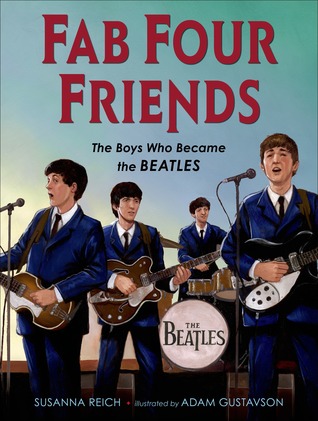
fab four friends cover

Fab Four Friends: The Boys Who Became the Beatles
Author: Susanna Reich
Illustrator: Adam Gustavson
Published August 18th, 2015 by Henry Holt and Co.

Goodreads Summary: In 1957 in Liverpool, England, a young lad named John Lennon and his band played music at a local church fair. In the audience was Paul McCartney, who liked what he heard and soon joined the group. Paul’s friend George Harrison kept showing up at rehearsals until the older boys finally let him in. Eventually they found the perfect drummer, Ringo Starr, and the perfect name: The Beatles.

Told through a lyrical text and stunning paintings, this book spotlights four ordinary boys growing up amid the rubble of postwar England who found music to be a powerful, even life-saving, force.

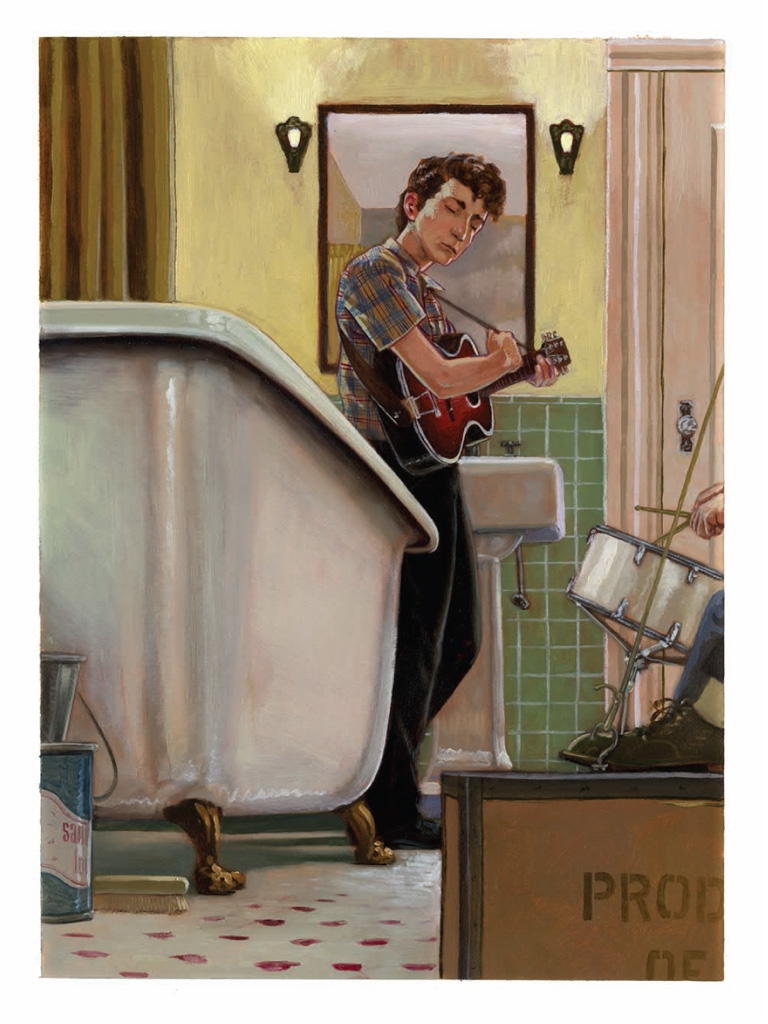
My Review:  I adore The Beatles. I think they, along with other artists like Elvis, Chuck Berry, Little Richard, and Bob Dylan, really changed the direction of music and opened up a whole new world of music that truly made modern rock and roll possible. Because of that, and how much I love their music, I have always enjoyed learning about them. This middle grade picture book biography really gives us a wonderful look into the childhood and the creation of the band. In addition to really giving us insight into each boys’ lives and how The Beatles began, Susanna Reich did a beautiful job combining fact, primary sources, and lyrical writing. In addition to the beautiful writing, the art that accompanies it is stunning. They are truly paintings as the summary states.

Teachers’ Tools for Navigation: I really hope that kids read this book! I want the story of The Beatles to continue because of their importance within music history.

I think one really interesting analysis of the book that the students could partake in is a visual analysis. Students would first read the text completely. They would then go back and reread a single page then look at the full page illustrations. They should discuss or write about why the artist chose the specific scene/person/activity to illustrate. What else could they have chosen to illustrate? Which do you think makes a bigger impact?

Discussion Questions: Which Beatle is the creator of the band?; What vocabulary in the text are obsolete in modern times?; How would The Beatles rise to fame be different if it was the 21st century when they formed?; What traits do each of the members have?

We Flagged: “John attacked the guitar, strumming as fast as he could. He didn’t give a fig about wrong notes.”

http://us.macmillan.com/fabfourfriends/susannareich

Read This If You Loved: Any books about The Beatles including The Beatles Were Fab by Kathleen Krull and John’s Secret Dreams by Doreen Rappaport, Little Melba and Her Big Trombone by Katheryn Russell-Brown, When Bob Met Woody by Gary Golio, Duke Ellington and Ella Fitzgerald by Andrea Davis Pinkney

Recommended For: 

classroomlibrarybuttonsmall readaloudbuttonsmall closereadinganalysisbuttonsmall

Make sure to visit other stops on the blog tour!

Monday, August 17 Booktalking
Nonfiction Monday

Tuesday, August 18 Shelf-Employed
Review plus Susanna reveals her favorite Beatles song

Wednesday, August 19 UnleashingReaders.com

Thursday, August 20 Elizabeth Dulemba
Susanna & Adam interview each other

Friday, August 21 Maurice on Books

Tuesday, August 25 Kidsbiographer’s Blog
Susanna writes about choosing subjects for kid’s biographies

Wednesday, August 26 Gail Gauthier

Thursday, August 27 Tales from the Rushmore Kid

Friday, August 28 Alphabet Soup
Interview with Susanna

Signature

**Thank you to Susanna for providing a copy for review!!**