Else B. in the Sea: The Woman Who Painted the Wonders of the Deep by Jeanne Walker Harvey, Illustrated by Melodie Stacey

Share

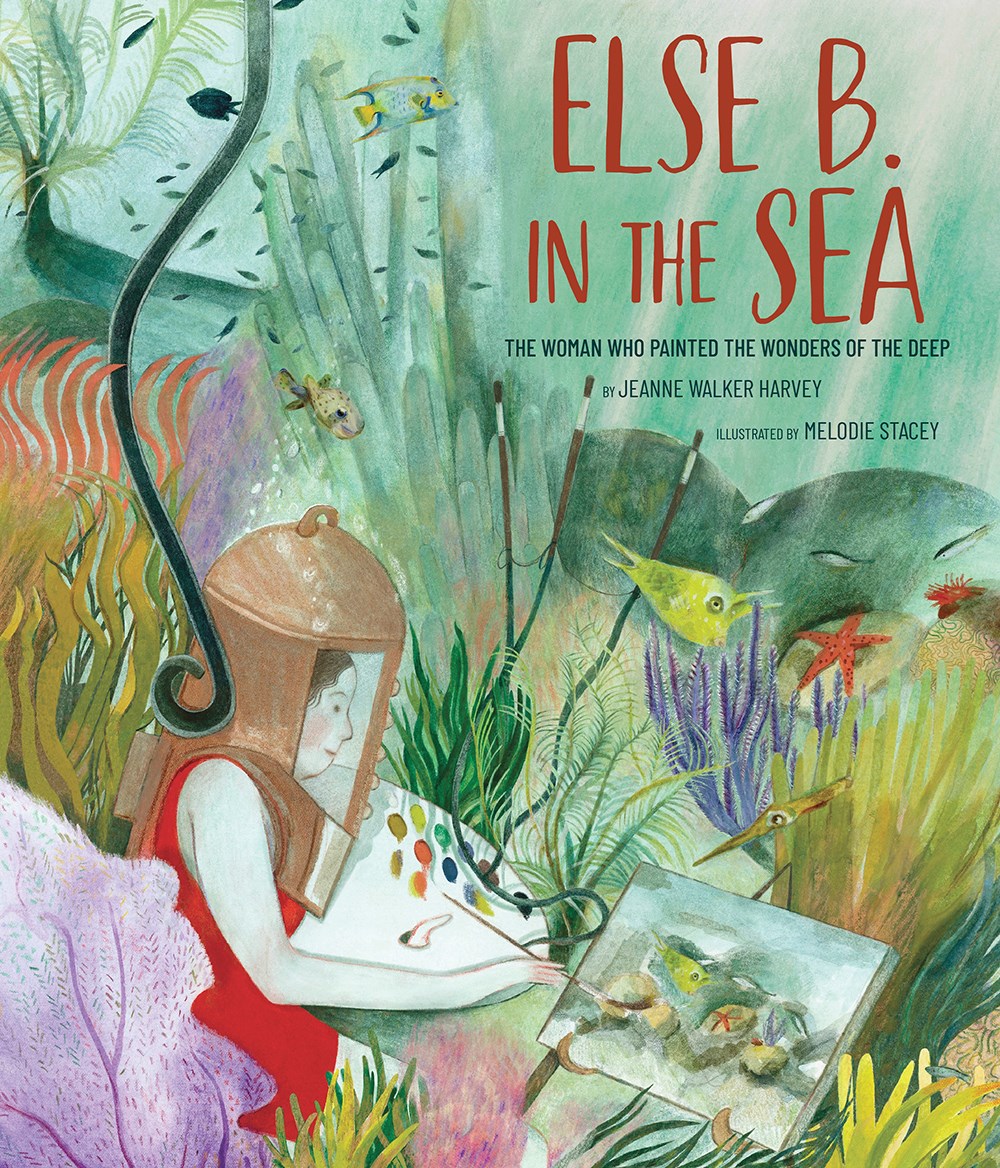
Else B. in the Sea: The Woman Who Painted the Wonders of the Deep
Author: Jeanne Walker Harvey
Illustrator: Melodie Stacey
Published June 4th, 2024 by Cameron Kids

Summary: Else B. in the Sea is a poetic picture book biography about a daring and pioneering woman artist that combines themes of art and science from author Jeanne Walker Harvey and illustrator Melodie Stacey.

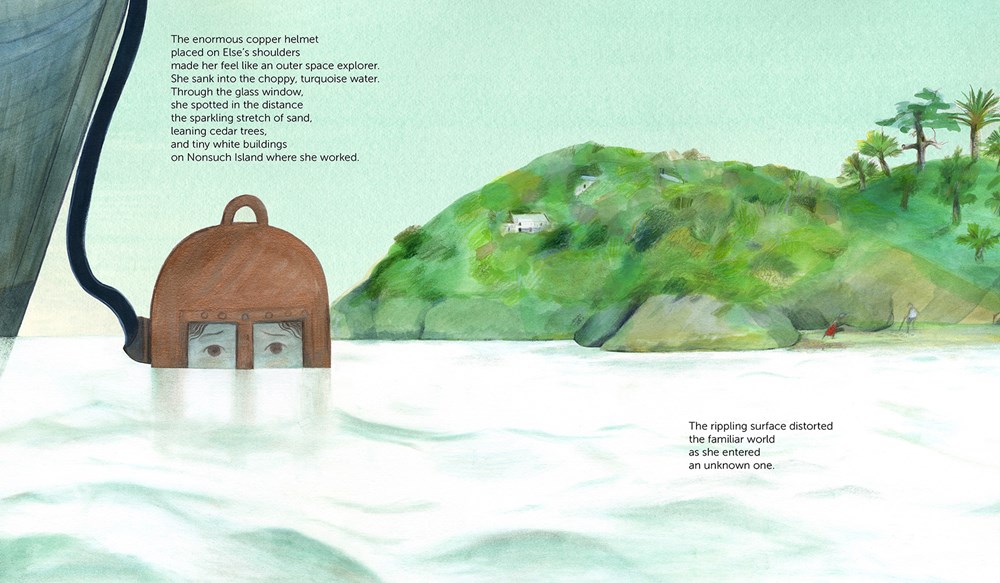
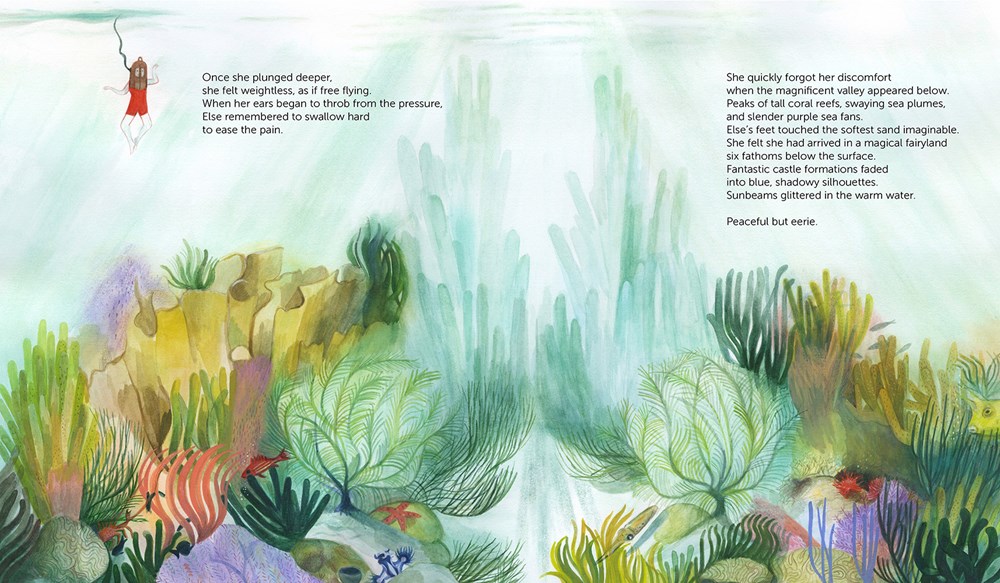
Else Bostelmann donned a red swimsuit and a copper diving helmet and, with paints and brushes in hand, descended into the choppy turquoise sea off the coast of Bermuda. It was 1930, and few had ventured deep into the sea before. She discovered a fairyland six fathoms below the surface—fantastic coral castles, glittering sunbeams, swaying sea plumes, and slender purple sea fans. And fish! Flashy silverfish, puckering blue parrotfish, iridescent jellyfish.

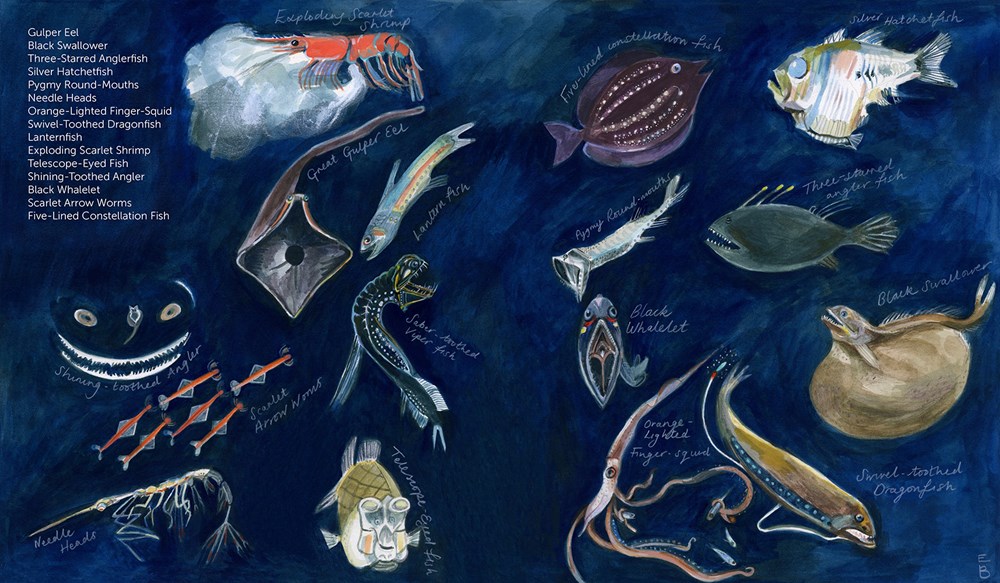
Else painted under the sea! She painted what she saw with her own eyes, and, back on land, she painted the never-before-seen deep-sea creatures described by world-renowned scientist William Beebe on his momentous 1930s bathysphere expeditions for the New York Zoological Society’s Department of Tropical Research. It was a daring and glamorous adventure and a dream come true for Else B., who shared this new, unfathomable world with humankind.

About the Creators: 

Jeanne Walker Harvey is the author of many picture books, including Boats on the Bay, as well as the well-received picture book biographies Ablaze with Color: A Story of Painter Alma Thomas (winner of the 2022 Northern California Book Awards – Children’s Literature Younger Readers and Jane Addams Children’s Book Award finalist), Dressing Up the Stars: The Story of Movie Costume Designer Edith Head, and Maya Lin: Artist-Architect of Light and Lines (a NSTA Best STEM Book of the Year). She lives in Sonoma, California. For free downloadable activities and more, visit her website,  jeanneharvey.com.

Melodie Stacey is a fine artist and illustrator whose work can be found in the picture book Beautiful Useful Things: What William Morris Made. She lives in Brighton, UK.

Instagram
Jeanne Walker Harvey: @jeannewharvey
Melodie Stacey: @melodiestacey
Cameron Kids/ABRAMS Kids: @cameron_kids and @abramskids
Blue Slip Media: @blue_slip_media

Twitter/X
Jeanne Walker Harvey: @JeanneWHarvey
Melodie Stacey: @Melodiestacey
Cameron Kids/ABRAMS Kids: @abramskids
Blue Slip Media: @blueslipper & @barbfisch

Pinterest
Jeanne Walker Harvey: @JeanneWalkerHarvey

Review: I love learning about new people (to me) from history that expand my knowledge of the world. Else is such a cool character and to know she is a real person makes it even more intriguing and amazing. Else is definitely a person whose story should have already been told, and I am so glad that Harvey and Stacey are telling it now.

Like Harvey has done in all of her picture book biographies that I’ve read by her, she expertly mixes narrative and nonfiction to ensure the book not only teaches the reader about the person but also entertains and keeps attention along the way. This is so important to ensure that readers will gravitate towards hearing this story with a side effect of learning about an amazing person, in this case Else.

Stacey’s illustrations take Harvey’s words and make them sing off the page with illustrations that range from full page to small additions, keeping the eyes from ever wanting to stop exploring the art, just like Else explored the sea.

Tools for Navigation: There is so much to do in conjunction with this book in the classroom! After reading the book aloud, I would then make sure to read the author’s note and dive deeper into:

  • Deep sea creatures and what has changed in our knowledge of them since Else’s time.
  • How color changes when light is removed, including the underwater color spectrums.
  • Why women scientists were excluded normally during Else’s time and how including them affected how others viewed the expeditions that Else was part of.
  • How paint and salt water interact and trying to paint under water!
  • Other woman who took first steps that need to have their story told.
  • The science behind bioluminescence.
  • The math of the ocean.

Discussion Questions: 

  • How do you think Else’s childhood and roadblocks early in her life affect her?
  • What does Else’s idea to practice painting the “ocean firsthand” and “descending as far as she could by herself” tell you about the type of person Else was? How about her ability to learn to paint underwater?
  • How has scuba gear changed over time?
  • Why did William Beebe have to kill animals to allow them to be studied/painted? What are your thoughts on this?
  • How did Else’s paintings of Beebe’s discoveries give “people a way to escape their worries”?
  • Why do you think Harvey wanted to tell Else’s story?

Flagged Spreads: 

Read This If You Love: Picture book biographies, Science, Ocean creatures

Recommended For: 

classroomlibrarybuttonsmall  

Signature

**Thank you to Barbara at Blue Slip Media for providing a copy for review!**

The Dinosaur in the Garden by Deb Pilutti

Share

The Dinosaur in the Garden
Author & Illustrator: Deb Pilutti
Published May 21st, 2024 by G.P. Putnam’s Sons Books for Young Readers

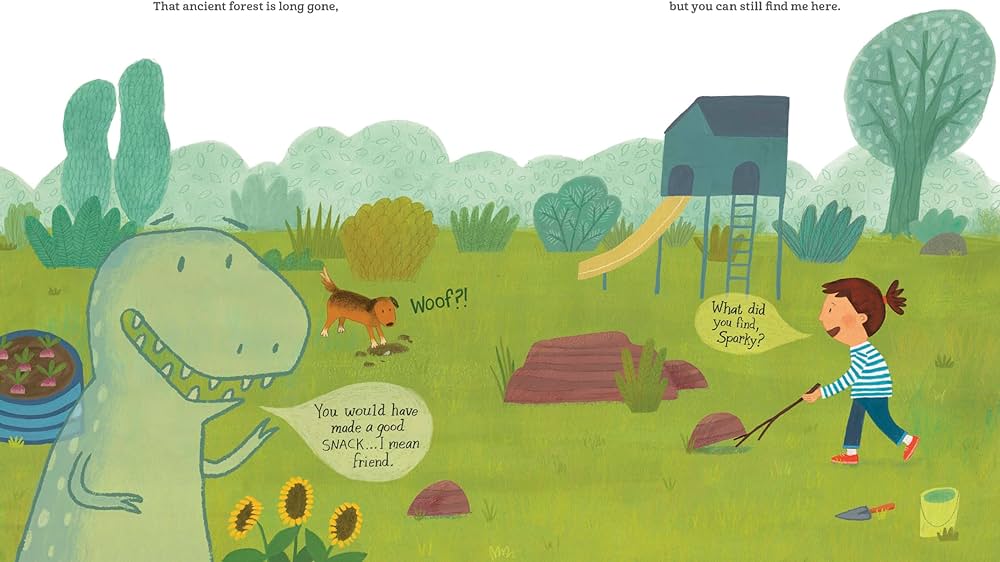
Summary: After waiting millions of years, a T Rex thinks a curious girl might just find the clues he left behind, making his story part of hers.

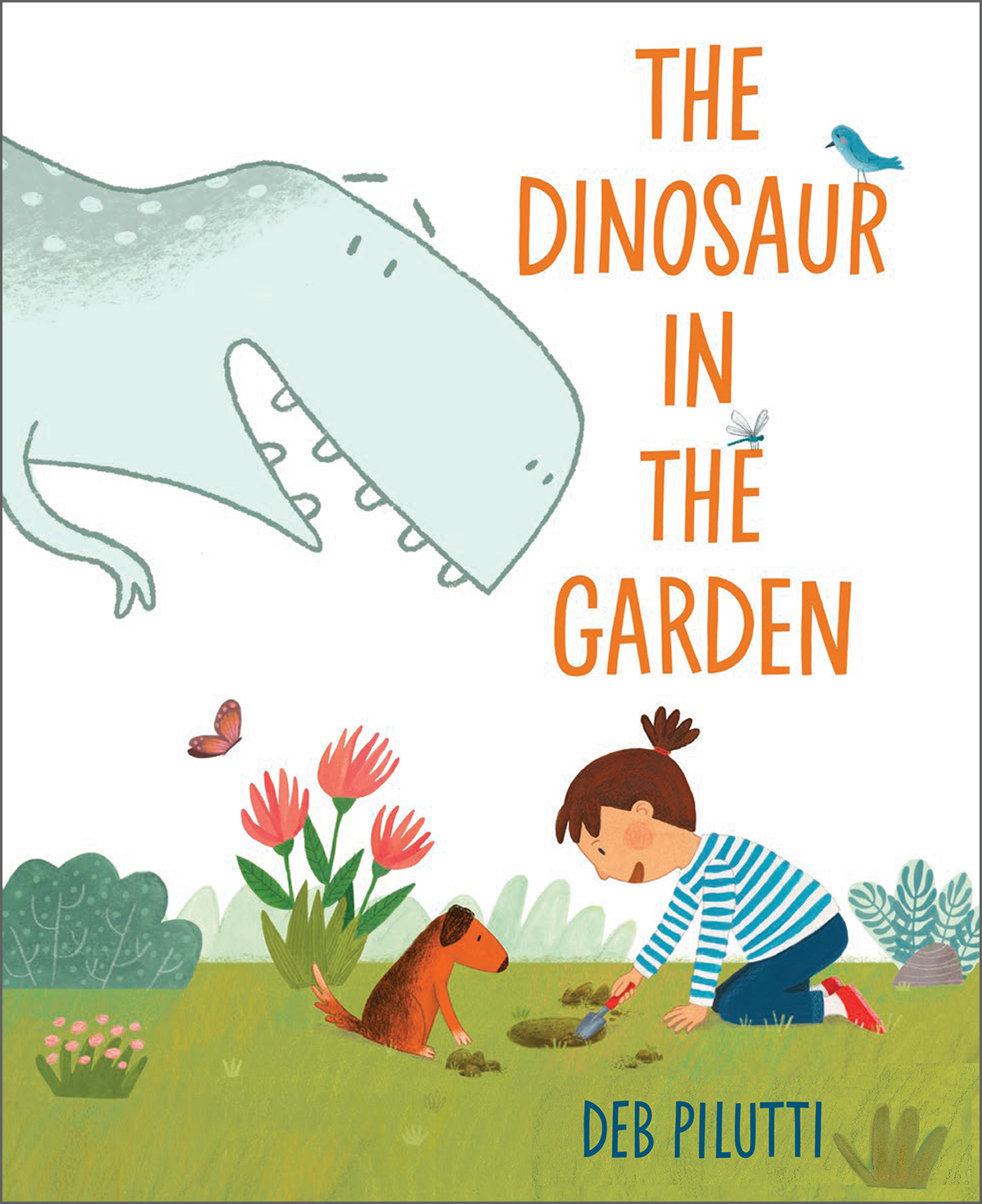
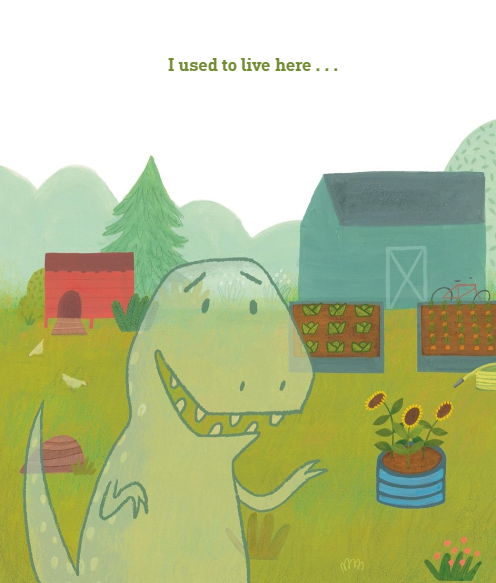
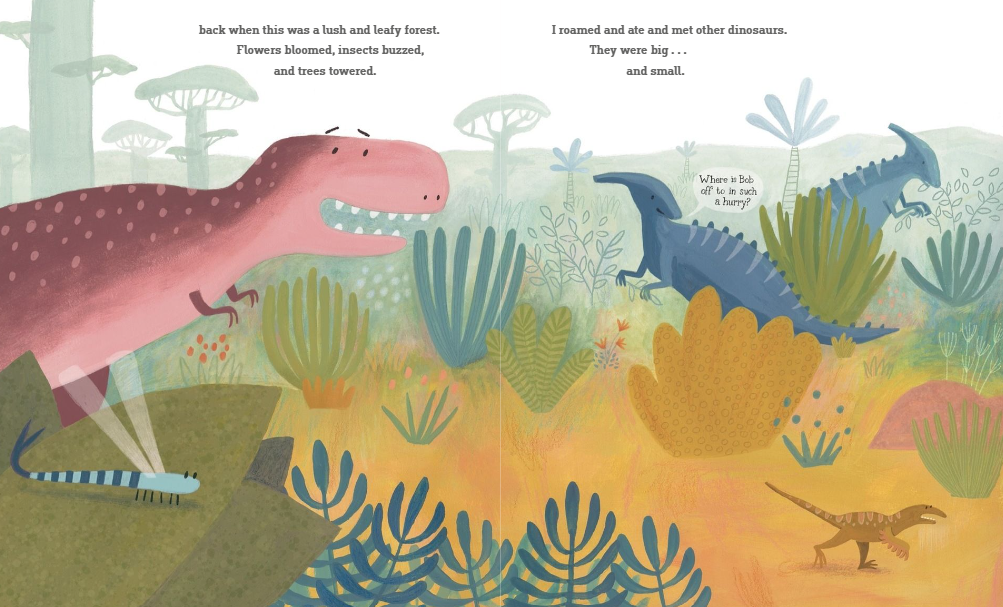
It’s been millions of years since this dinosaur has been so excited. There’s a girl—a curious girl—exploring the land right where he used to live!

Will she be the one to find the clues he left millions of years ago?

Could she be the one to bring his story back to life?!

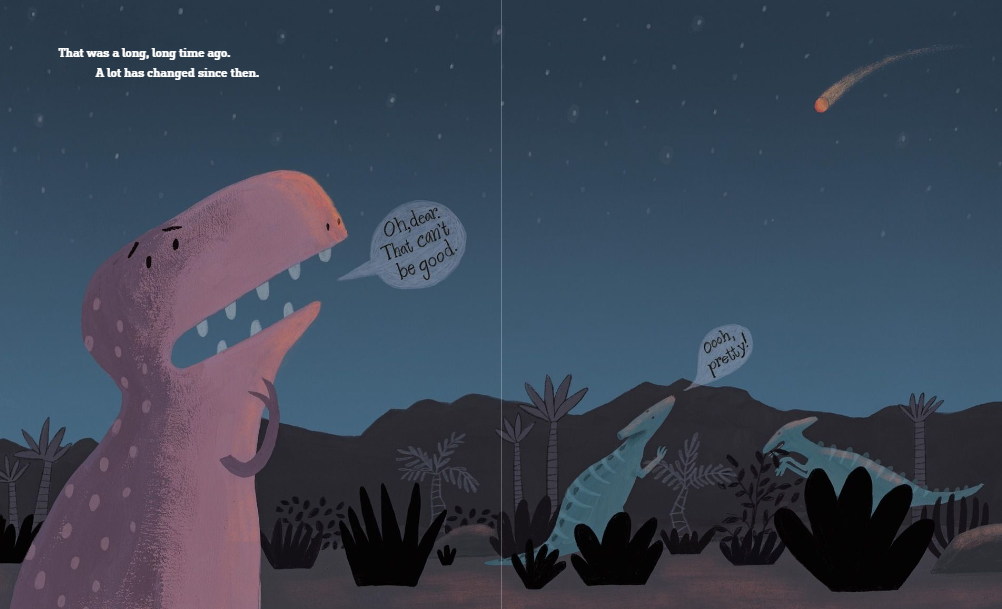
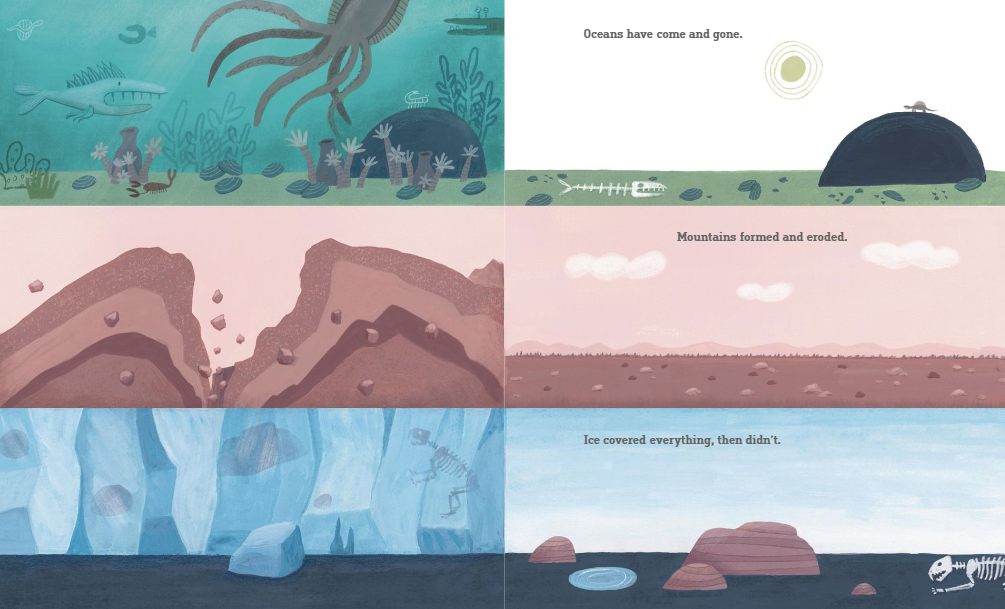
This lyrical picture book captures the vastness of geologic time while also showing how close the traces of the distant past can be—as long as we are curious enough to look.

Praise: “The author of 2020’s clever and engaging Old Rock (Is Not Boring) tackles the theme of geologic time from another angle. . . [The book] ends with an enticing invitation to join in dinosaur research and study. . . An engaging suggestion that hints of the past are there for the finding, if we will but look.” —Kirkus

About the Author: Deb Pilutti wrote and illustrated Old Rock (is not boring), Ten Rules of Being a Superhero, Bear and Squirrel Are Friends, and The Secrets of Ninja School, and illustrated Idea Jar by Adam Lehrhaupt. Deb lives with her husband and their border collie, Wilson, in Ann Arbor, Michigan. Follow her on Twitter @dpilutti.

Review: Deb Pilutti, like she did in Old Rock, does a great job giving voice to things that may not usually be heard. I think we often hear from dinosaurs living in their own time, but not often do we hear from a dinosaur from the past; this is how the creator takes her book to the next level–this isn’t just another dino book! She also is great at creating really entertaining picture books with a scientific element, and although the messages of the book are clear, she does this without turning the book into a didactic narrative. Another really fun read by Deb Pilutti!

Tools for Navigation: This is a wonderful interdisciplinary text! It will make a great read aloud and will lend itself to amazing visual literacy analysis, but it also is a jumping off point for a lesson about dinosaurs!

First, I would use the book to have students look at different characteristics of the dinosaurs introduced and why the characteristics are what they are.

Second, I would have the students see if all of the dinos included are from the same time period and make a timeline of when they lived.

Third, I would change the conversation to talking about fossils and paleontology, utilizing some of the author’s notes in the back. (Also, it would be fun to look at if there are any fossils that have been found in your area!)

Fourth, I would would use our unnamed protagonist to start a conversation about what each student wants to be when they grow up (and maybe have them find a book connected to that career).

Discussion Questions: 

  • How does the creator show you in the images when the dinosaur is alive versus when it is not?
  • What other clues do you pick up in the images that aren’t in the words?
  • Which dinosaur in the book is your favorite?
  • How are the dinosaurs the same? Different?
  • How did the dinosaurs become extinct?
  • How did the fossil in her backyard influence our protagonist?

Flagged Spreads: 

Read This If You Love: Dinosaurs, science

Recommended For: 

classroomlibrarybuttonsmall 

Signature

**Thank you to Aubrey at Penguin Young Readers for providing a copy for review!**

Speck: An Itty-Bitty Epic by Margaux Meganck

Share

Speck: An Itty-Bitty Epic
Author & Illustrator: Margaux Meganck
Published

Summary: Everything and everyone has a place in the universe, but for a little speck, lost at sea, it will take an extraordinary journey to find it.

Deep in a tide pool, too small to see,
Thousands of tiny specks go forth.
Each one searching
for a place to stay, and grow, and thrive…

The little speck does not know what it is, only that it wishes to find out. And so it embarks on a journey across the sea. From sun-flecked surf to darkest depths, past schools of fish, storm-tossed ships and hungry eels…. Until, at last, it finds exactly what it was looking a place to belong.

In vivid watercolor paintings, Margaux Meganck brings this tale to life, seamlessly shifting perspective to show how even the tiniest creatures—every barnacle, every child, every star in the sky—contributes to something greater than itself.

★ “A poignant, reflective story that’s every bit as relevant to children as it is to adults. . . . Deeply moving.” – Kirkus Reviews (starred)

About the Author: Margaux Meganck spends her days dodging raindrops and drawing from her imagination in beautiful Portland, Oregon. Her author-illustrator debut, People are Wild, received two starred reviews and was named a Kirkus Reviews Best Book of the Year. Her illustration work has earned multiple accolades. Speck is the second book she has both written and illustrated. To learn more, visit margauxmeganck.com.

Instagram:
Margaux Meganck: @margauxmeganck
Knopf/Random House Children’s Books: @randomhousekids
Blue Slip Media: @blue_slip_media

Facebook:
Margaux Meganck: N/A
Random House Children’s Books: Random House Children’s Books
Blue Slip Media: @blue-slip-media

Twitter/X:
Margaux Meganck: @Margaux Meganck
Random House Children’s Books: @randomhousekids
Blue Slip Media: @blueslipper & @barbfisch

Review: This beautiful book is two fold. First, it is a fantastic ocean journey of a speck as it carried along the current and through the ocean, past so many creatures, and to its forever home. The journey is told in poetic verse that will be a great read aloud. Second, it is a story about being lost and figuring out where you fit in the best. Meganck brilliantly combined these two purposes. And the illustrations are another level of the book. They complement the lyrical tale of the speck’s journey, showing the reader all of the sea creatures and ecosystems within the ocean. This is a wonderful book.

Tools for Navigation: Because this book has a science and an social emotional learning aspect, it would be a wonderful inclusion into a classroom or library program because it can lead to all sorts of conversations including journeying into the ocean (pair with other ocean books, listed below) and then move to the theme and how the speck’s journey is an extended metaphor for our life.

Discussion Questions: 

  • What creatures did the speck encounter along its journey?
  • Why do you think the author titled the book an “epic?”
  • What lesson can you take from the speck into your life?
  • Based on where the speck ended up, what sea creature was it?
  • What other specks are there in the sea?
  • How is the speck’s journey similar to life?

Flagged Spreads: 

Read This If You Love: Puff: All About Air by Emily Kate Moon, Whale Fall: Exploring Ocean-Floor Ecosystem by Melissa Stewart, Kind by Jess McGeachin, In the Night Garden by Carin Berger, The Universe in You: A Microscopic Journey by Jason Chin, Over and Under the Waves by Kate Messner

Recommended For: 

classroomlibrarybuttonsmall

Signature

**Thank you to Blue Slip Media for providing a copy for review!**

There’s No Such Thing As Vegetables by Kyle Lukoff, Illustrated by Andrea Tsurumi

Share

There’s No Such Thing As Vegetables
Author: Kyle Lukoff
Illustrator: Andrea Tsurumi
Published February 27th, 2024 by Henry Holt and Co.

Summary: A hilarious new picture book that exposes vegetables for what they truly are—leaves, roots, flowers, and stalks—by National Book Award Finalist and Newbery Honor winner Kyle Lukoff, perfect for fans of the Our Universe series.

Chester plans to have a salad for lunch, but in order to do that, he’ll need vegetables. So, off he goes to the community garden, except he quickly learns that he won’t be dressing a salad anytime soon. Instead, the vegetables start dressing him down. According to them, “vegetables” don’t exist!

I know what you are thinking: What the bell pepper? Vegetables are totally real! But here’s the thing: Kale is just a leaf, broccoli is a flower, potatoes are roots, and celery…well, stalks. Thanks to a lively, sassy cast of talking “veggies,” Chester learns a valuable lesson about categories and how they shape our understanding of the world.

With a slyly informative text and illustrations that will crack readers up, the schooling in There’s No Such Thing As Vegetables will be easy to digest and is a total treat.

About the Creators: 

Kyle Lukoff is the author of the Newbery Honor-winning, National Book Award finalist, Too Bright to See, the Stonewall Award winner When Aidan Became a Brother, among other titles for young readers. While becoming a writer, he worked as a bookseller and school librarian. He lives in Philadelphia, and hopes you’re having a nice day. (kylelukoff.com)

Andrea Tsurumi(they/them) is an author, illustrator and cartoonist originally from New York who now lives with their spouse and dog in Philadelphia. A gigantic text and image nerd, they studied sequential storytelling for an English BA at Harvard and an illustration MFA at the School of Visual Arts. While working in publishing for several years, they dove into their two big loves: indie comics and children’s books. Their first book, Accident! was an NPR Great Read and their second book, Crab Cake, won the Vermont Red Clover Book Award. When they’re not inventing croissant-based animals, they like reading about ordinary and ridiculous history. (andreatsurumi.com)

Review: This book IS slyly informative, and I love it! What seems at the surface like a silly book about vegetables setting a young child straight about their really identities is actually a look into scientific classification. The book definitely will bring the giggles while also getting kids thinking about what makes something what it is called. This book is a must have for classrooms and libraries as it is a great read aloud and will move perfectly into an educational discussion, especially when the author’s note is added to the read aloud.

Tools for Navigation: This book is perfect for talking about classifications–both scientific and social. I can imagine it being used in a life science class mostly because they could start with the vegetable extended example and expand from there. Though within the book, the vegetables also share money, countries, and words as examples of social constructed categories, so these would be fascinating to extend into math/economics, history/geography, and language arts.

Discussion Questions: 

  • Are there vegetables?
  • Who decides what something is classified as?
  • Why are fruits real but not vegetables?
  • How would you define a vegetable? Do you think Chester’s definition is correct?
  • What other things are classified certain ways but you aren’t sure why?

Flagged Spreads: 

Read This If You Love: Humorous picture books that also educate

Recommended For: 

classroomlibrarybuttonsmall

Signature

**Thank you to Nicole Banholzer PR for providing a copy for review!**

Educators’ Guide for The Partition Project by Saadia Faruqi

Share

The Partition Project
Author: Saadia Faruqi
Published: February 27th, 2024 by Quill Tree Books

Summary: When her grandmother comes off the airplane in Houston from Pakistan, Mahnoor knows that having Dadi move in is going to disrupt everything about her life. She doesn’t have time to be Dadi’s unofficial babysitter—her journalism teacher has announced that their big assignment will be to film a documentary, which feels more like storytelling than what Maha would call “journalism”.

As Dadi starts to settle into life in Houston and Maha scrambles for a subject for her documentary, the two of them start talking. About Dadi’s childhood in northern India—and about the Partition that forced her to leave her home and relocate to the newly created Pakistan. As details of Dadi’s life are revealed, Dadi’s personal story feels a lot more like the breaking news that Maha loves so much. And before she knows it, she has the subject of her documentary.

Teachers’ Tools for Navigation and Discussion Questions: 

Please view and enjoy the educators’ guide I created for the author:

You can also access the educators’ guide here.

You can learn more about The Partition Project on Saadia Faruqi’s website.

Flagged Passage: View an excerpt HERE.

Recommended For: 

classroomlibrarybuttonsmall litcirclesbuttonsmall closereadinganalysisbuttonsmall

Kellee Signature

Mascot by Charles Waters and Traci Sorell

Share

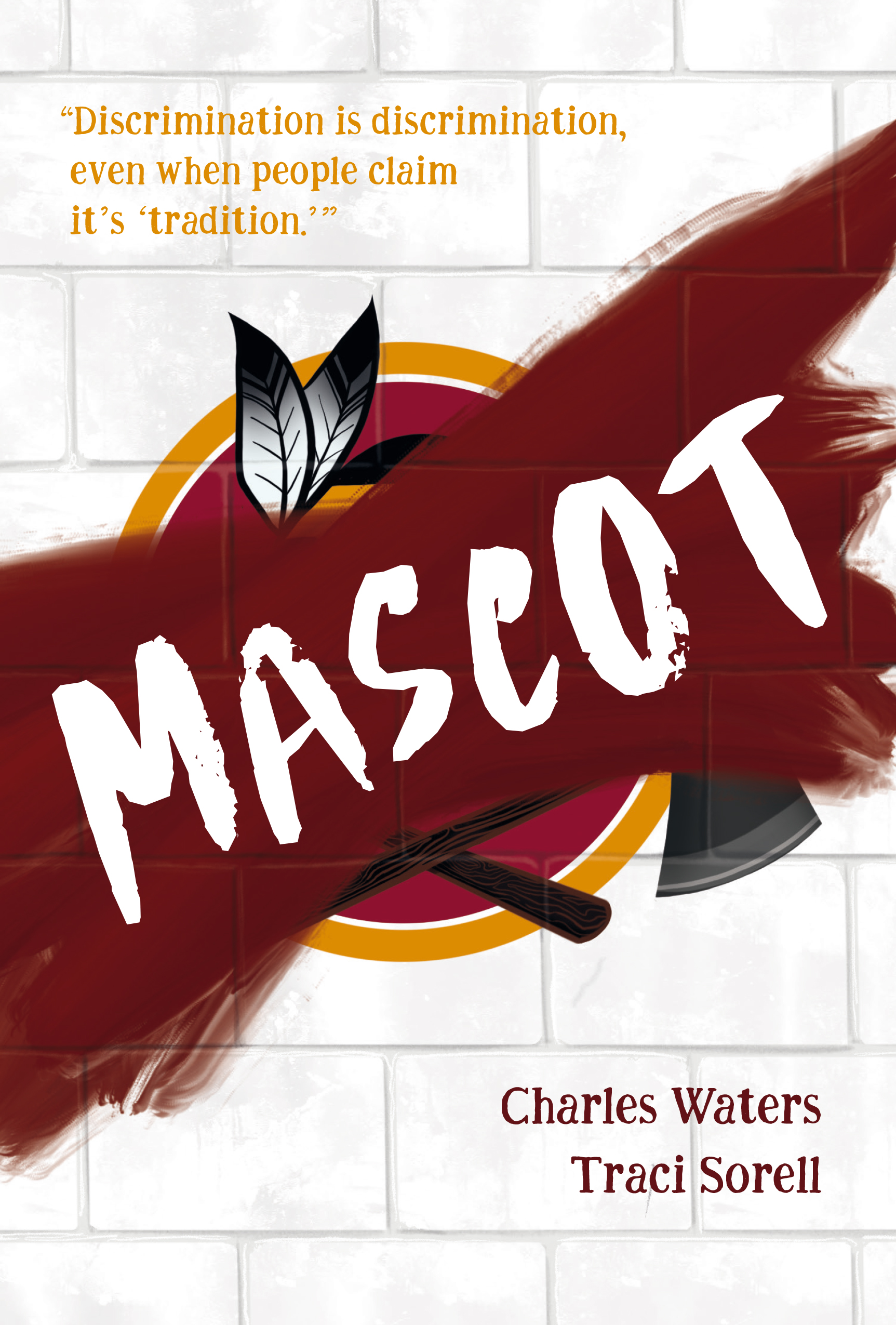
Mascot
Authors: Charles Waters and Traci Sorell
Published September 5th, 2023 by Charlesbridge

Summary: What if a school’s mascot is seen as racist, but not by everyone? In this compelling middle-grade novel in verse, two best-selling BIPOC authors tackle this hot-button issue.

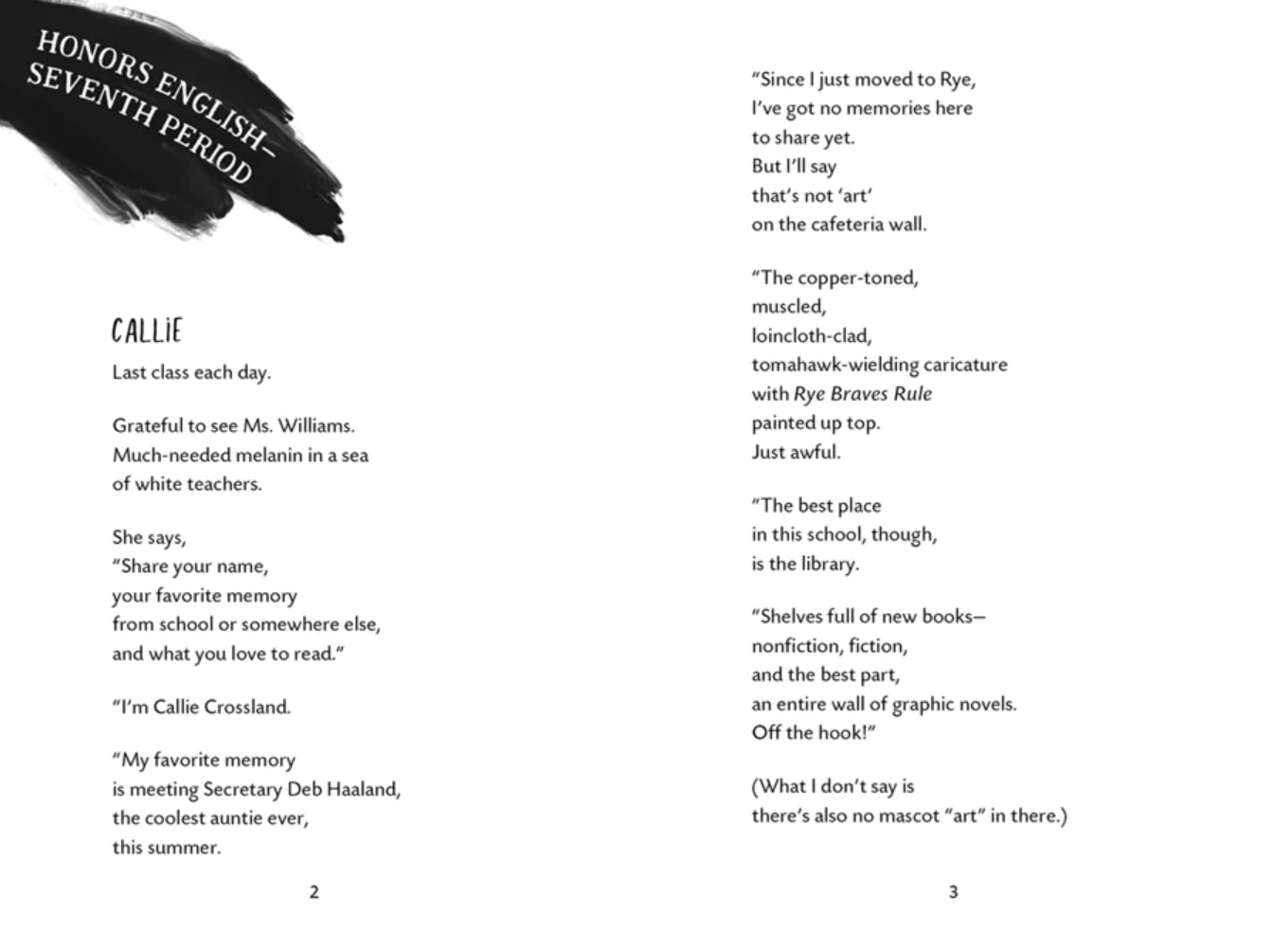
In Rye, Virginia, just outside Washington, DC, people work hard, kids go to school, and football is big on Friday nights. An eighth-grade English teacher creates an assignment for her class to debate whether Rye’s mascot should stay or change. Now six middle-schoolers—all with different backgrounds and beliefs—get involved in the contentious issue that already has the suburb turned upside down with everyone choosing sides and arguments getting ugly.

Praise: 

⭐ Publishers Weekly, starred review

Told via seven alternating narratives, this ripped-from-the-headlines collaboration in verse by Waters (African Town) and Cherokee Nation member Sorrel (One Land, Many Nations) follows a fictional town’s division over a racist sports mascot. Callie Crossland, who is Cherokee and Black, has just transferred to a middle school in Rye, Va. She immediately expresses disgust at her school’s mascot, a “copper-toned, muscled, loincloth-clad, tomahawk-wielding” caricature of an Indigenous person. Callie’s English teacher Ms. Williams soon assigns a group writing project regarding the “Pros and Cons of Indigenous Peoples as Mascots,” and Callie is annoyed at being paired with Black classmate Franklin, who believes the mascot “brings so much joy.” Waters and Sorrel paint a complex portrait of the differing reactions toward the controversy by layering the racially diverse tweens’ perspectives and showcasing the effects the event has on their individual relationships and the community beyond their school. The creators eschew judgment to present a well-rounded discussion about classism and racism, as well as effective allyship, with compassion and understanding. A glossary and resources conclude. Ages 10–up.

⭐ Kirkus Reviews, starred review

Waters and Sorell (Cherokee Nation) join forces to write about the power of being true to oneself.

In a middle school in Rye, a fictional town near Washington, D.C., a racist mural and offensive pep rally chants shock new student Callie Crossland, who is a citizen of the Cherokee Nation and African American. Callie shares a heartfelt poem with her seventh grade honors English class, reminding everyone that the “stupid tomahawk-chop chant” and the “cheap chicken-feather headdress” are nothing less than symbols of “white supremacy.” Afterward, Ms. Williams, her teacher, assigns a persuasive writing and oration project entitled “Pros and Cons of Indigenous Peoples as Mascots.” The small, broadly diverse group of students is assigned to work in pairs; Callie is matched with Franklin, who is Black and a proud fan of the Rye Braves football team. Franklin insists, “I wish we could Lysol racism away. / It’s a bad odor,” but he feels conflicted: “I still don’t think our mascot is racist though. It brings so much joy. / …what’s the big deal?” This clever novel unfolds in poems told in multiple voices showing the wide range of students’, families’, and community responses to the controversy; for some, initial feelings of opposition, hesitation, or indifference change and friendships are tested. The compelling, highly relevant subject matter and accessible text invite readers to understand different perspectives and witness individual growth.

A brilliant story not to be missed; deeply engaging from the first page. (glossary, additional information and resources) (Verse fiction. 10-14)

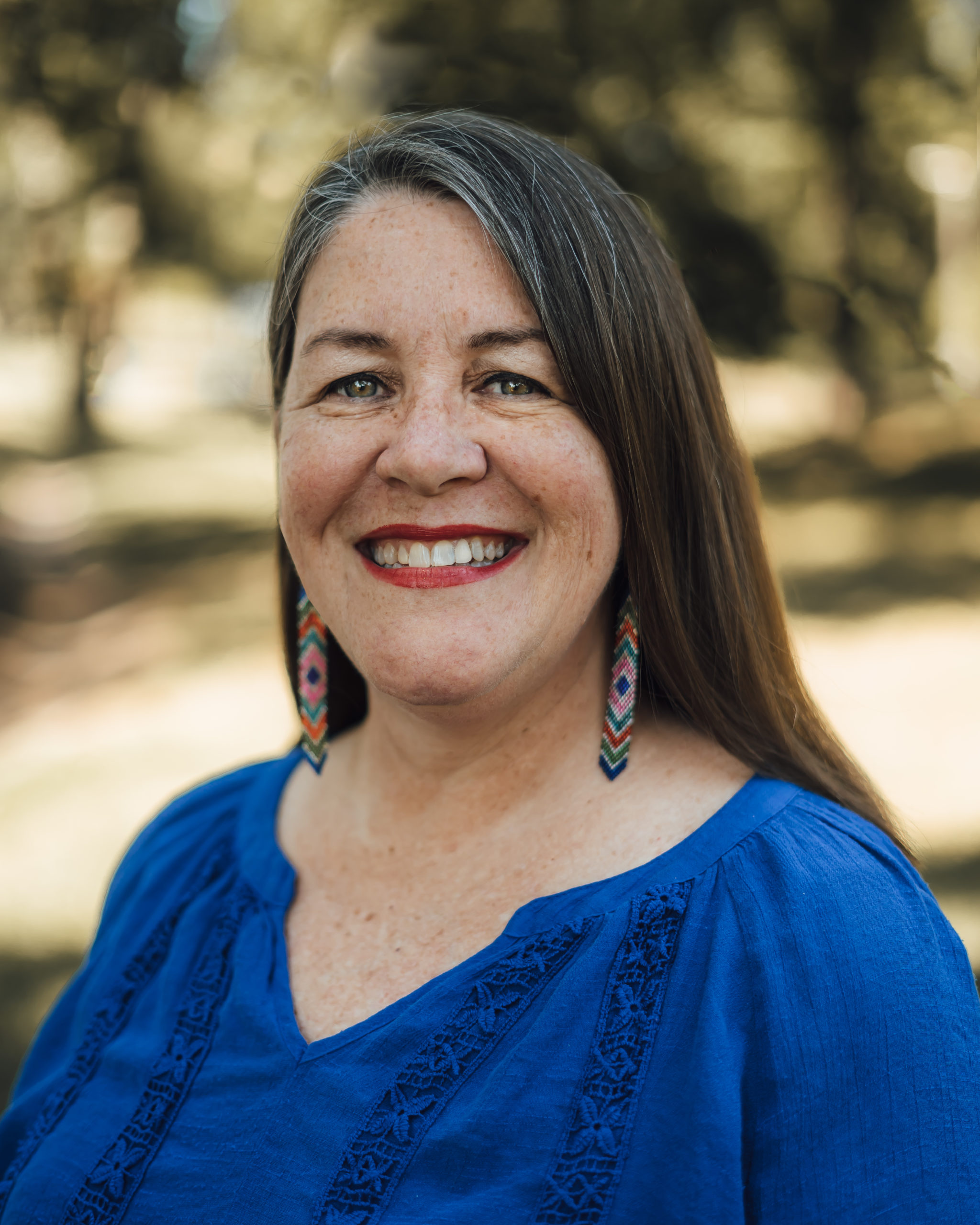
About the Authors: Charles Waters is a children’s poet, actor, educator, and coauthor of African Town; Dictionary for a Better World: Poems, Quotes, and Anecdotes from A to Z; and the award-winning Can I Touch Your Hair? Poems of Race, Mistakes and Friendship. He lives near Atlanta.

Traci Sorell writes fiction and nonfiction for children featuring contemporary characters and compelling biographies, including the Sibert Honor books We Are Grateful: Otsaliheliga and We Are Still Here!. She is an enrolled citizen of the Cherokee Nation and lives in northeastern Oklahoma, where her tribe is located.

The Authors Discuss the Book: 

Review: The tagline of this book is “Discrimination is discrimination, even when people claim it is ‘tradition,'” and this tagline tells you exactly about the theme of the book. Told from four students’ points of view, it looks at a school where there is a lot of school spirit around their sports team, called the Braves, and a new student starts who is indigenous and is horrified at the appropriation of her culture. The book is written in verse which gives such well written insight into each of the students’ point of view as these kids aim to make a difference. I read this book in one sitting–it is such a great read where you want to know what is going to happen, so you cannot put the book down.

This topic is also so very timely! I saw Traci Sorell at AASL, and she shared that about 2,000 K-12 schools still have Native American-themed mascots. I know of a couple in my area, and I hope that someone shares this book with them to get the conversation going as the book does a beautiful job of looking at the effects of the ignorant choices that were made in the past (and that too many continue to ignore, despite the racism).

Discussion Questions: 

*This discussion guide is provided by the publisher.

Flagged Spreads: 

Read This If You Love: Novels in Verse, Books with multiple points of view, Books that look at timely injustices

Recommended For: 

classroomlibrarybuttonsmall 

Signature

**Thanks to Charlesbridge for providing a copy of the book for review!**

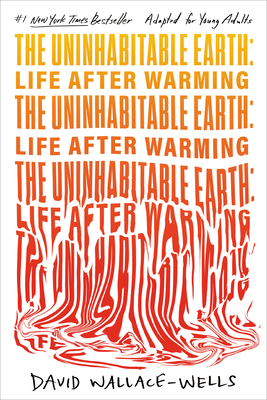
The Uninhabitable Earth (Adapted for Young Readers): Life After Warming by David Wallace-Wells

Share

The Uninhabitable Earth (Adapted for Young Readers): Life After Warming
Author: David Wallace-Wells
Published October 10th, 2023 by Delacorte Press

Summary: An exploration of the devastating effects of global warming—current and future—adapted for young adults from the #1 New York Times bestseller. This is not only an assessment on how the future will look to those living through it, but also a dire overview and an impassioned and hopeful call to action to change the trajectory while there is still time.

The climate crisis that our nation currently faces, from rising temperatures, unfathomable drought, devastating floods, unprecedented fires, just to name a few, are alarming precursors to what awaits us if we continue on our current path. In this adaptation for young adults from the #1 New York Times bestseller, journalist David Wallace-Wells tells it like it is, and it is much worse than anyone might think. Global warming is effecting the world, if left unchecked, it promises to transform global politics, the meaning of technology and the trajectory of human progress.

In sobering detail, Wallace-Wells lays out the mistakes and inaction of past and current generations that we see negatively affecting all lives today and more importantly how they will inevitably affect the future. But readers will also hear—loud and clear—his impassioned call to action, as he appeals to current and future generations, especially young people. As he “the solutions, when we dare to imagine them . . . are indeed motivating, if there is to be any chance of preserving even the hope for a happier future—relatively livable, relatively fulfilling, relatively prosperous, and perhaps more than only relatively just.”

About the Author: David Wallace-Wells is a columnist and deputy editor at New York magazine. He has been a national fellow at the New America Foundation and was previously the deputy editor of The Paris Review. He lives in New York City.

Review: This is an intense book. Like shared in the excerpt below, climate change is a “hyperobject” which makes it seems so intimidating, but David Wallace-Wells does a good job of taking this daunting reality and potential future and breaking it down for the reader though he definitely did not sugar coat anything for the Young Reader edition. It is terrifying and a call to action. But it is also so important, and I am so glad that the author and publisher decided to make it available and accessible for young readers.

I really liked the structure of the books. Wallace-Wells didn’t combine everything and just throw it all at the reader. Each of the four parts are broken up into smaller topics where he focuses on just those aspects. For example, climate changes’ effect on hunger, wild fires, air, plagues, etc. This allows the reader to process each part and not get too overwhelmed.

I also appreciate that he added an afterword which has updates since the original book was published. I think this shows readers that science changes and needs to be updated and make the book more reliable.

I do need to add a warning: The book will not help with eco-anxiety. If anything, it will make it worse. I had to pause the book sometimes to take a breath.

Tools for Navigation: This text could definitely be used in a high school course looking at global warming and climate change since he does a great job of connecting the science to reality. I would love to see this text used in English class as the science is studied in science: a cross-curricular gem of an opportunity.

Most importantly, though, this book needs to get into kids’ hands. It reminds them of the importance of the decisions that our current and future generations need to make about our environment.

Discussion Questions: 

  • What are some actions that we could begin doing to help with the future?
  • Why did the author add to the book when he rewrote it for Young Readers?
  • How has human progression been the downfall for our Earth?
  • Why does climate change seem so daunting to many and thus leads to doing nothing?
  • What do you think is the most important thing that humans need to do now?
  • How will climate change directly impact where you live?

Flagged Passages: Chapter 1: Cascades

The world will be what we make it–perhaps what you make it. The timelines are indeed that short.

Consider the speed of change. The earth has experienced five mass extinctions before the one we are living through now, each so complete a wiping of the fossil record that it functioned as an evolutionary reset, the planet’s phylogenetic tree first expanding, then collapsing, at intervals, like a lung: 86 percent of all species dead 450 million years ago; 70 million years later, 75 percent; 125 million years later, 96 percent; 50 million years later, 80 percent; 135 million years after that, 75 percent again. All but one of these involved climate change produced by greenhouse gas. The most notorious was 250 million years ago; it began when carbon dioxide warmed the planet by five degrees Celsius, accelerated when that warming triggered the release of methane, another greenhouse gas, and ended with all but a sliver of life on Earth dead. We are currently adding carbon to the atmosphere at a considerably faster rate–by most estimates, at least ten times faster. The rate is one hundred times faster than at any point in human history before the beginning of industrialization. And there is already, right now, fully a third more carbon in the atmosphere than at any point in the last 800,000 years–perhaps in as long as 15 million years. There were no humans then. The oceans were more than a hundred feet higher.

Many perceive global warming as a sort of moral and economic debt, accumulated since the beginning of the Industrial Revolution and now come due after several centuries. In fact, more than half the carbon exhaled into the atmosphere by the burning of fossil fuels has been emitted in just the past three decades. The United Nations established its climate change framework in 1992, building a political consensus out of a scientific consensus and advertising it unmistakably to the world; this means we have now done as much damage to the environment knowingly as we ever managed in ignorance. Global warming may seem like a distended morality tale playing out over several centuries and inflicting a kind of Old Testament retribution on the great-great-grandchildren of those responsible, since it was carbon burning in eighteenth-century England that lit the fuse of everything that has followed. But that is a fable about historical villainy that acquits those of us alive today–unfairly. The majority of the burning has come since the 1994 premiere of Friends. A quarter of the damage has been done since Barack Obama was elected president, and Joe Biden vice president, in 2008. Since the end of World War II, the figure is about 90 percent. The story of the industrial world’s kamikaze mission is the story of a single lifetime–the planet brought from seeming stability to the brink of catastrophe in the years between a baptism or bar mitzvah and a funeral.

It is the lifetime of many of the scientists who first raised public alarm about climate change, some of whom, incredibly, remain working–that is how rapidly we have arrived at this promontory, staring down the likelihood of three degrees Celsius of warming by the year 2100. Four degrees is possible as well–perhaps more. According to some estimates, that would mean that whole regions of Africa and Australia and the United States, parts of South America north of Patagonia, and Asia south of Siberia would be rendered brutally uncomfortable by direct heat, desertification, and flooding. Certainly, it would make them inhospitable, and many more regions besides. Which means that, if the planet was brought to the brink of climate catastrophe within the lifetime of a single generation, the responsibility to avoid it belongs with a single generation, too. We all also know that second lifetime. It is ours.

I am not an environmentalist and don’t even think of myself as a nature person. I’ve lived my whole life in cities, enjoying gadgets built by industrial supply chains I hardly think twice about. I’ve never gone camping, not willingly anyway, and while I always thought it was basically a good idea to keep streams clean and air clear, I also always accepted the proposition that there was a trade-off between economic growth and its cost to nature–and figured, well, in most cases I’d probably go for growth. I’m not about to personally slaughter a cow to eat a hamburger, but I’m also not about to go vegan. In these ways–many of them at least–I am like every other American who has spent their life fatally complacent, and willfully deluded, about climate change, which is not just the biggest threat human life on the planet has ever faced but a threat of an entirely different category and scale. That is, the scale of human life itself.

A few years ago, I began collecting stories of climate change, many of them terrifying, gripping, uncanny narratives, with even the most small-scale sagas playing like fables: a group of Arctic scientists trapped when melting ice isolated their research center, on an island populated also by a group of polar bears; a Russian boy killed by anthrax released from a thawing reindeer carcass, which had been trapped in permafrost for many decades. My file of stories grew daily, but very few of the clips, even those drawn from new research published in the most pedigreed scientific journals, seemed to appear in the coverage about climate change the country watched on television and read in its newspapers. In those places, climate change was reported, of course, and even with some tinge of alarm. But the discussion of possible effects was misleadingly narrow, limited almost invariably to the matter of sea-level rise. Just as worrisome, the coverage was sanguine, all things considered. As recently as the 1997 signing of the landmark Kyoto Protocol, two degrees Celsius of global warming was considered the threshold of catastrophe: flooded cities, crippling droughts and heat waves, a planet battered daily by hurricanes and monsoons we used to call “natural disasters” but will soon normalize as simply “bad weather.” More recently, the foreign minister of the Marshall Islands offered another name for that level of warming: “genocide.”

This is not a book about the science of warming; it is about what warming means to the way we live on this planet. But what does that science say? It is complicated research, because it is built on two layers of uncertainty: what humans will do, mostly in emitting greenhouse gases, but also in how we adapt to the environment we have transformed and how the climate will respond, both through straightforward heating and a variety of more complicated and sometimes contradictory feedback loops. But even shaded by those uncertainty bars, it is also very clear research, in fact terrifyingly clear. The United Nations’ Intergovernmental Panel on Climate Change (IPCC) offers the gold-standard assessments of the state of the planet and the likely trajectory for climate change. In its latest report, the IPCC suggested the world was on track for about 3 degrees of warming, bringing the unthinkable collapse of the planet’s ice sheets not just into the realm of the real but into the present.

Because these numbers are so small, we tend to trivialize the differences between them–one, two, four, five. Human experience and memory offer no good analogy for how we should think of those thresholds, but, as with world wars or recurrences of cancer, you don’t want to see even one.

At two degrees of warming, the ice sheets will likely begin their collapse, 400 million more people could suffer from water scarcity, and major cities in the equatorial band of the planet will become lethally hot in summer. There would be thirty-two times more extreme heat waves in India, and each would last five times as long, exposing ninety-three times more people. This is our best-case scenario.

At three degrees, southern Europe would be in permanent drought, and the average drought in Central America would last nineteen months longer and in the Caribbean twenty-one months longer. In northern Africa, the figure is sixty months longer–five years. The areas burned each year by wildfires would double in the Mediterranean and sextuple, or more, in the United States.

At four degrees, damages from river flooding could grow thirtyfold in Bangladesh, twentyfold in India, and as much as sixtyfold in the United Kingdom. In certain places, six climate-driven natural disasters could strike simultaneously. Conflict and warfare could double.

Even if we pull the planet up short of two degrees by 2100, we will be left with an atmosphere that contains 500 parts per million of carbon–perhaps more. The last time this was the case, sixteen million years ago, the planet was not two degrees warmer; it was somewhere between five and eight, giving the planet about 130 feet of sea-level rise, enough to draw a new American coastline as far west as I-95. Some of these processes take thousands of years to unfold, but they are also irreversible and therefore effectively permanent. You might hope to simply reverse climate change; you can’t. It will outrun all of us.

This is part of what makes climate change what the theorist Timothy Morton calls a “hyperobject”–a conceptual fact so large and complex that, like the internet, it can never be properly comprehended. There are many features of climate change–its size, its scope, its brutality–that alone satisfy this definition; together, they might elevate it into a higher and more incomprehensible conceptual category yet. But time is perhaps the most mind-bending feature, the worst outcomes arriving so long from now that we reflexively discount their reality.

Read This If You Love: Nonfiction, specifically about climate change

Recommended For: 
classroomlibrarybuttonsmall 

Signature

**Thank you to Nicole Banholzer PR and the Publisher for providing a copy for review!**