It’s Monday! What Are You Reading? 4/21/14

Share

IMWAYR

It’s Monday! What Are You Reading? From Picture Books to YA!

It’s Monday! What are you Reading? is a meme hosted by Sheila at Book Journeys. It is a great way to recap what you read and/or reviewed the previous week and to plan out your reading and reviews for the upcoming week. It’s also a great chance to see what others are reading right now…you just might discover the next “must-read” book!

Jen Vincent, of Teach Mentor Texts, and Kellee decided to give It’s Monday! What Are You Reading? a kidlit focus. If you read and review books in children’s literature – picture books, chapter books, middle grade novels, young adult novels, anything in the world of kidlit – join us! We love this meme and think you will, too.

We encourage everyone who participates to support the blogging community by visiting at least three of the other book bloggers that link up and leave comments for them.

Last Week’s Posts

top ten tuesday locomotive 16143347

Tuesday: Top Ten Bookish Things We’d Like to Own

Friday: Amulet Graphic Novels: Teaching Guide

**Click on any picture to view the post**

 Last Week’s Journeys

Kellee: I love Rose Under Fire. This week has been quite busy, and I have not been able to finish it yet; however, I am so enjoying it. I wish I was reading it right now! I am also reading an e-book called Coyote Summer by J.S. Kapchinske which I am also really liking. I knew nothing about it, and it is quite surprisingly a good book.

Also, we visited Barnes and Noble on Saturday, and I decided to partake in a couple of picture books I’ve been wanting to read: Pigeon Needs a Bath by Mo Willems and Warning: Do Not Open This Book! by Adam Lehrhaupt. Um, I definitely need to own both of these books. I was laughing in the middle of the store. So good.

Trent and I continued our picture #bookaday and read some really great ones this week:

  • Global Babies by Global Fund for Children (A great introduction to diversity!)
  • Little You by Richard Van Campt (A beautiful poem and a loving message. I also liked the style of illustrations.)
  • A Bedtime for Chester Raccoon by Audrey Penn (A Kissing Hand tale that is just as sweet.)
  • Owen and Mzee: Best Friends by Isabella Hatkoff (I LOVE Owen and Mzee, and I am so glad there is a board book version of their story.)
  • Me Hungry! by Jeremy Tankard (This was the surprise of the week. It cracked me up! Told from the POV of a caveboy, it is quite funny.)
  • The Tale of Peter Rabbit by Beatrix Potter (On Easter. Classic.)
  • Little White Rabbit by Kevin Henkes (I just adore everything Kevin Henkes writes.)

Ricki: This week, I finished the professional development text, The Shame of the Nation by Jonathan Kozol. It made me look at schooling in an entirely different light. For example: Why is it that schools named after MLK Jr. are filled with black students? Wasn’t MLK Jr.’s message about integration? This is just one of the many questions the Kozol poses. I am still pondering some of the ideas that Kozol presents.

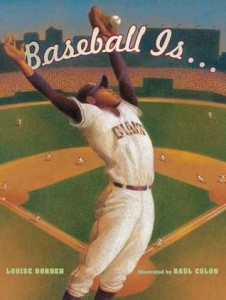
Henry and I enjoyed some great picture books this week. My two favorites were: Library Lion by Michelle Knudsen and Noodle by Munro Leaf. These two will be going on Henry’s wish list. The other books we read were: Wild About Books by Judy Sierra, Never Play Music Right Next to the Zoo by John Lithgow, On Our Way Home by Sebastien Braun, Love is a Handful of Honey by Giles Andreae, Heart in the Pocket by Laurence Bourguigon, Go Dog Go by P.D. Eastman, and Sometimes I Forget You’re a Robot by Sam Brown.

This Week’s Expeditions

Kellee: I am going to finish Rose Under Fire and begin (and hopefully finish!) P.S. Be Eleven. I’ll also continue Coyote Summer. This is my last week of maternity leave, so I am going to cherish it by spending as much time as I can with my son and reading.

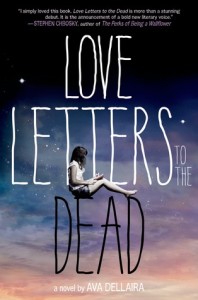
Ricki: I am still reading Love Letters to the Dead by Ava Dellaira, and I just started the professional development text, Culturally Responsive Teaching by Geneva Gay. Henry and I are still reading our graphic novel book of classic fairy tales called Fairy Tale Comics, which is edited by Chris Duffy, and we are also still reading The Lion, the Witch, and the Wardrobe by C.S. Lewis.

Upcoming Week’s Posts

top ten tuesday thrive the fox in the library hum

Tuesday: Top Ten Characters Who Are Smart

Wednesday: Thrive Blog Tour and Author Guest Post

Friday: Tracy Holczer, author of The Secret Hum of a Daisy, Guest Post

 So, what are you reading?

Link up below and go check out what everyone else is reading. Please support other bloggers by viewing and commenting on at least 3 other blogs. If you tweet about your Monday post, tag the tweet with #IMWAYR!

 Signature andRickiSig

Amulet Books Graphic Novel Teaching Guide

Share

abrams

In January, I was contacted by a publicity and marketing associate from Abrams Books/Amulet Books out of the blue. In this email, I was asked to work on a teaching guide about their graphic novels: The Misadventures of Salem Hyde, Nathan Hale’s Hazardous Tales, Hereville, and the Explorer series.

1729025518405488 

13591161135911621729026018405492

1283377017290285

I was beyond honored! And, of course, I said that I would definitely love to do it as I had read all of the graphic novels, and I am a huge fan of them.

First, they asked me to write an introduction about graphic novels and their importance in the classroom. I am a huge advocate for using graphic novels in schools, so I immediately began researching and writing. Here is the introduction:

What are graphic novels? The easiest way to describe graphic novels is to say that they are book-length comic books. However, a more complex definition that educators and librarians use is “book-length narratives told using a combination of words and sequential art, often presented in comic book style” (Fletcher-Spear, 37). Graphic novels are not written in just one genre; they can be in any genre, since graphic novels are a format/medium. Graphic novels are much like novels, but they’re told through words and visuals. They have all narrative elements, including characters, a complete plot, a conflict, etc.

Middle grade and young adult graphic novels cover a wide spectrum of themes and topics. Some common themes found in graphic novels for this age include the hero’s journey; overcoming hardship; and finding one’s identity. For example, in Hereville, we meet Mirka, an everyday girl who learns to use her brains and brawn to overcome her foes. In The Misadventures of Salem Hyde, Salem is working on finding out just who she is (both as a witch and as a person) with the help of her friend Whammy. Graphic novels can cross curricular lines. One example is the Nathan Hale’s Hazardous Tales series—comical nonfiction that takes historical events and presents them in interesting ways, using graphics and humor that will make students want to learn even more about the historical time periods. In the Explorer series, stories include topics such as animal adaptation, volcanic eruptions, and the fate of humanity. Like novels, graphic novels offer opportunities in all subject areas to extend students’ thinking.

Over the past few years, graphic novels have become a hot topic, growing in popularity with both children and educators. While many teachers are beginning to include them in the classroom, there are still teachers, administrators, and librarians who struggle with including this format in their schools. So, why should you use them in your classroom and have them available for students?

  • Graphic novels can make a difficult subject interesting and relatable. (Cohen)
  • Students are visual learners, and today’s students have a much wider visual vocabulary than students in the past. (Karp)
  • Graphic novels can help foster complex reading skills by building a bridge from what students know to what they still have to learn. (NCTE)
  • Graphic novels can help with scaffolding when trying to teach higher-order thinking skills or other complex ideas.
  • For students who struggle to visualize while they read, graphic novels provide visuals that shows what good readers do. (NCTE)
  • Many graphic novels rely on symbol, allusion, satire, parody, irony, and characters/plot and can be used to teach these, and other, literary devices. (Miller; NCTE)
  • Often, in between panels (called the gutter), the reader must make inferences to understand how the events in one panel lead to the events in the next. (McCloud)
  • Graphic novels can make differentiating easier. (Miller)
  • Graphic novels can help ELL (English Language Learners) and reluctant and struggling readers since they divide the text into manageable chunks, use images (which help students understand unknown vocabulary), and are far less daunting than prose. (Haines)
  • Graphic novels do not reduce the vocabulary demand; instead, they provide picture support, quick and appealing story lines, and less text, which allow the reader to understand the vocabulary more easily. (Haines)
  • Research shows that comic books are linguistically appropriate reading material, bearing no negative impact on school achievement or language acquisition. (Krashen)
  • Students love them.

Although you can find graphic novel readers at all reading levels, graphic novels can truly be a gateway to the joys of reading for reluctant and struggling readers. Reluctant readers often find reading to be less fun than video games, movies, and other media, but many will gravitate toward graphic novels because of the visuals and the fast pace. Struggling readers will pick up graphic novels for these reasons as well but also because the graphic novel includes accommodations directly in the book: images, less text, etc.

All in all, graphic novels can interest your most reluctant and struggling readers and also extend all of your readers, including your most gifted.  

Resources

  • Cohen, Lisa S. “But This Book Has Pictures! The Case for Graphic Novels in an AP Classroom.” AP Central. CollegeBoard.
  • Fletcher-Spear, Kristin, Merideth Jenson-Benjamin, and Teresa Copeland. “The Truth About Graphic Novels: A Format, Not a Genre.” The ALAN Review Winter (2005): 37­–44.
  • Haines, Jennifer. “Why Use Comics in The Classroom?” Comic Book Daily. N.p., 20 Mar. 2012.
  • Karp, Jesse. “The Case for Graphic Novels in Education.” American Libraries. N.p., 1 Aug. 2011.
  • Krashen, Stephen. The Power of Reading. Englewood, CO: Libraries Unlimited, Inc. 1993.
  • McCloud, Scott. Understanding Comics. Northampton, Mass.: Kitchen Sink, 1993. 
  • Miller, Andrew. “Using Graphic Novels and Comics in the Classroom.” Edutopia. N.p., 11 Jan. 2012.
  • NCTE, comp. “Using Comics and Graphic Novels in the Classroom.” The Council Chronicle September (2005) http://www.ncte.org/magazine/archives/122031.

 I then began reading and rereading the graphic novels and planning activities and discussion questions that could go along with each book. I was asked to come up with activities for all subjects, so this pushed me out of my comfort zone a bit; however, I loved trying to figure out how these amazing books could be used throughout all classes.  Some examples:

  • Salem Hyde [Science]: At the end of Spelling Trouble, Salem and Whammy have to rescue a whale, but it is done in a very unconventional way. How would real scientists rescue a whale in distress?
  • Hazardous Tales [Language Arts/History]: The Provost (a British soldier) and Nathan Hale disagree about the cause of the Revolutionary War. Based on One Dead Spy, what events caused the Americans to revolt? Do you agree with the Provost or with Nathan Hale about the causes of the war? (This could also be used as a debate question in class.)
  • Hereville [Math]: On pages 31–32 [of Hereville 1], Mirka is given a math problem: Three people are splitting a cake, so they cut it into thirds. But then a fourth person shows up. How can they cut the cake so that each person gets an equalamount of cake? (Mirka comes up with a solution, but are there others?) What if two more people had shown up? Three more? Four more? 
  • Explorer [History]: On page 84 [of The Mystery Boxes], in The Soldier’s Daughter, the man says, “War is a dark power.” Where in history have we seen war consume someone? Have there been wars that did not need to be fought? Research past wars and determine if a war was started because of the need for power or if there was a legitimate reason for it. 

These are just some examples.

I am happy to share the entire teaching guide with you. It can be found at http://www.abramsbooks.com/academic-resources/teaching-guides/ along with other teaching guides. The direct link to the PDF is http://www.abramsbooks.com/pdfs/academic/GraphicNovels_TeachingGuide.pdf.

I hope you find it useful as I am very proud of it,

Signature

Locomotive by Brian Floca (Kellee’s Review)

Share

NF PB 2014

Nonfiction Picture Book Wednesday

Nonfiction Picture Book Wednesday is hosted by Kid Lit Frenzy and was started to help promote the reading of nonfiction texts. Most Wednesdays, we will be participating and will review a nonfiction text (though it may not always be a picture book).
Be sure to visit Kid Lit Frenzy and see what other nonfiction books are shared this week!

locomotive

Locomotive
Author and Illustrator: Brian Floca
Published September 3rd, 2013 by Atheneum Books for Young Readers

Goodreads Summary: The Caldecott Medal Winner, Sibert Honor Book, and New York Timesbestseller Locomotive is a rich and detailed sensory exploration of America’s early railroads, from the creator of the “stunning” (Booklist)Moonshot.

It is the summer of 1869, and trains, crews, and family are traveling together, riding America’s brand-new transcontinental railroad. These pages come alive with the details of the trip and the sounds, speed, and strength of the mighty locomotives; the work that keeps them moving; and the thrill of travel from plains to mountain to ocean.

Come hear the hiss of the steam, feel the heat of the engine, watch the landscape race by. Come ride the rails, come cross the young country!

My Review: Rhythm. Onomatopoeias. (Well-researched) History. Gorgeous (and historically accurate) illustrations. Lyrical narrative. Unique point of view. This book has everything.

YOU (second person POV!) are a passenger on a train cross America with your family in 1869. Throughout the book, you will encounter many different landmarks, experience things on a train very few had at this time in history, and learn about the intricacies of the train. So fascinating! And all told in rich, beautiful language. It is hard to even share much more about the book because it is such an experience.

Check out Ricki’s review of Locomotive as well HERE.

Teachers’ Tools for Navigation: I would LOVE to read this to kids. There are so many places to stop and discuss and research and learn, but never without an enthralling story accompanying.  It would be a great book to use across subjects. There are definitely opportunities for all subjects: social studies (trans-continental travel, history, trains); science (the science of steam engines); math (travel); reading/writing (onomatopoeia, point of view, rhythm).

Also, and this is fresh on my mind because I just read it, but I would love to read this and The Donner Dinner Party and then look at the two journeys. How long did each take? Dangers? It would be an interesting look at how trains truly changed transportation.

Discussion Questions: How does having the book in 2nd point of view make it more enthralling?; What onomatopoeias were used in the book? How did these words help suck you into the story?; How did the author’s rhythm make you feel like you are actually on the train?; What are the landmarks that were passed on the trans-continental railroad? Why are these landmarks significant?; How does a steam engine work? What are the jobs of all of the different people on board?

We Flagged:
“Here is how this road was built,
with a grunt and a heave and a swing,
with the ring of shovels on stone,
the ring of hammers on spikes:

CLANK CLANK CLANK!

Men came from far away
to build from the East,
to build from the West,
to meet in the middle.

They cleared the rocks
and dug the tunnels.
They raised the hammers
and brought them down—

“Three strokes to the spike,
ten spikes to the rail!”

CLANK CLANK CLANK!”

Read This If You Loved: The Donner Dinner Party by Nathan Hale, Train by Elisha Cooper

Recommended For: 

readaloudbuttonsmall closereadinganalysisbuttonsmall classroomlibrarybuttonsmall

Signature

Top Ten Tuesday: Bookish Things We’d Like To Own

Share

top ten tuesday

Top Ten Tuesday is an original feature/weekly meme created at The Broke and the Bookish. The feature was created because The Broke and Bookish are particularly fond of lists (as are we!). Each week a new Top Ten list topic is given and bloggers can participate.

 Today’s Topic: Top Ten Book Things We’d Like To Own

Not books, but book accessories.

Ricki

I decided to use pictures instead of links like Kellee. Sorry for the inconsistency, but many of my images are on Tumblr, so I can’t find them anymore!

1. I want a row of a dozen bookshelves with a gorgeous sliding, gold ladder. The five bookshelves in my house are not nearly enough. I would post an image of this, but your imagination is better than any image I could show.

2. This dress:

dress

3. This bench for my garden:

bench

4. These stairs for my basement:

stairs

5. This vending machine, with unlimited books, please:

vending

Kellee

Click on any of the items to see the bookish things I’d like to own

1. Neil Gaiman’s Bookshelves (OMG, right?! Though I’ll need a bigger house first…) 

2. Elephant and Piggie Shirt Toddler Shirt (for Trent; or any of the Mo Willems shirts for me or him)

3. Amazing Harry Potter Wizard’s Blu-ray/DVD Combo Collection

4. One Book Down Lounge Set

5. Hm…. I cannot think of a 5th thing. Can I say Neil Gaiman’s Bookshelves again?!

What are some bookish things you dream of owning?

RickiSig andSignature

It’s Monday! What Are You Reading? 4/14/14

Share

IMWAYR

It’s Monday! What Are You Reading? From Picture Books to YA!

It’s Monday! What are you Reading? is a meme hosted by Sheila at Book Journeys. It is a great way to recap what you read and/or reviewed the previous week and to plan out your reading and reviews for the upcoming week. It’s also a great chance to see what others are reading right now…you just might discover the next “must-read” book!

Jen Vincent, of Teach Mentor Texts, and Kellee decided to give It’s Monday! What Are You Reading? a kidlit focus. If you read and review books in children’s literature – picture books, chapter books, middle grade novels, young adult novels, anything in the world of kidlit – join us! We love this meme and think you will, too.

We encourage everyone who participates to support the blogging community by visiting at least three of the other book bloggers that link up and leave comments for them.

Last Week’s Posts

top ten tuesday Each Kindness bruised

Top Ten Tuesday: Top Ten Most Unique Books We’ve Read

Wednesday: Favorite Nonfiction Picture Books About Strong Women in History

**Click on any picture to view the post**

 Last Week’s Journeys

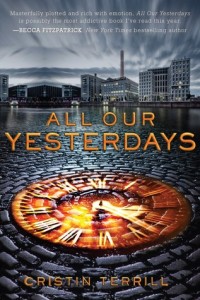
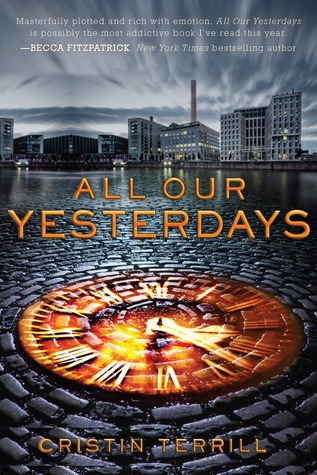
Kellee: This week I read All our Yesterdays by Cristen Terrill–SO GOOD! I found myself reading when I should have been doing just about anything else, but it was just so suspenseful! Ricki has already reviewed it, and I will post my review in May. It is a must-read, in my opinion.  While nursing this week (well, not nursing, but during the 20 minutes after nursing when I have to keep Trent upright), I also finished Teen Idol Terror by Paul Plunkett, a fun mystery that I’ll review in the future, and Thrive by Meenoo Rami, an education book that we’ll have the blog tour stop in a couple of weeks.

Trent and I continued our #bookaday and read some great picture books:

  • No Two Alike by Keith Baker (This will be a good way to show Trent snow and also how unique everything is, and I really liked the rhyming.)
  • Spot the Dot by David A. Carter (A super fun interactive book that will be great for teaching colors and having fun while doing it.)
  • Daddy Wrong Legs by Nina Laden (Trent is going to love this book when he is able to flip through the book mixing and matching the legs and heads. Some of them are quite hilarious.)
  • The Biggest Kiss by Joanna Walsh (Love this cover! A cute book that will be a good Valentine’s Day read.)
  • Chickia Chicka Boom Boom by Bill Martin Jr. (I haven’t read this book in a long time, but it is as fun and rhythmic as I remember.)
  • Disney’s Peter Pan and Lady and the Tramp (Final two books in the Disney Bedtime Stories tower. I really enjoyed the Lady and the Tramp adaptation–very cute.)

Ricki: Like Kellee, I also read Thrive by Meenoo Rami this week. This is a fantastic book for beginning teachers, and I can’t wait to use it in my classes.  I also read several picture books to Henry. One of our favorite books was The Fox in the Library by Lorenz Pauli. (We are biased because we love any books about books.) I will be reviewing it next week. We also loved a recommendation by Carrie in her children’s book post (bit.ly/1fOCOdu): Hug by Jez Alborough. There is something magical about animals hugging each other. We also enjoyed the classics, The Napping House by Audrey Wood and Are You My Mother? by P.D. Eastman, a newer book called Hello, My Name is Ruby by Philip C. Stead (great for bird-lovers), and The Dead Family Diaz by P.J. Bracegirdle (fantastic for teaching about The Day of the Dead).  If you are looking for an adult book, my husband just finished The Strain by Guillermo del Toro. It is a new, adult, horror book. He enjoyed it, and he is a tough critic. 

This Week’s Expeditions

Kellee: I am going to start (should have started already!) Rose Under Fire by Elizabeth Wein. It is going to be interesting to see how it connects to Code Name Verity. I also plan on starting another e-book, probably Coyote Summer by J.P. Kapchinske, to read after nursing. E-books are much easier to read with one hand than hard/paper books. Trent and I will continue our #bookaday, of course, but I never know what is in our plans 🙂

Ricki: I am currently reading Love Letters to the Dead by Ava Dellaira. I am almost finished with the professional development book, The Shame of the Nation by Jonathan Kozol. Henry and I are also almost finished with our graphic novel book of classic fairy tales called Fairy Tale Comics, which is edited by Chris Duffy.

Upcoming Week’s Posts

top ten tuesday locomotive 16143347

Tuesday: Top Ten Bookish Things We’d Like to Own

Friday: Amulet Graphic Novels: Teaching Guide

 So, what are you reading?

Link up below and go check out what everyone else is reading. Please support other bloggers by viewing and commenting on at least 3 other blogs. If you tweet about your Monday post, tag the tweet with #IMWAYR!

 Signature andRickiSig

Bruised by Sarah Skilton

Share

bruised

Bruised
Author: Sarah Skilton
Published March 5, 2013 by Amulet/Abrams

Goodreads Summary: Imogen has always believed that her black belt in Tae Kwon Do made her stronger than everyone else–more responsible, more capable. But when she witnesses a holdup in a diner, she freezes. The gunman is shot and killed by the police. And it’s all her fault.

Now she’s got to rebuild her life without the talent that made her special and the beliefs that made her strong. If only she could prove herself in a fight–a real fight–she might be able to let go of the guilt and shock. She’s drawn to Ricky, another witness to the holdup, both romantically and because she believes he might be able to give her the fight she’s been waiting for.

But when it comes down to it, a fight won’t answer Imogen’s big questions: What does it really mean to be stronger than other people? Is there such a thing as a fair fight? And can someone who’s beaten and bruised fall in love?

My Review and Teachers’ Tools for Navigation: Imogen is broken and she must overcome this feeling of hopelessness that surrounds her constantly. What an intense way to introduce us to a character? We then go on a journey with Imogen as she tries to rebuild her life, her memories, her friendships, and her family.

At first I struggled with this book because the timeline was choppy, and Imogen was hard to pinpoint. But then, through the flashbacks, Imogen starts to become clearer to us, the reader, and Imogen’s memories start to become clearer to her. Then you are so sucked into wanting to know everything, and you can only know everything if you stick with the book and see Imogen’s memories as they are revealed. This is a pretty brilliant tactic in making the reader feel like they are in the protagonist’s brain.

Bruised actually reminds me a lot of Speak by Laurie Halse Anderson. Both young ladies are thrown into a tragedy, let that tragedy eat away at their hearts and souls, and have to figure out how to find themselves again. Truly a remarkable journey to go on with a character.  And, like Speak, there are some intense topics/themes dealt with in Bruised that will definitely grab a teen’s attention: sibling rivalry, a disabled parent, disconnected family, friendship, sex, love, survival, and martial arts. It is one of those books that teens need to read, so they can learn to become resilient and to overcome whatever is in their path.

Discussion Questions: Is it ever okay to lie?; Would you have been able to forgive your best friend if she’d done what Shelly did?; Was it right of Imogen to call Grant down during the demonstration?; Why was having Ricky there such an important part of Imogen’s recovery?

We Flagged: “Don’t you recognize me?” says Ricky after a moment.
Confused, I force myself to look up from the floor, up his legs and along his body, until I’m looking him in the eyes.
I hear gunshots, the cashier crying, and the police sirens, but I don’t look away.
He’s my friend from under the table.” (p. 60)

“Today, eleven days later, I slide down the wall of my own shower and curl up in a ball, tuck my knees under my chin, and wrap my arms around my head. I’ve taken showers since the diner, but this one’s different. Get smaller. Small as you can be. Low to the ground is comforting, standing up is bad. Why is standing up bad? What happins if you stand up? (You don’t want to know.) Reset button. Start at the beginning. Gretchen’s in the bathroom when the gunman comes in. I see the glint of his gun, and I hide under the table. There’s Ricky, under a different table, he brings his finger to his lips. Shh…” (p. 95-96)

Read This If You Loved: Speak by Laurie Halse Anderson, Stained by Cheryl Rainfield, Rape Girl by Alina Klein

Recommended For: 

classroomlibrarybuttonsmall

Signature

Biographical Picture Books about Strong Women

Share

NF PB 2014

Nonfiction Picture Book Wednesday

Nonfiction Picture Book Wednesday is hosted by Kid Lit Frenzy and was started to help promote the reading of nonfiction texts. Most Wednesdays, we will be participating and will review a nonfiction text (though it may not always be a picture book).
Be sure to visit Kid Lit Frenzy and see what other nonfiction books are shared this week!

Over the last few years I have noticed a trend (a trend I love!) of biographical picture books about strong women from history. After reading a wonderful batch of them, I decided I need to share all of the amazing ones that I have read.
[Each picture book cover can be clicked on to take you to either Goodreads or a review of mine.]

16075946 17245740

1405439 

13722312 16074914 15818081 

16002028 50175 13330625 

12396987 6891554 

I love that these woman are getting their stories told!

Were there any that I missed? Please share!

Signature