Review and Giveaway!: Henry and the Chalk Dragon by Jennifer Trafton

Share

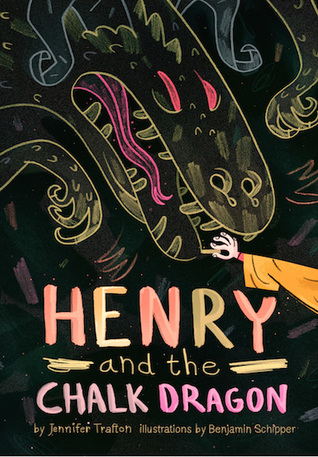
Henry and the Chalk Dragon
Author: Jennifer Trafton
Illustrator: Benjamin Schipper
Published April 4th, 2017 by Rabbit Room Press

Summary: In the town of Squashbuckle, just about anything can happen, and when Henry Penwhistle draws a mighty Chalk Dragon on his door, the dragon does what Henry least expects–it runs away. Now Henry’s art is out in the world for everyone to see, and it’s causing trouble for him and his schoolmates, Oscar and Jade. If they don’t stop it, the entire town could be doomed! To vanquish the threat of a rampaging Chalk Dragon, Sir Henry Penwhistle, Knight of La Muncha Elementary School, is going to have to do more than just catch his art–he’s going to have to let his imagination run wild. And THAT takes bravery.

About the Author: Jennifer Trafton is the author of The Rise and Fall of Mount Majestic (Dial, 2010) which received starred reviews in Publishers Weekly and School Library Journal and was a nominee for Tennessee’s Volunteer State Book Award and the National Homeschool Book Award. Henry and the Chalk Dragon arose from her lifelong love of drawing and her personal quest for the courage to be an artist. She lives in Nashville, Tennessee, where, in addition to pursuing her love of art and illustration, she teaches writing classes, workshops, and summer camps in a variety of schools, libraries, and homeschool groups in the Nashville area, as well as online classes to kids around the world. To learn more, and to download free materials, visit jennifertrafton.com.

Critical Praise: 

★“A delicious face-off between forces of conformity and creativity run amok, spiced with offbeat names as well as insights expressed with eloquent simplicity.” —Booklist (starred review)
★“A perfect title to hand to young readers looking for laughs along with a wild and crazy adventure.”
                                                                                —School Library Journal (starred review)

Review: I love any book that promotes imagination, and it isn’t too often that you find a novel that is all about keeping your imagination. Henry’s story is a Pleasantville one–he lives in a boring town and takes boring classes, but when he closes his door, his imagination goes wild. It is when his imaginative Chalk Dragon escapes and wrecks havoc on his school does the power of an imagination really start to show. 

On a side note, and only some of you will understand this, but the cover of Henry and the Chalk Dragon is matte and SO SOFT!

Teachers’ Tools for Navigation: Along with a read aloud, the text gives lots of opportunities to discuss imagination, art, and creative writing. Also, chunking the text to fit the most opportune times will lead to some great writing and art prompts.

Discussion Questions: How did the principal end up the way he is? How do we know that he was not that way when he was younger?; Was Henry’s class/school doing the best thing to promote Vegetable Week?; Which adults understand Henry and his imagination? Which hinder him?; How does the power of Henry’s imagination cause havoc on the school? How does it save the school?; What does Henry’s chalk dragon coming to life symbolize in the grand scheme of things?; What is the lesson that the author is trying to teach us about imagination and growing up?

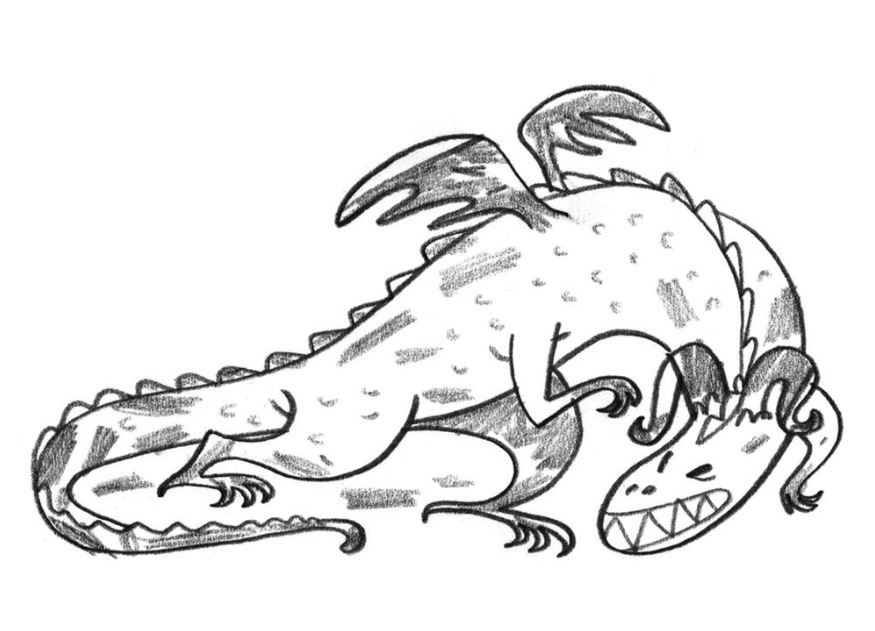
Flagged Passages: “Henry recognized the curve of those horns and the arrow-tipped tail. He recognized every sharp green flick of scaly skin, every zigzag of the bony spines running down the creature’s back. It was his dragon. Just as he had imagined it. Just as he had drawn it. Here it was, standing in front of him! There was something brand new in the world, and he had put it there!

There is a kind of fear that squeezes your heart with an icy hand and freezes you into a popsicle. But there is another kind of fear that is thrilling and hot, that makes your fingers tingle and your toes tickle each other inside your shoes until you want to leap over the Empire State Building. Henry was afraid with this kind of fear, and it felt good.

The dragon stared back at him–up and down, from his sneakers to his shiny helmet. It did not look afraid of Henry. It spread its wings proudly. It stretched its scaly neck as high as it would go. Its mouth widened slowly into a dragonish grin.

How long had Henry been waiting for this moment? Here he was, in his shiny suit of armor, with a sword in his hand. And here was a real live dragon–a dragon who could knock the house down with a few flicks of its tail, who could eat his mother for breakfast, who could send a ball of fire bouncing down the street. He knew exactly what he had to do.” (p. 32-33)

Read This If You Loved: The Journey Trilogy by Aaron BeckerHarold and the Purple Crayon by Crockett Johnson, Other picture books that spark imagination

Recommended For:
classroomlibrarybuttonsmall 

Giveaway!

a Rafflecopter giveaway

**Thank you to Barbara at Blue Slip Media for providing a copy for review!**

Paint Me a Picture & Tell Me a Story by Emily Bannister

Share

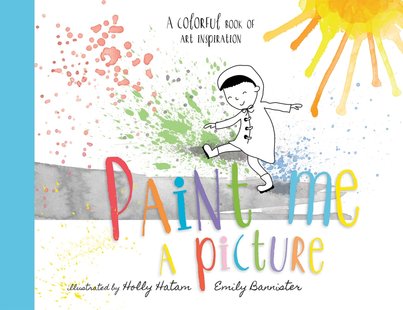
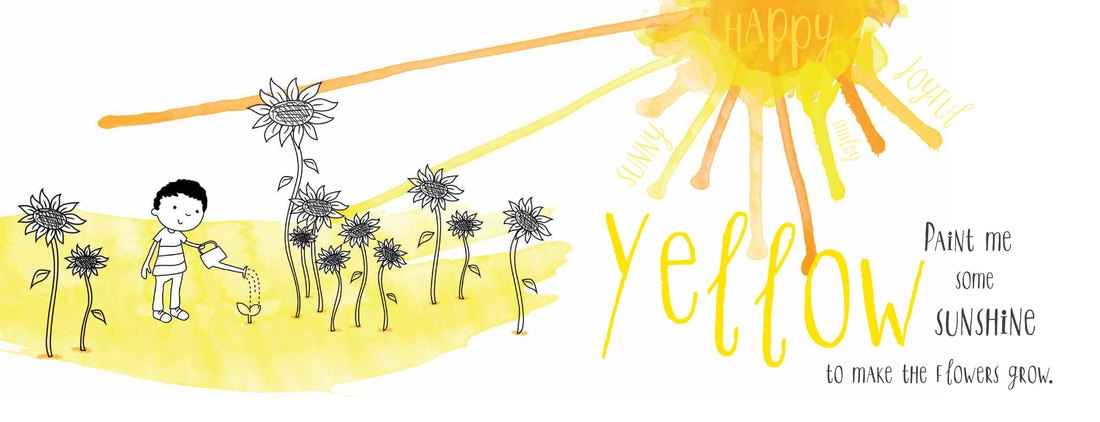
Paint Me a Picture: A Colorful Book of Art Inspiration
Author: Emily Bannister
Illustrator: Holly Hatam
Published by Kane Miller EDC Publishing

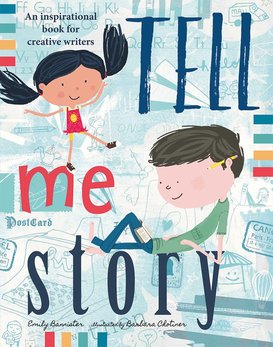
Tell Me a Story: An Inspirational Book for Creative Writers
Author: Emily Bannister
Illustrator: Barbara Chotiner
Published by Kane Miller EDC Publishing

Summary: Paint Me a Picture equates color to mood, getting children thinking about the way they see and feel our colorful world.

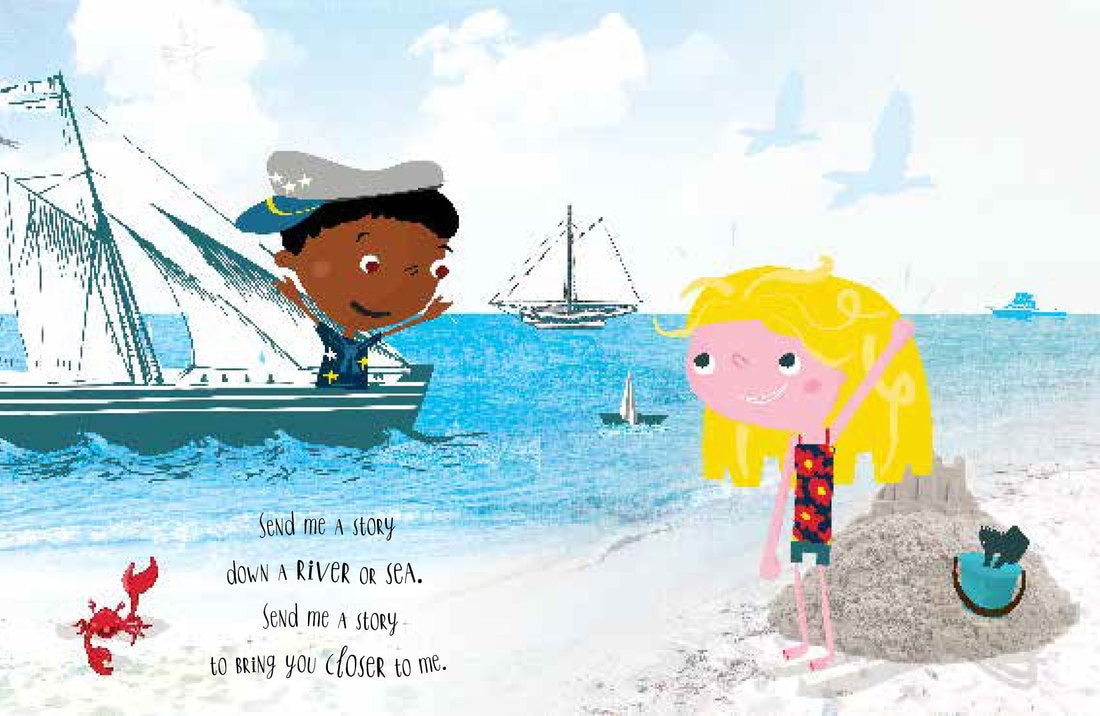
Tell Me a Story lets children know that their words are important, that no matter the form, their stories are meaningful.

With simple rhyming text and accessible art, this book is a springboard for drawing and sharing stories, giving color to emotions, and kids permission to do, create, show and tell.

It delightfully, poetically, celebrates the joy and imagination in art in all its forms and inspires the storyteller in everyone.

Review: I love books that help students feel like they are artists, writers, or thinkers. I think creativity is such an important part of childhood and too often we are pushing kids to grow up too quickly and not learn how to be creative or we’re pushing kids to fit into a certain box instead of letting them think outside of the box. These books help kids see the joy in writing and creating. They celebrate creative thinking and writing and the colors of our world. They show how you can combine color and words to create something that others will want to read and see. 

Teachers’ Tools for Navigation: Sometimes all a student needs is inspiration to create a story or piece of art work. These texts are those inspiration. They help students know that their story means something. That their words are something someone wants to read. That color can mean something. That their color choices when making artwork make a difference but that all colors are beautiful.

Discussion Questions: If you wanted to draw a picture that symbolizes sadness/happiness/laughter/anger, etc., what color would you use? What would you draw?; What is your favorite color? What does it symbolize to you?; To write a story, you first need to start with an idea, a place, or a thing. What would you write a story about?

Flagged Passages: 

Read This If You Loved: What Do You See? by Kyla Ryman, The Amazing Crafty Cat by Charise Mericle Harper, A Child of Books by Oliver JeffersThe Museum by Susan Verde, My Life in Pictures by Deborah ZemkeDoodle Adventures by Mike LoweryMy Pen by Christopher Myers, Mix it Up! by Hervé Tullet, Sky Color by Peter H. Reynolds, Art by Patrick McDonnell, Not a Box by Antoinette Portis, Seen Art? by Jon Scieszka, The Cat and the Bird by Geraldine Elschner

Recommended For:
classroomlibrarybuttonsmall 

**Thank you to Lynn at Kane Miller for providing copies for review!!**

Paper Animals by Kane Miller Books

Share

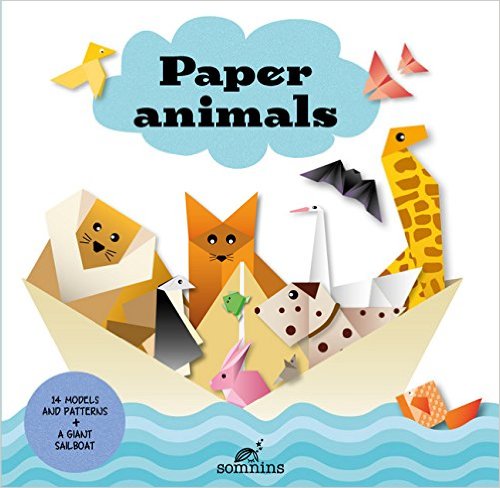
Paper Animals

Paper Animals
Published: December 5, 2016 by Kane Miller Books

Goodreads Summary: In this book there are 14 different animals, with step-by-step instructions and different levels of difficulty, which will help you become an origami expert. Once you have all the animals ready, fold the giant boat at the end of the book and take all the passengers on board! Included are thirty pages of patterned paper, with printed fold lines. Develops hand eye co-ordination. Learn a form of communication without language. Focuses patience and increases self-esteem. Well-suited to a classroom of 30 or more students. Creates and manipulates basic geometric shapes such as squares, rectangles, and triangles. Reflects the ingenuity and aesthetics of Japanese culture; children gain appreciation of a different culture, opening a doorway to exploration and increased tolerance. Learn the ancient art of origami! In this book there are 14 different animals, with step-by-step instructions and different levels of difficulty.

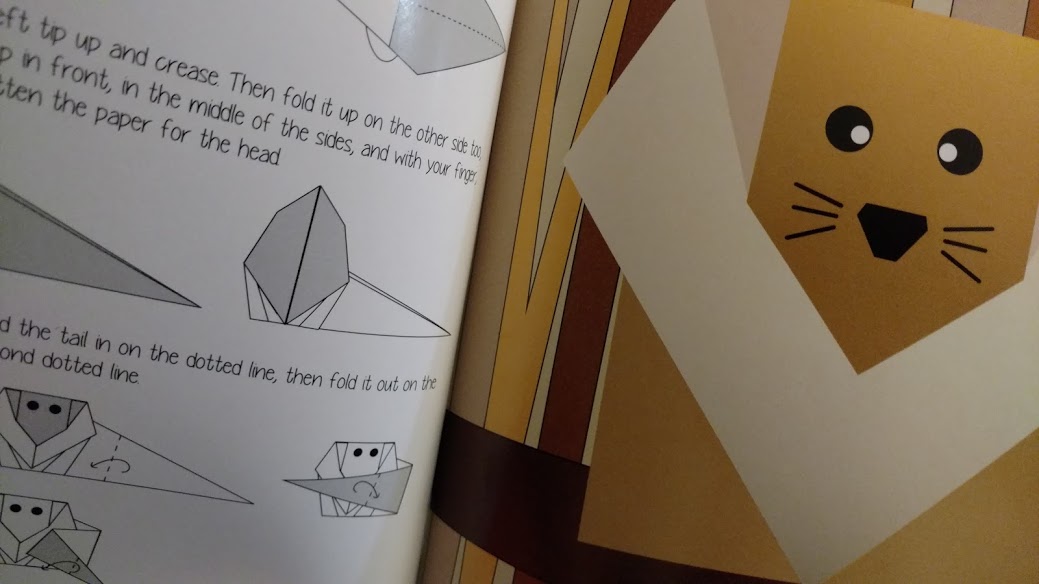
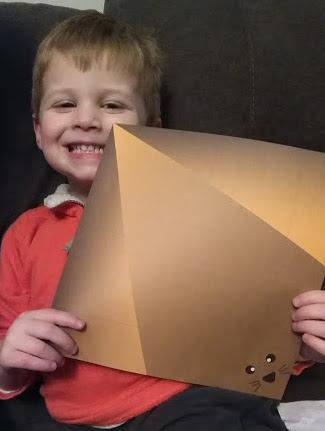
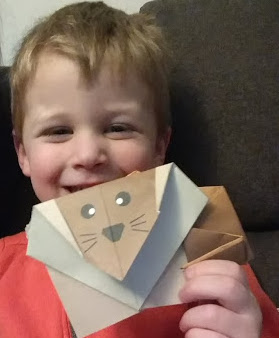
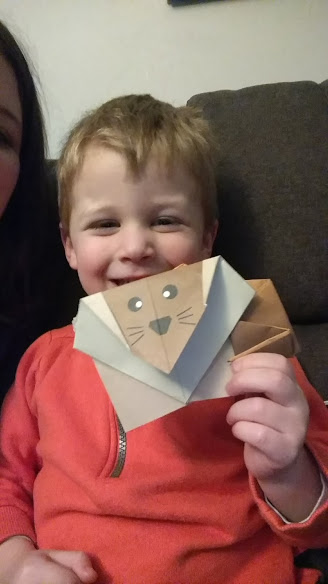
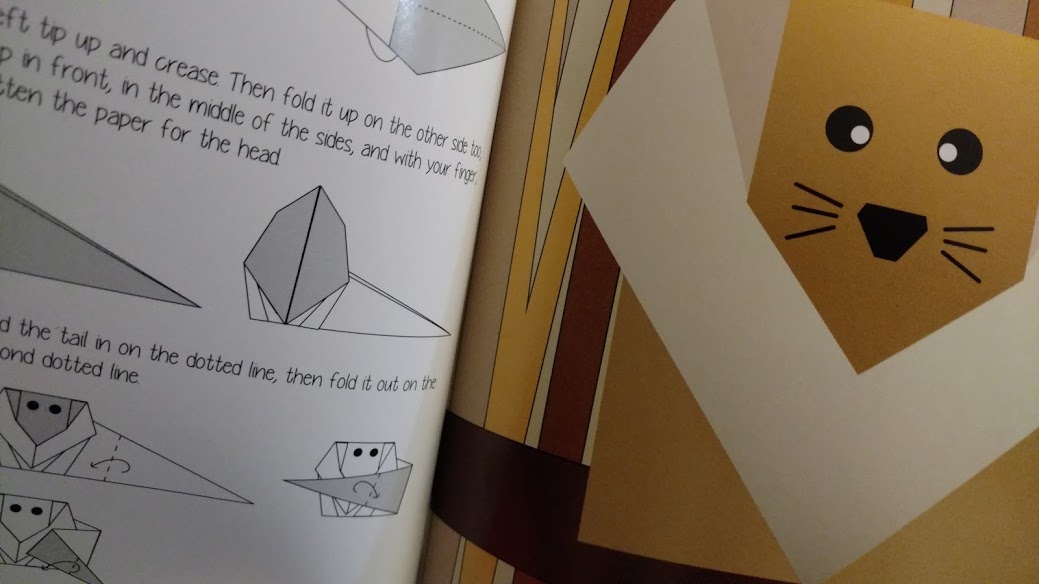
My Review: I have always enjoyed origami, so this book made me feel a bit nostalgic. The first half of the book features pictures of the finished products and directions. The second half of the book includes origami paper that is tailored to each of the animals in the front of the book. So, for example, there is a lion instruction page in the first half of the book, and there is a page of lion origami paper at the end of the book that includes dotted lines for folds and a lion face! My three-year-old is absolutely obsessed with this book. We do one paper animal per day, and we put the animal inside of the giant book (included in the back of the book). He is too young to do the folding himself, but he cheers me on as I fold the paper. I would recommend this book to upper elementary schoolers through adults. Even as an adult, I found some of the paper animals to be very tricky.

Teachers’ Tools for Navigation: In high school, we were required to give a speech that included very specific instructions for participants. I made an origami crane and my peers followed my instructions at their seats. It would be fun to use this as a model for the speech activity. As an alternative, students might create their own origami animal with instructions! This would be hard to do, but it would be great fun!

Discussion Questions: What aspects are important when we give instructions? How did the authors of this book make the instructions easier to follow?; Which animals proved more difficult to make, and why?

Flagged Spread: 

origamil2

origami3 origami4

Read This If You Loved: Activity Books; Origami

Recommended For: 
 classroomlibrarybuttonsmall

RickiSig

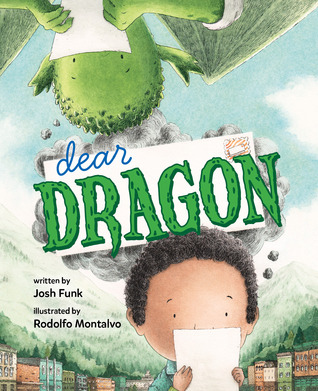
Dear Dragon by Josh Funk

Share

dear dragon

Dear Dragon
Author: Josh Funk
Illustrator: Rodolfo Montalvo
Anticipated Publication: September 6, 2016 by Viking Books for Young Readers

Goodreads Summary: A sweet and clever friendship story in rhyme, about looking past physical differences to appreciate the person (or dragon) underneath.

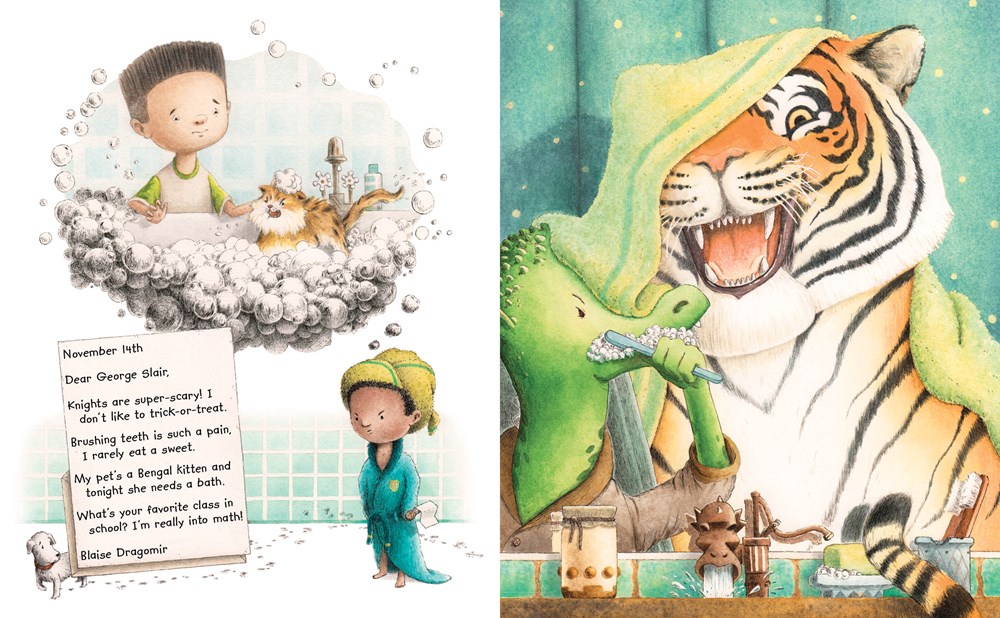
George and Blaise are pen pals, and they write letters to each other about everything: their pets, birthdays, favorite sports, and science fair projects. There’s just one thing that the two friends don’t know: George is a human, while Blaise is a dragon! What will happen when these pen pals finally meet face-to-face?

Ricki’s Review: I simply adored this book. It was quite clever and imaginative! I imagine it took a lot of thought to try to show how different George and Blaise’s lives might be and how they might misinterpret the descriptions of simple daily life events. I am a huge fan of Josh Funk’s writing and recommend all of his books. They all are witty and humorous, and my son and I always giggle while we read them. Each of his books teaches a life lesson that has been very useful for me as a mom, and I know they are equally useful for elementary school teachers. For Lady Pancake & Sir French Toast, I have been able to constantly refer to the variety of foods in the text in order to help my son with his picky eating habits. With this book, Dear Dragon, I have been able to talk with my son about differences and how we might work to understand how others might lead different daily lives than ours. I am really looking forward to Josh’s next book, Pirasaurs!. Based on his other books, I know it will be a good one!

Kellee’s Review: The books I find myself gravitating towards and recommending the most are the books that I not only love as a mother but can also definitely see the application of the book in all levels of classrooms. Dear Dragon fits into this category because it is such an amusing and fun book that is just a blast to read and discuss; however, it also has so many ways that I can see myself and other teachers using it in the classroom: for a mentor text, for a pen pal unit, for a read aloud. Dear Dragon also is an amazing set up to discuss first impressions and differences between people in safe place (since, you know, Blaise is a dragon). I also loved the quirky, colorful, detailed illustrations that accompany George and Blaise’s letters. The silly conversations just from these will make for a wonderful conversation.

Teachers’ Tools for Navigation: Ricki fondly remembers her elementary school experiences with pen pals. Her fourth class wrote to a class in Germany. It was so interesting to learn about all of the differences between our lives. This book would make for a great jumpstart to a pen pal project. It would be neat to connect to a class in another country or even across our own country. Students would learn a lot about how we are both similar and different from others—and how this is a good thing, indeed!

In addition to being a ton of fun, Dear Dragon will also be a perfect mentor text for a variety of reading skills and standards. The letters are a perfect opportunity to discuss point of view, voice, letter writing, and rhyming. The book also has a wonderful theme, the illustrations and letters could be compared/contrasted, and the entire text structure could be analyzed.

Discussion Questions: What are the similarities and differences between George and Blaise? How do they build their friendship across letters?; How do they each misinterpret the other’s letters in ways that are funny and enlightening? How do the illustrations reflect these misinterpretations?; This book is a fantasy, but how might you compare this book to real life?

Flagged Spread: 

9780451472304_IL_3_05101

Read This If You Loved: Lady Pancake & Sir French Toast by Josh Funk; Same, Same but Different by Jenny Sue Kostecki-Shaw; Whose Story is This, Anyway? by Mike Flaherty; Dragons Love Tacos by Adam Rubin; Have You Seen my Dragon? by Steve Light; Tony Baloney: Pen Pal by Pam Muñoz Ryan; Dear Mrs. Larue series by Mark Teague

Recommended For: 
readaloudbuttonsmall classroomlibrarybuttonsmall closereadinganalysisbuttonsmall

RickiSigandSignature

Future Problem Solving International Conference Update

Share

fpspi motto

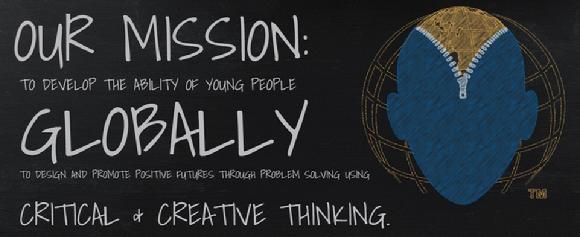
In April, I shared with you about the Future Problem Solving program and the journey and successes my team has had.

Just to recap, the Future Problem Solving Program focuses on the 6-step problem solving process:

fpsp steps

First, students read a Future Scene which is a scenario that takes place in the future and revolves around a topic the students knew and researched about before the competition.

Step 1. In groups of four, the team has to pull out 16 potential problems they see that could happen in the Future Scene.

Step 2. They then have to decide which of the problems is the most impactful to the scene and also deals with the charge given to them at the end of the scenario that directs them to focus on a certain aspect of the scene usually based on the topic.

Step 3. As a team, they then have to determine 16 solutions to the underlying problem they identified in step 2.

Step 4. Criteria is laid out to help determine which solution is the best.

Step 5. The solutions are ranked based on the criteria they created.

Step 6. They write an extensive action plan about the highest ranking solution explaining in detail how the solution would work, who would do the jobs, what obstacles they may encounter, how much it would cost, etc.

This finishes the Global Issues Problem Solving portion which is the primary competition, but while the booklets are being scored, the students then prepare and put on a presentation of their action plan for their fellow competitors.

13320856_1616227128694556_1928424870826155314_o

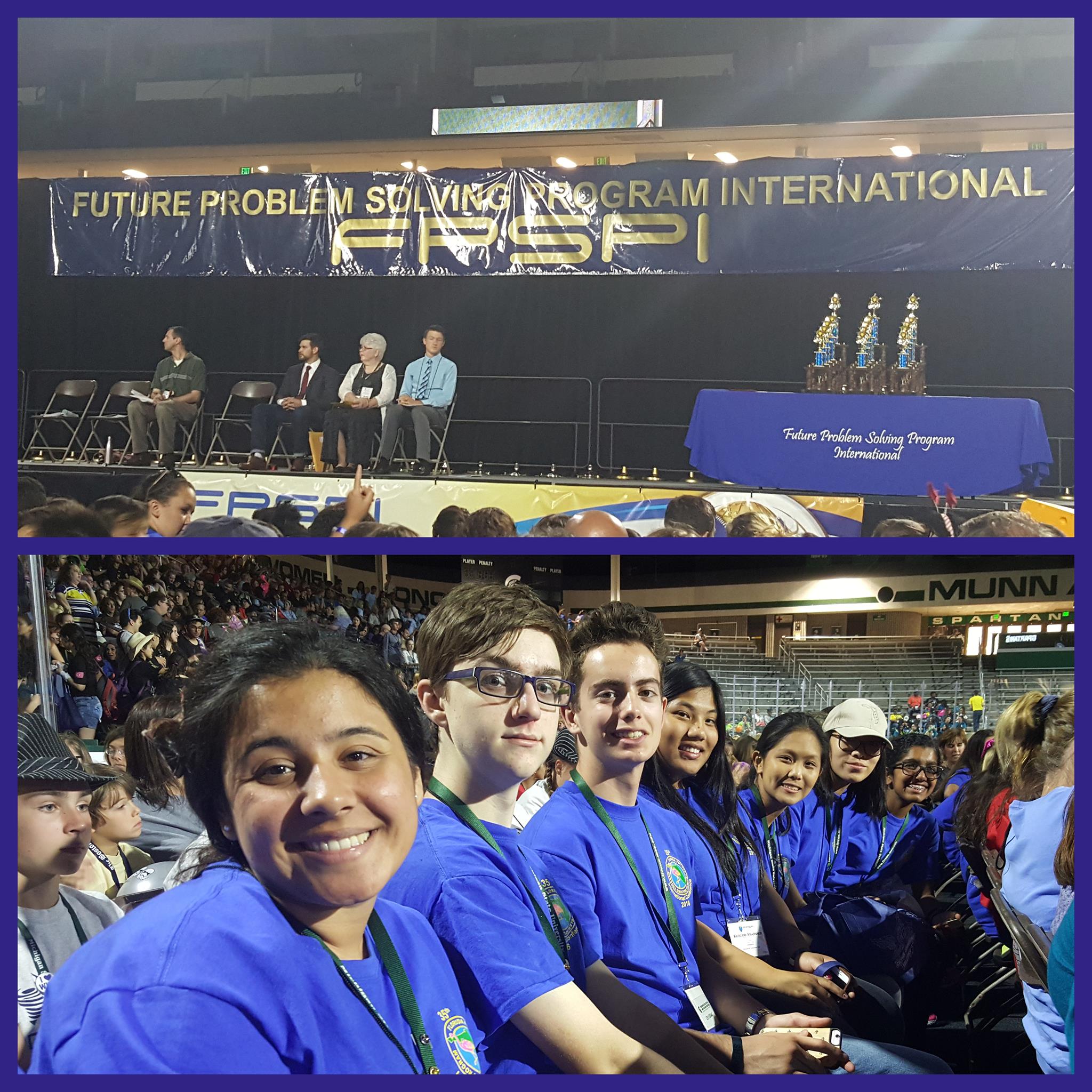
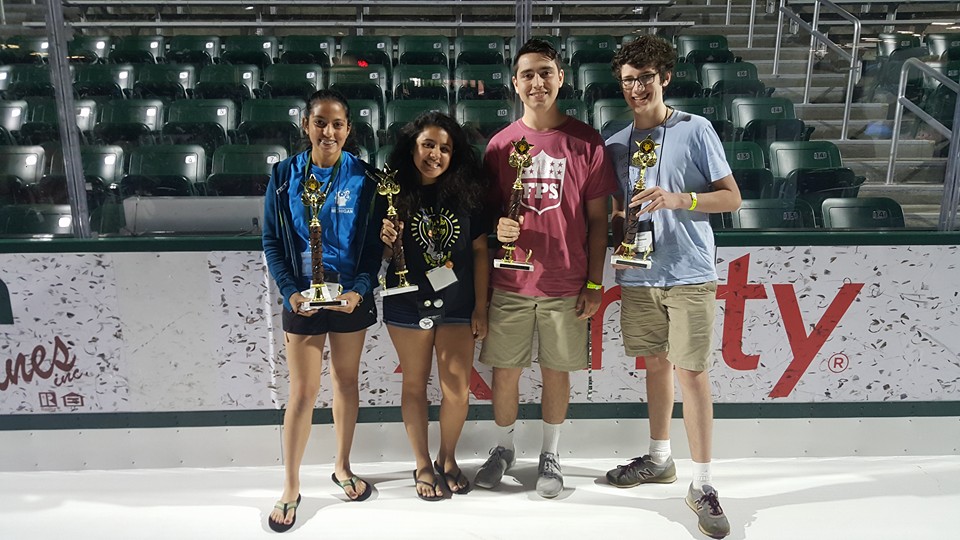
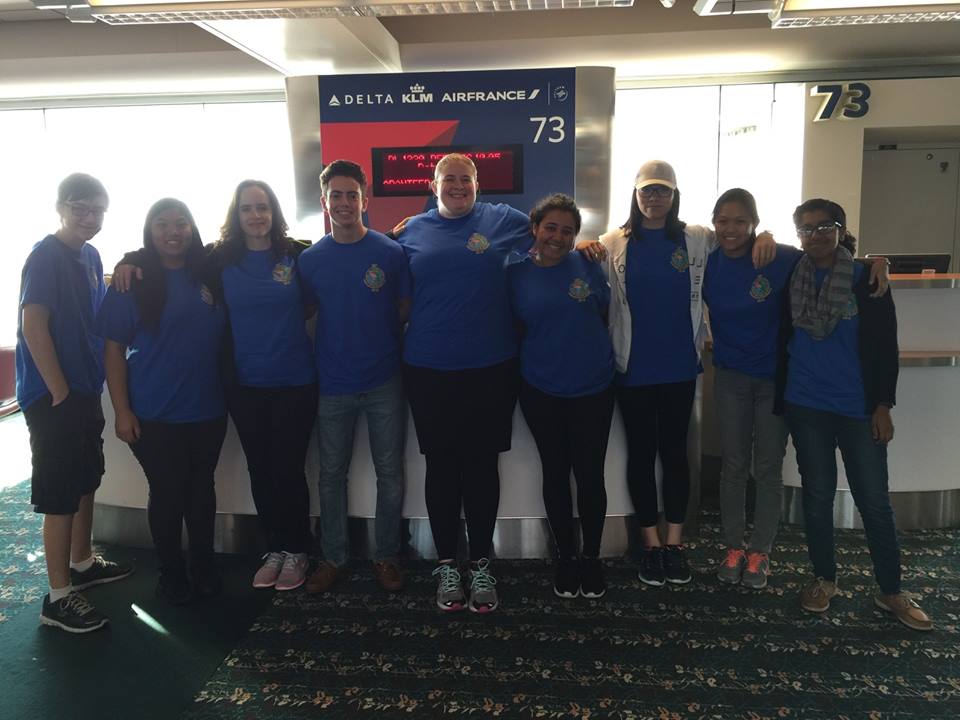
Because of my amazing students’ successes at the state competition, we qualified to travel to Michigan State University from June 2nd to June 5th to compete at the International Conference. This was a once-in-a-lifetime experience (though I hope we get to go again in the future!).

First, we took part in the Memento Exchange which is such a brilliant way to open up an event with attendees from around the world. During the Memento Exchange, each attendee brings items from their home town/state and exchange them with others so each person ends up with a ton of mementos from all around the world!

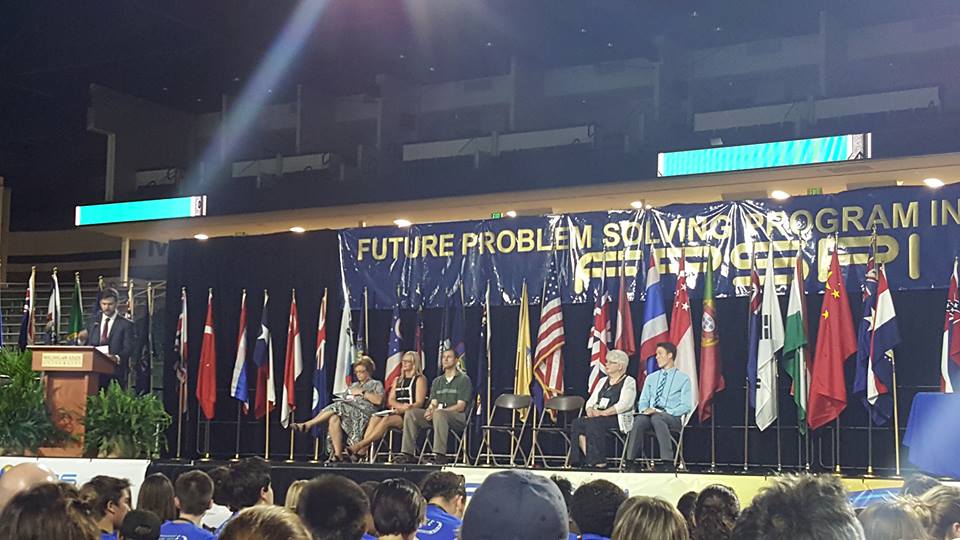
Then, we attended the Opening Ceremonies. There were two stand out moments during the Opening Ceremonies. First, there is a presentation of all the flags for each state, province, and country that is taking part in the conference. It is amazing to see everyone that was represented. The keynote speaker was also phenomenal! His name was Alec Manfre. Alec is from Florida and is currently a CEO of company and a Forbes 30 under 30. He is also a FPS alum. He shared some amazing advice:

Things to remember in life: Use the problem solving framework; Be a life long learner; Find your passion!

Don’t be afraid to think big! Challenge the status quo! Solve the biggest challenges!

Challenge yourself! Challenge the norm! Challenge society!

13339499_1616469092003693_5491897103508853037_n

The second day was the competition portion though we wouldn’t find out the results until the final day there. However, it was also the Presentation of Action Plan which my students ROCKED! Their solution had to do with a mechanical, 3-D printed bird that stores energy from the sun, wind, and its movement then transfers it to those in need. If you want to see their skit, stop by our Facebook page and you can view it. They ended up being in the finals for the presentations which means they were in the top 14 of 70 middle division teams!

Three of my students also chose to take part in the FPS IC Choir which performed at the Variety Show. The choir, along with the variety show which featured talents from participants from all over the world, was another amazing way to showcase the variety of people taking part in IC. It is so beautiful to see people from around the world sing together. I shared a video of one of their songs on our Facebook page as well.

113319813_1616662441984358_886774706627068555_n

The last day in Michigan, we attended the award ceremony. Although this isn’t all about winning, it is about thinking and growing, award ceremonies are always so nerve-racking! I am already so proud of how far we’d gotten, and I already had a top 14 team! But we had one more surprise coming! Victoria, my 11th grade participant who has been with me from the very beginning, won first place in the Senior Division Multi-Affiliate Global Issues Competition! FIRST PLACE IN THE WORLD! I am still in awe of this! I already knew she was brilliant, but now it is recognized!

1113325462_1617406608576608_6467941719384888109_n

Then it was time to leave. My poor team beat them up so much for not placing, but they were competing against the best in the world, and we are going to learn so much from their booklet, Victoria’s first place booklet, and my other multi-affiliate participants booklets.

I hope that this was a trip and adventure that these students never forget because I know I won’t!

11113344735_1615990412051561_8607971353781822836_n

Kellee Signature

Author Guest Post!: “How to Love the Language Your Students Use” By Matthew Jobin, Author of The Nethergrim series

Share

“How to Love the Language Your Students Use”
By Matthew Jobin, Author of The Nethergrim series

In sooth, I know not why I am so sad:
It wearies me; you say it wearies you;
Antonio, The Merchant of Venice (slightly abridged), Act 1, Scene 1.

It is a truism, or at least a trope, of adult life that we grownups inevitably begin to hear slang uttered by children and teens that we fail to understand. It’s never fun to hear words bandied back and forth between your juniors and be unable to follow it. Worse still, an adult might justifiably fear breaking into the conversation of younger people with the equivalent of ‘Hey, cool cats, I sure am hip to your rad lingo!’. No one has to deal with this divide more than teachers, who are not only grownups in constant contact with children, but also the gatekeepers to those students’ future. One of the things I learned in graduate school studying anthropology is that language serves many functions, only one of which is the simple conveyance of information. Another major function is inclusion within or exclusion from a group. Using slang correctly is a way of waving a door pass to get into a club. If you use the words the same way the cool kids do, then the cool kids either have to admit you know what they are talking about or change the slang to make sure you no longer do. The latter is, of course, the most likely occurrence of a fortysomething bursting into a gang of teenagers uttering “O hai random swag is amazeballs, bae!” or something to that effect. Knowing that there are words set up to exclude you from youth culture can sting (though to be honest, I’m fine with no longer being fifteen), but more importantly, a teacher might worry that he will have trouble getting ideas across in full to his students.

One way to talk across that barrier without breaking it down is to show students how language changes over time, and thus how what now sounds archaic was once the latest slang. Consider the currently hated word ‘literally’. It drives many people nuts to hear the word used to emphasize truth in a statement. It drives me especially nuts to hear it emerging from my own mouth from time to time, knowing all the while that I was getting by just fine without saying it nearly so much five years ago. It is easy to simply dismiss this as a symptom of the lazy thinking that goes on these days, or lax standards in the home, or not enough ten-year-olds reading Kant’s Critique of Pure Reason, or some such. Don’t go that way; the kids are all right, just like you were. I am not saying that it is nice to hear ‘literally’ overused, but consider, though, what this use of ‘literally’ actually means. It is a way of saying “I assert the truth of this statement”. Can you think of other ways to say this? Have a look up at the Shakespeare quote from the top. Yup, that’s right. “In sooth” and “forsooth” do more or less the same job as “literally”. We might not talk exactly the same way they did in 1602, but we have mostly the same things to talk about. Connecting students to the fact that slang is ever-changing but at the same time never really new might give them a fresh perspective on the classics.

“I literally do not know why I am so sad:
It wearies me; you say it wearies you;”
Antonio, The Merchant of Venice (slightly abridged), Act 1, Scene 1.

Let’s go one step further. Some of you might have taken on the task of teaching Beowulf, a text in English so old that it is no longer intelligible to the untrained reader. The very first line, however, begins with “Hwaet!”, the call from the poet for the listeners to shut up, put down their mead cups and bend an ear. The word is an opener, a way to convey the idea that the speaker needs to to start listening so that he can tell you what he needs you to hear. That sounds an awful lot to me like “Listen up!” or even “O hai!”.

Is not “boon companion” another way of saying “bruh”? Is not “Zounds!” a form of “Wow. Just wow.”? Meanings shift and change context, but the basics of human life do not. The struggle for personal identity that characterizes late childhood and adolescence is much older than Shakespeare and the Beowulf poet. It is something fundamentally human, something our language hints at over and over in ever-changing guises through the years.

Personally, I would love to hear young folks bandying around ‘forsooth’ and ‘yea verily!’ for a while, just for a change-up. If any teacher out there can make a game out of that, she might find that she has squared the proverbial circle and made learning fun. Good writing deals in universals, and the interested reader will find more similarities than differences between his world and the world of the book he reads. This is because we are humans making human stories for humans. The jargon of Shakespeare might seem at first as impenetrable and intimidating as a gang of cool kids uttering the very latest gatekeeper slang around a teacher (or a nerd), but once the bridge has been crossed and the student understands that with slang, ’twas ever thus, he might begin to see the outlines of the very familiar ideas underneath the archaic forms of speech. After all, many of Dickens’ works are exposés of social injustice and inequality. Romeo and Juliet, rather famously, is partly about a gang war. If you read The Canterbury Tales and do not feel like taking a gap year and going backpacking through Europe, then I think you must be reading it upside-down. Slang, usage and jargon is surface; the depths are the common experiences of human life.

We few, we cray, cray few, we band of bruhs;
For he to-day that sheds his blood with me
Shall be my bruh; be he just some random n00b,
This day he shall be totally amazeballs.
Once more unto the breach, bruh. Yolo.
Henry V, King Henry V (slightly abridged and a bit mashed up), Act 4, Scene 3-ish.

So, hope that was not too random, but anyway, meh whatever. Hungry. Time for noms.

Matthew Jobin’s latest book, “The Skeleth”, second in the Nethergrim series, will be published May 2016.

Author Bio: A native of Canada, Matthew Jobin holds a Ph.D. in anthropology from Stanford University. He lectures in anthropology at Santa Clara University. The idea for The Nethergrim came to Matthew as a young boy exploring the forest surrounding his home. Intent on telling the story of this fantasy world, he’s been developing it and its inhabitants ever since. Matthew lives in the San Francisco Bay Area with his wife, Tina.

For more information visit his website at: http://www.matthewjobin.com and follow him on Facebook and Twitter.

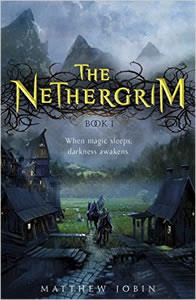
nethergrim nethergrim 2

By Matthew Jobin
Series: The Nethergrim (Book 1)
Published by Puffin Books
Paperback: 368 pages
Age Range: 10 and up
February 5, 2015; $8.99 US/$9.99 CAN; 9780142422687

Description
The Next Great Fantasy Epic is here! For fans of Ranger’s Apprentice and the Chronicles of Narnia.

Everyone in Moorvale believes the legend: The brave knight Tristan and the famed wizard Vithric, in an epic battle decades ago, had defeated the evil Nethergrim and his minions. To this day, songs are sung and festivals held in the heroes’ honor. Yet now something dark has crept over the village. First animals disappear, their only remains a pile of bones licked clean. Then something worse: children disappear. The whispers begin quietly yet soon turn into a shout: The Nethergrim has returned!

Edmund’s brother is one of the missing, and Edmund knows he must do something to save his life. But what? Though a student of magic, he struggles to cast even the simplest spell. Still, he and his friends swallow their fear and set out to battle an ancient evil whose powers none of them can imagine. They will need to come together–and work apart–in ways that will test every ounce of resolve.

In a story reminiscent of the Ranger’s Apprentice epic and the Chronicles of Narnia, Matthew Jobin weaves reality, magic, and adventure into the next great fantasy phenomenon.

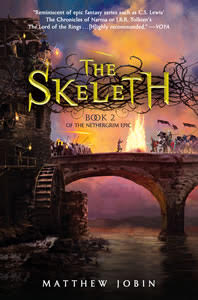
The Skeleth
By Matthew Jobin
Series: The Nethergrim (Book 2)
Published by Philomel Books
Hardcover: 400 pages
Age Range: 10 and up
May 10, 2016; $17.99 US/$23.99 CAN; 9780399159992

Description
Discover for yourself why reviewers are comparing The Nethergrim to Lord of the RingsNarnia, and Ranger’s Apprentice! The next great epic fantasy is here . . .

For the lords of the north, land is power. The Nethergrim, now awoken and free to wreak its evil upon the world, offers the promise of victory to those ruthless enough to accept its foul bargain. One ambitious lord, eager for the chance to conquer and rule, succumbs to temptation and helps to free the Skeleth — eerie, otherworldly beings said to be unstoppable in battle. The Skeleth merge with the bodies of their victims, ruling their minds and turning them into remorseless killers. Worse yet, to kill the man inside the Skeleth only frees it to seize a new host, starting a cycle of violence that has no end.

Such chilling tales are not enough to stop young Edmund, innkeeper’s son and would-be wizard, from seeking for a way to turn back the oncoming tide of destruction. Along with his best friends — Katherine the trainer of war-horses and Tom the runaway slave — Edmund searches for a magical weakness in the Skeleth, something that might allow him to break their never-ending curse. The three friends join with the legendary hero Tristan in a battle of courage, wisdom, wits, and sacrifice to stop the Skeleth from ravaging their homeland and all they hold dear.

This adventurous tale that marries earthly greed to otherworldly evil is perfect for fans who enjoy the epic worlds of John Flanagan’s Ranger’s Apprentice, Robert Jordan’s The Wheel of Time, J.R.R. Tolkien’s The Lord of the Rings, and George R.R. Martin’s Game of Thrones. Discover for yourself why so many are making the comparisons!

Thank you Matthew for this thought-provoking post!

Kellee Signature andRickiSig

Author Guest Post!: “Finding the Joy in Writing” by Laurisa White Reyes, Author of The Kids’ Guide to Writing Fiction

Share

“Finding the Joy in Writing”

Any parent knows that if you want a kid to really hate something, just tell him he has to do it, or else. That was my son’s reaction when I told him he had to write a five paragraph essay. My instructions were met with so much whining and moaning you would have thought I’d asked him to scrub the bathroom with a toothbrush. His reaction, however, was not an unusual one. Many parents can attest to their children’s seemingly built-in aversion to writing. While some kids seem naturally drawn to writing, others would rather carry a load of rocks up a mountain than write a compound sentence. This is why I wrote The Kids’ Guide to Writing Fiction, because within every child is a story waiting to be told, whether they realize it or not.

Make Writing Fun

Remember the classic children’s film Mary Poppins? Jane and Michael Banks live in turn of the century London. These conniving pranksters manage to chase away every nanny their father hired for them. Their parents are at their wits’ end. Then Mary Poppins arrives. One of the first tasks she requests of the children is to pick up their room. Jane and Michael balk and whine. To them it is a tedious, pointless chore. What does Mary Poppins do to change their attitudes? She throws in a spoonful of sugar and makes the whole thing a game. In no time at all the room is clean and the children are tucked neatly in their beds.

Now, obviously, real life doesn’t work quite like that. We have no magical carpetbag from which to pull out hat racks and measuring sticks. But as parents and/or educators, we do have the same power as Mary Poppins to create an atmosphere of cooperation and optimism in our homes and classrooms. Whether or not our children will hate what we ask them to do, or do it willingly and cheerfully, depends largely on us.

I started teaching creative writing classes to children and teens about the same time my son was learning to write those essays. I looked for ways to encourage my students to write, and met with great success. Once I applied what I was using in my classes to my son, his attitude toward writing changed. And although it is still not his favorite activity, he has become a capable and skilled writer.

Writing is a Means of Self-Expression   

Writing well demands that the writer enjoy writing. When writing is nothing more than an assignment with no purpose except to earn a grade on a report card, chances are that the student will come to dread writing. He will view it as chore, just like washing the dishes or making his bed.

Is this the attitude we want our children to have about writing? Do we want them to write five-paragraph essays just for a grade? Is that really the purpose of a writing education? Of course not. The ultimate goal is for our children to feel confident in their writing skills, to use writing as a means of self-expression. But to achieve that goal requires that we, as adults, help our kids find the joy in writing.

In my writing classes, I taught students how to write. I did not, however, grade anything, nor did I spend much time critiquing their work. In fact, my students didn’t even realize they were learning to write well, because they were so excited about what they were doing. Over the years, I’ve heard from many of my students’ parents about how their children were transformed from reluctant writers to kids who wouldn’t put their pencils down. The key to this transformation was that I made writing fun.

To me, there is nothing more enjoyable than sitting alone at my computer in the middle of the night to write. I would rather do that than just about anything else. The question is, how do we transfer this love of writing to our kids?

The first step in helping kids write well is to take writing out of the picture. Writing is a means to an end, a tool for getting what is inside someone’s head onto paper. What’s really important is the message or information writing conveys.

Think of words as clay. Clay by itself is nothing but a gray lump on a potter’s wheel. But in the hands of the potter, the clay begins to take shape. If the potter doesn’t like the form, he can squash it and start all over again. He can do this over and over until he gets it just right. Once it is finished and the piece is fired and glazed, we see not the lump of clay, but a beautiful piece of art or a functional object, such as a vase.

Writers use words to create something beautiful and useful. They are not as concerned with the words as they are with the finished product. When children focus on that finished product, be it a poem or essay or story, words become tools, the medium by which they can bring their dreams to life.

The Storyteller Within

One the most effective ways to help kids fall in love with writing is by helping them discover the storyteller within. We are all storytellers. A storyteller is someone who relates events in a logical order to someone else. Think about the last time you told a friend about a movie you a saw, or an event you attended, or even just something that happened that was interesting. How did you share that information? Most likely, you told it in the form of a story.

The reason so many children and teens are averse to writing, particularly in school, is because they have not yet tapped in to their own natural storytelling abilities. That is my objective with The Kids’ Guide to Writing Fiction. In this book, I teach kids about the six fundamental building blocks needed to create stories: characterization, setting, plot, perspective, imagery, and dialogue. I take them step-by-step through the process of crafting a story and help them excavate their own imaginations for ideas. Then I help them put those ideas into words and onto paper.

Once a child has written a story of his own, he feels a great sense of satisfaction. He discovers that writing is fun. This discovery is what can tear down the walls of resistance and self-doubt, and can build confidence in his ability to learn other forms of writing, such as those dreaded 5 paragraph essays.

The ultimate goal of a writing education is to teach kids to write well, but if they hate writing, that goal is nearly impossible to achieve. However, once a child discovers the joy of tapping into his own creativity, then, like Mary Poppins’ carpet bag, writing becomes limitless…and magical.

The Kids’ Guide to Writing Fiction

rsz_front_cover

About the Book: We are all storytellers. Whether weaving mythologies in ancient times or describing the plot of a favorite movie today, humans have, since the beginning of time, loved to tell stories. In The Kids’ Guide to Writing Fiction, students explore the building blocks needed to construct a story: characterization, setting, plot, perspective, plot, imagery, and dialog. Then, using these building blocks, they create their own stories.

Accessible to both the struggling student and the budding novelist—as well as to teachers, parents, and even adult aspiring writers, author Laurisa White Reyes presents key elements of story writing and clarifies them with examples and worksheets. Concepts are explained in simple, clear language while gently introducing vocabulary words.The Kids’ Guide to Writing Fiction offers welcome guidance to storytellers of all ages.

Links:
Twitter: @lwreyes


P10 (2)

About the Author: Laurisa White Reyes is the author of four novels for young readers, including the 2015 Spark Award winner, The Storytellers. She is also the author of The Kids’ Guide to Writing Fiction & Teaching Kids to Write Well: Six Secrets Every Grown-up Should Know. In addition to writing, she also manages to squeeze time into her busy life to teach college English; run her own editorial/publishing business, Skyrocket Press; and be mom to her five children. You can learn more about her at: www.LaurisaWhiteReyes.com.

Thank you to Laurisa for this very helpful post!

RickiSigandKellee Signature