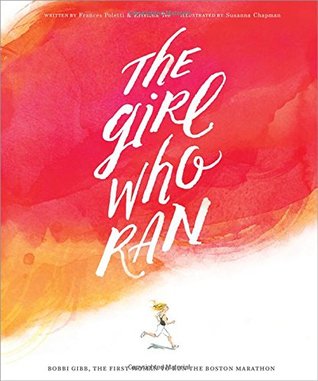
The Girl Who Ran: Bobbi Gibb, The First Woman to Run the Boston Marathon by Frances Poletti & Kristina Yee

Share

nfpb2017

Nonfiction Wednesday

Nonfiction Picture Book Wednesday is hosted by Kid Lit Frenzy and was started to help promote the reading of nonfiction texts. Most Wednesdays, we will be participating and will review a nonfiction text (though it may not always be a picture book).
Be sure to visit Kid Lit Frenzy and see what other nonfiction books are shared this week!

The Girl Who Ran: Bobbi Gibb, The First Woman to Run the Boston Marathon
Authors: Frances Poletti & Kristina Yee
Illustrator: Susanna Chapman
Published June 15th, 2017 by Compendium Inc.

Summary: “She said she would do it, she wasn’t a liar; she’d show them by running like the wind in the fire.” When Bobbi Gibb saw the Boston Marathon her mind was set—she had to be a part of it. She trained hard, journeying across America to run on all kinds of terrain. But when the time came to apply for the marathon, she was refused entry. They told her girls don’t run, girls can’t run. That didn’t stop Bobbi.

In 1966, the world believed it was impossible for a woman to run the Boston Marathon. Bobbi Gibb was determined to prove them wrong. She said she would do it, she wasn’t a liar; she’d show them by running like the wind in the fire.

This picture book tells the true story of how she broke the rules in 1966 and how, one step at a time, her grit and determination changed the world. Created in collaboration with Bobbi Gibb and the perfect gift for would-be runners, kids of all ages, and everyone out there with a love of sport.

ReviewRecently I was introduced to what happened to Kathrine Switzer in the 1967 Boston Marathon as it was the 50th anniversary. I thought she was the first woman to run the marathon (and officials attempted to stop her as she ran the race), but this story of Bobbi Gibb showed that the first woman stepped up the year before. Bobbi Gibb is such an inspiration. She trained and trained for the marathon, went against her parents’ wishes, and did something no one had ever done before. Gibb’s story combined with the beautiful lyricism of the text and freeness of the painted illustrations makes Gibb’s story run right into your heart.

Teachers’ Tools for Navigation: Yet another HERstory that needs to be shared with students as it is a part of history that is left out. Gibb’s story can be added to other women’s rights texts to build a lit circle or jigsaw activity where students learn and share about the struggles and victories of women throughout time.

Additionally, the back matter of The Girl Who Ran has a beautiful timeline that can be used to teach this text feature.

Discussion Questions: What is the theme of Bobbi Gibb’s story?; What is the purpose of the timeline in the back matter?; How did the repetition of “She said she would do it, she wasn’t a liar; she’d show them by running like the wind in the fire.” add to the story of the first woman who ran the Boston Marathon?; What does the act of Bobbi’s mom taking her to the marathon show about her?

Flagged Passages: 

Read This If You Love: The Book of Heroines by Stephanie Warren Drimmer and other books about amazing woman in history

Recommended For: 

classroomlibrarybuttonsmall  

Signature

**Thank you to Angeline at Compendium for providing a copy for review!**

Many Reflections of Miss Jane Deming by J. Anderson Coats

Share

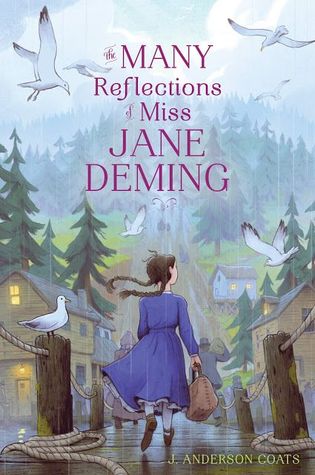
The Many Reflections of Miss Jane Deming
Author: J. Anderson Coats
Published February 28th, 2017 by Atheneum Books for Young Readers

Summary: High-spirited young Jane is excited to be part of Mr. Mercer’s plan to bring Civil War widows and orphans to Washington Territory—but life out west isn’t at all what she expected.

Washington Territory is just the place for men of broad mind and sturdy constitution—and girls too, Jane figures, or Mr. Mercer wouldn’t have allowed her to come on his expedition to bring unmarried girls and Civil War widows out west.

Jane’s constitution is sturdy enough. She’s been taking care of her baby brother ever since Papa was killed in the war and her young stepmother had to start working long days at the mill. The problem, she fears, is her mind. It might not be suitably broad because she had to leave school to take care of little Jer. Still, a new life awaits in Washington Territory, and Jane plans to make the best of it.

Except Seattle doesn’t turn out to be quite as advertised. In this rough-and-tumble frontier town, Jane is going to need every bit of that broad mind and sturdy constitution—not to mention a good sense of humor and a stubborn streak a mile wide.

Review: I didn’t know much about the Washington Territory. I knew that it had to have been settled quite like Oregon (I’m the Oregon Trail generation!) or California, but I didn’t know about the boat expeditions, or any expeditions for that matter, to the territory. It was fascinating to read about Jane’s trip to Washington as well as the complicated family that she traveled with. Jane’s story is not only a look at the history of America and Washington State, it is also a story of the perception about the role of woman in towns and families. Ms. D, in Jane’s story, is such an interesting character. She, as a very young uneducated woman, married Jane’s father who died in the Civil War. Now she is still young and pretty but has a preteen stepdaughter and a toddler son, both things that make you less of an attractive new wife. Jane also has us look at the idea of woman on the frontier because she learns to step outside of the roles her stepmother wants her to have and expand into a well-rounded frontier girl. 

Teachers’ Tools for Navigation: One thing I found disappointing was the lack of back matter in the book though I think this may be where the best classroom opportunity comes from. I assume that most young readers won’t know this time period and the west before it was America, so the reader themselves could use Jane’s story to jump start an inquiry look into the Washington Territory, the expeditions there (were they all in boats?!), and how life was different there than in the east.

Discussion Questions: How does Jane break the female mold in this story?; Why isn’t Ms. D as eligible as a wife as the other girls?; Why do Jane’s friends and Jane part ways a bit once they get to Washington?; Why is Jane’s paper book so important to her?; How did Mr. Mercer use propaganda to get young girls on his boat and also to get men in Washington to help pay for the expedition?; Did Miss Gower need Jane’s help or did she have another motive?

Flagged Passages: “It will need to be grand if it’s to fit the seven hundred unmarried girls and war widows Mr. Mercer plans to bring out west to teach in the schools of Washington Territory or to turn their hands to other useful employment.

Or, if you are Mrs. D, marry one of the many prosperous gentlemen bachelors pining for quality female society.

She’s pinned all her hopes on it. Mrs. D hated working in the Lowell mills. She hated leaving her kitchen and hearth and standing for fourteen hours a day before a loom, sneezing from all the dust and lint and not being able to sleep at night because of the ringing in her ears. She wants to be a wife again, to have someone else go out to work while she keeps house. If she has to go all the way to Washington Territory to do it, by golly, that’s what she’ll do.

After Mrs. D paid our passage, Mr. Mercer gave her a copy of a pamphlet he wrote about the advantages and charms of Washington Territory. She glanced at it once, rolled her eyes, then left it on her chair in teh dining room. I snatched it up and hid it in my secret carpetbag, and when she’s not around, I read it.

I’ve read every word hundreds of times. Even the big words I must puzzle over. Even the boring chapters on Lumber and Trade.” (p. 5-6)

Read This If You Loved: The Oregon Trail, The True Confessions of Charlotte Doyle by Avi, The Very Nearly Honorable Society series by Caroline Carlson, The Chronicles of the Black Tulip series by Barry Wolverton, Rory’s Promise by Michaela MacColl, Hattie series by Kirby Larson, May Amelia series by Jennifer L. Holm

Recommended For:

  readaloudbuttonsmall classroomlibrarybuttonsmall

Kellee Signature

Author Guest Post: “Overwhelm and Fear” by Mary Cronk Farrell, Author of Fannie Never Flinched

Share

“Overwhelm and Fear”

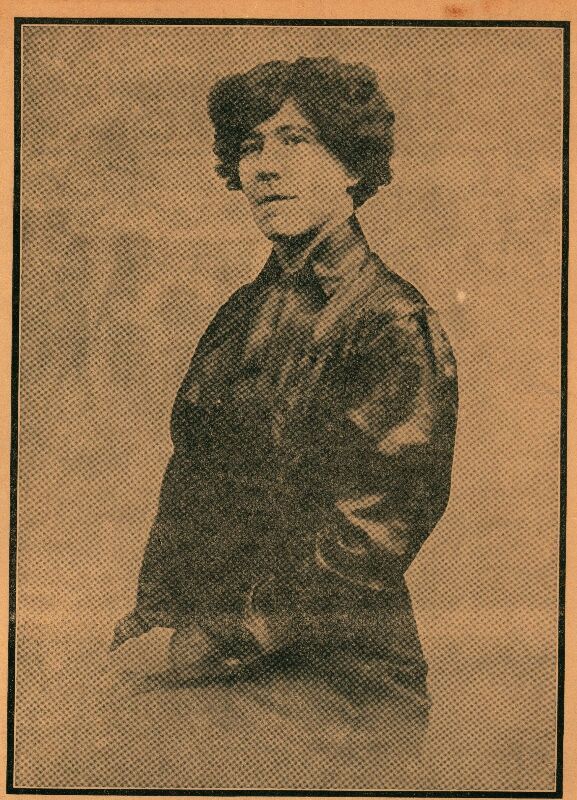
One of the hardest things about writing is getting started, and two of the most common obstacles are overwhelm and fear. The subject of my new biography, Fannie Sellins, showed me how to work through both.
Beginning writers, students of all levels and even best-selling authors sometimes face overwhelm and fear, feelings that can cause you to procrastinate, or tighten you up, make you hold back and keep you from doing your best writing.

It’s tempting when beset by overwhelm or fear to tell yourself to man up, or put on your big girl panties and charge ahead as these emotions are irrelevant. If this works for you, go ahead and stop reading here, because I believe these feelings are part of the creative process, and working through them gives you the courage to do powerful work.

Fannie Never Flinched: The Story of One Woman’s Courage in the Struggle for American Labor Union Rights tells of a garment worker at the height of the Industrial Revolution, who left her sewing machine to inspire and organize workers to stand up and demand just wages and humane treatment.

Fannie was so good, she frightened the powerful men who ran coal and steel companies. They threatened her life, told her to leave town. And when she stayed and kept encouraging men to strike, they shot her dead.

If Fannie could find that kind of courage, I told myself, surely, I can find the courage to put words on a blank page.

In the early 1900s, poor workers fought a losing battle, especially in West Virginia and Pennsylvania. Strikes for shorter hours and better pay, sometimes won small concessions short term, but overall, companies aided by local deputies and federal soldiers slammed unions into submission. Now, that’s overwhelm.

Still, Fannie got up every day, went out and talked to workers, convinced them they deserved better, inspired them to take a chance, join the union. Often, it was the wives she encouraged, who in turn emboldened their husbands. A father had a hard time walking off the job, if his children were hungry. Fannie started a strike with social work, soliciting money, seeing to the basic needs of families.

In my research I never found anything Fannie said about how she coped with overwhelm. But looking at her actions, it seems to me that she maintained a double-focused vision. She kept one eye like a laser on the close-up, seeing what was right in front of her and dealing with it. At the same time, she never lost sight of the larger picture, her belief in the dignity of workers and the justice they deserved.

This strategy cuts through overwhelm when I see a sprawl of research, a mess of unconnected ideas, or when a project feels impossible to finish. Grounded in my larger goal, I can pick one small place to start, write one sentence, or choose one task. Keeping a double focus, I can let go of most of the work and tackle one thing at a time.

But even with a solid plan and the best of intentions, fear can rush in, cloud your focus and stop you from doing even one small thing. What I learned from Fannie Sellins, is to look at fear straight on. Fannie admitted that the first time she first stood at a podium to speak to a large crowd, she was scared.

But during her first strike, Fannie traveled around the country speaking for two years, telling people about the garment workers plight, raising funds and urging a boycott of suits and pants sewed in sweatshop conditions. She became a charismatic speaker, gaining enough support for the strikers to hold out for two years until their demands were met.

Fannie explained that she overcame her fear before speaking by remembering the faces of the women she had worked with in the factory. Fannie used compassion to motivate herself to move out of her comfort zone. She used love to deflate fear.

I knew last week that I needed to get going on a revision of my current manuscript. But every time I thought about it, I felt this clutch in my stomach. And when I sat at the computer I got a slighter version of that feeling in my chest when somebody runs a red light and barely misses crashing into me at full speed.

Now that I’ve been writing for a couple decades, I know those emotions are normal. If I didn’t care about my writing, if I wasn’t risking anything, if I didn’t believe my words would be important, there’d be nothing to fear. So, I follow Fannie’s example and choose to have compassion, for the girls in the factory and for myself at the keyboard.

I put my hand on my heart, and I tell myself there’s nothing wrong with being afraid.

I look at my fear straight on, honor that the feeling is real, and ask myself what am I afraid of? Here are some of the bugaboos I discover. I’m afraid I’m not a good enough writer. I’m afraid I’ll disappoint myself. I’m afraid it will be too hard. I see that basically I’m afraid I’ll fail. With compassion I remind myself, it’s okay to be afraid because it’s true. I might fail.

And now, the decision I need to make is clear. Would failing be so bad that I dare not risk it?

Would failing to make progress on this one revision of this one manuscript, on this one particular day mean I’m a total failure? If so, I should probably deal with some other s#%t first, figure out how to have some compassion for myself.

But if I can find enough compassion for myself to live with this kind if failure, why not take a stab at it? And that’s what I usually do, and it’s usually not as hard as I think it will be once I get started.

Finding compassion and facing fear straight on allows the rational brain to evaluate the risks of failure more accurately. Having a double focus, an eye on both the long term vision and one next step allows everything in-between to drop away and reduces the overwhelming magnitude of the work to be done. For further inspiration in writing and life, read more about Fannie Sellins in Fannie Never Flinched.
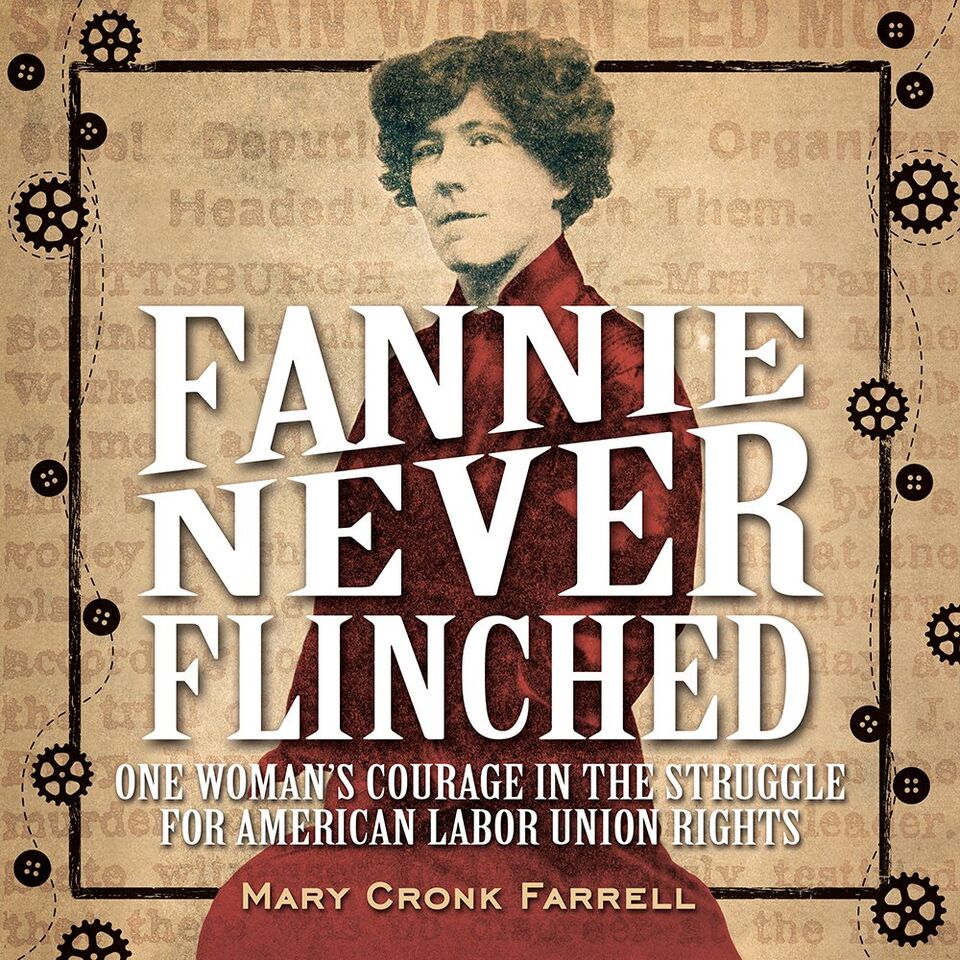
About the Book: Fannie Sellins (1872–1919) lived during the Gilded Age of American Industrialization, when the Carnegies and Morgans wore jewels while their laborers wore rags. Fannie dreamed that America could achieve its ideals of equality and justice for all, and she sacrificed her life to help that dream come true. Fannie became a union activist, helping to create St. Louis, Missouri, Local 67 of the United Garment Workers of America. She traveled the nation and eventually gave her life, calling for fair wages and decent working and living conditions for workers in both the garment and mining industries. Her accomplishments live on today. This book includes an index, glossary, a timeline of unions in the United States, and endnotes.
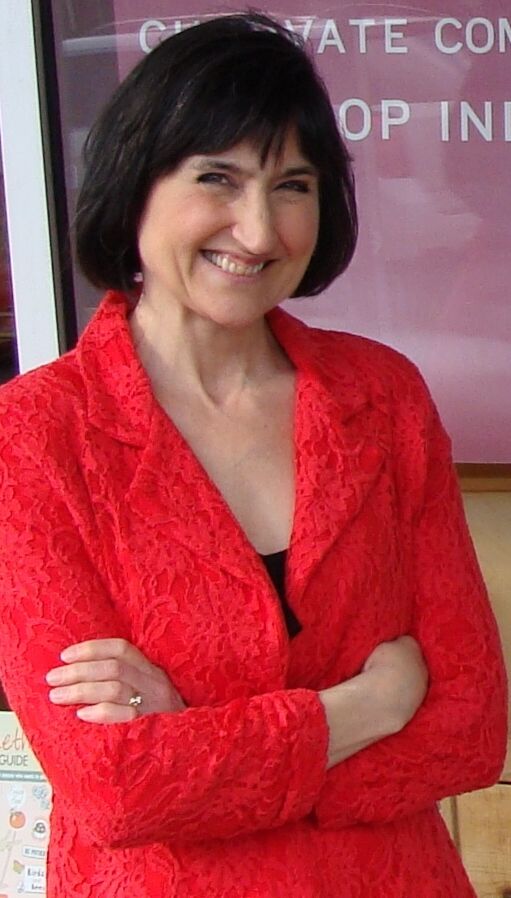
About the Author: Mary Cronk Farrell is an award-winning author of five books for young people and former television journalist with a passion for stories about women facing great adversity with courage. She researches little known stories form history and relates them with engaging and powerful language in her books, multi-media presentations and workshops. Farrell has appeared on TB and radio across the nation. She speaks to women’s groups, civic groups, and at museums, schools and libraries.

Thank you for inspiring us, Mary!!

Kellee Signature andRickiSig

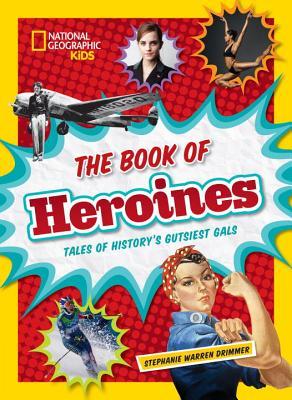
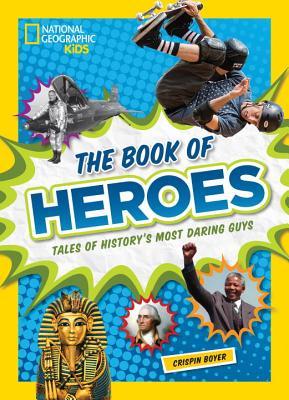
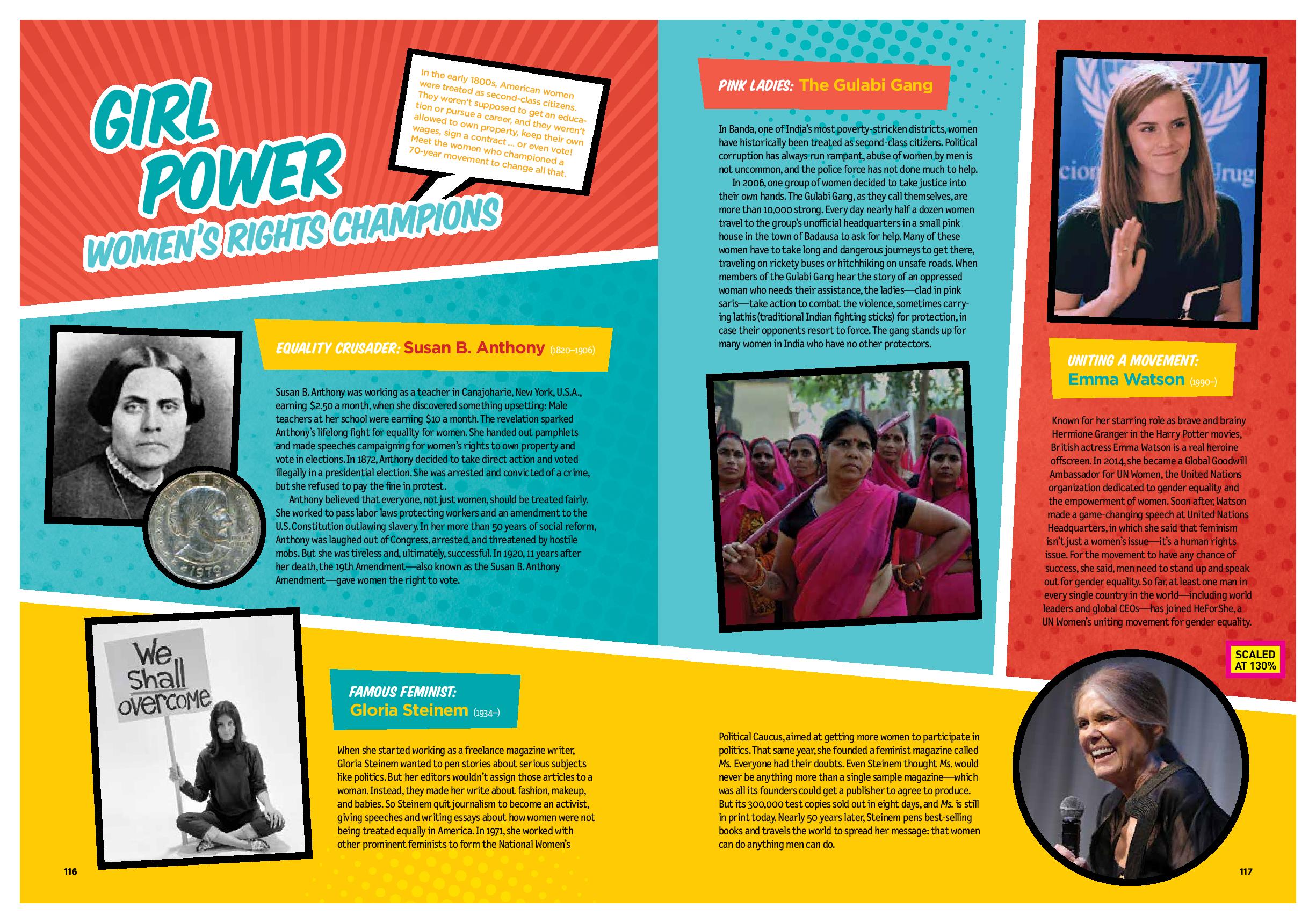
The Book of Heroines: Tales of History’s Gutsiest Gals & The Book of Heroes: Tales of History’s Most Daring Dudes from National Geographic Kids

Share

nfpb2017

Nonfiction Wednesday

Nonfiction Picture Book Wednesday is hosted by Kid Lit Frenzy and was started to help promote the reading of nonfiction texts. Most Wednesdays, we will be participating and will review a nonfiction text (though it may not always be a picture book).
Be sure to visit Kid Lit Frenzy and see what other nonfiction books are shared this week!

book-of-heroines

The Book of Heroines: Tales of History’s Gutsiest Gals
Author: Stephanie Warren Drimmer
Published November 8th, 2016 by National Geographic Children’s Books

book-of-heroes

The Book of Heroes: Tales of History’s Most Daring Guys
Author: Cristpin Boyer
Published November 8th, 2016 by National Geographic Children’s Books

The Book of Heroines Summary: Everybody needs a role model! Discover true stories of superstars, war heroes, world leaders, gusty gals, and everyday girls who changed the world.

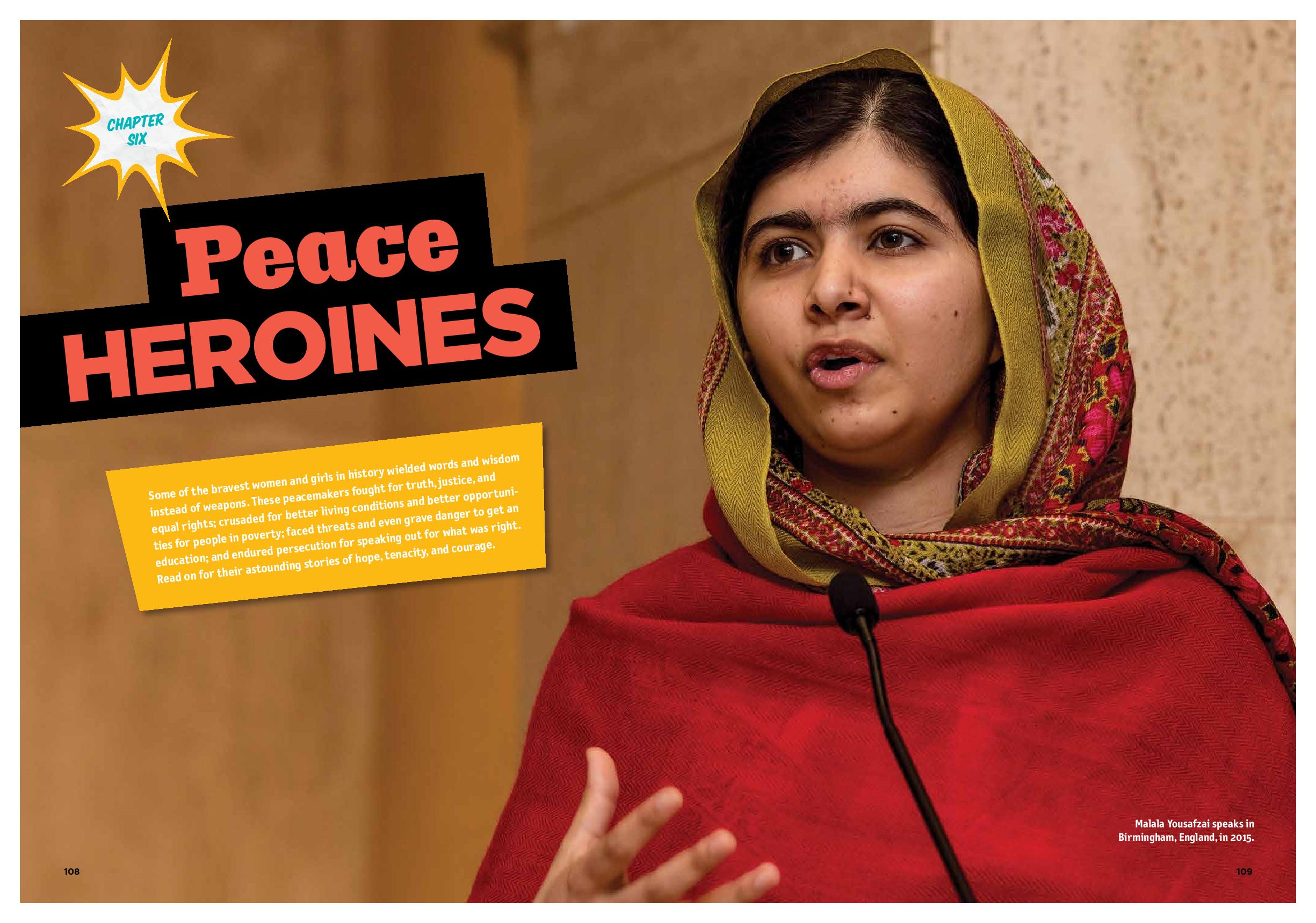
From Sacagawea to Mother Teresa, Annie Oakley to Malala Yousafzai, these famous females hiked up their pants and petticoats or charged full-speed ahead to prove that girls are just as tough as boys…maybe even tougher. Complete with amazing images and a fun design, this is the book that every kid with a goal, hope, or dream will want to own.

The Book of Heroes Summary: Everybody needs a role model! Discover the true stories of superheroes, rebels, world leaders, action heroes, sports legends, and many more daring dudes, all of whom played their part to make their mark, make a contribution, and make the world a better place.

From Abraham Lincoln to Sitting Bull, Stephen Hawking to Galileo, these cool guys had the boldness, bravery, and brains to meet the challenges of their day. With a fun design, engaging text, and high-quality photographs, this is ultimate hero guide and keepsake for 21st century kids .

Review: As I’ve stated over and over, I am so impressed with all the new National Geographic Kids books that I have encountered over the last couple of years. With this text, I specifically found the way that the publisher/authors structure the texts makes them so thematic-based thus accessible and informative. The books also have something for everyone as so many different types of heroines/heroes are featured from scientists, historical heroes, political heroes, and more! I cannot wait to put these in my classroom and find out how to use them with students!

Teachers’ Tools for Navigation: Teachers will find this book irreplaceable! It has so much information to fit into so many different units, connect with so many different texts, and relates to so many parts of history. These texts could also be used as the basis of a inquiry project where students use these texts as previews and they choose a theme or a hero/heroine and complete a research/inquiry project around it or maybe even create a text set around the theme or the person.

Discussion Questions: Which heroine/hero do you think changed history the most?; If you were to take part in an inquiry project about one hero/heroine, who would you like to learn more about?; Why did the author/publisher choose to structure the text in the way they did? What other structures could they have chosen? Which do you feel would have had a bigger impact?

Flagged Passages: 

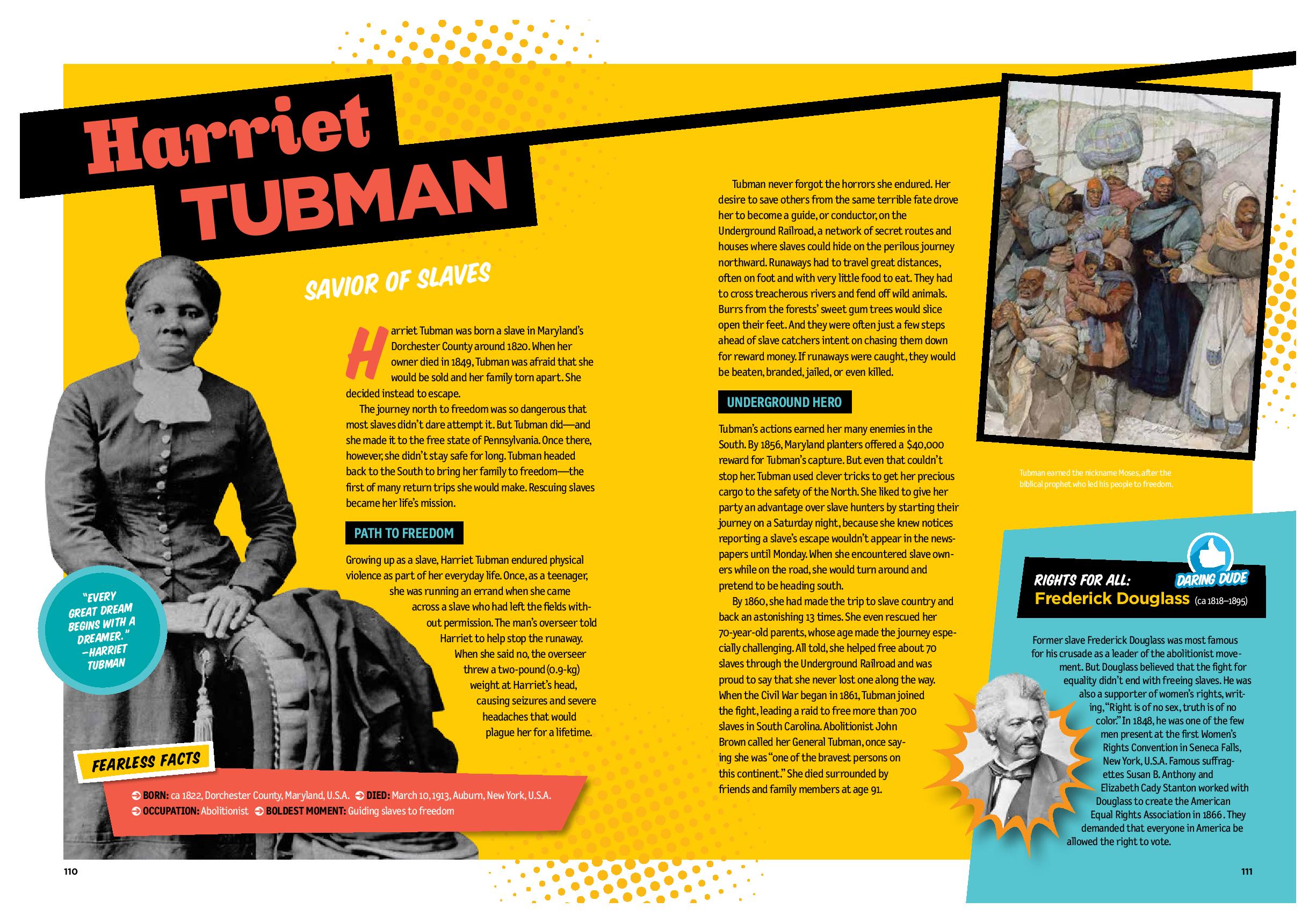
books-of-heroines-108-111-116-117-peace-heroines-page-001books-of-heroines-108-111-116-117-peace-heroines-page-002books-of-heroines-108-111-116-117-peace-heroines-page-003

Read This If You Love: Biographies, History, Women’s Rights, Science, Animals, Mythology

Recommended For: 

classroomlibrarybuttonsmall closereadinganalysisbuttonsmall

Signature

**Thank you to Karen at Media Masters Publicity for providing copies for review!**

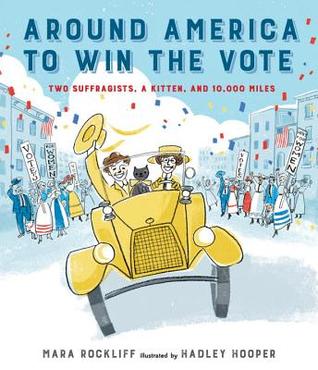
Around America To Win the Vote: Two Suffragists, a Kitten, and 10,000 Miles by Mara Rockliff

Share

NFPB2016

Nonfiction Wednesday

Nonfiction Picture Book Wednesday is hosted by Kid Lit Frenzy and was started to help promote the reading of nonfiction texts. Most Wednesdays, we will be participating and will review a nonfiction text (though it may not always be a picture book).
Be sure to visit Kid Lit Frenzy and see what other nonfiction books are shared this week!

around-america-to-win-the-vote

Around America to Win the Vote: Two Suffragists, a Kitten, and 10,000 Miles
Author: Mara Rockliff
Illustrator: Hadley Hooper
Published August 2nd, 2016

Summary: The author of Mesmerized delivers another fascinating glimpse into history, this time the story of two brave suffragists on a trek across America to spread the word: Votes for Women!

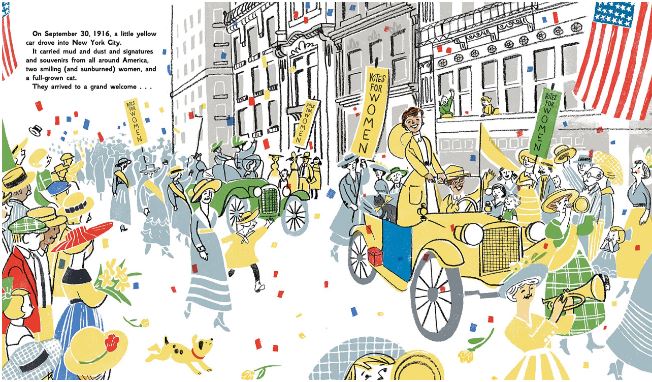
In April 1916, Nell Richardson and Alice Burke set out from New York City in a little yellow car, embarking on a bumpy, muddy, unmapped journey ten thousand miles long. They took with them a teeny typewriter, a tiny sewing machine, a wee black kitten, and a message for Americans all across the country: Votes for Women! The women’s suffrage movement was in full swing, and Nell and Alice would not let anything keep them from spreading the word about equal voting rights for women. Braving blizzards, deserts, and naysayers—not to mention a whole lot of tires stuck in the mud—the two courageous friends made their way through the cities and towns of America to further their cause. One hundred years after Nell and Alice set off on their trip, Mara Rockliff revives their spirit in a lively and whimsical picture book, with exuberant illustrations by Hadley Hooper bringing their inspiring historical trek to life.

Review: I am posting this review specifically today because it is amazing to hear for these women’s journey when today a woman is running for president under a major political power. It is amazing that in 2016 we have made it this far, which is amazing, but we also have to remember how hard woman fought for women’s rights and that women’s equality isn’t here yet.

Another reason why I posted this today is to remind people to vote. All election days are our opportunity to choose our futures. We are not powerless; voting gives us power and a voice. Please vote and remind all those close and dear to you to vote as well.

Now to the book. I loved reading Nell and Alice’s adventure. These are woman that are truly role models because they did something so unexpected and unacceptable at the time to fight for something they believe in a peaceful and intelligent manner. Mara Rockliff, along with Hooper’s busy yet muted and beautiful illustrations, tell us their story in an engaging way that will definitely make the reader think about so much.

Teachers’ Tools for Navigation: In addition to reading Nell and Alice’s story in conjunction to history lessons about suffragists and this time in history or as a lit circle text with other books about strong woman or people making a difference, Michele Knott had an idea that I thought would be fascinating: compare and contrast the way that politics has changed in 100 years. How has tactics changed? How has technology changed the delivery and reception of politics?

Discussion Questions: What obstacles did Nell and Alice face that they would not have faced if they were traveling 10,000 miles in 2016? How would their journey have been different if it was 2016? Do you think face-to-face works better than some of the use of technology that we see nowadays?; Do you think Nell and Alice made a difference?

Flagged Passages: 

around-america-spread

Read This If You Loved: The First Step by Susan E. Goodman, Fearless Flyer by Heather Lang, Hillary Rodham Clinton by Michelle Markel, Brave Girl by Michelle Markel or any book about a strong female of history; Sit-In by Andrea Davis Pinkney or any book about how people made a difference for what they knew was right

Recommended For: 

closereadinganalysisbuttonsmalllitcirclesbuttonsmallreadaloudbuttonsmallclassroomlibrarybuttonsmall

Signature

Boyds Mills Press Nonfiction Picture Books: Fearless Flyer by Heather Lang, Dorothea’s Eyes by Barb Rosenstock, and Fresh Delicious by Irene Latham

Share

NFPB2016

Nonfiction Wednesday

Nonfiction Picture Book Wednesday is hosted by Kid Lit Frenzy and was started to help promote the reading of nonfiction texts. Most Wednesdays, we will be participating and will review a nonfiction text (though it may not always be a picture book).
Be sure to visit Kid Lit Frenzy and see what other nonfiction books are shared this week!

fearless flyer

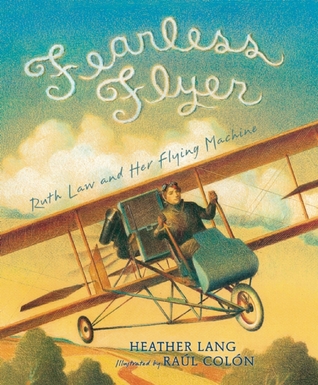
Fearless Flyer: Ruth Law and Her Flying Machine
Author: Heather Lang
Illustrator: Raúl Colón
Published March 1st, 2016 by Calkins Creek

Goodreads Summary: On November 19, 1916, at 8:25 a.m., Ruth Law took off on a flight that aviation experts thought was doomed. She set off to fly nonstop from Chicago to New York City. Sitting at the controls of her small bi-plane, exposed to the elements, Law battled fierce winds and numbing cold. When her engine ran out of fuel, she glided for two miles and landed at Hornell, New York. Even though she fell short of her goal, she had broken the existing cross-country distance record. And with her plane refueled, she got back in the air and headed for New York City where crowds waited to greet her. In this well-researched, action-packed picture book, Heather Lang and Raúl Colón recreate a thrilling moment in aviation history. Includes an afterword with archival photographs.

My Thoughts: I love Ruth. She just doesn’t care if anyone tells her she cannot do something. She just goes about it her own way. Law is definitely a woman who should be taught about in schools because she really embodies someone that is not going to let lower expectations for women get in her way of doing exactly what she wants to do. And even next to flying, Law goes against everything that is stereotypical about women because she is also mechanical. (Also, interestingly enough, there is a flying book called Flying Solo which is about another Ruth pilot.) Ruth Law will definitely be added to my “Biographical Picture Books about Strong Women” update post when I do it.

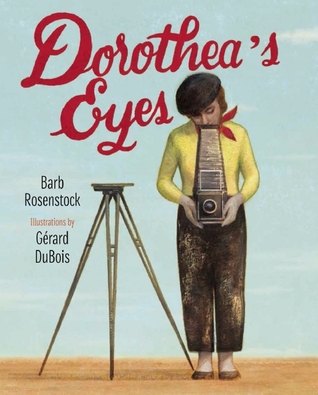
Dorothea's Eyes

Dorothea’s Eyes
Author: Barb Rosenstock
Illustrator: Gérard DuBois
Published March 1st, 2016 by Calkins Creek

Goodreads Summary: After a childhood bout of polio left her with a limp, all Dorothea Lange wanted to do was disappear. But this desire not to be seen helped her learn how to blend into the background and observe others acutely. With a passion for the artistic life, and in spite of her family’s disapproval, Dorothea pursued her dream to become a photographer and focused her lens on the previously unseen victims of the Great Depression. This poetic biography tells the emotional story of Lange’s evolution as one of the founders of documentary photography. It includes a gallery of Lange’s photographs, and an author’s note, timeline, and bibliography.

My Thoughts: Friends and family of mine know that art is dear to me because my father is an art museum director, and photography is especially dear to me because my mom is a photographer. Dorothea Lange’s Migrant Mother is one of the most famous photographs ever taken but not Dorothea Lange herself isn’t often talked about. Her life is fascinating, and I love the messages that she focused on in her artwork. I definitely would love to team this book up with Photos Framed because it is the biography behind the photo.

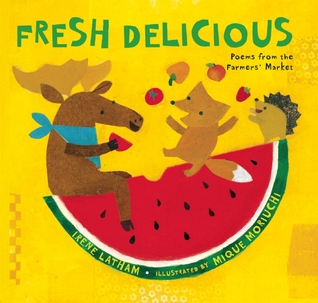
fresh delicious

Fresh Delicious: Poems from the Farmers’ Market
Author: Irene Latham
Illustrator: Mique Moriuchi
Published March 8th, 2016 by Wordsong

Goodreads Summary: In these vivid poems, blueberries are “flavor-filled fireworks,” cucumbers are “a fleet of green submarines in a wicker sea,” lettuce tastes like “butter and pepper and salt,” but sometimes “I crunch into a leaf the very same flavor as rain.” The unexpected, ingenious imagery and enticing artwork in this collection will inspire the imaginations of young readers, and show how poetry can be as fresh and delicious as the farmers’ market produce it celebrates.

My Thoughts: I love poetry anthologies that make poetry accessible yet is still well written, and Fresh Delicious definitely fits this bill. Latham has done a very nice job at making each food’s poems unique and fit the topic. I love that it also brings personality to vegetables. As a mom to a son that doesn’t eat them, maybe seeing them in this light will make him want to try them again. Many of the poems also include figurative elements that can be taught through the poems. such as alliteration in “Blueberries:” flavor-filled fireworks, teeth and tongue, and best thing about blueberries, and similes in “Tomato:” smooth like a balloon and red like a fire truck.


All Recommended For: 

classroomlibrarybuttonsmall readaloudbuttonsmall litcirclesbuttonsmall

Kellee Signature

A Tyranny of Petticoats Blog Tour with Author Q&As by Caroline Richmond, Lindsay Smith, and Robin Talley

Share

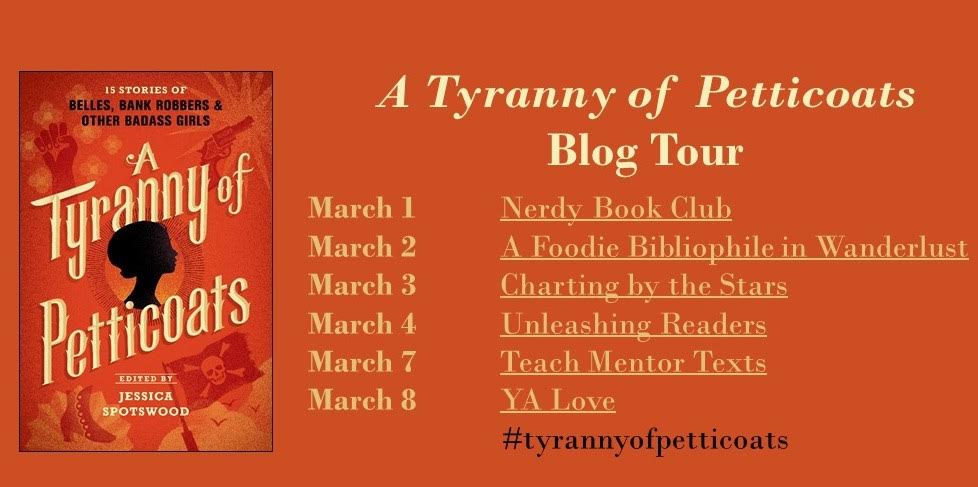
Tyranny of Petticoats Banner

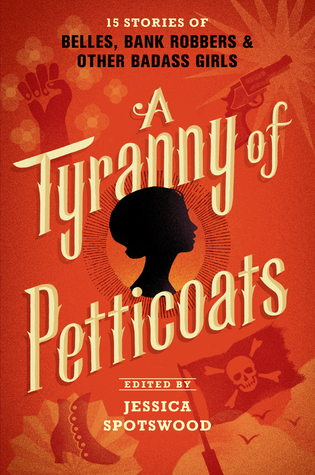
tyranny of petticoats

A Tyranny of Petticoats: 15 Stories of Belles, Bank Robbers, and Other Badass Girls
Authors: Various
Published March 8th, 2016 by Candlewick Press

Summary: From an impressive sisterhood of YA writers comes an edge-of-your-seat anthology of historical fiction and fantasy featuring a diverse array of daring heroines.

Criss-cross America — on dogsleds and ships, stagecoaches and trains — from pirate ships off the coast of the Carolinas to the peace, love, and protests of 1960s Chicago. Join fifteen of today’s most talented writers of young adult literature on a thrill ride through history with American girls charting their own course. They are monsters and mediums, bodyguards and barkeeps, screenwriters and schoolteachers, heiresses and hobos. They’re making their own way in often-hostile lands, using every weapon in their arsenals, facing down murderers and marriage proposals. And they all have a story to tell.

With stories by:
J. Anderson Coats
Andrea Cremer
Y. S. Lee
Katherine Longshore
Marie Lu
Kekla Magoon
Marissa Meyer
Saundra Mitchell
Beth Revis
Caroline Richmond
Lindsay Smith
Jessica Spotswood
Robin Talley
Leslye Walton
Elizabeth Wein

A Tyranny of Petticoats Blog Tour!

The authors of this anthology are as diverse as their characters, so to give readers a better sense of their diverse processes and experiences writing for this anthology, the following three questions were asked of each contributor:

1. What inspired you to write about this particular time and place?

2. What was the most interesting piece of research you uncovered while writing your story?

3. Who is your favorite woman in history and why?

Today we are happy to host Caroline Richmond, Lindsay Smith, and Robin Talley as they answer those questions for us:

Caroline Tung Richmond
Story title: “The Red Raven Ball”
Story setting: 1862, Washington, D.C.

About the Author: CAROLINE TUNG RICHMOND  is the author of The Only Thing to Fear and the forthcoming The Darkest Hour, a YA novel set in Occupied France during World War II. A self-proclaimed history nerd, Caroline lives with her husband and daughter in the Washington, D.C., area — not far from several Civil War battlefields.

Caroline Richmond

  • What inspired you to write about this particular time and place?
    • As a kid growing up in the Washington, D.C., area, I’ve always been fascinated by the Civil War. It always struck me how D.C. — the capital of the Union — butted right up against the Confederate border. The city was well-fortified, but it still must’ve been scary to live in the capital during the war, with Confederate troops looming nearby. So when Jessica Spotswood kindly invited me to contribute to A Tyranny of Petticoats, I immediately wanted to set my short story in Washington during the Civil War, and that’s how “The Red Raven Ball” came to be.
  • What was the most interesting piece of research you uncovered while writing your story?
    • Finding an old photo of my husband’s ancestors! My husband is related to a famous nineteenth-century politician named Robert Ingersoll — dubbed “the most famous American you never heard of” by the Washington Post — and I wove a few details of his life into “The Red Raven Ball.” While researching Ingersoll, I came across a photo of him with his family. It was such a treat to study their faces and know that their blood runs in my daughter’s veins!
  • Who is your favorite woman in history and why?
    • Elizabeth Cady Stanton, hands down! Stanton dedicated her life to fighting for women’s suffrage in the United States, and she was basically a nineteenth-century badass lady. One example of her awesomeness? Prior to her wedding, she instructed the minister to omit the phrase “promise to obey” from her vows. She also raised seven kids while working tirelessly as a suffragette, abolitionist, and social activist. She’s truly an inspiration to me.

Lindsay Smith
Story title: “The City of Angels”
Story Setting: 1945, Los Angeles, CA

About the Author: LINDSAY SMITH  is the author of the Sekret series of paranormal spy thrillers set in Soviet Russia, and Dreamstrider, a high fantasy adventure. She grew up watching far too many movies from the 1940s — from Abbott and Costello comedies to musicals to anything dazzling with old Hollywood glamour. Not one for California weather, however, she lives in Washington, D.C., with her husband and dog, and writes on foreign affairs.

  • What inspired you to write about this particular time and place?
    • I’m deeply drawn to twentieth-century history — that sense of immediacy while still being at a slight historical remove is fascinating to me. When Jessica Spotswood mentioned she hadn’t gotten any story proposals set during World War II, I knew I wanted to pick that time period. The idea of a home-front drama really appealed to me because of the significant roles women got to play in the war effort that they had rarely been offered before the 1940s. Evelyn’s and Frankie’s characters just grew organically from that setting.
  • What was the most interesting piece of research you uncovered while writing your story?
    • I fell down a rabbit hole researching all the tiny details of munitions and airplane factory life for women during World War II. They could earn the right to fly particular banners over their factories, for instance, if they sold enough war bonds. All of the home-front stories I read as research were inspiring, though — that curious mix of patriotism, determination, and sisterhood these women felt as they tended victory gardens, rationed meat, and collected scrap metal for the war effort.
  • Who is your favorite woman in history and why?
    • I love disruptive women in history! Catherine the Great, Alice Roosevelt, Empress Dowager Cixi — all women who cared nothing for others’ opinions of them and didn’t let others stand in their way when they set out to accomplish their goals.

Robin Talley
Story title: “The Whole World is Watching”
Story setting: 1968, Grant Park, IL

About the Author: ROBIN TALLEY is the author of Lies We Tell Ourselves, a finalist for the 2015 Lambda Literary Award for LGBT Children’s/Young Adult, as well as the contemporary novel What We Left Behind and the upcoming thriller As I Descended. Robin lives in Washington, D.C., where she enjoys being surrounded by history, though she’s glad to be living in the twenty-first century.

Robin_Talley

  • What inspired you to write about this particular time and place?
    • Nineteen sixty-eight was a time of massive protests across the United States — much like the present day. I was interested in exploring the history of antiwar protests in the 1960s and how they intersected with the ongoing civil rights movement, the burgeoning feminist movement, and the very early days of the movement in support of equal rights for LGBTQIA+ people. As an added bonus, the sixties had some truly amazing clothes, hairstyles, and slang that were fun to think about.
  • What was the most interesting piece of research you uncovered while writing your story?
    • The antiwar protests at the Chicago 1968 Democratic National Convention were crushed by what were then considered extreme police tactics, and there was a national outcry after video of the police brutality was shown on live TV. Hundreds of demonstrators were injured by police and National Guard officers who dramatically outnumbered the protestors and who didn’t hesitate to use violence against them. In my research I learned that the police tactics used were unheard of at the time, such as the use of military-style weapons like tear gas and the wearing of protective gear like riot helmets over their regular clothing. But today many police units combating protests in places like Ferguson, Missouri, and Baltimore, Maryland, have taken much more extreme approaches, including the use of advanced military gear and weaponry. It was interesting to learn how things have progressed in terms of police tactics, and the public’s reaction to them, over the past few decades. What was once considered extreme would be considered commonplace, maybe even tame, by today’s standards.
  • Who is your favorite woman in history and why?
    • There are way too many to pick just one favorite! So I’ll name the woman who I think is the obvious choice to go on U.S. currency (preferably the twenty-dollar bill so we can get rid of Andrew Jackson) — Harriet Tubman. Through sheer determination and a lot of skill she took the biggest risk imaginable — and she succeeded, changing the lives of so many and changing the world at the same time.

Don’t miss the other stops on the blog tour!

Wednesday, March 2  A Foodie Bibliophile in Wanderlust
·         J. Anderson Coats
·         Andrea Cremer
·         Y. S. Lee

Thursday, March 3 Charting by the Stars
·         Marissa Meyer
·         Saundra Mitchell
·         Beth Revis

Friday, March 4 Unleashing Readers
·         Caroline Richmond
·         Lindsay Smith
·         Robin Talley

Monday, March 7 Teach Mentor Text
·         Katherine Longshore
·         Marie Lu
·         Kekla Magoon

Tuesday, March 8th  YA Love
·         Leslye Walton
·         Elizabeth Wein
·         Jessica Spotswood

Tyranny of Petticoats is on sale March 8th!

Kellee Signature andRickiSig

**Thank you to Kathleen at Candlewick for having us as a part of the blog tour!**