Blog Tour, Author Guest Post, and Review!: Reproductive Rights: Who Decides? by Vicki Oransky Wittenstein

Share

NFPB2016

Nonfiction Wednesday

Nonfiction Picture Book Wednesday is hosted by Kid Lit Frenzy and was started to help promote the reading of nonfiction texts. Most Wednesdays, we will be participating and will review a nonfiction text (though it may not always be a picture book).
Be sure to visit Kid Lit Frenzy and see what other nonfiction books are shared this week!
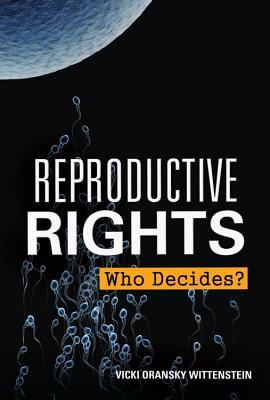
Reproductive Rights

Reproductive Rights: Who Decides?
Author: Vicki Oransky Wittenstein
Published January 1st, 2016 by Twenty-First Century Books

Summary: Throughout history, men and women have always found ways to control reproduction. In some ancient societies, people turned to herbs or traditional rituals. Others turned to methods that are still used in the twenty-first century, such as abstinence, condoms, and abortions.

Legislating access to birth control, sex education, and abortion is also not new. In 1873 the US Congress made it illegal to mail “obscene, lewd, or lascivious materials”—including any object designed for contraception or to induce abortion. In some states in the 1900s, it was illegal for Americans to possess, sell, advertise, or even speak about methods of controlling pregnancy.

At the beginning of the twentieth century, Margaret Sanger, Mary Ware Dennett, and others began to defy these laws and advocate for the legalization of birth control and for better women’s reproductive healthcare. By 1960 doctors had developed the Pill, but it wasn’t until 1972 that all US citizens had legal access to birth control. And in the landmark decision Roe v Wade (1973), the US Supreme Court ruled that women had a constitutional right to terminate a pregnancy.

Disputes over contraception, sex education, and abortion continue to roil the nation, leading to controversial legal and political rulings and occasionally violence. As society changes—and as new reproductive technologies expand the possibilities for controlling and initiating pregnancy—Americans will continue to debate reproductive rights for all.

About the Author: Before becoming an author, VICKI ORANKSY WITTENSTEIN prosecuted criminal cases as an assistant district attorney with the Manhattan District Attorney’s office. She earned an MFA in writing for children and young adults from Vermont College of Fine Arts. Vicki has written a number of science articles and books for the juvenile market, including Planet Hunter: Geoff Marcy and the Search for Other Earths, which won the 2011 Science Communication Award from the American Institute of Physics. Her book For the Good of Mankind? The Shameful History of Human Medical Experimentation was a Junior Literary Guild selection. Vicki and her husband live in Brooklyn, New York. Visit her website at vickiwittenstein.com.

Kellee’s Review: Wittenstein obviously did her research. Her text is filled to the brim with facts and unbiased information of all sides of the reproductive rights debate. I loved learning about the history of reproductive rights as well as the more details than I knew about the present situation and even information about possibilities in the future. I think Wittenstein did a good job with including primary sources, text features, and some narratives to help move the text along as well. 

Ricki’s Review: This is a very comprehensive book that was interesting to read from the beginning to the end! I enjoyed how Wittenstein presented factual information in ways that will engage readers. For instance, she describes the various ways that people of different cultures and time periods believe(d) they can (or could) avoid pregnancy. For instance, you might walk three times around a tree where a pregnant wolf has urinated. This sounds like it would be very difficult to do! This is a great book that students will enjoy. It is a controversial, so I’d probably check with students that they feel comfortable with the content before they sign it out. I don’t believe in censorship, and instead, I believe in allowing students to self-censor when they aren’t comfortable with content. This book is very important for classrooms because it ensures that kids are not in the dark about reproductive issues.

Teachers’ Tools for Navigation: This text is such an amazing resource. It will definitely be an asset either as a textbook or resource in a college or high school class that is touching on or researching reproductive rights, women’s rights, or legal proceedings. It is such a wonderful starting point for learning about the history and progression of reproductive rights.

Discussion Questions: What legal case was the biggest turning point for reproductive rights?; How has women’s rights progressed overtime?

Author Guest Post answering “What inspired you to write Reproductive Rights?” and “What was your research process for the book?”

There were so many inspirations for this book, so I will try to limit myself to a few! First, for as long as I can remember, I have been passionate about women’s rights. When I was in college, I co-organized one of the first domestic violence conferences in Philadelphia. Later, as an Assistant District Attorney in Manhattan, I spoke to many women who had been assaulted by their partners. That first-hand experience led me to chair the board of an organization that sheltered women victims. In addition, I grew up in the 60’s and 70’s during a time when women were just beginning to enter traditionally all-male professions, such as law and medicine. A good part of this new freedom was due to the availability of the Pill and the legality of contraception and abortion. These reproductive rights helped countless women believe they could achieve advanced degrees and build careers.

More recently, worries about setting the historical record straight sparked my interest in writing about this topic. Over the last decade or so, people have learned much of their worldwide news from short media sound bites flashed across the Internet. For many teens, these bits and pieces about new reproductive rights legislation or video clips of rallies against or for abortion are heard without an historical context. Without history, how can we expect young people to navigate through the minefield of these complex and controversial issues, understand what’s at stake with the hundreds of new laws that limit access to contraception and abortion, and form their own opinions?

For thousands of years—from ancient civilizations, through Colonial America, the development of the Pill, the legalization of contraception and abortion, and the brave new world of reproductive technologies—men and women have always found ways to control reproduction. By viewing reproductive rights through an historical lens, teens can learn that controlling procreation is a human need that is not new. This rich history can inform debate and analysis of availability of, access to, and funding for contraception, sex education, and abortion. Today’s teens are the ones who will be most affected by the laws enacted by our federal and state legislators and argued before our courts. And as new reproductive technologies expand the possibilities for controlling and initiating pregnancy, teens are the future adults who will define what it means to be a parent and under what circumstances. So, in many ways this book was inspired by my desire to lay a roadmap for the next generation of parents.

Most of my research was accomplished inside the New York City Public Library, a building filled with astounding resources and fabulous librarians. I also accessed many scholarly and legal articles online through university research collections, as well as letters, diaries, etc. Often just one article or the mention of an event or name led to the next kernel of information, as I worked to fit all the pieces into the puzzle. In many instances, my research uncovered names and events I had never heard of before. For example, I was astounded to learn about two largely unsung heroines: Mary Ware Dennett, who wrote one of the first pamphlets for young people about sex and paved the way for gutting the laws banning the discussion and use of contraception; and Katharine McCormick, the wealthy suffragist and biologist who funded and oversaw the initial development of the Pill. Another big help was the continual flow of media attention that reproductive rights issues provoke. Newspaper articles about state laws and court cases restricting access to women’s clinics led me to explore and understand the lay of the land today. I read lots of articles about the ways in which laws were restricting access to clinics by persuading women not to have abortions and forcing the closure of clinics.

Unfortunately, the media attention surrounding abortion has overshadowed what it means to be in favor of reproductive rights, as most reproductive health care involves cancer screenings, pregnancy prevention and care, and family planning—services mostly unrelated to abortion. I hope the current presidential debates and the appointment of a new Supreme Court justice shine a spotlight on reproductive rights, and that educators will continue to spur critical discussion of these important issues.

Thank you, Kellee and Ricki, for hosting me today!

We Flagged: “In the United States of the twenty-first century, reproductive health is hotly debated. For example, assisted reproductive technologies (ART) for infertile couples raise new ethical and moral issues…”

Read This If You Loved: Nonfiction texts about women’s rights

Follow the tour:
Mon, Feb 15
Proseandkahn
Tues, Feb 16
The Book Monsters
Wed, Feb 17
Library Fanatic
Thurs, Feb 18
Kid Lit Frenzy
Fri, Feb 19
The Nonfiction Detectives
Sat, Feb 20
Ms. Yingling Reads
Mon, Feb 22
The Launch Pad
Tues, Feb 23
Through the Tollbooth
Wed, Feb 24
Unleashing Readers
Thurs, Feb 25
The Pirate Tree
Fri, Feb 26
Teach Mentor Texts

Recommended For: 

classroomlibrarybuttonsmall

Signatureand RickiSig

**Thank you to Barbara at Blue Slip Media for providing copies for review!**
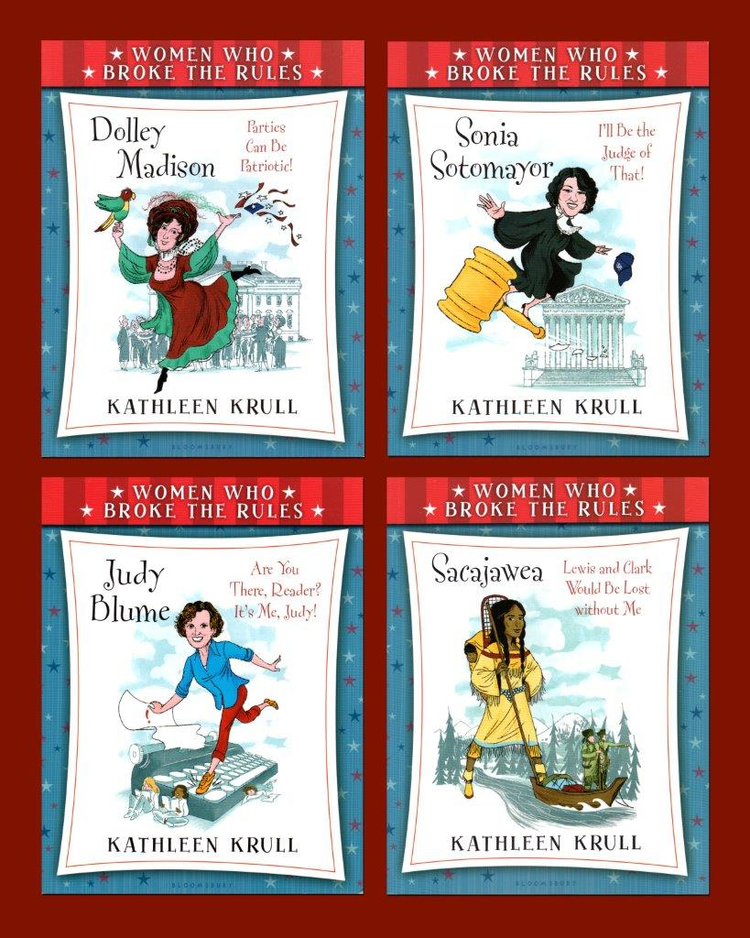
Women Who Broke the Rules: Sacajawea, Judy Blume, Sonia Sotomayor, and Dolley Madison by Kathleen Krull

Share

NFPB2015

Nonfiction Picture Book Wednesday

Nonfiction Picture Book Wednesday is hosted by Kid Lit Frenzy and was started to help promote the reading of nonfiction texts. Most Wednesdays, we will be participating and will review a nonfiction text (though it may not always be a picture book).
Be sure to visit Kid Lit Frenzy and see what other nonfiction books are shared this week!

women who broke the rules

Women Who Broke the Rules series
Sacajawea: Lewis and Clark Would Be Lost without Me
Judy Blume: Are You There, Reader? It’s Me, Judy!
Sonia Sotomayor: I’ll Be the Judge of That!
Dolley Madison: Parties Can Be Patriotic
Author: Kathleen Krull
Illustrators: Various
Published 2015 by Bloomsbury

Publisher’s Summary: Many awe-inspiring women have changed the course of history. From fighting for social justice and women’s rights to discovering and shaping our amazing country, women have left an indelible mark on our past, present, and future. But it’s not easy to affect change, and these women didn’t always play by the rules to make a difference! Kathleen Krull blends history and humor in this accessible young biography series.

My Review:  I was first introduced to this series at Kid Lit Frenzy in June when Alyson shared these four biographies with us (along with an informative Q&A and a fun quiz), and as soon as I read her posts, I knew I had to get my hands on them. I am a huge fan of well-done biographies because I think they are an essential part of spreading history into a new generation’s memory. I am an even bigger fan of well-done biographies of strong women. While there has been a good chunk of biographical picture books lately about women, I am very happy to see that students will have longer biographies to explore strong women from history. I also really like that Krull’s series has a mix of contemporary and historical figures and is filled with diversity. Next Krull will be sharing Coretta Scott King and Mary Todd Lincoln’s life.

Teachers’ Tools for Navigation: There are so many ways these books will be used and loved in the classroom. First, add them to your classroom libraries! Krull’s biographies will be a wonderful rung above picture book biographies and below the “big head biographies” on a reading ladder. Also, they would a perfect addition to a unit on women in history and could definitely be used in inquiry lit circles where each group became an expert of a different female leader to share with the class.

Discussion Questions: In what way did ____ play a part in history?; Why was ____ included in the Women Who Broke the Rules series? What rules did she break? How did it change her part in history?

We Flagged: “Like most little kids, Judy Blume had a lot of questions. Okay, maybe more than most kids. What she didn’t have were answers. She grew up in a stifling time, when the rules stopped people from being honest and real.” (p. 7, Judy Blume)

“Was Sacajawea skittish about traveling into the unknown with an infant strapped to her back on a cradle board? Was she scared to be the only woman in a large group of men? We don’t know. The men seemed to treat her with respect, calling her ‘a good creature, of a mild and gentle disposition.'” (p. 13, Sacajawea)

“A girl grows up in a tough neighborhood. Her poor immigrant parents don’t speak English and don’t get along. She tackles a serious illness. . . and rises, rises, rises to become one of the country’s guiding lights.” (p. 7, Sonia Sotomayor)

“Dolley Payne was born with extra zip. And she was going to need as much energy as she could muster.” (p. 7, Dolley Madison)

Check out Kid Lit Frenzy’s post for interior artwork.

Read These If You Loved: Biographies

Recommended For: 

classroomlibrarybuttonsmall readaloudbuttonsmall closereadinganalysisbuttonsmall litcirclesbuttonsmall

Signature

**Thank you to Linette at Bloomsbury for providing copies for review!**

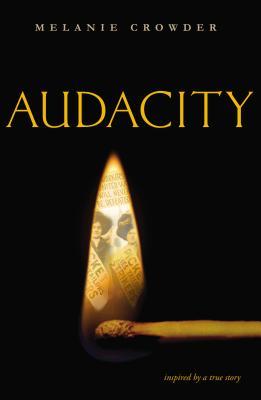
Audacity by Melanie Crowder

Share

audacity

Audacity
Author: Melanie Crowder
Published: January 8, 2015 by Philomel

Goodreads Summary: The inspiring story of Clara Lemlich, whose fight for equal rights led to the largest strike by women in American history

A gorgeously told novel in verse written with intimacy and power, Audacity is inspired by the real-life story of Clara Lemlich, a spirited young woman who emigrated from Russia to New York at the turn of the twentieth century and fought tenaciously for equal rights. Bucking the norms of both her traditional Jewish family and societal conventions, Clara refuses to accept substandard working conditions in the factories on Manhattan’s Lower East Side. For years, Clara devotes herself to the labor fight, speaking up for those who suffer in silence. In time, Clara convinces the women in the factories to strike, organize, and unionize, culminating in the famous Uprising of the 20,000.
Powerful, breathtaking, and inspiring, Audacity is the story of a remarkable young woman, whose passion and selfless devotion to her cause changed the world.

Ricki’s Review: This is an inspirational book in verse based on the true story of Clara Lemlich. She was a Russian Jewish immigrant who was forced to work in horrible factory conditions in the early 1900s. Clara stood up for her rights and fought with the union. What I liked most about this book is the author gives so much information about Orthodox Judaism, unions, and feminism, but she doesn’t hit readers over the head with the information. I don’t enjoy reading books about religion, and I don’t particularly seek out books about feminism (or unions, for that matter), yet I found Clara’s story to be both fascinating and compelling. All types of readers will love this story, and it is very teachable.

Teacher’s Tools for Navigation: I would love to teach this book. It offers great opportunities for building background knowledge about history. I wish this book existed when I used to teach The Jungle because the connections are innumerable. If I taught this book, I would use a jigsaw, research, and/or webquest activity where students spent time researching the 1900s, Russian immigration in the 1900s, unions, feminism, schooling in the 1900s, the Triangle Shirtwaist Factory fire, and Orthodox Judaism. This knowledge would provide a rich reading of this text.

Discussion Questions: How do Clara’s parents and siblings view her actions?; Make a list of your top five values. Then, make a list of Clara’s top five values. Are they the same? Different? Do you think your values differ from hers because of your personalities or because of the different time periods you live in?

We Flagged: “How can I tell Mama / who toils / sunup / to sundown / to be a good mother / a good wife / that this life / (her life) / is not enough for me, / that I dream instead / of words / ideas / a life that stretches far beyond / the bounds of this shtetl?” (p. 12).

*Please note that this quotation is from an advanced reader copy, and the quote may be different in the published version of the book.*

Read This If You Loved: The Jungle by Upton Sinclair, Like Water on Stone by Dana Walrath, A Northern Light by Jennifer Donnelly, Between Shades of Gray by Ruta Sepetys

Recommended For:

 litcirclesbuttonsmall classroomlibrarybuttonsmall

RickiSig

**A special thank you to Penguin for sending this book for review!**

Biographical Picture Books about Strong Women

Share

NF PB 2014

Nonfiction Picture Book Wednesday

Nonfiction Picture Book Wednesday is hosted by Kid Lit Frenzy and was started to help promote the reading of nonfiction texts. Most Wednesdays, we will be participating and will review a nonfiction text (though it may not always be a picture book).
Be sure to visit Kid Lit Frenzy and see what other nonfiction books are shared this week!

Over the last few years I have noticed a trend (a trend I love!) of biographical picture books about strong women from history. After reading a wonderful batch of them, I decided I need to share all of the amazing ones that I have read.
[Each picture book cover can be clicked on to take you to either Goodreads or a review of mine.]

16075946 17245740

1405439 

13722312 16074914 15818081 

16002028 50175 13330625 

12396987 6891554 

I love that these woman are getting their stories told!

Were there any that I missed? Please share!

Signature

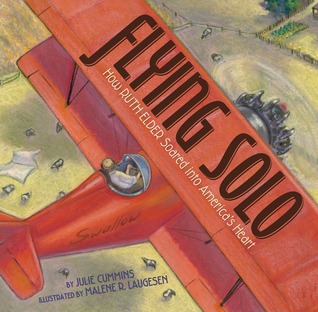
Flying Solo: How Ruth Elder Soared into America’s Heart by Julie Cummins

Share

NF PB 2014

Nonfiction Picture Book Wednesday

Nonfiction Picture Book Wednesday is hosted by Kid Lit Frenzy and was started to help promote the reading of nonfiction texts. Most Wednesdays, we will be participating and will review a nonfiction text (though it may not always be a picture book).
Be sure to visit Kid Lit Frenzy and see what other nonfiction books are shared this week!

flying

Flying Solo: How Ruth Elder Soared into America’s Heart
Author: Julie Cummins
Illustrator: Malene R. Laugesen
Published July 23rd, 2013 by Roaring Brook Press

Goodreads Summary: In 1927, airplanes were a thrilling but dangerous novelty. Most people, men and women, believed that a woman belonged in the kitchen and not in a cockpit. One woman, Ruth Elder, set out to prove them wrong by flying across the Atlantic Ocean. Ruth didn’t make it, crashing spectacularly, but she flew right into the spotlight and America’s heart. This is the story of a remarkable woman who chased her dreams with grit and determination, and whose appetite for adventure helped pave the way for future generations of female flyers.

My Review and Teachers’ Tools for Navigation: Ruth Elder joins the group of amazing women who have eye-opening picture books about them and how they changed history. (I love this trend!) More and more brilliant and brave women from history are getting recognition through their story being told. Ruth Elder was America’s sweetheart daredevil, and through her crazy feats showed America that woman were brave too. Although Amelia Earhart beat her in her mission to cross the Atlantic, she never stopped pushing herself and the women around her. I would love to see a unit about amazing women in history that uses the slew of beautiful picture books about these woman. One idea would be splitting up kids into groups, having them each read about one of the picture books, maybe doing some extra research, and then sharing with the other groups what they learned. It’d be a great way to give these women the spotlight they deserve.

Discussion Questions: Although Ruth did not cross the Atlantic, why did she become famous?; Ruth had the chance to be a Hollywood star, but she chose to go back to flying–why would she make this decision? Do you agree with her decision?; How did Ruth and her race help change America’s view of woman pilots?

We Flagged: “On August 18, 1929, Ruth and nineteen other women set out to show that women could fly airplanes just as well as men in the first women’s cross-country air race. The pilots had more than headwinds to counteract. One reporter sputtered, “The only thing worse than dames in planes is dames racing planes!””

Look inside Flying Solo at Amazon

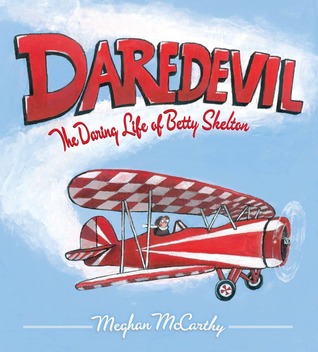
Read This If You Loved: Daredevil by Meghan McCarthy, Amelia Lost by Candace Fleming

Recommended For: 

readaloudbuttonsmall classroomlibrarybuttonsmall litcirclesbuttonsmall

Signature

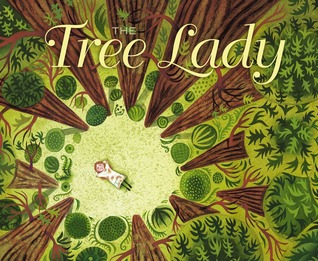
The Tree Lady: The True Story of How One Tree-Loving Woman Changed a City Forever by H. Joseph Hopkins

Share

NF PB 2014

Nonfiction Picture Book Wednesday

Nonfiction Picture Book Wednesday is hosted by Kid Lit Frenzy and was started to help promote the reading of nonfiction texts. Most Wednesdays, we will be participating and will review a nonfiction text (though it may not always be a picture book).
Be sure to visit Kid Lit Frenzy and see what other nonfiction books are shared this week!

tree

The Tree Lady: The True Story of How One Tree-Loving Woman Changed a City Forever
Author: H. Joseph Hopkins
Illustrator: Jill McElmurry
Published September 17th, 2013 by Beach Lane Books

Goodreads Summary: Unearth the true story of green-thumbed pioneer and activist Kate Sessions, who helped San Diego grow from a dry desert town into a lush, leafy city known for its gorgeous parks and gardens. Katherine Olivia Sessions never thought she’d live in a place without trees. After all, Kate grew up among the towering pines and redwoods of Northern California. But after becoming the first woman to graduate from the University of California with a degree in science, she took a job as a teacher far south in the dry desert town of San Diego. Where there were almost no trees.

Kate decided that San Diego needed trees more than anything else. So this trailblazing young woman singlehandedly started a massive movement that transformed the town into the green, garden-filled oasis it is today. Now, more than 100 years after Kate first arrived in San Diego, her gorgeous gardens and parks can be found all over the city.

Part fascinating biography, part inspirational story, this moving picture book about following your dreams, using your talents, and staying strong in the face of adversity is sure to resonate with readers young and old.

My Review: This book was fascinating! I love learning about strong woman who changed the course of history and did so when no one thought they could. Like Jane Goodall, Kate Sessions love of nature and learning started at a very young age, and she let this desire to learn drive her to become an amazing woman. She is an inspiration and one that many people probably do not even know about.

Teachers’ Tools for Navigation: I can picture this book being used so many different ways in the classroom! It is perfect just for a read aloud and discussion. It has some beautiful descriptive and figurative language that could be discussed. It could also be read in lit circles where each group gets a different strong female who changed the world and then they could each present and share on their woman. AND it has very unique science facts and information that help it cross seamlessly into science.  Just a fantastic book for the classroom.

Discussion Questions: How did Kate change San Diego?; What did Kate do, that others didn’t, to help her transform San Diego?; Why did Kate go to San Diego?; What other women in history does Kate remind you of?

We Flagged: “Kate felt the trees were her friends. She loved the way they reached toward the sky and how their branches stretched wide to catch the light. Trees seemed to Kate like giant umbrellas that sheltered her and the animals, birds, and plants that lived in the forest.” (p. 7)

Read This If You Loved: Me…Jane by Patrick McDonnell, Who Says Women Can’t Be Doctorsby Tanya Lee Stone, Daredevil by Meghan McCarthy, The Boy Who Loved Math by Deborah Heiligman, Brave Girl by Michelle Markel, Primates by Jim Ottaviani, Look Up! by Annette LeBlanc Cate, Players in Pigtails by Shana Corey

Recommended For: 

readaloudbuttonsmall closereadinganalysisbuttonsmall

classroomlibrarybuttonsmall litcirclesbuttonsmall

Signature

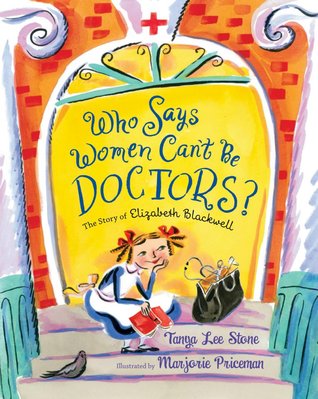
Who Says Women Can’t Be Doctors? by Tanya Lee Stone

Share

NF PB 2014

Nonfiction Picture Book Wednesday

Nonfiction Picture Book Wednesday is hosted by Kid Lit Frenzy and was started to help promote the reading of nonfiction texts. Most Wednesdays, we will be participating and will review a nonfiction text (though it may not always be a picture book).
Be sure to visit Kid Lit Frenzy and see what other nonfiction books are shared this week!

doctors

Who Says Women Can’t Be Doctors?
Author: Tanya Lee Stone
Illustrator: Marjorie Priceman
Published February 19th, 2013 by Henry Holt and Co.

Goodreads Summary: In the 1830s, when a brave and curious girl named Elizabeth Blackwell was growing up, women were supposed to be wives and mothers. Some women could be teachers or seamstresses, but career options were few. Certainly no women were doctors.

But Elizabeth refused to accept the common beliefs that women weren’t smart enough to be doctors, or that they were too weak for such hard work. And she would not take no for an answer. Although she faced much opposition, she worked hard and finally—when she graduated from medical school and went on to have a brilliant career—proved her detractors wrong. This inspiring story of the first female doctor shows how one strong-willed woman opened the doors for all the female doctors to come.

My Review: I love that Tanya Lee Stone chose to write about a women in history that changed our world in a big way, but has not get the credit for it.  It is amazing to think that one young lady was brave enough to be the first to try to get into medical school to help pave the way for millions of woman doctors today.  Although I realize there has to be a first for everything when overcoming prejudice and inequality, it is not often that you hear about who this one person was and how s/he had to do it alone, but that is how it was for Elizabeth Blackwell. No one had tried to jump over the barrier, but she did. This is such an inspirational story and such a big part of history–it should be shared with everyone.  And what tops off the book is the vibrant, colorful, playful illustrations that will draw the reader in even more.

Teachers’ Tools for Navigation: A couple of interesting themes that can definitely pulled out of this story is resilience (she never gave up after all of the rejections), the power of friendship (she has never considered being a doctor until a friend suggested it), and selflessness (just read the author’s note about the rest of Elizabeth’s life at the end). All three of these would lead to phenomenal discussions and can be connected to other historical figures and fiction texts.

Discussion Questions: Why do you think it took the townspeople longer to accept Elizabeth?; We learn that Elizabeth’s sister also became a doctor and the two of them eventually start a hospital. What type of people would Elizabeth and her sister have to be to be able to go from not being allowed to be a doctor to owning a hospital? What traits would they need?; How would life be different now if Elizabeth had never tried to become a doctor?

We Flagged: “I’ll bet you’ve met plenty of doctors in your life. And I’ll bet lots of them were women. Well, you might find this hard to believe, but there was once a time when girls weren’t allowed to become doctors.” (p. 3)

Read This If You Loved: Brave Girl by Michelle Markel, Me…Jane by Patrick McDonnell, Daredevil by Meghan McCarthy, Here Come the Girl Scouts by Shana Corey

Recommended For: 

readaloudbuttonsmall classroomlibrarybuttonsmall

Signature