Review and Giveaway!: Rosie: Stronger Than Steel by Lindsay Ward

Share

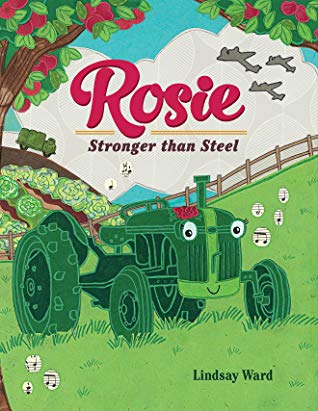
Rosie: Stronger Than Steel
Author and Illustrator: Lindsay Ward
Expected Publication: April 1st, 2020 by Two Lions

Summary: A brave tractor farms for freedom in a story inspired by women who acted with courage and strength in American factories and on British farms during World War II.

This is our Rosie,
stronger than steel.
She’ll plow all the land
with a turn of her wheel.

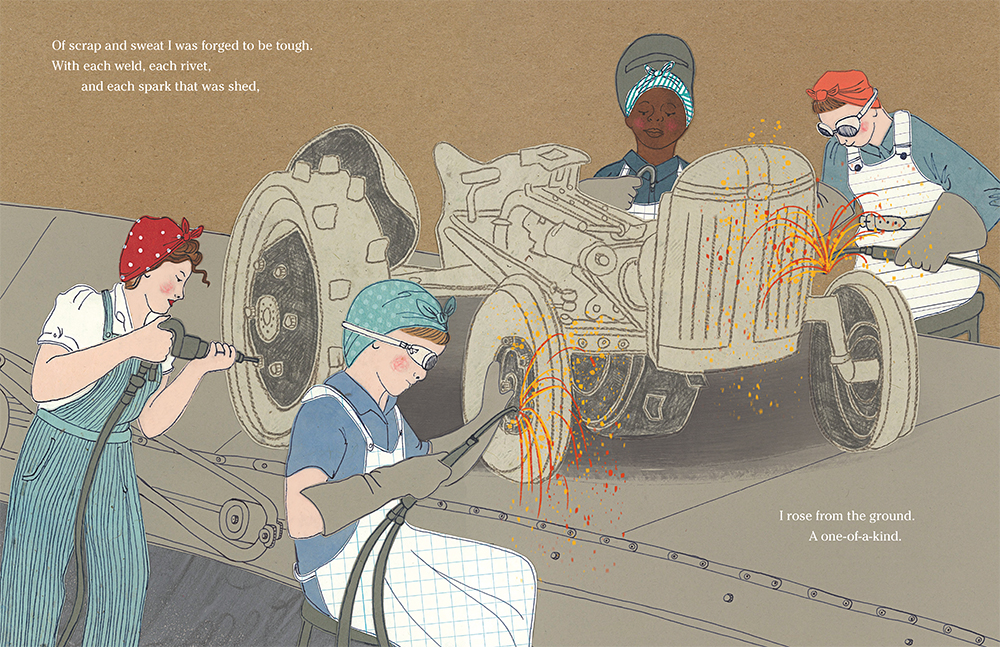
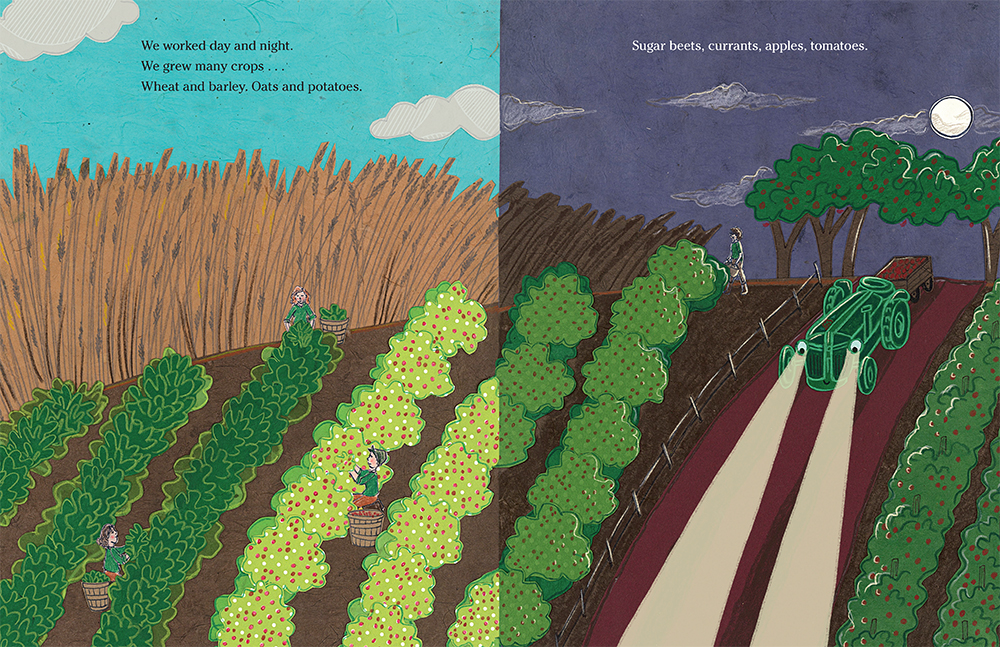
Built by women in the United States and sent to England to dig and plow alongside female farmers during World War II, Rosie the tractor does whatever is needed to support the war effort. She works day and night to help grow crops for the troops…even when she has to hide in the fields. This is because she knows, like the women who built her and the women who farm with her, that they all must do their part.

Inspired by the group of American women collectively known as “Rosie the Riveter” and the British Women’s Land Army, this is a story about taking action and coming together for the greater good.

About the Author: Lindsay Ward is the creator of the Dexter T. Rexter series as well as This Book Is Gray, Brobarians, Rosco vs. the Baby, and The Importance of Being 3. Her book Please Bring Balloons was also made into a play. Lindsay lives with her family  in Peninsula, Ohio, where she often sees tractors from the 1930s and 1940s. Learn more about her online at www.lindsaymward.com. Twitter: @lindsaymward

Praise: 

★“More than the sum of its parts, this is a wildly successful and well-researched shaping of the picture-book form to true historical sheroes.” —Kirkus Reviews (starred review)

★“This ‘little tractor that could’ sort of tale pays tribute to the iconic Rosie the Riveter persona from the US and the British Land Girls of the Women’s Land Army during WWII. Fans of Loren Long’s Otis, Virginia Lee Burton’s Katy, and like sturdy, dependable workhorses will welcome Rosie into the fold, but the historical perspective adds an unusual dimension to her story.” —Booklist (starred review)

“Vocabulary is rich, and the younger set will appreciate the intermittent rhymes. The style of Ward’s colored pencil and cut-paper illustrations reflect the period of the tale. ” —School Library Journal

Review: During World War II, our students’ lessons usually focus on the war itself and the horrific events because of the war, but there was so much more going on to ensure that our countries continued to run while all of our armed forces were at war. We don’t often enough hear about how women were essential to this effort, and Rosie shows us another side to this. Rosie represents not only the tractors made by women who helped keep our plants and crops healthy and edible, but she represents all women that stepped up to do jobs that before then they had been told they were not good enough for. This story, beautifully crafted and illustrated by Lindsay Ward, is a call for strength whenever faced with unprecedented times.

Teachers’ Tools for Navigation: Rosie is a great addition to history lessons about World War II and the home front efforts of women. Her story is also a great read aloud–maybe during Women’s History Month, or whenever!

Discussion Questions: 

  • Did you know anything about what happened on the home front before reading Rosie?
  • How does Rosie the tractor represent the women’s work on the home front?
  • How does Rosie impact the war effort?
  • What does the Rose on her body represent?
  • What is the theme of Rosie?
  • Why do you think the author wrote the book from Rosie’s point of view in first person?

Flagged Passages: 

Read This If You Love: Historical fiction picture books, Learning about history

Recommended For: 

classroomlibrarybuttonsmall 

Giveaway!: 

a Rafflecopter giveaway

Signature

**Thank you to Blue Slip Media for providing a copy for review and giveaway!**

Excerpt and Giveaway!: Sabina: In the Eye of the Storm by Bella Kuligowska Zucker

Share

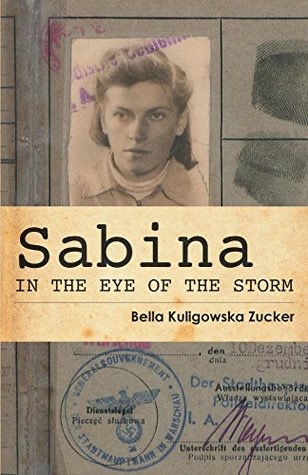
Sabina: In the Eye of the Storm
Author: Bella Kuligowska Zucker

About the Book: In September 1939, Bella was a carefree teenager living in Serock, Poland when the German army struck. She was rounded up with her friends and family and sent to a series of grim Jewish ghettos. As loved ones were separated and lost through the war years, Bella survived by changing her identity. After stealing the birth certificate of a Catholic girl five years her senior, she became Sabina Mazurek. Then she went into the eye of the storm, Germany, where she believed she might be safest. Sabina is her story.

About the Author:Bella Kuligowska was born in Serock, Poland in 1925. Her family included her parents and five brothers; everyone worked in her parents’ bicycle business. After the war, she tried to find her missing family members. She discovered she was the lone survivor.

Bella met her husband Herman Zucker in Poland after the war. They emigrated to the US in 1951 with their oldest daughter and settled in Chicago, Illinois. Bella spent many years perfecting her English and writing skills to record this memoir. Bella passed away in 2007.

Excerpt: 

In 1940, Poland was becoming increasingly dangerous for Jews. In Serock, Bella’s hometown, the Jews had been forcefully moved to a ghetto, where they lived with scant resources in crowded conditions. Bella’s parents wanted to protect their family, as their future became more uncertain every day, and arranged for Bella to escape.

One afternoon that spring, my father came home with a stranger. My mother was sewing a shirt for papa by hand, and I was knitting a sweater from the material left over from the unraveled flour bags. Since curfew was coming, Abraham, Joseph, and Wygdor were all in the room too.

              “Mr. Wisniewski, this is my daughter, Bella.” My father spoke these words in Polish. Mr. Wisniewski nodded and looked me up and down like a customer about to make an expensive purchase.

              “Bella, say something to Mr. Wisniewski,” my father urged.

              I was still unsure of what was happening, but I did my father’s bidding. “Hello, Mr. Wisniewski,” I said uncomfortably, getting up from my seat on the cold hearth of the fireplace. “How do you do?”

              The man turned to my papa. “Fine. The girl looks ok, and she speaks Polish well.”

             “Papa?” I whispered, almost ready to cry. “What is going on?”

              My father explained that Mr. Wisniewski was a forester who lived not far from the ghetto and also owned a farm. With his help, I could escape by going to work for him. Mr. Wisniewski had come to check that I looked Polish enough and that I did not have a strong Yiddish accent.

              “Mr. Wisniewski will have documents made for you,” my father said. “He believes you can pass as a Christian on the other side. You must try to live as they do. Be a good girl. Don’t be scared, darling.”

              I shook with a mix of anticipation and fear. I could not imagine shedding my identity like this, becoming a Christian, practically overnight. How could anyone do that?

              Then I thought of someone who had done such a transformation – Lonka, the rabbi’s daughter from Serock, who had eloped with her Christian boyfriend on the eve of Yom Kippur. What a calamity it had been! The rabbi’s only child. She’d converted to Christianity and ran off on the holiest night of the year, Kol Nidrei.

              Suddenly, her story was inspiration.

              “I will do it,” I said. And I thought of a new name for myself. I would add a simple “Isa” to the start of my first name to make it sounds more Polish: Isabella Kuligowska. That’s who I would become while with the forester. But I promised myself and my family that I would never forget who I really was.

Excerpted from SABINA: IN THE EYE OF THE STORM Copyright © 2018 by Bella Kuligowska Zucker. Reprinted with permission. All rights reserved.

Giveaway!: 

a Rafflecopter giveaway

**Thank you Saichek Publicity for providing the excerpt and copies for review!!**

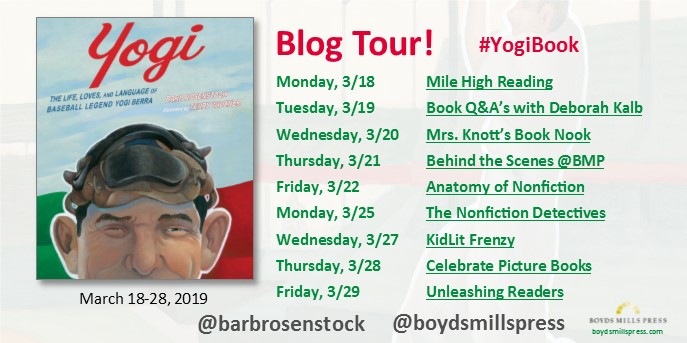
Blog Tour with Review and Giveaway!: Yogi: The Life, Loves, and Language of Baseball Legend Yogi Berra by Barb Rosenstock

Share

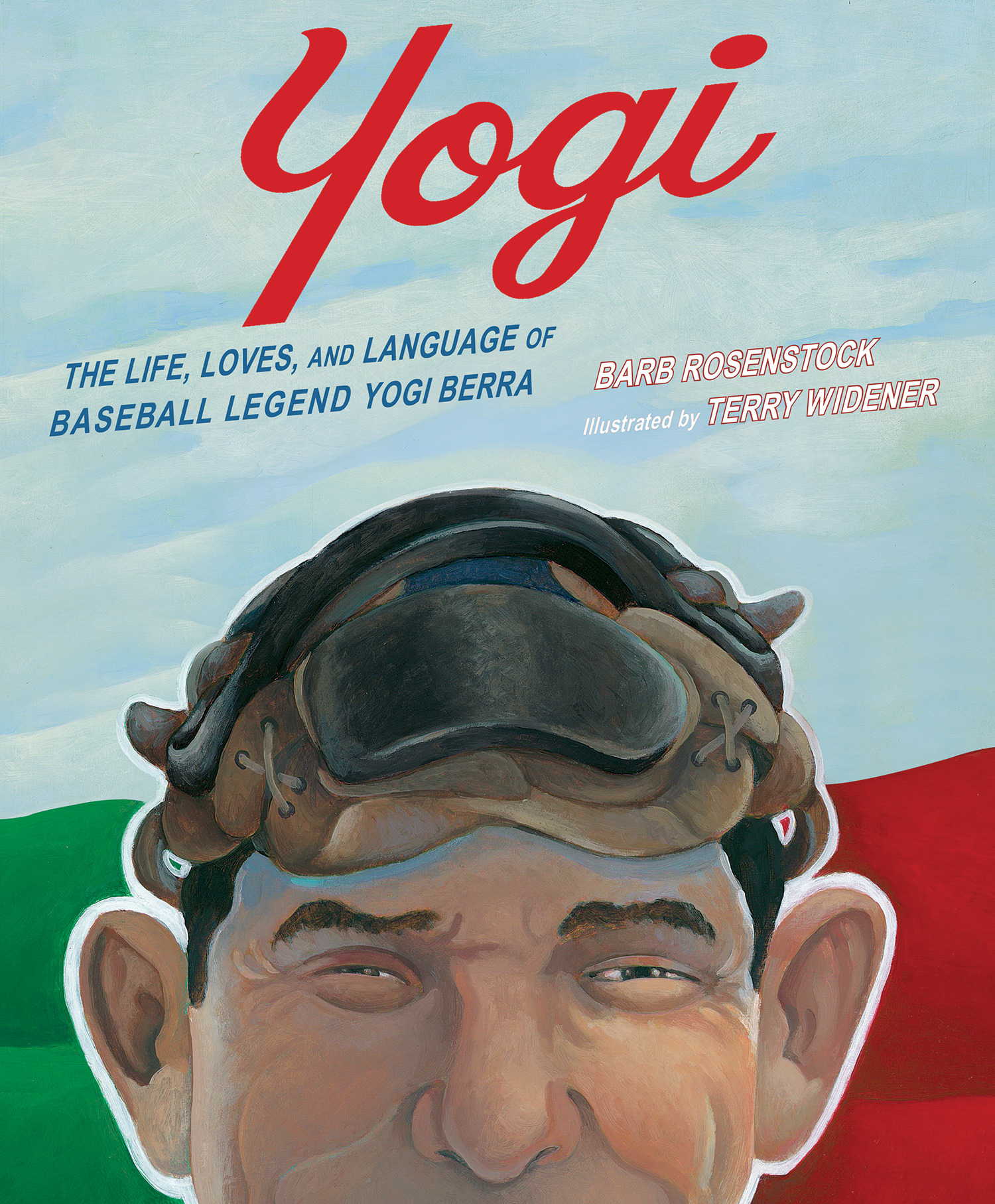
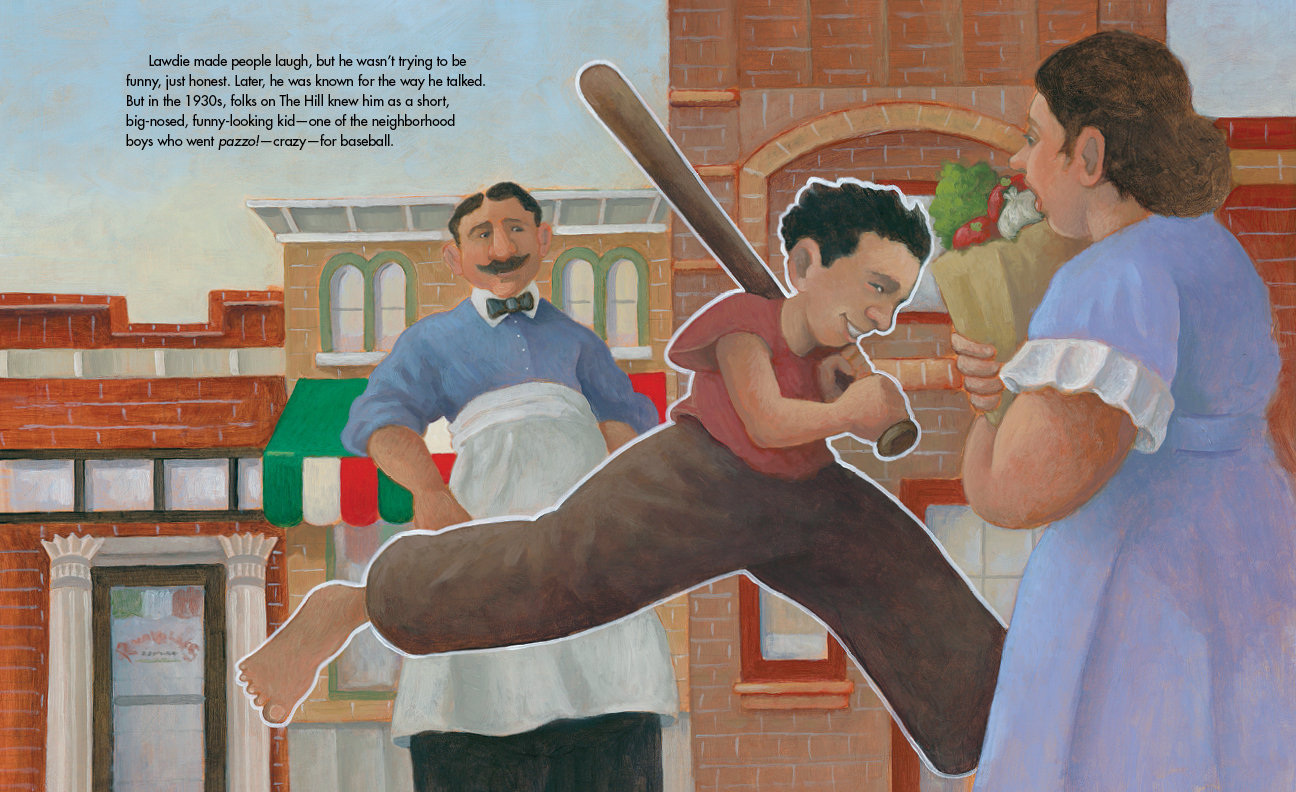
Yogi: The Life, Loves, and Language of Baseball Legend Yogi Berra
Author: Barb Rosenstock
Illustrator: Terry Widener
Published February 5th, 2019 by Calkins Creek

Summary: The life and famous words, such as “it ain’t over till it’s over,” of Major League Baseball player and New York Yankee Lawrence “Yogi” Berra are celebrated in this nonfiction picture book.

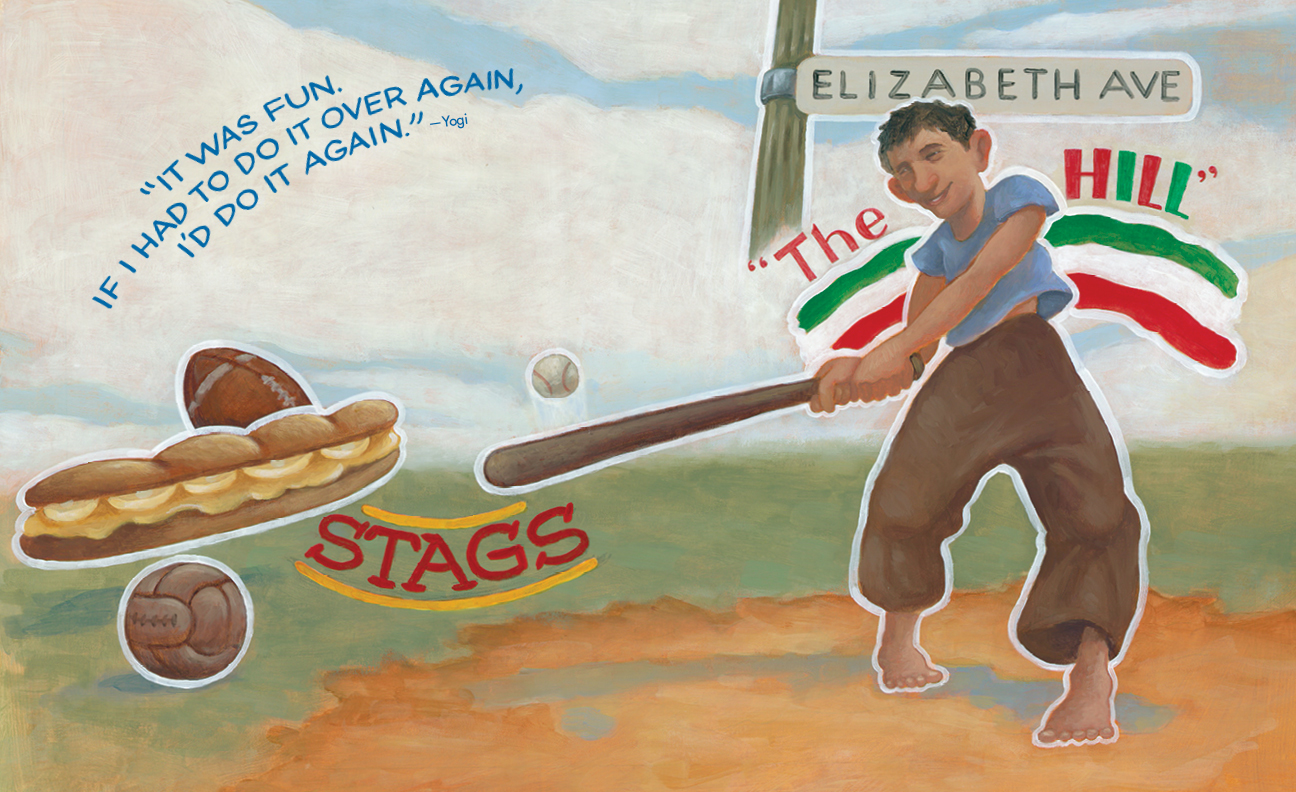
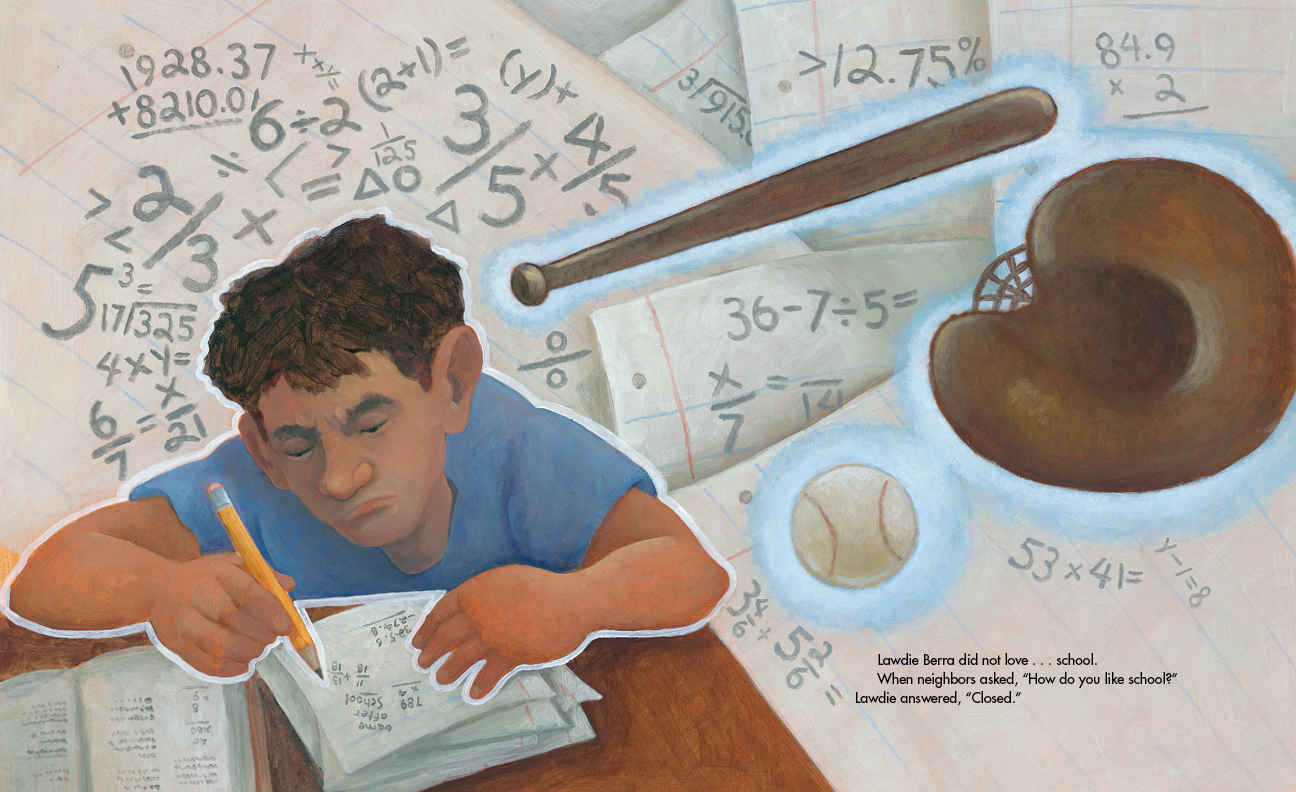
Yogi Berra loved his family, his neighborhood, his friends, and, most of all, baseball. He was crazy for it, ever since he was a young kid playing with friends in an abandoned dump. But baseball didn’t love him back–at least not at first. Yogi was different. He didn’t have the right look. When he finally made it to the major leagues, Yogi faced pranks and harassment from players, sportswriters, and fans. Their words hurt, but they made Yogi determined to show all that he could do. This book looks at the talents, loves, and inspirational words of this celebrated New York Yankee and American icon, who earned a World Series ring for each finger and made baseball love him back.

About the Creators: 

Barb Rosenstock is best known for her many picture book biographies, including Thomas Jefferson Builds a LibraryBen Franklin’s Big Splash,The StreakDorothea’s Eyes, and Blue Grass Boy, all published by Calkins Creek. Her other recent titles include a picture book about Vincent Van Gogh, Vincent Can’t Sleep, and a picture book about Vasily Kandinsky, The Noisy Paint Box, which won the 2015 Caldecott Honor Medal. She lives outside Chicago with her family. Visit her at barbrosenstock.com.

Terry Widener is the award-winning illustrator of many picture books on athletes, including The Streak: How Joe DiMaggio Became America’s Hero, Girl Wonder: A Baseball Story in Nine Innings, American Champion Swimmer: Gertrude Ederle,and Lou GehrigThe Luckiest Man. He is also the illustrator of The Kite That Bridged Two Nations by Alexis O’Neill. He lives in McKinney, Texas, with his wife and is the father of three grown children. Visit him at terrywidenerart.com.

Praise:

*“This excellent character study will be useful as a model for students writing research-based biographies since it includes extensive author’s notes, baseball statistics, a note about Yogi-isms, and secondary quotes about the man himself, but it will loved most of all by Yankees fans.” –School Library Connection, starred review

“(T)his picture-book biography…does an excellent job covering Berra as both baseball player and cultural icon. Widener’s illustrations…ably capture Berra’s short stature and big personality. Thorough back matter concludes the book, including a double-page spread of Berra’s ‘amazing’ stats, a bibliography, an author’s note, several photographs, and source notes.” –The Horn Book

“Rosenstock covers all the bases, focusing on Yogi’s great love of baseball, his determination to succeed, and, most of all, his longing for baseball to love him back. His perplexing, witty, and wise ‘Yogi-isms’ are incorporated in the text as well as appearing in large, hand-lettered blurbs within the illustrations. Widener’s colorful, muscular acrylic cartoons…beautifully capture his essence. A loving homage to a charismatic baseball hero.” –Kirkus Reviews

“(A) loving tribute to New York Yankee baseball legend Yogi Berra. Back matter documents his amazing career… and complement the storylike text that introduces a simple Italian kid from Saint Louis who loved his family, loved his friends, and really, really loved baseball. The illustrations capture the wistful, nostalgic mood… readers will come away with an appreciation for both the amazing athlete and the humble, unique individual. Source notes, a bibliography, and additional background information elevate this offering into viable research material, making this an entertaining and worthy addition to sports biography collections.” –Booklist

Review: I am always so impressed with Barb Rosenstock’s multi-faceted biographies.

  • You can tell she is a historian because of the accurate and well-represented history of whomever she is writing about as well as the detailed and interesting back matter that is included in her books. This one particularly is impressive with its research notes, statistics, Yogi-isms, and quotes about Yogi.
  • You can tell she is a master storyteller because her biographies are never dry history but are instead a beautiful narrative that brings the subject and their story to life.
  • You can tell she is a caring person because of the themes she incorporates within her stories and the people she chooses to write about.
  • With Yogi, you can tell she is a baseball fan because she represents the sport with the heart that those of us who love baseball can feel.

All of this, paired with an illustrator that brings movement and emotions to life, lends to a very engaging picture book biography!

Teachers’ Tools for Navigation: This text is a perfect addition to the classroom with its many uses across literacy, history, physical education, and math!

Educators’ Guide provided by the publisher:

Discussion Questions: 

  • How did the author incorporate “Yogi-isms” throughout the narrative? Choose one quote and explain how it fits in with the story.
  • Read the quotes about Yogi in the backmatter. Find evidence from the story to support the statements made by these individuals.
  • Make a list of character traits that Yogi Berra displayed in the story. Find evidence to support these traits.
  • Words hurt. But Yogi wouldn’t let them stop him. What does this tell you about him?
  • In what way do you think Yogi Berra impacted the players around him the most?
  • What makes Yogi Berra one of the best baseball players ever? Use evidence to support your statements.
  • Why do you think his parents let him go play baseball but not his brother?
  • In what way did the author and illustrator compare Yogi’s job as a gunner’s mate during World War II and his job as a catcher in the MLB?

Flagged Passages: 

Book Trailer: 

Read This If You Love: Baseball, Picture Book Biographies, Quotable Quotes

Recommended For: 

classroomlibrarybuttonsmall 

Don’t Miss the Other Stops on the Blog Tour!

Monday, 3/18                       Mile High Reading
Tuesday, 3/19                      Book Q&A’s with Deborah Kalb
Wednesday, 3/20               Mrs. Knott’s Book Nook
Thursday, 3/21                     Behind the Scenes @BMP
Friday, 3/22                          Anatomy of Nonfiction
Monday, 3/25                      The Nonfiction Detectives
Wednesday, 3/27                KidLit Frenzy
Thursday, 3/28                    Celebrate Picture Books
Friday, 3/29                          Unleashing Readers

Giveaway!

a Rafflecopter giveaway

Signature

**Thank you to Boyds Mills Press for providing a copy for review and giveaway!**

Review and Educators’ Guide: Taking Cover: One Girl’s Story of Growing Up During the Iranian Revolution by Nioucha Homayoonfar

Share

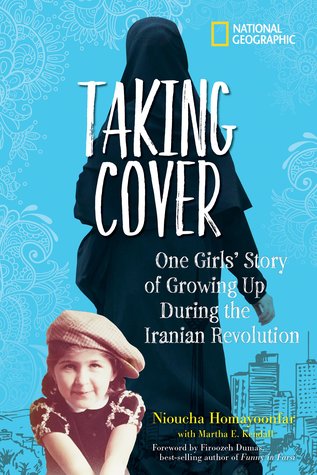
Taking Cover: One Girl’s Story of Growing Up During the Iranian Revolution
Author: Nioucha Homayoonfar
Foreward by Firoozeh Dumas
Published January 1st, 2019 by National Geographic Children’s Books

Summary: In the mid 1970’s Nioucha Homayoonfar’s French mother and Iranian father made a decision that would change her life forever. At the age of five, Nioucha and her parents moved from Pittsburgh to her father’s homeland of Iran, at the time a modern, bustling country where people from different religions co-existed peacefully and women and men alike pursued the highest level of education and professional opportunities. A new school, new language, and new friends took some time to get used to.  But none of that compared to the changes that Nioucha experienced during and after the Iranian revolution of 1979. Once the Ayatollah took control, full robes and head scarves were required, religion classes became mandatory and boys were no longer allowed to interact with girls.  Her life continued to be filled with family, friends, pop music and even her first boyfriend (although both the music and the boyfriend were strictly prohibited), but Tehran had become barely recognizable as bombs were dropped on her neighborhood, loved ones and even Nioucha herself were kidnapped, acquaintances were executed and day by day, their freedom was chipped away.

Publishing in time for the 40th anniversary of the Iranian revolution, Taking Cover reveals the extraordinary story of Nioucha’s struggle to adjust, to understand and to figure out her place in the world while unrest and oppression swirled around her.  Additionally, this title is a unique blend of coming-of-age storytelling and history. Coupled with a thought-provoking forward by New York Times best-selling author Firoozeh Dumas (Funny in FarsiTaking Cover encourages readers to take a deeper look at the importance of protecting religious, political, and social freedoms while Nioucha’s vivid descriptions of Iranian life — the food, the smells, and its customs — exposes readers to a country and culture rarely written about.

Review: Generally, our system of history education and media focus do not set up Americans with great global information which is evident in the many nonfiction and historical fiction books I’ve encountered in my recent lifetime that have taught me so much about the world. This is one of those books.

This memoir does a special thing in being a beautiful narrative that at its heart is about a young girl growing up but is also addresses the true prejudice against women in Iran as well as teach some basics about the Islam faith and the Iranian Revolution. It is hard to balance these objectives but Taking Cover does it really well which makes it perfect for middle school readers because the story will engage them while they are exposed to a time period and place that they may know little about, as I did.

Side note: Is anyone else really impressed by the vivid memories that some have of their childhood? That is another thing I took away from this book–I remember a lot less than others! Excerpts from the memoir would be wonderful as a mentor text about writing about memories using imagery.

Side note: I would love to do a memoir book club with diverse voices including Taking Cover! I was thinking Born a Crime (the new young reader edition), Hey KiddoOpen Mic, and March Book One-Three. What other titles do you know of that would fit this idea?

Educators’ Guide provided by the publisher:

Flagged Passages: “CHAPTER 1: Fury 1986 (Part 1)

Javabe ablahan khomooshist. -Persian Proverb
Silence is the best answer to fools.

I knew I was in trouble when the white jeep made a U-turn. Driven by the Zeinab Sisters (or the Black Crows, as I called them), it raced toward me and screeched to a stop.

My mother was pushing my brother in a stroller. She had already crossed the street, but I’d lagged behind. So when the ‘Moral Police’ pulled in front of me, I was all alone. Their job was to ensure that all women and girls dressed in a manner dictated by Islam. To set an example, these four were covered head to toe in black chadors, and some even wore gloves.

The Black Crow sitting in the back seat jumped out and grabbed my arm without saying a word. I caught my mother’s eye just as I was being pushed inside the jeep. Maman stood helplessly, screaming across the traffic for the Crows to let me go.” (p. 11)

Read This If You Love: Memoirs, Learning about unreported history, Expanding your knowledge of the world

Recommended For: 

classroomlibrarybuttonsmall

Signature

**Thank you to Karen at Media Masters Publicity for providing the book for review!**

Searching for Lottie by Susan L. Ross

Share

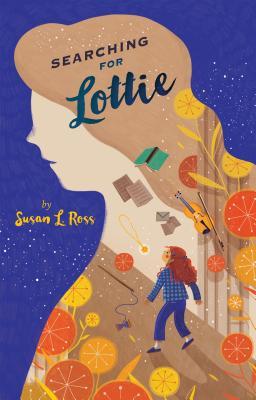
Searching for Lottie
Author: Susan L. Ross
Publication Date: February 26th, 2019 by Holiday House

Summary: Lottie, a talented violinist, disappears during the Holocaust. Can her grand-niece, Charlie, discover what happened?

A long-lost cousin, a mysterious locket, a visit to Nana Rose in Florida, a diary written in German, and a very special violin all lead twelve-year-old Charlie to the truth about her great-aunt Lottie in this intriguing, intergenerational mystery. 12-year-old middle schooler Charlie, a budding violinist, decides to research the life of her great-aunt and namesake for a school ancestry project. Everyone in Charlie’s family believes Great-Aunt Charlotte (Lottie), a violin prodigy, died at the hands of the Nazis, but the more Charlie uncovers about her long-lost relative, the more muddied Great-Aunt Lottie’s story becomes. Could it be that Lottie somehow survived the war by hiding in Hungary? Could she even still be alive today? In Searching for Lottie, Susan Ross has written a highly personal work of historical fiction that is closely inspired by her own family members whose lives were lost in the Holocaust.

About the Author: Susan Ross grew up in Lewiston-Auburn, Maine, and divides her time between Connecticut and Maine. She attended Brown University and NYU School of Law.

After practicing law, Susan taught legal writing in Brooklyn and in Budapest, and creative writing to kids and adults in Connecticut. She especially loves author visits. There is nothing Susan enjoys more than hanging out in a classroom talking to students about her books and teaching kids about writing and literature!

Kiki and Jacques was inspired by the experience of Somali refugees who moved to Susan’s hometown in Maine. Susan worked with refugee teenagers in writing the book and was greatly moved by their amazing positive energy and hopeful determination.

Searching for Lottie was inspired by stories from members of Susan’s family, whose lives were forever changed by the Holocaust.

Susan teaches writing at Westport Writers Workshop and is a trustee at the Westport Library.

Review: I think historical fiction is one of the most important genres because it makes us relive history in ways that we never could without story. Searching for Lottie is interesting because it is contemporary but also includes a historical narrative as Charlie learns more and more about Lottie. This makes it a great choice for students who may not like historical fiction but are interested in history.

I am also a fan of Susan Ross’s writing because she does a fabulous job taking a tough subject and writing a middle grade novel that gives an introduction to the topic without being too mature but also while not sugar coating it. It is so important to have middle grade books for our students that show the real world in an appropriate yet real way.

And it really helps that the stories are interesting and many kids will connect with the conflicts and events the characters take part in.

Teachers’ Tools for Navigation: Searching for Lottie is inspired by true events, specifically those of Susan’s family. She shares much on her website including this background information:

Charlotte Kulka (called Lotte — in English, “Lottie”) was my mother’s teenage cousin. She lived in Prague with her father, a doctor. Her mother passed away when she was little. Tragically, Charlotte and her father both perished, but her beloved aunt, my Cousin Vally Szemere, survived with false papers in Budapest. Vally boarded with a Catholic family who protected her and they became lifelong friends. My middle name was given in Lotte’s memory.

Another relative, Magda Szemere, was a famous young violin soloist in Europe before she, too, was arrested and forever disappeared. I wrote about my bittersweet delight at finding her music in the essay, “Sweet Strings of Sorrow.”

In doing the research for this book, I discovered to my astonishment that her music had been preserved on gramophone recordings and remains available in music archives.

My mother’s cousin, Magda Krizan, survived the war posing as a model and nanny in Hungary — and was a member of the resistance. She escaped from Communist Czechoslovakia with her husband in 1968 and came to America.

My mother, Erika Lencz, escaped Vienna in 1938 with her brother, Erwin. She was twenty years old. My grandparents and nearly all of the rest of her family were lost. Mom worked in a pillow factory in Brooklyn and as a nanny before settling down in Maine with my father, where she ran our family wedding gown shop and had five children.”

Visit http://www.authorsusanross.com/about-searching-for-lottie/ to listen to the recording and view photos.

This information along with Charlie’s project in the book makes me want to ask students to learn about their family (remember to have a plan for any adopted, foster, or other kids with no access to family history!).

Parts of the story also would be a great addition to an orchestra classroom as Charlie and Lottie write about different pieces, specifically the music journal that Lottie kept.

Finally, as with most historical fiction novels, this story would be a fantastic jumping off point for inquiry in the classroom about our world’s past.

Discussion Questions: 

  • After listening to the pieces that Charlie and Lottie share in the book, which piece is your favorite?
  • What other ways did Jews and other ostracized humans escape Nazi-occupied territory during World War II?
  • What traits did Charlie show when researching her namesake?
  • How did the research change her relationship with her brother?
  • Using evidence from the text, how can you tell that Charlie loves music?

Flagged Passages: “‘Lottie was Nana’s sister, right?’

‘Yes, Lottie was several years older. Your nana told me how clever she was; how determined…just like you.’ Mom smiled. ‘And here’s another thing you two have in common–Lottie played the violin. In fact, Lottie played so beautifully that she performed with the Vienna Philharmonic when she was a teenage.’

‘Seriously?’ That was a weird coincidence. Violin was her thing, too. Charlie had begged her parents for lessons when she was still in kindergarten. She’d always loved music, and she liked pop and hip-hop as much as any kid at Hillmont Middle School…but there was something about classical that made her heart skip. She could lose herself in a symphony in a strange way that she never tried to explain to her friends. Only her best friend, Sarah, understood that feeling, but Sarah had moved to Boston over the summer…

‘What else do you know about Lottie?’

‘Well, the family was from Vienna, the capital of Austria. Her father was a math professor at the university.’

‘And…what exactly happened to them.’

Mom hesitated, then let out a long sigh. ‘Honestly, I’m not entirely certain. When the Germans invaded Austria, the Jews were at the mercy of the Nazis. I know that Lottie was lost, along with my grandfather. My grandmother and Nana Rose were lucky to escape. They came to America on a ship.’

‘So Lottie died…right?’ Charlie swallowed hard.

‘Yes, I guess she must have.’ Mom looked uncomfortable.

‘You guess? You don’t know for sure?’ Charlie sat up straight. She searched her mother’s blank face and glanced down at the photo. Lottie’s eyes were bright, with long dark lashes, and they were staring back up at her.

‘The truth is that nobody knows exactly what happened to Lottie…'” (p. 7-9)

Read This If You Love: Music, World War II historical fiction novels, History, Family

Recommended For: 

classroomlibrarybuttonsmall 

Signature

**Thank you to the author for providing a copy of the book for review!!**

Gods and Heroes by Korwin Briggs

Share

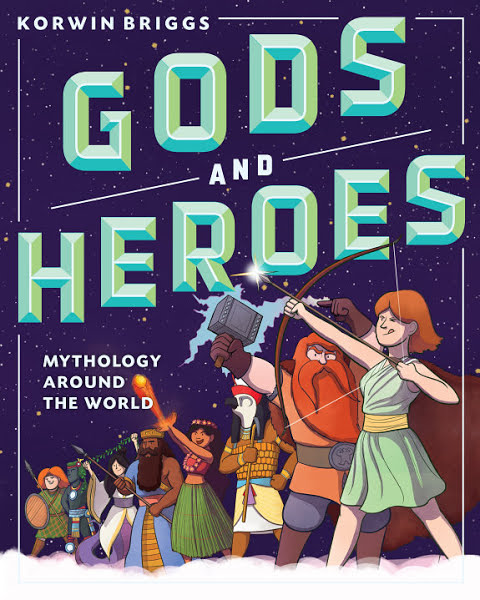
Gods and Heroes
Author: Korwin Briggs
Published August 21, 2018 by Workman

GoodReads Summary: Meet the Original Superheroes.

Before there was Batman, Wonder Woman, or Black Panther…there was Indra, Hindu king of gods, who battled a fearsome snake to save the world from drought. Athena, the powerful Greek goddess of wisdom who could decide the fate of battles before they even began. Okuninushi, the Japanese hero who defeated eighty brothers to become king and then traded it all for a chance at immortality.

Featuring more than 70 characters from 23 cultures around the world, this A-to-Z encyclopedia of mythology is a who’s who of powerful gods and goddesses, warriors and kings, enchanted creatures and earthshaking giants whose stories have been passed down since the beginning of time—and are now given fresh life for a new generation of young readers.

Plus, You’ll Learn All About:
Dragons: The Hydra, St. George’s Dragon, and the Australian Rainbow Snake
Giants: Grendel, Balor of the Evuil Eye, Polyphemus, and the Purusha with the thousand heads
Monsters: Manticore, Sphinx, Minotaur, Thunderbird, and Echidne, mother of the Nemean lion that nearly killed Heracles
Underworlds: Travel to Hades, Valhalla, and the Elysian Fields

Review: I always enjoy Workman books. The offer nonfiction information in a way that is fun and engaging. My four-year-old loved this book (even though most of it was a bit over his head). I’d recommend this book for the targeted audience (grades 3-7), but I think younger and older kids would really enjoy it (I know I did!). There are a diverse set of gods and heroes within this story, and they don’t originate from one culture, which I liked a lot. My son seemed to love the Greek/Roman gods the most, so those are the ones that we’ve read so far. We read about a different god/hero each night, and we’ve been going strong for about two weeks. We look forward to reading these stories each night. It makes for a fantastic bedtime routine.

Teachers’ Tools for Navigation: Teachers might ask each student to pick a different god or hero and present it to the class. I’d encourage students to choose a god/hero that interests them, and I think this onus would help students get excited about their presentations!

Discussion Questions: Which heroine/hero did you enjoy the most? Why?; Did you notice any similarities across cultural heroes? Differences? Which hero would you want to learn more about?

Flagged Passages: 

Read This If You Love: Mythology, Gods, Heroes, History

Recommended For: 

classroomlibrarybuttonsmall

**Thank you to Diana at Workman for providing a copy for review!**

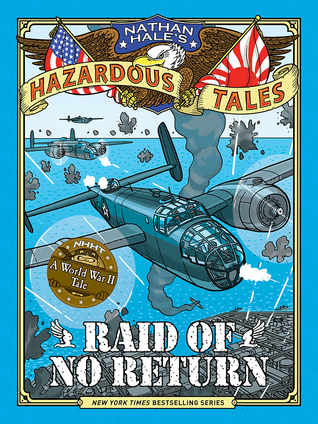
Hazardous Tales: Raid of No Return by Nathan Hale

Share

Hazardous Tales: Raid of No Return
Author and Illustrator: Nathan Hale
Published November 7th, 2017 by Abrams Books

Summary: A top secret mission needs volunteers.

After the bombing of Pearl Harbor in 1941, the United States joined World War II. And soon after that, young pilots were recruited fro a very secret – and very dangerous – raid on Japan. No one in the armed forced had done anything like this raid before, and none of the volunteers expected to escape with their lives. But this was a war unlike any other before, which called for creative thinking as well as bravery.

Nathan Hale’s Hazardous Tales are graphic novels that tell the thrilling, shocking, gruesome, and TRUE stories of American history. Read them all – if you dare!

About the Author: Nathan Hale is the #1 New York Times bestselling author and illustrator of Nathan Hale’s Hazardous Tales. He also wrote and illustrated the graphic novel One Trick Pony. Hale lives in Provo, Utah. Learn more at hazardoustales.com.

Praise: “Harrowing and no detail is left out . . . Hale’s tendency to incorporate character commentary, infographics, and fun facts will draw readers. Give this title to readers interested in action-packed graphic novels.” — School Library Journal

Review: The Hazardous Tales series is the series I use when kids say that nonfiction is boring AND when teachers say that graphic novels aren’t complex because this series, and this book, is complex, interesting, well crafted, funny, and just everything you’d want from any book, much less a nonfiction graphic novel.

And I am so happy to have a World War II Tale because so many students ask for it, and this is a new story for me, so I know it’ll be new for my students as well. Also, I think this specific mission will lead to many discussions because the idea of volunteering for a deadly mission is something that so many of my students struggle to understand because it isn’t something that they need to even consider, so to look at these men’s decision-making and willingness to fight for their country.

Other Hazardous Tales reviewed in the past here on Unleashing Readers: Alamo All-Stars and The Underground Abductor.

Hazardous Tales tip: I recommend starting with the first book, One Dead Spy, then you can read any of the others in any order.

Teachers’ Tools for Navigation: I’ve written in the past how I would incorporate this series as well as written a teaching guide for the first six books, but I wanted to allow another voice to share the brilliance of Hazardous Tales, so today my colleague, Kaleigh Gill who teaches 8th grade U.S. history, who started reading the series this summer and has read almost the whole series! I wanted to let her share why she loves the series and how she pictures it being part of her classroom:

Nathan Hale’s Hazardous Tales opens up a world of American stories that are often overlooked. With multiple books focusing on big topics, like the Revolution, Civil War, Alamo and Westward Expansion, Hale is able to give students (and teachers!) an engaging and realistic depiction of the experiences of American heroes and villains. With his humorous and relatable characters, he is able to connect with young readers on an unprecedented level in regards to nonfiction novels.

One of my favorite attributes of Hale’s series is the way he inserts side stories filled with background information and informative detail on corresponding events and individuals. He has the ability to make these often dull stories, come alive with his animated and entertaining illustrations. His stories are sure to captivate readers of all ages and interests.

Every history teacher in the United States should read this series! Even if you feel you wouldn’t have enough time to teach the entire book, it would be a great visual to provide students when discussing certain topics or figures. Some excerpts in this series would only take about 5-10 minutes to read aloud and discuss with your students, but would definitely leave a lasting impact! This series has even inspired me to design lessons based around historical texts for young readers and has also ignited my love of history again. Leaving these books to simply sit in my classroom library, would be a huge waste for my curriculum and more importantly, my students. Not only will it give insight into little known stories of America’s major events to enhance instruction, but it will intrigue students to dive deeper into historical texts that they would typically overlook.

Teaching Guide for Nathan Hale’s Hazardous Tales #1-#6:

Discussion Questions: 

  • Why did these soldiers volunteer for a mission they knew nothing about and that they knew was very dangerous?
  • Why do you think the part of World War II in the South Pacific isn’t spoken about as much as the European front?
  • How did the planes have to be changed up to be successful for the mission? Why?
  • Trying reading the book the way it was written then switch it up and read one plane’s story at a time–which way did you enjoy better?
  • How did this mission change the course of the war against Japan?

Flagged Passages: 

Read This If You Love: History, Graphic Novels, Other Hazardous Tales books

Recommended For: 

classroomlibrarybuttonsmall 

Signature