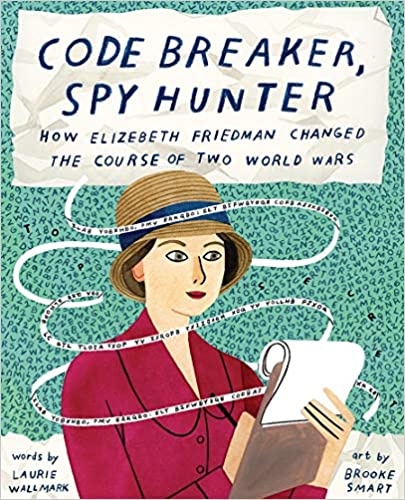
Review and Giveaway!: Code Breaker, Spy Hunter: How Elizebeth Friedman Changed the Course of Two World Wars by Laurie Wallmark, Illustrated by Brooke Smart

Share

Code Breaker, Spy Hunter: How Elizebeth Friedman Changed the Course of Two World Wars
Author: Laurie Wallmark
Illustrator: Brooke Smart
Anticipated Publication: March 2, 2021 by Harry N. Abrams

Goodreads Summary: Decode the story of Elizebeth Friedman, the cryptologist who took down gangsters and Nazi spies.

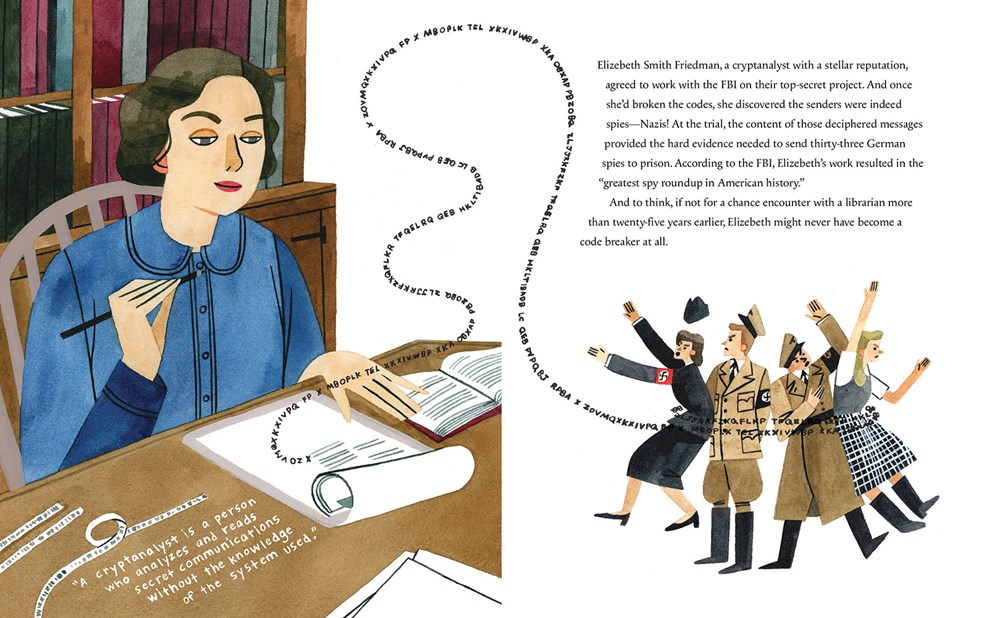
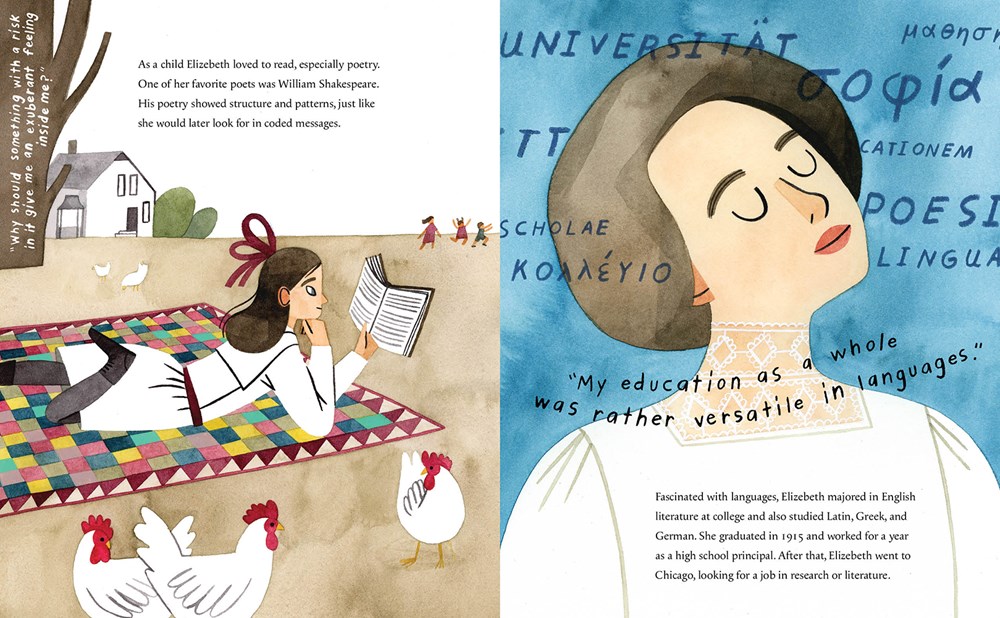
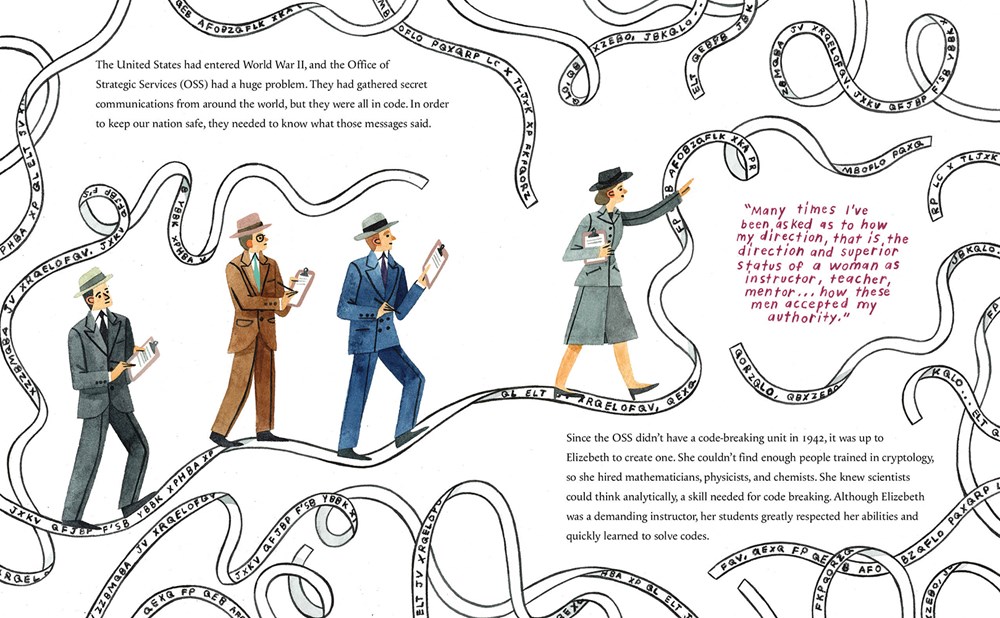
In this picture book biography, young readers will learn all about Elizebeth Friedman (1892-1980), a brilliant American code breaker who smashed Nazi spy rings, took down gangsters, and created the CIA’s first cryptology unit. Her story came to light when her secret papers were finally declassified in 2015. From thwarting notorious rumrunners with only paper and pencil to counter-spying into the minds and activities of&; Nazis, Elizebeth held a pivotal role in the early days of US cryptology. No code was too challenging for her to crack, and Elizebeth’s work undoubtedly saved thousands of lives. Extensive back matter includes explanations of codes and ciphers, further information on cryptology, a bibliography, a timeline of Elizebeth&;s life, plus secret messages for young readers to decode.

About the Creators: 

Award-winning author Laurie Wallmark has written picture-book biographies of women in STEM fields ranging from computer science to mathematics, astronomy to code breaking. Her books have earned multiple starred reviews, been chosen as Junior Library Guild Selections, and received awards such as Outstanding Science Trade Book, Cook Prize Honor, and Parents’; Choice Gold Medal. She is a former software engineer and computer science professor. She lives in Ringoes, New Jersey. You can find her at lauriewallmark.com. On Twitter: @lauriewallmark, Facebook: @lauriewallmarkauthor, Instagram: @lauriewallmark

Brooke Smart loves telling stories through her illustrations, especially stories about brave women from history. She has always loved to read, and growing up she could be found nightly falling asleep with a book on her chest. Illustrating books as a professional artist is a lifelong dream come true. She is living the busy, tired, happy, wonderful dream in Salt Lake City, Utah, with her husband, their three kids, and their naughty cat named Sunshine. Learn more about her at brooke-smart.com. Instagram: @bookesmartillustration

Ricki’s Review: This book is packed with information! I wasn’t familiar with this Women in STEM series, and now I feel like I need to get all of the books! The book has a great complexity—from the way in which the story is told in an engaging way that draw readers in to the way the illustrations and text are laid on the page. Typically, I give books away after I read and review them, but I am going to have a hard time parting with this one. Elizebeth Friedman’s bravery is simply awe-inspiring. She is a true heroine who needs to be named more frequently in history. Get this book. You truly won’t be disappointed.

Teachers’ Tools for Navigation: This book begs to be read in literature circles with other books about heroes/heroines, women in STEM, or powerful people in history. It would ignite powerful conversations about the characteristics of historical and contemporary heroes and heroines.

Check out the Code Breaker, Spy Hunter book page, where you’ll find a trailer, cool activity sheets, and more!

Discussion Questions: 

  • What is one intentional choice the author made in telling this story?
  • What are the qualities of a hero? Who are some historical and contemporary heroes who inspire you?
  • What are some of the pivotal moments in Friedman’s life story? How did she change the world for the better?

Flagged Spreads: 

Giveaway:


Other Books by Laurie Wallmark: Grace Hopper: Queen of Computer Code; Ada Byron Lovelace and the Thinking Machine; Hedy Lamarr’s Double Life: Hollywood Legend and Brilliant Inventor; Numbers in Motion: Sophie Kowalevski, Queen of Mathematics

Recommended For: 

readaloudbuttonsmall classroomlibrarybuttonsmall closereadinganalysisbuttonsmall

RickiSig

**Thank you go Barbara at Blue Slip Media for providing a copy for review!**

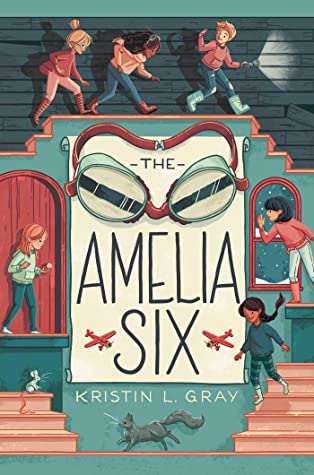
Sofia’s Kids’ Corner: The Amelia Six by Kristin L. Gray

Share

Sofia is an 9-year-old brilliant reader who aspires to be a book reviewer. On select Saturdays, Sofia shares her favorite books with kids! She is one of the most well-read elementary schoolers that we know, so she is highly qualified for this role!

Published June 30, 2020

Dear readers,

This book, called The Amelia Six by Kristin L. Gray is soooooo cool but also a bit scary, so I will warn you: DO NOT READ THIS BOOK BEFORE YOU GO TO BED! I literally had to hide under the covers and only leave a little hole so I could breathe! This book is recommended for ages 8-12.

Millie along with five other girls is invited to spend the night at Amelia Earhart’s house! Millie’s dad drops her off in the middle of a big snowstorm which will last the whole night and tells her that he is only one call away. When she arrives she thinks the building is beautiful and goes inside it. There she meets the five other girls named Thea, Natalie, Cassie, Robin and Wren. The person who basically runs the house is called Birdie. Birdie takes the six girls on a tour of the house and she tells the girls to pick their bedrooms but Amelia Earhart’s room is off limits. When Mille looks for her room she opens a door by mistake and in a glass box in the room there are Amelia Earhart’s goggles! Then the girls, along with Birdie, go downstairs and have a wonderful meal. Some of the dishes that the chef prepared were Amelia’s favorite back in the day. After that they go on a scavenger hunt and Millie realizes that Amelia’s goggles are gone! At first she and her partner Wren think it’s part of the game but when Birdie gets poisoned they know it’s not part of the game. To make matters worse Mille was the last person who saw them so all fingers are pointing at her!

I love this book so much because of how the story affected my mood. You see, no other book that I have ever read made me hide under the covers or look twice in the hallway in my house and then flee to get to the bathroom to brush my teeth! Also, this book basically begged me to read on! If I decided that I was going to read one last chapter I would probably break my promise because most of the chapters ended like this! “And that’s when a hand grabbed my arm.” or “And the whole house grew dark.”. Seriously! I can tell you that the only time that I actually decided to go to bed while reading this book was when the words started dancing all over the page and my head kept helplessly flopping to the side. So that meant that I was really tired and thanks to this book that was around 11:30 pm! Have fun!

**Thanks so much to Sofia for this review! We will be sure to read it well before our bedtimes!**

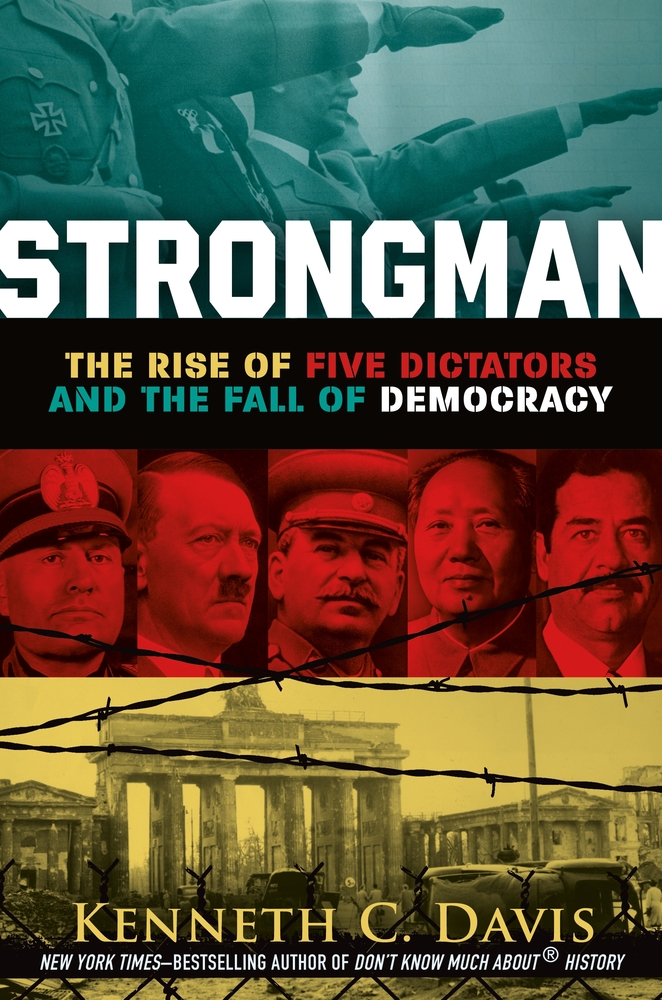
Author Q&A with Kenneth C. Davis, Author of Strongman: The Rise of Five Dictators and the Fall of Democracy

Share

Strongman: The Rise of Five Dictators and the Fall of Democracy
Author: Kenneth C. Davis
Published October 6th, 2020 by Henry Holt and Co.

About the Book: From the bestselling author of the Don’t Know Much About books comes a dramatic account of the origins of democracy, the history of authoritarianism, and the reigns of five of history’s deadliest dictators.

What makes a country fall to a dictator? How do authoritarian leaders—strongmen—capable of killing millions acquire their power? How are they able to defeat the ideal of democracy? And what can we do to make sure it doesn’t happen again?

By profiling five of the most notoriously ruthless dictators in history—Adolf Hitler, Benito Mussolini, Joseph Stalin, Mao Zedong, and Saddam Hussein—Kenneth C. Davis seeks to answer these questions, examining the forces in these strongmen’s personal lives and historical periods that shaped the leaders they’d become. Meticulously researched and complete with photographs, Strongman provides insight into the lives of five leaders who callously transformed the world and serves as an invaluable resource in an era when democracy itself seems in peril.

Q&A

Q1. What led you to choose this topic and this audience (teens) for your new book?

A1.   I have been writing about history for some thirty years and was always fairly optimistic about the future of America. In spite of the flaws I have catalogued in my books, I always believed in the United States as the “last, best hope on earth”—Lincoln’s words—and that its democratic system still moved towards more progress.

But something has changed. And for some time now, I have been concerned that democracy, at home and abroad, was under assault. That is not only sad but dangerous. I felt I had to tell the story of these dictators and how quickly democracy can vanish. It is meant as a warning, a cautionary tale for our time.

On the question of writing for teens, let me first say that I think my books aimed at younger readers are not that different from my earlier work aimed at older adults. In fact, many older readers don’t know these are “Young Adult” books. I try and write for everyone in an accessible style that welcomes the reader, older or younger.

I started writing for younger readers several years ago because I have spoken to so many of them in classrooms over time and came away impressed by their curiosity, engagement, and interest in history. But I wanted to deliver a message to those young people that democracy can’t be taken for granted and that they have a real stake in protecting our rights and freedoms.

Q2.   What is the key takeaway you hope that young people get from reading it?

A2.   There are several key issues at work in this book and, I would say, all of my work. First is that history is not a collection of facts—dates, battles, speeches, laws – but real stories about real people doing real things. When we read about history that way, it becomes far more compelling and connected to our own lives.

Next is that we read and learn from these accounts to understand who we are and how we got here. Part of that idea is the story of how enormous sacrifices have been made in the name of rights and progress—from abolition to suffrage, civil rights, and fair labor laws. That often comes from the bottom up, not the top down, which means people without a vote still had a voice.

It is also a book that asks hard questions about what people are willing to do in following a leader. And that brings me to my earlier point: Democracy is not a spectator sport. We must protect it if we think it is worth keeping.

Q3.   What was the hardest part about writing the book?

A3.   I actually write about that in the closing words of the book. This was, in many ways, an extremely difficult project. I have written about many hard and awful events and periods in the past, including the stories of racial slavery I told in my earlier book, In the Shadow of Liberty.

But describing the levels of cruelty, inhumanity, and indecency are unavoidable in writing the history of the Strongmen –the murderous dictators whose stories I tell. We can’t sugarcoat that history. Or ignore it. That made this project a true test of my fundamental belief in the general goodness of humanity. I had to write about the vast numbers of people who were complicit in the genocidal crimes of a Strongman like Hitler or Stalin.

Q4.   If a teacher asked for recommendations for teaching your book, what would you suggest?

A4.   My writing career has mostly been about asking questions and presenting facts and evidence in real stories. I think that teachers –especially those in Social studies—can follow that general premise with their students. Ask questions and allow students to find answers through accurate, documented evidence.

This approach of getting students to do real research, assess evidence, check sources, and make considered judgments based on facts is the essence of thinking for themselves. It is what today’s education must be about, especially in this era as facts and truth are under such assault.

In a more practical way, this book should fit into a number of curriculum areas – 20th century history; the Holocaust; civics and government; ethics, religion, and basic philosophy; economics; sociology and the behavior of crowds. I have always been a proponent of crossing disciplines.

Q5.   What other resources do you feel would complement STRONGMAN in a curriculum?

A5.   I would start with reputable journalism, including newspapers and websites that accurately document their reporting. We must establish the clear connection between history and the headlines. That will also help develop those “media literacy” skills that all of us –not just students—need to negotiate the world we live in.

Certainly, there are also a great many other books that could be placed beside Strongman –biographies, war narratives, Holocaust and other memoirs from each of these eras. I’ve included many of them in the Bibliography of Strongman.

I think you can include some historical fiction –cautiously reminding students that novels are not always accurate depictions of events. There are also a wealth of documentary films and series, often starting with what is offered from PBS.

Finally, I did not set out to write three books as a “set” – but I think that my earlier books can be read alongside Strongman. I think that In the Shadow of Liberty provides more context for how the history of slavery developed alongside American democracy. More Deadly Than War provides background for the role World War I played in shaping the world that produced the dictators I profiled in Strongman. And that is how we must read history – as a long, complex, series of connected narratives, not a list of events that are unrelated.

About the Author: Kenneth C. Davis is the New York Times–bestselling author of America’s Hidden History and Don’t Know Much About® History, which gave rise to the Don’t Know Much About® series of books for adults and children. He is also the author of the critically acclaimed In the Shadow of Liberty, which was an ALA Notable Book and a finalist for the YALSA Award for Excellence in Nonfiction, as well as More Deadly Than War, which was named a Washington Post Best Children’s Book of the Month. A frequent guest on national television and radio and a Ted-Ed Educator, Davis lives in New York City.

Ken also offers free classroom visits to teachers through his website, which might be of interest to include: https://dontknowmuch.com/for-teachers/

Thank you, Kenneth, for sharing the truth of history with our students!

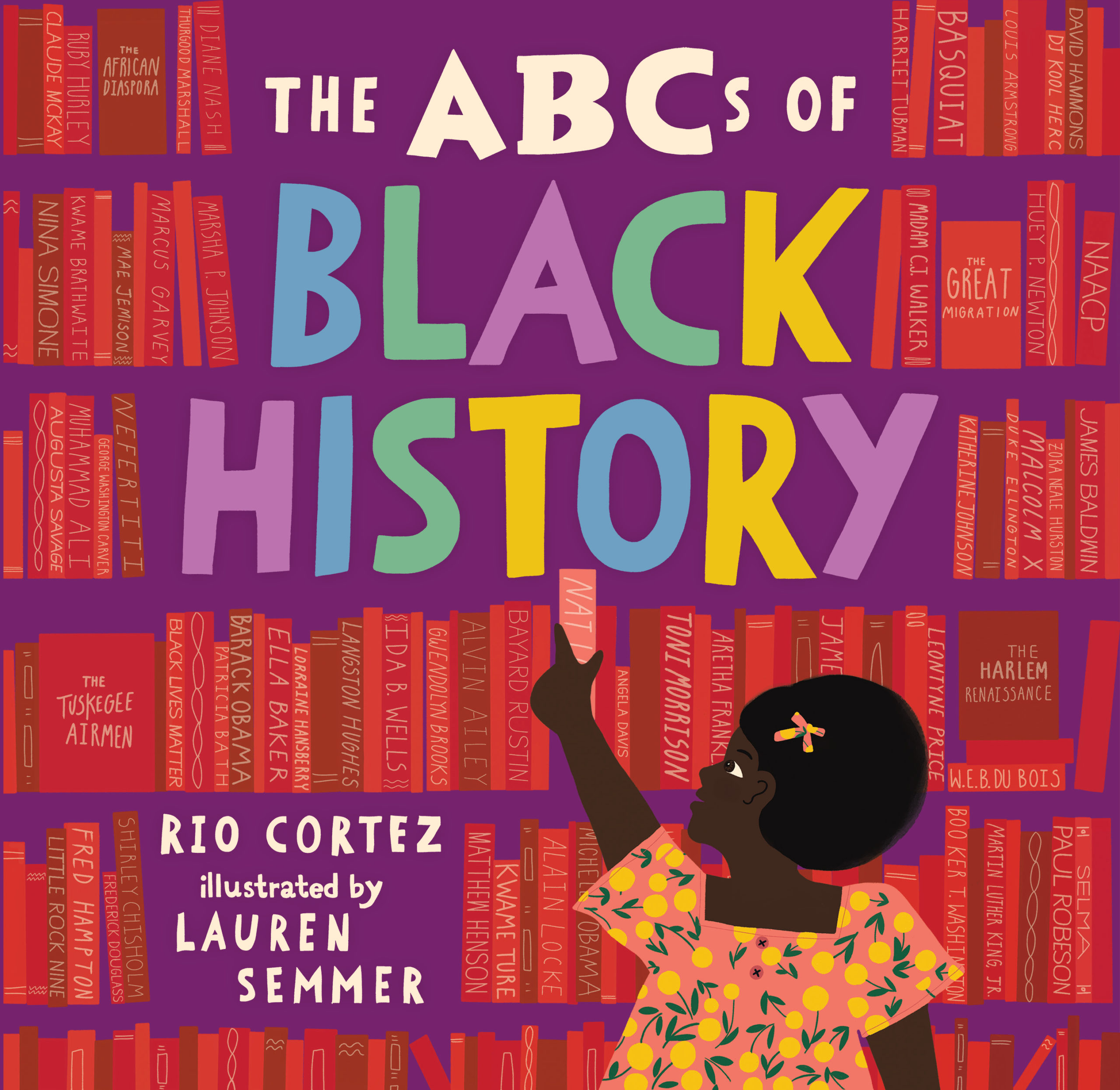
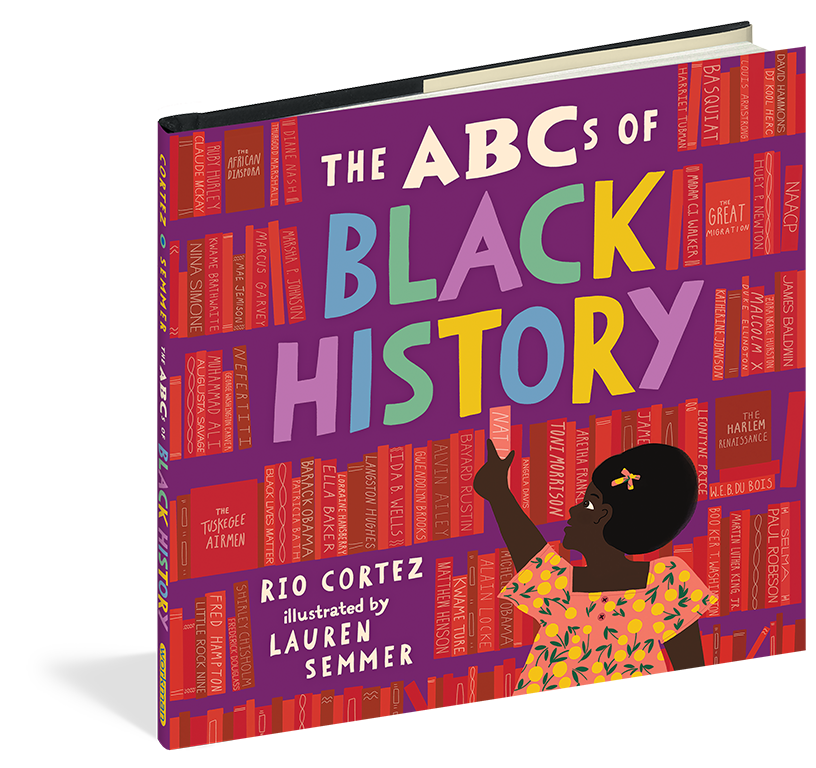
The ABCs of Black History by Rio Cortez, Illustrated by Lauren Semmer

Share

The ABCs of Black History
Author: Rio Cortez
Illustrator: Lauren Semmer
Published: December 8, 2020 by Workman Publishing Company

Summary: While many alphabet books have tackled a range of social justice topics from consent to feminism, there remains an urgent need to explore through a thoughtful lens how Black history has shaped American culture. The ABCs of Black History is a beautiful representation of the ideas and personalities that embody a wide range of Black people, experiences, and ideas in lively verse matched with vivid imagery.

Written by Pushcart-nominated-poet, Rio Cortez and illustrated by newcomer Lauren Semmer, The ABCs of Black History uses the alphabet as a frame to introduce Black history. Beginning with Anthem—an introduction to James Weldon Johnson’s Lift Ev’ry Voice and Sing—and ending with Zenith, a tribute to the mountaintop Dr. King spoke about before his death, readers will travel across continents and centuries, navigate triumph and heartbreak, and celebrate creativity and joy.

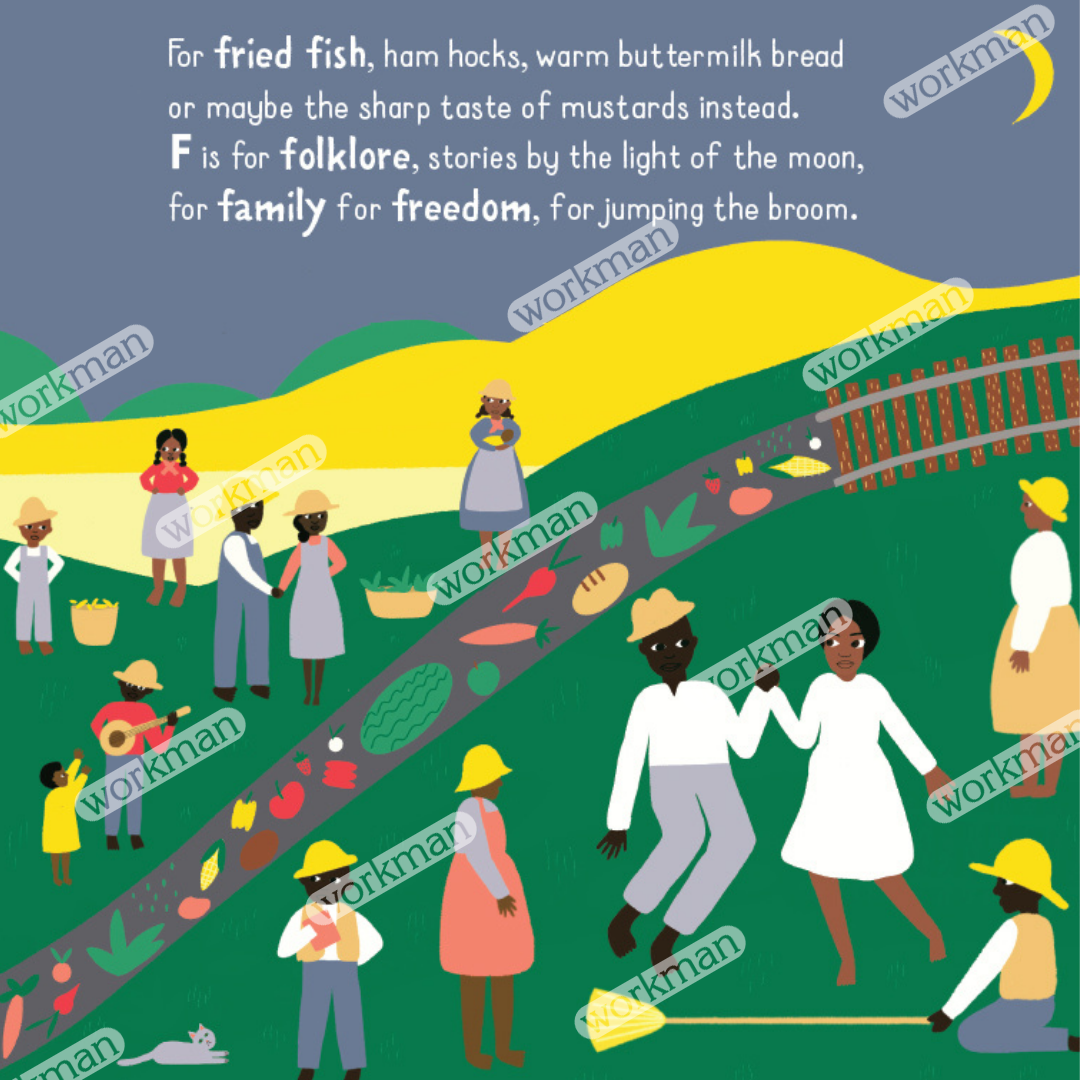
The poetic text introduces big ideas to engage curious minds. Every letter has a rhyming verse, and every spread is a visual feast. F explores the concepts of farming and food. G is for Go! and the Great Migration from the rural South to the urban North. Then the reader lands in Harlem, New York, where they meet Zora Neale Hurston and Langston Hughes. Contemporary moments are included too. M is for march and message, which explores the culmination of movements that have changed the course of history, from the Selma to Montgomery March in 1965 to the Black Lives Matter movement today. And Q is for queens, acquainting readers with powerful women like Leontyne Price, Queen Nandi, Toni Morrison, Michelle Obama, and many more.

The book also includes robust back matter that offers more information on the events, places, and people mentioned in the poem, from Fannie Lou Hamer to DJ Kool Herc, the Little Rock Nine to Sam Cooke.

A necessary addition to every child’s bookshelf, The ABCs of Black History is an exuberant celebration of history, culture, race, and justice.

Ricki’s Review: Oh my. This is a powerful book. Every single page is beautifully constructed. I simply cannot imagine how long it took to create this book. It is 64 pages of masterful writing and eye-catching illustrations. To call this an alphabet book would be to undermine everything that it is. Each spread features a different letter with numerous words connected to Black history and written in poetic form. Nine pages of back matter offer further information of all of the people, places, and terms used throughout the book. Thus, a child will hear the lilt of a poetic description in a read aloud, and the back matter offers more learning. I describe a child here, but as an adult, I was absolutely captivated by this text. This book is one to read and love and it is one to gift. Also, in case you missed it, look at the cover! I loved this book and give it my highest recommendation.

Teachers’ Tools for Navigation: Teachers might ask each child to select a letter in the book. They can learn more about the people, places, and terms used and share with peers more information about Black history. Then, they might create their own alphabet books about a topic they are interested in researching.

Discussion Questions: 

  • Which letter spread did you like the most? What did you learn?
  • How does the author incorporate information in a poetic and engaging way?
  • How do the illustrations elevate your understanding of the text?

Flagged Passage: 

E is for explore—to study a place: like Matthew Henson, the Artctic; Mae Jemison, space.

E is for education, for expanding the mind, like Ruby Bridges, Linda Brown, the Little Rock Nine—The first Black children in all-white schools, they opened the doors and challenged the rules.

Flagged Spread:

Excerpted from THE ABCs of BLACK HISTORY by Rio Cortez (Workman Publishing). Copyright © 2020. Illustrations by Lauren Semmer

Read This If You Love: Nonfiction picture books, Black history books, alphabet books, Hidden Figures by Margot Lee Shetterly, Frederick Douglass: The Lion Who Wrote History by Walter Dean Myers, Duke Ellington: The Piano Prince and His Orchestra by Andrea Davis Pinkney, We March by Shane W. Evans, Harlem’s Little Blackbird: The Story of Florence Mills by Renee Watson, Freedom in Congo Square by Carole Boston Weatherford

Recommended For: 

  classroomlibrarybuttonsmall

Educators’ Guide for A Stone Sat Still by Brendan Wenzel

Share

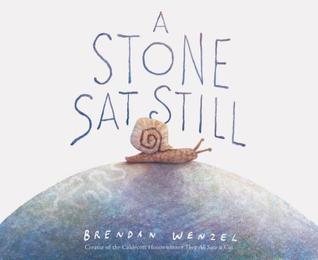
A Stone Sat Still
Author & Illustrator: Brendan Wenzel
Published: August 27th, 2019 by Chronicle Books

Summary: The brilliant follow-up to the Caldecott Honor-winning and New York Times bestselling picture book They All Saw a Cat by Brendan Wenzel!

A Stone Sat Still tells the story of a seemingly ordinary rock—but to the animals that use it, it is a resting place, a kitchen, a safe haven…even an entire world.

This is a gorgeous exploration of perspective, perception, and the passage of time, with an underlying environmental message that is timely and poignant.

• Filled with stunning illustrations in cut paper, pencil, collage, and paint
• Soothing rhythms invite reading aloud and bedtime snuggles
• Introduces concepts like color, size, function, and time in a way that is easily understandable and teachable for children

With a rhythmic, calming narrative about the stone and its place in the world—and the changing environment—A Stone Sat Still proves Brendan Wenzel’s mastery of the picture book form.

Teachers’ Tools for Navigation and Discussion Questions: 

Please view and enjoy the official educators’ guide for A Stone Sat Still (created by me!):

You can also access the teaching guide here.

You can learn more about A Stone Sat Still here.

Recommended For: 

readaloudbuttonsmall classroomlibrarybuttonsmall litcirclesbuttonsmall closereadinganalysisbuttonsmall

Kellee Signature

Nonfiction History Books for Kids: The Extraordinary Lives Series by Kane Miller Books

Share

I am thrilled to introduce a new series that I am hosting, which explores nonfiction history books for kids. This is all we read in our house, and I’ve learned so much, so I am jazzed to dive deeply into some of the texts on the blog.

I want to start off by sharing a phenomenal series by Kane Miller: The Extraordinary Life of… series. You’ll want to get your hands on these.

Summary: A bold new series for young readers focusing on the lives of inspirational historical and modern figures.

Review: We have fallen in love with the Extraordinary Lives series. My first grader can’t get enough nonfiction. He could spend a full 12-hour day looking through the nonfiction section of the library. He devoured information about the election, reads history books that are above his age range, and just asks for more, more, more. When I learned about the Extraordinary Lives series, I knew it would be a good fit. What I didn’t realize was that my preschooler and I would get just as much joy from the series as my first grader.

Here’s one picture I caught of my son reading them:

Here’s a closer look at the books:

PDF Loading...

Teachers’ Tools for Navigation: These books would be wonderful for use in book groups. I would be thrilled if my kids were in a classroom in which the teacher allowed them to choose the text of a person they were interested in studying. For instance, I LOVED learning about Mary Seacole. That particular book really captured me (although they were all fascinating to read). My sons each had their own favorites, and I imagine this would be the case in a classroom. Students might then present to their peers to teach about the person they chose. Choice is so important in the classroom, and this series offers such wonderful opportunities for learning.

Discussion Questions: 

  • Which book did you choose and why?
  • What did you learn?
  • How did the author create engaging content to help you learn more about the person?

Flagged Passage from the Katherine Johnson Text: 

Read This If You Love: Nonfiction books, history books, biographies, Hidden Figures by Margot Lee Shetterly, Schomburg: The Man Who Built the Library by Carole Boston Weatherford, Radiant Child: The Story of Young Artist Jean-Michel Basquiat by Javaka Steptoe, Duke Ellington: The Piano Prince and His Orchestra by Andrea Davis Pinkney, We March by Shane W. Evans, Harlem’s Little Blackbird: The Story of Florence Mills by Renee Watson, Freedom in Congo Square by Carole Boston Weatherford

Recommended For: 

  classroomlibrarybuttonsmall

Educators’ Guide for Leave It to Abigail: The Revolutionary Life of Abigail Adams by Barb Rosenstock, Illustrated by Elizabeth Haddeley

Share

Leave It to Abigail!: The Revolutionary Life of Abigail Adams
Author: Barb Rosensock
Illustrator: Elizabeth Haddeley
Published: February 4th, 2020 by Little, Brown and Company

Summary: In this inspiring tribute, award-winning author Barb Rosenstock and New York Times bestselling artist Elizabeth Baddeley tell the true story of one of America’s greatest founding mothers: Abigail Adams.

Everyone knew Abigail was different.

Instead of keeping quiet, she blurted out questions. Instead of settling down with a wealthy minister, she married a poor country lawyer named John Adams. Instead of running from the Revolutionary War, she managed a farm and fed hungry soldiers. Instead of leaving the governing to men, she insisted they “Remember the Ladies.” Instead of fearing Europe’s kings and queens, she boldly crossed the sea to represent her new country. And when John become President of the United States, Abigail became First Lady, and a powerful advisor.

Leave it to Abigail–an extraordinary woman who surprised the world.

Teachers’ Tools for Navigation and Discussion Questions: 

Please view and enjoy the official educators’ guide for Leave It to Abigail (created by me!):

You can also access the teaching guide here.

You can learn more about Fight of the Century here.

Barb Rosenstock also created two other resources for educators:
A Pinterest Board
A Text Set

Recommended For: 

readaloudbuttonsmall classroomlibrarybuttonsmall litcirclesbuttonsmall closereadinganalysisbuttonsmall

Kellee Signature