Magnolia Flower by Zora Neale Hurston, Adapted by Ibram X. Kendi, Illustrations by Loveis Wise

Share

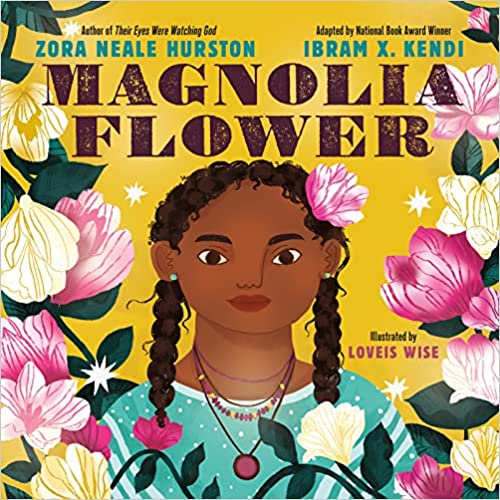
Magnolia Flower
Written by Zora Neale Hurston and Adapted by Ibram X. Kendi
Illustrator: Loveis Wise
Published: September 6, 2022 by Amistad Books for Young Readers

Goodreads Summary: From beloved African American folklorist Zora Neale Hurston comes a moving adaptation by National Book Award winner and #1 New York Times bestselling author of How to Be an Antiracist and Antiracist Baby, Ibram X. Kendi. Magnolia Flower follows a young Afro Indigenous girl who longs for freedom and is gorgeously illustrated by Loveis Wise (The People Remember, Ablaze with Color).

Born to parents who fled slavery and the Trail of Tears, Magnolia Flower is a girl with a vibrant spirit. Not to be deterred by rigid ways of the world, she longs to connect with others, who too long for freedom. She finds this in a young man of letters who her father disapproves of. In her quest to be free, Magnolia must make a choice and set off on a journey that will prove just how brave one can be when leading with one’s heart.

The acclaimed writer of several American classics, Zora Neale Hurston wrote this stirring folktale brimming with poetic prose, culture, and history. It was first published as a short story in The Spokesman in 1925 and later in her collection Hitting a Straight Lick with a Crooked Stick (2020).

Tenderly retold by #1 New York Times bestselling and National Book Award-winning author Ibram X. Kendi, Magnolia Flower is a story of a transformative and radical devotion between generations of Indigenous and Black people in America. With breathtaking illustrations by Loveis Wise, this picture book reminds us that there is no force strong enough to stop love.

Ricki’s Review: Magnolia Flower is a short story by Zora Neale Hurston, and it has been adapted into this picture book. The illustrations and words will appeal to kids, but as an adult, I felt like this was written for me, too. It has stunning figurative language, and the illustrations are absolutely beautiful. The author’s notes at the end helped me understand more about the book.

Teachers’ Tools for Navigation: Teachers might have students select a longer work (e.g. a short story) and adapt the book into a picture book. 

Discussion Questions: 

  • What does this story tell us about love?
  • What does this story tell you about history?
  • If you haven’t read the longer work, what do you think it might include, beyond this book?

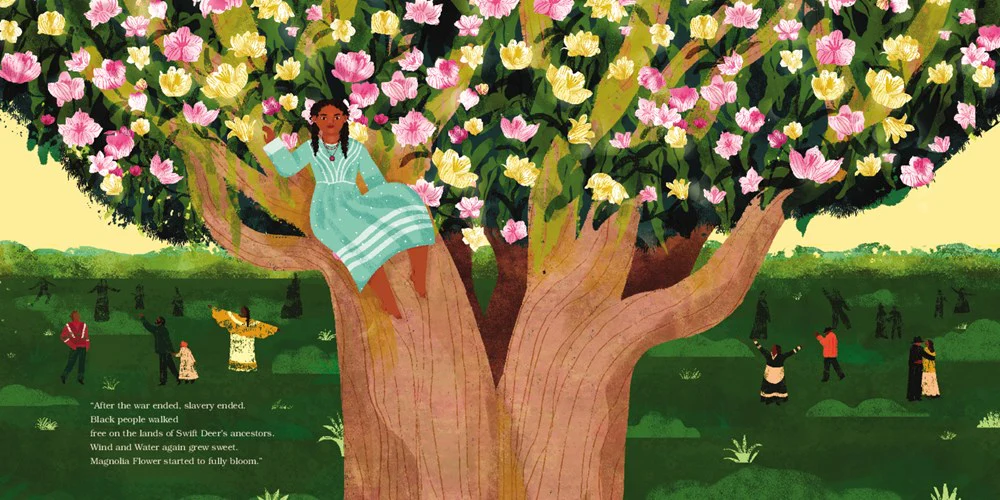
Flagged Spread: 

Recommended For: 

readaloudbuttonsmall classroomlibrarybuttonsmall closereadinganalysisbuttonsmall

RickiSig

**Thank you go Leilani at SparkPoint Studio for providing a copy for review!**

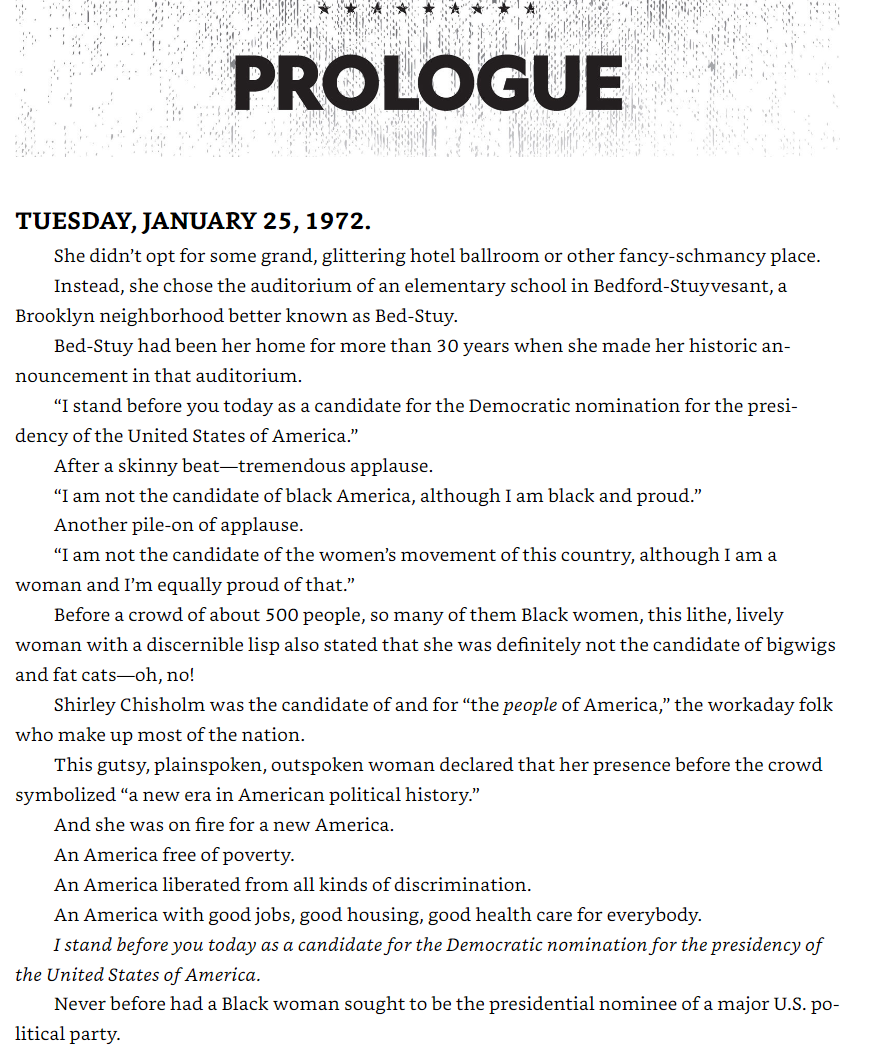
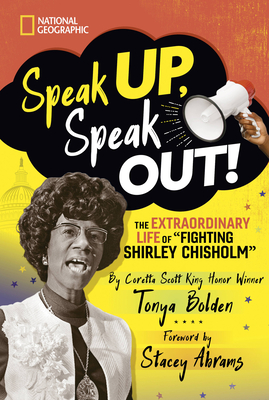
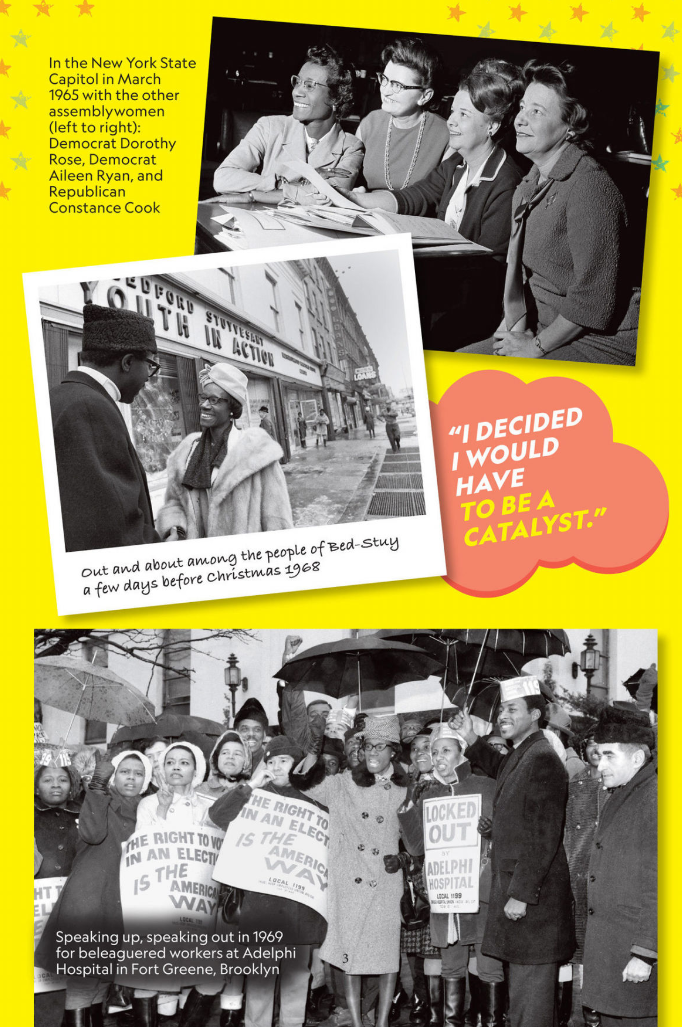
Speak Up, Speak Out! The Extraordinary Life of “Fighting Shirley Chisholm” by Tonya Bolden, Forward by Stacey Abrams

Share

Speak Up, Speak Out! The Extraordinary Life of “Fighting Shirley Chisholm”
Author: Tonya Bolden
Forward by: Stacey Abrams
Published January 4th, 2022 by National Geographic Kids

Summary: From award-winning author Tonya Bolden comes a biography of the first Black woman elected to the U.S. House of Representatives and the first Black woman to run for president with a major political party: Shirley Chisholm.

Before there was Barack Obama, before there was Kamala Harris, there was Fighting Shirley Chisholm. A daughter of Barbadian immigrants, Chisholm developed her political chops in Brooklyn in the 1950s and went on to become the first Black woman elected to the U.S. House of Representatives. This “pepper pot,” as she was known, was not afraid to speak up for what she thought was right. While fighting for a better life for her constituents in New York’s 12th Congressional District, Chisholm routinely fought against sexism and racism in her own life and defied the norms of the time. As the first Black woman in the House and the first Black woman to seek the presidential nomination from a major political party, Shirley Chisholm laid the groundwork for those who would come after her.

Extensively researched and reviewed by experts, this inspiring biography traces Chisholm’s journey from her childhood in a small flat in Brooklyn where she read books with her sisters to Brooklyn College where she got her first taste of politics. Readers will cheer Chisholm on to victory from the campaign trail to the hallowed halls of the U.S. Capitol, where she fought for fair wages, equal rights, and an end to the Vietnam War. And while the presidential campaign trail in 1972 did not end in victory, Shirley Chisholm shows us how you can change a country when you speak up and speak out.

Praise: “The strength of Bolden’s skill as a researcher is evident; chapter by chapter, she provides succinct but critical context around the motivations and movements of Chisholm’s political career. A foreword by Stacey Abrams helps establish that Chisholm’s legacy is one of political innovation as someone who forged a path for others to follow. This informative book has an engaging narrative structure. The use of repetition and inclusion of memorable pearls of wisdom attributed to Chisholm add a poetic tone. An insightful and focused profile of a political trailblazer.” —Kirkus Reviews

“This lively, detailed look at Chisholm’s personal and political life shines in its portrayal of a strong woman who never backed down; Bolden’s accessible text is great for report writers covering the groundbreaking Chisholm and the momentous time she lived in.” —Booklist

About the Author: Tonya Bolden has authored, edited and co-authored more than 40 books. Her work has garnered numerous awards, including the Coretta Scott King Honor, the James Madison Book Award, the NCSS Carter G. Woodson Honor, the Children’s Book Guild of Washington, D.C.’s Nonfiction Award, the NCTE Orbis Pictus Award for Outstanding Nonfiction for Children, the Virginia Library Association Jefferson Cup Award and the Cleveland Public Library Sugarman Award.  Lauded for her skilled storytelling, impeccable research and lively text, Tonya lives New York City. 

Review: Tonya Bolden’s biography of Shirley Chisholm is a perfect mix of historical remembrance as well as narrative structure to pull the reader in. You follow Shirley’s life as she goes against all odds and fights her way through politics, all while never losing her morals or remembrance of where she came from. As someone who knew of Chisholm but not specifics and boy, is she phenomenal! I highly recommend reading this book to learn more about this pioneer of civil and feminist rights.

Also, I read this book at the right time for me. As a Floridian going through an election, a reminder of hope is always needed. And Shirley Chisholm, her fight and success, and resilience shows that there have always been times to fight and there are always others that need to fight more.

Teachers’ Tools for Navigation: This biography will be perfect for updating nonfiction sections of libraries. Additionally, it would be a wonderful book club choice or lit circle choice when focusing on HERstory or true history.

Extra resources:

School Library Journal, January 25, 2022: Speaking Up and Speaking Out with Tonya Bolden on Shirley Chisholm (Q&A) by Betsy Bird

YA Books Central, February 15, 2022: YABC Interview with Tonya Bolden about Speak Up, Speak Out! (Feb. 2022) (Author Interview) by Beth Edwards

Discussion Questions: 

  • How did Shirley Chisholm deal with the racism and sexism she faced during her career?
  • What does Chisholm’s visit to Wallace tell us about her? Why did it make other Black politicians furious?
  • In what ways did she never let down Bed-Stuy? Why did some people feel she did?
  • How did Chisholm’s bid for the presidential nomination break barriers?
  • Why was Chisholm unhappy by the committee she was put on in Congress?
  • What major causes did Chisholm support? How did she do so throughout her career?
  • Great lesson plan on Shirley Chisholm found:

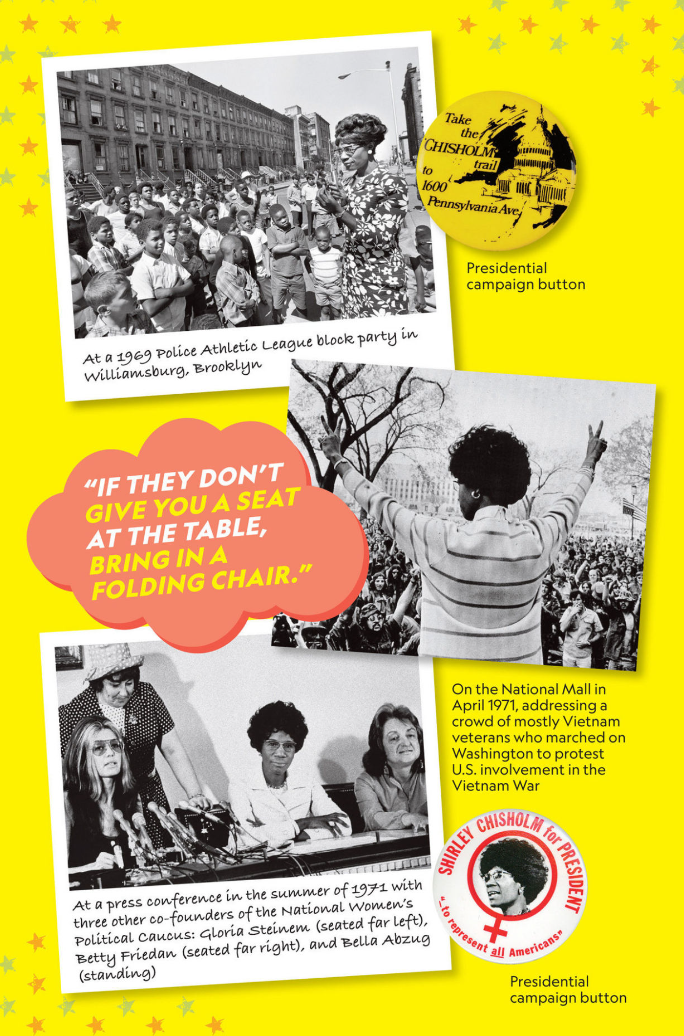
Flagged Passages: 

Read This If You Love: Narrative biographies

Recommended For: 

classroomlibrarybuttonsmall

Signature

**Thank you to Media Masters Publicity for providing a copy for review!**

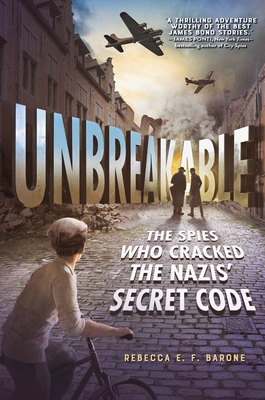
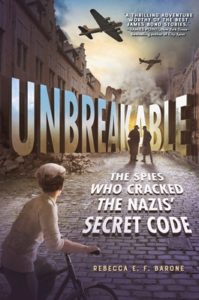
Unbreakable: The Spies Who Cracked the Nazis’ Secret Code by Rebecca E.F. Barone

Share

Unbreakable: The Spies Who Cracked the Nazis’ Secret Code
Author: Rebecca E.F. Barone
Publishing October 25th, 2022 by Henry Holt and Co.

Summary: Unbreakable is the true story of the codebreakers, spies, and navy men who cracked the Nazis’ infamous Enigma encryption machine and turned the tide of World War II.

As the Germans waged a brutal war across Europe, details of every Nazi plan, every attack, every troop movement were sent over radio. But to the Allied troops listening in—and they were always listening—the crucial messages sounded like gibberish. The communications were encoded with a powerful cipher, making all information utterly inaccessible . . . unless you could unlock the key to the secret code behind the German’s powerful Enigma machine.

Complete with more than sixty historical photos, Unbreakable tells the true story of one of the most dangerous war-time codebreaking efforts ever. While Hitler marched his troops across newly conquered lands and deadly “wolfpacks” of German U-Boats prowled the open seas, a team of codebreakers, spies, and navy men raced against the clock to uncover the secrets that hid German messages in plain sight. Victory—or defeat—in World War II would hinge on their desperate attempts to crack the code.

Praise: 

*”A riveting tribute to epic tests of men against the elements.” —Kirkus, starred review

*”A compelling narrative focused on science and technology, embedded in a cluster of thrilling adventure stories . . . Highly ­recommended.” —School Library Journal, starred review

*”Readers will be caught up in the real-time action sequences.” —Booklist, starred review

*”Exemplary.” —BCCB, starred review

About the Author: Rebecca E. F. Barone holds a Bachelor of Arts in English and a Bachelor of Science in Mechanical Engineering from Bucknell University along with multiple graduate degrees in mechanical engineering. Her technical projects include injury analysis for the National Football League, and her short-form STEM writing has been published in the award-winning Muse magazine. She is passionate about serving and mentoring underrepresented populations in STEM. She is also the author of Race to the Bottom of the Earth: Surviving Antarctica (which received four starred reviews).

Review: This book read like a page-turning, action-packed thriller and adventure story. But it is all real! Which makes it even better because it is truly unbelievable. Barone writes the different scenes, shared in vignette-type short stories that come together to show a whole picture, in a way that just grabs the reader’s attention and keeps you reading to figure out how everyone comes together to crack the secret code.

Teachers’ Tools for Navigation: This book will find its most success as an independent reading book and will definitely be a book to share with middle school readers who think they do not like nonfiction.

Also, check out the cover reveal on MGBookVillage for some background information from the author.

Discussion Questions: 

  • How did all of the countries work together (or not work together) to crack the code?
  • Who do you think was the greatest asset in the journey?
  • Why do you think the author chose to write the book in vignette-type short stories?
  • How does the inclusion of photographs add to the book?
  • The author states that the mathematicians were the hero of the story–do you agree? Why or why not?

Flagged Passages: 

ONE: TRAITOR
1929—Warsaw, Poland

THE BOX ARRIVED on the last Saturday in January.

Business in the Polish customs office went on as usual, the rhythm of sorting and inspecting undisturbed by the heavy package with a German postmark. In fact, the officer in charge had nearly finished when the urgent request came in.

Return it immediately, the German embassy demanded. There had been a mistake. It was a German package, intended for a German recipient. It should never have been sent to Poland. Cease operations and give it back.

Now, that made the customs officer pause.

He did not return the box. He opened it.

A polished surface gleamed in the light. Along a hinge in the back, a wood cover opened to reveal something almost like a typewriter. Elevated keys were arranged in three rows along the bottom, each labeled with a letter of the German alphabet.

But that was where the similarity to a typewriter ended.

There was no inked ribbon, no carriage in which to hold paper to type a letter. Instead, the top of the box was filled with small circular windows arranged in three rows identical to the keyboard below; each window contained a single letter printed on translucent material.

If the customs officer pressed a key, instantly, in the top rows, one letter began to glow. As soon as he released the key, the light went out. If he pressed the same letter key again, an entirely different light and letter shone back.

Quickly, the Polish customs officer made a call. Across town, two men secretly working for the Polish cipher agency understood immediately and rushed to the customs office.

Over the next two days and through the next two nights, the men disassembled, examined, and reassembled the machine.

By Monday morning, they had meticulously put every part back into place. They repackaged the machine in the same box and wrapped it in the same brown paper in which it had arrived.

Poland would return German property to Germany, as requested. The delay, inevitable, due simply to the weekend.

No one in Germany suspected a thing.

Enigma in use.

[Bundesarchiv, Bild 183–2007–0705–502 / Walther / CC-BY-SA 3.0]

Two years later, Sunday, November 1, 1931—the German-Belgian border

Hans-Thilo Schmidt rushed through the doors of the Grand Hotel in Verviers, Belgium, two hours late. He never saw the man sitting in the lobby waiting for him.

To this man, Schmidt was an ordinary German of average build, wearing a dark hat and dark coat. Schmidt was red in the face and puffy around the eyes, both traits the man watching him had been expecting. He knew that Schmidt’s train was late, and Schmidt sweated and grew flushed as he hurried to make up lost time. Schmidt’s puffy eyes had been expected as well. The people this man watched often suffered from sleepless nights. Treason was never an easy decision.

Not that Schmidt would have noticed the man even if he’d been relaxed and alert. Hans-Thilo Schmidt was far from experienced in spy craft. Last June, when he had first decided to trade secrets for money, he simply walked into the French embassy in Berlin. Incredibly, he plainly announced his intent to sell information to the French government. Without cover and without any personal security, he asked whom he should contact in Paris to do so. Somehow, he had neither been arrested by the Germans nor ignored by the French.

Now, five months later, the German Schmidt was about to meet face-to-face with a French intelligence officer. Hans-Thilo was nervous, and he was late.

At the front desk, the receptionist checked Schmidt into a room already reserved for him and handed him an envelope along with his key. He entered the elevator, and as the doors closed in front of him, the man watching him from the lobby saw him rip into the letter, which read “You are expected in suite 31, first floor, at 12 noon.”

At precisely noon, as the letter instructed, Schmidt knocked at suite 31.

The door opened into another world where time seemed to slow as an older woman with elegantly styled white hair greeted him and asked him to wait in the comfortable, richly furnished room. Soft music played gently over the radio. An inviting arrangement of liquor and crystal glasses was set out next to a display of fine cigars. Gratefully, Schmidt eased himself into a plush chair.

“Guten Morgen, Herr Schmidt! Hatten sie eine gute Reise?”

Schmidt jumped as an unfamiliar voice boomed at him in German. An immense man with a shaved head came through a doorway, entering the living area through another room in the suite. Round, dark spectacles framed icy blue eyes that pierced Schmidt with an unwavering stare.

“Sit down, please,” the man continued. “How are Madame Schmidt and your two children?”

Schmidt, already on edge, tensed more. He was currently living alone, and his wife, son, and daughter were living with his wife’s parents.

“I know,” the man said, cutting Schmidt off before he had a chance to answer. “You will want to bring your family back together soon and resume a pleasant life. That, of course, depends on you. We will assist you if your cooperation proves fruitful to us.”

Taking an offered glass of whiskey, Schmidt sat back down.

The man confronting him became even more serious. “Your resourcefulness last June in Berlin was quite exceptional and effective, Mr. Schmidt. Quite fortunately you happened upon an official of the French embassy who … was inconspicuous. What would you have done if he had thought you were an agent provocateur and called the police?”

This pushed Hans-Thilo Schmidt to his limit. “I thought you would understand!” he snapped, defiant. “If you feel this way, my only option is to withdraw. Others will know how to interpret my motivations and the rationale of my propositions.”

“Easy now, Mr. Schmidt,” the man responded. “We appreciate your initiative and the benefit we can gain from it.

“Let me be frank,” the man continued, “my name is Lemoine, and I represent the French Intelligence Bureau.”

Read This If You Love: World War II (and other war) nonfiction books

Recommended For: 
classroomlibrarybuttonsmall 

Signature

**Thank you, Kelsey from Macmillan Publishing, for providing a copy for review!**

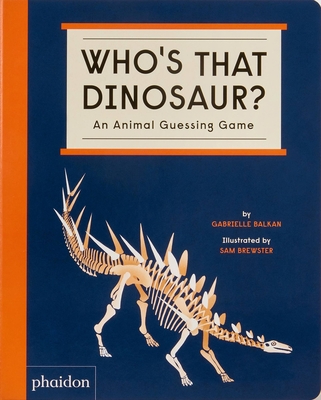
Who’s That Dinosaur?: An Animal Guessing Game by Gabrielle Balkan, Illustrated by Sam Brewster

Share

Who’s That Dinosaur?: An Animal Guessing Game
Author: Gabrielle Balkan
Illustrator: Sam Brewster
Published September 21, 2022 by Phaedon

Summary: A playful, informative introduction to dinosaurs for the youngest readers, by the team behind the bestselling Book of Bones

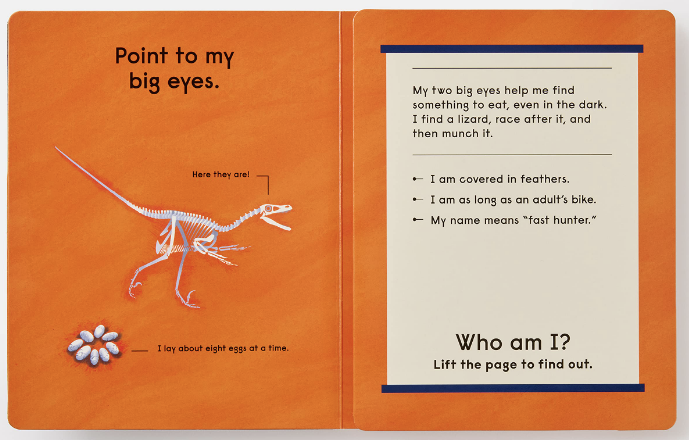
Set up as a guessing game with visual and narrative clues, Who’s That Dinosaur? invites readers to examine seven skeletons and guess to whom they belong. The answer is provided in a vibrant, foldout reveal, accompanied by an explanation as to why each dinosaur’s body was so special.

It’s a humorous, informative introduction to fossils and dinosaur anatomy, where, in a surprise twist, young children learn how birds are modern-day dinosaurs. A fun and informative introduction to the ever-popular topic of dinosaurs.

Review: This book is such good fun! It is an informational fiction text which really engages its readers. Although this is marketed to younger readers (ages 2-4), My almost 6-year-old had a BLAST reading it. He was able to read the words, so it also offered great vocabulary for him. (My 3-year-old, of course, loved it.) This is a book that would be great for preschool or early elementary school classrooms. It is interactive, engaging, and a very fun read—for adults, too!

Teachers’ Tools for Navigation: It would be neat to have children create their own interactive pages that fold out. They might pick a dinosaur or animal and research to create their own “Who’s that…” page filled with fun facts.

Flagged Spread:

Read This If You Love: Interactive activity books that are fun and educational

Recommended For: 

**Thank you to Phaidon for providing a copy for review!**
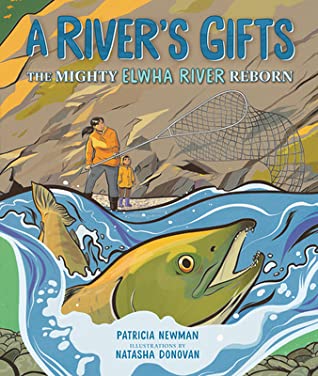
A River’s Gifts: The Mighty Elwha River Reborn by Patricia Newman, Illustrated by Natasha Donovan

Share

A River’s Gifts: The Mighty Elwha River Reborn
Author: Patricia Newman
Illustrator: Natasha Donovan
Published September 6th, 2022 by Millbrook Press

Summary: A mighty river. A long history.

For thousands of years, the Elwha river flowed north to the sea. The river churned with salmon, which helped feed bears, otters, and eagles. The Lower Elwha Klallam Tribe, known as the Strong People located in the Pacific Northwest, were grateful for the river’s abundance. All that changed in the 1790s when strangers came who did not understand the river’s gifts. The strangers built dams, and the environmental consequences were disastrous.

Sibert honoree Patricia Newman and award-winning illustrator Natasha Donovan join forces to tell the story of the Elwha, chronicling how the Strong People successfully fought to restore the river and their way of life.

About the Creators: 

Patricia Newman’s books inspire young readers to seek connections to the real world. Her titles encourage readers to use their imaginations to solve real world problems and act on behalf of their communities. These books include Sibert Honor title Sea Otter Heroes: The Predators That Saved an Ecosystem; Orbis Pictus Recommended Book Planet Ocean: Why We All Need a Healthy Ocean; Bank Street College Best Book Zoo Scientists to the Rescue; Booklist Editor’s Choice Ebola: Fears and Facts; and Green Earth Book Award winner Plastic, Ahoy! Investigating the Great Pacific Garbage Patch. Patricia frequently speaks at schools and conferences to share how children of any age can affect change. Visit her at www.patriciamnewman.com.

Natasha Donovan is the illustrator of the award-winning Mothers of Xsan series (written by Brett Huson). She illustrated the graphic novel Surviving the City (written by Tasha Spillett), which won a Manitoba Book Award and received an American Indian Youth Literature Award (AIYLA) honor. She also illustrated Classified: The Secret Career of Mary Golda Ross, Cherokee Aerospace Engineer which won an Orbis Pictus Honor Book and an American Indian Youth Literature Award (AIYLA). Natasha is Métis, and spent her early life in Vancouver, British Columbia. Although she moved to the United States to marry a mathematician, she prefers to keep her own calculations to the world of color and line. She lives in Washington. www.natashadonovan.com

Review: This book is different than Newman’s other books as it is illustrated and more lyrical than her books of the past; however, there is no need to worry — the book is beautiful! Newman does a fantastic job balancing the narrative of the river and the Lower Elwha Klallam Tribe with informative information about water, salmon, dams, and other wildlife. Newman’s prose also does amazing justice when it comes to the river’s legacy and the indigenous tribes that relied on, and lost, the river.

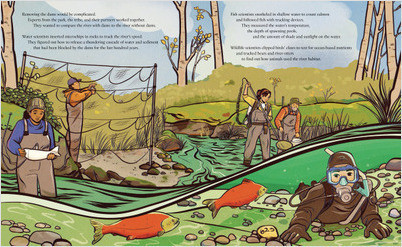
To add to Newman’s work, Donovan’s illustrations bring everything to life that Newman shares. Her work is filled with color and life and brings the whole book together.

A spectacular nonfiction picture book that takes the reader on a journey of a river’s legacy filled with lyrical prose and important information.

Teachers’ Tools for Navigation: The publisher has provided a Teaching Guide for The River’s Gifts:

There is also an interview with Patricia Newman that digs deeper into her book:

Flagged Passages: 

Book Trailer: 

Read This If You Love: Environmental nonfiction picture books

Recommended For: 

classroomlibrarybuttonsmall 

Signature

**Thank you to Patricia Newman and Lerner for providing a copy for review!**
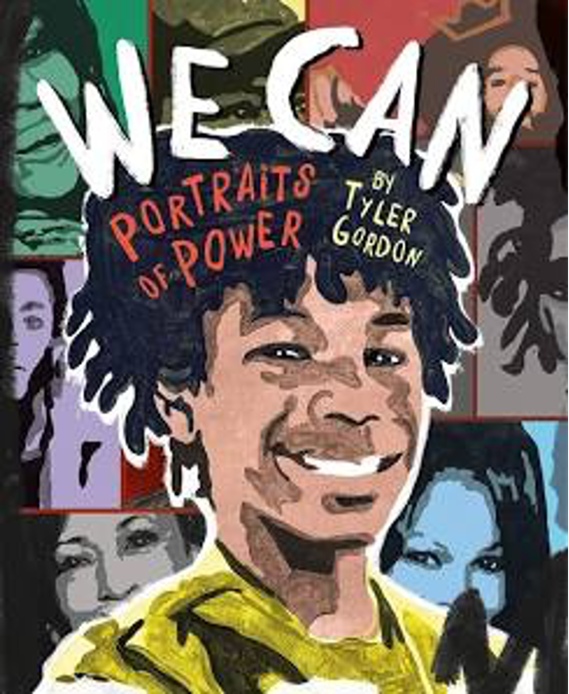
Guest Review: We Can: Portraits of Power by Tyler Gordon

Share

Guest Reviewer: Sailor, UCF Elementary Education Student

We Can: Portraits of Power
Creator: Tyler Gordon
Published September 28th, 2021 by Farrar, Straus & Giroux

Summary: “When I was born, the doctors told my mom that if I did survive I would have lots of health problems and be blind, deaf and severely mentally delayed . . . Boy were they wrong!” —Tyler Gordon

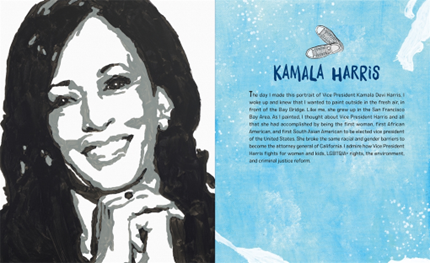
Fifteen-year-old Tyler Gordon’s journey from a regular kid growing up in San Jose, California, to a nationally recognized artist wasn’t without its challenges. For the first six years of his life he was fully deaf, which led to a stutter and bullying. Art gave him a creative outlet for his pain. Then, after painting a portrait of Kamala Harris and posting it on social media, he received a call from the vice president herself! Soon his art was everywhere. He had an interview with the The Today Show. He was the youngest artist featured in the Beverly Center. His portrait of LeBron James graced the cover of TIME Magazine. And that was only the beginning!

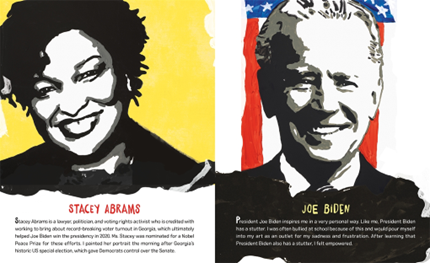
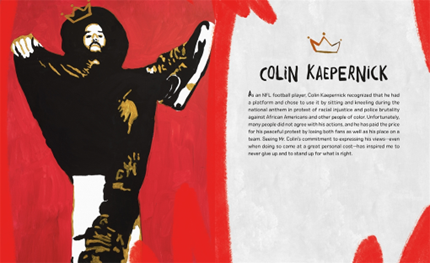
Here is a debut picture book by partially deaf prodigy Tyler Gordon, featuring his bold paintings of over 30 icons—musicians, artists, writers, civils rights leaders, sports legends, change-makers, record-setters, and more—alongside short explanations of how these people inspire him.

If Tyler can make art and follow his dreams, you can, too. We all can.

About the Author: Tyler Gordon is a fourteen-year-old painter whose work has been featured in TIME Magazine, Essence, Good Morning America, and ABC News. In 2020, he was awarded the Global Child Prodigy Award. He currently lives in San Jose, California with his family.

Review: We Can: Portraits of Power by Tyler Gordon is by far one of the best books for children to read. This book provides a lot of historical, and current information, that many people do not know, but should, about very famous and influential people. Tyler Gordon was only 14 years old when his book was published. He relates every single person that he paints to himself and talks about the honorable work that these people have done, walls they have torn down, and glass ceilings they have broken through.

Every single student can relate to this book in some way or another, with over 30 people showcased in We Can: Portraits of Power, students will be able to see themselves through one of them, all of them, or even through Tyler Gordon himself. This book is filled with politicians, artists, athletes, singers, philanthropists, civil rights activists, and many more. This story is able to empower students to be activists for theirs, and other people’s rights, all while also getting them excited and encouraging  them to learn about the history that some of these amazing  people have made, and are continuing to make.

I loved reading this book and looking at the beautiful art that Tyler has done and will continue to do. I cannot wait to see what this young man’s future holds.

Teachers’ Tools for Navigation: We Can: Portraits of Power by Tyler Gordon provides many great opportunities for use within the classroom. To start, teachers are able to have students pick their favorite person that Tyler had painted and write why that person was also an inspiration to them.  Teachers can also have students paint a portrait of someone who had has a big impact in their lives,  and. then write about them.

I think that one of the best ideas to pair with We Can: Portraits of Power by Tyler Gordon. would be to have students make a list of people who they look up to, and people that empower them to be great. After students make their lists, they would go back and write why these people have been so influential in their life, and then finally paint an image of them. Creating their own mini versions of We Can: Portraits of Power.

Discussion Questions: 

  • How does Tyler relate to President Biden? Do you know anyone that could also relate to President Biden and Tyler? Why is it good to be able to relate to successful people?
  • How did Tyler’s creativity help him?
  • How did this book inspire you?
  • Who did you relate to in this book? Why?
  • Why did Tyler use athletes, politicians, and historical figures in this book? What did it do to the story that he used  a variety of people?
  • Who do you think is the most important person in this book? Why do you think that? How can you relate to this person?

Flagged Passages: 

Read This If You Love: Art, Diversity, Empowerment

Recommended For: 

classroomlibrarybuttonsmall

Thank you, Sailor, for your review!

Guest Post: Classroom Uses for Jo Jo Makoons by Dawn Quigley, Length of a String by Elissa Brent Weissman, Melissa by Alex Gino, and Merci Suarez Changes Gears by Meg Medina

Share

One of the assignments during my Spring Children’s Literature course at UCF was creating a mini-teaching guide for the books we read for book clubs. We started with picture books for practice then students created them in their book clubs each week.

Today, I am happy to share the classroom uses and discussion questions found by my UCF Elementary Education students about these realistic fiction books.

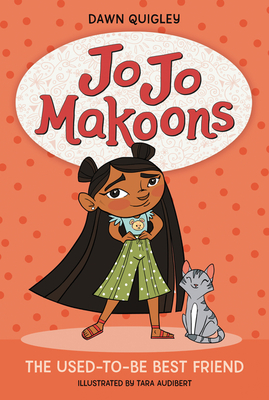
Jo Jo Makoons: The Used-to-be Best Friend
Author: Dawn Quigley
Illustrator: Tara Audibert
Published May 11th, 2021 by Heartdrum

Summary: Hello/Boozhoo—meet Jo Jo Makoons, a spunky young Ojibwe girl who loves who she is.

Jo Jo Makoons Azure is a spirited seven-year-old who moves through the world a little differently than anyone else on her Ojibwe reservation. It always seems like her mom, her kokum (grandma), and her teacher have a lot to learn—about how good Jo Jo is at cleaning up, what makes a good rhyme, and what it means to be friendly.

Even though Jo Jo loves her #1 best friend Mimi (who is a cat), she’s worried that she needs to figure out how to make more friends. Because Fern, her best friend at school, may not want to be friends anymore…

Teachers’ Tools for Navigation: This book can be used in the classroom as a tool to show the students that it’s important not to assume what another student is thinking. It is always best to vocalize concerns

Discussion Questions: 

  • Describe what a reservation is according to the book?
  • Why did Kokum (grandma) move in with Jo Jo and her mom?
  • In what ways are cats and balloons different?
  • Why did Jo Jo Makoons cut the toes out of her socks? What did she do with them?
  • What happens when Jo Jo takes Mimi to school?
  • What did the new girl, Susan do when she saw Mimi in the classroom?  How did JoJo feel about Susan’s reaction?
  • What are some ways you may relate to Jo Jo?
  • Has anybody ever felt like they might lose their best friend? Why?
  • How do Jo Jo’s classmates help her see that they are friends at the end of the story.
  • What does it mean to be a good friend to you?
  • What are some positive traits we could learn from Jo Jo?
  • In the Book Jo Jo cut out the toes in her socks. Why did she do this?
  • Why do you feel that Jo Jo felt left out at school?
  • Why was it so important for Jo Jo to bring MiMi to school with her?
  • What ways could JoJo have approached her classmates at lunch before getting upset about eating alone?
  • Why do you feel it’s important for Jo Jo and her family to learn and know the language of her Ojibwe tribe?
  • What could JoJo have done better for her original rhyme to make it better?
  • Like Jo Jo if you had to bring your best friend to class with you, who would it be and why?
  • How did you feel about the nickname Jo Jo made for Chuck?
  • Why do you think Jo Jo thought the Gym teacher’s name was Jim?

Recommended For: 

classroomlibrarybuttonsmall


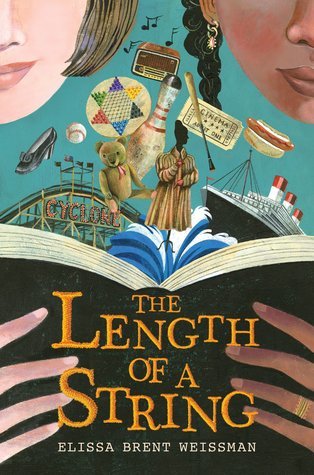
The Length of a String
Author: Elissa Brent Weissman
Published May 1st, 2018 by Dial Books

Summary: Imani is adopted, and she’s ready to search for her birthparents. But when she discovers the diary her Jewish great-grandmother wrote chronicling her escape from Holocaust-era Europe, Imani begins to see family in a new way.

Imani knows exactly what she wants as her big bat mitzvah gift: to meet her birthparents. She loves her family and her Jewish community in Baltimore, but she has always wondered where she came from, especially since she’s black and almost everyone she knows is white. When her mom’s grandmother–Imani’s great-grandma Anna–passes away, Imani discovers an old diary among her books. It’s Anna’s diary from 1941, the year she was twelve–the year she fled Nazi-occupied Luxembourg alone, sent by her parents to seek refuge in Brooklyn. Written as a series of letters to the twin sister she had to leave behind, Anna’s diary records her journey to America and her new life with an adopted family. Anna’s diary and Imani’s birthparent search intertwine to tell the story of two girls, each searching for family and identity in her own time and in her own way.

Teachers’ Tools for Navigation: Use this book to discuss and learn about History-World War II/Holocaust, the Jewish faith, and adoption.

This book is educational because it discusses the Holocaust from the point of view of someone who experienced it. It also has an engaging story line that makes readers want to read more to find out what will happen. This book would be very useful when teaching about the Holocaust.

Discussion Questions: 

  • How do you think Imani felt when she started to read about Anna’s life in her diary?
  • Think of a time you felt out of place and write about how that made you feel.
  • Why do you think Imani’s mom cries so much?
  • Have you ever felt a special connection with someone in you family?
  • If you were Imani, would you continue to look for your birth parents?
  • Suppose you wrote a diary about something that you want people/family in the future to know. What would it be about and why?
  • What are some special celebrations that you do with your family?
  • If you were Imani’s friend, what advice would you give her as she goes through this journey?
  • What is something you have that is special that you think you will give to someone in the future?
  • Why do you think people living around Imani insensitive questions?

Recommended For: 

classroomlibrarybuttonsmall


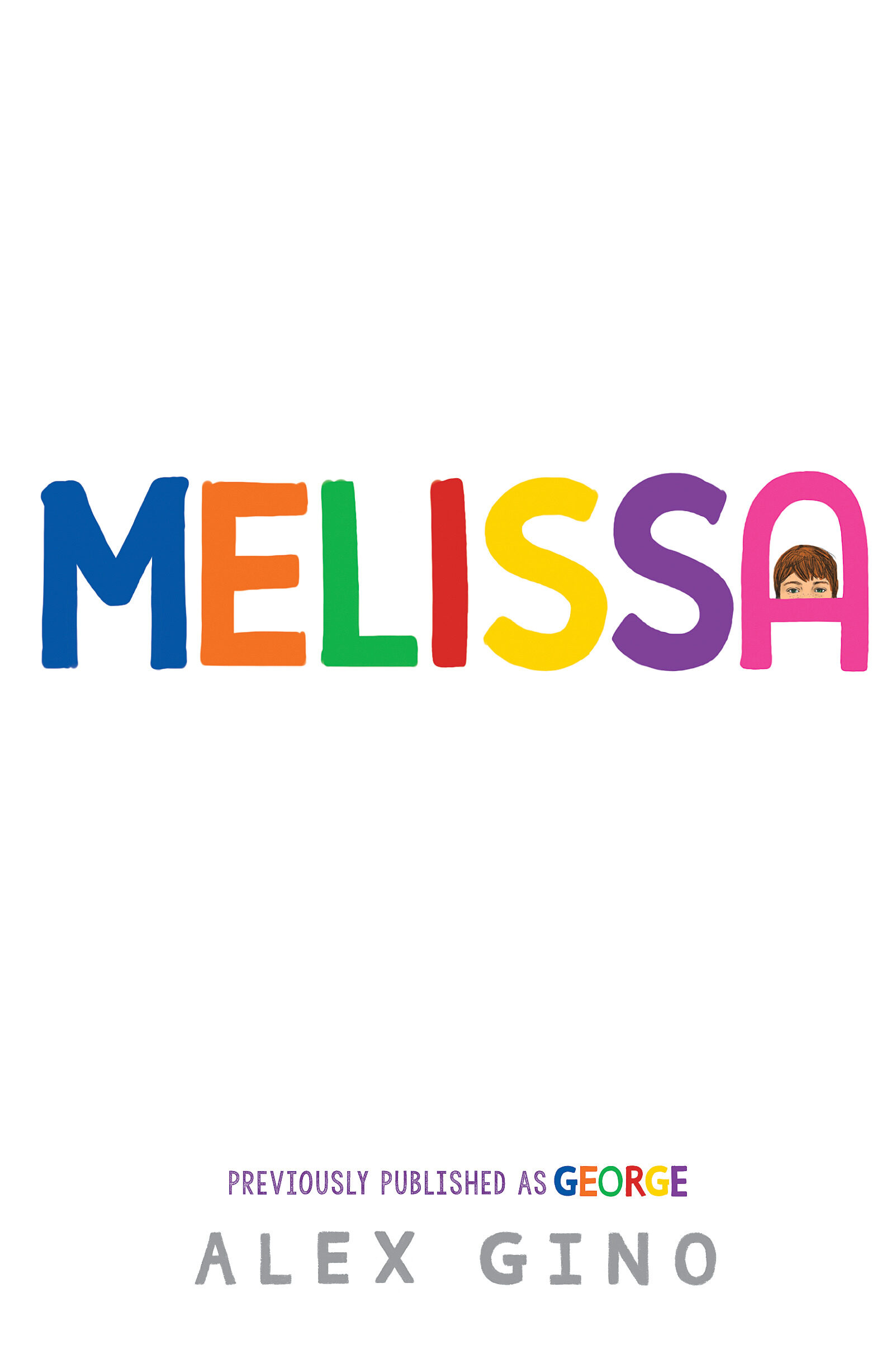
Melissa
Author: Alex Gino
Published August 25th, 2018 by Scholastic

Summary: When people look at George, they think they see a boy. But she knows she’s not a boy. She knows she’s a girl.

George thinks she’ll have to keep this a secret forever. Then her teacher announces that their class play is going to be Charlotte’s Web. George really, really, REALLY wants to play Charlotte. But the teacher says she can’t even try out for the part . . . because she’s a boy.

With the help of her best friend, Kelly, George comes up with a plan. Not just so she can be Charlotte — but so everyone can know who she is, once and for all.

Teachers’ Tools for Navigation: This story is a good teachable book where certain themes can be brought up and talked about within the classroom setting. Where students can ask questions that may push boundaries but can be answered in a professional setting. This novel would be useful in the classroom to teach and promote gender diversity. This book would also be great as a classroom library so that students who may be facing these issues will have something relatable to read.

Discussion Questions: 

  • Identify some ways Melissa being trans affected their life.
  • Think about a moment when someone in the book was bullied. What could have been done differently?
  • Why do you think Melissa was so scared to tell her parents about who she is?
  • What does it mean to be an Ally?
  • Describe two ways someone else helped Melissa.
  • Describe Melissa’s disposition throughout the book. How did it change?
  • Do you think that it was a good idea to talk to a therapist about the issues between Melissa and her mom?
  • Write about a time you felt scared to tell someone the truth.
  • If you were in Melissa’s class what would you do to make her feel welcome?
  • Sketch a scene from the book. Why did you pick that scene?
  • Why do you think the author chose to use the pronoun “she” when describing or referring to George?  Does this make a difference to the way you feel about the character?
  • How do you think George feels having to keep this big secret inside?  (Use text evidence to support your claims.)  Have you had to keep a secret about yourself — how does this make you feel?  Without revealing the secret (unless you feel comfortable), share or write about this experience and how you were affected.
  • George eventually reveals her secret to those she cares about.  How does this make her feel?  (Use text evidence to support your claims.)  What are some consequences of “hiding” vs. “being yourself”?
  • What do you think it takes to “be yourself”? What are some pros and cons of being who you are?  What are some other examples of “being yourself” that might be scary for kid?
  • Share or write about a time where you had to be brave enough to be who you are.  What made you finally do it, and what effects did the experience have on your life?
  • People reacted differently to George’s revelation. Discuss how they differed and possible reasons why (try to think about this from the person’s point of view).  How do you think you would react if you were each of these individuals?
    1. Classmates
    2. George’s mom and big brother
    3. School teacher/principal
    4. George’s best friend Kelly
    5. Kelly’s dad and uncle
  • Discuss diversity, acceptance/tolerance, prejudice, bullying, compassion, etc.  Come up with real-life examples. What are some way your classroom/school/family/community could be more accepting of those who might be different from you?
  • Towards the end of the book, the author switches to the name Melissa when referring to George.  Why do you think they chose to do that?
  • How does Melissa feel in the first few chapters of the book?
  • How does Melissa feel at the end of the book?
  • Why did Ms.Udell not let Melissa play Charlotte?
  • Have you ever felt lost or scared to tell the truth? If so, how did that make you feel?
  • If Melissa was in your class, what are some ways you could make her feel welcomed?
  • Name a few things that Melissa had to struggle with, because she wanted to be trans.

Recommended For: 

classroomlibrarybuttonsmall


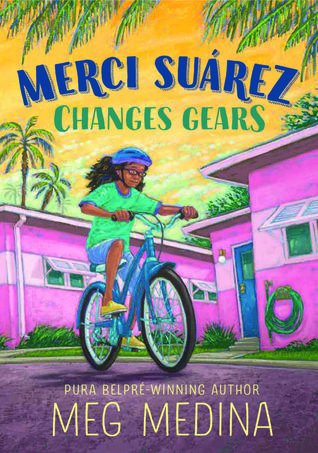
Merci Suárez Changes Gears
Author: Meg Medina
Published September 11th, 2018 by Candlewick Press

Summary: Thoughtful, strong-willed sixth-grader Merci Suarez navigates difficult changes with friends, family, and everyone in between in a resonant new novel from Meg Medina.

Merci Suarez knew that sixth grade would be different, but she had no idea just how different. For starters, Merci has never been like the other kids at her private school in Florida, because she and her older brother, Roli, are scholarship students. They don’t have a big house or a fancy boat, and they have to do extra community service to make up for their free tuition. So when bossy Edna Santos sets her sights on the new boy who happens to be Merci’s school-assigned Sunshine Buddy, Merci becomes the target of Edna’s jealousy. Things aren’t going well at home, either: Merci’s grandfather and most trusted ally, Lolo, has been acting strangely lately — forgetting important things, falling from his bike, and getting angry over nothing. No one in her family will tell Merci what’s going on, so she’s left to her own worries, while also feeling all on her own at school. In a coming-of-age tale full of humor and wisdom, award-winning author Meg Medina gets to the heart of the confusion and constant change that defines middle school — and the steadfast connection that defines family.

Teachers’ Tools for Navigation: This book would be useful in a classroom for teachers to expose a lot of topics to students such as bullying, family relations, and relatable school interactions like wanting to play sports or friendships and grades. As well as students that are nervous about their 6th grade year or also starting sixth grade read about someone going through the same things as them.

Discussion Questions: 

  • What do you think caused Lolo to pick up the wrong twins?
  • Why do you think Merci and Edna are not friends?
  • Why do you think Edna is worried about appearances and mercy is not?
  • After their first interaction, do you think Merci will end up enjoying Michael as a sunshine buddy?
  • If you were a new kid would you want a sunshine buddy? Would you want to be a sunshine buddy? Why or why not?
  • Do you think Merci handled her situations maturely? Why or why not ?
  • Why did Merci’s parents hide Lolo’s conditions from her ?
  • How would you describe Merci’s relationship with her grandfather?
  • Do you think Merci’s culture made her feel different from her peers at school ? Why or Why not ?
  • How would you handle being falsely accused of something you didn’t do like Merci when edna destroyed the mask ?

Recommended For: 

classroomlibrarybuttonsmall