Review and Author Interview!: Ebola: Fears and Facts by Patricia Newman

Share

NFPB2015

Nonfiction Picture Book Wednesday

Nonfiction Picture Book Wednesday is hosted by Kid Lit Frenzy and was started to help promote the reading of nonfiction texts. Most Wednesdays, we will be participating and will review a nonfiction text (though it may not always be a picture book).
Be sure to visit Kid Lit Frenzy and see what other nonfiction books are shared this week!

ebola

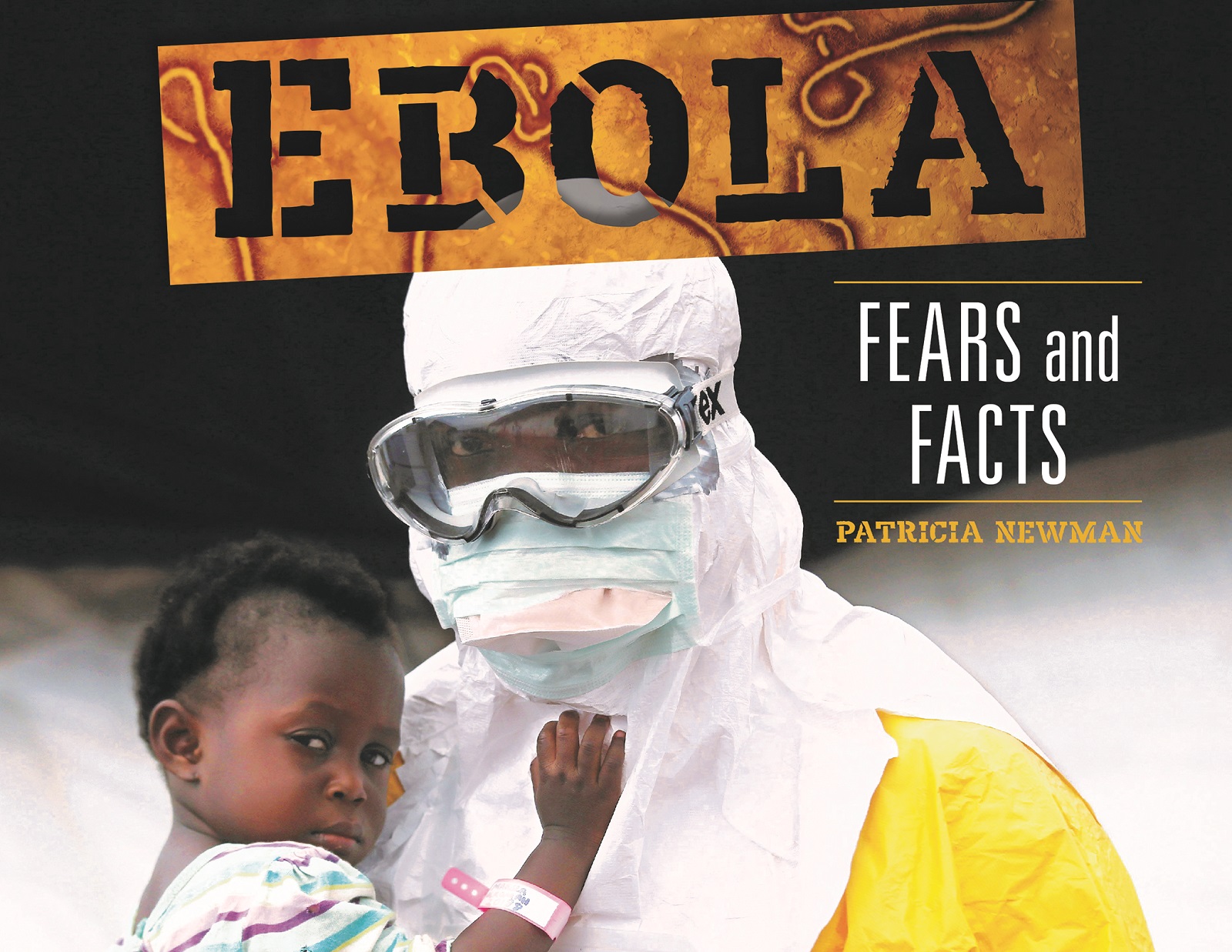
Ebola: Fears and Facts
Author: Patricia Newman
Expected Published October 28th, 2015 by Lerner Publishing Group

Goodreads Summary: Ebola is a deadly contagious disease. From 1975 to 2013, it killed about 1,500 people. But a 2014 epidemic killed more than six times that number. At first the outbreak was contained to one country. But soon it spread to two others―the virus was on the move, and people were scared. When two American healthcare workers became infected and were sent to the United States for treatment, many people feared a pandemic―an outbreak that would spread all over the world. Could it happen?

Ebola: Fears and Facts takes you behind the sensational headlines to address questions and concerns about the virus. Learn about the history of the disease, its symptoms, and how it spreads. Find out how the 2014 epidemic compares to past Ebola outbreaks, as well as to outbreaks of other infectious diseases. With a question-and-answer section and reference maps, Ebola: Fears and Facts will help you to better understand this most-feared disease.

My Review: The Ebola epidemic of 2014 caused pure panic around the world. Because of the 24-hour news coverage of the disease as it entered the U.S, Ebola became a hot topic; however, there was so much misconception about the disease. As a teacher during the epidemic, I saw how scared students were of the disease and how little they knew about it. The text is a wonderful resource to help kids learn about the disease.

Teachers’ Tools for Navigation: Patricia Newman’s middle grade nonfiction texts are a necessity for middle school classrooms. They teach the reader so much about the topic though do so in an interesting way to keep the readers’ attention. They are also about important topics that kids can make a difference by learning about. Her books, including Ebola, need to be available to students.

I really like how the book is set up. It begins with the history then goes into the way Ebola works and finally looks at the 2014 outbreak and how Ebola could possibly be conquered. It allows readers to navigate to the section they want or build up their knowledge from beginning to end.

Discussion Questions: What did you learn about Ebola that you didn’t know before reading?; What is the difference between Ebola and diseases like the measles?; How did the Ebola virus begin?; How is the Ebola virus a threat to apes in Africa?

“Truth or Hype?…The next time you come across a story about Ebola–or any topic–ask yourself the following questions. 1. What does the storyteller want us to remember? 2. How might different people understand the story? 3. Does the storyteller present facts or opinions? How do we know? What words are used? Does the storyteller quote scientific or eyewitness sources? 4. What action does the storyteller want us to take? 5. Do our emotions influence the way we evaluate the story?” (p. 35)

Author Interview: Thank you to Patricia for answering some of my questions!

What research did you do when writing Ebola? 

I visited East Africa several years ago, so I had a general sense of the landscape, the bush, the people, the cadence of their speech. But the crowded cities and steamy jungles of West Africa are different than the wide open savannas of the east. Of course, I needed to learn about the physiology of the disease, but I also wanted to know where in the jungle it came from and how it affected all aspects of peoples’ lives.

I interviewed a CDC epidemiologist who’d just returned from Liberia; read books by David Quammen and Peter Piot; deciphered scientific studies in journals such as the New England Journal of Medicine and Vector Borne and Zoonotic Diseases; scoured the CDC, WHO and MSF websites for case counts and anecdotal information; and read every news story (or watched every video) I could get my hands on. I also interviewed a nurse at a Sacramento hospital near my home who specializes in speaking to children about serious illnesses. Her compassion and common sense were tremendously helpful. A small fraction of my sources are listed in the back of the book.

My nurse-source also gave me a full set of Ebola protective gear. I share it with students at school visits and talk to them about how health-care professionals put it on and take it off.

Why did you decide to research and write about Ebola?

My editor, Carol Hinz, came to me in November 2014 with the idea. Millbrook Press wanted to publish a book about the 2014 epidemic, and thought I was the person to do it. I was flattered by their faith in me and overjoyed with the way they handled Plastic, Ahoy! Investigating the Great Pacific Garbage Patch, so I said yes. Carol and I learned a lot from this book. Because the deadline was so tight (my final manuscript was due February 1, 2015) we developed the outline together. Before we went to press, we revised or otherwise massaged every line in the book, always working to stay abreast of current reports. At one point I added several hundred words because of planned vaccine trials and Ebola survivors. Thank goodness Millbrook paid for a fact checker because the editing process became more and more chaotic. For example at one point in April, I gave an all-day writing workshop to a group of conservation scientists interested in writing their research for children. During my lunch break I had to edit Ebola one final time before it went to press!

What is the biggest misconception you have found about Ebola? 

I think there are two frequent misconceptions. The first is that Ebola is airborne like measles or the common cold. It is not, nor is it every likely to be. Ebola is spread by contact with bodily fluids (saliva, vomit, stool, sweat, blood, semen). Generally one person infected with an airborne disease spreads the disease to more people than one person infected with Ebola. For instance, one Ebola patient infects between 1.5 and 2 people. In comparison, one measles patient infects 18 others (assuming those people have not been vaccinated). NPR wrote an interesting article about this concept.

The second misconception is that Ebola is deadly no matter what we do. Based on our success treating Ebola patients in the U.S., and the successes in some of the vaccine trials, Ebola need not be a death sentence. Two factors that contributed to the high death rate in West Africa were the lack of education about communicable diseases and the lack of high-quality medical care.

As information about the disease changes rapidly, what would be the best resources for people who want to continue learning about the disease? 

News from the front lines altered the manuscript even as my editor and I were preparing it for printing, and I worried about how my readers will stay informed as our understanding of Ebola develops. I decided to include a sidebar in the last chapter of the book, Conquering Ebola, to help readers stay informed by sharing the Ebola pages for WHO, CDC, USAid, and Doctors Without Borders. For students writing Ebola reports, many of these sites have RSS feeds that will deliver information straight to their inbox.

What is the topic of your next book? 

I have a book proposal under consideration at Millbrook—hopefully the editorial team will decide to take it—so for now the topic is a secret. But I can tell you to expect more science.

We Flagged: “Ebola. The word calls up images of sick people in Africa and doctors wearing space-suit-like protective gear. Before 1976, however, Ebola was simply the name of a winding river in central Africa.” (p. 5)

Read This If You Loved: Plastics Ahoy! by Patricia Newman

Recommended For: 

classroomlibrarybuttonsmall readaloudbuttonsmall closereadinganalysisbuttonsmall

Signature

**Thank you to Patricia and Lerner for providing a copy for review and specifically to Patricia for the Q&A!!**

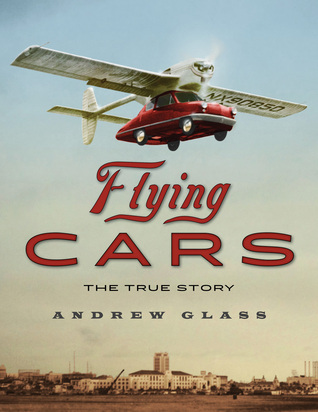
Flying Cars: The True Story by Andrew Glass

Share

NFPB2015

Nonfiction Picture Book Wednesday

Nonfiction Picture Book Wednesday is hosted by Kid Lit Frenzy and was started to help promote the reading of nonfiction texts. Most Wednesdays, we will be participating and will review a nonfiction text (though it may not always be a picture book).
Be sure to visit Kid Lit Frenzy and see what other nonfiction books are shared this week!

flying cars

Flying Cars: The True Story
Author: Andrew Glass
Various Photographers
Published August 25th, 2015 by Clarion Books

Goodreads Summary: Humans have always wanted to fly. As soon as there were planes and cars, many people saw a combination as the next step for personal transportation, and visionary engineers and inventors did their best to make the flying car (or the roadable plane) a reality. This book is a breezy account of hybrid vehicles and their creators, and of the intense drive that kept bringing inventors back to the drawing board despite repeated failures and the dictates of common sense. Illustrated with archival photos, this entertaining survey takes readers back as far as Icarus and forward into the present day, with a look toward the future. Includes author’s note, source notes, bibliography, index.

Kellee’s Review:  What an odd, interesting part of history! I had no idea I even wanted to learn about this, but I am glad that I was exposed to it. I think Andrew Glass did a good job mixing history of aviation in general and the idea of a flying car. It was a good combination of informational and literary nonfiction, so it will hold readers’ attention throughout. It was also fascinating to see all of the photographs of the prototypes made over time. What innovation! I think the photos will draw the reader in then the history and stories will keep them there. 

Ricki’s Review: The minute I pulled this book out of the mailer, my son had his hands all over it. He is much younger than the intended audience (middle or high school), but it made me chuckle. This shows how excited students will be about this concept! Like Kellee, I had no idea that flying cars existed. I asked my husband, “Did this really exist?” He launched into a full history lesson about the development about flying cars and said they were very interesting to him as a teenager. This is yet more proof that this book would be a great resource for classrooms. I liked learning about all of the different attempts of flying cars and think this book would inspire students to be innovative in their thinking, particularly in the context of design and engineering. The prototypes made me feel a bit wistful that I had more of an engineering brain!

Teachers’ Tools for Navigation: The trend of readable and interesting middle grade nonfiction that students will find accessible is really increasing the likelihood of students reading nonfiction text, and this text fits that bill. We think students will find the topic interesting and, thus, pick up the book. Teachers could use it to talk about text features and the importance of captions, photographs, and chapter titles as well as look at how the book is structured and discuss why the author decided to set it up the way it is. The book could also be a resource for an inquiry mini-project (see Discussion Questions below).

Discussion Questions: How would flying cars make our lives easier?; Why aren’t flying cars a reality?; What do you think the benefits of flying cars are and what are the struggles?; After watching some of the archival videos, which of the flying cars interests you the most? Use Flying Cars and other resources to learn more about it.

We Flagged: “Cars fly every day–in fantasy. They soar by pure magic, like the Wesley family car in the Harry Potter series, or by sprouting wings, like Chitty Chitty Ban Bang. Some use high-tech gadgetry, allowing well-equipped heroes like James Bond and Batman to make incredible cliffhanger escapes.

But visionary engineers and inventors haven’t just imagine flying cars. Some actually built them. . . and then drove them up into the sky” (p. 1).

Read This If You Loved: Nonfiction books about aviation or automobiles including Amelia Lost: The Life and Disappearance of Amelia Earhart by Candace Fleming

Recommended For: 

classroomlibrarybuttonsmall

Signatureand RickiSig

**Thank you to Barbara for providing copies for review!**

Review and Author Interview!: Cold War on Maplewood Street by Gayle Rosengren

Share

cold war maplewood

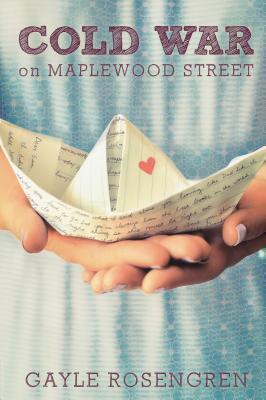
Cold War on Maplewood Street
Author: Gayle Rosengren
Published August 4, 2015 (Today!) by Putnam

Goodreads Summary: Cold War anxieties play out in a sensitively told story set during the Cuban missile crisis in the 1960s, perfect for fans of Gary Schmidt and Kristin Levine.

Joanna can’t get over how her brother broke his promise to never leave like their dad did. Sam is thousands of miles away on a navy ship, and no matter how often he sends letters, Joanna refuses to write back. When she makes a promise, she keeps it.

But then President Kennedy comes on TV with frightening news about Soviet missiles in Cuba—and that’s where Sam’s heading. Suddenly Joanna’s worries about being home alone, building up the courage to talk to a cute boy, and not being allowed to go to the first boy-girl party in her grade don’t seem so important. Maybe sometimes there are good reasons to break a promise.

The tense timeline of the Cuban missile crisis unfolds alongside a powerful, and ultimately hopeful, story about what it means to grow up in a world full of uncertainty.

Ricki’s Review: Cold War on Maplewood Street highlights a time period that isn’t common in the genre of historical fiction. I was intrigued from the very beginning because I have read few books focused on the Cuban missile crisis. The author excellently balances narrative and history in this engaging, thought-provoking text. Joanna is a strong girl who is ashamed of the way she treated her brother when he left for war. She makes a realistic mistake and tries to work through her emotions regarding her treatment of her brother and also the frightening events of war. There are many concepts for teachers to draw upon in this text—family, friendship, war, and fear, to name a few—and teachers will find this text offers rich opportunities for classroom discussion.

Kellee’s Review: What I think Ms. Rosengren does so well in this book is tell a real story with a piece of history as the backdrop. This is a Cold War/Cuban Missile Crisis story, but that isn’t what the book is all about. This book is about Joanna, her family, and her best friend. Her characters are very real and show the real emotions that must have been running through so many peoples’ veins during this tense time.  Because of how well this book is crafted as a narrative within a historical time period, I believe it would be a great introduction to this time period for middle grade readers. Many will have never heard of the Cold War or Cuban Missile Crisis, so learning about it through Joanna’s story is perfect. 

Teachers’ Tools for Navigation: Teachers might consider using this text to ask students to examine their regrets. Students could begin by closely examine characters that have regrets. Who are they? Do their regrets impact others? Then, the students could consider world leaders or pop culture to consider regrets that famous people might have and how these regrets impacted their lives. Finally, the students might journal to make connections with the text by examining mistakes they have made or regrets they hold in their personal lives.

Another interesting aspect of this book is the theme of communication. Students could compare the lack of communication of some of the characters in the book (which led to a major issue) and the lack of communication which led to the Cuban Missile Crisis. How could communication have helped either of these situations?

Discussion Questions: How would you react if your sibling went to war? Is Joanna’s reaction realistic? Is it fair?; How does war impact the lives of those who stay home? How do the characters of this text react differently from each other? Do you think the war impacted the choices Pamela’s family members make?; What is Mrs. Strenge’s role in the novel? How does she enhance our reading of the story?

Author Interview!: 

Unleashing Readers: What interested you in the Cold War, specifically?

Gayle Rosengren: When I wrote the first draft of Cold War on Maplewood Street–twenty years ago(!)–itwas to share a singular experience from my childhood, the Cuban Missile Crisis. But for several reasons, the manuscript never made it to an editor and I had to set it aside.

Years later I decided to revisit it with a different objective in mind. Now, I wanted to tell a story in which the crisis was the backdrop for a story about how poor communication can destroy relationships. The Cold War itself was an example of a break-down in communication on such a major scale that it very nearly led to destruction on a global level. In my novel, poor communication is demonstrated by main character Joanna’s failure to write to her brother and apologize for the terrible things she said to him when he left for the Navy. It’s also shown in her avoidance of a new tenant in their building, an old woman Joanna finds frightening for several reasons; and it’s demonstrated in her best friend Pamela Waterman’s family, when Mrs. Waterman runs away instead of confronting her husband about how desperate she is to see Paris.

UR: What does your research process look like?

GR: My research began with plumbing my own very vivid memories of the week of the crisis. I was twelve, and I was scared, especially since–although they tried to conceal it–I could see that adults were scared too.

But the major source of the historical details in Cold War on Maplewood Street came from the Chicago Tribune’s archives and actual headlines, photos, and articles that appeared in what was then The Chicago Daily Tribune. Remember, I wrote the first draft of the manuscript over twenty years ago. Pre-computer. And given that newspapers and television newscasts were the primary news sources of the day, I felt it was a solid source for my facts. I have a fat file full of copied newspaper pages that provided everything from the news to the weather and the television schedule. (All 4 channels!)

Today we know more about what was going on during that infamous week (in particular the note that Kennedy sent to Khrushchev agreeing to remove our nuclear weapons from Turkey) but I wanted Joanna to know only what anyone else living in the U.S, and specifically Chicago, would have known at the time.

UR: Did you decide on your time period or your protagonist/narrative first?

GR: This was an instance where the time period was clearly the inspiration for the story, and the protagonist and voice followed. I originally wrote this manuscript in the third person, rewrote it in first person, and then went back to third as I struggled to discover the character and voice that would best serve the story.

UR: Did anyone in your life inspire your characters?

GR: I modeled Joanna’s and Sam’s relationship on my close relationship with my brother Dennis. He was in the Air Force at the time of the missile crisis and based relatively safely in Okinawa, Japan, but I imagined that he was in the Navy, on a ship off the east coast of the U.S., and likely to be swept into action as part of the Cuba quarantine and blockade. I imagined how terrified I would have been for him. And then, to up the stakes, I imagined that when he’d left, Joanna in her hurt and anger accused him of deserting them just like their father had years before. The guilt she would feel knowing she might never get to apologize would be overwhelming.

Joanna’s mother was modeled after my single mother who always worked hard and scrimped to take care of us. Pamela was every good friend I ever had with a normal (which at the time meant two-parent) family.

As for Joanna, she was a lot like me at 12–childish and thoughtless one moment, grown-up and sensitive the next, taking awkward steps toward adulthood and all the while longing for the protective cocoon of childhood that was forever left behind in that unforgettable week. Like Joanna, I too loved horses and dogs and hated being alone in the house at night.

We Flagged: “[S]taying positive and hopeful—even pretending to—was much better than giving in to fear.” (p. 142)

Read This If You Loved: Countdown by Deborah Wiles; Paper Cowboy by Kristin Levine; What the Moon Said by Gayle Rosengren; Purple Heart by Patricia McCormick; Spy Catchers of Maple Hill by Megan Frazer Blakemore

Recommended For: 

  litcirclesbuttonsmall classroomlibrarybuttonsmall

 RickiSigandSignature

**Thank you to Penguin for providing copies for review and Ms. Rosengren for the author interview!**

I Am Lucille Ball by Brad Meltzer

Share

NFPB2015

Nonfiction Picture Book Wednesday

Nonfiction Picture Book Wednesday is hosted by Kid Lit Frenzy and was started to help promote the reading of nonfiction texts. Most Wednesdays, we will be participating and will review a nonfiction text (though it may not always be a picture book).
Be sure to visit Kid Lit Frenzy and see what other nonfiction books are shared this week!

lucille ball

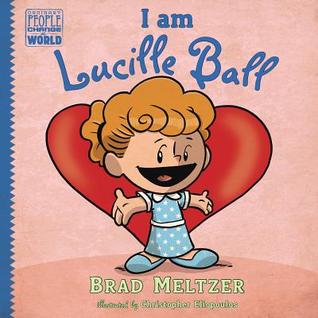
I Am Lucille Ball
Author: Brad Meltzer
Illustrator: Christopher Eliopoulos
Published July 14th, 2015

Goodreads Summary: “Kids always search for heroes, so we might as well have a say in it,” Brad Meltzer realized, and so he envisioned this friendly, fun approach to biography—for his own kids, and for yours. Each book tells the story of one of America’s icons in a vivacious, conversational way that works well for the youngest nonfiction readers, those who aren’t quite ready for the Who Was biography series. Each book focuses on a particular character trait that made that role model heroic. For example, Lucille Ball could make any situation funny. By making people around the world laugh, she proved that humor can take on anything.

This engaging series is the perfect way to bring American history to life for young children, providing them with the right role models, supplementing Common Core learning in the classroom, and best of all, inspiring them to strive and dream.

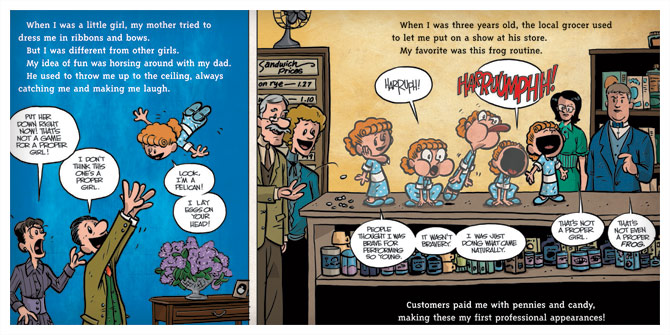
My Review:  The first “Ordinary People Change the World” book I read was I am Jackie Robinson, and I immediately loved the way the book was set up. I am Lucille Ball is the same way. Like I stated in my review of Jackie Robinson, I love that it is in first person which sucks the reader into Lucy’s life. The series is also a picture book/graphic novel mix which not only adds to the engagement aspect of the book, I think it really makes you feel like you know the subject more. It also is where Meltzer puts some of his funniest parts of the story.

The reason why I knew I had to review this book, though, was because of the subject matter. All of the other subjects of the books in the series (Lincoln, Parks, Einstein, Earhart, and Robinson) are pretty well-known amazing people although they did all start out with quite ordinary lives. Lucille Ball deserves to be talked about along with them though many do not know that she does. I love that Meltzer decided to tackle a story about someone that not everyone may understand why he chose her. Brad Meltzer addressed this on his Facebook page:

“To my surprise, some have asked: Why Lucy? So let me explain: I wrote this book because I wanted my daughter to finally have a female entertainment hero who wasn’t famous just because she was thin and known only for her looks. Lucy is different than everyone else. She’s funny, driven, and the first woman to run a major movie studio (producing Star Trek and Mission: Impossible). Her success came from her drive — and because she so perfectly wasn’t like everyone else. Plus she taught me, throughout my own childhood, that humor can take on anything. I wanted my daughter to learn that. 

But in terms of Lucy and Ethel crazy ideas, here’s my most Lucy and Ethel-ish. Share this book with someone who’s different. Share it with little girls and boys, as well as big girls and boys. Show them that it’s not just okay to be different…it’s SPECTACULAR to be different.”

Teachers’ Tools for Navigation: The “Ordinary People” books definitely need to be in classrooms. They are going to be loved by students. However, I think Meltzer’s subjects are definitely worth looking at. I see them being used in a lit circle where each group gets a different one of Meltzer’s books then after reading and discussing the books, they share what they learned about their Ordinary Person.

It would also be so much fun to use Meltzer’s books as a mentor text to writing their own Ordinary People picture book. A fun twist on a research project!

More information on I am Lucille Ball can be found here.

Discussion Questions: What made Lucille Ball a standout in the entertainment industry?; How did Lucille Ball pave the way for comediennes like Melissa McCarthy and others? How does Meltzer’s mix of picture book/graphic novel help make the book more enjoyable to read yet still informative?

We Flagged: 

look_ball1
From http://ordinarypeoplechangetheworld.com/lucille_ball.php

Interview with Brad Meltzer about I am Lucille Ball: https://youtu.be/OHK5uOiRBto 

Read This If You Loved: “Ordinary People Change the World” (series) by Brad Meltzer, “Who Was…” (biography series) by various

Recommended For: 

classroomlibrarybuttonsmall litcirclesbuttonsmall readaloudbuttonsmall

Signature

**Thank you to Penguin for providing a copy for review!!**

Henry’s Freedom Box by Ellen Levine

Share

NFPB2015

Nonfiction Picture Book Wednesday

Nonfiction Picture Book Wednesday is hosted by Kid Lit Frenzy and was started to help promote the reading of nonfiction texts. Most Wednesdays, we will be participating and will review a nonfiction text (though it may not always be a picture book).
Be sure to visit Kid Lit Frenzy and see what other nonfiction books are shared this week!

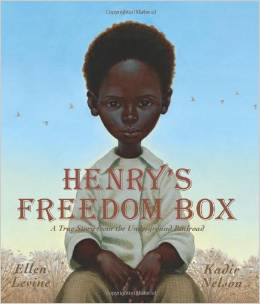
Henry's Freedom Box

Henry’s Freedom Box
Author: Ellen Levine; Illustrator: Kadir Nelson
Published: January 1, 2007 by Scholastic

GoodReads Summary: A stirring, dramatic story of a slave who mails himself to freedom by a Jane Addams Peace Award-winning author and a Coretta Scott King Award-winning artist.

Henry Brown doesn’t know how old he is. Nobody keeps records of slaves’ birthdays. All the time he dreams about freedom, but that dream seems farther away than ever when he is torn from his family and put to work in a warehouse. Henry grows up and marries, but he is again devastated when his family is sold at the slave market. Then one day, as he lifts a crate at the warehouse, he knows exactly what he must do: He will mail himself to the North. After an arduous journey in the crate, Henry finally has a birthday—his first day of freedom.

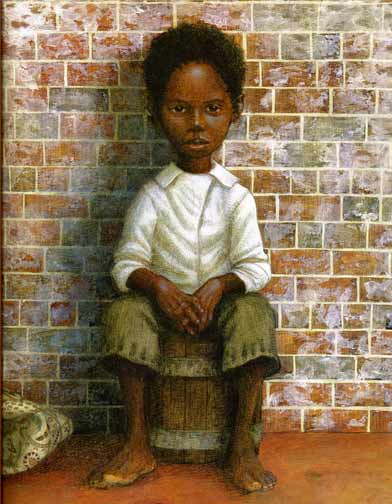
Review: The story of Harriet Tubman is perhaps the most commonly taught story about the Underground Railroad. Henry “Box” Brown’s story is quite different, and I learned a lot by reading this book. I think it would be an excellent text to teach in the classroom. This book made me very emotional, and I am still thinking about it, weeks after I finished it. The illustrations are gorgeous, and the story is inspirational. The author’s note at the end of the text provide more factual information that will send students scouring for more information about the time period.

Teachers’ Tools for Navigation: Most obviously, this would be an excellent text for a unit about slavery or the Civil Rights Movement. I am a big proponent of using texts outside of traditional units (or Black History Month) because these texts are valuable beyond the time period they represent. I would love to do a unit on Endurance or Bravery or Freedom. I would find and group similar texts that promote discussion and inquiry about the theme and ask students and essential questions like, What does it mean to be brave?

Discussion Questions: How does Henry endure many challenges in life? In what ways is he brave?; What does Henry teach us about life?; Describe another famous person in history or modern times who reminds you of Henry.

One of the Many, Beautiful Illustrations:

Kadir Nelson Henry 

Read This If You Loved: Dave the Potter: Artist, Poet, Slave by Laban Carrick Hill; The Listeners by Gloria Whelan; Freedom Summer by Deborah Wiles; The Other Side by Jacqueline Woodson; The Diary of Anne Frank by Anne Frank

Recommended For:

  readaloudbuttonsmall  classroomlibrarybuttonsmall

RickiSig

2015 Big Book Summer Challenge: Revolution by Deborah Wiles & East of Eden by John Steinbeck

Share

bigbooksummer

Big Book Summer Challenge is a challenge hosted by Sue at Book by Book. The inspiration behind the challenge is to push the bigger books to the top of the TBR pile during summer time.

The Details:

  • Anything over 400 pages qualifies as a big book.
  • The challenge will run from Memorial Day weekend (starting May 22 this year) through Labor Day weekend (Labor Day is September 7 this year).
  • Choose one or two or however many big books you want as your goal.  Wait, did you get that?  You only need to read 1 book with over 400 pages this summer to participate! (Though you are welcome to read more, if you want.)
  • Choose from what’s on your shelves already or a big book you’ve been meaning to read for ages or anything that catches your eye in the library – whatever peaks your interest!
  • Sign up on Book by Book.
  • Write a post to kick things off – you can list the exact big books you plan to read or just publish your intent to participate, but be sure to include the Big Book Summer Challenge pic above, with a link back to Book by Book.
  • Write a post to wrap up at the end, listing the big books you read during the summer.
  • You can write progress posts if you want to and/or reviews of the big books you’ve read…but you don’t have to!  There is a separate links list below for big book review posts.

Today, we are combining the last three bullet points–we both have finished our big books!

Kellee
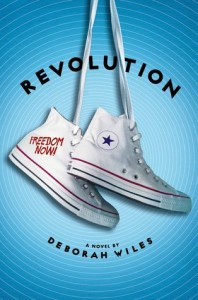
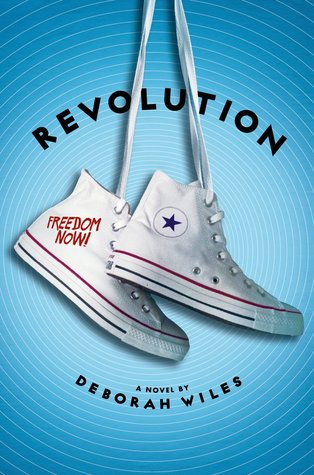
revolution

Revolution
Author: Deborah Wiles
Published May 27th, 2014 by Scholastic Press
538 pages

Goodreads Summary: It’s 1964, and Sunny’s town is being invaded.  Or at least that’s what the adults of Greenwood, Mississippi, are saying. All Sunny knows is that people from up north are coming to help people register to vote.  They’re calling it Freedom Summer.

Meanwhile, Sunny can’t help but feel like her house is being invaded, too.  She has a new stepmother, a new brother, and a new sister crowding her life, giving her little room to breathe.  And things get even trickier when Sunny and her brother are caught sneaking into the local swimming pool — where they bump into a mystery boy whose life is going to become tangled up in theirs.

As she did in her groundbreaking documentary novel Countdown, award-winning author Deborah Wiles uses stories and images to tell the riveting story of a certain time and place — and of kids who, in a world where everyone is choosing sides, must figure out how to stand up for themselves and fight for what’s right.

*A 2014 National Book Award Finalist

Kellee’s Thoughts: What is so amazing about this book is that it doesn’t feel like a big book. Well, it FEELS like a big book because it is heavy and thick, but when you are done reading, it doesn’t feel like you had to trudge through anything. Not once did I feel like there were too many pages. Wiles does an amazing job filling each and every page with important information for the historical context, characterization, or plot development.

Revolution is a perfectly-crafted look at one of the toughest times in American history. What Wiles does is truly delve into the emotions felt during the Freedom Summer and some of the smaller actions that may not have made the history books. One of my favorite things about Wiles’s Sixties Trilogy books is that she includes historical resources throughout the book that truly puts the story in context. The primary sources/stories and other embedded pieces of history really show that the narrative she has created is not truly a work of fiction. It may include fictional characters, but the setting, the feelings, the conflict, the time period, the history–those are all fact.

Revolution couldn’t work without the Sunny and her cast of characters though. This book could have gone terribly wrong if the voice, thoughts, and feelings of our protagonist were not so believable since Wiles was having us learn about such a tumultuous time through the eyes of a child. However, no need to worry about that because Sunny is perfect. She is easy to connect to and seems true. My favorite characters are those around her that push her and help change her: Annabelle, Jo Ellen, and Ray. Annabelle is so patient, truly loves Sunny, and has some of the best lines in the book; Jo Ellen is so head-strong, forward-thinking, and intelligent; and Ray is just crazy but also overwhelmingly brave.

I am part of an informal Twitter book club, and our June read was Revolution. Deborah Wiles even stopped by to chat with us! If you are interested in reading it, I archived it here. Warning: There may be spoilers if you haven’t read the book. Some of my favorite quotes from the chat that truly show the impact of the book are:

“What a brilliant idea Deborah Wiles had with these books–to embed all of the history.” -Carrie Gelson

“Sunny’s story hit my heart.” -Michele Knott

Countdown and Revolution are like…seeing beyond the headlines.” -Cheriee Weichel

“So hard to read how something you think people could do (register) but couldn’t because of effects (lose job, name in paper, etc.)” -Michele Knott

“It took Sunny witnessing the civil unrest to grow up and realize how to accept her own life.” -Kellee Moye

“There is so much about the Civil Rights Movement that seems like it should be easy, but ignorance stops it.” Kellee Moye

“Immerse as much as possible.” -Deborah Wiles, referencing part of her research process

Favorite quote from the book: “Everything is connected. Every choice matters.Every person is vital, valuable, and worthy of respect.” pg. 361

Recommended For: 

classroomlibrarybuttonsmall readaloudbuttonsmall closereadinganalysisbuttonsmall litcirclesbuttonsmall

Ricki

I also plan to tackle Wonderstruck by Brian Selznick, as well, but I am not sure if I will make it by the end of the summer. East of Eden was quite an epic read!
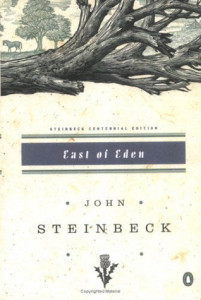
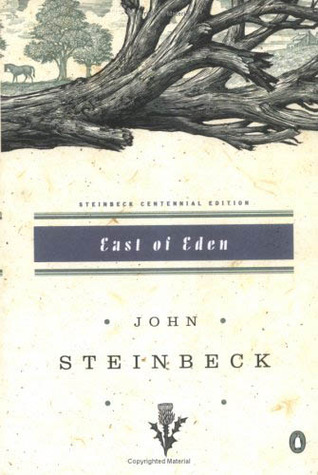
east of eden

East of Eden
Author: John Steinbeck
Published in 1952
601 pages

Goodreads Summary: Set in the rich farmland of California’s Salinas Valley, this sprawling and often brutal novel follows the intertwined destinies of two families—the Trasks and the Hamiltons—whose generations helplessly reenact the fall of Adam and Eve and the poisonous rivalry of Cain and Abel. Here Steinbeck created some of his most memorable characters and explored his most enduring themes: the mystery of identity; the inexplicability of love; and the murderous consequences of love’s absence.

Ricki’s Thoughts: I’ve had this book on my to-be-read list for several years. In fact, I realized I own three identical copies of it, so I have considered reading it for quite some time. I love Of Mice and Men and Grapes of Wrath. In fact, I love the six or so Steinbeck books I’ve read. I’d heard this book was related to the Cain/Abel story, so I never got around to reading it because I thought I knew the ending. As an aside, I didn’t, but even if all of my predictions were accurate, it still would have been well worth the read.

The book consists of several interwoven stories and families. Two good friends (who aren’t avid readers) listened to this book in the car, and they continually urged me to read it. When I finally started, they kept saying, “We know which character you will love.” Sam Hamilton is a good man–a salt of the Earth kind of man. He reminds me of Slim for Of Mice and Men. Essentially, he teaches us what it means to be good to the very hollows of our souls. Another character who will stick with me forever is Cathy. Phew. She is quite a complex character—a sociopath, I would say—and her evilness makes my skin crawl. She is unlike any other character I’ve ever read. I could continue forward and describe more characters, but it feels as if I won’t do them justice.

The story does meander at times, but anyone who appreciates Steinbeck’s work knows that this is, in fact, a positive quality. His stories feel very true to life. We don’t follow plot diagrams. I will never forget reading this book. The story and its characters will stay with me forever. I highly recommend it.

A few great quotes that depict the beauty of Steinbeck’s words:

“I believe a strong woman may be stronger than a man, particularly if she happens to have love in her heart. I guess a loving woman is indestructible.”

“All great and precious things are lonely.”

“I believe that there is one story in the world, and only one. . . . Humans are caught—in their lives, in their thoughts, in their hungers and ambitions, in their avarice and cruelty, and in their kindness and generosity too—in a net of good and evil. . . . There is no other story. A man, after he has brushed off the dust and chips of his life, will have left only the hard, clean questions: Was it good or was it evil? Have I done well—or ill?”

“There’s more beauty in truth, even if it is dreadful beauty.”

Recommended For: 

classroomlibrarybuttonsmall closereadinganalysisbuttonsmall

Thank you to Sue for hosting the challenge and pushing us! 

What big books do you have planned for the summer? You should join in the challenge too!

Signature andRickiSig

X by Ilyasah Shabazz and Kekla Magoon

Share

x

X
Authors: Ilyasah Shabazz and Kekla Magoon
Published: January 6, 2015 by Candlewick Press

GoodReads Summary: Cowritten by Malcolm X’s daughter, this riveting and revealing novel follows the formative years of the man whose words and actions shook the world.

I am Malcolm.
I am my father’s son. But to be my father’s son means that they will always come for me.

They will always come for me, and I will always succumb.

Malcolm Little’s parents have always told him that he can achieve anything, but from what he can tell, that’s nothing but a pack of lies—after all, his father’s been murdered, his mother’s been taken away, and his dreams of becoming a lawyer have gotten him laughed out of school. There’s no point in trying, he figures, and lured by the nightlife of Boston and New York, he escapes into a world of fancy suits, jazz, girls, and reefer.

But Malcolm’s efforts to leave the past behind lead him into increasingly dangerous territory when what starts as some small-time hustling quickly spins out of control. Deep down, he knows that the freedom he’s found is only an illusion—and that he can’t run forever.

X follows Malcolm from his childhood to his imprisonment for theft at age twenty, when he found the faith that would lead him to forge a new path and command a voice that still resonates today.

Review: If you’ve been reading the blog the past few weeks, my love for this book may feel repetitive (and I am not sorry!). Some books just stick to our bones and by Ilyasah Shabazz and Kekla Magoon will remain with me forever. It kept me awake late at night, and I was floored by the captivating writing. This is a very special book and well worth the hype it has received. I plan to use it in my future Methods classes because there are so many themes and topics for discussion. Most texts are written about Malcolm Little’s later life, but this book encapsulates his early years—this restless young man is dissatisfied with his circumstances and attempts to make a name for himself. He does not always make the best choices, but he learns from his many mistakes, and his spirit will inspire readers. I highly recommend this book for all readers. Malcolm has a lot to teach us.

Teachers’ Tools for Navigation: This book made me want to sign out Malcolm X’s autobiography from the library. I wondered what else I could learn about him. Teachers might ask students to research Malcolm X’s life. They might explore the ways Malcolm inspired troubled youth and why he made connections with them. Based on this text and others, it seems that many of Malcolm X’s actions may be misrepresented, so it might be wise for teachers to discuss his life, mission, and actions with students. This would allow students to form their own understandings of his later life.

Discussion Questions: If you could change one decision Malcolm made, what would it be? What do you think he should have done differently?; Malcolm may inspire us, but who inspired Malcolm?; How is Malcolm different from his family members? How does this impact him?

We Flagged: “I did what I had to. Didn’t see anything wrong with it. Not a thing” (p. 36).

Read This If You Loved: The Rock and the River by Kekla Magoon; How it Went Down by Kekla Magoon; Freedom Summer by Deborah Wiles; Audacity by Melanie Crowder; The Boy in the Black Suit by Jason Reynolds

Recommended For:

readaloudbuttonsmall litcirclesbuttonsmall closereadinganalysisbuttonsmall classroomlibrarybuttonsmall

RickiSig