Smithsonian Exploration Station: World Atlas by Josh Farndon

Share

Smithsonian Exploration Station: World Atlas
Author: Josh Farndon
Published November 6th, 2018 by Silver Dolphin and the Smithsonian

About the Book: Head off on a globetrotting adventure in this interactive atlas! Learn about the diverse cultures, customs, wildlife, and natural beauty that form our world through informative text and full-color photograph. Children will love the hands-on aspect to learning as they blow up their inflatable globe and build the cardstock models of some of the wonders of the world. Smithsonian Exploration Station: World Atlas (ISBN: 978-1626867208) is the perfect way to engage kids in the amazing world around them!

Includes:
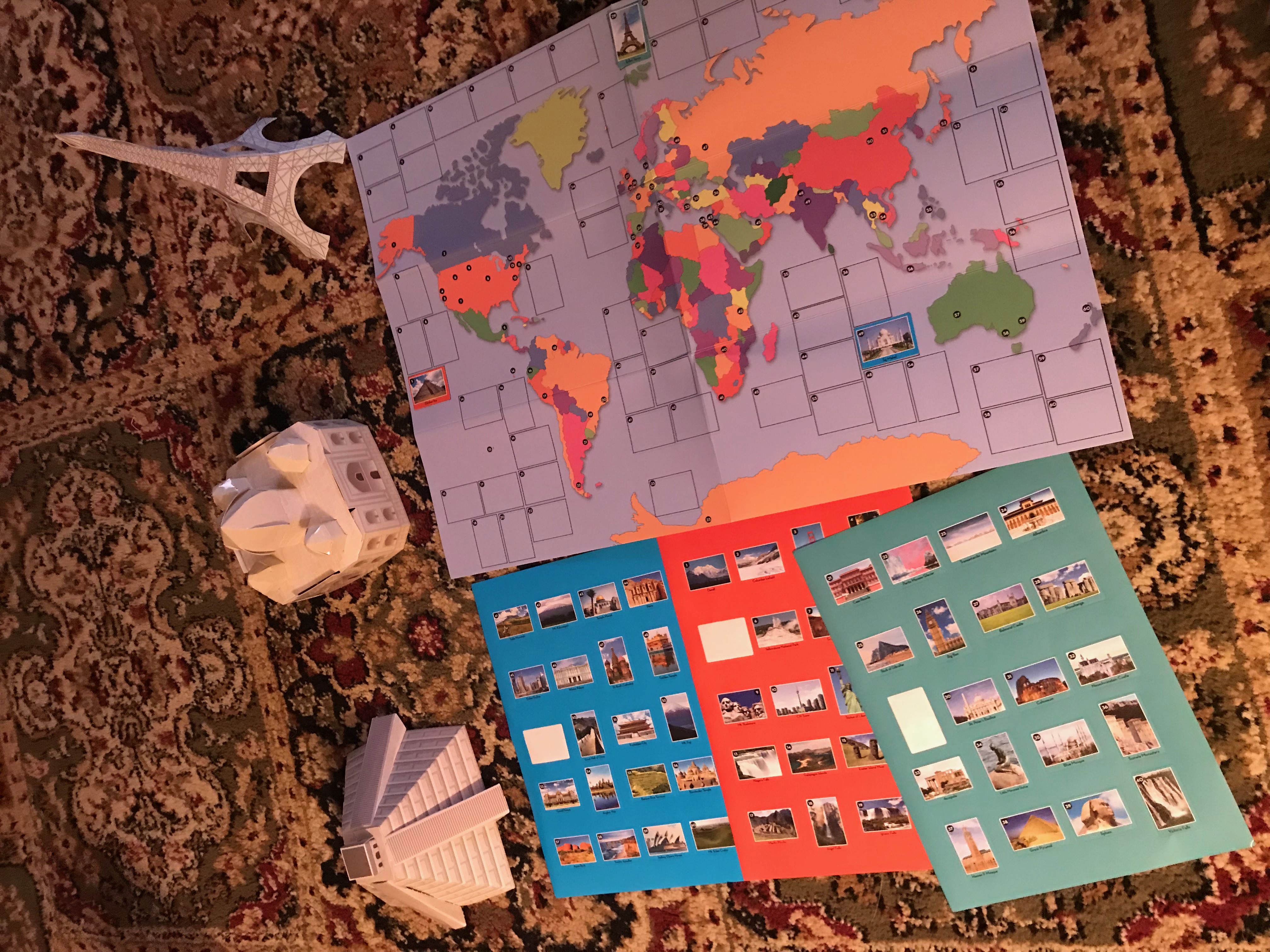
56-page fact book
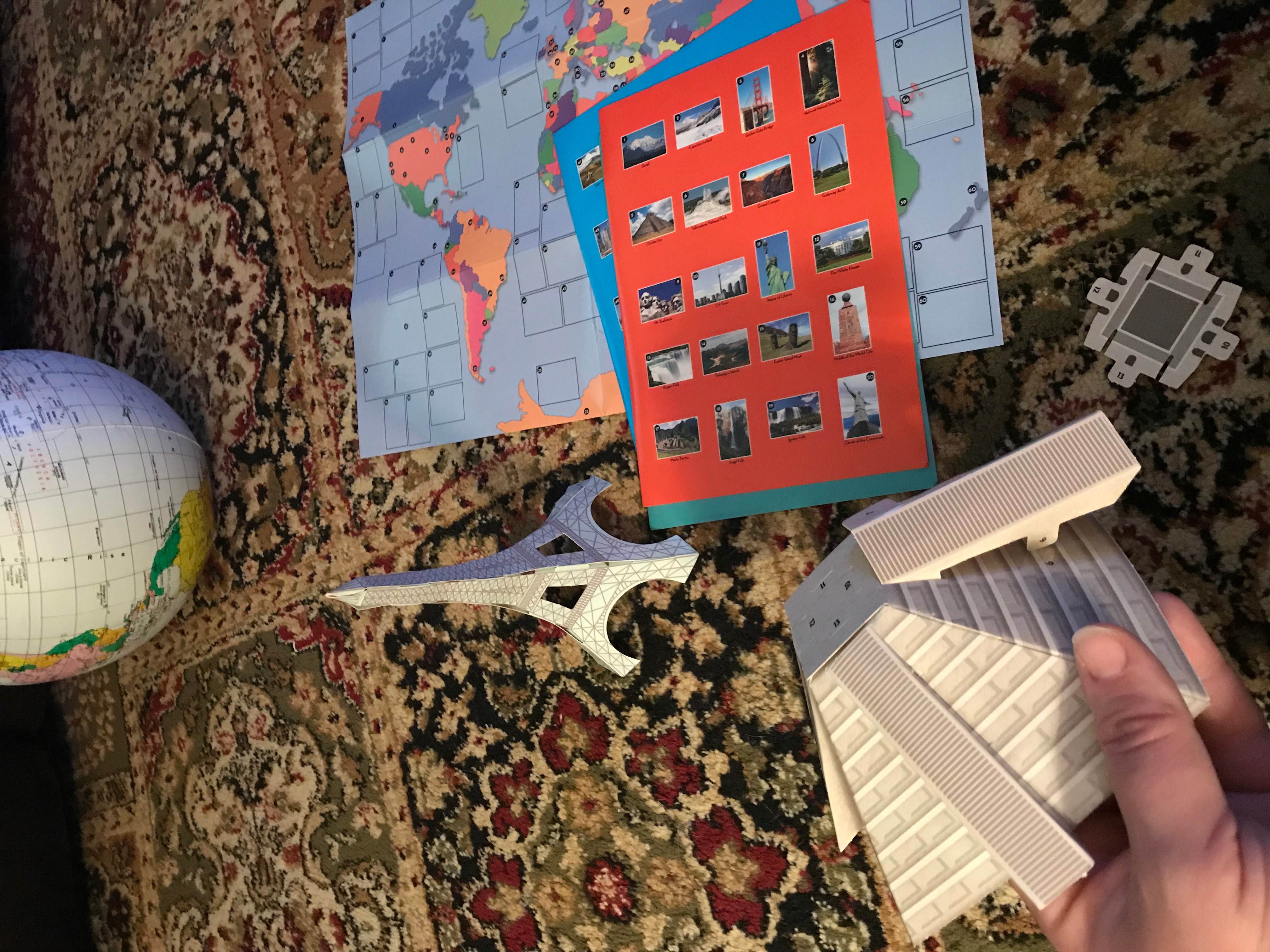
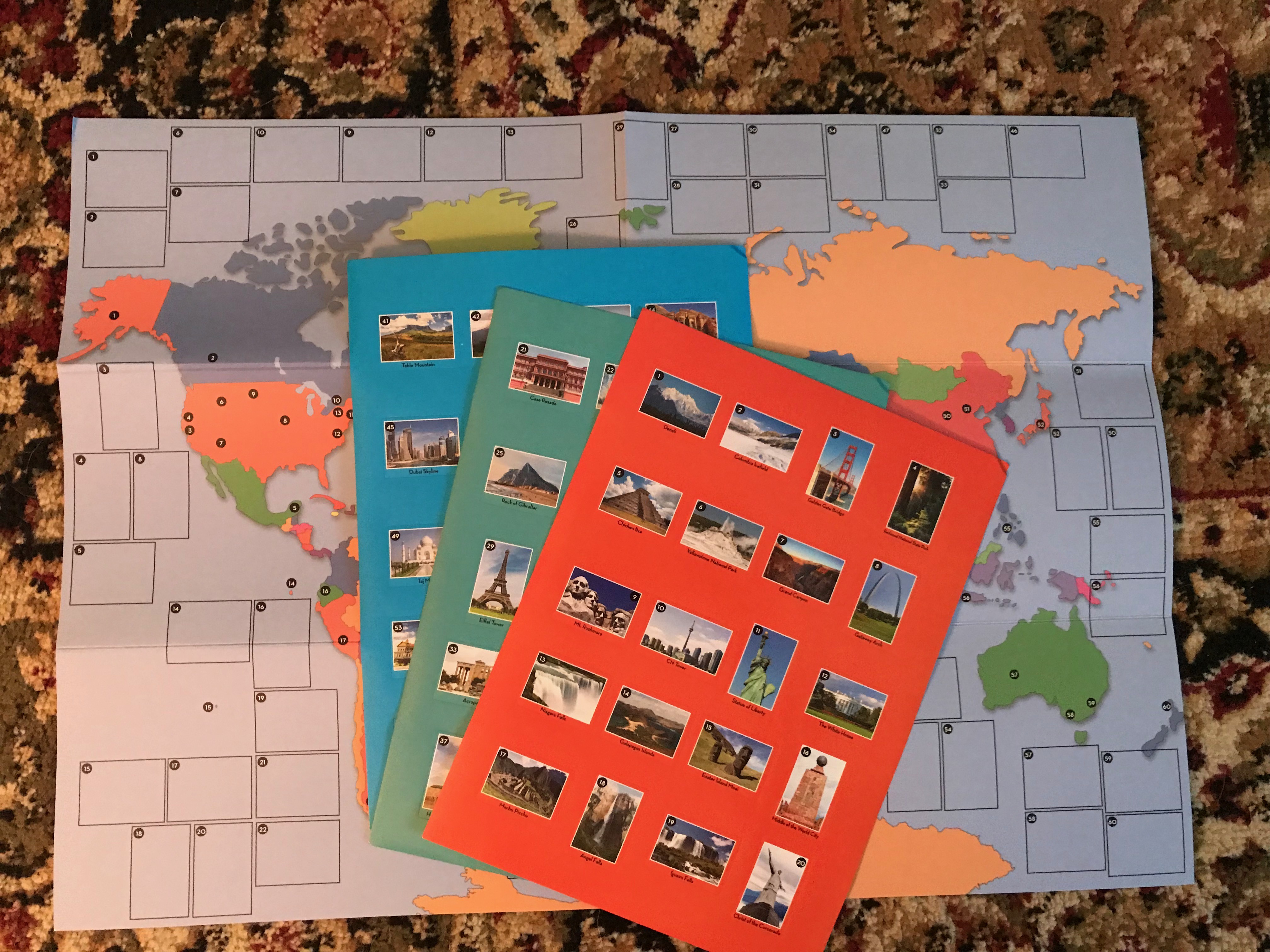
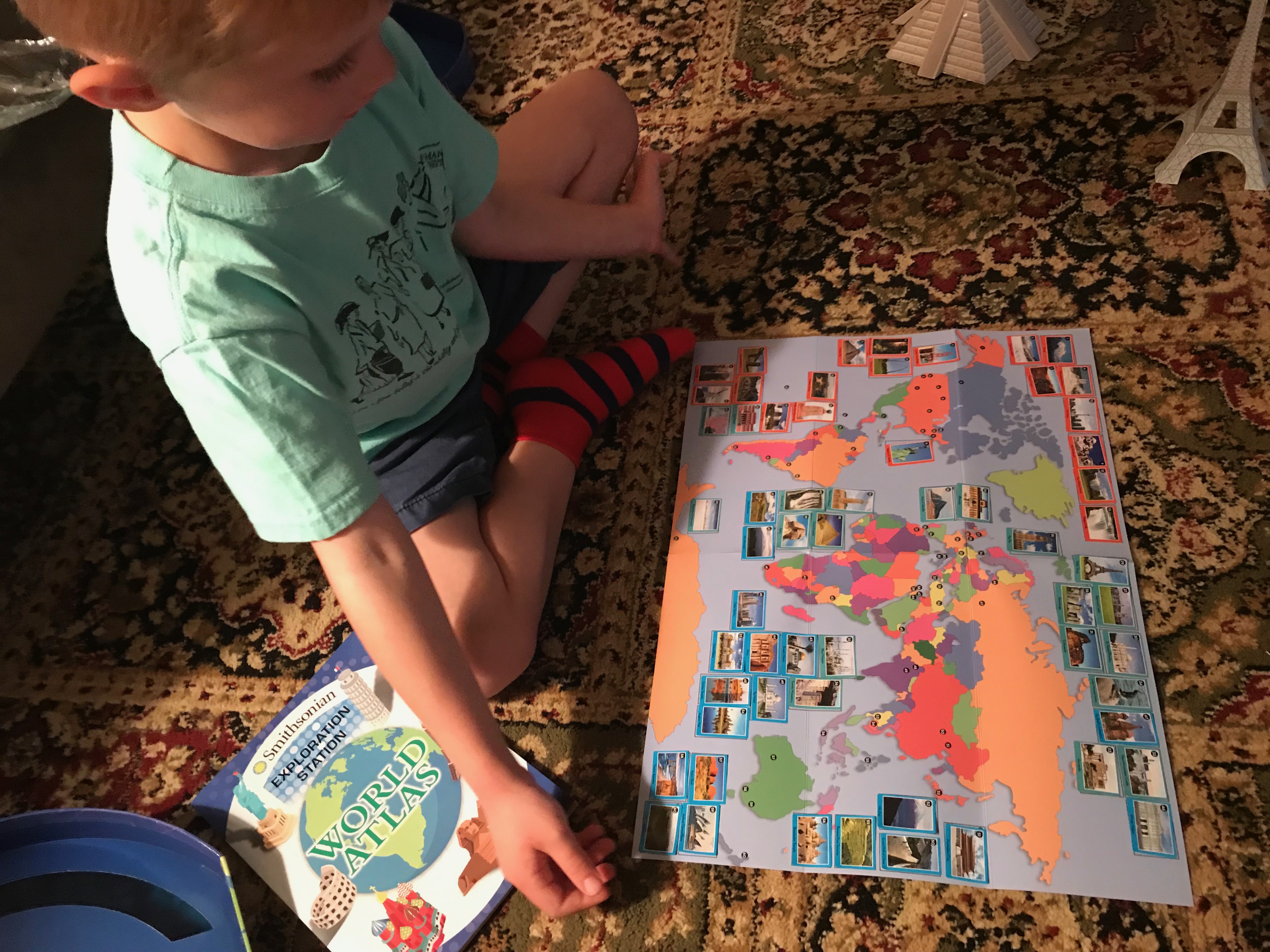
30 stickers with world map poster
1 inflatable globe
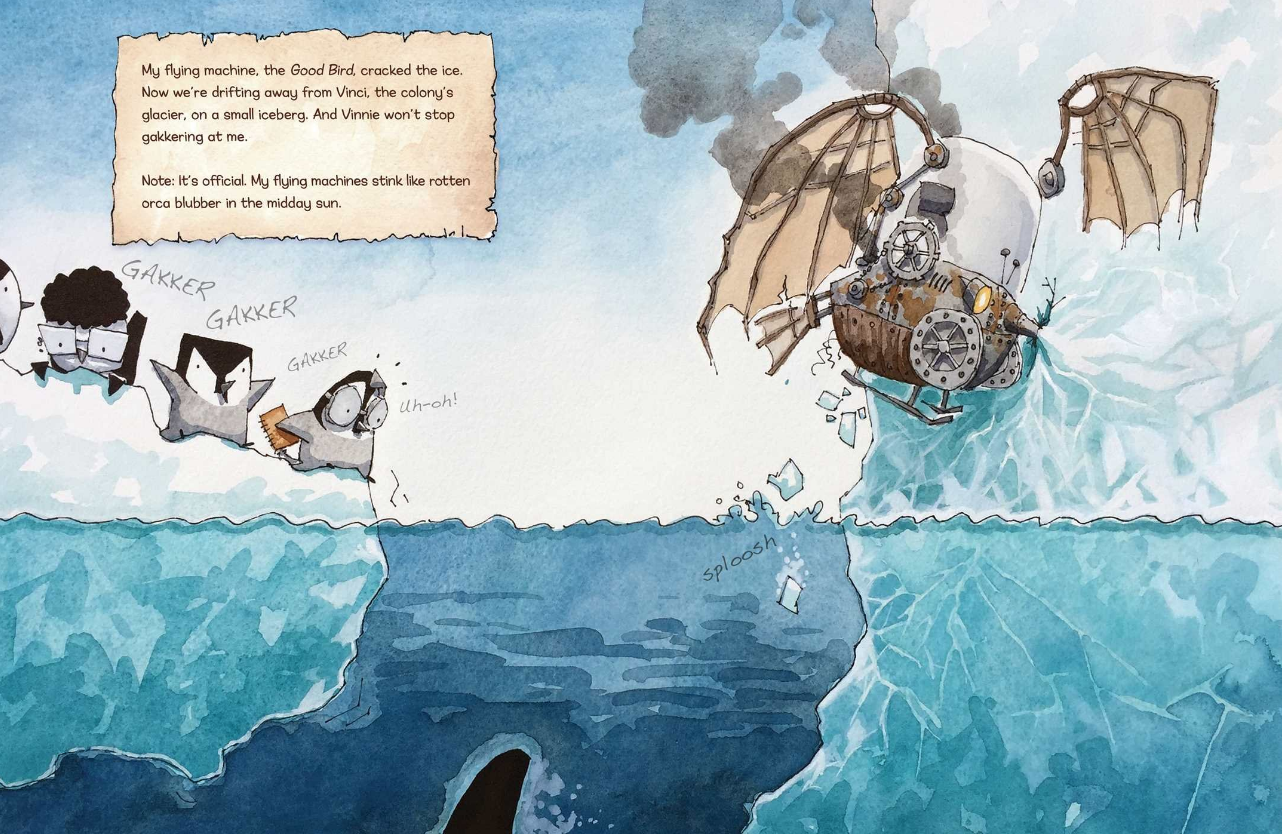
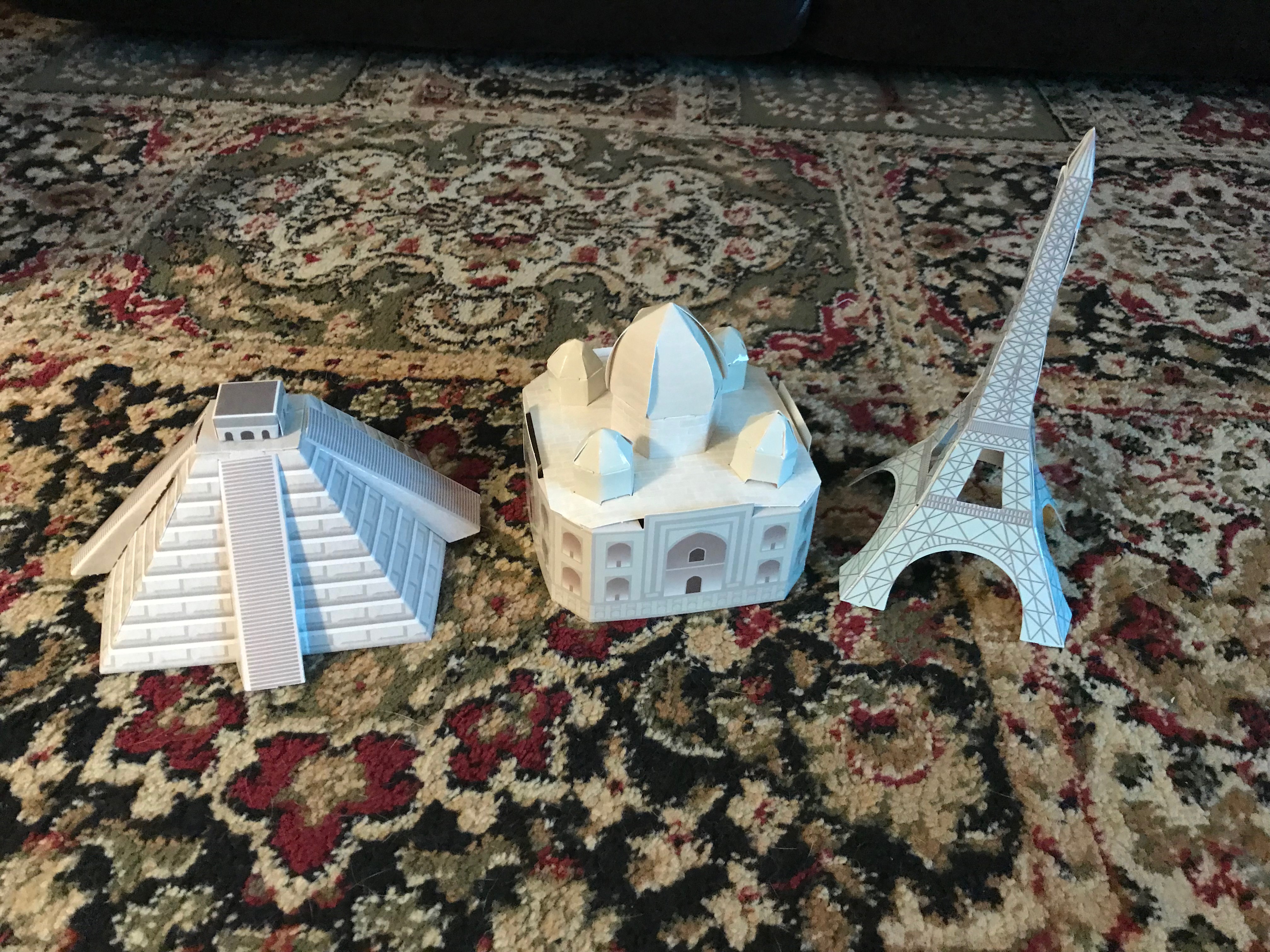
3 cardstock models to assemble: the Eiffel Tower, the Taj Mahal, and a Mayan pyramid

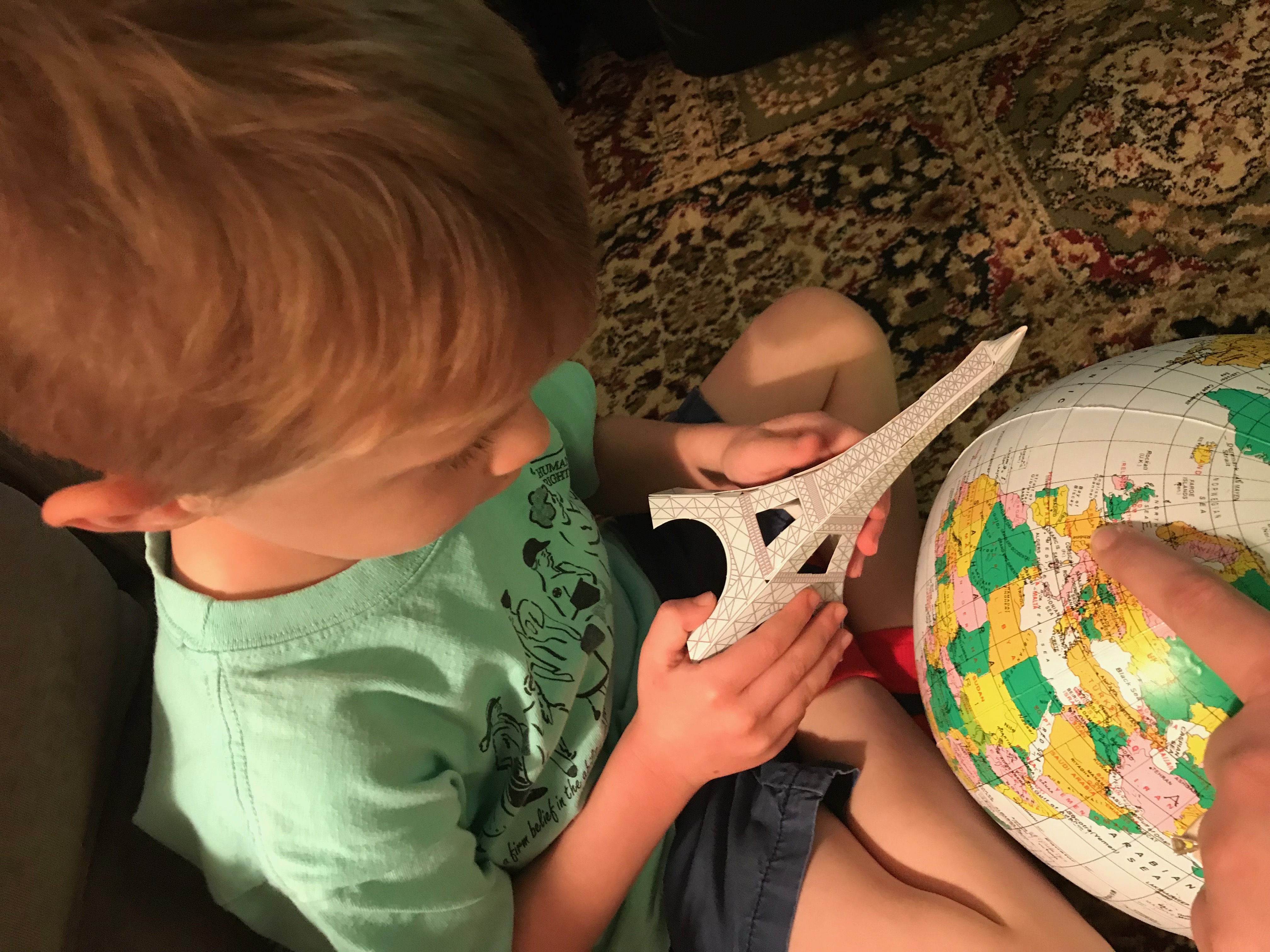
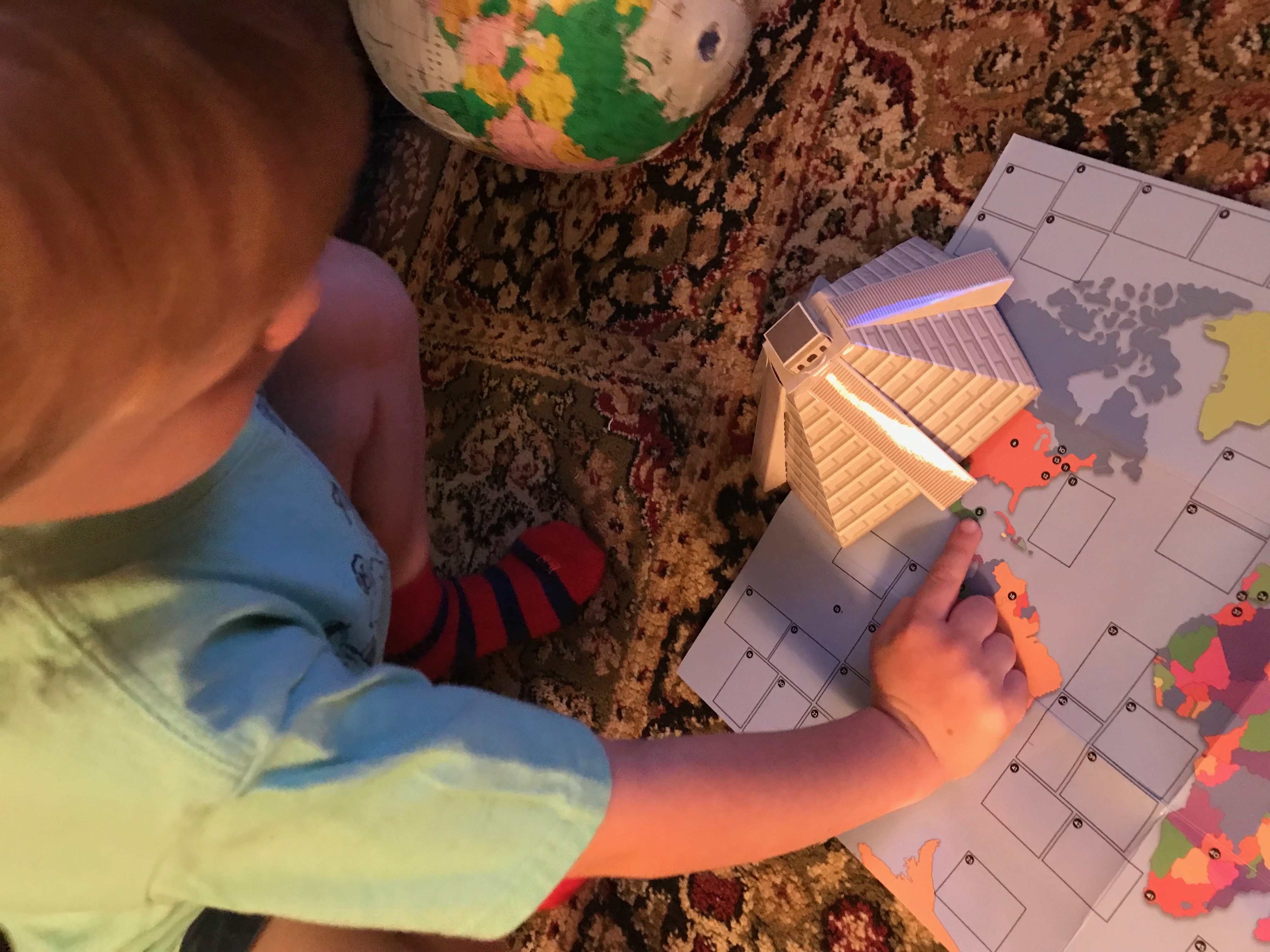
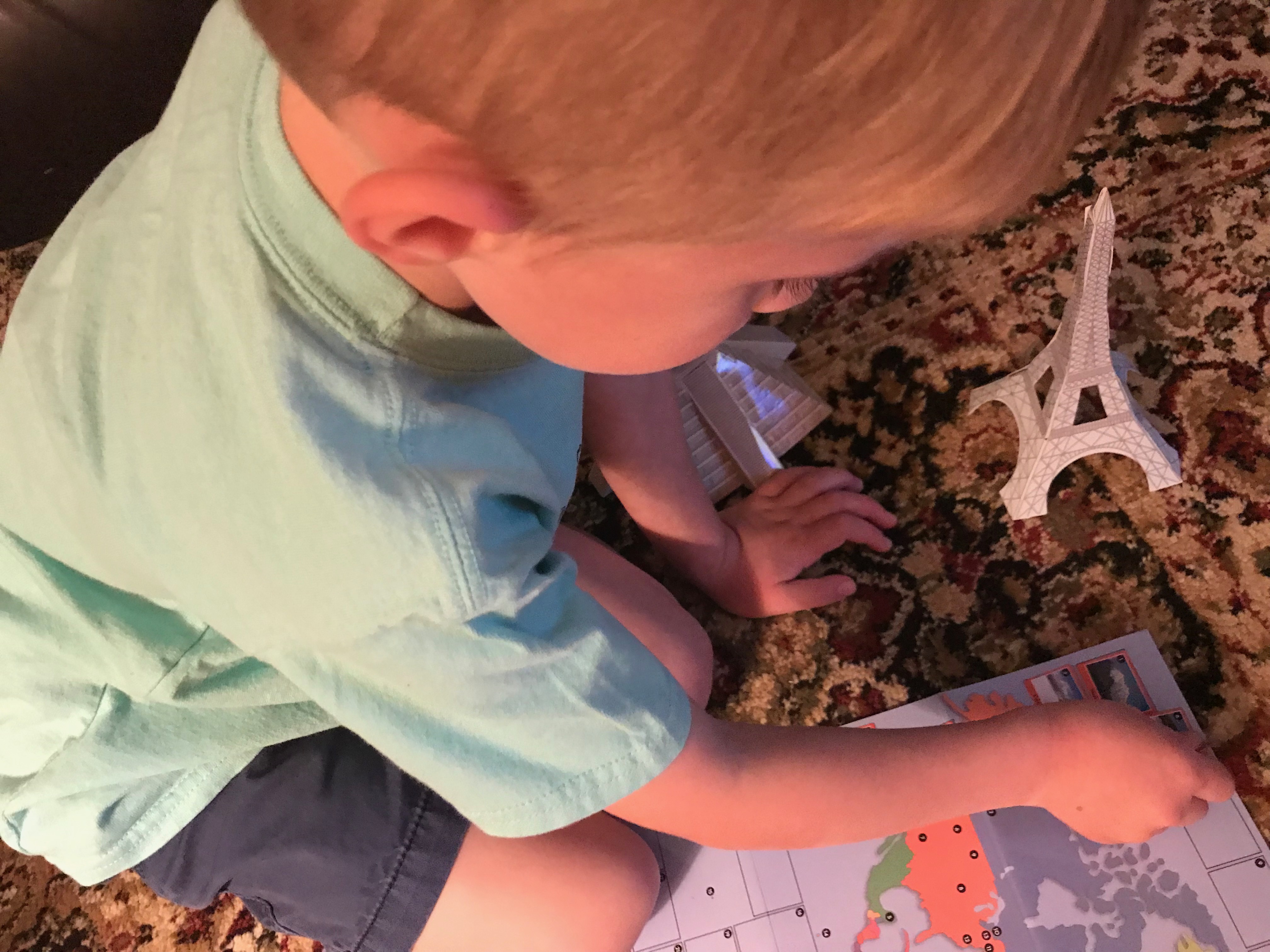
Review: I think the best way to review this exploration set is to show you Trent’s experiences with it as we had an amazing time exploring the world with the globe, map, landmark stickers, and landmark 3D sets:


I don’t think anything can show how wonderful a book is other than showing a child completely involved in its purpose. We’re definitely going to get all the sets in the series!

Teachers’ Tools for Navigation: This series (see Ricki’s review of the Solar System set) is made for education. How fascinating would it be to go through the 30 landmarks on the stickers, maybe one a week, and put them on the poster and discuss the landmark. There are ones all around the world which would allow the class to explore so many cultures. Or maybe separate the landmarks and have a different student become an expert on each one and share. There is so much to consider!

Discussion Questions: 

  • Where is _____ located?
  • What landmarks are in ____?
  • What did you learn about ____?
  • How is ___ different than ___?
  • Any Atlas/Geography questions!

Read This If You Love: Interactive sets, Geography, Landmarks

Recommended For: 

**Thank you to Casey at Media Masters Publicity for providing a copy for review!**

Earthrise: Apollo 8 and the Photo that Changed the World by James Gladstone

Share

Earthrise: Apollo 8 and the Photo that Changed the World
Author: James Gladstone
Illustrator: Christy Lundy
Published October 15th, 2018 by OwlKids

Summary: 1968 was a year of unrest: many nations were at war. People marched for peace, fairness, and freedom. At the same time, the Apollo 8 crew was about to go farther into space than anyone had gone before–to the moon.

As they surveyed the moon’s surface, astronauts aboard Apollo 8 looked up just when Earth was rising out of the darkness of space. They saw the whole planet–no countries, no borders. The photograph they took, Earthrise, had a profound effect when published widely back on Earth, galvanizing the environmental movement, changing the way people saw our single, fragile home planet, and sparking hope during a year of unrest.

This important and timely picture book is publishing to coincide with the 50th anniversary of the Apollo 8 mission, telling the story behind the photograph, both inside the spaceship and back on Earth. Text includes dialogue pulled from NASA’s Apollo 8 transcript, drawing readers into the moment Earth was first photographed in color from space. An author’s note at the end explains more about the photograph, the Apollo 8 mission, and how Earthrise went on to inspire Earth Day.

About the Author: JAMES GLADSTONE is an editor and author of books for children. His great fondness for planet Earth inspired him to write Earthrise. James is also the author of When Planet Earth Was New and Turtle Pond. James lives in Toronto, Ontario.

About the Illustrator: CHRISTY LUNDY enjoys exploring the relationship between characters and their environment in her work. She designs locations and creates background paintings for children’s animated shows, as well as doing editorial illustrations for a wide variety of clients. Earthrise is her first children’s book.

Praise: A Junior Library Guild Selection, 2018; Starred Review, Kirkus Reviews

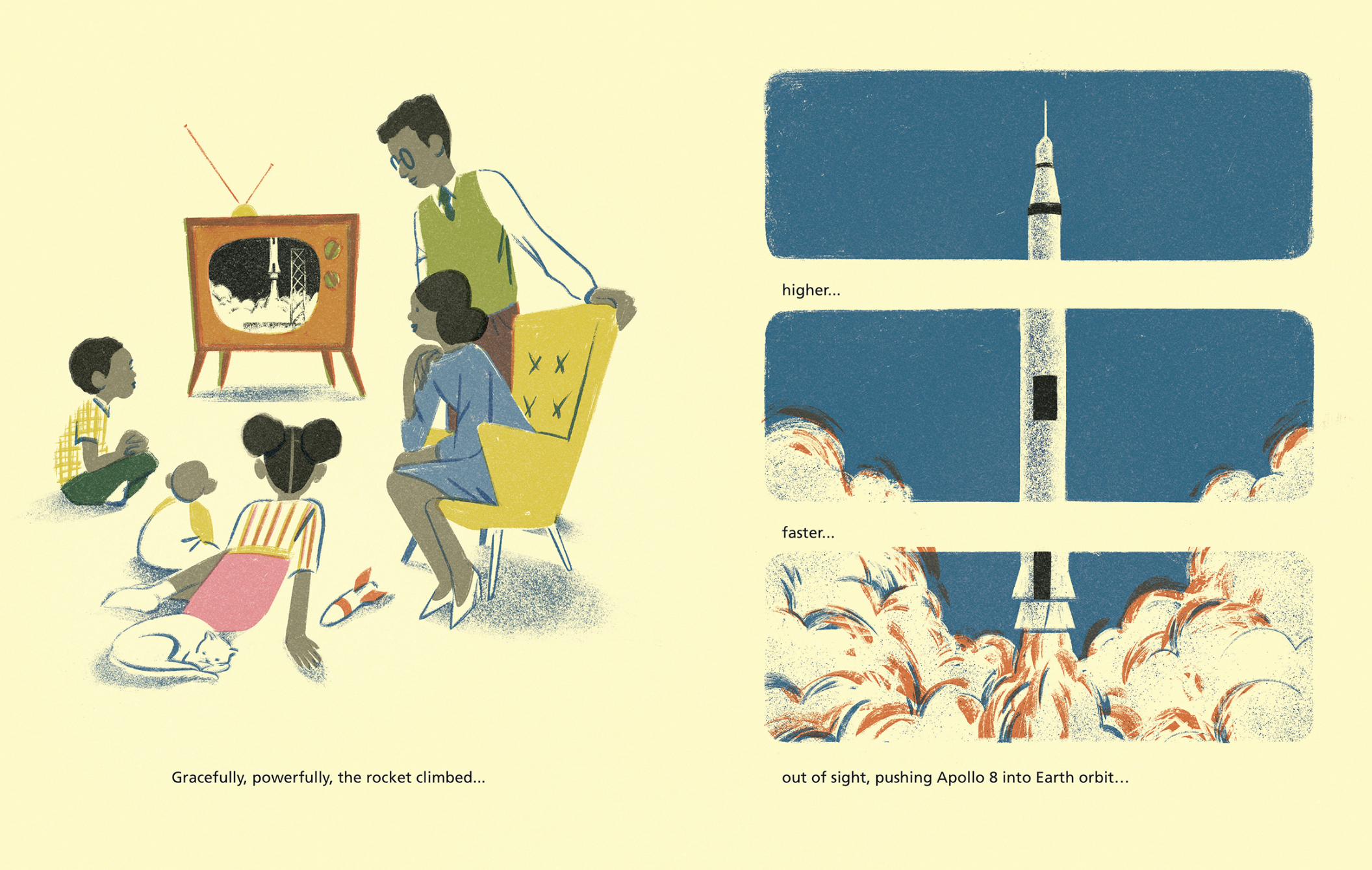
Review: My son wants to be an astronaut, so I have read many space books; however, I never tire of them because there is just so much to learn about when it comes to our space history, space future, and space in general. I, of course, had seen the Earthrise photograph, but I did not know its story nor did I know about the importance of Apollo 8, so I enjoyed learning about the voyage (and going on a bit of a Google spiral after learning more). Gladstone did a great job incorporating the mission with life on Earth in 1968 as well as getting specific about the mission but without getting so specific that readers will be lost. I also am a huge fan of Lundy’s illustrations which are purposeful in their use of line and color and have a huge impact on the book.

Teachers’ Tools for Navigation: There are many photographs that can be used in conjunction with the picture book including the original Earthrise and photographs of the astronauts, the rocket, and 1968.

This year is the 50th anniversary, so it would be fantastic to introduce students to this mission as many may not know it, and Earthrise is a perfect way to introduce it, and there are many aspects of the text that can be applied to standards in addition to its ability to be a perfect read aloud.

Discussion Questions: 

  • How did the image taken from the Apollo 8 spacecraft effect civilians when they saw it?
    • How was this different than the live feed that was sent earlier in the mission?
  • Based on the book, what has changed over the last 50 years?
  • Saturn V and Apollo 8 took off together–how was the rocket/space craft set up?
  • The author seems to have two purposes in writing this story–what do you think they are?
  • How did the images back on Earth help tell the story of the Apollo 8 mission?

Flagged Passages: 

Read This If You Love: Space, Learning about History, Astronauts, Photography/Art Impact

Recommended For: 

classroomlibrarybuttonsmall 

Signature

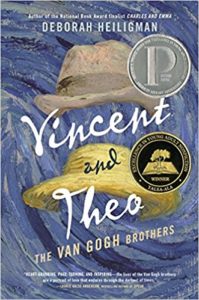
Vincent and Theo by Deborah Heiligman

Share

Vincent and Theo: The Van Gogh Brothers
Author: Deborah Heiligman
Published April 18th, 2017 by Henry Holt and Co.

Summary: The deep and enduring friendship between Vincent and Theo Van Gogh shaped both brothers’ lives. Confidant, champion, sympathizer, friend, Theo supported Vincent as he struggled to find his path in life. They shared everything, swapping stories of lovers and friends, successes and disappointments, dreams and ambitions. Meticulously researched, drawing on the 658 letters Vincent wrote to Theo during his lifetime, Deborah Heiligman weaves a tale of two lives intertwined and the love of the Van Gogh brothers.

About the Author: Deborah Heiligman has written many books for children, including National Book Award Finalist Charles and Emma: The Darwins’ Leap of Faith and The Boy Who Loved Math. She lives with her family in New York City.

AccoladesMichael L. Printz Award – Honor, School Library Best Books of the Year, CPL: Chicago Public Library Best of the Best, NYPL Books for the Teen Age, Booklist Editors’ Choice, YALSA Award for Excellence in Nonfiction Finalist, YALSA Award for Excellence in Nonfiction Winner, BCCB Blue Ribbon Award, Boston Globe – Horn Book Award, Kirkus Best Teen Books of the Year, Publishers Weekly Best Books of the Year, Texas TAYSHAS High School Reading List, Horn Book Magazine Fanfare List

Praise: 

“A remarkably insightful, profoundly moving story of fraternal interdependence and unconditional love.” —Kirkus, starred review

“A breathtaking achievement that will leave teens eager to learn more.” —School Library Journal, starred review

“In fittingly painterly language, Heiligman offers vivid descriptions of Vincent’s artwork and life, which grow more detailed and colorful as Vincent’s own artistic style becomes richer and more refined . . . This illuminating glimpse into the van Goghs’ turbulent life and historical period will add compelling depth to readers’ understanding of the iconic painter. ” —Booklist, starred review

“A unique and riveting exploration of art, artists, and brotherly love.” —The Horn Book, starred review

“An intensive exploration of their turbulent lives” —Publishers Weekly, starred review

“This title is a treasure for readers who want to immerse in a roiling domestic drama and who don’t back away from a good cry” —The Bulletin, starred review

Review: I could not stop talking about this book while I was listening to it. That, and that I couldn’t stop listening to the book–I would listen whenever I could, show me what a fabulous book it was. Hieligman does an amazing job making Vincent and Theo’s story come to life through such emotional narrative that the reader cannot help but feel as if we are living alongside the Van Gogh brothers. As someone who loves learning about history and art as well as an interest in brain health, this was a story that was more fascinating than I can even describe.

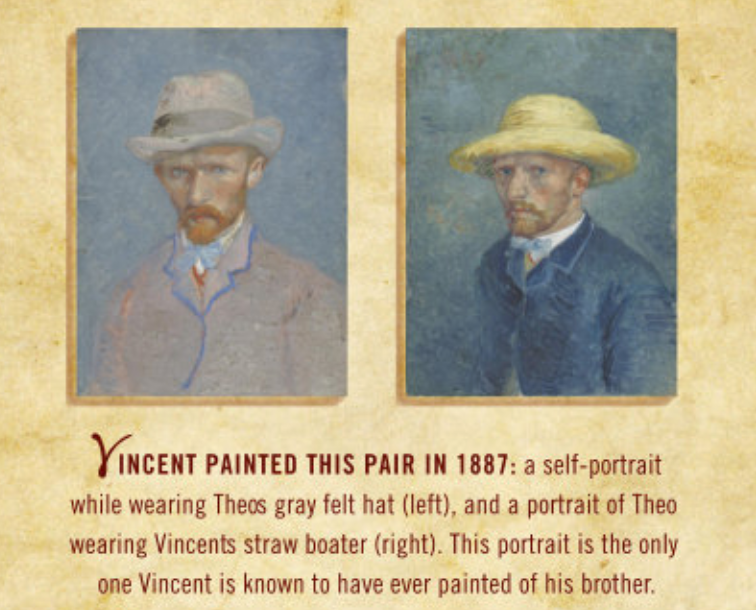
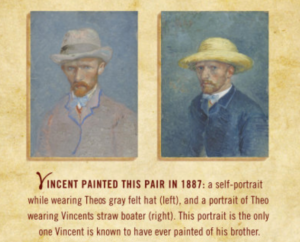
Also, I feel personally connected to this book in a fun way. In November, 2016 Deborah Heiligman and I had a dinner at NCTE, and we got talking about art since she had just finished Vincent and Theo. If you didn’t know, my dad has a BA in Art History and a MFA in Museumology and runs art museums (currently the LSU Museum of Art), so I have grown up around art museums my whole life and with art as a big part of it. One of the things we spoke about is the new information that a painting thought to be a self-portrait (right below) was actually the only known painting of Theo Van Gogh that Vincent painted. One thing that made it hard to determine this was that Theo is wearing the straw hat that Vincent is known to wear while Vincent is wearing Theo’s business felt hat. And this is where Deborah’s question came in: “The hats on the cover matched the hats the men are wearing in the photo although those are not actually their hats. Does it matter?” Now although I love art, I am not the expert, so I offered to ask my dad, and he responded with, “I like the cover as it is. I think it causes a questioning that evidences the new research in an interesting way. It defies previous thoughts and expectations.” Thus the cover stayed as is with an explanation on the jacket (below).
But I think what can show you about the book more than just me raving is all of the awards it received, ⇑ see above, and all of the amazing information about how Deborah researched for the book, ⇓ see below, and of course an excerpt from the book, ⇓ also below.

Teachers’ Tools for Navigation: View Deborah Hieligman’s research for Vincent and Theo and view all the articles & interviews about the book to use with students when reading this nonfiction text. There is so much that can be done with this story and the author’s writing process; use this amazing text in your classrooms, have it in your libraries, read it yourself–however you see fit, but read and share it!

Discussion Questions: 

  • How were Vincent and Theo’s life parallel with each other?
  • In what way were Vincent and Theo’s view of love part of their downfall emotionally?
  • Looking at the two portraits above and after reading the article about the portrait being of Theo, what do you believe? What similarities and differences do you see between the two?
  • How did Deborah Hieligman take all of the letters and research she did and turn them into a narrative?
  • I described this book to my sister as “A love story about two brothers.” Why would I call it a love story?
  • How did Theo’s short but mighty marriage set up for the current popularity of Vincent Van Gogh?
  • Why did it take so long for Vincent to find art?
  • In what way did finding friends in the impressionist art community help Vincent as an artist?

Flagged Passages: 1. TWO BROTHERS, ONE APARTMENT, PARIS, 1887

There was a time when I loved Vincent very much, and he was my best friend, but that’s over now. —Theo van Gogh to his sister Willemien, March 14, 1887

THEO’S BROTHER VINCENT has been living with him for just over a year, and Theo cannot take it anymore.

It is “almost intolerable for me at home,” he writes to their sister Wil in March 1887. Even though Theo has moved them to a larger apartment, this one still feels too small to hold Vincent’s outsized personality and Theo’s desperate need for quiet. He’s dying to tell Vincent to move out, but he knows if he does, Vincent will just be more determined to stay.

Dogged. Contrary. Stubborn. Vincent.

Theo van Gogh is the manager of Goupil & Cie, a successful art gallery on the fashionable Boulevard Montmartre in Paris. Theo is good at his job, but it’s terrifically frustrating for him right now. The owners of the gallery want him to sell paintings in the traditional style because they’re popular and bring in money. Though Theo certainly needs to make money—he has to support himself and Vincent and help their mother—he wants to sell art that is truly exciting to him, paintings by the Impressionists and their crowd, friends of his and Vincent’s: Émile Bernard, Paul Gauguin, Claude Monet, and Henri de Toulouse-Lautrec. Soon, maybe even paintings by Vincent himself.

But these modern painters don’t bring in enough money, so it’s a constant battle with his bosses. Theo haspersuaded them to let him set up a little display of Impressionists on the entresol. The entresol is not the ground floor, and it’s not the first floor. It’s the floor in between. It’s as if the paintings are there, but not quite yet, a glimpse into the future. It’s a start. But he spends his days working hard and comes back to the apartment at 54 Rue Lepic exasperated and exhausted. What he needs at home is rest and peace, but instead he gets VINCENT.

Theo loves his brother’s brilliant mind, his gregariousness, even his fiery temperament. Vincent can be a good antidote to Theo’s own inwardness and tendency to melancholy.

But after so many months of the cold Parisian winter spent indoors with Vincent, Theo is a wreck both mentally and physically. A few months back, in December, he was actually paralyzed—he couldn’t move at all for a few days. Although Theo knows he can’t blame his bad health on his brother, to get better he needs a break from Vincent’s gusts, his squalls, his constant talking and lecturing.

And, to make matters worse, lately Vincent has been furious at him. “He loses no opportunity to let me see that he despises me and I inspire aversion in him,” Theo tells Wil.

A portrait done of the brothers at this time would be sizzling with streaks of red-orange paint.

* * *

WHEN VINCENT AND THEO were young, growing up in the village of Zundert in the Netherlands, their father, a pastor, had written a special prayer. All the Van Gogh children had to memorize it and recite it when they left home:

“O Lord, join us intimately to one another and let our love for Thee make that bond ever stronger.”

Theo has valiantly been living up to that prayer. He’s been Vincent’s best friend for most of the last fifteen years, ever since they made a pledge to each other on a walk. And through many ups and downs and storms, for the past seven years, Theo has been giving Vincent money for paint, pencils and pens, ink, canvases, paper, clothing, food, and, until he moved in, rent.

On March 30 Vincent turns thirty-four; on May 1 Theo will be thirty. They’ve made it this far in their journey together—how can Theo kick him out now?

* * *

VINCENT AND THEO VAN GOGH look a lot alike: They both have red hair, though Vincent’s is redder, Theo’s more reddish blond. Vincent has freckles; Theo does not. They are both medium height—around five feet seven—but Vincent is broader, bigger; Theo slighter, thinner. They have pale blue eyes that sometimes darken to greenish blue. They are definitely brothers.

But they couldn’t give more different impressions.

Vincent in his workman’s clothes spends his days painting, outside if it’s not too cold, or inside the apartment. He is covered with Parisian soot and grime, overlaid with splatters and spatters of paint: ochre, brick red, orange, lemon chrome, cobalt blue, green, black, zinc white.

He doesn’t bathe often, which is typical for a nineteenth-century man, but it’s even less often than he should. He stinks—of body odor, dirt, food, paint, turpentine, wine, and tobacco. He usually has a pipe in his mouth, though he has very few teeth left, and those that are left are rotten.

And yet Vincent looks healthy: he’s robust, sturdy, and vehemently alive. Passion pours from him, as if the world he’s trying to capture is inside him, bursting to come out.

Theo is tidy, well dressed in a suit, looking very much the proper Parisian businessman. His features are finer, more refined. He would be handsome if he weren’t so sick: he’s thin and pale; he looks as though the life is being sucked out of him. He feels that way, too.

* * *

IN MANY WAYS, Vincent’s move to Paris has been good for both brothers. Thanks to Theo’s influence, to the artists he’s met, and to his own tenacious work, Vincent’s paintings are better than ever: they are imbued with color and light and Vincent’s own particular style.

And Vincent has given Theo more of a life. He’d been lonely in Paris, so lonely, and now, even though he doesn’t have a wife and family, Theo at least has a circle of friends through Vincent. For that he is grateful. So even though he’s desperate, Theo doesn’t kick out his brother. Yet.

In April, Theo acknowledges to another sister, Lies, that he’s been ill, “particularly in my spirit, and have had a great struggle with myself.” If he were well, he could deal with Vincent.

In fact both brothers do better with sun and warm air and hours spent outside. The Parisian days are getting longer—by minutes, anyway. If only spring would arrive! But there’s still too much gloom outside and in.

Gloom and fire.

It’s as if there are two Vincents, Theo has told Wil. He knows both sides of his brother very well. Sometimes Vincent is ebulliently happy and kind, sometimes furiously angry and difficult. He has a huge heart, but he’s stubborn and argumentative.

Vincent argues not only with Theo, and with himself, but also with friends and people he admires. One cold and fiery night in the near future, Vincent will fight with another roommate. And that argument will end in blood.

Read This If You Love: History, Art, Brain health, Van Gogh, Heiligman’s writing

Recommended For: 

classroomlibrarybuttonsmall 

Signature

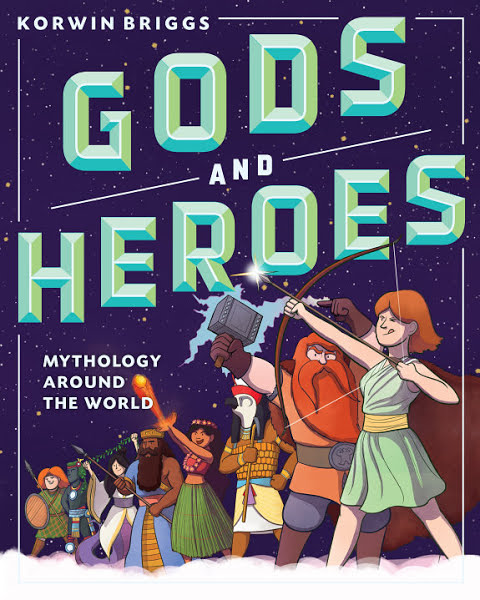
Gods and Heroes by Korwin Briggs

Share

Gods and Heroes
Author: Korwin Briggs
Published August 21, 2018 by Workman

GoodReads Summary: Meet the Original Superheroes.

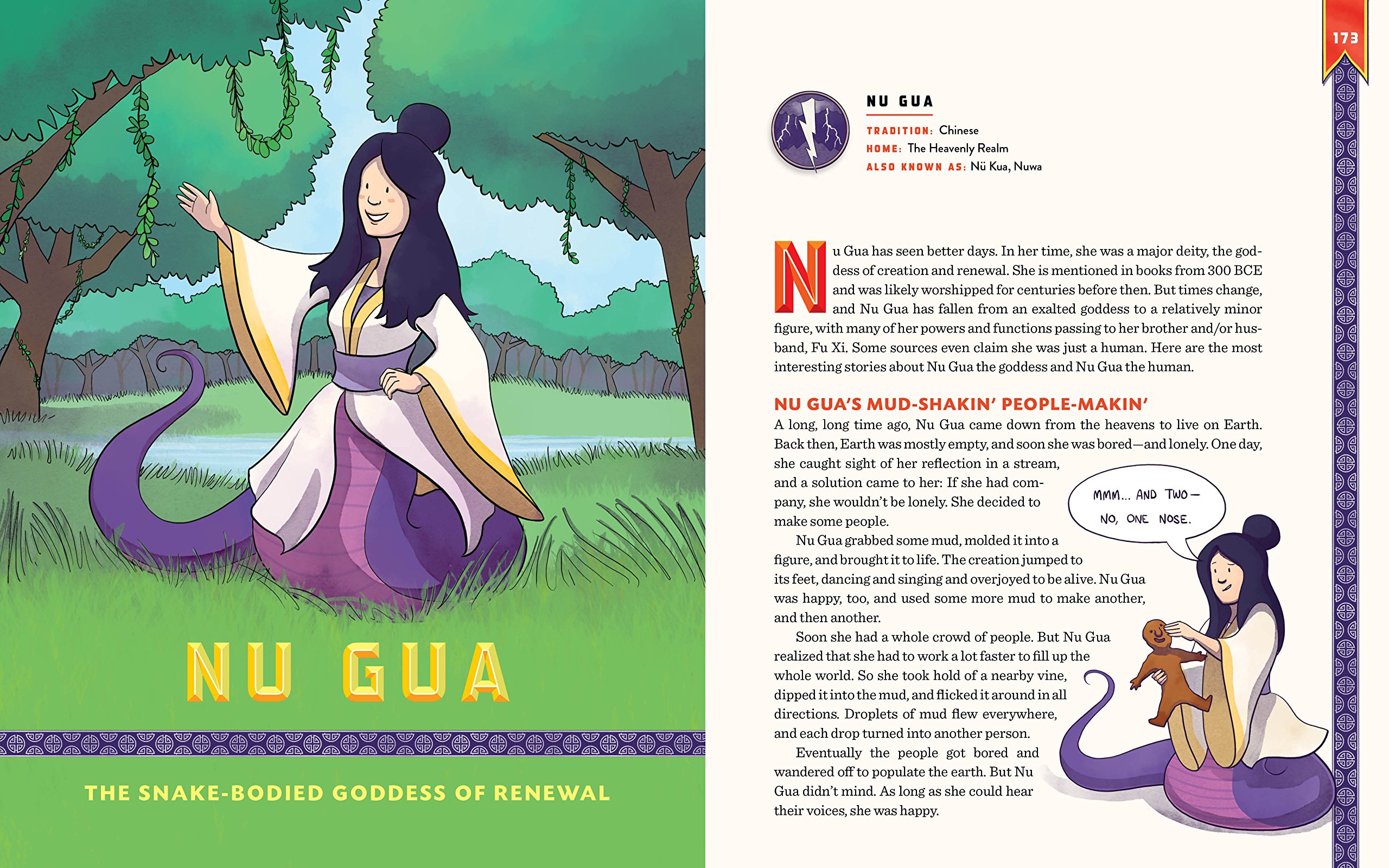
Before there was Batman, Wonder Woman, or Black Panther…there was Indra, Hindu king of gods, who battled a fearsome snake to save the world from drought. Athena, the powerful Greek goddess of wisdom who could decide the fate of battles before they even began. Okuninushi, the Japanese hero who defeated eighty brothers to become king and then traded it all for a chance at immortality.

Featuring more than 70 characters from 23 cultures around the world, this A-to-Z encyclopedia of mythology is a who’s who of powerful gods and goddesses, warriors and kings, enchanted creatures and earthshaking giants whose stories have been passed down since the beginning of time—and are now given fresh life for a new generation of young readers.

Plus, You’ll Learn All About:
Dragons: The Hydra, St. George’s Dragon, and the Australian Rainbow Snake
Giants: Grendel, Balor of the Evuil Eye, Polyphemus, and the Purusha with the thousand heads
Monsters: Manticore, Sphinx, Minotaur, Thunderbird, and Echidne, mother of the Nemean lion that nearly killed Heracles
Underworlds: Travel to Hades, Valhalla, and the Elysian Fields

Review: I always enjoy Workman books. The offer nonfiction information in a way that is fun and engaging. My four-year-old loved this book (even though most of it was a bit over his head). I’d recommend this book for the targeted audience (grades 3-7), but I think younger and older kids would really enjoy it (I know I did!). There are a diverse set of gods and heroes within this story, and they don’t originate from one culture, which I liked a lot. My son seemed to love the Greek/Roman gods the most, so those are the ones that we’ve read so far. We read about a different god/hero each night, and we’ve been going strong for about two weeks. We look forward to reading these stories each night. It makes for a fantastic bedtime routine.

Teachers’ Tools for Navigation: Teachers might ask each student to pick a different god or hero and present it to the class. I’d encourage students to choose a god/hero that interests them, and I think this onus would help students get excited about their presentations!

Discussion Questions: Which heroine/hero did you enjoy the most? Why?; Did you notice any similarities across cultural heroes? Differences? Which hero would you want to learn more about?

Flagged Passages: 

Read This If You Love: Mythology, Gods, Heroes, History

Recommended For: 

classroomlibrarybuttonsmall

**Thank you to Diana at Workman for providing a copy for review!**

Blog Tour with Review and Giveaway!: A Perilous Journey of Danger and Mayhem: A Dastardly Plot by Christopher Healy

Share

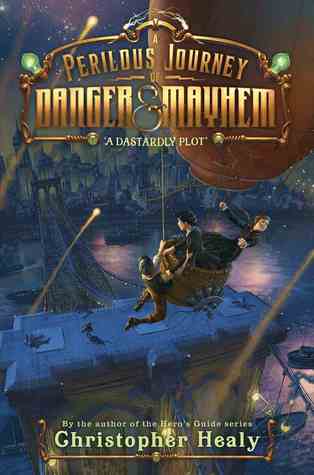
A Perilous Journey of Danger & Mayhem: A Dastardly Plot
Author: Christopher Healy
Published September 25th, 2018

Summary: It is 1883—the Age of Invention! A time when great men like Thomas Edison, Alexander Graham Bell, Nicola Tesla, and George Eastman work to turn the country into a mechanical-electrical-industrial marvel: a land of limitless opportunity. And it all happens at the world famous Inventors Guild headquarters in New York City—a place where a great idea, a lot of hard work, and a little bit of luck can find you rubbing elbows with these gods of industry who will usher humanity into the bright promise of the future.

Unless, of course, you’re a woman.

Molly Pepper, daughter of brilliant but unknown inventor Cassandra Pepper, lives with her mother in New York. By day, they make ends meet running a small pickle shop; but by night, they toil and dream of Cassandra shattering the glass ceiling of the Inventors Guild and taking her place among the most famous inventors in America. In an attempt to find a way to exhibit Cassandra’s work at the 1883 World’s Fair, they break into the Inventors Guild—and discover a mysterious and dastardly plot to destroy New York. The evidence points to the involvement of one of the world’s most famous inventors, and now it’s up to Molly, Cassandra, and a shop hand named Emmett Lee to uncover the truth—even if no one will ever know it was they who did it.

Christopher Healy, author of the acclaimed Hero’s Guide series, returns with the first book in a rip-roaring adventure about the inventors history remembers—and more than a few that it’s forgotten.

About the Author: Christopher Healy is the author of The Hero’s Guide to Saving Your Kingdom, New York Times Book Review Editor’s Choice, as well as its two sequels, The Hero’s Guide to Storming the Castle and The Hero’s Guide to Being an Outlaw. Before becoming a writer, he worked as an actor, an ad copywriter, a toy store display designer, a fact-checker, a dishwasher, a journalist, a costume shop clothing stitcher, a children’s entertainment reviewer, and a haunted house zombie. He lives in New Jersey with his wife, two children, and a dog named Duncan. You can visit him online at www.christopherhealy.com

Praise: 

“A zany, rollicking series opener.”– Kirkus Reviews

“Plot twists and banter hit at breakneck speeds in this heartfelt yet tongue-in-cheek look at the tumultuous Age of Invention, and its focus on two often marginalized groups—immigrants and women—allows for relevant social commentary.”– Publishers Weekly

“Healy has created a steampunk-inspired alternative history featuring some of the greatest minds in invention (including a number of women) in this series opener. A solid choice for adventurous readers.”– Booklist

“Christopher Healy, author of the Hero’s Guide series knows how to tell a good story. He’s done it again with the adventures of a determined girl named Molly Pepper.”– Brightly

Review: This is the exact book the world needed! Our traditionally told history is lacking in all things diversity because it was told by bias individuals who left out people who made huge differences despite their gender or race. I love that Christopher Healy was able to take this fact, show the ridiculousness of lack of great female minds being included in history and create this book filled with humor, adventure, heart, and a bit of history. He also includes prejudice against immigrants in the story in a way that will make any reader realize how undeserving these humans just looking for a life are of this prejudice.

Now starting my review that way may make you think that the book is preachy or boring, but it is anything but. Right from the beginning, you want to see if Cassandra and her brilliant inventions will ever be acknowledged and if they are going to be able to stop New York from being destroyed. Now throw in deceit from men the Peppers and Emmett trust, inventions of all sorts, a gang of men trying to kill whomever get in their way, and a group of brilliant women who won’t let anything stop them, and you will get this crazy adventure of Molly’s and Emmett’s.

Teachers’ Tools for Navigation: Although the book is fiction, much of what is included is shrouded in fact. The author includes “What’s Real and Not…” in the back matter which allows for inquiry into the historical elements of the story. This also allows teachers to see what parts of the story include more fact than fiction and different aspects could be pulled out when learning about the different historical elements.

An educator’s guide is also for the book from the publisher!

Discussion Questions: 

  • What part of the books were historical and what parts were fiction?
  • Would you consider the book historical fiction or science fiction or steam punk?
  • What invention would you want to make?
  • Research Edison. Do you think he deserves as much recognition as he gets?
  • Research the World’s Fair. Why do we not have them anymore?
  • Which deceitful events in the story surprised you? Were your predictions correct?
  • How did meeting Emmett and the MOI change Molly’s life trajectory?
  • Other than for entertainment, why do you think the author chose to write this story?

Flagged Passages: Check out this clip from the audiobook! You can also read a sample here!

Read This If You Love: The Invention of Hugo Cabret by Brian Selznick, The Mechanical Mind of John Coggin by Elinor TeeleExplorers: Door in the Alley by Adrienne Kress

Recommended For: 

classroomlibrarybuttonsmall 

GIVEAWAY!

a Rafflecopter giveaway

Don’t miss out on the other blog tour stops!

24-Sep Novel Novice  Post by Christopher Healy https://novelnovice.com/
25-Sep A Foodie Bibliophile in Wanderlust http://www.foodiebibliophile.com/
26-Sep Unleashing Readers https://www.unleashingreaders.com
27-Sep Teach Mentor Texts http://www.teachmentortexts.com
28-Sep Novel Novice  Review https://novelnovice.com/
29-Sep Maria’s Melange http://www.mariaselke.com/
1-Oct The Flashlight Reader http://www.theflashlightreader.com/
2-Oct Nerdy Book Club https://nerdybookclub.wordpress.com/
3-Oct Book Monsters https://thebookmonsters.com/
3-Oct Novel Novice Q and A with Chris https://novelnovice.com/
4-Oct Bluestocking Thinking http://bluestockingthinking.blogspot.com/

Signature

**Thank you to Walden Pond Press for providing copies for review and giveaway!**

Review and Giveaway!: Journey of the Pale Bear by Susan Fletcher

Share

Journey of the Pale Bear
Author: Susan Fletcher
Publication Date: October 2nd, 2018 by McElderry Books

Summary: The polar bear is a royal bear, a gift from the King of Norway to the King of England. The first time Arthur encounters the bear, he is shoved in her cage as payback for stealing food. Restless and deadly, the bear terrifies him. Yet, strangely, she doesn’t harm him—though she has attacked anyone else who comes near. That makes Arthur valuable to the doctor in charge of getting the bear safely to London. So Arthur, who has run away from home, finds himself taking care of a polar bear on a ship to England.

Tasked with feeding and cleaning up after the bear, Arthur’s fears slowly lessen as he begins to feel a connection to this bear, who like him, has been cut off from her family. But the journey holds many dangers, and Arthur knows his own freedom—perhaps even his life—depends on keeping the bear from harm. When pirates attack and the ship founders, Arthur must make a choice—does he do everything he can to save himself, or does he help the bear to find freedom?

About the Author: SUSAN FLETCHER is the acclaimed author of the Dragon Chronicles as well as the award-winning Alphabet of Dreams, Shadow Spinner, Walk Across the Sea, and Falcon in the Glass. Ms. Fletcher lives in Bryan, Texas. To read about the fascinating story behind the inspiration for Journey of the Pale Bear, visit her website, SusanFletcher.com

Praise: ★”A stupendous coming-of-age tale stuffed with adventure and laced with deeper questions.” — Kirkus Reviews (starred review)

Review: When I first read about this book it sounded pretty good, enough for me to pick it up, but it was SO GOOD! Like so good that even though it was a school week, I read it in 2 days!

First, it takes place in a time period that is hardly ever in books which is fascinating. I found myself looking up some of the history that was mentioned in the book, but the author did a great job of making sure that not knowing about the details of the time period wouldn’t effect the reading experience.

Second, it looks at animal treatment and truly makes you think about how an animal feels when it is put in captivity. Although told only in a realistic manner, the animal is such an integral part of the story that its behaviors are shared in detail allowing it to become a full character within the book.

Third, did you know there used to be a menagerie in the Tower of London? Me neither! But that took me down a suck hole of Google research. So fascinating!

Fourth, wow! The adventure is EPIC: sailing, bullies, pirates, shipwrecks, storms. It never stops!

So in review: Fascinating, thought-provoking, curious, and action-packed. All in all, a book I truly recommend and enjoyed.

Teachers’ Tools for Navigation: The main home for this book will be in libraries; however, I can definitely see portions of it being used in classrooms.

  • First, I could see it being used during a history lesson to discuss the politics and war shared in the book.
  • Second, there are so many scenes that could be pulled out as mentor texts for writing. I’ll share some of my favorites below.
  • Third, I would love to see some creative writing done from the bear’s point of view.
  • Fourth, it is a fascinating look at animal treatment and how it has (and has not) changed over the years.

But in the end, it belongs in kids’ hands! Get it there!

Discussion Questions: 

  • Why did Arthur agree to take care of the bear?
  • What examples throughout the book show that the bear loved and trusted Arthur?
  • What does the whole story of a polar bear being sent from Norway to England show you about the respect of animals during the time period of the novel?
  • How did Arthur’s involvement make the bear’s life better?
  • Do you believe that the doctor cared about Arthur as he said he did? Explain.
  • How did Arthur earn the respect of the sailors on the ship?

Flagged Passages: 

“Its eyes, small and dark, were alert, curious, aware. I felt the faint stirring of its breath against my cheeks. I drew in the rich, ripe scent of bear until I seemed to sink down below the surface of it, drowning. From somewhere far away I heard Hauk and the lantern boy arguing, but the sounds fell away behind the throbbing in my ears and the thrill of the running-hum in my limbs.

The bear rumbled deep in its throat.

I rose to my feet, stepped back, and felt the iron bars press cold against me. I kept my eyes fixed on the pale, wide face, as if the force of my gaze could prevent the bear from lunging at me with its enormous paws or raking me with is claws–claws that I could see out of the corner of my eyes, massive claws, claws from a nightmare of monsters.” (Chapter 3)

“Before we saw the bear, we heard her—a heavy rhythmic read, a thump, a clang. Beyond the reek of fish, I sniffed out the feral musk of her.

We crept through the dark warehouse–the doctor, the captain, and I–until I made out a large, pale, moving form in the deep gloom ahead. The doctor motioned us to stop, and we watched from behind a stack of crates and bales. The bear was as tall as a pony, longer than a caribou, and as wide as two bulls. Back and forth she paced in her cage, and back and forth again, her head swinging side to side on her long neck, the convex bow of her snout lending her an air of nobility. The bear-smell now filled the air, and the stench of dung as well. A surge of fear rose up in me, turning my bones and sinews to liquid.” (Chapter 6)

Read This If You Love: Seekers by Erin Hunter, The Vanishing Islands by Barry WolvertonPirates! by Celia Rees, The Ravenmaster’s Secret by Elvira Woodruff

Recommended For: 

classroomlibrarybuttonsmall 

Giveaway!: 

a Rafflecopter giveaway

Signature

**Thank you to Barbara at Blue Slip Media for providing a copy for review and McElderry Books for providing a copy for giveaway!**

Carlos Santana: Sound of the Heart, Song of the World by Gary Golio

Share

Carlos Santana: Sound of the Heart, Song of the World
Author: Gary Golio
Illustrator: Rudy Gutierrez
Published: September 4, 2018 by Henry Holt

Summary: Discover the childhood story of Carlos Santana in Gary Golio’s Sound of the Heart, Song of the World, featuring illustrations by Rudy Gutierrez,the internationally celebrated artist who created the iconic Carlos Santana Shaman CD cover.

Carlos Santana grew up surrounded by music. His father, a beloved mariachi performer, teaches his son how to play the violin when he is only six years old. But when Carlos discovers American blues, he is captivated by the raw honesty of the music. Unable to think of anything else, he loses all interest in the violin. When Carlos finally receives his first guitar, his whole life begins to change.

From his early exposure to mariachi to his successful fusing of rock, blues, jazz, and Latin influences, here is the childhood story of a legendary musician.

My Review: I absolutely loved this book. My son and I had so much fun reading it, and then he asked to listen to some of Carlos Santana’s music. A few days later, we heard a Carlos Santana song on the radio, and my husband excitedly reminded my son about the book. It feels good to connect him with such a powerful man in our history. He shaped music in powerful ways. The book is beautifully written. I liked how it focused predominantly on Santana’s childhood. This kept my son’s interest and helped him connect with Santana. The art flows beautifully and looks like visual music on the page.

Teachers’ Tools for Navigation: I would love to use this book in literature circles with kids. Students could each read a picture book about a famous person in our history of music (see some of the options below). They could share out to their peers and play a clip from the music. These interdisciplinary activities would make for a warm, powerful learning environment.

Discussion Questions: 

  • Describe Carlos Santana’s childhood.
  • What inspired Santana?
  • What was Santana’s relationship with his parents? How do you think this may have shaped his life? What did working beside his father teach him about himself?
  • Describe Santana’s journey into music. What influenced him?

Flagged Passage: Check out the beautiful interiors on the book’s Macmillan page.

Read This If You Love: How Pete Seeger Got America Singing by Leda SchubertStand Up and Sing! by Susanna ReichWhen Bob Met Woody by Gary Golio, Jimi: Sounds Like a Rainbow by Gary Golio

Recommended For: 

classroomlibrarybuttonsmall 

**Thank you to Madison at Macmillan for providing the book for review!**