Review and Educators’ Guide: Taking Cover: One Girl’s Story of Growing Up During the Iranian Revolution by Nioucha Homayoonfar

Share

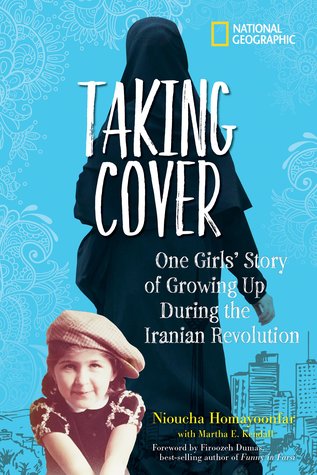
Taking Cover: One Girl’s Story of Growing Up During the Iranian Revolution
Author: Nioucha Homayoonfar
Foreward by Firoozeh Dumas
Published January 1st, 2019 by National Geographic Children’s Books

Summary: In the mid 1970’s Nioucha Homayoonfar’s French mother and Iranian father made a decision that would change her life forever. At the age of five, Nioucha and her parents moved from Pittsburgh to her father’s homeland of Iran, at the time a modern, bustling country where people from different religions co-existed peacefully and women and men alike pursued the highest level of education and professional opportunities. A new school, new language, and new friends took some time to get used to.  But none of that compared to the changes that Nioucha experienced during and after the Iranian revolution of 1979. Once the Ayatollah took control, full robes and head scarves were required, religion classes became mandatory and boys were no longer allowed to interact with girls.  Her life continued to be filled with family, friends, pop music and even her first boyfriend (although both the music and the boyfriend were strictly prohibited), but Tehran had become barely recognizable as bombs were dropped on her neighborhood, loved ones and even Nioucha herself were kidnapped, acquaintances were executed and day by day, their freedom was chipped away.

Publishing in time for the 40th anniversary of the Iranian revolution, Taking Cover reveals the extraordinary story of Nioucha’s struggle to adjust, to understand and to figure out her place in the world while unrest and oppression swirled around her.  Additionally, this title is a unique blend of coming-of-age storytelling and history. Coupled with a thought-provoking forward by New York Times best-selling author Firoozeh Dumas (Funny in FarsiTaking Cover encourages readers to take a deeper look at the importance of protecting religious, political, and social freedoms while Nioucha’s vivid descriptions of Iranian life — the food, the smells, and its customs — exposes readers to a country and culture rarely written about.

Review: Generally, our system of history education and media focus do not set up Americans with great global information which is evident in the many nonfiction and historical fiction books I’ve encountered in my recent lifetime that have taught me so much about the world. This is one of those books.

This memoir does a special thing in being a beautiful narrative that at its heart is about a young girl growing up but is also addresses the true prejudice against women in Iran as well as teach some basics about the Islam faith and the Iranian Revolution. It is hard to balance these objectives but Taking Cover does it really well which makes it perfect for middle school readers because the story will engage them while they are exposed to a time period and place that they may know little about, as I did.

Side note: Is anyone else really impressed by the vivid memories that some have of their childhood? That is another thing I took away from this book–I remember a lot less than others! Excerpts from the memoir would be wonderful as a mentor text about writing about memories using imagery.

Side note: I would love to do a memoir book club with diverse voices including Taking Cover! I was thinking Born a Crime (the new young reader edition), Hey KiddoOpen Mic, and March Book One-Three. What other titles do you know of that would fit this idea?

Educators’ Guide provided by the publisher:

Flagged Passages: “CHAPTER 1: Fury 1986 (Part 1)

Javabe ablahan khomooshist. -Persian Proverb
Silence is the best answer to fools.

I knew I was in trouble when the white jeep made a U-turn. Driven by the Zeinab Sisters (or the Black Crows, as I called them), it raced toward me and screeched to a stop.

My mother was pushing my brother in a stroller. She had already crossed the street, but I’d lagged behind. So when the ‘Moral Police’ pulled in front of me, I was all alone. Their job was to ensure that all women and girls dressed in a manner dictated by Islam. To set an example, these four were covered head to toe in black chadors, and some even wore gloves.

The Black Crow sitting in the back seat jumped out and grabbed my arm without saying a word. I caught my mother’s eye just as I was being pushed inside the jeep. Maman stood helplessly, screaming across the traffic for the Crows to let me go.” (p. 11)

Read This If You Love: Memoirs, Learning about unreported history, Expanding your knowledge of the world

Recommended For: 

classroomlibrarybuttonsmall

Signature

**Thank you to Karen at Media Masters Publicity for providing the book for review!**

Review and Giveaway!: Waiting for Pumpsie by Barry Wittenstein

Share

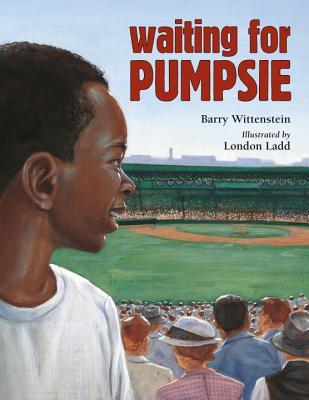
Waiting for Pumpsie
Author: Barry Wittenstein
Illustrator: London Ladd
Published February 21st, 2017 by Charlesbridge Publishing

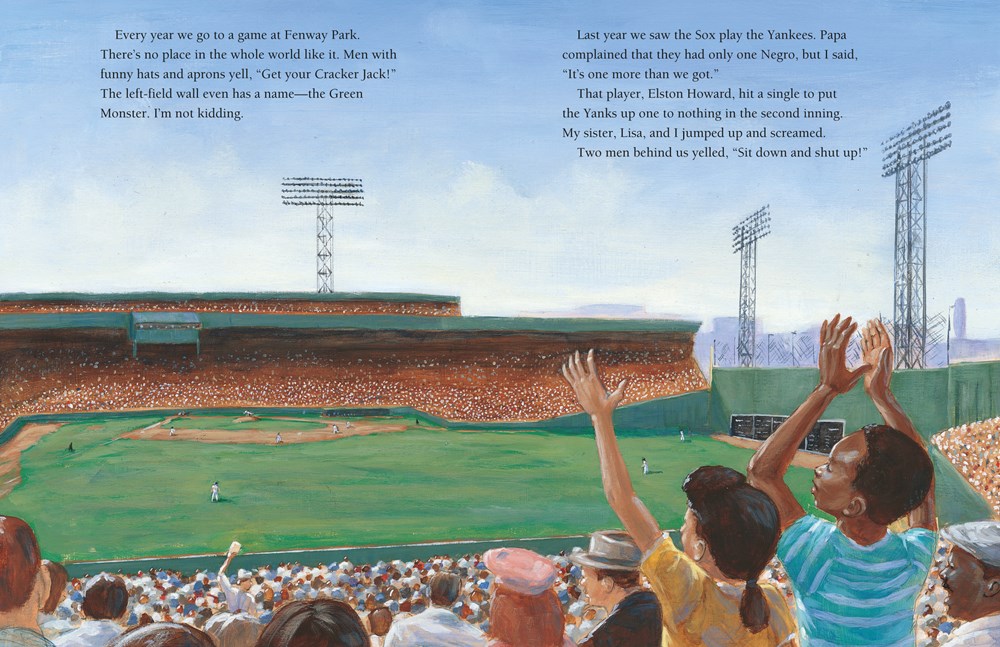
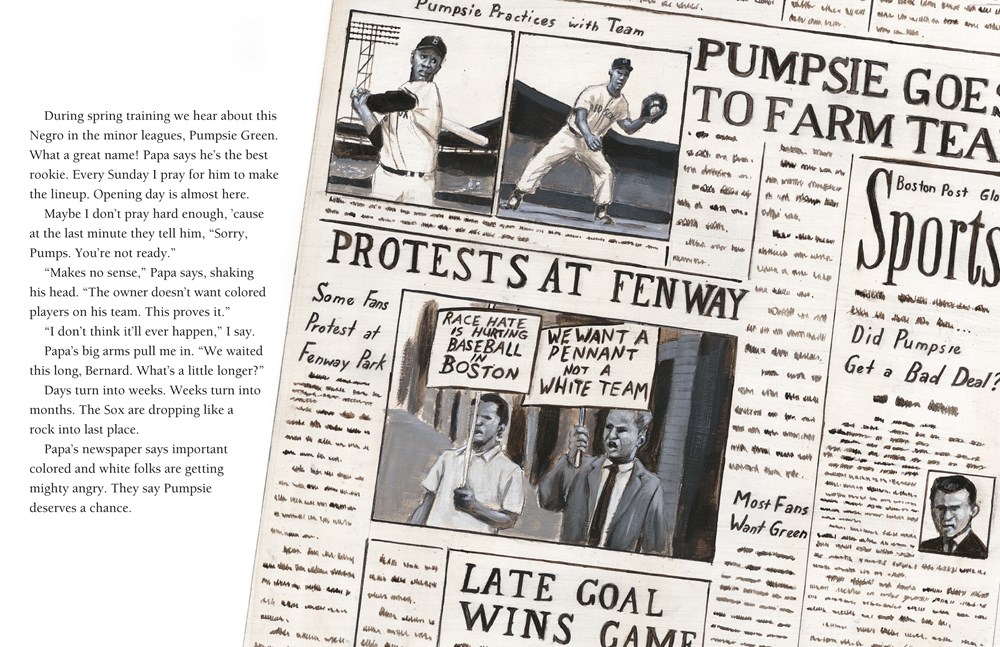
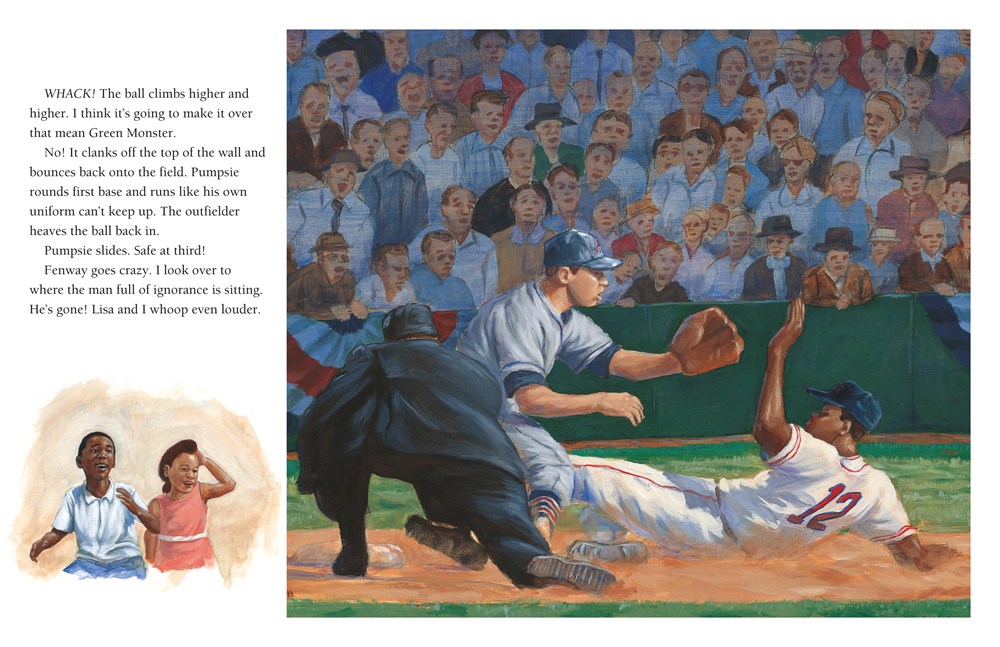
Summary: In 1959 the Boston Red Sox was the last team in the Major Leagues to integrate. But when they call Elijah “Pumpsie” Green up from the minors, Bernard is overjoyed to see a black player on his beloved home team. And, when Pumpsie’s first home game is scheduled, Bernard and his family head to Fenway Park. Bernard is proud of Pumpsie and hopeful that this historic event is the start of great change in America.

This fictionalized account captures the true story of baseball player Pumpsie Green’s rise to the major leagues. The story is a snapshot of the Civil Rights Movement and a great discussion starter about the state of race relations in the United States today.

About the Author: Barry Wittenstein has tended bar, driven a taxi, worked at CBS Records and CBS News back in the day, spent a decade writing music and lyrics, toiled six years as a web editor and writer for Major League Baseball, and three years as a substitute elementary school teacher.  He could be Walter Mitty’s brother.

Barry loves to write narrative nonfiction picture books. He is the author of Waiting for Pumpsie and The Boo-Boos That Changed the World. In 2019, he will publish two more nonfiction picture books—Sonny’s Bridge, about the legendary jazz saxophonist Sonny Rollins; and A Place to Land (with illustrations by Caldecott Medalist Jerry Pinkney) about how Martin Luther King Jr. wrote his “I Have a Dream” speech. He is currently working on a YA novel. He lives in New York City with his wife. To learn more, and to download free curriculum guides, visit his website: https://onedogwoof.com/ or follow him on Twitter: @bwittbooks

Praise: 

“A grand slam” —Kirkus Reviews, starred review

“Bernard’s conversational narration creates a warm bond with readers from the get-go, and although Wittenstein and Ladd never sugarcoat instances of racial prejudice, the story’s moments of triumph sound the loudest notes.” — Publisher’s Weekly

“This uplifting account of a family and the integration of Boston baseball will be inspiring to many youngsters.” — School Library Journal

“This picture book contributes to children’s understanding of America’s past, while telling a good story”— Booklist

Kellee’s Review: This story was one that is new to me, and as a baseball fan and interested in social justice history, I found it so fascinating! Like the author’s note suggests, the history of baseball integration has been skewed in its telling over time because it does seem to those ignorant in the history that Jackie Robinson started up, fought the racial prejudice, then everyone was integrated; however, Pumpsie’s story shows us that this false truth is far from the truth. I really love that the author took something he did not know about and wrote a book to share the story with an audience. 

The author and illustrator told Pumpsie’s story from the point of view of a young Red Sox fan named Bernard and his anticipation for a Black baseball player on the team he loves and how one player can change the morale of fans.

Ricki’s Review: This is a wonderful book. My family is divided (half Yankees fans and half Red Sox fans), and yet, no one seemed to mind that this story featured Pumpsie, a Red Sox player. He isn’t one of the more famous, well-known Red Sox players, but he truly should be. This book gives careful insight into Pumpsie, his career, and his struggles, and readers will see layers of topics—even beyond baseball and equity. The illustrations and dialogue bring readers right to the stadium and field during the time period. My older son had a lot of questions as we read the book, and it felt good to navigate such a richly complex text with him. This is a must-have for libraries. It offers great themes to be discussed in the classroom setting, and students will be interested in this piece of our history. Also, it makes for a great read aloud. We were roaring right along with the stadium. 🙂

Teachers’ Tools for Navigation: There are so many different ways that this story can be integrated into a classroom setting! First and foremost, it is a fantastic read aloud. The narrative will suck students in and will lead to some great discussion. Additionally, it could be used in equity discussions when looking at the history of the fight for equal rights. Lastly, I can definitely see this picture book being an asset in a baseball history book clubs/lit circles.

Discussion Questions: 

  • Why was Pumpsie’s debut so important to Bernard?
  • How does Pumpsie’s story change how baseball integration is traditionally told?
  • How does Pumpsie’s story fit into a bigger story of Civil Rights in the United States?
  • Other than baseball and equity, what other topics does this text touch on?
  • Who did the prejudice man in the stands represent within the larger world?

Flagged Passages: 

Read This If You Love: I am Jackie Robinson by Brad Meltzer, Henry Aaron’s Dream by Matt Tavares, Baseball Is… by Louise Borden, Barbed Wire Baseball by Marissa Moss, Something to Prove by Robert Skead, Silent Star by Bill Wise

Recommended For: 

classroomlibrarybuttonsmall  

Giveaway!: 

a Rafflecopter giveaway

Signatureand 

**Thank you to Blue Slip Media and Charlesbridge for providing copies for review and giveaway!**

The Undefeated by Kwame Alexander

Share

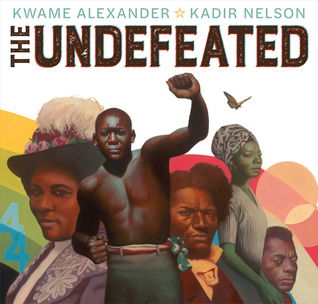
The Undefeated
Author: Kwame Alexander
Illustrator: Kadir Nelson
Published April 2, 2019 by Versify

Summary: The Newbery Award-winning author of The Crossover pens an ode to black American triumph and tribulation, with art from a two-time Caldecott Honoree.
Originally performed for ESPN’s The Undefeated, this poem is a love letter to black life in the United States. It highlights the unspeakable trauma of slavery, the faith and fire of the civil rights movement, and the grit, passion, and perseverance of some of the world’s greatest heroes. The text is also peppered with references to the words of Martin Luther King, Jr., Langston Hughes, Gwendolyn Brooks, and others, offering deeper insights into the accomplishments of the past, while bringing stark attention to the endurance and spirit of those surviving and thriving in the present. Robust back matter at the end provides valuable historical context and additional detail for those wishing to learn more.

Ricki’s Review and Teachers’ Tools for Navigation: This is an incredibly powerful book. I loved seeing the poem (which was previously performed) turned into a picture book. The book touches upon many critical topics for youth to consider across time and place. It offers a strength that makes readers want to jump from their chairs to support the message of the text. This is a must-read. Teachers might use this book in classrooms by asking students to select a page that they find to be particularly inspiring. Then, they might research individuals who reflect the undefeated-ness that they see on the pages. This might devolve into research projects that explore the “faith and fire,” as quoted from the book summary, that students see across time, space, and place.

Discussion Questions: 

  • How does this book make you feel?
  • What do you perceive to be the author’s and illustrator’s purpose(s)?
  • What similarities and differences do you see across the pages?

Read This If You Love: Out of Wonder by Kwame Alexander; We March by Shane W. Evans; Freedom Summer by Deborah Wiles; The Other Side by Jacqueline Woodson; Voice of Freedom: Fannie Lou Hamer by Carole Boston Weatherford

Recommended For: 

classroomlibrarybuttonsmall  


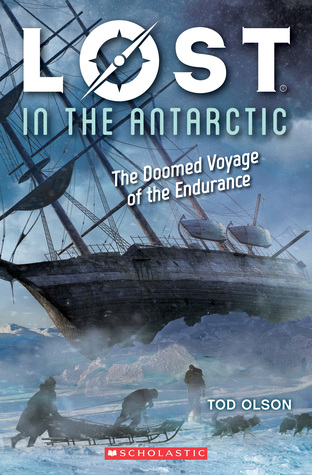
Review and Giveaway!: Lost in the Antarctic: The Doomed Voyage of the Endurance by Tod Olson

Share

Lost in the Antarctic: The Doomed Voyage of the Endurance
Author: Tod Olson
Published January 1st, 2019 by Scholastic Inc.

Summary: There wasn’t a thing Ernest Shackleton could do. He stood on the ice-bound Weddell Sea, watching the giant blocks of frozen saltwater squeeze his ship to death. The ship’s name seemed ironic now: the Endurance. But she had lasted nine months in this condition, stuck on the ice in the frigid Antarctic winter. So had Shackleton and his crew of 28 men, trying to become the first expedition ever to cross the entire continent.

Now, in October 1915, as he watched his ship break into pieces, Shackleton gave up on that goal. He ordered his men to abandon ship. From here on, their new goal would be to focus on only one thing: survival.

About the Author: Tod Olson is the author of the historical fiction series How to Get Rich and the four books in the Lost series–Lost in the Pacific, 1942; Lost in Outer Space;  Lost in the Amazon; and Lost in the Antarctic. He has written for national magazines on the Columbine school shooting, homeless teens, the murder of Matthew Shepard, and many other stories of interest to children and young adults. Tod holds an MFA from Vermont College of Fine Arts and lives in Vermont with his family, his mountain bike, and his electric reclining chair. To learn more, and to download free teaching resources, visit his website: todolson.com.

Praise for Previous Titles in the Series:

★”A riveting, completely engrossing true survival story.” —Kirkus Reviews (starred review)

“Engaging… A great choice for collections.” —School Library Journal

Review: I do not know how I am just learning about this series! It is right up my alley! As a huge fan of narrative nonfiction, I couldn’t put the book down, and I cannot wait to read the others in the series. What I loved about the book is it is written like a novel but is all truth! The author did a great job taking the truth of the historical event and turning it into a story that will truly suck in a reader.

And I know I am on the right track because when I went to school to talk to my students about the series, specifically to my historical fiction and nonfiction loving 4th period, there were a few kids who had already heard of, read, and loved previous books in the series.

Teachers’ Tools for Navigation: First, add these to your library! These will be perfect for your I Survived series readers and nonfiction fans. I also think that the series would be a wonderful series for in-class book clubs for each group to read about a different historical event then after finishing the book, the culminating task for the book club could be sharing about the event with their class.

Discussion Questions: 

  • What made Shackleton the perfect captain for an Antarctic expedition?
  • What do you believe was the decision that doomed the voyage?
  • Why were the dogs and cat not able to go through the whole voyage with the crew?
  • Why would the author have chosen this voyage for his series?
  • What is the difference between historical fiction and narrative nonfiction?
  • How did the addition of a photographer on the trip change the way that we learn about the voyage now?

Flagged Passages: “Prologue, Weddell Sea, Antarctica, October 26th, 1915:

The ship didn’t stand a chance, and Frank Hurley knew it. He’d been in the engine room with the carpenter, trying desperately t keep the water out. They had walled off the leak, where the sternpost and rudder had been wrenched out of place… The Endurance was being squeezed to death around them.

One man stood mostly still, watching the commotion from the raised deck in the stern. The crew referred to him as Sir Ernest in writing. In person they called him ‘the Boss.’ He had broad shoulders and a compact frame, blunt features, and a square jaw. He looked like he was built for this kind of venture–leaving every known thing behind to risk his life in a frozen wilderness.

Ernest Shackleton had been to Antarctic twice already. Twice had had almost died there. Now, his third expedition hovered on the brink of disaster.” (p. 1-4)

Read This If You Love: Shipwreck at the Bottom of the World by Jennifer Armstrong, The I Survived series, Narrative nonfiction, History

Recommended For: 

classroomlibrarybuttonsmall 

Giveaway!: 

a Rafflecopter giveaway

Signature

**Thank you to Blue Slip Media and Scholastic for providing books for review and giveaway!**

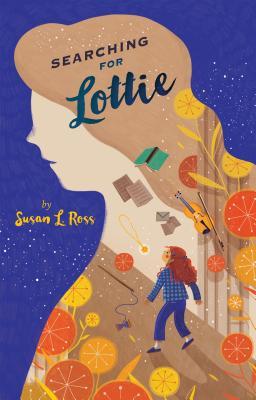
Searching for Lottie by Susan L. Ross

Share

Searching for Lottie
Author: Susan L. Ross
Publication Date: February 26th, 2019 by Holiday House

Summary: Lottie, a talented violinist, disappears during the Holocaust. Can her grand-niece, Charlie, discover what happened?

A long-lost cousin, a mysterious locket, a visit to Nana Rose in Florida, a diary written in German, and a very special violin all lead twelve-year-old Charlie to the truth about her great-aunt Lottie in this intriguing, intergenerational mystery. 12-year-old middle schooler Charlie, a budding violinist, decides to research the life of her great-aunt and namesake for a school ancestry project. Everyone in Charlie’s family believes Great-Aunt Charlotte (Lottie), a violin prodigy, died at the hands of the Nazis, but the more Charlie uncovers about her long-lost relative, the more muddied Great-Aunt Lottie’s story becomes. Could it be that Lottie somehow survived the war by hiding in Hungary? Could she even still be alive today? In Searching for Lottie, Susan Ross has written a highly personal work of historical fiction that is closely inspired by her own family members whose lives were lost in the Holocaust.

About the Author: Susan Ross grew up in Lewiston-Auburn, Maine, and divides her time between Connecticut and Maine. She attended Brown University and NYU School of Law.

After practicing law, Susan taught legal writing in Brooklyn and in Budapest, and creative writing to kids and adults in Connecticut. She especially loves author visits. There is nothing Susan enjoys more than hanging out in a classroom talking to students about her books and teaching kids about writing and literature!

Kiki and Jacques was inspired by the experience of Somali refugees who moved to Susan’s hometown in Maine. Susan worked with refugee teenagers in writing the book and was greatly moved by their amazing positive energy and hopeful determination.

Searching for Lottie was inspired by stories from members of Susan’s family, whose lives were forever changed by the Holocaust.

Susan teaches writing at Westport Writers Workshop and is a trustee at the Westport Library.

Review: I think historical fiction is one of the most important genres because it makes us relive history in ways that we never could without story. Searching for Lottie is interesting because it is contemporary but also includes a historical narrative as Charlie learns more and more about Lottie. This makes it a great choice for students who may not like historical fiction but are interested in history.

I am also a fan of Susan Ross’s writing because she does a fabulous job taking a tough subject and writing a middle grade novel that gives an introduction to the topic without being too mature but also while not sugar coating it. It is so important to have middle grade books for our students that show the real world in an appropriate yet real way.

And it really helps that the stories are interesting and many kids will connect with the conflicts and events the characters take part in.

Teachers’ Tools for Navigation: Searching for Lottie is inspired by true events, specifically those of Susan’s family. She shares much on her website including this background information:

Charlotte Kulka (called Lotte — in English, “Lottie”) was my mother’s teenage cousin. She lived in Prague with her father, a doctor. Her mother passed away when she was little. Tragically, Charlotte and her father both perished, but her beloved aunt, my Cousin Vally Szemere, survived with false papers in Budapest. Vally boarded with a Catholic family who protected her and they became lifelong friends. My middle name was given in Lotte’s memory.

Another relative, Magda Szemere, was a famous young violin soloist in Europe before she, too, was arrested and forever disappeared. I wrote about my bittersweet delight at finding her music in the essay, “Sweet Strings of Sorrow.”

In doing the research for this book, I discovered to my astonishment that her music had been preserved on gramophone recordings and remains available in music archives.

My mother’s cousin, Magda Krizan, survived the war posing as a model and nanny in Hungary — and was a member of the resistance. She escaped from Communist Czechoslovakia with her husband in 1968 and came to America.

My mother, Erika Lencz, escaped Vienna in 1938 with her brother, Erwin. She was twenty years old. My grandparents and nearly all of the rest of her family were lost. Mom worked in a pillow factory in Brooklyn and as a nanny before settling down in Maine with my father, where she ran our family wedding gown shop and had five children.”

Visit http://www.authorsusanross.com/about-searching-for-lottie/ to listen to the recording and view photos.

This information along with Charlie’s project in the book makes me want to ask students to learn about their family (remember to have a plan for any adopted, foster, or other kids with no access to family history!).

Parts of the story also would be a great addition to an orchestra classroom as Charlie and Lottie write about different pieces, specifically the music journal that Lottie kept.

Finally, as with most historical fiction novels, this story would be a fantastic jumping off point for inquiry in the classroom about our world’s past.

Discussion Questions: 

  • After listening to the pieces that Charlie and Lottie share in the book, which piece is your favorite?
  • What other ways did Jews and other ostracized humans escape Nazi-occupied territory during World War II?
  • What traits did Charlie show when researching her namesake?
  • How did the research change her relationship with her brother?
  • Using evidence from the text, how can you tell that Charlie loves music?

Flagged Passages: “‘Lottie was Nana’s sister, right?’

‘Yes, Lottie was several years older. Your nana told me how clever she was; how determined…just like you.’ Mom smiled. ‘And here’s another thing you two have in common–Lottie played the violin. In fact, Lottie played so beautifully that she performed with the Vienna Philharmonic when she was a teenage.’

‘Seriously?’ That was a weird coincidence. Violin was her thing, too. Charlie had begged her parents for lessons when she was still in kindergarten. She’d always loved music, and she liked pop and hip-hop as much as any kid at Hillmont Middle School…but there was something about classical that made her heart skip. She could lose herself in a symphony in a strange way that she never tried to explain to her friends. Only her best friend, Sarah, understood that feeling, but Sarah had moved to Boston over the summer…

‘What else do you know about Lottie?’

‘Well, the family was from Vienna, the capital of Austria. Her father was a math professor at the university.’

‘And…what exactly happened to them.’

Mom hesitated, then let out a long sigh. ‘Honestly, I’m not entirely certain. When the Germans invaded Austria, the Jews were at the mercy of the Nazis. I know that Lottie was lost, along with my grandfather. My grandmother and Nana Rose were lucky to escape. They came to America on a ship.’

‘So Lottie died…right?’ Charlie swallowed hard.

‘Yes, I guess she must have.’ Mom looked uncomfortable.

‘You guess? You don’t know for sure?’ Charlie sat up straight. She searched her mother’s blank face and glanced down at the photo. Lottie’s eyes were bright, with long dark lashes, and they were staring back up at her.

‘The truth is that nobody knows exactly what happened to Lottie…'” (p. 7-9)

Read This If You Love: Music, World War II historical fiction novels, History, Family

Recommended For: 

classroomlibrarybuttonsmall 

Signature

**Thank you to the author for providing a copy of the book for review!!**

Where’s the Architect?: From Pyramids to Skyscrapers by Susanne Rebscher

Share

Where’s the Architect?: From Pyramids to Skyscrapers: An Architecture Look and Find Book
Author: Susanne Rebscher; Illustrator: Annabelle von Sperber
Published October 23, 2018 by Prestel Junior

Summary: This wonderfully illustrated and captivating introduction to the wonders of architecture will have young readers poring over each spread and learning as they go.

From the top of China’s Great Wall to the base of the Pyramids of Giza and the Sphinx, this journey through the world of architecture stops in nearly every continent and travels through centuries. Annabelle von Sperber populates her dynamic and intricate double-page spreads with many details and a hidden architect or important figure on every page that kids will have fun trying to locate. Along the way they’ll learn about the iron workers who built the Empire State building, how many bulbs it takes to light the Eiffel Tower, where the royal jewels are kept at the Tower of London, and why there is so much red and yellow in Beijing’s Forbidden City. Young readers will find themselves fully immersed in this large format book while learning about the incredible architectural wonders that continue to amaze us today.

Review: My son and I absolutely loved this book. It is oversized with giant illustrations, and we spent much time on each spread. The pages feature magnificent works of architecture from the past (and currently existing in the present). In most of the drawings, the architecture is in the process of being built or was recently built, so the book leads readers into a historical time period. We learned so much from this book, and I loved all of the new-to-me facts about the famous architectural structures. My son loved looking and talking about the buildings, and he enjoyed doing the search-and-finds on each page. It is a wonderful book that would be a great resource for classrooms.

Teachers’ Tools for Navigation: Teachers might ask students to work in groups to pick a page that is particularly compelling for them. They can research more about the structure and the time period to understand context and explore historical aspects of the architecture that interest them.

Discussion Questions: 

  • Which architectural design is most interesting to you? Why do you find it to be interesting?
  • Which facts surprised you?
  • Do you notice differences in the architecture throughout time?
  • Which structures are close to you? Which are far away?

Flagged Passages: 

Read This If You Love: Interactive search-and-find (seek-and-find, look-and-find) activity books filled with educational information

Recommended For: 

classroomlibrarybuttonsmall

**Thank you to Casey at Media Masters Publicity for providing a copy for review!**

Chilly Da Vinci by J. Rutland

Share

Chilly Da Vinci
Author and Illustrator: J. Rutland
Published by December 4, 2018 by NorthSouth Books

Goodreads Summary: While others do “penguin” things, Chilly da Vinci—self-declared inventor penguin, builds machines that don’t work…yet!  Chilly ties into the popular “maker” movement with humor and imagination.

While others do “penguin” things, Chilly da Vinci—self-declared inventor penguin, builds machines that don’t work…yet!

Ricki’s Review: My son tells everyone that he is an engineer. He spends a lot of time drawing his inventions and then building them with blocks. Needless to say, he was thrilled about this book. Chilly is an inventor who builds machines that don’t work. This offers great opportunities for conversations about the revision process and the time and patience required for inventors to be successful. The book ties well with history and Da Vinci’s inventions. There is wonderful classroom potential with this book. The illustrations border realistic and fantastic, which makes for fun examinations across pages. This book will be a favorite in classrooms and it is quite inspiring. I am most excited about its interdisciplinary potential.

Kellee’s Review: The structure of this book is so interesting! It switches between the reality of Chilly’s situation and a narrative of possibilities and his imagination. This will lead to some amazing conversations and also gives an example of a different type of narrative. I also think that so much can be done with the different creations that Chilly makes looking at real inventions and the sketches and research of Leonardo da Vinci. On top of that, I love the message of Chilly’s journey! It is all about not giving up and never letting anyone tell you something isn’t doable. Oh, and he’s a super cute penguin!

Teacher’s Tools For Navigation: Students might begin by investigating Da Vinci’s inventions and how they compare with those in the book. This offers a rich look into history. Then, students might draw out and design their own inventions. Working in small groups, they might try to build their inventions to experience and talk through the emotions that Chilly might be experiencing as he invents new creations!

Discussion Questions: 

  • How do Chilly’s inventions compare with those of Da Vinci?
  • What emotions and characteristics does Chilly display when his inventions don’t work?
  • How does the author use personification to enhance the reading of this text?
  • How might this book be different if Chilly was a person rather than a penguin? What does Chilly’s penguin character add to the story?

We Flagged: 

Read This If You Loved: Nonfiction books about Leonardo da Vinci, If Da Vinci Painted a Dinosaur by Amy Newbold, The Most Magnificent Thing by Ashley Spires, Lost and Found by Oliver Jeffers

Recommended For: 

classroomlibrarybuttonsmall  readaloudbuttonsmall 

and Signature