Rain Reign by Ann M. Martin (Kellee’s Review)

Share

rain

Rain Reign
Author: Ann M. Martin
Published October 7th, 2014 by Feiwel & Friends

Goodreads Summary: In her most powerful novel yet, Newbery Honor author Ann M. Martin tells the story of girl with mental/emotional challenges and the dog she loves.

Rose Howard has OCD, Asperger’s syndrome, and an obsession with homonyms (even her name is a homonym). She gave her dog Rain a name with two homonyms (Reign, Rein), which, according to Rose’s rules of homonyms, is very special. Rain was a lost dog Rose’s father brought home. Rose and Rain are practically inseparable. And they are often home alone, as Rose’s father spends most evenings at a bar, and doesn’t have much patience for his special-needs daughter.

Just as a storm hits town, Rain goes missing. Rose’s father shouldn’t have let Rain out. Now Rose has to find her dog, even if it means leaving her routines and safe places to search. Rose will find Rain, but so will Rain’s original owners.

Hearts will break and spirits will soar for this powerful story, brilliantly told from Rose’s point of view.

My Review and Teachers’ Tools for Navigation: If you have read A Corner of the Universe,  you know what an emotionally-charged author Ann M. Martin can be, and she once again tells a heart-wrenching story with a voice that will not leave your head. In Rain Reign, Martin tackles Rose’s story. Rose is such a true character. A brilliant young girl with OCD and Asperger’s syndrome who is obsessed by homonyms. She is a girl that is so unique and intriguing. As a teacher, I very much connected with her and how I would nurture her gifts within my classroom; however, I also saw the challenges that Rose faces as well.

What makes this book truly stand out is the first person point of view. You, as the reader, are in Rose’s mind and living her life. You experience the neglect of her father, the love of Reign, the obsessiveness, the homonyms, the outbursts, and the support of her uncle. Because I was IN her life, I just couldn’t put down the book. I had to know that Rose and Rain were going to be okay.

As a teacher, I want kids to read this book because they will fall in love with Rose and Rain. Through this love, they will build empathy in their hearts because they will just want to know that Rose and Rain will be okay.

Ricki’s Review: Check out Ricki’s Review here!

Discussion Questions: How do you feel about Rose’s dad?; Can you think of homonyms that weren’t mentioned in the book?; Do you think it was right of Rose’s dad to take Rain?; How would you feel if your dog disappeared?

We Flagged: “I’m going to tell you a story. It’s a true story, which makes it a piece of nonfiction.

This is how you tell a story: First you introduce the main character. I’m writing this story about me, so I am the main character.

My first name has a homonym, and I gave my dog a homonym name too. Her name is Rain, which is special because it has two homonyms–rein and reign. I will write more about Rain in Chapter Two. Chapter Two will be called “My Dog, Rain (Rein, Reign).”

Something important about the word write is that is has three homonyms–right, rite, and wright. That’s the only group of four homonyms I’ve thought of. If I ever thing of another four-homonym group, it will be a red-letter day.” (Chapter One)

Read This If You Loved: Rules by Cynthia Lord, Wonder by R.J. Palacio, Mockingbird by Kathryn Erskine, Out of my Mind by Sharon Draper, Each Kindness by Jaqueline Woodson

Recommended For: 

classroomlibrarybuttonsmall readaloudbuttonsmall litcirclesbuttonsmall

Signature

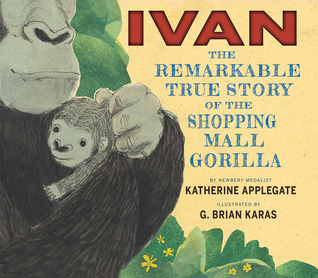
Ivan: The Remarkable True Story of the Shopping Mall Gorilla by Katherine Applegate

Share

NF PB 2014

Nonfiction Picture Book Wednesday

Nonfiction Picture Book Wednesday is hosted by Kid Lit Frenzy and was started to help promote the reading of nonfiction texts. Most Wednesdays, we will be participating and will review a nonfiction text (though it may not always be a picture book).
Be sure to visit Kid Lit Frenzy and see what other nonfiction books are shared this week!

ivanpb

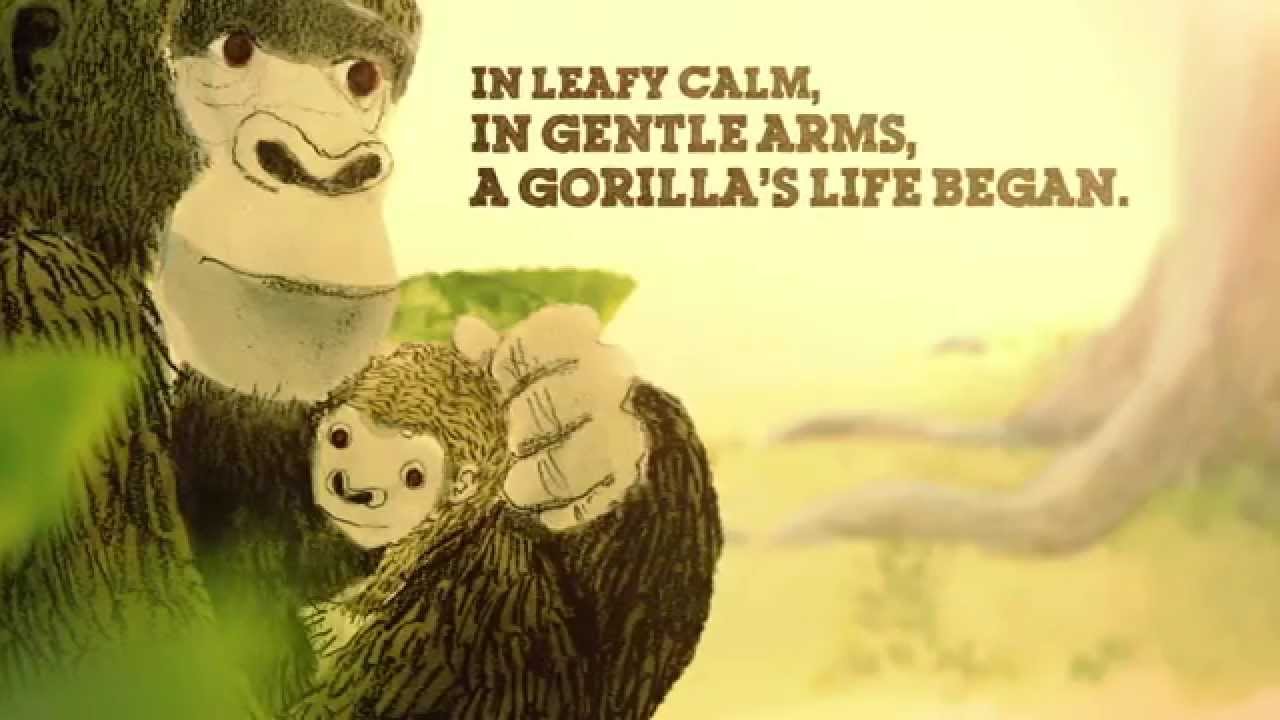
Ivan: The Remarkable True Story of the Shopping Mall Gorilla
Author: Katherine Applegate
Illustrator: G. Brian Karas
Published October 7th, 2014 by Clarion Books

Goodreads Summary: In a spare, powerful text and evocative illustrations, the Newbery medalist Katherine Applegate and the artist G. Brian Karas present the extraordinary real story of a special gorilla.

Captured as a baby, Ivan was brought to a Tacoma, Washington, mall to attract shoppers. Gradually, public pressure built until a better way of life for Ivan was found at Zoo Atlanta. From the Congo to America, and from a local business attraction to a national symbol of animal welfare, Ivan the Shopping Mall Gorilla traveled an astonishing distance in miles and in impact.

This is his true story and includes photographs of Ivan in the back matter

My Review and Teachers’ Tools for Navigation: Anyone who knows me knows that I adore apes (see my Nerdy Book Club Top Ten Ape books and my Hurt Go Happy interview with Ginny Rorby as well as my Hurt Go Happy Primatesand Endangered reviews). They are such fascinating creatures. I enjoy reading about them and am a true advocate for their care here on Earth. This book is just another supporting document in the beauty, intelligence, and awesomeness of these creatures. Katherine Applegate has written a perfect companion to her Newbery winning One and Only Ivan which takes the reader into Ivan’s life and once again makes our heart break for him. It is written in verse with words that transport you into Ivan’s life. This book made me cry because of the power of the words, but more importantly, the power of Ivan’s story. Please read this. You will thank me (and curse Katherine Applegate for the tears).

Teachers’ Tools for Navigation: The best way for this book to be used in the classroom is in conjunction with The One and Only Ivan or other books about animals in captivity or apes. It will start lots of conversation and is a wonderful introduction into empathy for all living things.

Discussion Questions: Why was it wrong for the poachers to take Ivan?; Do you think wild animals should be allowed to be pets?; How do you think Ivan felt when he went to Atlanta?

We Flagged: 

Read This If You Loved: The One and Only Ivan by Katherine Applegate, Hurt Go Happy by Ginny Rorby, Endangered and Threatened by Eliot Shrefer, Faithful Elephants by Yukio Tsuchiya, Me…Jane by Patrick McDonnell, Primates by Jim Ottaviani, Little Beauty by Anthony Browne, Half Brother by Kenneth Oppel

Recommended For: 

classroomlibrarybuttonsmall readaloudbuttonsmall closereadinganalysisbuttonsmall

Signature

Blog Tour, Review, and Author Q&A!: Bramble and Maggie Series by Jessie Haas

Share

bramble1 bramble2 bramble3

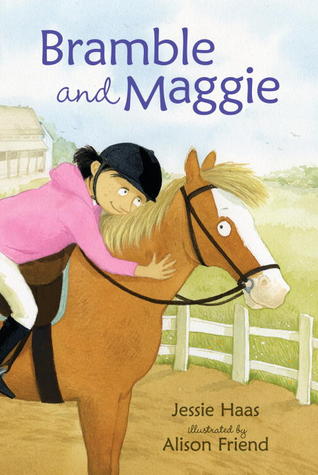
Bramble and Maggie: Horse Meets Girl
Published March 27th, 2012 by Candlewick Press
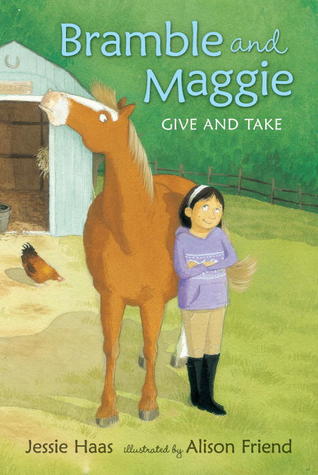
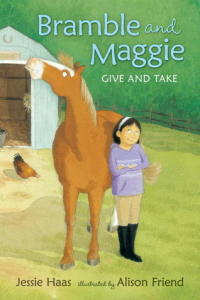
Bramble and Maggie: Give and Take
Published April 23, 2013 by Candlewick Press
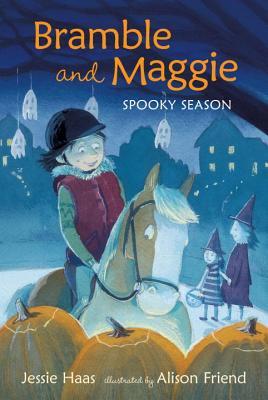
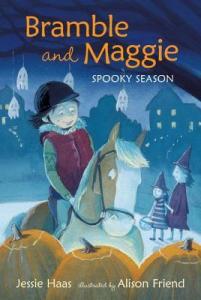
Bramble and Maggie: Spooky Season
Published August 12th, 2014 by Candlewick Press
Author: Jessie Haas
Illustrator: Alison Friend

Bramble and Maggie: Horse Meets Girl Goodreads Summary: Come along for a spirited ride as Bramble – a horse with interesting “little ways”- and her devoted girl, Maggie, make their debut in this inviting early reader.

Maggie wants a pony to ride and take care of, and to prepare she’s been reading a big book on horse care. Meanwhile, Bramble is bored with giving riding lessons and walking in circles. She’s looking for just the right person to take her away from her routine. Is it a perfect match? Maggie loves Bramble as soon as she sees her, but there are some things Bramble has to be sure of. Will Maggie let Bramble venture into new places? Will she protect Bramble from strange objects in the yard? Will she, most importantly, know when Bramble needs her undivided attention? This charming and funny early reader is an ideal match for young animal lovers and anyone who has ever longed for a friend who truly understands.

Bramble and Maggie: Give and Take Goodreads Summary: Maggie and her mischievous horse, Bramble, are back for another spirited romp through the ins and outs of friendship.

Maggie loves introducing her new horse, Bramble, to the neighborhood, the beach, and the backyard. Bramble has fun too, once she is cajoled into participating by a well-timed carrot or two. But when Maggie has to go to school, Bramble is bored and lonely and gets into some trouble with Mr. Dingle next door. A misbehaving hen and a midnight visitor finally help to turn Bramble into a good neighbor. This charming and funny early reader flows at just the right pace for kids who are learning that others don’t always do exactly what you want, but that friends find a way to give and take.

Bramble and Maggie: Spooky Season Goodreads Summary: Bramble, a persnickety but lovable horse, and Maggie, her patient owner, build an even stronger friendship as they brave the surprises of autumn.

In their third adventure, Bramble and Maggie explore a new season together — fall! Leaves crunch underfoot. Acorns ping off rooftops. It all makes Bramble feel wonderfully spooky. But Bramble’s frisky-pretend-scary gait makes Maggie jumpy, and soon Bramble really is nervous. There are alarming new sights and sounds everywhere, like Mr. Dingle’s scarecrow. When Maggie takes a fall, will she want to get back in the saddle? And when Halloween comes, can Maggie trust Bramble to brave the tricks and lead them both safely to the treats?

Kellee’s Review: There is a very specific time in a kid’s life where they are ready to begin reading longer books, but not ready to tackle chapter books yet. This is where Bramble and Maggie fits. These early chapter books will are perfect texts to help lead kids to longer chapter books. The work well for their targeted age level in that they never speak down to readers and have excellently paced stories that hold readers’ attention and will help them feel successful.  On top of all this, the Bramble and Maggie stories are just so sweet! I love all the different adventures they go on and the lessons they learn like overcoming fear, conquering loneliness, and gaining responsibility. Readers will adore these books. 

Ricki’s Review: Kellee hit the nail on the head. As I was reading, I thought to myself, “Why didn’t I have these books available to me when I was transitioning to chapter books?” I remember being devastated that my books no longer had pictures in them, and I resisted the longer texts for this reason. This series is engaging, educative, and fun! The words repeat in ways that will help students learn the vocabulary, particularly the more difficult words that relate to horses. Each book delivers a strong message, and the bond between Bramble and Maggie is one which will connect with readers. When I think about these books, I will always remember Maggie dragging her sleeping bag to the stable to sleep beside Bramble. I can’t wait to share these books with my pre-service elementary school teachers. They will have a special place in classrooms.

Teachers’ Tools for Navigation: Readers would be wise to explore how Haas develops theme in these texts. Each individual book has a different theme, and the content beautifully incorporates the messages. These books would be great models for students to learn about implicit versus explicit themes.

Discussion Questions: What lessons has Maggie learned since she has gotten Bramble? What lessons has Bramble learned since he’s met Maggie?; How has Bramble changed since he went to live with Maggie?; In what ways does the author show the bond of friendship throughout the books?

We Flagged: “Bramble lowered her head. Maggie gave her a carrot, and Bramble took it. She let Maggie put on the bridle. This was better. Give and take” (p. 9 of Bramble and Maggie: Give and Take)

Read This If You Loved: The Franklin School Friends series by Claudia Mills, The Pony Mysteries series by Jeanne Betancourt, and The Pony Scout series by Catherine Hapka

Recommended For:

  litcirclesbuttonsmall classroomlibrarybuttonsmall

Q & A with Jessie Haas

What inspired you to write this series? What inspired you to write about a horse?

I was inspired by two things in writing the Bramble and Maggie books. First, I had a story rejected by Candlewick, but with a request attached. The editor had girls who loved horses and horse books and had read some of mine and they noticed that they were always checked out of the public library. So Candlewick asked if I would like to write a couple of books for beginning readers.

At the time I had just gotten a new horse, Robin. She has a somewhat prickly personality, which I think inspired Bramble’s name, and the way horses and people mesh with each other was on my mind. Of course, I knew my version of events, but I’m always aware that horses have their own points of view, so the story would need to be told from both Bramble’s and Maggie’s perspectives.

What was it like to work with an illustrator? What does the process look like?

Like most authors, I don’t actually “work with” the illustrator. The editor and I work until we have a solid draft. Then the text is sent to the illustrator and she sends sketches. When the editor and I see them, it becomes obvious where we need to add or drop words (usually drop) to make space on the page. A lot of times, the art is telling the story already, and that makes some of the words unnecessary.

Alison Friend lives in England, so we did have one big change she needed to make in the first book. The wonderful picture at the beginning of Chapter Two, with Maggie and her family in the car, had the steering wheel on the right, as in British cars. I must admit, it took me a few times looking at the pictures to spot that. The pencil sketches are always funny and energetic, but the magic happens when Alison begins to paint, and it is always tremendously exciting to see the finished pages. And I got to see the original art for Spooky Season, which was thrilling. I think Spooky Season is one of the most beautiful books I have ever had published.

How do you envision your texts being taught in classrooms? Do you have any suggestions for our viewers who are teachers?

I’m usually stumped by that question. Now, though, I have a great new curriculum guide (it’s a free download on my website) I love some of the ideas there. Spooky Season, the newest book, explores the theme of fear—how we pretend to be afraid (for fun), how we scare ourselves (for fun), and how we sometimes get really scared—and that’s not fun! Bramble is truly afraid of some Halloween decorations like Mr. Dingle’s scarecrow—until she finds out it’s good to eat

Maggie runs into the situation every horseman faces sooner or later. You fall off, and you know you’re supposed to get right back on, or the fear will grow and you might not be able to. That’s easier said than done, of course. But Bramble takes care of Maggie the way good horses do, and Maggie has the experience that I remember from my own life as my very first time confronting and overcoming fear. These are great discussions to have around Halloween.

For Give and Take, the discussion is more about a truly basic issue in children’s—indeed, everyone’s—lives: power. Bramble feels that no one should be the boss all of the time. There should be some give and take. As well as story sequencing discussions, this is a chance for children to talk about—and draw—a time in their own lives when they learned to share, and give a little.

And Horse Meets Girl has a wonderful activity where children are encouraged to imagine, describe and draw their ideal pet. I also love the idea of Maggie needing a babysitter for Bramble, which could be a springboard for kids writing their own stories. The curriculum guide was created for me by Blue Slip Media, working with an educational consultant who’s also an elementary school teacher, and it’s keyed to Common Core curriculum standards—so it’s educationally sound as well as fun.
Jessie Haas 2 Jessie Haas w horse

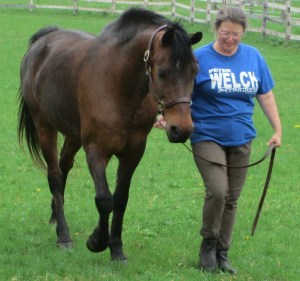
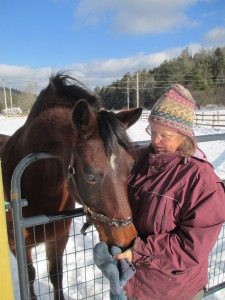
Jessie Haas has always loved horses and has written more than thirty books, most of them about horses, including the first two books ab out Bramble and Maggie. She says, “Horses love pretending to be scared, just like us, and fall is the perfect season for that. Why do they call it fall?” Jessie Haas lives in Vermont with her husband, writer Michael J. Daley; her horse; two cats; a dog; and a hen. For more information, and to download a free curriculum guide, visit her website: http://www.jessiehaas.com/.

RickiSigand Signature

**Thank you to Barbara at Blue Slip Media and Jessie Haas for having us as part of the blog tour!**

Sam & Dave Dig a Hole by Mac Barnett

Share

sam and dave

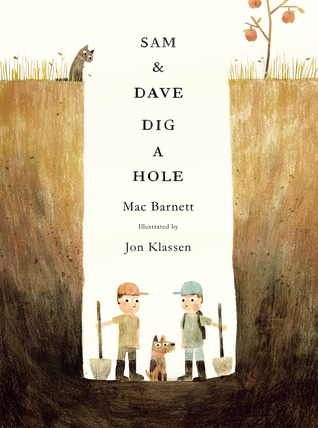
Sam & Dave Dig a Hole
Author: Mac Barnett
Illustrator: Jon Klassen
Published October 14th, 2014 by Candlewick Press

Publisher’s Summary: Sam and Dave are on a mission. A mission to find something spectacular. So they dig a hole. And they keep digging. And they find . . . nothing. Yet the day turns out to be pretty spectacular after all. Attentive readers will be rewarded with a rare treasure  n this witty story of looking for the extraordinary — and finding it in a manner you’d never expect.

About the Creators: Mac Barnett is the author of several award-winning books for children, including President Taft Is Stuck in the Bathillustrated by Chris Van Dusen, and Extra Yarn, illustrated by Jon Klassen, which won a Boston Globe–Horn Book Award and a Caldecott Honor. Mac Barnett lives in California.

Jon Klassen is the author-illustrator of I Want My Hat Back, a Theodor Seuss Geisel Honor book, and This Is Not My Hat, winner of the Caldecott Medal. He is also the illustrator of House Held Up by Trees, written by Ted Kooser, which was named a New York Times Book Review Best Illustrated Children’s Book, and Extra Yarn, written by Mac Barnett, which won a Caldecott Honor. Originally from Niagara Falls, Ontario, Jon Klassen now lives in Los Angeles.

My Review and Teachers’ Tools for Navigation: I just love the work that Mac and Jon do. I don’t think I have read any of their books that I haven’t enjoyed and haven’t found myself wanting to talk about. What I love most about their books is that they are unique and so, so, so smart. Their books are like no other, and this book is no different. It has nuances you have to carefully look for, it has an ending that you can debate about for a very long time, and overall is just so well done. I think this, along with the Hat books, may be the best open-ended picture books out there. Just like wordless books, open-ended books truly invokes conversing. When I finished, I immediately asked my husband to read it, so we could discuss the ending. Travis Jonker has a great post about the different theories about the ending, but I warn you: there are spoilers in the post! Think of all the great conversations or writing your students will have/do because of this thought-provoking picture book.

For some laughs, also check out Mac Barnett and Jon Klassen Make a Book: A Transcript.

Discussion Questions: What do you think happened at the end?; What do you notice about the dog as you are reading the book?; How is the ending different from the beginning?

Book Trailer: 

Read This If You Loved: I Want My Hat Back and This Is Not My Hat by Jon Klassen, Extra Yarn by Mac Barnett

Recommended For: 

classroomlibrarybuttonsmall readaloudbuttonsmall closereadinganalysisbuttonsmall

Signature
**Thank you to Laura at Candlewick for providing a copy for review**

Coyote Summer by J.S. Kapchinske

Share

coyote

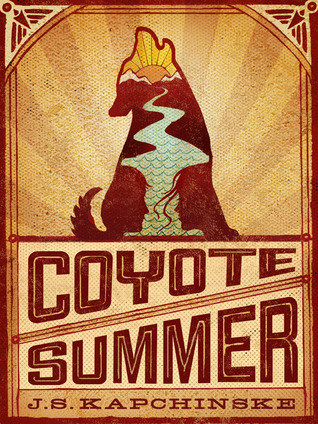
Coyote Summer
Author: J.S. Kapchinske
Published March 17, 2013 by Moon Halo Books

Goodreads Summary: Heath always looked forward to summer visits at Grandpa’s—long days in the wild Rocky Mountains, fishing with Dad on the Piedra River, and nights sleeping on the screened-in porch. Plus this summer, Dad promised to finally tell him the secret about old Mrs. Baylis—a mysterious Native American woman living down the dusty dirt road… But now, after Dad’s accident, it can never happen that way. Heath and his mother go to Grandpa’s, but only to spread Dad’s ashes in the river. 

In the beginning, Heath feels like he’s been swallowed by the raging Piedra, held upside down in some dark and unforgiving eddy. But one day, wandering along the riverbank, he meets Annie, a wild-eyed tomboy who shows him a hidden cave with a litter of orphaned coyote pups. Together they discover the cave holds another secret—one that might help them figure out the mystery of old Mrs. Baylis. During that summer in the mountains, Heath comes to realize there is both beauty and ugliness in the world, sometimes all tangled together. By opening himself up to Annie and the coyotes, he rediscovers hope and joy in this big, beautiful, mixed-up world.

My Review: You have never heard of this book have you? That makes me so sad. How do such wonderful books fly under so many people’s radars? This is a special book that should be in the hands of middle schoolers everywhere! Heath is a character that so many kids will connect with, and his journey would definitely touch them like it did me.

Heath recently lost his father senselessly when he was hit by a drunk driver. The sudden loss of a man that Heath looked up to affects him tremendously, and he is struggling to find himself. Everything he does at his Grandpa’s house reminds him of his dad, and his mom and Grandpa are dealing with the death in a way that makes Heath feel alone.  But during this summer, his coyote summer, he finds his own identity, makes an everlasting friend, and begins to figure out how to deal without his dad. And there are other subplots that run throughout he book that just add to the depth of the narrative such as Annie’s story and the story of Mrs. Baylis.

Teachers’ Tools for Navigation: This book just needs to be shared. It could definitely be read as a read aloud, but it will probably find its home the best in the right students’ hands either through the classroom library or lit circles. Students who love nature, have suffered a loss, or enjoy identity books will find this one is perfect for them.

Discussion Questions: How does finding Annie and the coyotes change Heath’s summer?; Why is Grandpa acting the way he is?; Why was it important for Heath to spend the summer with the coyotes? How did it affect him?

We Flagged: “As we sat there, a heron swooped down on the far bank and began stalking the shallows for fish. He moved slowly and hardly made a ripple when he walked. Then he stretched his long neck over the water, cocked his head, and froze.

“He’s pretty,” the girl said under her breath, as if talking to herself.

Somehow, her saying that made me feel better. “Herons were my dad’s favorite. He told me we should all learn to be patient like one of them.”

“Your dad sounds nice.”

I looked down at my hands and felt that horrible lump in my throat.” (Location 196, Kindle book)

Read This If You Loved: Hoot, Flush, Chomp, or Scat by Carl Hiassen, Lost in the River of Grass by Ginny Rorby, My Side of the Mountain by Jean Craighead George, Hatchet by Gary Paulsen

Recommended For:

classroomlibrarybuttonsmall litcirclesbuttonsmall

Signature

**Thank you to the author for providing a copy for review**

The Milk of Birds by Sylvia Whitman

Share

milkofbirds

The Milk of Birds
Author: Sylvia Whitman
Published April 16th, 2013 by Atheneum Books for Young Readers

Goodreads Summary: This timely, heartrending novel tells the moving story of a friendship between two girls: one an American teen, one a victim of the crisis in Darfur.

Know that there are many words behind the few on this paper…

Fifteen-year-old Nawra lives in Darfur, Sudan, in a camp for refugees displaced by the Janjaweed’s trail of murder and destruction. Nawra cannot read or write, but when a nonprofit organization called Save the Girls pairs her with an American donor, Nawra dictates her thank-you letters. Putting her experiences into words begins to free her from her devastating past—and to brighten the path to her future.

K. C. is an American teenager from Richmond, Virginia, who hates reading and writing—or anything that smacks of school. But as Nawra pours grief and joy into her letters, she inspires K. C. to see beyond her own struggles. And as K. C. opens her heart in her responses to Nawra, she becomes both a dedicated friend and a passionate activist for Darfur.

In this poetic tale of unlikely sisterhood, debut author Sylvia Whitman captures the friendship between two girls who teach each other compassion and share a remarkable bond that bridges two continents.

My Review: This is a special book. First, because of the characters who tell the story. K.C. is a young girl with learning disabilities which have caused her to hate reading, writing, and school. Nawra is a refugee in Darfur who continues to have an optimistic view of the world even after she has been surrounded by horrors that I can’t even imagine. Both of these girls are not represented very often in books, and they are both so important to know.  Through this book, the reader gets to see the intensity of the situation in Sudan and refugees’ power in overcoming however they can. They also get to see the brilliance of students with learning disabilities. There are so many students in our school just like K.C., and too many of their peers would judge them by their struggles instead of by their heart and soul.

Second, this book is special because of the way the author is able to intertwine these two stories in a flawless way, and a way that keeps the reader engaged in both stories simultaneously. Third, the lyrical writing of Whitman makes this story not only interesting and important, but also beautiful to read. Last, the power of this book lies in the book, and how the book will change those who read it.

Teachers’ Tools for Navigation: This book has some incredibly lyrical aspects which would be perfect for mentor texts for imagery and other descriptive language. I also love the idea of written pen pals, and I would love to see this book being used to start pen pals in a classroom. Finally, K.C.’s friendship with Nawra helps her become an advocate for refugees in Darfur. This would be a great way to talk about ways to make a difference in the world. I would pair it with A Long Walk to Water which shows the same thing. Powerful.

Discussion Questions: What does K.C. teach us about students with learning disabilities?; What does Nawra teach us about Sudanese refugees?; What is your favorite Nawra saying? Why?; How does life here compare to life in the Sudan?; What is a way you could help the refugees in Sudan?; What is another cause in the world that you could help?

We Flagged: “My mother is sitting on the mat where I left her. She shows no surprise that Adeeba and I return so soon with nothing but more words from the khawaja. She does not protest when I lift her.

I carry my mother as I used to carry wounded animals from pasture, arms on one side, legs on the other, her body draped behind my neck and across my shoulders. She is not much heavier than a goat.” (Nawra, p. 3)

“When she explains things, they make sense, for a while. Who cares about the area of a trapezoid, though? That question stumped my teacher for a minute, and then he launched into this spiel about geometry in everyday life, and if I were someone with a trapezoidal yard, I might need to figure out how much fertilizer to spread. As if. Hook up your hose to a bottle of Miracle-Gro, point, and shoot.” (K.C., p. 12)

Read This If You Love: A Long Walk to Water by Linda Sue Park, Golden Boy by Tara Sullivan, Out of Nowhere by Maria Padian

Recommended For: 

classroomlibrarybuttonsmall closereadinganalysisbuttonsmall litcirclesbuttonsmall

Signature

And Tango Makes Three by Justin Richardson and Peter Parnell

Share

NF PB 2014

Nonfiction Picture Book Wednesday

Nonfiction Picture Book Wednesday is hosted by Kid Lit Frenzy and was started to help promote the reading of nonfiction texts. Most Wednesdays, we will be participating and will review a nonfiction text (though it may not always be a picture book).
Be sure to visit Kid Lit Frenzy and see what other nonfiction books are shared this week!

tango

And Tango Makes Three
Author: Justin Richardson and Peter Parnell
Illustrator: Henry Cole
Published June 1, 2005 by Simon & Schuster Books for Young Readers

Goodreads Summary: In the zoo there are all kinds of animal families. But Tango’s family is not like any of the others. This illustrated children’s book fictionalizes the true story of two male penguins who became partners and raised a penguin chick in the Central Park Zoo.

Kellee’s Review and Teachers’ Tools for Navigation: I love penguins. I hate books being challenged. And Tango Makes Three is a wonderful book, a true story about penguins, that is on the top ten list of most frequently challenged books in 2012, 2010 (#1), 2009, 2008 (#1), 2007 (#1), and 2006 (#1). Why you ask? Because it happens to be too real for some people.

This story is a beautiful story of love and parenthood, and there are people who do not want it to be shared just because the love is between two male penguins. With the recent focus on the need for diverse books for our children, And Tango Makes Three is a perfect way to introduce the idea of diverse families to children.

[Aside: I just don’t understand how someone can challenge a true story! Well, I don’t understand how anyone can challenge anything, but a true story just doesn’t make sense! It would be like trying to ban a nonfiction book about the Holocaust because it is too hard to read. This story is TRUE, how can you argue with it?! I am just flabbergasted. I think the idea of the challenge comes from A) the idea that the book may have an agenda; B) that this topic is inappropriate for children. However, if you have read the book, you know that the story is told without an agenda. Nowhere in the book does the author share opinions or have any sort of propaganda, they just tell Roy and Silo’s story which is a wonderful story about a family, nothing more.]

Ricki’s Review and Teachers’ Tools for Navigation: I chuckled as I read Kellee’s review. This is the reason I love blogging with her. She is very passionate, and she has students’ best interests in mind. I heard about the negativity behind this picture book before I read it. When I was making a list of the books I wanted to request from other libraries, this one came to mind. Censors often don’t realize that by banning a book, they are promoting it. The title stood out in my head because I knew it was controversial, even though it was published years ago. Like Kellee, I was surprised to read the book. There is no agenda! It is a true story about penguins—not a book where authors are trying to promote homosexuality or show anything about sexuality. To be honest, I found the book to be incredibly innocuous.

As Kellee stated, this is a book that would be great to show the various types of families. We need to face reality. Our students come from different types of families, and it is harmful solely to promote the “traditional family” to children. If students aren’t learning about different family structures, they may feel different or alienated. We must teach students to celebrate their differences, rather than push them to feel negativity because they don’t fit the mold of two parents, 2.5 children, and the dog named Spot.

I would also consider pairing this book with desire. Roy and Silo watch the other families and want an egg of their own. They even adopt a rock. I’d ask students to share what they most desire, and whether this desire is possible—even if it comes in a different form than they imagined. The egg Roy and Silo adopt is not what they imagine, but they make it their own. Students can learn a lot from this.

Discussion Questions: There are many different types of families and Roy and Silo are just one example of a diverse family. What are some other varieties of family?; How were Roy and Silo able to have a child?; How are you different? How is your family different? How might we celebrate these differences?

We Flagged: “Two penguins in the penguin house were a little bit different. One was named Roy, and the other was named Silo. Roy and Silo were both boys. But they did everything together. They bowed to each other. And walked together. They sang to each other. And swam together. Wherever Roy went, Silo went too.” (p. 10-11)

Read This If You Loved: Tacky the Penguin by Helen Lester, Penguin on Vacation by Salina Yoon, If You were a Penguin by Florence Minor, ABC A Family Alphabet Book by Bobbie Combs, Donovan’s Big Day by Lesléa Newman, The Family Book by Todd Parr

Recommended For: 

classroomlibrarybuttonsmall readaloudbuttonsmall litcirclesbuttonsmall

Signature