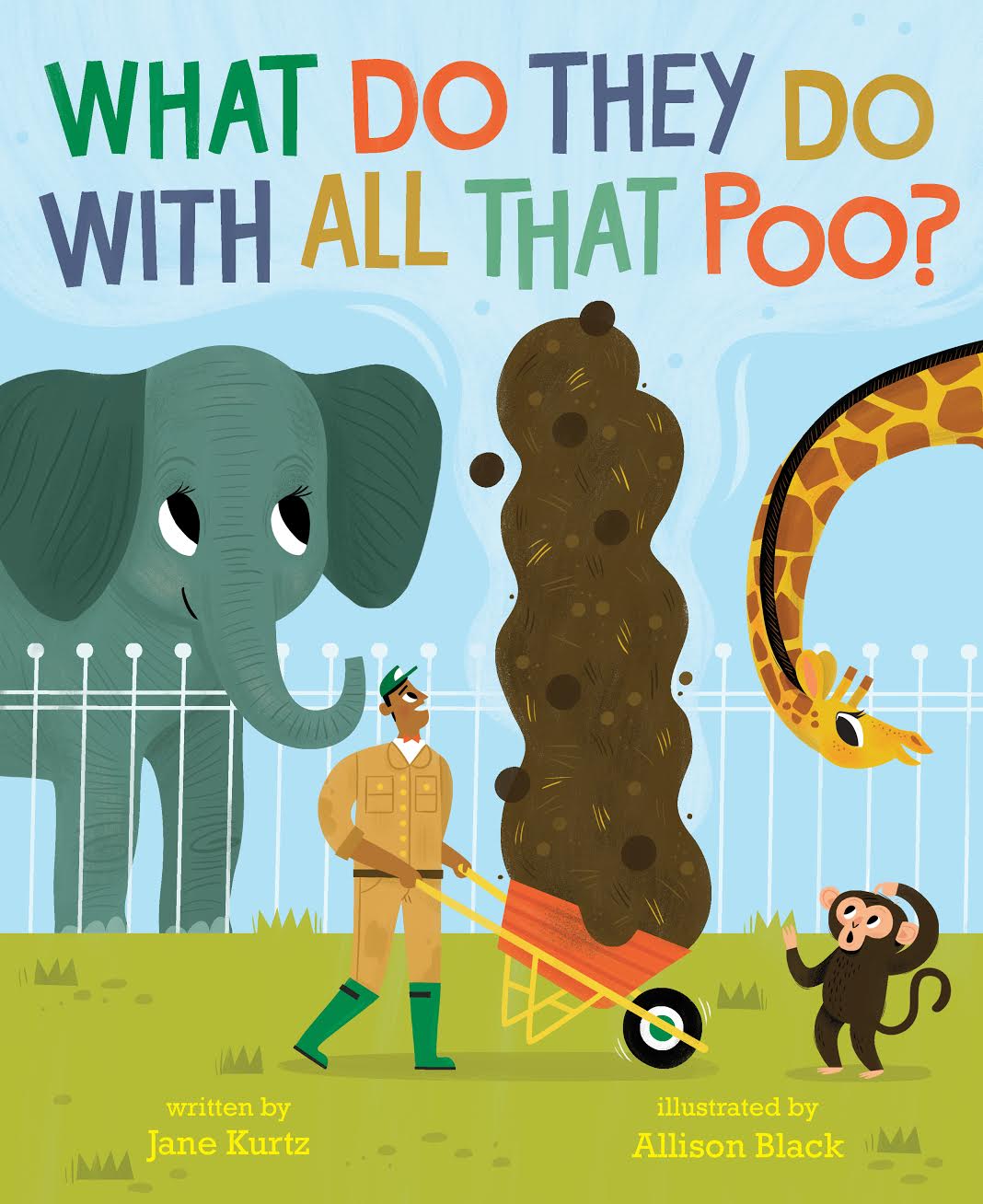
What Do They Do With All That Poo?
Author: Jane Kurtz; Illustrator: Allison Black
Published: June 19, 2018 by Beach Lane Books
Goodreads Summary: Find out what happens to all of the poo at the zoo in this funny and factual picture book!
There are so many different kinds of animals at the zoo, and they each make lots and lots (and sometimes LOTS!) of poo. So what do zoos do with all of that poo? This zany, fact-filled romp explores zoo poo, from cube-shaped wombat poo to white hyena scat, and all of the places it ends up, including in science labs and elephant-poo paper—even backyard gardens!
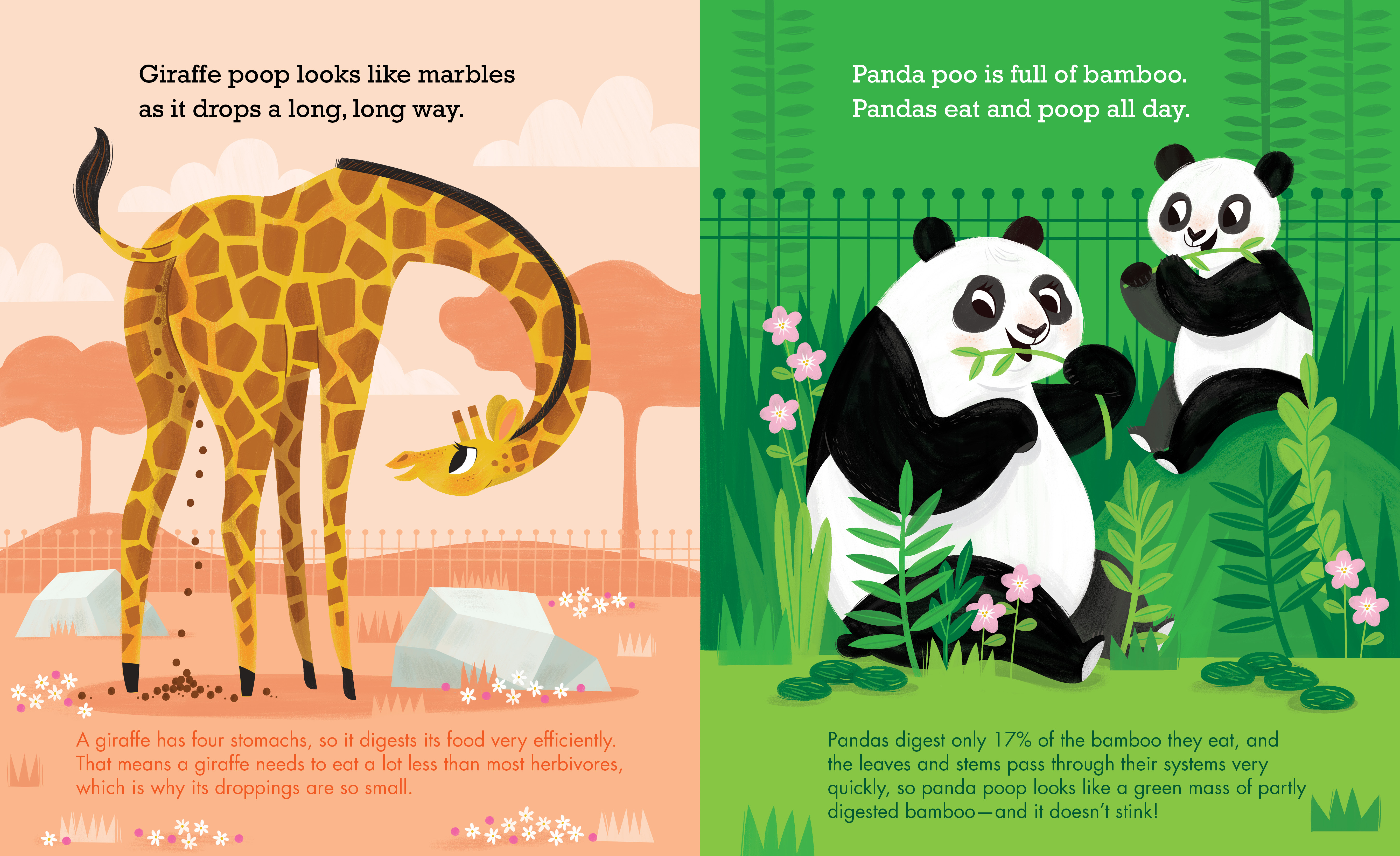
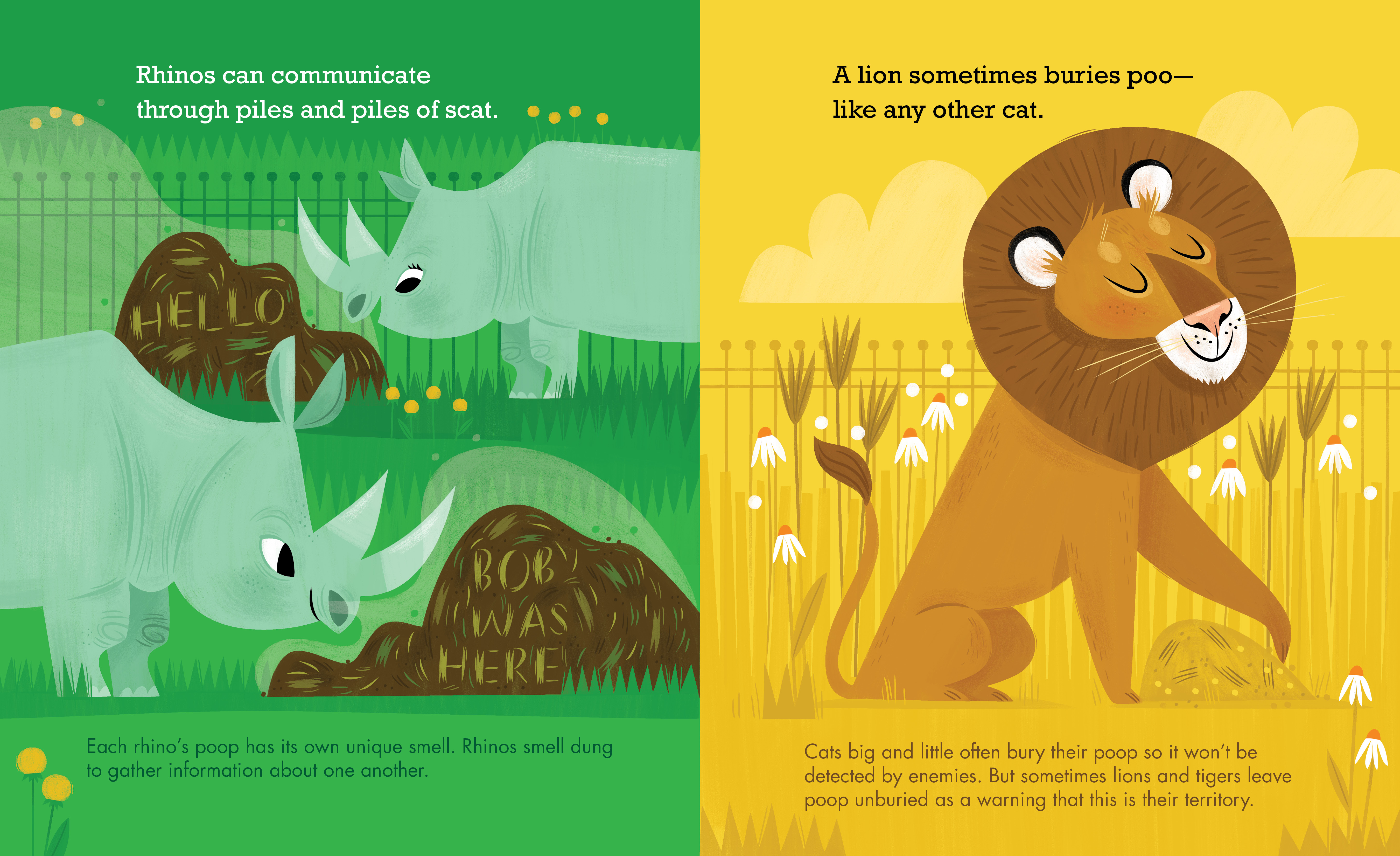
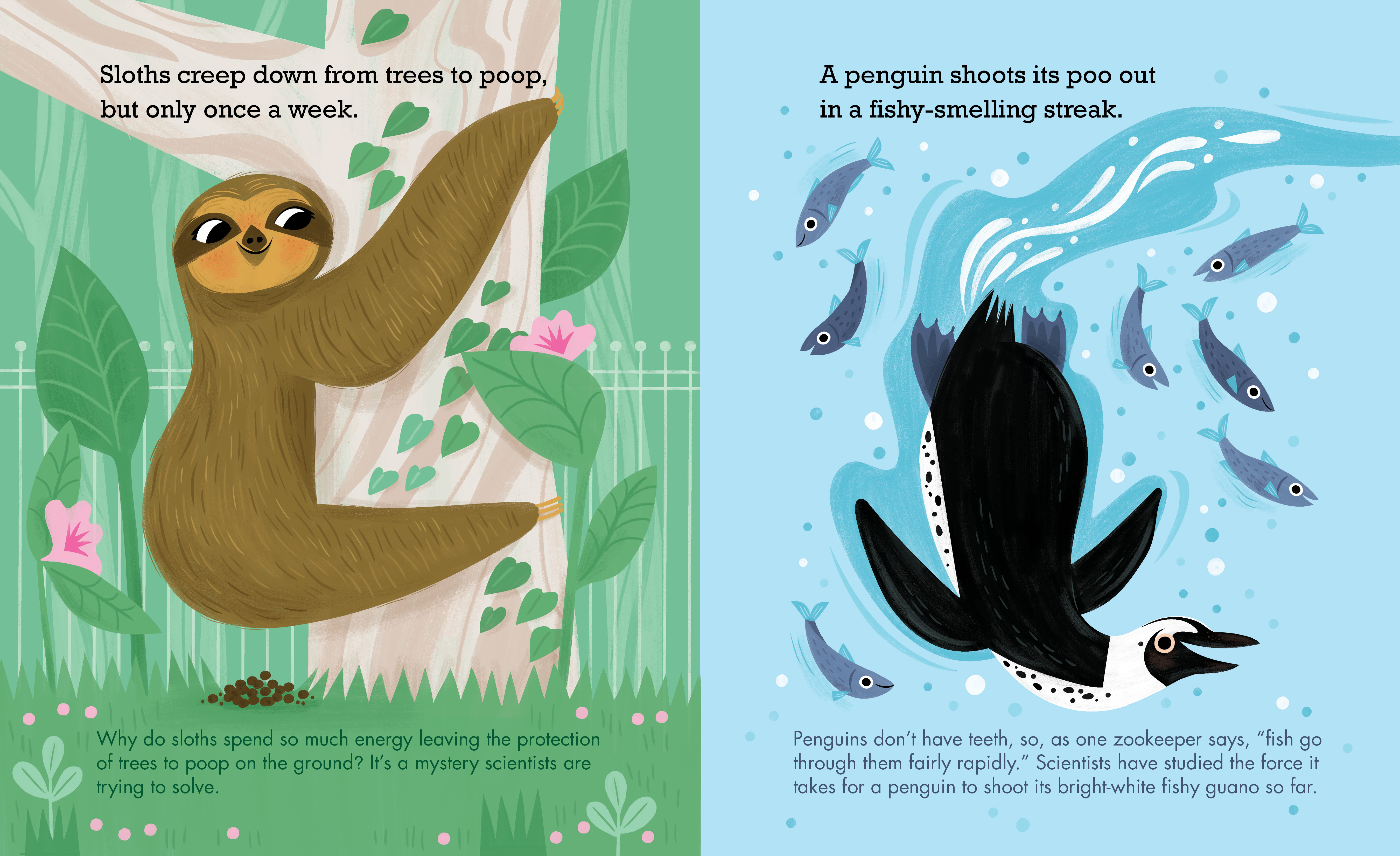
Ricki’s Review: It brings me great joy to review this book. Really. This book is on our nightly reading list, and my son laughs and laughs as we look at all of the different types of poo. I’ll admit that I don’t like poop jokes and don’t find poop to be very funny. But this book is really funny and wildly entertaining. My son’s preschool teacher has recycled panda poo paper, and he learned from this book that this recycling process is made possible by a panda’s diet (see the first spread featured below). He was thrilled to share this scientific tidbit during his morning meeting. This book spurs curiosity. My son asks a lot of questions wen we read it, and we do a lot of comparing and contrasting across pages. I’ll admit that we’ve had great fun selecting which poo is the most interesting to us. I loved that one of the animals (no spoilers here) has cube-shaped poo! This book is sure to be a favorite in classrooms. Get ready to learn science in an entertaining way!
Teachers’ Tools for Navigation: Mary Cowhey’s Black Ants and Buddhists is one of the most beloved elementary school professional development texts. In the book, Cowhey describes a moment in her teaching career when a student wondered aloud about where the poo goes after he flushes the toilet. Cowhey set up an exploratory learning unit based on this question. What Do They Do with All That Poo? follows this spirit (with a focus on zoos and animals).
Teachers might ask students to go home and return to class with an inquiry question about the world. Then, they might (as a whole class, in groups, individually) explore their question(s) and design a picture book or picture books to reflect their new learning.
Discussion Questions:
What did you learn? What do they do with all that poo?
Which animal poo was the most interesting to you?
Select one animal. What is one interesting fact about the animal’s poo (beyond the shape)?
Which animals weren’t featured in the book? What is their poo like?
About the Author: Jane Kurtz was born in Portland, Oregon (where she now lives), but when she was two years old, her parents decided to move to Ethiopia, where she spent most of her childhood. Jane speaks about being an author at schools and conferences—in all but eleven of the United States, so far, and such places as Uganda, Nigeria, Kenya, France, Germany, Romania, Russia, Oman, England, Indonesia, Cambodia, the Philippines, and Japan. She helped start Ethiopia Reads (EthiopiaReads.org), a nonprofit that is planting libraries for children and printing some of the first easy-reader books in local languages in Ethiopia. She is the author of many books for children, including Water Hole Waiting and River Friendly River Wild, winner of the SCBWI Golden Kite award for picture book text. To learn more, visit her website: janekurtz.com.
Twitter: @janekurtz
**Thank you to Barbara at Blue Slip Media for providing a copy for review!**
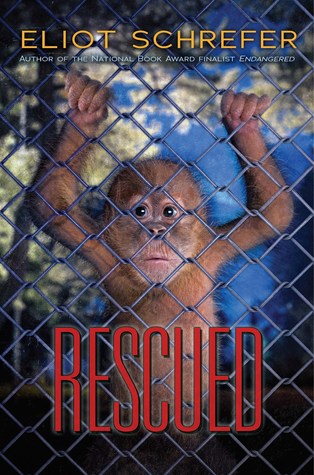
Rescued Ape Quartet #3
Author: Eliot Schrefer
Published April 26th, 2016 by Scholastic Press
Summary: They grew up together. Now they have to escape together.
Raja has been raised in captivity. Not behind the bars of a zoo, but within the confines of an American home. He was stolen when he was young to be someone’s pet. Now he’s grown up and is about to be sent away again, to a place from which there will be no return.
John grew up with Raja. The orangutan was his friend, his brother. But when John’s parents split up and he moved across the country, he left Raja behind. Now Raja is in danger.
There’s one last chance to save Raja—a chance that will force John to confront his fractured family and the captivity he’s imposed on himself all of these years.
About the Author: Eliot Schrefer is a New York Times-bestselling author, and has twice been a finalist for the National Book Award. In naming him an Editor’s Choice, the New York Times has called his work “dazzling… big-hearted.” He is also the author of two novels for adults and four other novels for children and young adults. His books have been named to the NPR “best of the year” list, the ALA best fiction list for young adults, and the Chicago Public Library’s “Best of the Best.” His work has also been selected to the Amelia Bloomer List, recognizing best feminist books for young readers, and he has been a finalist for the Walden Award and won the Green Earth Book Award and Sigurd Olson Nature Writing Award. He lives in New York City, where he reviews books for USAToday.
Review: I think out of the three Ape Quartet books published so far, this is the one that is going to hit closest to home for many. It will make many readers uncomfortable and want to make a change. First, it takes place in the United States unlike Africa like the first two. Second, it really digs into an issue that is still very much prominent here–animal injustice.
I find Schrefer’s writing to be so beautiful yet so easy to read. He can pull you into his stories and makes you feel for not only his human characters but also his animal characters. He does such a tremendous amount of research for all of his books and with this one it brings the injustice of Raja alive.
I am a sucker for ape books. I find apes to be the most fascinating animals, and orangutans may be my favorite because they have these amazing eyes that just show me that they are so intelligent and deep thinkers. They are also introverts; I think I just relate to them in that way. This book brings orangutans to life through Raja.
As evident from Schrefer’s status as a two-time National Book Award finalist, his books can be used as a mentor text for just about any aspect of writing that you are looking for: characterization, imagery, voice, conflict, etc. Read any of his books, and you can pull out so much to discuss and use within the classroom. Additionally, there are some amazing ape books, including Schrefer’s other Ape Quartet books, that would make for an amazing lit circle opportunity or text set.
Teachers’ Tools for Navigation: Last year, our whole-class novel unit was done using Hurt Go Happy and included a trip to Center for Great Apes. This year, I had a completely different type of novel planned, but my students begged to read more about apes (and visit CFGA again). After looking at all of the available ape books, I decided that Rescued was perfect for the standards I wanted to teach and also included orangutans instead of chimps, and orangutans are the other great ape at CFGA. After setting up a Donors Choose and getting funded (THANK YOU ALL DONORS!), Eliot Schrefer also so kindly contacted me and offered to send even more copies of Rescued to my students–wow! So much kindness! Now that we had a plethora of copies, I wanted to share the love, so I contacted my South Carolina middle school teacher friend, Jennie Smith, to see if she wanted to read Rescued with us and collaborate some how. I was so happy that she said yes!
The Unit
Because I do love whole-class novels, but I also don’t like how a whole-class novel can also ruin a book with too much time spent on one book with way too many assignments during the unit. To try to fight this, I planned the unit quite simply:
Each week the students were given a focus question on Monday that they could think about all week then answer on Friday.
These focus questions are how we collaborated with Mrs. Smith’s class as well. My 1st and 2nd period posted their answers on Padlet and Mrs. Smith’s students would also post. The kids would then respond to each other.
Focus questions:
1. What’s a big idea that’s emerging that’s worth talking about?
2. Is there a passage that struck you as important in developing a character or a conflict in the reading so far? Share the passage and explain.
3. What incident up to this point has had the most impact on the plot? How so? What did the characters’ response to this incident teach you about them?
4. There are many who argue that Great Apes are human-like, including the lawyer who will take apes as plaintiffs to demand rights. What are some examples in this section of Raja showing how close to humans he truly is?
5. How did the characters (specifically John’s mom, John’s dad, John, and Raja) change throughout the book? What other narrative elements helped shape their final persona? Find a piece of dialogue and a specific incident in the book that is evidence for your analysis of the character.
The idea of focus questions was something I got from a talk by Kelly Gallagher and Penny Kittle at NCTE 2017.
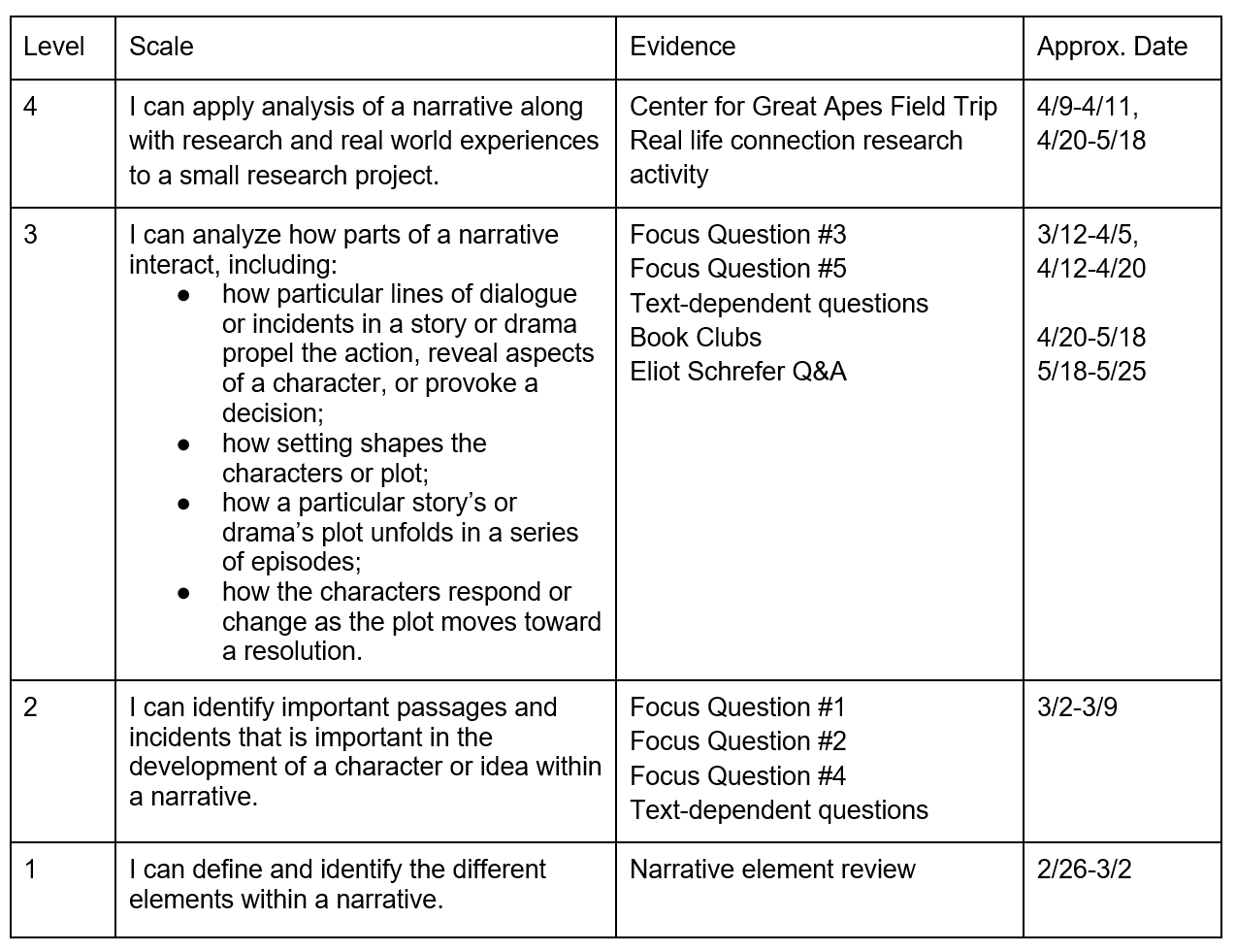
Because of one of the standards the unit was focusing on, we also looked at narrative elements, specifically dialogue, setting, and conflicts. Here is my scale for the unit:
Throughout the unit, I would also stop to have students think about certain text-dependent questions. I tried not to do this too often to not slow down the narrative; however, I loved seeing my students’ thinking. We would then discuss these questions, but I like allowing my students to write answers first before discussing because it allows them to get their thinking organized. (I shared some of these text-dependent questions and an example of a student’s answers below.)
The Field Trip
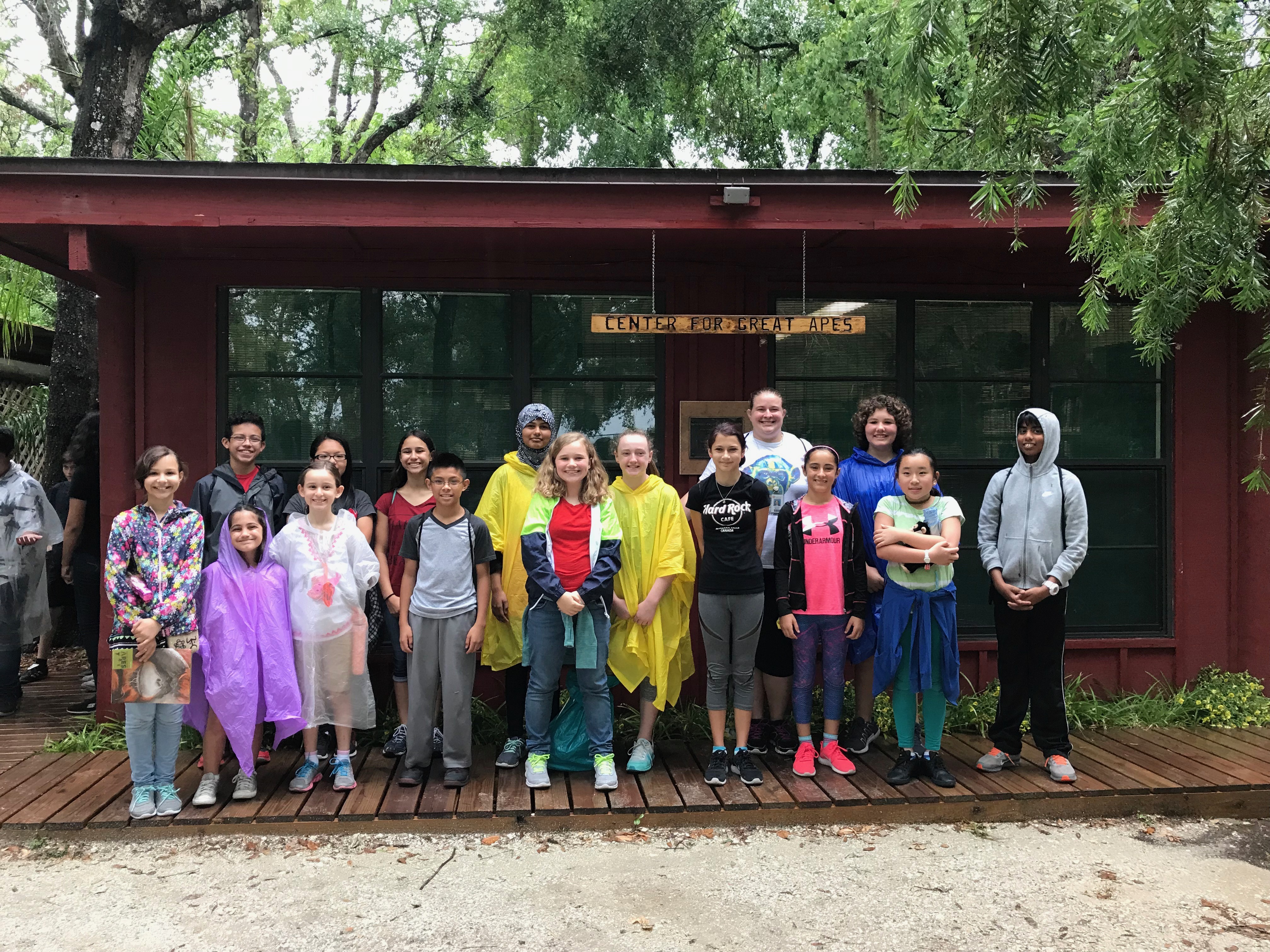
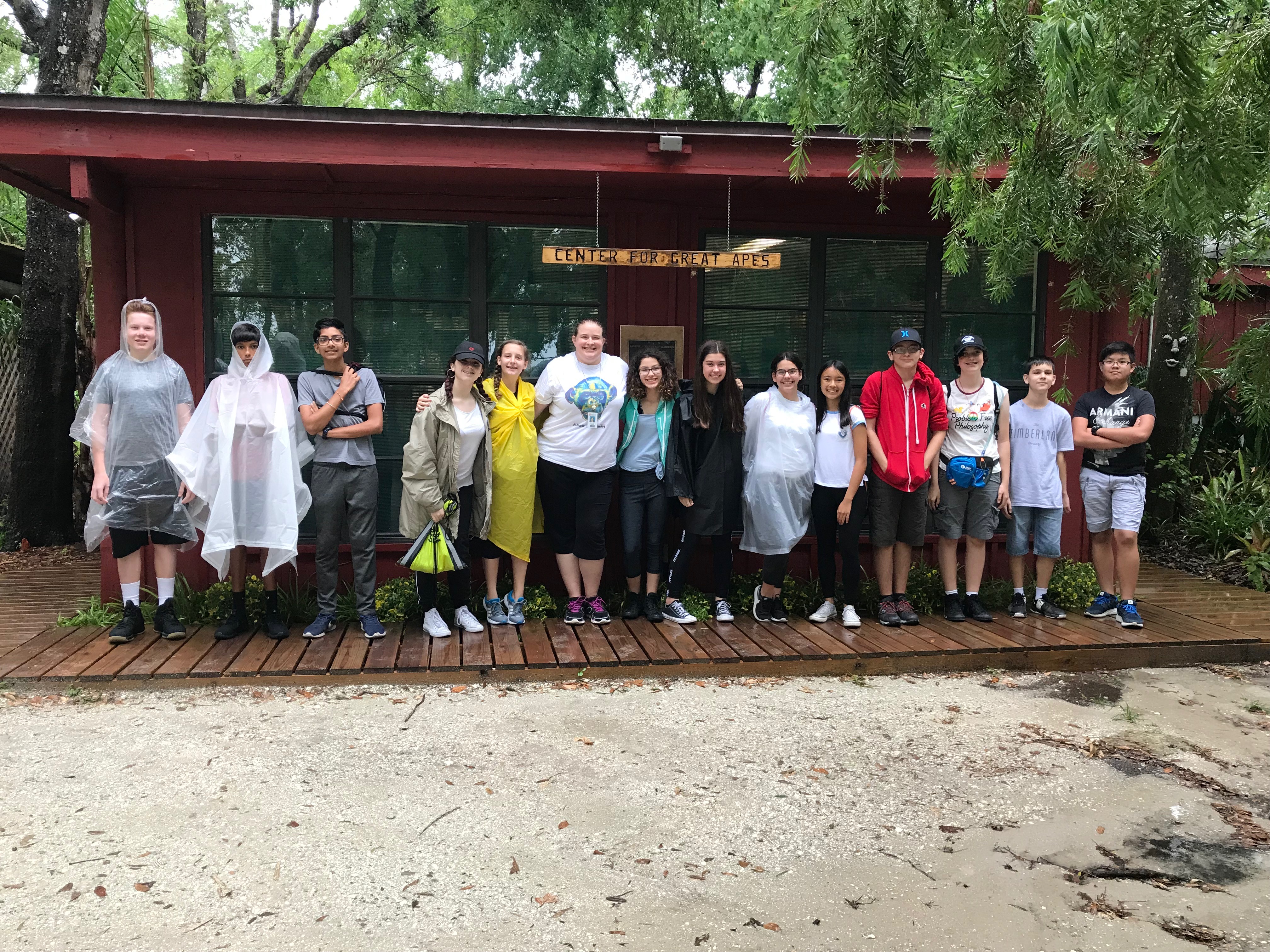
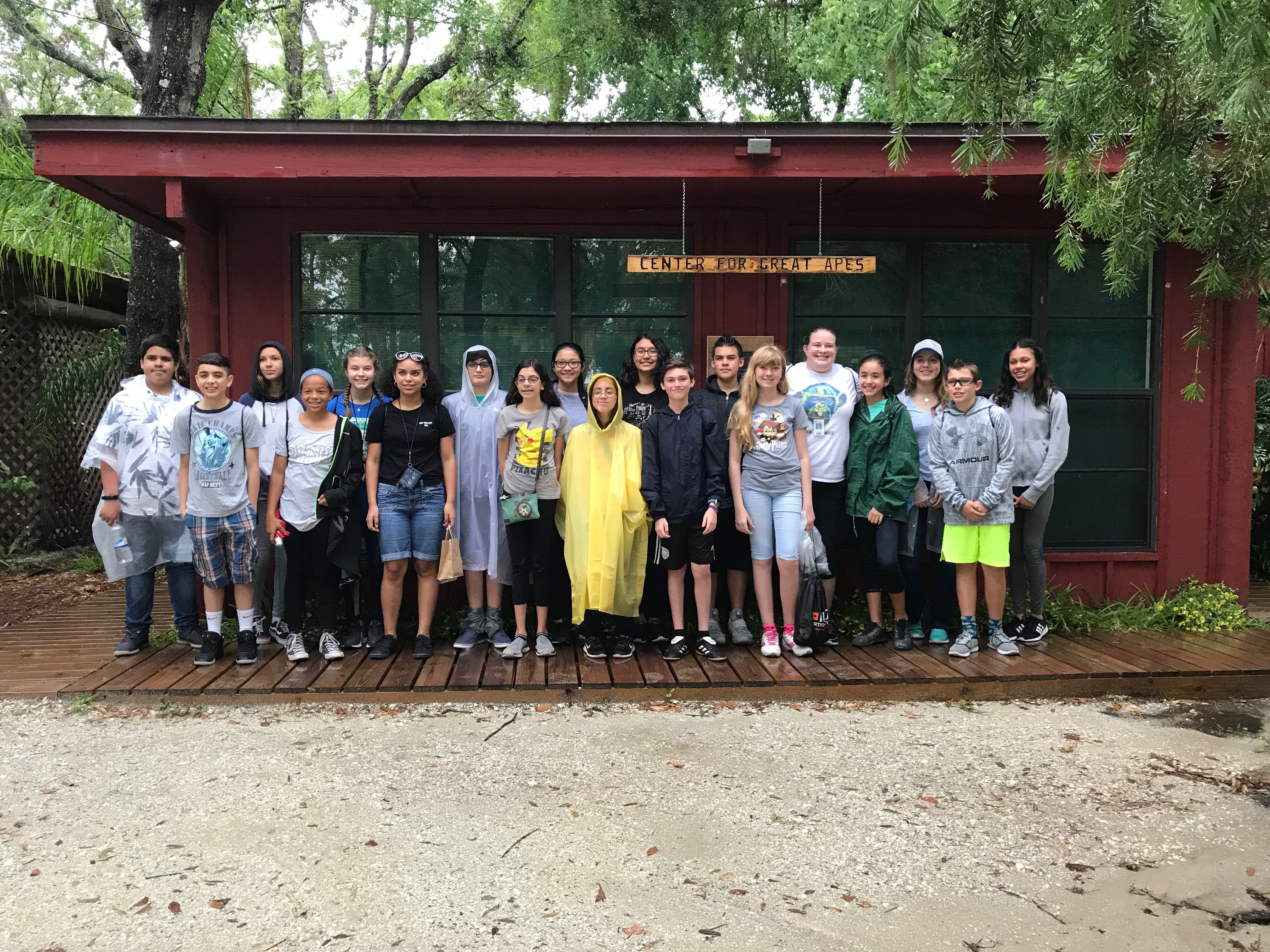
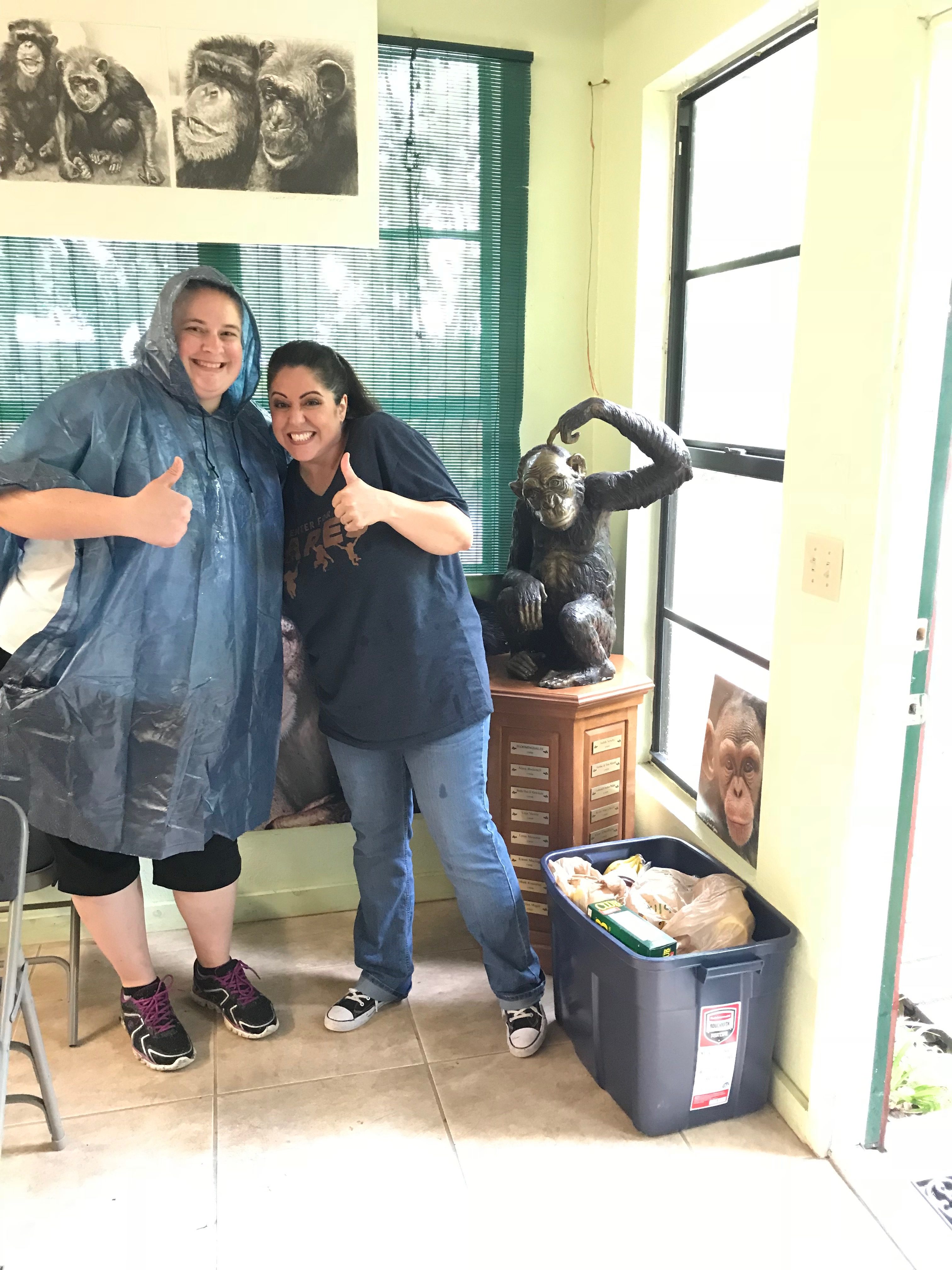
Once again I was lucky enough to bring my students to the CFGAs. All students were able to attend this year, and they were so kind to donate to the Center goodies for the Apes–it always fills my heart to see the empathy in their hearts!
I have gone to the Center for Great Apes for years, and sadly this is the first year it rained. Luckily, we were able to get in a 90-minute tour to see the amazing animals who inspired Schrefer’s novel. To see more about the Center, the apes they’ve saved, and the amazing work they do, please visit http://www.centerforgreatapes.org/.
Author Virtual Visit
After reading Rescued, I was so happy to be able to give my (and Jennie’s) students an opportunity to interview Eliot Schrefer about the book. Each student wrote down at least one question they had for Eliot then in groups, the students chose their favorites, then based on these choices, we broke it down to 5 per class equaling fifteen interview questions altogether:
Why did you start writing about apes in the first place? And how did you decide on the order of publication for the Ape Quartet?
Do you like writing realistic fiction like Rescued or fantasy like Mez’s Magic better?
Will you continue to write about apes now that you are done with the Ape Quartet?
While the titles of your other books, Endangered, Threatened, and Captured, inspire a feeling of fear, the title Rescued inspires hope. Did this change in connotation of your title mark your different opinion about orangutans?
Were you ever stuck in between two decisions while writing the book? When?
Who do you think the antagonist of the book is?
How did you come up with the whole “Raja bites off John’s finger” scenario?
How did you come up with the concept of Friendlyland?
How did you come up with the character traits for each character (Ex. Gary being a bad father)? Did you base them off people you know or knew?
Can you tell us more about the corruption happening in Indonesia which allows palm oil companies to be able to keep burning down forests even though it is illegal?
Do you feel that apes should be treated like human beings and given the same rights such as due process, land, etc. like the lawyer in the book?
Was it hard for you to decide what would happen to Raja at the end of the book or did you know that you wanted Raja to be released into the wild instead of being kept at the sanctuary?
Do you have a favorite sanctuary or zoo you’ve visited? Have you visited the CFGA?
You used the word “merantau” which means “hitting a dead end and leaving one life to live another elsewhere” which pretty much sums up the theme of the book. Where did you come across this word?
What writing tips can you give to students who want to be a writer?
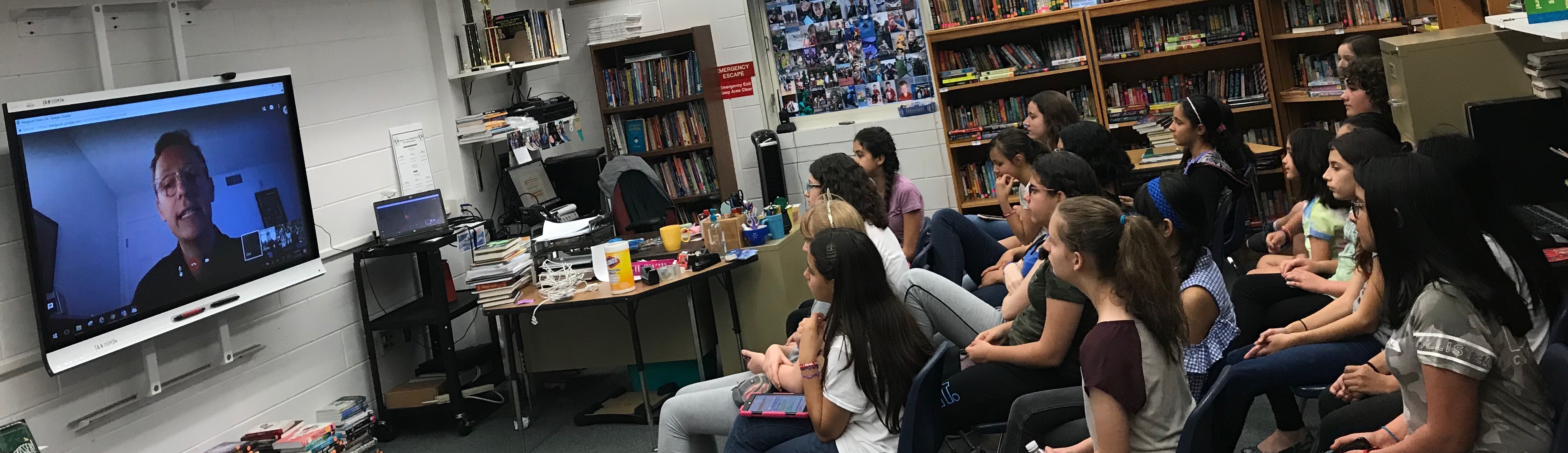
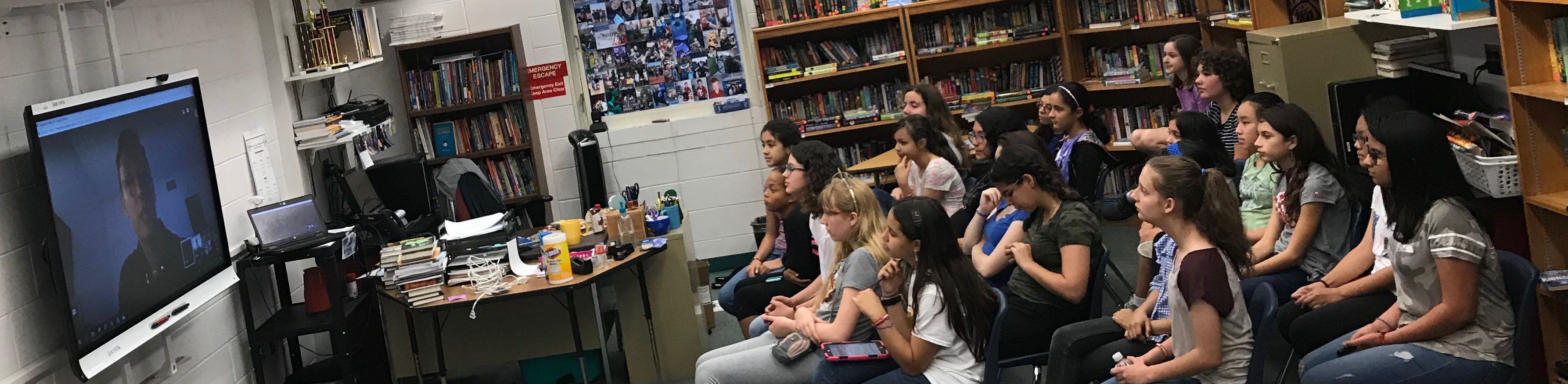
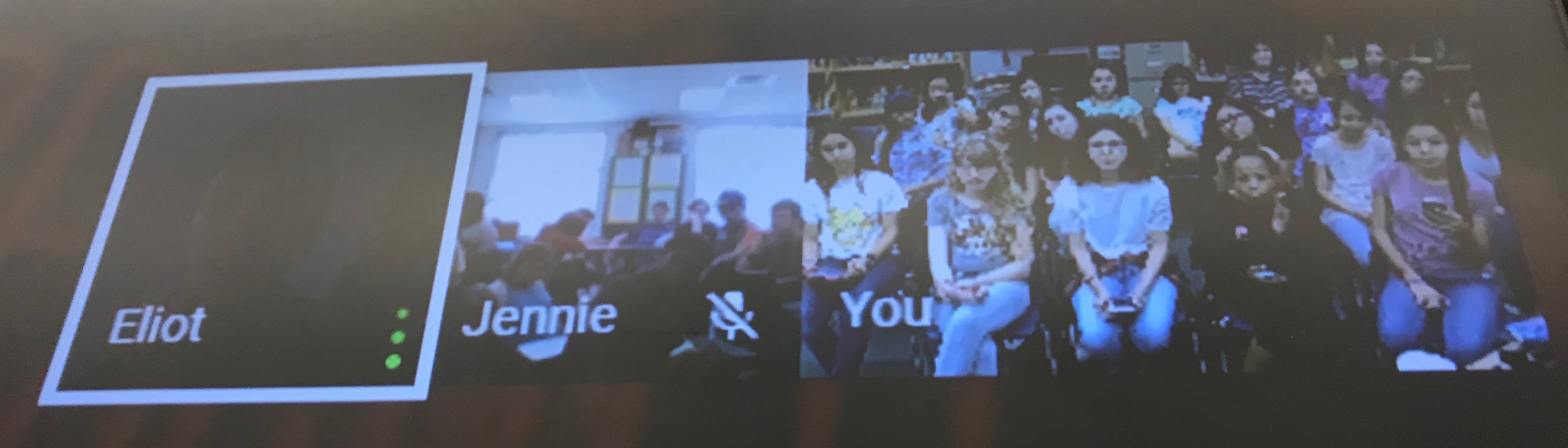
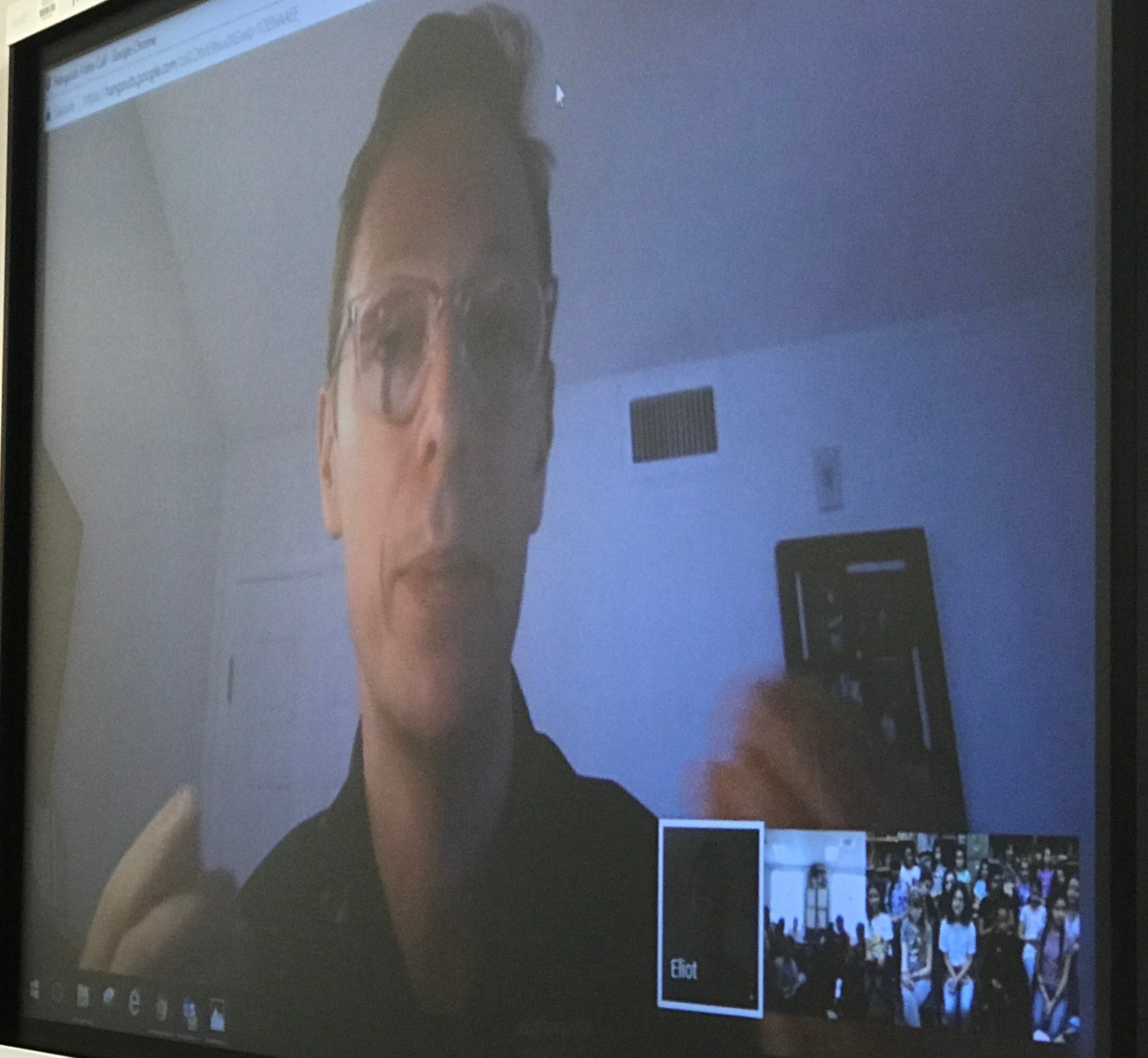
We then did a Google Hangout with Mrs. Smith’s class and Eliot Schrefer on May 25th after school:
Some of my favorite answers/quotes from the visit were:
Realistic fiction allows for a shifting antagonist.
Wanted to help people realize that orangutans aren’t stuffed animals come to life.
I don’t have characters first. I have stories first then make the best characters for that story.
Apes should not be kept against their will.
I used the idea of merantau to develop the plot.
Advice: For any artistic pursuit, I encourage you to think of the long range range view. It is risky to put all expectations of self in one basket. Focus on the joy you feel when doing the art. Remember what brings you joy! And do research, take advice, and read.
Discussion Questions: These were the first five of the text-dependent questions I asked during our reading of Rescued as well as an example of a student response (color coded for RATE. R=restate, A=answer, T=text evidence, E=elaborate/explain).
What can you infer about John and Raja’s relationship based on the first section?
Why does John feel like he needs to go see Raja before he leaves?
In the Q&A, the author says he “realized that a captive ape’s situation was similar to the plight of a kid during a divorce, getting swept along by the needs of powerful parents, at risk for being seen for what he represents instead of as a child with his own needs” (p. 251). How are John’s and Raja’s situations similar after the divorce? How are they different?
Do you agree with the choice John and his dad are making? Why or why not?
Why do you believe the author is beginning each part with a memory of Raja’s?
How did the author foreshadow this scene (on pg. 99) earlier in the book?
Flagged Passages: “My telltale heart, the one I’d left behind.” (p. 38)
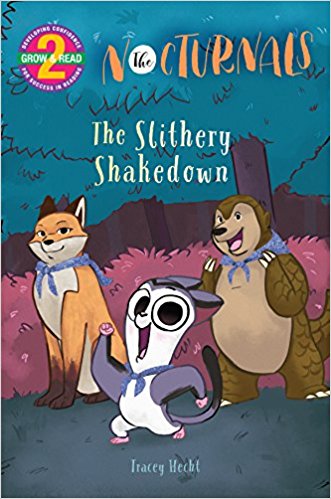
Nocturnals: The Slithery Shakedown
Author and Illustrator: Tracey Hecht
Published: April 10, 2018 by Fabled Films Press
Goodreads Summary: Discover the friendship and humor of the Nocturnals Brigade! In The Slithery Shakedown, three unlikely friends—Tobin, a sweet pangolin, Bismark a loud-mouthed sugar glider and Dawn, a serious fox—stand up to a big bully snake. In the process, they find themselves some spec-tac-u-lar snakeskin capes!
Includes Bonus Animal Glossary!
About the Author: Tracey Hecht is a writer and entrepreneur who has written, directed, and produced for film. The American Booksellers Association chose her first book in The Nocturnal series, The Mysterious Abductions, as a Kids’ Indie Next List pick. Last year, in partnership with the New York Public Library, she created a Noctural Read Aloud Writing Program for middle graders that has expanded worldwide. She splits her time between Oquossoc, Maine and New York City. Check out our Q&A with her here!
Ricki’s Review:I don’t tend to gravitate to early readers because they can be awfully boring. This book breaks the mold. It’s fun and engaging, and my son loves reading it. I frequently catch him looking through the pages and staring at the pictures. He didn’t know what nocturnal animals were before he read this book, and now, any time we see an animal, he asks if it is nocturnal. The conflict in this book is wonderfully portrayed, and it teaches about the power of friendship and bravery. I recommend this book for folks seeking engaging early readers that will capture children’s attention. It’s wonderfully done.
Kellee’s Review: What a fun book to read! It not only will be great for Trent when he is a beginning reader to practice his reading, it is overall a fun story that is a fantastic read aloud. It looks at the idea of bravery and fear as well as friendship while also introducing scientific ideas like nocturnal animals and carnivore animals.
Teachers’ Tools for Navigation: The Summer Reading Kit is available on the publisher’s website. This book begs readers to research nocturnal animals, and it provides a lot of opportunity for classroom use.
Additionally, the author uses a ton of alliteration which makes it super fun to read out loud but also gives a chance to introduce this literary device.
Discussion Questions:
Which animal is most afraid? How does friendship influence this character’s bravery?
How does the snake react to the friends? What does this tell you?
What other nocturnal animals do you know?
What do you think the setting of the book is based on the animals?
How does the author use alliteration throughout the book?
What words did you not know in the story? Using context what do you think they mean?
Flagged Passages:
“Chapter 3
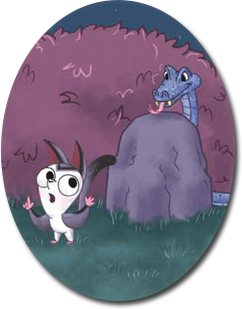
‘Did sss-someone sss-say breakfassst?’ the snake said.
Bismark spun around.
Behind hijm was a long, blue, shimmery snake.
The snake slid from the grass.
The snake raised its head.
The snake flicked its flickery tongue.
‘Bismark, look out!’ Dawn cried.” (p. 24-25)
Read This If You Loved: Night Animals by Gianna Marino, Baby Animals at Night by Kingfisher Publications, National Geographic Early Readers
Recommended For:
and
**Thank you to Stacey and Nicole at Fabled Films for providing copies for review!**
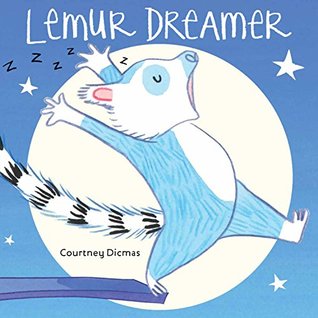
Lemur Dreamer
Author and Illustrator: Courtney Dicmas
Published February 1st, 2015 by Kane Miller
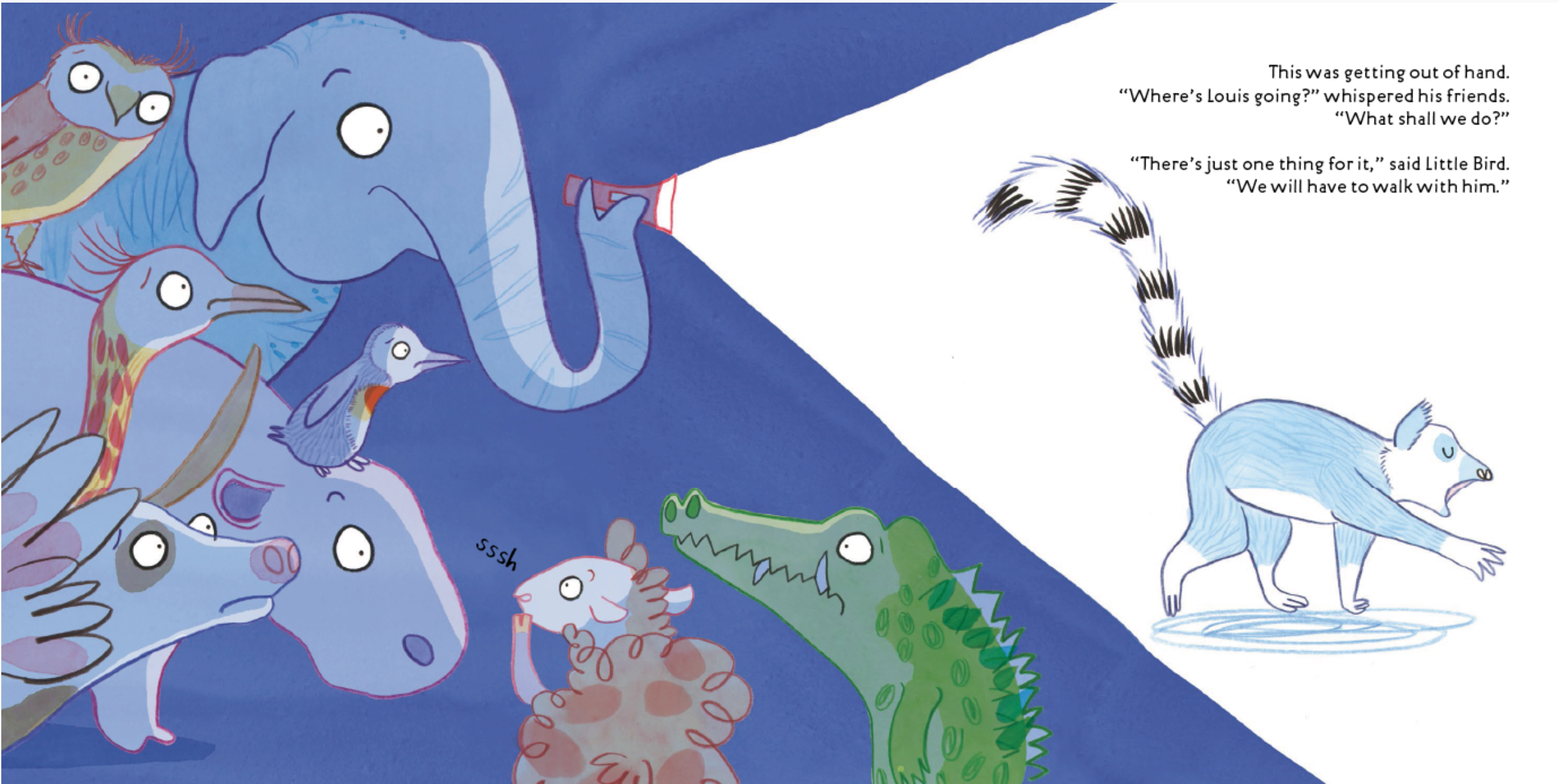
Summary: All the residents of 32 Pebbly Lane lead mostly unextraordinary lives…Except for Louis the Lemur. He’s a sleepwalker! After his night-time antics cause mischief, his friends decide to follow him one night, with hilarious consequences. This is the crazy, colorful, wonderful new title from the artist of Harold Finds a Voice, nominated for the 2014 Waterstones Prize.
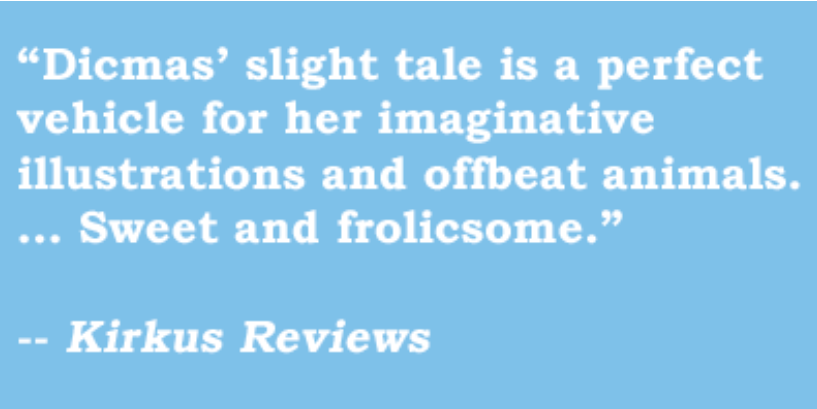
Review: Louis the Lemur has the best friends! When they notice that poor Louis’s sleepwalking is getting worse, they know that they have to help him be safe, so they stay with Louis as he walks to keep him safe–what a great ode to friendship. I loved Dicmas’s expressive illustrations and how each of the secondary animals were not forgotten in the detailing. These characters combined with the funny sequential plot makes for a fantastic read aloud.
Now, I do think that sleepwalking is being used as entertainment in the story which can be a bit problematic if dealing with kids who do sleepwalk; however, I think it used in a thoughtful way because Louis is never demonized for his sleepwalking. Instead, the book is entertaining while also starting a conversation about something that kids often deal with and never find in conversations. It would also be good to read with siblings dealing with others sleepwalking.
Teachers’ Tools for Navigation: In addition to discussion sleepwalking and on a less serious note, Louis’s story has great cause and effect as well as problem and solution moments. I also loved hearing about what Louis was dreaming about then going back and looking at his sleepwalking path and matching the actual to the dream.
Discussion Questions:
What do you think Louis is dreaming about as he is sleepwalking? Did his actual dream match your prediction? How does is dream match the actuality while he was sleepwalking?
Find events in the book that were caused by another and complete a cause and effect map.
What traits do Louis’s neighbors have that show that they are good friends?
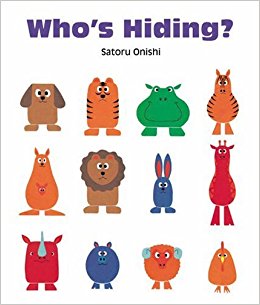
Who’s Hiding? Author: Satoru Onishi
Published: January 1, 2018 by Gecko Press
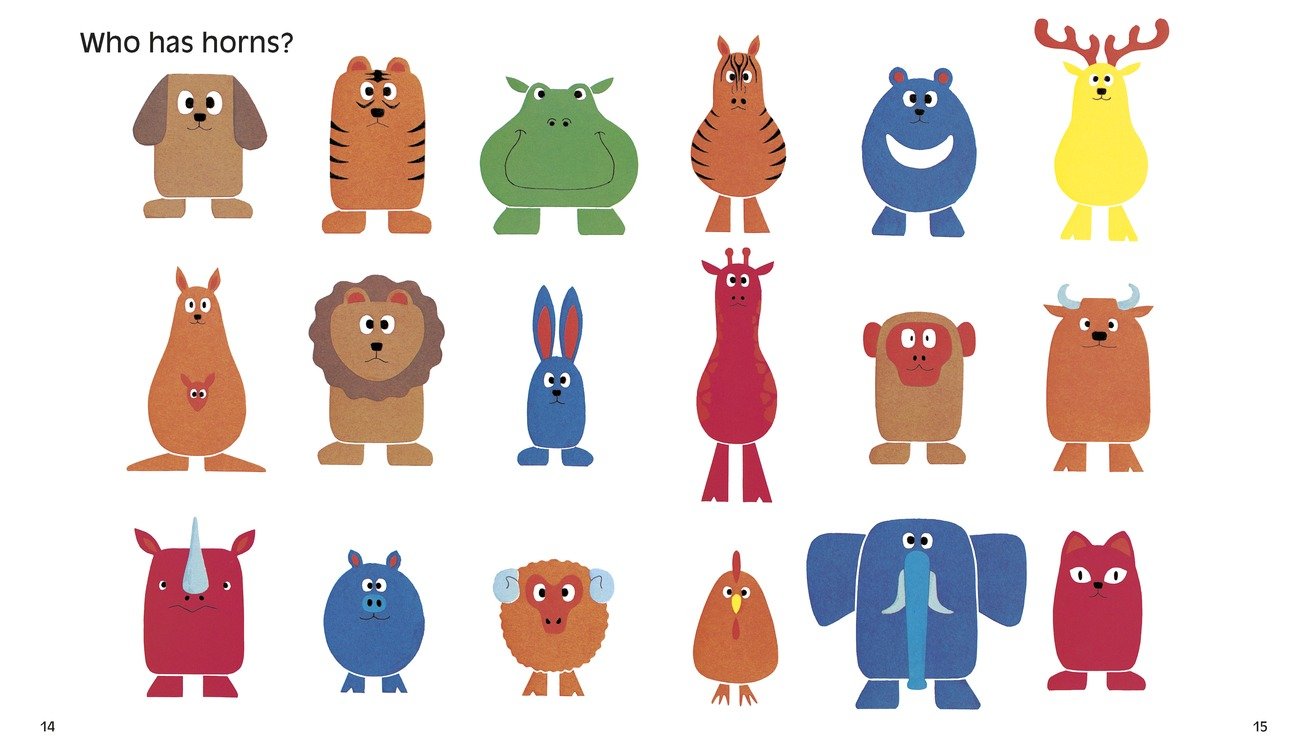
Summary: Who’s hiding? Who’s crying? Who’s backwards? Look carefully! Is it dog, tiger, hippo, zebra, bear, reindeer, kangaroo, lion, rabbit, giraffe, monkey, bull, rhino, pig, sheep, hen, elephant, or cat? Can you tell? Look again…18 fun-loving animals can be found on each question-posing page, sending readers into an up-close, attention-to-detail discovery.
Review: This is a book that is fun for people of all ages! Each spread asks questions like, “Who’s hiding?” or “Who’s angry?” or “Who has horns?” Readers have to look from animal to animal to figure out the answer. My son and I had a lot of fun reading it because we raced to see who could find the animal first. It offers a unique twist to search-and-find books, and quite frankly, we found it to be much more fun than the classic search-and-find books. I could see this book working well with students who have been identified as having ASD. Because some pages ask about emotions, it would be a good way to reinforce facial expressions. Other pages would be easier (like “Who has horns?” and might relieve some frustration.
Teachers’ Tools for Navigation: As stated above, this books would be a great test for students who have been identified as having ASD. Also, it is a generally fun book and could be used to teach skills in compare and contrast (across the pages and within the pages). Lastly, it would be a great book to give to fast finishers.
Discussion Questions: How do the animals change across the pages? Which animal is your favorite? Which page is your favorite, and why?
We Flagged:
Read This If You Loved: Search-and-Find Books
Recommended For:
**Thank you to Veronica at Myrick for providing a copy for review**
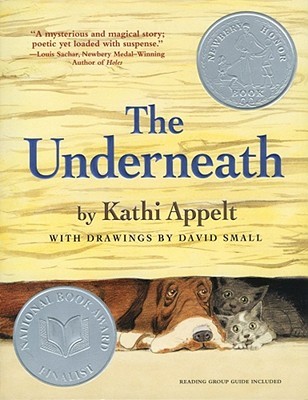
The Underneath Author: Kathi Appelt
Illustrator: David Small
Published May 6th, 2008 by Atheneum Books for Young Readers
Newbery Honor (2009), National Book Award Finalist (2009)
Summary: There is nothing lonelier than a cat who has been loved, at least for a while, and then abandoned on the side of the road.
A calico cat, about to have kittens, hears the lonely howl of a chained-up hound deep in the backwaters of the bayou. She dares to find him in the forest, and the hound dares to befriend this cat, this feline, this creature he is supposed to hate. They are an unlikely pair, about to become an unlikely family. Ranger urges the cat to hide underneath the porch, to raise her kittens there because Gar-Face, the man living inside the house, will surely use them as alligator bait should he find them. But they are safe in the Underneath…as long as they stay in the Underneath.
Kittens, however, are notoriously curious creatures. And one kitten’s one moment of curiosity sets off a chain of events that is astonishing, remarkable, and enormous in its meaning. For everyone who loves Sounder, Shiloh, and The Yearling, for everyone who loves the haunting beauty of writers such as Marjorie Kinnan Rawlings, Flannery O’Connor, and Carson McCullers, Kathi Appelt spins a harrowing yet keenly sweet tale about the power of love, and its opposite, hate; the fragility of happiness; and the importance of making good on your promises.
Author: Kathi Appelt is the New York Times best-selling author of more than forty books for children and young adults. Her first novel, The Underneath, was a National Book Award Finalist and a Newbery Honor Book. It also received the PEN USA Award. Her other novels include The True Blue Scouts of Sugar Man Swamp, a National Book Award finalist, and Maybe a Fox, one of the Bank Street Books Best Children’s Books of the Year. In addition to writing, Ms. Appelt is on the faculty in the Masters of Creative Writing for Children and Young Adults at Vermont College of Fine Arts. She lives in College Station, Texas. To learn more, and to find curriculum materials and activity pages, visit her website at kathiappelt.com.
Review: Anyone who has read a Kathi Appelt book knows that she is amazing at two things: weaving a story together in a way that only she can & pulling at heart strings causing definite mood swings while reading. The Underneath is the epitome of her excellence, and I am sad it took me so long to get to this book. Once done, I was very excited to ask Kathi about this masterpiece, and my questions and her answers show more about what makes this book the award winner that it is.
Interview:
Kellee: How do you work to weave different elements into your story such as mythology, the natural world, and contemporary stories?
Kathi: It’s always interesting to me to learn what sets a story off. Some authors swear that they start with characters. And I would say that characters are definitely a good place to start. But when I reflect over my many years of writing, I feel like I mostly start with place. I ask, what is it about this place that lends itself to story? What is the history of it? The social and cultural importance of it? Who has lived here? Who was here a thousand years ago? What were they doing? How did they survive? What impact did natural forces play on this place? What is the flora and fauna? Are there ghosts? Are there particular features of it? So, it seems to me that place creates the basis for most of my stories.
In The Underneath, one of my story lines occurs a thousand years ago, which means that my mythological characters (who were interlopers), would have encountered members of the Caddo/Hasinai nation. Theirs was a sophisticated, highly organized society. But a couple of things happened. One was a massive earthquake that caused a devastating flood which wiped out an entire city, thousands of people. Another was the encroachment of European settlers who brought in disease and ultimately drove the Caddo/Hasinai out of their ancestral lands.
The Caddo were—and still are—known for their pottery, so it made sense to feature a significant jar in my story. That way, I could more clearly link the characters to each other across time periods. One thing leads to another. But in the end, it goes back to place.
Kellee: The Underneath has multiple stories that are interwoven and meet at the end. How do you plan writing a novel like this?
Kathi: Extended narrative has always been difficult for me. I started my professional writing life as a poet and picture book author. As a result, it seemed like everything I wrote tended to finish at the bottom of page three. It was why writing a novel eluded me for such a long time. I always thought that a novel meant writing long chapters, strung together chronologically, and moving from point A to a final point Z. But it wasn’t in my nature to write like that. Long chapters weren’t the way I rolled. Finally, after many failed attempts, I figured out that if I was ever going to write a novel, I would have to go with my grain as opposed to going against my grain. So, I adapted to “writing by snapshot.” In other words, I write in small, significant scenes—I call them SSS’s. I can get a lot done that way without worrying about word counts or chapter lengths, or even transitions. Plus, they’re easy to manipulate. A small scene can be moved hither and yon until it finds the right place in the story.
I think that one of the reasons that writers fail is because they haven’t found their own natural way of working. Long narrative passages aren’t my strength. I’m not saying that I can’t write them, only that they’re not where my strengths lie.
So, finding the form that fits both our natural strengths and that suits the story, is one of the keys to unlocking a book . . . and a writer. Not all of us are meant to be poets. Not all of us are meant to be soaring prose practitioners. It could be that I’m a little ADD, and the short scenes suit me.
At any rate, making this discovery was how I finally finished a novel.
I also want to say in regard to planning, I do make very loose outlines when I embark upon a new project. Those outlines tend to flex as I move through the draft. But I always try to at least have a vague idea of how the story will end. Otherwise, I’ll just write myself right off the cliff. If I can see the destination, I can get there eventually.
Kellee: Personification allows the setting to become its own character in the story. How do you plan this and implement it well when you are writing?
Kathi: I spend tons of time researching the plants and animals that populate the setting. And to me, a living organism, such as a tree, is just that—living. If you spend enough time around trees, it seems like they each have their own personalities, their own needs, and their own ideas. I’m just saying. So, unless something is inanimate—like a rock, say—I can usually find the heart of that living organism. That is always my goal.
Kellee: What about The Underneath do you think resonated with readers 10 years ago and still remains today?
My true hope with The Underneath is that my young readers can see the value of making a good choice. In my story, both the hero Ranger and the antagonist Gar Face have similar experiences, similar fates if you will. They’ve both been badly treated, both been isolated, and yet only one of them turns towards love. Grandmother too, finally, at long last—after the longest time out in history—chooses love. I think that young readers are tuned in to this. I think they’re built for love. What I hope my story does is to give them the courage to make that choice.
Kellee: What feedback have you gotten from readers over the years about The Underneath? What stands out about what the book means to them?
Gosh, it’s hard to say just one thing, but it seems to me that mostly what I hear over and over from them is how much they love the relationship between Ranger and the kittens. That small sweetness seems to be the key that opens the story up. To me, it’s proof that we don’t all have to be the same or look the same or smell the same or whatever to become best friends. And no matter how small we are, we can make a difference for those we love.
Book Trailer:
GIVEAWAY!
Fifteen lucky winners will receive an autographed paperback copy of The Underneath. In addition, one Grand Prize winner will win a classroom set of 20 copies of the book PLUS a 30-40 minute Skype visit for her/his school, classroom, or library with award-winning author Kathi Appelt. Enter here!
Recommended For:
Thank you, Kathi, for your thorough and beautiful answers to my interview questions, and thank you to Blue Slip Media for the giveaway and trailer!
It’s a Puppy’s Life
Author: Seth Casteel
Published March 20, 2018 by National Geographic Society
Summary: Have you ever wanted to know what goes on in the life of one of nature’s most beloved animals–the puppy? Follow along in this picture book featuring the photography of Seth Casteel.
Follow several puppies as they play, go for walks, eat, sleep, and romp about.
My Review: Who doesn’t love puppies? I don’t have a dog right now, and this made me want to take a trip to the pet store! Seth Casteel does a phenomenal job capturing the spirit of these energetic pups. I enjoyed looking at the different angles that he used. Further, I loved the key at the end of the book that distinguished between the breeds. This is a charming book that kids will love.
Teachers’ Tools for Navigation: This book inspired me to want to take photographs! Teachers might use this at the start of a photography unit. They can examine the angles of the photographs and talk about how the author captured such incredible images.
Discussion Questions: Which puppy is your favorite? How does the author capture the spirit of the puppies? How does he organize the book?
We Flagged:
Read This If You Love: Dogs; Photography
Recommended For:
**Thank you to Media Masters for providing copies for review!!**