Review and Giveaway!: Journey of the Pale Bear by Susan Fletcher

Share

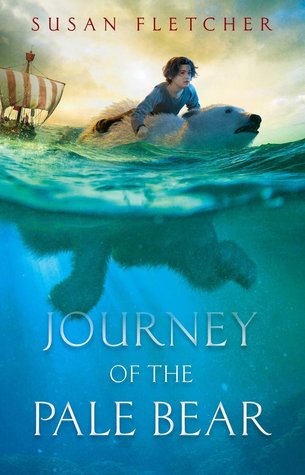
Journey of the Pale Bear
Author: Susan Fletcher
Publication Date: October 2nd, 2018 by McElderry Books

Summary: The polar bear is a royal bear, a gift from the King of Norway to the King of England. The first time Arthur encounters the bear, he is shoved in her cage as payback for stealing food. Restless and deadly, the bear terrifies him. Yet, strangely, she doesn’t harm him—though she has attacked anyone else who comes near. That makes Arthur valuable to the doctor in charge of getting the bear safely to London. So Arthur, who has run away from home, finds himself taking care of a polar bear on a ship to England.

Tasked with feeding and cleaning up after the bear, Arthur’s fears slowly lessen as he begins to feel a connection to this bear, who like him, has been cut off from her family. But the journey holds many dangers, and Arthur knows his own freedom—perhaps even his life—depends on keeping the bear from harm. When pirates attack and the ship founders, Arthur must make a choice—does he do everything he can to save himself, or does he help the bear to find freedom?

About the Author: SUSAN FLETCHER is the acclaimed author of the Dragon Chronicles as well as the award-winning Alphabet of Dreams, Shadow Spinner, Walk Across the Sea, and Falcon in the Glass. Ms. Fletcher lives in Bryan, Texas. To read about the fascinating story behind the inspiration for Journey of the Pale Bear, visit her website, SusanFletcher.com

Praise: ★”A stupendous coming-of-age tale stuffed with adventure and laced with deeper questions.” — Kirkus Reviews (starred review)

Review: When I first read about this book it sounded pretty good, enough for me to pick it up, but it was SO GOOD! Like so good that even though it was a school week, I read it in 2 days!

First, it takes place in a time period that is hardly ever in books which is fascinating. I found myself looking up some of the history that was mentioned in the book, but the author did a great job of making sure that not knowing about the details of the time period wouldn’t effect the reading experience.

Second, it looks at animal treatment and truly makes you think about how an animal feels when it is put in captivity. Although told only in a realistic manner, the animal is such an integral part of the story that its behaviors are shared in detail allowing it to become a full character within the book.

Third, did you know there used to be a menagerie in the Tower of London? Me neither! But that took me down a suck hole of Google research. So fascinating!

Fourth, wow! The adventure is EPIC: sailing, bullies, pirates, shipwrecks, storms. It never stops!

So in review: Fascinating, thought-provoking, curious, and action-packed. All in all, a book I truly recommend and enjoyed.

Teachers’ Tools for Navigation: The main home for this book will be in libraries; however, I can definitely see portions of it being used in classrooms.

  • First, I could see it being used during a history lesson to discuss the politics and war shared in the book.
  • Second, there are so many scenes that could be pulled out as mentor texts for writing. I’ll share some of my favorites below.
  • Third, I would love to see some creative writing done from the bear’s point of view.
  • Fourth, it is a fascinating look at animal treatment and how it has (and has not) changed over the years.

But in the end, it belongs in kids’ hands! Get it there!

Discussion Questions: 

  • Why did Arthur agree to take care of the bear?
  • What examples throughout the book show that the bear loved and trusted Arthur?
  • What does the whole story of a polar bear being sent from Norway to England show you about the respect of animals during the time period of the novel?
  • How did Arthur’s involvement make the bear’s life better?
  • Do you believe that the doctor cared about Arthur as he said he did? Explain.
  • How did Arthur earn the respect of the sailors on the ship?

Flagged Passages: 

“Its eyes, small and dark, were alert, curious, aware. I felt the faint stirring of its breath against my cheeks. I drew in the rich, ripe scent of bear until I seemed to sink down below the surface of it, drowning. From somewhere far away I heard Hauk and the lantern boy arguing, but the sounds fell away behind the throbbing in my ears and the thrill of the running-hum in my limbs.

The bear rumbled deep in its throat.

I rose to my feet, stepped back, and felt the iron bars press cold against me. I kept my eyes fixed on the pale, wide face, as if the force of my gaze could prevent the bear from lunging at me with its enormous paws or raking me with is claws–claws that I could see out of the corner of my eyes, massive claws, claws from a nightmare of monsters.” (Chapter 3)

“Before we saw the bear, we heard her—a heavy rhythmic read, a thump, a clang. Beyond the reek of fish, I sniffed out the feral musk of her.

We crept through the dark warehouse–the doctor, the captain, and I–until I made out a large, pale, moving form in the deep gloom ahead. The doctor motioned us to stop, and we watched from behind a stack of crates and bales. The bear was as tall as a pony, longer than a caribou, and as wide as two bulls. Back and forth she paced in her cage, and back and forth again, her head swinging side to side on her long neck, the convex bow of her snout lending her an air of nobility. The bear-smell now filled the air, and the stench of dung as well. A surge of fear rose up in me, turning my bones and sinews to liquid.” (Chapter 6)

Read This If You Love: Seekers by Erin Hunter, The Vanishing Islands by Barry WolvertonPirates! by Celia Rees, The Ravenmaster’s Secret by Elvira Woodruff

Recommended For: 

classroomlibrarybuttonsmall 

Giveaway!: 

a Rafflecopter giveaway

Signature

**Thank you to Barbara at Blue Slip Media for providing a copy for review and McElderry Books for providing a copy for giveaway!**

Eavesdropping on Elephants: How Listening Helps Conservation by Patricia Newman

Share

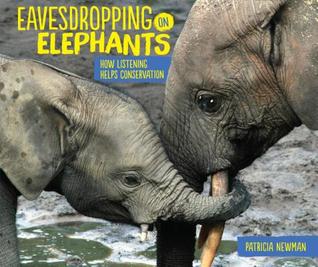
Eavesdropping on Elephants: How Listening Helps Conservation
Author: Patricia Newman
Published August 1st, 2018 by Millbrook Press

Summary: Deep in the Central African Republic, forest elephants trumpet and rumble along with the forest’s symphony. And scientists are listening.

Scientist Katy Payne started Cornell University’s Elephant Listening Project to learn more about how forest elephants communicate and what they’re saying. But the project soon grew to be about so much more.

Poaching, logging, mining, and increasing human populations threaten the survival of forest elephants. Katy and other members of the Elephant Listening Project’s team knew they needed to do something to protect these majestic animals. By eavesdropping on elephants, the Elephant Listening Project is doing its part to save Africa’s forest elephants and preserve the music in the forest.

About the Author: Patricia Newman has a passion for uncovering fascinating aspects about our world and crafting books that lead children on an adventure of discovery. She gravitates toward stories about animals and conservation science and enjoys sharing her excitement with readers. Books include Sibert Honor title Sea Otter Heroes: The Predators That Saved an Ecosystem; Junior Library Guild Selection Eavesdropping on Elephants; Bank Street College Best Book Zoo Scientists to the Rescue; Booklist Editor’s Choice Ebola: Fears and Facts; and Green Earth Book Award winner Plastic, Ahoy! Investigating the Great Pacific Garbage Patch. She frequently speaks at schools, libraries, and conferences about writing and conservation. Visit her at www.patriciamnewman.com.

Praise: 

“…this book does an excellent job of transporting readers and providing a clear, multifaceted picture of African forest elephants…The more you listen to wildlife, the more your mind opens up to new ideas about why the world is a place worth saving… VERDICT: A great pick for middle school nonfiction collections.” —School Library Journal

“Fascinating for earnest conservationists.” —Kirkus Reviews

Review: I am never disappointed when I read a Patricia Newman book. Each of her books are filled with fascinating information told in a way that will make any reader feel the passion that Newman obviously feels about her topics.

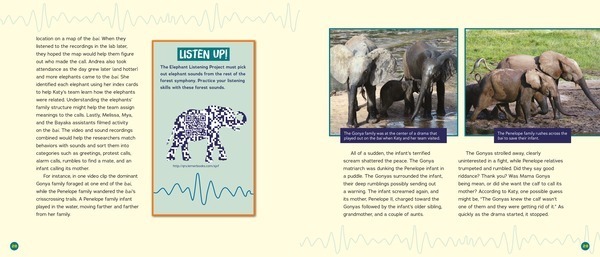
Her newest, Eavesdropping on Elephants, takes it to a whole new level! Not only does the book still include informational and narrative nonfiction, sidebars, glossaries, and classroom connections all well-researched and interesting, but it also includes QR codes (or links if you do not have a QR reader) to actually see and/or hear the elephants that are being discussed in the book. This really makes the book come to life in a way that I haven’t seen before.

Like all of her books, by the end I wanted to talk to people about what I read, wanted to go make a difference, and wanted to keep learning. If this isn’t a testament to how good her nonfiction is then I don’t know what is.

Teachers’ Tools for Navigation: “Consider an Authors for Earth Day visit in conjunction with Eavesdropping on Elephants. Students research a list of five conservation nominees selected by Patricia Newman and then vote for their favorite. Newman writes a check to the winning organization. The mission? To empower young readers to shape the world around them!”  –https://www.patriciamnewman.com/books/eavesdropping-on-elephants/ 

Research, reading, and writing activities for the classroom in conjunction with Eavesdropping on Elephants can be found on Patricia Newman’s Elephants Pinterest Board!

I, personally, am going to use Newman’s texts in my passion project research unit this year. I’m going to use her texts to show mentor texts of a nonfiction picture book and students are going to make their own nonfiction book or video. I also hope to have my lunch book club read Newman’s books as one of their month choices.

Discussion Questions: 

  • How do the videos/recordings help with the understanding of the book?
  • What is a keystone species? And how are the forest elephants a keystone species of their habitat?
  • What is the difference between ultrasound and infrasound? What does this have to do with elephants?
  • What figurative journey did Katy take to finally make it to Africa to study elephants in the wild?
  • What did the scientists learn by listening to the elephants?
  • Why are elephants’ ears the shape that they are?
  • How is what Katy did with elephant sounds similar to a dictionary?
  • How are humans a threat to forest elephants?
  • What did Teagan Yardley do when she learned about these threats?

Book Trailer: 

Flagged Passages: 

Read This If You Love: Nonfiction about animals, Nonfiction titles by Patricia Newman

Recommended For: 

classroomlibrarybuttonsmall 

Signature

**Thank you to Lerner Publishing and Patricia for providing a copy for review!**

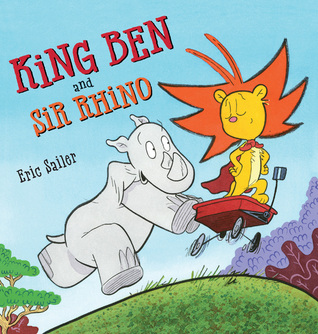
King Ben and Sir Rhino by Eric Sailer

Share

King Ben and Sir Rhino
Author and Illustrator: Eric Sailer
Published: August 7, 2018 by Two Lions

GoodReads Summary: Ben is king of the jungle. He does exactly what he pleases, as a king should. And he has everything a king could want: noble steeds, castles, and servants. What Ben doesn’t have is a loyal subject. Then he meets Rhino…and finds out what being a good king is all about.

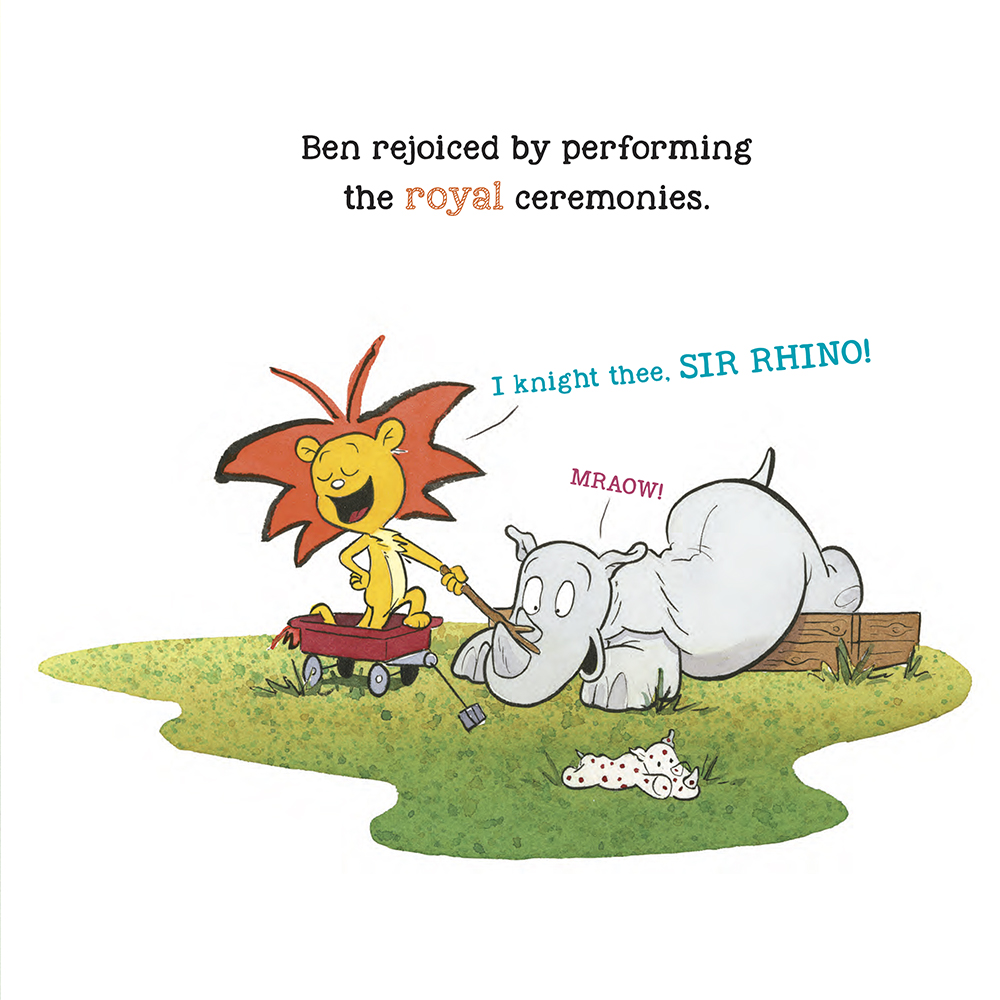
Our Review: This adorable story offers teachers and parents opportunities to talk about bossiness! King Ben gets everything he pleases, and he decides he will make Rhino he loyal subjects. I feel like all children effort to make their parents their loyal subjects. I know that my own children have me wrapped around their fingers. This book offers opportunities to discuss why being King Ben might not always be the best approach. This makes for a very fun read-aloud.

Teachers’ Tools for Navigation: Students might have fun comparing and contrasting the King Bens and Sir Rhinos in popular culture and across history. For younger children, comparing and contrasting the good and bad things about being bossy would make for a fruitful discussion.

Discussion Questions: What are some of the things that King Ben makes Sir Rhino do?; Is King Ben being kind?; What could Sir Rhino do?; What might the characters learn from their relationship?

Flagged Passage: 

Read This If You Loved: Duck and Hippo series by Jonathan London; Elephant and Piggie series by Mo Willems; The Frog and Toad series by Arnold Lobel; Pug Meets Pig by Sue Lowell Gallion

Recommended For:

classroomlibrarybuttonsmall 

RickiSig

**Thank you to Kristin at Two Lions for providing a copy for review!**

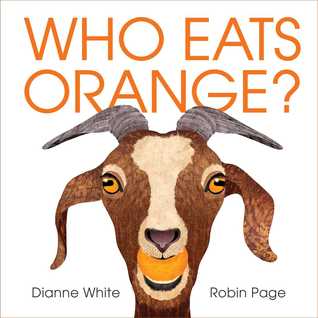
Review and Giveaway!: Who Eats Orange? by Dianne White

Share


Who Eats Orange?
Author: Dianne White; Illustrator: Robin Page
Published August 14, 2018 by Beach Lane Books

Goodreads Summary: Who eats orange—a chicken? A bunny? A bear? Find out in this unique exploration of colors and animals’ favorite foods.

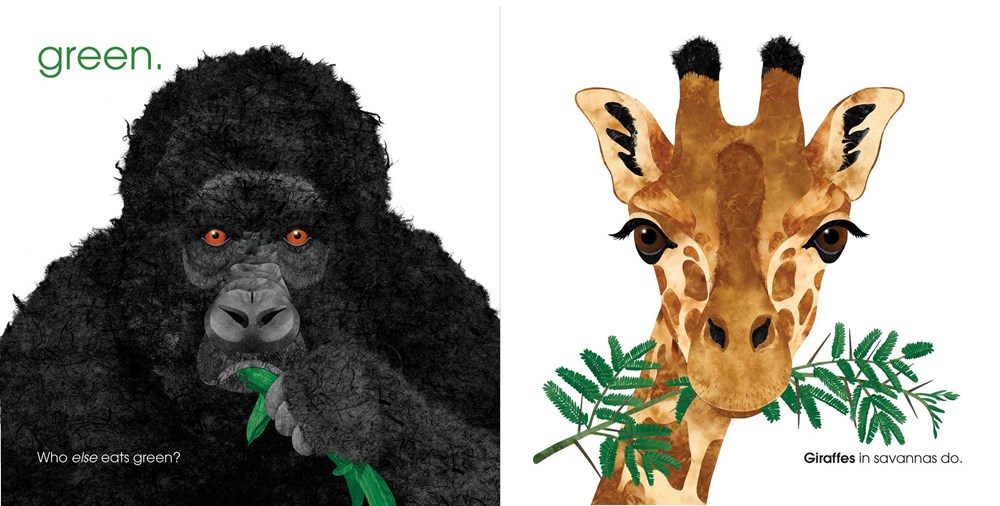
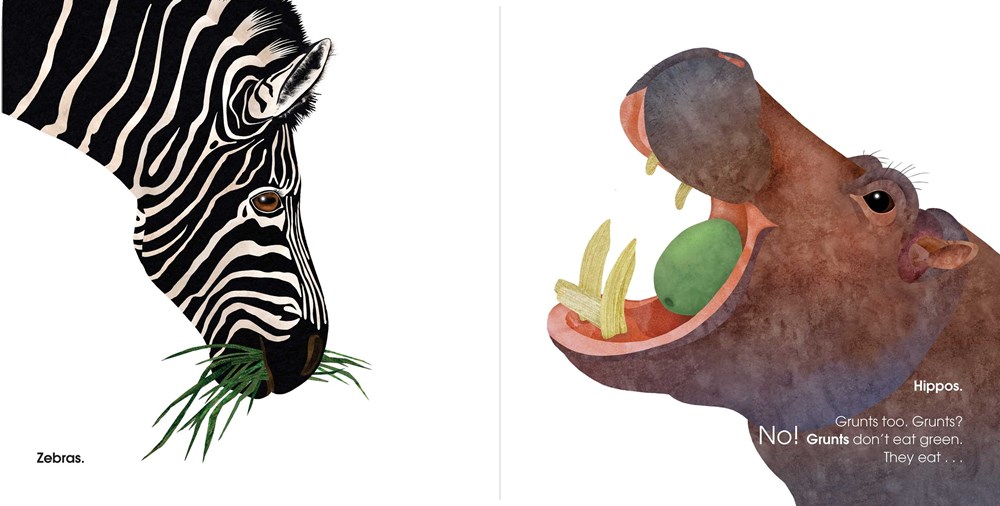
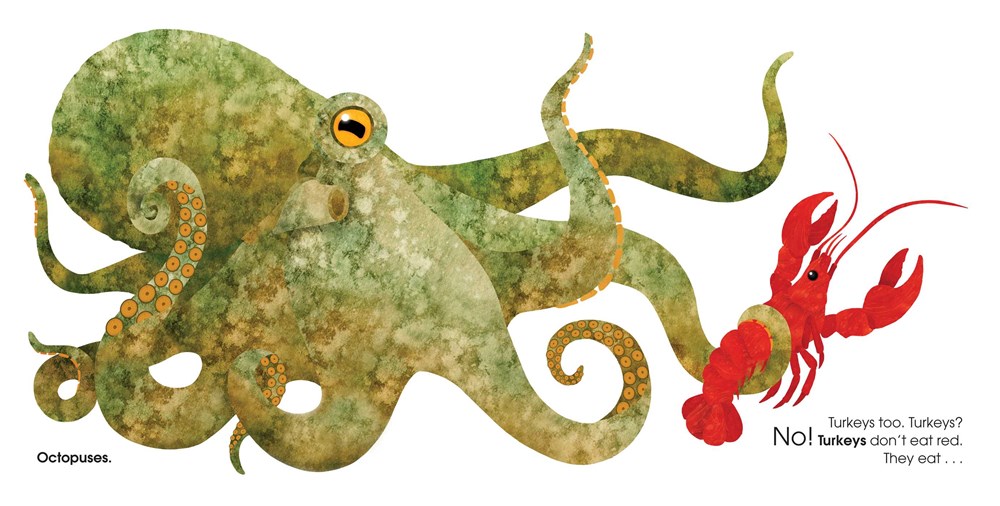
Animals eat a rainbow of different foods. Gorillas in the mountains eat green, octopi in the ocean eat red, and toucans in the canopy eat purple. Young animal enthusiasts will love digging into this lively journey around the world to explore the colorful diets of many animals, from the familiar to the exotic.

Review and Teacher’s Tools for NavigationThese is a clever book! It teaches about animals, colors, and foods simultaneously. Each page offers a lead into the next page which makes it a great read-aloud. When I read this with my son, I loved pausing on each page and asking him to make predictions. There are also great opportunities for teaching complex vocabulary through this text. The animals the author selected aren’t the typical animals we see in picture books and board books, which caused my son to ask a lot of questions. It made reading the book all the more interesting. We spent some time, for example, looking up quetzals on the internet and exploring the food and habitats of this interesting bird. I found this book to be very inspiring. It made me want to write, write, write! It would be a great resource for teachers to have in their classrooms.

On a more personal note, this book is a great resource for me as a mom. It offered space for my kids and me to discuss the different colors of the foods that he enjoys and how he might try to eat more colors. Who Eats Orange? offers so much for caregivers seeking to diversify their children’s diets.

Also, isn’t the cover amazing? My toddler giggled when I pulled it out of my bag.

Check out fun activities for the book here.

Discussion Questions: Which color foods are your favorite to eat? How might you incorporate more colors into your diet?; Which animals were missing from the book? Can you think of one more animal for each color?; How do the illustrations add to your appreciation of the text? What did you learn from the backmatter?

Check Out a Few Spreads from the book!:

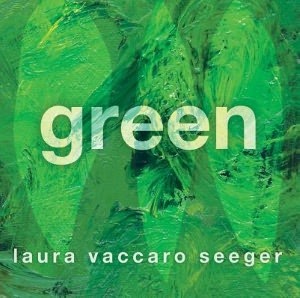
Read This If You Loved: Dragons Love Tacos by Adam Rubin; Green by Laura Vaccaro Seeger


Giveaway!:

a Rafflecopter giveaway

Recommended For: 

readaloudbuttonsmall classroomlibrarybuttonsmall

About the Author and Illustrator:

Dianne White has written several picture books, including the celebrated Blue on Blue, illustrated by Beth Krommes. This summer she also released Goodbye Brings Hello: A Book of Firsts, illustrated by Daniel Wiseman. She lives in Gilbert, Arizona, with her family.  For more information, and to download a free activity kit, visit diannewrites.com.

Twitter @diannewrites

Robin Page has written and illustrated several picture books, including the 2003 Caldecott Honor recipient What Do You Do with a Tail Like This?, which she created with her husband Steve Jenkins, and A Chicken Followed Me Home! and Seeds Move!, which she both wrote and illustrated. Robin and Steve live in Boulder, Colorado.

RickiSig

*Thank you for Barbara from Blue Slip Media for sending along this wonderful book!*

Hedgehog Needs a Hug by Jen Betton

Share

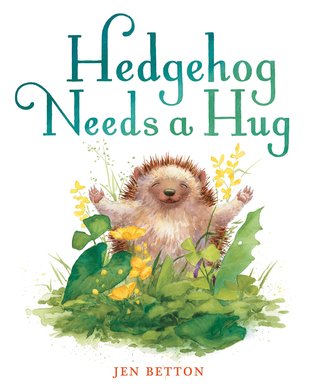
Hedgehog Needs a Hug
Author: Jen Betton
Published June 19, 2018 by Putnam

Goodreads Summary: Everyone needs hugs, even if they’re prickly.

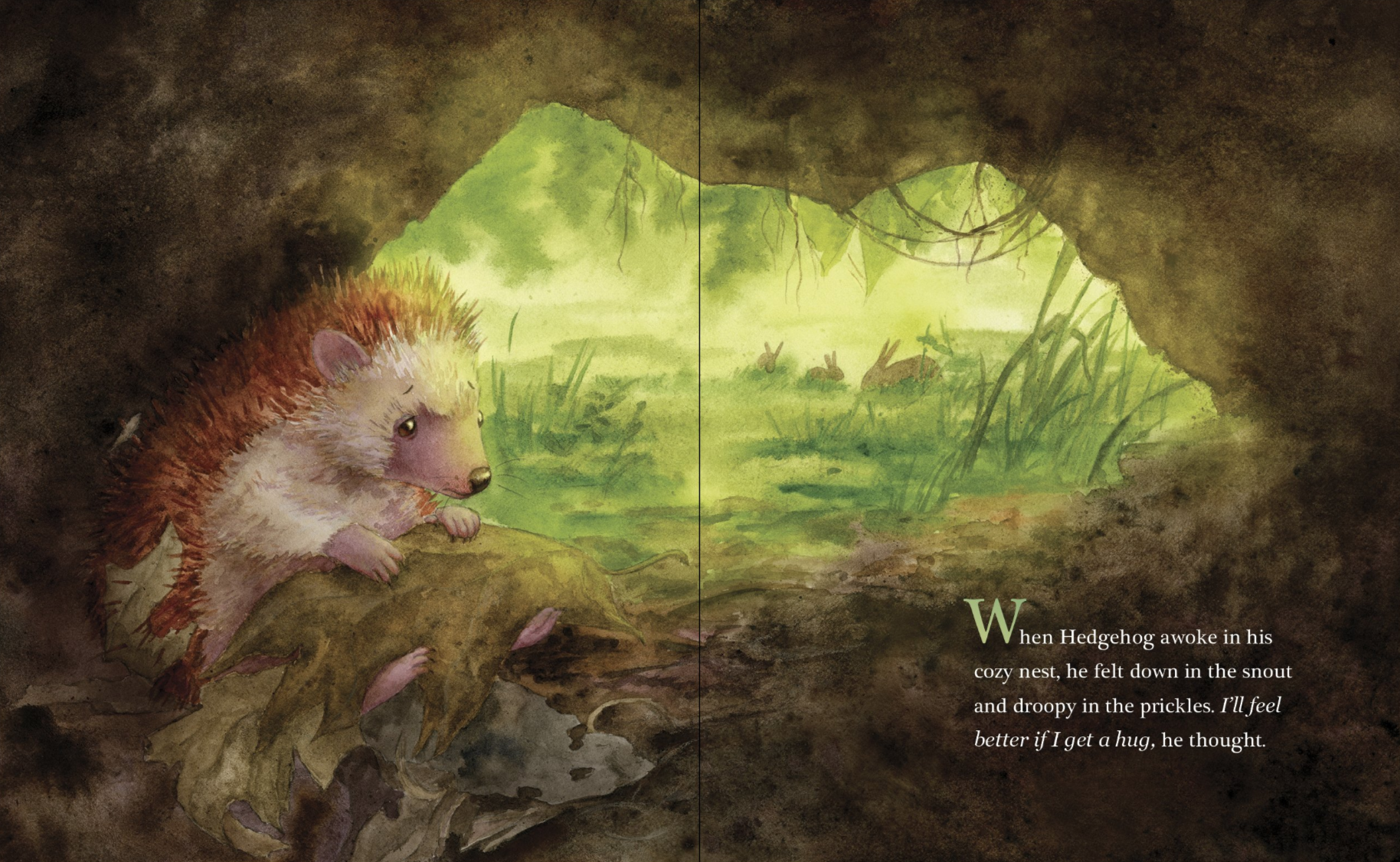
When Hedgehog wakes up feeling down in the snout and droopy in the prickles, he knows a hug will make him feel better. But none of his friends are eager to wrap their arms around Hedgehog’s prickles, and he’s too smart to fall for Fox’s sly offer.

Then Hedgehog gets a surprise: Another animal in the forest is feeling exactly the same way.

Luckily, both are kind and brave enough for the perfect hug.

My Review: I adored this book. It’s about a hedgehog who wakes up and feels down. He really, really needs a hug, and the other animals are clearly avoiding him because he is prickly. The book doesn’t say this, so it was fun to ask my son why he thought they were avoiding him. Then he meets skunk, and skunk needs a hug (but of course, skunk is stinky). This is a great book to teach kids about some of the ways in which they might unintentionally hurt people. 

Teachers’ Tools for Navigation: This is a great text to talk about how we treat others. I’d love to pair it with texts like Each Kindness by Jacqueline Woodson. Sometimes, we subtly hurt others without realizing it. A close analysis of the words and behaviors of characters in these two texts offers great potential for building classroom community and kindness.

Additionally, many of the defense quality of animals are addressed in the book which would make it a great elementary book to use cross-curricularly in science, reading, and community building.

Discussion Questions: How do the animals react to hedgehog? How does this make hedgehog feel?; What is hedgehog’s reaction to skunk? How are they similar and different?; How did the author use alliteration to make the rhythm of the text sing-songy?

We Flagged: 

Read This If You Loved: Each Kindness by Jacqueline Woodson (Kellee’s Review | Ricki’s Review), My Friend Maggie by Hannah E. Harrison, Unicorn Thinks He’s Pretty Great by Bob Shea, Endgame by Nancy Garden, Thirteen Reasons Why by Jay Asher,  The Silver Linings Playbook by Matthew Quick, Burn by Suzanne Phillips, The Perks of Being a Wallflower by Stephen Chbosky, Twisted by Laurie Halse Anderson

Recommended For: 

readaloudbuttonsmall classroomlibrarybuttonsmall

RickiSig

**Thank you to Penguin for sending us this book! I loved it.**

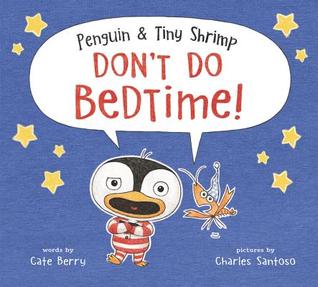
Penguin and Tiny Shrimp Don’t Do Bedtime! by Cate Berry

Share

Penguin and Tiny Shrimp Don’t Do Bedtime
Author: Cate Berry; Illustrator: Charles Santoso
Published May 8, 2018 by Balzer + Bray

Goodreads Summary: Penguin and Tiny Shrimp will charm, amuse, but never put you to sleep in this meta bedtime tale in the vein of Goodnight Already.

Penguin and Tiny Shrimp DO NOT have a bedtime story to share with you.

There are no soft beds or cozy covers here. There are fireworks! And shark-infested waters!!

This book will never make you sleepy. Not at all. Not even a little. . .

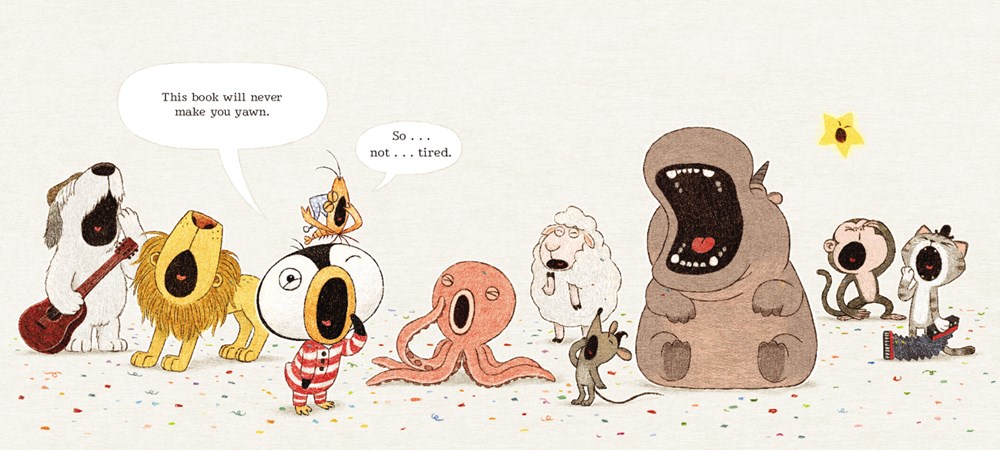
Ricki’s Review: Whenever my son pulls this book from the shelf, I get a happy feeling inside of me. There are some books that are really fun to read, and this is one of them. It’s the perfect bedtime book. It makes us laugh, and it makes us y-a-w-n. I love the silly characters and smile every time that I read it. 

Most apparent to me is that the author and illustrator know kids. The middle of the book features a lot of wild activities that really resonate with my son. Then we get to the silly pages where the characters resist their tiredness… is this sounding familiar, parents and guardians? I absolutely adore this book and recommend it highly. If bedtime is an issue in your house, this book might help.

Kellee’s Review: This book is definitely a laugh-out-loud book! Penguin and Tiny Shrimp have such unique and perfect voices that kids, and parents alike, will find so entertaining. The illustrations are perfect companions to the narrative also; they are silly, colorful, and full of personality!

Also, Penguin and Tiny Shrimp are the embodiment of my son right now. He doesn’t do bedtime and would rather be doing all of the things that Penguin and Tiny Shrimp take part in: swinging in the jungle, flying in hot air balloons, riding on a boat, signing songs, and even jokes! But then in the end, Penguin and Tiny Shrimp are too tired to go on (and their yawns are actually contagious!), and I love using their story to talk to Trent about bedtime.

Teachers’ Tools for Navigation: This book would serve as a great mentor text for kids to write their own bedtime stories. The animals are very inspirational. Teachers might start by asking students to pick two animals that are very different (like Penguin and Tiny Shrimp) and to write their own story of the two characters’ adventures.

Discussion Questions: What do Penguin and Tiny Shrimp do to try to resist bedtime?; Which animals are your favorite? How are the animals similar and different? What does this say about bedtime?; Do you resist bedtime? Why?

We Flagged: 

Read This If You Loved: Twenty Yawns by Jane Smiley; Goodnight Moon by Margaret Wise BrownGoodnight Songs by Margaret Wise Brown

Recommended For: 

readaloudbuttonsmall classroomlibrarybuttonsmall

RickiSigand Kellee Signature

**Thank you to Keely Platte for sending us this book! We loved it.**

Review and Giveaway!: What Do They Do With All That Poo? by Jane Kurtz

Share

What Do They Do With All That Poo?
Author: Jane Kurtz; Illustrator: Allison Black
Published: June 19, 2018 by Beach Lane Books

Goodreads Summary: Find out what happens to all of the poo at the zoo in this funny and factual picture book!

There are so many different kinds of animals at the zoo, and they each make lots and lots (and sometimes LOTS!) of poo. So what do zoos do with all of that poo? This zany, fact-filled romp explores zoo poo, from cube-shaped wombat poo to white hyena scat, and all of the places it ends up, including in science labs and elephant-poo paper—even backyard gardens!

Ricki’s Review: It brings me great joy to review this book. Really. This book is on our nightly reading list, and my son laughs and laughs as we look at all of the different types of poo. I’ll admit that I don’t like poop jokes and don’t find poop to be very funny. But this book is really funny and wildly entertaining. My son’s preschool teacher has recycled panda poo paper, and he learned from this book that this recycling process is made possible by a panda’s diet (see the first spread featured below). He was thrilled to share this scientific tidbit during his morning meeting. This book spurs curiosity. My son asks a lot of questions wen we read it, and we do a lot of comparing and contrasting across pages. I’ll admit that we’ve had great fun selecting which poo is the most interesting to us. I loved that one of the animals (no spoilers here) has cube-shaped poo! This book is sure to be a favorite in classrooms. Get ready to learn science in an entertaining way!

Teachers’ Tools for Navigation: Mary Cowhey’s Black Ants and Buddhists is one of the most beloved elementary school professional development texts. In the book, Cowhey describes a moment in her teaching career when a student wondered aloud about where the poo goes after he flushes the toilet. Cowhey set up an exploratory learning unit based on this question. What Do They Do with All That Poo? follows this spirit (with a focus on zoos and animals).

Teachers might ask students to go home and return to class with an inquiry question about the world. Then, they might (as a whole class, in groups, individually) explore their question(s) and design a picture book or picture books to reflect their new learning.

Discussion Questions: 

  • What did you learn? What do they do with all that poo?
  • Which animal poo was the most interesting to you?
  • Select one animal. What is one interesting fact about the animal’s poo (beyond the shape)?
  • Which animals weren’t featured in the book? What is their poo like?

Flagged Passages: 

Read This If You Loved: Caring for Your Lion by Tammi Sauer; Strange, Unusual, Gross, and Cool Animals by Charles Ghigna; Pink is for Blobfish by Jess Keating; Animal Planet & National Geographic nonfiction such as Real or Fake?Ocean AnimalsAwesome 8Animal Atlas, or the Animal Bites series    

Recommended For: 
readaloudbuttonsmall classroomlibrarybuttonsmall

Giveaway!:

a Rafflecopter giveaway

About the Author: Jane Kurtz was born in Portland, Oregon (where she now lives), but when she was two years old, her parents decided to move to Ethiopia, where she spent most of her childhood. Jane speaks about being an author at schools and conferences—in all but eleven of the United States, so far, and such places as Uganda, Nigeria, Kenya, France, Germany, Romania, Russia, Oman, England, Indonesia, Cambodia, the Philippines, and Japan. She helped start Ethiopia Reads (EthiopiaReads.org), a nonprofit that is planting libraries for children and printing some of the first easy-reader books in local languages in Ethiopia. She is the author of many books for children, including Water Hole Waiting and River Friendly River Wild, winner of the SCBWI Golden Kite award for picture book text. To learn more, visit her website: janekurtz.com.

Twitter: @janekurtz

RickiSig

**Thank you to Barbara at Blue Slip Media for providing a copy for review!**